

Submitted:
30 January 2025
Posted:
30 January 2025
You are already at the latest version
Abstract
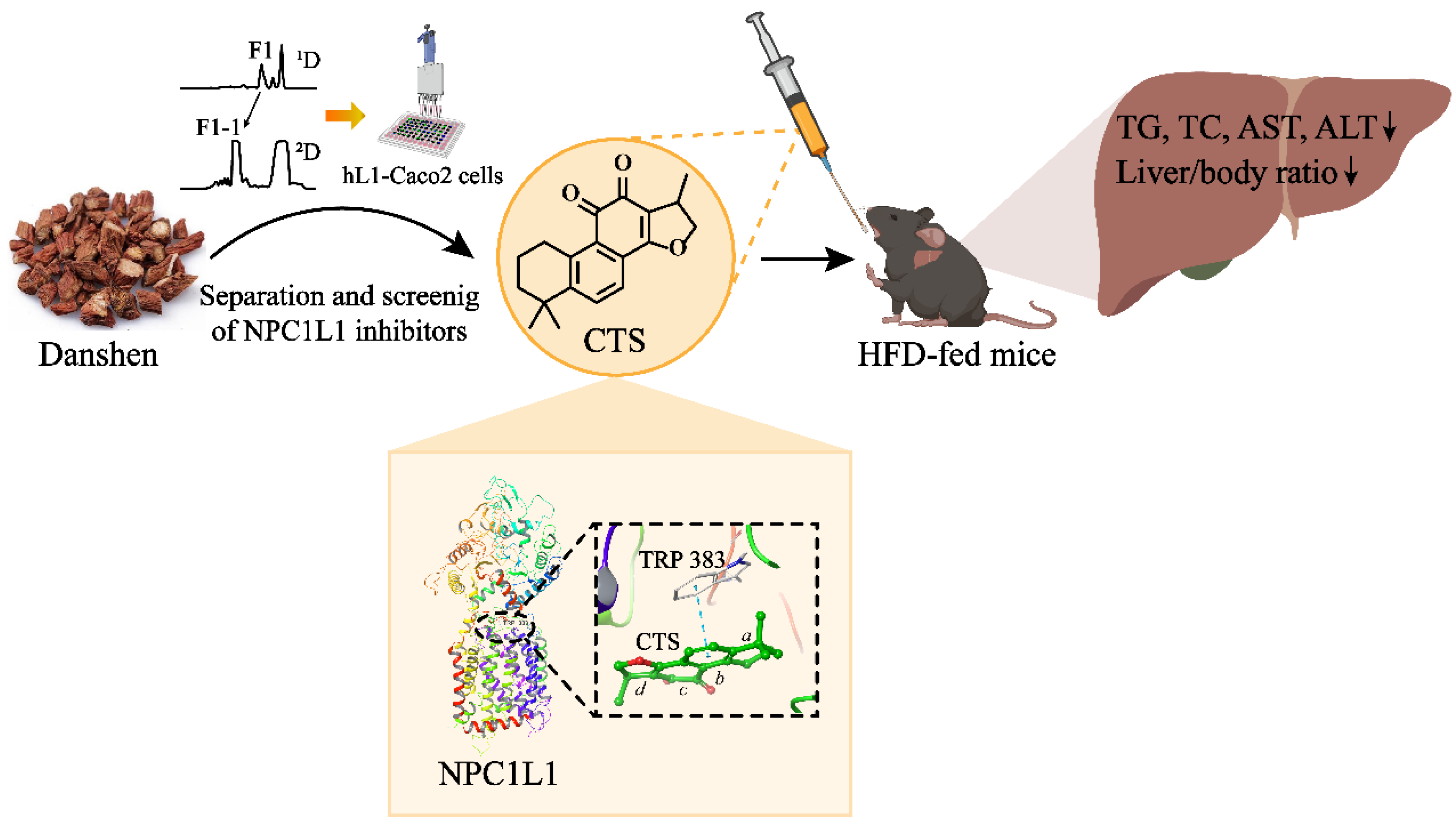
Danshen, a well-known traditional Chinese medicine (TCM), has gained increasing attention due to the protective effects on nonalcoholic fatty liver disease (NAFLD). However, the molecular basis and working mechanism remain to be elucidated. Niemann-Pick C1-like 1 (NPC1L1) is the crucial target mediating intestinal cholesterol absorption and its inactivation has been shown to alleviate NAFLD. Thus, this study aimed to screen NPC1L1 inhibitors in Danshen and investigate the therapeutic effects on NAFLD. A high-throughput screening platform based on the stable Caco2 cell lines expressing human-NPC1L1 (hL1-Caco2) was developed, and we found that tanshinones (Tans), the liposoluble components in Danshen, inhibited NPC1L1-mediated cholesterol absorption in hL1-Caco2 cells. The hepatic steatosis in high-fat diet (HFD)-fed mice was also reduced by Tans treatment. To find the active compounds in Tans, activity-oriented separation was performed by combining the high-throughput screening platform and two-dimensional chromatographic techniques. Ultimately, cryptotanshinone (CTS) was identified as a novel NPC1L1 inhibitor and profoundly decreased hepatic steatosis in HFD-fed mice. The binding modes and stability between CTS and NPC1L1 were confirmed by molecular docking and dynamics simulation. Taken together, our findings demonstrate for the first time that CTS, the liposoluble compound in Danshen, alleviates NAFLD by inhibiting NPC1L1-mediated intestinal cholesterol absorption, suggesting that inhibition of NPC1L1 with CTS may be a potential strategy for the treatment of NAFLD.

Keywords:
1. Introduction
2. Results
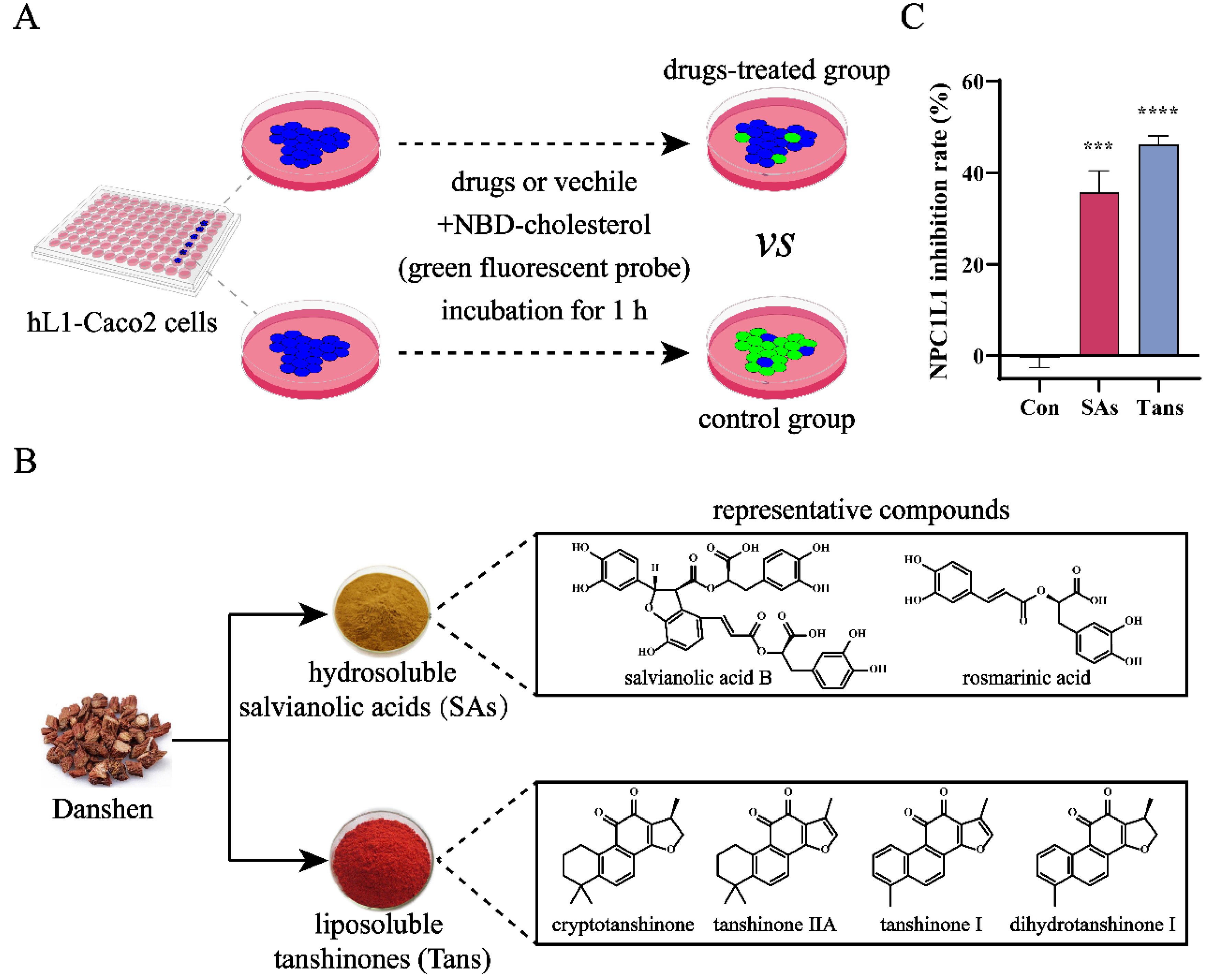
2.1. Tans Inhibits NPC1L1-Mediated Intestinal Cholesterol Absorption
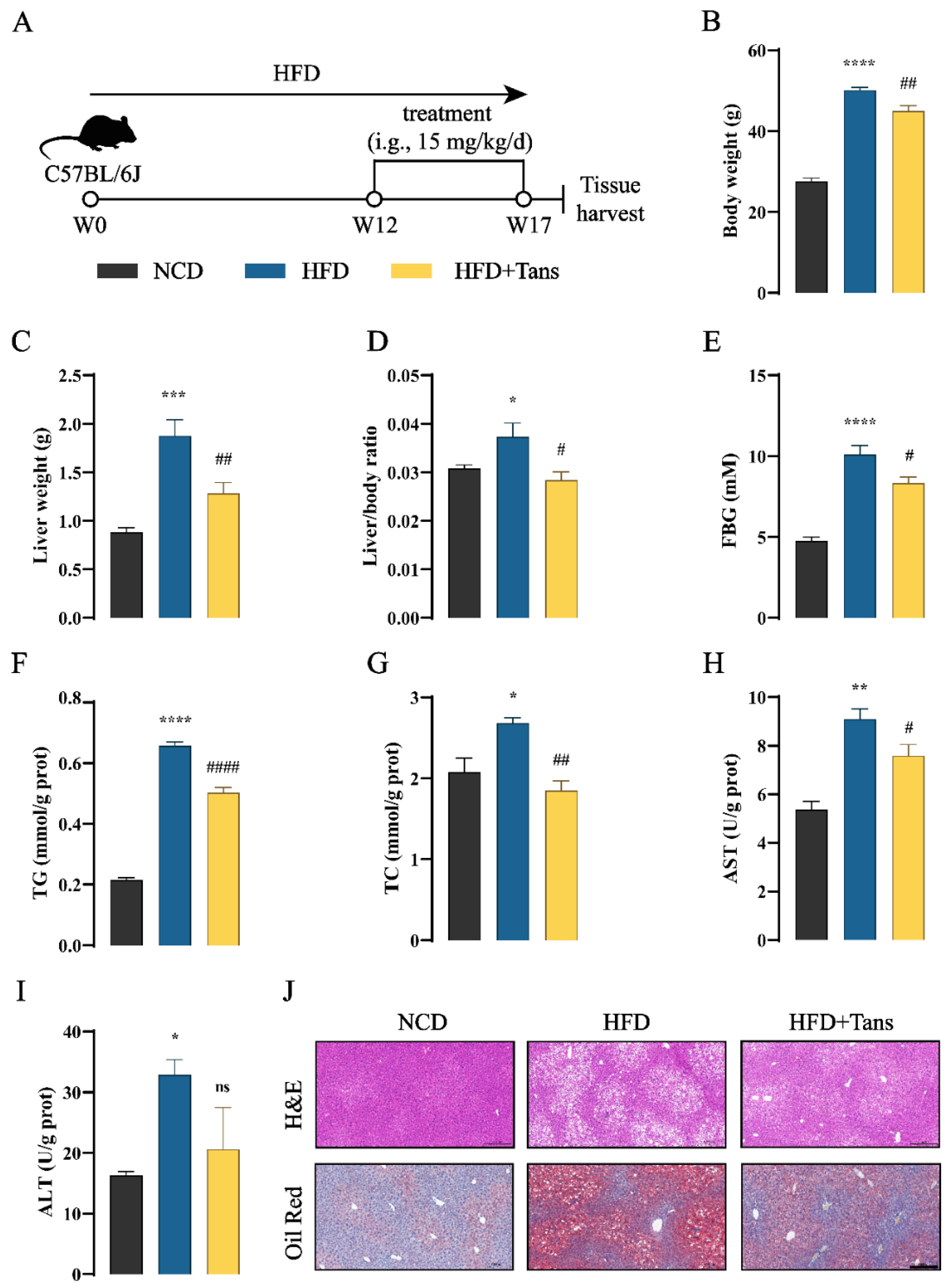
2.2. Tans Exhibits Protective Effect on NAFLD in HFD-Fed Mice
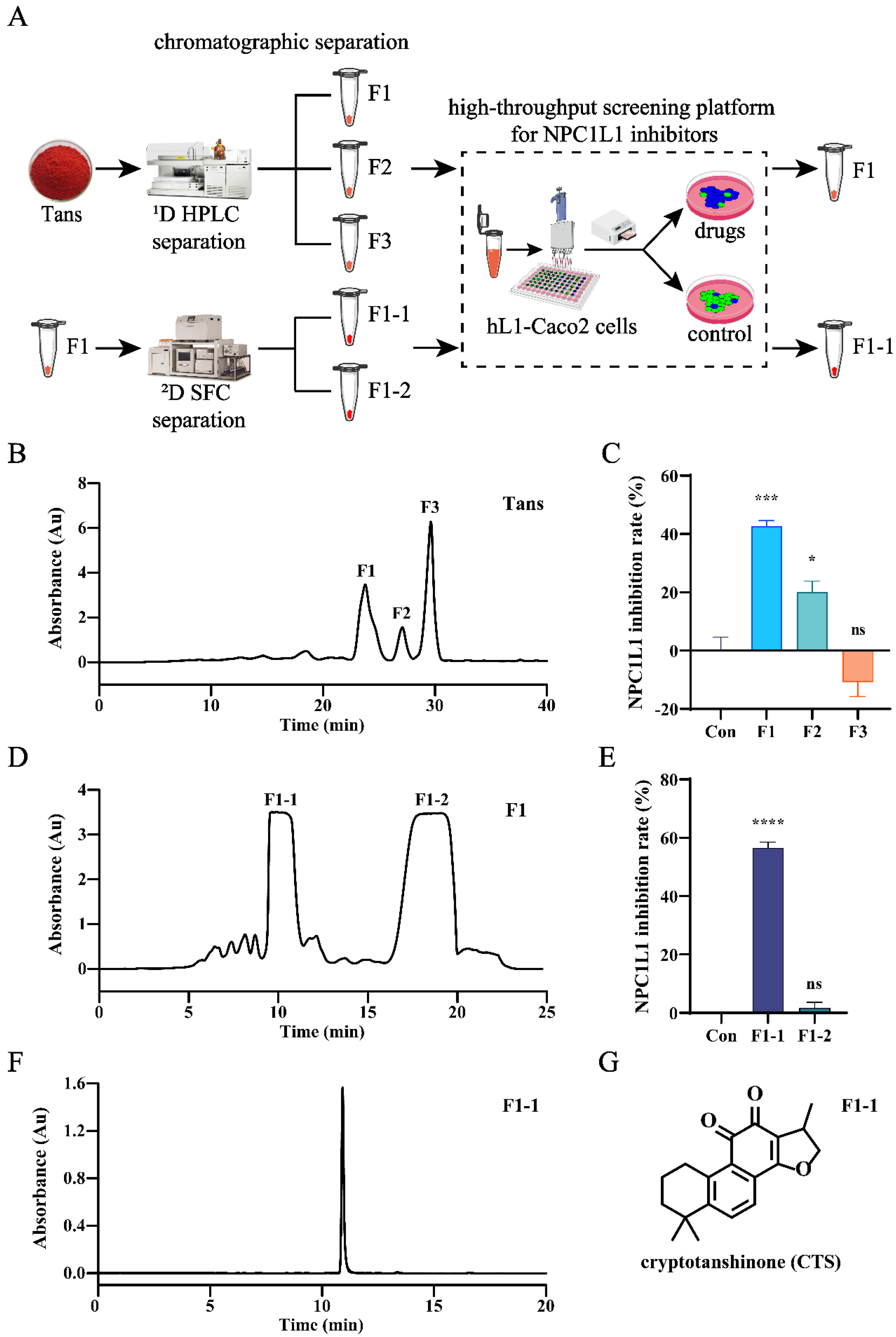
2.3. CTS Is the Active Compound in Tans Inhibiting NPC1L1-Mediated Intestinal Cholesterol Absorption
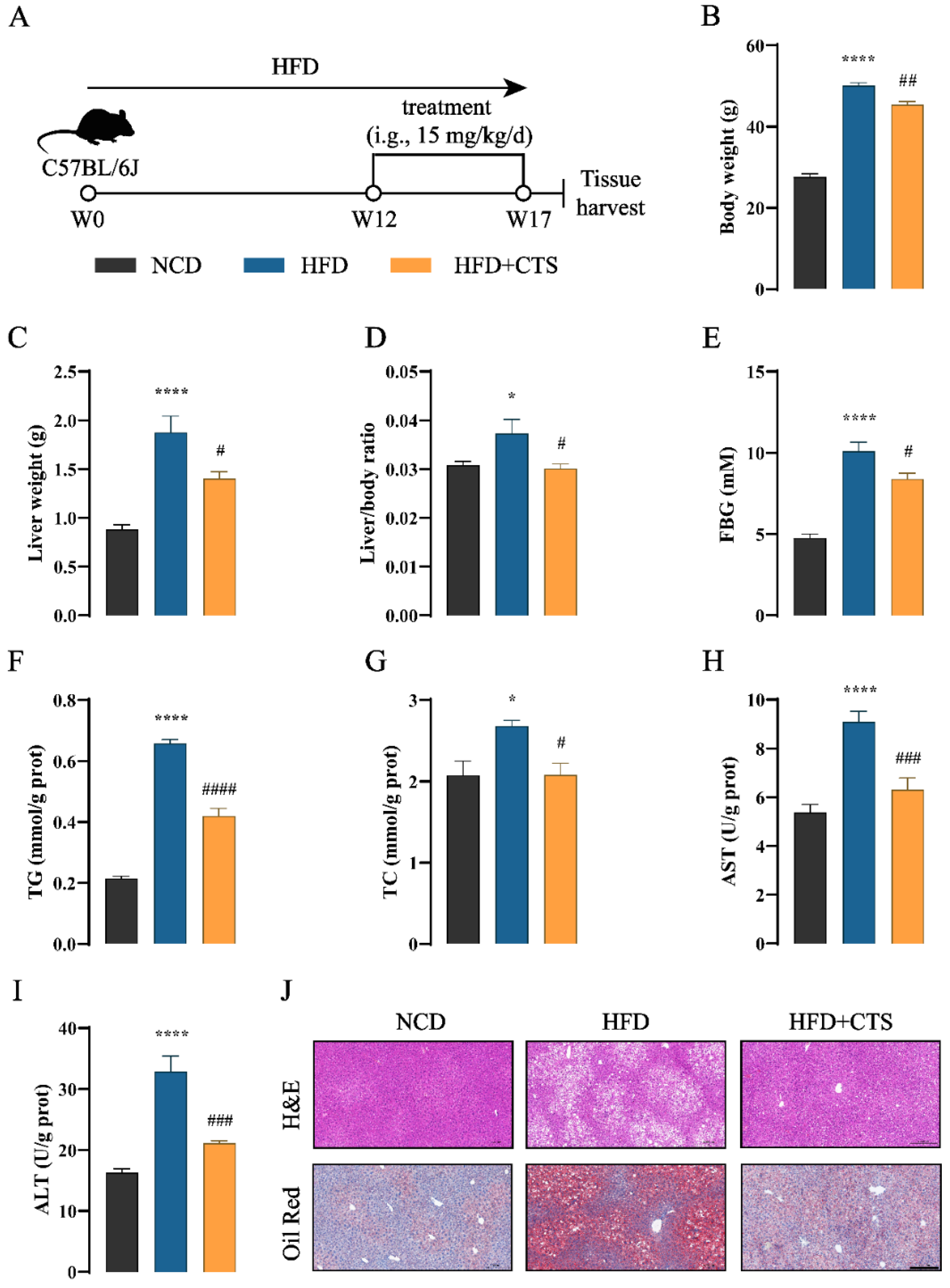
2.4. CTS Alleviates NAFLD in HFD-Fed Mice
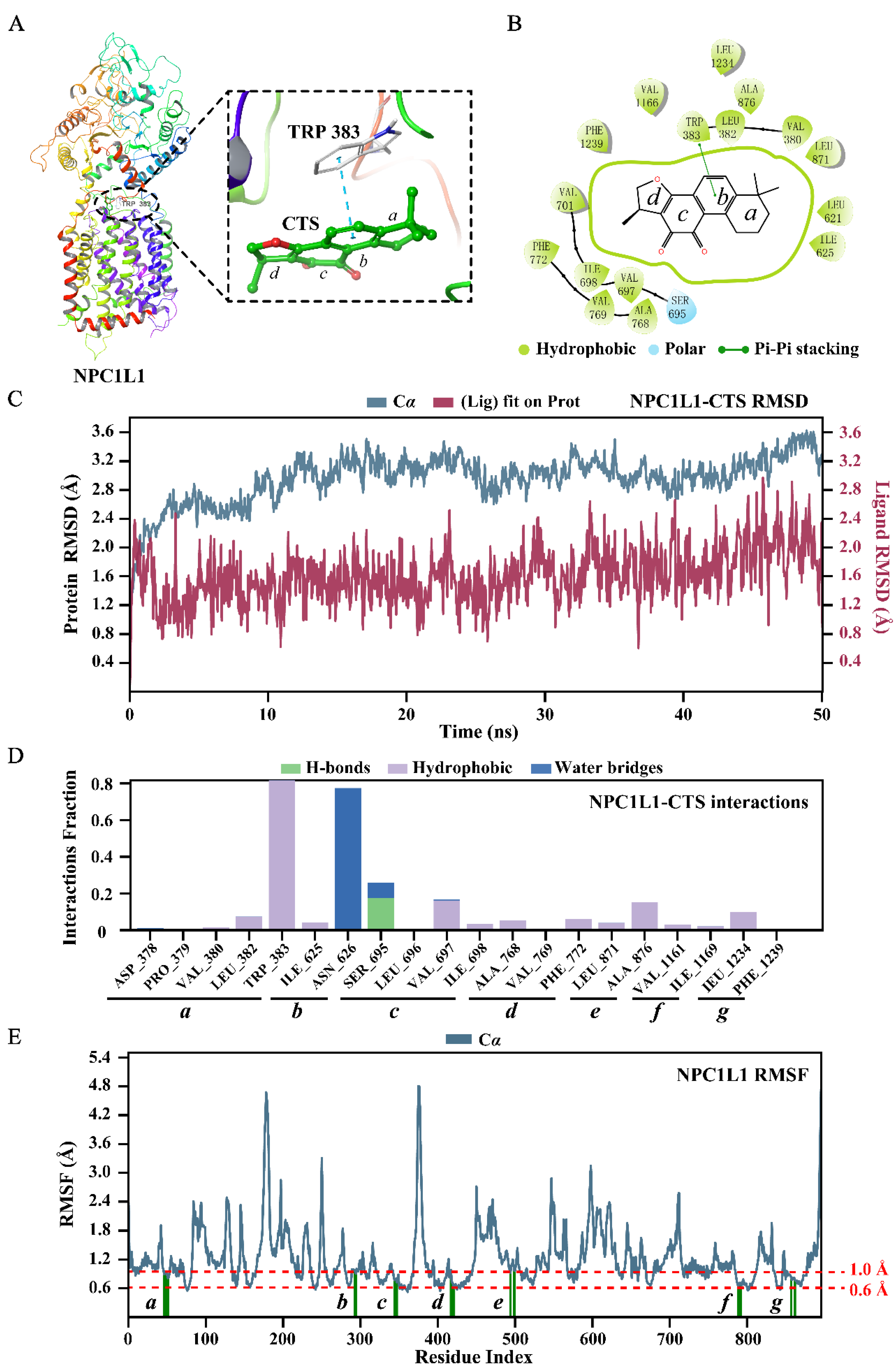
2.5. Molecular Docking and Dynamics Simulation
3. Discussion
4. Materials and Methods
4.1. Reagents and Materials
4.2. Animal Experiments
4.3. Establishment of Stable Caco2 Cell Lines Expressing Human-NPC1L1 (hL1-Caco2) and Cell Culture
4.4. Biochemical Analysis
4.5. Pathological Analysis
4.6. High-Throughput Screening of NPC1L1 Inhibitors
4.7. Separation and Analysis of Tans and Related Fractions
4.8. Molecular Docking and Dynamics Simulation
4.9. Statistical Analysis
5. Conclusions
Supplementary Materials
Author Contributions
Funding
References
- Powell, E. E.; Wong, V. W. S.; Rinella, M. Non-alcoholic fatty liver disease. Lancet. 2021, 397(10290), 2212–2224. [Google Scholar] [CrossRef]
- Scorletti, E.; Carr, R. M. M. A new perspective on NAFLD: Focusing on lipid droplets. J Hepatol. 2022, 76(4), 934–945. [Google Scholar] [CrossRef] [PubMed]
- Loomba, R.; Friedman, S. L.; Shulman, G. I. Mechanisms and disease consequences of nonalcoholic fatty liver disease. Cell. 2021, 184(10), 2537–2564. [Google Scholar] [CrossRef] [PubMed]
- Petroni, M. L.; Brodosi, L.; Bugianesi, E.; Marchesini, G. Management of non-alcoholic fatty liver disease. BMJ. 2021, 372, m4747. [Google Scholar] [CrossRef] [PubMed]
- Huang, D. Q.; Singal, A. G.; Kono, Y.; Tan, D. J. H.; El-Serag, H. B.; Loomba, R. Changing global epidemiology of liver cancer from 2010 to 2019: NASH is the fastest growing cause of liver cancer. Cell Metab. 2022, 34(7), 969–977. [Google Scholar] [CrossRef] [PubMed]
- Wong, V. W. S.; Ekstedt, M.; Wong, G. L. H.; Hagström, H. Changing epidemiology, global trends and implications for outcomes of NAFLD. J Hepatol. 2023, 79(3), 842–852. [Google Scholar] [CrossRef] [PubMed]
- Keam, S. J. Resmetirom: First Approval. Drugs. 2024, 84(6), 729–735. [Google Scholar] [CrossRef]
- Neuschwander-Tetri, B. A. Therapeutic Landscape for NAFLD in 2020. Gastroenterology. 2020, 158(7), 1984–1998. [Google Scholar] [CrossRef] [PubMed]
- Parlati, L.; Régnier, M.; Guillou, H.; Postic, C. New targets for NAFLD. JHEP Rep. 2021, 3(6), 100346. [Google Scholar] [CrossRef]
- Song, Y. F.; Liu, J. J.; Zhao, K.; Gao, L.; Zhao, J. J. Cholesterol-induced toxicity: An integrated view of the role of cholesterol in multiple diseases. Cell Metab. 2021, 33(10), 1911–1925. [Google Scholar] [CrossRef]
- Zhang, X.; Coker, O. O.; Chu, E. S.; Fu, K. L.; Lau, H. C. H.; Wang, Y. X.; Chan, A. W. H.; Wei, H.; Yang, X. Y.; Sung, J. J. Y.; Yu, J. Dietary cholesterol drives fatty liver-associated liver cancer by modulating gut microbiota and metabolites. Gut. 2021, 70(4), 761–774. [Google Scholar] [CrossRef] [PubMed]
- Marra, F.; Svegliati-Baroni, G. Lipotoxicity and the gut-liver axis in NASH pathogenesis. J Hepatol. 2018, 68(2), 280–295. [Google Scholar] [CrossRef]
- Li, J. B.; Wang, Y. F.; Matye, D. J.; Chavan, H.; Krishnamurthy, P.; Li, F.; Li, T. G. Sortilin 1 Modulates Hepatic Cholesterol Lipotoxicity in Mice via Functional Interaction with Liver Carboxylesterase 1. J Biol Chem. 2017, 292(1), 146–160. [Google Scholar] [CrossRef] [PubMed]
- Gan, L. T.; Van Rooyen, D. M.; Koina, M. E.; McCuskey, R. S.; Teoh, N. C.; Farrell, G. C. Hepatocyte free cholesterol lipotoxicity results from JNK1-mediated mitochondrial injury and is HMGB1 and TLR4-dependent. J Hepatol. 2014, 61(6), 1376–1384. [Google Scholar] [CrossRef]
- Luo, J.; Yang, H. Y.; Song, B. L. Mechanisms and regulation of cholesterol homeostasis. Nat Rev Mol Cell Biol. 2020, 21(4), 225–245. [Google Scholar] [CrossRef] [PubMed]
- Jia, L.; Betters, J. L.; Yu, L. Q. Niemann-Pick C1-Like 1 (NPC1L1) Protein in Intestinal and Hepatic Cholesterol Transport. Annu Rev Physiol. 2011, 73(1), 239–259. [Google Scholar] [CrossRef] [PubMed]
- Jia, L.; Ma, Y. Y.; Rong, S. X.; Betters, J. L.; Xie, P.; Chung, S.; Wang, N. P.; Tang, W. Q.; Yu, L. Q. Niemann-Pick C1-Like 1 deletion in mice prevents high-fat diet-induced fatty liver by reducing lipogenesis. J Lipid Res. 2010, 51(11), 3135–3144. [Google Scholar] [CrossRef]
- Ramirez, R.; Cohen, J. C.; Hobbs, H. H.; Browning, J. D. Hepatic Triglyceride Content in Individuals with Reduced Intestinal Cholesterol Absorption Due to Variants in Nieman Pick C1-Like 1. Hepatology. 2011, 54(2), 736–737. [Google Scholar] [CrossRef]
- Lee, D. H.; Han, D. H.; Nam, K. T.; Park, J. S.; Kim, S. H.; Lee, M.; Kim, G.; Min, B. S.; Cha, B. S.; Lee, Y. S.; Sung, S. H.; Jeong, H.; Ji, H. W.; Lee, M. J.; Lee, J. S.; Lee, H. Y.; Chun, Y.; Kim, J.; Komatsu, M.; Lee, Y. H.; Bae, S. H. Ezetimibe, an NPC1L1 inhibitor, is a potent Nrf2 activator that protects mice from diet-induced nonalcoholic steatohepatitis. Free Radic Biol Med. 2016, 99, 520–532. [Google Scholar] [CrossRef]
- Li, H.; Yu, X. H.; Ou, X.; Ouyang, X. P.; Tang, C. K. Hepatic cholesterol transport and its role in non-alcoholic fatty liver disease and atherosclerosis. Prog Lipid Res. 2021, 83, 101109. [Google Scholar] [CrossRef]
- Yang, J.; Zou, J.; Mai, H. Y.; Hong, T.; Liu, H.; Feng, D. Curcumin protects against high-fat diet-induced nonalcoholic simple fatty liver by inhibiting intestinal and hepatic NPC1L1 expression via down-regulation of SREBP-2/HNF1α pathway in hamsters. J Nutr Biochem. 2023, 119, 109403. [Google Scholar] [CrossRef] [PubMed]
- Yan, M. Y.; Zhao, Y. X.; Man, S. L.; Dai, Y. J.; Ma, L.; Gao, W. Y. Diosgenin as a substitute for cholesterol alleviates NAFLD by affecting CYP7A1 and NPC1L1-related pathway. Phytomedicine. 2024, 125, 155299. [Google Scholar] [CrossRef] [PubMed]
- Peng, H.; He, Y.; Zheng, G.; Zhang, W.; Yao, Z.; Xie, W. Meta-analysis of traditional herbal medicine in the treatment of nonalcoholic fatty liver disease. Cell Mol Biol. 2016, 62(4), 88–95. [Google Scholar]
- Zhu, J.; Guo, J. N.; Liu, Z. J.; Liu, J.; Yuan, A. N.; Chen, H.; Qiu, J. N.; Dou, X. B.; Lu, D. Z.; Le, Y. F. Salvianolic acid A attenuates non-alcoholic fatty liver disease by regulating the AMPK-IGFBP1 pathway. Chem Biol Interact. 2024, 400, 111162. [Google Scholar] [CrossRef]
- Li, L.; Li, R.; Zhu, R. Y.; Chen, B. B.; Tian, Y. M.; Zhang, H.; Xia, B. K.; Jia, Q. Q.; Wang, L. L.; Zhao, D. D.; Mo, F. F.; Li, Y.; Zhang, S. J.; Gao, S. H.; Zhang, D. W.; Guo, S. Z. Salvianolic acid B prevents body weight gain and regulates gut microbiota and LPS/TLR4 signaling pathway in high-fat diet-induced obese mice. Food Funct. 2020, 11(10), 8743–8756. [Google Scholar] [CrossRef] [PubMed]
- Meng, L. C.; Zheng, J. Y.; Qiu, Y. H.; Zheng, L.; Zheng, J. Y.; Liu, Y. Q.; Miao, X. L.; Lu, X. Y. Salvianolic acid B ameliorates non-alcoholic fatty liver disease by inhibiting hepatic lipid accumulation and NLRP3 inflammasome in ob/ob mice. Int Immunopharmacol. 2022, 111, 109099. [Google Scholar] [CrossRef] [PubMed]
- Li, X. X.; Lu, X. Y.; Zhang, S. J.; Chiu, A. P.; Lo, L. H.; Largaespada, D. A.; Chen, Q. B.; Keng, V. W. Sodium tanshinone IIA sulfonate ameliorates hepatic steatosis by inhibiting lipogenesis and inflammation. Biomed Pharmacother. 2019, 111, 68–75. [Google Scholar] [CrossRef] [PubMed]
- Zheng, L. L.; Li, B. Y.; Yuan, A. L.; Bi, S. J.; Puscher, H.; Liu, C. Q.; Qiao, L. S.; Qiao, Y. J.; Wang, S. F.; Zhang, Y. L. TFEB activator tanshinone IIA and derivatives derived from Salvia miltiorrhiza Bge. Attenuate hepatic steatosis and insulin resistance. J Ethnopharmacol. 2024, 335, 118662. [Google Scholar] [CrossRef]
- Wang, W.; Kong, Y. L.; Wang, X.; Wang, Z.; Tang, C. L.; Li, J. Y.; Yang, Q.; Chen, Y. Q.; Zhu, S. L. Identification of novel SCD1 inhibitor alleviates nonalcoholic fatty liver disease: critical role of liver-adipose axis. Cell Commun Signal. 2023, 21(1), 268. [Google Scholar] [CrossRef]
- Zhang, R. S.; Liu, W. J.; Zeng, J.; Meng, J. S.; Jiang, H. F.; Wang, J.; Xing, D. M. Niemann-Pick C1-Like 1 inhibitors for reducing cholesterol absorption. Eur J Med Chem. 2022, 230, 114111. [Google Scholar] [CrossRef] [PubMed]
- Huang, C. S.; Yu, X. C.; Fordstrom, P.; Choi, K.; Chung, B. C.; Roh, S. H.; Chiu, W.; Zhou, M. Y.; Min, X. S.; Wang, Z. L. Cryo-EM structures of NPC1L1 reveal mechanisms of cholesterol transport and ezetimibe inhibition. Sci Adv. 2020, 6(25), eabb1989. [Google Scholar] [CrossRef] [PubMed]
- Jia, A.; Jiang, H. F.; Liu, W. J.; Chen, P. W.; Xu, Q.; Zhang, R. S.; Sun, J. F. Novel application potential of cinaciguat in the treatment of mixed hyperlipidemia through targeting PTL/NPC1L1 and alleviating intestinal microbiota dysbiosis and metabolic disorders. Pharmacol Res. 2023, 194, 106854. [Google Scholar] [CrossRef] [PubMed]
- Langhi, C.; Otero, Y. F.; Le Joubioux, F.; Guigas, B.; Peltier, S.; Sirvent, P. TOTUM-070 Hypocholesterolemic Effect Linked to Intestinal Cholesterol Absorption Inhibition. An in vivo and in vitro Study. Circulation. 2022, 146, A9575–A9575. [Google Scholar] [CrossRef]
- Zhou, W. J.; Liu, Y. M.; Wang, J. X.; Guo, Z. M.; Shen, A. J.; Liu, Y. F.; Liang, X. M. Application of two-dimensional liquid chromatography in the separation of traditional Chinese medicine. J Sep Sci. 2020, 43(1), 87–104. [Google Scholar] [CrossRef]
- Liu, Z. P.; Xu, S. W.; Huang, X. Y.; Wang, J. J.; Gao, S.; Li, H.; Zhou, C. H.; Ye, J. T.; Chen, S. R.; Jin, Z. G.; Liu, P. Q. Cryptotanshinone, an orally bioactive herbal compound from Danshen, attenuates atherosclerosis in apolipoprotein E-deficient mice: role of lectin-like oxidized LDL receptor-1 (LOX-1). Br J Pharmacol. 2015, 172(23), 5661–5675. [Google Scholar] [CrossRef]
- Wang, P.; Hou, T.; Xu, F. F.; Luo, F. B.; Zhou, H.; Liu, F.; Xie, X. M.; Liu, Y. F.; Wang, J. X.; Guo, Z. M.; Liang, X. M. Discovery of Flavonoids as Novel Inhibitors of ATP Citrate Lyase: Structure-Activity Relationship and Inhibition Profiles. Int J Mol Sci. 2022, 23(18), 10747. [Google Scholar] [CrossRef]
Disclaimer/Publisher’s Note: The statements, opinions and data contained in all publications are solely those of the individual author(s) and contributor(s) and not of MDPI and/or the editor(s). MDPI and/or the editor(s) disclaim responsibility for any injury to people or property resulting from any ideas, methods, instructions or products referred to in the content. |
© 2025 by the authors. Licensee MDPI, Basel, Switzerland. This article is an open access article distributed under the terms and conditions of the Creative Commons Attribution (CC BY) license (http://creativecommons.org/licenses/by/4.0/).