

Submitted:
29 January 2025
Posted:
30 January 2025
You are already at the latest version
Abstract
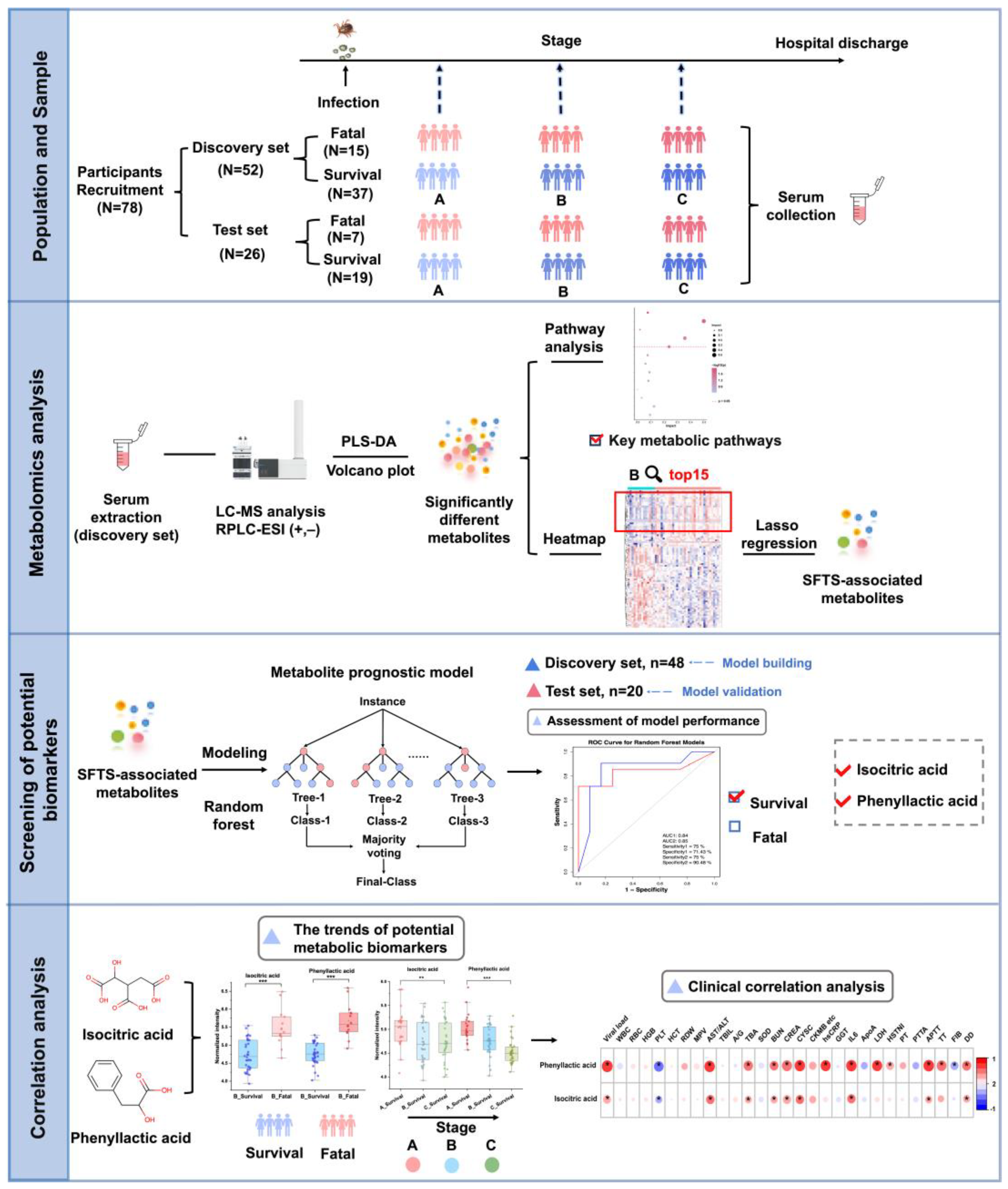
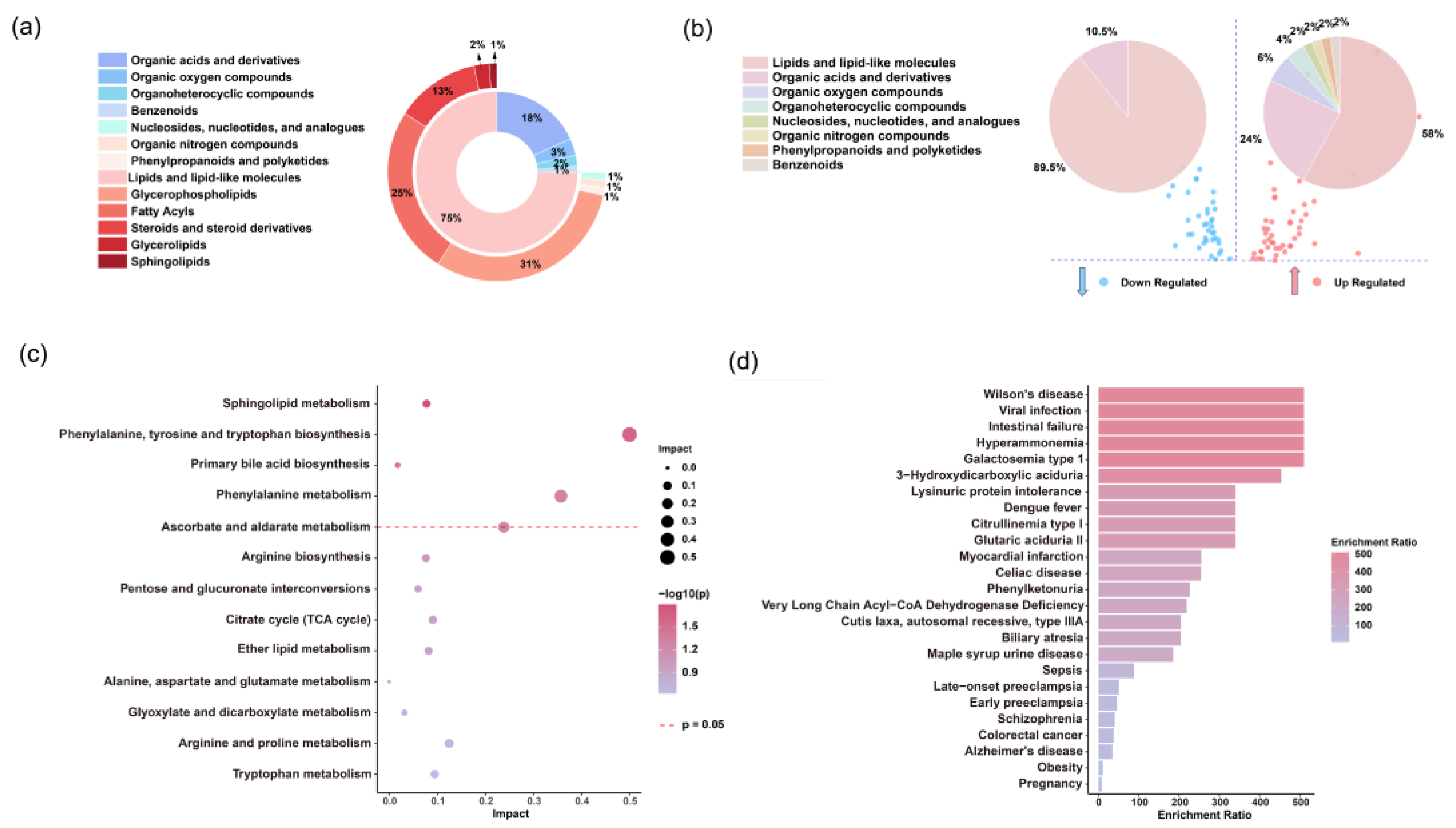
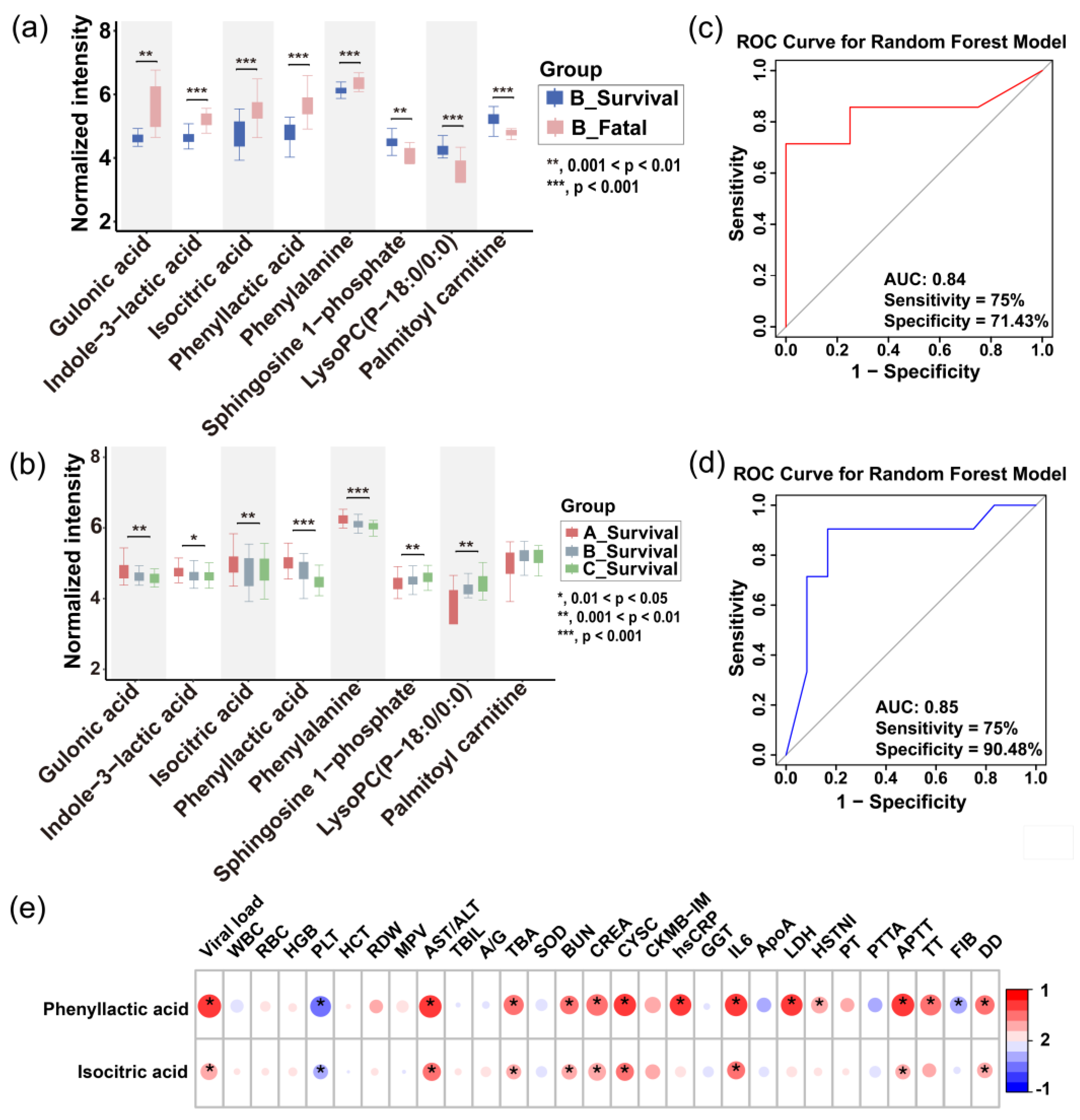
Severe fever with thrombocytopenia syndrome (SFTS) is a viral infection primarily found in Asia, with a case fatality rate of about 10%. Despite its increasing prevalence, the underlying pathogenic mechanisms remain poorly understood, limiting the development of effective therapeutic interventions. We employed an untargeted metabolomics approach using liquid chromatography-mass spectrometry (LC-MS) to analyze serum samples from 78 SFTS patients during the acute phase of their illness. Differential metabolic features between survival and fatal cases were identified through multivariate statistical analyses. Furthermore, we constructed a metabolic prognostic model based on these biomarkers to predict disease severity. Significant alterations were observed in four key metabolic pathways: sphingolipid metabolism, biosynthesis of phenylalanine, tyrosine, and tryptophan, primary bile acid biosynthesis, and phenylalanine metabolism. Elevated levels of phenylacetic acid and isocitric acid were strongly associated with adverse outcomes and demonstrated high discriminatory power in distinguishing fatal cases from survivors. The metabolic prognostic model incorporating these biomarkers achieved a sensitivity of 75% and a specificity of 90% in predicting disease severity. Our findings highlight the pivotal role of metabolic dysregulation in the pathogenesis of SFTS and suggest that targeting specific metabolic pathways could open new avenues for therapeutic development. The identification of prognostic biomarkers provides a valuable tool for early risk stratification and timely clinical intervention, potentially improving patient outcomes.
Keywords:
1. Introduction
2. Materials and Methods
2.1. Study Population Information
2.2. Chemicals and Reagents
2.3. Criteria for Staging Bunyavirus Patients
2.4. Serum Sample Collection and Preparation
2.5. LC-MS Analysis
2.6. Data Processing
2.7. Statistical Analysis
3. Results
3.1. Clinical Features of Study Population
3.2. Untargeted Metabolomics Analysis of Patients with Severe Fever with SFTS
3.3. Exploratory Analysis of Grouping
3.4. Significantly Altered Differential Metabolites
3.5. Selection and Evaluation of Potential Biomarkers
3.6. Correlation Analysis with Clinical Information
4. Discussion
5. Conclusions
Supplementary Materials
Author Contributions
Funding
Institutional Review Board Statement
Informed Consent Statement
Data Availability Statement
Conflicts of Interest
References
- Liu Q, He B, Huang SY, Wei F, Zhu XQ. Severe fever with thrombocytopenia syndrome, an emerging tick-borne zoonosis. Lancet Infect Dis. 2014;14:763–772. [CrossRef]
- Li J, Li S, Yang L, Cao P, Lu J. Severe fever with thrombocytopenia syndrome virus: a highly lethal bunyavirus. Crit Rev Microbiol. 2021;47:112–125. [CrossRef]
- Li H, Lu QB, Xing B, Zhang SF, Liu K, Du J, et al. Epidemiological and clinical features of laboratory-diagnosed severe fever with thrombocytopenia syndrome in China, 2011–17: a prospective observational study. Lancet Infect Dis. 2018;18:1127–1137. [CrossRef]
- Takahashi T, Maeda K, Suzuki T, Ishido A, Shigeoka T, Tominaga T, et al. The first identification and retrospective study of severe fever with thrombocytopenia syndrome in Japan. J Infect Dis. 2014;209:816–827. [CrossRef]
- Kim KH, Yi J, Kim G, Choi SJ, Jun KI, Kim NH, et al. Severe fever with thrombocytopenia syndrome, South Korea, 2012. Emerg Infect Dis. 2013;19:1892-1894. [CrossRef]
- Yu XJ, Liang MF, Zhang SY, Liu Y, Li JD, Sun YL, et al. Fever with thrombocytopenia associated with a novel bunyavirus in China. New Engl J Med. 2011;364:1523–1532. [CrossRef]
- Zhan J, Wang Q, Cheng J, Hu B, Li J, Zhan F, et al. Current status of severe fever with thrombocytopenia syndrome in China. Virol Sin. 2017;32:51–62. [CrossRef]
- Sun J, Lu L, Wu H, Yang J, Ren J, Liu Q. The changing epidemiological characteristics of severe fever with thrombocytopenia syndrome in China, 2011-2016. Sci Rep. 2017;7:9236. [CrossRef]
- Liu S, Chai C, Wang C, Amer S, Lv H, He H, et al. Systematic review of severe fever with thrombocytopenia syndrome: virology, epidemiology, and clinical characteristics. Rev Med Virol. 2014;24:90–102. [CrossRef]
- Kobayashi Y, Kato H, Yamagishi T, Shimada T, Matsui T, Yoshikawa T, et al. Severe Fever with Thrombocytopenia Syndrome, Japan, 2013–2017. Emerg Infect Dis. 2020;26:692-699. [CrossRef]
- Liu W, Lu QB, Cui N, Li H, Wang LY, Liu K, et al. Case-fatality ratio and effectiveness of ribavirin therapy among hospitalized patients in China who had severe fever with thrombocytopenia syndrome. Clin Infect Dis. 2013;57:1292-1299. [CrossRef]
- Huang XY, Hu XN, Ma H, Du YH, Ma HX, Kang K, et al. Detection of new bunyavirus RNA by reverse transcription-loop-mediated isothermal amplification. J Clin Microbiol. 2014;52:531–535. [CrossRef]
- Baek YH, Cheon HS, Park SJ, Lloren KKS, Ahn SJ, Jeong JH, et al. Simple, Rapid and sensitive portable molecular diagnosis of SFTS virus using reverse transcriptional loop-mediated isothermal amplification (RT-LAMP). J Microbiol Biotechnol. 2018;28:1928–1936. [CrossRef]
- Seo JW, Kim D, Yun N, Kim DM. Clinical update of severe fever with thrombocytopenia syndrome. Viruses. 2021;13:1213. [CrossRef]
- Zhang Y, Huang Y, Xu Y. Antiviral treatment options for severe fever with thrombocytopenia syndrome infections. Infect Dis Ther. 2022;11:1805–1819. [CrossRef]
- Moreno-Altamirano MMB, Kolstoe SE, Sánchez-García FJ. Virus control of cell metabolism for replication and evasion of host immune responses. Front Cell Infect Microbiol. 2019;9. [CrossRef]
- Eisenreich W, Rudel T, Heesemann J, Goebel W. How viral and intracellular bacterial pathogens reprogram the metabolism of host cells to allow their intracellular replication. Front Cell Infect Microbiol. 2019;9. [CrossRef]
- DeBerardinis RJ, Keshari KR. Metabolic analysis as a driver for discovery, diagnosis, and therapy. Cell. 2022;185:2678–2689. [CrossRef]
- Cui L, Lee YH, Thein TL, Fang J, Pang J, Ooi EE, et al. Serum metabolomics reveals serotonin as a predictor of severe dengue in the early phase of dengue fever. PLoS Negl Trop Dis. 2016;10:e0004607. [CrossRef]
- Tounta V, Liu Y, Cheyne A, Larrouy-Maumus G. Metabolomics in infectious diseases and drug discovery. Mol Omics. 2021;17:376–393. [CrossRef]
- Sindelar M, Stancliffe E, Schwaiger-Haber M, Anbukumar DS, Adkins-Travis K, Goss CW, et al. Longitudinal metabolomics of human plasma reveals prognostic markers of COVID-19 disease severity. Cell Rep Med. 2021;2:100369. [CrossRef]
- Li XK, Lu QB, Chen WW, Xu W, Liu R, Zhang SF, et al. Arginine deficiency is involved in thrombocytopenia and immunosuppression in severe fever with thrombocytopenia syndrome. Sci Transl Med. 2018;10:eaat4162. [CrossRef]
- Zhang SS, Yang X, Zhang WX, Zhou Y, Wei TT, Cui N, et al. Metabolic alterations in urine among the patients with severe fever with thrombocytopenia syndrome. Virol J. 2024;21:11. [CrossRef]
- Diagnosis and treatment scheme for severe fever with thrombocytopenia syndrome (2023 edition). Chinese Journal of Infection Control. 2024;23:918–920.
- Hao JD, Chen YY, Wang YZ, An N, Bai PR, Zhu QF, et al. Novel peak shift correction method based on the retention index for peak alignment in untargeted metabolomics. Anal Chem. 2023;95:13330–13337. [CrossRef]
- DeFelice BC, Mehta SS, Samra S, Čajka T, Wancewicz B, Fahrmann JF, et al. Mass spectral feature list optimizer (MS-FLO): a tool to minimize false positive peak reports in untargeted liquid chromatography-mass spectroscopy (LC-MS) data processing. Anal Chem. 2017;89:3250–3255. [CrossRef]
- Bijlsma S, Bobeldijk I, Verheij ER, Ramaker R, Kochhar S, Macdonald IA, et al. Large-scale human metabolomics studies: a strategy for data (pre-) processing and validation. Anal Chem. 2006;78:567–574. [CrossRef]
- Tsugawa H, Rai A, Saito K, Nakabayashi R. Metabolomics and complementary techniques to investigate the plant phytochemical cosmos. Nat Prod Rep. 2021;38:1729–1759. [CrossRef]
- Schymanski EL, Jeon J, Gulde R, Fenner K, Ruff M, Singer HP, et al. Identifying small molecules via high resolution mass spectrometry: communicating confidence. Environ Sci Technol. 2014;48:2097–2098. [CrossRef]
- Jia B, Yan X, Chen Y, Wang G, Liu Y, Xu B, et al. A scoring model for predicting prognosis of patients with severe fever with thrombocytopenia syndrome. PLoS Negl Trop Dis. 2017;11:e0005909. [CrossRef]
- Gai ZT, Zhang Y, Liang MF, Jin C, Zhang S, Zhu CB, et al. Clinical progress and risk factors for death in severe fever with thrombocytopenia syndrome patients. J Infect Dis. 2012;206:1095–1102. [CrossRef]
- Wang Y, Han S, Ran R, Li A, Liu H, Liu M, et al. A longitudinal sampling study of transcriptomic and epigenetic profiles in patients with thrombocytopenia syndrome. Nat Commun. 2021;12:5629. [CrossRef]
- Zhang YZ, He YW, Dai YA, Xiong Y, Zheng H, Zhou DJ, et al. Hemorrhagic fever caused by a novel bunyavirus in China: pathogenesis and correlates of fatal outcome. Clin Infect Dis. 2012;54:527–533. [CrossRef]
- Wang Y, Song Z, Wei X, Yuan H, Xu X, Liang H, et al. Clinical laboratory parameters and fatality of severe fever with thrombocytopenia syndrome patients: a systematic review and meta-analysis. PLoS Negl Trop Dis. 2022;16:e0010489. [CrossRef]
- Sun Y, Jin C, Zhan F, Wang X, Liang M, Zhang Q, et al. Host cytokine storm is associated with disease severity of severe fever with thrombocytopenia syndrome. J Infect Dis. 2012;206:1085–1094. [CrossRef]
- Arts RJW, Gresnigt MS, Joosten LAB, Netea MG. Cellular metabolism of myeloid cells in sepsis. J Leukoc Biol. 2017;101:151–164. [CrossRef]
- Li XK, Zhang SF, Xu W, Xing B, Lu QB, Zhang PH, et al. Vascular endothelial injury in severe fever with thrombocytopenia syndrome caused by the novel bunyavirus. Virology. 2018;520:11–20. [CrossRef]
- Frej C, Linder A, Happonen KE, Taylor FB, Lupu F, Dahlbäck B. Sphingosine 1-phosphate and its carrier apolipoprotein M in human sepsis and in escherichia coli sepsis in baboons. J Cell and Mol Med. 2016;20:1170–1181. [CrossRef]
- Gomes L, Fernando S, Fernando RH, Wickramasinghe N, Shyamali NLA, Ogg GS, et al. Sphingosine-1-phosphate in acute dengue infection. PLoS One. 2014;9:e113394. [CrossRef]
- Zangerle R, Kurz K, Neurauter G, Kitchen M, Sarcletti M, Fuchs D. Increased blood phenylalanine to tyrosine ratio in HIV-1 infection and correction following effective antiretroviral therapy. Brain Behav Immun. 2010;24:403–408. [CrossRef]
- Atila A, Alay H, Yaman ME, Akman TC, Cadirci E, Bayrak B, et al. The serum amino acid profile in COVID-19. Amino Acids. 2021;53:1569–1588. [CrossRef]
- Cui Y, Liu S, Zhang X, Ding X, Duan X, Zhu Z, et al. Metabolomic analysis of the effects of adipose-derived mesenchymal stem cell treatment on rats with sepsis-induced acute lung injury. Front Pharmacol. 2020;11:902. [CrossRef]
- Sun Q, Jin C, Zhu L, Liang M, Li C, Cardona CJ, et al. Host responses and regulation by NFκB signaling in the liver and liver epithelial cells infected with a novel tick-borne bunyavirus. Sci Rep. 2015;5:11816. [CrossRef]
- Xie J, Li H, Zhang X, Yang T, Yue M, Zhang Y, et al. Akkermansia muciniphila protects mice against an emerging tick-borne viral pathogen. Nat Microbiol. 2023;8:91–106. [CrossRef]
- Shen B, Yi X, Sun Y, Bi X, Du J, Zhang C, et al. Proteomic and metabolomic characterization of COVID-19 patient sera. Cell. 2020;182:59-72.e15. [CrossRef]
- Wang H, Yan D, Li Y, Gong Y, Mai Y, Li B, et al. Clinical and antibody characteristics reveal diverse signatures of severe and non-severe SARS-CoV-2 patients. Infect Dis Poverty. 2022;11:15. [CrossRef]
- Thomas C, Pellicciari R, Pruzanski M, Auwerx J, Schoonjans K. Targeting bile-acid signalling for metabolic diseases. Nat Rev Drug Discov. 2008;7:678–693. [CrossRef]
- Hylemon PB, Zhou H, Pandak WM, Ren S, Gil G, Dent P. Bile acids as regulatory molecules. J Lipid Res. 2009;50:1509–1520. [CrossRef]
- Huang X, Liu X, Li Z. Bile acids and coronavirus disease 2019. Acta Pharm Sin B. 2024;14:1939–1950. [CrossRef]
- Batiha GES, Al-kuraishy HM, Al-Gareeb AI, Youssef FS, El-Sherbeni SA, Negm WA. A perspective study of the possible impact of obeticholic acid against SARS-CoV-2 infection. Inflammopharmacol. 2023;31:9–19. [CrossRef]
- Cho WH, Park T, Park YY, Huh JW, Lim CM, Koh Y, et al. Clinical significance of enzymatic lysophosphatidylcholine (LPC) assay data in patients with sepsis. Eur J Clin Microbiol Infect Dis. 2012;31:1805–1810. [CrossRef]
- Krautbauer S, Eisinger K, Wiest R, Liebisch G, Buechler C. Systemic saturated lysophosphatidylcholine is associated with hepatic function in patients with liver cirrhosis. Prostaglandins Other Lipid Mediat. 2016;124:27–33. [CrossRef]
- Tan ST, Ramesh T, Toh XR, Nguyen LN. Emerging roles of lysophospholipids in health and disease. Prog Lipid Res. 2020;80:101068. [CrossRef]
- Knuplez E, Marsche G. An updated review of pro- and anti-inflammatory properties of plasma lysophosphatidylcholines in the vascular system. Int J Mol Sci. 2020;21(12):4501. [CrossRef]
- Curcic S, Holzer M, Pasterk L, Knuplez E, Eichmann TO, Frank S, et al. Secretory phospholipase A2 modified HDL rapidly and potently suppresses platelet activation. Sci Rep. 2017;7:8030. [CrossRef]
Disclaimer/Publisher’s Note: The statements, opinions and data contained in all publications are solely those of the individual author(s) and contributor(s) and not of MDPI and/or the editor(s). MDPI and/or the editor(s) disclaim responsibility for any injury to people or property resulting from any ideas, methods, instructions or products referred to in the content. |
© 2025 by the authors. Licensee MDPI, Basel, Switzerland. This article is an open access article distributed under the terms and conditions of the Creative Commons Attribution (CC BY) license (http://creativecommons.org/licenses/by/4.0/).