Preprint
Review

This version is not peer-reviewed.

Smog Pollution in Lahore, Pakistan: A Review of the Causes, Effects, and Mitigation Strategies

Submitted:

27 January 2025

Posted:

28 January 2025

You are already at the latest version

Abstract

Air, necessary for human survival, is mainly impacted by pollution, with smog being one of the most dangerous forms. The word Smog is basically combination of two words smoke and fog, which is formed by the primarily due to human activities such as vehicular emissions, industrial pollution, crop burning, and construction activities, alongside environmental conditions. In Pakistan, particularly in Lahore, the smog crisis has intensified due to rapid urbanization, population growth, and unregulated industrial and agricultural practices. The smog is primarily composed of particulate matter (PM2.5 & PM10), ozone, nitrogen oxides, and sulfur oxides, leading to severe respiratory, cardiovascular, and ocular health risks, including premature deaths. This review highlights the socioeconomic implications of smog, such as its adverse effects on tourism, education, and economic activities. Lahore, which is the 2nd largest city in Pakistan, experiences hazardous Air Quality Index (AQI) levels, exacerbated by heavy traffic, outdated vehicles, and high-sulfur fuels. Smog is responsible for low visibility, causing accidents and also degradation of infrastructure. The compounded effects of smog and the COVID-19 pandemic reveal a correlation between particulate matter exposure and respiratory health vulnerabilities. To mitigate the smog include short-term measures like traffic regulations, use of masks, and limiting outdoor activities, alongside long-term strategies like transitioning to electric vehicles, promoting public transportation, public awareness and afforestation. The public awareness campaigns and advanced monitoring system are essential for effective smog control. Internationally aligned policies, such as improved fuel standards and cleaner industrial practices, are also crucial. The collaborative efforts of governmental agencies, industries, and communities are pivotal to addressing Lahore’s smog crisis. This study underscores the urgency of implementing sustainable energy solutions and comprehensive policies to safeguard public health, economic stability, and environmental integrity.

Keywords: 
;  ;  ;  

1. Introduction

Air is a basic need for our survival. Our survival without breathing is impossible. Human require 2200 times respires per a day[1]. So, importance of respiration is determined by quality of air. When air is polluted like as smog or air pollution it is very dangerous for human survival. Air pollution is most serious problem facing by all over the world. Smog is basic type of air pollution. It contains mixture of both smoke and fog[2]. It is also sometimes called “photochemical smog”. The term smog is firstly used in London in 1950s. It results due to both human activities and environmental condition. The conference “smog” was organized in twentieth century, smoke and fog he combined the both two word to demonstrate the smoky fog, its drabness and odor[3].The primary source of air pollution in Pakistan are human activities such as crops burning, vehicles emission, construction activities ,burning of coal, fireworks, and smoke from brick kilns[4]. Mainly fog contains clouds like formation at ground level so when these particles which originate from primary source are mix with that vapors of fog, results in “photochemical smog[5]. The photochemical smog is also resulted by the reaction of nitrogen dioxide(NO2),nitrogen mono-oxide(NO), sulfur dioxide(SO2) and other volatile organic compound. These pollutants after the reaction form secondary pollutants such as ozone(O3) and fine particulate matter (PM2.5) and (PM10), which have major role in smog formation[6,7,8]. Pakistan is populated country in South Asia [9,10,11,12,13,14,15,16,17,18,19,20,21,22,23,24,25,26,27,28,29,30,31,32,33] and its 2nd largest city and capital of Punjab Lahore growing rate of 4% annually. [10]. It regarded as most polluted city of Pakistan due to its high population of 11.1 million people [11] in a Lahore smog results due to rapid urbanization, industrial pollution, heavy traffic, construction activities and coal burning industries[12].
Smog effect the human life such as impacting on respiratory and cardiovascular system and premature deaths. Smog amplifies health issues such as asthma, allergies, eye infections, respiratory infections, and then finely premature deaths[13]. There are a wide length of studies that examine the pecuniary disease by using the data getting from hospitals and relation of air pollution directly to lungs capacity[14,15]. (WHO) reported that the air pollution “smog” has a great short-term and long-term impact on human health .According to statistics data finding as it responsible for around 3.7 million premature deaths in all over the world in 2012[6]. According to [17] almost 9M people died due to air pollution because it badly effect the human life[18].
The present study aims to evaluate the major public’s perception and awareness of smog pollution, and also using the Contingent Valuation Method (CVM) for its control in the Lahore city, Punjab, Pakistan. This study also offer the methods used to prevent the effects of smog including public awareness, by social media and by different organization etc. The government of Punjab and federal government of Pakistan make rules and efforts to tackle smog, further action needed to completely resolve that problem. The public of Pakistan must urgently support governmental rules regulation to minimize and reduce smog because only state cannot overcome on that problem[19]. Instant interventions, including the implementation of strict emission regulations and proportion of viable farming practices, coupled with permanent strategies such as the uptake of sustainable energy sources and educational campaigns, judged imperative. Cooperative efforts involving governmental bodies, industries, farming communities, and public involvement are the crucial in effectively reducing Lahore’s smog disaster and enhancing a healthier, more sustainable future[20].

2. Framework of Smog Formation in Pakistan

The phenomenon of smog occur in Lahore usually start from November. In atmosphere many polluted particles are suspended so because of low temperature in winter these particles are mix with water vapors and down to ground level. This condition cause low visibility. Smog is also formed when air pollutants like nitrogen dioxide, sulfur dioxide, carbon monoxide and volatile compounds emitted by sources like vehicles, industries, and burning of fossils fuels interact with sunlight. The schematic analysis of formation of smog is shown in Figure 1:
Previous researches showed that the Lahore city have very high level of PM10, PM2.5and PM10s, Air Quality Index (AQI) stayed in the “good to hazardous” range. These particles contributing in the formation of smog[21].

2.2. An Examination of Causative Factors

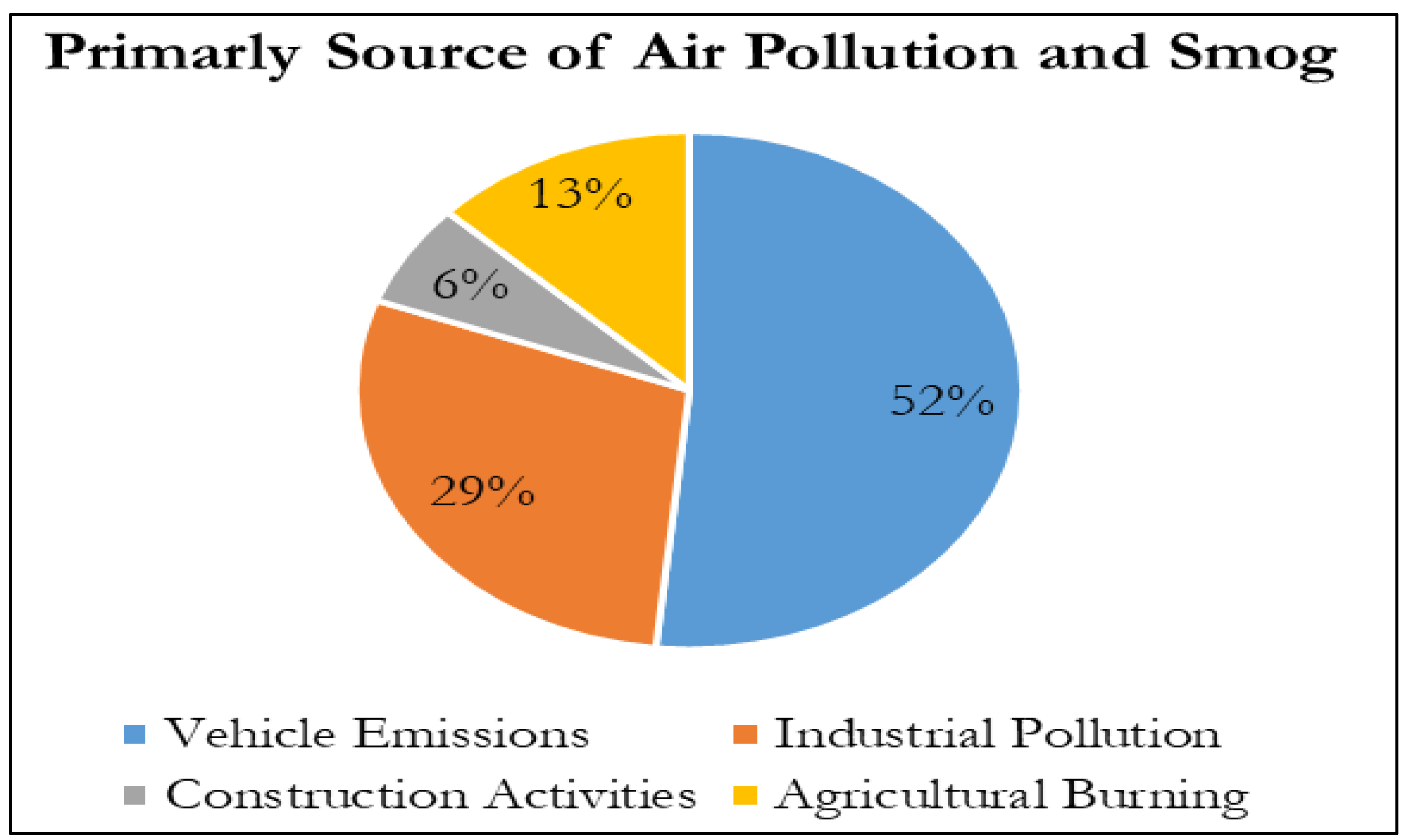
Air pollution is most dangerous problem facing by all over the world including Pakistan. The rate of pollution increases with the passage of time, it will also increase a hazardous level for our lives[22]. Lahore is 2nd largest and most polluted city of Pakistan[23]. Due to increase the population growth in developing countries like Pakistan resulted in more use of energy resources that decline air quality[24]. Human activities play crucial in smog formation. As we know that when human population increase, cites are over loaded with traffics, usage of more energy resources and increases different types of industries which may have crucial role in increasing the polluted Particles that result smog[25,26]. The percentage of primary sources of air pollution in Lahore shown in Figure 2, [27]. Owing to rapid surge in population, Pakistan especially Lahore has witnessed a significant escalation in transportation usage, which play vital role in smog formation. According to [28]about half of the global emission of smog pollutants stem from vehicles .The proliferation of private vehicles, notably in Punjab, which boasts around 19.6 million vehicles, including 6.2 million vehicles in only Lahore, which has great threat to air quality[29]. The another main reason for spreading the winter smog in Lahore is burning of the agriculture residue in neighboring country India, When large amount of smoke is coming from Indian Punjab to Pakistan Punjab also influence the climatic condition in Pakistan. According to researches about 90% of the smog formation is due to smoke which are made by burning of agricultural wastes. Lahore is also a urban city of and industrial hub of the Pakistan , so construction activities are also at higher level in these areas which are also take part in the formation of smog indirectly and indirectly.

2.3. Unraveling the Complexity of Smog Formation

The urban air of Lahore contain many harmful compound such as sulfur dioxide, carbon monoxide, nitrogen dioxide, nitrogen monoxide, volatile compounds, heavy metals, dust particles and (PM2.5),(PM10) and (O3) particles which may by product of power plants, fossils fuel burning, vehicles emission coal burning and different industries[23,24,25,26,27,28,29,30].
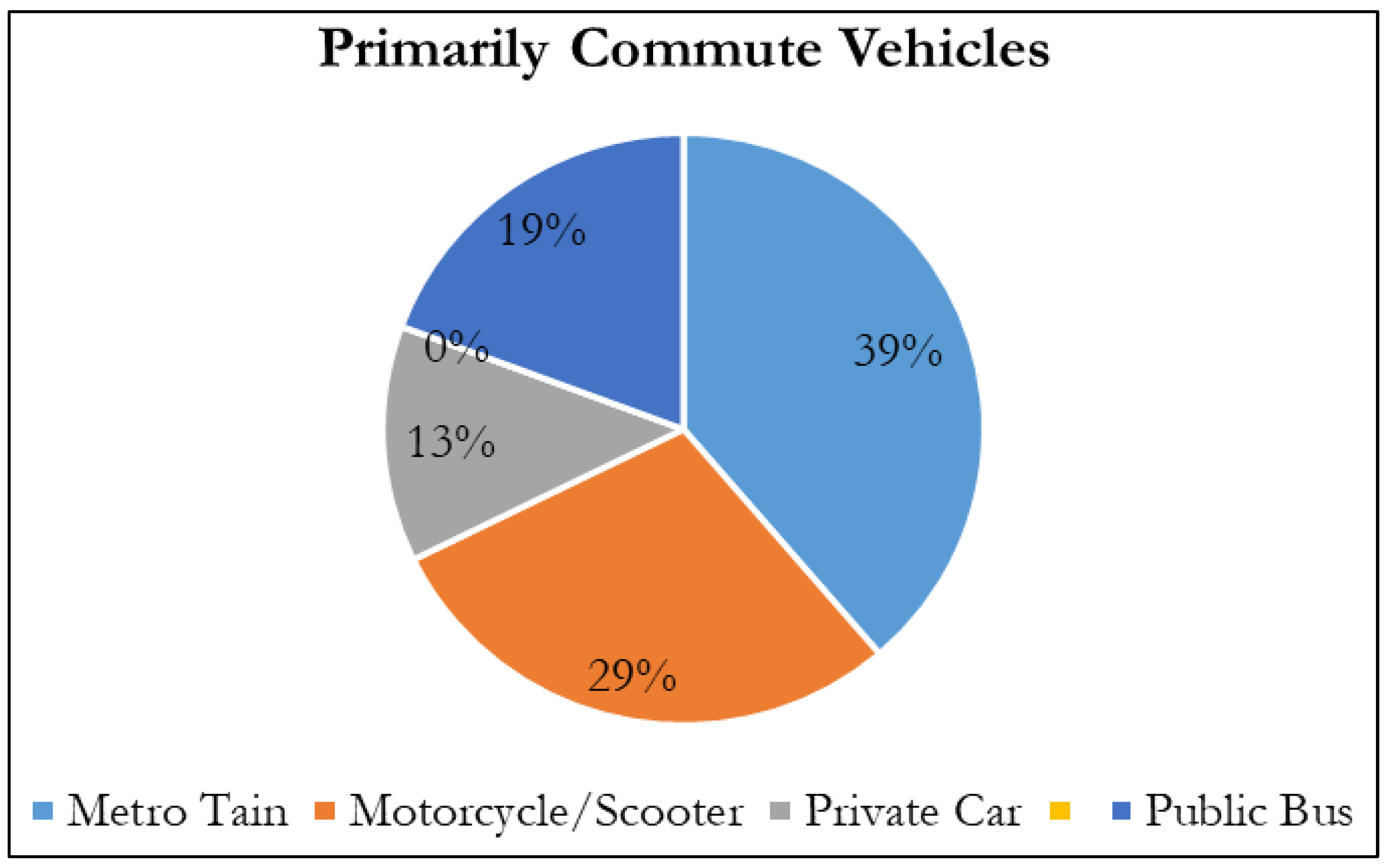
The increasing in PM2.5 particulate matter cause the smog pollution and have high health risks since they can enter the respiratory system[31]. Lahore is cultural and commercial hub of Pakistan may contains high number of private vehicles such as motor cycles, trucks, buses and other goods transportation which have significant role in smog formation. The percentage of their contribution in smog formation is illustrated in Figure 3.
The quality of fuel also influences vehicle emission like Pakistan have diesel with high sulfur content and petrol with lower octane ratings, resulting in high emission as compared to other regions[27]. The different schools buses and vehicles which produce more smokes through their engine are also have significant role in production of smog. According to researches nearly 70% pollution in a city is due to traffic, out of which 40% is from smoke releasing rickshaws, pickups and diesel buses[32]. The heavy machinery which can be used for road making and traffic in Mall road of Lahore, large no of cars and motorbikes in city also has contribution in smog formation. The current study help out in determining the factors involved in increase air pollution “smog” and analyzing the advanced methods for their controlling. Like industries operating without sufficient pollution control measures release considerable pollutants[33]. The other major reasonable factors for the occurrence of smog are burning of crops in Indian Punjab and smoke is entered in Lahore through wagha border, so that is the reason that the level of air pollution in Wagha is double than the Lahore city. That smoke contains high proportion of particulate matters which involved in the formation of winter smog[21].

3. Assessing the Health Impacts of Winter Smog

Lahore is important hub of Pakistan for commerce, industry, and finance, which has a huge impact on air quality control. The problem of smog pollution in this region has remarkable reflection of Pakistan. The World Health Organization (WHO) reported that surrounding air pollution like smog has a major short term and long impacts on human health, causing a congregation respiratory health risks. According to researches, 3.7Million people were premature died globally in 2012 due to air pollution (WHO, 2013) [34].Smog has primarily impacts on human health, by causing respiratory, cardiovascular, and ocular problems, also affecting allergic responses[35]. It also responsible for visibility degradation in affecting mortality and allied travel issues through the formation of fog and smog[36,37]. The smog is resulted by interaction of polluted materials from eg; burning, recirculated dust, and industrial activity under humid condition[38]. The gaseous components such as (SO2), (NO2), (NO) and (O3) are the main constituents of winter smog have great contribution in increasing the respiratory and cardiovascular diseases[39]. The permissible limits according to (WHO) of these particles and their major impacts on human health are shown in Table 1[12]. Smog have dangerous impacts on human as well as on animals and plants. It also effect the plant growth and responsible for their elimination. In smoggy season the sunlight have less intensity due to formation of polluted clouds of smog which effect the vegetables and other plants growth which indirectly effect the human life.
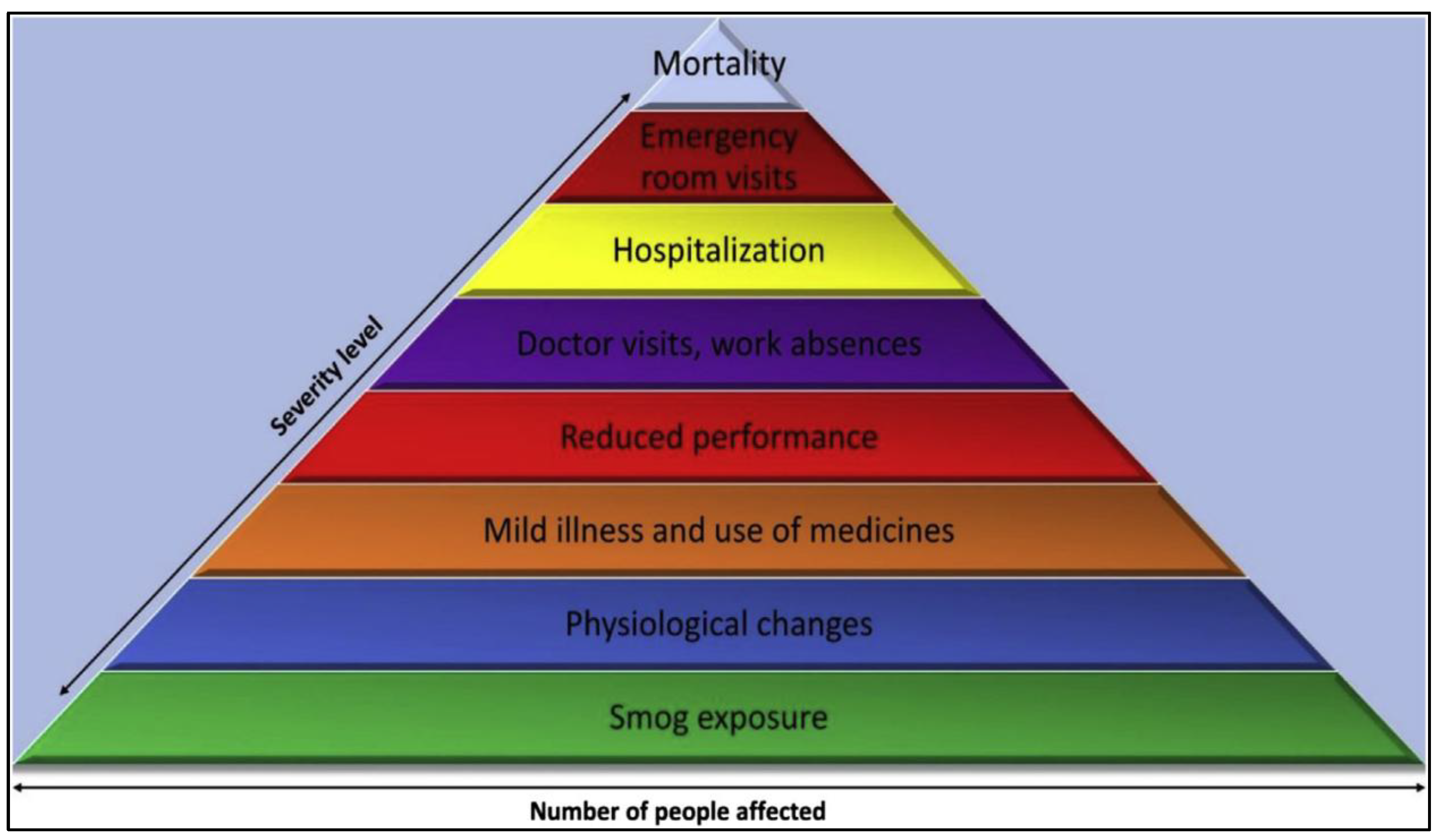
The results of smog on workplace health and livelihood loss is getting focus and data continue to elaborate the importance of additional researches in this scope[45,46]. The smog have greatly impacts on health of children and old age people because of developing of their lungs and other internal organ which are not properly work. The people which are suffering in disease such are dust allergies , pollen allergies, TB and other respiratory diseases have high rate of death due to air pollution by means of smog as compared to healthy people. The people of Lahore facing these problems in winter season, but those people which are lives near to road side area and exposed to external environment are more effected as compared to those people which live and work inside. Therefore, in smoggy season the life is partially or completely stuck. The urban air quality is deteriorating day by day, due to this ever increasing pollution the health of 1.6 million people in a Lahore under threat. The damaging effects of smog are also notice foe animals and plants, including both organ and cellular level[47,48]. Smog also contains major secondary pollutants which have badly impacts on human life and environment. The diseases like allergies, eye- watching bronchial infection, heart problem, including asthma and lung cancer are spread by these secondary pollutants[49,50]. Smog also greatly affected the children and people which are exposed in road side and suffered with emphysema, bronchitis and asthma. The severity of the effects on human health due to smog relation is shown in Figure 4: Smog also enhance the degradation of rubber, plastics, paints, and dyes, dame to metals, stone, concrete, and clothing[51].

3.1. Smog Effect Tourism in a Lahore

The Lahore is tourism city of Pakistan, smog causing damages to visitor attractions includes as historical buildings and places such as Badshahi Mosque, Minar e Pakistan etc.[52]. The foreign visitors and tourists due to health reason will avoid visiting a country disreputable for air pollution. Smog is responsible for negative experience of tourists and visitors by causing lower visibility and decreasing the aesthetic beauty of scenery, so, that low visibility cause the risk of accident. For example 10 people were died in one road accident due to low visibility in 2017[53,54]. The Lahore is not just economic and industrial hub for Pakistan but it also have some historical and religious places not only for Muslims but also for nonmuslims[55,56]. Smog not only effect the public visitors but also international just like members of the Sikh community who visit their holy shrine in Kartarpur[57,58]. Poudyal et al, exposed through econometric models that a basic 10% enhance in visibility could probably attract an extra one millions tourists to a park. National economic progress and air quality have very strong relationship. A strong economy depends on healthy peoples, active businesses, thriving tourism, and enhanced employment opportunities. However, smog badly disturbs these aspects and thus obstructs economic growth. Due to smog from morning to afternoon affect the whole day work. Recent researches showed that smog led to prolonged closures of public and private schools, colleges, universities and offices in Lahore in 2023. The CPAK one of the largest economic project about 62 million USD investment, faces considerable issues due to smog disrupting transportation routes within its vicinity[59,60].

3.2. Effecting Relation of Smog and Corona Virus

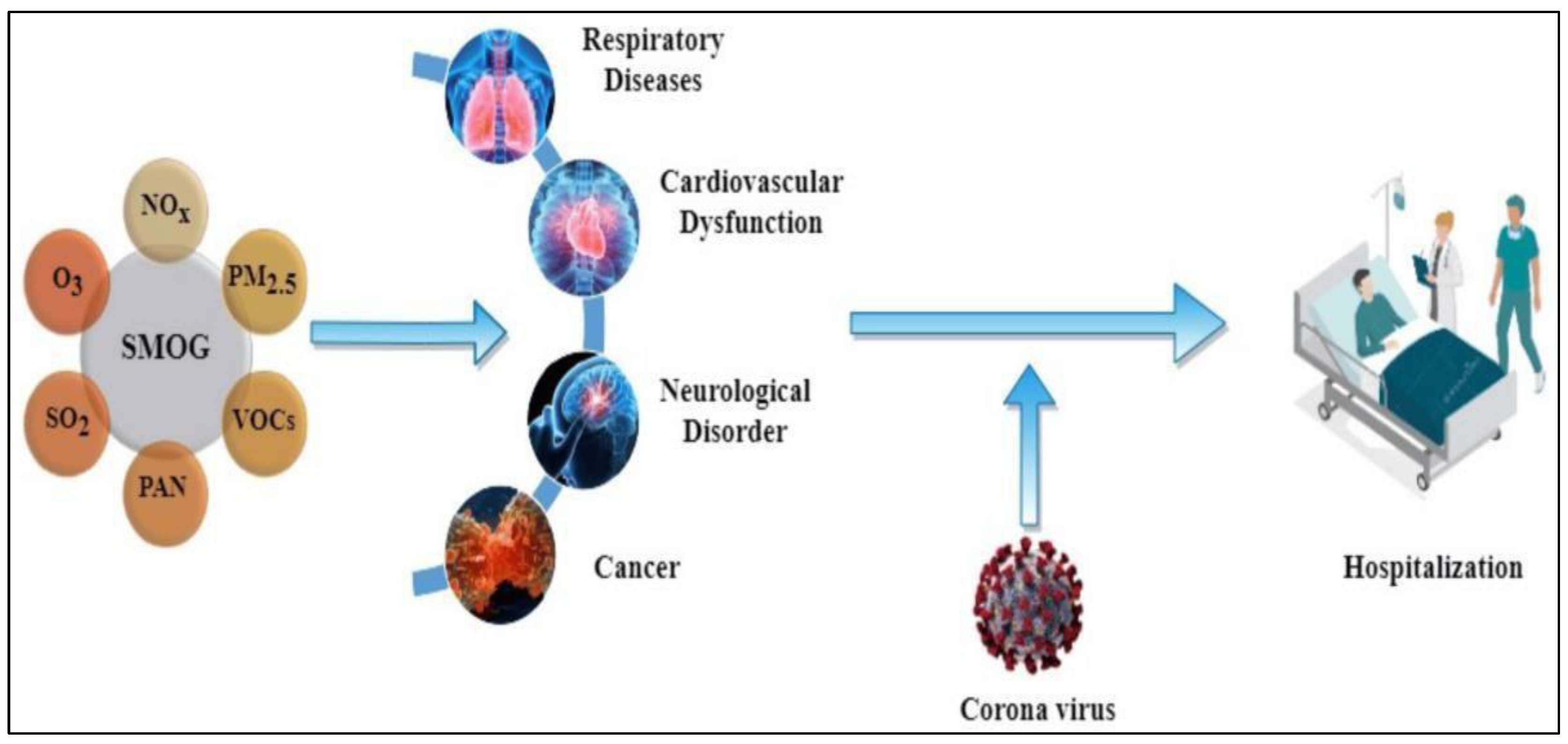
The particles in smog and corona virus have almost same impacts on human health. Particulate matter present (PM) cause dangerous health risks, primary effect the respiratory and cardiovascular system[61]. Corona virus also effected human population in last 3 to 4 years of the world including Pakistan. The disease which is primarily caused by coronavirus is lungs cancer, chest infection, asthma, flue, and badly effect respiratory system, which are very common to that of smog causing diseases. The correlation between corona virus and particulate matters and hospital admissions for respiratory issues are shown in Figure 5. The (PM2.5), that penetrate longer into lung tissue than larger particles, which increase the risk of chronic disease, like COPD (Chronic Obstructive Pulmonary Disease) and lung cancer , heart disease and finally stroke[62].
According to recent research, among affected individuals, 27% die due to pneumonia, 8% due to lung cancer, 20% from COPD, and 45% from cardiovascular diseases[63]. The PM2.5 in Western countries, consider to reduce the life expectancy by an average of 8.3 months (http://www.unece.org).

4. Smog Reducing Strategies in (Lahore) Pakistan

Air pollution (smog) is one of the major problems in the world including Pakistan. Many sources involved in this crisis, including automobile exhaust gases, industrial emissions improper waste disposal, agricultural practices, construction, and cigarette waste. For controlling smog spread first we controlling on these sources. Efficient method are present for detecting the smog pollutants such as smog monitoring like the AQS-1 measure smog severity and constituents, aiding in monitoring efforts. But the Pakistan current monitoring system is imperfect. Intervention measures customised to Pakistan’s statistics are presented to clash this issue. The country monitoring authorities same as Pakistan Environmental Protection Agency (Pak-EPA), play an important role, despite trial endure in orienting national air quality standards with international rule regulation. Lahore for example, records levels of pollutants substantially exceeding WHO guidelines, emitting a deteriorating air pollution crises. Large no of traffics in Lahore has primarily role in contributing in smog formation. We should use electric vehicles instead off diesel engine, and suggest the development of mass transit railways systems, such as high speed electric trains, could significantly increase air quality. To counter rising air pollution Pakistan has begun to slowly adapting electric vehicles, especially in populated cities such as Lahore, Karachi and Islamabad.
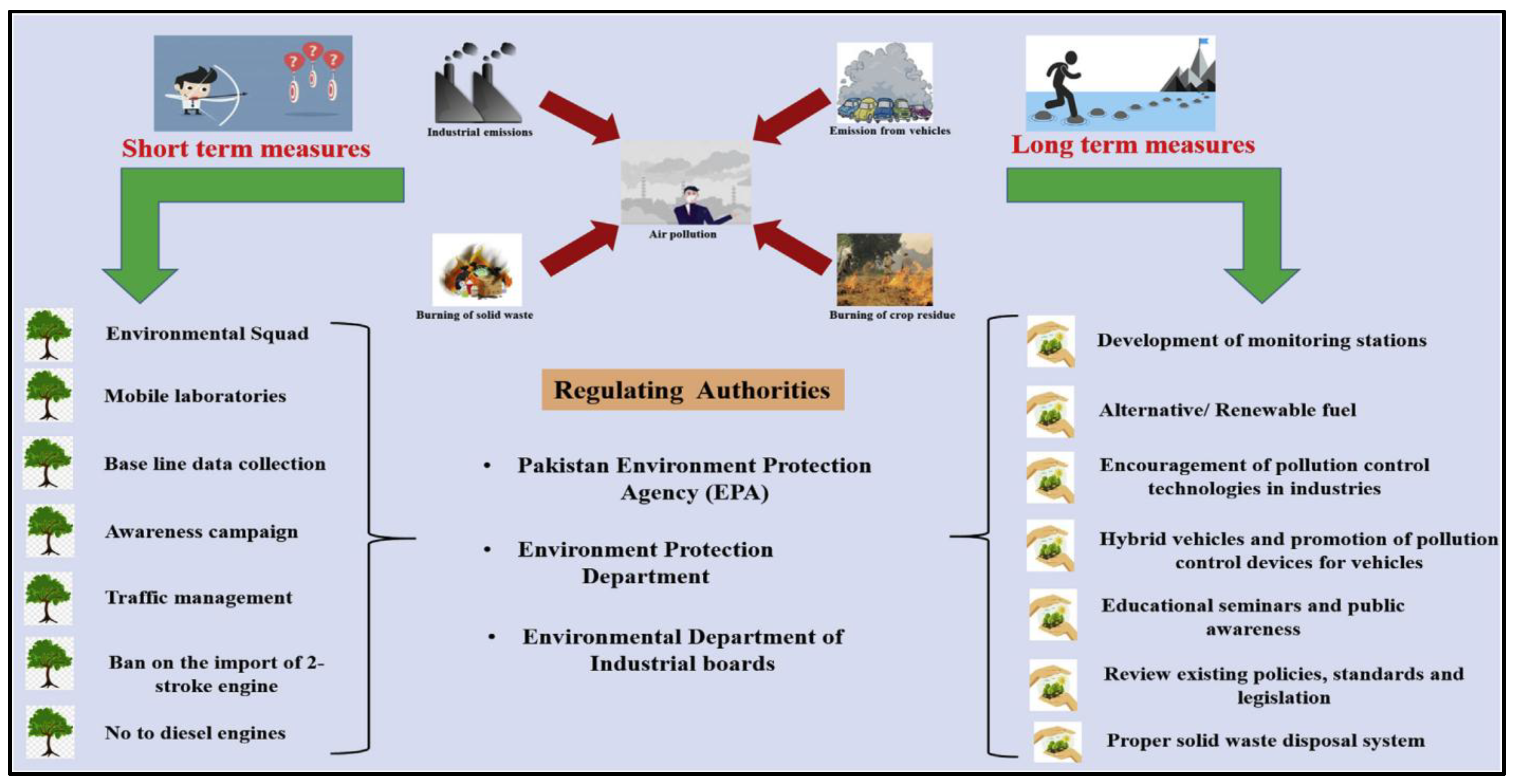
The government need to offer tax benefits for EV manufacturing and consumers. Increasing the use of public transport instead of cars, motorbikes and rickshaws are the some policies which help out in controlling the air quality. In industries we should requires to upgrading technology with mechanical feeders and cleaner methods like vertical shafts kilns can ensure more efficient coal combustion, thereby decreasing emissions. Government need to launch new policies including afforestation projects around the industrial areas of city, forming green barriers between industrial and urban regions. The Provincial Disaster Management Authority (PDMA) in Pakistan also has issued guidelines advising against outdoor activities during smog events, promoting the use of masks. To addressing these problems some factors that can’t be neglected such as public education and awareness of smog and its effects on human health[64,65]. The public awareness via social media, seminars, conferences, and community campaigns) play an important role in controlling the air pollution (smog).The educated population can easily understand the effects of smog on human health as compared to non-educated. Along with public awareness some social & behavioural changes are needed to overcome on this issue. For example in 2014, a nationwide program was launched by China to controlling the smog like household behavioural changes, increased online searches about smog effects, adjustment day by day consumption that reduce exposure to pollution. Some short term and long term policies to address that problem in Pakistan are shown in Figure 6:

5. Conclusion

Smog, a critical form of air pollution, poses a severe threat to human health, the environment, and socio-economic development, particularly in densely populated cities like Lahore, Pakistan. Its formation is resulted by human activities such as vehicular emissions, industrial processes, crop burning, and poor urban planning. Smog contributes to respiratory and cardiovascular diseases, premature deaths, and reduced visibility, impacting daily life, tourism, and economic productivity. The situation is exacerbated by inadequate pollution control measures and a lack of public awareness. Mitigation strategies must focus on enforcing stricter emission regulations, promoting electric and public transport, upgrading industrial processes, and implementing afforestation programs. Public awareness through education and campaigns is vital to drive behavioural changes. Collaborative efforts between the government, industries, and communities are crucial to achieving sustainable air quality improvements. Immediate and long-term interventions, guided by global best practices and localized policies, are essential to combat smog and protect public health and the environment in Lahore and beyond.

6. Future Directions

To improve the quality of air and reduce the effect of smog, the present study focus on developing new technologies to reduce pollution and creating sustainable urban planning strategies. Also understanding the association between air pollution, smog, climate change, and human health is important. By working together, we can find new solutions to reduce smog and create a cleaner, Investigating the efficacy of cutting-edge technologies, such as artificial intelligence and IoT-based monitoring systems, it will provide significant perspectives into improving air quality management strategies.
Author Contribution: Conceptualization, A.H., Methodology, A.H., Software, M.A., Investigation, A.H., Writing—original draft, A.H. ; Writing—review & editing, A.H. and Supervision, Dr.M.K. All authors have read and agreed to the published version of the manuscript.

Funding

This research received no external funding.

Institutional Review Board Statement

Not applicable

Informed Consent Statement

Not applicable

Data Availability Statement

No new data were created or analysed in this study. Data sharing is not applicable to this article.

Conflicts of Interest

The authors declare no conflicts of interest.

References

  1. Shahid, M.; Sadia, S. Investigation of causes and effects of winter smog in Lahore, Pakistan. Int. J. Adv. Sust. Devel. 2024, 1, 24–31. [Google Scholar]
  2. Mushtaq, A, Mahmood, S. “Analyzing the Impact of Smog on Human Health in District Lahore, Pakistan”, IJIST, 2024. Special Issue pp. 565–576.
  3. Tahir, M.; Azizb, S.; Khan, M.A.; Shahid, M. Spreading of Smog in Punjab Areas of Pakistan Due to Violation of Environmental Laws Current and Future Research Trends (IJSSCFRT) 2023.Volume 18, No 1. 74–89.
  4. Naureen, I.; Saleem, A.; Aslam, S.; Zakir, L.; Mukhtar, A.; Nazir, R.; Zulqarnain, S. Potential Impact of Smog on Human Health. Haya Saudi J Life Sci 2022, 7, 78–84. [Google Scholar] [CrossRef]
  5. Gaffney, J.S.; Marley, N.A.; Frederick, J.E. Formation and effects of smog. Environmental and Ecological Chemistry; Sabljic, A., Ed.; Eolss Publishers Co., Ltd.: Oxford, UK.2009. [Google Scholar]
  6. Dong, Z.; Li, X.; Dong, Z.; Su, F.; Wang, S.; Shang, L.; Kong, Z.; Wang, S. Long-term evolution of carbonaceous aerosols in PM2.5 during over a decade of atmospheric pollution outbreaks and control in polluted l China. Sci. Tot. Envir. 2024, 935, 173089. [Google Scholar] [CrossRef]
  7. Liu, D.; He, Y.; Wang, Q. Urban spatial structure evolution and smog management in China: A re- examination using nonparametric panel model. J. Clea. Prod. 2021, 285, 124847. [Google Scholar] [CrossRef]
  8. Naseem, M.; Kulshrestha, U.C. An Overview of Atmospheric Reactive Nitrogen Research: South Asian Perspective. Curr World Environ 2019, 14. [Google Scholar] [CrossRef]
  9. Riaz, R.; Hamid, K. Existing Smog in Lahore, Pakistan: An Alarming Public Health Concern. Cureus 2018, 10, e2111. [Google Scholar] [CrossRef]
  10. Sánchez-Triana, E.; Enriquez, S.; Afzal, J.; Nakagawa, A.; Khan, A.S. Cleaning Pakistan's Air: Policy Options to Address the Cost of Outdoor Air Pollution. Sánchez-Triana E, Enriquez S, Afzal J, Nakagawa A, Khan AS (ed): The World Bank, Washington, DC; 2014. 10.1596/978-1-4648- 0235-5.
  11. Nadeem, M.; Aziz, A.; MA Al-Rashid, A. Tesoriere, G., Asim, M., & Campisi, T. Scaling the Potential of Compact City Development: The Case of Lahore, Pakistan. Sustain. 2021, 13, 5257. [Google Scholar] [CrossRef]
  12. Raza, W.; Saeed, S.; Saulat, H.; Gul, H.; Sarfraz, M.; Sonne, C.; Sohn, Z.-H.; Richard, J.C.; Brown, F.; Kim, K.-H. A review on the deteriorating situation of smog and its preventive measures in Pakistan. J. Clean. Prod. 2021, 279, 123676. [Google Scholar] [CrossRef]
  13. Ikram, A.; Farooqui, M.; Suriya, S.; Quadri, S.A.; Zafar, A. Smog Sign: Hazy Diffusion-weighted Imaging Restriction in Dense Axonal Tracts in the Pons on Hyperacute MRI with Remarkable Clinical Improvement After Intra-arterial Thrombectomy. Cureus 2019, 11, e5461. [Google Scholar] [CrossRef] [PubMed] [PubMed Central]
  14. Lelieveld, J.; Evans, J.S.; Giannadaki, D. Pozzer, A. The contribution of outdoor air pollution sources to permanent mortality on global scale. Nature 2015, 525, 367–371. [Google Scholar] [CrossRef]
  15. Shrestha, S.; Moore, G.A.; Peel, M.C. Trends in winter fog in Terai region of Nepal. Agric. For. Meteorol 2018, 259, 118–130. [Google Scholar] [CrossRef]
  16. WHO Health Effects of Particulate Matter: Policy Implications for Countries in Eastern Europe Caucasus and Central Asia; WHO:2013.
  17. Landrigan, P.J.; Fuller, R.; Fisher, S.; Suk, W.A.; Sly, P.; Chiles, T.C.; Bose-O'Reilly, S. Pollution and children's health, Sci. of The Tot. Envir. 2019, 650, 2389–2394. [Google Scholar] [CrossRef]
  18. Rana, F.; Siddiqui, S.; ul-Haq, Z. Investigating the Spatiotemporal Distributions of NO2, SO2 and Their Association with NDVI in Lahore (Pakistan) and Its Adjoining Region of Punjab (India). J Indian Soc Remote Sens. 2023, 51, 1683–1696. [Google Scholar] [CrossRef]
  19. Yang, L.P.; Hoffmann, P.; Surgen, S. Health impacts of smog pollution: the human dimensions of exposure. Lan. Plan. Hea. 2017, 1, e132–e133. [Google Scholar] [CrossRef]
  20. Waheed, A.; Fischer, T.B.; Kousar, S.; Khan, M.I. Disaster management and environmental policy integration in Pakistan—an evaluation with particular reference to the China–Pakistan Economic Corridor Plan. Envir. Sci. Poll. Res. 2023, 1–32. [Google Scholar] [CrossRef] [PubMed]
  21. Yousaf, H.S.; M Abbas, M. , Ghani, N., Chaudhary, H., Fatima, A., Ahmad, Z., & Yasin, S.A. A comparative assessment of air pollutants of smog in wagah border and other sites in Lahore, Pakistan Brazilian. J. Bio. 2024, 84, e252471. [Google Scholar] [CrossRef]
  22. Clifford, A. ; LL Exposure to air pollution and cognitive functioning across the life course—a systematic literature review. Envir. Res. 2016, 147, 383–398. [Google Scholar] [CrossRef]
  23. Ali, Y.; Razi, M.; De Felice, F.; Sabir, M.; Petrillo, A. A VIKOR based approach for assessing the social, environmental and economic effects of “smog” on human health. Sci. Tot. Envir. 2019, 650, 2897–05. [Google Scholar] [CrossRef]
  24. Sun, C.; Yuan, X.; Xu, M. The public perceptions and willingness to pay: from the perspective of the smog crisis in China. J. Clea. Prod. 2016, 112, 232425. [Google Scholar] [CrossRef]
  25. Biswas, K.F.; Ghauri, B.M.; Husain, L. Gaseous and aerosol pollutants during fog and clear episodes in South Asian urban atmosphere. Atm. Envir. 2008, 42, 7775–7778. [Google Scholar] [CrossRef]
  26. Molina, C.; Toro, R.; Manzano, C.; Leiva-Guzmán, M.A. Particulate matter in urban areas of south-central Chile exceeds air quality standards. Air Quality, Atm. & Heal. 2017, 10, 653–667. [Google Scholar]
  27. Ayub, M.; Mahmood, S.; Sarwar, M. Analyzing the Contribution of Transportation in Formation of Smog in District Lahore, Pakistan. Int. J. Inn. in Sci. Tech.
  28. Xie, R.; Wei, D.; Han, F.; Lu, Y.; Fang, J.; Liu, Y.; Wang, L. The effect of traffic density on smog pollution: Evidence from Chinese cities. Tech. For. Soc. Cha. 2019, 144, 421–427. [Google Scholar] [CrossRef]
  29. Zahid, A. Rise in Number of Vehicles Creating Traffic Problems in Lahore. https://www.pakwheels.com/blog/rise-in-number-of-vehicles-creating-trafficproblems-in-lahore/.2020.
  30. Jiang, L.; Hiltunen, E.; He, X.; Zhu, L. A questionnaire case study to investigate public awareness of smog pollution in China’s rural areas. Sustain. 2016, 8, 1111. [Google Scholar] [CrossRef]
  31. Mirza, A.I.; Kazmi SJ, H.; Abbas, N.; Mehdi, M.R. Environmental Monitoring of Smog in Lahore Metropolitan Area Using GIS Technology. 2022. [Google Scholar]
  32. Hameed, R.; Bhatti, N.A.; Nadeem, O.; Haydar, S.; Khan, M.A. Comparative analysis of emissions from motor vehicles using LPG, CNG and Petrol as Fuel in Lahore. J. Chi. Inst. Che. Eng. 2013, 41, 59–66. [Google Scholar]
  33. Siddqiue, M.U.; Jamil, M.; Arshad, A. Digital Solutions and Technological Innovations Driving Public Awareness and Community Initiatives for Smog Reduction in Lahore: A Descriptive Overview. Pak. Soci. Sci. Rev. 2023, 7, 425–438. [Google Scholar] [CrossRef]
  34. Ahmad, R.; Li, F.; Hussain, I.; Hayat, A. Assessing the impact of public perception and willingness-to- pay on reducing smog in Pakistan: Evidence from Lahore City. Heliyon 2024, 11, e39517. [Google Scholar] [CrossRef]
  35. Tsai, S.; Cheng, M.; Chiu, H.; Wu, T.; Yang, C. Pollution and hospital admissions for asthma in a tropical city: Kaohsiung, Taiwan. Inhal. Toxicol. 2006, 18, 549–554. [Google Scholar] [CrossRef] [PubMed]
  36. Gurjar, B.R.; Ravindra, K.; Nagpure, A.S. Air pollution trends over Indian megacities and their local-to- global implication. Atmos. Environ. 2016, 142, 475–495. [Google Scholar] [CrossRef]
  37. Vega, E.; Eidels, S.; Ruiz, H.; Lopez-Veneroni, D.; Sosa, G.; Gonzalez, E.; Gasca, J.; Mora, V.; Reye, E.; Sanchez-Reyna, G. Particulate air pollution in Mexico City: A detailed view. Aerosol Air Qual. Res. 2010, 10, 193–211. [Google Scholar] [CrossRef]
  38. Tao, M.; Chen, L.; Xiong, X.; Zhang, M.; Ma, P.; Tao, J.; Wang, Z.; Wang, Z. Formation process of the widespread extreme haze pollution over northern China in January 2013: Implications for regional air quality and climate. Atmos. Environ. 2014. 98, 417–425. [CrossRef]
  39. Badyda, A.J.; Grellier, J.; Dabrowiecki, P. Ambient PM2.5 exposure and mortality due to lung cancer and cardiopulmonary diseases in Polish cities. In Respiratory Treatment and Prevention. Advances in Experimental Medicine and Biology; Pokorski, M., Ed.; Springer: Cham, Switzerland.2016; Volume 944, pp. 9–17. [Google Scholar]
  40. Salonen, H.; Salthammer, T.; Morawska, L. Human exposure to ozone in school and office indoor environments. Envir. Inter. 2018, 119, 503–514. [Google Scholar] [CrossRef]
  41. Kim, K.-H.; Kabir, E.; Kabir, S. A review on the human health impact of air borne particulate matter. Envir. Inter. 2015, 74, 136–143. [Google Scholar] [CrossRef] [PubMed]
  42. Quansah, R.; Semple, S.; Ochieng, C.A.; Juvekar, S.; Armah, F.A.; Luginaah, I.; Emina, J.J.E.I. Effectiveness of interventions to reduce household air pollution and/or improve health in homes using solid fuel in low-and-middle income countries: a systematic review and meta-analysis. 2017, 103, 73–90.
  43. Lee, H.; Myung, W.; Cheong, H.-K.; Yi, S.-M.; Hong, Y.-C.; Cho, S.-I.; Kim, H.J.E.i. Ambient air pollution exposure and risk of migraine: synergistic effect with high temperature. 121.
  44. Flachsbart, P.G. Human exposure to carbon monoxide from mobile sources, Chemosphere Global Change Sci. 1. [CrossRef]
  45. Ali, M.; Athar, M. Impact of Transport and Industrial Emissions on the Ambient air Quality of Lahore City, Pakistan. Envir. Monit. Ass. 2010, 171, 353–363. [Google Scholar] [CrossRef] [PubMed]
  46. Sheikh, M.R.; Aktar, T. An assessment of climatic change impacts on livelihood patterns: A case study at Bakergonj Upazila, Barisal. J. Heal. Environ. Res. 2017, 3, 42–50. [Google Scholar] [CrossRef]
  47. Gheorghe, I.F.; Ion, B. The effects of air pollutants on vegetation and the role of vegetation in reducing atmospheric pollution. The impact of air pollution on health, economy, environment and agricultural sources. 2011, 29, 241–280. [Google Scholar]
  48. Zhang, D.; Liu, J.; Li, B. Tackling air pollution in China—what do we learn from the great smog of 1950s in London. Sustain. 2014, 6, 5322–5338. [Google Scholar] [CrossRef]
  49. Chen, R.; Zhao, Z.; Khan, H. Heavy smog and hospital visits in Beijing, China. Amer. J. Res. Criti. Car. Med. 2013, 188, 1170–1171. [Google Scholar] [CrossRef]
  50. Iriti, M.; Faoro, F. Oxidative stress, the paradigm of ozone toxicity in plants and animals. Wat. Ai. Soi. Poll. 2008, 187, 285–01. [Google Scholar] [CrossRef]
  51. Liang, F.Y.; Ryvak, M.; Sayeed, S.; Zhao, N. The role of natural gas as a primary fuel in the near future, including comparisons of acquisition, transmission and waste handling costs of as with competitive alternatives. Che. Cen. J. 2012, 6, 1–24. [Google Scholar] [CrossRef]
  52. Peng, J.; Xiao, H.; Wang, J.; Zhang, J. Impact of severe smog on travel demand of residents in tourist generating places: a case study of Beijing. Curr. Iss. Tour. 2020, 23, 2009–2026. [Google Scholar] [CrossRef]
  53. Shabbir, M.; Junaid, A.; Zahid, J. Smog: A Transboundary Issue and its Impli-cations in India and Pakistan. 2019.
  54. Poudyal, N.C.; Paudel, B.; Green, G.T.J.T.e. Estimating the impact of impaired visibility on the demand for visits to national parks. 2013, 19, 433–452.
  55. Manzoor, F.; Wei, L. A review of China-Pakistan economic corridor and tourism opportunities. In: Third International Conference on Economic and Business Management (FEBM 2018).Atlantis Press.
  56. World Asia. Pakistan Tops List of World’s Best Travel Destination for 2018. 2018.https://gulfnews.com/world/asia/pakistan/pakistan-tops-list-of-worlds-best-travel-destination-for-2018- 1.2148655.
  57. Khan, S. An insight into stereotypical images and encountered reality of South Asia as tourism destination. Asia-Pac. J. of Inn. in Hospit. and Tour. 2013, 2, 17e36. [Google Scholar]
  58. Khilji, S. SDPI Research and News Bulletin. October-December, 20 December.
  59. Kouser, S.; Subhan, A.; Abedullah. Uncovering Pakistan’s environmental risks and remedies under the China-Pakistan economic corridor. Envir. Sci. Poll. Res. 2020, 27, 4661–4663. [Google Scholar] [CrossRef]
  60. Raja, M.U.; Mukhtar, T.; Shaheen, F.A.; Bodlah, I.; Jamal, A.; Fatima, B.; Shah, I. Climate change and its impact on plant health: a Pakistan’s prospective. Plan. Pro. 2018, 2, 51–56. [Google Scholar]
  61. Moelling, K.; Broecker, F. Air micro biome and pollution: composition and potential effects on human health, including SARS coronavirus infection. J. Envir. Pub. Hea. 2020. [Google Scholar] [CrossRef] [PubMed]
  62. Steven, C.; Hayes, S.; Hofmann, S.G.; Stanton, C.E. Process-based functional analysis can help behavioral science step up to novel challenges: COVID - 19 as an example. J. Con. Beh. Sci. 2020, 18, 128–145. [Google Scholar] [CrossRef]
  63. Landrigan, R. Fuller, N.J.R.; Acosta et al. The Lancet Commission on pollution and health. Lancet 2018, 391, 462–512. [Google Scholar] [CrossRef] [PubMed]
  64. Ahsan, T.; Chaudhry, M.A.; ul Huda, N.; Mukhtar, N.; Ahmad, R.; Ali, M. Knowledge and Perception of Smog in Citizens of Lahore, Pakistan. Rawal. Med. J. 2020, 45, 184–187. [Google Scholar]
  65. Wang, Y.; Sun, M.; Yang, X.; Yuan, X. Public awareness and willingness to pay for tackling smog pollution in China: a case study. J. Clean. Prod. 2016, 112, 1627–1634.13. [Google Scholar] [CrossRef]
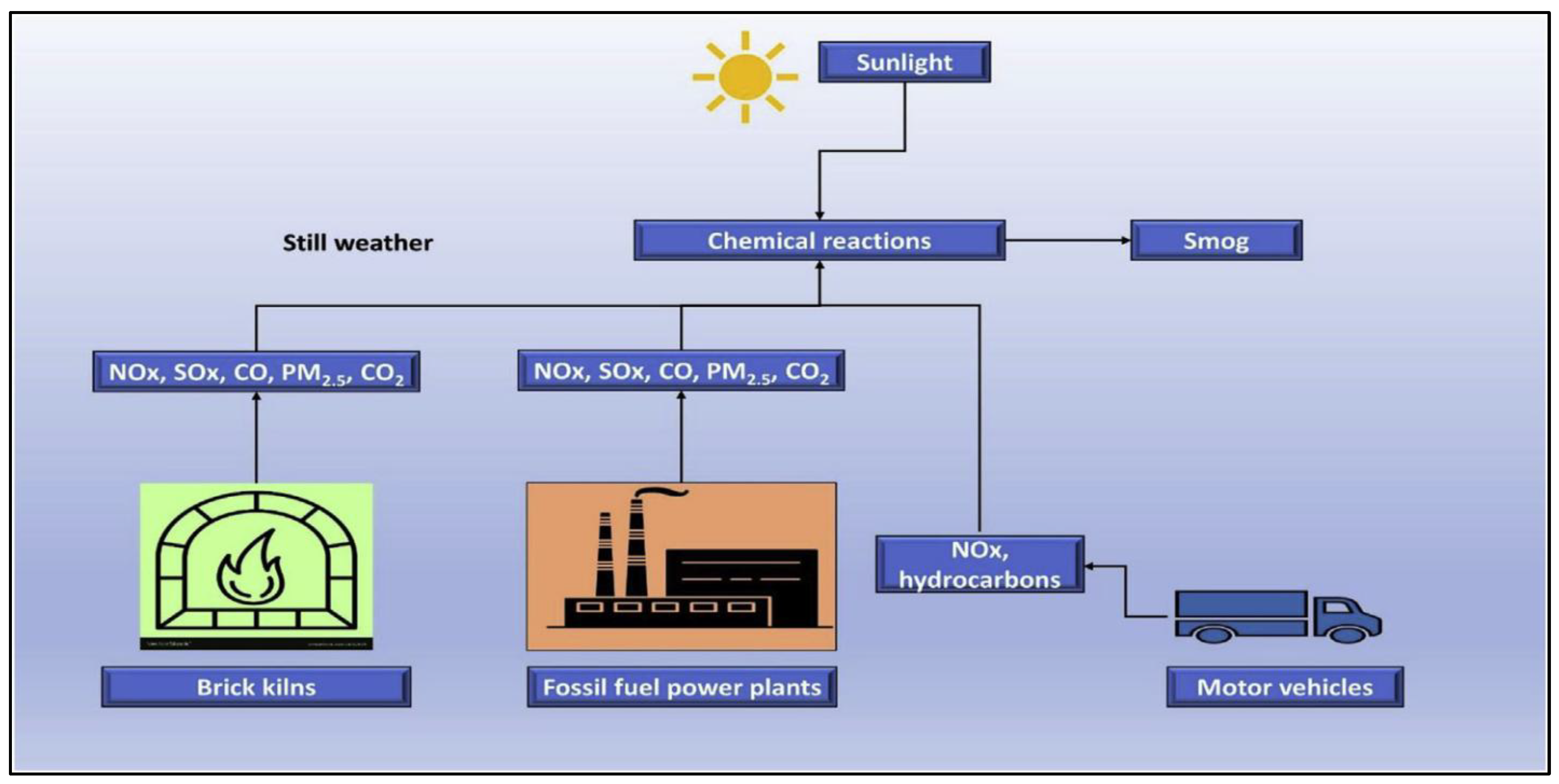
Figure 1. The diagrammatic illustration of formation of smog[12].
Preprints 147441 g001
Figure 2. Primary source of smog on human health[28].
Preprints 147441 g002
Figure 3. The graphical representation of transportation in the formation of smog[27].
Preprints 147441 g003
Figure 4. Hierarchy of the effects of smog on human health[12].
Preprints 147441 g004
Figure 5. The relationship between coronavirus and smog[2].
Preprints 147441 g005
Figure 6. These are short & long-term policies to mitigate smog pollution in Pakistan[12].
Preprints 147441 g006
Table 1. Adverse effects of smog components on human health[12].
Order Pollutants Limits(WHO)umg-3 Main source Effects on human health
1 Ozone 8-h
 Mean=100umg-3
Brick kilns, Power plants, VOCs Harmful to the cardiovascular,respiratoy&central nervous systems[40].
2 PM2.5 24-h
 Mean=25umg-3
Forest fibres,air planes, motor vehicles, dust It is Responsible for cardiovascular, asthma respiratory diseases, , Arrhythmia, and damage to the central nervous system[41].
3 NOx 1h
 Mean=200umg-3
Cement kilns, Industrial boilers, Power plants Penetrate deep into the respiratory system, also cause DNA mutations [42].
4 SOx 24h
 Mean=20umg-3
Fossils fuel burning,volcanic eruption It can cause lung cancer, digestive system and critically damage the respiratory system, even leading to death[43].
5 CO 8h
 Mean=10umg-3
Bushfires, Volcanoes It is responsible for anemia, cardiovascular diseases,respiratory problems. Headache, vomiting, dizziness, results into death[44].
Disclaimer/Publisher’s Note: The statements, opinions and data contained in all publications are solely those of the individual author(s) and contributor(s) and not of MDPI and/or the editor(s). MDPI and/or the editor(s) disclaim responsibility for any injury to people or property resulting from any ideas, methods, instructions or products referred to in the content.
Copyright: This open access article is published under a Creative Commons CC BY 4.0 license, which permit the free download, distribution, and reuse, provided that the author and preprint are cited in any reuse.
Prerpints.org logo

Preprints.org is a free preprint server supported by MDPI in Basel, Switzerland.

Subscribe

Disclaimer

Terms of Use

Privacy Policy

Privacy Settings

© 2025 MDPI (Basel, Switzerland) unless otherwise stated