Preprint
Case Report

This version is not peer-reviewed.

A Multicomponent Training Program Improves Physical Function and Quality of Life for a Mesenchymal Chondrosarcoma Survivor: A Case Study

A peer-reviewed article of this preprint also exists.

Submitted:

17 January 2025

Posted:

20 January 2025

You are already at the latest version

Abstract

Background/Objectives: Overcoming an oncological process has a significant impact on lower-extremity sarcoma survivors’ quality of life, due to the deterioration in their physical and functional state. This study evaluates the effects of a six-month multicomponent physical training program on mesenchymal chondrosarcoma survivors’ physical function and quality of life Methods: The program was performed done twice weekly and included resistance, cardiorespiratory, trunk control and stability exercises. Results: Functional assessments revealed improvements in hand grip strength, walking speed, balance, and coordination. The Timed Up and Go test showed a 50% reduction in completion time, reflecting better mobility and strength. Additionally, gait speed increased significantly, and balance trials indicated enhanced coordination. Quality of life evaluations using the WHOQOL-BREF questionnaire indicated progress in physical health, psychological well-being, and environmental engagement. Conclusions: Taken together, these results emphasize the importance of tailored exercise interventions for sarcoma survivors, particularly those with significant physical impairments. Such programs are vital complements to conventional rehabilitation strategies, fostering physical activity adapted to individual needs. By addressing the multifaceted challenges of survivorship, these interventions enhance functional capacity, reduce disability, and improve overall well-being. Therefore, this case study highlights the program’s effectiveness in managing post-treatment sequelae, opening a pathway to improved physical autonomy and quality of life.

Keywords: 
;  ;  ;  

1. Introduction

The incidence of cancer in the world is immense; as a matter of fact, it is the second cause of death after cardiovascular diseases. More than 19 million new cases of this disease worldwide were estimated to have appeared in 2020, causing 10 million deaths. It is estimated that these data will increase by almost 50% in 2040 (Sung et al., 2021) (1). Population growth and the increasing ageing rates, as well as prevalent risk factors such as tobacco and alcohol use, physical inactivity, a sedentary lifestyle, and unhealthy diets, all contribute to the growing impact of cancer. From a public health perspective, cancer creates an enormous economic and social burden. Not only do improvements in cancer therapy lead to an increase in the number of survivors, but also to those in early detection. (Nakano et al., 2021) (2).
Sarcomas constitute a heterogeneous group of rare malignant neoplasms that arise from mesenchymal cells in soft tissues (about 84%, whose incidence increases with age too) and bones (more frequent in children and adolescents) (Furtado et al., 2017) (3). They represent approximately 1% of all cancer types (Almeida et al., 2021) (4) and display very different development patterns at the time of diagnosis, treatment and prognosis (Panagi et al., 2022) (5). Around 60% of sarcomas in adults are located in the extremities (Panagi et al., 2022) (5) with frequent metastasis to the lungs. Depending on the pathology, location, and treatment of the tumour, they produce wide-ranging harmful effects on the survivors’ functionality and quality of life (Panagi et al., 2022) (5).
After osteosarcoma, chondrosarcoma is the second most common of its kind, with an overall age-standardized incidence of 0.1 to 0.3 per 100,000 worldwide yearly. It accounts for 27% of all bone tumours according to the International Agency for Research on Cancer database (IARC) (Zaja ̨c et al., 2021) (6). This type can manifest in any part of the body, although most arise in the extremities (45%) and the axial skeleton (31%). Within the appendicular skeleton, there is a strong predilection for the long bones of the lower extremity, whose most common location is the proximal femur (Gazendam et al., 2023) (7).
Treatment for lower-extremity sarcomas may include a combination of surgical excision, chemotherapy and/or radiotherapy, depending on the characteristics of the patient and the nature of the tumour (Almeida et al., 2021 (4); Den Hollander et al., 2020 (8)). All these treatments have a detrimental impact on the locomotor system of the patients suffering from musculoskeletal tumours which affect the pelvis and lower limbs (Furtado et al., 2020 (10)). Oftentimes, they cause muscle dysfunction due to decreased muscle strength and mass (Fukushima et al., 2023 (9)), and progressive worsening of gait and balance (Furtado et al., 2020 (10)). Indeed, the latter leads to reduced mobility, lower motor performance, lack of confidence and security in movement, loss of adaptation mechanisms to maintain the body in space, and increased risk of falls (Furtado et al., 2020 (10)). Hence, these alterations do not only increase the possibility of fractures, disability and loss of autonomy and independence but also promote physical inactivity and a sedentary lifestyle, accelerating the loss of functional capacity and the deterioration in quality of life (Furtado et al., 2017) (3); Fukushima et al., 2023 (9)). It is crucial to improve, promote and maintain the physical and mental abilities of cancer survivors through physical exercise programs adapted to their characteristics and needs, in order to better their health and quality of life (Assi et al., 2017 (11)).
Physical exercise intervention programs have been shown to be an essential complement to tackle the adverse side effects associated with various types of cancer (Assi et al., 2017 (11); Albini et al., 2024 (12); Wang et al., 2021 (13)). However, there is still a lack of sufficient scientific evidence about the effects of exercise on survivors of mesenchymal chondrosarcoma, particularly in the stage following clinical treatment. (Assi et al., 2017 (11)). This research is aimed at determining the effects and benefits of a multi-component training program consisting of resistance, cardiorespiratory, trunk control and stability exercises in improving the functional capacity and quality of life for mesenchymal chondrosarcoma survivors. This program has been carried out in a safe environment supervised by a physical-sports educator. This allowed the individual to cope with the motor, cognitive, and emotional disorders that the disease (and post-treatment sequelae) entails, which remain a challenge for their recovery.

2. Materials and Methods

A literature search was conducted on 8/21/2024 in the PubMed database using combinations of the terms “physical function”, “mesenchymal chondrosarcoma”, “physical exercise”, and “quality of life”. In addition, the search was limited to papers published in the last 10 years. All articles related to physical activity and exercise in lower-extremity sarcoma survivors were considered. A specific case is described below, as well as the effects of a 16-week multicomponent training program on physical function and quality of life.
CLINICAL CASE
Subject
The participant is a 52-year-old woman, who survived a mesenchymal chondrosarcoma in the right hemipelvis, and was diagnosed in 2015. She lives in Granada (Spain). The subject underwent surgery by means of an internal hemipelvectomy, and reconstruction with a custom-made tumour prosthesis of the hemipelvis and right hip. A few weeks later, surgery was performed for acute periprosthetic infection by Enterococcus and Pseudomonas. This was controlled and chemotherapy and radiotherapy began according to the oncology protocol. In June 2016, she underwent surgery for a new hematogenous infection vs. exacerbation of the previous one, in the context of febrile neutropenia and radiotherapy. Coverage was performed with a pedicled flap of the homolateral vastus lateralis muscle. The patient had a right thoracotomy in 2017, and a year later, she suffered a Hoffa fracture of the internal condyle, thus requiring a new open reduction surgery and osteosynthesis with three screws. Currently, and according to the medical report, the survivor has the following sequelae: resection of the hemipelvis and right hip; reconstruction with a tumour prosthesis, with arthrodesis of the sacrum and megaprosthesis in the hip, which causes great limitations in the mobility of the hip itself, pelvis and by extension, the entire lower body irreversibly. The patient is unable to perform activities that involve prolonged sitting, standing or walking, or any activity that involves overloading the lower limbs. She endures chronic mechanical pain through the continuous intake of analgesics. She also suffers from lymphedema and chronic venous insufficiency. Improvement is not expected from these sequelae. In addition, she has an irreversible sciatic nerve injury, with a dropped foot that requires the use of an anti-equine orthopedic device producing chronic neuropathic pain. The third toe of the left foot is becoming stiff due to the nerve injury and poor support. Limitation of mobility in the right knee with a maximum flexion of 40 degrees is a sequel of surgery for the condylar fracture. She requires mobility in a wheelchair. Sometimes she can take a few steps aided by crutches.
The inclusion criteria adopted for the implementation of a multicomponent physical exercise program adapted to the patient’s characteristics and needs are the following: 1) female survivor of mesenchymal chondrosarcoma in the right hemipelvis; 2) having completed the early rehabilitation phase (24h-3 months); 3) ability to walk independently with an assistive device (crutches); 4) score of at least 25 points or more on the Mini-Mental Test. The exclusion criteria are: 1) inability to walk (considered as VM of 0 m.s−1); 2) presence of an acute or chronic disease that is not stabilized, or an uncontrolled neurological condition (epilepsy, loss of consciousness leading to falls), tumours or metastases that make it difficult for her to participate in a supervised exercise program; and 3) any significant hearing or visual impairment. The participant has provided her written informed consent and signed the data protection law.
Training program
The proposed multi-component training program integrates the modalities of resistance, cardiorespiratory, and trunk control and stability training (Figure 1). It is customized and supervised by a physical-sports educator (Col. 58,601), with a duration of 6 months (November 2023 - April 2024). Prior to its implementation, medical approval was received for the prescription of physical exercise. The program was then carefully planned (Table 1) through an initial interview and data collection in order to determine the initial physical condition and objectives, among other aspects. During the data collection process, the subject was given the “Physical Activity Aptitude Questionnaire (Par-Q)”, where she answered all questions negatively, as well as the “International Physical Activity Questionnaire (IPAQ)”, which placed her in the “low physical activity” category, since she does not have 5 or more days of moderate physical activity, does not walk at least 30 minutes per day, and sits for more than 6 hours a day. These are useful tools to learn more about the levels of physical activity and sedentary behaviour in the subject’s daily life. It is worth noting that, in this specific case, the results may be influenced by physical symptoms and functional limitations, which make her aware of the effects and benefits that physical activity has on health and quality of life. Therefore, the recommendations were adapted to her abilities.
The training program consists in a 24-week intervention (Table 2), carried out in two one-hour-long sessions per week. During the training sessions, heart rate, perceived exertion using the modified Borg scale, and pain and fatigue using the visual analogue scale for pain and the fatigue assessment scale were monitored.
The resistance training proposed in the program (Table 3) was established with a low training volume (1-2 sets per exercise to progress to 3 sets) and low intensity, an effort character of 4-6 repetitions/set performed on 12-15RM (far from muscular failure and fatigue), and with a moderate speed of execution. After familiarization and technical learning of the exercises in the first sessions of the program, the low loads were moved at the maximum intentional speed to generate neural adaptations and obtain benefits in the improvement of strength. Regarding the structure of the session, a global organization was chosen that involved upper and lower hemisphere exercises in the same session, which allowed for better time management and use, conditioned in part by the subject’s temporal availability. Physical exercises were selected for both large and small muscles (dorsi, pectoral, gluteal, quadriceps, hamstrings, deltoids, calves...), polyarticular (e.g. horizontal row or squat) and monoarticular (e.g. knee extension or elbow flexion) in order to ensure safety and effectiveness. The design of stimuli took into account the most vulnerable joint nuclei affected by the surgery and the disease itself (muscle groups in the pelvis, hip, knee and right ankle). Additionally, the muscle groups and motor gestures with greater prominence in the walking, sitting and standing patterns were considered due to their importance in promoting the greatest possible autonomy in the performance of daily activities. The role played by the muscle groups of the shoulder girdle joints is also worth highlighting as they assist in moving with crutches, as well as daily gripping, pushing and pulling activities.
Regarding cardiorespiratory training (Table 4), an initial volume of 10 minutes was proposed, progressing to 25 minutes in duration, with intensities of 50-75% of the heart rate reserve and a moderate subjective perception of effort (2-5 on the modified Borg Scale). Fractional interval methodologies were mainly used for a better tolerance to effort, as well as continuous ones. The selection of exercises included cyclic (e.g. arm ergometer) and non-cyclic modalities (varied movements of greater complexity and motor richness).
Finally, training was designed so that exercise stimuli could specifically challenge trunk control and stability, along with other joint complexes such as the hip, knee, and ankle (Table 5). These challenges occur in the sagittal, frontal, and transverse planes and are primarily performed in two body positions: sitting and standing. The demands of internal stabilization were moderate, always avoiding loss of balance and falls, thus ensuring safe exercises, and a successful perception for the patient. In addition, the sensory organs also participated (visual, auditory, tactile stimuli). Dual tasks (motor stimulus and cognitive stimulus) were proposed to increase motor variability and motor exploration in space as well.
The above-described physical exercise program is complementary to the weekly compliance with the World Health Organization's physical activity recommendations adapted to specific functional capacities and limitations, as well as other educational guidelines for a healthy lifestyle. Both the training program and the data collection and analysis were carried out at the facilities of "Lucía Guerrero Training Center" (Camino de Purchil, 5, CP 18004 Granada, Spain).
Functional and quality of life assessments
To assess functional capacity, prior to the start and after completion of the multicomponent training program, the following tests were performed: Hand Grip Strength (HGS) Test with a hydraulic hand dynamometer (Baseline), Timed Up and Go (TUG) Test, 4m Walking Speed Test, and March in Place Test (Optojump system). This is a brief explanation for each:
Firstly, hand grip strength as a “vital sign” is an essential metric to assess muscle function in a simple and objective way. It provides information on general physical capacity, is associated with the possible development of sarcopenia (Vaishya et al., 2024 (14)), and is essential as a biomarker of healthy ageing and quality of life. Difficulties in carrying out daily activities such as getting up from a chair, climbing stairs, dressing or grooming, can be indicators of low HGS. In fact, low HGS values are an independent risk predictor for the development of metabolic, degenerative and inflammatory diseases, and in turn, diseases such as diabetes mellitus, arterial hypertension or osteoarthritis increase the risk of low HGS (Qaisar et al., 2024 (15)).
Secondly, the TUG test, simple and economical, can be used to assess aspects related to the domains of gait, muscle strength and balance, which are in turn connected with a higher risk of falls. Indeed, ageing, frailty, comorbidities, muscle dysfunction, balance impairment, and gait disorders can promote the risk of falls (Jepsen et al., 2022 (16)). This is the reason why it is regarded as a fundamental test in this specific context.
In this regard, gait speed was also assessed, which is related to functional capacity and survival, a promising biomarker in the prevention of falls (Coletta et al., 2023 (17)), and multiple pathologies including dementia and cognitive decline. The “4m Walking Speed Test” was used, an inexpensive and easy-to-implement assessment tool (Jepsen et al., 2022 (16)). However, gait speed may not be entirely informative about the way in which a person walks, although there are studies that point to the association between low gait speed and high stride-to-stride oscillations, i.e. high and low gait variability (Knapstad et al., 2023 (18)).
Finally, the “March in Place Test” was conducted with the Optojump system, which provides information regarding the precise comparison of the flight and contact times on the left and right sides to obtain a precise understanding of the coordination, balance, and synchronization of walking-in-the-same-place movements.
Regarding the evaluation of quality of life, before the beginning and after the training program, the “Quality of Life WHOQOL-BREF” questionnaire (Skevington et al., 2004 (19)) was completed. This is an instrument derived from the WHOQOL-100 (Power et al., 1999 (20)) in its short version, which comprises 26 questions, of which 24 refer to 4 dimensions: physical health, psychological health, social relationships and environment.

3. Results

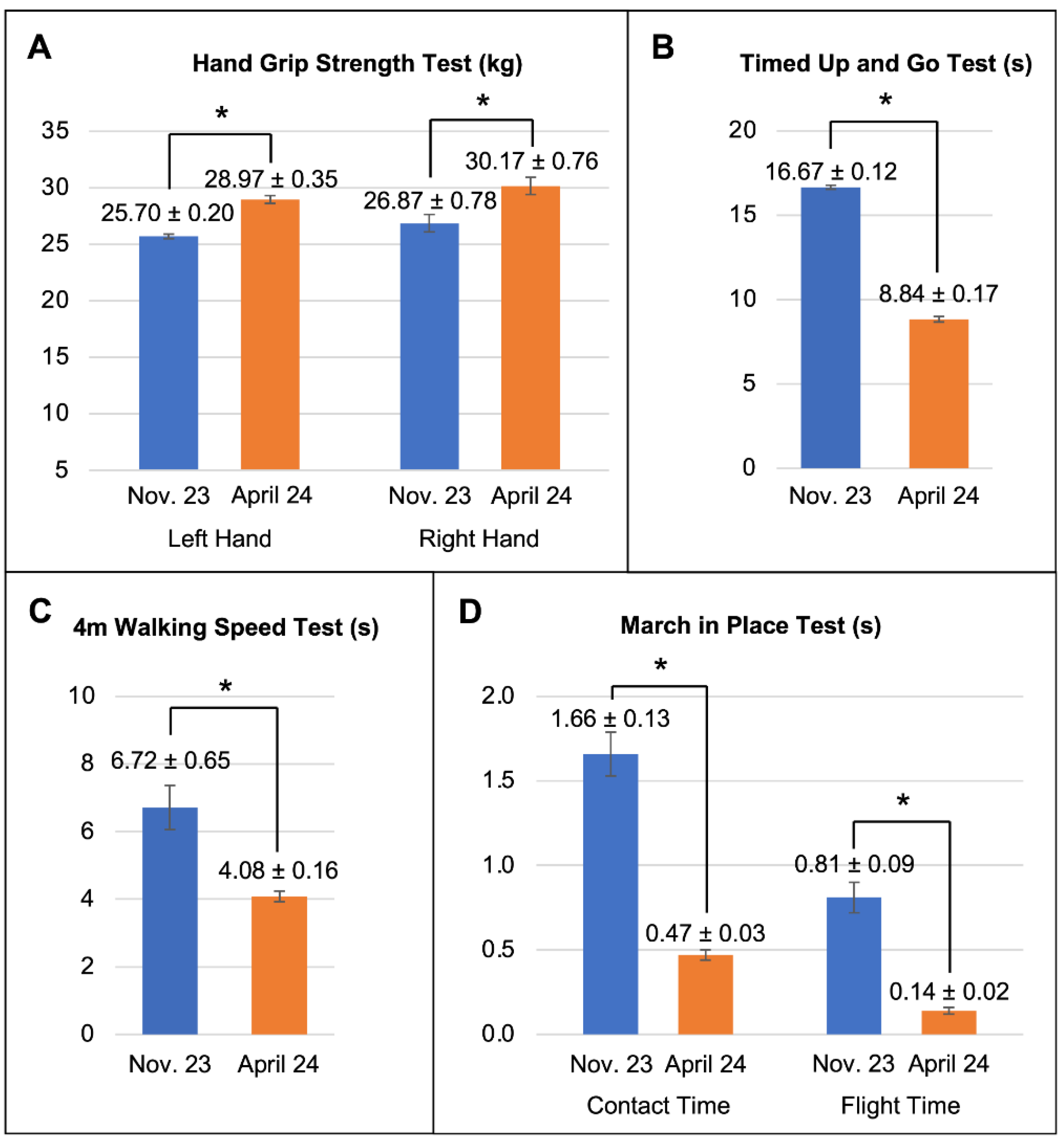
The results of the functional and quality of life tests were obtained at the beginning and after completing the training program (Figure 2 and Table 6). A significant increase in handgrip strength (or grip force) was detected after completing the physical exercise program, the right hand’s being greater than the left one’s (Figure 2A,B), likely due to the fact that the right is the dominant hand in most physical activities. Regarding the Timed Up and Go test, there has been a reduction of almost 50% in the time taken compared to the initial assessment, which seems to indicate an improvement in walking, strength, and balance, as a result of the training program, and is also correlated with the improvements found in the previous test.his section may be divided by subheadings. It should provide a concise and precise description of the experimental results, their interpretation, as well as the experimental conclusions that can be drawn.
Thirdly, the results obtained in the gait speed assessment (4-meter walk test), as an objective measure of functional capacity and survival, show a reduction of 2.64 seconds compared to the initial assessment (Figure 2D). This reduction corresponds to a walking speed of 1.02 meters per second in the final test, significantly lower than the value obtained in the initial test, 1.68 meters per second.
Finally, we applied the March in Place Test based on two parameters, i.e. contact time and flight time (Figure 2E, F). Both parameters showed lower values after the training program, which is a satisfactory result as a decrease in contact time promotes an increase in the number of steps, which in turn leads to a shorter flight time. In this way, the patient requires less time to generate the force needed to increase the step frequency within a given time.

4. Discussion

The main purpose of this case study was to determine the effects and benefits of an individualized, supervised, multicomponent training program on physical function and health perception for a mesenchymal chondrosarcoma survivor. The results of the functional tests showed an improvement in functional capacity in terms of increased hand grip strength, increased walking speed due to improved times obtained in the “4m Walking Speed Test” and “Time Up and Go (TUG) Test”, and possibly an improvement in balance, coordination and synchronization of both lower limbs in the “March in Place Test”. It is true that, following this last test, a decrease in flight and contact times was observed, which could indicate a greater application of force in each push of the foot against the ground and its impulse and, therefore, greater step speed and number of contacts, and less permanence of each foot on the ground. It is suggested that the general increase in the subject's strength levels as a result of carrying out the multicomponent training program has positively influenced the results achieved in the post-intervention "WHOQOL-BREF Quality of Life" questionnaire, reflecting a better general perception of health.
In relation to the publications reviewed to date on physical exercise in survivors of lower-extremity sarcoma, the scarce research found has focused on the implementation of exercise programs during treatment and immediately after surgery (García et al., 2020 (21); van Kouswijk et al., 2023 (22)), as well as the evaluation of physical performance and quality of life around surgery and other treatments (Furtado et al., 2017 (3); Fukushima et al., 2023 (9); Fernandes et al., 2021 (23); Tanaka et al., 2023 (24); Assi et al., 2017 (11); McDonough et al., 2019 (25); Den Hollander et al., 2020 (8); Ramsey et al., 2020 (26)). However, these studies brought to light a lack of knowledge about physical exercise interventions once the treatment had finished, which also included various training modalities in which each of the dose variables were defined and controlled. Therefore, the authors consider this to be the first research study that attempts to design and implement a rigorous 24-week multicomponent training program which includes resistance, cardiorespiratory, and trunk control and stability training, with the aim of determining the effects and benefits in improving physical function and quality of life for a mesenchymal chondrosarcoma survivor.
Several measurement instruments are available for the assessment of functionality and quality of life, among them, the Musculoskeletal Tumor Society (MSTS) (Andrews et al., 2019 (27); Fukushima et al., 2023 (9)) and the Toronto Extremity Salvage Score (Andrews et al., 2019), both validated and used especially in survivors who have undergone limb salvage surgery. Nevertheless, scarce scientific evidence has been found regarding the development of specific tests that assess gait, muscle function, and balance of lower extremity sarcoma survivors. Specifically, the “Timed Up and Go Test” could be used in the objective evaluation of gait, muscle strength, balance and risk of falls for this population, which encourages the authors to promote its practical application (Fukushima et al., 2023 (9); Furtado et al., 2020 (10), and which is why it has been incorporated in the evaluation of the program.
Therefore, the authors of this research study have used the Timed Up and Go Test, as well as the HGS as they are objective and simple measures. The consequences of a low HGS on the general health of the population are recognized by multiple studies, and so are their links to sarcopenia (Vaishya et al., 2024 (14); Qaisar et al., 2024 (15)). Likewise, since there is no single assessment of gait, balance and physical function, it was necessary to include the “4m Walking Speed Test” because it has also been associated with functional capacity and general survival, especially in older adults (Jepsen et al., 2022 (16)), and the “March in Place Test” to complement information of interest regarding gait patterns, perhaps for this study’s subject particularly (or other cases of lower-extremity sarcoma), who has suffered from an illness and has undergone limb salvage surgery with subsequent notable physical and motor consequences.
For future research, the effects and benefits of a multicomponent training program should be analyzed in a larger sample of lower-extremity sarcoma survivors, in order to compare the results obtained and published to date. It is also hoped that the program design and its results will be useful and of practical application for health professionals, allowing for progress in research in this area and helping, through the best tool, physical exercise, to improve the health and well-being of lower-extremity sarcoma survivors.

5. Conclusions

One of the current problems in determining the effect and benefits of physical exercise interventions in lower-extremities sarcoma survivors is the heterogeneity of the training programs described in the literature, as well as the lack of a correct definition and control of the dose variables. To date these have led to results that are difficult to interpret and/or of very low quality. The development and application of the multicomponent training program composed of several physical exercise modalities (resistance, cardiorespiratory and trunk control and stability) has been shown to be an essential complement in improving functional capacity and quality of life necessary to tackle the challenges faced by a survivor of mesenchymal chondrosarcoma. Herein lie the guidelines that will assist physical exercise professionals (Graduates in Physical Activity and Sports Sciences) in the design and implementation of physical exercise interventions for adult sarcoma survivors, which promote physical activity and the improvement of health and quality of life..

Author Contributions

Conceptualization, LG, MC. and FR ; methodology, LG, MC. and FR.; validation LG, MC. and FR..; formal analysis, LG, MC. And FR.; investigation, LG, MC. and FR.; resources, LG, MC. and FR.; writing—original draft preparation, LG.; writing—review and editing, LG, MC. And FR ; visualization, LG, MC. And FR supervision, MC. And FR project administration, FR.; funding acquisition, MC. And FR. All authors have read and agreed to the published version of the manuscript.

Funding

This research was funded by PID2023-151166OB-I00 project financed by MICIU/ AEI /10.13039/501100011033 and by FEDER,UE.

Conflicts of Interest

Declare conflicts of interest or state “The authors declare no conflicts of interest.”

References

  1. Albini, A., C. L. Vecchia, F. Magnoni, O. Garrone, D. Morelli, J. P. Janssens, A. Maskens, G. Rennert, V. Galimberti, and G. Corso. 2024. Physical activity and exercise health benefits: cancer prevention, interception, and survival. European Journal of Cancer Prevention. Available online: https://pubmed.ncbi.nlm.nih.gov/38920329/. [CrossRef] [PubMed]
  2. Almeida, A., T. Martins, and L. Lima. 2021. Patient-reported outcomes in sarcoma: a scoping review. Eur J Oncol Nur 50: 101897. [Google Scholar] [CrossRef] [PubMed]
  3. Andrews, C., G. Siegel, and S. Smith. 2019. Rehabilitation to improve the function and quality of life of soft tissue and bony sarcoma patients. Patient Related Outcome Measures 10: 417–425. [Google Scholar] [CrossRef]
  4. Assi, M., M. Ropars, and A. Rébillard. 2017. The Practice of Physical Activity in the Setting of Lower-Extremities Sarcomas: A First Step toward Clinical Optimization. Frontiers in Physiology 8, 833. [Google Scholar] [CrossRef] [PubMed]
  5. Coletta, G., and S.M. Phillips. 2023. An elusive consensus definition of sarcopenia impedes research and clinical treatment: A narrative review. Ageing Research Reviews 86: 101883. [Google Scholar] [CrossRef]
  6. Den Hollander, D., W. Van der Graaf, M. Fiore, B. Kasper, S. Singer, I. Desar, and H. Husson. 2020. Unravelling the heterogeneity of soft tissue and bone sarcoma patients’ health-related quality of life. ESMO, 5e000914. [Google Scholar]
  7. Fernandes, L., C.E. Holm, A. Villadsen, M.S. Sørensen, M.K. Zebis, and M.M. Petersen. 2021. Clinically Important Reductions in Physical Function and Quality of Life in Adults with Tumor Prostheses in the Hip and Knee: A Cross-sectional Study. Clin Orthop Relat Res 479, 10: 2306–2319. [Google Scholar] [CrossRef]
  8. Fukushima, T., Y. Okita, N. Watanabe, S. Yokota, J. Nakano, and A. Kawai. 2023. Factors associated with physical function in patients after surgery for soft tissue sarcoma in the thigh. BMC Musculoskeletal Disorders 24, 661: 1–7. [Google Scholar] [CrossRef]
  9. Furtado, S., L. Errington, A. Godfrey, L. Rochester, and C. Gerrand. 2017. Objective clinical measurement of physical functioning after treatment for lower extremity sarcoma. Eur J Surg Oncol, 1–26. [Google Scholar] [CrossRef]
  10. Furtado, S., A. Godfrey, S. Del Pin, L. Rochester, and C. Gerrand. 2020. Are Accelerometer-based Functional Outcome Assessments Feasible and Valid After Treatment for Lower Extremity Sarcomas? Clin Orthop Relat Res 478: 482–503. [Google Scholar] [CrossRef]
  11. Garcia, M.B., K.K. Ness, and Schadler. 2020. Exercise and Physical Activity in Patients with Osteosarcoma and Survivors. Current Advances in Osteosarcoma, Advances in Experimental, 193–207. [Google Scholar] [CrossRef]
  12. Gazendam, A., and et al. 2023. Chondrosarcoma: A Clinical Review. J. Clin. Med. 12: 2506. [Google Scholar] [CrossRef] [PubMed]
  13. Jepsen, D.B., K. Robinson, G. Ogliari, M. Montero-Odasso, N. Kamkar, J. Ryg, and et al. 2022. Predicting falls in older adults: an umbrela review of instruments assessing gait, balance, and functional mobility. BMC Geriatrics 22: 615. [Google Scholar] [CrossRef]
  14. Knapstad, M.K., I. Naterstad, and B. Bogen. 2023. The association between cognitive impairment, gait speed, and Walk ratio. Front. Aging Neurosci. 15. [Google Scholar] [CrossRef] [PubMed]
  15. McDonough, J., J. Eliott, S. Neuhaus, J. Jessica Reid, and P. Butow. 2019. Health-related quality of life, psychosocial functioning, and unmet health needs in patients with sarcoma: a systematic review. Psychooncology 28, 4: 653–664. [Google Scholar] [CrossRef]
  16. Nakano, J., and et al. 2021. Physical function predicts mortality in patients with cancer: a systematic review and meta-analysis of observational studies. Supportive Care in Cancer 29: 5623–5634. [Google Scholar] [CrossRef]
  17. Panagi, M., P. Pilavaki, A. Constantinidou, and T. Stylianopoulos. 2022. Immunotherapy in soft tissue and bone sarcoma. Theranostics 12, 14: 6106–6129. Available online: https://www.thno.org/v12p6106.htm. [CrossRef]
  18. Power, M., A. Harper, and M. Bullinger. 1999. The World Health Organization WHOQOL-100: tests of the universality of Quality of Life in 15 different cultural groups worldwide. Health Psychol 18, 5: 495–505. [Google Scholar] [CrossRef]
  19. Qaisar, R., M.A. Hussain, F. Franzese, A. Karim, F. Ahmad, A. Awad, and et al. 2024. Predictors of the onset of low handgrip strength in Europe: a longitudinal study of 42,183 older adults from 15 countries. Aging Clinical and Experimental Research 36: 162. [Google Scholar] [CrossRef]
  20. Ramsey, D.C., and K.R. Gundle. 2020. Advances in the Functional Assessment of Patients with Sarcoma. Adv Exp Med Biol 1257: 31–41. [Google Scholar] [CrossRef]
  21. Skevington, S.M., M.K.A. Lotfy, and WHOQOL Group. 2004. The World Health Organization's WHOQOL-BREF quality of life assessment: psychometric properties and results of the international field trial. A report from the WHOQOL group. Qual Life Res 13, 2: 299–310. [Google Scholar] [CrossRef] [PubMed]
  22. Sung, H., and et al. 2021. Global Cancer Statistics 2020: GLOBOCAN Estimates of Incidence and Mortality Worldwide for 36 Cancers in 185 Countries. CA Cancer J. Clin. 71, 209–249. [Google Scholar] [CrossRef] [PubMed]
  23. Tanaka, A., M. Okamoto, M. Kito, Y. Yoshimura, K. Aoki, S. Suzuki, A. Takazawa, Y. Komatsu, H. Ideta, T. Ishida, and J. Takahashi. 2023. Muscle strength and functional recovery for soft-tissue sarcoma of the thigh: a prospective study. Int J Clin Oncol 28, 7: 922–927. [Google Scholar] [CrossRef] [PubMed]
  24. Vaishya, R., A. Misra, A. Vaish, N. Ursino, and R. D’Ambrosi. 2024. Hand grip strength as a proposed new vital sign of health: a narrative review of evidences. Journal of Health, Population and Nutrition 43: 7. [Google Scholar] [CrossRef]
  25. Van Kouswijk, H.W., H. G. van Keeken, J. J. W. Ploegmakers, G. H. Seeber, and I. van den Akker-Scheek. 2023. Therapeutic validity and effectiveness of exercise interventions after lower limb-salvage surgery for sarcoma: a systematic review. BMC Musculoskeletal Disorders 24: 216. [Google Scholar] [CrossRef]
  26. Wang, W., and W. Zhou. 2021. Roles and molecular mechanisms of physical exercise in cancer prevention and treatment. Journal of Sport and Health Science 10, 2: 201–210. [Google Scholar] [CrossRef]
  27. Zaja ̨c, A.E., M. Fiedorowicz, A. Tysarowski, S. Kopec, B. Szostakowski, M.J. Spałek, and et al. 2021. Chondrosarcoma-from Molecular Pathology to Novel Therapies. Cancers 13: 2390. [Google Scholar] [CrossRef]
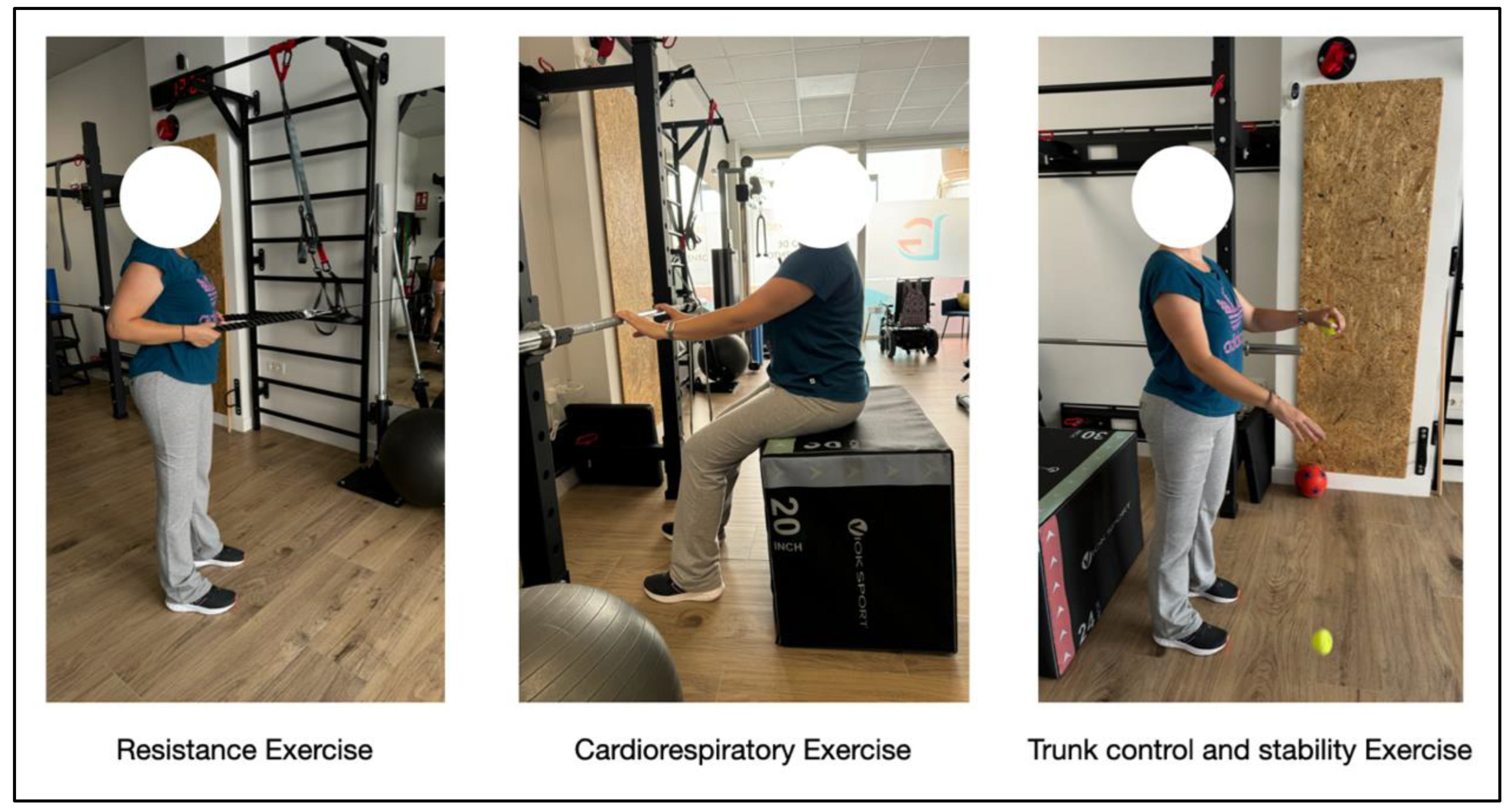
Figure 1. Examples of the exercise modalities included in the multicomponent training program.
Preprints 146465 g001
Figure 2. Results of the functional tests at the beginning and end of the study. A) Hand Grip Strength Test (Baseline). B) Timed Up and Go (TUG) Test. C) 4m Walking Speed Test. D) March in Place Test (Optojump). A two-tailed, two-sample Student t-test was performed to evaluate significant differences in mean values, with asterisks indicating significance (P < 0.05).
Preprints 146465 g002
Table 1. Planning of the multicomponent training program.
Subject level Program objectives Spatial and material resources Assessment processes
Initial: untrained with little experience in regular physical exercise programs. Functionality in daily living activities and quality of life. Training centre equipment (bench/box, rack, dumbbells, pulleys, elastic band, medicine balls, bicycle, arm ergometer...). 1.- Physical condition parameters (functional capacity):
A) Hand grip strength test.
B) Timed Up and Go (TUG) Test.
C) 4m walking speed test.
D) March in place test (Optojump system).
2.- Quality of life:
A) WHOQOL-BREF.
Table 2. Periodization (time structures) of the training program composed of sessions with a multicomponent objective.
Mesocycles M. 1 M. 2 M. 3 M. 4 M. 5 M. 6
Weekly frequency 2 d/w 2 d/w 2 d/w 2 d/w 2 d/w 2 d/w
Resistance training units 8 8 8 8 8 8
Cardiorespiratory training units 0 3 4 5 6 6
Trunk control and stability training units 8 6 5 4 4 4
Table 3. Resistance training programming and prescription. Example Mesocycle 1.
Frequency Volume Intensity Recovery Methodology Exercises
2 d/w -Training unit duration:
25-30´
-Exercises: 5.
-Series: 2.
-Repetitions: 6.
Low effort character: 6 (12). 2´inter-series. Vertical progression. - Assisted squat from box.
- Horizontal pulley row.
- Seated hip adduction with ball.
- Inclined push-ups on bar.
- Vertical traction with elastic band.
Table 4. Programming and prescription of cardiorespiratory training. Example Mesocycle 2.
Frequency Volume Intensity Recovery Methodology Exercises
2 d/w -Training unit duration:
10´
-Exercises: 2.
-Series: 1.
-Repetitions: 5 (30” each).
-50%-60%HRR.
-RPE: 2-3 (Modified Borg)
1´inter-repetitions.
Ratio: 1:2.
Fractionation, Interval. Standing arm ergometer.
Table 5. Programming and prescription of trunk control and stability training. Example Mesocycle 3.
Frequency Volume Intensity Recovery Methodology Exercises
2 d/w -Training unit duration:
12´
-Exercises: 3.
-Series: 2.
-Repetitions: 6-10
Challenge/disruption for the trunk structures. 2´inter-series. Vertical progression. -Alternately bounce 2 tennis balls with eyes closed while standing.
-Apply manual resistance to hands in multiple directions while sitting.
-Standing with horizontal shoulder adduction, rotate the cervical spine from one side to the other when receiving an auditory stimulus (clap).
Table 6. Results of the WHOQOL-BREF Quality of Life questionnaire obtained at the beginning and end of the training program.
Dimensions November 2023
(Pre-Intervention)
April 2024
(Post-Intervention)
Physical health 10.3/20 10.9/20
Psychological health 12/20 13.3/20
Social relations 14.7/20 14.7/20
Environment 15.5/20 16/20
General perception of quality of life 4/5 4/5
General perception of health 3/5 4/5
Disclaimer/Publisher’s Note: The statements, opinions and data contained in all publications are solely those of the individual author(s) and contributor(s) and not of MDPI and/or the editor(s). MDPI and/or the editor(s) disclaim responsibility for any injury to people or property resulting from any ideas, methods, instructions or products referred to in the content.
Copyright: This open access article is published under a Creative Commons CC BY 4.0 license, which permit the free download, distribution, and reuse, provided that the author and preprint are cited in any reuse.
Prerpints.org logo

Preprints.org is a free preprint server supported by MDPI in Basel, Switzerland.

Subscribe

Disclaimer

Terms of Use

Privacy Policy

Privacy Settings

© 2026 MDPI (Basel, Switzerland) unless otherwise stated