

Submitted:
06 January 2025
Posted:
08 January 2025
You are already at the latest version
Abstract
Background: Chronic wounds represent a growing challenge in the aging population, significantly impairing quality of life, increasing the frequency of medical consultations, and imposing substantial healthcare costs. Chronic wounds are prone to complications, including local and systemic infections, and in severe cases, amputations. The therapeutic use of live larvae from the blowfly Lucilia sericata (biological debridement) has regained attention for its ability to debride necrotic tissue and stimulate granulation. Despite its benefits, this therapy is constrained by logistical challenges in producing and delivering live larvae and by patient adherence issues. Objectives: This study aimed to develop a lyophilized extract of Lucilia sericata larvae and evaluate its efficacy in treating chronic wounds. Methods: A lyophilized extract (Larveel®, Alpha-Biocare GmbH, Neuss, Germany) of the larvae of Lucilia sericata was produced under GMP conditions. In a total of ten patients with chronic refractory wounds the extract was used in individual therapeutic trials and its effect on bacterial colonization and wound healing was investigated. Results: Of ten patients, three discontinued treatment due to P. aeruginosa colonization. In seven patients, significant fibrin reduction, granulation, and wound healing occurred, with two achieving complete closure and four showing advanced epithelialization. Conclusions: In 7 of 10 patients, the application of the extract led to a marked reduction in wound slough, improved granulation, and progression of wound healing. These effects are likely attributed to the extract’s ability to disrupt bacterial biofilm formation. The findings suggest that this novel therapeutic approach may provide a practical and effective alternative to live larval therapy for managing chronic wounds.
Keywords:
1. Introduction
2. Materials and Methods
2.1. Development of a Lyophilized Maggot Extract
2.2. Application of Lyophilized Maggot Extract in Patients with Chronic Wounds
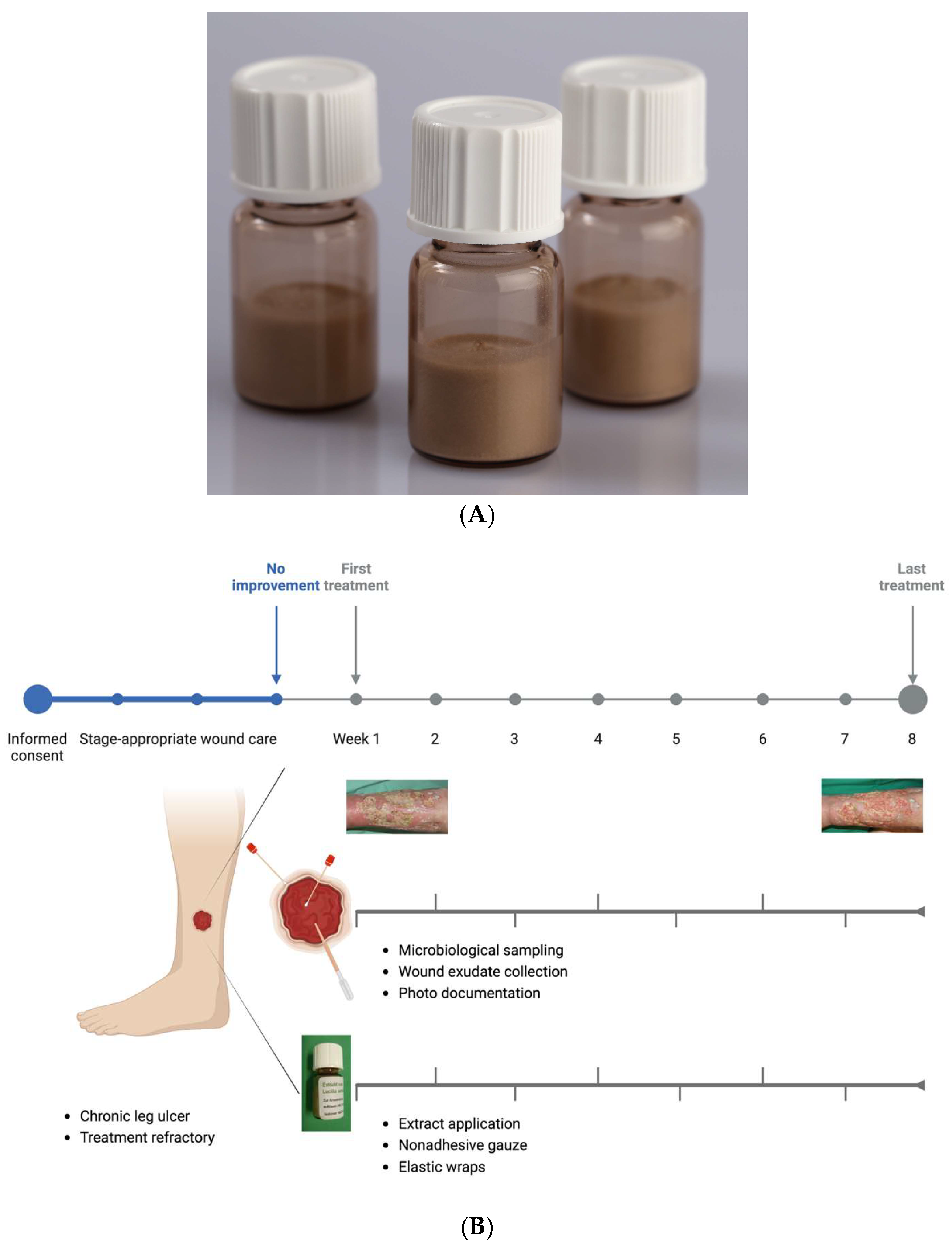
- Chronic leg ulcers
- Refractory to treatment for at least three months
- No underlying consumptive diseases (e.g., malignancies)
- A three-week pretreatment phase with stage-appropriate wound care demonstrated no significant improvement
- Comprehensive clinical and wound-specific history
- Standardized photo documentation
- Wound exudate collection
- Microbiological sampling
- Application of L. sericata extract
- Dressing with sterile wound coverings
2.3. Patient Demographics and Wound Characteristics

| Patient | Sex | Age (years) | Wound Type |
Wound duration |
Treatment duration (weeks) |
Treatment |
|---|---|---|---|---|---|---|
| 1 | ♀ | 46 | Venous | 12 months | 8 | Clinic |
| 2 | ♀ | 72 | Venous | 12 months | 7 | Clinic |
| 3 | ♀ | 74 | Venous | 6 months | 2 | Clinic |
| 4 | ♂ | 84 | Venous | 12 months | 2 | Clinic |
| 5 | ♂ | 78 | arterial and venous | 18 months | 8 | Patient/clinic |
| 6 | ♂ | 65 | Venous | 24 months | 8 | Patient/clinic |
| 7 | ♀ | 61 | postoperative | 3 months | 8 | Clinic |
| 8 | ♀ | 79 | Venous | 36 months | 8 | Clinic |
| 9 | ♂ | 73 | Arterial | 3 months | 7 | Patient/clinic |
| 10 | ♂ | 72 | Venous | 24 months | 8 | Patient/clinic |
2.4. Exudate Collection from Ulcers
2.5. Bacterial Colonization Analysis
2.6. Native Larval Secretions and Extracts
2.7. Effect on Bacterial Biofilms
2.8. Effect on Bacterial Growth
3. Results
3.1. Isolated Bacterial Species and Effects of Maggot Extracts on Bacterial Colonization In Vivo
3.2. Effects of Maggot Extracts on Bacterial Growth In Vitro
3.3. Effects of Maggot Extracts on Bacterial Biofilm Formation In Vitro
3.4. Clinical Course of Lower Leg Ulcerations During Treatment with Maggot Extract
4. Discussion
5. Conclusions
Author Contributions
Funding
Institutional Review Board Statement
Informed Consent Statement
Data Availability Statement
Conflicts of Interest
References
- Korber, A.; Klode, J.; Al-Benna, S.; Wax, C.; Schadendorf, D.; Steinstraesser, L.; Dissemond, J. Etiology of chronic leg ulcers in 31,619 patients in Germany analyzed by an expert survey. J Dtsch Dermatol Ges 2011, 9, 116–121. [Google Scholar] [CrossRef] [PubMed]
- Pannier-Fischer, F.; Rabe, E. [Epidemiology of chronic venous diseases]]. Hautarzt 2003, 54, 1037–1044. [Google Scholar] [CrossRef] [PubMed]
- Müller-Bühl, U.; Leutgeb, R.; Bungartz, J.; Szecsenyi, J.; Laux, G. Expenditure of chronic venous leg ulcer management in German primary care: results from a population-based study. Int Wound J 2013, 10, 52–56. [Google Scholar] [CrossRef] [PubMed]
- Nord, D. [Cost-effectiveness in wound care]. Zentralbl Chir 2006, 131, S185–S188. [Google Scholar] [CrossRef]
- Heinlin, J.; Schreml, S.; Babilas, P.; Landthaler, M.; Karrer, S. [Cutaneous wound healing. Therapeutic interventions]. Hautarzt 2010, 61, 611–626. [Google Scholar] [CrossRef]
- Lazarus, G.; Valle, M.F.; Malas, M.; Qazi, U.; Maruthur, N.M.; Doggett, D.; Fawole, O.A.; Bass, E.B.; Zenilman, J. Chronic venous leg ulcer treatment: future research needs. Wound Repair Regen 2014, 22, 34–42. [Google Scholar] [CrossRef]
- Nenoff, P.; Herrmann, A.; Gerlach, C.; Herrmann, J.; Simon, J.C. [Biosurgical débridement using Lucilia sericata-maggots - an update]. Wien Med Wochenschr 2010, 160, 578–585. [Google Scholar] [CrossRef]
- Mumford, Z.; Nigam, Y. Maggots in Medicine: A Narrative Review Discussing the Barriers to Maggot Debridement Therapy and Its Utilisation in the Treatment of Chronic Wounds. J Clin Med 2024, 13, 6746. [Google Scholar] [CrossRef]
- Steenvoorde, P.; van Doorn, L.P. Maggot debridement therapy: serious bleeding can occur: report of a case. J Wound Ostomy Continence Nurs 2008, 35, 412–414. [Google Scholar] [CrossRef]
- Wu, M.L.; Yang, Z.M.; Dong, H.C.; Zhang, H.; Zheng, X.; Yuan, B.; Yang, Y.; Liu, J.; Li, P.N. Maggot extract accelerates skin wound healing of diabetic rats via enhancing STAT3 signaling. PLoS One 2024, 19, e0309903. [Google Scholar] [CrossRef]
- Barnes, K.M.; Gennard, D.E.; Dixon, R.A. An assessment of the antibacterial activity in larval excretion/secretion of four species of insects recorded in association with corpses, using Lucilia sericata Meigen as the marker species. Bull Entomol Res 2010, 100, 635–640. [Google Scholar] [CrossRef] [PubMed]
- van der Plas, M.J.; Jukema, G.N.; Wai, S.W.; Dogterom-Ballering, H.C.; Lagendijk, E.L.; van Gulpen, C.; van Dissel, J.T.; Bloemberg, G.V.; Nibbering, P.H. Maggot excretions/secretions are differentially effective against biofilms of Staphylococcus aureus and Pseudomonas aeruginosa. J Antimicrob Chemother 2008, 61, 117–122. [Google Scholar] [CrossRef] [PubMed]
- O’Toole, G.A.; Kolter, R. Initiation of biofilm formation in Pseudomonas fluorescens WCS365 proceeds via multiple, convergent signalling pathways: a genetic analysis. Mol Microbiol 1998, 28, 449–461. [Google Scholar] [CrossRef] [PubMed]
- Sun, X.; Jiang, K.; Chen, J.; Wu, L.; Lu, H.; Wang, A.; Wang, J. A systematic review of maggot debridement therapy for chronically infected wounds and ulcers. Int J Infect Dis 2014, 25, 32–37. [Google Scholar] [CrossRef]
- Altincicek, B.; Vilcinskas, A. Septic injury-inducible genes in medicinal maggots of the green blow fly Lucilia sericata. Insect Mol Biol 2009, 18, 119–125. [Google Scholar] [CrossRef]
- Andersen, A.S.; Sandvang, D.; Schnorr, K.M.; Kruse, T.; Neve, S.; Joergensen, B.; Karlsmark, T.; Krogfelt, K.A. A novel approach to the antimicrobial activity of maggot debridement therapy. J Antimicrob Chemother 2010, 65, 1646–1654. [Google Scholar] [CrossRef]
- Ceřovský, V.; Slaninová, J.; Fučík, V.; Monincová, L.; Bednárová, L.; Maloň, P.; Stokrová, J. Lucifensin, a novel insect defensin of medicinal maggots: synthesis and structural study. Chembiochem 2011, 12, 1352–1361. [Google Scholar] [CrossRef]
- Valachova, I.; Prochazka, E.; Bohova, J.; Novak, P.; Takac, P.; Majtan, J. Antibacterial properties of lucifensin in Lucilia sericata maggots after septic injury. Asian Pac J Trop Biomed 2014, 4, 358–361. [Google Scholar] [CrossRef]
- Valachova, I.; Takac, P.; Majtan, J. Midgut lysozymes of Lucilia sericata - new antimicrobials involved in maggot debridement therapy. Insect Mol Biol 2014, 23, 779–787. [Google Scholar] [CrossRef]
- Jockenhofer, F.; Gollnick, H.; Herberger, K.; Isbary, G.; Renner, R.; Stucker, M.; Valesky, E.; Wollina, U.; Weichenthal, M.; Karrer, S.; et al. Aetiology, comorbidities and cofactors of chronic leg ulcers: retrospective evaluation of 1 000 patients from 10 specialised dermatological wound care centers in Germany. Int Wound J 2016, 13, 821–828. [Google Scholar] [CrossRef]
- Gjødsbøl, K.; Christensen, J.J.; Karlsmark, T.; Jørgensen, B.; Klein, B.M.; Krogfelt, K.A. Multiple bacterial species reside in chronic wounds: a longitudinal study. Int Wound J 2006, 3, 225–231. [Google Scholar] [CrossRef] [PubMed]
- Fazli, M.; Bjarnsholt, T.; Kirketerp-Moller, K.; Jorgensen, A.; Andersen, C.B.; Givskov, M.; Tolker-Nielsen, T. Quantitative analysis of the cellular inflammatory response against biofilm bacteria in chronic wounds. Wound Repair Regen 2011, 19, 387–391. [Google Scholar] [CrossRef] [PubMed]
- Becerikli, M.; Wallner, C.; Dadras, M.; Wagner, J.M.; Dittfeld, S.; Jettkant, B.; Gestmann, F.; Mehlhorn, H.; Mehlhorn-Diehl, T.; Lehnhardt, M.; et al. Maggot Extract Interrupts Bacterial Biofilm Formation and Maturation in Combination with Antibiotics by Reducing the Expression of Virulence Genes. Life (Basel) 2022, 12, 237. [Google Scholar] [CrossRef] [PubMed]
- Jeffery Marano, R.; Jane Wallace, H.; Wijeratne, D.; William Fear, M.; San Wong, H.; O’Handley, R. Secreted biofilm factors adversely affect cellular wound healing responses in vitro. Sci Rep 2015, 5, 13296. [Google Scholar] [CrossRef] [PubMed]
- Hurlow, J.; Wolcott, R.D.; Bowler, P.G. Clinical management of chronic wound infections: The battle against biofilm. Wound Repair Regen 2025, 33, e13241. [Google Scholar] [CrossRef]
- McCarty, S.M.; Cochrane, C.A.; Clegg, P.D.; Percival, S.L. The role of endogenous and exogenous enzymes in chronic wounds: a focus on the implications of aberrant levels of both host and bacterial proteases in wound healing. Wound Repair Regen 2012, 20, 125–136. [Google Scholar] [CrossRef]
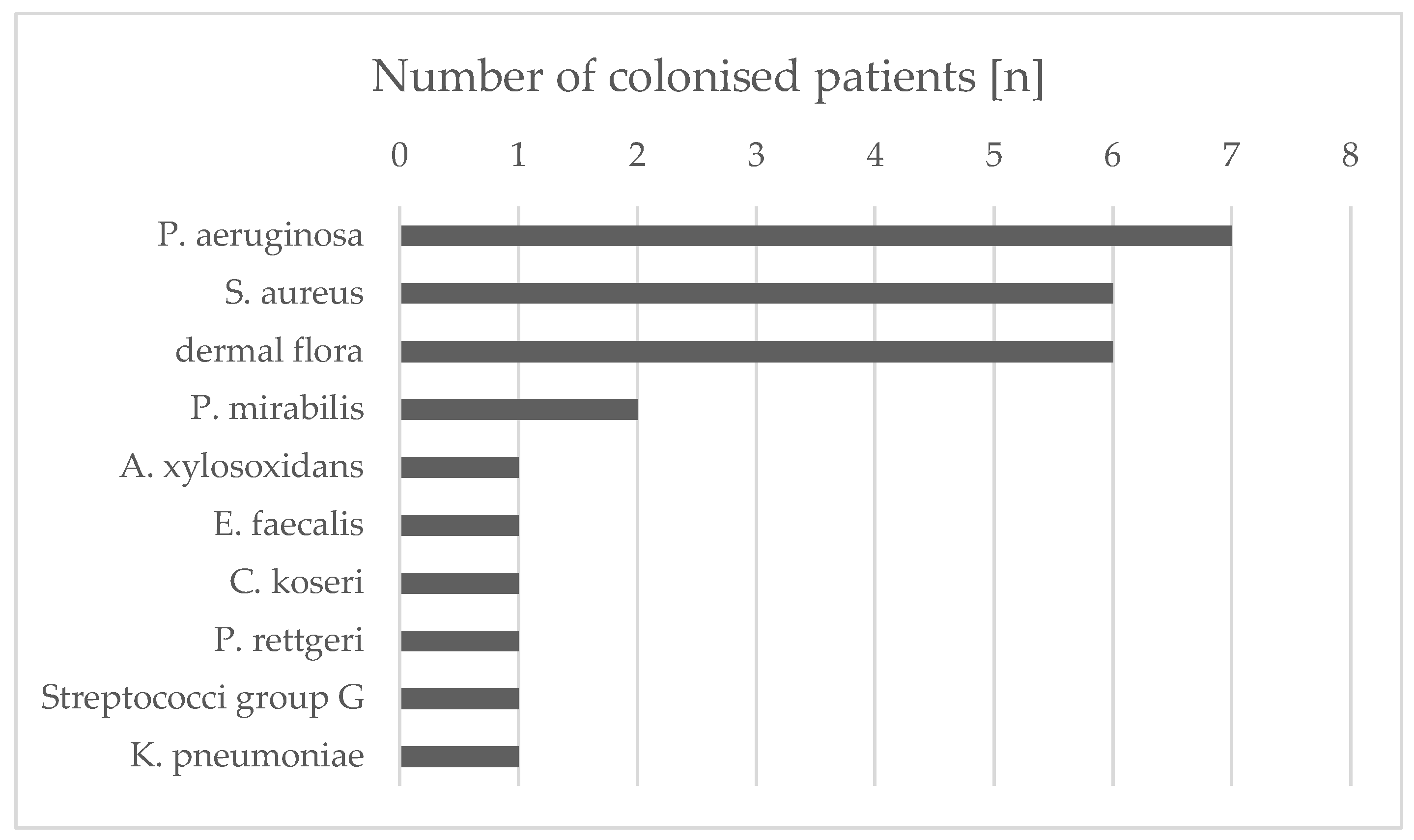
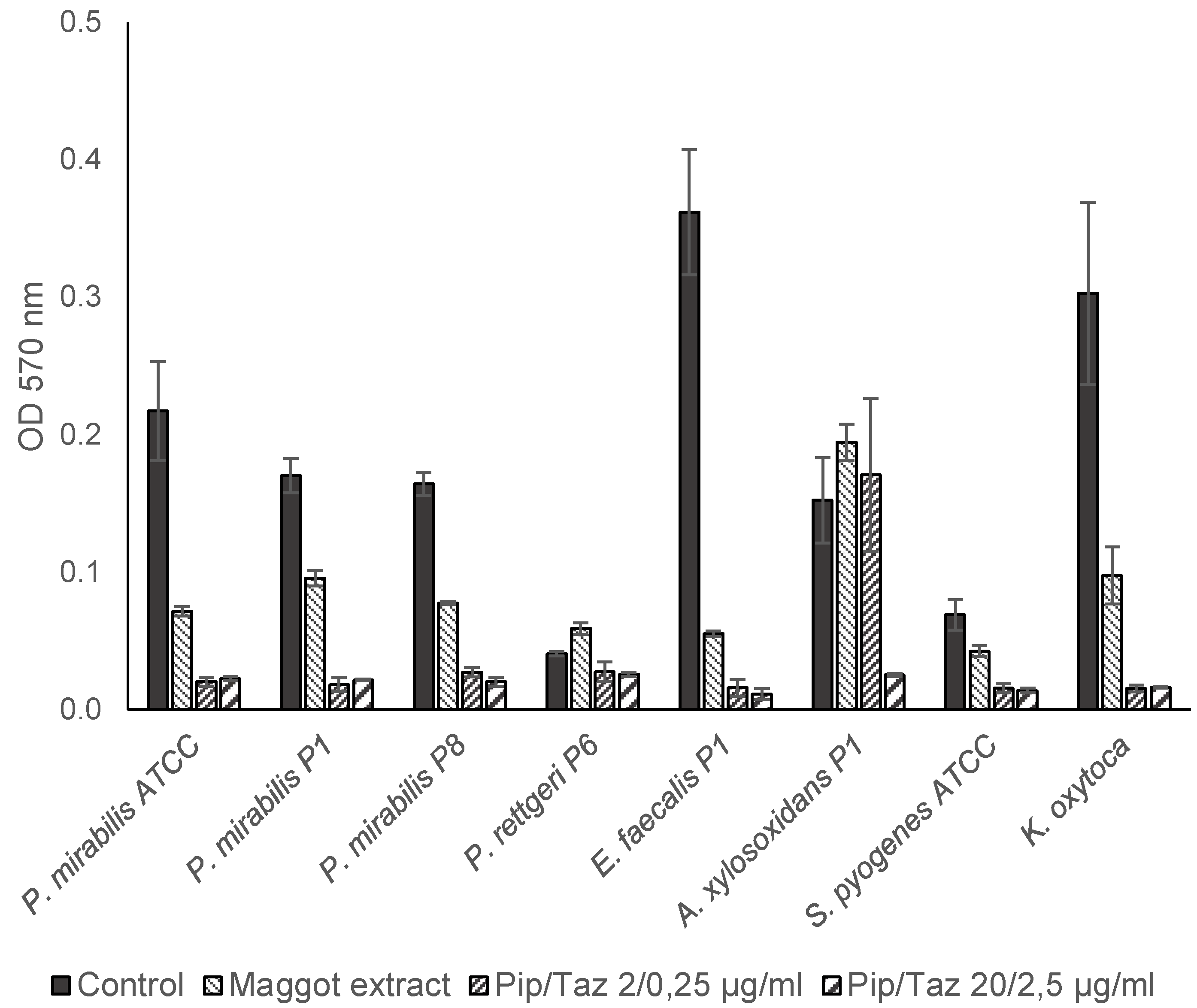
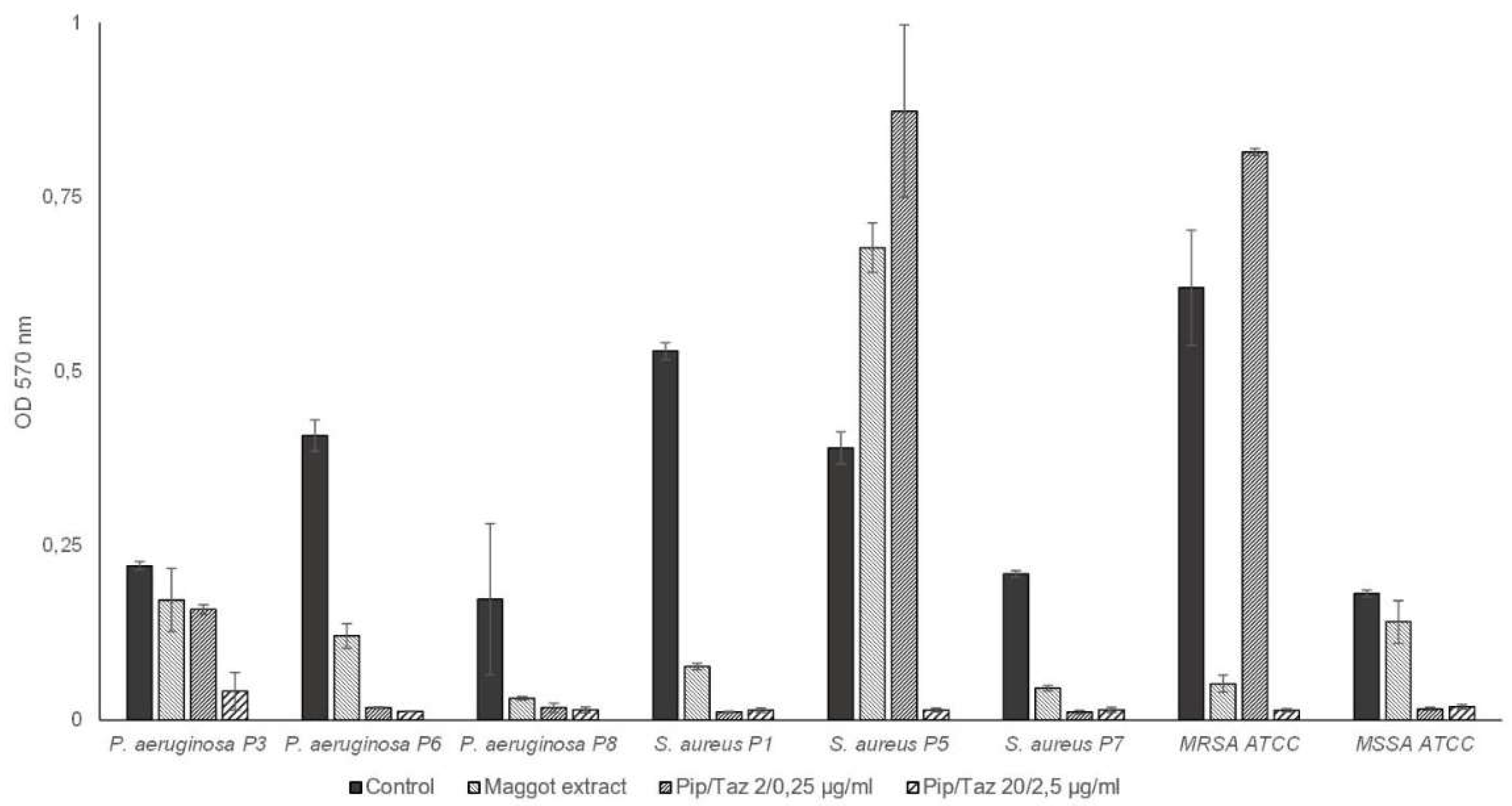
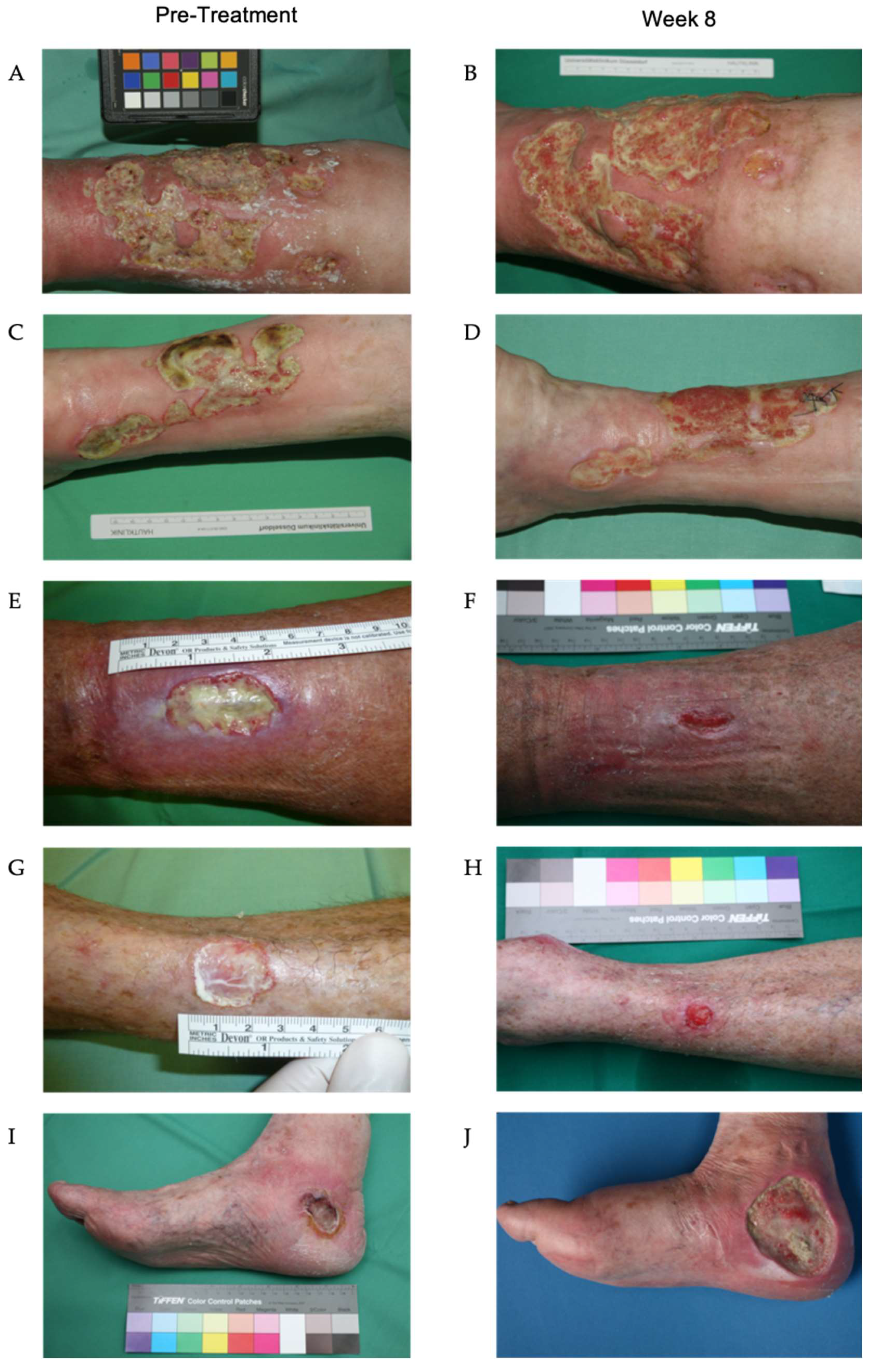
| week 0 | n=10 | week 2 | n=9 | week 4 | n=8 | week 6 | n=8 | week 8 | n=5 | |
|---|---|---|---|---|---|---|---|---|---|---|
| margin | center | margin | center | margin | center | margin | center | margin | center | |
| P. aeruginosa | 7 | 6 | 6 | 5 | 6 | 4 | 3 | 4 | 3 | 3 |
| S. aureus | 6 | 5 | 2 | 2 | 2 | 2 | 4 | 4 | 1 | 1 |
| P. mirabilis | 2 | 1 | 1 | 1 | 0 | 0 | 2 | 1 | 1 | 1 |
| A. xylosoxidans | 1 | 1 | 0 | 0 | 0 | 0 | 0 | 0 | 0 | 0 |
| E. faecalis | 1 | 1 | 0 | 0 | 0 | 0 | 0 | 0 | 0 | 0 |
| P. rettgeri | 1 | 0 | 0 | 0 | 0 | 0 | 0 | 0 | 0 | 0 |
| C. koseri | 1 | 1 | 1 | 1 | 1 | 1 | 0 | 0 | 0 | 0 |
| K. pneumoniae | 0 | 0 | 0 | 0 | 0 | 0 | 1 | 1 | 0 | 0 |
| Gr. G Streptococci | 1 | 0 | 1 | 0 | 1 | 0 | 1 | 0 | 1 | 0 |
| Dermal flora | 4 | 3 | 3 | 2 | 0 | 0 | 2 | 2 | 2 | 2 |
Disclaimer/Publisher’s Note: The statements, opinions and data contained in all publications are solely those of the individual author(s) and contributor(s) and not of MDPI and/or the editor(s). MDPI and/or the editor(s) disclaim responsibility for any injury to people or property resulting from any ideas, methods, instructions or products referred to in the content. |
© 2025 by the authors. Licensee MDPI, Basel, Switzerland. This article is an open access article distributed under the terms and conditions of the Creative Commons Attribution (CC BY) license (http://creativecommons.org/licenses/by/4.0/).