

Submitted:
04 January 2025
Posted:
06 January 2025
You are already at the latest version
Abstract
Data-driven decision-making (DDDM) has emerged as a transformative force in marketing, enabling organizations to leverage data analytics, artificial intelligence, and big data to enhance customer engagement and gain a competitive edge. This study investigates the potential of DDDM to optimize personalization, predict consumer behaviour, and align marketing strategies with sustainability and innovation goals. Researchers conducted a systematic literature review and analyzed case studies to explore how industries integrate DDDM practices. The research examined practical applications, identified key challenges, and assessed emerging marketing analytics and decision-making trends. The findings demonstrate that DDDM enhances marketing precision and operational efficiency, significantly improving customer segmentation, campaign effectiveness, and lifetime value management. Additionally, the study identifies challenges such as data privacy concerns, ethical considerations, and the complexity of integrating diverse data sources across omnichannel platforms. The study proposes strategies for balancing automation with human creativity and ensuring ethical data use. DDDM holds transformative potential for the marketing domain, fostering innovation and long-term value creation. Aligning DDDM practices with organizational goals and ethical standards is essential for sustainable success. This study offers a comprehensive framework and actionable insights for academics and practitioners to harness the full potential of data-driven approaches.
Keywords:
data-driven
; decision-making
; marketing
; business
1. Introduction
Customer needs have always been a fundamental consideration in marketing. Brands and their marketers strive to adopt strategies and solutions that match customer needs and align with their behaviours [1]. However, modern-day customers increasingly resist standardization and instead demand individualized experiences tailored to their unique preferences and needs. The findings demonstrate the significance of personalization in Chandra et al. [2] research, which found that personalization increases revenue by 5-15% and marketing efficiency by 10-30%. This shift has challenged businesses to move beyond generic, one-size-fits-all marketing strategies. Modern customers expect brands to understand and anticipate their preferences, creating personalized journeys they can resonate with [3]. Businesses require tools and technologies to meet these expectations. They can analyze and interpret vast amounts of customer data, allowing them to uncover actionable insights that will help them create compelling and targeted marketing strategies.
The emergence of advanced data technologies, including big data and marketing analytics, machine learning, and artificial intelligence (AI), has changed how businesses engage with their customers. These technologies enable organizations to process and interpret customer data at unprecedented scales and speeds [4]. Consequently, this bridges the gap between understanding consumer behaviour and designing appropriate marketing strategies. Data technologies offer tools to predict trends, identify customer preferences, and develop strategies that align with market demands. Consequently, using these technologies in marketing has led to data-driven decision-making, which involves leveraging insights derived from data to guide strategic choices [3]. Unlike traditional decision-making models, which often rely on intuition or historical assumptions, data-driven decision-making empowers businesses to base their strategies on factual, actionable insights gleaned from robust data analysis [1]. This methodology improves accuracy and allows businesses to adapt to shifts in consumer behaviour and market conditions. Applying data-driven practices allows marketers to transition from reactive to proactive approaches, anticipating customer needs and delivering value before competitors.
Data-driven decision-making addresses a significant challenge associated with business failure. Grandhi et al. [5] (p.382) state that the “inability to make decisions is one of the principal reasons executives fail. Lack in decision-making ranks much higher than the lack of specific knowledge or technical know-how as an indicator of business success.” Data-driven decision-making involves integrating advanced data technologies into marketing to facilitate systematic analysis, interpretation, and application of data insights. With big data technologies, marketers can synthesize information from diverse sources, such as customer transactions, social media interactions, website analytics, and demographic databases [6].
Machine learning and artificial intelligence (AI) can then process this data, detect patterns, identify opportunities, and turn insights into actionable steps. This research paper explores the role of data-driven decision-making in marketing, focusing on how advanced data technologies enable businesses to analyze customer behaviour, design personalized strategies, and optimize decision-making processes.
2. Materials and Methods
This study employed a systematic bibliometric literature review (LRSB) to investigate the role of data-driven decision-making in marketing. The approach helped the researcher conduct a comprehensive and structured examination of existing literature, facilitating the identification of key themes, trends, and gaps within the field. In addition, the Preferred Reporting Items for Systematic Reviews and Meta-Analyses (PRISMA) model guided the methodology.
The PRISMA 2020 framework provides a structured framework for identifying, screening, and evaluating relevant studies, ensuring transparency, replicability, and methodological rigour in systematic reviews [7]. Documenting each phase of the research process minimizes the risk of bias and enhances the reliability of findings.
The LRSB methodology offers a distinct alternative to traditional literature reviews by identifying relevant sources and synthesizing key findings. This approach is grounded in a replicable, transparent, and scientific framework, which aims to reduce bias by systematically analyzing published and unpublished literature on the research topic [8,9,10].
An essential feature of LRSB is creating an audit trail, which allows readers to critically evaluate the quality of selected studies, their methodologies, and their outcomes. The methodology involves a rigorous process for screening and selecting data sources to ensure the credibility and accuracy of the information.
The researchers structure the LRSB framework into three distinct phases, further divided into six clear steps [8,9,10] (Table 1). This structured approach ensures thoroughness and reliability throughout the research process.
The researchers relied on the Scopus database to identify and select high-quality sources widely recognized within academic and scientific communities. Nonetheless, a significant limitation of this study is its sole reliance on Scopus, which could exclude relevant literature from other major scientific and academic databases. Researchers recommend that the literature search include peer-reviewed publications up to November 2024 to ensure broader coverage.
The search process commenced with selecting Scopus as the primary database (Table 2). We chose Scopus for the initial search because it offers extensive peer-reviewed academic content. The review involved a multi-step process of screening and selecting sources to ensure the inclusion of credible and relevant materials.
The researchers selected the Scopus database as the primary source of literature because it comprehensively indexes peer-reviewed articles across a wide range of disciplines, including business and marketing. The search process began with a broad query using "data-driven" in the titles, abstracts, and keywords, which yielded 142,528 documents. These results lacked the specificity required to address the research focus. Consequently, the researcher refined the search by adding the keyword "decision-making," reducing the number of documents to 11,807. Since the research specifically focuses on marketing, the keyword "marketing" was added, reducing the search results to 254 documents. Further limiting the search to the subject area "Business, Management and Accounting" (BUSI) further reduced the results to 104 (N=104), as shown in Table 2.
The researcher implemented explicit inclusion and exclusion criteria to ensure the relevance and quality of the selected studies. We considered only papers explicitly focused on smart cities and sustainable urban development, excluding studies lacking peer review or sufficient academic rigour to maintain high standards. The selection process began with a thorough review of each document's abstract to assess its relevance, followed by a detailed full-text analysis of those meeting the initial requirements. This systematic method included only the most pertinent and high-quality research, creating a strong and targeted foundation for understanding smart cities and sustainable urban development.
Thematic analysis was applied to analyze and structure the findings, as noted by Rosário et al. [8,9,10]. Thematic analysis is a practical research approach for identifying, examining, and documenting recurring patterns or themes across a body of data. Rosário et al. [8,9,10] also describe the theme-centric method as valuable for synthesizing previous research by highlighting key themes, concepts, and significant phenomena. This approach allowed the researcher to organize the results around dominant themes, illustrating how businesses leverage predictive analytics to anticipate customer behaviour and strategize accordingly.
We used content and thematic analysis techniques to identify, evaluate, and present the diverse range of studies, following the recommendations of Rosário et al. [8,9,10]. Ninety-four peer-reviewed scientific and academic documents indexed in Scopus were analyzed through narrative and bibliometric methods, uncovering core themes and extracting insights directly related to the research question (Figure 1).
The PRISMA 2020 guidelines were adopted to ensure the systematic review adhered to established standards for transparency and quality. These guidelines provide a comprehensive checklist and flow diagram to assist researchers in clearly and thoroughly reporting their systematic reviews. This framework is essential for enhancing the robustness and reliability of scientific evidence, supporting informed decision-making across scientific research and clinical applications [11].
We used content and thematic analysis techniques for data analysis to classify and interpret various documents according to Rosário et al.'s recommendations [8,9,10]. 94 Scopus-indexed documents were examined through narrative and bibliometric methods to extract deeper insights and uncover recurring themes that directly addressed the research question [8,9,10]. Among the selected documents, 60 are articles, 24 are book chapters, 10 are conference papers, and 10 are books.
3. Publication Distribution
Analyze Data-Driven Decision Making in Marketing through October 2024. The year 2024 had the highest number of peer-reviewed publications, reaching 24. Figure 2 summarizes the peer-reviewed literature published until November 2024.
We organized the publications as follows: Developments in Marketing Science Proceedings of The Academy of Marketing Science (6); Industrial Marketing Management (5); Journal of Marketing Analytics (3); with two documents (Psychology and Marketing; Omega United Kingdom; MIS Quarterly Management Information Systems; Lecture Notes in Business Information Processing; Journal of Strategic Marketing; Journal of Business Research; International Conference on Information and Knowledge Management Proceedings; Data Driven Marketing for Strategic Success; Data Driven Decision Making for Long Term Business Success); and the remaining publications with 1 document.
Similarly, Figure 3 illustrates the regions that make the most substantial contributions to the literature on this topic. The USA, India, China, and the UK stand out as the leading countries with the highest scientific output in this field, along with other nations actively publishing research on the subject.
Table 3 and Figure 3 represent the top 10 countries making notable scientific contributions in the studied areas. This analysis highlights the nations' leading advancements in smart cities and sustainable urban development.
Table 4 presents an analysis of the Scimago Journal & Country Rank (SJR), the best quartile, and the H-index for the Journal of Management World, which has an SJR score of 7,540, a Q1 classification, and an H-index of 280.
The analysis reveals that 34 of the 84 publications are in Q1, 6 in Q2, 7 in Q3, and 5 in Q4. Publications in the top quartile (Q1) account for 40% of the total titles, while Q2 represents 7%, Q3 is 8%, and Q4 is 6%.
Notably, 32 publications (38%) lack indexing data. As summarized in Table 4, Q1 publications represent the highest quality, yet they constitute a minority among the analyzed works.
The subject areas covered by the 104 scientific and/or academic documents were Business, Management and Accounting (104); Economics, Econometrics and Finance (41); Computer Science (30); Decision Sciences (24); Social Sciences (16); Engineering (9); Psychology (6); Mathematics (4); Environmental Science (3); Arts and Humanities (3); Medicine (2); Biochemistry, Genetics and Molecular Biology (2); Materials Science (1); and Health Professions (1).
The most cited article was “User heterogeneity and its impact on electronic auction market design: An empirical exploration”, with 254 published MIS Quarterly: Management Information Systems 4,110 (SJR), the best quartile (Q1) and with H index (271), this paper aims to address the use a data-driven, inductive approach to develop a taxonomy of bidding behaviour in online auctions.
In Figure 4, we can analyze citation changes for documents published until November 2024. 2014-2024 shows positive net growth in citations, with an R2 of 53%, reaching 684 in November 2024.
The h-index measures the productivity and impact of published work by identifying the maximum number of articles cited at least the same number of times. In this case, 23 documents were cited a minimum of 23 times.
Citations of all scientific and/or academic documents from ≤2014 until November 2024, with 1,976 citations; of the 104 documents, 31 were not cited (Appendix A). The self-citation of documents in the period ≤2014 to November 2024 was self-cited 10 times.
The bibliometric analysis focused on identifying metrics that uncover patterns and trends within the scientific and academic content of the documents, particularly emphasizing key keywords (Figure 5). The visualization highlights the most prominent nodes in the network, where the size of each node reflects the frequency of its corresponding keyword, indicating how often it appears. Furthermore, the connections between nodes represent keyword co-occurrences, illustrating which keywords frequently appear together. The thickness of these connections indicates the strength of these relationships, showing the frequency of their co-occurrence.
In these diagrams, the size of each node indicates the frequency of its associated keyword, while the thickness of the links between nodes represents the frequency of keyword co-occurrences. Different colours identify distinct thematic clusters. The nodes showcase the range of topics within each cluster, and the links demonstrate the relationships between these topics within the same thematic group.
We used VOSviewer, a scientific software tool, to analyze key search terms such as "Data-Driven Decision Making in Marketing" and produce the results. This study concentrated on scientific and academic documents addressing these themes. Figure 6 highlights interconnected keywords, revealing the network of co-occurring terms across the analyzed articles. This analysis provides valuable insights into the topics researchers explore and uncovers emerging trends that can guide future research directions.
Figure 7 presents a detailed bibliographic coupling derived from document analysis, offering an interactive visualization of the co-citation network. This tool allows users to explore the network and identify patterns related to “Data-Driven Decision Making in Marketing” across different studies.
In conclusion, the adopted methodology ensured accuracy and generated comprehensive data, providing a solid foundation for future researchers to build upon this review. Addressing critical issues enhanced the results' coherence, validity, and reliability. Following established guidelines for systematic reviews and meta-analyses, we maintained a rigorous methodological standard, which we will elaborate on in the subsequent sections.
4. Theoretical Perspectives
The emergence and adoption of data-driven technologies in marketing have changed how businesses make decisions. With the ability to process vast amounts of consumer data in real-time, organizations can gain deeper insights into customer behaviours, preferences, and trends [12]. This shift has enabled precise targeting, improved customer engagement, and optimized resource allocation, ultimately leading to more effective and efficient marketing strategies [13]. As data technologies evolve, they offer new opportunities for enhancing personalization, fostering innovation, and driving business performance, making data-driven decision-making an essential component of modern marketing practices.
4.1. What is Data-Driven Decision-Making
Data-driven decision-making uses data, analytics, and empirical evidence to guide business decisions. Diván [14] (p.51) defines it as the "practice of basing decisions on the analysis of the data rather than purely on intuition." In this case, the decision-maker relies on factual insights rather than subjective judgment. As a result, this approach involves systematically collecting, analyzing, and interpreting data to uncover insights that inform decision-making processes across various business functions [15]. In marketing, data-driven decision-making enables organizations to understand customer preferences, behaviours, and trends. Marketers can use these insights to optimize strategies, improve customer experiences, and drive business performance. [16]. Companies leverage advanced tools, such as predictive analytics, machine learning, and big data technologies, to make informed decisions based on consumer behaviour and market conditions, leading to more effective outcomes.
Data-driven decision-making provides a more objective, evidence-based approach to decision-making, minimizing biases and assumptions. Rather than relying on past experiences or guesswork, data-driven decision-making enables businesses to predict future trends, identify growth opportunities, and personalize their marketing efforts to meet their target audience's needs better [17]. With the increasing availability of real-time data from various sources, such as social media, online behaviours, and transaction histories, organizations are better equipped to make agile decisions that respond to changing market dynamics [18]. Ultimately, data-driven decision-making empowers businesses to be more proactive, adaptive, and aligned with customer expectations, allowing them to build a competitive advantage and improve overall performance.
4.2. Technologies Supporting Data-Driven Decision-Making in Marketing
Numerous technologies enable businesses to make data-driven marketing decisions. Each plays a crucial role in analyzing customer behaviour and optimizing strategies. They provide the tools necessary for businesses to gain deeper insights, improve customer engagement, and drive better marketing outcomes. This section covers the most crucial technologies identified in research.
4.2.1. Artificial Intelligence
Artificial Intelligence (AI) is the simulation of human intelligence processes by machines, particularly computer systems. In marketing, AI automates complex decision-making processes, enhances personalization, and optimizes customer interactions [19]. AI algorithms can analyze large datasets, identify patterns, and make decisions without human intervention. For instance, AI-driven chatbots and virtual assistants enable businesses to offer 24/7 customer support [20], providing immediate responses to customer inquiries and personalized product recommendations [21,22]. In addition, Guercini [23] explains that companies employ AI in content generation and customer service optimization, using it to analyze customer sentiment and tailor responses accordingly. AI's ability to process and analyze data at scale helps marketers deliver more relevant content, advertisements and offers to consumers [24,25]. This practice ultimately improves customer engagement and drives conversions. Through AI, marketing strategies become more adaptive, scalable, and responsive to real-time customer needs.
4.2.2. Machine Learning
Machine Learning (ML) is a subset of AI that uses algorithms to allow systems to learn from data and improve their performance over time without explicit programming. ML algorithms are used in marketing to analyze historical data to identify trends, customer behaviours, and purchasing patterns [26]. This ability enables businesses to predict future consumer actions, personalize marketing efforts, and optimize campaign performance. For example, ML is commonly used in customer segmentation, where it helps categorize consumers based on similar behaviours and preferences [27,28]. Marketers can tailor their messaging and product offerings to each segment more effectively. ML is also key to dynamic pricing strategies, where algorithms adjust prices based on demand fluctuations, competitor pricing, and customer preferences [29]. ML systems continually learn from new data, enhancing decision-making and ensuring that marketing strategies evolve in response to changing market conditions.
4.2.3. Big Data Analytics
Big data analytics refers to examining large and complex data sets, often called "big data," to uncover hidden patterns, correlations, and insights. According to Saboo et al. [30], these analytics allow businesses to process vast amounts of structured and unstructured data from diverse sources such as social media, web interactions, customer reviews, and transactional data. As a result, companies gain a more comprehensive understanding of consumer preferences, market trends, and customer sentiment [31], enabling them to make more informed decisions regarding product development, targeted marketing campaigns, and customer engagement strategies. For example, by leveraging big data, companies can predict consumer behaviour, identify new market opportunities, and personalize their offerings to cater to individual customer needs, enhancing the overall customer experience [32,33]. The ability to analyze large data sets quickly and accurately helps businesses remain competitive in fast-paced industries.
4.2.4. Marketing Analytics
Marketing analytics involves using data analysis tools and techniques to measure and evaluate the effectiveness of marketing campaigns and strategies. Analyzing key metrics such as customer acquisition costs, conversion rates, and return on investment (ROI) provides businesses with insights into which tactics are most successful and which need improvement [12,34]. These tools help marketers understand the impact of their efforts across various channels, such as digital advertising, social media, email campaigns, and traditional media. With marketing analytics, companies can optimize their marketing strategies by identifying high-performing channels and refining underperforming ones [35,36]. It also aids in budget allocation by helping businesses understand where their marketing funds yield the highest returns. In addition, marketing analytics supports the creation of targeted campaigns by providing a data-driven understanding of customer demographics, behaviours, and preferences.
4.2.5. Predictive Analytics
Predictive analytics uses historical data and statistical algorithms to forecast future outcomes. These analytics help businesses anticipate customer behaviour, predict purchasing trends, and forecast demand for products and services [37]. Businesses analyze past interactions, demographics, and behavioural patterns to create models predicting how customers will respond to marketing initiatives, such as promotional offers or product launches. For example, predictive models can identify high-value customers likely to make repeat purchases or churn [38], allowing businesses to take proactive measures, such as offering special discounts or loyalty incentives. Annansingh and Sesay [39] explain that predictive analytics is also used for inventory management, helping businesses optimize stock levels based on anticipated demand. The prediction enables marketers to make proactive decisions that enhance customer satisfaction and drive business growth by providing actionable insights into future trends.
4.2.6. Consumer Recommender Systems
Consumer recommender systems are algorithms that suggest products or services to customers based on their past behaviour, preferences, and similar customer patterns. These systems are widely used in e-commerce and streaming platforms to personalize the customer experience and drive sales [40]. Recommender systems rely on collaborative filtering, content-based filtering, or a combination of both to provide personalized suggestions. Collaborative filtering uses data from customers with similar preferences, while content-based filtering recommends products similar to those a customer has previously interacted with [41,42]. Delivering personalized recommendations allows businesses to increase engagement, improve customer satisfaction, and drive conversions. These experiences enhance the customer experience and boost sales.
4.2.7. Internet of Things
The Internet of Things (IoT) refers to the network of physical devices, vehicles, appliances, and other items embedded with sensors, software, and connectivity to exchange data. IoT delivers real-time data, enhancing customer experiences and informing decision-making [43]. For example, smart devices like wearables or connected home products generate data on customer usage patterns, which can be analyzed to offer personalized recommendations or targeted ads. IoT can also improve inventory management by tracking product stock levels and customer demand [44,45]. Analyzing IoT data empowers businesses to understand consumer behaviour better, enhance products, and provide more relevant marketing messages [46]. Finally, IoT-enabled devices allow a more interactive customer experience, facilitating stronger customer loyalty and improving business outcomes.
4.3. Conceptual Framework and Research Questions Development
Data-driven decision-making has become a fundamental approach in modern marketing, where understanding and responding to customer preferences is critical. The vast amount of consumer data available today, including behaviours, transaction history, and brand interactions, enables marketers to gain in-depth insights into customer needs and desires [47,48]. Businesses can apply these insights to create highly personalized marketing strategies aligning with their target audience's expectations and experiences. Zhu et al. [49] found that personalized marketing establishes a deeper connection with customers by offering them relevant products, services, and messages, ultimately improving their experience with the brand. Using data to guide these decisions results in more focused, customer-centric marketing strategies that enhance customer journey and increase overall satisfaction. As such, the first Research Question in this study posits:
RQ1: Data-driven decision-making promotes customer-centric marketing and improves customer experience.
Integrating advanced data technologies, such as ML, AI, and big data analytics, has opened new possibilities for driving marketing innovation. These technologies allow businesses to process and analyze large volumes of data in real-time, enabling the identification of emerging trends, customer preferences, and patterns previously difficult to uncover [50,51]. Companies that leverage predictive analytics and real-time insights can anticipate customer behaviour and market shifts, thus staying ahead of the competition and continually evolving their marketing strategies [52]. Moreover, Gadi and Govani [53] indicate that these tools empower organizations to rapidly develop new products, services, and campaigns tailored to meet evolving customer needs. As a result, they create a culture of continuous innovation [54]. The capacity to apply data-driven insights to marketing innovation positions businesses to enhance their responsiveness and refine their offerings to satisfy their customers' changing preferences.
Therefore:
RQ2: Data-driven technologies improve marketing innovation and the ability to meet customer needs.
Data-driven decision-making significantly impacts a business's overall performance and profitability by optimizing marketing strategies and improving resource allocation. With the power of advanced analytics, businesses can measure the effectiveness of their marketing campaigns in real-time [55]. This capability enables them to adjust strategies quickly and allocate budgets more efficiently. For example, businesses can target specific customer segments with tailored messages, optimizing ad spend and increasing conversion rates [56]. Moreover, marketers can utilize data-driven marketing to identify high-value customers and develop retention strategies that encourage repeat business [57]. This strategy can establish long-term customer loyalty. Combining optimized marketing campaigns, improved targeting, and more efficient resource management contributes to better business outcomes, such as higher revenues and profitability. Thus, the third Research Question for this study is:
RQ3: Data-driven decision-marketing enhances business performance and profitability
5. Results and Discussion
The study findings significantly correlate with data-driven decision-making and improved marketing outcomes. For instance, Basu et al. [34] found that data-driven decision-making has led to adopting customer-centric marketing approaches, improving customer experiences, satisfaction, and loyalty, leading to sustainable business performance and growth. This section summarizes the significant findings showing the impacts of data-driven decision-making in marketing, including improved customer experiences, marketing innovation, and overall business performance.
5.1. Understanding and Enhancing the Customer Experience
Data-driven decision-making enhances customer experiences by encouraging marketers and brands to prioritize customer needs. In this case, marketers leverage data technologies such as AI, big data analytics, and ML to collect and analyze consumer data, thus gaining insights that support consumer-centric marketing strategies [47]. The main areas contributing to consumer experience include customer journey mapping, understanding consumer behaviours, customer segmentation and lifetime value, building customer relationships, and personalized strategies.
5.2.1. Customer Journey Mapping
Customer journey mapping is essential for understanding and optimizing the customer experience. Businesses can identify key touchpoints where customer interactions can be improved by visualizing the entire customer journey, from initial awareness to post-purchase engagement [58]. According to Su et al. [59], integrating data-driven technologies allows organizations to gather and analyze vast amounts of customer data, offering insights into each phase of the journey and enabling businesses to tailor communication strategies and optimize customer experience across all channels [60, 61]. For example, mapping out customer pain points and moments of delight provides businesses with the information they need to focus on areas of friction and improve satisfaction. By mapping the journey based on data-driven insights, organizations can ensure they meet and exceed customer expectations, enhancing customer loyalty and increasing retention.
5.2.2. Consumer Behaviors
Understanding consumer behaviour is fundamental to creating effective marketing strategies. Wudarta and Prihandoko [62] found that data-driven decision-m[60,61aking provides marketers with tools to track and analyze customer behaviours, including browsing patterns, purchase history, and engagement with brand messaging. This data allows businesses to uncover key insights into customer preferences, motivations, and decision-making processes [63]. For instance, through behavioural analytics, companies can identify which product features are most important to consumers, when they are likely to make purchasing decisions, and what factors influence their choices [64,65]. This detailed understanding of consumer behaviour allows businesses to develop highly personalized marketing campaigns that meet customers' needs. This targeted approach improves customer satisfaction and engagement [66]. Furthermore, Smith [67] indicates that the continuous monitoring and analysis of consumer behaviour data allow businesses to adapt their strategies in real-time. Consequently, they remain agile and responsive to shifting customer expectations and market trends.
5.2.3. Customer Segmentation and Lifetime Value
Customer segmentation and the calculation of customer lifetime value (CLV) are critical to the success of any marketing strategy. Using data to segment customers into distinct groups based on demographics, purchasing habits, or engagement patterns allows businesses to create targeted marketing messages that resonate with each segment [27,63]. Data-driven segmentation helps companies focus on their most valuable customers, creating customized experiences that drive loyalty and repeat purchases. Moreover, businesses can prioritize their efforts toward retaining high-value customers by analyzing CLV, ensuring long-term profitability [68]. This segmentation facilitates more efficient resource allocation since organizations can allocate marketing budgets and resources to the most promising customer segments [69]. The ability to segment customers and calculate CLV ensures that marketing efforts are tailored and strategically aligned to maximize long-term customer value.
5.2.4. Customer Relationships
Data-driven decision-making enhances customer relationships by ensuring brands understand customer preferences, pain points, and needs better. Businesses can gain valuable insights into what matters most to their customers by analyzing customer interactions and creating more personalized engagement strategies [70,71]. For example, brands can proactively address concerns and offer relevant recommendations or solutions by leveraging customer feedback, purchase history, and interaction data. This level of personalization helps build trust and rapport, transforming one-time buyers into loyal customers [72]. In addition, businesses can establish relationships beyond transactional exchanges through continuous dialogue with customers through targeted communications [73]. Strong customer relationships, powered by data insights, can improve customer retention rates, positive word-of-mouth, and increased customer lifetime value, ultimately benefiting the organization's bottom line.
5.2.5. Personalization
Personalization is one of the most powerful ways data-driven decision-making enhances customer experience. Potwora et al. [28] explain that businesses can use data analytics to track and understand customer behaviours, preferences, and past interactions to create highly customized marketing experiences. Personalized marketing strategies include offering tailored product recommendations, sending personalized email campaigns, or providing exclusive offers based on the customer's purchase history or browsing patterns [74,75]. This targeted approach significantly improves engagement because customers are more likely to interact with content that aligns with their interests. Moreover, personalized experiences foster a sense of customer recognition and value, which can strengthen brand loyalty [76]. Customers who feel that brands understand and cater to their individual needs are more likely to make repeat purchases and become brand advocates [77]. Therefore, data-driven personalized marketing ensures businesses remain relevant and competitive in a crowded marketplace while maximizing customer satisfaction.
5.3. Leveraging Data-Driven Technologies for Marketing Innovation
Data-driven decisions contribute to marketing innovation and empower businesses to embrace strategies that meet customers' needs. Marketing automation, customer preference analysis, and forecasting are crucial in optimizing marketing strategies, enabling businesses to respond with agility and precision. Companies leverage these tools to innovate their marketing efforts, ensuring they stay ahead of market trends and deliver more targeted and effective campaigns.
5.3.1. Marketing Automation
Marketing automation supports data-driven innovation by streamlining processes and enabling more effective, personalized customer interactions. Businesses can create consistent, timely, and relevant communication with customers across multiple channels by automating email marketing, social media management, and lead nurturing [23,36]. Automation tools enable marketers to analyze customer behaviour and segment audiences effectively, tailoring messages to the right person at the right time. In addition, Omar et al. [78] indicate that marketing automation platforms provide valuable insights into campaign performance, enabling businesses to optimize strategies in real-time. Automating routine marketing tasks improves efficiency and empowers marketers to focus on more strategic initiatives, thus enhancing overall campaign effectiveness [79]. As a result, businesses can create a more responsive marketing approach, leading to stronger customer engagement and increased conversion rates.
5.3.2. Customer Preference Analysis and Forecasting
Customer preference analysis and forecasting are crucial components of data-driven marketing innovation. They enable businesses to anticipate and meet customer needs before explicitly expressing them [80]. Businesses use data technologies to analyze historical data and identify trends in customer preferences, buying behaviours, and engagement patterns. Predictive analytics tools allow companies to forecast future customer behaviours based on this data, helping them proactively adjust their marketing strategies [81,82]. For instance, businesses can tailor their marketing efforts to ensure they offer the most relevant solutions by understanding which products or services will resonate with specific customer segments [83]. Forecasting tools help allocate resources and ensure efficient spending of marketing budgets. According to Hall and Kim [84], leveraging customer preference analysis and forecasting allows businesses to stay ahead of market trends. They can offer timely and relevant products and services that meet customer expectations and improve customer satisfaction.
5.3.3. Sustainable Marketing Innovation
Sustainable marketing innovation is becoming an increasingly important focus for businesses aiming to align their marketing efforts with environmental and social responsibility goals. Data-driven decision-making is critical in promoting sustainable practices by providing businesses with the insights needed to reduce waste, optimize resource allocation, and deliver more targeted, efficient campaigns [85]. Businesses can better understand consumer demand for sustainable products or services by analyzing customer sentiment and preferences and adjusting their marketing strategies accordingly. Data also enables businesses to track the effectiveness of sustainability initiatives, allowing them to refine their marketing approaches over time [86,87]. Moreover, Novotny and Dodds [88] indicate that sustainability-focused marketing innovations help companies differentiate themselves in a competitive market since consumers increasingly prioritize brands that align with their values. By integrating sustainability into their data-driven marketing strategies, businesses can improve their environmental impact, create stronger customer loyalty, and attract eco-conscious consumers.
5.4. Driving Business Performance Through Data-Driven Marketing
Data-driven marketing decisions and strategies improve an organization's overall performance and profitability. For instance, brands can leverage data to understand customer needs and deliver targeted marketing messages, improving conversion rates and building brand loyalty among target audiences.
5.4.1. Optimization of Advertising Budget
Optimizing the advertising budget is a key benefit of adopting data-driven marketing decision-making. Through detailed analytics and insights into customer behaviour, businesses can allocate their marketing spending more effectively, targeting high-value segments most likely to generate higher returns on investment (ROI) [89,90]. Data-driven tools allow marketers to track the performance of various campaigns, identifying which channels, messages, and tactics deliver the best results. For example, companies can adjust their spending on digital ads, search engine optimization, and social media marketing by analyzing customer interactions and conversion rates to maximize impact [91]. This optimization level ensures the marketing budget is not wasted on ineffective strategies but channelled into the most prosperous areas. This approach drives efficiency, boosts marketing ROI, and improves profitability [92]. Continuous measuring and refining of ad spend strategies ensures businesses remain agile and responsive to changes in consumer behaviour and market conditions.
5.4.2. Business Performance
Data-driven marketing directly influences business performance by improving decision-making, increasing operational efficiency, and enhancing customer engagement. Businesses use analytics tools to track key performance indicators (KPIs) and make real-time adjustments to align with strategic objectives [93]. For instance, data-driven insights into customer preferences and market trends help businesses adapt their product offerings, pricing strategies, and customer service approaches to better meet consumer demand. Moreover, Cherti [94] indicates that leveraging data enables companies to predict market shifts, stay ahead of competitors, and capture emerging opportunities. Enhanced targeting and segmentation, informed by data, also ensure that marketing efforts are highly personalized, which leads to increased customer satisfaction, loyalty, and retention. By optimizing their marketing strategies using data, businesses position themselves to drive sustained growth and profitability [95,96]. Ultimately, data-driven marketing contributes to long-term business success by enabling more brilliant, more efficient operations and delivering measurable improvements in top-line revenue and profitability.
5.4.3. Improving Supply Chain and Inventory Management
Data-driven marketing strategies enhance supply chain and inventory management by integrating customer insights into operational processes. Predictive analytics, informed by historical sales data and real-time market trends, allows businesses to anticipate product demand with greater accuracy [97]. Companies can then align inventory levels with forecasted demand, reducing the risk of overstocking or understocking, minimizing waste, and avoiding lost sales opportunities [98]. Marketing data, such as insights into seasonality, regional preferences, and customer purchasing behaviours, is crucial in optimizing supply chain operations [41]. For instance, a retailer uses data to stock high-demand items in specific regions during peak seasons, promptly meeting customer needs. In addition, real-time data integration enables businesses to adapt to sudden shifts in demand or supply chain disruptions, maintaining operational efficiency [99,100]. Data-driven supply chain strategies lower operational costs and improve customer satisfaction by reducing excess inventory, optimizing logistics, ensuring product availability, directly enhancing profitability, and improving overall business performance.
5.5. Challenges and Ethical Considerations in Data-Driven Decision-Making
The increased reliance on technologies for decision-making raises multiple challenges and ethical concerns. For instance, advanced technologies such as IoT systems increase vulnerability to security breaches [78]. In addition, some customers are concerned about the safety and usage of the data collected. Brands and marketers must address these issues to leverage data-driven marketing fully. Other concerns include:
5.5.1. Data Privacy and Security
One of the primary challenges in data-driven decision-making is ensuring the privacy and security of customer data. Organizations collect vast amounts of personal and behavioural data to derive insights for marketing strategies, often including sensitive information such as purchasing habits, demographic details, and online behaviour [101]. Misusing or mishandling this data can lead to privacy violations and significant reputational damage [102,103]. Moreover, government regulations impose strict requirements on companies' collecting, storing, and using data [104]. Despite these regulations, breaches and unauthorized data access remain persistent threats. Besides, failure to safeguard customer data can lead to severe legal consequences and reputational damage that could erode consumer confidence and loyalty. These issues raise concerns about the ethical responsibility of organizations to safeguard customer information.
5.5.2. Bias in Data and Algorithms
Data and algorithmic biases pose another significant challenge in data-driven decision-making. The reliability of insights generated by these systems depends entirely on the data quality they use. Incomplete, outdated, or unrepresentative datasets can lead to skewed outcomes, perpetuating stereotypes or excluding key customer segments [105]. Similarly, Akter et al. [106] found that algorithms designed to analyze data can inadvertently embed or amplify existing biases in the dataset. For instance, if the training data for a recommendation algorithm lacks diversity, the outcomes may disproportionately favour specific customer segments while marginalizing others. The recommendation system that prioritizes high-spending customers might unfairly overlook those with different spending patterns but equal potential value [107], resulting in ethical concerns and missed opportunities for businesses seeking to reach broader markets. In addition, these biases compromise the fairness and accuracy of decision-making and can erode customer trust in the brand.
5.5.3. Cost and Accessibility
High costs and resource requirements often hinder the adoption of data-driven technologies in marketing. Advanced tools such as artificial intelligence (AI), machine learning (ML), and big data analytics require significant investments in infrastructure, skilled personnel, and ongoing maintenance [108,109]. These costs can be prohibitive for small and medium-sized enterprises (SMEs), creating a disparity in access to data-driven decision-making capabilities [110,111]. In addition, the steep learning curve associated with mastering these technologies may limit their widespread use, particularly in organizations with limited technological expertise or budget constraints.
5.5.4. Integration and Implementation Issues
Integrating data-driven systems into existing business processes presents significant operational challenges. Many organizations struggle to align new technologies with legacy systems, leading to inefficiencies and delays in implementation [112,113]. Moreover, the complexity of data integration often requires substantial organizational change, including retraining employees and restructuring workflows [114,115]. For example, implementing advanced analytics platforms or machine learning algorithms may require expensive cloud computing services and specialized expertise to manage and interpret complex data [116,117]. Resistance from stakeholders unfamiliar with or sceptical of these technologies can further undermine successful adoption. This disconnect between innovative tools and existing processes can hinder the effectiveness of data-driven decision-making, reducing its potential benefits to businesses.
6. Conclusions
Data-driven decision-making (DDDM) has transformed marketing by equipping businesses with advanced tools to understand and respond to consumer behaviour. Modern technologies, such as artificial intelligence (AI), machine learning (ML), big data analytics, and predictive analytics, have empowered organizations to process complex datasets and generate actionable insights. These advancements enable businesses to create personalized marketing strategies, build and maintain stronger customer relationships, and optimize resource allocation, ultimately driving growth and competitiveness. The study findings highlight the significant role of customer-centric strategies in enhancing experiences and satisfaction. Techniques like customer journey mapping, personalization, and segmentation by lifetime value allow businesses to deliver targeted, meaningful interactions that improve loyalty and engagement. Furthermore, marketing automation streamlines repetitive tasks, increasing efficiency and enabling a more agile response to changing market dynamics. Predictive analytics further enhances decision-making by forecasting customer preferences and market trends, ensuring businesses remain proactive and adaptive.
Data-driven technologies have also emerged as drivers of marketing innovation. They facilitate precise targeting, support sustainable strategies, and allow organizations to meet evolving customer needs effectively. Optimizing advertising budgets through insights derived from analytics ensures maximum returns on investment, while advancements in supply chain management improve efficiency and reduce costs. These opportunities further contribute to overall business performance. However, the adoption of data-driven marketing is associated with multiple challenges. Issues such as data privacy and security, algorithmic bias, and the high costs associated with advanced technologies create barriers to implementation. Ethical considerations around the use and storage of customer data remain critical, necessitating responsible practices to maintain consumer trust. Integration challenges, particularly in organizations with outdated systems, further complicate the smooth adoption of these technologies.
Ultimately, DDDM offers businesses unparalleled opportunities to enhance customer experiences, innovate in marketing approaches, and achieve operational excellence. While challenges persist, addressing these barriers is crucial for sustainable adoption and long-term success. This transformative approach continues to shape the future of marketing, paving the way for more personalized, efficient, and impactful strategies.
DDDM in marketing represents a transformative approach that integrates data analytics, AI, and real-time insights to improve strategy and operational efficiency. Here is a breakdown of its key elements and implications: (i) DDDM is rooted in decision science, leveraging predictive analytics, descriptive insights, and actionable recommendations to enhance marketing outcomes. Modern frameworks incorporate consumer behaviour analysis, competitive intelligence, and algorithmic decision-making to enable businesses to adapt quickly in dynamic markets; (ii) Artificial intelligence plays a pivotal role in delivering detailed insights into customer preferences and market trends. Advanced models, such as reinforcement learning, support real-time dynamic pricing and enable highly personalized marketing strategies, as evidenced by recent research; (iii) The use of Big Data has expanded the analytical capabilities of businesses, allowing them to process vast amounts of structured and unstructured information. Cloud computing and DataOps platforms enhance data accessibility and foster collaborative efforts, resulting in agile marketing strategies; (iv) Tools like Google Analytics, Adobe Analytics, and HubSpot drive precision in targeted marketing efforts. Predictive modelling helps forecast market demand and optimize inventory, ensuring better alignment with consumer needs; and (v) Research highlights the versatility of DDDM, demonstrating its impact in sectors ranging from entrepreneurial supply chains to urban mobility. This adaptability underscores its broad applicability and value.
Despite its benefits, DDDM faces hurdles such as data privacy concerns, algorithmic biases, and the need for transparency in decision-making. Addressing these issues is crucial for its sustainable growth.
Emerging technologies like quantum computing and augmented analytics redefine the scope of DDDM, blending human intuition with data-driven insights for more effective decision-making:
Entrepreneurial Supply Chains: Examines how data-driven models forecast market trends in complex systems;
AI-Driven Business Insights: Highlights the transformative impact of AI on creating innovative business strategies.
Big Data and Operational Efficiency: Explores how data analytics boost efficiency and competitiveness;
Sustainable Marketing: Discusses leveraging data insights for targeted and environmentally conscious marketing strategies;
Marketing Analytics Platforms: Focuses on tools that empower data-driven decisions in management and strategy;
As DDDM evolves, several promising areas of study emerge: Developing advanced machine learning models for hyper-personalized marketing and real-time campaign optimization, exploring quantum algorithms to handle large-scale marketing data more efficiently and investigating blockchain's potential to secure data transactions and ensure analytics transparency and studying edge computing to reduce latency in IoT-driven real-time marketing environments, Building frameworks for federated learning and differential privacy to balance data utility and user confidentiality. Identifying and mitigating biases in data-driven models to avoid perpetuating stereotypes and designing energy-efficient algorithms to lower the carbon footprint of big data processing while catering to eco-conscious consumers and leveraging neuroscience to uncover more profound insights into consumer behaviour and using AI to predict and respond to emotional cues in marketing.
Technological innovation, ethical considerations, and the quest for deeper consumer understanding will shape the future of DDDM in marketing. By pursuing these research directions, marketers can develop strategies that are not only impactful but also aligned with sustainable and ethical practices in an increasingly data-driven world.
Author Contributions
Conceptualization, A.T.R., R.C.; methodology, A.T.R., R.C.; software, A.T.R., R.C.; validation, A.T.R., R.C.; formal analysis, A.T.R., R.C.; investigation, A.T.R., R.C.; resources, A.T.R., R.C.; data curation, A.T.R., R.C.; writing—original draft preparation, A.T.R., R.C.; writing—review and editing, A.T.R., R.C.; visualization, A.T.R., R.C.; supervision, A.T.R., R.C.; project administration, A.T.R., R.C.; funding acquisition, A.T.R., A.C.B. All authors have read and agreed to the published version of the manuscript.
Funding
The first author receives financial support from the Research Unit on Governance, Competitiveness and Public Policies (UIDB/04058/2020) + (UIDP/04058/2020), funded by national funds through FCT—Fundação para a Ciência e a Tecnologia.
Acknowledgements
We would like to express our gratitude to the Editor and the Referees. They offered valuable suggestions or improvements. The authors were supported by the GOVCOPP Research Center of the University of Aveiro, the Centre for Research in Applied Communication, Culture, and UNIDCOM-IADE—Universidade Europeia, Lisboa, Portugal.
Conflicts of Interest
The funders had no role in the study's design, data collection, analysis, interpretation, manuscript writing, or decision to publish the results.
Appendix A

Table A1.
Overview of document citations period ≤2014 to 2024.
| Documents | ≤2014 | 2015 | 2016 | 2017 | 2018 | 2019 | 2020 | 2021 | 2022 | 2023 | 2024 | Total | |
| Exploring Customer Segmentation in E-commerce Using RFM Analysis with Clustering Techniques | 2024 | 0 | 0 | 0 | 0 | 0 | 0 | 0 | 0 | 0 | 0 | 1 | 1 |
| Consumer Experience and Decision-Making in the Metaverse | 2024 | 0 | 0 | 0 | 0 | 0 | 0 | 0 | 0 | 0 | 0 | 1 | 1 |
| The use of artificial intelligence in marketing strategies: Automation, personalization and forecasting | 2024 | 0 | 0 | 0 | 0 | 0 | 0 | 0 | 0 | 0 | 0 | 2 | 2 |
| A pricing optimization modelling for assisted decision-making in telecommunication product-service bundling | 2024 | 0 | 0 | 0 | 0 | 0 | 0 | 0 | 0 | 0 | 0 | 4 | 4 |
| Growth hacking and international dynamic marketing capabilities: a conceptual framework and research propositions | 2024 | 0 | 0 | 0 | 0 | 0 | 0 | 0 | 0 | 0 | 1 | 13 | 14 |
| Harnessing data analytics and marketing intelligence for sustainable marketing innovation | 2024 | 0 | 0 | 0 | 0 | 0 | 0 | 0 | 0 | 0 | 0 | 2 | 2 |
| Supply chain analytics: Overview, emerging issues, and research outlook | 2024 | 0 | 0 | 0 | 0 | 0 | 0 | 0 | 0 | 0 | 0 | 0 | 0 |
| Research trends in market intelligence: a review through a data-driven quantitative approach | 2024 | 0 | 0 | 0 | 0 | 0 | 0 | 0 | 0 | 0 | 0 | 1 | 1 |
| Theorizing Data-Driven Innovation Capabilities to Survive and Thrive in the Digital Economy | 2024 | 0 | 0 | 0 | 0 | 0 | 0 | 0 | 0 | 0 | 2 | 13 | 15 |
| A comprehensive review on leveraging business intelligence for enhanced marketing analytics | 2023 | 0 | 0 | 0 | 0 | 0 | 0 | 0 | 0 | 0 | 0 | 5 | 5 |
| The synergy of management information systems and predictive analytics for marketing | 2023 | 0 | 0 | 0 | 0 | 0 | 0 | 0 | 0 | 0 | 0 | 12 | 12 |
| Marketing automation and decision making: The role of heuristics and AI in marketing | 2023 | 0 | 0 | 0 | 0 | 0 | 0 | 0 | 0 | 0 | 1 | 2 | 3 |
| Marketing analytics: The bridge between customer psychology and marketing decision-making | 2023 | 0 | 0 | 0 | 0 | 0 | 0 | 0 | 0 | 0 | 2 | 23 | 25 |
| Building a strong brand: Future strategies and insights | 2023 | 0 | 0 | 0 | 0 | 0 | 0 | 0 | 0 | 0 | 0 | 2 | 2 |
| Abridging the digital marketing gap: Artificial intelligence (AI) and Internet of Things (IoT) in boosting global economic growth | 2023 | 0 | 0 | 0 | 0 | 0 | 0 | 0 | 0 | 0 | 0 | 4 | 4 |
| Removing silos to enable data-driven decisions: The importance of marketing and IT knowledge, cooperation, and information quality | 2023 | 0 | 0 | 0 | 0 | 0 | 0 | 0 | 0 | 0 | 3 | 10 | 13 |
| Unveiling the Dynamic Journey from Data Insights to Action in Data Science | 2023 | 0 | 0 | 0 | 0 | 0 | 0 | 0 | 0 | 0 | 0 | 3 | 3 |
| Diversity representation in advertising | 2023 | 0 | 0 | 0 | 0 | 0 | 0 | 0 | 0 | 0 | 0 | 5 | 5 |
| Consumer Behaviour and Analytics, Second Edition | 2023 | 0 | 0 | 0 | 0 | 0 | 0 | 0 | 0 | 0 | 0 | 2 | 2 |
| Innovative Integration of Embedded Voice and Digital Forensics Systems for Optimal Financial Cost Management: Commercialization and Marketing Strategies | 2023 | 0 | 0 | 0 | 0 | 0 | 0 | 0 | 0 | 0 | 0 | 2 | 2 |
| Quantitative Anxiety and Insights for Preparing Students for Data-Driven Marketing Jobs: An Abstract | 2023 | 0 | 0 | 0 | 0 | 0 | 0 | 0 | 0 | 0 | 1 | 6 | 7 |
| Analyzing the past, improving the future: a multiscale opinion tracking model for optimizing business performance | 2022 | 0 | 0 | 0 | 0 | 0 | 0 | 0 | 0 | 0 | 1 | 3 | 4 |
| THE COG 2022 - Transforms in Behavioral and Affective Computing (Revisited) | 2022 | 0 | 0 | 0 | 0 | 0 | 0 | 0 | 0 | 1 | 0 | 0 | 1 |
| The Future of Destination Marketing Organizations in the Insight Era | 2022 | 0 | 0 | 0 | 0 | 0 | 0 | 0 | 0 | 0 | 3 | 5 | 8 |
| Are longer reviews always more helpful? Disentangling the interplay between review length and line of argumentation | 2022 | 0 | 0 | 0 | 0 | 0 | 0 | 0 | 0 | 2 | 8 | 14 | 24 |
| AI in marketing, consumer research and psychology: A systematic literature review and research agenda | 2022 | 0 | 0 | 0 | 0 | 0 | 0 | 0 | 0 | 27 | 75 | 127 | 229 |
| Data-driven method for mobile game publishing revenue forecast | 2022 | 0 | 0 | 0 | 0 | 0 | 0 | 0 | 0 | 0 | 1 | 1 | 2 |
| Neuro management decision-making and cognitive algorithmic processes in the technological adoption of mobile commerce apps | 2021 | 0 | 0 | 0 | 0 | 0 | 0 | 0 | 0 | 23 | 24 | 23 | 70 |
| Data-driven marketing for growth and profitability | 2021 | 0 | 0 | 0 | 0 | 0 | 0 | 0 | 3 | 4 | 12 | 27 | 46 |
| Setting B2B digital marketing in artificial intelligence-based CRMs: A review and directions for future research | 2021 | 0 | 0 | 0 | 0 | 0 | 0 | 0 | 7 | 28 | 56 | 63 | 154 |
| Modelling relationships between retail prices and consumer reviews: A machine discovery approach and comprehensive evaluations | 2021 | 0 | 0 | 0 | 0 | 0 | 0 | 0 | 1 | 2 | 1 | 4 | 8 |
| A large multi-group decision-making technique for prioritizing the big data-driven circular economy practices in the automobile component manufacturing industry | 2021 | 0 | 0 | 0 | 0 | 0 | 0 | 0 | 10 | 19 | 29 | 23 | 81 |
| Bridging marketing theory and big data analytics: The taxonomy of marketing attribution | 2021 | 0 | 0 | 0 | 0 | 0 | 0 | 0 | 17 | 27 | 23 | 16 | 83 |
| Deep Neural Network Model for Improving Price Prediction of Natural Gas | 2021 | 0 | 0 | 0 | 0 | 0 | 0 | 0 | 0 | 2 | 0 | 1 | 3 |
| Ceding to their fears: a taxonomic analysis of the heterogeneity in COVID-19 associated perceived risk and intended travel behaviour | 2021 | 0 | 0 | 0 | 0 | 0 | 0 | 0 | 4 | 15 | 18 | 14 | 51 |
| Retail analytics: store segmentation using Rule-Based Purchasing behaviour analysis | 2021 | 0 | 0 | 0 | 0 | 0 | 0 | 0 | 0 | 1 | 2 | 3 | 6 |
| Lifestyles in Amazon: Evidence from online reviews enhanced recommender system | 2020 | 0 | 0 | 0 | 0 | 0 | 1 | 1 | 2 | 3 | 6 | 6 | 19 |
| Cognitive computing, Big Data Analytics and data-driven industrial marketing | 2020 | 0 | 0 | 0 | 0 | 0 | 0 | 1 | 6 | 2 | 6 | 5 | 20 |
| Real-time big data processing for instantaneous marketing decisions: A problematization approach | 2020 | 0 | 0 | 0 | 0 | 0 | 0 | 5 | 17 | 25 | 21 | 30 | 98 |
| Growth hacking: Insights on data-driven decision-making from three firms | 2020 | 0 | 0 | 0 | 0 | 0 | 0 | 1 | 18 | 14 | 29 | 34 | 96 |
| Consumer preference analysis: A data-driven multiple criteria approach integrating online information | 2020 | 0 | 0 | 0 | 0 | 0 | 0 | 2 | 8 | 8 | 9 | 20 | 47 |
| THE DATA HIERARCHY: factors influencing the adoption and implementation of data-driven decision-making | 2019 | 0 | 0 | 0 | 0 | 0 | 0 | 0 | 1 | 2 | 4 | 5 | 12 |
| Establishing an automated brand index based on opinion mining: analysis of printed and social media | 2019 | 0 | 0 | 0 | 0 | 0 | 0 | 1 | 1 | 1 | 3 | 1 | 7 |
| Consumer behaviour and analytics | 2019 | 0 | 0 | 0 | 0 | 0 | 0 | 0 | 2 | 0 | 0 | 4 | 6 |
| Consumer Information for Data-Driven Decision Making: Teaching Socially Responsible Use of Data | 2019 | 0 | 0 | 0 | 0 | 0 | 1 | 1 | 3 | 1 | 1 | 8 | 15 |
| How Artificial Intelligence Affects Digital Marketing | 2019 | 0 | 0 | 0 | 0 | 0 | 0 | 2 | 2 | 3 | 11 | 21 | 39 |
| Social Network Advertising Classification Based on Content Categories | 2019 | 0 | 0 | 0 | 0 | 0 | 0 | 2 | 0 | 1 | 1 | 0 | 4 |
| Embracing AI and Big Data in customer journey mapping: From literature review to a theoretical framework | 2019 | 0 | 0 | 0 | 0 | 0 | 0 | 1 | 2 | 5 | 6 | 9 | 23 |
| Business analytics in manufacturing: Current trends, challenges and pathway to market leadership | 2019 | 0 | 0 | 0 | 0 | 0 | 0 | 3 | 5 | 12 | 9 | 14 | 43 |
| A hierarchical framework for ad inventory allocation in programmatic advertising markets | 2018 | 0 | 0 | 0 | 0 | 0 | 0 | 1 | 2 | 2 | 2 | 4 | 11 |
| Unlocking competitiveness through scent names: A data-driven approach | 2018 | 0 | 0 | 0 | 0 | 0 | 0 | 0 | 4 | 1 | 0 | 0 | 5 |
| Redefining HR using People Analytics: The Case of Google | 2018 | 0 | 0 | 0 | 0 | 0 | 0 | 3 | 6 | 3 | 12 | 15 | 39 |
| Quantitative Analysis for Country Classification in the Construction Industry | 2017 | 0 | 0 | 0 | 1 | 1 | 3 | 9 | 1 | 3 | 5 | 2 | 25 |
| The rise (and fall?) of HR analytics: A study into the future application, value, structure, and system support | 2017 | 0 | 0 | 0 | 2 | 1 | 7 | 13 | 19 | 23 | 28 | 33 | 126 |
| USING BIG DATA TO MODEL TIME-VARYING EFFECTS FOR MARKETING RESOURCE (RE)ALLOCATION | 2016 | 0 | 0 | 2 | 3 | 10 | 9 | 9 | 13 | 7 | 9 | 6 | 68 |
| Sport business analytics: Using data to increase revenue and improve operational efficiency | 2016 | 0 | 0 | 0 | 0 | 0 | 0 | 0 | 0 | 1 | 1 | 0 | 2 |
| Multiperiod Multiproduct Advertising Budgeting: Stochastic Optimization Modeling | 2016 | 0 | 0 | 1 | 3 | 4 | 2 | 2 | 2 | 0 | 1 | 1 | 16 |
| The Big Data Hierarchy: A Multi-stage Perspective on Implementing Big Data | 2016 | 0 | 0 | 0 | 0 | 0 | 0 | 1 | 0 | 0 | 0 | 0 | 1 |
| Data-driven marketing decision making: An application of dea in tourism marketing channels | 2016 | 0 | 0 | 0 | 0 | 0 | 2 | 0 | 0 | 1 | 1 | 1 | 5 |
| Creating a market analytics tool that marketers LOVE to use: A case of digital transformation at Beiersdorf | 2016 | 0 | 0 | 0 | 0 | 0 | 1 | 1 | 0 | 0 | 2 | 0 | 4 |
| Innovation of enterprise profit patterns based on Big Data | 2015 | 0 | 0 | 0 | 1 | 1 | 0 | 0 | 0 | 0 | 0 | 2 | 4 |
| Analytics and Dynamic Customer Strategy: Big Profits from Big Data | 2014 | 0 | 0 | 0 | 0 | 0 | 1 | 0 | 1 | 1 | 0 | 0 | 3 |
| Integrated marketing communications: From media channels to digital connectivity | 2013 | 0 | 0 | 0 | 0 | 0 | 1 | 0 | 1 | 0 | 2 | 7 | 11 |
| The development and diffusion of customer relationship management (CRM) intelligence in business-to-business environments | 2013 | 0 | 3 | 4 | 8 | 3 | 3 | 7 | 5 | 4 | 3 | 2 | 45 |
| Tourist differentiation: Developing a typology for the winter sports market | 2013 | 0 | 0 | 1 | 0 | 3 | 1 | 4 | 0 | 0 | 0 | 0 | 9 |
| Bayesian multi-resolution spatial analysis with applications to marketing | 2012 | 2 | 0 | 0 | 4 | 0 | 0 | 1 | 4 | 1 | 2 | 0 | 12 |
| Return on marketing investment: Pizza Hut Korea's case | 2012 | 2 | 0 | 0 | 0 | 0 | 0 | 0 | 0 | 0 | 0 | 0 | 0 |
| Improved understanding of tourists’ needs: Cross-classification for validation of data-driven segments | 2012 | 1 | 0 | 0 | 0 | 0 | 0 | 0 | 0 | 1 | 0 | 0 | 2 |
| Integrated marketing communications: From media channels to digital connectivity | 2009 | 19 | 10 | 9 | 16 | 12 | 21 | 13 | 14 | 13 | 10 | 3 | 129 |
| Building relationships with major-gift donors: A major-gift decision-making, relationship-building model | 2009 | 1 | 0 | 1 | 0 | 1 | 0 | 0 | 2 | 2 | 4 | 1 | 13 |
| Decision-centric active learning of binary-outcome models | 2007 | 22 | 1 | 0 | 1 | 1 | 3 | 2 | 1 | 2 | 0 | 5 | 18 |
| User heterogeneity and its impact on electronic auction market design: An empirical exploration | 2004 | 151 | 11 | 8 | 11 | 7 | 9 | 10 | 10 | 9 | 4 | 6 | 254 |
| Stratlogics: Towards an expert systems approach to the analysis of competitive positioning | 1995 | 3 | 0 | 0 | 1 | 0 | 0 | 0 | 0 | 0 | 0 | 2 | 3 |
| Total | 235 | 25 | 26 | 51 | 44 | 65 | 96 | 194 | 302 | 455 | 684 | 1976 |
References
- Kawada, K. , Miyake, T. , Akiyama, A., & Mugita, T. Data-driven marketing to accelerate decision making. Fujitsu Scientific and Technical Journal 2019, 55(4), 50–56. [Google Scholar]
- Chandra, S. , Verma, S., Lim, W. M., Kumar, S., & Donthu, N. Personalization in personalized marketing: Trends and ways forward. Psychology & Marketing 2022, 39(8), 1529-1562. [CrossRef]
- Troisi, O. , Maione, G., Grimaldi, M., & Loia, F. Growth hacking: Insights on data-driven decision-making from three firms. Industrial Marketing Management 2020, 90, 538-557.
- Abakouy, R., En-Naimi, E. M., Haddadi, A. E., & Lotfi, E. Data-driven marketing: How machine learning will improve decision-making for marketers. In Proceedings of the 4th International Conference on Smart City Applications 2019, (pp. 1-5). [CrossRef]
- Grandhi, B. , Patwa, N., & Saleem, K. Data-driven marketing for growth and profitability. EuroMed Journal of Business, 2021, 16(4), 381-398. [CrossRef]
- Borges, M. , Bernardino, J., & Pedrosa, I. Data-driven decision-making strategies applied to marketing. In 2021 16th Iberian Conference on Information Systems and Technologies (CISTI) 2021, (pp. 1-7). IEEE. [CrossRef]
- Haddaway, N. R. , Page, M. J., Pritchard, C. C., and McGuinness, L. A. PRISMA 2020: An R package and Shiny app for producing PRISMA 2020-compliant flow diagrams, with interactivity for optimized digital transparency and Open Synthesis. Campbell Systematic Reviews 2022, 18(2), e1230. [CrossRef]
- Rosário, A.T.; Dias, J.C. Exploring the Landscape of Smart Tourism: A Systematic Bibliometric Review of the Literature of the Internet of Things. Adm. Sci. 2024, 14, 22. [Google Scholar] [CrossRef]
- Rosário, A. , Moreira, C., & Macedo, P. Competitive dynamics of strategic groups in the Portugueses Banking Industrry, Cuadernos de Gestión 2021, 21(2), 1-15. ISSN: 1131-6837. doi.org/10.5295/cdg. 1809. [Google Scholar]
- Rosário, A. T. , Fernandes, F., Raimundo, R. G., & Cruz, R. N. Determinants of Nascent Entrepreneurship Development. In A. Carrizo Moreira & J. Dantas (Eds.), Handbook of Research on Nascent Entrepreneurship and Creating New Ventures 2021, (pp. 172-193). IGI Global Scientific Publishing. [CrossRef]
- Page, M. J. , McKenzie, J. E., Bossuyt, P. M., Boutron, I., Hoffmann, T. C., Mulrow, C. D.,... and Moher, D. The PRISMA 2020 statement: an updated guideline for reporting systematic reviews. BMJ, 2021, 372. [CrossRef]
- Petrescu, M. , & Krishen, A. S. Marketing analytics in 2024 conferences: AI and data-driven decision-making. Journal of Marketing Analytics 2024. [CrossRef]
- Venkateswaran, P. S. , Marupaka, D., Parate, S., Bhanushali, A., Thammareddi, L., & Paramasivan, P. A comprehensive review on leveraging business intelligence for enhanced marketing analytics. In Data-Driven Decision Making for Long-Term Business Success 2023 (pp. 34-48). IGI Global. [CrossRef]
- Diván, M. J. Data-driven decision making. In 2017 International Conference on Infocom Technologies and Unmanned Systems (trends and Future directions)(ICTUS) 2017, (pp. 50-56). IEEE.
- Walker, K. L. , & Moran, N. Consumer Information for Data-Driven Decision Making: Teaching Socially Responsible Use of Data. Journal of Marketing Education 2019, 41(2), 109-126. [CrossRef]
- Sleep, S. , Hulland, J., & Gooner, R. A. THE DATA HIERARCHY: factors influencing the adoption and implementation of data-driven decision making. AMS Review 2019, 9(3-4), 230-248. [CrossRef]
- Sleep, S. , Gala, P., & Harrison, D. E. Removing silos to enable data-driven decisions: The importance of marketing and IT knowledge, cooperation, and information quality. Journal of Business Research 2023, 156 C7 - 113471. [CrossRef]
- Andronie, M. , Lazaroiu, G., Stefanescu, R., Ionescu, L., & Cocosatu, M. Neuromanagement decision-making and cognitive algorithmic processes in the technological adoption of mobile commerce apps. Oeconomia Copernicana 2021, 12(4), 1033-1062. [CrossRef]
- Adeyinka, K. I. , Takunda, C. O., & Adeyinka, T. I. Artificial Intelligence (AI) algorithms in Nigeria's integrated marketing communications. In AI-Driven Marketing Research and Data Analytics 2024, (pp. 67-81). IGI Global. [CrossRef]
- Chen, M. , & Liu, Z. (). Innovative Integration of Embedded Voice and Digital Forensics Systems for Optimal Financial Cost Management: Commercialization and Marketing Strategies. Journal of Commercial Biotechnology 2023, 28(2), 316-326. [CrossRef]
- Rosário, A. T. , Cruz, R. N., & Moniz, L. B. Data-Driven Marketing for Strategic Success. IGI Global 2024. [Google Scholar] [CrossRef]
- Rosário, A. T. , Cruz, R., Moniz, L. B., & Casaca, J. A. Predictive Analytics for Customer Behavior. In A. Rosário, R. Cruz, & L. Moniz (Eds.), Data-Driven Marketing for Strategic Success 2024, (pp. 37-72). IGI Global Scientific Publishing. [CrossRef]
- Guercini, S. Marketing automation and decision making: The role of heuristics and AI in marketing. Edward Elgar Publishing Ltd. 2023. [CrossRef]
- Mariani, M. M. , Perez-Vega, R., & Wirtz, J. AI in marketing, consumer research and psychology: A systematic literature review and research agenda. Psychology and Marketing 2022, 39(4), 755-776. [CrossRef]
- Sarin, A. B. , & Sharma, S. Harmonizing AI and human interaction: Enhancing modern marketing strategies. In Balancing Automation and Human Interaction in Modern Marketing 2024, (pp. 151-174). IGI Global. [CrossRef]
- Ahaggach, H. Data Analytics and Machine Learning for Smart Decision Making in Automotive Sector. Lecture Notes in Business Information Processing 2023. [Google Scholar]
- Chouaten, K. , Rodriguez Rivero, C., Nack, F., & Reckers, M. Unlocking high-value football fans: unsupervised machine learning for customer segmentation and lifetime value. Frontiers in Sports and Active Living 2024, 6 C7 - 1362489. [CrossRef]
- Potwora, M. , Vdovichena, O., Semchuk, D., Lipych, L., & Saienko, V. The use of artificial intelligence in marketing strategies: Automation, personalization and forecasting. Journal of Management World 2024, 2024(2), 41-49. [CrossRef]
- Ranjani, K. S. , Jha, S., & Pandey, N. DealShare: Value-Based Positioning in B2C Markets. Emerald Emerging Markets Case Studies 2024, 14(1), 1-23. [CrossRef]
- Saboo, A. R. , Kumar, V., & Park, I. Using big data to model time-varying effects for marketing resource (RE)allocation. MIS Quarterly: Management Information Systems 2016, 40(4), 911-939. [CrossRef]
- Tanner, J. F. Analytics and Dynamic Customer Strategy: Big Profits from Big Data 2014. wiley.
- Buhalis, D. , & Volchek, K. Bridging marketing theory and big data analytics: The taxonomy of marketing attribution. International Journal of Information Management 2021, 56 C7 - 102253. [CrossRef]
- Kamble, S. S. , Belhadi, A., Gunasekaran, A., Ganapathy, L., & Verma, S. A large multi-group decision-making technique for prioritizing the big data-driven circular economy practices in the automobile component manufacturing industry. Technological Forecasting and Social Change 2021, 165 C7 - 120567. [CrossRef]
- Basu, R. , Lim, W. M., Kumar, A., & Kumar, S. Marketing analytics: The bridge between customer psychology and marketing decision-making. Psychology and Marketing 2023, 40(12), 2588-2611. [CrossRef]
- Guha, P. , Echagarruga, C., & Tian, E. Q. Optimising marketing strategies by customer segments and lifetime values, with a/b testing. Applied Marketing Analytics 2021, 7(2), 144-153.
- Nuortimo, K. , & Harkonen, J. Establishing an automated brand index based on opinion mining: analysis of printed and social media. Journal of Marketing Analytics 2019, 7(3), 141-151. [CrossRef]
- Ali, A. , Ahmed, M. K., Aliyuda, K., & Bello, A. M. Deep Neural Network Model for Improving Price Prediction of Natural Gas. 2021. [Google Scholar]
- Dominic, M. L. , Venkateswaran, P. S., Reddi, L. T., Rangineni, S., Regin, R., & Suman Rajesh, S. The synergy of management information systems and predictive analytics for marketing. In Data-Driven Decision Making for Long-Term Business Success 2023, (pp. 49-63). IGI Global. [CrossRef]
- Annansingh, F. , & Sesay, J. B. (). Data Analytics for Business: Foundations and Industry Applications. Taylor and Francis 2022. [Google Scholar] [CrossRef]
- Hornik, J. , Ofir, C., Rachamim, M., & Graguer, S. Fog Computing-Based Smart Consumer Recommender Systems. Journal of Theoretical and Applied Electronic Commerce Research 2024, 19(1), 597-614. [CrossRef]
- Huang, A. , De la Mora Velasco, E., Haney, A., & Alvarez, S. The Future of Destination Marketing Organizations in the Insight Era. Tourism and Hospitality 2022, 3(3), 803-808. [CrossRef]
- Hui, S. K. , & Bradlow, E. T. Bayesian multi-resolution spatial analysis with marketing applications. Quantitative Marketing and Economics 2012, 10(4), 419-452. [CrossRef]
- Uma, S. Abridging the digital marketing gap: Artificial intelligence (AI) and internet of things (IoT) in boosting global economic growth. In Global Applications of the Internet of Things in Digital Marketing 2023, (pp. 187-212). IGI Global. [CrossRef]
- Yang, X. , Yang, G., Wu, J., Dang, Y., & Fan, W. Modeling relationships between retail prices and consumer reviews: A machine discovery approach and comprehensive evaluations. Decision Support Systems 2021, 145 C7 - 113536. [CrossRef]
- Saura, J. R. , Ribeiro-Soriano, D., & Palacios-Marqués, D. Setting B2B digital marketing in artificial intelligence-based CRMs: A review and directions for future research. Industrial Marketing Management 2021, 98, 161-178. [CrossRef]
- Theodoridis, P. K., & Gkikas, D. C. How Artificial Intelligence Affects Digital Marketing. Springer Proceedings in Business and Economics 2019.
- Tarnanidis, T. Consumer Experience and Decision-Making in the Metaverse. IGI Global 2024. [Google Scholar] [CrossRef]
- Bapna, R. , Goes, P., Gupta, A., & Jin, Y. User heterogeneity and its impact on electronic auction market design: An empirical exploration. MIS Quarterly: Management Information Systems 2004, 28(1), 21-43. [CrossRef]
- Zhu, B. , Xu, P., & Ren, P. Online Information Serves Offline Sales: Knowledge Graph-Based Attribute Preference Learning. IEEE Transactions on Engineering Management 2024, 71, 11813-11827. [CrossRef]
- Daffner, B. Are you AI-ready? A roadmap to mastering marketing technology in a data-driven world. Journal of Digital and Social Media Marketing 2024, 12(2), 117-128. [CrossRef]
- Jabbar, A. , Akhtar, P., & Dani, S. Real-time big data processing for instantaneous marketing decisions: A problematization approach. Industrial Marketing Management 2020, 90, 558-569. [CrossRef]
- De Sousa, G. N., Almeida, G. R., & Lobato, F. Social network advertising classification based on content categories. Lecture Notes in Business Information Processing 2019.
- Gadi, V. , & Govani, P. Megatrends in leadership and technology across industries. In Impact of New Technology on Next-Generation Leadership 2024, (pp. 250-274). IGI Global. [CrossRef]
- Drakopoulos, G. , & Kafeza, E. THECOG 2022 - Transforms In Behavioral And Affective Computing (Revisited). International Conference on Information and Knowledge Management, Proceedings 2022.
- Frandina, P. , & Rossi, D. Have a market focus for high performance. PPI Pulp and Paper International 2007, 49(10), 52.
- Harrison, C. K. , & Bukstein, S. Sports business analytics: Using data to increase revenue and improve operational efficiency. CRC Press 2016. [CrossRef]
- Karulkar, Y. , & Jain, S. Forecasting Business Persistency at HDFC Life: Smart Insights Powered by Data Analytics. South Asian Journal of Business and Management Cases 2020, 9(3), 343-358. [CrossRef]
- Arco, M. D. , Presti, L. L., Marino, V., & Resciniti, R. Embracing AI and Big Data in customer journey mapping: From literature review to a theoretical framework. Innovative Marketing 2019, 15(4), 102-115. [CrossRef]
- Su, Y. , Backlund, P., & Engström, H. Data-driven method for mobile game publishing revenue forecast. Service Oriented Computing and Applications 2022, 16(1), 67-76. [CrossRef]
- 60 Tyagi, S. , & Rathore, R. Unveiling the dynamic journey from data insights to action in data science. 2023 IEEE International Conference on Research Methodologies in Knowledge Management, Artificial Intelligence and Telecommunication Engineering, RMKMATE 2023.
- Sumi, K. V. , & Vasanthagopal, R. Business analytics for effective decision making. Bentham Science Publishers 2024. [Google Scholar] [CrossRef]
- Wudarta, A. , & Prihandoko, D. The impact of big data technology on marketing information systems and consumer behaviour. 2024 3rd International Conference on Creative Communication and Innovative Technology, ICCIT 2024.
- Bilgic, E. , Cakir, O., Kantardzic, M., Duan, Y., & Cao, G. Retail analytics: store segmentation using Rule-Based Purchasing behaviour analysis. International Review of Retail, Distribution and Consumer Research 2021, 31(4), 457-480. [CrossRef]
- Drakopoulos, G. , & Kafeza, E. THECOG - Transforms in Behavioral and Affective Computing—International Conference on Information and Knowledge Management, Proceedings 2021.
- Matiza, T. , & Kruger, M. Ceding to their fears: a taxonomic analysis of the heterogeneity in COVID-19 associated perceived risk and intended travel behaviour. Tourism Recreation Research 2021, 46(2), 158-174. [CrossRef]
- Smith, A. Consumer behaviour and analytics. Taylor and Francis 2019. [Google Scholar] [CrossRef]
- Smith, A. Consumer Behaviour and Analytics, Second Edition. Taylor and Francis 2023. [Google Scholar] [CrossRef]
- Wong, C. G. , Tong, G. K., & Haw, S. C. Exploring Customer Segmentation in E-Commerce using RFM Analysis with Clustering Techniques. Journal of Telecommunications and the Digital Economy 2024, 12(3), 97-125. [CrossRef]
- Hafezieh, N. , Pollock, N., & Ryan, A. “Hacking marketing”: how do firms develop marketers' expertise and practices in a digital era? Journal of Enterprise Information Management 2023, 36(2), 655-679. [CrossRef]
- Knowles, P. , & Gomes, R. (). Building relationships with major-gift donors: A major-gift decision-making, relationship-building model. Journal of Nonprofit and Public Sector Marketing 2009, 21(4), 384-406. [CrossRef]
- Sufi, T. , Ahmad, S., & Islam, R. Systematic Literature Review (SLR) on the Application of Regression Techniques in Hospitality Management. Asia-Pacific Journal of Innovation in Hospitality and Tourism 2022, 11(1), 241-266.
- B'Chir, H. B. (2024). Role of data-driven marketing in developing lasting customer relationships. In Data-Driven Marketing for Strategic Success (pp. 190-221). IGI Global. [CrossRef]
- Stein, A. D. , Smith, M. F., & Lancioni, R. A. The development and diffusion of customer relationship management (CRM) intelligence in business-to-business environments. Industrial Marketing Management 2013, 42(6), 855-861. [CrossRef]
- Bargoni, A. , Jabeen, F., Santoro, G., & Ferraris, A. Growth hacking and international dynamic marketing capabilities: a conceptual framework and research propositions. International Marketing Review 2024, 41(1), 74-106. [CrossRef]
- Phillips, J. , & Brunt, P. (). Tourist differentiation: Developing a typology for the winter sports market. Tourism 2013, 61(3), 219-243.
- Butkouskaya, V., Llonch-Andreu, J., & Alarcón-del-Amo, M. D. C. Variation of Customer Performance Influence on IMC Outcomes in Different Size Companies in Inter-Country Context: An Abstract. In Developments in Marketing Science: Proceedings of the Academy of Marketing Science 2023, (pp. 349-350). Springer Nature. [CrossRef]
- Dolnicar, S. Improved understanding of tourists' needs. Journal of Quality Assurance in Hospitality and Tourism 2005, 5(2-4), 141-156. [CrossRef]
- Omar, Y. M. , Minoufekr, M., & Plapper, P. Business analytics in manufacturing: Current trends, challenges and pathway to market leadership. Operations Research Perspectives 2019, 6 C7 - 100127. [CrossRef]
- Osiyevskyy, O. , Umantsiv, Y., & Kavun, O. Strategy for striking the omnichannel balance in Retail 4.0. Strategy and Leadership 2024, 52(3-4), 7-19. [CrossRef]
- Guo, M. , Liao, X., Liu, J., & Zhang, Q. Consumer preference analysis: A data-driven multiple criteria approach integrating online information. Omega (United Kingdom) 2020, 96 C7 - 102074. [CrossRef]
- Lee, K. W. , & Han, S. H. Quantitative Analysis for Country Classification in the Construction Industry. Journal of Management in Engineering 2017, 33(4 C7 - 04017014). [CrossRef]
- Moutinho, L. , & Brownlie, D. Stratlogics: Towards an expert systems approach to the analysis of competitive positioning. Journal of Strategic Marketing 1995, 3(4), 245-256. [CrossRef]
- Moutinho, L., & Brownlie, D. The Stratlogic approach to the Analysis of Competitive Position. In Developments in Marketing Science: Proceedings of the Academy of Marketing Science 2015, (pp. 492-497). Springer Nature. [CrossRef]
- Hall, K. D., & Kim, J. S. (). Millions for Marcom, but Not One Cent for Research: A Structured Abstract. In Developments in Marketing Science: Proceedings of the Academy of Marketing Science 2017, (pp. 1253-1257). Springer Nature. [CrossRef]
- Tchanturia, N. , & Dalakishvili, R. Harnessing data analytics and marketing intelligence for sustainable marketing innovation. In Contemporary Trends in Innovative Marketing Strategies 2024, (pp. 71-90). IGI Global. [CrossRef]
- Muchenje, C. , Mtengwa, E., & Kabote, F. Building a strong brand: Future strategies and insights. In Sustainable Marketing, Branding, and Reputation Management: Strategies for a Greener Future 2023, (pp. 238-257). IGI Global. [CrossRef]
- Mulhern, F. Integrated marketing communications: From media channels to digital connectivity. Journal of Marketing Communications 2009, 15(2-3), 85-101. [CrossRef]
- 88 Novotny, M. , & Dodds, R. (2022). Developing a destination management information system: a case study of Ottawa, Canada. Proceedings of the International Conference on Tourism Research.
- Lee, S. , & Yoo, S. Return on marketing investment: Pizza Hut Korea's case. Management Decision 2012, 50(9), 1661-1685. [CrossRef]
- Li, J. , Ni, X., Yuan, Y., & Wang, F. Y. A hierarchical framework for ad inventory allocation in programmatic advertising markets. Electronic Commerce Research and Applications 2018, 31, 40-51. [CrossRef]
- 91 Beltran-Royo, C. , Escudero, L. F., & Zhang, H. Multiperiod Multiproduct Advertising Budgeting: Stochastic Optimization Modeling. Omega (United Kingdom) 2016, 59, 26-39. [CrossRef]
- Campbell, C. , Sands, S., McFerran, B., & Mavrommatis, A. Diversity representation in advertising. Journal of the Academy of Marketing Science 2023. [CrossRef]
- Sigari, S. , & Gandomi, A. H. (2022). Analyzing the past, improving the future: a multiscale opinion tracking model for optimizing business performance. Humanities and Social Sciences Communications, 9(1 C7 - 341). [CrossRef]
- Cherti, A. T. (2024). The influence of digital marketing on business performance: A case study of selected Moroccan companies. In AI and Data Engineering Solutions for Effective Marketing (pp. 241-265). IGI Global. [CrossRef]
- Chunfang, G., & Zhongliang, G. Innovation of enterprise profit patterns based on Big Data. 2015 International Conference on Logistics, Informatics and Service Science, LISS 2015 C7 - 7369694.
- Trochlil, W. , & Budziak, S. Mission impossible: Using data to drive organizational excellence: Collecting, managing, and using member and prospect data. In Membership Essentials: Recruitment, Retention, Roles, Responsibilities, and Resources 2016, (pp. 93-109). wiley. [CrossRef]
- Ülkü, M. A. , & Mansouri, B. Supply chain analytics: Overview, emerging issues, and research outlook. In The Palgrave Handbook of Supply Chain Management 2024, (pp. 1275-1299). Springer International Publishing. [CrossRef]
- Zakaria, A. F. , Lim, S. C. J., & Aamir, M. A pricing optimization modelling for assisted decision making in telecommunication product-service bundling. International Journal of Information Management Data Insights 2024, 4(1 C7 - 100212). [CrossRef]
- Saar-Tsechansky, M. , & Provost, F. Decision-centric active learning of binary-outcome models. Information Systems Research 2007, 18(1), 4-22. [CrossRef]
- Rosário, A. T. , Cruz, R., Moniz, L., & Figueiredo, J. Introduction to data-driven marketing. In Data-Driven Marketing for Strategic Success 2024, (pp. 1-36). IGI Global. [CrossRef]
- Žliobaitė, I. , & Custers, B. Using sensitive personal data may be necessary for avoiding discrimination in data-driven decision models. Artificial Intelligence and Law 2016, 24, 183-201.
- Cha, S. C., & Yeh, K. H. A data-driven security risk assessment scheme for personal data protection. IEEE Access. 2018, 6, 50510–50517. [CrossRef]
- Rawat, D. B. , Doku, R., & Garuba, M. Cybersecurity in big data era: From securing big data to data-driven security. IEEE Transactions on Services Computing 2019, 14(6), 2055-2072. [CrossRef]
- Schäfer, F., Gebauer, H., Gröger, C., Gassmann, O., & Wortmann, F. Data-driven business and data privacy: Challenges and measures for product-based companies. Business Horizons. 2023, 66(4), 493–504.
- Daneshjou, R. , Smith, M. P., Sun, M. D., Rotemberg, V., & Zou, J. Lack of transparency and potential bias in artificial intelligence data sets and algorithms: a scoping review. JAMA dermatology 2021, 157(11), 1362-1369. [CrossRef]
- Akter, S. , Dwivedi, Y. K., Sajib, S., Biswas, K., Bandara, R. J., & Michael, K. Algorithmic bias in machine learning-based marketing models. Journal of Business Research 2022, 144, 201-216. [CrossRef]
- Akter, S. , McCarthy, G., Sajib, S., Michael, K., Dwivedi, Y. K., D’Ambra, J., & Shen, K. N. Algorithmic bias in data-driven innovation in the age of AI. International Journal of Information Management 2021, 60, 102387. [CrossRef]
- Lytras, M. , Visvizi, A., Zhang, X., & Aljohani, N. R. (). Cognitive computing, Big Data Analytics and data-driven industrial marketing. Industrial Marketing Management 2020, 90, 663-666. [CrossRef]
- 109 DolniČar, S. (2012). Improved understanding of tourists’ needs: Cross-classification for validation of data-driven segments. In Hospitality, Tourism, and Lifestyle Concepts: Implications for Quality Management and Customer Satisfaction (pp. 141-156). Taylor and Francis. [CrossRef]
- Soykoth, M. W. , Sim, W., & Frederick, S. Research trends in market intelligence: a review through a data-driven quantitative approach. Journal of Marketing Analytics 2024. [CrossRef]
- Sultana, S. , Akter, S., & Kyriazis, E. Theorising Data-Driven Innovation Capabilities to Survive and Thrive in the Digital Economy. Journal of Strategic Marketing 2024, 32(7), 864-890. [CrossRef]
- Sleep, S., Gooner, R., & Hulland, J. The Big Data Hierarchy: A Multi-stage Perspective on Implementing Big Data. In Developments in Marketing Science: Proceedings of the Academy of Marketing Science 2016, (pp. 617). Springer Nature. [CrossRef]
- Kadadi, A. , Agrawal, R., Nyamful, C., & Atiq, R. Challenges of data integration and interoperability in big data. In 2014 IEEE International Conference on Big Data (big data) 2014, (pp. 38-40). IEEE.
- Davis-Turak, J. , Courtney, S. M., Hazard, E. S., Glen Jr, W. B., da Silveira, W. A., Wesselman, T.,... & Hardiman, G. Genomics pipelines and data integration: challenges and opportunities in the research setting. Expert review of molecular diagnostics 2017, 17(3), 225-237. [CrossRef]
- Ishida, C., Tong, P. Y., & Kaufman, P. Quantitative Anxiety and Insights for Preparing Students for Data-Driven Marketing Jobs: An Abstract. In Developments in Marketing Science: Proceedings of the Academy of Marketing Science 2023, (pp. 201-202). Springer Nature. [CrossRef]
- Rozony, F. Z. , Aktar, M. N. A., Ashrafuzzaman, M., & Islam, A. (). A Systematic Review Of Big Data Integration Challenges And Solutions For Heterogeneous Data Sources. Academic Journal on Business Administration, Innovation & Sustainability 2024, 4(04), 1-18. [CrossRef]
- Huang, Y. , Liu, H., Li, W., Wang, Z., Hu, X., & Wang, W. Lifestyles in Amazon: Evidence from online reviews enhanced recommender system. International Journal of Market Research 2020, 62(6), 689-706. [CrossRef]
Figure 1.
PRISMA 2020 flow diagram of the literature search and screening process From Page et al. [11].
Figure 1.
PRISMA 2020 flow diagram of the literature search and screening process From Page et al. [11].
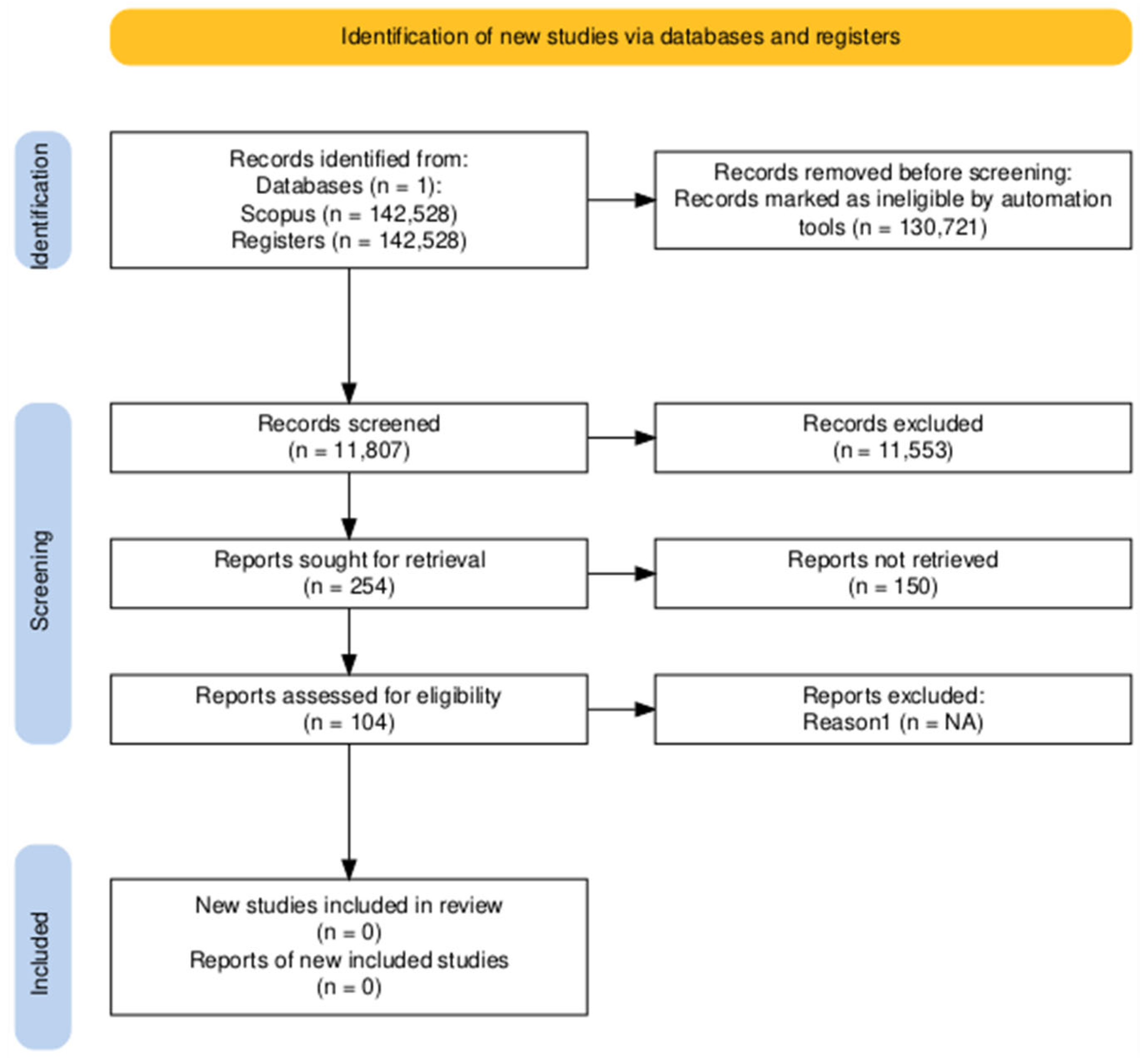
Figure 2.
Documents by year.
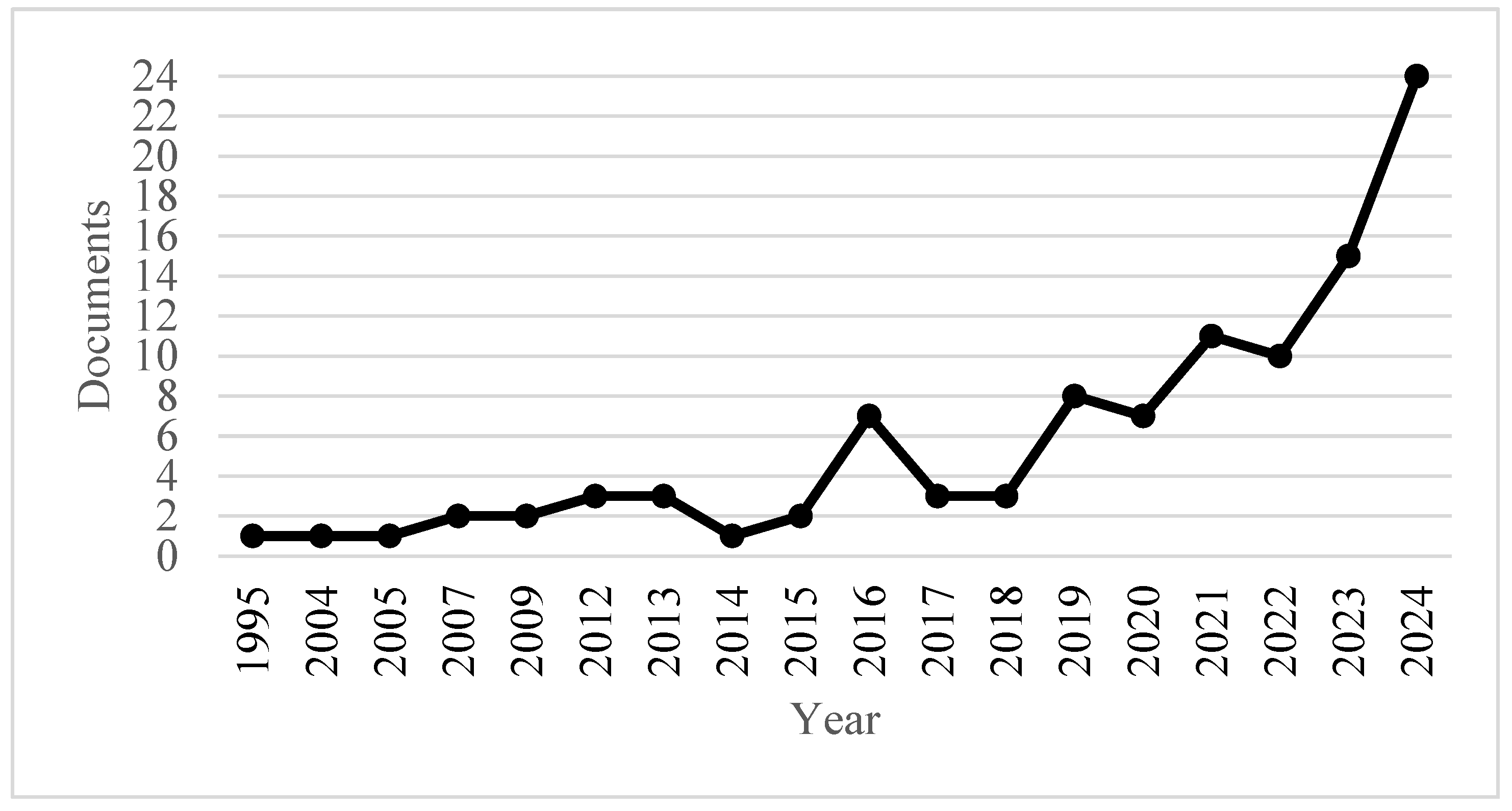
Figure 3.
Documents by Geographical Area.
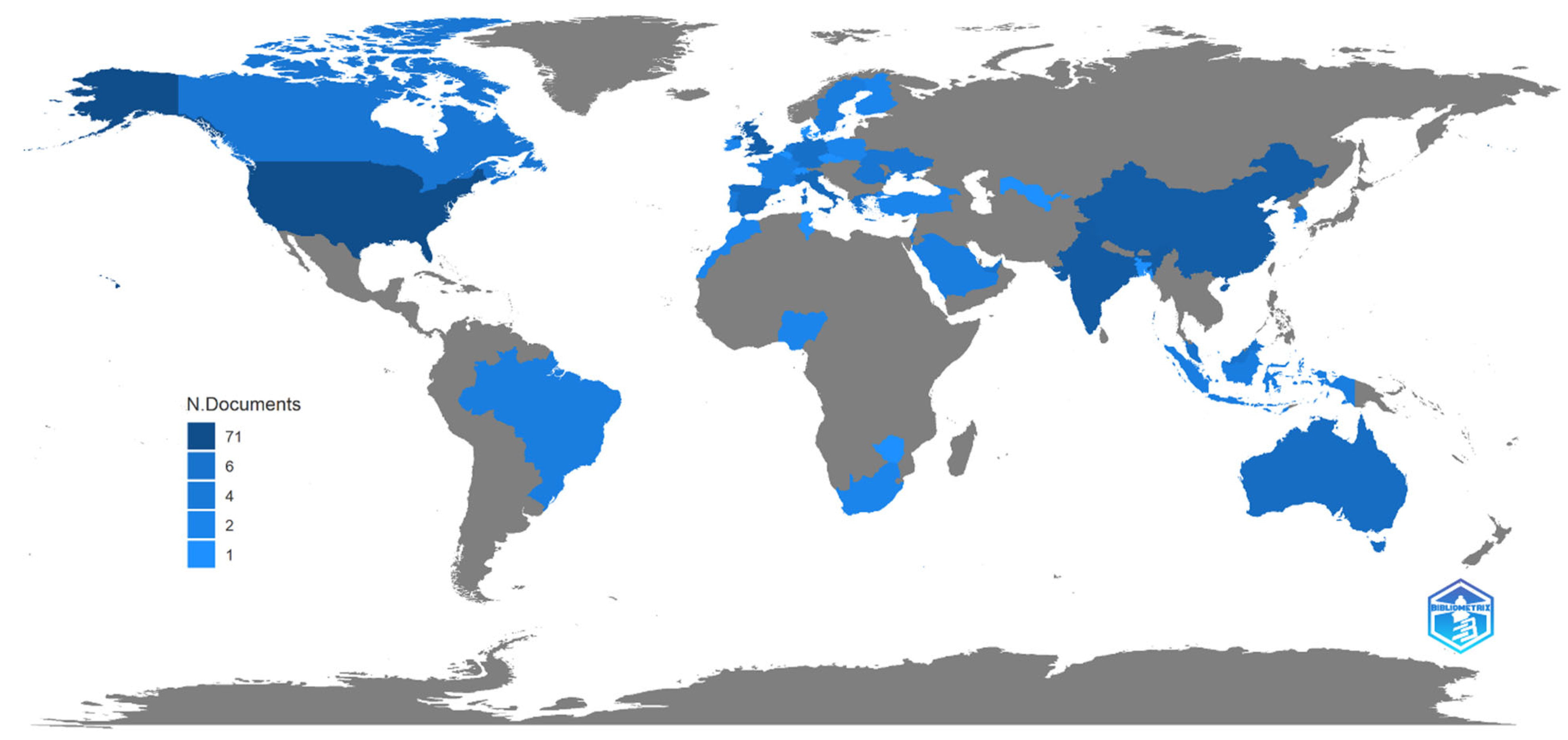
Figure 4.
Evolution of citations between 2014 and 2024.
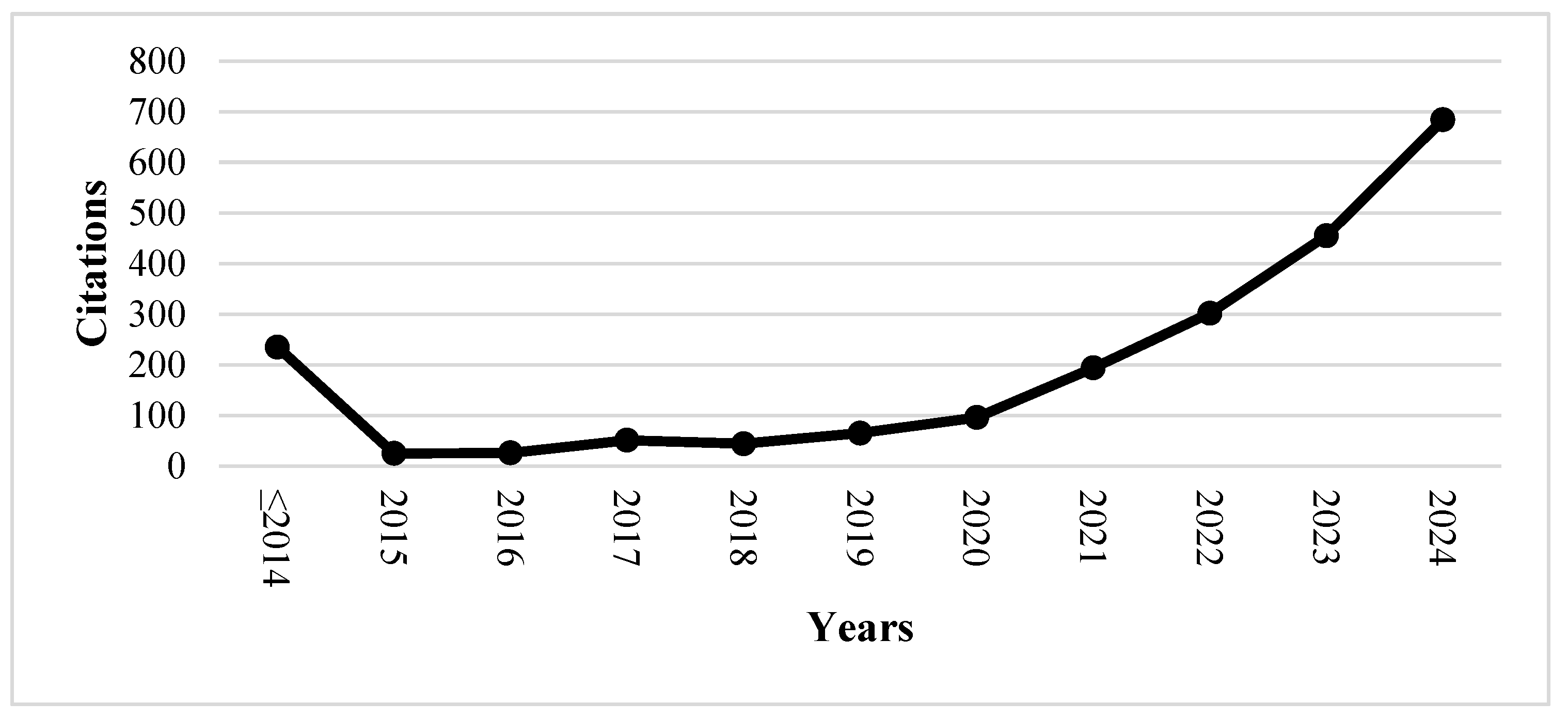
Figure 5.
A network of all keywords.
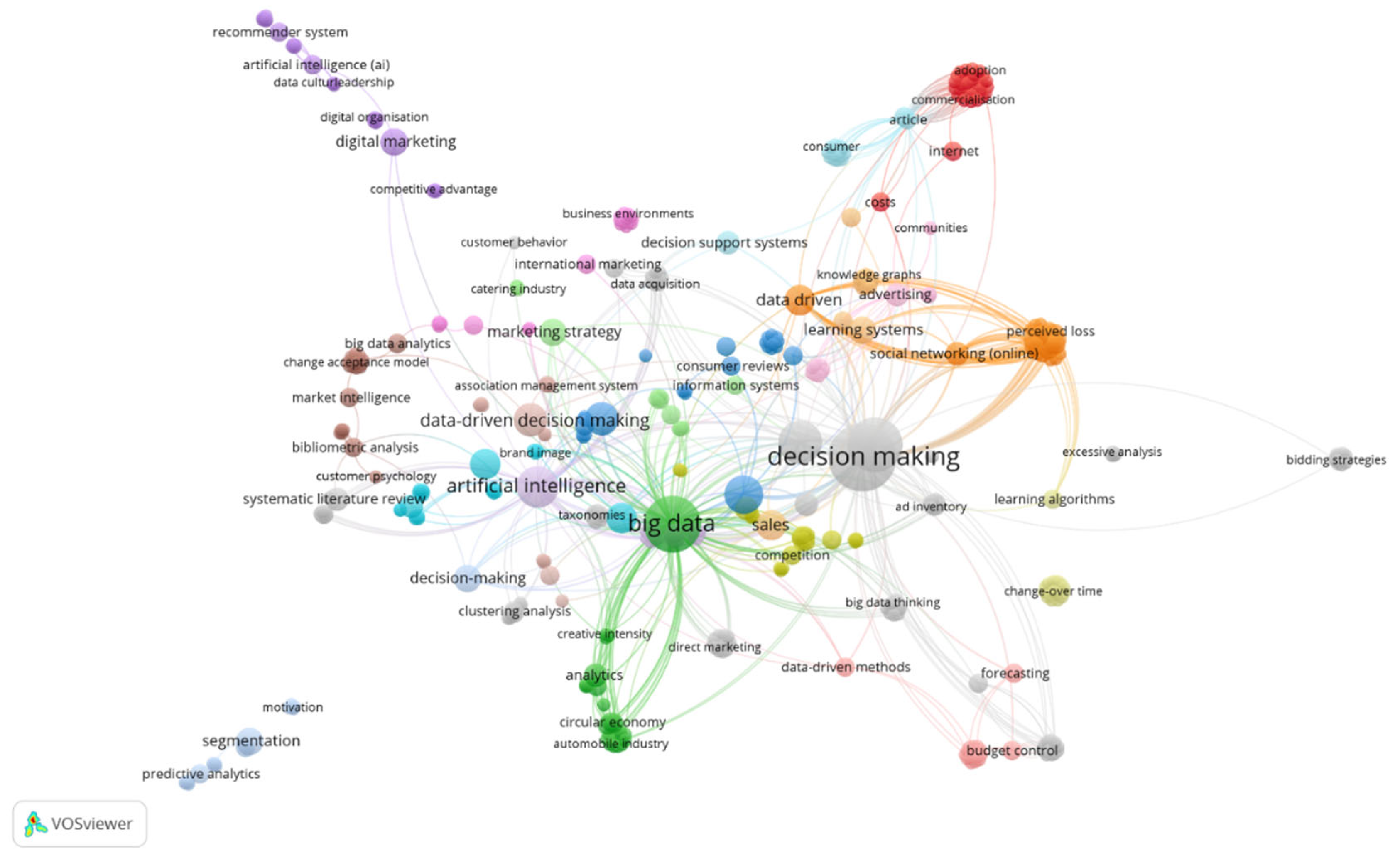
Figure 6.
A network of Linked Keywords.
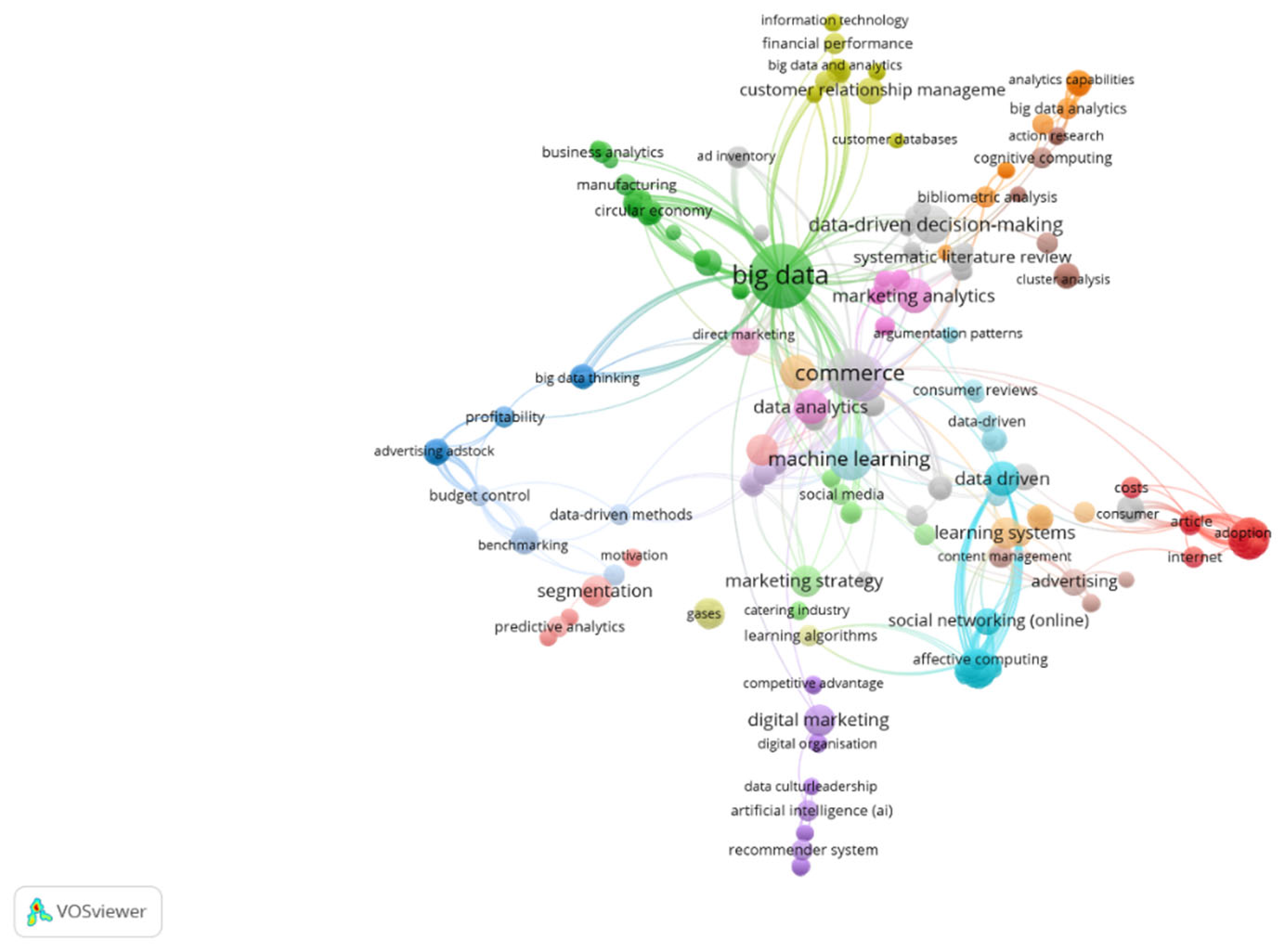
Figure 7.
A network of co-citation.
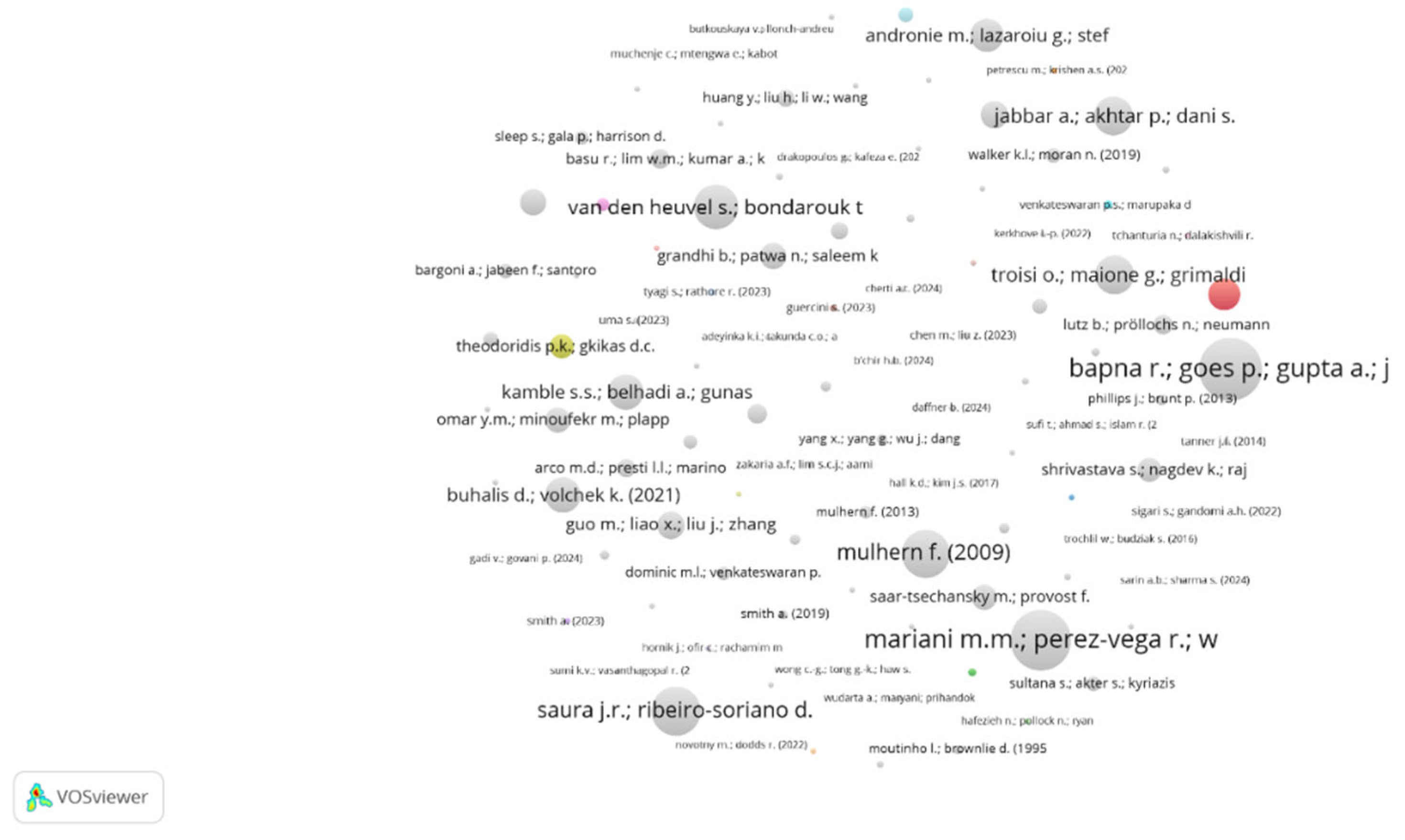
Table 1.
Process of systematic LRSB.
| Fase | Step | Description |
|---|---|---|
| Exploration | Step 2 | searching for appropriate literature |
| Step 3 | critical appraisal of the selected studies | |
| Step 4 | data synthesis from individual sources | |
| Interpretation | Step 5 | reporting findings and recommendations |
| Communication | Step 6 | Presentation of the LRSB report |
Table 2.
Screening methodology.
| Scopus Database | Screening | Publications |
|---|---|---|
| Initial Query | Keywords: data-driven | 142,528 |
| First Screening | Keywords: data-driven, decision-making | 11,807 |
| First Screening | Keywords: data-driven, decision-making, marketing | 245 |
| Eligibility criteria | Keywords: data-driven, decision-making, marketing Limited to the Subject area: business, management and accounting Published until November 2024 |
104 |
Table 3.
Top 10 countries by number of publications.
| Country | Number of Publications |
| USA | 71 |
| INDIA | 27 |
| CHINA | 24 |
| UK | 22 |
| ITALY | 11 |
| AUSTRALIA | 9 |
| SPAIN | 9 |
| GERMANY | 7 |
| GREECE | 6 |
| MALAYSIA | 6 |
Source: own elaboration.
Table 4.
Process of systematic LRSB.
| Title | SJR | Best Quartile | H Index |
|---|---|---|---|
| Journal of Management World | 7,540 | Q1 | 280 |
| Developments in Marketing Science Proceedings of the Academy of Marketing Science | 7,19 | Q1 | 207 |
| Journal of the Academy of Marketing Science | 7,190 | Q1 | 207 |
| International Journal of Information Management | 5,780 | Q1 | 177 |
| Information Systems Research | 4,180 | Q1 | 185 |
| MIS Quarterly Management Information Systems | 4,110 | Q1 | 271 |
| Journal of Business Research | 3,130 | Q1 | 265 |
| Technological Forecasting and Social Change | 3,120 | Q1 | 179 |
| Psychology and Marketing | 2,760 | Q1 | 143 |
| Industrial Marketing Management | 2,710 | Q1 | 117 |
| Business Horizons | 2,440 | Q1 | 118 |
| Ams Review | 2,240 | Q1 | 29 |
| Decision Support Systems | 2,210 | Q1 | 180 |
| International Journal of Information Management Data Insights | 2,140 | Q1 | 34 |
| Journal of Enterprise Information Management | 1,650 | Q1 | 82 |
| Journal of Management in Engineering | 1,480 | Q1 | 92 |
| Quantitative Marketing and Economics | 1,410 | Q1 | 39 |
| International Marketing Review | 1,390 | Q1 | 106 |
| Electronic Commerce Research and Applications | 1,340 | Q1 | 101 |
| Consumer Behaviour and Analytics | 1,240 | Q1 | 62 |
| IEEE Transactions on Engineering Management | 1,200 | Q1 | 112 |
| Management Decision | 1,140 | Q1 | 126 |
| Journal of Strategic Marketing | 1,010 | Q1 | 67 |
| Oeconomia Copernicana | 0,990 | Q1 | 30 |
| Euromed Journal of Business | 0,970 | Q1 | 36 |
| Journal of Marketing Education | 0,940 | Q1 | 66 |
| Tourism Recreation Research | 0,920 | Q1 | 63 |
| Journal of Marketing Communications | 0,900 | Q1 | 60 |
| Journal of Theoretical and Applied Electronic Commerce Research | 0,890 | Q1 | 47 |
| Humanities and Social Sciences Communications | 0,870 | Q1 | 35 |
| International Journal of Market Research | 0,860 | Q1 | 63 |
| Operations Research Perspectives | 0,810 | Q1 | 31 |
| Journal of Organizational Effectiveness | 0,790 | Q2 | 28 |
| Journal of Marketing Analytics | 0,740 | Q1 | 21 |
| Journal of Quality Assurance in Hospitality and Tourism | 0,710 | Q2 | 42 |
| Frontiers in Sports and Active Living | 0,670 | Q1 | 21 |
| International Review of Retail Distribution and Consumer Research | 0,660 | Q2 | 49 |
| Journal of Nonprofit and Public Sector Marketing | 0,630 | Q2 | 39 |
| Service Oriented Computing and Applications | 0,560 | Q2 | 31 |
| Tourism | 0,360 | Q2 | 30 |
| Lecture Notes in Business Information Processing | 0,340 | Q3 | 63 |
| Innovative Marketing | 0,270 | Q3 | 20 |
| Tourism and Hospitality | 0,260 | Q3 | 22 |
| Strategy and Leadership | 0,240 | Q3 | 54 |
| South Asian Journal of Business and Management Cases | 0,230 | Q3 | 10 |
| Journal of Digital and Social Media Marketing | 0,210 | Q3 | 6 |
| Journal of Commercial Biotechnology | 0,200 | Q4 | 19 |
| Journal of Telecommunications and the Digital Economy | 0,180 | Q3 | 14 |
| Asia Pacific Journal of Innovation in Hospitality and Tourism | 0,160 | Q4 | 8 |
| Applied Marketing Analytics | 0,160 | Q4 | 5 |
| Springer Proceedings in Business and Economics | 0,150 | -* | 20 |
| Emerald Emerging Markets Case Studies | 0,140 | Q4 | 9 |
| Proceedings of the International Conference on Tourism Research | 0,130 | -* | 6 |
| Human Resource Management International Digest | 0,100 | Q4 | 17 |
| International Conference on Information and Knowledge Management Proceedings | 0 | -* | 144 |
| PPI Pulp and Paper International | 0 | -* | 8 |
| Management for Professionals | 0 | -* | 18 |
| 2024 3rd International Conference on Creative Communication and Innovative Technology Iccit 2024 | 0 | -* | 13 |
| 2015 International Conference on Logistics Informatics and Service Science Liss 2015 | 0 | -* | 0 |
| Omega United Kingdom | -* | -* | -* |
| Data-Driven Marketing for Strategic Success | -* | -* | -* |
| Data-Driven Decision-Making for Long-Term Business Success | -* | -* | -* |
| Sustainable Marketing Branding and Reputation Management Strategies for a Greener Future | -* | -* | -* |
| Sport Business Analytics Using Data to Increase Revenue and Improve Operational Efficiency | -* | -* | -* |
| Shaping the Digital Enterprise Trends and Use Cases in Digital Innovation and Transformation | -* | -* | -* |
| Palgrave Handbook of Supply Chain Management | -* | -* | -* |
| Modelling and New Trends in Tourism: a Contribution to Social and Economic Development | -* | -* | -* |
| Membership Essentials: Recruitment Retention Roles Responsibilities and Resources | -* | -* | -* |
| Marketing Automation and Decision Making: The Role of Heuristics and AI in Marketing | -* | -* | -* |
| Impact of New Technology on Next-Generation Leadership | -* | -* | -* |
| Hospitality Tourism and Lifestyle Concepts Implications for Quality Management and Customer Satisfaction | -* | -* | -* |
| Global Applications of the Internet of Things in Digital Marketing | -* | -* | -* |
| Evolution of Integrated Marketing Communications the Customer-Driven Marketplace | -* | -* | -* |
| Data Analytics for Business Foundations and Industry Applications | -* | -* | -* |
| Contemporary Trends in Innovative Marketing Strategies | -* | -* | -* |
| Consumer Experience and Decision-Making in the Metaverse | -* | -* | -* |
| Consumer Behaviour and Analytics Second Edition | -* | -* | -* |
| Business Analytics for Effective Decision-Making | -* | -* | -* |
| Balancing Automation and Human Interaction in Modern Marketing | -* | -* | -* |
| Analytics and Dynamic Customer Strategy Big Profits from Big Data | -* | -* | -* |
| AI-Driven Marketing Research and Data Analytics | -* | -* | -* |
| AI and Data Engineering Solutions for Effective Marketing | -* | -* | -* |
| 2023 IEEE International Conference on Research Methodologies in Knowledge Management Artificial Intelligence and Telecommunication Engineering Rmkmate 2023 | -* | -* | -* |
| 2021 International Conference on Data Analytics for Business and Industry Icdabi 2021 | -* | -* | -* |
*data not available. Source: own elaboration.
Disclaimer/Publisher’s Note: The statements, opinions and data contained in all publications are solely those of the individual author(s) and contributor(s) and not of MDPI and/or the editor(s). MDPI and/or the editor(s) disclaim responsibility for any injury to people or property resulting from any ideas, methods, instructions or products referred to in the content. |
© 2025 by the authors. Licensee MDPI, Basel, Switzerland. This article is an open access article distributed under the terms and conditions of the Creative Commons Attribution (CC BY) license (http://creativecommons.org/licenses/by/4.0/).
Copyright: This open access article is published under a Creative Commons CC BY 4.0 license, which permit the free download, distribution, and reuse, provided that the author and preprint are cited in any reuse.