

Submitted:
05 January 2025
Posted:
06 January 2025
Read the latest preprint version here
Abstract
Dimer and trimer acids are interesting viscous liquids produced from fatty acids derived from renewable sources. The chemical structures of dimer and trimer acids are known and quite complex and are presented here and discussed and further elucidated through the electronic absorption spectroscopy, FT-IR and Raman spectroscopy. Dimer and trimer acids find a number of applications as such or under the form of derivatives. In the present study, a series of esters of dimer and trimer acids with alcohols from renewable sources have been synthesized with the purpose to be used as plasticizers for rubber and plastics. The polarity of dimer and trimer acids as well as their esters with alcohols from renewable sources (dimerates and trimerates) were systematically studied using the Nile Red solvatochromic probe. The resulting E(NR) values were compared and discussed with the E(NR) values of the most common rubber and plastics. The compatibility and other physical properties expected from the E(NR) scale was studied and successfully confirmed in tire tread rubber compounds formulations and in nitrile rubber and PVC matrices, confirming once again the sensitivity and the validity of the Nile Red solvatochromic polarity scale for the development of new plasticizers.
Keywords:
dimer acid
; trimer acids
; dimerates
; trimerates
; plasticizers
; renewable sources
; Nile Red dye
; solvatochromism
; polarity probe
; compatibility
1. Introduction
As discussed in a previous paper [1] there is a great attention and demand toward new plasticizers for rubber and plastics derived from renewable sources. In fact, the traditional petroleum-derived plasticizers typically used in the tire and rubber technical articles industry are already partially substituted by vegetable oils (e.g. sunflower oil, soybean oil [2,3,4]) or by esters of fatty acids (e.g. methyl esters of fatty acids [5]).
Much less known are the dimer acids which are obtained from naturally occurring unsaturated fatty acids by a thermal treatment under pressure with variable amounts of clays (typically montmorillonite clay is the catalyst of choice) [6,7,8,9,10,11,12,13,14,15,16]. The clay catalyst causes the dehydrogenation, hydrogen shift reaction and double bond conjugation of the treated fatty acids favoring the subsequent Diels-Alder addition reaction leading to the dimer acids which are characterized by a 1,2,3,4-substituted-cyclohexene dimer structure as shown in Scheme 1, accompanied by a minor component of 1,2,5,6-tetrasubstituted-1,2,4a,5,6,8a-hexahydronaphthalene fatty acid bicyclic dimer shown in Scheme 1 [6,7,8,9,10,11,12]. In addition to the just mentioned dimer acids which in general are the main products, also the trimer acids are produced having for example the bicyclic structure of 1,2,3,4,5,8- substituted 1,2,3,4,4a,5,8,8a--octahydronaphthalene (see Scheme 1) [6,7,8,9,10,11,12]. A linear dimer may also be present as minor component (shown at the bottom of Scheme 1). The latter is mainly produced by a free radical mechanism [11]. Furthermore, a clay catalyzed hydrogen transfer reaction may lead to dehydrogenation of the 1,2,3,4-substituted cyclohexene ring leading to the corresponding aromatic derivative, i.e the 1,2,3,4-substituted benzene shown in Scheme 1. Earlier literature [6,7,8,9,10,11,12] claims that the key mechanism for the formation of dimers and trimers of fatty acids involves the Diels-Alder reaction and free radical mechanism for the linear dimer formation. More recently, it has been suggested that also an ionic mechanism promoted by the clay may contribute to dimers and trimers formation [13,14,15,16].
The dimer acids are isolated by distillation after removal of the monomers and the isostearic acid (vide infra). The standard dimer acids available in the market are viscous liquids (8000 – 9000 cP at 25°C) with a trimer content of the order of 20% [11].
However, by an additional distillation step, the dimer content can be brought to >96% and the high pure dimer is a clear and viscous liquid (7100 cP at 25°C). The distillation residue is mainly composed by trimers in the range of 55-70% with the rest is still composed by dimers [11]. Such a trimers residue is in general a dark colored liquid characterized by an extremely high viscosity (23000 – 30000 cP at 25°C) [11].
Either the 80/20 dimer/trimer or the high pure >96% dimer can be subjected to a mild catalytic hydrogenation. All the ethylenic double bonds are removed but the aromatic rings present in the dimer mixture are preserved (see the results section for a further insight) [11]. In Scheme 2 are shown some chemical structures of the hydrogenated dimers. The hydrogenation does not change significantly the viscosity of these liquids but improves color and the thermo-oxidative stability.
The hydrogenation can be pushed further to reduce the carboxylic functionalities into the alcohol groups. In such a way also the dimer alcohols are produced, having the same structure of the hydrogenated dimer acids but with the –OH groups in place of the –COOH groups. Examples of chemical structures present in the dimers alcohol are shown in Scheme 3 [11].
The fields of application of dimer acids as such are numerous for instance as corrosion inhibitors in petroleum processing equipment, additives in jet fuels, in synthetic lubricants, as hardener in epoxy resins and nylon fibers [11]. Indeed, the most comprehensive review on the applications of dimer acids and derivatives is reported in ref. [11]. Large volumes of dimer and trimer acids are employed in the synthesis of fatty polyamides [17,18] which find application in coatings as additives in flexographic inks and in hotmelts. However, the main use of liquid fatty polyamides is in epoxy resins curing [17,19]. Furthermore, also polyesters based on dimer acids have been developed [20]. The dimer acids are also employed to produce polyester polyols suitable for the production of high quality polyurethanes [12].
The esters of dimer acids have found applications as plasticizers for plastics and especially for PVC [11]. Very recently it was found that certain esters of dimer and trimer acids are also excellent plasticizers for rubber compounds and especially for passenger tire treads rubber compounds [21]. The esters of dimer and trimer acids made with alcohols from renewable sources are products 100% from renewable sources, since also dimer and trimer acids are fully derived from renewable sources. Furthermore, dimer and trimer acids are neither toxic and nor irritant [11,17] and are not considered flammable materials [11]. The advantages offered by a series of selected dimer and trimer acids esters with alcohols from renewable sources in rubber tread formulations, pertain the viscoelastic properties of the resulting compounds, offering better dynamic properties with respect to the traditional petroleum-based plasticizers used by the tire industry such as T-DAE (Treated Distillate Aromatic Extract) or MES (Mild Extract Solvate) and also toward vegetable oils such as sunflower oil [21].
In this paper the dimer acids are first characterized with electronic absorption spectroscopy as well as with FT-IR and Raman spectroscopy. The polarity of a selection of the esters of dimer and trimer acids and other plasticizers is studied with the Nile Red polarity probe [1].
2. Materials and Methods
2.1. Materials and Equipment
Dimer acids samples were kindly supplied by Croda B.V. from the Dutch production plant of Gouda (The Netherlands). Croda is now part of the Cargill Corporation, USA. The commercial dimer acids samples received are: Pripol 1017 (approx.. 80% dimer and 20% trimer); Pripol 1025 (hydrogenated dimer acids; it is the hydrogenated version of Pripol 1017), Pripol 1040 (approx.. 80% trimer and 20% dimer); Pripol 2030 dimer alcohols (the hydrogenation was pushed to the conversion level of all -COOH groups into –OH groups).
The esters of dimer and trimer acids were prepared as detailed in ref. [21].
The glycerol formal alcohol as well as the fatty acids esters of glycerol formal and its epoxidized derivatives were donated by Fluos sas company, Samarate plant, Italy.
The FT-IR were collected with a Nicolet iS50 spectrometer from Thermo Fischer.
Raman spectra were collected on a BWTEK dispersive spectrometer model BWS415i using a laser source at 785 nm.
The electronic absorption spectra were recorded on a Shimadzu UV-2450 spectrophotometer.
2.2. Determination of the Maximum of Absorbance with the Solvatochromic Dyes in Liquid Samples
The evaluation of the polarity of dimer acids and its derivatives with Nile red was made following the same procedure detailed in the previous paper [1].
3. Results and Discussion
3.1. Electronic Absorption Spectra of Dimer Acids and Hydrogenated Dimer Acids
The dimer acids are made from mixture of fatty acids primarily derived from tall oil fatty acids, oleic and linoleic acids [17]. As shown in Figure 1, the electronic absorption spectrum of a commercial dimer acid is rather complex with a series of absorption bands at 215, 237, 267, 280, 301 and 328 nm. These electronic transitions are essentially due to the conjugated diene and triene moieties present in the fatty acid chains and moreover to the benzene ring conjugated with a double bond as shown in Scheme 1.
As shown in Figure 1 and especially in Figure 2, the hydrogenation of dimer acids causes the removal of all the electronic transitions at longer wavelengths with the exclusion of a benzenoid band characterized by two maxima at 270 and 277 nm (Figure 2). A similar electronic absorption spectrum is displayed also by the dimer alcohol obtained when the hydrogenation is pushed further saturating not only the ethylenic double bonds but converting also the carboxylic functionalities into hydroxy groups. The benzenoid band of Figure 2 confirms that only the aromatic rings originally present in the dimer have survived the hydrogenation step leading to the chemical structures shown in Scheme 2 and 3. The skeleton of the aromatic rings present in the hydrogenated dimer acids and in dimer alcohol is that of 1,2,3,4-tetraalkyl-substituted benzene. The simplest 1,2,3,4-tetraalkyl-substituted benzene is 1,2,3,4-tetramethylbenzene or prehnitene. For the latter hydrocarbon, the molar extinction coefficient of the strongest band (i.e. that at 270 nm) is reported at 301 M-1 cm-1 [22]. Using hydrogenated dimer acids and dimer alcohol solutions in tetradecane at known concentration Ctotal, it is possible to make an estimation of the concentration of the aromatic fraction %Carom in these commercial products using the Lambert-Beer law:
where A is the absorbance at 270 nm, ε the molar extinction coefficient (301 M-1 cm-1) and b is the pathlength of the cuvette (1 cm).
Carom = Aε-1b-1
Thus, the aromatic fraction is then determined according to:
%Carom = (Carom/Ctotal) x 100
Where both Carom and Ctotal are expressed mol•L-1. From these determinations it can be concluded that the aromatic fraction in commercial hydrogenated dimer acids (and hence in dimer acids) is 35.5% and a little bit lower in the case of dimer alcohols, where the aromatic fraction is found at 30.1%.
It is interesting to make a comparison of our results with those reported by earlier investigators [23] who make a similar estimation on the aromatic fraction content on hydrogenated dimer acids produced on lab scale (not on commercial product, as in our case). They concluded that the aromatic fraction is in the range of 20-25% [23]. The lower aromatic content reported is explainable with the different origins of the hydrogenated dimer acids and the fact that their samples were hydrogenated on lab scale. Furthermore, in the current determination, we have correctly used the molar extinction coefficient of prehnitene, the correct hydrocarbon, while they have adopted the ε value of durene which is more than double the value of the ε of prehnitene [24].
3.2. Raman Spectroscopy on Dimer Acids and Hydrogenated Dimer Acids
The dimer and trimer acids as well as the hydrogenated dimer acids display essentially the same band pattern in the infrared (see the FT-IR spectra in Figure 3). Even the spectrum of oleic acid taken as reference appears practically identical to the spectra of dimer and trimer acids (Figure 3). The unique distinctive feature in the oleic acid infrared spectrum is the weak band at 3005 cm-1 due to the ethylenic =CH stretching. In all cases, the infrared spectra of the oleic, dimer, trimer and hydrogenated dimer acids is dominated by the C=O stretching of the COOH group at about 1710 cm-1, while the C=C stretching expected at 1600 cm-1 is not detectable in the infrared.
The FT-IR spectroscopy is instead very useful in the identification of dimer alcohol (see Figure 3 at the bottom). The hydrogenation has removed completely the C=O stretching band and the presence of the OH groups is confirmed either from the νOH at 3328 cm-1 and from the C-O bending at 1057 cm-1.
Raman spectroscopy is a very useful tool for the analysis of lipids thanks also to its complementarity to infrared spectroscopy [25]. For the first time the Raman spectra were successfully recorded on dimer acids, hydrogenated dimer acids and on dimer alcohol and shown in Figure 4. Dimer acid shows only the C=C stretching band at about 1655 cm-1 while the carboxylic C=O band is very weak and not detectable with our instrumentation. The hydrogenated dimer acid shows a strong reduction in intensity of the νC=C band as shown in Figure 4 (compare top panel with middle panel) with respect to the pristine dimer acids. As expected, in the Raman spectrum of dimer alcohol (bottom of Figure 4) there are no more evidences of the νC=C band.
We have tried also to record the Raman spectrum of the trimer acids. We were successful in getting a Raman spectrum of this substrate but with a relatively low quality due to fluorescence, since the trimer is a dark viscous liquid. The Raman spectrum of the trimer acids is completely comparable to that of the dimer acid shown at the top of Figure 4.
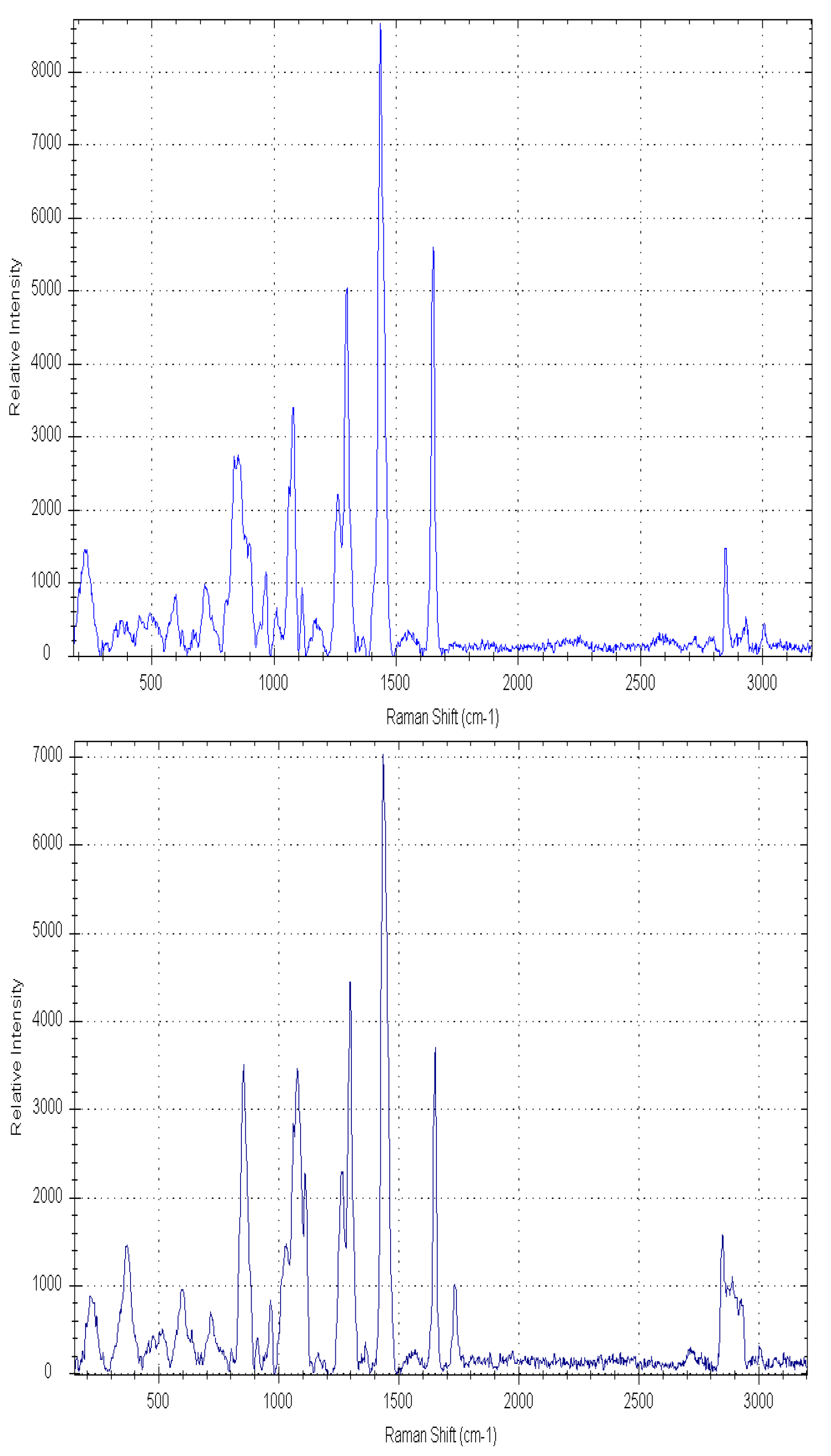
Regarding the other Raman lines observed in the spectra of the dimer acids, it is interesting to notice that these bands are very similar with those observed for instance in the Raman spectrum of oleic acid (Figure 5, left). In the case of oleic acid, the cis-C=C stretching band is very strong, even stronger than that observed in the spectrum of dimer acids. However, also in the Raman spectrum of oleic acid, the C=O stretching is not detectable (Figure 5, left). The C=O stretching band appears in the Raman spectrum at about 1740 cm-1 only in the ester ethyl oleate (Figure 5, right), well distinguished from the C=C stretching band. All the esters, including the glycerides of oleic acid show both the νC=C and νC=O bands in the Raman spectra.
Following the assignment made by other authors in the case of Raman spectra of fatty acids [25], the Raman bands (Figure 4 and Figure 5) in the range of 1500-1400 cm-1 are due to the scissoring and twisting vibrations of the CH2 groups while the CH3 groups display the same types of vibration at about 1300 cm-1. The =CH bending mode, is reported at 1265 cm-1 but it is evident only in the Raman spectra of oleic acid and ethyl oleate. In the range of 1200-1040 cm-1 appears the skeletal optical modes due to νC-C [25].
3.2. Dimer acids and their esters as plasticizers in the Nile red polarity scale E(NR)
3.2.1. Dimer acids and other carboxylic acids evaluated with the Nile red polarity scale E(NR)
In the previous work [1], it was shown that one of the best way to measure the polarity of plasticizers is to use the Nile Red dye instead of the Reichardt’s ET(30) dye. The main problem with the 2,6-diphenyl-4-(2,4,6-triphenyl-1-pyridinio) phenolate (i.e. the ET(30) dye) is its sensitivity to acids. Even the trace residual acidity present in the esters plasticizers causes protonation of the phenolate oxygen anion, leading to the disappearance of the long-wavelength solvatochromic charge transfer (CT) band of the ET(30) dye, hindering any possible measurement. This problem can be circumvented by the use of Nile Red dye and, if needed, by using the existing correlation found between the E(NR) scale and the ET(30) [1]. The Nile red dye is completely insensitive to acidity and shows a positive solvatochromism in different liquid media in contrast with the negative solvatochromic behaviour of the Reichardt’s dye. A drawback of the Nile red dye regards the fact that the absorption band of NR is less sensitive to the polarity changes of the liquids than the absorption band of Reichardt’s dye. This is manifested into smaller solvatochromic shifts as a change in the polarity of the given liquid.
Another advantage offered by the Nile red solvatochromic dye with respect to the Reichardt’s ET(30) dye regards the possibility to measure the polarity of liquid carboxylic acids. As shown in Table 1, a series of liquid carboxylic acids was studied with the Nile red solvatochromic dye, including also the dimer and trimer acids, the hydrogenated dimer acids and even the isostearic acid. The latter compound is formed during the dimerization reaction when the tall oil fatty acids (or other mixture of fatty acids) are heated with montmorillonite catalyst. Isostearic acid is then separated from dimer acids and it is characterized by a branched fatty acid chain instead of a linear one as in the case of the common stearic acid as shown in Scheme 4 [6,7,8,9,10,11,12]. The unique property of isostearic acid regards the fact that it is liquid at ambient temperature while stearic acid is solid with a melting point at about 70°C. All the E(NR) data in Table 1 were measured in the present work with the exclusion of the formic, acetic and propionic acids whose E(NR) values were taken from ref. [26].
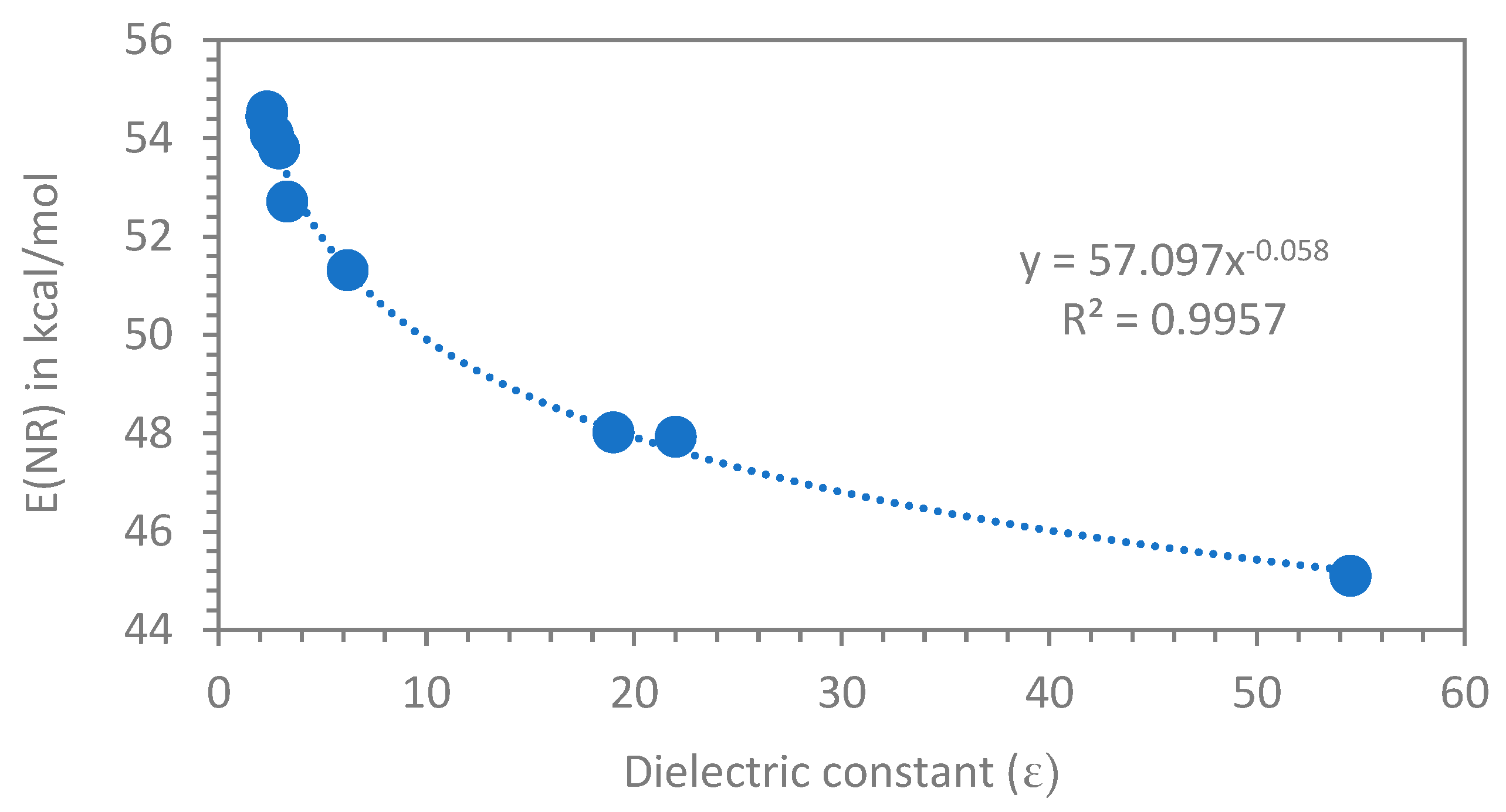
To show the validity of the E(NR) measurements also in the case of these liquid carboxylic acids, an attempt was made to correlate the E(NR) values with the dielectric constants (ε) of these liquids. Fortunately, the dielectric constants of the carboxylic acids studied in Table 1 are known [27,28] with the obvious exception of the dimer, trimer, hydrogenated dimer acids and isostearic acid. Since are fully known the dielectric constants of fatty acids [27,28], it was assumed that the dielectric constants of the dimer, trimer, hydrogenated dimer and isostearic acids are practically similar to the ε values of oleic, stearic and palmitic acids, with some minimal corrections derived from the E(NR) measurements. As shown in Figure 6, such approach has led to an interesting correlation between the E(NR) and ε through a power law:
with and excellent R2 value of 0.9957.
E(NR) = 57.097 ε-0.058
3.2.2. Dimer Alcohols and Other Alcohols Evaluated with the Nile Red Polarity Scale E(NR)
Because of the interesting results obtained with the liquid carboxylic acids in terms of E(NR) values and their correlation with the dielectric constants of the corresponding acids, a selection of alcohols typically used to produce esters plasticizers were subjected to the same methodological approach.
Table 2 shows the E(NR) values measured in this work or derived from ref. [26]. The dielectric constant values were taken from ref. [27,28]. The dielectric constant of dimer alcohols was not found in literature and estimated as similar of that of 1-octanol (i.e. 11.3) since its structure is recalled on dimer alcohol (see Scheme 3) or t-butanol since dimer alchools share a similar E(NR) value as t-butanol (see Table 2). Glycerol formal is another interesting alcohol as dimer alcohols, since it is nearly 95% derived from glycerol from renewable sources which is then reacted with one molecule of formaldehyde producing glycerol formal (see structure in Scheme 5). Thus, it has been assumed that glycerol formal maintains the same dielectric constant value of glycerol i.e. 46.5 [27]. This choice is also justified by the value of the E(NR) transition which places glycerol formal just between ethylene glycol and methanol (see Table 2).
Figure 7 shows the attempt to correlate the E(NR) values of all the selected alcohols of Table 2 with the relative dielectric constants of each alcohol. This time the correlation is not so good as in the case of the carboxylic acids studied in Figure 6. In fact, this time R2 = 0.6656 and the equation linking E(NR) with ε is:
E(NR) = 57.753 ε-0.021
Figure 7.
Correlation between the E(NR) values and the dielectric constant of all the alcohols listed in Table 2.
Figure 7.
Correlation between the E(NR) values and the dielectric constant of all the alcohols listed in Table 2.
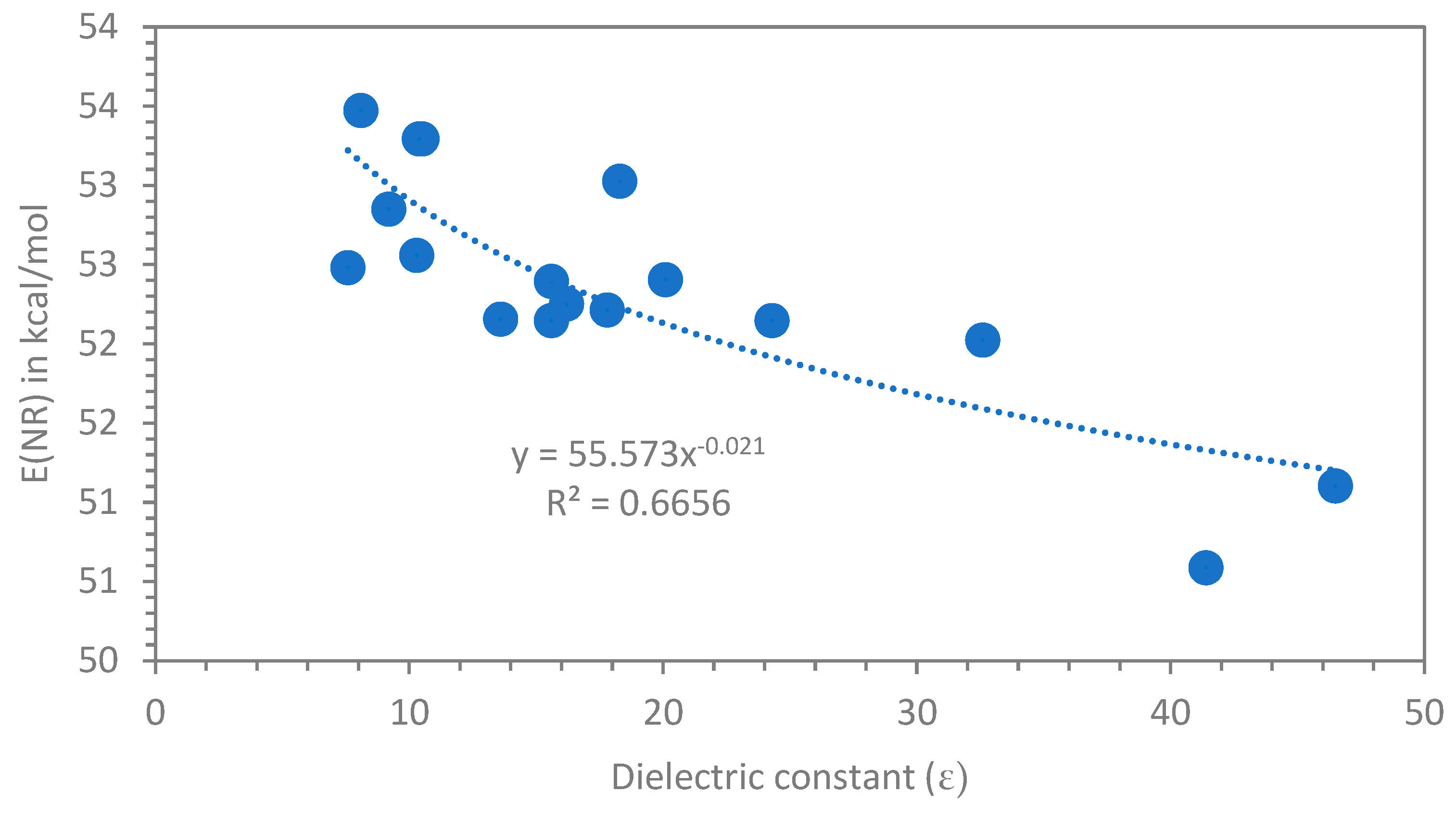
Figure 8.
Correlation between the E(NR) values and the dielectric constant of selected “linear” alcohols listed in Table 2 (those without the three asterisks).
Figure 8.
Correlation between the E(NR) values and the dielectric constant of selected “linear” alcohols listed in Table 2 (those without the three asterisks).
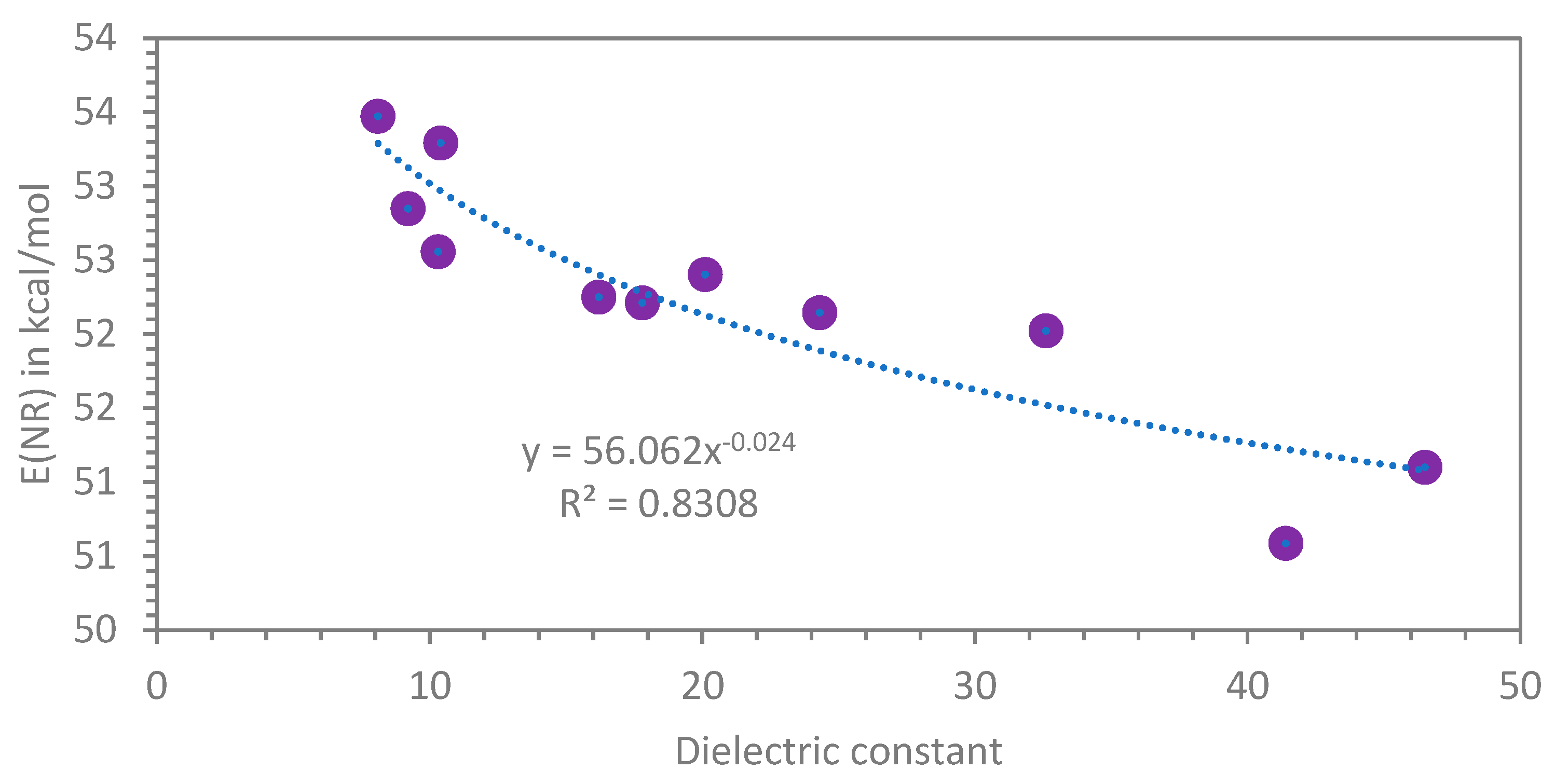
It is reasonable to think that the dispersion of values in Figure 7 is due to the relatively large variety of chemical structures of the alcohols considered. As reported in Table 2, if all the alcohols with non-linear structures (marked with three asterisks) are excluded from the E(NR) vs ε correlation, then the R2 is raised to 0.8308 and the eq. (4) is turned into the following eq. (5):
E(NR) = 56.062 ε-0.024
3.2.3. Plasticizers Evaluated with the Nile red Polarity Scale E(NR)
A series of new plasticizers were synthesized according to the procedure detailed in ref. [21]. The new plasticizers are essentially the esters of the dimer or trimer acids and hence named “dimerates” or “trimerates” respectively and shown in bold in Table 3. The other plasticizers and esters reported in Table 3 are shown for reference to see how the dimerates and trimerates are positioned in the E(NR) scale. Furthermore, Table 3 shows also other two “new” plasticizers which are the fatty acids esters of glycerol formal (see Scheme 5), an alcohol derived from renewable sources as the resulting esters of fatty acids [29,30]. Unfortunately, it is not possible to try to make a correlation between the E(NR) values of the plasticizers reported in Table 3 and the corresponding dielectric constant of these liquids. The reason is that for many of the plasticizers reported in Table 3 the ε values are not available from literature and moreover, the dimerate and trimerate esters are little known. A similar comment applies also for the fatty acid esters of glycerol formal.
Thus, a way to follow the change in polarity of the dimerates and trimerates is shown in Figure 9 where it is possible to see that the polarity of these family of esters is reduced by the length of the aliphatic chain of the alcohol used for the esterification with a general equation:
and with n the number of carbon atoms in the alcohol. These results are completely intuitive since the maximum polarity (lowest E(NR) values) are observed in the free carboxylic acids dimer acids and hydrogenated dimer acids, with a linear and measurable increase in the E(NR) on passing to ethanol (n =2), butanol (n = 2) and so on the resulting esters. With R2 = 0.8596 the correlation is reasonably good.
E(NR) = 0.0224 n +54.112
The trimerates are considered just in a couple of cases, i.e. as ethyl and as lauryl (C12) esters. In both cases as well as in the case of the free trimer acids (see Table 1), this class of compounds results more polar than the corresponding dimerate esters and dimer acids respectively. This experimental fact is completely reasonable since the trimer acids have three free carboxylic acid functionalities in contrast with the two functionalities displayed by the dimer acids. The same reasoning applies in the case of the corresponding esters, i.e three ester groups for the trimerates and only two ester groups for the dimerates.
4. Discussion on the Application of the Dimerates, Trimerates and Other Esters
The dimerates and trimerates as well as the fatty acid esters of glycerol formal were developed in order to offer a new series of plasticizers mainly for the rubber but also for the plastics industry. These new esters were designed as derived from renewable sources and with the aim to substitute the traditional petroleum-based plasticizers used in the rubber industry like T-DAE and MES [21,29,30]. Furthermore, the mentioned esters of dimer acids were thought as biodegradable and indeed, they present a reasonably good level of biodegradability [31].
In a previous work [1], the discussion was extensively focused on new plasticizers which can substitute partially or completely the traditional petroleum-based plasticizers and their evaluation through the Reichardt’s or the Nile Red polarity scale. It was shown that it does exist a solid correlation between the two scales and furthermore, Nile Red dye is much more suitable than the Reichardt’s dye ET(30) for the study of the polarity of ester liquids. The dimerates and trimerates, particularly the former show polarity levels at the E(NR) scale that make them compatible with the typical polymer matrices used by the rubber and in particular by the tire industry, i.e. polybutadiene, polyisoprene (or natural rubber) and the styrene-butadiene copolymers. Table 4 shows a summary of the E(NR) values of rubber and certain common plastics.
From the data in Table 3 it appears immediately evident that the most suitable dimerate esters candidates to be studied as replacement of the petroleum-based MES as well as the methyl esters of fatty acids [5], the soybean oil and the commercial product Nytex Bio which is a mixture of naphthenic and vegetable oil are the lauryl (C12), nonyl (C9) and amyl (C5) dimerates. Of course, also the ethylhexyl dimerate is also a candidate but the 2-ethylhexyl alcohol is synthetic and not naturally sourced. On the other hand, lauryl alcohol is derived for example from the naturally occurring and renewable palm kernel or coconut oil after fractionation and hydrogenation [32]. 1-Nonanol is industrially produced from the ozonolysis of oleic acid (a widely available and naturally sourced compound) followed by the hydrogenation of the resulting 1-nonanal [33]. Finally, amyl alcohol is naturally occurring from fermentation processes involving corn, molasses, potatoes or other similar substrates and known as fusel oil [34].
The above mentioned dimerates with E(NR) values closer to those of the rubbers polybutadiene (BR), polyisoprene (NR) and styrene-butadiene copolymer (S-SBR) (see Table 4), were indeed selected, synthesized and tested successfully as plasticizers in substitution of both petroleum-based plasticizers (e.g. MES of Table 3) and vegetable oils plasticizers (Table 3) in passenger tire tread formulation with important advantages in the winter performances and other tire tread properties [21]. The compatibility between the selected dimerate esters and the rubber matrix was found excellent in agreement with the expectation from the E(NR) scale.
In addition to the dimerates, also the fatty acids ester of glycerol formal was successfully tested in a tire tread formulation [29,30]. The glycerol formal ester is positioned in the E(NR) scale just between the amyl and ethylhexyl dimerate from one side and the isoamyl and butyl dimerate from the other side (see Table 3). Even in this case the compatibility with the rubber matrix was found excellent and the plasticizing effect as well as the winter performances of the vulcanizate were found much better than the results with the reference traditional petroleum-based plasticizers and vegetable oils [29,30].
Furthermore, an epoxidized version of the glycerol formal ester of fatty acids has been developed to provide a special compatibility with more polar polymer matrices like nitrile rubber (NBR) and polyvinylchloride (PVC) respectively having E(NR) values of 53.07 and 52.21 kcal/mol (Table 4) to be compared with 53.12 kcal/mol of the epoxidized glycerol formal ester of fatty acids (Table 3). Thus, the epoxidation is able to shift the glycerol formal ester from 54.27 kcal/mol down to 52.21 kcal/mol to the epoxidized version (Table 3). As expected, the compatibility of the latter, the epoxidized version, with the NBR and PVC is simply excellent [29,30]. Another interesting feature to be noticed in Table 3 regards the fact that the E(NR) value of the epoxidized glycerol formal ester (i.e. 53.12 kcal/mol) is equal to better than the E(NR) value of (diethylhexyl)phthalate (i.e. 53,24 kcal/mol), the most widely used plasticizer of the past but being phased out currently because concerns regarding its toxicity and its behavior as a xenohormone [35,36].
Thus, the epoxidized glycerol formal ester of fatty acids is one of the most interesting and effective potential replacement of (diethylhexyl)phthalate both in nitrile-based rubber matrix as well as in plasticized PVC.
5. Conclusions
Dimer and trimer acids are relatively little-known liquids with relatively complex structures as discussed in the introduction. Through the study of the electronic absorption spectra of pristine dimer acids with that of the hydrogenated dimer acids it was possible to conclude that in the commercial dimer acids the aromatic fraction is 35.5%. Instead, in the case of dimer alcohol, the aromatic fraction was found at 30.1% level.
With FT-IR spectroscopy, the dimer and trimer acids are practically undistinguishable from the band pattern of a common fatty acid like for instance oleic acid. Of course, the dimer alcohols are instead well distinguishable and easily identifiable with respect either to dimer acids or oleic acids.
It was found that Raman spectroscopy is a useful tool for the analysis and easy identification of dimer acids with respect to hydrogenated dimer acids, oleic acids and dimer alcohols. The stretching band of the ethylenic double bonds was found as a highly diagnostic value in the Raman spectroscopy.
Using the solvatochromism of the Nile Red dye it was possible to study the polarity of a series of carboxylic acids, including also dimer and trimer acids, as shown in Table 1. The validity of such measurement was also confirmed by the correlation found between the E(NR) scale of the carboxylic acids studied and their dielectric constant.
Because of the success of the E(NR) polarity scale with a series of carboxylic acids, also a series of alcohols (including dimer alcohol and glycerol formal) was studied (see Table 2) in the same way and also in this case a fair correlation between E(NR) scale and the dielectric constant of the alcohols considered was found.
A series of esters produced from raw materials from renewable sources were synthesized. These esters were made from dimer or trimer acids (both from renewable sources) and alcohols from renewable sources such as lauryl, 1-nonyl and amyl alcohols. Other alcohols were also considered as dimerate and trimerate esters as shown in Table 3. Furthermore, the fatty acids ester of the glycerol formal (another alcohol from renewable sources) was also considered, as well as its epoxidized derivative. Table 3 shows the classification of all these plasticizers esters and other plasticizers used for rubber and plastics based on the polarity E(NR) scale using the Nile Red dye. It turned out that the dimerate esters with alcohols from renewable sources have the same polarity of other common plasticizers for rubber such as MES, Nytex Bio and certain vegetable oils. A similar reasoning applies also for the case of fatty acids ester of the glycerol formal. Thus, these series of esters from renewable sources were selected based on the E(NR) scale and then tested in a tire tread rubber compound formulation in comparison with MES (petroleum based plasticizer) and vegetable oils as detailed elsewhere [21,29,30], with excellent results in terms of compatibility with the rubber matrix (see the E(NR) scale of rubbers and plastics in Table 4) and with noticeable advantages in terms of plasticizing effect and other tire performance predictors. Similar results were also achieved with the glycerol formal fatty acids ester either in a tire tread formulation. The epoxidized glycerol formal fatty acids ester was found extremely compatible with nitrile rubber matrix and with PVC compounds [29,30] as expected from the E(NR) value of this plasticizer in comparison to the E(NR) of nitrile rubber and PVC. The epoxidized glycerol formal fatty acids ester could be an effective and naturally sourced substitute of the troublesome and problematic plasticizer (diethylhexyl)phthalate since both plasticizers share almost the same E(NR) value.
Author Contributions
This article was made by a single author.
Funding
This research received no external funding.
Data Availability Statement
This work will be available in the Researchgate website at the author’s page.
Conflicts of Interest
The author declares no conflict of interest.
References
- Cataldo, F. Conventional and Green Rubber Plasticizers Classified through Nile Red [E(NR)] and Reichardt’s Polarity Scale [ET(30)]. Liquids 2024, 4, 305–321. [Google Scholar] [CrossRef]
- Sandstrom, P.H.; Rodewald, S.; Ramanathan, A. Rubber composition and tire with component comprised of polyisoprene rubber and soybean oil. US Patent N°20140135424A1, assigned to Goodyear Tyre & Rubber Co. (2014).
- Brunelet, T.; Dinh, M.; Favrot, J.M.; Labrunie, P.; Lopitaux, G.; Royet, J.G. Plasticizing system for rubber composition. US Patent N°7834074B2, assigned to Michelin Recherche et Technique SA. (2004).
- Mohamed, N.R.; Othman, N.; Shuib, R.K. Synergistic effect of sunflower oil and soybean oil as alternative processing oil in the development of greener tyre tread compound. J. Rubber Res. 2022, 25, 239–249. [Google Scholar] [CrossRef]
- Cataldo, F.; Ursini, O.; Angelini, G. Biodiesel as a plasticizer of a SBR-based tire tread formulation. ISRN Polym Sci 2013, 2013, Article. [Google Scholar] [CrossRef]
- Cowan, J.C. (1962). Dimer acids. J. Am. Oil Chem. Soc. 1962, 39, 534–545. [Google Scholar] [CrossRef]
- Den Otter, M.J.A.M. The dimerization of oleic acid with a montmorillonite catalyst I: Important process parameters; some main reactions. Fette Seifen Anstrichm. 1970, 72, 667–673. [Google Scholar] [CrossRef]
- Den Otter, M.J.A.M. The Dimerization of Oleic Acid with a Montmorillonite Catalyst II: GLC Analysis of the Monomer; theStructure of the Dimer; a Reaction Model. Fette Seifen Anstrichm. 1970, 72, 875–883. [Google Scholar] [CrossRef]
- Den Otter, M.J.A.M. The Dimerization of Oleic Acid with a Montmorillonite Catalyst III: Test of the Reaction Model. Fette Seifen Anstrichm. 1970, 72, 1056–1066. [Google Scholar] [CrossRef]
- McMahon, D.H.; Crowell, E.P. Characterization of products from clay catalyzed polymerization of tall oil fatty acids. J. Am. Oil Chem. Soc. 1974, 51, 522–527. [Google Scholar] [CrossRef]
- Leonard, E.C. The Dimer Acids: The Chemical and Physical Properties, Reactions, and Applications of Polymerized Fatty Acids; Humko Sheffield Chemical: Memphis, TN, USA, 1975. [Google Scholar]
- Leonard, E.C. Polymerization-dimer acids. J. Am. Oil Chem. Soc. 1979, 56, 782A–785A. [Google Scholar] [CrossRef]
- Balogh, M.; Laszlo, P. Organic Chemistry Using Clays. Springer Verlag: Berlin, Germany, 1993, p.113.
- Park, K.J.; Kim, M.; Seok, S.; Kim, Y.W. Quantitative analysis of cyclic dimer fatty acid content in the dimerization product by proton NMR spectroscopy. Spectrochim. Acta Part A: Molec. Biomolec. Spectros. 2015, 149, 402–407. [Google Scholar] [CrossRef]
- Zhang, J.; Nuñez, A.; Strahan, G.D.; Ashby, R.; Huang, K.; Moreau, R.A.; Yan, Z.; Chen, L.; Ngo, H. An advanced process for producing structurally selective dimer acids to meet new industrial uses. Ind. Crops Prod. 2020, 146, 112132. [Google Scholar] [CrossRef]
- Frihart, C.R. Chemistry of Dimer Acid Production from Fatty acids and the Structure–Property Relationships of Polyamides Made from These Dimer Acids. Polymers 2023, 15, 3345. [Google Scholar] [CrossRef] [PubMed]
- Cornils, B.; Lappe, P. Dicarboxylic Acids, Aliphatics, in Ullmanns Encyclopedia of Industrial Chemistry 5th Ed.; W. Gerhartz Ed. VCH, Weinheim, Germany, 1987, Vol. A8, p.535.
- Johnson, R.W.; Valdospino, J.M.; Gordon, R.L.; Miller, G.E.; Knight, R.W. Polyamides from fatty acids, in Encyclopedia of Polymer Science and Engineering 2nd Ed; J.I. Kroschwitz Ed.; Wiley, New York, USA, 1986, Vol. 11, p.476-489.
- McAdams, L.V.; Gannon, J.A. Epoxy Resins, in Encyclopedia of Polymer Science and Engineering 2nd Ed; J.I. Kroschwitz Ed.; Wiley,New York, USA, 1986, Vol. 6, p.352.
- Bajpai, U.D.N.; Nivedita, M. Dimer Acids-based Polyesters, in Concise Polymeric Materials Encyclopedia; J.C. Salamone Ed. CRC Press, Boca Raton, FL, USA, 1999, p.385-386.
- Cataldo, F.; Plancq, L.; Genin, F.; Arora, Z. Rubber composition comprising esters from renewable sources as plasticizers. PCT/EP/2019/086741 (2019) and WO2020/128007 A1 (2020), assigned to Total Marketing Services.
- Santiago, C.; Gandour, R.W.; Houk, K.N.; Nutakul, W.; Cravey, W.E.; Thummel, R.P. Photoelectron and ultraviolet spectra of small-ring fused aromatic molecules as probes of aromatic ring distortions. J. Amer. Chem. Soc. 1978, 100, 3730–3737. [Google Scholar] [CrossRef]
- McMahon, D.H.; Crowell, E.P. Characterization of products from clay catalyzed polymerization of tall oil fatty acids. J. Amer. Oil Chem. Soc. 1974, 51, 522–527. [Google Scholar] [CrossRef]
- Perkampus, H.H. UV-VIS Atlas of Organic Compounds. 2nd Ed; VCH, Weinheim, Germany, 1992, Spectrum D2/10.
- Czamara, K.; Majzner, K.; Pacia, M.Z.; Kochan, K.; Kaczor, A.; Baranska, M. Raman spectroscopy of lipids: a review. J. Raman Spectrosc. 2015, 46, 4–20. [Google Scholar] [CrossRef]
- Deye, J.F.; Berger, T.A.; Anderson, A.G. Nile Red as a solvatochromic dye for measuring solvent strength in normal liquids and mixtures of normal liquids with supercritical and near critical fluids. Analyt. Chem. 1990, 62, 615–622. [Google Scholar] [CrossRef]
- Dean, J.A. (Ed.) , Lange’s Handbook of Chemistry, 15th edition, McGraw-Hill, New York, USA, 1999, section 5-105.
- Weast, R.C. (Ed.) , CRC Handbook of Chemistry and Physics, 68th edition, CRC Press, Boca Raton, FL, USA, 1987, section E-49.
- Chiaradia, G. Plasticizers for polymers. US Patent 20160264758A1 (2016), assigned to Fluos sas.
- Chiaradia, G.; Cataldo, F.; Bastiaensen, E.; Colombo, D.; Turesso, C. Esters from vegetable oils as process oils for the production of elastomers. Italian patent Demand 102024000007495 (2024), assigned to Fluos sas.
- Randles, S.J. Esters. Chapter 3 in Rudnick, L. R., Shubkin, R. L. (Eds.). (1999). Synthetic Lubricants and High-Performance Functional Fluids, 2nd edition, CRC Press, Boca Raton, FL., USA, 1999, p.69, Table 6.
- Falbe, J.; Lipps, W.; Mayer, D. Alcohols, Aliphatic, in Ullmanns Encyclopedia of Industrial Chemistry 5th Ed.; W. Gerhartz Ed. VCH, Weinheim, Germany, 1985, Vol. A1, p.291.
- Tavassoli-Kafrani, M.H.; Foley, P.; Kharraz, E.; Curtis, J.M. Quantification of nonanal and oleic acid formed during the ozonolysis of vegetable oil free fatty acids or fatty acid methyl esters. J. Amer. Oil Chem. Soc. 2016, 93, 303–310. [Google Scholar] [CrossRef]
- Aries, R.S. Alcohol, in Industrial in Encyclopedia of Chemical Technology; R.E. Kirk and D. Othmer Ed.; Interscience Publishers, New York, USA, 1952, Vol 1, p. 262-264.
- Davis, B.J.; Maronpot, R.R.; Heindel, J.J. Di-(2-ethylhexyl) phthalate suppresses estradiol and ovulation in cycling rats. Toxicol. Appl. Pharmacol. 1994, 128, 216–223. [Google Scholar] [CrossRef] [PubMed]
- Specht, I.O.; Toft, G.; Hougaard, K.S.; Lindh, C.H.; Lenters, V.; Jönsson, B.A.; Bonde, J.P.E. Associations between serum phthalates and biomarkers of reproductive function in 589 adult men. Environ. Internat. 2014, 66, 146–156. [Google Scholar] [CrossRef] [PubMed]
Scheme 1.
Typical chemical structures of dimer and trimer acids; many other isomeric structures other than those shown can be conceived.
Scheme 1.
Typical chemical structures of dimer and trimer acids; many other isomeric structures other than those shown can be conceived.
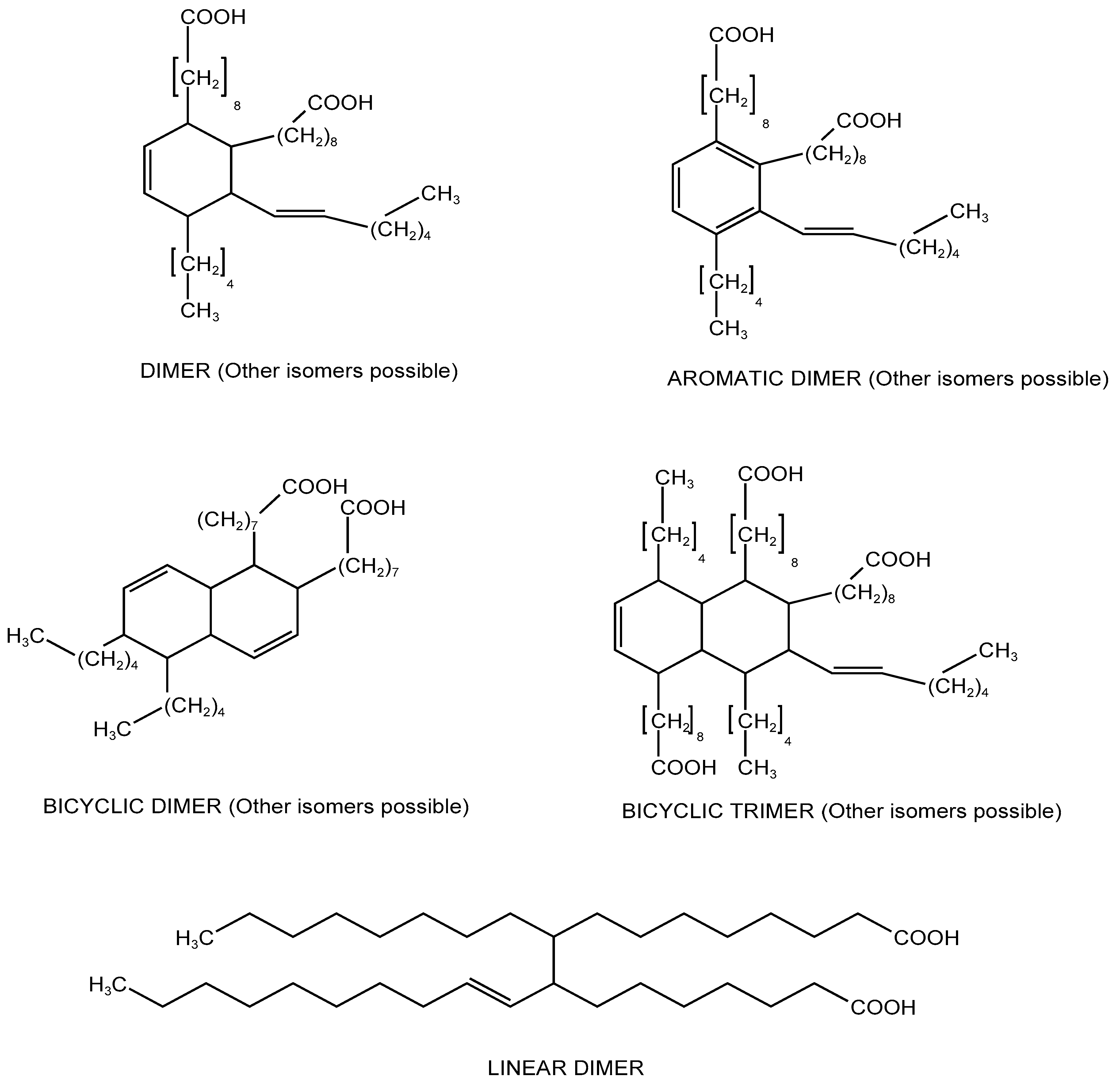
Scheme 2.
Typical chemical structures of hydrogenated dimer acids; many other isomeric structures other than those shown can be conceived.
Scheme 2.
Typical chemical structures of hydrogenated dimer acids; many other isomeric structures other than those shown can be conceived.
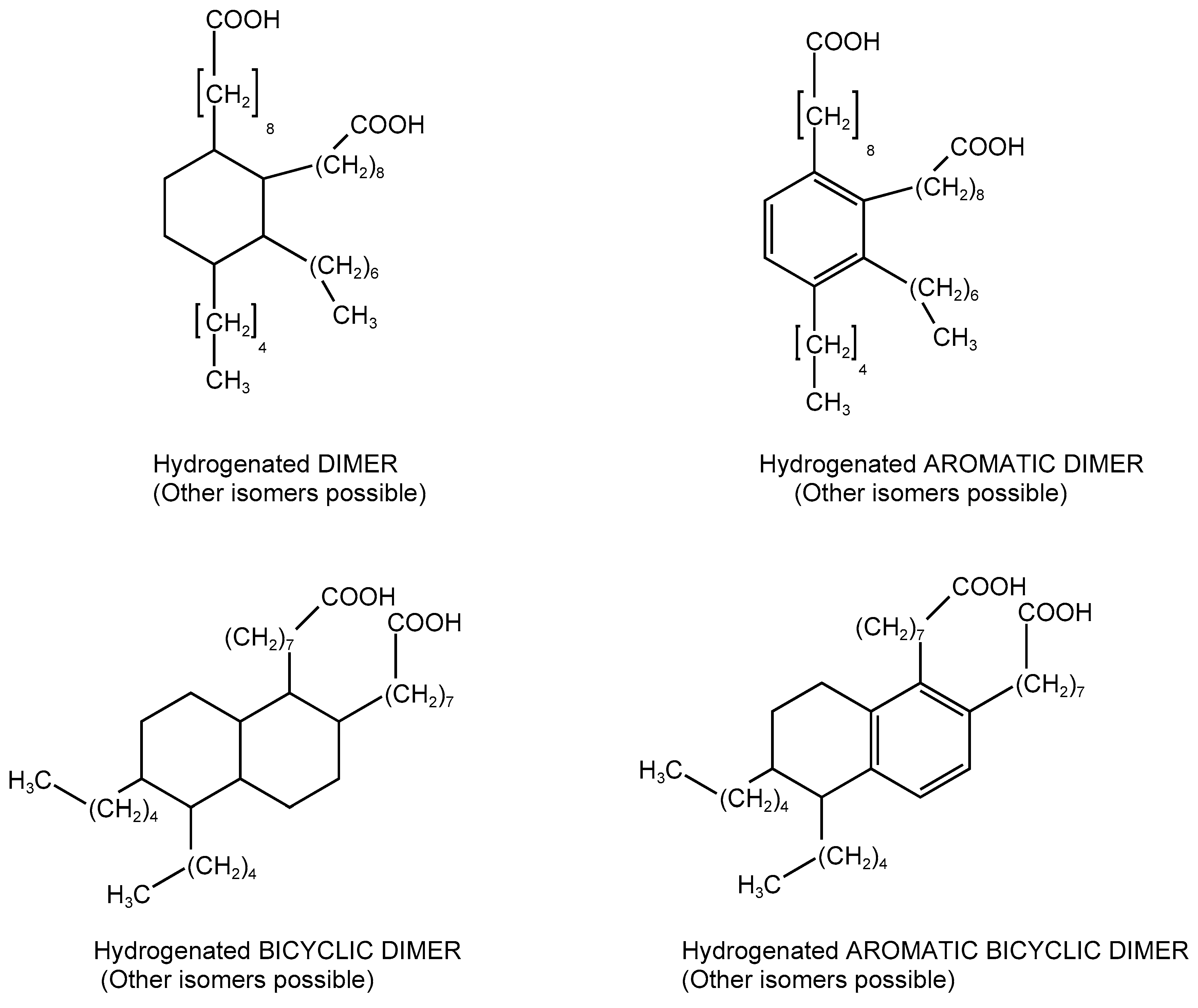
Scheme 3.
Typical chemical structures of hydrogenated dimer alcohols; many other isomeric structures other than those shown can be conceived.
Scheme 3.
Typical chemical structures of hydrogenated dimer alcohols; many other isomeric structures other than those shown can be conceived.
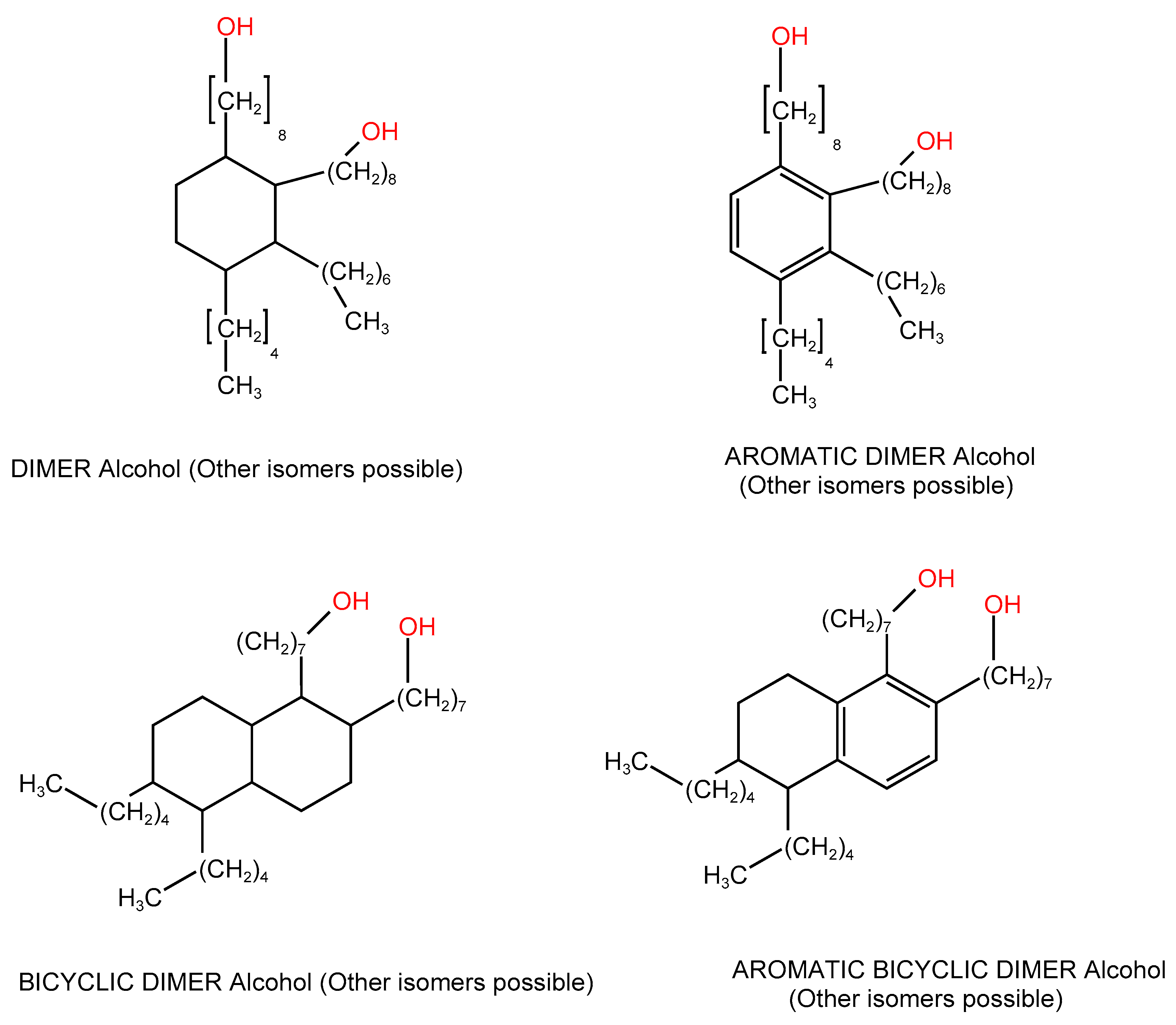
Figure 1.
Electronic absorption spectra in tetradecane: hydrogenated dimer acids (red trace); dimer acids (blue trace and x2 black trace).
Figure 1.
Electronic absorption spectra in tetradecane: hydrogenated dimer acids (red trace); dimer acids (blue trace and x2 black trace).
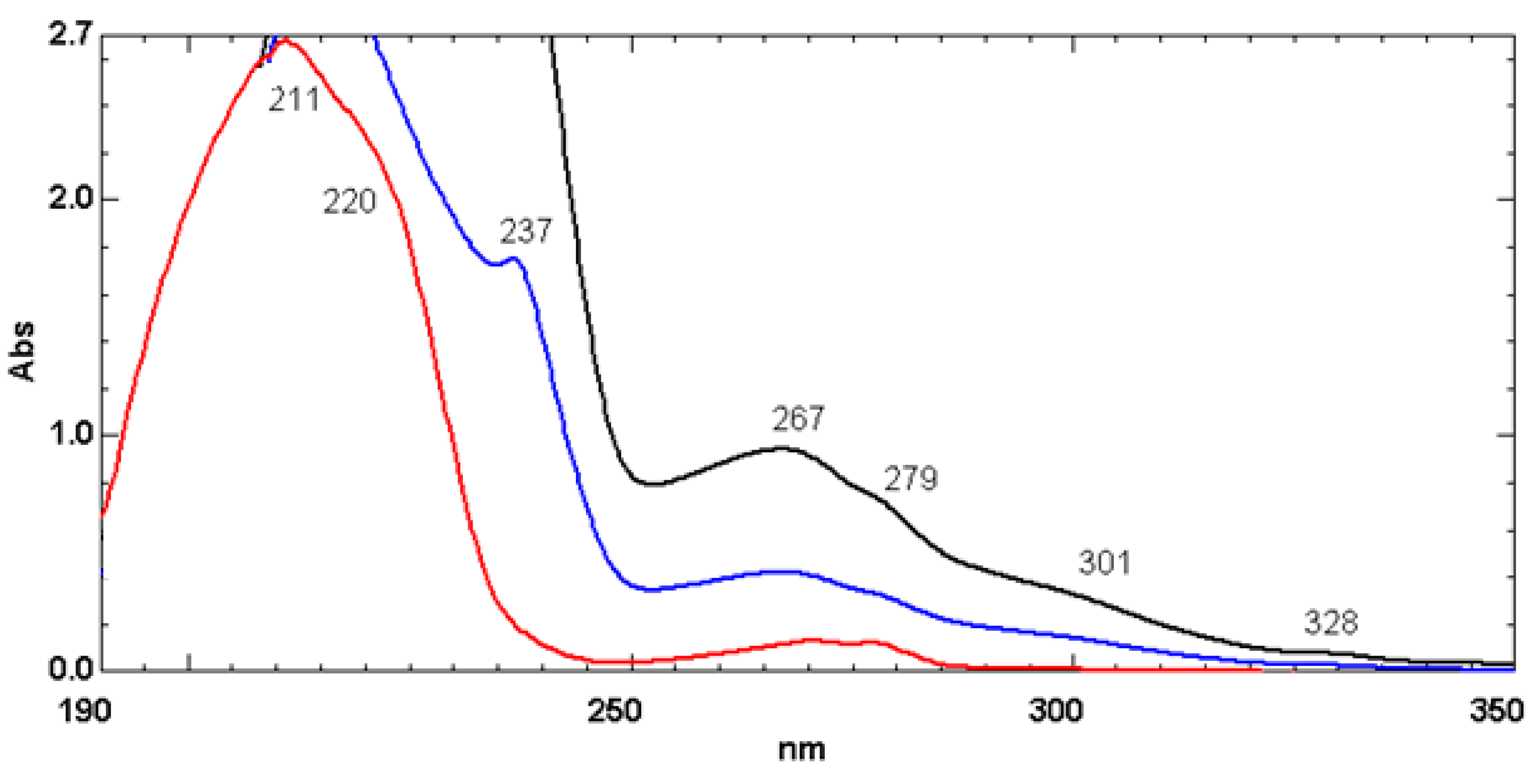
Figure 2.
Electronic absorption spectra in tetradecane: hydrogenated dimer acids (red trace) and dimer alcohol (violet trace).
Figure 2.
Electronic absorption spectra in tetradecane: hydrogenated dimer acids (red trace) and dimer alcohol (violet trace).
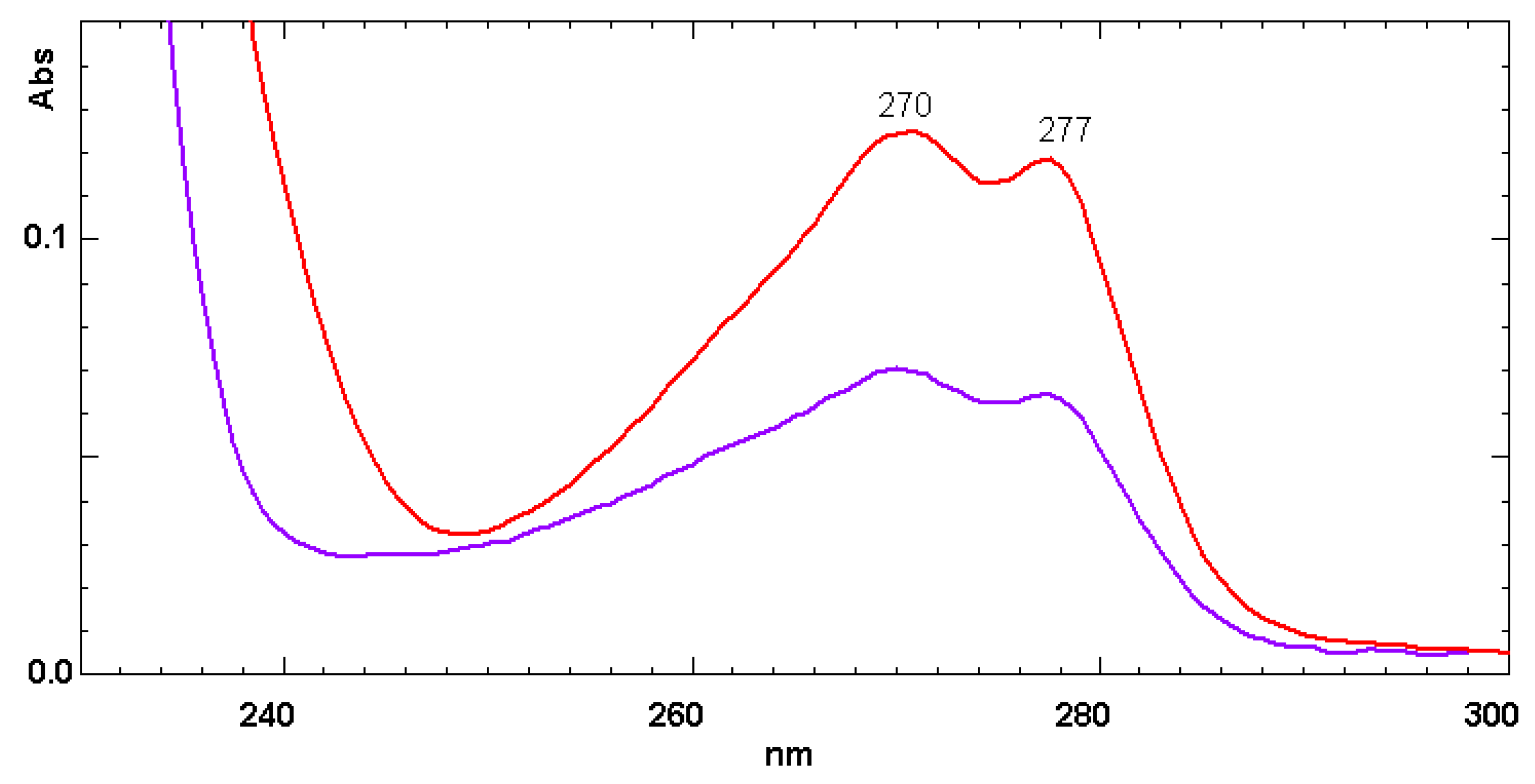
Figure 3.
FT-IR spectra in ATR from top to bottom: oleic acid (reference); dimer acids; trimer acids; hydrogenated dimer acids; dimer alcohols.
Figure 3.
FT-IR spectra in ATR from top to bottom: oleic acid (reference); dimer acids; trimer acids; hydrogenated dimer acids; dimer alcohols.
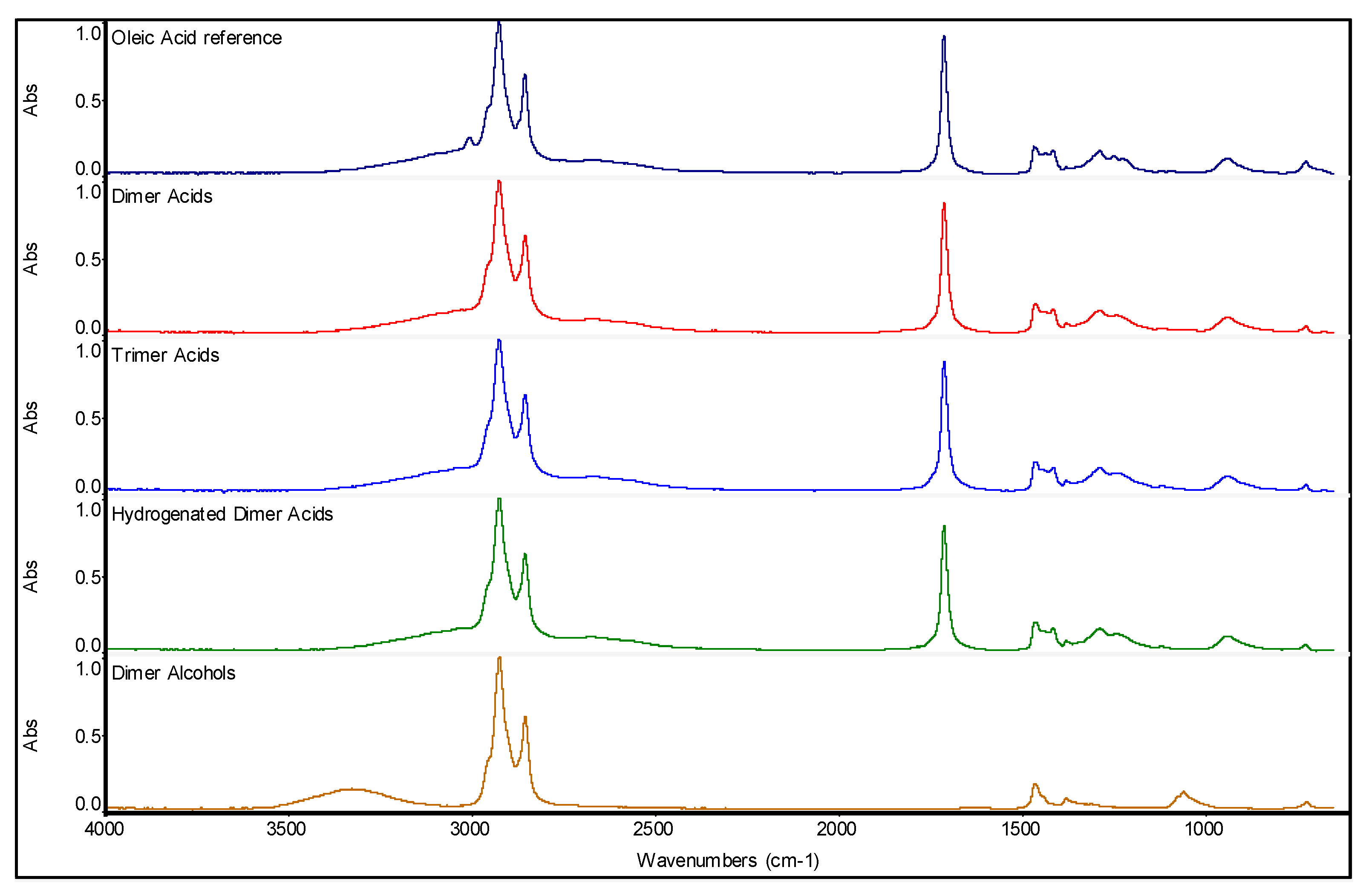
Figure 4.
Raman spectra: upper panel dimer acids; middle panel hydrogenated dimer acids; bottom panel – dimer alcohols.
Figure 4.
Raman spectra: upper panel dimer acids; middle panel hydrogenated dimer acids; bottom panel – dimer alcohols.
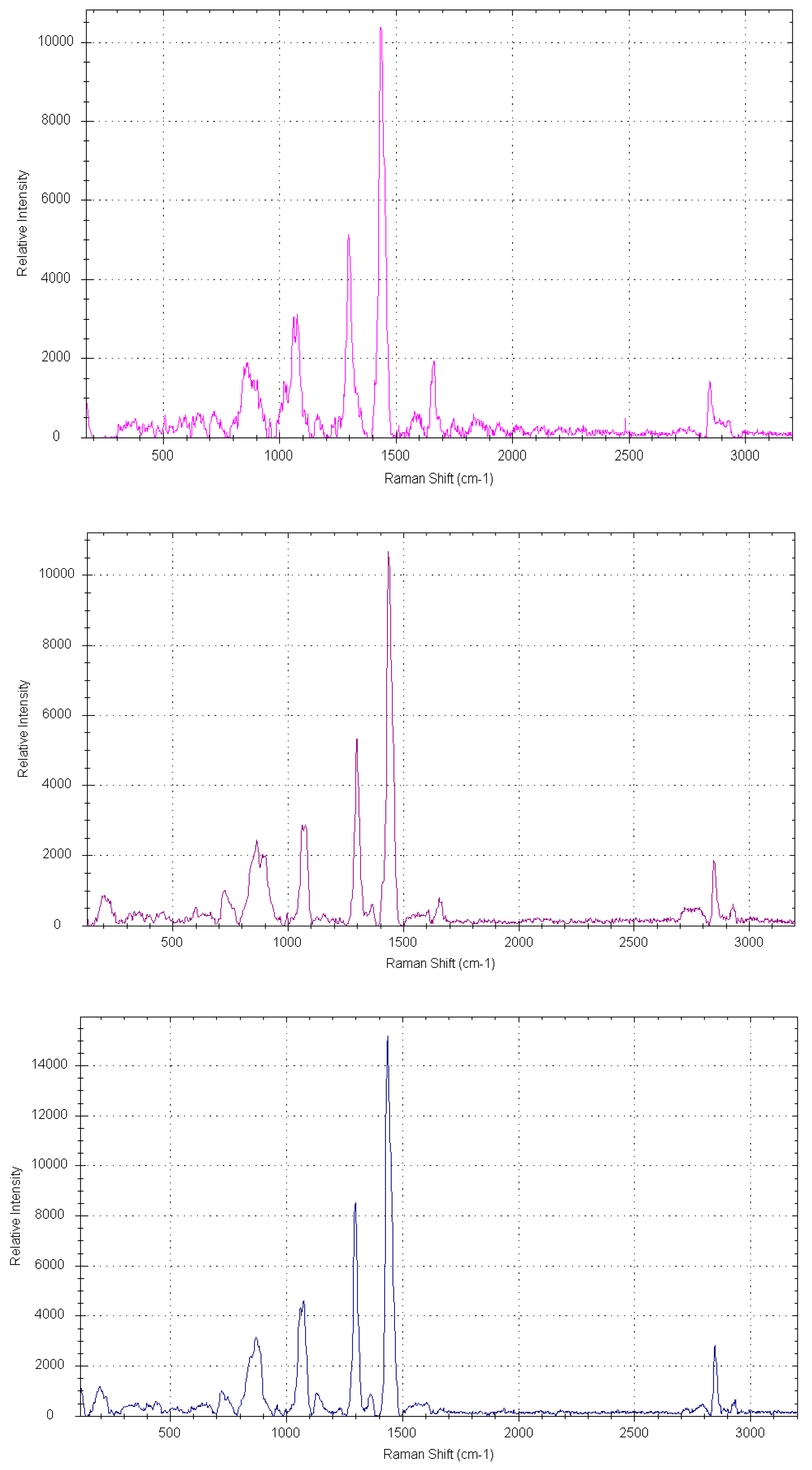
Figure 5.
Raman spectra: oleic acid (left panel); ethyl oleate (right panel).
Scheme 4.
Chemical structure of isostearic acid (top) versus the structure of stearic acid (bottom).
Scheme 4.
Chemical structure of isostearic acid (top) versus the structure of stearic acid (bottom).
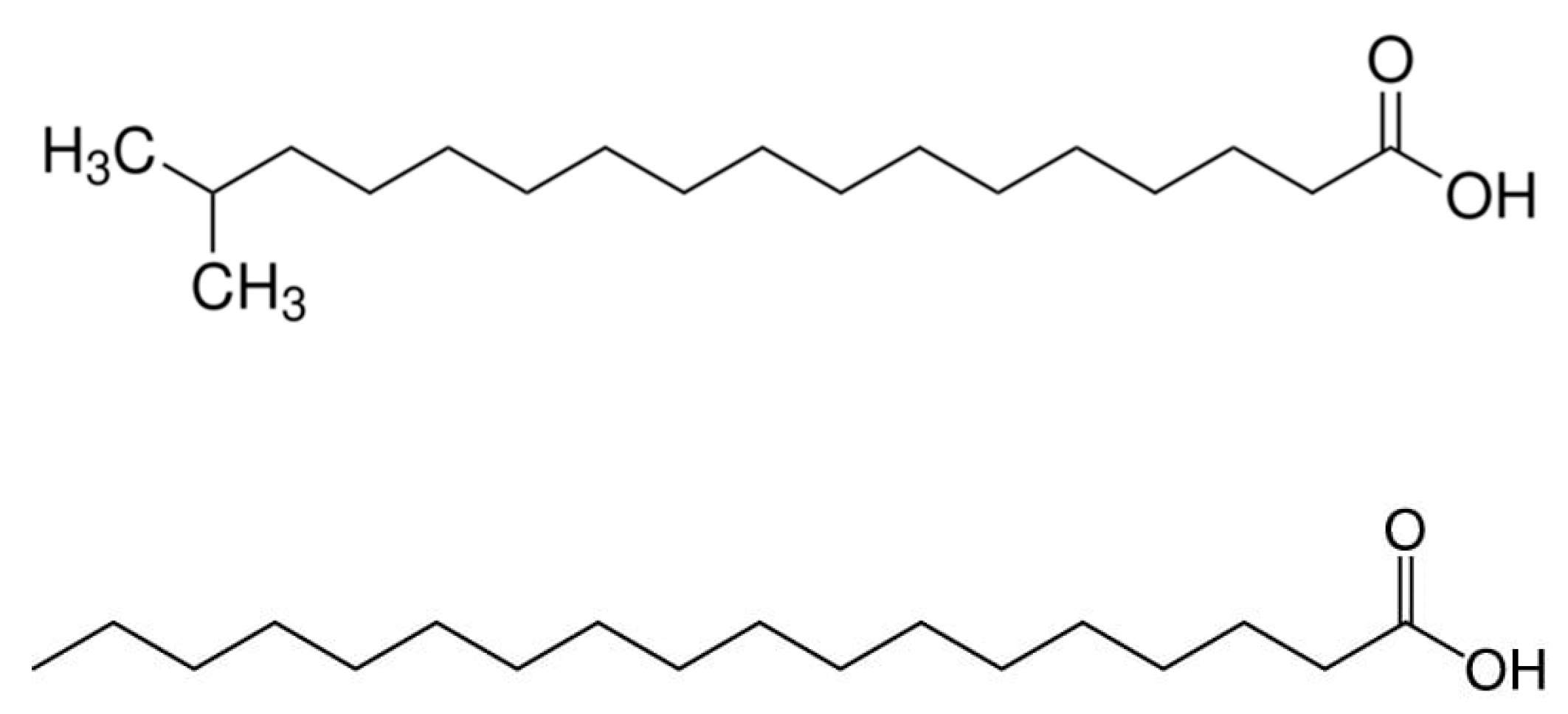
Figure 6.
Correlation between the E(NR) values and the dielectric constant of the liquid carboxylic acids.
Figure 6.
Correlation between the E(NR) values and the dielectric constant of the liquid carboxylic acids.
Scheme 5.
Chemical structure of glycerol formal.
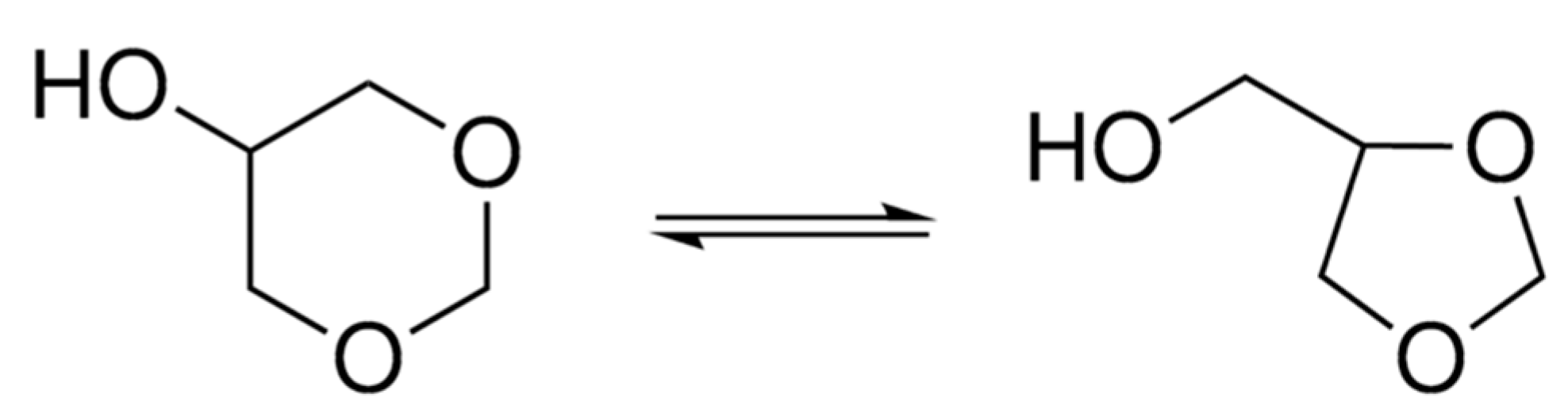
Figure 9.
Correlation between the E(NR) values of dimerates and trimerates listed in Table 3 and the number of carbon atoms present in the alcohol of the ester.
Figure 9.
Correlation between the E(NR) values of dimerates and trimerates listed in Table 3 and the number of carbon atoms present in the alcohol of the ester.
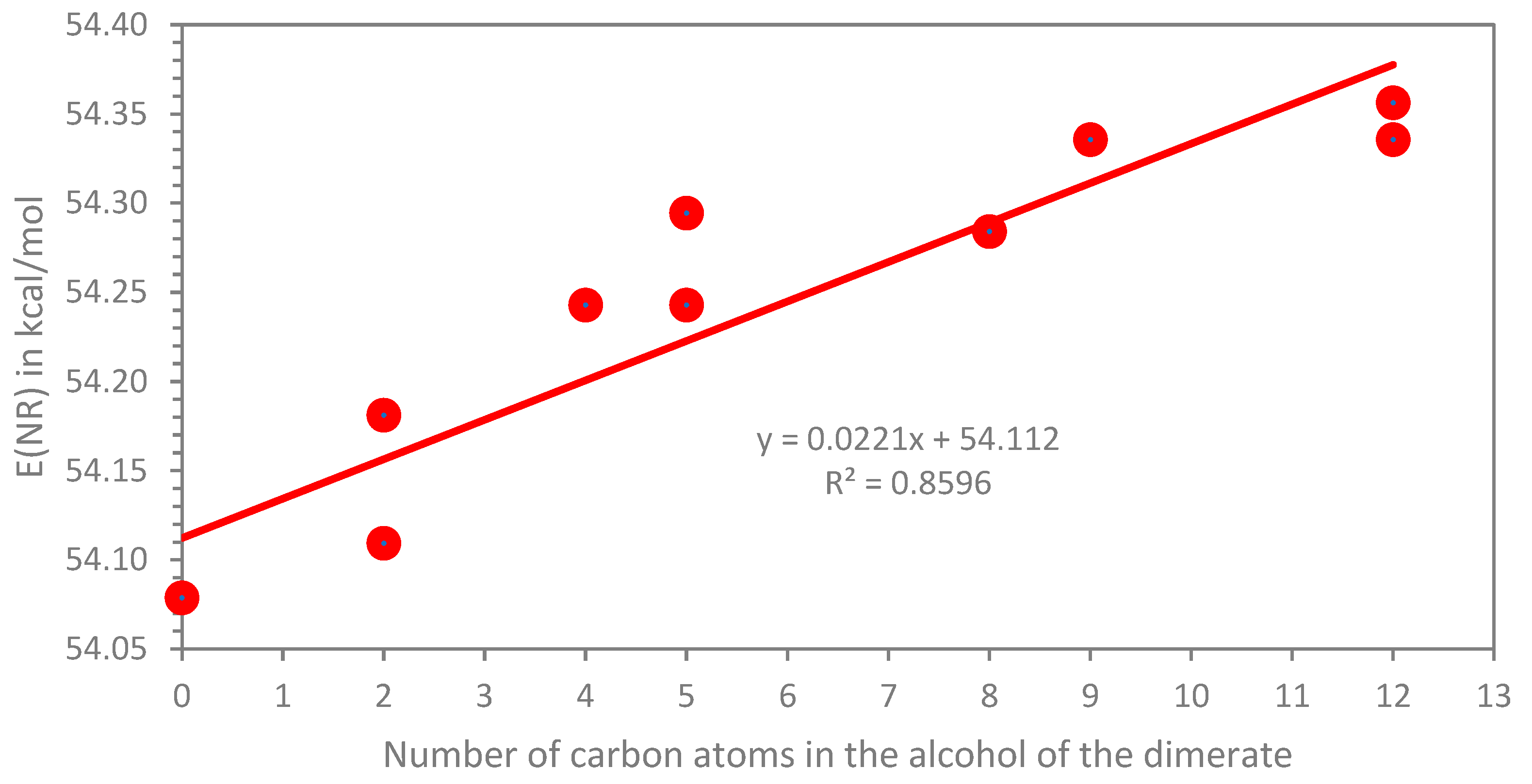

Table 1.
Polarity of liquid carboxylic acids as measured with Nile red dye and the corresponding dielectric constant ε.
Table 1.
Polarity of liquid carboxylic acids as measured with Nile red dye and the corresponding dielectric constant ε.
| Liquid carboxylic acid | λ (nm) | E(NR) kcal/mol | References or notes on the E(NR) values | Dielectric Constant ε (*) |
|---|---|---|---|---|
| Oleic acid | 524.2 | 54.54 | this work | 2.34 |
| Isostearic acid | 525.2 | 54.44 | this work | 2.3 (**) |
| Dimer acids | 528.7 | 54.08 | this work | 2.6 (**) |
| Hydrogenated dimer acids | 528.7 | 54.08 | this work | 2.5 (**) |
| Trimer acids | 531.5 | 53.79 | this work | 2.9 (**) |
| Propionic acid | 542.4 | 52.71 | Ref.[26] | 3.3 |
| Acetic acid | 557.2 | 51.31 | Ref.[26] | 6.2 |
| Levulinic acid (γ-ketovaleric acid) | 595.5 | 48.01 | this work | 19 |
| Lactic acid 90% | 596.6 | 47.92 | this work | 22 |
| Formic acid | 634.0 | 45.10 | Ref.[26] | 54.5 |
Table 2.
Polarity of selected alcohols as measured with Nile red dye and the corresponding dielectric constant ε.
Table 2.
Polarity of selected alcohols as measured with Nile red dye and the corresponding dielectric constant ε.
| Alcohol | λ (nm) | E(NR) kcal/mol | References or notes on the E(NR) values | Dielectric Constant ε (*) |
|---|---|---|---|---|
| 1-Dodecanol | 534.7 | 53.47 | this work | 8.1 |
| 2-Methyl-2-propanol (t-butanol) (***) | 536.5 | 53.29 | this work | 10.5 |
| Dimer alcohol | 536.5 | 53.29 | this work | 10.4 (**) |
| 2-Propanol (isopropanol) (***) | 539.2 | 53.03 | Ref.[26] | 18.3 |
| 1-Nonanol | 541.0 | 52.85 | this work | 9.2 |
| 1-Octanol | 544.0 | 52.56 | Ref.[26] | 10.3 |
| 2-Ethylhexanol (***) | 544.8 | 52.48 | this work | 7.6 |
| 1-Propanol | 545.6 | 52.40 | Ref.[26] | 20.1 |
| 3-Methyl-1-butanol (***) | 545.7 | 52.39 | this work | 15.6 |
| 1-Pentanol | 547.2 | 52.25 | this work | 16.2 |
| 1-Butanol | 547.6 | 52.21 | Ref.[26] | 17.8 |
| Tetrahydrofurfuryl alcohol (***) | 548.2 | 52.16 | this work | 13.6 |
| Ethanol | 548.3 | 52.15 | Ref.[26] | 24.3 |
| 2-Methyl-1-butanol (***) | 548.3 | 52.15 | this work | 15.6 |
| Methanol | 549.6 | 52.02 | Ref.[26] | 32.6 |
| Glycerol formal | 559.5 | 51.10 | this work | 46.5(**) |
| Ethylene glycol | 565.2 | 50.59 | Ref.[26] | 41.4 |
Table 3.
Polarity of selected plasticizers as measured with Nile red dye.
| Plasticizers | λ (nm) | E(NR) kcal/mol | References or notes on the E(NR) values |
|---|---|---|---|
| T-DAE (Treated Distillate Aromatic Extract) | -- | 56.20* | derived from ET(30) |
| Oleyl Oleate | 508.1 | 56.27 | Ref.[1] |
| Ethyl Oleate | 521.3 | 54.85 | Ref.[1] |
| MES (Mild Extract Solvate) | 521.5 | 54.83 | Ref.[1] |
| Methyl esters of fatty acids (brassica) | 522.0 | 54.77 | Ref.[1] |
| Methyl esters of fatty acids (cocco) | 522.7 | 54.70 | Ref.[1] |
| Dioctyl adipate (diethylhexyl adipate) | 523.0 | 54.67 | Ref.[1] |
| Soybean oil | 524.1 | 54.55 | Ref.[1] |
| NYTEX Bio (Naphthenic oil and vegetable oil mixture) | 525.4 | 54.42 | Ref.[1] |
| Lauryl dimerate | 526.0 | 54.36 | This work |
| Nonyl dimerate | 526.2 | 54.34 | This work |
| Lauryl trimerate | 526.2 | 54.34 | This work |
| Amyl dimerate | 526.6 | 54.29 | This work |
| Ethylhexyl dimerate | 526.7 | 54.28 | This work |
| Glycerolformal esters of brassica fatty acids | 526.8 | 54.27 | This work |
| Isoamyl dimerate | 527.1 | 54.24 | This work |
| Butyl dimerate | 527.1 | 54.24 | This work |
| Ethyl dimerate | 527.7 | 54.18 | This work |
| Sunflower oil (high oleic) | 528.2 | 54.13 | Ref.[1] |
| Ethyl trimerate | 528.4 | 54.11 | This work |
| Diisododecyl adipate | 528.5 | 54.10 | Ref.[1] |
| Dimer acids | 528.7 | 54.08 | This work |
| Hydrogenated dimer acids | 528.7 | 54.08 | This work |
| Diethyl azelate | 528.7 | 54.08 | Ref.[1] |
| Methyl undecenoate | 529.6 | 53.99 | Ref.[1] |
| PEG dioleate | 531.5 | 53.79 | Ref.[1] |
| Tetrahydrofurfuryl dimerate | 531.9 | 53.75 | This work |
| PEG monoleate | 533.4 | 53.60 | Ref.[1] |
| Ethyl levulinate | 536.4 | 53.30 | Ref.[1] |
| Dimer alcohol | 536.5 | 53.29 | This work |
| Di(ethylhexyl)phthalate | 537.0 | 53.24 | Ref.[1] |
| Epoxidized glycerolformal ester brassica fatty acids | 538.2 | 53.12 | This work |
Table 4.
Polarity of selected rubbers and plastics as measured with Nile red dye.
| Polymers | λ (nm) | E(NR) kcal/mol | References or notes on the E(NR) values |
|---|---|---|---|
| Polybutadiene (BR) | 502,0 | 56,96 | Ref.[1] |
| Polyisoprene (Natural Rubber) | 503,2 | 56,82 | Ref.[1] |
| Styrene-Butadiene copolymer (S-SBR) with styrene 21% & vinyl 50% | 509,0 | 56,17 | Ref.[1] |
| Polystyrene (PS) | 512,0 | 55,84 | Ref.[1] |
| Epoxidized Natural Rubber (ENR-25) | 526,4 | 54,32 | Ref.[1] |
| Polymethylmethacrylate film (PMMA) | 535,0 | 53,44 | Ref.[1] |
| Poly(Lactic acid) (PLLA) | 535,0 | 53,44 | Ref.[1] |
| Nitrile Rubber with 33% acrylonitrile (NBR) | 538,8 | 53,07 | Ref.[1] |
| Polyvinylchloride (PVC) | 547,6 | 52,21 | This work |
Disclaimer/Publisher’s Note: The statements, opinions and data contained in all publications are solely those of the individual author(s) and contributor(s) and not of MDPI and/or the editor(s). MDPI and/or the editor(s) disclaim responsibility for any injury to people or property resulting from any ideas, methods, instructions or products referred to in the content. |
© 2025 by the authors. Licensee MDPI, Basel, Switzerland. This article is an open access article distributed under the terms and conditions of the Creative Commons Attribution (CC BY) license (http://creativecommons.org/licenses/by/4.0/).
Copyright: This open access article is published under a Creative Commons CC BY 4.0 license, which permit the free download, distribution, and reuse, provided that the author and preprint are cited in any reuse.