

Submitted:
20 December 2024
Posted:
02 January 2025
You are already at the latest version
Abstract
The convergence of marine sciences and medical studies has the potential for substantial advances in healthcare. This study uses bibliometric and topic modeling studies to map the progression of research themes from 2000 to 2023, with an emphasis on the interdisciplinary subject of marine and medical sciences. Building on the global publication output at the interface between marine and medical sciences and using the Hierarchical Dirichlet Process, we discovered dominating research topics during three periods, emphasizing shifts in research focus and development trends. Our data show a significant rise in publication output, indicating a growing interest in using marine bioresources for medical applications. The paper identifies two main areas of active research: "natural product biochemistry" and "trace substance and genetics", both with great therapeutic potential. We used social network analysis to map the collaborative networks and identify the prominent scholars and institutions driving this research & development progress. Our study indicates important paths for research policy and R&D management operating at the crossroads of healthcare innovation and marine sciences. It also underscores the significance of quantitative foresight methods and inter-disciplinary teams to identify and interpret future scientific convergences and breakthroughs.
Keywords:
bibliometric analysis
; text mining
; science mapping
; marine research
; medical research
1. Introduction
Advancements in technology and interdisciplinary research are increasingly leading to significant breakthroughs at the intersection of diverse scientific fields. This may be especially relevant for the convergence between marine sciences and medical sciences [1]. Appropriate techniques are needed to integrate the disparate components of science and technology convergence [2]. These kinds of convergences serve as catalysts for the development of innovative solutions and promote interdisciplinary collaboration capable of addressing complex global concerns. A balanced approach to research across intersecting domains is crucial, as the COVID-19 study highlights the difficulties in maintaining interdisciplinarity and managing topic displacement when attention is narrowed to one area [3]. By integrating in this way, these partnerships go beyond what is practical in each of the respective fields.
The marine environment, recognized for its numerous ranges of life forms, is a treasure trove of bioactive compounds. These marine-based substances have more and more turned out to be critical to groundbreaking scientific improvements [4,5,6,7,8]. For instance, the use of bioactive compounds from marine sources has become increasingly significant due to their medical properties in treating various diseases. Marine natural products (MNPs) may exhibit a range of beneficial pharmaceutical activities, such as antibacterial, antiviral, neuroprotective, anticancer, and anti-inflammatory effects [9,10]. Moreover, marine algae are recognized as an underutilized resource among marine life forms. Recent research has proved the various biological and neuroprotective properties of marine algae, such as their antioxidant capabilities, anti-neuroinflammatory effects, cholinesterase inhibition, and the ability to prevent neuronal death. Therefore, marine algae hold significant promise for applications in pharmaceuticals, nutraceuticals, and functional foods [11]. Furthermore, marine sponges are renowned for hosting a variety of microbes and serve as a major reservoir of bioactive compounds such as enzymes [10,12,13]. Other marine organisms such as marine fungi [14,15,16], L-asparaginase [17,18], tunicates, bryozoans, molluscs [19] gorgonians [20], seaweed, and microorganisms [21] also produce substances potentially beneficial for treating human illnesses. As a result, the mixing of marine and medical sciences has grown to be critical for exploring new ways of prevention and treatment. In addition, the implementation of specific scientific techniques that were initially created within marine research provides opportunities for a stronger interaction between the medical and marine sciences. Notably, the application of isotope detection methods in marine science may have significant effects on medical diagnosis. Elemental signatures in marine dynamics can be precisely monitored by isotope detection; this technique can be likened to detecting pathogenic changes in human tissues and fluids. Further, both marine and medical research may benefit from a closer interaction in developing and using methods for genetic screening and analysis. As a result, these marine-derived techniques are essential for improving our comprehension of marine biology and have the potential to revolutionize medical diagnostics by providing earlier and more accurate illness detection [22,23,24].
In this context, the primary intention of this study is to become aware of the key topics on the interface between marine and medical research and development, as well as to observe the changes within this intersection over time. We aim to recognize the tendencies and the development of studies at this nexus from the years 2000 to 2023. This examination is segmented into three distinct durations: 2000-2007, 2008-2015, and 2016-2023, thereby imparting an in-depth evaluation of the evolving dynamics in the convergent fields of marine and medical research. We use topic modeling and bibliometric analysis, to become aware of research traits, styles, and new topics through examining many years of research, hence imparting a thorough overview of the beyond, present, and capacity destiny of this interdisciplinary field [25,26]. These kinds of methods have proven effective in identifying emerging themes, mapping technological convergence, and pinpointing key research trends, which can also be applied to explore the evolving landscape at the convergence of marine and medical R&D [27,28,29]. We also identify the main contributors in this field, including individuals, institutions, and countries. This is accomplished by way of co-country, co-organization, and co-authorship analysis.
The findings shed light on the scientific dynamics within the interface between marine and medical research and development. These insights have implications for policymakers and R&D managers, as they could allocate resources and develop strategic plans for medical advancement in this specific field of convergence. This encompasses potential innovation fields for drug discoveries from marine organisms, using marine-derived components in health prevention and clinical treatments, as well as the impact of marine biotechnology and scientific methods on medical diagnoses. This study is organized as follows: Section 2 describes the methodologies used in the bibliometric analysis, including the data mining method, topic extraction, social network analysis, and our study design. Section 3 shows the results, analysis of the findings, and discussion. Section 4 presents implications for research policy and management and Section 5 illustrates concluding remarks on this work.
2. Methodology
To answer the defined research questions, we exploit the scientific literature of the entire period since the year 2000. The literature search was carried out by using the Scopus database. Scopus is a comprehensive bibliographic database that is comparable to or surpassing the coverage of articles by the Web of Science database [30,31]. The analysis includes all available literature in the fields of Medicine, Neuroscience, Pharmacology, Toxicology, Pharmaceutics, and Dentistry. An exception was made to exclude documents categorized under the Scopus Class Code 2739, which relates to Public Health, Environmental, and Occupational Health. Subsequently, the data corpus was refined to focus on relevant marine-related research papers that especially include key phrases along with 'marine', 'ocean', or 'sea' inside the title, abstract, or keywords section. In addition, we complement the breadth of relevant literature by including papers that covered references to at least one paper citing 'marine', 'ocean', or 'sea' in the title or abstract. This step allowed us to identify marine studies papers in the overall corpus of medical research that might not have been captured throughout the initial keyword-primarily based search. (Step 1, Step 2, and Step 3 in Figure 1) This search strategy resulted in a data corpus of a total of 40.194 papers. Each paper within this dataset was extracted with its complete bibliometric information, including the title, abstract, keywords, etc. After limiting the time frame of the papers to the year 2000 to 2023, the number of papers was reduced to 39.035. The dataset was then organized by defining three periods of eight years (2000-2007, 2008-2015, and 2016-2023) to allow a longitudinal evaluation.
The collected data underwent preprocessing, an important step to clean and prepare the data for analysis. This step included text manipulation along with tokenizing, case transformation, lemmatization, and stop word removal. During this step, raw textual content streams were first tokenized, changing sentences, terms, and words into processing gadgets called tokens, without punctuation including commas, colons, and spaces. Next, we standardized all characters in the corpus to the equal case (either lower or upper case). By lemmatization, we grouped specific inflected sorts of phrases collectively to be analyzed as a single object. Finally, filtering out stop words eliminated not unusual, insignificant words from the textual content, streamlining the dataset for the extraction of significant content material [32,33,34].
Following this, we carried out an unsupervised learning strategy, called Hierarchical Dirichlet Process (HDP), to facilitate topic extraction. HDP is a nonparametric Bayesian method for clustering grouped information. This advanced technique applied a Dirichlet technique for every subgroup of statistics, taking into consideration the distribution of clusters [35]. The HDP supplied numerous advantages over the traditional Latent Dirichlet Allocation (LDA), along with automatic topic number determination, which removed the need for predefined numbers of topics, a hierarchical topic structure, which allowed for multilevel analysis of topic relationships, and topic sparsity, ensuring that the most applicable subjects had been recognized with excessive precision [36]. To ensure the coherence of the topics, a test model with three weighting methods was conducted. This involved considering every term equally by means of default, using Inverse Document Frequency (IDF) to reduce the weight of terms that occur too regularly throughout the data [37], and employing Pointwise Mutual Information (PMI) to highlight terms that have a high degree of association in the context of a specific document or the entire corpus [38]. Additionally, we applied the ONE metric that considers every term equal inside the corpus [39]. The final model was built by choosing the term weighting technique that produced the best coherence rating, resulting in the extraction of dominant topics. A dominant topic is identified based on the topic number that has the greatest percentage contribution in each document [40]. These subjects were visualized using word clouds and further analyzed to decide subject matter tendencies. The last stage of our analysis of relevant research topics was to look ahead in time by investigating the dynamics of topics based on the technology S-curve model. The life cycle models have been used in different management fields (strategy, marketing, production) in order to represent the evolution of industries, products, technologies, etc. The most widespread among them, initially formulated by Levitt (1965), is the S-curve that describes the different stages in the temporal evolution of the performance of a technology. This predictive analysis aimed to provide foresight into emerging trends within the scientific domain.
In parallel, we applied social network analysis (SNA) [41], integrated with Python, to research co-country, co-organization, and co-authorship networks. Using criteria such as degree centrality, and betweenness centrality [42], we supplied insights into the collaborative networks of the marine-medical field of convergence and identified the most influential actors. Our network study initially concentrated on the co-country partnerships. First, we extracted country information from 39,035 publications. To resolve differences in nation naming practices across various databases, the countries' names were then standardized using a word map, guaranteeing data consistency. We use co-country data to identify the relationships between the countries that indicate cooperative actions. We use this data to build a co-country network that includes measures like betweenness centrality and degree centrality. Then, we utilized an organized method to examine co-organizational relationships. Using each of the authors of the papers and their Scopus vendor organization ID, we were able to extract 18097 organizations from the collection of 39,035 articles. After that, the data were carefully cleaned to eliminate non-research entities like general (not researching) hospitals and museums, making sure the network only included partnerships for pure research collaborations. Lastly, we used SNA measures to reveal the co-organization network, emphasizing the key institutions and their functions in fostering connections across various research groups. Finally, we used the Scopus author ID to identify the individual authors. We checked potential differences in names linked to each ID in order to provide consistency in author identification during the co-authorship network. For the publication history of each author to be accurately represented, this step was essential. Next, we determined which version of each author's name was the most comprehensive and consistent across all publications with the same Scopus author ID. We created a co-author network of individual authors and applied established SNA metrics. As a result, we were able to recognize significant authors in the field of marine medical research and comprehend the cooperation structure.
The overall empirical study design is summarized in Figure 1.
3. Results and Discussion
3.1. Descriptive Analysis
Figure 2 shows the number of publications inside the converging area of marine and medical research and development per year, from 2000 to 2022. The graph does not include the number of publications for the year 2023. This is because our data collection was completed only up to April 2023. The graph shows a steady increase in the number of research papers. Starting with a small publication volume in 2000, there is an upward trend around 2003. From there, the number of publications grows substantially, with the highest point visible in 2022 reaching close to 3.500 publications, which is seven times more than at the beginning. This increase could be because of greater funding and /or a growing focus on the significance of this field of study. From 2000 to 2007, the first observed period contained 6,358 papers, laying the groundwork for future studies. Following this, production almost doubled between 2008 and 2015, with 12,406 papers published. Also, the latter period is characterized by a significant increase in the number of publications from 2016 to 2023, rising by 20,271.
We also looked at how research at the interface of marine and medical sciences evolved throughout the three time periods, from 2000 to 2023. We retrieved and downloaded the full list of Web of Science (WoS) journals and their categories. This enabled reliable journal categorization and analysis. The categories of each journal were retrieved and calculated for each period to determine the prevalence and trends in study topics. This method allowed for a more in-depth study of the changing research landscape, revealing prevalent themes and growing areas of research at the intersection of marine and medical sciences. (Appendix A). Table 1 demonstrates how, within the convergence of the marine and medical sciences, research goals and dominant fields have changed throughout time.
"Pharmacology and Pharmacy" has been the top category for all three periods, demonstrating a stable presence in research focus even though its share of all articles has decreased slightly from 7.7% to 6.6%. Strong stances in the fields of "Clinical Neurology" and "Neurosciences" reflect continued interest in these fields. Although it was stronger in the second period, "Medicine, General & Internal" surpassed neurosciences in the most recent period. Studies in "Immunology and Oncology" have continued to be important, especially Oncology, which has seen a notable increase lately. This rise in the study of cancer within the convergence of marine and medical fields is gaining momentum. The field of "Public, Environmental & Occupational Health" has experienced growth, moving up from ninth to third place recently. This shift indicates a greater focus on health matters concerning the environment. "Microbiology" has also risen in importance, moving from a less prominent role to a more substantial one. This increase might be attributed to escalating concerns about microbial resistance and the urgent need for novel antibiotics. "Toxicology" and "Endocrinology & Metabolism" both have declining relative publication volumes but are still in the top 15, suggesting a continued but diminished focus
The changes according to the relevance of research over the three time periods demonstrate how research at the convergence zone of marine and medical sciences is constantly evolving. There is a clear movement towards more comprehensive and practical research, particularly in fields that have a direct influence on public health and the treatment of diseases. In sum, the table shows that interdisciplinary themes are becoming more prevalent, particularly at the intersections of experimental, clinical, and environmental medicine. The growth of fields that transcend conventional bounds, such microbiology, experimental medicine, and public health, is indicative of this.
3.2. Topic Extraction (2000-2007)
Figure 3 delineates the topics from the Hierarchical Dirichlet Process (HDP) model applied to publications between 2000 and 2007 with its coherence score of the mentioned three weighting methods. This model facilitates the extraction of latent topics within the corpus, revealing the thematic foci of research at the interface between marine and medical research and development. Regarding the coherence scores, the IDF model outperforms other algorithms, achieving the highest coherence score (0.54) and thereby providing the most discernible and interpretable topics.
Accompanying the coherence score visualization, the detailed word clouds represent 12 distinct topics, each with a designated thematic title and description. It's important to note that the title of each topic in every period is derived from the most frequent keywords identified within that topic.
Firstly, "Infection & Immunity" likely encompasses studies on cellular infection, protein channels, and immune response to toxins and pathogens. Subsequently, "Exercise Physiology & Hypoxia" reflects research on the effects of exercise and oxygen deprivation on the body. Here, two different areas of oxygen-related research could be taken into consideration. The first one is Oxygen Consumption (VO2), which denotes the maximum oxygen intake a person is capable of achieving during vigorous or maximal exercise (VO2 max). This is a standard exercise physiology metric used to evaluate the aerobic capacity of athletes [43]. The second one, Blood Oxygen Saturation (SpO2), may examine how exercise and oxygen deprivation affect blood oxygen levels [44]. "Neuronal Receptor & Protein Research" encompasses studies on neuron receptors and related proteins. Furthermore, "Gene Transfer & Aquatic Bacteria" studies genetic flow in aquatic environments, focusing on bacteria like Brucella. In addition, "Heavy Metal Toxicology" reflects research on the accumulation and effects of heavy metals like selenium and mercury in biological systems. The description of accumulation generally involves the examination of tissue samples and biological monitoring. Tissue analysis concentrates on the substance within a specific organ that is recognized for its function in the detoxification and bioaccumulation of pollutants. Biological monitoring employs organisms like mussels, which are commonly used as sentinel species due to their ability to accumulate heavy metals in their tissues, thus indicating the level of contamination in their environment [45]. Following this, "Cancer Cell Research" focuses on the study of tumor cells, genes related to cancer, and cellular apoptosis. Moreover, "Natural Product Biochemistry" encompasses studies on bioactive compounds from natural sources like sponges. Correspondingly, "Diet & Food Consumption" reflects research on dietary habits, food intake, and their health implications. Continuing the thematic exploration, "Malaria & Environmental Health" focuses on the study of malaria, its transmission, and the influence of environmental factors. Additionally, "Reproductive Biology & Toxins" studies egg and sperm biology, including the impact of radiation and toxins on fertilization. Subsequently, "Heparin & Molecular Therapy" reflects research on heparin and its role in molecular therapies and medical treatments. Lastly, "Brevetoxin Exposure & Health", focuses on the health effects of exposure to brevetoxins and related toxins.
During this period, there was a growing interest in the use of substances derived from the sea in medical applications, with a particular focus on discovering antimicrobial and immune-modulating agents. The therapeutic effects of bioactive compounds were of significant interest, especially in relation to cancer treatment and cardiovascular benefits from natural marine products. Diagnostic methods tended to focus on non-invasive monitoring, such as blood oxygen saturation during exercise, indicating a trend toward incorporating marine science techniques into clinical settings.
3.3. Topic Extraction (2008-2015)
Figure 4 shows the results of applying the Hierarchical Dirichlet Process (HDP) to research from 2008 to 2015. The coherence scores indicate the IDF model as the most effective, with a high score of 0.63, suggesting clearer, more interpretable topics. Additionally, word clouds depict 15 distinct topics, each with its title and description.
Initially, "Physical Training & Performance" likely deals with research into exercise, training, and their effects on the body, considering factors such as hypoxia. Then, "Aquatic Ecology & Conservation" covers studies on marine ecosystems, focusing on conservation, biodiversity, and the behavior of different species. "Infectious Disease & Epidemiology" encompasses research into pathogens, vectors, and the dynamics of disease transmission and outbreaks. Next, "Dietary Impact on Health" focuses on the effects of diet and nutrition on health, possibly including studies on obesity and metabolic factors. "Cancer Biology & Therapeutics" centers on cancer research, including tumor biology, gene expression, and drug development. Proceeding to the next topic, "Endocrinology & Radiation" investigates the impact of radiation on endocrine systems, with a focus on iodine and thyroid health. "Natural Products & Bioactive Compounds" studies the extraction and use of bioactive compounds from natural sources like sponges. Simultaneously, "Genetics & Molecular Biology" Involves research in genetics, gene expression, and the study of proteins and receptors. "Marine Pollution & Metal Toxicology" concerns environmental pollution, particularly with heavy metals, and their effects on marine and human life. "Childhood Development & Injury" addresses aspects of child health, including injury, therapy, and care. Advancing to the next topic, "Polymer Science & Environmental Interaction" involves the study of polymers and their interactions with the environment or within biological systems. Concurrently, "Cognitive Function & Learning" focuses on cognitive reserve, learning processes, and possibly the impact of toxins like brevetoxin on cognitive health. Then, "Marine Biology & Coral Reefs" encompasses studies on coral reefs, including aspects of calcification and photosynthesis in marine ecosystems. "Toxicology & Public Health" covers the study of various toxins, their sources, detection, and their health implications for humans. Finally, "Microbial Interaction & Colonization" investigates the colonization by bacteria and other microbes in various environments, including the oral cavity.
Research on the effects of marine life on human health grew between 2008 and 2015. These topics included the possible therapeutic use of naturally occurring marine substances to treat cancer and the ecological implications of marine conservation on human health. Further, understanding the long-term health effects of dietary practices influenced by marine food sources was a major area of focus. Improvements in measuring physiological responses to different health interventions indicate a clear push toward better and early detection and monitoring methods in terms of diagnostics.
3.4. Topic Extraction (2016-2023)
Figure 5 displays the Hierarchical Dirichlet Process (HDP) used in 2016-2023 studies. The IDF model's clarity and interpretability in topics is again the highest with a score of 0.57. The figure features word clouds for 13 unique topics, complete with titles and descriptions.
Starting with the first topic, "Climate Science & Aquatic Ecology" focuses on the impact of climate change on aquatic ecosystems and species conservation. Shifting to the next topic, "Microplastic Contamination & Ecotoxicology" assesses the environmental impact of microplastics and other pollutants. "Aquatic Biodiversity & Parasitology" examines the ecological roles of parasites within aquatic environments and implications for biodiversity. "Cancer Research & Cellular Mechanisms" investigates tumor biology, cancer cell apoptosis, and the efficacy of various drug therapies. Moving on to the next topic, "Comparative Physiology & Wildlife Diseases" likely covers comparative studies of physiological structures such as eyes and teeth across different species, including humans and marine life like turtles, with an emphasis on morphological imaging and the study of diseases or infections that impact these species. Alongside, "Bioactive Natural Compounds" explores the metabolic effects of bioactive compounds, particularly from marine organisms like sponges. "Genetic Expression in Health & Disease" focuses on researching genetic factors and protein functions, possibly with a neurobiological emphasis. Also, "Pediatric Exercise & Health" focuses on the impact of physical activity on the health and development of children. Additionally, "Marine Microbiology & Biofilm Formation" studies microbial life in marine ecosystems, including the structure and function of biofilms. Furthermore, "Atmospheric Pollution & Ecological Impact" investigates the effects of atmospheric components like aerosols on ecosystems. Subsequently, "Diving Medicine & Decompression Studies" is related to the physiological challenges associated with diving, including decompression sickness. Then, "Healthcare Data & Informatics" utilizes data analysis for healthcare improvement, possibly including demographic and epidemiological studies. Lastly, "Respiratory Health & Mucosal Immunity" explores the role of mucus in respiratory health and immune system defenses.
From 2016 to 2023, the focus moved to using marine science to address global health issues, with a particular focus on respiratory health and the developing field of marine biotechnology. The use of active components originating from marine environments in prevention and treatment techniques has become more diversified. In order to maximize patient care, diagnostic measures grew increasingly complex and data-driven. They also integrated healthcare informatics.
3.5. Topic Trend, Status, and Prediction
This section aims to understand and forecast the developments and patterns at the convergence of medical and marine research over three different periods. The analysis's objectives are to identify the recurrent themes in the collection of publications and track how these themes evolve and intersect over time using the Hierarchical Dirichlet Process model. In addition to analyzing current and previous research directions, the study also aims to predict future trends based on publication growth patterns. The S-curve is utilized to deduce the phases of maturity of various research topics. This makes the analysis both retrospective and predictive. The identification of thematic similarities across the three periods was approached qualitatively, focusing on the commonality of keywords within topics
Figure 6 and Figure 7 illustrate the yearly number of publications for the four topics that did not appear in the third period (2016-2023), with the counts based on the dominant topic identified in each document.
As can be seen in Figure 6, "Infection & Immunity" (2000-2007) seems to evolve into "Infectious Disease & Epidemiology" (2008-2015) in the later period, continuing the focus on disease transmission but with a broader scope including epidemic control. Figure 7 shows that "Diet & Food Consumption" (2000-2007) is closely related to "Dietary Impact on Health" (2008-2015) in the later period, with ongoing research into the health consequences of dietary habits.
Conversely, six primary topics have developed across all three periods. This is evident in Figure 8, Figure 9, Figure 10, Figure 11, Figure 12, and Figure 13, each corresponding to one of these evolving topics.
Figure 8 demonstrates that "Exercise Physiology & Hypoxia" (2000-2007) corresponds to "Physical Training & Performance" (2008-2015) in the later period, retaining the core interest in physical health and the body's response to exercise. Also, it might correspond with "Pediatric Exercise & Health" (2016-2023) in the third period, with a narrowed focus on the pediatric aspect. After combining the three topic names, we chose "Exercise Physiology, Performance, and Pediatric Health" as the suitable one. We then fitted an S-curve to the cumulative number of publications on the topic. Results suggested that the topic is in the growth stage and the inflection point is believed to be in 2027 with 6305 cumulative number of publications. An inflection point, which denotes the maximum of growth, is the point at which a function shifts from concave to convex or vice versa [46]. However, because making long-term predictions about complex systems is challenging and most likely unreliable [47], we only identify the inflection points within the period until 2030.
This topic highlights that marine science informed research activities might improve children's physical performance and health outcomes [48]. Advances in marine biotechnology, such as the creation of nutritional supplements and medicines derived from marine sources that promote physical performance and recuperation, may be linked to the rise of this research area. New perspectives on health promotion may come from a relationship between marine based food supplements and physical exercises [49,50,51,52,53,54,55]. Another important point that becomes apparent is the importance of monitoring physiological reactions to exercise, specifically oxygen use and saturation. Especially when considering oxygen dynamics during exertion, it is imperative to incorporate the feature of how exercise affects physiological parameters like VO2 max and SpO2. By including this focus on measurable physical results, the topic's evolution across time may be seen in a more comprehensive light, highlighting the need of accurate measurement in the field of pediatric exercise and health.
Figure 9 presents that "Neuronal Receptor & Protein Research" (2000-2007) continued as "Genetics & Molecular Biology" (2008-2015) with a broader emphasis on genetic expression and molecular processes in neurobiology. Also, it may relate to "Genetic Expression in Health & Disease" (2016-2023) in the third period, maintaining the genetic and neurobiological focus. We determined that "Neuronal and Genetic Mechanisms in Health and Disease" was the best topic name after combining the first three. Next, we fitted an S-curve to the cumulative number of publications related to the subject. According to the results, the topic is still growing, with no inflection point until the year 2030.
This topic represents a promising nexus between medical and marine research, offering insights into neurological health via the genetic variety of marine organisms. Numerous genetic resources from marine creatures have been valuable in the investigation of neural systems. Also, unique insights into the complexity of human neurobiology have been provided by the genetic diversity found in marine life, especially in creatures with complex nervous systems like cephalopods [56]. We predict an increase in marine-derived neurotherapeutics and a deeper investigation of genetic and neurological health as our understanding of these mechanisms advances [57]. As the inflection point will be later than 2030, the field of utilizing genetic methods and insights acquired from marine environments shows an increasing relevance. Novel marine chemicals that may alter genetic and neurological processes linked to diseases like Parkinson's and Alzheimer's could be discovered in the future [58,59]. Since multidisciplinary techniques are essential to addressing the complex difficulties at the interface of these fields, collaborations between neurogeneticists and marine scientists are anticipated to gain importance in the future. Through these partnerships, novel biotechnological methods and treatments may be developed, which could revolutionize genetic therapy for neurological illnesses.
As depicted in Figure 10, "Gene Transfer & Aquatic Bacteria" (2000-2007) does not have a direct counterpart in the second period but the closest in thematic relevance could be "Aquatic Ecology & Conservation" (2008-2015) which covers also genetic aspects within the broader study of marine ecosystems. The biological and ecological mechanisms that underpin each of these subjects' domains are what link them together. A basic interest in microbial processes influencing broader ecological dynamics may have been indicated by the earlier period's emphasis on gene transfer within aquatic bacteria. The interest in sustainability naturally spreads to later periods, when successful conservation methods depend on an awareness of genetic diversity and the functions that microbes play in ecosystems. As we move from a micro perspective of gene transfer in bacteria to a macro perspective of maintaining biodiversity and ecological integrity within aquatic settings, it is the ecological principles and genetic interactions that give continuity between these themes [60,61,62]. Also, it may find some continuity in "Marine Microbiology & Biofilm Formation" (2016-2023) studying microbial life in marine ecosystems, including the structure and function of biofilms in the third period. The name "Aquatic Microbial Dynamics in Conservation, Gene Transfer, and Biofilm Ecology" was the most appropriate after combining the three topic names. The S-curve is not a suitable fit for the data, according to results obtained from fitting the cumulative number of publications to the exponential, linear, logarithmic, power, and S-curve functions. The data is estimated at 0.98 by the exponential function [63], whereas the estimates for the logarithmic, power, and linear functions are 0.55, 0.86, and 0.81, respectively. The R2 value is 0.98, and after five years, there have been roughly 6459 publications overall. Therefore, the results do not point to a mid-term saturation of this field's research activity.
This topic states the critical role that aquatic microbes play in preserving the health of marine environments [64]. Another aspect of this topic is gene transfer in aquatic microorganisms, which provides information on the processes of microbial resistance and the dissemination of genes between species in aquatic environments [65]. Because biofilm ecology is relevant in the medical field, it has attracted a lot of attention. The ecological and evolutionary processes occurring in microbial communities are intricately tied to gene transfer and biofilms. Transfer of bacterial genes is facilitated by biofilms, which behave as complex microecosystems in marine environments. The reason for this is that biofilms provide a stable and concentrated assembly of microbes capable of exchanging genetic material, particularly genes that may enhance survival under specific conditions like resistance to antibiotics [66,67]. Infectious disorders in humans are largely influenced by biofilms, which are populations of bacteria living in a matrix of their own secretion. It's critical to comprehend the dynamics of biofilm formation in order to create new antibacterial methods and control biofilm-associated infections [68]. Furthermore, its long-term strategy suggests that future studies will probably go deeper into the uses of marine microbial research in biotechnology and medicine.
Figure 11 elucidates that "Heavy Metal Toxicology" (2000-2007) continued as "Marine Pollution & Metal Toxicology" (2008-2015), persisting with the theme of environmental contamination and its biological impacts. Also, it may be reflected in "Microplastic Contamination & Ecotoxicology" (2016-2023) in the third period, which deals with the pollution impact of marine ecosystems on health. When the three topic names were combined, "Marine Contaminants and Ecotoxicology Across Heavy Metals and Microplastics" became the most fitting title. After that, again an S-curve was fitted to the cumulative number of articles on the topic. The topic has progressed past the growing stage and has now started to mature, based on the data, which show a dropping growth rate. As can be observed, there were 4315 publications overall, with 2023 serving as the potential inflection point.
This topic is an important point of convergence for medical and marine research. An important change in emphasis from the increasing recognition and identification of marine pollutants to more effectively addressing their effects on the direct and indirect impacts of marine contaminants on public health [69] is suggested by the S-curve analysis. Two of the most important environmental contaminants in maritime ecosystems are known to be heavy metals and microplastics. Because heavy metals cannot biodegrade and have the ability to bioaccumulate, they are extremely dangerous to marine life and, via the food chain, to human health [70]. On the other hand, microplastics have become a worldwide issue because of their prevalence in marine ecosystems, their ability to carry additional pollutants, such as heavy metals, and their potential to harm human health as well as marine life [71]. Furthermore, research indicates that exposure to heavy metals is associated with a number of health problems, such as cancer [72]. The development of this topic, shows a thorough approach to solving one of the most important environmental and health issues of our day. Research in this area is anticipated to become practical, transferring scientific knowledge into workable solutions and regulatory frameworks that can lessen the effects of these pollutants on human health and marine ecosystems.
Figure 12 portrays "Cancer Cell Research" (2000-2007) carried on with "Cancer Biology & Therapeutics" (2008-2015), maintaining the focus on tumor biology and extending into therapeutic strategies. Also, it further evolved into "Cancer Research & Cellular Mechanisms" (2016-2023) in the third period, indicating ongoing advancement in cancer research. The most appropriate title was "Cancer Mechanisms and Therapeutic Advances" when the three topic names were combined. Findings from fitting the cumulative number of publications to the exponential, linear, logarithmic, power, and S-curve functions indicate that the S-curve is not a good fit for the data. The estimates for the logarithmic, exponential, and linear functions are 0.94, 0.96, and 0.73, respectively, whereas the power function [73] estimates the data at 0.99. As a matter of fact, the R2 value is 0.99, and after five years, the cumulative number of publications is around 7954. As such, the data suggest no mid-term saturation of research activities in this field.
In marine and medical research, this topic is at a pivotal point. The increased fitness of power function in the publication data trend indicates a sustained and growing interest in this field, especially in the investigation of marine-derived components for cancer therapy. Numerous novel bioactive substances with promising anticancer effects have been found in marine creatures. For instance, it has been discovered that substances originating from marine sponges, algae, and microbes demonstrate a variety of anticancer activity mechanisms, including the activation of apoptosis, cell cycle arrest, and blockage of angiogenesis [74,75,76,77,78]. Furthermore, the exploration of marine genomes has opened up new avenues for the research of cancer [79]. The boundary between the marine and medical sciences has also been mentioned in research on the tumor microenvironment, a field in which marine models offer unique insights. Because of their complex interconnections, which mirror the complexity of a tumor, marine ecosystems are excellent models for comprehending the growth and metastasis of cancer [80]. The fact that this field of research is still growing highlights the potential for fresh findings and developments in cancer treatment. The pattern suggests a persistent shift away from basic research and toward more useful therapeutic development.
Finally, as shown in Figure 13, "Natural Product Biochemistry" (2000-2007) progressed into "Natural Products & Bioactive Compounds" (2008-2015), still exploring bioactive marine compounds but perhaps with a refined focus on cellular metabolism. It may correspond with "Bioactive Natural Compounds" (2016-2023) in the third period, suggesting a continued interest in the biochemical potential of natural products. The term "Natural Product Biochemistry and Bioactive Compounds Exploration" was the most appropriate when the three topic names were merged. Following that, the cumulative number of papers on the topic was fitted with an S-curve. The results indicate a declining growth rate. Hence, the topic has moved past the growing stage and is now beginning to mature. As can be seen, the cumulative number of publications was 7968, with 2022 acting as the inflection point.
The development of this topic has been a significant step toward bridging the gap between marine and medical research. S-curve analysis indicates that after 2022 the growth rate of publications will decrease, indicating that this issue has reached a certain level of maturity. The evolution of this field demonstrates a move from discovery to application. Research and development being done on bioactive compounds originating from marine sources in order to develop new food supplements and drugs shows this tendency [81]. However, turning the latter findings on pharmaceutical products into practical uses in medicine requires negotiating regulatory processes and proving the products' effectiveness and safety in demanding clinical studies [82]. This procedure is frequently time-consuming and resource-intensive, which helps to explain why publications have grown at a slower rate recently.
3.6. Co Country Analysis
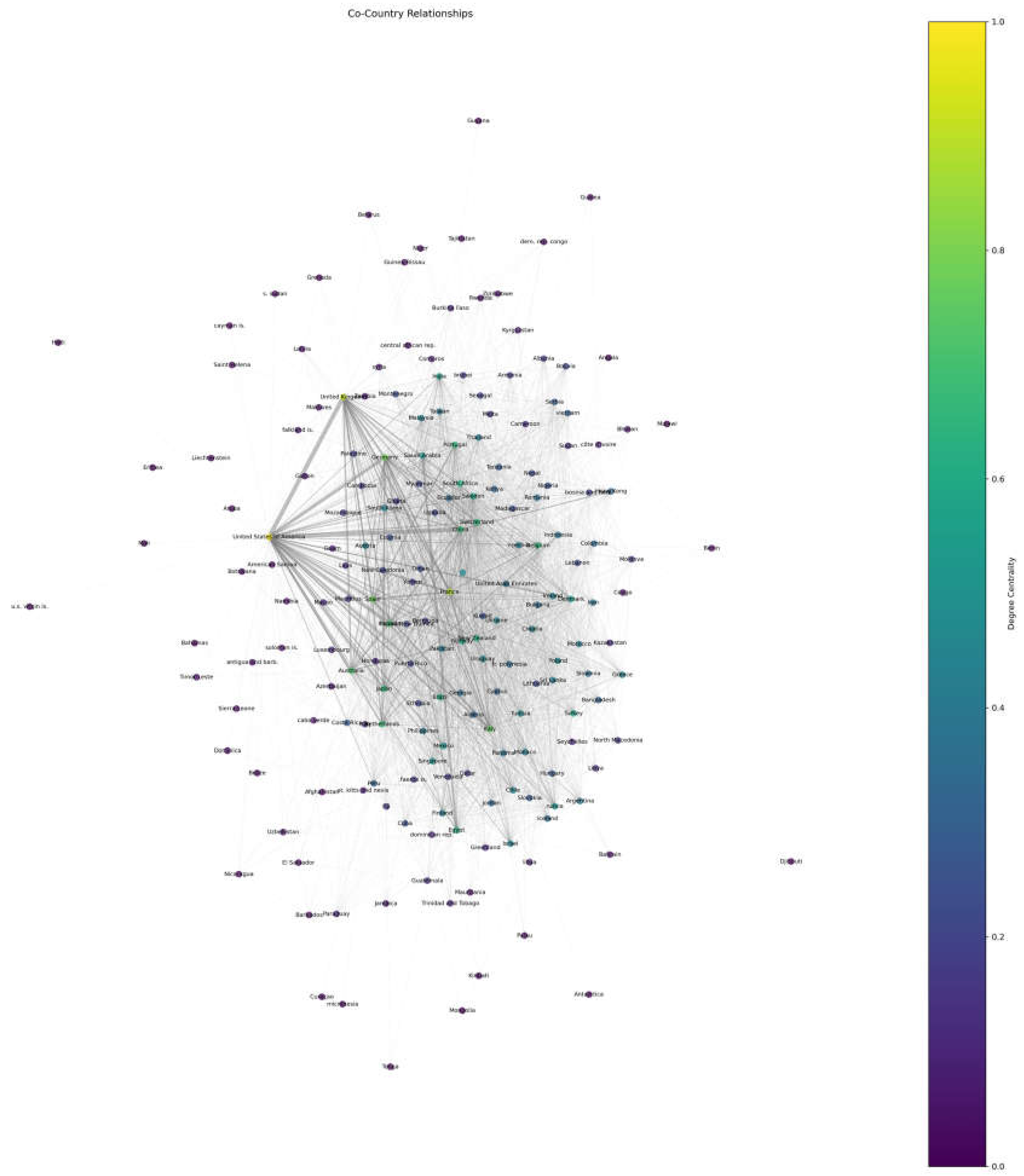
Our analysis covers 194 countries that are involved in marine-medical research. International cooperation in research activities is evident from the average number of collaborations per country, which stands at 37.27. China, with 2,987 articles during the past five years, is the most productive country in this global context. China's expanding impact and dedication to advancing scientific knowledge in this field are highlighted by this impressive output. With 152 unique collaborations, the United States of America is acknowledged as the country with the greatest level of collaboration at the same time.
Important contributions from a wide range of countries were found during our examination of international partnerships in the field of marine medical research. Our study, which employed degree centrality as a critical metric, determined the top 20 countries that have played a major role in advancing this multidisciplinary field's research ambitions. The top 20 countries together accounted for a sizable share of the world's research in this multidisciplinary topic. The frequency of collaborations compared to the total number of publications sheds light on the strength and density of these research ties.
As can be seen in Table 2 and Appendix B, the United States of America emerged as the most collaborative country. It has the highest degree centrality (152), the highest collaboration frequency, and an important position in the worldwide research network. Europe's prominent role in marine-medical research was demonstrated by the United Kingdom and France that followed. With a noteworthy degree centrality of 119 and a sizable number of total publications, Germany, placed fourth, reinforces its position as a prominent contributor. This indicates the nation's active participation in research relationships.
International relationships have a crucial role in tackling complex global concerns. The United States' prominent position may be a reflection of its financial support for scientific research as well as its well-established networks [83]. The high degree of centrality of the United States acts as an anchor [84] in the global research network, enabling cross-border collaborations that are critical to addressing challenging problems in marine medicine. These partnership patterns have significant consequences for future funding and policy initiatives targeted at fostering international scientific cooperation in addition to being illustrative of current research dynamics. The synergy between countries with high degrees centrality and high frequency of collaboration is going to progress in areas like understanding the effects of changes in the marine environment on human health and developing drugs from marine natural products.
3.7. Co-Organization Analysis
The vast network of institutions engaged in marine medical research is demonstrated by the analysis we conducted, which includes 18,097 organizations in total with 12.9 as the average number of collaborations per organization. A collaborative research culture is largely fostered by the University of California, which stands out as the most collaborative organization with an astounding 1,103 scientific collaborations in the field of investigation. The university's dedication to creating and sustaining strong research networks is reflected in this degree of involvement [85]. Degree centrality represents the number of unique collaborations each organization has. Collaboration frequency is calculated as the sum of the frequencies of all collaborations for each organization. As evidenced by Figure 14, as well as Table 3 and Table 4, its remarkable 2,067 collaborations put the University of California at the top, demonstrating its wide-ranging involvement in science. In second place, the Chinese Academy of Sciences has a degree centrality of 891 and 2,402 instances of collaboration, highlighting its great interconnectedness and 1,331 publications of research output. With 587 publications during the last five years, the Chinese Academy of Sciences has recently become the most productive organization. Another indication of the noteworthy contribution of California's universities to the area is the notable appearance of the University of California, San Diego, which has a degree centrality of 647 and a collaboration frequency of 1,198. Notable actors include the Sorbonne Université, which stands out for its significant position within the research network with a degree centrality of 590 and a collaboration frequency of 1,016.
The Chinese Academy of Sciences is identified as a crucial intermediate with a score of 0.055 when betweenness centrality within the network of collaborations in marine-medical research is examined. With a betweenness centrality value of 0.052, the University of California is also clearly important. With scores of 0.038 and 0.025, respectively, the Universities of California, San Diego, and Queensland also exhibit noteworthy connective significance, serving as essential nodes in the network of international research collaborations. The high betweenness centrality of the Chinese Academy of Sciences as the mainstay of the marine medical research network and also the University of California underscores their dual position as the major bridges that promote cooperation between different organizations. As demonstrated by their high degree and betweenness centrality scores, the University of Queensland, the University of California at San Diego, and Sorbonne Université are also major participants within the global research network. Their strategic positions imply that they are not only important contributors but also important facilitators of joint research initiatives. Innovation and discovery are accelerated by the central positions these institutions hold within the network, where they facilitate the exchange of resources and knowledge. Fostering international collaboration and innovation in the marine-medical area is heavily reliant on the interconnection of research institutions and the global dispersion of countries [86].
3.8. Co-Author Analysis
A total of 142,681 authors are included in the co-authorship analysis of marine medical research. The scholars exhibit a dynamic and integrated academic community, as seen by an average of 10.57 collaborations per author. As demonstrated by Figure 15, along with Table 5 and Table 6, Nicole J. De Voogd is the author with the greatest number of collaborations (403), indicating a wide network of co-authored research on the subject. Also, her collaboration frequency of 629 indicates that she is the most central author in marine medical research. Furthermore, Nicole J. De Voogd ranks highest in terms of betweenness centrality (0.022), indicating the critical involvement in bridging research clusters.
The next most connected person in the community is William H. Gerwick, with a degree centrality of 365 and 683 partnerships. Additionally, noteworthy researchers are Rob W. M. Van Soest and Stéphane Pesant, whose high collaboration and centrality counts highlight their significant roles within the network. The intensity of cooperation indicates a high preference for multidisciplinary research and teamwork. The result illustrates a notable individual influence on the amount of research conducted in the field of marine medicine, which suggests that key individuals have an impact on scholarly trends and the creation of fresh lines of inquiry [87,88]. The collaborative character of these efforts frequently crosses academic boundaries, promoting inventive methods for resolving intricate issues at the intersection of medical and marine biology [89,90,91]. So, the strategic support of individuals who are critical nodes in the research network is imperative as these researchers not only promote knowledge but also define funding priorities and research policies [92].
4. Implications for Research Policy and Management
Research organizations and initiatives dedicated to the interface between marine research and medical research can utilize the results to derive important implications for their own research policy and their strategic management of research and development. Depending on their own reputation and resource strength, they can focus on the dominant themes and most central organizations and research actors, respectively. Alternatively, niche strategies can be chosen, which may more realistically reflect their own capabilities.
- Strategic Focus Areas: Research on "Aquatic Microbial Dynamics in Conservation, Gene Transfer, and Biofilm Ecology" and "Natural Product Biochemistry and Bioactive Compounds Exploration" may have implications for health research, especially in terms of creating novel treatments. Research institutions might investigate how to use this research to develop treatments for infectious diseases. Both topics are of interest in terms of health applications as microbes play important roles in both the environment and human health. Aquatic microorganisms contribute to nutrient cycling and pollutant degradation, the health of marine ecosystems, and indirectly affect human health. Furthermore, understanding the mechanisms of gene transfer among aquatic microbes, which often include antibiotic resistance, could lead to the development of new antibiotics and treatments for bacterial infections. Such studies of microbial dynamics can provide strategies against infectious diseases, an important health challenge.
- Education and Training: Because the areas are interdisciplinary, research initiatives may assist individual researchers and teams with educational initiatives that prepare researchers to work at the nexus of the medical and marine sciences. This would guarantee a highly qualified workforce for upcoming R&D projects.
- International Partnerships: Since the United States and other countries are highly central in international collaborations, research organizations may establish or strengthen strategic partnerships with international partners. Results from these collaborations could include sharing best practices, increasing awareness within the scientific community, and creating more networking opportunities.
- Emphasize High-Impact Collaborations: The Chinese Academy of Sciences is one example of an entity with high betweenness centrality that is essential to linking different clusters within the network. One advantage of working with such organizations is that researchers can obtain direct access to many sub-networks and increase the effect of research findings.
- Interact with Key Authors: Researchers with high collaboration frequency, such as William H. Gerwick or Nicole J. de Voogd, are likely to have great influence and large networks. Getting involved with these researchers in advisory committees or cooperative research projects can be advantageous. Also, certain researchers have demonstrated a high degree of centrality and the overall quantity of publications. The scientific impact and visibility of research could be enhanced by collaborating with these individuals on collaborative publications and projects.
- Optimizing Collaboration through Key Authors: The use of authors who possess a high betweenness centrality are prone to establishing connections between different clusters within the research network. By talking to these people, the research organization may be positioned as the network's hub.
- Knowledge and Technology Exchange: Cutting-edge research facilities and technology are necessary for performing cutting-edge marine medical science research, and collaborations with prominent organizations may provide access to these. Collaborations with such institutions provide access to advanced technology and knowledge, but they often have drawbacks, such as large resource demands, potential intellectual property problems, and challenges arising from different organizational cultures. These collaborations can also generate dependencies that impede the development of in-house capabilities, and the need to share sensitive data, creates security and data protection problems. Recognizing these obstacles is critical for reducing risks and optimizing the advantages of collaborations in marine medical research.
5. Conclusion
In summary, the analysis shows the high complexity of research at the intersection of marine science and medicine. The topics enabled by the convergence of these two fields are very diverse, ranging from the use of marine organisms to the mutual application of scientific methods. The increasing number of publications and the breadth of identified interfaces demonstrate the relevance of collaboration between these previously often separately considered scientific fields. At the same time, there is a need for an in-depth analysis of research trends and the identification of relevant research topics as well as cooperation partners with expertise from both research areas. This enables the interpretation of research trends and considers the competencies and infrastructures available at the respective research institutes. Research strategies are always to some extent emergent, i.e., they develop from existing scientific expertise and the results of previous projects. The task of strategic research and development planning is to reconcile both perspectives: the top-down driven prioritization of research topics and cooperation partners with the bottom-up view of utilizing existing competencies and experiences.
6. Limitations and Future Research
Although this study provides a wide overview of the rising convergence of marine and medical research, it is necessary to recognize a few limitations. First, our reliance on a single database (Scopus) may not convey the breadth of global research efforts. Furthermore, much subjective judgment was still required to assess research issues even when sophisticated methods such as Hierarchical Dirichlet Process modeling were used. This implies that some subtle, developing themes or early-stage partnerships that haven't resulted in official publications yet may not be as well-represented. Lastly, while we forecasted future changes based on past data, funding priorities and science can change suddenly. Unpredictably, breakthrough discoveries, policy changes, or global health issues may shift the course of this subject.
These limits show the promising steps for the future. A range of database or emerging literature, as well as patents and industry reports may be used in future research to present a more thorough picture. Using focus groups, workshops, or interviews to speak with researchers and business leaders directly would provide important context for the trends we've seen. A more sophisticated analytical approach may allow for the discovery of hidden connections and the identification of early indicators in the evolving themes of inquiry through an enhanced analysis of the full texts available. Also, should we add facts into environmental changes, regulatory changes, and economic conditions affecting these emerging fields, we might have a better sense of how external factors shape their development as well. If we broaden our sources and adopt different methodologies, we will be in an even better position to know how the marine science and medical sciences will even more positively affect each other in the future.
Author Contributions
All authors contributed equally.
Funding
This paper was funded by a grant from the German Ministry of Education and Research within the BlueHealthTech initiative in Germany.
Conflicts of Interest
The authors declare no conflicts of interest.
Appendix A

Table A1.
Trends in Journal Subjects According to WoS Categories Based on Frequency (2000-2023).
| 2000-2007 | |||
|---|---|---|---|
| WOS Categories | Count | (Count/Total) *100 | |
| Pharmacology & Pharmacy | 105 | 7.692 | |
| Neurosciences | 60 | 4.396 | |
| Immunology | 53 | 3.883 | |
| Medicine, General & Internal | 47 | 3.443 | |
| Toxicology | 41 | 3.004 | |
| Biochemistry & Molecular Biology | 40 | 2.930 | |
| Clinical Neurology | 40 | 2.930 | |
| Oncology | 38 | 2.784 | |
| Public, Environmental & Occupational Health | 37 | 2.711 | |
| Endocrinology & Metabolism | 35 | 2.564 | |
| Infectious Diseases | 30 | 2.198 | |
| Microbiology | 30 | 2.198 | |
| Cell Biology | 29 | 2.125 | |
| Chemistry, Medicinal | 28 | 2.051 | |
| Nutrition & Dietetics | 27 | 1.978 | |
| Surgery | 25 | 1.832 | |
| Dermatology | 24 | 1.758 | |
| Genetics & Heredity | 24 | 1.758 | |
| Medicine, Research & Experimental | 24 | 1.758 | |
| Cardiac & Cardiovascular System | 23 | 1.685 | |
| Sport Sciences | 21 | 1.538 | |
| Physiology | 19 | 1.392 | |
| Psychiatry | 19 | 1.392 | |
| Obstetrics & Gynecology | 18 | 1.319 | |
| Pathology | 18 | 1.319 | |
| Radiology, Nuclear Medicine & Medical Imaging | 18 | 1.319 | |
| Hematology | 17 | 1.245 | |
| Pediatrics | 17 | 1.245 | |
| Respiratory System | 17 | 1.245 | |
| Biology | 16 | 1.172 | |
| Peripheral Vascular Diseases | 16 | 1.172 | |
| Environmental Sciences | 14 | 1.026 | |
| Ophthalmology | 14 | 1.026 | |
| Allergy | 13 | 0.952 | |
| Parasitology | 13 | 0.952 | |
| Chemistry, Multidisciplinary | 12 | 0.879 | |
| Reproductive Biology | 12 | 0.879 | |
| Urology & Nephrology | 12 | 0.879 | |
| Tropical Medicine | 11 | 0.806 | |
| Biochemical Research Methods | 10 | 0.733 | |
| Critical Care Medicine | 10 | 0.733 | |
| Behavioral Sciences | 9 | 0.659 | |
| Biotechnology & Applied Microbiology | 9 | 0.659 | |
| Dentistry, Oral Surgery & Medicine | 9 | 0.659 | |
| Emergency Medicine | 9 | 0.659 | |
| Gastroenterology & Hepatology | 9 | 0.659 | |
| Psychology | 9 | 0.659 | |
| Rehabilitation | 9 | 0.659 | |
| Biophysics | 8 | 0.586 | |
| Chemistry, Analytical | 8 | 0.586 | |
| Food Science & Technology | 8 | 0.586 | |
| Health Care Sciences & Services | 8 | 0.586 | |
| Medical Laboratory Technology | 8 | 0.586 | |
| Rheumatology | 8 | 0.586 | |
| Chemistry, Organic | 7 | 0.513 | |
| Engineering, Biomedical | 7 | 0.513 | |
| Plant Sciences | 7 | 0.513 | |
| Psychology, Experimental | 7 | 0.513 | |
| Virology | 7 | 0.513 | |
| Orthopedics | 6 | 0.440 | |
| Veterinary Sciences | 6 | 0.440 | |
| Anesthesiology | 5 | 0.366 | |
| Developmental Biology | 5 | 0.366 | |
| Mathematical & Computational Biology | 5 | 0.366 | |
| Medicine, Legal | 5 | 0.366 | |
| Transplantation | 5 | 0.366 | |
| Zoology | 5 | 0.366 | |
| Chemistry, Applied | 4 | 0.293 | |
| Health Policy & Services | 4 | 0.293 | |
| Integrative & Complementary Medicine | 4 | 0.293 | |
| Mycology | 4 | 0.293 | |
| Nuclear Science & Technology | 4 | 0.293 | |
| Nursing | 4 | 0.293 | |
| Otorhinolaryngology | 4 | 0.293 | |
| Psychology, Biological | 4 | 0.293 | |
| Anatomy & Morphology | 3 | 0.220 | |
| Computer Science, Artificial Intelligence | 3 | 0.220 | |
| Geriatrics & Gerontology | 3 | 0.220 | |
| Medical Informatics | 3 | 0.220 | |
| Microscopy | 3 | 0.220 | |
| Primary Health Care | 3 | 0.220 | |
| Psychology, Clinical | 3 | 0.220 | |
| Anthropology | 2 | 0.147 | |
| Computer Science, Interdisciplinary Applications | 2 | 0.147 | |
| Ecology | 2 | 0.147 | |
| Evolutionary Biology | 2 | 0.147 | |
| Gerontology | 2 | 0.147 | |
| Marine & Freshwater Biology | 2 | 0.147 | |
| Multidisciplinary Sciences | 2 | 0.147 | |
| Neuroimaging | 2 | 0.147 | |
| Psychology, Development | 2 | 0.147 | |
| Substance Abuse | 2 | 0.147 | |
| Acoustics | 1 | 0.073 | |
| Andrology | 1 | 0.073 | |
| Audiology & Speech-Language Pathology | 1 | 0.073 | |
| Cell & Tissue Engineering | 1 | 0.073 | |
| Chemistry, Inorganic & Nuclear | 1 | 0.073 | |
| Chemistry, Physical | 1 | 0.073 | |
| Education & Educational Research | 1 | 0.073 | |
| Education, Special | 1 | 0.073 | |
| Engineering, Chemical | 1 | 0.073 | |
| Engineering, Multidisciplinary | 1 | 0.073 | |
| Entomology | 1 | 0.073 | |
| Environmental Studies | 1 | 0.073 | |
| Ethics | 1 | 0.073 | |
| Fisheries | 1 | 0.073 | |
| History & Philosophy Of Science | 1 | 0.073 | |
| Information Science & Library Science | 1 | 0.073 | |
| Management | 1 | 0.073 | |
| Materials Science, Biomaterials | 1 | 0.073 | |
| Mathematics, Interdisciplinary Applications | 1 | 0.073 | |
| Oceanography | 1 | 0.073 | |
| Psychology, Applied | 1 | 0.073 | |
| Robotics | 1 | 0.073 | |
| Social Sciences, Mathematical Methods | 1 | 0.073 | |
| Social Work | 1 | 0.073 | |
| Spectroscopy | 1 | 0.073 | |
| Statistics & Probability | 1 | 0.073 | |
| Water Resources | 1 | 0.073 | |
| Total | 1365 | ||
| These journals are not indexed in WOS | 471 | ||
| 2008-2015 | |||
| WOS Categories | Count | (Count/Total) *100 | |
| Pharmacology & Pharmacy | 148 | 6.871 | |
| Neurosciences | 97 | 4.503 | |
| Medicine, General & Internal | 85 | 3.946 | |
| Clinical Neurology | 65 | 3.018 | |
| Oncology | 63 | 2.925 | |
| Immunology | 62 | 2.878 | |
| Public, Environmental & Occupational Health | 62 | 2.878 | |
| Biochemistry & Molecular Biology | 57 | 2.646 | |
| Psychiatry | 56 | 2.600 | |
| Infectious Diseases | 54 | 2.507 | |
| Microbiology | 53 | 2.461 | |
| Toxicology | 52 | 2.414 | |
| Cardiac & Cardiovascular System | 49 | 2.275 | |
| Endocrinology & Metabolism | 47 | 2.182 | |
| Chemistry, Medicinal | 43 | 1.996 | |
| Medicine, Research & Experimental | 41 | 1.903 | |
| Nutrition & Dietetics | 41 | 1.903 | |
| Dermatology | 38 | 1.764 | |
| Genetics & Heredity | 38 | 1.764 | |
| Surgery | 36 | 1.671 | |
| Cell Biology | 31 | 1.439 | |
| Hematology | 31 | 1.439 | |
| Pediatrics | 30 | 1.393 | |
| Peripheral Vascular Diseases | 30 | 1.393 | |
| Sport Sciences | 30 | 1.393 | |
| Physiology | 25 | 1.161 | |
| Respiratory System | 25 | 1.161 | |
| Dentistry, Oral Surgery & Medicine | 24 | 1.114 | |
| Radiology, Nuclear Medicine & Medical Imaging | 24 | 1.114 | |
| Obstetrics & Gynecology | 23 | 1.068 | |
| Gastroenterology & Hepatology | 22 | 1.021 | |
| Health Care Sciences & Services | 21 | 0.975 | |
| Parasitology | 21 | 0.975 | |
| Urology & Nephrology | 21 | 0.975 | |
| Ophthalmology | 20 | 0.929 | |
| Biology | 17 | 0.789 | |
| Biotechnology & Applied Microbiology | 17 | 0.789 | |
| Environmental Sciences | 17 | 0.789 | |
| Orthopedics | 17 | 0.789 | |
| Rehabilitation | 17 | 0.789 | |
| Chemistry, Multidisciplinary | 16 | 0.743 | |
| Emergency Medicine | 16 | 0.743 | |
| Engineering, Biomedical | 16 | 0.743 | |
| Pathology | 16 | 0.743 | |
| Tropical Medicine | 16 | 0.743 | |
| Behavioral Sciences | 14 | 0.650 | |
| Virology | 14 | 0.650 | |
| Biochemical Research Methods | 13 | 0.604 | |
| Critical Care Medicine | 13 | 0.604 | |
| Geriatrics & Gerontology | 13 | 0.604 | |
| Reproductive Biology | 13 | 0.604 | |
| Food Science & Technology | 12 | 0.557 | |
| Integrative & Complementary Medicine | 12 | 0.557 | |
| Anesthesiology | 11 | 0.511 | |
| Otorhinolaryngology | 11 | 0.511 | |
| Rheumatology | 11 | 0.511 | |
| Chemistry, Analytical | 10 | 0.464 | |
| Developmental Biology | 10 | 0.464 | |
| Plant Sciences | 10 | 0.464 | |
| Psychology | 10 | 0.464 | |
| Psychology, Clinical | 10 | 0.464 | |
| Allergy | 9 | 0.418 | |
| Medicine, Legal | 9 | 0.418 | |
| Nursing | 9 | 0.418 | |
| Veterinary Sciences | 9 | 0.418 | |
| Biophysics | 8 | 0.371 | |
| Health Policy & Services | 8 | 0.371 | |
| Medical Laboratory Technology | 8 | 0.371 | |
| Anatomy & Morphology | 7 | 0.325 | |
| Chemistry, Organic | 7 | 0.325 | |
| Mycology | 7 | 0.325 | |
| Nanoscience & Nanotechnology | 7 | 0.325 | |
| Computer Science, Interdisciplinary Applications | 6 | 0.279 | |
| Psychology, Experimental | 6 | 0.279 | |
| Chemistry, Applied | 5 | 0.232 | |
| History & Philosophy Of Science | 5 | 0.232 | |
| Mathematical & Computational Biology | 5 | 0.232 | |
| Medical Informatics | 5 | 0.232 | |
| Substance Abuse | 5 | 0.232 | |
| Zoology | 5 | 0.232 | |
| Microscopy | 4 | 0.186 | |
| Neuroimaging | 4 | 0.186 | |
| Nuclear Science & Technology | 4 | 0.186 | |
| Psychology, Multidisciplinary | 4 | 0.186 | |
| Transplantation | 4 | 0.186 | |
| Andrology | 3 | 0.139 | |
| Anthropology | 3 | 0.139 | |
| Cell & Tissue Engineering | 3 | 0.139 | |
| Computer Science, Artificial Intelligence | 3 | 0.139 | |
| Computer Science, Information Systems | 3 | 0.139 | |
| Criminology & Penology | 3 | 0.139 | |
| Ethics | 3 | 0.139 | |
| Evolutionary Biology | 3 | 0.139 | |
| Multidisciplinary Sciences | 3 | 0.139 | |
| Primary Health Care | 3 | 0.139 | |
| Social Sciences, Biomedical | 3 | 0.139 | |
| Acoustics | 2 | 0.093 | |
| Audiology & Speech-Language Pathology | 2 | 0.093 | |
| Ecology | 2 | 0.093 | |
| Education, Scientific Disciplines | 2 | 0.093 | |
| Ergonomics | 2 | 0.093 | |
| Gerontology | 2 | 0.093 | |
| Materials Science, Multidisciplinary | 2 | 0.093 | |
| Psychology, Applied | 2 | 0.093 | |
| Psychology, Biological | 2 | 0.093 | |
| Psychology, Development | 2 | 0.093 | |
| Social Work | 2 | 0.093 | |
| Agriculture, Dairy & Animal Science | 1 | 0.046 | |
| Agronomy | 1 | 0.046 | |
| Biodiversity Conservation | 1 | 0.046 | |
| Chemistry, Inorganic & Nuclear | 1 | 0.046 | |
| Chemistry, Physical | 1 | 0.046 | |
| Economics | 1 | 0.046 | |
| Education & Educational Research | 1 | 0.046 | |
| Engineering, Chemical | 1 | 0.046 | |
| Engineering, Industrial | 1 | 0.046 | |
| Entomology | 1 | 0.046 | |
| Environmental Studies | 1 | 0.046 | |
| Family Studies | 1 | 0.046 | |
| Fisheries | 1 | 0.046 | |
| Hospitality, Leisure, Sport & Tourism | 1 | 0.046 | |
| Humanities, Multidisciplinary | 1 | 0.046 | |
| Imaging Science & Photographic Technology | 1 | 0.046 | |
| Information Science & Library Science | 1 | 0.046 | |
| Management | 1 | 0.046 | |
| Marine & Freshwater Biology | 1 | 0.046 | |
| Materials Science, Biomaterials | 1 | 0.046 | |
| Mathematics, Interdisciplinary Applications | 1 | 0.046 | |
| Medical Ethics | 1 | 0.046 | |
| Optics | 1 | 0.046 | |
| Paleontology | 1 | 0.046 | |
| Philosophy | 1 | 0.046 | |
| Physics, Particles & Fields | 1 | 0.046 | |
| Robotics | 1 | 0.046 | |
| Social Issues | 1 | 0.046 | |
| Social Sciences, Interdisciplinary | 1 | 0.046 | |
| Social Sciences, Mathematical Methods | 1 | 0.046 | |
| Statistics & Probability | 1 | 0.046 | |
| Water Resources | 1 | 0.046 | |
| Total | 2154 | ||
| These journals are not indexed in WOS | 817 | ||
| 2016-2023 | |||
| WOS Categories | Count | (Count/Total) *100 | |
| Pharmacology & Pharmacy | 159 | 6.257 | |
| Medicine, General & Internal | 106 | 4.172 | |
| Public, Environmental & Occupational Health | 103 | 4.054 | |
| Neurosciences | 99 | 3.896 | |
| Oncology | 79 | 3.109 | |
| Biochemistry & Molecular Biology | 65 | 2.558 | |
| Clinical Neurology | 65 | 2.558 | |
| Immunology | 63 | 2.479 | |
| Microbiology | 62 | 2.440 | |
| Toxicology | 61 | 2.401 | |
| Infectious Diseases | 60 | 2.361 | |
| Medicine, Research & Experimental | 57 | 2.243 | |
| Psychiatry | 56 | 2.204 | |
| Endocrinology & Metabolism | 48 | 1.889 | |
| Chemistry, Medicinal | 46 | 1.810 | |
| Pediatrics | 46 | 1.810 | |
| Surgery | 46 | 1.810 | |
| Cardiac & Cardiovascular System | 44 | 1.732 | |
| Nutrition & Dietetics | 44 | 1.732 | |
| Dermatology | 40 | 1.574 | |
| Cell Biology | 39 | 1.535 | |
| Genetics & Heredity | 39 | 1.535 | |
| Respiratory System | 36 | 1.417 | |
| Hematology | 34 | 1.338 | |
| Sport Sciences | 34 | 1.338 | |
| Health Care Sciences & Services | 32 | 1.259 | |
| Urology & Nephrology | 30 | 1.181 | |
| Gastroenterology & Hepatology | 28 | 1.102 | |
| Physiology | 28 | 1.102 | |
| Radiology, Nuclear Medicine & Medical Imaging | 27 | 1.063 | |
| Obstetrics & Gynecology | 26 | 1.023 | |
| Orthopedics | 26 | 1.023 | |
| Engineering, Biomedical | 25 | 0.984 | |
| Parasitology | 25 | 0.984 | |
| Dentistry, Oral Surgery & Medicine | 24 | 0.945 | |
| Biology | 23 | 0.905 | |
| Peripheral Vascular Diseases | 23 | 0.905 | |
| Environmental Sciences | 22 | 0.866 | |
| Integrative & Complementary Medicine | 22 | 0.866 | |
| Ophthalmology | 21 | 0.826 | |
| Tropical Medicine | 20 | 0.787 | |
| Pathology | 19 | 0.748 | |
| Behavioral Sciences | 17 | 0.669 | |
| Chemistry, Multidisciplinary | 17 | 0.669 | |
| Food Science & Technology | 17 | 0.669 | |
| Critical Care Medicine | 16 | 0.630 | |
| Emergency Medicine | 16 | 0.630 | |
| Psychology, Clinical | 16 | 0.630 | |
| Allergy | 15 | 0.590 | |
| Biotechnology & Applied Microbiology | 15 | 0.590 | |
| History & Philosophy Of Science | 15 | 0.590 | |
| Rehabilitation | 15 | 0.590 | |
| Biochemical Research Methods | 14 | 0.551 | |
| Chemistry, Analytical | 14 | 0.551 | |
| Health Policy & Services | 13 | 0.512 | |
| Otorhinolaryngology | 13 | 0.512 | |
| Psychology, Experimental | 13 | 0.512 | |
| Substance Abuse | 13 | 0.512 | |
| Geriatrics & Gerontology | 12 | 0.472 | |
| Medicine, Legal | 12 | 0.472 | |
| Reproductive Biology | 12 | 0.472 | |
| Psychology | 11 | 0.433 | |
| Virology | 11 | 0.433 | |
| Nanoscience & Nanotechnology | 10 | 0.394 | |
| Plant Sciences | 10 | 0.394 | |
| Veterinary Sciences | 10 | 0.394 | |
| Anesthesiology | 9 | 0.354 | |
| Mathematical & Computational Biology | 9 | 0.354 | |
| Medical Laboratory Technology | 9 | 0.354 | |
| Mycology | 9 | 0.354 | |
| Nursing | 9 | 0.354 | |
| Rheumatology | 9 | 0.354 | |
| Biophysics | 8 | 0.315 | |
| Computer Science, Artificial Intelligence | 8 | 0.315 | |
| Medical Informatics | 8 | 0.315 | |
| Multidisciplinary Sciences | 8 | 0.315 | |
| Chemistry, Organic | 7 | 0.275 | |
| Zoology | 7 | 0.275 | |
| Anatomy & Morphology | 6 | 0.236 | |
| Computer Science, Interdisciplinary Applications | 6 | 0.236 | |
| Developmental Biology | 6 | 0.236 | |
| Materials Science, Biomaterials | 6 | 0.236 | |
| Transplantation | 6 | 0.236 | |
| Anthropology | 5 | 0.197 | |
| Chemistry, Applied | 5 | 0.197 | |
| Criminology & Penology | 5 | 0.197 | |
| Education, Scientific Disciplines | 5 | 0.197 | |
| Microscopy | 5 | 0.197 | |
| Neuroimaging | 5 | 0.197 | |
| Nuclear Science & Technology | 5 | 0.197 | |
| Psychology, Multidisciplinary | 5 | 0.197 | |
| Andrology | 4 | 0.157 | |
| Audiology & Speech-Language Pathology | 4 | 0.157 | |
| Cell & Tissue Engineering | 4 | 0.157 | |
| Evolutionary Biology | 4 | 0.157 | |
| Psychology, Biological | 4 | 0.157 | |
| Psychology, Development | 4 | 0.157 | |
| Social Sciences, Biomedical | 4 | 0.157 | |
| Ethics | 3 | 0.118 | |
| Materials Science, Multidisciplinary | 3 | 0.118 | |
| Medical Ethics | 3 | 0.118 | |
| Primary Health Care | 3 | 0.118 | |
| Psychology, Applied | 3 | 0.118 | |
| Robotics | 3 | 0.118 | |
| Acoustics | 2 | 0.079 | |
| Computer Science, Information Systems | 2 | 0.079 | |
| Ecology | 2 | 0.079 | |
| Education, Special | 2 | 0.079 | |
| Ergonomics | 2 | 0.079 | |
| History | 2 | 0.079 | |
| Psychology, Psychoanalysis | 2 | 0.079 | |
| Agriculture, Dairy & Animal Science | 1 | 0.039 | |
| Agronomy | 1 | 0.039 | |
| Asian Studies | 1 | 0.039 | |
| Biodiversity Conservation | 1 | 0.039 | |
| Chemistry, Inorganic & Nuclear | 1 | 0.039 | |
| Chemistry, Physical | 1 | 0.039 | |
| Computer Science, Theory & Methods | 1 | 0.039 | |
| Electrochemistry | 1 | 0.039 | |
| Engineering, Industrial | 1 | 0.039 | |
| Engineering, Multidisciplinary | 1 | 0.039 | |
| Entomology | 1 | 0.039 | |
| Environmental Studies | 1 | 0.039 | |
| Fisheries | 1 | 0.039 | |
| Green & Sustainable Science & Technology | 1 | 0.039 | |
| Hospitality, Leisure, Sport & Tourism | 1 | 0.039 | |
| Humanities, Multidisciplinary | 1 | 0.039 | |
| Imaging Science & Photographic Technology | 1 | 0.039 | |
| Law | 1 | 0.039 | |
| Linguistics | 1 | 0.039 | |
| Marine & Freshwater Biology | 1 | 0.039 | |
| Mathematics, Interdisciplinary Applications | 1 | 0.039 | |
| Optics | 1 | 0.039 | |
| Paleontology | 1 | 0.039 | |
| Physics, Applied | 1 | 0.039 | |
| Physics, Particles & Fields | 1 | 0.039 | |
| Psychology, Educational | 1 | 0.039 | |
| Psychology, Social | 1 | 0.039 | |
| Social Sciences, Interdisciplinary | 1 | 0.039 | |
| Social Sciences, Mathematical Methods | 1 | 0.039 | |
| Spectroscopy | 1 | 0.039 | |
| Transportation Science & Technology | 1 | 0.039 | |
| Water Resources | 1 | 0.039 | |
| Total | 2541 | ||
| These journals are not indexed in WOS | 888 | ||
Appendix B
Figure B1.
Co Country Network based on Degree Centrality.
References
- M. S. Kang, H. J. Jo, H. J. Jang, B. Kim, T. G. Jung, and D.-W. Han, "Recent Advances in Marine Biomaterials Tailored and Primed for the Treatment of Damaged Soft Tissues," Marine drugs, vol. 21, no. 12, 2023. [CrossRef]
- Annika Wambsganss, Stefanie Bröring, Søren Salomo, and Nathalie Sick, "Technology strategies in converging technology systems: Evidence from printed electronics," Journal of Product Innovation Management, vol. 40, no. 5, pp. 705–732, 2023. [CrossRef]
- E. Seidlmayer et al., "Research topic displacement and the lack of interdisciplinarity: lessons from the scientific response to COVID-19," (in En;en), Scientometrics, pp. 1–39, 2024. [CrossRef]
- G. M. König and A. D. Wright, "Marine natural products research: current directions and future potential," Planta medica, vol. 62, no. 3, 1996. [CrossRef]
- E. W. Schmidt, "From chemical structure to environmental biosynthetic pathways: navigating marine invertebrate-bacteria associations," Trends in biotechnology, vol. 23, no. 9, 2005. [CrossRef]
- A. Ganeshkumar, J. C. Gonçale, R. Rajaram, and J. C. Junqueira, "Anti-Candidal Marine Natural Products: A Review," Journal of fungi (Basel, Switzerland), vol. 9, no. 8, 2023. [CrossRef]
- R. G. Berlinck et al., "Challenges and rewards of research in marine natural products chemistry in Brazil," Journal of natural products, vol. 67, no. 3, 2004. [CrossRef]
- A.H. Banday et al., "Exploring the potential of marine natural products in drug development: A comprehensive review," Phytochemistry Letters, vol. 59, pp. 124–135, 2024. [CrossRef]
- Akash Karthikeyan, Abey Joseph, and Baiju G. Nair, "Promising bioactive compounds from the marine environment and their potential effects on various diseases," Journal of Genetic Engineering & Biotechnology, vol. 20, 2022. [CrossRef]
- S. Parte, V. L. Sirisha, and J. S. D'Souza, "Biotechnological Applications of Marine Enzymes From Algae, Bacteria, Fungi, and Sponges," Advances in food and nutrition research, vol. 80, 2017. [CrossRef]
- Ratih Pangestuti and Se-Kwon Kim, "Neuroprotective Effects of Marine Algae," Marine drugs, vol. 9, no. 5, p. 803, 2011. [CrossRef]
- G. Wang, "Diversity and biotechnological potential of the sponge-associated microbial consortia," Journal of industrial microbiology & biotechnology, vol. 33, no. 7, 2006. [CrossRef]
- S. D. Stowe, J. J. Richards, A. T. Tucker, R. Thompson, C. Melander, and J. Cavanagh, "Anti-biofilm compounds derived from marine sponges," Marine drugs, vol. 9, no. 10, 2011. [CrossRef]
- J. F. Imhoff, A. Labes, and J. Wiese, "Bio-mining the microbial treasures of the ocean: new natural products," Biotechnology advances, vol. 29, no. 5, 2011. [CrossRef]
- G. M. König, S. Kehraus, S. F. Seibert, A. Abdel-Lateff, and D. Müller, "Natural products from marine organisms and their associated microbes," Chembiochem : a European journal of chemical biology, vol. 7, no. 2, 2006. [CrossRef]
- S. Damare, P. Singh, and S. Raghukumar, "Biotechnology of marine fungi," Progress in molecular and subcellular biology, vol. 53, 2012. [CrossRef]
- Q. F. Izadpanah, A. Homaei, P. Fernandes, and S. Javadpour, "Marine microbial L-asparaginase: Biochemistry, molecular approaches and applications in tumor therapy and in food industry," Microbiological research, vol. 208, 2018. [CrossRef]
- F. Muneer et al., "Microbial L-asparaginase: purification, characterization and applications," Archives of microbiology, vol. 202, no. 5, 2020. [CrossRef]
- P. Proksch, R. A. Edrada, and R. Ebel, "Drugs from the seas - current status and microbiological implications," Applied microbiology and biotechnology, vol. 59, 2-3, 2002. [CrossRef]
- W. C. Dunlap et al., "Biomedicinals from the phytosymbionts of marine invertebrates: a molecular approach," Methods (San Diego, Calif.), vol. 42, no. 4, 2007. [CrossRef]
- C. G. Ren, Z. Y. Liu, X. L. Wang, and S. Qin, "The seaweed holobiont: from microecology to biotechnological applications," Microbial biotechnology, vol. 15, no. 3, 2022. [CrossRef]
- Y. Wang et al., "Production Review of Accelerator-Based Medical Isotopes," Molecules, vol. 27, no. 16, p. 5294, 2022. [CrossRef]
- A.M. Alamri, J. Viljanen, P. Kwong, and Z. T. Alwahabi, "Isotope Detection in Microwave-Assisted Laser-Induced Plasma," Plasma, vol. 6, no. 3, pp. 466–477, 2023. [CrossRef]
- Institute of Medicine, Isotopes for Medicine and the Life Sciences. Washington, DC: The National Academies Press, 1995. [Online]. Available: https://nap.nationalacademies.org/catalog/4818/isotopes-for-medicine-and-the-life-sciences.
- Zupic and T. Čater, "Bibliometric Methods in Management and Organization," Organizational Research Methods, vol. 18, no. 3, pp. 429–472, 2015. [CrossRef]
- P. Kherwa and P. Bansal, "Topic Modeling: A Comprehensive Review," ICST Transactions on Scalable Information Systems, vol. 0, no. 0, p. 159623, 2018. [CrossRef]
- A.B. Naeini, M. Zamani, T. U. Daim, M. Sharma, and H. Yalcin, "Conceptual structure and perspectives on “innovation management”: A bibliometric review," Technological Forecasting and Social Change, vol. 185, p. 122052, 2022. [CrossRef]
- M. Ghaffari, A. Aliahmadi, A. Khalkhali, A. Zakery, T. U. Daim, and M. Zamani, "Exploring the technological leaders using tire industry patents: A topic modeling approach," Technology in Society, vol. 78, p. 102664, 2024. [CrossRef]
- M. Zamani, H. Yalcin, A. B. Naeini, G. Zeba, and T. U. Daim, "Developing metrics for emerging technologies: identification and assessment," Technological Forecasting and Social Change, vol. 176, p. 121456, 2022. [CrossRef]
- T. Brahimi and A. Sarirete, "Chapter 13 - A bibliometric analysis of GCC healthcare digital transformation," in Next generation technology driven personalized medicine and smart healthcare, Digital transformation in healthcare in post-COVID-19 times, M. D. Lytras, A. A. Housawi, and B. S. Alsaywid, Eds., [S.l.]: Academic Press, 2023, pp. 217–239. [Online]. Available: https://www.sciencedirect.com/science/article/pii/B9780323983532000034.
- R. Pranckutė, "Web of Science (WoS) and Scopus: The Titans of Bibliographic Information in Today’s Academic World," Publications, vol. 9, no. 1, p. 12, 2021. [CrossRef]
- A. Hotho, A. Nürnberger, and G. Paaß, "A Brief Survey of Text Mining," JLCL, vol. 20, no. 1, pp. 19–62, 2005. [CrossRef]
- D. Choi and B. Song, "Exploring Technological Trends in Logistics: Topic Modeling-Based Patent Analysis," Sustainability, vol. 10, no. 8, p. 2810, 2018. [CrossRef]
- P. Ampornphan and S. Tongngam, "Exploring Technology Influencers from Patent Data Using Association Rule Mining and Social Network Analysis," Information, vol. 11, no. 6, p. 333, 2020. [CrossRef]
- Y. W. Teh, M. I. Jordan, M. J. Beal, and D. M. Blei, "Hierarchical Dirichlet Processes," Journal of the American Statistical Association, vol. 101, no. 476, pp. 1566–1581, 2006. [CrossRef]
- Nikhil Fernandes, Alexandra Gkolia, Nicolas Pizzo, James H. Davenport, and Akshar Nair, "Unification of HDP and LDA Models for Optimal Topic Clustering of Subject Specific Question Banks," arXiv.org, 2020. [Online]. Available: https://www.semanticscholar.org/paper/Unification-of-HDP-and-LDA-Models-for-Optimal-Topic-Fernandes-Gkolia/7bc918025a6f2491515be6997cc3014cbbc4107e.
- S. Robertson, "Understanding inverse document frequency: on theoretical arguments for IDF," Journal of Documentation, vol. 60, no. 5, pp. 503–520, 2004. [CrossRef]
- L. Han, T. Finin, P. McNamee, A. Joshi, and Y. Yesha, "Improving Word Similarity by Augmenting PMI with Estimates of Word Polysemy," IEEE Trans. Knowl. Data Eng., vol. 25, no. 6, pp. 1307–1322, 2013. [CrossRef]
- tomotopy API documentation (v). [Online]. Available: https://bab2min.github.io/tomotopy/v0.12.6/en/ (accessed: Jan. 23 2024.979Z).
- Shaymaa H. Mohammed and Salam Al-augby, "LSA & LDA topic modeling classification: comparison study on e-books," Indonesian Journal of Electrical Engineering and Computer Science, 2020. [Online]. Available: https://www.semanticscholar.org/paper/LSA-%26-LDA-topic-modeling-classification%3A-comparison-Mohammed-Al-augby/ae816908c22d93581d8952b03594461a582fd36d.
- Mirja Meyborg, The role of German universities in a system of joint knowledge generation and innovation. A social network analysis of publications and patents with a focus on the spatial dimension: KIT Scientific Publishing, 2013. [Online]. Available: https://www.ksp.kit.edu/site/books/m/10.5445/KSP/1000036100/.
- A. Farooq, G. J. Joyia, M. Uzair, and U. Akram, "Detection of influential nodes using social networks analysis based on network metrics," in 2018 International Conference on Computing, Mathematics and Engineering Technologies: ICoMET 2018 : invent, innovate and integrate for socioeconomic development : conference proceedings : March 3-4, 2018, Sukkur, 2018?, pp. 1–6.
- M. N. Hawkins, P. B. Raven, P. G. Snell, J. Stray-Gundersen, and B. D. Levine, "Maximal oxygen uptake as a parametric measure of cardiorespiratory capacity," Medicine and science in sports and exercise, vol. 39, no. 1, 2007. [CrossRef]
- Yihang Jiang, Connor Spies, Justin Magin, Satasuk Joy Bhosai, Laurie Snyder, and Jessilyn Dunn, "Investigating the accuracy of blood oxygen saturation measurements in common consumer smartwatches," PLOS Digital Health, vol. 2, no. 7, 2023. [CrossRef]
- C. K. Yap, M. Sharifinia, W. H. Cheng, S. A. Al-Shami, K. W. Wong, and K. A. Al-Mutairi, "A Commentary on the Use of Bivalve Mollusks in Monitoring Metal Pollution Levels," International Journal of Environmental Research and Public Health, vol. 18, no. 7, p. 3386, 2021. [CrossRef]
- F. Phillips, G. G. Hwang, and P. Limprayoon, "Inflection points and industry change: Was Andy Grove right after all?," J. Technol. Manag. Grow. Econ., vol. 7, no. 1, pp. 7–26, 2016. [CrossRef]
- D. Sarewitz and R. Pielke, "Prediction in science and policy," Technology in Society, 1999. [Online]. Available: https://www.semanticscholar.org/paper/Prediction-in-science-and-policy-Sarewitz-Pielke/54cf9325969b30b961a722f3b95a148cae00e9fb.
- Janssen and A. G. LeBlanc, "Systematic review of the health benefits of physical activity and fitness in school-aged children and youth," (in En;en), Int J Behav Nutr Phys Act, vol. 7, no. 1, pp. 1–16, 2010. [CrossRef]
- V. Sankarapandian, B. Jothirajan, S. P. Arasu, S. Subramaniam, and B. A. Venmathi Maran, "Marine Biotechnology and Its Applications in Drug Discovery," in Marine Biotechnology, M. D. Shah, J. Ransangan, and B. A. Venmathi Maran, Eds., 1st ed., Singapore: Springer Singapore Pte. Limited, 2023, pp. 189–208.
- M. D. Shah, J. Ransangan, and B. A. Venmathi Maran, Eds., Marine Biotechnology, 1st ed. Singapore: Springer Singapore Pte. Limited, 2023.
- H. A. R. Suleria, S. Osborne, P. Masci, and G. Gobe, "Marine-Based Nutraceuticals: An Innovative Trend in the Food and Supplement Industries," Marine drugs, vol. 13, no. 10, pp. 6336–6351, 2015. [CrossRef]
- Y.-Z. Huang et al., "Marine Bioactive Compounds as Nutraceutical and Functional Food Ingredients for Potential Oral Health," Front. Nutr., vol. 8, p. 686663, 2021. [CrossRef]
- C. Christensen, J. Matthiessen, S. Fagt, and A. Biltoft-Jensen, "Dietary supplements increase the risk of excessive micronutrient intakes in Danish children," (in En;en), Eur J Nutr, vol. 62, no. 6, pp. 2449–2462, 2023. [CrossRef]
- P. L. Guimarães, D. Q. Tavares, G. S. Carrião, M. E.H. Oliveira, and C. R. Oliveira, "Potential of marine compounds in the treatment of neurodegenerative diseases: a review," Brazilian journal of biology = Revista brasleira de biologia, vol. 83, 2023. [CrossRef]
- A.P. Hills, L. B. Andersen, and N. M. Byrne, "Physical activity and obesity in children," British journal of sports medicine, vol. 45, no. 11, 2011. [CrossRef]
- G. Zolotarov et al., "MicroRNAs are deeply linked to the emergence of the complex octopus brain," Science advances, vol. 8, no. 47, eadd9938, 2022. [CrossRef]
- Miski Aghnia Khairinisa et al., "Potential Application of Marine Algae and Their Bioactive Metabolites in Brain Disease Treatment: Pharmacognosy and Pharmacology Insights for Therapeutic Advances," Brain Sciences, vol. 13, no. 12, 2023. [CrossRef]
- Di Hu et al., "Application of Marine Natural Products against Alzheimer’s Disease: Past, Present and Future," Marine drugs, vol. 21, no. 1, 2023. [CrossRef]
- D.-Y. Choi and H. Choi, "Natural products from marine organisms with neuroprotective activity in the experimental models of Alzheimer's disease, Parkinson's disease and ischemic brain stroke: their molecular targets and action mechanisms," Archives of pharmacal research, vol. 38, no. 2, pp. 139–170, 2015. [CrossRef]
- Abe, N. Nomura, and S. Suzuki, "Biofilms: hot spots of horizontal gene transfer (HGT) in aquatic environments, with a focus on a new HGT mechanism," FEMS Microbiol Ecol, vol. 96, no. 5, 2020. [CrossRef]
- E. Vancaester, T. Depuydt, C. M. Osuna-Cruz, and K. Vandepoele, "Comprehensive and Functional Analysis of Horizontal Gene Transfer Events in Diatoms," Mol Biol Evol, vol. 37, no. 11, pp. 3243–3257, 2020. [CrossRef]
- B. Logue, H. Bürgmann, and C. T. Robinson, "Progress in the Ecological Genetics and Biodiversity of Freshwater Bacteria," BioScience, vol. 58, no. 2, pp. 103–113, 2008. [CrossRef]
- R. J. Hyndman and G. Athanasopoulos, Forecasting: Principles and practice. [Melbourne]: OTexts, 2021.
- F. Azam and F. Malfatti, "Microbial structuring of marine ecosystems," (in En;en), Nat Rev Microbiol, vol. 5, no. 10, pp. 782–791, 2007. [CrossRef]
- Manuel Bello-López et al., "Horizontal Gene Transfer and Its Association with Antibiotic Resistance in the Genus Aeromonas spp," Microorganisms, vol. 7, no. 9, 2019. [CrossRef]
- S. Madsen, M. Burmølle, L. H. Hansen, and S. J. Sørensen, "The interconnection between biofilm formation and horizontal gene transfer," FEMS Immunol Med Microbiol, vol. 65, no. 2, pp. 183–195, 2012. [CrossRef]
- C. Michaelis and E. Grohmann, "Horizontal Gene Transfer of Antibiotic Resistance Genes in Biofilms," Antibiotics, vol. 12, no. 2, p. 328, 2023. [CrossRef]
- S. Sharma, J. Mohler, S. D. Mahajan, S. A. Schwartz, L. Bruggemann, and R. Aalinkeel, "Microbial Biofilm: A Review on Formation, Infection, Antibiotic Resistance, Control Measures, and Innovative Treatment," Microorganisms, vol. 11, no. 6, p. 1614, 2023. [CrossRef]
- Philip J. Landrigan et al., "Human Health and Ocean Pollution," Annals of Global Health, vol. 86, no. 1, 2020. [CrossRef]
- R. W. Furness and P. S. Rainbow, Eds., Heavy metals in the marine environment. Boca Raton, Fla.: CRC Press, 2018.
- C. M. Rochman et al., "Policy: Classify plastic waste as hazardous," Nature, vol. 494, no. 7436, pp. 169–171, 2013. [CrossRef]
- P. B. Tchounwou, C. G. Yedjou, A. K. Patlolla, and D. J. Sutton, "Heavy Metal Toxicity and the Environment," in Experientia. Supplementum, vol. 101, Molecular, clinical and environmental toxicology, A. Luch, Ed., Basel: Springer Basel, 2012, pp. 133–164. [Online]. Available: https://link.springer.com/chapter/10.1007/978-3-7643-8340-4_6.
- G. Smith, "11 - Modeling (Optional)," in Essential statistics, regression, and econometrics, G. Smith, Ed., 2nd ed., Waltham, Massachusetts: Academic Press, 2015, pp. 339–367. [Online]. Available: https://www.sciencedirect.com/science/article/pii/B978012803459000011X.
- Verónica Ruiz-Torres et al., "An Updated Review on Marine Anticancer Compounds: The Use of Virtual Screening for the Discovery of Small-Molecule Cancer Drugs," Molecules : A Journal of Synthetic Chemistry and Natural Product Chemistry, vol. 22, no. 7, 2017. [CrossRef]
- A.F. Wali et al., "Natural products against cancer: Review on phytochemicals from marine sources in preventing cancer," Saudi Pharmaceutical Journal, vol. 27, no. 6, pp. 767–777, 2019. [CrossRef]
- D. J. Newman and G. M. Cragg, "Marine natural products and related compounds in clinical and advanced preclinical trials," Journal of natural products, vol. 67, no. 8, 2004. [CrossRef]
- A. Bouyahya et al., "Bioactive substances of cyanobacteria and microalgae: Sources, metabolism, and anticancer mechanism insights," Biomedicine & Pharmacotherapy, vol. 170, p. 115989, 2024. [CrossRef]
- Jun-O Jin, Dhananjay Yadav, Kajal Madhwani, Nidhi Puranik, Vishal Chavda, and Minseok Song, "Seaweeds in the Oncology Arena: Anti-Cancer Potential of Fucoidan as a Drug—A Review," Molecules, vol. 27, no. 18, 2022. [CrossRef]
- S. Kumar and K. M. Adki, "Marine natural products for multi-targeted cancer treatment: A future insight," Biomedicine & Pharmacotherapy, vol. 105, pp. 233–245, 2018. [CrossRef]
- Baghy, A. Ladányi, A. Reszegi, and I. Kovalszky, "Insights into the Tumor Microenvironment—Components, Functions and Therapeutics," International Journal of Molecular Sciences, vol. 24, no. 24, p. 17536, 2023. [CrossRef]
- Daniel A. Dias, Sylvia Urban, and Ute Roessner, "A Historical Overview of Natural Products in Drug Discovery," Metabolites, vol. 2, no. 2, p. 303, 2012. [CrossRef]
- E. Patridge, P. Gareiss, M. S. Kinch, and D. Hoyer, "An analysis of FDA-approved drugs: natural products and their derivatives," Drug discovery today, vol. 21, no. 2, 2016. [CrossRef]
- C. S. Wagner and L. Leydesdorff, "Network structure, self-organization, and the growth of international collaboration in science," Research Policy, vol. 34, no. 10, pp. 1608–1618, 2005. [CrossRef]
- Q. Chen, T. Sun, and T. Wang, "Network centrality, support organizations, exploratory innovation: Empirical analysis of China's integrated circuit industry," Heliyon, vol. 9, no. 7, e17709, 2023. [CrossRef]
- J. D. Adams, G. C. Black, J. R. Clemmons, and P. E. Stephan, "Scientific teams and institutional collaborations: Evidence from U.S. universities, 1981-1999," Research Policy, vol. 34, no. 3, pp. 259–285, 2005. [Online]. Available: https://ideas.repec.org/a/eee/respol/v34y2005i3p259-285.html.
- Li and C. Tang, "How Does Inter-Organizational Cooperation Impact Organizations’ Scientific Knowledge Generation? Evidence from the Biomass Energy Field," Sustainability, vol. 13, no. 1, p. 191, 2021. [CrossRef]
- Saqr, R. Elmoazen, M. Tedre, S. López-Pernas, and L. Hirsto, "How well centrality measures capture student achievement in computer-supported collaborative learning? – A systematic review and meta-analysis," Educational Research Review, vol. 35, p. 100437, 2022. [CrossRef]
- E. Di Bella, L. Gandullia, and S. Preti, "Analysis of scientific collaboration network of Italian Institute of Technology," (in En;en), Scientometrics, vol. 126, no. 10, pp. 8517–8539, 2021. [CrossRef]
- J. Zhang, X. Yang, X. Hu, and T. Li, "Author Cooperation Network in Biology and Chemistry Literature during 2014–2018: Construction and Structural Characteristics," Information, vol. 10, no. 7, p. 236, 2019. [CrossRef]
- J. J. Ree, C. Jeong, H. Park, and K. Kim, "Context–Problem Network and Quantitative Method of Patent Analysis: A Case Study of Wireless Energy Transmission Technology," Sustainability, vol. 11, no. 5, p. 1484, 2019. [CrossRef]
- X.-M. Fu et al., "The impact of cooperative innovation network on innovation output of China's marine biomedical industry," Ocean & Coastal Management, vol. 245, p. 106841, 2023. [CrossRef]
- S. I. Baek and S. H. Bae, "The Effect of Social Network Centrality on Knowledge Sharing," (in En;en), J Serv Sci Res, vol. 11, no. 2, pp. 183–202, 2019. [CrossRef]
Figure 1.
Research Stages.
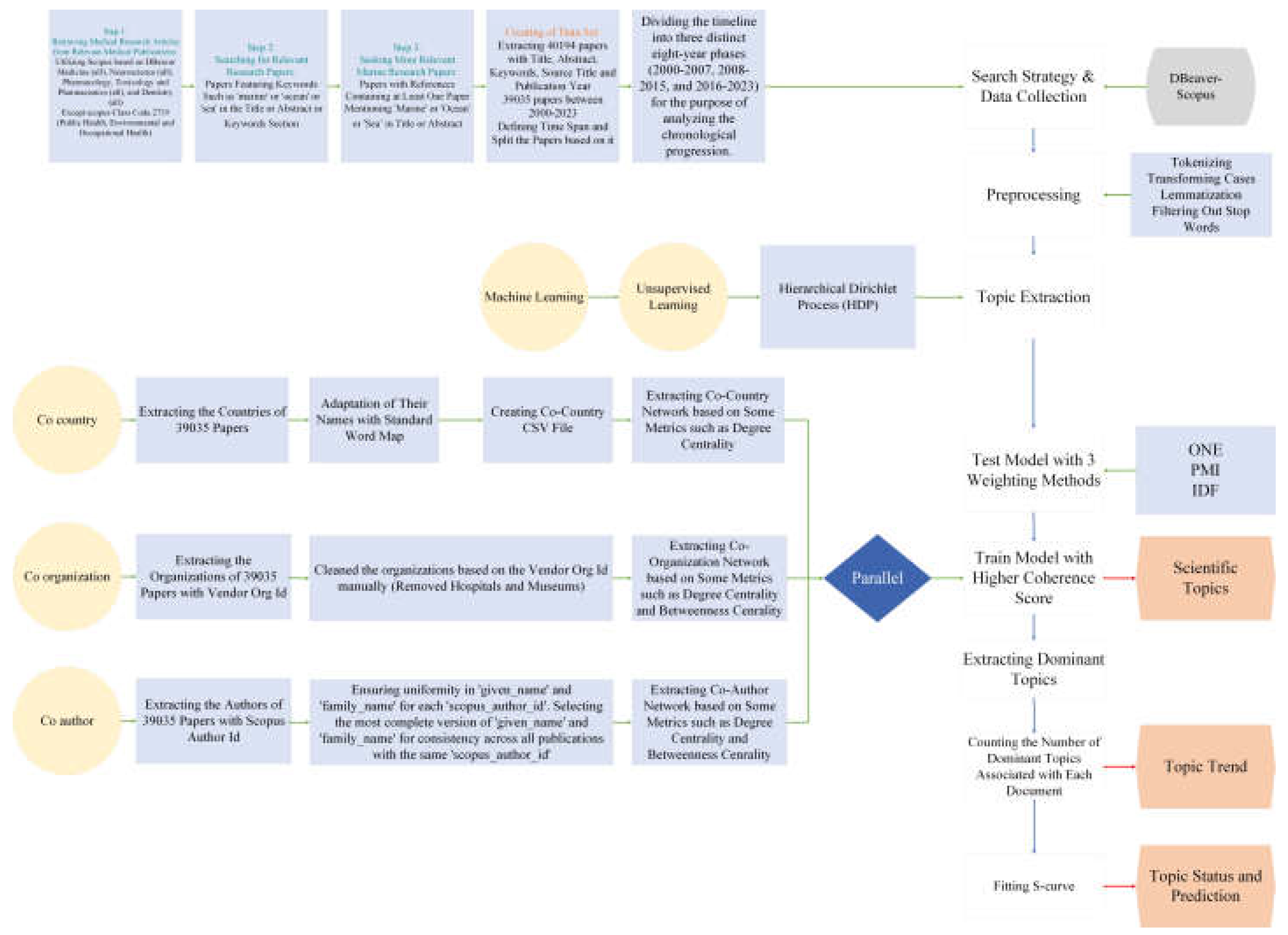
Figure 2.
Number of Publications per Year.
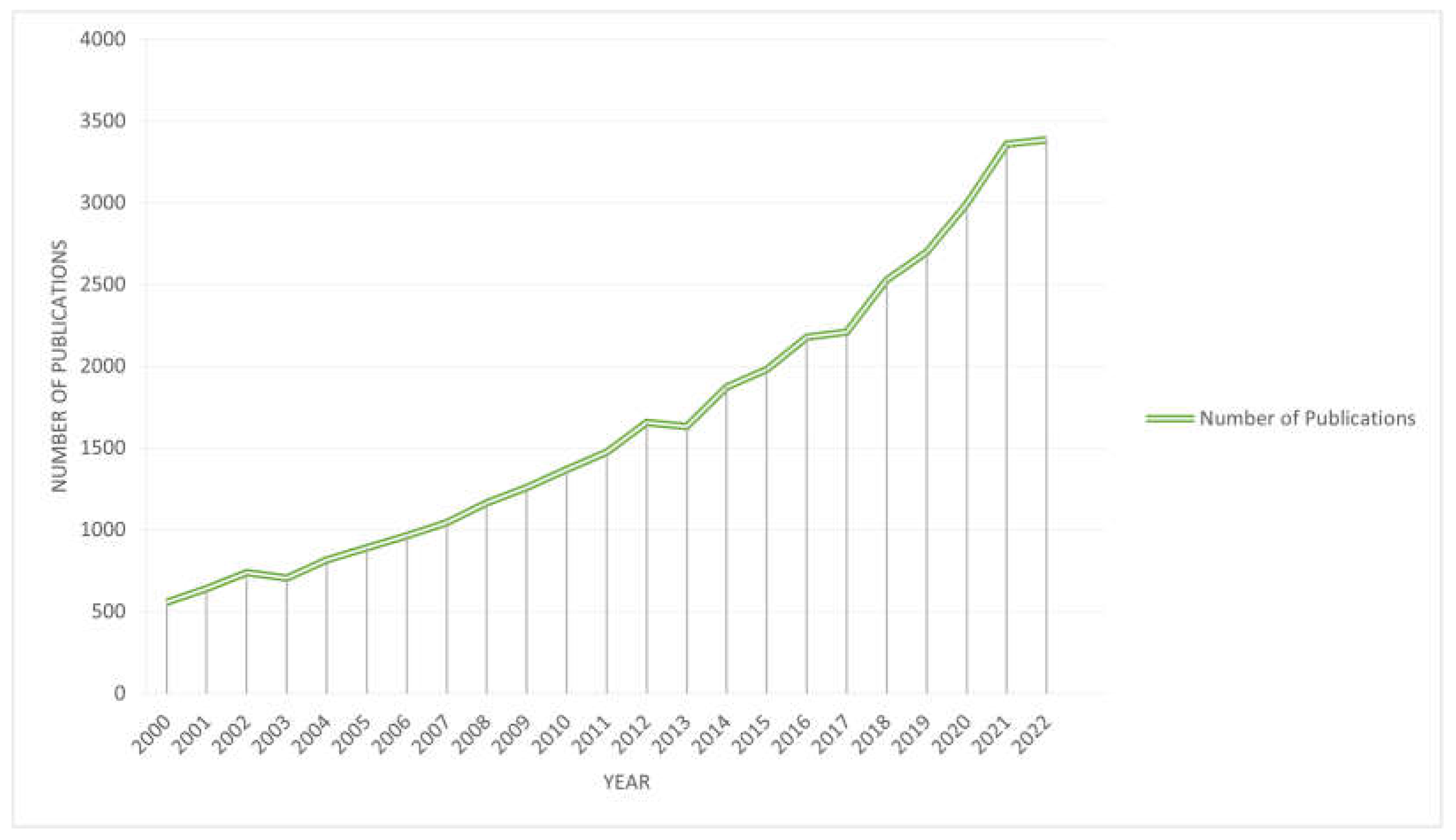
Figure 3.
Hierarchical Dirichlet Process Model-2000-2007.
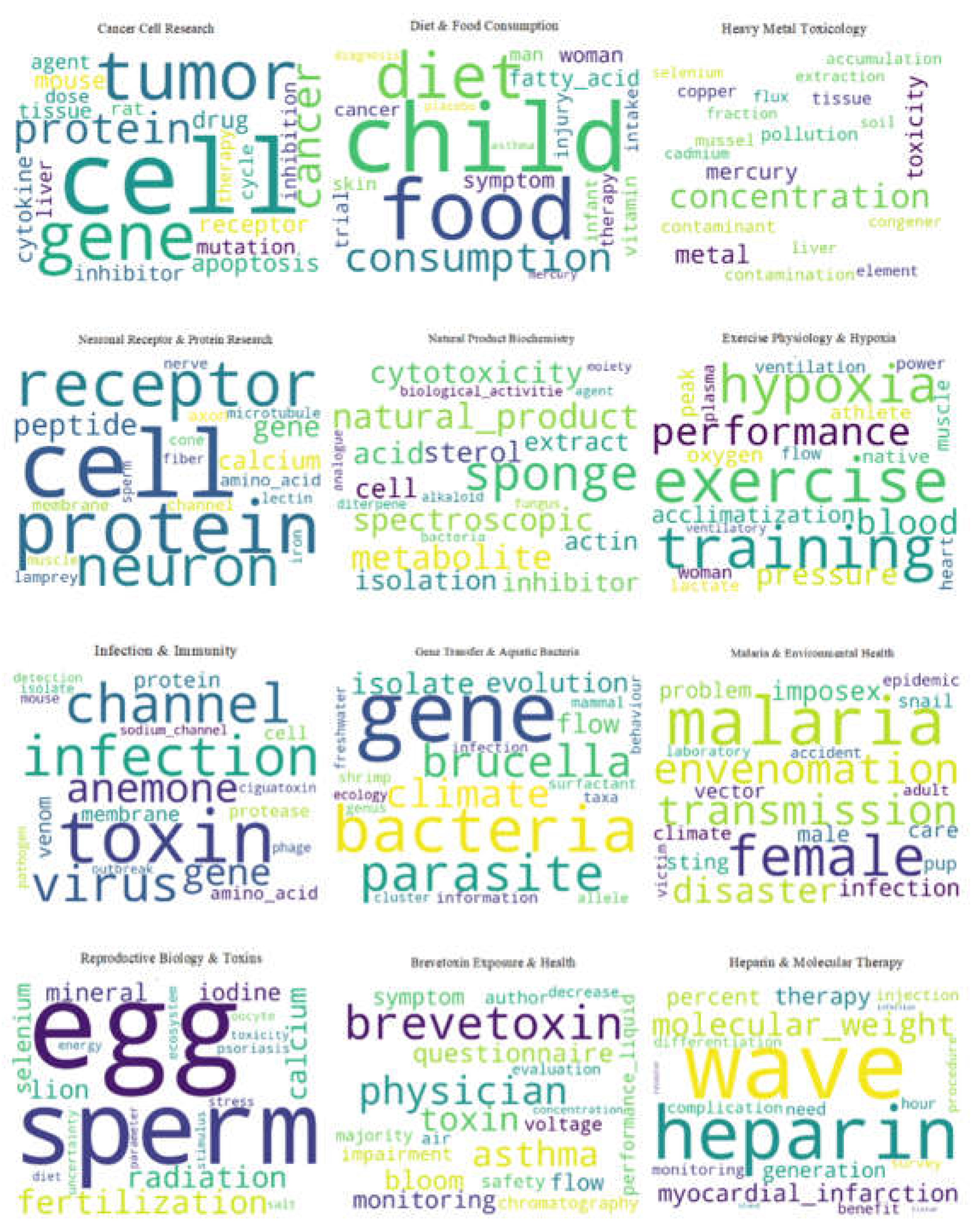
Figure 4.
Hierarchical Dirichlet Process Model-2008-2015.
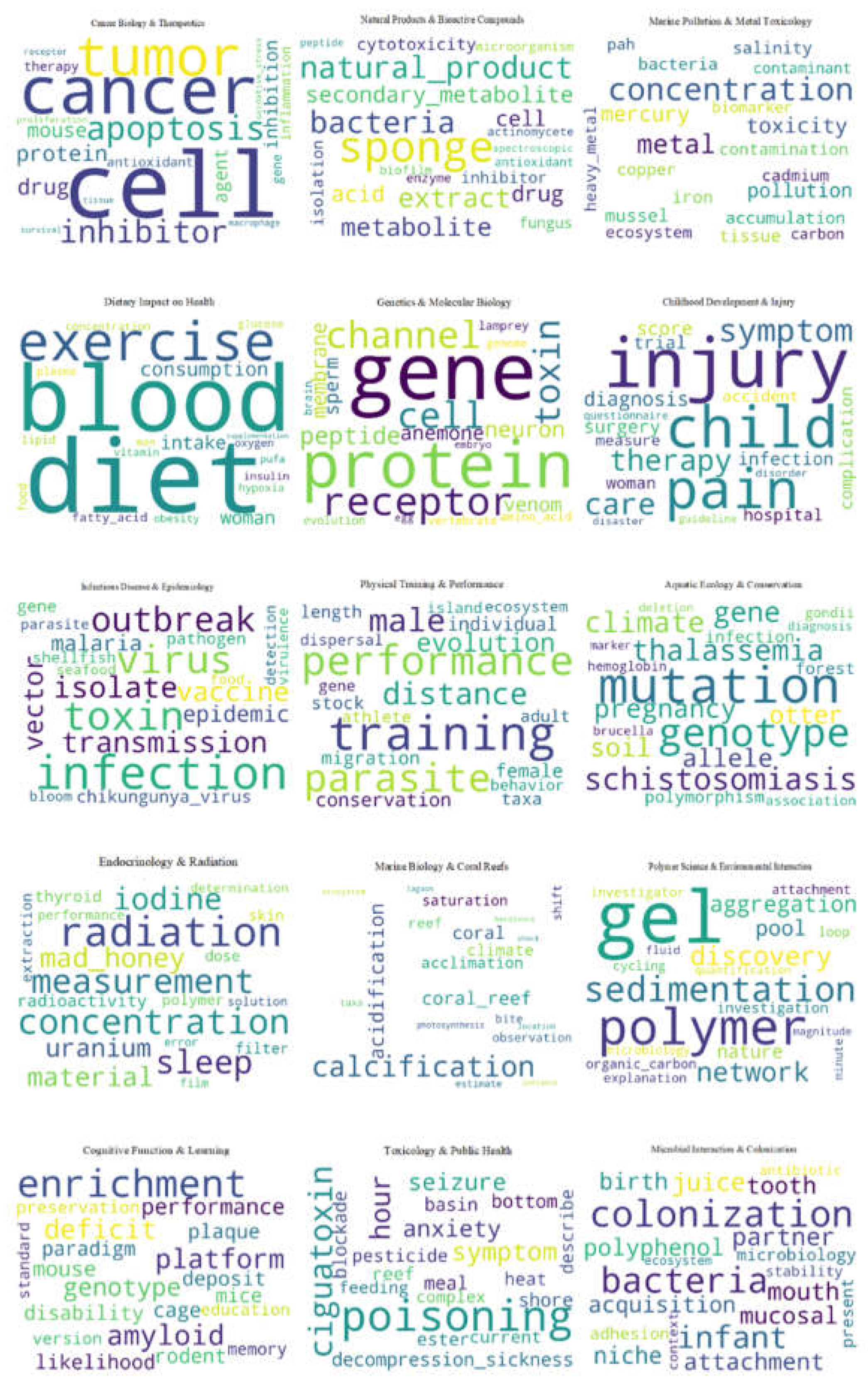
Figure 5.
Hierarchical Dirichlet Process Model-2016-2023.
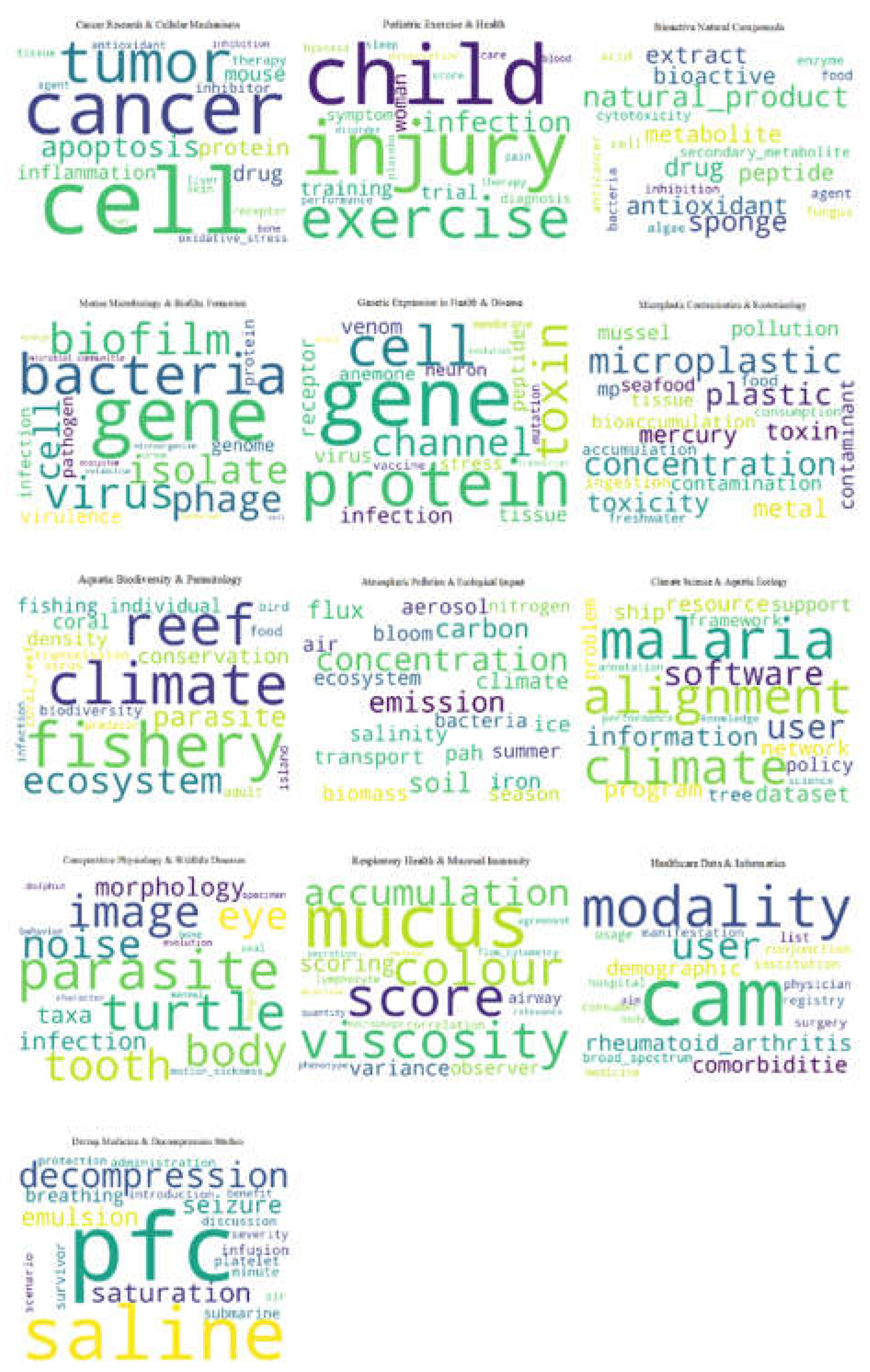
Figure 6.
Topic Trend-Infection & Immunity (2000-2007) to Infectious Disease & Epidemiology (2008-2015).
Figure 6.
Topic Trend-Infection & Immunity (2000-2007) to Infectious Disease & Epidemiology (2008-2015).
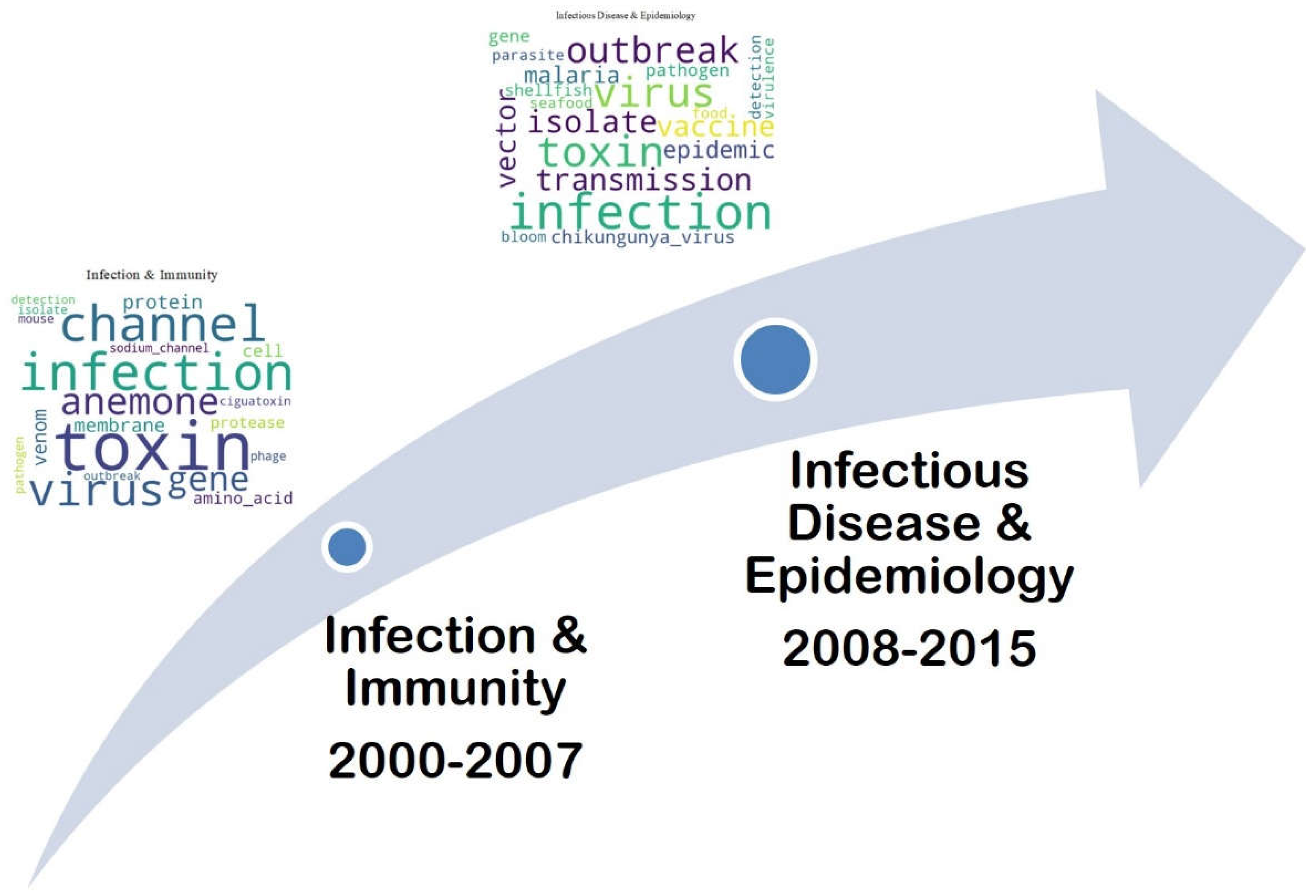
Figure 7.
Topic Trend-Diet & Food Consumption (2000-2007) to Dietary Impact on Health (2008-2015).
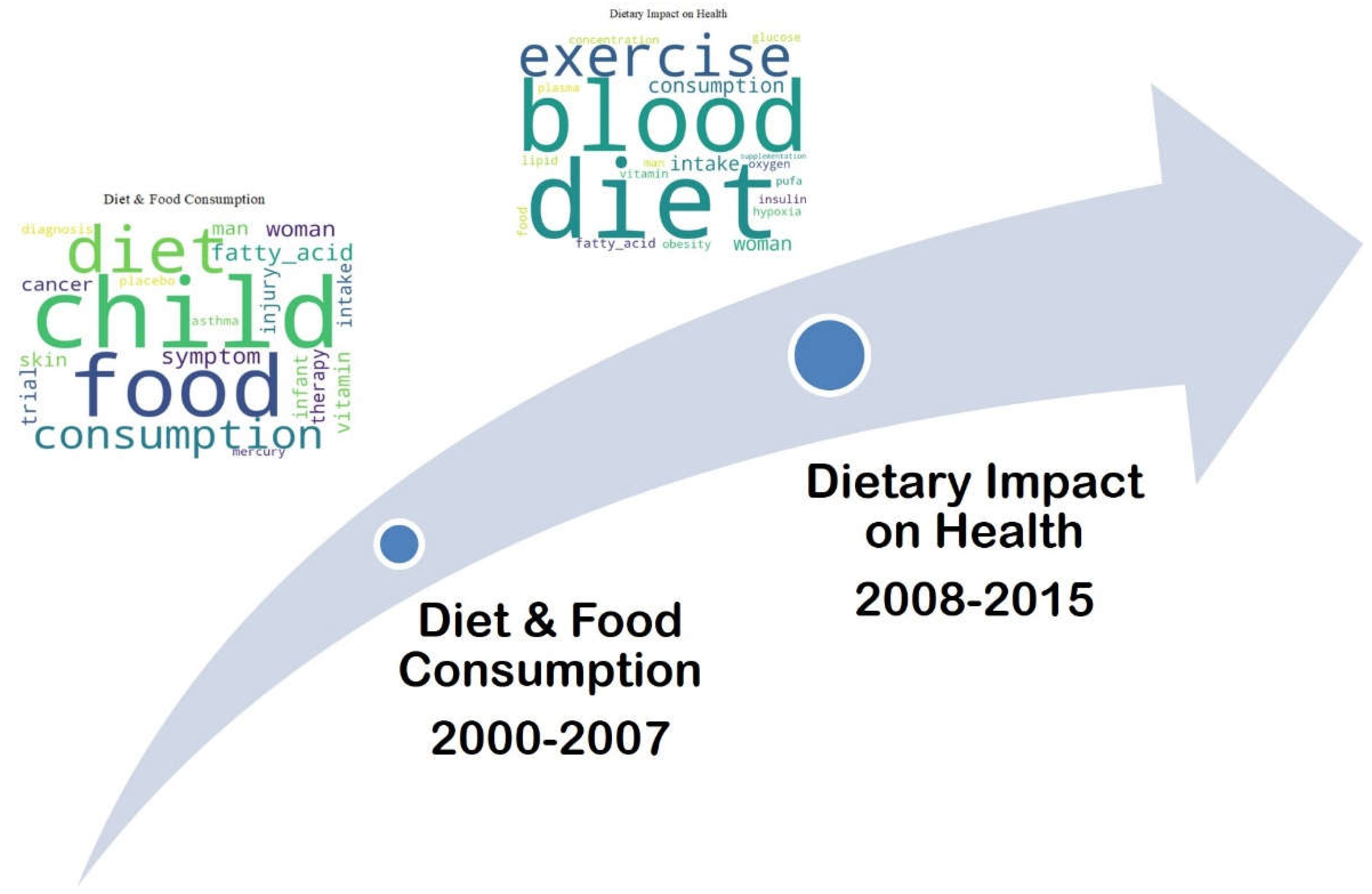
Figure 8.
Topic Trend, Status, and Prediction using S-curve-Exercise Physiology & Hypoxia (2000-2007) to Physical Training & Performance (2008-2015) to Pediatric Exercise & Health (2016-2023).
Figure 8.
Topic Trend, Status, and Prediction using S-curve-Exercise Physiology & Hypoxia (2000-2007) to Physical Training & Performance (2008-2015) to Pediatric Exercise & Health (2016-2023).
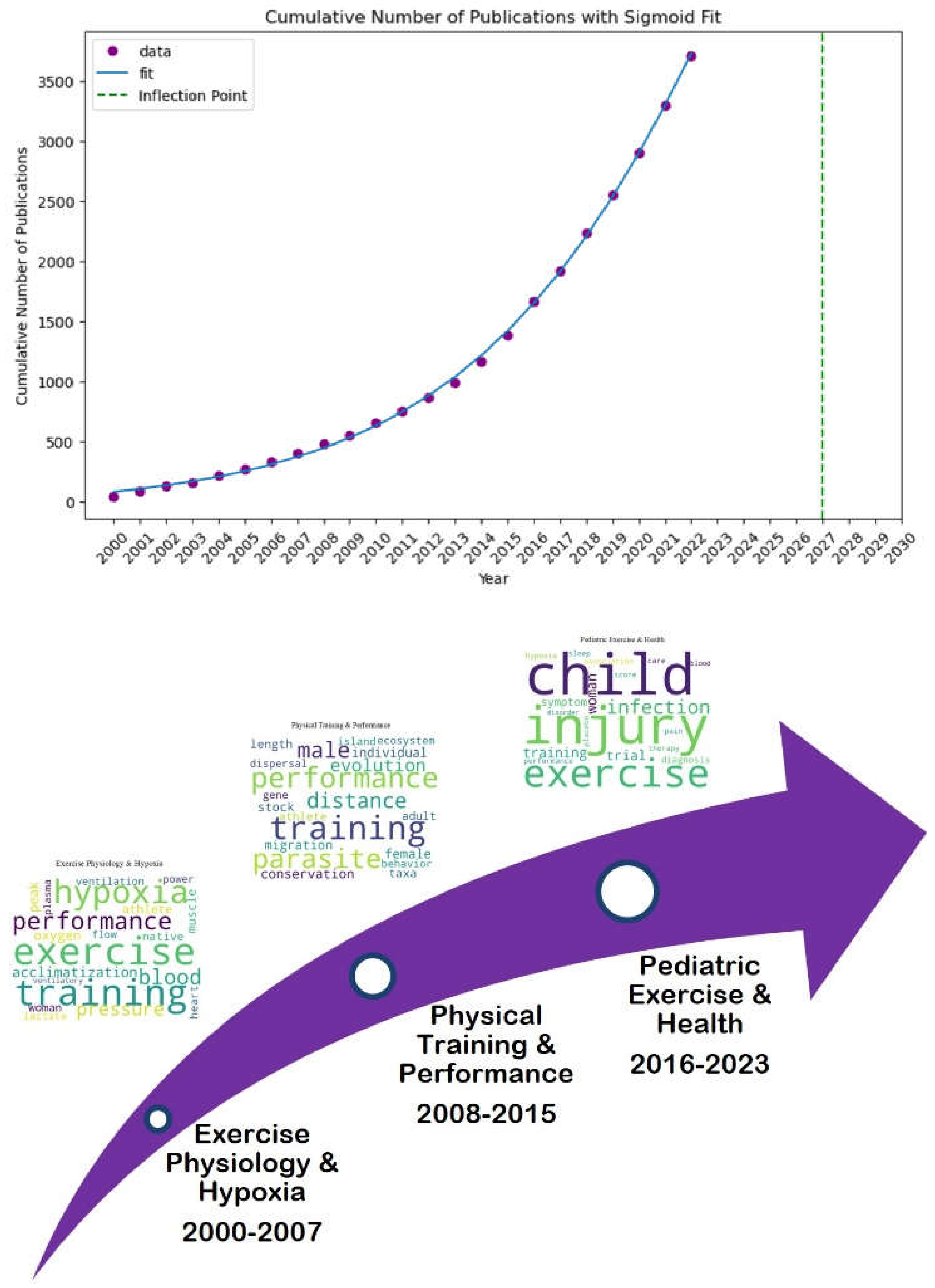
Figure 9.
Topic Trend, Status, and Prediction using S-curve-Neuronal Receptor & Protein Research (2000-2007) to Genetics & Molecular Biology (2008-2015) to Genetic Expression in Health & Disease (2016-2023).
Figure 9.
Topic Trend, Status, and Prediction using S-curve-Neuronal Receptor & Protein Research (2000-2007) to Genetics & Molecular Biology (2008-2015) to Genetic Expression in Health & Disease (2016-2023).
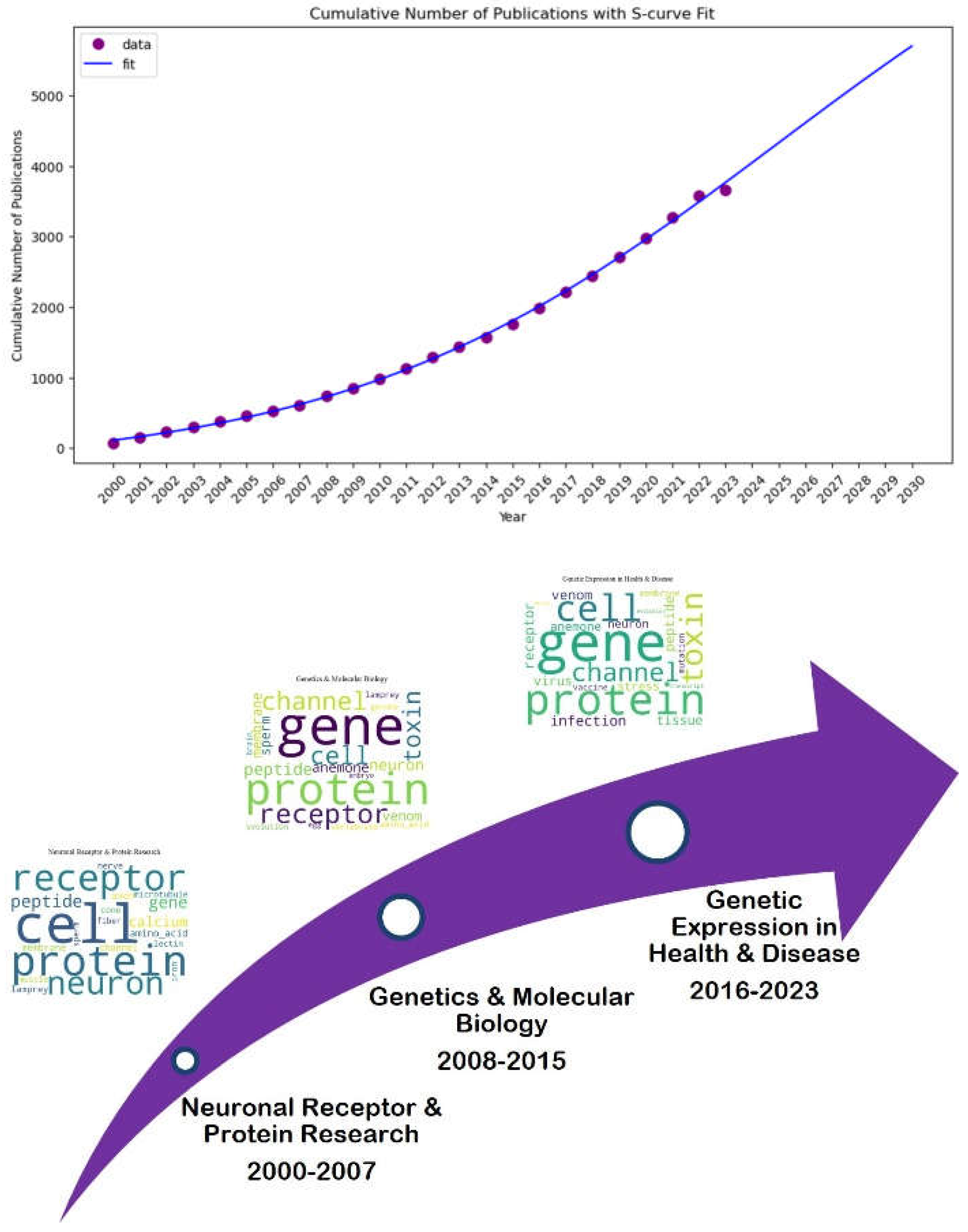
Figure 10.
Topic Trend, Status, and Prediction using S-curve-Gene Transfer & Aquatic Bacteria (2000-2007) to Aquatic Ecology & Conservation (2008-2015) to Marine Microbiology & Biofilm Formation (2016-2023).
Figure 10.
Topic Trend, Status, and Prediction using S-curve-Gene Transfer & Aquatic Bacteria (2000-2007) to Aquatic Ecology & Conservation (2008-2015) to Marine Microbiology & Biofilm Formation (2016-2023).
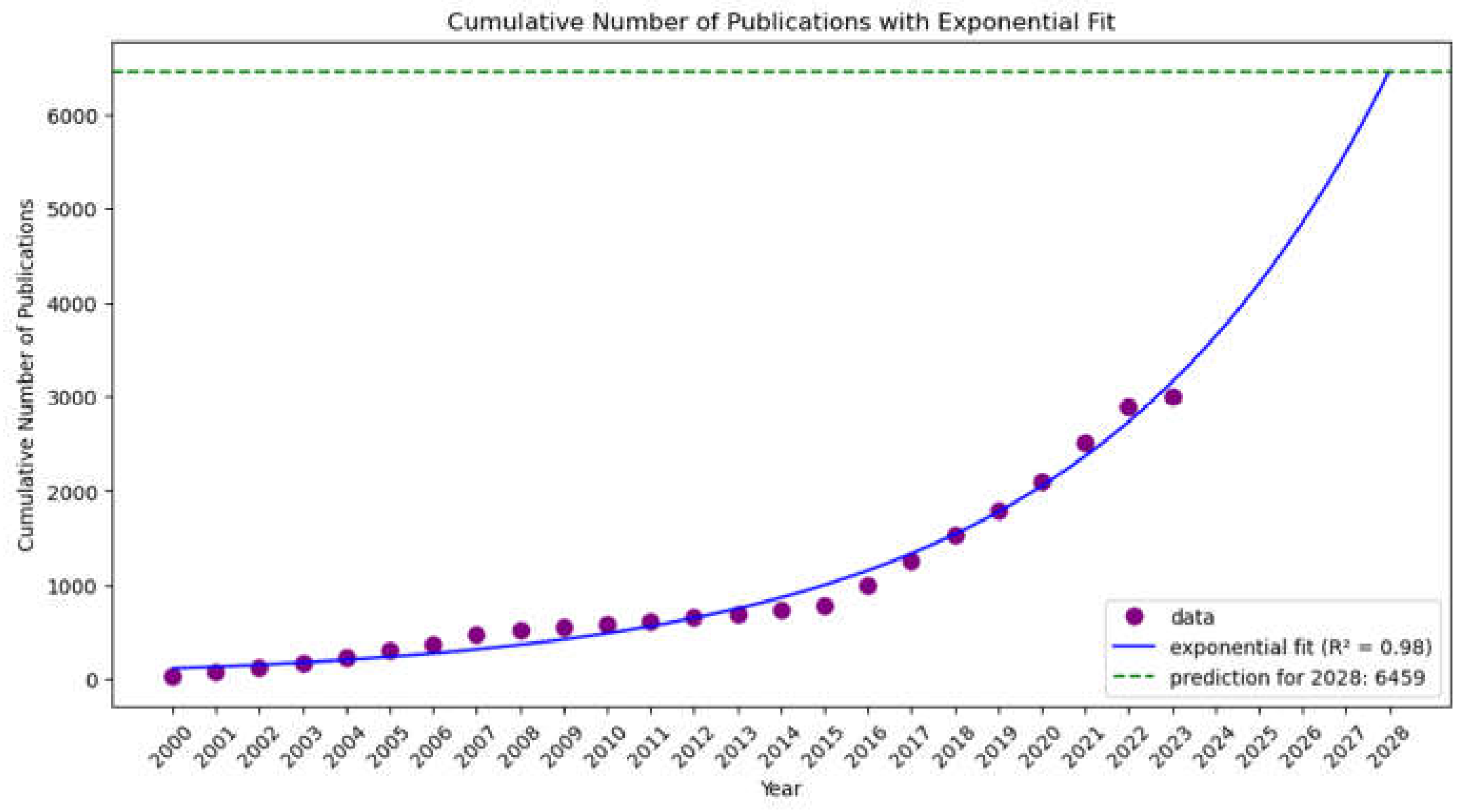
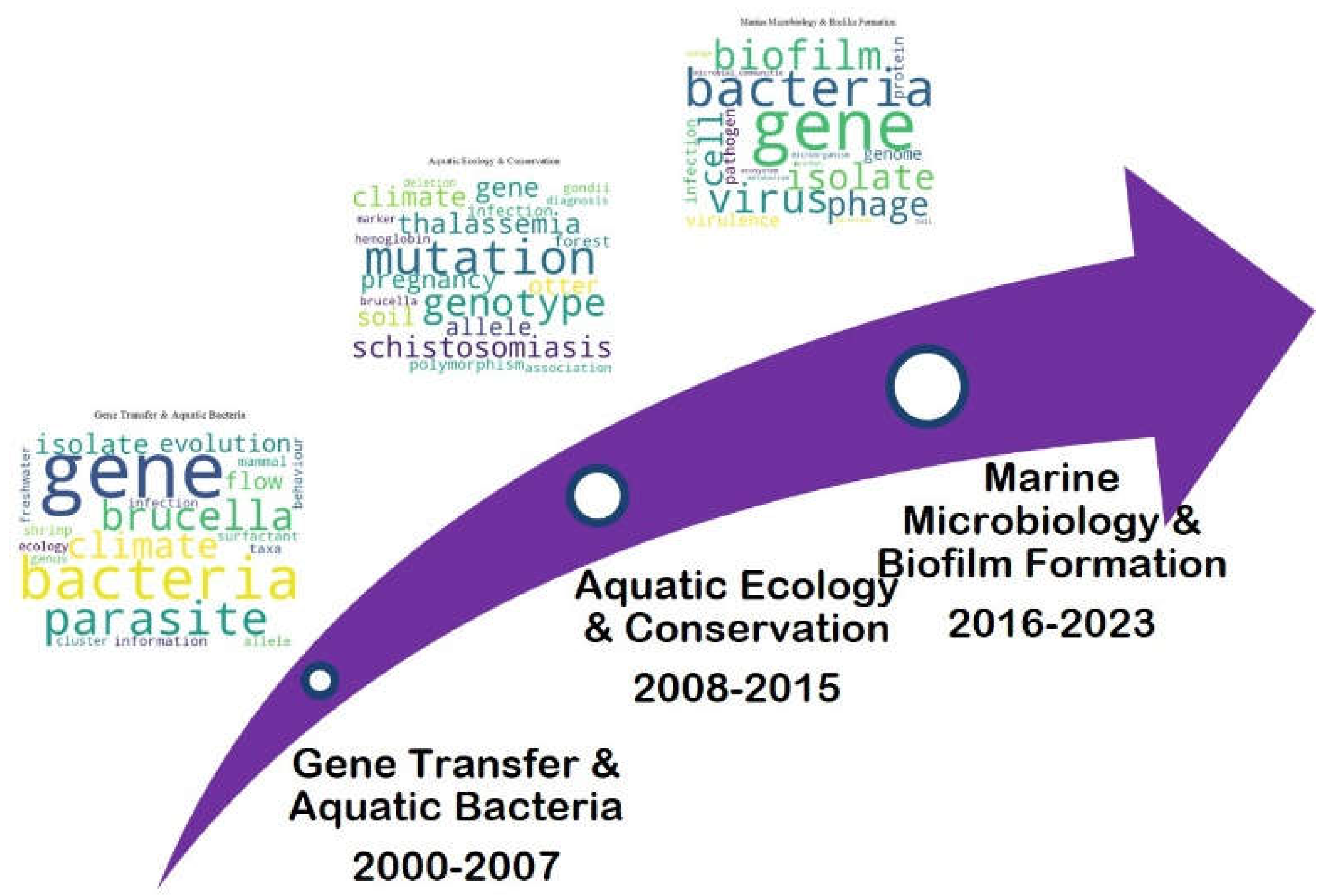
Figure 11.
Topic Trend, Status, and Prediction using S-curve-Heavy Metal Toxicology (2000-2007) to Marine Pollution & Metal Toxicology (2008-2015) to Microplastic Contamination & Ecotoxicology (2016-2023).
Figure 11.
Topic Trend, Status, and Prediction using S-curve-Heavy Metal Toxicology (2000-2007) to Marine Pollution & Metal Toxicology (2008-2015) to Microplastic Contamination & Ecotoxicology (2016-2023).
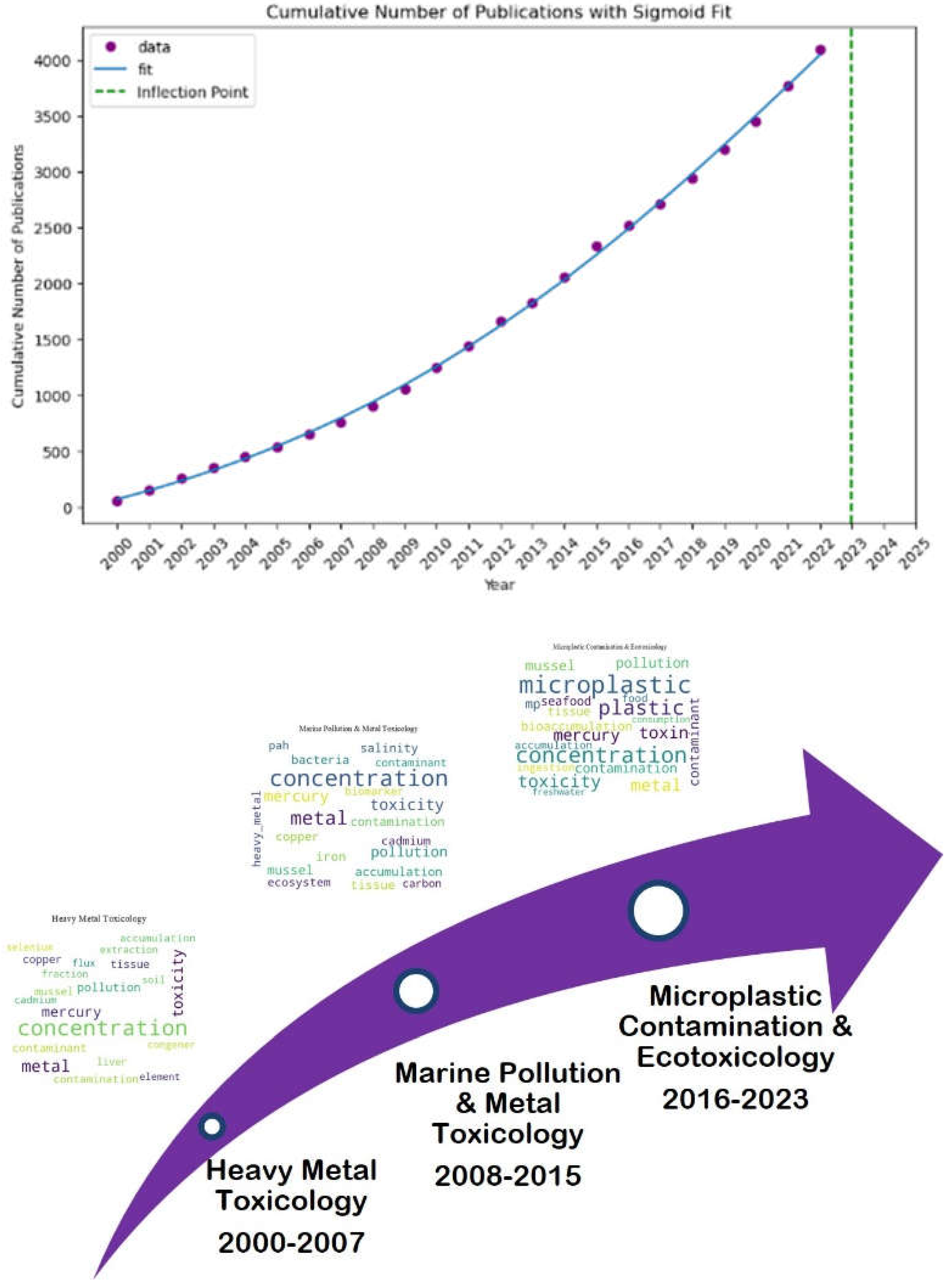
Figure 12.
Topic Trend, Status, and Prediction-Cancer Cell Research (2000-2007) to Cancer Biology & Therapeutics (2008-2015) to Cancer Research & Cellular Mechanisms (2016-2023).
Figure 12.
Topic Trend, Status, and Prediction-Cancer Cell Research (2000-2007) to Cancer Biology & Therapeutics (2008-2015) to Cancer Research & Cellular Mechanisms (2016-2023).
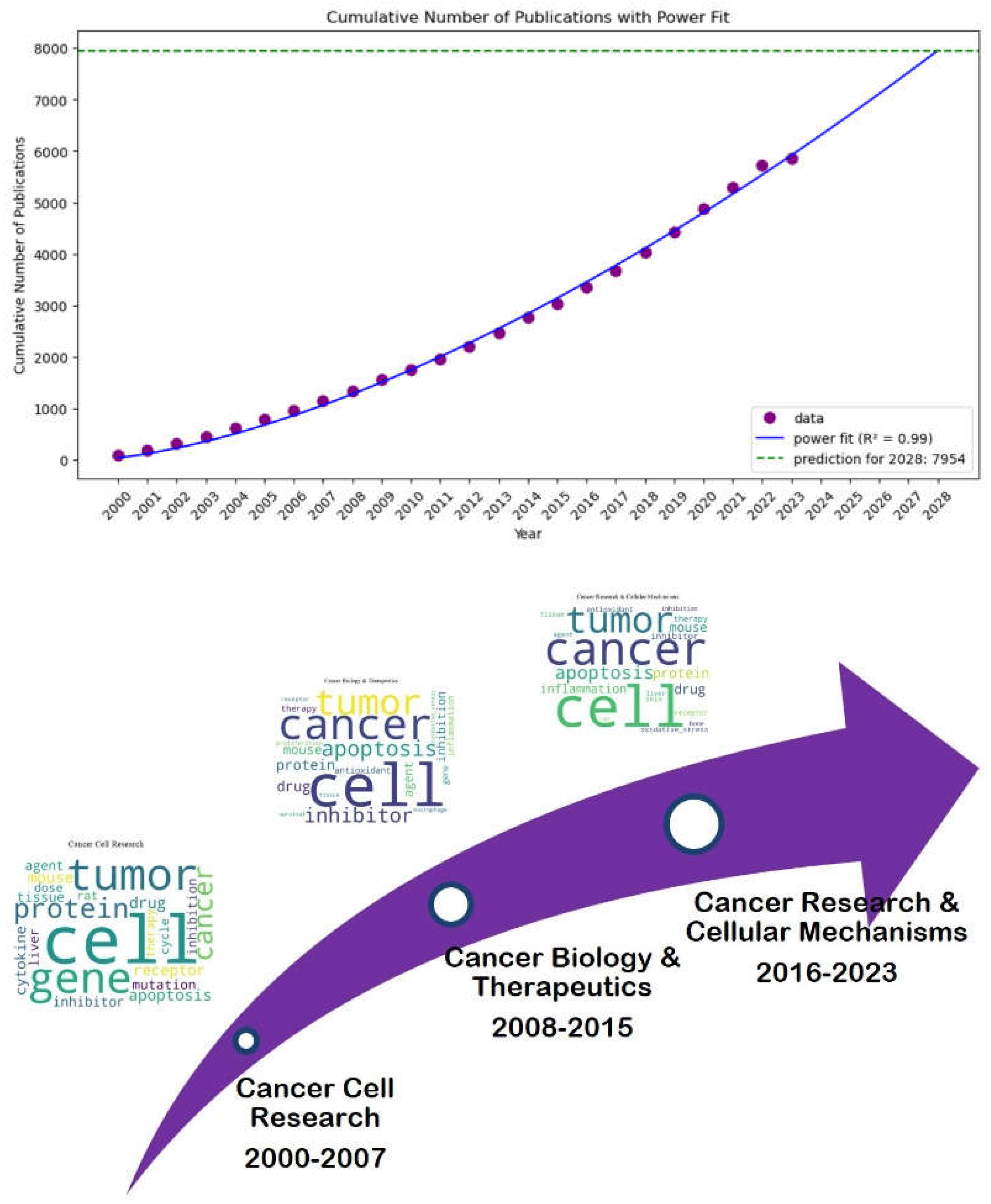
Figure 13.
Topic Trend, Status, and Prediction using S-curve-Natural Product Biochemistry (2000-2007) to Natural Products & Bioactive Compounds (2008-2015) to Bioactive Natural Compounds (2016-2023).
Figure 13.
Topic Trend, Status, and Prediction using S-curve-Natural Product Biochemistry (2000-2007) to Natural Products & Bioactive Compounds (2008-2015) to Bioactive Natural Compounds (2016-2023).
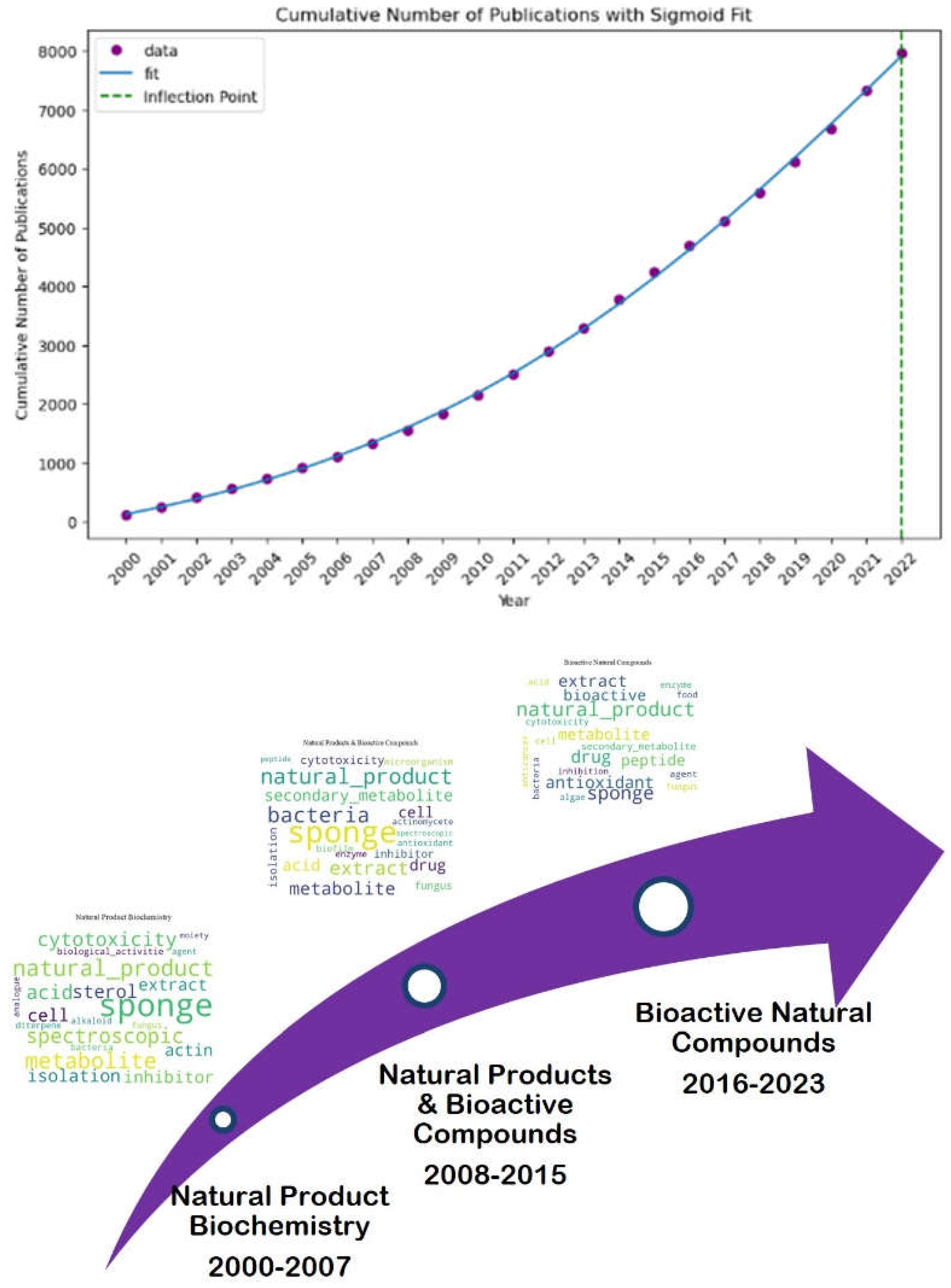
Figure 14.
Co Organization Network based on Degree Centrality.
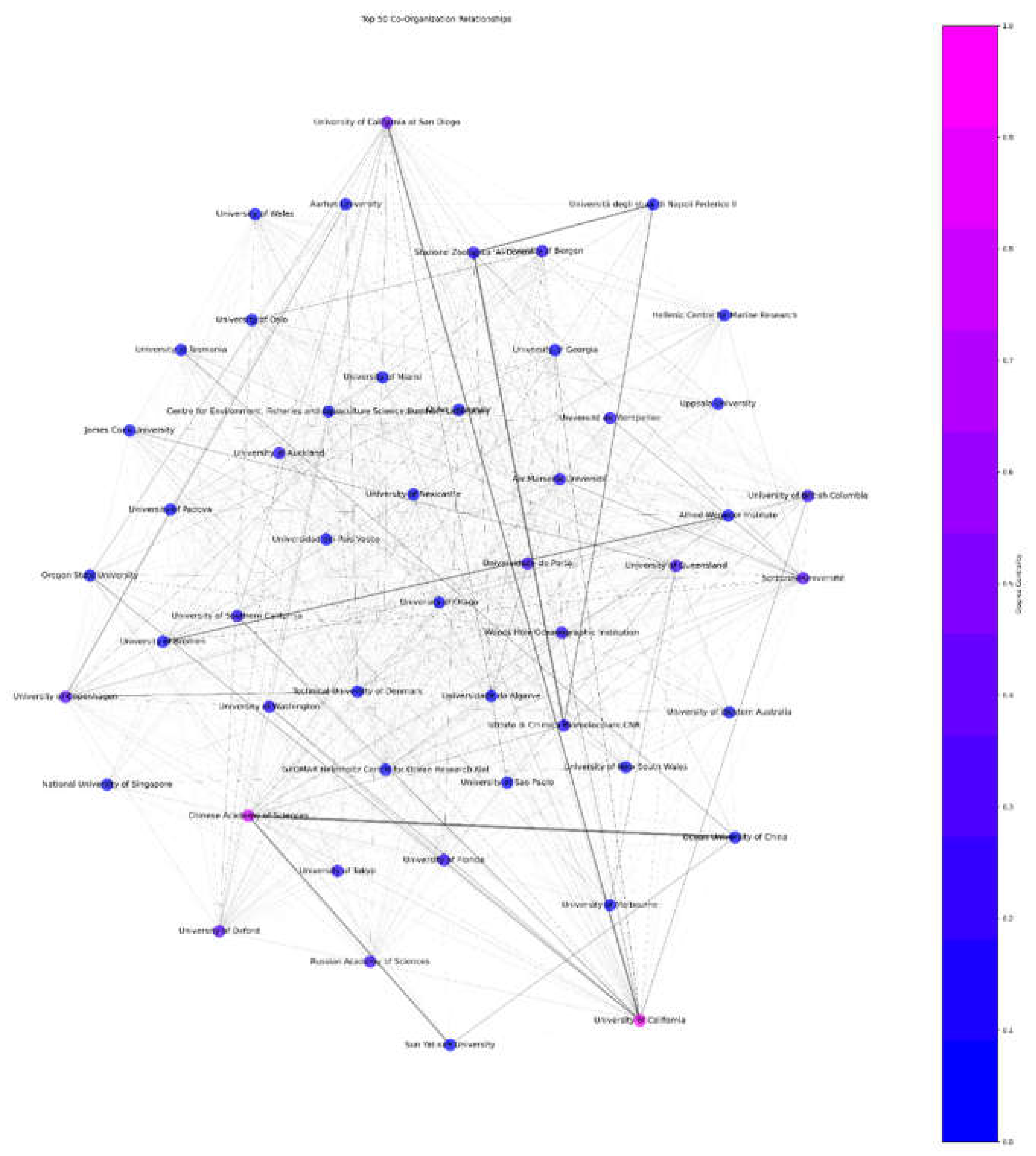
Figure 15.
Co Author Network based on Degree Centrality.
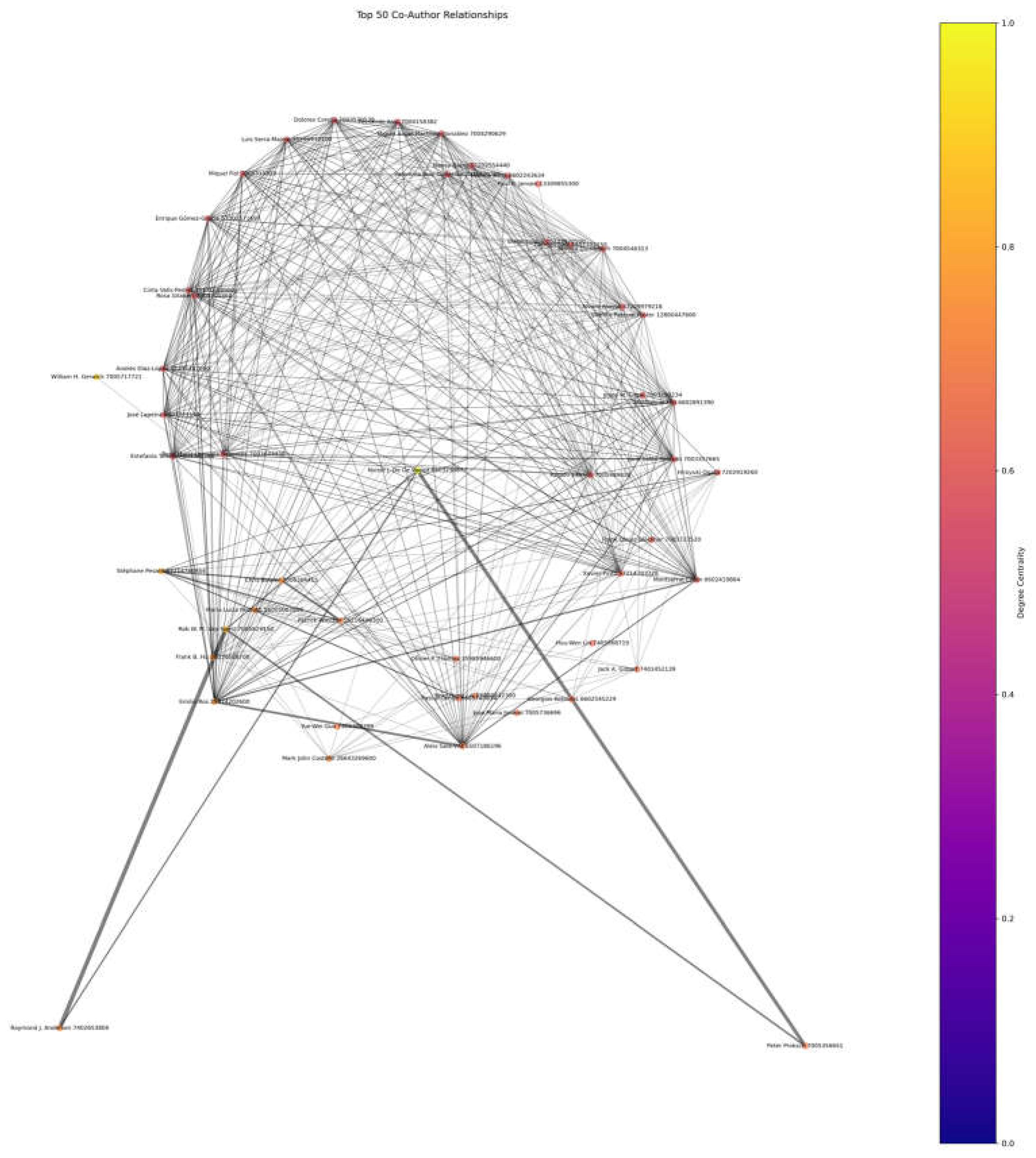
Table 1.
Top 20 Trends in Journal Subjects According to WoS Categories Based on Frequency (2000-2023).
Table 1.
Top 20 Trends in Journal Subjects According to WoS Categories Based on Frequency (2000-2023).
| Row | 2000-2007 | 2008-2015 | 2016-2023 | ||||||
|---|---|---|---|---|---|---|---|---|---|
| WOS Category | Count | (Count/Total) *100 | WOS Category | Count | (Count/Total) *100 | WOS Category | Count | (Count/Total) *100 | |
| 1 | Pharmacology & Pharmacy | 105 | 7.692 | Pharmacology & Pharmacy | 148 | 6.871 | Pharmacology & Pharmacy | 159 | 6.257 |
| 2 | Neurosciences | 60 | 4.396 | Neurosciences | 97 | 4.503 | Medicine, General & Internal | 106 | 4.172 |
| 3 | Immunology | 53 | 3.883 | Medicine, General & Internal | 85 | 3.946 | Public, Environmental & Occupational Health | 103 | 4.054 |
| 4 | Medicine, General & Internal | 47 | 3.443 | Clinical Neurology | 65 | 3.018 | Neurosciences | 99 | 3.896 |
| 5 | Toxicology | 41 | 3.004 | Oncology | 63 | 2.925 | Oncology | 79 | 3.109 |
| 6 | Biochemistry & Molecular Biology | 40 | 2.930 | Immunology | 62 | 2.878 | Biochemistry & Molecular Biology | 65 | 2.558 |
| 7 | Clinical Neurology | 40 | 2.930 | Public, Environmental & Occupational Health | 62 | 2.878 | Clinical Neurology | 65 | 2.558 |
| 8 | Oncology | 38 | 2.784 | Biochemistry & Molecular Biology | 57 | 2.646 | Immunology | 63 | 2.479 |
| 9 | Public, Environmental & Occupational Health | 37 | 2.711 | Psychiatry | 56 | 2.600 | Microbiology | 62 | 2.440 |
| 10 | Endocrinology & Metabolism | 35 | 2.564 | Infectious Diseases | 54 | 2.507 | Toxicology | 61 | 2.401 |
| 11 | Infectious Diseases | 30 | 2.198 | Microbiology | 53 | 2.461 | Infectious Diseases | 60 | 2.361 |
| 12 | Microbiology | 30 | 2.198 | Toxicology | 52 | 2.414 | Medicine, Research & Experimental | 57 | 2.243 |
| 13 | Cell Biology | 29 | 2.125 | Cardiac & Cardiovascular System | 49 | 2.275 | Psychiatry | 56 | 2.204 |
| 14 | Chemistry, Medicinal | 28 | 2.051 | Endocrinology & Metabolism | 47 | 2.182 | Endocrinology & Metabolism | 48 | 1.889 |
| 15 | Nutrition & Dietetics | 27 | 1.978 | Chemistry, Medicinal | 43 | 1.996 | Chemistry, Medicinal | 46 | 1.810 |
| 16 | Surgery | 25 | 1.832 | Medicine, Research & Experimental | 41 | 1.903 | Pediatrics | 46 | 1.810 |
| 17 | Dermatology | 24 | 1.758 | Nutrition & Dietetics | 41 | 1.903 | Surgery | 46 | 1.810 |
| 18 | Genetics & Heredity | 24 | 1.758 | Dermatology | 38 | 1.764 | Cardiac & Cardiovascular System | 44 | 1.732 |
| 19 | Medicine, Research & Experimental | 24 | 1.758 | Genetics & Heredity | 38 | 1.764 | Nutrition & Dietetics | 44 | 1.732 |
| 20 | Cardiac & Cardiovascular System | 23 | 1.685 | Surgery | 36 | 1.671 | Dermatology | 40 | 1.574 |
| Total | 1365 | Total | 2154 | Total | 2541 | ||||
| Articles in journals not indexed in WOS | 471 | Articles in journals not indexed in WOS | 817 | Articles in journals not indexed in WOS | 888 | ||||
Table 2.
Top 20 Countries based on Their Degree Centrality, Collaboration Frequency, and Total Number of Publications.
Table 2.
Top 20 Countries based on Their Degree Centrality, Collaboration Frequency, and Total Number of Publications.
| Row | Country | Degree Centrality | Collaboration Frequency | Total Number of Publications | Collaboration Frequency/Total Number of Publications |
|---|---|---|---|---|---|
| 1 | United States of America | 152 | 6796 | 8557 | 0.79 |
| 2 | United Kingdom | 139 | 3850 | 2483 | 1.55 |
| 3 | France | 134 | 3109 | 2299 | 1.35 |
| 4 | Germany | 119 | 3414 | 2462 | 1.39 |
| 5 | Spain | 118 | 2759 | 2261 | 1.22 |
| 6 | Italy | 117 | 2257 | 2269 | 0.99 |
| 7 | Australia | 110 | 2196 | 1841 | 1.19 |
| 8 | Canada | 107 | 1955 | 1495 | 1.31 |
| 9 | Netherlands | 104 | 1460 | 805 | 1.81 |
| 10 | China | 103 | 2485 | 5919 | 0.42 |
| 11 | Japan | 102 | 1857 | 2820 | 0.66 |
| 12 | Belgium | 100 | 1005 | 481 | 2.09 |
| 13 | Portugal | 99 | 1139 | 903 | 1.26 |
| 14 | Switzerland | 99 | 1127 | 540 | 2.09 |
| 15 | South Africa | 97 | 734 | 330 | 2.22 |
| 16 | New Zealand | 95 | 818 | 554 | 1.48 |
| 17 | Egypt | 92 | 1021 | 766 | 1.33 |
| 18 | Brazil | 91 | 997 | 1189 | 0.84 |
| 19 | Norway | 90 | 1284 | 900 | 1.43 |
| 20 | Sweden | 88 | 1114 | 607 | 1.84 |
Table 3.
Top 20 Organizations based on Their Degree Centrality, Collaboration Frequency, and Total Number of Publications.
Table 3.
Top 20 Organizations based on Their Degree Centrality, Collaboration Frequency, and Total Number of Publications.
| Row | Organization | Degree Centrality | Collaboration Frequency | Total Number of Publications | Collaboration Frequency/Total Number of Publications |
|---|---|---|---|---|---|
| 1 | University of California | 1103 | 2067 | 654 | 3.16 |
| 2 | Chinese Academy of Sciences | 891 | 2402 | 1331 | 1.80 |
| 3 | University of California at San Diego | 647 | 1198 | 431 | 2.78 |
| 4 | Sorbonne Université | 590 | 1016 | 207 | 4.91 |
| 5 | University of Copenhagen | 523 | 825 | 223 | 3.70 |
| 6 | University of Oxford | 518 | 719 | 155 | 4.64 |
| 7 | Universidade do Porto | 515 | 1019 | 340 | 3.00 |
| 8 | University of Queensland | 514 | 798 | 302 | 2.64 |
| 9 | Russian Academy of Sciences | 477 | 1044 | 654 | 1.60 |
| 10 | University of Florida | 474 | 687 | 202 | 3.40 |
| 11 | University of British Columbia | 450 | 790 | 246 | 3.21 |
| 12 | Aix Marseille Université | 441 | 635 | 150 | 4.23 |
| 13 | University of Washington | 429 | 634 | 180 | 3.52 |
| 14 | Université de Montpellier | 409 | 588 | 140 | 4.20 |
| 15 | University of Bergen | 408 | 648 | 171 | 3.79 |
| 16 | Stazione Zoologica 'A. Dohrn' | 408 | 788 | 227 | 3.47 |
| 17 | University of Auckland | 385 | 609 | 151 | 4.03 |
| 18 | University of Tokyo | 382 | 775 | 337 | 2.30 |
| 19 | Woods Hole Oceanographic Institution | 379 | 600 | 149 | 4.03 |
| 20 | Istituto di Chimica Biomolecolare, CNR | 376 | 684 | 264 | 2.59 |
Table 4.
Top 20 Organizations based on Betweenness Centrality.
| Row | Organization | Betweenness Centrality |
|---|---|---|
| 1 | Chinese Academy of Sciences | 0.055 |
| 2 | University of California | 0.052 |
| 3 | University of California at San Diego | 0.038 |
| 4 | University of Queensland | 0.025 |
| 5 | Russian Academy of Sciences | 0.024 |
| 6 | University of Copenhagen | 0.021 |
| 7 | University of British Columbia | 0.02 |
| 8 | Duke University | 0.02 |
| 9 | French Research Institute for Exploitation of the Sea (IFREMER) | 0.019 |
| 10 | Universidad Nacional Autónoma de México | 0.018 |
| 11 | Pukyong National University | 0.017 |
| 12 | Hokkaido University | 0.015 |
| 13 | King Saud University | 0.014 |
| 14 | Universidade do Porto | 0.014 |
| 15 | Université Pierre et Marie Curie | 0.013 |
| 16 | Universidad del Pais Vasco | 0.013 |
| 17 | Aix Marseille Université | 0.013 |
| 18 | Nagasaki University | 0.013 |
| 19 | Sorbonne Université | 0.013 |
| 20 | Korea Ocean Research and Development Institute | 0.013 |
Table 5.
Top 20 Authors based on Their Degree Centrality, Collaboration Frequency, and Total Number of Publications.
Table 5.
Top 20 Authors based on Their Degree Centrality, Collaboration Frequency, and Total Number of Publications.
| Row | Author with Scopus Author ID | Degree Centrality | Collaboration Frequency | Total Number of Publications | Collaboration Frequency/Total Number of Publications |
|---|---|---|---|---|---|
| 1 | Nicole J. De De Voogd 6603230877 | 403 | 629 | 64 | 9.83 |
| 2 | William H. Gerwick 7005717721 | 365 | 683 | 109 | 6.27 |
| 3 | Rob W. M. Van Soest 7005829150 | 334 | 520 | 77 | 6.75 |
| 4 | Stéphane Pesant 57214766954 | 325 | 404 | 7 | 57.71 |
| 5 | Emilio Ros 35474202600 | 308 | 348 | 14 | 24.86 |
| 6 | Maria Luiza Pedrotti 56005007500 | 296 | 303 | 4 | 75.75 |
| 7 | Frank B. Hu 36038688700 | 296 | 313 | 11 | 28.45 |
| 8 | Chris Bowler 7006304415 | 295 | 395 | 18 | 21.94 |
| 9 | Raymond J. Andersen 7402653800 | 292 | 421 | 52 | 8.10 |
| 10 | Mark John Costello 26643269600 | 291 | 293 | 7 | 41.86 |
| 11 | Patrick Wincker 56216446300 | 284 | 420 | 19 | 22.11 |
| 12 | Yue-Wei Guo 7406308399 | 276 | 622 | 122 | 5.10 |
| 13 | Aleix Sala-Vila 6507186196 | 274 | 307 | 9 | 34.11 |
| 14 | Pascal Conan 6603747834 | 274 | 308 | 8 | 38.50 |
| 15 | Peter Proksch 7005356651 | 273 | 600 | 102 | 5.88 |
| 16 | Olivier P. Thomas 35985946600 | 272 | 399 | 54 | 7.39 |
| 17 | Georgios Kotoulas 6602545229 | 270 | 287 | 8 | 35.88 |
| 18 | Yong-Hong Liu 55894842300 | 270 | 608 | 80 | 7.60 |
| 19 | Jose Maria Jimeno 7005736696 | 266 | 428 | 54 | 7.93 |
| 20 | Jack A. Gilbert 7401452139 | 263 | 266 | 5 | 53.20 |
Table 6.
Top 20 Authors based on Betweenness Centrality.
| Row | Author with Scopus Author ID | Betweenness Centrality |
|---|---|---|
| 1 | Nicole J. De De Voogd 6603230877 | 0.022 |
| 2 | William H. Gerwick 7005717721 | 0.014 |
| 3 | Rob W. M. Van Soest 7005829150 | 0.014 |
| 4 | Derek C. G. Muir 7202872916 | 0.012 |
| 5 | Frank B. Hu 36038688700 | 0.012 |
| 6 | Frances M. D. Gulland 7006272482 | 0.011 |
| 7 | Vincenzo Di Di Marzo 7101602863 | 0.01 |
| 8 | Michael G. Ziegler 7202530437 | 0.009 |
| 9 | Paul Kwan-Sing Lam 7202365776 | 0.009 |
| 10 | Shinsuke Tanabe 7401677757 | 0.008 |
| 11 | Olivier P. Thomas 35985946600 | 0.008 |
| 12 | Serge Planes 7004574648 | 0.008 |
| 13 | Nikki A. Ford 25651627600 | 0.007 |
| 14 | Chang-Yun Wang 7501631599 | 0.007 |
| 15 | Marie-Lise Bourguet-Kondracki 6602732915 | 0.007 |
| 16 | Peter S. Ross 7402412702 | 0.007 |
| 17 | Ursula Siebert 7004796609 | 0.007 |
| 18 | Rainer Lohmann 7007118339 | 0.006 |
| 19 | De-Hai Li 14422493800 | 0.006 |
| 20 | Curtis A. Suttle 7004913800 | 0.006 |
Disclaimer/Publisher’s Note: The statements, opinions and data contained in all publications are solely those of the individual author(s) and contributor(s) and not of MDPI and/or the editor(s). MDPI and/or the editor(s) disclaim responsibility for any injury to people or property resulting from any ideas, methods, instructions or products referred to in the content. |
© 2025 by the authors. Licensee MDPI, Basel, Switzerland. This article is an open access article distributed under the terms and conditions of the Creative Commons Attribution (CC BY) license (http://creativecommons.org/licenses/by/4.0/).
Copyright: This open access article is published under a Creative Commons CC BY 4.0 license, which permit the free download, distribution, and reuse, provided that the author and preprint are cited in any reuse.


