

Submitted:
26 December 2024
Posted:
27 December 2024
You are already at the latest version
Abstract
Flux-Switching Wound Field Machines (FSWFMs), renowned for their high torque density and independence from rare-earth materials, hold significant promise for sustainable electric vehicles and industrial applications. However, their widespread adoption is limited by challenges such as high torque ripple, efficiency variations, and sensitivity to manufacturing tolerances. This study introduces a pioneering application of the Design for Six Sigma (DFSS) optimization framework to address these challenges. The framework integrates Response Surface Methodology, sensitivity analysis, and multi-objective genetic algorithms to prioritize key design variables based on their sensitivity indices, enabling targeted and robust optimization under uncertainty. The optimized solution achieves a 7.69% reduction in torque ripple, ensuring smoother and more stable operation. Additionally, it demonstrates improved torque output and enhanced energy efficiency, validating the framework’s effectiveness. The incorporation of Six Sigma principles further guarantees the robustness of the optimized design by reducing variability in critical performance metrics. This DFSS-based methodology bridges the gap between theoretical optimization and practical implementation, offering a scalable, reliable, and computationally efficient solution. These advancements establish FSWFMs as a viable candidate for sustainable industrial applications, paving the way for the revolutionization of electric machine design and manufacturing processes.
Keywords:
1. Introduction
- Improve critical parameters such as torque, torque ripple, power factor, and efficiency to meet industrial requirements for FSWFMs.
- Develop optimization strategies resilient to manufacturing variabilities, ensuring consistent performance across production batches.
- Leverage surrogate modeling to reduce computational overhead without compromising accuracy, facilitating rapid optimization cycles.
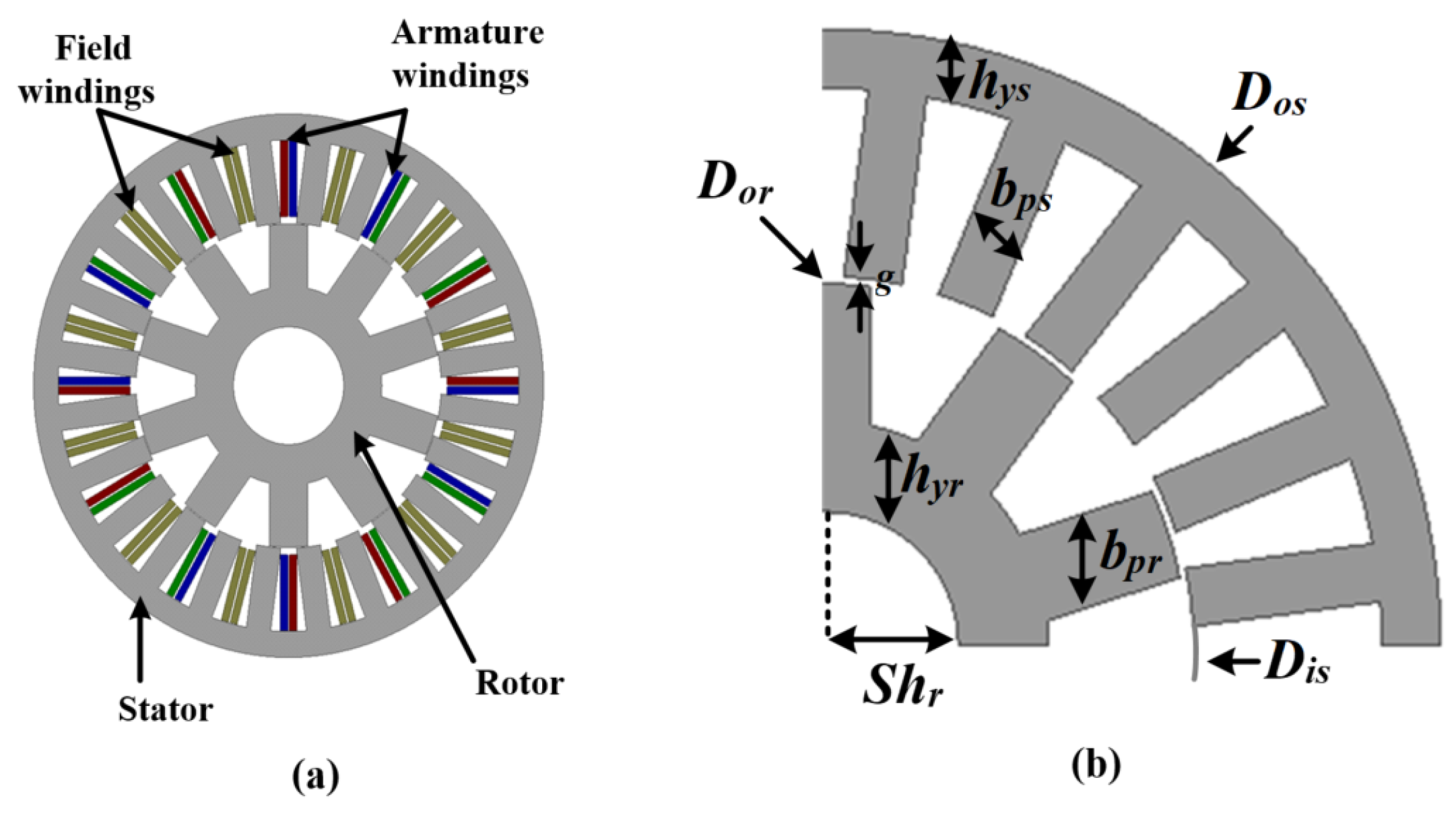
2. Operational Characteristics and Optimization Framework of FSWFMs
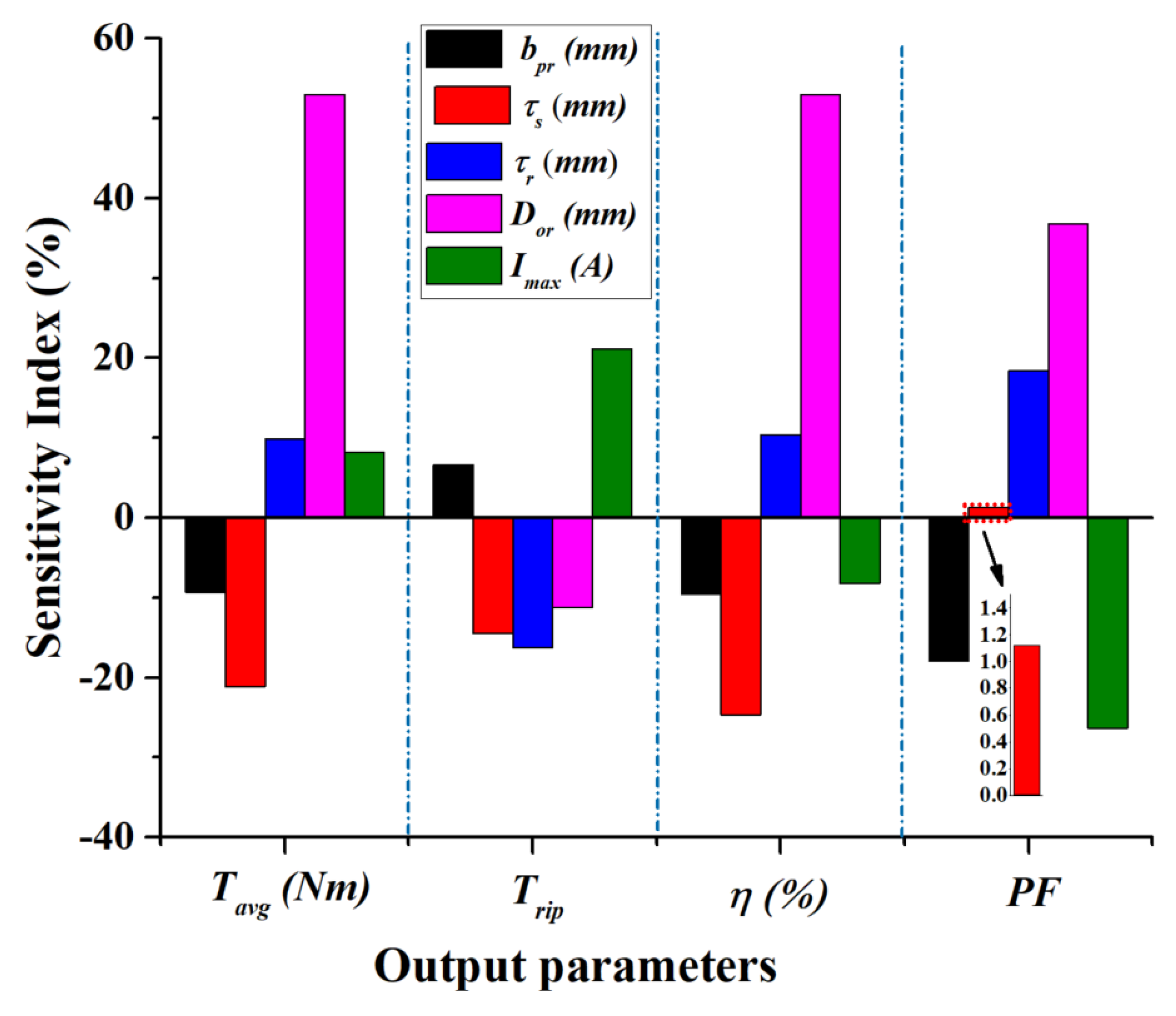
2.1. Sensitivity Analysis
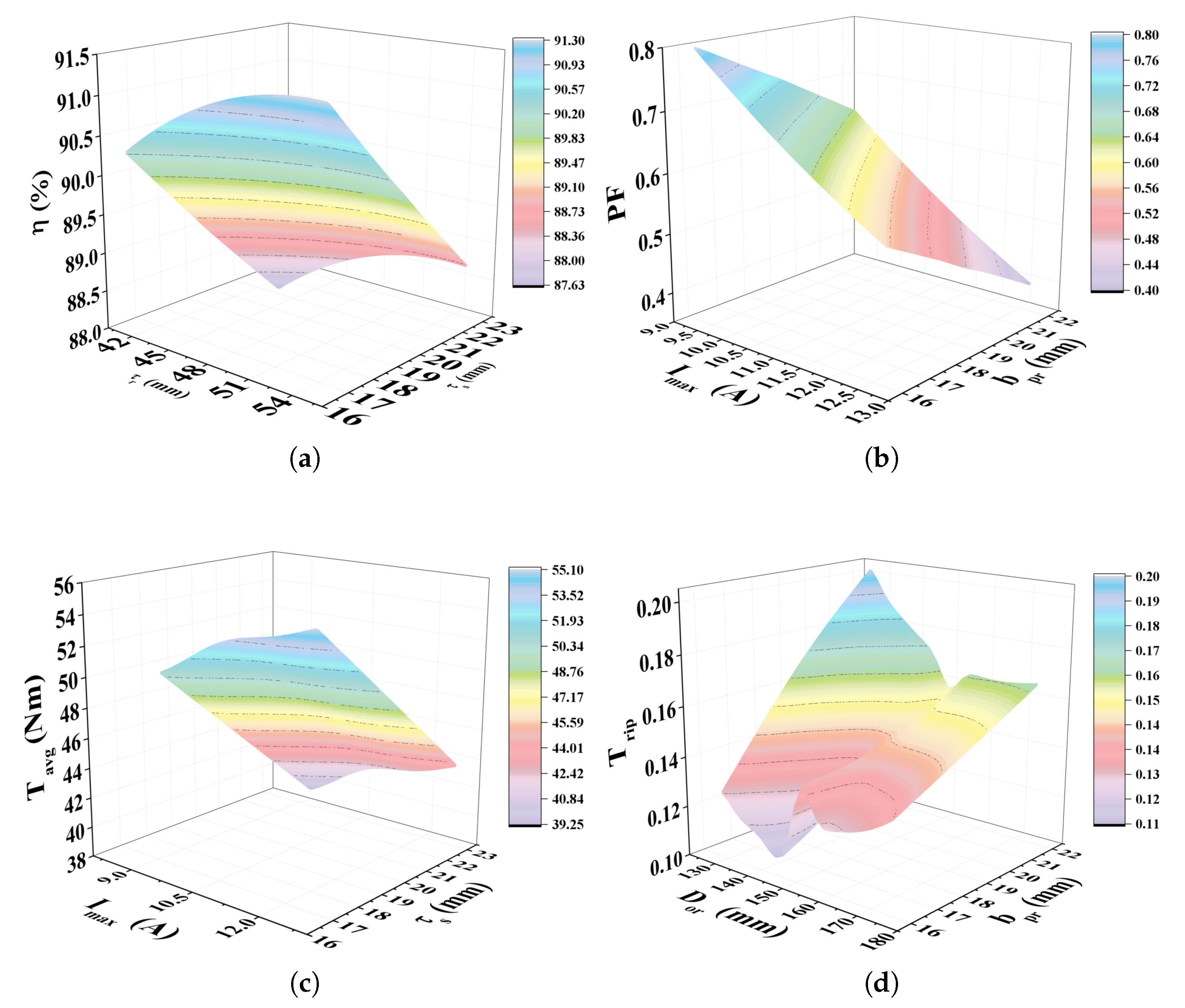
2.2. Response Surface Modeling
3. Design for Six Sigma (DFSS) Methodology
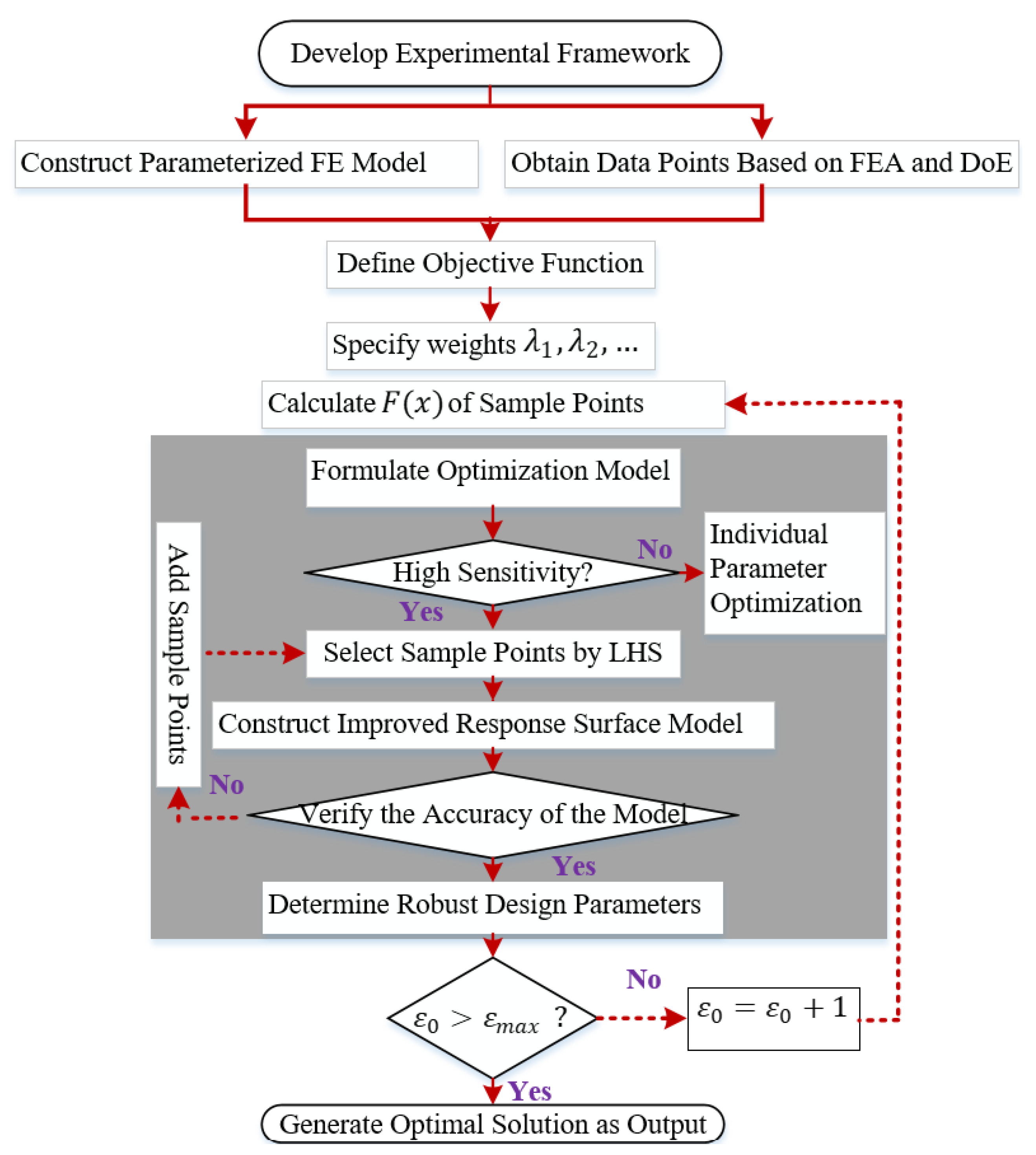
3.1. Six Sigma-Based Robust Design Framework
- Define: Identification of the critical objectives and design parameters, including , , PF, and .
- Measure: Quantification of design variables’ sensitivity to uncertainties using sensitivity indices , as expressed in Equation (13). High-sensitivity variables are prioritized for optimization.
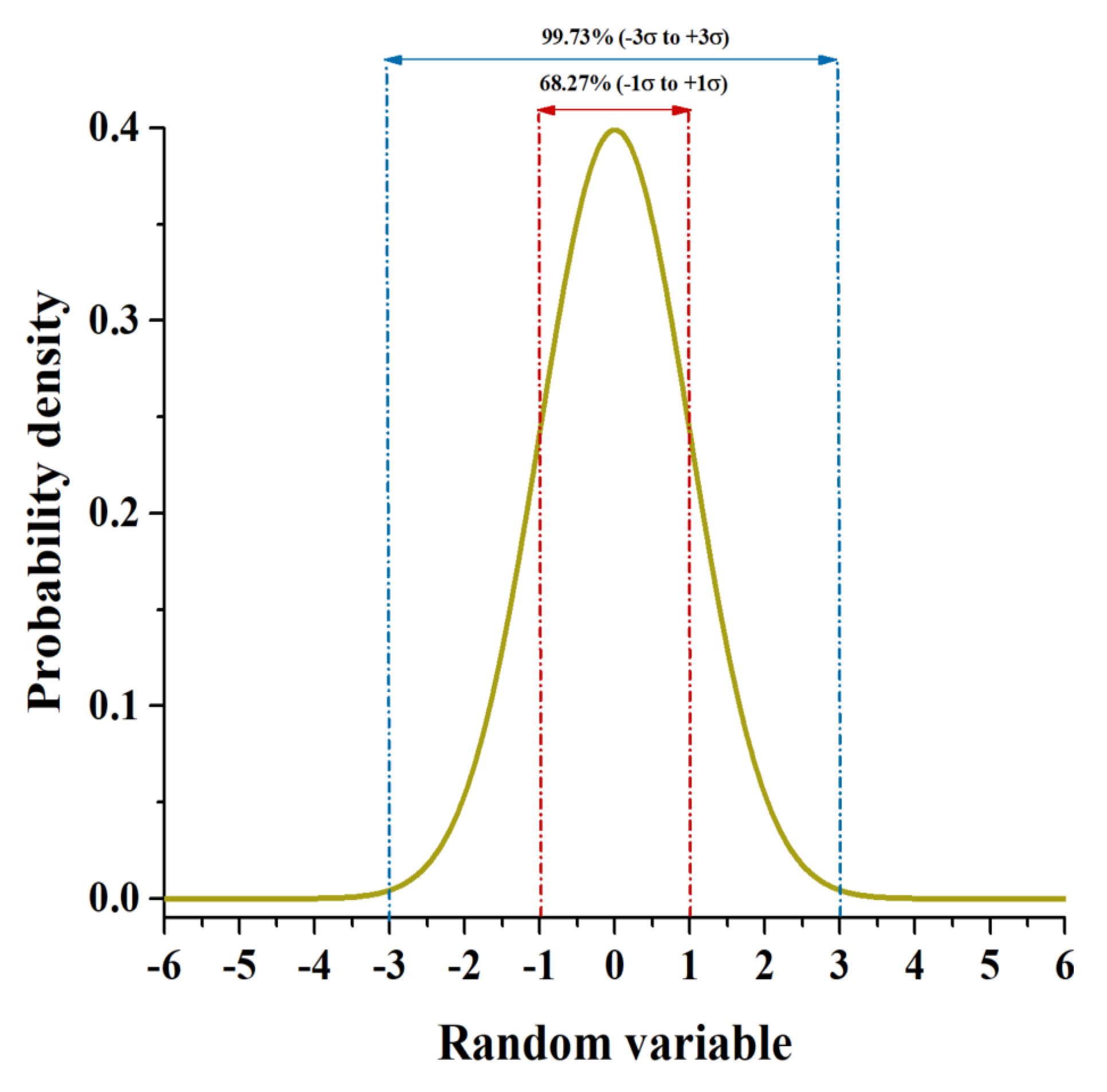
- Analyze: Statistical analysis is conducted to quantify the impact of variations in design variables. The process employs Six Sigma analysis to compute the process capability indices () and ensure that performance remains within acceptable limits under uncertainties [5]:where USL and LSL denote the upper and lower specification limits, is the mean value, and is the standard deviation.
- Design: A robust optimization process integrates the RSM to approximate performance metrics efficiently under varying conditions. The objective function incorporates uncertainties using Taguchi’s Loss Function [36]:where y is the observed performance, T is the target value, and k is a proportionality constant.
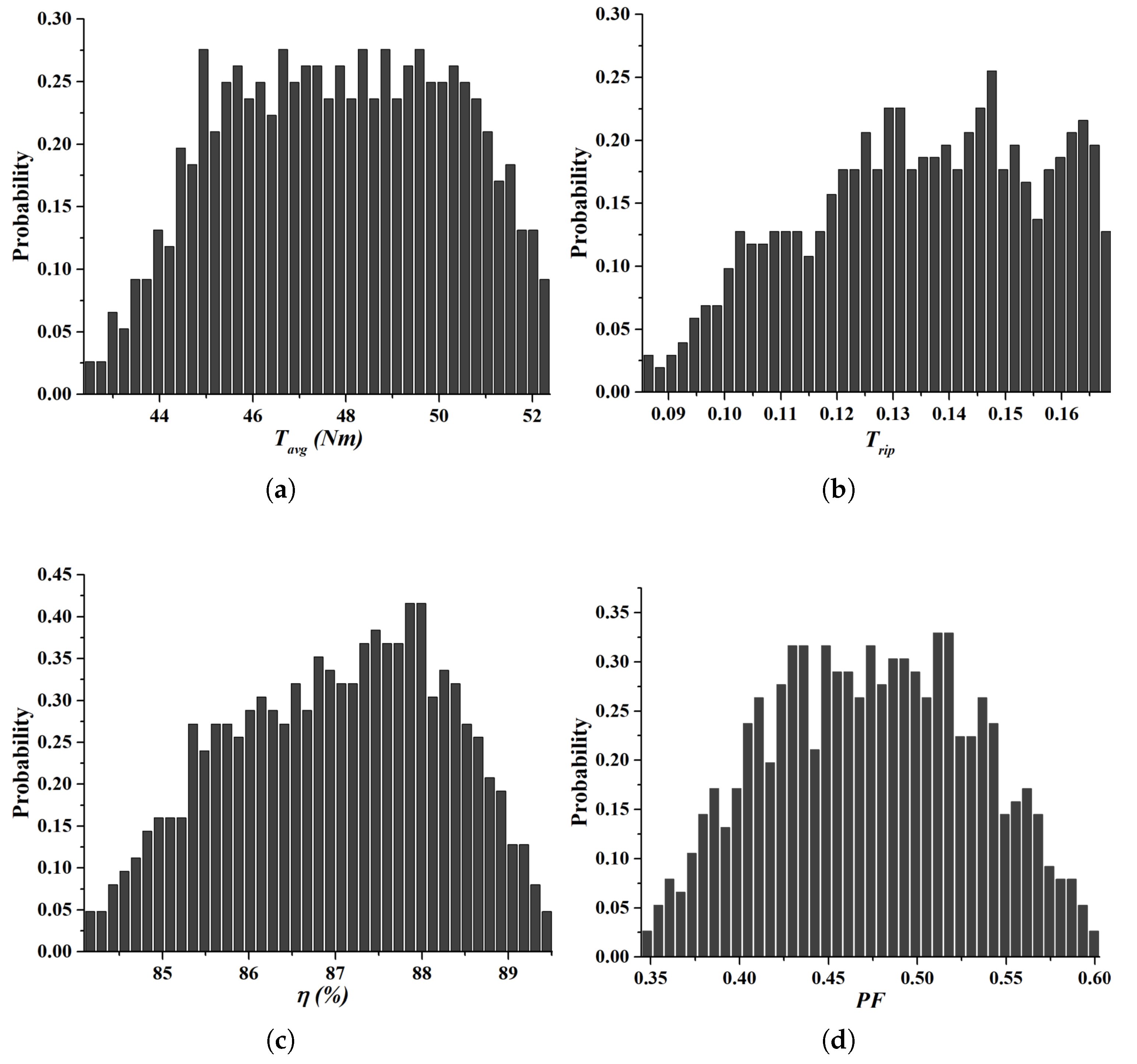
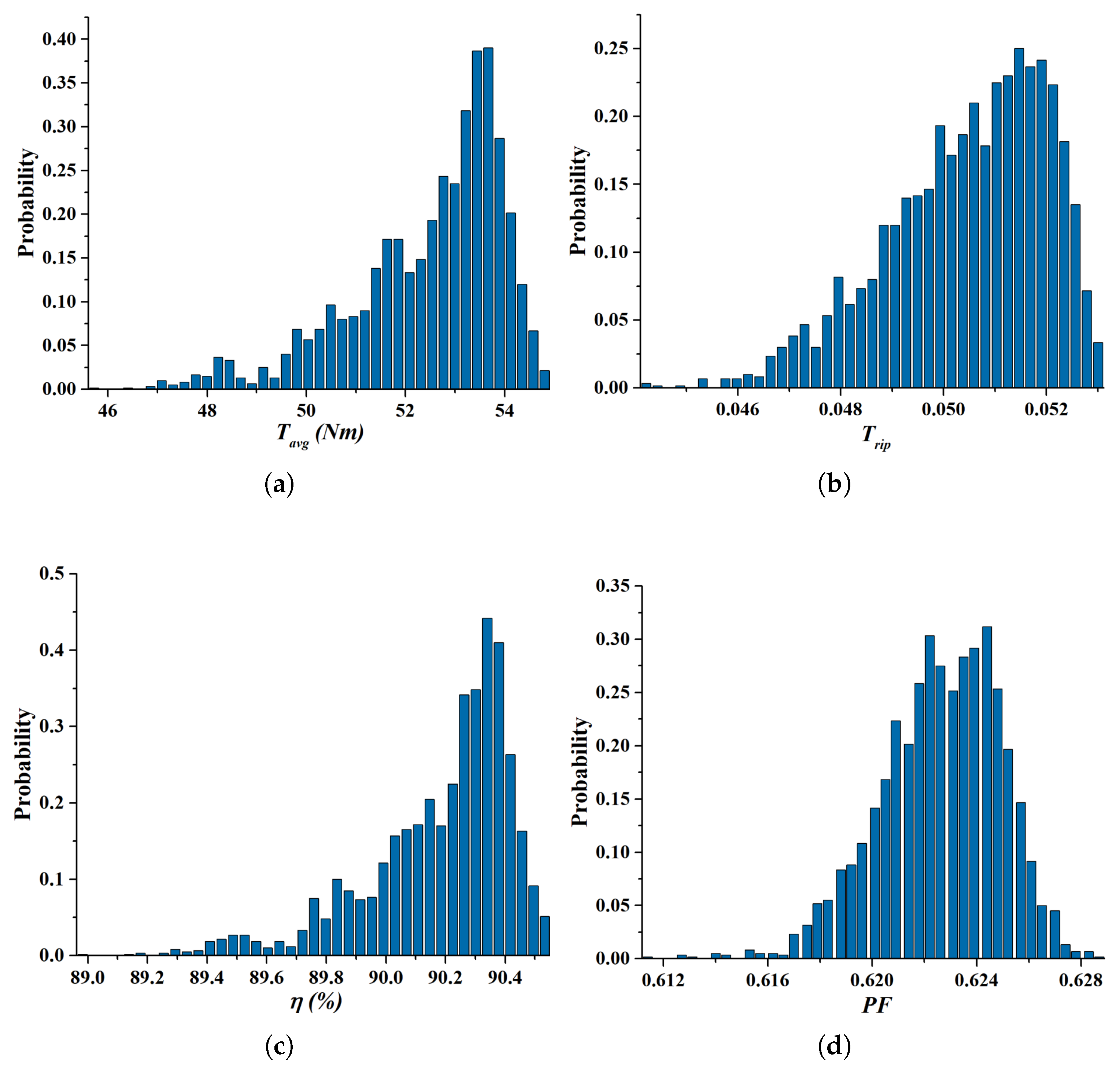
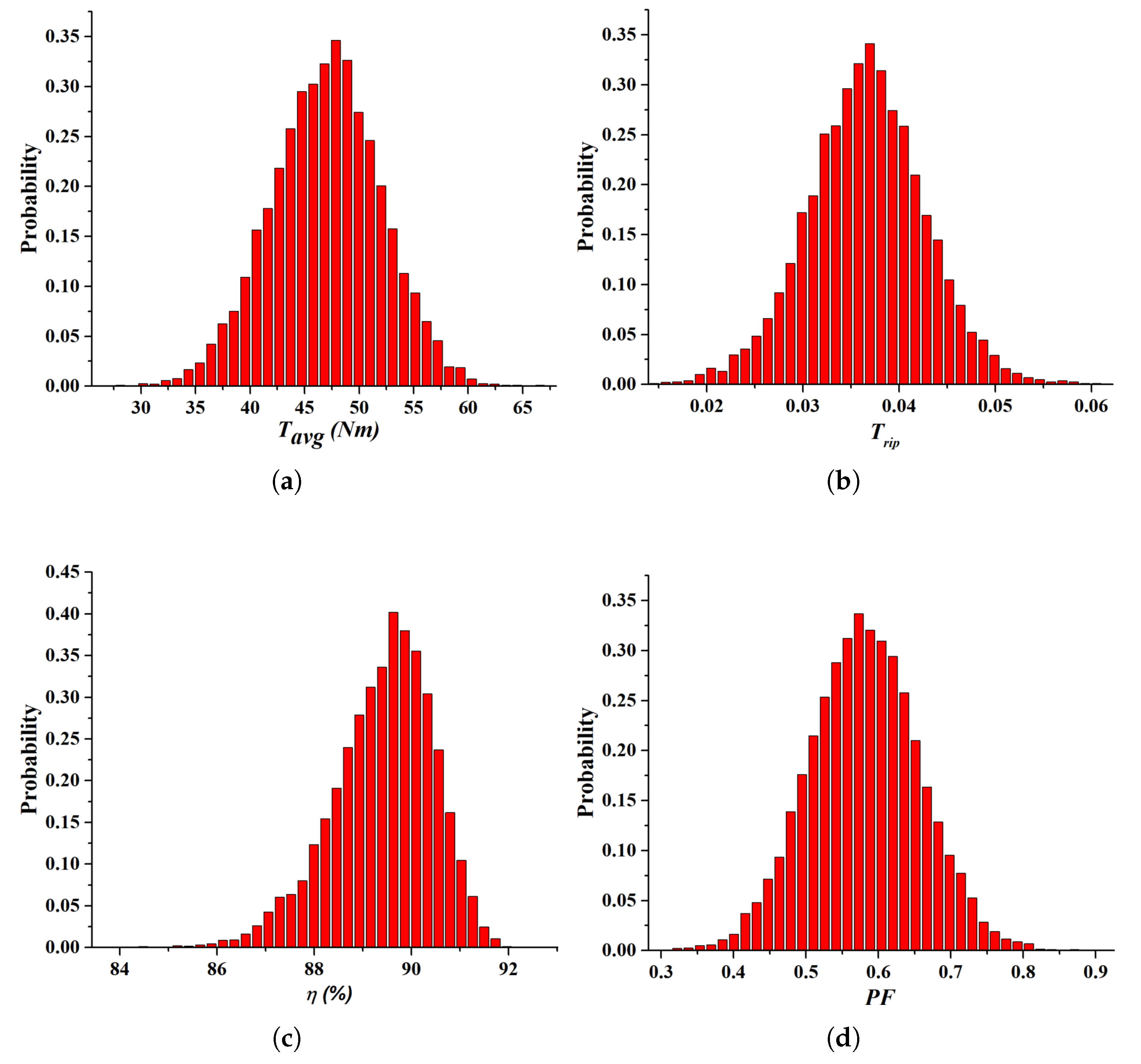
- Verify: The optimized design is validated through Monte Carlo simulations, ensuring robustness against uncertainties. The system’s performance under varying operating conditions is compared against Six Sigma thresholds to confirm its reliability.
3.2. Application of DFSS in Robust Design Optimization
- : Mean value of the objective function considering uncertainties in design variables.
- : Design variables selected based on sensitivity analysis.
- : Standard deviation of each design variable, capturing variability due to manufacturing and operational uncertainties.
- SOC: State of operation/control, ensuring constraints are within acceptable thresholds.
- USL: Upper specification limit for the objective function.
4. Results and Discussion
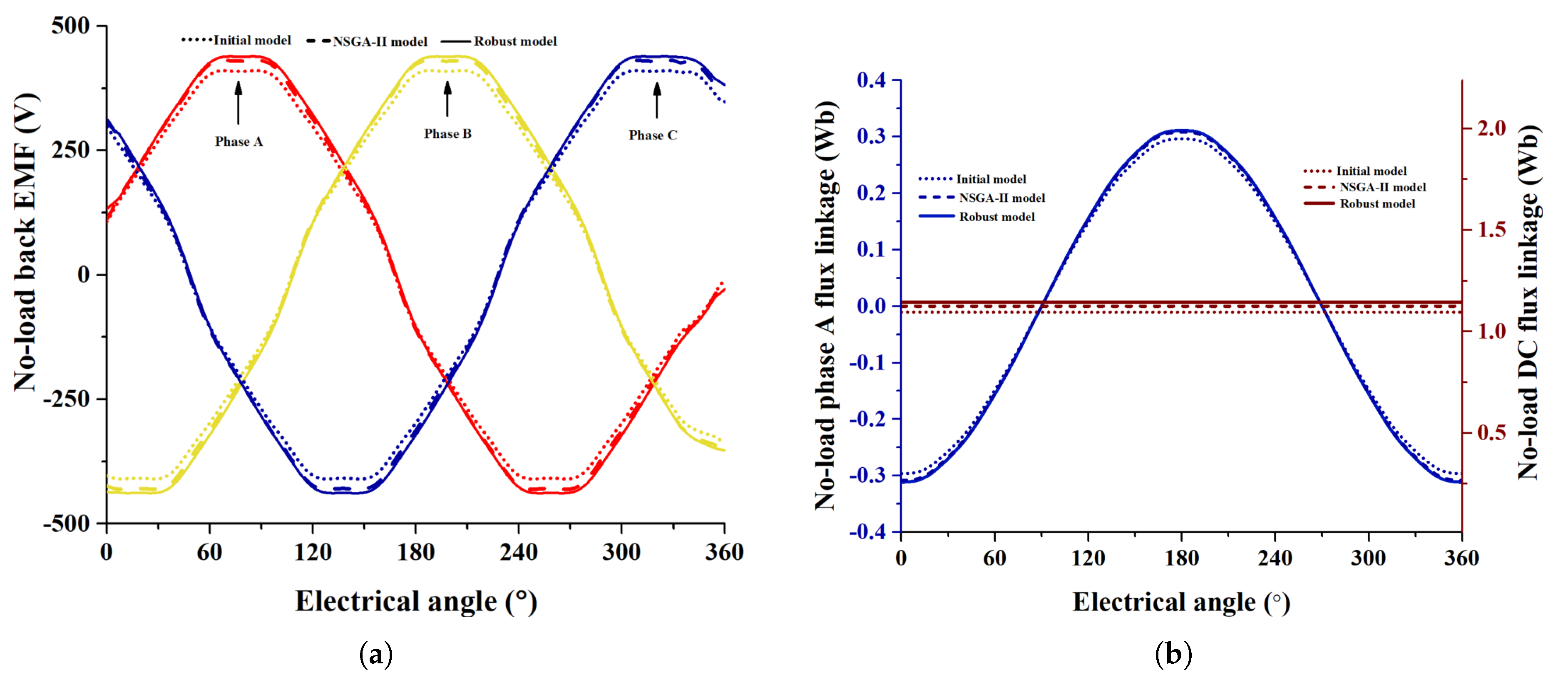
- improves by 1.50%, ensuring better flux density stability, compared to the NSGA-II model.
- and exhibit smaller deviations (0.45 and 0.38, respectively), contributing to a balanced magnetic flux distribution and torque ripple suppression.
- improves by 0.94%, enhancing mechanical stability while reducing variability.
- achieves a 1.94% improvement, which positively influences electrical performance.
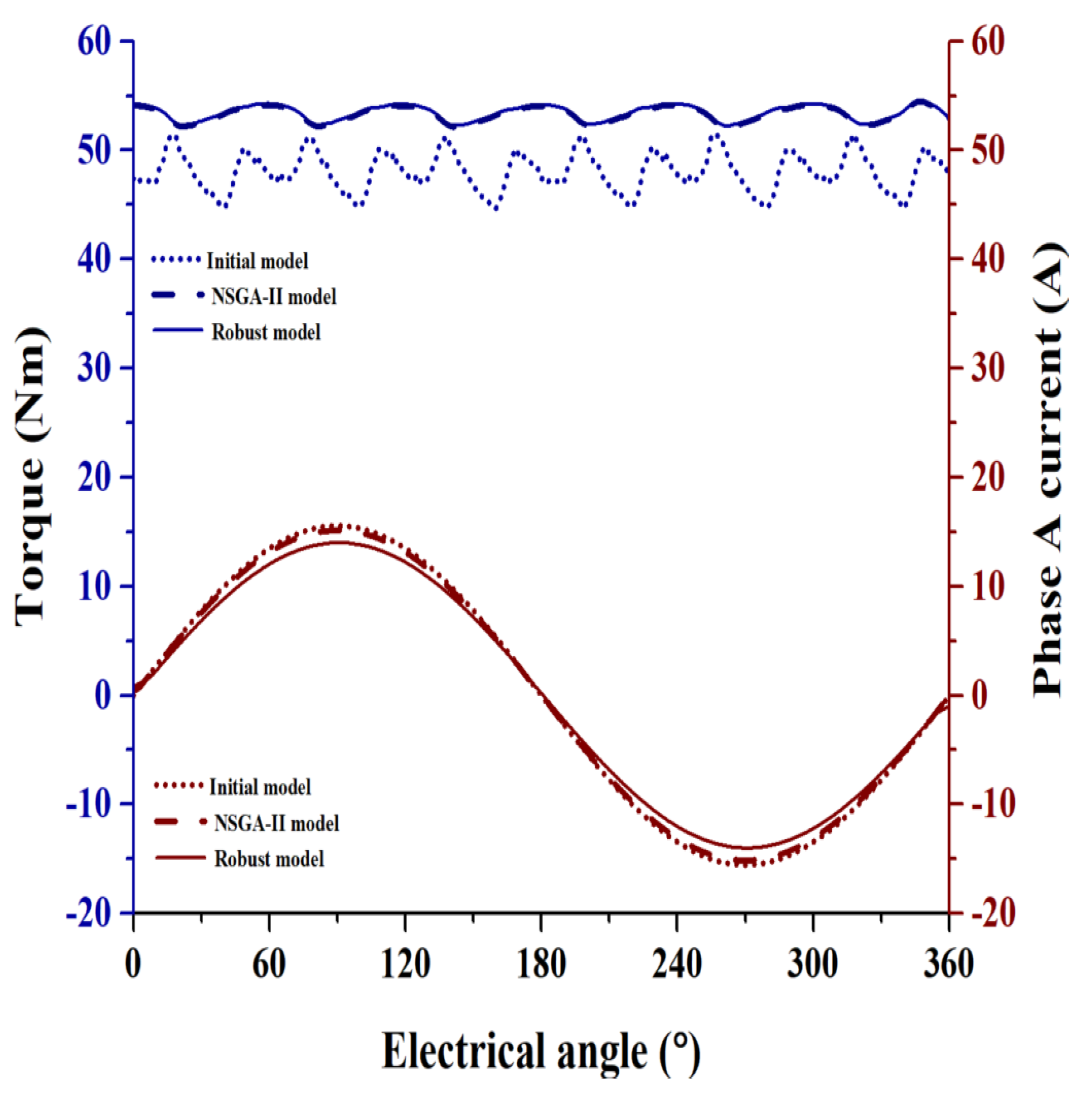
- is reduced by 7.69%, highlighting the robust model’s ability to suppress undesired ripples compared to the NSGA-II model.
- shows a notable 0.80% increase, ensuring more consistent torque output.
- improves by 0.78%, validating energy utilization enhancements under real-world disturbances.
- sees a significant boost of 3.33%, ensuring better power quality.
5. Conclusion and Future Work
Author Contributions
Funding
Data Availability Statement
Acknowledgments
Conflicts of Interest
References
- Liu, C.; Chau, K.T.; Lee, C.H.T.; Song, Z. A critical review of advanced electric machines and control strategies for electric vehicles. Proc. IEEE 2020, 109, 1004–1028. [Google Scholar] [CrossRef]
- Akuru, U.B.; Kamper, M.J. Formulation and multiobjective design optimization of wound-field flux switching machines for wind energy drives. IEEE Trans. Ind. Electron. 2017, 65, 1828–1836. [Google Scholar] [CrossRef]
- Mugyema, M.; Kamper, M.J.; Wang, R.J. Design optimization of a linear wound field flux switching machine for dry gravity energy storage. In Proceedings of the 2023 14th International Symposium on Linear Drives for Industry Applications (LDIA), IEEE; 2023; pp. 1–5. [Google Scholar] [CrossRef]
- Abunike, C.E.; Akuru, U.B.; Okoro, O.I.; Awah, C.C. Sizing, modeling, and performance comparison of squirrel-cage induction and wound-field flux switching motors. Mathematics 2023, 11, 3596. [Google Scholar] [CrossRef]
- Abunike, C.E.; Okoro, O.I.; Jamshidi, A.F.; Aphale, S.S. Advancements in flux switching machine optimization: Applications and future prospects. IEEE Access 2023. [Google Scholar] [CrossRef]
- Sakamoto, Y.; Xu, Y.; Wang, B.; Yamamoto, T.; Nishimura, Y. Multi-objective motor design optimization with physics-assisted neural network model. In Proceedings of the 2023 IEEE International Electric Machines & Drives Conference (IEMDC), IEEE, 2023; pp. 1–7. [Google Scholar] [CrossRef]
- Wang, S.C.; Nien, Y.C.; Huang, S.M. Multi-objective optimization design and analysis of V-shape permanent magnet synchronous motor. Energies 2022, 15, 3496. [Google Scholar] [CrossRef]
- Hisam, M.W.; Dar, A.A.; Elrasheed, M.O.; Khan, M.S.; Gera, R.; Azad, I. The versatility of the Taguchi method: Optimizing experiments across diverse disciplines. J. Stat. Theory Appl. 2024, Springer, 1–25. [Google Scholar] [CrossRef]
- Yu, Y.; Pan, Y.; Chen, Q.; Hu, Y.; Gao, J.; Zhao, Z.; Niu, S.; Zhou, S. Multi-objective optimization strategy for permanent magnet synchronous motor based on combined surrogate model and optimization algorithm. Energies 2023, 16, 1630. [Google Scholar] [CrossRef]
- Qu, S.; Liu, F.; Cao, Z. An adaptive surrogate-assisted particle swarm optimization algorithm combining effectively global and local surrogate models and its application. Appl. Sci. 2024, 14, 7853. [Google Scholar] [CrossRef]
- Li, C.; Huang, M.; Li, W.; Wang, N.; Fu, J. Optimization of an induction motor for loss reduction considering manufacturing tolerances. Struct. Multidiscip. Optim. 2022, 65, 187. [Google Scholar] [CrossRef]
- Diao, K.; Sun, X.; Yao, M. Robust-oriented optimization of switched reluctance motors considering manufacturing fluctuation. IEEE Trans. Transp. Electr. 2021, 8, 2853–2861. [Google Scholar] [CrossRef]
- Yu, C.-M.; Huang, T.-H.; Chen, K.-S.; Huang, T.-Y. Construct Six Sigma DMAIC improvement model for manufacturing process quality of multi-characteristic products. Mathematics 2022, 10, 814. [Google Scholar] [CrossRef]
- Popsi, N.R.S.; Anik, A.; Verma, R.; Viana, C.; Iyer, K.L.V.; Kar, N.C. Influence of Electric Motor Manufacturing Tolerances on End-of-Line Testing: A Review. Energies 2024, 17, 1913. [Google Scholar] [CrossRef]
- Lei, G.; Bramerdorfer, G.; Liu, C.; Guo, Y.; Zhu, J. Robust design optimization of electrical machines: A comparative study and space reduction strategy. IEEE Trans. Energy Convers. 2020, 36, 300–313. [Google Scholar] [CrossRef]
- Lei, G.; Bramerdorfer, G.; Ma, B.; Guo, Y.; Zhu, J. Robust design optimization of electrical machines: Multi-objective approach. IEEE Trans. Energy Convers. 2020, 36, 390–401. [Google Scholar] [CrossRef]
- Rafiee, V.; Faiz, J. Robust design of an outer rotor permanent magnet motor through six-sigma methodology using response surface surrogate model. IEEE Trans. Magn. 2019, 55, 1–10. [Google Scholar] [CrossRef]
- Lei, G.; Zhu, J.; Guo, Y.; Liu, C.; Ma, B. A review of design optimization methods for electrical machines. Energies 2017, 10, 1962. [Google Scholar] [CrossRef]
- Kolb, J.; Hameyer, K. Sensitivity analysis of manufacturing tolerances in permanent magnet synchronous machines with stator segmentation. IEEE Trans. Energy Convers. 2020, 35, 2210–2221. [Google Scholar] [CrossRef]
- Galfarsoro, U.; McCloskey, A.; Zarate, S.; Hernández, X.; Almandoz, G. Influence of manufacturing tolerances and eccentricities on the unbalanced magnetic pull in permanent magnet synchronous motors. IEEE Trans. Ind. Appl. 2022, 58, 3497–3510. [Google Scholar] [CrossRef]
- Zhao, Y.; Zhang, X.; Li, D.; Lin, S.; Zhao, X. Robust-oriented optimization design of dual three-phase slotted permanent magnet hybrid excitation generator considering manufacturing tolerances. IEEE Trans. Transp. Electr. 2024. [Google Scholar] [CrossRef]
- Jin, Z.; Sun, X.; Cai, Y.; Tian, X. Robust collaborative optimization design of plug-in hybrid electric bus based on 6 Sigma theory. IEEE Trans. Transp. Electr. 2024. [Google Scholar] [CrossRef]
- Lei, G.; Guo, Y.G.; Zhu, J.G.; Xu, W. Six-sigma robust topology and shape optimization for flux switching permanent magnet machines. In Proceedings of the 2015 IEEE International Conference on Applied Superconductivity and Electromagnetic Devices (ASEMD), IEEE; 2015; pp. 122–123. [Google Scholar] [CrossRef]
- Meng, X.; Wang, S.; Qiu, J.; Zhang, Q.; Zhu, J.G.; Guo, Y.; Liu, D. Robust multilevel optimization of PMSM using design for six sigma. IEEE Trans. Magn. 2011, 47, 3248–3251. [Google Scholar] [CrossRef]
- Chi, Y.; Shi, G.; Guo, H.; Yang, N.; Zhu, C.; Cui, M. Design and Performance Investigation of a Vehicle Drive System with a 12/10 Flux-Switching Permanent Magnet Motor. Machines 2022, 10, 1216. [Google Scholar] [CrossRef]
- Escobar, A.; Sánchez, G.; Jara, W.; Madariaga, C.; Tapia, J.A.; Riedemann, J.; Reyes, E. Impact of Manufacturing Tolerances on Axial Flux Permanent Magnet Machines with Ironless Rotor Core: A Statistical Approach. Machines 2023, 11, 535. [Google Scholar] [CrossRef]
- Lei, G.; Wang, T.; Zhu, J.; Guo, Y.; Wang, S. System-level design optimization method for electrical drive systems—Robust approach. IEEE Transactions on Industrial Electronics 2015, 62, 4702–4713. [Google Scholar] [CrossRef]
- Smith, E. D.; Szidarovszky, F.; Karnavas, W. J.; and Bahill, A. T. Sensitivity analysis, a powerful system validation technique. The Open Cybernetics & Systemics Journal 2008, 2, 39–56. [Google Scholar] [CrossRef]
- Lei, G.; Zhu, J.; and Guo, Y. Multidisciplinary Design Optimization Methods for Electrical Machines and Drive Systems 2016, 691, 1–251. [CrossRef]
- Tariq, S.; Khan, F.; Ullah, B.; Muhammad, N.; Alghamdi, B. Novel Partitioned Stator Flux-Switching Permanent Magnet Linear Machine: Design, Analysis, and Optimization. Machines 2023, 11, 390. [Google Scholar] [CrossRef]
- Zhang, X. Comparison of response surface method and Kriging method for approximation modeling. 2017 2nd International Conference on Power and Renewable Energy (ICPRE), Chengdu, China, 2017, 66–70. [CrossRef]
- Hasanien, H. M.; Abd-Rabou, A. S.; and Sakr, S. M. Design optimization of transverse flux linear motor for weight reduction and performance improvement using response surface methodology and genetic algorithms. IEEE Transactions on Energy Conversion, 2010, 25, 598–605. [Google Scholar] [CrossRef]
- Mabhula, M.; Akuru, U. B.; and Kamper, M. J. Cross-coupling inductance parameter estimation for more accurate performance evaluation of wound-field flux modulation machines. Electronics, 2020, 9, 1–15. [Google Scholar] [CrossRef]
- Zhang, W.; Hua, W.; Wu, Z.; Zhao, G.; Wang, Y.; and Xia, W. Analysis of DC winding induced voltage in wound-field flux-switching machine with air-gap field modulation principle. IEEE Transactions on Industrial Electronics, 2021, 69, 2300–2311. [Google Scholar] [CrossRef]
- Zhang, W.; Wu, Z.; Hua, W.; Zhu, Z. Q.; Wu, Z.; Hu, J.; Fan, Y.; and Cheng, M. Reduction of open-circuit DC winding induced voltage and torque pulsation in the wound field switched flux machine by stator axial pairing of tooth tip. IEEE Transactions on Industry Applications, 2022, 58, 1976–1990. [Google Scholar] [CrossRef]
- Li, Y.; Jia, H.; Zhang, A.; Xiao, B.; Zhu, Y.; and Wei, T. Robust multi-objective transverse flux machine drive optimization considering torque ripple and manufacturing uncertainties. Journal of Power Electronics, 2023, 23, 935–944. [Google Scholar] [CrossRef]

| Description | Parameter | Values | Unit |
|---|---|---|---|
| Rated speed | 1500 | rpm | |
| Number of stator slots | 24 | - | |
| Airgap length | g | 0.5 | mm |
| Aspect ratio | k | 0.7 | - |
| Area of field coils | 15 | mm2 | |
| Split ratio | - | 0.6 | - |
| Number of rotor slots | 10 | - | |
| Rotor outer diameter | 152 | mm | |
| Stator inner diameter | 152 | mm | |
| Stator outer diameter | 254 | mm | |
| Stack length | 107 | mm | |
| Stator tooth arc factor | 0.25 | - | |
| Slot filling factor | 0.45 | - |
| Design Variable | Unit | Initialization | Range Min | Range Max |
|---|---|---|---|---|
| g | mm | 0.50 | 0.450 | 0.550 |
| mm | 254.00 | 228.6 | 279.4 | |
| mm | 152.00 | 136.8 | 167.2 | |
| mm | 107.00 | 96.3 | 117.7 | |
| mm | 19.98 | 19.082 | 20.878 | |
| mm | 19.98 | 19.082 | 20.878 | |
| mm | 12.14 | 10.926 | 13.354 | |
| mm | 12.14 | 10.926 | 13.354 | |
| mm | 54.80 | 49.5 | 60.1 | |
| mm | 19.90 | 17.91 | 21.89 | |
| mm | 47.44 | 42.696 | 52.184 | |
| mm | 151.50 | 136.35 | 166.65 |
| Parameters | ||||
|---|---|---|---|---|
| g (mm) | -4.95 | -11.22 | -1.33 | -4.56 |
| (mm) | -4.29 | -14.02 | -2.95 | -6.23 |
| (mm) | -2.20 | -0.40 | -0.10 | -0.10 |
| (mm) | 17.74 | 0.88 | 0.90 | 14.00 |
| (mm) | 0.24 | 0.39 | 0.29 | 0.22 |
| (mm) | 10.00 | -20.00 | -25.00 | 15.00 |
| (mm) | 0.47 | 0.29 | -0.62 | 0.50 |
| (mm) | 14.41 | 18.10 | 15.01 | 15.27 |
| (mm) | -3.25 | -1.98 | 0.19 | 0.27 |
| (mm) | 20.00 | -15.00 | -10.00 | 10.00 |
| (mm) | -5.00 | -30.00 | -5.00 | 5.00 |
| (mm) | 50.00 | -5.00 | 40.00 | 30.00 |
| (A) | 25.00 | -10.00 | -15.00 | 20.00 |
| Sigma Level | Percentage (%) | Defects/Million (Short Term) | Defects/Million (Long Term) |
|---|---|---|---|
| 1 | 68.26 | 317,400 | 697,700 |
| 2 | 95.46 | 45,400 | 308,733 |
| 3 | 99.73 | 2,700 | 66,800 |
| 4 | 99.9937 | 63 | 6,210 |
| 5 | 99.999943 | 0.57 | 233 |
| 6 | 99.9999998 | 0.002 | 3.4 |
| Symbol | Nominal Value | |
|---|---|---|
| (mm) | 20.0 | 0.5 |
| (mm) | 21.0 | 0.5 |
| (mm) | 19.5 | 0.4 |
| (mm) | 160.0 | 1.0 |
| (A) | 10.5 | 0.5 |
| Parameter | Indicator | Robust Model | NSGA-II Model | % Change |
|---|---|---|---|---|
| 20.3 | 20.0 | 1.50% | ||
| 0.48 | 0.55 | |||
| 21.2 | 21.0 | 0.95% | ||
| 0.45 | 0.50 | |||
| 19.6 | 19.5 | 0.51% | ||
| 0.38 | 0.44 | |||
| 161.5 | 160.0 | 0.94% | ||
| 0.92 | 1.10 | |||
| 10.5 | 10.3 | 1.94% | ||
| 0.12 | 0.15 | |||
| 0.048 | 0.052 | -7.69% | ||
| 0.005 | 0.009 | |||
| 50.2 | 49.8 | 0.80% | ||
| 0.18 | 0.25 | |||
| 90.5 | 89.8 | 0.78% | ||
| 0.10 | 0.15 | |||
| 0.62 | 0.60 | 3.33% | ||
| 0.008 | 0.012 |
Disclaimer/Publisher’s Note: The statements, opinions and data contained in all publications are solely those of the individual author(s) and contributor(s) and not of MDPI and/or the editor(s). MDPI and/or the editor(s) disclaim responsibility for any injury to people or property resulting from any ideas, methods, instructions or products referred to in the content. |
© 2024 by the authors. Licensee MDPI, Basel, Switzerland. This article is an open access article distributed under the terms and conditions of the Creative Commons Attribution (CC BY) license (http://creativecommons.org/licenses/by/4.0/).


