

Submitted:
18 December 2024
Posted:
18 December 2024
You are already at the latest version
Abstract
The utilization of nuclear technology is rapidly developing worldwide. Using nuclear reactors, non-power nuclear, and phallicity supporters, such as laboratory production and radioactive research substances, will pose risks, such as environmental risks and risks to worker radiation. Changes in the radioactive environment can occur because the contaminated substances are radioactive. Good in a way, direct or direct. Decontamination is required to lower or remove radioactive substances in an area, surface, or object. Research: This was done to manufacture gels for decontaminating radioactive substances on the surfaces of glass, ceramics, and metal plates. The gel comprised polyvinyl alcohol (PVA), glycerin, and ethylenediaminetetraacetic acid (EDTA) in a weight ratio per volume. Polymer synthesis was tested to evaluate the effectiveness of surface decontamination of radioactive cobalt-60. The synthesis results showed that the polymer gel composition with the best gel film results was a solution with 15% w/v PVA and 2% w/v EDTA. The efficiency of the gel on glass was 98%, and that on the ceramic and metal plates was 95%. An amount of less than 15 % causes the gel to harden and dry up into a movie, and with more than 15 %, the formation of a rigid polymer occurs. The addition of EDTA helps metal ion binding so that the level of contamination can be reduced.
Keywords:
PVA
; decontamination gel
; Co-60
; decontamination efficiency
1. Introduction
The decommissioning of nuclear facilities has the potential for contamination, especially in areas that use open radioactive sources. If contamination occurs, radionuclide decontamination must be performed. Physical and chemical methods can move radionuclides on surfaces through physical processes such as cutting or chopping. Chemical methods can use ionic solutions, coatings, or foams [1].
The waste generated must be considered during decommissioning and dismantling activities. It is crucial to manage radioactive, contaminated, and neutron-activated wastes. It is also essential to characterize the waste to determine the appropriate radiation protection system and processing according to the type of waste. Waste is divided into three levels: low, medium, and high. Waste characterization can also estimate the costs required for waste-handling processes [2,3]. The choice of decommissioning method also determines the type of decontamination to be chosen to reduce surface contamination in the dismantling process. The method or type of decontamination affects the overall cost of decommissioning. Decontamination costs not only consist of materials and consumables but also consider other costs such as labor costs and waste processing costs from decontamination [4,5].
For decontamination, the surface was sprayed with a mixture of acidic foam. Each layer was covered with polyvinyl acetate to reduce cross-contamination. The decontamination and covering of contaminated objects can reduce the level of radioactive waste from three to four [6]. During the decommissioning process of the KKR 1 and 2 reactors, Korea decontaminated before the destruction and dismantling of the buildings. Before and after demolition, a recheck was carried out to determine whether radionuclides remained. Suppose that the radionuclide identification results still show contamination. In this case, decontamination is conducted until the area or location reaches the permitted limits of applicable national and international laws [7].
The dismantling process requires appropriate planning owing to the potential for internal contamination, external contamination, and high radiation exposure. Before dismantling and characterizing the possibility of contaminant radionuclides or activation results, the cutting method must be determined, and the position or cutting location must be simulated to comply with the radiation protection program. There are several methods for decontamination, such as chemical decontamination, including chemical solutions, foam, gels, and multiphase treatments; mechanical decontamination, including flushing with water, vacuuming, wiping, scrubbing, blasting, steam cleaning, high- and ultrahigh-pressure water jetting, grinding, milling, and sprouting; emerging technologies, including light ablation, microwave scabbling, thermal degradation, and electromigration; and other techniques, such as electropolishing, ultrasonic cleaning, and melting [8,9].
Based on Korea’s experience of decommissioning the Kori Unit 1 research reactor, there are two scenarios for dismantling. The hot-to-cold method (conducted before abrasive decontamination) (estimated effective dose of 48.5 of 5600 mSv) and the cold-to-hot method (estimated effective dose of 135–15,376 mSv) are the scenarios. The concrete waste generated from dismantling Kori Unit 1 is estimated to be approximately 2095–9070 drums with a capacity of 200 litres [10].
Based on experience in decommissioning research reactors, several radionuclides are contaminants in the research reactor area, including Co-60, Cs-134, Cs-127, Sr-90, U-238, I-129, I-131, Te-129, Ag-110, Th-232, Pu-238, Pu-239, Pu-240, Ir-129, Am241, Tc-97, Tc-98, Tc-99, Zr-93, Zr-95, Fe-55, Nb-94, and other radionuclides that are the result of fission reaction activation. In the IAEA Technical reports of radionuclides often found in reactor decommissioning include H-3, C-14, Na-22, Cl-36, Ar-39, Ca-41, Mn-54, Fe-55, Ni-59, Ni-63, Co-60, Zn-65, Mo-93, Zr-93, Nb-94, Ag-108m, Ag-110m, Sb-125, Ba-133, Cs-134, Eu-152, Eu-154, Eu-155, Ho-166m [11,12]. Decontamination is necessary before and after dismantling to remove contamination from the surface or area of the reactor facility. Several decontamination methods are available, including chemical, electrochemical, washing, and mechanical. The decontamination technique can be adjusted according to the contaminated place or media and type of radionuclide [11].
co-60 is a radionuclide found in former reactor areas and is also used for research on the use of radioactive materials in the industry. The TRIGA 2000 Bandung reactor in Indonesia is planned to be decommissioned. Decommissioning has the potential for contamination, one of which is contamination by Co-60 from activation of the reactor or research waste. With an age of more than 50 years, the TRIGA 2000 Bandung Reactor has previously experienced suspension of its operating permit because of the inappropriateness of the building structure, the potential for natural disasters due to earthquakes from the Lembang fault, and problems when the power was increased to 1000 kW. These indications show that the TRIGA 2000 Bandung Reactor facility has undergone an aging process. In 2017, the TRIGA 2000 Bandung Reactor regained its operating permit, valid until 2027, with a maximum power limitation of 1000 kW. Concerning this, the National Research and Innovation Agency (BRIN) plans to carry out the decommissioning process at the TRIGA 2000 Bandung Reactor [13]
One decontamination technique uses a peel-off gel to decontaminate the surface of a material. He et al. conducted a study using gel or film materials such as base polymers as the decontamination method, which provided good decontamination results [14]. PVA is often used to prepare gels in various research fields, including research on PVA-based gels for decontamination of radioactive substances [15,16,17]. EDTA is often used to reduce contamination or waste caused by metal ions, especially heavy metals, such as Cd, Pb, and Cs [18,19,20,21].
In this study, a PVA-EDTA gel was prepared to determine the effectiveness of the surface decontamination of co-60 radionuclides on plates or materials made of glass, metal, and ceramics. The experiment was conducted in a radioisotope laboratory, which is part of the TRIGA 2000 BRIN Bandung reactor.
2. Methodology
2.1. Tools and Materials
The tools used in the study included measuring cups, beakers, spatulas, hot plates, micropipettes, contamination monitors (Nuvia CoMo-170), glass, ceramic, metal media, mica tube molds (d = 3 cm; h = 0.5), zip plastic, tweezers, and glue guns. The materials used included Co-60 solution, polyvinyl alcohol (PVA), distilled water, Glycerol 98%, ethanol, and ethylene diamine tetraacetate (EDTA). The chemical structures of PVA and glycerol are shown in Figure 1.
2.2. Making PVA Gel
The PVA gel is made from a mixture of PVA, glycerin, distilled water, and ethanol. PVA with specific weights (5 g (PVA 5%), 10 g (PVA 10%), 15 g (15%), and 20 g (20%)) was dissolved in 50 ml of distilled water and then heated at 90 °C until the PVA dissolved. After PVA was dissolved, 9 ml of glycerol and 44 ml of absolute ethanol were added. All the ingredients were stirred until they were completely dissolved. If it has dissolved, a white colloid is formed. The gel was then stored for 24 h at room temperature (26–27 °C). The PVA-EDTA gel was prepared by adding EDTA with specific weights (1 g (1%), 2 g (2%), 3 g (3%), and 5 g (5%).
2.3. Contaminated Material Creation
Glass, ceramic, and steel plate media were installed in a mould made from plastic mica that measures 3 cm in diameter. In the middle section, print a drip of five microliters of Co-60 solution and then wait until dry. In that area, the level of contamination was monitored directly at a distance of 1 cm from the surface. PVA or PVA-EDTA gel was added until the cover was printed. Preparation for storage in a temperature room (25 – 27 o C for 24 h). Illustration processing can be seen in Figure 2.
2.4. Decontamination Effectiveness Calculation
After 24 h, the gel peeled off from the surface. Then, the gel and surface contamination are measured to return the level of contamination on the surface. The effectiveness of the decontamination was calculated using the following formula:
with:
K = effectiveness of decontamination in percent,
Ai = initial media activity in cps units,
Af = media activity after the peeling gel was removed in cps units.
3. Results and Discussion
The test begins by making a decontamination gel solution with varying PVA concentrations to determine the best gel composition to form a perfect and possibly peeled-off gel. Observation data for PVA decontamination gel formation can be obtained, as shown in Table 1.
From the data in Table 1, it can be concluded that the gel can ideally form, dry, and can be peeled off with a PVA composition above 15% w/v. Mixing PVA and glycerol formed PVA-Glycerol crosslinks. Increasing the PVA content can increase the possibility of cross-linking [24]. Therefore, a gel solution with a PVA concentration of 15% (w/v) was used for the next experiment. The PVA-glycerol crosslinks are shown in Figure 3.
When PVA is dissolved in the aqueous solution and mixed with glycerol, the chemical structure of PVA experiences changes, especially in the hydrogen bonds that dominate the PVA structure. Figure 3 shows random changes in the physical polymer chain due to the reaction of PVA and glycerol, causing crystalline dominance. The polymer can be explained by the presence of amorphous structures, which indicate that the polymer chains have begun to develop [25]. An appropriate composition of PVA and glycerol forms a perfect PVA-glycerol bond.
A 15% w/v PVA gel solution was prepared for the decontamination test, using EDTA as the chelating agent. The percentage of EDTA added is shown in Table 2.
The EDTA added to the solution reacts chemically through a crosslinking process, as shown in Figure 4.
The addition of EDTA as a chelating agent was expected to absorb more Cobalt-60 to increase the effectiveness of decontamination. Figure 4 shows that the EDTA added to the solution forms a covalent bond with PVA owing to the interaction of radical elements between the two [26]. Hydroxyl radicals transfer reactivity from water to polymer chains by integrating macroradicals with H atoms. This reaction resulted in the formation of crosslinks. The crosslinking reaction is expressed as follows:
PVA(H) +*OH →PVA* H 2 O
2PVA* →PVA-PVA (Cross-linked Network)
EDTA(H) + OH →EDTA* + H 2 O
PVA-PVA* + EDTA* →PVA-PVA-EDTA
EDTA may be the key to the Cobalt-60 decontamination mechanism found in this study. Research conducted by Mudsainiyan et al. states that EDTA is the most desirable ligand because of several conditions and a flexible connection mode. This ligand has four carboxylate groups with potentially ten coordination arms (eight O atoms and two N atoms) [27]
Figure 5 shows that Cobalt-60 will react with EDTA and form a complex to form [Co(EDTA)] −. The reaction between the cobalt metal ion compound and the EDTA ligand results from coordination between the EDTA ligand and the cobalt ion. Cobalt ions are bound in a coordinated manner by gaining electrons from the oxygen atom of the hydroxide group. Bound can occur because the oxygen atom contains a lone pair of electrons that can be donated to the Co ion [28].
Cobalt-60 Decontamination Effectiveness Testing
The PVA-EDTA synthetic solution was tested on test media in ceramic, glass, and metal plates dripped with 5 µL Cobalt-60. Count measurements were performed using a Nuvia brand Contamination Monitor tool with the CoMo 170 type. Tests for each medium in each solution were performed in triplicate. The data on the effectiveness of each solution and the contamination medium are presented in Table 3.
These results are presented in Table 3. This study achieved the highest decontamination using a 15% w/v PVA gel with 2% w/v EDTA, with an effectiveness value above 90 percent. The effectiveness of gel decontamination on metal media is high on smooth media such as Teflon or glass, which is consistent with the results of research conducted by Gurau and Deju (2015), who used the commercial decontamination gel DeconGel™ 1101, with the decontamination effectiveness value for cobalt-60 being above 90% [29]. Combining physical and chemical methods can achieve decontamination effectiveness values > 90% in all media [1].
The presence of EDTA, which can bind cobalt ions and adhere to the surface layer of the material, can increase the effectiveness of the decontamination. The EDTA levels can affect the ability of the gel to bind to cobalt ions. Low EDTA levels (<2%) resulted in no binding between EDTA and cobalt ions because the EDTA in the gel was already saturated with PVA and glycerin. Meanwhile, high EDTA levels (> 2%) cause saturation and EDTA cannot dissolve in PVA-glycerin. Dissolution can be seen from the white parts or EDTA powder, which does not dissolve when the gel dries.
The effectiveness of decontamination on glass is the highest, owing to its smooth surface. The smooth surface of the glass causes the attractive force between the glass and the cobalt ions to be smaller so that the cobalt solution does not enter the pores or gaps on the surface of the glass layer. The surfaces of the ceramics and metal plates have a rougher texture and tiny pores or gaps. Small pores or gaps can cause the Co solution to enter, making it difficult to interact with the decontamination gel. Therefore, further studies on surfaces with rough textures and pores are required to determine the appropriate gel concentration for a achieving a higher bonding capacity [30].
PVA gel has good porosity, so it can be used as an absorbent material for heavy metals. This is by research conducted by Wang (2016); Wang studied the use of composite hydrogels to remove or reduce heavy metal contamination [15].
4. Conclusions
The PVA composition can influence the characteristic physics of the desired gel. No gel will form in high amounts of polymer, whereas a small quantity of gel film will not dry perfectly. Adding more EDTA from 2% w/v can affect the gel because the formed EDTA white phase does not last in the decontamination gel. Previous studies have shown that this is the best decontamination gel efficiency for glass surfaces. The PVA-glycerin-EDTA polymer gel can be used for surface decontamination with an efficiency of 95 – 98%.
Acknowledgements
The writer says to accept love from the National Research and Innovation Agency, which provides the opportunity and permission to use the facility laboratory. We thank KST Samaun Laboratory Samadikun, Laboratory Yogyakarta Radiation, and Laboratory Radiation Serpong for service FTIR analysis, colleagues at DPFK KKB Tamansari BRIN, and Polytechnic Technology BRIN Nuclear. Our thanks also go to Mr. Drs. Dadang Supriatna, MT.
References
- Zhang H, Xi H, Lin X, Liang L, Li Z, Pan X, et al. Biodegradable antifreeze foam stabilized by lauryl alcohol for radioactive surface decontamination. J Radioanal Nucl Chem. 2022, 331, 3135–3145. [Google Scholar] [CrossRef]
- Hume S, West G, Dobie G. A framework for capturing and representing the process to classify nuclear waste and informing where processes can be automated. Progress in Nuclear Energy. 2024, 170, 105133. [Google Scholar] [CrossRef]
- Shi Y, Xiang Y, Su R, Hu B, Sun S, Liu Z. A method to obtain radioactivity of non-γ nuclides by 60Co based on Monte Carlo simulations. Nuclear Engineering and Technology. 2024.
- Hahm I, Kim D, Ryu H jin, Choi S. A multi-criteria decision-making process for selecting decontamination methods for radioactively contaminated metal components. Nuclear Engineering and Technology. 2023, 55, 52–62. [Google Scholar] [CrossRef]
- Buttram C, Ervin P, Lunberg L, Marske S. Research Reactor Decommissioning Planning—It is Never Too Early to Start. Sydney 2003.
- Kuznetsov AY, Azovskov ME, Belousov S V, Vereshchagin II, Efremov AE, Khlebnikov S V. Dismantling and decontamination of large-sized radiation-contaminated equipment during Research Building B decommissioning at the Bochvar Institute site*. Nuclear Energy and Technology. 2019, 5, 117–122. [CrossRef]
- Kim GH, Hwang D, Song JH, Im J, Lee J, Kang M, et al. Method for clearance of contaminated buildings in Korea research reactor 1 and 2. Nuclear Engineering and Technology. 2023, 55, 1959–1965. [Google Scholar] [CrossRef]
- International Atomic Energy Agency. Global Status of Decommissioning of Nuclear Instalation [Internet]. Vienna; 2023 Mar. Available online: www.iaea.org/publications (accessed on day month year).
- Gurau D, Deju R. Radioactive decontamination technique used in decommissioning of nuclear facilities [Internet]. Article in Romanian Journal of Physics. 2014. Available online: https://www.researchgate.net/publication/280920950 (accessed on day month year).
- Lee HY, Lee MH, Yang KT, An JY, Song JS. A Study on the Construction of Cutting Scenario for Kori Unit 1 Bio-shield considering ALARA. Nuclear Engineering and Technology. 2023, 55, 4181–4190. [Google Scholar] [CrossRef]
- Liu S, He Y, Xie H, Ge Y, Lin Y, Yao Z, et al. A State-of-the-Art Review of Radioactive Decontamination Technologies: Facing the Upcoming Wave of Decommissioning and Dismantling of Nuclear Facilities. Sustainability 2022, 14, 4021. [Google Scholar] [CrossRef]
- Cross MT, Green TH, Adsley I. Characterisation of radioactive materials in redundant nuclear facilities: key issues for the decommissioning plan. In: Nuclear Decommissioning. Elsevier; 2012. p. 87–116.
- Badan Pengawas Tenaga Nuklir. Keputusan Kepala Badan Pengawas Tenaga Nuklir No. 500/IO/Ka-BAPETEN/29-V/2017 tentang Perpanjangan Izin Operasi Reaktor Triga 2000 Bandung. BAPETEN. Jakarta: BAPETEN; 2017.
- He Z, Li Y, Xiao Z, Jiang H, Zhou Y, Luo D. Synthesis and preparation of (acrylic copolymer) ternary system peelable sealing decontamination material. Polymers (Basel). 2020, 12, 1–17. [Google Scholar]
- Wang LY, Wang MJ. Removal of Heavy Metal Ions by Poly(vinyl alcohol) and Carboxymethyl Cellulose Composite Hydrogels Prepared by a Freeze-Thaw Method. ACS Sustain Chem Eng. 2016, 4, 2830–2837. [Google Scholar] [CrossRef]
- Dolgormaa A, Lv C jiang, Li Y, Yang J, Yang J xing, Chen P, et al. Adsorption of Cu(II) and Zn(II) ions from aqueous solution by gel/PVA-modified super-paramagnetic iron oxide nanoparticles. Molecules. 2018, 23.
- Nagarkar R, Patel J. Acta Scientific Pharmaceutical Sciences (ISSN: 2581-5423) Polyvinyl Alcohol: A Comprehensive Study. 2019.
- Huang Y, Keller AA. EDTA functionalized magnetic nanoparticle sorbents for cadmium and lead contaminated water treatment. Water Res. 2015, 80, 159–168. [Google Scholar] [CrossRef]
- Zhao F, Repo E, Meng Y, Wang X, Yin D, Sillanpää M. An EDTA-β-cyclodextrin material for the adsorption of rare earth elements and its application in preconcentration of rare earth elements in seawater. J Colloid Interface Sci. 2016, 465, 215–224. [Google Scholar] [CrossRef]
- Zhang K, Dai Z, Zhang W, Gao Q, Dai Y, Xia F, et al. EDTA-based adsorbents for the removal of metal ions in wastewater. Vol. 434, Coordination Chemistry Reviews. Elsevier B.V.; 2021.
- Zhao F, Repo E, Yin D, Meng Y, Jafari S, Sillanpää M. EDTA-Cross-Linked β-Cyclodextrin: An Environmentally Friendly Bifunctional Adsorbent for Simultaneous Adsorption of Metals and Cationic Dyes. Environ Sci Technol. 2015, 49, 10570–10580. [Google Scholar] [CrossRef]
- Cai Y, Che J, Yuan M, Shi X, Chen W, Yuan WE. Effect of glycerol on sustained insulin release from PVA hydrogels and its application in diabetes therapy. Exp Ther Med. 2016, 12, 2039–2044. [Google Scholar] [CrossRef]
- Pulpea D, Rotariu T, Toader G, Pulpea GB, Neculae V, Teodorescu M. Decontamination of radioactive hazardous materials by using novel biodegradable strippable coatings and new generation complexing agents. Chemosphere. 2020, 258, 127227. [Google Scholar] [CrossRef]
- Hassan CM, Peppas NA. Structure and Morphology of Freeze/Thawed PVA Hydrogels. Macromolecules. 2000, 33, 2472–2479. [Google Scholar] [CrossRef]
- Mohsin M, Hossin A, Haik Y. Thermal and mechanical properties of poly(vinyl alcohol) plasticized with glycerol. J Appl Polym Sci. 2011, 122, 3102–3109. [Google Scholar] [CrossRef]
- Francis S, Varshney L. Studies on radiation synthesis of PVA/EDTA hydrogels. Radiation Physics and Chemistry. 2005, 74, 310–316. [Google Scholar] [CrossRef]
- Mudsainiyan RK, Chawla SK. Synthesis, Characterizations, Crystal Structure Determination of μ 6 Coordinated Complex of Co (III) with EDTA and Its Thermal Properties. Molecular Crystals and Liquid Crystals. 2015, 606, 237–245. [Google Scholar] [CrossRef]
- Douglas BE, Radanović DJ. Coordination chemistry of hexadentate EDTA-type ligands with M(III) ions. Coord Chem Rev. 1993, 128, 139–165. [Google Scholar] [CrossRef]
- Gurau D, Deju R. The use of chemical gel for decontamination during decommissioning of nuclear facilities. Radiation Physics and Chemistry. 2015, 106, 371–375. [Google Scholar] [CrossRef]
- Callister, W.D. Rethwisch DG. Materials science and engineering: an introduction. John Wiley; 2009. 721 p.
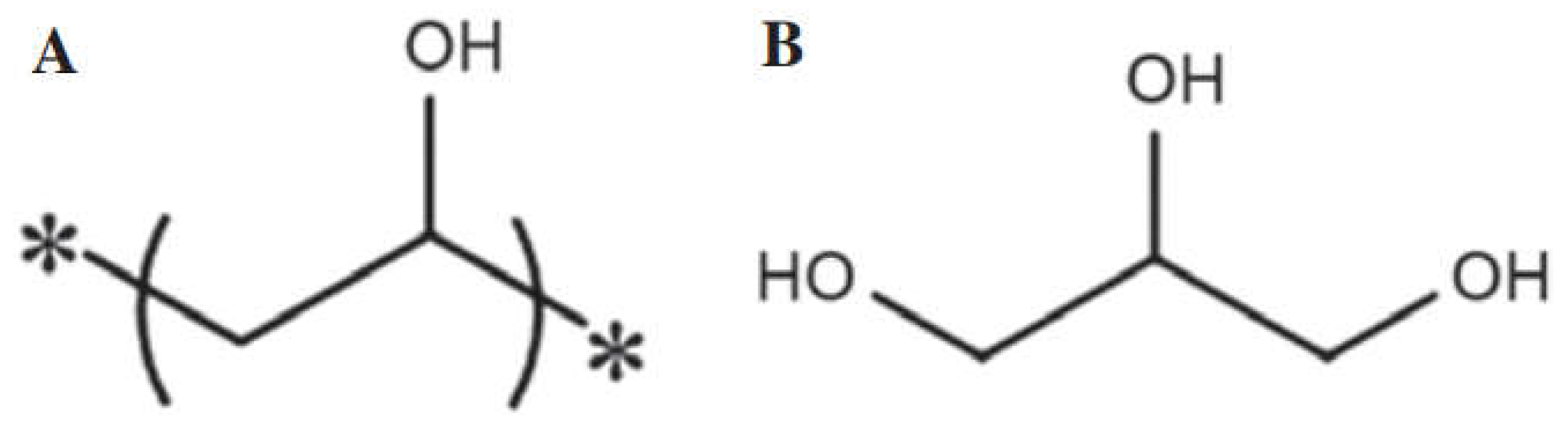
Figure 2.
Radiation decontamination procedure using PVA solution [23].
Figure 2.
Radiation decontamination procedure using PVA solution [23].
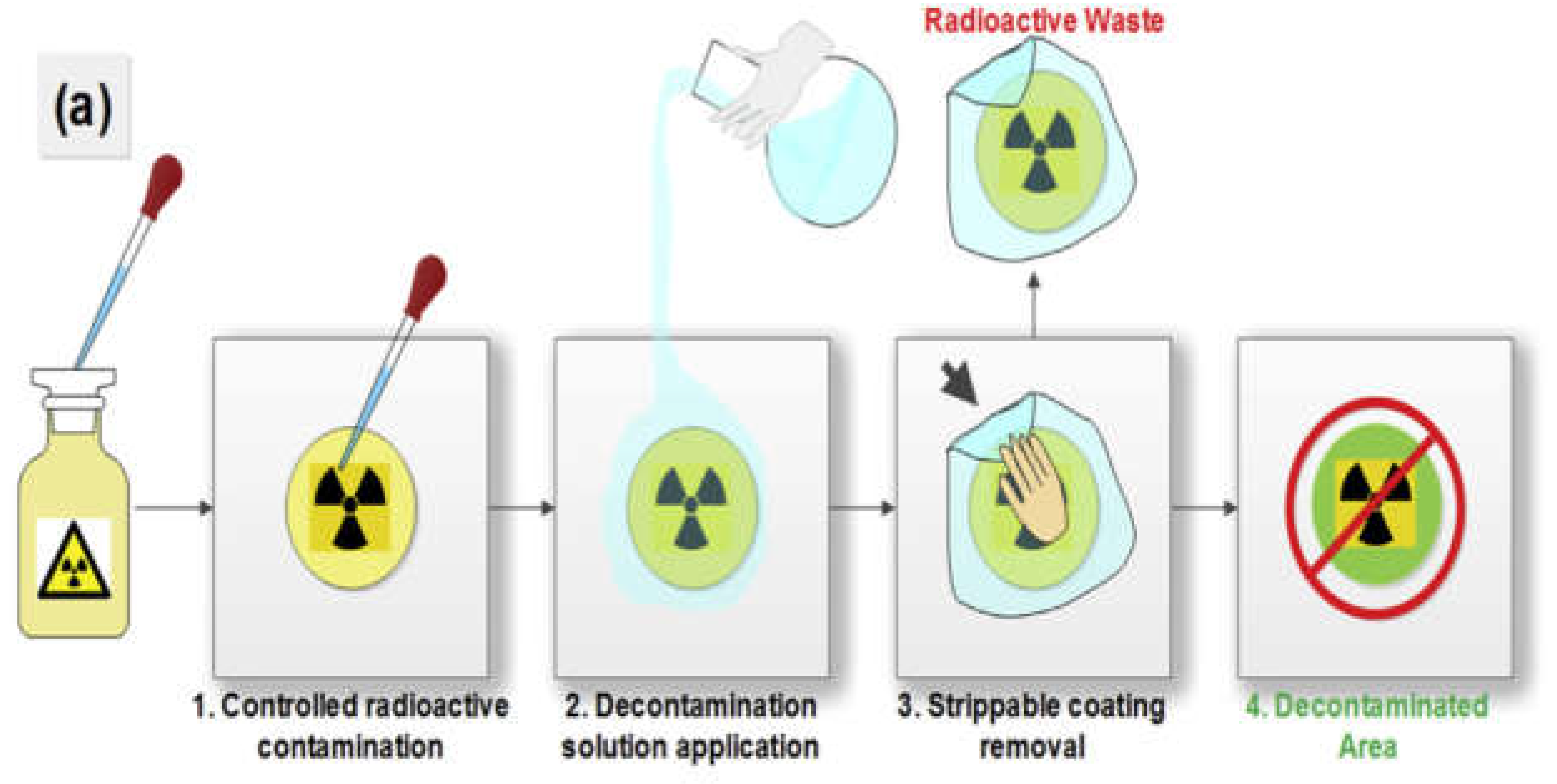
Figure 3.
Crosslinking of PVA with glycerol.
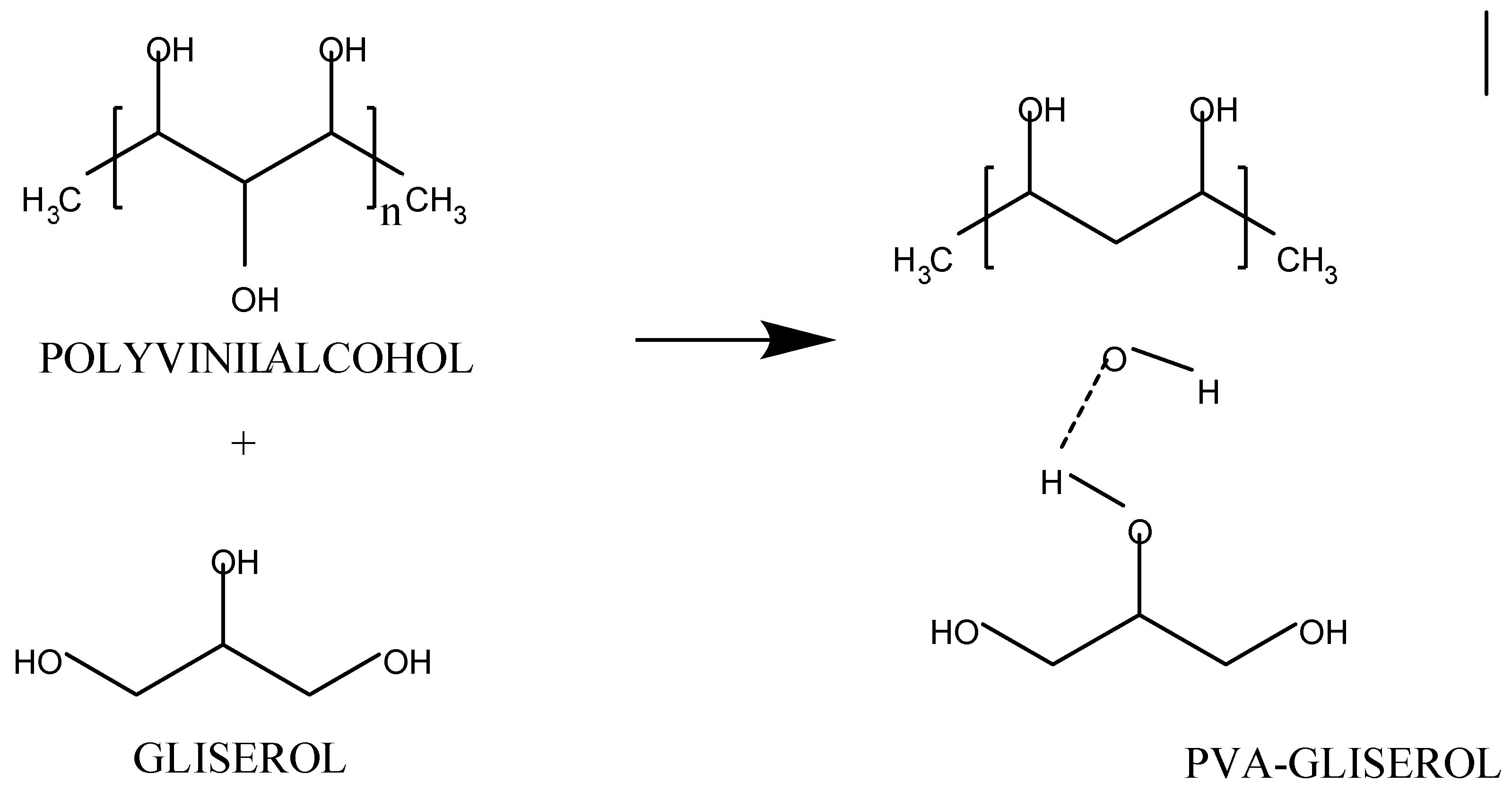
Figure 4.
Crosslinking PVA solution with EDTA.
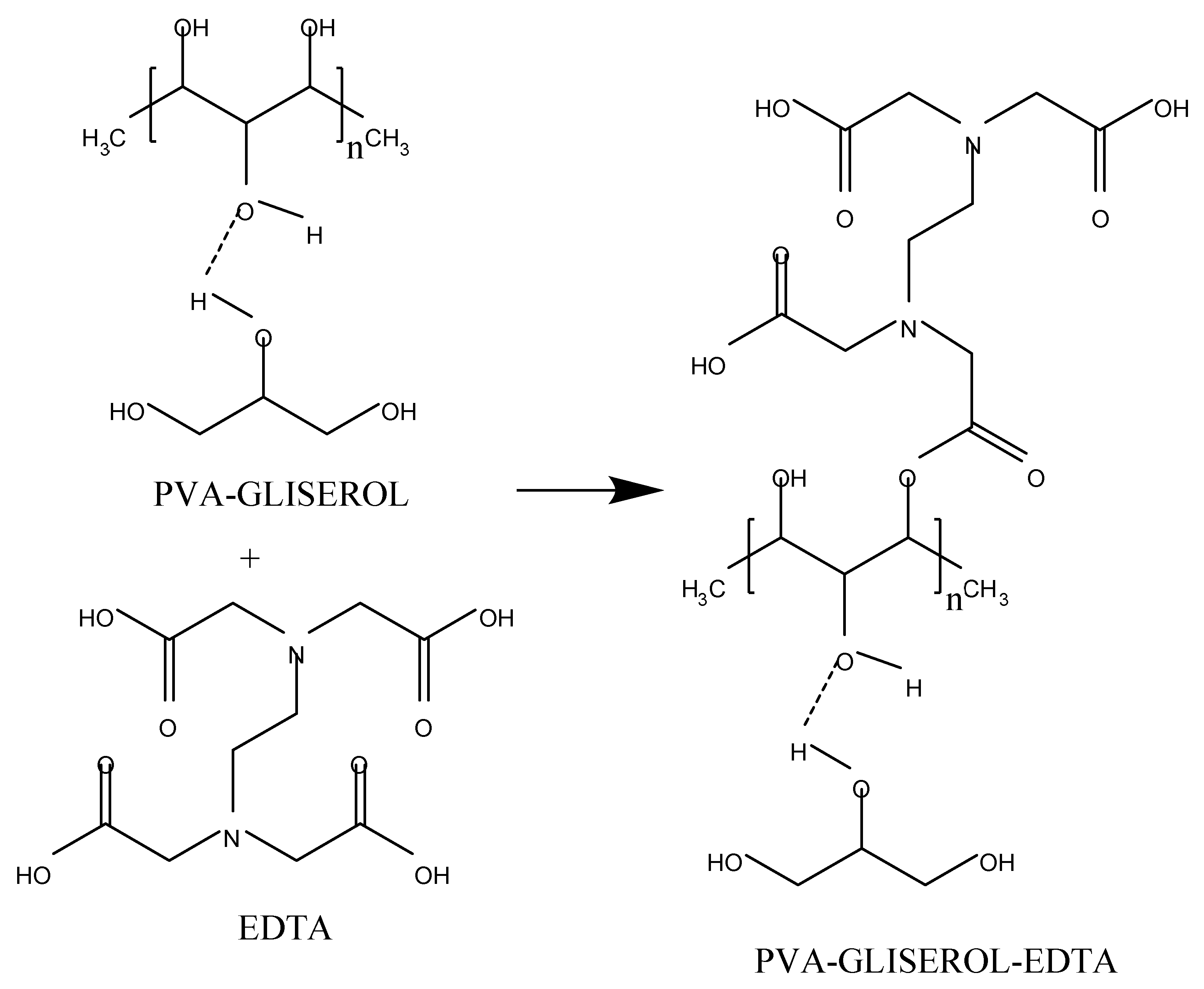
Figure 5.
Structure of The EDTA Complex with Cobalt ions [27].
Figure 5.
Structure of The EDTA Complex with Cobalt ions [27].
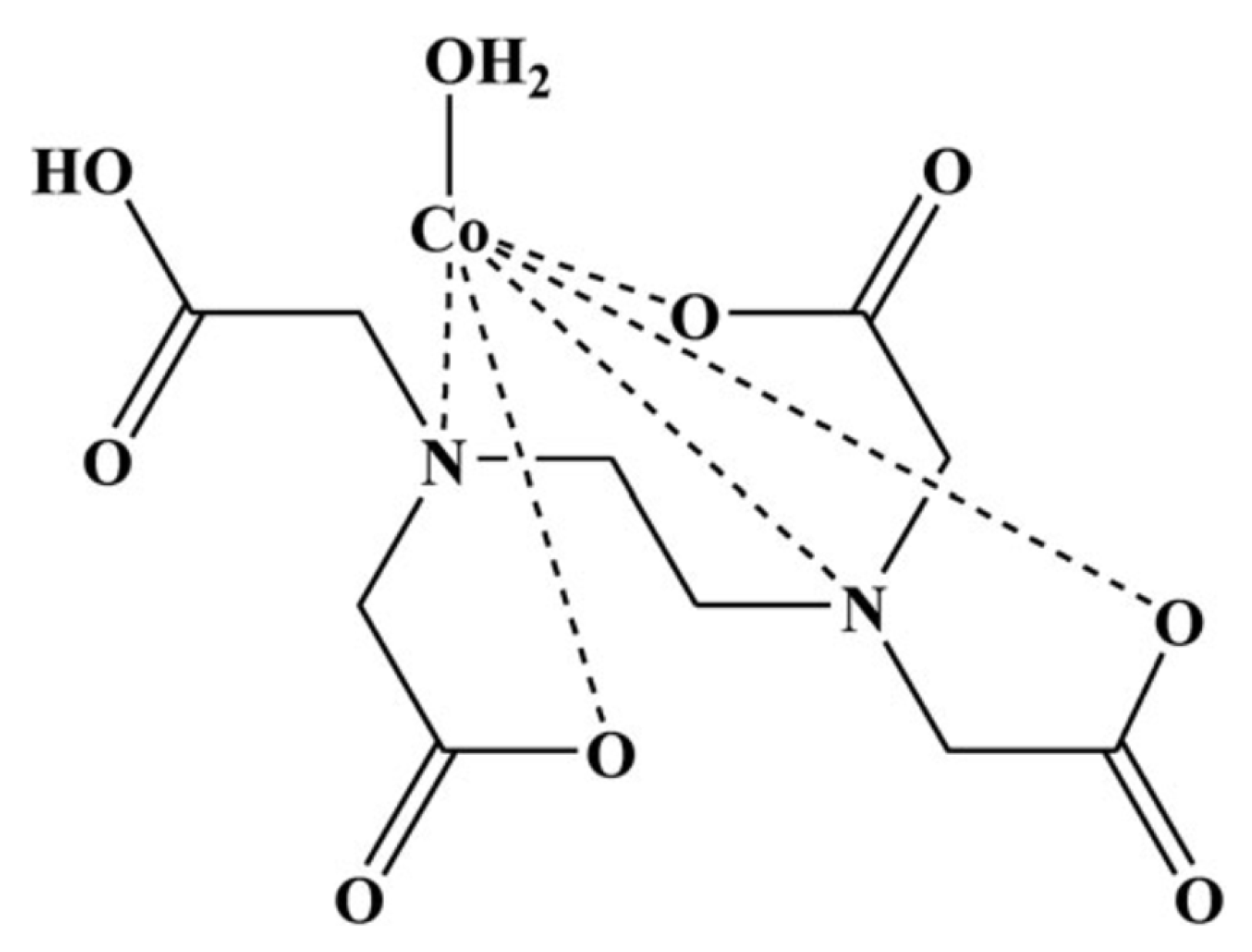

Table 1.
Observation Results of Gel Formation Tests with PVA Variations.
| Solution | Synthesis Process | Gel Formation | Dry Gel | Gel Peel | Final Observation Results |
|---|---|---|---|---|---|
| Solution A (5% w/v PVA) | Yes | No | No | No | The gel does not form |
| Solution B (10% w/v PVA) | Yes | Yes | No | No | Gel forms but is wet and cannot be peeled off |
| Solution C (15% w/v PVA) | Yes | Yes | Yes | Yes | It forms a gel, dries perfectly, and can be peeled off. |
| Solution D (20% w/v PVA) | Yes | Yes | Yes | Yes | It forms a gel, dries perfectly, and can be peeled off. |
Table 2.
EDTA composition in each solution variation.
| No. | Solution Code | % PVA | % EDTA |
|---|---|---|---|
| 1 | Solution 1 | 15% w/v | 0% w/v |
| 2 | Solution 2 | 15% w/v | 1% w/v |
| 3 | Solution 3 | 15% w/v | 2% w/v |
| 4 | Solution 4 | 15% w/v | 3% w/v |
| 5 | Solution 5 | 15% w/v | 5% w/v |
Table 3.
Rate Effectiveness of EDTA Variations of PVA Gel Decontamination on Glass, Ceramic, and Metal Plate Media.
Table 3.
Rate Effectiveness of EDTA Variations of PVA Gel Decontamination on Glass, Ceramic, and Metal Plate Media.
| No. | Contamination Media | Average Decontamination Effectiveness (%) | ||||
|---|---|---|---|---|---|---|
| PVA Gel 15% w/v - EDTA 0% w/v | PVA Gel 15% w/v - EDTA 1% w/v | PVA Gel 15% w/v - EDTA 2% w/v | PVA Gel 15% w/v - EDTA 3% w/v | PVA Gel 15% w/v - EDTA 5% w/v | ||
| 1. | Ceramics | 82 | 88 | 95 | 78 | 53 |
| 2. | Glass | 95 | 93 | 98 | 80 | 89 |
| 3. | Metal Plate | 67 | 94 | 95 | 54 | 75 |
Disclaimer/Publisher’s Note: The statements, opinions and data contained in all publications are solely those of the individual author(s) and contributor(s) and not of MDPI and/or the editor(s). MDPI and/or the editor(s) disclaim responsibility for any injury to people or property resulting from any ideas, methods, instructions or products referred to in the content. |
© 2024 by the authors. Licensee MDPI, Basel, Switzerland. This article is an open access article distributed under the terms and conditions of the Creative Commons Attribution (CC BY) license (http://creativecommons.org/licenses/by/4.0/).
Copyright: This open access article is published under a Creative Commons CC BY 4.0 license, which permit the free download, distribution, and reuse, provided that the author and preprint are cited in any reuse.


