
Preprint
Article

This version is not peer-reviewed.

Treponema pallidum Infection in Asymptomatic Persons: A Puzzling Scenario in the Canary Islands (Spain) (2001-2020)

Submitted:

16 December 2024

Posted:

18 December 2024

You are already at the latest version

Abstract

Background and Objectives: Syphilis is an infectious disease caused by T. pallidum subsp. Pal-lidum. In high-income countries the main mode of transmission is sexual. Approximately half of infected patients are asymptomatic, which does not exclude the possibility of trans-mission. The aim of this study was to evaluate syphilis seroprevalence among asymptomatic persons in Gran Canaria (Canary Islands, Spain). Patients and Methods: Three different groups were studied from 2001 to 2020: i) the “healthy” population, based on 948,869 vol-untary blood donations; ii) undocumented African immigrants, including 1,873 recent arri-vals in Gran Canaria; and iii) people living with HIV (PLWH) , a group of 1,690 patients followed by our team. We also included a reference population representative of the overall population the Canary Islands. The evaluation included both treponemal and reaginic tests. Results: i) among blood donors, the mean seroprevalence of positive treponemal tests was 0.25% (95% CI: 0.19-0.31). Non-treponemal test positivity (RPR) ranged from 0.05 to 0.06% with titers ≤ 1:4 in all cases; ii) thirty-four of 641 undocumented African migrants (5.30%; 95% CI: 3.82-7.32%) had a confirmed positive treponemal test but only 4 had a pos-itive RPR, with titers ranging from 1:1 to 1:4; iii) 46.51% (95% CI: 44.14 - 48.89) of PLWH patients had a confirmed positive treponemal test. For factors related to HIV-syphilis coin-fection, multivariate analysis clearly showed the association with male sex and the MSM risk category. However, the results of this series call into question the overall role of immi-gration in the seroprevalence of syphilis among PLWH in our setting. Active syphilis (RPR > 1:8) was found in 20.10% of PLWH. Conclusions: In summary, syphilis is a re-emerging in-fection, and asymptomatic persons constitute a group that facilitates its transmission and spread. In our setting, seroprevalence was lowest in the healthy population, higher in re-cently arrived African migrants, and highest in PLWH, especially MSM. The presence of active syphilis however is mainly restricted to MSM. This information is of relevance for the design of syphilis control strategies.

Keywords: 
;  ;  ;  ;  

1. Introduction

Syphilis is a systemic disease caused by spirochetes of the species Treponema pallidum subspecies pallidum [1,2,3]. Other species that can infect humans are T. pallidum subsp. pertenue, the causative agent of yaws, T. pallidum subsp. endemicum, responsible for endemic syphilis (bejel), and T. carateum, which causes pinta [3], with a more limited geographical distribution. The most common mode of transmission of Treponema pallidum subspecies pallidum is direct contact between an infected individual with cutaneous or mucosal lesions and a healthy individual, typically through sexual contact. Other routes of transmission are transplacental, responsible for congenital syphilis, and through contact with infected blood (through transfusions or the sharing of syringes) [1,2,3].
The natural history of syphilis has several clinical phases [1,2,3]. Following an incubation period of 9-90 days, the initial symptoms of primary syphilis appear, typically locally (chancre and lymphadenopathy). Appropriate treatment results in the disappearance of the lesions and the prevention of dissemination. In the absence of treatment, however, the lesions will disappear spontaneously, but without preventing dissemination. After 2 to 8 weeks, the clinical manifestations of secondary syphilis, corresponding to hematogenous spread, may become apparent. These manifestations can can affect virtually the entire body (including the skin, scalp, lymph nodes, liver, meninges or kidneys). As with primary syphilis, the lesions will disappear with appropriate treatment, although they may also occur spontaneously within weeks. The subsequent phase, latent syphilis, has no clinical manifestations, and is divided into two periods: the early latent phase (up to one or two years after acquisition) and the late latent phase (after this period or when the time cannot be determined). Approximately one third of patients in the untreated latent phase develop tertiary syphilis, with neurological manifestations or cardiovascular and gummatous infections. An important aspect of epidemiologic relevance is that up to 50% of patients with syphilis have no clinical manifestations (asymptomatic syphilis), which can be attributed to two main factors: a mucosal location that is more difficult to visualize (such as the vagina, oropharynx or rectum) and the typically painless nature of the lesions.
The incidence of syphilis, known since ancient times, showed a stable, even decreasing trend until the beginning of the twenty-first century [4]. Since then, however, there has been a notable increase in syphilis, both worldwide and in Europe and Spain [5]. In 2020, the WHO reported 7.1 million cases of syphilis worldwide, of which more than 60% were in LMICs (low- and middle-income countries), especially in Africa [6]. In the EU/EEA (European Union/European Economic Area), the latest report of the ECDC (European Centre for Disease Prevention and Control) showed a confirmed syphilis rate of 8.5 cases per 100,000 inhabitants, with Spain being the country with the second highest number (after Germany) [7]. A temporal trend analysis in Spain identified four distinct periods: 1995-2001, with a downward trend; 2001-2011 with[17–44 an upward trend, 2011-2014, when it stabilized, and from 2014 onwards, another increase greater than the previous one [8].
It is likely that epidemiologic data on clinical syphilis are underestimated and vary depending on the population studied. Some series include the general population [9,10,11], while others are limited to specialist consultations, hospitals or prisons [12,13,14,15,16]. The seroprevalence of asymptomatic syphilis is highly variable because it is based on studies conducted in populations without clinical manifestations [17,18,19,20,21,22,23,24,25,26,27,28,29,30,31,32,33,34,35,36,37,38,39,40,41,42,43,44] and influenced by multiple factors including age [17], study setting (primary care [18], specialized units [19,20,21,22,23], shelters [24,25,26,27,28] or immigration services [29,30,31]), the presence of other coinfections, mainly HIV and other sexually transmitted infections (STIs) [32], specific population groups, such as pregnant women [33,34,35,36], those at potential risk of acquisition, such as persons who inject drugs (PWID) [37], prostitutes [38], men who have sex with men (MSM) [39,40,41] or have nephropathies [42]. In addition, the region or country of origin of migrant arrivals [18,20,21,43] and length of residence in Spain [44] are important considerations. Finally, the results of the various series vary according to the year of study.
Two specific features of the Canary Islands (Spain), particularly the island of Gran Canaria, may affect the incidence and prevalence of this infection. These are undocumented migrants immigration, mainly from sub-Saharan Africa, and MSM tourism, especially in the south of the island. Both groups are populations with high geographical mobility, which may influence their importance in terms of prevalence and the possibility of transmission.
The objective of our study was to evaluate and compare the seroprevalence of syphilis infection in four different groups of asymptomatic individuals: i) the general population, ii) the healthy population, iii) recent immigrants from Africa, and iv) People living with HIV.

2. Patients and Methods

This retrospective study of the prevalence of asymptomatic syphilis was carried out in Gran Canaria (Canary Islands, Spain). For the purposes of this study, asymptomatic syphilis was defined as a confirmed serologic treponemal test result in the absence of any previous or current clinical manifestations suggestive of the disease or a history of treatment for this infection.

Study groups

Three study groups were included: a healthy local population; a population consisting of undocumented migrants (from Africa) and a group of people living with HIV (PLWH).

Healthy population

The inclusion criteria were those used by the Instituto Canario de Hemodonación y Hemoterapia [Canarian Institute of Hemodonation and Hemotherapy] of Las Palmas, which provided the available data on syphilis seroprevalence in blood product donations from January 1, 2001 to December 31, 2020. It should be noted that the data presented here correspond to blood donations and not to individuals. The exclusion criteria for donation were as established by law in Spain [45] and were determined after a complete medical history to assess the presence of sexual risk factors or illicit substance abuse, as well as a history of prior infection with HIV, HBV or HCV.

Undocumented Migrant Population

The inclusion criteria were as follows: a demographic and clinical assessment of persons of African origin who had recently arrived in Gran Canaria, access to these persons, and availability of blood samples obtained from them. Although the planned study period was from January 1, 2001 to December 31, 2020, there was a sharp decrease in the number of undocumented migrants in the Canary Islands between these dates from 2011 onwards [46]. Specifically, our study focused on individuals admitted to the UDJAMA (Red Cross) Immigrant Reception Center in Las Palmas de Gran Canaria, which received newly arrived migrants over 18 years of age who had been detained by State Security Forces while attempting to enter Spanish territory, pending expulsion or repatriation. These individuals were considered new arrivals and consequently any infections they may have had were specific to their country of origin or had been acquired during the journey, but not in Spanish territory. Following a clinical evaluation and physical examination, biological samples (blood, stool and urine) were requested for complementary tests. In the final analysis, those individuals who refused complementary tests or abandoned the study center before they could be obtained were excluded.

People Living with HIV

Inclusion criteria were confirmed diagnosis of HIV infection (before or during the study period) at the Infectious Diseases and Tropical Medicine Unit of the HUIGC, patient follow-up between January 1, 2001 and December 31, 2020) and during follow-up in 2020, as well as clinical evaluation, physical examination and complementary tests. Patients for whom the relevant information was not available were excluded from the study.

Reference Group

For this part of the study, the research team used 577 sera from a representative sample of the general population of the Canary Islands. The sera were obtained through the Canary Islands Nutrition Survey (ENCA in Spanish) [47]. This survey was developed by the Canary Islands Health Service and directed by Professor Luis Serra (Preventive Medicine). The complexity of the design provided opportunities for collaboration with university researchers interested in studies other than nutritional status, such as cardiovascular risk factors, seroprevalence of infections and endocrinological studies. The study had the prior approval of the Ethics Committee of the Canary Islands Health Service, and all data confidentiality measures required by law were respected. Prior to the interview, the Canary Islands Health Service sent potential participants a letter informing them of the characteristics and objectives of the study and inviting them to collaborate. Collaboration was voluntary. Before the interview commenced, participants were required to sign an informed consent form. The study population consisted of all persons registered in the census between the ages of 5 and 75 years. Selection was made using two-stage cluster sampling, with municipality as the primary variable, and the individual sample as the secondary variable. First, 32 municipalities from the 7 islands were randomly selected for sampling. The individuals who comprised the sample were selected in proportion to the size of the municipality. The sample size was set at a minimum of 100 individuals per age and sex group to ensure a representative sample across all islands. The final sample size was 2,600 individuals, of which 1,747 (67.2% of the original sample) participated in the final study. This sample was representative of the overall population of the Canary Islands in terms of age groups, sexes, and island of origin. Those who participated in the in-home interviews were invited to have their blood drawn in order to obtain the relevant analytical data. A total of 44.8% of individuals participated in the blood extraction phase. The samples were stored at -80 ºC until the time of the study. The data set included only the following information for each individual: age, sex and geographical location.

Screening for Treponema Pallidum Infection

All samples were tested for syphilis using treponemal tests. The techniques used varied depending on the date of the study and availability at each center: Trepo-Spot IF (bioMérieux, Spain), Vitros Syphilis TPA assay (Ortho Clinical Diagnostics, Inc., High Wycombe, United Kingdom) and Architec Syphilis TP (Abbott Diagnostics, Spain).
To confirm positive results, a second treponemal test by line immunoassay (LIA) was conducted using the INNO-LIA® Syphilis Score (Fujirebio Iberia, Spain).
In cases where positive results were confirmed, a non-treponemal RPR (rapid plasma reagin) test was conducted using either a commercial RPR test (Human Diagnostics, Spain) or the RPR slide test (bioMérieux, Spain) technique.

Other Determinations

For the general population group, only anonymized information on age, sex and geographical distribution was available. For the other groups, data on epidemiology, personal history, anamnesis and physical examination were collected.
Further studies were performed, although not in the general population group. Overall, we screened for HIV infection using an enzyme microparticle immunoassay for detection of antibodies to HIV types 1 (groups M and O) and 2 (AxSYM®HIV ½ gO) (Abbott Diagnostics, Spain). To confirm the initial results, we used a strip immunoblot INNO-LIATMHIV (Innogenetics N.V.) that can detect and differentiate antibodies to HIV types 1 (groups M and O) and 2. Enzyme immunoassay techniques (Abbott Diagnostics, Spain) were employed to detect the various markers of HBV infection. First, hepatitis B surface antigen (HBsAg) and antibodies to both the core and surface antigens (anti-HBc and anti-HBs respectively) of the hepatitis B virus were determined. In cases where HBsAg was identified, the presence of HBeAg (Abbott Diagnostics, Spain) and HDV (Dia.Pro, Diagnostic Bioprobes) was determined. For HCV infection, we first used the microparticle enzyme immunoassay, AxSYM HCV version 3.0 (Abbott Diagnostics, Spain) for antibody detection, and a strip immunoblot, INNO-LIATMHCV Ab III update (Innogenetics N.V.) for confirmation.

Statistical Analysis

Data analysis was performed using Stata 13.0. Normality of data was assessed using the Kolmogorov-Smirnov test, and homogeneity of variance using Levene's test. Categorical data were presented as frequencies and percentages, and continuous data as means and standard deviations (SD) or median and interquartile range (IQR), as appropriate.
Categorical variables were compared using Pearson’s chi-squared test, or Fisher's exact test when indicated. The strength of the associations was measured using odds ratios (OR), with 95% confidence intervals (95% CIs). For prevalence estimates, confidence intervals were calculated using the Wilson method. A multivariate analysis was performed to study the risk factors associated with syphilis infection, including clinically relevant and statistically significant variables.
Trend analysis of seroprevalence in the study period was performed using the Jointpoint Regression Program version 4.5.01, with annual percentage change (APC) reported as mean and 95% confidence interval. In this study, the minimum number of joinpoints was set at 0, corresponding to a linear model with no change in trend. The maximum number of joinpoints was set at 3, taking into account the number of available data points and following the recommendations of the Joinpoint Regression Program. The final model was selected using the software’s built-in permutation test, which balances model fit and parsimony.
A p-value of less than 0.05 was used to determine statistical significance.

Ethical Aspects

The study was conducted in accordance with the protocol and principles established in the current revised version of the Declaration of Helsinki (Fortaleza, October 2013) and approved by the Research Ethics Committee of the Insular Maternal and Infantile University Hospital Complex (CEIC-CHUIMI-2014/750). The research team obtained informed patient consent from patients in the general population and healthy groups. In the group of undocumented migrants and people living with HIV, determination of syphilis serology was part of the routine evaluation process in both groups.

3. Results

3.1. Seroprevalence in the General Population

Of the 577 persons in the general population study, 283 (49%) resided in the province of Las Palmas, which includes the Gran Canaria, Fuerteventura and Lanzarote islands, while the rest of the participants resided in the province of Santa Cruz de Tenerife. More specifically, 220 individuals resided on the island of Gran Canaria, accounting for 38.12% of the total sample. Following the strategy outlined above, 9 positive subjects with a confirmed treponemal test were detected, all of whom had a negative RPR determination. Specifically, two resided in Gran Canaria (both were women, aged 42 and 44 years). Therefore, the overall prevalence of treponemal infection in the Canary Islands was 1.56% (0.82%-2.94%), with a specific prevalence of 0.91% (95%CI: 0.25%-3.25%) in Gran Canaria.

3.2. Seroprevalence in the Healthy Population

Over the course of the study period (2001-2020), a total of 948,869 blood donations were evaluated for the presence of Treponema pallidum infection, representing an average of 47,443 per year, with a male-to-female ratio of 1.6:1. The mean seroprevalence of syphilis (positive treponemal test) was 0.25% (95%CI: 0.19-0.31). Figure 1 illustrates the trend over the study period. While seroprevalence was higher among males and individuals under 35 years of age, no significant differences were observed with respect to females or individuals over that age limit, respectively. Trend analysis showed stabilization during this time period, with an APC of 9.85% (95%CI: -6.82%;26.52%).
Non-treponemal test-positive cases (RPR) ranged between 0.05 and 0.06% with titers ≤ 1:4 in all cases.

3.3. Seroprevalence in Undocumented Migrants

A total of 1,873 undocumented migrants were examined over the course of the study; 68.5% (n=1,283) were from sub-Saharan Africa. In 3.4% of cases, the country of origin of the subjects was not known. The distribution of migrants by country of origin is shown in Figure 1S, with the highest frequencies (in descending order) being from Morocco, Nigeria, Sierra Leone, Ghana and Mali. The mean age was 26.61 (SD: 6.35) years and 87.5% of the participants were male. There were no statistically significant differences in age between the populations from the North African and sub-Saharan areas.
A total of 641 individuals underwent serologic testing, with 34 cases yielding confirmed positive treponemal test results (5.30%; 95%CI 3.82-7.32%). Of the 34 cases, 4 were RPR positive, with titers ranging from 1:1 to 1:4. These data, as well as those corresponding to the other infections studied, are shown in Table 1S.

3.4. Seroprevalence in People Living with HIV

A total of 1,690 patients with follow-up in 2020 were studied, using 2001 as year of onset. Age at onset ranged from 8 to 82 years, with a mean of 39 years and a standard deviation of 12 years. Of these, 1,465 (86.7%) were cisgender men, 17 (1.0%) were transgender men and 208 (12.3%) were cisgender women. In terms of geographical origin, 1,140 (67.46%) were local and 550 (32.54%) were immigrants. For immigrants living with HIV, the continents of origin were: Europe (295/550; 53.6%), the Americas (182/550; 33.1%), Africa (68/550; 12.4%) and Asia/Oceania (5/550; 0.9%). These data, as well as the subregions defined by the United Nations Statistics Division (UNSD) and the main countries are shown in Figure 2S.
The transmission category was identified in 1,550 patients: i) 1,104/1,550 (71.2%) were MSM; men who have sex with men (gay and bisexual); ii) 340/1,550 (21.9%) were HTS; heterosexuals; iii) 97/1,550 (6.3%) were PWID; persons who inject drugs, and iv) 9/1,550 (0.6%) were other modes of transmission (transfusion or mother to child).
Among people living with HIV, 46.51% (95%CI: 44.14 - 48.89) had a confirmed positive treponemal test. Figure 1 also shows the temporal evolution of seroprevalence among people living with HIV. Trend analysis showed stabilization during this period with an APC of 2.01% (95%CI: -9.81%; 13.83%).
Table 2 shows the demographic characteristics of people living with HIV , both overall and according to T. pallidum infection. Statistical analysis showed a significant association between age, sex, transmission category, geographical origin (immigrant or local) and region of origin of immigrants. The strength of the association was stronger between the prevalence of T. pallidum infection and male sex [OR: 6.5 (4.3-9.8)], MSM transmission category [OR: 4.93 (3.93-6.20)] and a European or American versus a Spanish origin [OR: 1.62 (1.25-2.09) and 1.78 (1.30-2.44) respectively] (Table 2).
The multivariate analysis included the different variables listed in Table 2 in two initial models: the first model included age, sex (male versus female), transmission category and origin (local vs immigrant). In the second model, the origin variable was replaced by the more specific geographical area of origin of the immigrants, with Spain as the reference group. Male sex remained statistically significant for the risk of presenting with T. pallidum infection, with an OR of 2.46 (95%CI 1.55-3.91) as did the MSM transmission category, with an OR of 3.65 (2.81-4.73) compared to other transmission categories. In terms of origin, immigrants showed an OR of 1.37 (1.10-1.71), and when this variable was replaced in the second model by their geographical area of origin, a European origin (excluding Spain) showed an OR of 1.35 (1.02-1.77) and an American origin an OR of 1.77 (1.26-2.49). An African origin showed a non-significant OR of 0.70 (0.36-1.37). These data were used to explore the possible statistical interaction between region of origin and sex, as well as transmission category, in a third model. In this model, the OR for European origin [OR 1.41 (0.37-5.42)] and the OR for American origin [OR 0.72 (0.15-3.40)] were no longer statistically significant. Table 3 describes this possible interaction and shows that syphilis prevalence among persons of European origin (excluding Spain) was 55.93%, with a male sex frequency of 94.58% and MSM of 81.36%; the scores for an American origin were similar, with a male sex frequency of 90.11% and MSM of 68.13%. For an African origin on the other hand, the syphilis frequency was 19.12% with male sex and MSM frequencies of 51.47% and 13.24%, respectively.
In patients with syphilis/HIV coinfection, the presence and, in positive cases, titers of the nontreponemal RPR test were evaluated. The results are shown in Table 4.

4. Discussion

In theory, syphilis should be an ideal disease to eradicate, for several reasons: (i) it is not a zoonosis, as there is no known animal reservoir, (ii) diagnosis can be made with simple and inexpensive methods, and (iii) treatment is effective and simple [1]. As noted above, T. pallidum subsp pallidum is transmitted only between humans, mainly by sexual transmission. It can be induced experimentally by inoculating rabbits, which is useful for isolating the bacterium and for studying the pathogenesis of the disease [2]. The diagnosis of syphilis is based on clinical suspicion, direct microbiological studies and serology. In the presence of the clinical manifestations mentioned above, direct diagnostic methods such as microscopic examination (darkfield or direct fluorescence) or nucleic acid amplification techniques (i.e. PCR) can be used. However, these techniques are not readily available and microscopy can yield false-positive results in certain sites (such as the oral cavity or the rectum) due to the presence of commensal treponemes [3]. In clinical practice therefore the microbiological diagnosis of syphilis (symptomatic or asymptomatic) is based on serology [1,2,3,48,49,50,51]. There are two types of serologic tests for infection: treponemal and reaginic, or nontreponemal, with important differences in their interpretation. Treponemal tests detect specific protein antigens of the genus Treponema (e.g. TpN47, TpN17, TpN15) whereas reaginic tests detect antibodies that recognize both host and treponemal lipoidal antigens (a combination of cardiolipin, lecithin, and cholesterol). Combined use of treponemal and reaginic tests, using either the traditional or the reverse algorithm, or rapid tests (immunochromatography) aids in the interpretation of results. Treatment of syphilis is based on penicillin, with different formulations and doses depending on the stage of the disease, or doxycycline in specific cases. Resistance to these antimicrobials has not been reported [52].
In HICs (high-income countries), a progressive increase in syphilis has been noted in recent years, particularly among MSM, people living with HIV, and immigrants [53,54]. The aim of this study was to evaluate the seroprevalence of syphilis in asymptomatic persons in our geographical region, taking into account the epidemiologic characteristics mentioned above .
To study the seroprevalence in the healthy population, we evaluated the data from blood donors, in which those with the legally defined risk factors had been excluded. The results showed a mean prevalence of 0.25%, with no significant variation during the study period, which was clearly higher than the national average for Spain [55]. On the other hand, the seroprevalence in this population was approximately one third of that observed in the general population at the beginning of the study period, suggesting higher transmission in the community. When the seroprevalence data in blood donors were compared with those of other series, significant differences (ranging from 0.03% to 0.90%) were observed [56,57,58,59,60,61,62,63,64]. These differences could be attributed to a number of factors, such as, geographical area (e.g. northern Europe [60,61,64], the Mediterranean area [56,59], India [57,62,63] or China [58]), the date of the study [57,62], the serological method used (reaginic or treponemal, as well as specific technique) [59,60,63] and donor selection criteria, more specifically, replacement donors versus voluntary donors [57].
The seroprevalence of syphilis in people living with HIV was 46.51%. In our setting, this is on average more than 50 times that of the general population, and more than 150 times that of the healthy population. This prevalence is very high, and among the highest reported in the literature [65,66,67,68,69]. The prevalence of syphilis-HIV coinfection ranges from 2 to 60%, depending on the date of the study, the country and geographical region [65,66,67,68,69]. Although not observed in the present series, more recent studies show a marked increase in frequency [70,71].
The study of reaginic tests in coinfected patients in this series showed three different patterns: RPR negative (50.9%); RPR 1:1 to 1:8 (28.98%) and RPR > 1:8 (20.10%). There are several possible explanations for patients with RPR ≤ 1:8, including the natural decline of a T. pallidum infection acquired several years earlier, or the use of antimicrobials with activity against this bacterium. In this regard, although the treatment of choice for syphilis is penicillin, other commonly used antibiotics have activity, sometimes incomplete, against T. pallidum [72,73]. There are also several interpretations for patients with RPR > 1:8, such as recent infection or reinfection, which is common in these individuals [74,75,76]. Whatever the interpretation, it is assumed that RPR titers > 1:8 indicate active infection and that these patients pose a risk of disease transmission [77].
The multivariate analysis of factors influencing HIV-syphilis coinfection clearly shows an association with male sex and the MSM risk category, both of which are repeatedly documented in the reviewed literature [75,78,79]. The higher prevalence of syphilis is observed not only in HIV-infected MSM patients, but also in HIV-negative MSM patients evaluated in Pre exposure prevention programs [80,81]. Therefore, it is particularly important in the control of syphilis to adopt strategies that target MSM individuals, such as prevention of both infections before acquisition (i.e., Doxy-PreP, with its limitations) [82,83,84] and frequent monitoring for T. pallidum infection during HIV screening [85]. In addition, MSM patients include not only homosexuals but also bisexuals [86,87]. One third of MSM in the USA or China reported sexual relations with women, almost half in Peru, and about 80% in Russia [86]. On the other hand, in the study of MSM in the USA, 14.5% reported sexual relations with women and 22.3% with men who in turn had relations with both sexes [87]. Therefore, bisexual men facilitate contact between men and women and represent a bridge in the transmission and spread of syphilis.
However, the results of this series raise the question of the overall role of immigration in the seroprevalence of syphilis among people living with HIV in our setting. We observed two different patterns: i) European and Latin American immigrants, where the preponderance of males and MSM transmission was similar to that of the Spanish population, and ii) African immigrants, where there was a higher frequency of syphilis seroprevalence among females and a much lower prevalence among MSM.
The study of recently arrived migrants from Africa without HIV infection provides important information while avoiding confounding variables in this group related to the acquisition of T pallidum infection associated with other factors (such as prostitution or drug use). The data obtained indicate a higher seroprevalence compared to the healthy and general local populations (5.30% versus 0.25% and 0.91% respectively), although there were no cases of active syphilis (RPR ≤ 1:8). These earlier data are maintained in the very recent study by our group of newly arrived Africans in the Canary Islands [88].
Limitations of our study include: i) failure to identify previous medical problems related to syphilis and/or its treatment due to recall or memory bias, especially among African immigrants; ii) the absence of information on sexual risk behaviors in people living with HIV due to non-response bias; iii) recording blood donations, not number of donors, so that the results of treponemal testing were higher than the actual ones, and iv) the different study dates in some groups (such as the general population and undocumented African immigrants).

5. Conclusions

In conclusion, syphilis is a reemerging infection, and asymptomatic persons constitute a group that facilitates its transmission and dissemination. In our setting, seroprevalence is lowest in the healthy population, higher in the general population and among recently arrived African immigrants and highest in people living with HIV, especially MSM. However, the presence of active syphilis is mainly restricted to MSM. This information is of relevance for the design of syphilis control strategies.

Supplementary Materials

The following supporting information can be downloaded at the website of this paper posted on Preprints.org.

Author Contributions

JLPA coordinated this work and drafted the final version of the manuscript. AHB and CCR were responsible for the laboratory work. OSP provided data collection and analysis of recent African immigrants. SGL was responsible for data collection and analysis of blood donors. JCG performed statistical analysis and interpretation. MHC, EPA, NJS, LSH, CLS and LLD performed data collection and analysis. All authors provided critical feedback, helped shape the research and approved the final manuscript. All authors have read and agreed to the published version of the manuscript.

Funding

The authors have no funding to report.

Institutional Review Board Statement

The study was conducted in accordance with the protocol and principles established in the current revised version of the Declaration of Helsinki (Fortaleza, October 2013), and was approved by the Research Ethics Committee of Insular-Maternal And Infantile University Hospital Complex Approval Code (CEIC-CHUIMI-2014/750).

Informed Consent Statement

Informed patient consent was obtained in the ‘healthy’ group. In the groups of African immigrants and people living with HIV, the determination of syphilis serology was part of the routine evaluation of both groups.

Acknowledgments

We thank Janet Dawson for her help in revising the English version of the manuscript.

Conflicts of Interest

The authors declare no conflicts of interest.

References

  1. Peeling RW, Mabey D, Chen XS, Garcia PJ. Syphilis. Lancet. 2023, 402, 336–346. [CrossRef]
  2. Hook EW 3rd. Syphilis. Lancet. 2017, 389, 1550–1557. [Google Scholar] [CrossRef] [PubMed]
  3. Arando Lasagabaster M, Otero Guerra L. Syphilis. Enferm Infecc Microbiol Clin (Engl Ed). 2019, 37, 398–404. [CrossRef]
  4. Rothschild, BM. History of syphilis. Clin Infect Dis. 2005, 40, 1454–1463. [Google Scholar] [CrossRef]
  5. Del Romero J, Moreno Guillén S, Rodríguez-Artalejo FJ, Ruiz-Galiana J, Cantón R, De Lucas Ramos P, et al. Sexually transmitted infections in Spain: Current status. Rev Esp Quimioter. 2023, 36, 444–465. [Google Scholar] [CrossRef]
  6. World Health Organization. Sexually transmitted infections (STIs). 2023. Available at: https://www.who.int/news-room/fact-sheets/detail/sexually-transmitted-infections-(stis). Accessed , 2024. 27 August.
  7. European Centre for Disease Prevention and Control. Syphilis. In ECDC. Annual Epidemiological Report for 2022. Stockholm: ECDC; 2024. Available at: https://www.ecdc.europa.eu/en/publications-data/syphilis-annual-epidemiological-report-2022. Accessed August 27, 2024. [Google Scholar]
  8. HIV, STI and hepatitis B and C surveillance unit. Epidemiological surveillance of sexually transmitted infections, 2022. Centro Nacional de Epidemiología, Instituto de Salud Carlos III/División de Control de VIH, ITS, Hepatitis virales y Tuberculosis, Dirección General de Salud Pública; 2024. Available at: https://sanidad.gob.es. Accessed August 27, 2024. [Google Scholar]
  9. Díaz-Franco A, Noguer-Zambrano I, Cano-Portero R. [Epidemiological surveillance of sexually transmitted diseases. Spain 1995-2003]. Med Clin (Barc). 2005, 125, 529–530. [Google Scholar] [CrossRef]
  10. Martí-Pastor M, García de Olalla P, Barberá MJ, Manzardo C, Ocaña I, et al. Epidemiology of infections by HIV, Syphilis, Gonorrhea and Lymphogranuloma Venereum in Barcelona City: a population-based incidence study. BMC Public Health. 2015, 15, 1015. [Google Scholar] [CrossRef]
  11. Pagà-Casanova A, Guaita-Calatrava R, Soriano-Llinares L, Miguez-Santiyán A, Salazar-Cifre A. [Epidemiological surveillance of syphilis in the city of Valencia. Impact and evolution of the period 2003-2014]. Enferm Infecc Microbiol Clin. 2016, 34 (Suppl. 3), 52–58. [Google Scholar] [CrossRef] [PubMed]
  12. Orduña Domingo A, Chu JJ, Eiros Bouza JM, Bratos Pérez MA, Gutiérrez Rodríguez MP, Almaraz Gómez A, et al. [Age and sex distribution of sexually transmitted diseases in Valladolid. A study of 5076 cases]. Rev Sanid Hig Publica (Madr). 1991, 65, 247–258. [Google Scholar]
  13. García-García L, Ariza-Megía MC, González-Escalada A, Alvaro-Meca A, Gil-de Miguel A, Gil-Prieto R. Epidemiology of syphilis-related hospitalisations in Spain between 1997 and 2006: a retrospective study. BMJ Open. 2011, 1, e000270. [Google Scholar] [CrossRef] [PubMed]
  14. Moreno-Ribera N, Fuertes-de Vega I, Blanco-Arévalo JL, Bosch-Mestres J, González-Cordón A, Estrach-Panella T, et al. Sexually transmitted infections: Expe-rience in a multidisciplinary clinic in a Tertiary Hospital (2010-2013). Actas Dermo-sifiliogr. 2016, 107, 235–241. [Google Scholar] [CrossRef] [PubMed]
  15. Báez-López N, Palacián Ruiz MP, Vásquez Martínez A, Roc Alfaro L. [The incidence of lues in a Zaragoza hospital over a period of 13 years]. Gac Sanit. 2013, 27, 564–565. [Google Scholar] [CrossRef] [PubMed]
  16. Garriga C, Gómez-Pintado P, Díez M, Acín E, Díaz A. [Characteristics of cases of infectious syphilis diagnosed in prisons, 2007-2008]. Rev Esp Sanid Penit 2011, 13, 52–57. [CrossRef]
  17. Belhassen-García M, Pérez Del Villar L, Pardo-Lledias J, Gutiérrez Zufiaurre MN, Velasco-Tirado V, Cordero-Sánchez M, et al. Imported transmissible diseases in minors coming to Spain from low-income areas. Clin Microbiol Infect. 2015, 21, 370–e5. [Google Scholar] [CrossRef]
  18. Hladun O, Grau A, Esteban E, Jansà JM. Results from screening immigrants of low-income countries: data from a public primary health care. J Travel Med. 2014, 21, 92–98. [Google Scholar] [CrossRef] [PubMed]
  19. López-Vélez R, Huerga H, Turrientes MC. Infectious diseases in immigrants from the perspective of a tropical medicine referral unit. Am J Trop Med Hyg. 2003, 69, 115–121. [Google Scholar] [CrossRef]
  20. Manzardo C, Treviño B, Gómez i Prat J, Cabezos J, Monguí E, Clavería I, et al. Communicable diseases in the immigrant population attended to in a tropical medicine unit: epidemiological aspects and public health issues. Travel Med Infect Dis. 2008, 6, 4–11. [Google Scholar] [CrossRef] [PubMed]
  21. Monge-Maillo B, López-Vélez R, Norman FF, Ferrere-González F, Martínez-Pérez Á, Pérez-Molina JA. Screening of imported infectious diseases among asymptomatic sub-Saharan African and Latin American immigrants: a public health challenge. Am J Trop Med Hyg. 2015, 92, 848–856. [Google Scholar] [CrossRef]
  22. Vall Mayans M, Arellano E, Armengol P, Escribà JM, Loureiro E, Saladié P, et al. HIV infection and other sexually-transmitted infections among immigrants in Barcelona. [Infección por el virus de la inmunodeficiencia humana y otras infecciones de transmisión sexual en inmigrantes de Barcelona]. Enferm Infecc Microbiol Clin. 2002, 20, 154–156. [Google Scholar] [CrossRef] [PubMed]
  23. Nigro L, Larocca L, Celesia BM, Montineri A, Sjoberg J, Caltabiano E, et al. Prevalence of HIV and other sexually transmitted diseases among Colombian and Dominican female sex workers living in Catania, Eastern Sicily. J Immigr Minor Health. 2006, 8, 319–323. [Google Scholar] [CrossRef]
  24. Jablonka A, Solbach P, Nothdorft S, Hampel A, Schmidt RE, Behrens GM. Low seroprevalence of syphilis and HIV in refugees and asylum seekers in Germany in 2015 [ Niedrige Seroprävalenz von Syphilis und HIV bei Flüchtlingen in Deutschland im Jahr 2015]. Dtsch Med Wochenschr. 2016, 141, e128–e132. [CrossRef]
  25. Padovese V, Egidi AM, Melillo TF, Farrugia B, Carabot P, Didero D, et al. Prevalence of latent tuberculosis, syphilis, hepatitis B and C among asylum seekers in Malta. J Public Health (Oxf). 2014, 36, 22–27. [Google Scholar] [CrossRef] [PubMed]
  26. Gutiérrez M, Tajada P, Alvarez A, De Julián R, Baquero M, Soriano V, et al. Prevalence of HIV-1 non-B subtypes, syphilis, HTLV, and hepatitis B and C viruses among immigrant sex workers in Madrid, Spain. J Med Virol. 2004, 74, 521–527. [Google Scholar] [CrossRef]
  27. Tafuri S, Prato R, Martinelli D, Melpignano L, De Palma M, Quarto M, et al. Prevalence of Hepatitis B, C, HIV and syphilis markers among refugees in Bari, Italy. BMC Infect Dis. 2010, 10, 213. [Google Scholar] [CrossRef]
  28. Tiittala P, Tuomisto K, Puumalainen T, Lyytikäinen O, Ollgren J, Snellman O, et al. Public health response to large influx of asylum seekers: implementation and timing of infectious disease screening. BMC Public Health. 2018, 18, 1139. [Google Scholar] [CrossRef]
  29. MacPherson DW, Gushulak BD. Syphilis in immigrants and the Canadian immigration medical examination. J Immigr Minor Health. 2008, 10, 1–6. [Google Scholar] [CrossRef]
  30. Nyangoma EN, Olson CK, Painter JA, Posey DL, Stauffer WM, Naughton M, et al. Syphilis Among U.S.-Bound Refugees, 2009-2013. J Immigr Minor Health. 2017, 19, 835–842. [CrossRef]
  31. Stauffer WM, Painter J, Mamo B, Kaiser R, Weinberg M, Berman S. Sexually transmitted infections in newly arrived refugees: is routine screening for Neisseria gonorrheae and Chlamydia trachomatis infection indicated? Am J Trop Med Hyg. 2012, 86, 292–295. [Google Scholar] [CrossRef] [PubMed]
  32. Llenas-García J, Rubio R, Hernando A, Fiorante S, Maseda D, Matarranz M, et al. Clinico-epidemiological characteristics of HIV-positive immigrants: study of 371 cases. [Características clínico-epidemiológicas de los pacientes inmigrantes con infección por el VIH: estudio de 371 casos]. Enferm Infecc Microbiol Clin. 2012, 30, 441–451. [CrossRef]
  33. Sampedro A, Mazuelas P, Rodríguez-Granger J, Torres E, Puertas A, Navarro JM. Marcadores serológicos en gestantes inmigrantes y autóctonas en Granada. [Serological markers in immigrant and Spanish pregnant women in Granada]. Enferm Infecc Microbiol Clin. 2010, 28, 694–697. [Google Scholar] [CrossRef]
  34. de la Calle M, Cruceyra M, de Haro M, Magdaleno F, Montero MD, Aracil J, et al. Syphilis and pregnancy: study of 94 cases. [Sífilis y embarazo: estudio de 94 casos]. Med Clin (Barc). 2013, 141, 141–144. [CrossRef]
  35. López-Fabal F, Gómez-Garcés JL. Serological markers of Spanish and immigrant pregnant women in the south of Madrid during the period 2007-2010. [Marcadores serológicos de gestantes españolas e inmigrantes en un área del sur de Madrid durante el periodo 2007-2010]. 2013, 26, 108–111.
  36. Laganà AS, Gavagni V, Musubao JV, Pizzo A. The prevalence of sexually transmitted infections among migrant female patients in Italy. Int J Gynaecol Obstet. 2015, 128, 165–168. [Google Scholar] [CrossRef] [PubMed]
  37. Muga R, Roca J, Tor J, Pigem C, Rodriguez R, Egea JM, et al. Syphilis in injecting drug users: clues for high-risk sexual behaviour in female IDUs. Int J STD AIDS. 1997, 8, 225–228. [Google Scholar] [CrossRef] [PubMed]
  38. Estébanez P, Zunzunegui MV, Grant J, Fitch K, Aguilar MD, Colomo C, et al The prevalence of serological markers for syphilis amongst a sample of Spanish prostitutes. Int J STD AIDS. 1997, 8, 675–680. [CrossRef]
  39. González-Domenech CM, Antequera Martín-Portugués I, Clavijo-Frutos E, Márquez-Solero M, Santos-González J, Palacios-Muñoz R. Syphilis and human immunodeficiency virus infection: an endemic infection in men who have sex with men. [Sífilis e infección por el virus de la inmunodeficiencia humana: una endemia en hombres que tienen sexo con hombres]. Enferm Infecc Microbiol Clin. 2015, 33, 32–36. [Google Scholar] [CrossRef]
  40. Gállego-Lezáun C, Arrizabalaga Asenjo M, González-Moreno J, Ferullo I, Teslev A, Fernández-Vaca V, et al. Syphilis in Men Who Have Sex With Men: A Warning Sign for HIV Infection. Actas Dermosifiliogr. 2015, 106, 740–745. [Google Scholar] [CrossRef]
  41. Díaz A, Junquera ML, Esteban V, Martínez B, Pueyo I, Suarez J, et al. HIV/STI co-infection among men who have sex with men in Spain. Euro Surveill. 1942. [CrossRef]
  42. Esparza-Martín N, Hernández-Betancor A, Suria-González S, Batista-García F, Braillard-Pocard P, Sánchez-Santana AY, et al. Serology for hepatitis B and C, HIV and syphilis in the initial evaluation of diabetes patients referred for an external nephrology consultation. Nefrologia. 2013, 33, 124–127. [Google Scholar] [CrossRef]
  43. Ramos JM, León R, Andreu M, de las Parras ER, Rodríguez-Díaz JC, Saugar JM et al. Serological study of Trypanosoma cruzi, Strongyloides stercoralis, HIV, human T cell lymphotropic virus (HTLV) and syphilis infections in asymptomatic Latin-American immigrants in Spain. Trans R Soc Trop Med Hyg. 2015, 109, 447–453. [Google Scholar] [CrossRef] [PubMed]
  44. Cobo F, Salas-Coronas J, Cabezas-Fernández MT, Vázquez-Villegas J, Cabeza-Barrera MI, Soriano-Pérez MJ. Infectious Diseases in Immigrant Population Related to the Time of Residence in Spain. J Immigr Minor Health. 2016, 18, 8–15. [Google Scholar] [CrossRef]
  45. https://www.sanidad.gob.es/profesionales/saludPublica/medicinaTransfusional/publicaciones/publicaciones.htm.
  46. https://www.interior.gob.es/opencms/es/prensa/balances-e-informes/.
  47. Alvarez León EE, Ribas Barba L, Serra Majem L. Prevalence of metabolic syndrome in the population of the Canary Islands, Spain [Prevalencia del síndrome metabólico en la población de la Comunidad Canaria]. Med Clin (Barc). 2003, 120, 172–174. [Google Scholar] [CrossRef]
  48. Binnicker, MJ. Which algorithm should be used to screen for syphilis? Curr Opin Infect Dis. 2012, 25, 79–85. [Google Scholar] [CrossRef] [PubMed]
  49. Satyaputra F, Hendry S, Braddick M, Sivabalan P, Norton R. The Laboratory Diagnosis of Syphilis. J Clin Microbiol. 2021, 59, e0010021. [Google Scholar] [CrossRef]
  50. Cao W, Thorpe PG, O'Callaghan K, Kersh EN. Advantages and limitations of current diagnostic laboratory approaches in syphilis and congenital syphilis. Expert Rev Anti Infect Ther. 2023, 21, 1339–1354. [Google Scholar] [CrossRef] [PubMed]
  51. Zhang Y, Goh SM, Mello MB, Baggaley RC, Wi T, Johnson CC et al. Improved rapid diagnostic tests to detect syphilis and yaws: a systematic review and meta-analysis. Sex Transm Infect. 2022, 98, 608–616. [Google Scholar] [CrossRef]
  52. Jensen JS, Unemo M. Antimicrobial treatment and resistance in sexually transmitted bacterial infections. Nat Rev Microbiol. 2024, 22, 435–450. [Google Scholar] [CrossRef] [PubMed]
  53. Orbe-Orihuela YC, Sánchez-Alemán MÁ, Hernández-Pliego A, Medina-García CV, Vergara-Ortega DN. Syphilis as Re-Emerging Disease, Antibiotic Resistance, and Vulnerable Population: Global Systematic Review and Meta-Analysis. Pathogens. 2022, 11, 1546. [CrossRef]
  54. González-López JJ, Guerrero ML, Luján R, Tostado SF, de Górgolas M, Requena L. Factors determining serologic response to treatment in patients with syphilis. Clin Infect Dis. 2009, 49, 1505–1511. [Google Scholar] [CrossRef] [PubMed]
  55. Transfusion Centers and Services Activity Report 2020. [Informe Actividad Centros y Servicios Transfusión 2020] Available at: https://www.sanidad.gob. 27 September 2024.
  56. Drago F, Cogorno L, Ciccarese G, Strada P, Tognoni M, Rebora A, et al. Prevalence of syphilis among voluntary blood donors in Liguria region (Italy) from 2009 to 2013. Int J Infect Dis. 2014, 28, 45–46. [Google Scholar] [CrossRef]
  57. Arora D, Arora B, Khetarpal A. Seroprevalence of HIV, HBV, HCV and syphilis in blood donors in Southern Haryana. Indian J Pathol Microbiol. 2010, 53, 308–309. [Google Scholar] [CrossRef]
  58. Song Y, Bian Y, Petzold M, Ung CO. Prevalence and trend of major transfusion-transmissible infections among blood donors in Western China, 2005 through 2010. PLoS One. 2014, 9, e94528. [CrossRef]
  59. Yildiz SM, Candevir A, Kibar F, Karaboga G, Turhan FT, Kis C, et al. Hepatitis B, Hepatitis C, Human immunodeficiency virus and syphilis frequency among blood donors: A single center study. Transfus Apher Sci. 2015, 53, 308–314. [Google Scholar] [CrossRef]
  60. Harvala H, Reynolds C, Fabiana A, Tossell J, Bulloch G, Brailsford S, et al. Lessons learnt from syphilis-infected blood donors: a timely reminder of missed opportunities. Sex Transm Infect. 2022, 98, 293–297. [Google Scholar] [CrossRef]
  61. Maddox V, Reynolds C, Amara A, Else L, Brailsford SR, Khoo S, et al. Undeclared pre-exposure or post-exposure prophylaxis (PrEP/PEP) use among syphilis-positive blood donors, England, 2020 to 2021. Euro Surveill. 2023; 28 :2300135. [CrossRef]
  62. Shrivastava M, Mishra S, Navaid S. Time Trend and Prevalence Analysis of Transfusion Transmitted Infections among Blood Donors: A Retrospective Study from 2001 to 2016. Indian J Community Med. 2023, 48, 274–280. [CrossRef]
  63. Kakkar B, Philip J, Mallhi RS. Comparative evaluation of rapid plasma reagin and ELISA with Treponema pallidum hemagglutination assay for the detection of syphilis in blood donors: a single center experience. Hematol Transfus Cell Ther. [CrossRef]
  64. Laperche S, Sauvage C, Le Cam S, Lot F, Malard L, Gallian P, et al. Syphilis testing in blood donors, France, 2007 to 2022. Euro Surveill. 2024, 29, 2400036. [CrossRef]
  65. Kalichman SC, Pellowski J, Turner C. Prevalence of sexually transmitted co-infections in people living with HIV/AIDS: systematic review with implications for using HIV treatments for prevention. Sex Transm Infect. 2011, 87, 183–190. [Google Scholar] [CrossRef] [PubMed]
  66. da Silva CM, de Peder LD, Jorge FA, Thomazella MV, Horvath JD, Silva ES, et al. High Seroprevalence of Syphilis Among HIV-Infected Patients and Associated Predictors. AIDS Res Hum Retroviruses. 2018, 34, 821–822. [Google Scholar] [CrossRef]
  67. Yang T, Chen Q, Li D, Wang T, Gou Y, Wei B, et al. High prevalence of syphilis, HBV, and HCV co-infection, and low rate of effective vaccination against hepatitis B in HIV-infected patients in West China hospital. J Med Virol. 2018, 90, 101–108. [Google Scholar] [CrossRef]
  68. Gilbert L, Dear N, Esber A, Iroezindu M, Bahemana E, Kibuuka H, et al. Prevalence and risk factors associated with HIV and syphilis co-infection in the African Cohort Study: a cross-sectional study. BMC Infect Dis. 2021, 21, 1123. [Google Scholar] [CrossRef]
  69. Wu MY, Gong HZ, Hu KR, Zheng HY, Wan X, Li J. Effect of syphilis infection on HIV acquisition: a systematic review and meta-analysis. Sex Transm Infect. [CrossRef]
  70. Mutagoma M, Balisanga H, Remera E, Gupta N, Malamba SS, Riedel DJ, et al. Ten-year trends of syphilis in sero-surveillance of pregnant women in Rwanda and correlates of syphilis-HIV co-infection. Int J STD AIDS. 2017, 28, 45–53. [Google Scholar] [CrossRef]
  71. Lee NY, Chen YC, Liu HY, Li CY, Li CW, Ko WC, et al. Increased repeat syphilis among HIV-infected patients: A nationwide population-based cohort study in Taiwan. Medicine (Baltimore). 2020, 99, e21132. [Google Scholar] [CrossRef] [PubMed]
  72. Hayes KA, Dressler JM, Norris SJ, Edmondson DG, Jutras BL. A large screen identifies beta-lactam antibiotics which can be repurposed to target the syphilis agent. NPJ Antimicrob Resist. 2023, 1, 4. [Google Scholar] [CrossRef] [PubMed]
  73. Ando N, Mizushima D, Omata K, Nemoto T, Inamura N, Hiramoto S, et al. Combination of Amoxicillin 3000 mg and Probenecid Versus 1500 mg Amoxicillin Monotherapy for Treating Syphilis in Patients With Human Immunodeficiency Virus: An Open-Label, Randomized, Controlled, Non-Inferiority Trial. Clin Infect Dis. 2023, 77, 779–787. [Google Scholar] [CrossRef]
  74. Nieuwenburg SA, Sprenger RJ, Schim van der Loeff MF, de Vries HJC. Clinical outcomes of syphilis in HIV-negative and HIV-positive MSM: occurrence of repeat syphilis episodes and non-treponemal serology responses. Sex Transm Infect. 2022, 98, 95–100. [Google Scholar] [CrossRef]
  75. Ren M, Dashwood T, Walmsley S. The Intersection of HIV and Syphilis: Update on the Key Considerations in Testing and Management. Curr HIV/AIDS Rep. 2021, 18, 280–288. [Google Scholar] [CrossRef] [PubMed]
  76. Courjon J, Hubiche T, Dupin N, Grange PA, Del Giudice P. Clinical Aspects of Syphilis Reinfection in HIV-Infected Patients. Dermatology. 2015, 230, 302–307. [Google Scholar] [CrossRef] [PubMed]
  77. Singh AE, Ives N, Gratrix J, Vetland C, Ferron L, Crawford M, et al. Sensitivity and specificity of two investigational Point of care tests for Syphilis and HIV (PoSH Study) for the diagnosis and treatment of infectious syphilis in Canada: a cross-sectional study. Clin Microbiol Infect. 2023, 29, e1–e940. [Google Scholar]
  78. Nanoudis S, Pilalas D, Tziovanaki T, Constanti M, Markakis K, Pagioulas K, et al. Prevalence and Treatment Outcomes of Syphilis among People with Human Immunodeficiency Virus (HIV) Engaging in High-Risk Sexual Behavior: Real World Data from Northern Greece, 2019-2022. Microorganisms. 2024, 12, 1256. [Google Scholar] [CrossRef]
  79. Zheng Y, Ye K, Ying M, He Y, Yu Q, Lan L, et al. Syphilis epidemic among men who have sex with men: A global systematic review and meta-analysis of prevalence, incidence, and associated factors. J Glob Health. 2024, 14, 04004. [Google Scholar] [CrossRef]
  80. van den Elshout MAM, Wijstma ES, Boyd A, Jongen VW, Coyer L, Anderson PL, et al. Sexual behaviour and incidence of sexually transmitted infections among men who have sex with men (MSM) using daily and event-driven pre-exposure prophylaxis (PrEP): Four-year follow-up of the Amsterdam PrEP (AMPrEP) demonstration project cohort. PLoS Med. 2024, 21, e1004328. [Google Scholar] [CrossRef]
  81. Tao G, Patel CG, He L, Workowski K. STI/HIV testing, STIs, and HIV PrEP use among men who have sex with men (MSM) and men who have sex with men and women (MSMW) in United States, 2019-2022. Clin Infect Dis. 2024 Jun 10:ciae314. [CrossRef]
  82. Vanbaelen T, Rotsaert A, De Baetselier I, Platteau T, Hensen B, Reyniers T, et al. Doxycycline post-exposure prophylaxis among men who have sex with men and transgender women in Belgium: awareness, use and antimicrobial resistance concerns in a cross-sectional online survey. Sex Transm Infect. [CrossRef]
  83. Bachmann LH, Barbee LA, Chan P, Reno H, Workowski KA, Hoover K, et al. CDC Clinical Guidelines on the Use of Doxycycline Postexposure Prophylaxis for Bacterial Sexually Transmitted Infection Prevention, United States, 2024. MMWR Recomm Rep. 2024, 73, 1–8. [CrossRef]
  84. Luetkemeyer AF, Donnell D, Dombrowski JC, Cohen S, Grabow C, Brown CE, et al. Postexposure Doxycycline to Prevent Bacterial Sexually Transmitted Infections. N Engl J Med. 2023, 388, 1296–1306. [Google Scholar] [CrossRef] [PubMed]
  85. de Voux A, Bernstein KT, Bradley H, Kirkcaldy RD, Tie Y, Shouse RL. Medical Monitoring Project. Syphilis Testing Among Sexually Active Men Who Have Sex With Men and Who Are Receiving Medical Care for Human Immunodeficiency Virus in the United States: Medical Monitoring Project, 2013-2014. Clin Infect Dis. 2019, 68, 934–939. [Google Scholar] [CrossRef]
  86. Karp G, Schlaeffer F, Jotkowitz A, Riesenberg K. Syphilis and HIV co-infection. Eur J Intern Med. 2009, 20, 9–13. [Google Scholar] [CrossRef]
  87. Schumacher CM, Thornton N, Craig T, Tilchin C, Fields E, Ghanem KG et al. Syphilis positivity among men who have sex with men (MSM) with direct, indirect, and no linkage to female sex partners: Exploring the potential for sex network bridging in Baltimore City, MD. Sex Transm Dis. [CrossRef]
  88. Pisos-Álamo E, Hernández-Cabrera M, López-Delgado L, Jaén-Sánchez N, Betancort-Plata C, Lavilla Salgado C et al. ‘Patera syndrome’ during the COVID-19 pandemic in the Canary Islands (Spain). Plos One 2024, 19, e0312355, . eCollection 2024. [Google Scholar] [CrossRef]
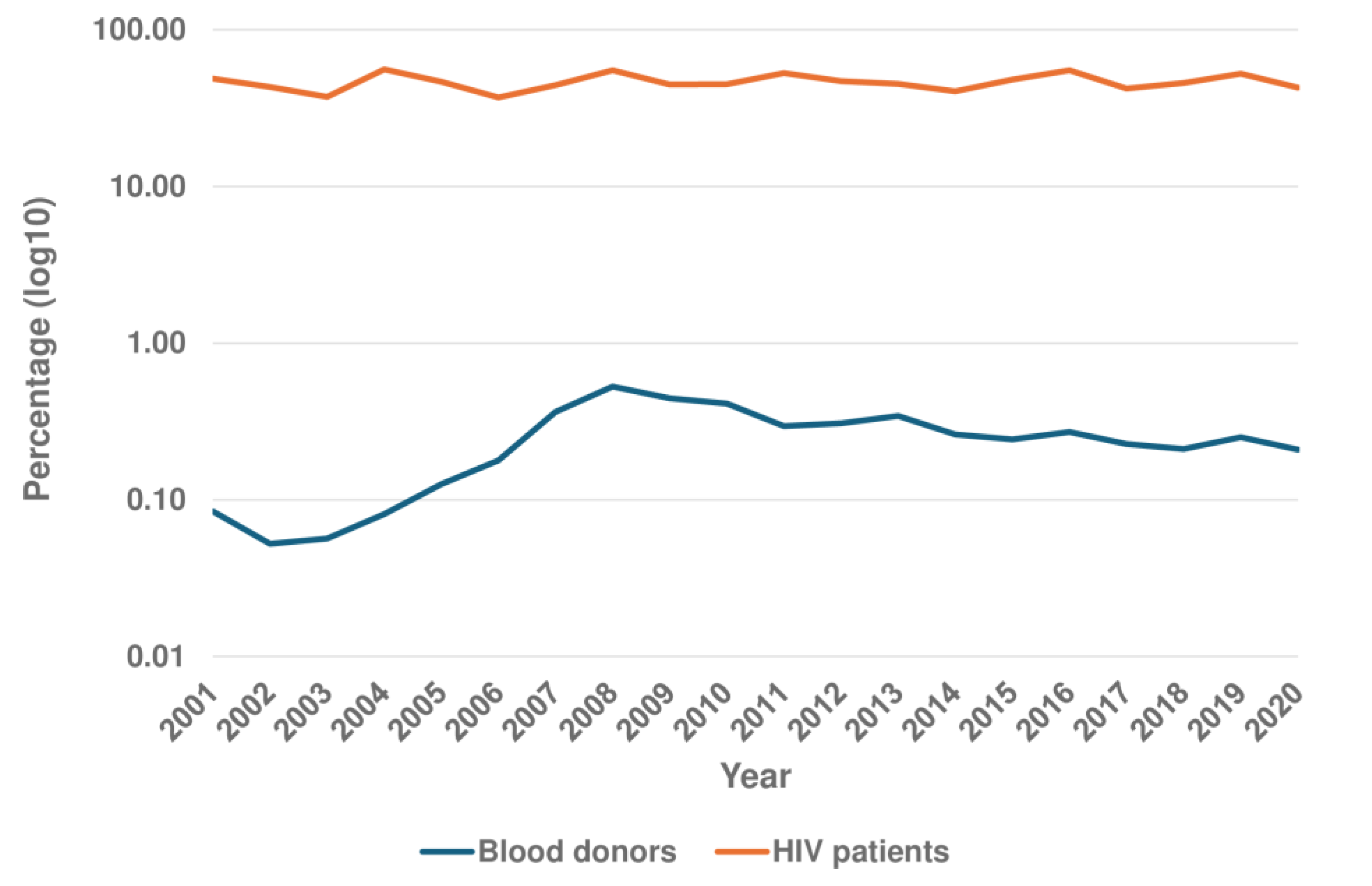
Figure 1. Prevalence of syphilis.
Preprints 143098 g001
Table 2. Univariate and multivariate data analysis of the impact of syphilis among people living with HIV.
Syphilis/Total
(%)
OR (95% CI)
Univariate*
p value OR (95% CI)
Multivariate**
p value
Age group (years) < 20 39/75 (52.00) 1.41 (0.75-2.69) 0.286 1.27 (0.64-2.50) 0.494
20-39 415/814 (50.98) 1.59 (1.00-2.54) 0.050 1.35 (0.82-2.22) 0.236
40-59 303/720 (42.08) 1.11 (0.70-1.78) 0.656 1.15 (0.70-1.90) 0.585
> 60 32/81 (39.51) Ref Ref
Sex Male 758/1,487 (50.98) 6.50 (4.31-9.81) < 0.01 2.46 (1.55-3.91) < 0.01
Female 28/203 (13.79) Ref Ref
Transmission
category
MSM 654/1,107 (59.08) 4.93 (3.93-6.20) < 0.01 3.65 (2.81-4.73) < 0.01
Others*** 132/583 (22.64) Ref Ref
Geographical
origin
Immigrants 285/550 (51.82) 1.37 (1.12-1.68) < 0.01 1.37 (1.10-1.71)* < 0.01
Locals 501/1,140 (43.95) Ref Ref
Geographical
area
Europe (Spain excluded) 165/295 (55.93) 1.62 (1.25-2.09) < 0.01 1.35 (1.02-1.77)** 0.035
Americas 106/182 (58.24) 1.78 (1.30-2.44) < 0.01 1.77 (1.26-2.49)** < 0.01
Africa 13/68 (19.12) 0.30 (0.16-0.56) < 0.01 0.70 (0.36-1.37)** 0.300
Asia/Oceania 1/5 (20.0) 0.32 (0.04-2.86) 0.307 0.33 (0.03-3.30)** 0.344
Spain 501/1,140 (43.95) Ref Ref
*Model includes age, sex, transmission category and geographical origin. ** Model includes age, sex, transmission category and geographical area of origin. *** Includes: HTSP: heterosexuals, PWID: persons who inject drugs and patients with no data or categorized as “other”, .
Table 3. Descriptive analysis of syphilis prevalence and population characteristics by geographical area of origin.
Spain Europe (excluding Spain) Americas Africa Asia
Syphilis Yes 501 (43.95) 165 (55.93) 106 (58.24) 13 (19.12) 1 (20.00)
Age group
(years)
< 20
20-39
40-59
> 59
66 (5.79)
554 (48.60)
464 (40.70)
56 (4.91)
1 (0.34)111 (37.63)159 (53.90)24 (8.13) 4 (2.2)105 (57.69)72 (39.56)1 (0.55) 4 (5.88)41 (60.29)23 (33.82)0 (0.00) 0 (0.00)
3 (60.00)
2 (40.00)
0 (0.00)
Sex Male 1,006 (88.25) 279 (94.58) 164 (90.11) 35 (51.47) 0 (0.00)
Transmission
category
MSM*
HTS**
PWID
Other/no data
731 (64.12)212 (18.60)89 (7.81)
108 (9.47)
240 (81.36)31 (10.51)4 (1.36)20 (6.78) 124 (68.13)39 (21.43)2 (1.1)
17 (9.34)
9 (13.24)55 (80.88)1 (1.47)
3 (4.41)
3 (60.00)
2 (40.00)
0 (0.00)
0 (0.00)
* MSM: men who have sex with men, ** HTS: Heterosexuals, *** PWID: Persons who inject drugs.
Table 4. RPR titers in syphilis/HIV coinfection.
RPR %
Negative 50.91
Positive 1:1 6.79
1:2 10.70
1:4 7.83
1:8 3.66
1:16 8.62
1:32 4.70
1:64 3.39
1:128 2.09
1:256 0.78
1:512 0.52
Disclaimer/Publisher’s Note: The statements, opinions and data contained in all publications are solely those of the individual author(s) and contributor(s) and not of MDPI and/or the editor(s). MDPI and/or the editor(s) disclaim responsibility for any injury to people or property resulting from any ideas, methods, instructions or products referred to in the content.
Copyright: This open access article is published under a Creative Commons CC BY 4.0 license, which permit the free download, distribution, and reuse, provided that the author and preprint are cited in any reuse.
Prerpints.org logo

Preprints.org is a free preprint server supported by MDPI in Basel, Switzerland.

Subscribe

Disclaimer

Terms of Use

Privacy Policy

Privacy Settings

© 2025 MDPI (Basel, Switzerland) unless otherwise stated
