

Submitted:
13 December 2024
Posted:
16 December 2024
You are already at the latest version
Abstract
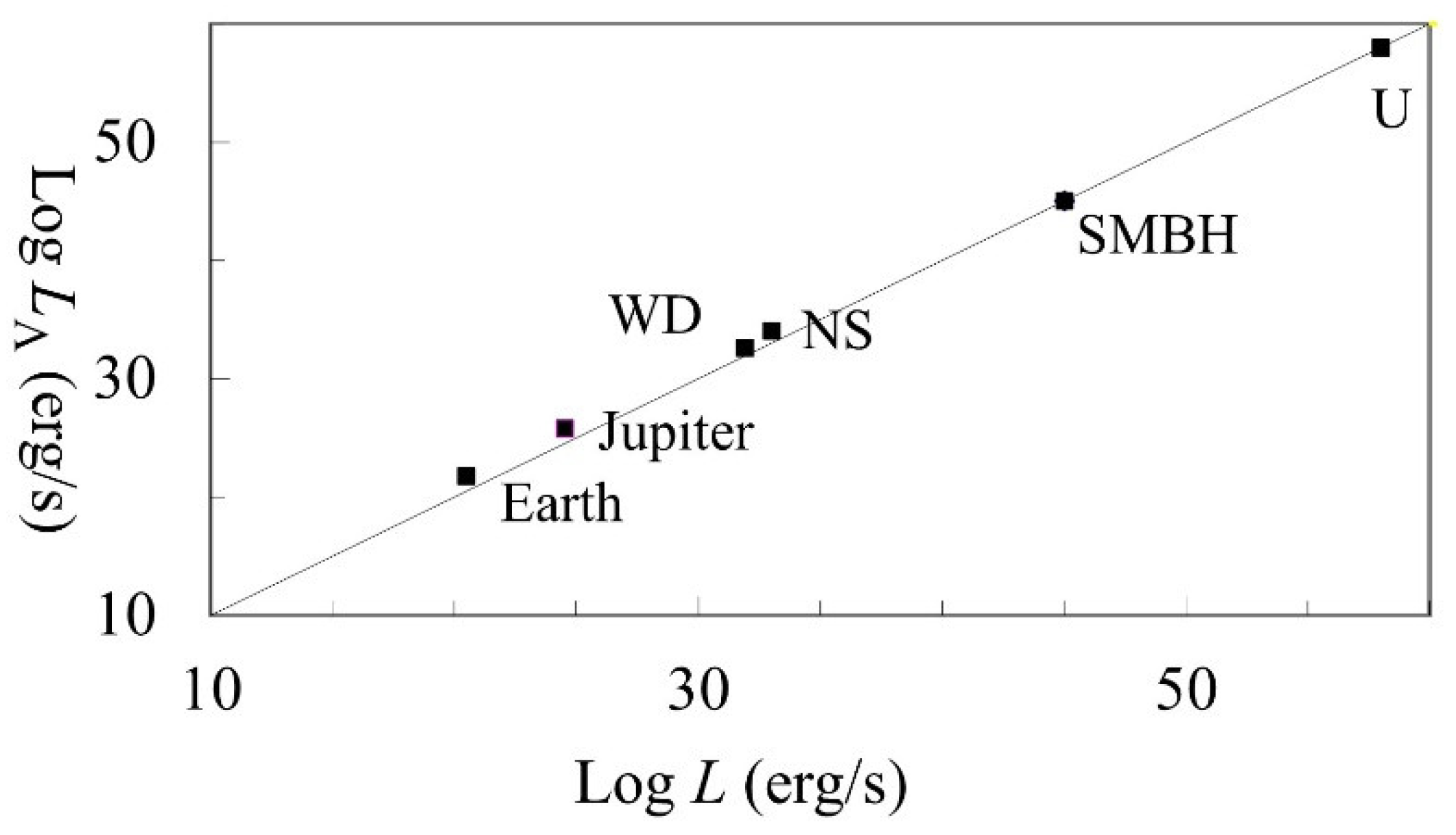
Two outstanding problems in the early evolution of the Earth concern the origins of the Moon and of the two large low-velocity provinces sitting on the core-mantle boundary. Evidence from moon rocks indicates that the geochemical compositions of the Moon and the Earth’s silicate mantle are nearly identical. This is difficult to explain with the giant impact hypothesis, but compatible with the older theory that the Moon arose by fission from a rapidly spinning Earth. To overcome problems with angular momentum in the fission model, it was recently proposed that the Moon separation was assisted by a large nuclear explosion occurring near the core-mantle boundary. It is unclear, however, whether such a ‘deep georeactor’ ever existed. Here we draw attention to an alternative energy source and mechanism for the Moon ejection. Theoretical and observational evidence suggests that all bodies generate internal heat at the rate –UH0, where U is the internal gravitational potential energy and H0 is the Hubble constant. With this process, the hottest region in the proto-Earth would have been the outer core. In our model, solar tides acting on the liquid outer core focused this energy in two equatorial bulges on the core-mantle boundary, which were the precursors of the two large low-velocity provinces. Prior to the existence of convective plate tectonics and deep mantle plumes, this heat would have been trapped in these structures by the overlying mantle. Over a period of 107–108 years, temperatures and pressures steadily rose inside of them until one exploded, launching the overlying proto-lunar materials into a low orbit. The Moon expulsion is suggested to have then catalyzed a series of volcanic events shaping the Earth’s geology and life, including the origin of plate tectonics and the formation of the large igneous provinces.
Keywords:
1. Introduction
2. Difficulties with the Georeactor Model
3. Geological Energy from Ʌ
Relation to Black Holes and Cosmology
4. Origin of LLVPs and the Moon
Moon Ejection by Ʌ Explosion
5. Origin of Mantle Plumes, Plate Tectonics and Large Igneous Provinces
Relation to Large Igneous Provinces
6. Discussion
Author Contributions
Funding
Data Availability Statement
Conflicts of Interest
References
- Wang, Y.; Wen, L. Mapping the geometry and geographic distribution of a very low velocity province at the base of the Earth’s mantle. J. Geophys. Res. Solid Earth 2004, 109, 1–18. [Google Scholar] [CrossRef]
- Cottaar, S.; Lekic, V. Morphology of seismically slow lower-mantle structures. Geophys. J. Int. 2016, 207, 1122–1136. [Google Scholar] [CrossRef]
- McNamara, A.K. A review of large low shear velocity provinces and ultra low velocity zones. Tectonophysics 2019, 760, 199–220. [Google Scholar] [CrossRef]
- Christensen, U.R.; Hofmann, A.W. Segregation of subducted oceanic crust in the convecting mantle. J. Geophys. Res. Solid Earth 1994, 99, 19867–19884. [Google Scholar] [CrossRef]
- Wang, W.; et al. Velocity and density characteristics of subducted oceanic crust and the origin of lower-mantle heterogeneities. Nat. Commun. 2020, 11, 64. [Google Scholar] [CrossRef] [PubMed]
- McNamara, A.K.; Zhong, S. Thermochemical structures beneath Africa and the Pacific Ocean. Nature 2005, 437, 1136–1139. [Google Scholar] [CrossRef]
- Labrosse, S.; Hernlund, J. W; Coltice, N. A crystallizing dense magma ocean at the base of the Earth’s mantle. Nature 2007, 450, 866–869. [Google Scholar] [CrossRef] [PubMed]
- Wang, W.; Liu, J.; Zhu, F.; et al. Formation of large low shear velocity provinces through the decomposition of oxidized mantle. Nat Commun 2021, 12, 1911. [Google Scholar] [CrossRef] [PubMed]
- de Meijer, R.J; Anisichkin, V.F.; van Westrenen, W. Forming the Moon from terrestrial silicate-rich material. Chem. Geol. 2013, 345, 40–49. [Google Scholar] [CrossRef]
- Ćuk, M.; Stewart, S.T. Making the moon from a fast-spinning earth: A giant impact followed by resonant despinning. Science 2012, 338, 1047–1052. [Google Scholar] [CrossRef] [PubMed]
- Canup, R.M. Forming a Moon with an Earth-like Composition via a Giant Impact. Science 2012, 338, 1052–1055. [Google Scholar] [CrossRef] [PubMed]
- Yuan, Q.; Li, M.; Desch, S.J.; et al. Moon-forming impactor as a source of Earth’s basal mantle anomalies. Nature 2023, 623, 95–99. [Google Scholar] [CrossRef] [PubMed]
- Darwin, G.H. On the bodily tides of viscous and semi-elastic spheroids, and on the ocean tides upon a yielding nucleus. Phil. Trans. Roy. Soc. Lond. 1879, 170, 1–35. [Google Scholar]
- Ringwood, A.E. Some aspects of the thermal evolution of the Earth. Geochim. Cosmochim. Acta 1960, 20, 241–249. [Google Scholar] [CrossRef]
- Wise, D.U. An origin of the Moon by fission during formation of the Earth’s core. J. Geophys. Res. 1963, 68, 1547–1554. [Google Scholar] [CrossRef]
- Voronin, D.V. Generation of the Moon and some other celestial bodies due to explosion in planet interiors. Int. J. Geol. 2007, 1, 16–21. [Google Scholar]
- Anisichkin, V.F. Do planets burst? Combust. Explos. Shock Waves 1997, 33, 117–120. [Google Scholar] [CrossRef]
- Anisichkin, V.F.; Besborodov, A.A.; Suslov, I.R. Georeactor in the Earth. Transp. Theor. Stat. Phys. 2008, 37, 624–633. [Google Scholar] [CrossRef]
- de Meijer, R.J.; van Westrenen, W. Assessing the feasibility and consequences of nuclear georeactors in the Earth’s core–mantle boundary region. S. Afr. J. Sci. 2008, 104, 111–118. [Google Scholar]
- Boyet, M.; Carlson, R.W. 142Nd evidence for early (> 4.53 Ga) global differentiation of the silicate Earth. Science 2005, 309, 576–581. [Google Scholar] [CrossRef]
- Reuver, M.; de Meijer, R.J.; ten Kate, I.L.; et al. Boundary conditions for the formation of the Moon. Neth. J. Geosci. – Geol. Mijnbouw 2016, 95, 131–139. [Google Scholar] [CrossRef]
- Edwards, M.R. Graviton decay without decreasing G: A possible cause of planetary heating, expansion and evolution. Ann Geophys. 2006, 49, 501–509. [Google Scholar]
- Edwards, M.R. Does the Hubble redshift flip photons and gravitons? Astrophys. Space Sci. 2012, 339, 13–17. [Google Scholar] [CrossRef]
- Edwards, M.R. Gravity from refraction of CMB photons using the optical-mechanical analogy in general relativity. Astrophys. Space Sci 2014, 351, 401–406. [Google Scholar] [CrossRef]
- Edwards, M.R. Optical gravity in a graviton spacetime. Optik 2022, 260, 169059. [Google Scholar] [CrossRef]
- Edwards, M.R. Shell Universe: Reducing Cosmological Tensions with the Relativistic Ni Solutions. Astronomy 2024, 3, 220–239. [Google Scholar] [CrossRef]
- Edwards, M.R. : Indications from space geodesy, gravimetry and seismology for slow Earth expansion at present – comment on “The Earth expansion theory and its transition from scientific hypothesis to pseudoscientific belief” by Sudiro (2014). Hist. Geo Space. Sci. 2016, 7, 125–133. [Google Scholar] [CrossRef]
- Edwards, M.R. Deep mantle plumes and an increasing Earth radius. Geod. Geodyn. 2019, 10, 173–17. [Google Scholar] [CrossRef]
- Ma, X.; Tkalčić, H. Seismic low-velocity equatorial torus in the Earth’s outer core: Evidence from the late–coda correlation wavefield. Sci. Adv. 2024, 10, eadn5562. [Google Scholar] [CrossRef] [PubMed]
- Lay, T.; Hernlund, J.; Buffett, B. Core–mantle boundary heat flow. Nature Geosci. 2008, 1, 25–32. [Google Scholar] [CrossRef]
- Touboul, M.; Kleine, T.; Bourdon, B.; et al. Late formation and prolonged differentiation of the Moon inferred from W isotopes in lunar metals. Nature 2007, 450, 1206–1209. [Google Scholar] [CrossRef] [PubMed]
- The KamLAND Collaboration. Partial radiogenic heat model for Earth revealed by geoneutrino measurements. Nature Geosci. 2011, 4, 647–651. [Google Scholar] [CrossRef]
- Herndon, J.M. Nuclear georeactor origin of oceanic basalt 3He/4He, evidence, and implications. Proc. Natl. Acad. Sci. U.S.A. 2003, 100, 3047–3050. [Google Scholar] [CrossRef] [PubMed]
- Terez, E.I.; I. E. Terez. Thermonuclear processes in the core is the main source of energy of geodynamic evolution and degassing of the Earth. Bull. Crimean Astrophys. Obs. 2011, 107, 103–112. [Google Scholar] [CrossRef]
- Dirac, P.A. M. The cosmological constants. Nature 1937, 139, 323. [Google Scholar] [CrossRef]
- Jordan, P. Geophysical consequences of Dirac’s hypothesis. Rev. Mod. Phys. 1962, 34, 596e600. [Google Scholar] [CrossRef]
- Jordan, P. The Expanding Earth, Pergamon, Oxford, 1971 (translated and revised from the German edition: Die Expansion der Erde, Friedr. Vieweg, Braunschweig, 1966).
- Kragh, H. Expanding Earth and declining gravity: A chapter in the recent history of geophysics, Hist. Geo Space. Sci. 2015, 6, 45e55. [Google Scholar] [CrossRef]
- Kragh, H. Pascual Jordan, varying gravity, and the expanding Earth, Phys. Perspect. 2015, 17, 107e134. [Google Scholar] [CrossRef]
- Ni, J. Solutions without a maximum mass limit of the general relativistic field equations for neutron stars. Sci. China Phys. Mech. Astron. 2011, 54, 1304–1308. [Google Scholar] [CrossRef]
- Neslušan, L. The Ni’s solution for neutron star and outward oriented gravitational attraction in its interior. J. Mod. Phys. 2015, 6, 2164–2183. [Google Scholar] [CrossRef]
- Neslušan, L. Outline of the concept of stable relativistic radiation sphere. A model of quasar? Astrophys. Space Sci. 2017, 362, 48. [Google Scholar] [CrossRef]
- Neslušan, L. The second rise of general relativity in astrophysics. Mod. Phys. Lett. A 2019, 34, 1950244. [Google Scholar] [CrossRef]
- deLyra, J.L.; de, A. Orselli, R.; Carneiro, CEI. Exact solution of the Einstein field equations for a spherical shell of fluid matter. Gen. Relativ. Gravit. 2023, 55, 68. [Google Scholar] [CrossRef]
- Gubbins, D.; Alfe, D.; Masters, G.; et al. Can the Earth’s dynamo run on heat alone? Geophys. J. Int. 2003, 155, 609e622. [Google Scholar] [CrossRef]
- Burša, M.; Hovorková, O. Expanding Earth hypothesis and the Earth’s gravitational potential energy, Stud. Geophys. Geod. 1994, 38, 235–245. [Google Scholar]
- French, S.W.; Romanowicz, B. Broad plumes rooted at the base of Earth’s mantle beneath major hotspots. Nature 2015, 525, 95–99. [Google Scholar] [CrossRef] [PubMed]
- Nolet, G.; Karato, S.; Montelli, R. Plume fluxes from seismic tomography. Earth Planet. Sc. Lett. 2006, 248, 685–699. [Google Scholar] [CrossRef]
- Shen, W.-B.; Sun, R.; Chen, W.; et al. The expanding Earth at present: Evidence from temporal gravity field and space-geodetic data. Ann. Geophys.-Italy 2011, 54, 436–453. [Google Scholar] [CrossRef]
- Shen, W.; Shen, Z.; Sun, R.; et al. Evidences of the expanding Earth from space-geodetic data over solid land and sea level rise in recent two decades, Geod. Geodyn. 2015 10, 1–5. [CrossRef]
- Wu, X.; Collilieux, X.; Altamimi, Z.; et al. Accuracy of the International Terrestrial Reference Frame origin and Earth expansion, Geophys. Res. Lett. 2011, 38, L13304. [Google Scholar] [CrossRef]
- Jackson, M.G.; Carlson, R. An ancient recipe for flood basalt genesis. Nature 2011, 476, 316–319. [Google Scholar] [CrossRef]
- Davies, D.R.; Goes, S.; Sambridge, M. On the relationship between volcanic hotspot locations, the reconstructed eruption sites of large igneous provinces and deep mantle seismic structure, Earth Planet. Sci. Lett. 2015, 411, 121–130. [Google Scholar] [CrossRef]
- Torsvik, T.H; Smethurst, M.A.; Burke, K.; et al. Long term stability in deep mantle structure: Evidence from the ∼300 Ma Skagerrak-Centered Large Igneous Province (the SCLIP). Earth Planet. Sci. Lett. 2008, 267, 444–452. [Google Scholar] [CrossRef]
- Torsvik, T.H.; Burke, K.; Steinberger, B.; et al. Diamonds sampled by plumes from the core–mantle-boundary. Nature 2010, 466, 352–358. [Google Scholar] [CrossRef] [PubMed]
- Austermann, J.; Kaye, B.T.; Mitrovica, J.X.; et al. A statistical analysis of the correlation between large igneous provinces and lower mantle seismic structure. Geophys. J. Int. 2014, 197, 1–9. [Google Scholar] [CrossRef]
- Wang, H.-Z. On the internal energy source of the large planets. Chin. Astron. Astrophys. 1990, 14, 361–370. [Google Scholar] [CrossRef]
- Křížek, M.; Gueorguiev, V.G.; Maeder, A. An alternative explanation of the orbital expansion of Titan and other bodies in the Solar System. Gravit. Cosmol. 2022, 28, 122–132. [Google Scholar] [CrossRef]
- Vavryčuk, V. Gravitational orbits in the expanding Universe revisited. Front. Astron. Space Sci. 2023, 10, 1071743. [Google Scholar] [CrossRef]
Disclaimer/Publisher’s Note: The statements, opinions and data contained in all publications are solely those of the individual author(s) and contributor(s) and not of MDPI and/or the editor(s). MDPI and/or the editor(s) disclaim responsibility for any injury to people or property resulting from any ideas, methods, instructions or products referred to in the content. |
© 2024 by the authors. Licensee MDPI, Basel, Switzerland. This article is an open access article distributed under the terms and conditions of the Creative Commons Attribution (CC BY) license (http://creativecommons.org/licenses/by/4.0/).


