

Submitted:
11 December 2024
Posted:
12 December 2024
You are already at the latest version
Abstract
Albania, situated in southeastern Europe, enjoys a Mediterranean climate well-suited for grape cultivation. Since the 1990s, the country has experienced a resurgence in its rich winemaking traditions, which have gained considerable attention over the last decade. Alongside its significant wine production, Albania generates large amounts of vine pruning waste and fermentation by-products, estimated at over 50,000 tons of prunings and 35900 tons of grape pomace annually. This waste is often burned outdoors, releasing considerable CO2 emissions and contributing to greenhouse gas levels. However, recycling these prunings into fertilizer presents a sustainable choice, providing key minerals, nitrogen, phosphorus, and various micronutrients, thereby lessening the dependence on synthetic fertilizers in farming. Additionally, there is a potential for using wine fermentation waste as fertilizer for agricultural land or vineyards. The Albanian wine sector has significant untapped opportunities, such as employing vine pruning ash as a mineral fertilizer to help achieve sustainability goals.
Keywords:
vine pruning
; biofertilizer
; sustainable agriculture
; macronutrients
; micronutrients
; Albania
1. Introduction
The ever-increasing global population is driving up the demand for food and essential resources, which will further escalate agricultural and industrial activities. As a result, the generation of significant agricultural waste has become a pressing concern [1,2]. Effective disposal, use, and management strategies could enhance efficiency and be implemented universally [3].
Grape (Vitis vinifera L.) has been grown since ancient times and ranks among the most widely cultivated fruit crops in the world [4]. Its fruit serves various purposes: it can be consumed fresh, dried as raisins, or processed into fermented products like wines and vinegar, as well as non-fermented items such as juices and jams. Additionally, products like seed oils can be extracted from it. The economic significance and health advantages contribute to its status as one of the most valued crops globally [5,6].
The wine processing sector can produce enormous quantities of residues throughout the entire process, from vine cultivation to wine fermentation [7]. Recently, significant focus has shifted towards vine pruning and revalorization, especially given the vast quantities of waste produced during harvesting. Globally, an estimated 20 million tons of vine shoots are generated each year [8].
While conventional agriculture has increased crop yields, it has incurred significant environmental costs due to extensive nitrogen fertilizer use and intensive agricultural management practices, such as burning pruning materials [9]. Fertilizers' application may lead to environmental and health issues. Utilizing vine pruning residues as fertilizers supports sustainable agriculture and protects the environment for future generations [10].
Investigating ways to lower nitrogen mineral fertilization in Mediterranean vineyards without compromising grape yield and quality involves using cover crops and pruning residues to meet the vines' nitrogen demands [9].
The increasing demand for different wood products has shifted efforts towards using unexploited resources as substitutes for forest wood. Recently, there has been significant interest in using agricultural residues to replace wood [11,12]. Thermal treatment is increasingly favored as a waste disposal method since it drops hazardous materials, minimizes their volume, helps energy recovery, and enhances economic benefits for rural areas. EU regulations mandate a substantial decrease in biodegradable waste sent to landfills [13,14].
Located in Southern Europe and bordered by the Mediterranean Sea, the climate creates favorable conditions for permanent crops such as olives, grapes, citrus fruits, and other fruit trees [15,16,17,18]. Compared to global statistics, Albania is a modest producer of grapes and wine. However, as a Mediterranean country, it owns untapped potential [18,19].
1.1. World Vineyard Area and Grape Production Statistics
The International Organisation of Vine and Wine (OIV) reported that in 2023, the global vineyard area totaled 7.202 million hectares (mHa), while worldwide wine production was estimated at 237 million hectoliters (mHl), excluding juices and musts [20]. Various climate conditions and other factors contributed to a notable decline of 25 MHL (-9.6%) compared to 2022. Within the European Union (EU), the vineyard area measured 3.3 mHa, with Spain, recognized as the largest vineyard country globally, accounting for 0.945 mHa. These figures reflect a decline of 0.8% for the EU and 1.0% for Spain from 2022. As reported by FAOSTAT, the 2022annual statistics indicate that Europe stays the leading wine producer, followed by Asia and Oceania (Table 1) [4].
1.2. Vineyard Area and Grape Production Statistics in Albania
Statistics on vineyard acreage and grape production indicate a rising pattern. From 2018 to 2023, the total vineyard area has grown, with the 2021 and 2022 harvest seasons achieving the highest yields (Table 2). In contrast, grape production in 2023 experienced a notable decline compared to 2022, highlighting the challenges faced by producers in the vine and wine sector, shown by a 10% decrease [21].
At the local level, the country's data is organized based on the administrative structure, highlighting the primary grape-producing regions in western Albania, which receive help from Mediterranean climate features (Figure 1). The Institute of Statistics of Albania (INSTAT) reports that Fieri and Elbasan counties are the leading contributors to vineyard area and grape production. The decline noted during the 2023 harvest year is significantly influenced by conditions in Fieri County [21].
1.3. Viticulture Regions of Albania and Meteorological Data
Situated in Southeast Europe, the Adriatic and Ionian Seas shape the country's climate. Its western plain near the Adriatic Sea features low-altitude terrain, transitioning into hilly areas to the east and mountainous regions beyond. The inland climate, influenced by the landscape and multiple rivers, provides ideal conditions for vine cultivation. Albanian territory is categorized into three vine macroregions according to altitude above sea level.
According to the official EU viticulture classification [22], Albania is categorized in Climatic Zone C, the warmest zone (Figure 1). It includes three sub-zones: C IIIB, C IIIA, and C II, which are defined by their viticulture characteristics and wine naming conventions [23]. The solar radiation hours for these regions are as follows: Vlora has 2790 hours, and Durrësi has 2600 hours, both within the CIIIB European Viticulture Subzone, while Tirana, with 2560 hours, is part of the CIIIA European Viticulture Subzone [23].
The lowland and coastal area encompasses plains and hills with elevations reaching 300 m above sea level. It includes the administrative units of Delvina, Vlora, Fieri, Lushnja, Kavaja, Durres, Tirana, Lezha, and Shkodra. The area’s Mediterranean climate fosters ideal conditions for grape growing.
C IIIB European viticulture zone – covering the coastal and low-hilly western Albania. This zone rises to an elevation of 400 m and encompasses coastal plains. The yearlong mean temperatures are 15-16 °C; the coldest month is January (5.6-7.5 °C), and the warmer month is July (26.4 °C), with a minimum temperature of -5 °C. The days with frost occur 5-6 days per year.
The central zone includes hilly areas ranging from 300 to 600 meters above sea level and includes the administrative divisions of Elbasan, Kruja, Gramshi, Berati, Përmeti, Librazhd, Mati, Mirdita, and Puka. Its distance from the sea influences the climate, resulting in many sunny hours and low humidity, creating ideal conditions for grape growing.
C IIIA European viticulture zone – Hilly and pre-mountainous regions, away from the sea’s influence. This zone includes 400-800 m elevations and hilly pre-mountainous areas, far from the sea’s effects. The yearlong mean temperature is 12-13°C, with January being the coldest month (2-4°C) and July the hottest month (25°C).
The eastern zone encompasses 600 to 850 meters, including the southeastern plateau with the administrative divisions of Pogradec, Korça, and Kolonja, along with its Leskovik locality, in the Vjosa valley. The Dibra Valley is located in the Drin i Zi region. This region experiences a continental climate characterized by low precipitation, dry summers, and cold winters.
C II European viticulture zone – Mountainous areas present in South to North linearity, especially the Eastern regions of the country, with elevations over 800 m. The yearlong mean temperature is 10-11 °C; the coldest month is January (0.5-2 °C), and the hottest month is July (19-20 °C); the minimum temperature is -13 °C, and days with frost range from 35 to 45 days per year.
Local vineyards feature twenty-one cultivars, and 108 ecotypes of grapes currently listed and cultivated. Among the White wine grape varieties, Shesh i bardhë cv. Stands out, primarily grown in Tirana, Durrësi, and Kavaja; however, it has also begun to appear in other locations recently. Other notable white grape cultivars include Pulës, Debina e bardhë, Serina e bardhë, and Kryqësi [18].
Kallmet cv. Stands out among red grape varieties for its remarkable potential, thriving in the lowlands of Northwestern Albania, particularly in Shkodra, Lezha, and Mirdita. Shesh i Zi cv. Originates from the Erzeni River valley and is prevalent across various regions, covering both I and II vine zones. Vlosh cv. Is a historic red grape variety found in the southwestern areas, including Vlora, Himara, and Delvina. Serina e zezë is a medium-ripening grape adapted to the continental climate of the Korça region, and it is also found in Pogradeci, Leskoviku, Berati, and Skrapari [19].
2. Inorganic Fertilizers
Vine is a perennial crop with extensive roots that consistently draws essential nutrients from the soil. Effective nutrient management is crucial to sustaining both the plant and its yield. Fertilizing vines increases annual production, improves the quality of grapes and wine, and enhances the biological and chemical properties of the soil. Plants rely on chemical elements from the soil and air for best growth and development. Nutrients are classified as either mobile or immobile within soil and plant structures, affecting their redistribution and potentially leading to deficiencies or harmful excesses. The nutrient requirements change throughout the plant’s life cycle and developmental stages. There is a high nutrient demand during vigorous vegetative growth in spring, which reduces during the reproductive phase [24].
Eighteen key elements are divided into two main categories: macronutrients and micronutrients. Plants absorb macronutrients in large quantities, which can be categorized into primary nutrients like nitrogen (N), phosphorus (P), and potassium (K); secondary nutrients such as magnesium (Mg), calcium (Ca), and sulfur (S); and structural nutrients that include carbon (C), hydrogen (H), and oxygen (O). The micronutrients include iron (Fe), boron (B), manganese (Mn), zinc (Zn), copper (Cu), cobalt (Co), chlorine (Cl), nickel (Ni), and molybdenum (Mo) [25]. Application of animal manure may ensure sizable amounts of primary nutrients (Table 3) [26].
Between 1990 and 2020, the global use of inorganic fertilizers soared to around two hundred million tonnes. Nitrogen fertilizers accounted for 56 percent (113 million tonnes) of this figure, while phosphorus fertilizers represented 24 percent (48 million tonnes), and potassium fertilizers included the remaining 20 percent (39 million tonnes) [25].
Vine Pruning Management and Mineral Fertilization
In the Mediterranean, intensive land management, particularly in vineyards, presents a significant challenge that leads to soil degradation. Although frequent tillage is effective for controlling weeds and preventing soil cracking, it also results in greater soil compaction, harm to vine roots, reduced vegetation cover, increased water runoff, sediment erosion, soil organic matter mineralization, and nitrate leaching [9]. Implementing various sustainable practices in orchards can promote environmental sustainability and mitigate the adverse agricultural effects on the environment [27].
Pruning, an essential winter activity in vineyards, plays a significant role in controlling vine growth. It shapes the size and form of the vine, balances fruit and foliage, and affects the quality and number of grapes harvested. By managing pruning effectively, the health and growth of the tree crown can be optimized, promoting better water and nutrient uptake that benefits root function. Consequently, this improves the plants’ capacity to adjust to changing environmental conditions [7].
Vine pruning is a vital horticultural technique in vineyard management, with a considerable amount of vine pruning (VP) performed each year [5]. Vine pruning weights range from 0.56 kg to 2.01 kg per vine, depending on trellis systems and annual fluctuations [27]. Due to standard agricultural practices, a large portion of VP residue is either left on-site or burned, creating a significant environmental hazard [7]. Much of the vine pruning is still unused in the fields, with approximately 5 tons pruned per hectare each year, surpassing the average yield in temperate forest areas [11].
In traditional practices, a part of the vine prunings (VP) is either employed for cutting propagation or retained in the vineyard to boost soil organic matter through the interaction of microorganisms and air [9]. Additionally, a significant amount of VP is subjected to open burning and distributed in vineyards as fertilizer [10].
Estimating the biomass of vine prunings relies on the shape of the vine stock, tree density (trees per hectare), and the geographical area. Data from Italy shows that pruning yields range from 0.910 to 3.000 tons per hectare of fresh weight [7]. As a result, a significant amount of cane pruning waste is produced annually, typically either composted or burned for disposal each year. In Portugal, the wine sector produces various residues, including vine pruning residue, with annual production estimated at 1.2 to 3.5 tons per hectare during wine processing [12].
3. Mineral Content of Vine Pruning Ash
Large amounts of agricultural and agro-industrial wastes are abundantly available in South European countries. The appeal of thermal treatment as a disposal method is growing because it cuts harmful components, minimizes waste volume, facilitates energy recovery, and boosts economic benefits for rural areas. European Union regulations mandate substantially reducing biodegradable waste in landfills [14].
Around 480 million tons of ash are produced yearly from biomass combustion globally. On Crete, Greece’s largest island, approximately 190,800 tons of vine by-products go unused yearly [14]. These residues often stay in agricultural fields, serve as domestic fuel due to their calorific value, or are burned on-site, resulting in environmental pollution [29]. Currently, these waste materials decompose in fields or are incinerated, causing significant environmental damage and releasing greenhouse gases without compensation [2]. Historically, these woody biomass resources have been used primarily through simpler technologies, like combustion, and processes such as pyrolysis for biochar production [30].
Often viewed solely as a biomass energy source, the VP is still undervalued for its potential use of ash residues as fertilizers. The primary inorganic oxides found in the raw fuel ashes show significant levels of Ca, K, and P oxides, along with smaller amounts of Mg oxide, all recognized as essential plant nutrients and contributors to soil enhancement (Table 5) [14].
Biomass fuels, wood, and straw ashes hold elements rich in calcium, silicon, and potassium. Specifically, the potassium content in straw ash is three times greater than that found in bark or wood fuels [31]. Fossil fuels are regarded as non-renewable energy sources due to the extensive time needed to form (millions of years) and the rate at which we consume them. Moreover, the combustion of fossil fuels emits net carbon dioxide (CO2) into the atmosphere. In contrast, biomass is a renewable resource considered CO2 neutral, as the carbon dioxide released during combustion or other conversion methods is recaptured when biomass regrows through photosynthesis [13]. Currently, the common practices include leaving these organic wastes in fields to decompose or incinerate them, which leads to significant environmental harm without compensation for the greenhouse gases emitted [2].
4. Integral Vine Pruning Valorisation
Recently, a growing focus has been on revalorizing vine shoots due to the significant waste produced during harvest. Various methods for repurposing vine shoots have been suggested [8]. Wine production generates considerable waste, particularly from vine pruning. This pruning waste, referred to as VP, consists of lignocellulosic biomass that is abundant in biobased compounds, which can be processed into commercially practical products by selectively separating its primary components: cellulose, hemicellulose, and lignin [32]. To maximize the use of this waste, a proposed two-stage autohydrolysis process effectively extracts oligosaccharides, phenolic compounds, ethanol, and lignin from pruning debris [29]. Within the wine sector, one waste recovery method involves creating biochar from leftover vine pruning materials [30]. For instance, anaerobic digestion is particularly effective at recovering residues rich in cellulosic materials, while fermentation works best when dealing with residues high in carbohydrates [2]. Nonetheless, these processes are inefficient for dealing with lignin-rich residues, such as those from the pruning of fruit orchards, including vineyards.
The residues generated from vineyard pruning present challenges that need addressing. Fortunately, these logistical challenges can be tackled, and the processes for valorizing vine pruning are varied and well-researched [33]. The recovery potential for this waste is significant, offering considerable flexibility in its application, which hinges on the final aim and available quantities. Such applications include biomass gasification units, charcoal production facilities, power plants, and pellet production units [2].
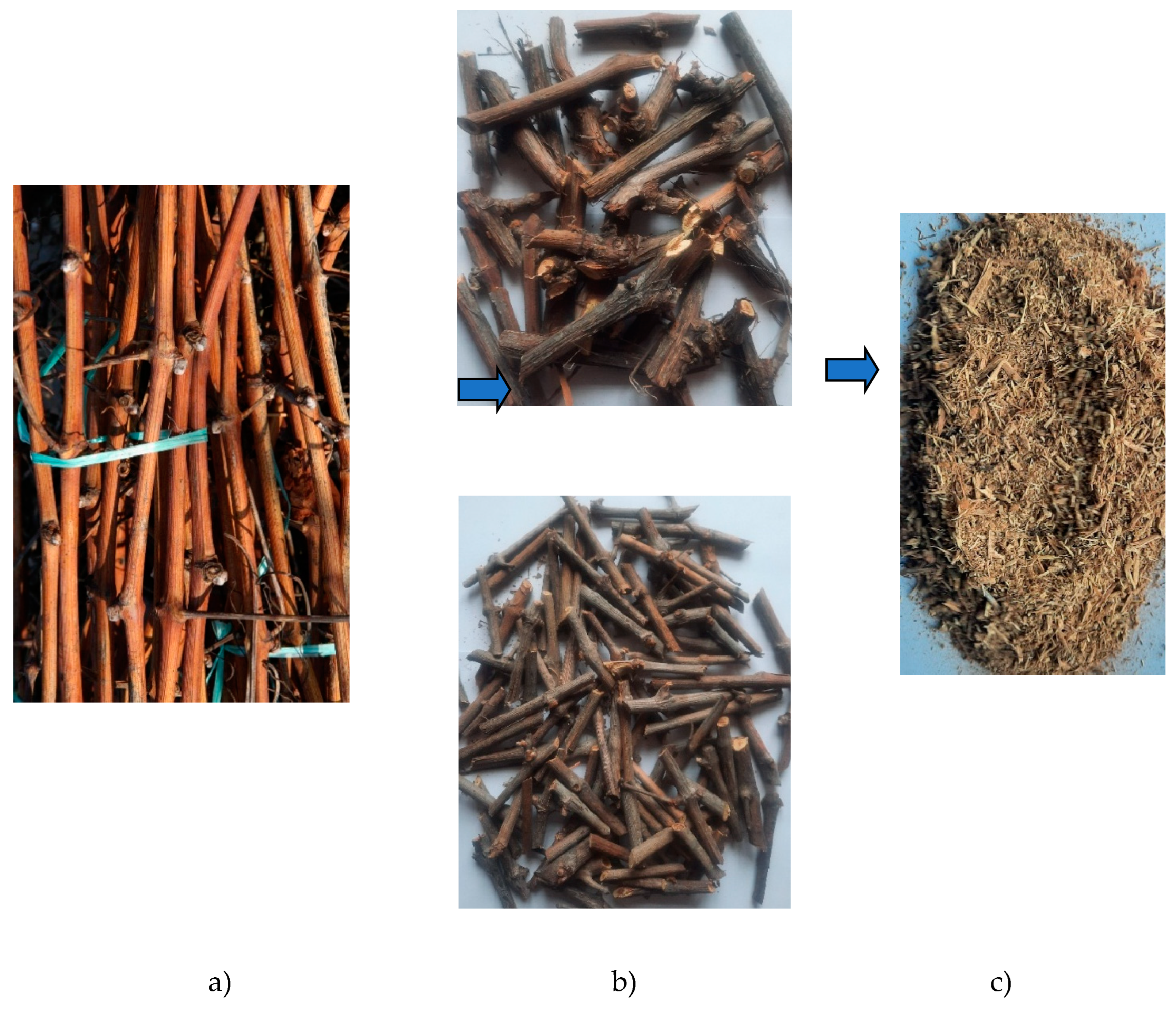
Managing vine pruning materials involves particular challenges tied to vineyard collection, storage, and transportation planning. Pruning practices, which vary slightly based on vineyard organization, involve pruners cutting branches and allowing them to fall to the ground. These branches can then be collected for baling or piled and shredded on-site, with the resulting biomass chips spread over the soil [2,27].
Figure 3.
Vine pruning material: (a) raw VP, (b) chopped, (c) ground.
4.1. Energy Biomass from Vineyard Pruning
The energy potential of woody biomass from keeping orchards, vineyards, and olive groves is often underestimated at local and national levels. Harnessing this resource could reduce energy poverty in rural areas and enhance the competitiveness of fruit, olive, and wine production [27]. The by-products from pruning fruit trees can pose environmental issues, as they are often burned in fields. Therefore, using vine pruning for energy recovery offers a promising opportunity, especially when linked with developing small-scale value chains [2]. Using vine pruning as domestic firewood is a possible option. Research shows that vine pruning is a suitable alternative to traditional firewood, equaling it in heating value and overall quality across several parameters [13,30].
4.2. Winemaking Industry
The rising demand for food and beverages requires adjustments in agricultural practices, processing, and production to enhance sustainability. This involves reducing steps on waste generation through methods such as prevention, reduction, recycling, and reuse, aligning with UN Goal 12 on "sustainable production and consumption" [3].
Wine production plays a crucial role globally due to its considerable economic contribution. The viticulture and winemaking industries produce a significant amount of waste and by-products, including vine shoots, grape pomace (known as grape bagasse or grape marc), grape stalks, and wine lees. Vine prunings are particularly notable as they are the primary waste generated during pruning [34].
In the winemaking process, grape pomace stands out as the main by-product, consisting of the solid stays after pressing. This waste forms about 20% of the total weight of grapes and includes skins, pulp, stalks, and seeds [33]. If solid winery waste is sent to landfills, it can generate approximately 900 kg of CO2 equivalent emissions for every ton of waste. Disposal of wine pomace could result in CO2 emissions exceeding 4.7 million tons [33].
One-fifth of the country's grape production is considered grape pomace (Table 7). Based on grape production statistics, the amount of grape pomace produced annually varies from 22 -35.94 thousand tons.
Vamvuka and coauthors (2017) showed great potential for using grape husks as fertilizers. In this aspect, this wine by-product remains unexploited and can be an important source of macro- and micronutrients.
5. Conclusions
Vine cultivation and grape production data indicate Albania's relatively minor role in the global market. As a Mediterranean nation, it can improve sustainable agriculture by growing permanent crops like grapes. Nonetheless, the country's current grape cultivation capabilities are underutilized. Intensive vineyard management has resulted in soil degradation, a significant concern in the Mediterranean region. The need for sustainable practices is pressing, as these strategies can provide substantial agronomic, yield, and environmental benefits, especially by reducing the risk of nitrate pollution. Our calculations show that around 50 thousand tons of vine pruning and 35.9 thousand tons of grape pomace are produced annually. Furthermore, vine pruning residues can lessen the dependency on fertilizers through their natural biodegradation back into the vineyard. Similarly, we can emphasize the application of grape pomace as fertilizer in different crops.
The growing demand for food due to the increasing global population underscores the importance of effectively using natural resources. In this context, the wine industry, a key agricultural sector, plays a significant role in conserving natural resources and minimizing human impact on the climate. The Mediterranean, a densely populated area, must adapt and respond to these challenges. Albania, where climate change forecasting is essential, should also implement sustainable agricultural methods to safeguard the environment against erosion.
References
- Topi, D., Beqiraj, I., Seiti, B., & Halimi, E. (2014). Environmental impact from olive mills waste disposal, Chemical analysis of solid wastes and wastewaters. Journal of Hygienic Engineering and Design, 7, 44-48.
- Florindo, T., Ferraz, A. I., Rodrigues, A. C. & Nunes, L. J. R. (2022). Residual Biomass Recovery in the Wine Sector: Creation of Value Chains for Vine Pruning. Agriculture, 12, 670. [CrossRef]
- United Nations - General Assembly, (2015). Transforming our world: the 2030 Agenda for sustainable development. [CrossRef]
- FAOSTAT, (2024). World, regional, and national grape area harvested during 2022, in ha.
- Sema Cetin, E., Altinöz, D., Tarcan, E., & Göktürk Baydar, N. (2011). Chemical composition of grape canes. Industrial Crops and Products, 34, 994– 998.
- Dorosh, O., Rodrigues, F., Delerue-Matos, C., & Moreira, M. M. (2022). Increasing the added value of vine-canes as a sustainable source of phenolic compounds: A review. Science of the Total Environment, 830, 154600.
- Wei, M., Ma, T., Ge, Q., Li, C., Zhang, K., Fang, Y., & Sun, X. (2022). Challenges and opportunities of winter vine pruning for the global grape and wine industries. Journal of Cleaner Production, 380, 135086.
- Cebrián-Tarancón, C., Sánchez-Gómez, R., Rosario Salinas, M., Alonso, G. L., & Oliva, J., Zalacain, A. (2018). Toasted vine-shoot chips as enological additive. Food Chemistry, 263, 96–103.
- Pisciotta, A., Lorenzo, R.D., Novara, A., Laudicina, V.A., Barone, E., Santoro, A., Gristina, L., & Barbagallo, M.G., (2021). Cover crop and pruning residue management to reduce nitrogen mineral fertilization in Mediterranean vineyards. Agronomy, 11, 164. [CrossRef]
- Galati, A., Gristina, L., Crescimanno, M., Barone, E., & Novara, A., (2015). Towards more efficient incentives for agri-environment measures in degraded and eroded vineyards. Land Degradation and Development, 26, 557–564. [CrossRef]
- Ntalos, G. A. & Grigoriou, A. H. (2002). Characterization and utilization of vine prunings as a wood substitute for particleboard production. Industrial Crops and Products, 16, 59–68.
- Brito, P.S.D., Oliveira, A.S., & Rodrigues, L.F., (2014). Energy valorization of solid vines pruning by thermal gasification in a pilot plant. Waste Biomass Valorization, 5, 181-187.
- Zhang, L. Xu, C. & Champagne, P. (2010). Overview of recent advances in thermo-chemical conversion of biomass. Energy Conversion and Management, 51(5), 969-982. [CrossRef]
- Vamvuka, D., Trikouvertis, M., Pentari, D., Alevizos, G., & Stratakis, A. (2017). Characterization and evaluation of fly and bottom ashes from combustion of residues from vineyards and processing industry. Journal of the Energy Institute, 90, 574-587.
- Topi, D., Thomaj, F., & Halimi, E. (2012). Virgin Olive Oil Production from the Major Olive Varieties in Albania. Agriculture & Forestry/Poljoprivreda i šumarstvo, 58(2).
- Topi, D., Guclu, G., Kelebek, H., & Selli, S., (2021). Olive Oil Production in Albania, Chemical Characterization, and Authenticity. In: Olive Oil-New Perspectives and Applications (Eds. Akram, M., & Zahid, R.), INTECHOPEN, Rijeka, Croatia, 77-95.
- Llupa, J., Gašić, U., Brčeski, I., Demertzis, P., Tešević, V., & Topi, D. (2022). LC-MS/MS characterization of phenolic compounds in the quince (Cydonia oblonga Mill.) and sweet cherry (Prunus avium L.) fruit juices. Agriculture and Forestry, 68(2), 193–205.
- Topi, D., Kelebek, H., Guclu, G., & Selli, S. (2022). LC-DAD-ESI-MS/MS characterization of phenolic compounds in wines from Vitis vinifera' Shesh i bardhë’and 'Vlosh' cultivars. Journal of Food Processing and Preservation, 46(6), e16157.
- Topi, D., Topi, A., Guclu, G., Selli, S., Uzlasir, T., & Kelebek, H. (2024). Targeted analysis for detecting phenolics and authentication of Albanian wines using LC-DAD/ESI–MS/MS combined with chemometric tools. Heliyon, 10(11), e31127, . [CrossRef]
- OIV, (2024). OIV state of the world vine and wine sector in 2023. https://www.oiv.int/sites/default/files/2024-04/, (Accessed on 8/12/2024).
- Institute of Statistics (INSTAT) (2024). Vineyards, area, and production by municipalities by Municipality, Type, and Year. (Accessed on 8/12/2024. https://databaza.instat.gov.al:8083/pxweb/sq/DST/START__BU__AFT/BU0121/).
- Council Regulation (EC) (2008). Council Regulation (EC) No 479/2008 of 29 April 2008 on the common organisation of the market in wine - Annex IX: Wine-growing zones. https://eur-lex.europa.eu/LexUriServ/LexUriServ.do?uri=OJ:L:2008:148:0001:0061:EN:PDF.
- WVS, (2018). Wine and Vine Search: Albania's Wine Regions. (Assessed on March 3rd, 2024. www.wineandvinesearch.com.).
- Bulatovic-Danilovich, M. (2019). Fertilizing Grapes - West Virginia University, https://extension.wvu.edu/files/d/f211f5f6-4097-42dc-bc2c-1008cd0477a6/fertilizing-grape_w3c.pdf.
- FAO. (2022). Inorganic fertilizers – 1990–2020. FAOSTAT Analytical Brief, no. 47. Rome. https://doi.org/10.4060/cc0947en.
- Cabrera, R.I. & Solis-Perez, A.R. (2017). Mineral Nutrition and Fertilization Management, Reference Module in Life Sciences, Elsevier. [CrossRef]
- Kulišic, B., Radic, T., & Njavro, M. (2020). Agro Pruning for Energy as a Link between Rural Development and Clean Energy Policies. Sustainability, 12, 4240;. [CrossRef]
- Reynolds, A.G., Wardle, D.A., & Naylor, A.P., (1995). Impact of training system and vine spacing on vine performance and berry composition of Chancellor. American Journal of Enology and Viticulture. 46 (1), 88–97.
- Jesus, M. S., Romaní, A., Genisheva, Z., Teixeira, J.A. & Domingues, L. (2017). Integral valorization of vine pruning residue by sequential autohydrolysis stages. Journal of Cleaner Production, 168, 74-86.
- Nunes, L.J., Rodrigues, A.M., Matias, J.C., Ferraz, A.I., & Rodrigues, A.C. (2021). Production of biochar from vine pruning: Waste recovery in the wine industry. Agriculture, 11, 489.
- Olanders, B. & Steenari, B.-M. (1995). Characterization of ashes from wood and straw. Biomass and Bioenergy, 8(2), 105-115. [CrossRef]
- Davila, I., Gordobil, O., Labidi, J., & Gullon, P., (2016). Assessment of suitability of vine shoots for hemicellulosic oligosaccharides production through aqueous processing. Bioresource Technology. 211, 636-644.
- del Mar Contreras, M., Romero-García, J. M., López-Linares, J. C., Romero, I., & Castro, E. (2022). Residues from grapevine and wine production as feedstock for a biorefinery. Food and Bioproducts Processing, 134, 56–79.
- Troilo, M., Difonzo, G., Paradiso, V.M., Summo, C., Caponio, F., (2021). Bioactive compounds from vine shoots, grape stalks, and wine lees: Their potential use in agro-food chains. Foods, 10, 1–16.
Figure 1.
Total vineyard area in Albania, according to counties, during 2018-2023.
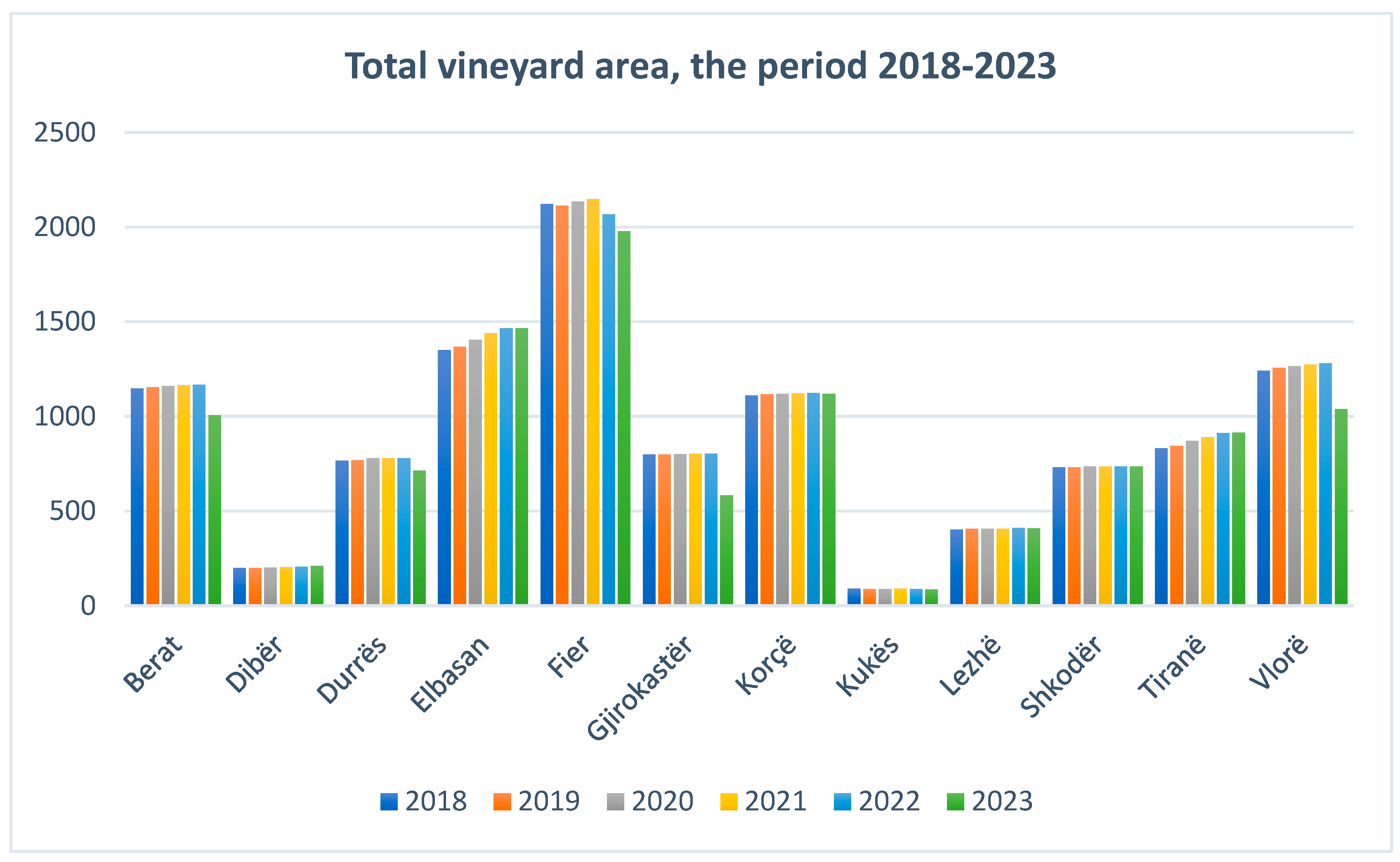
Figure 2.
Map of Albania’s wine regions (Reference: http://www.wineandvinesearch.com/albania/wine_regions.php).
Figure 2.
Map of Albania’s wine regions (Reference: http://www.wineandvinesearch.com/albania/wine_regions.php).
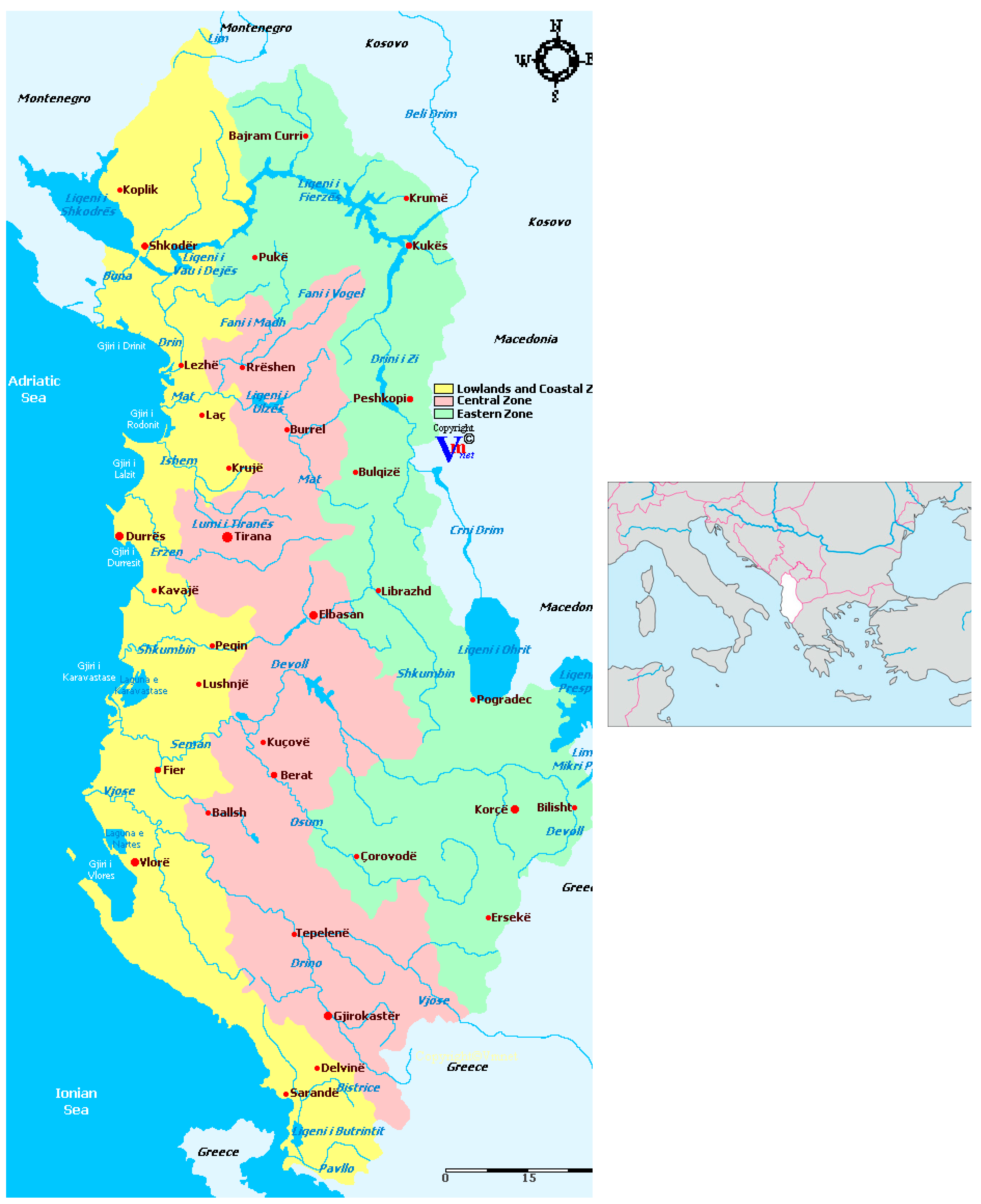

Table 1.
World, regional, and national grape areas harvested during 2022 [4].
Table 1.
World, regional, and national grape areas harvested during 2022 [4].
| Area | Area harvested (ha) | Grape production (tons) |
|---|---|---|
| World | 6 730 179 | 74 942 573 |
| Africa | 347 899 | 4 839 789 |
| Northern America | 375 943 | 5 462 982 |
| South America | 510 827 | 6 901 551 |
| Asia | 1 905 043 | 27 350 568 |
| Europe | 3 407 573 | 28 128 454 |
| Oceania | 146 681 | 1 760 829 |
| Albania | 10 652 | 217 883 |
(Note: Data presented are estimated values or official figures)
Table 2.
Indicators in vine cultivation and grape production during the period 2018-2023.
| Year | 2018 | 2019 | 2020 | 2021 | 2022 | 2023 |
|---|---|---|---|---|---|---|
| Total Vineyards area (ha) | 10787 | 10842 | 10964 | 11057 | 11042 | 10178 |
| The area under production (ha) | 10179 | 10255 | 10445 | 10548 | 10558 | 9822 |
| Total production quantity (t) | 110442 | 113854 | 118796 | 128287 | 128356 | 104857 |
| Pergola production quantity (t) | - | 76050 | 80274 | 83724 | 82822 | 74848 |
| Overall grape production (t) | 110442 | 189900 | 199070 | 212011 | 211178 | 179705 |
Table 3.
Nutrient content (%) in different animal manure.
| Material | Nutrient (%) | ||
|---|---|---|---|
| N | P | K | |
| Fresh manure (cow, horse, pig, sheep) |
0.5-0.8 | 0.1-0.3 | 0.4-0.7 |
| Dried cow manure | 1.8-2.0 | 0.7-0.8 | 1.7-1.9 |
| Dried chicken manure | 2.5-2.7 | 1.3-1.4 | 2.0-2.1 |
| Dried blood | 9-14 | 0 | 0 |
| Animal tankage | 5-10 | 0.9-2.2 | 2-3 |
Source: [26].
Table 4.
Vine pruning (VP) residues estimation, according to various authors, iAlbania case.
| Year | 2018 | 2019 | 2020 | 2021 | 2022 | 2023 |
|---|---|---|---|---|---|---|
| Total Vineyards area (ha) | 10787 | 10842 | 10964 | 11057 | 11042 | 10178 |
| VP (Area x 5/t ha) According to [11] | 53935 | 54210 | 54820 | 55285 | 55210 | 50890 |
| VP (Area x 0.91/t ha) according to [7] | 9816.17 | 9866.22 | 9977.24 | 10061.87 | 10048.22 | 9261.98 |
| VP (Area x 3.0/t ha) according to [7] | 32361 | 32526 | 32892 | 33171 | 33126 | 30534 |
| VP (Area x 1.2 t/ha) according to [12] | 12944.4 | 13010.4 | 13156.8 | 13268.4 | 13250.4 | 12213.6 |
| VP (Area x 3.5 t/ha according to [12] | 37754.5 | 37947 | 38374 | 38699.5 | 38647 | 35623 |
Table 5.
Chemical and fusibility analysis of raw ashes, slagging/fouling tendency.
| Ash composition (%) | Vine shoots | Grape husks |
| SiO2 | 1.42 | 4.19 |
| Al2O3 | 0.24 | 3.28 |
| Fe2O3 | 0.18 | 0.79 |
| MgO | 9.13 | 3.25 |
| CaO | 22.34 | 17.03 |
| Na2O | 1.77 | 0.39 |
| K2O | 20.11 | 34.05 |
| TiO2 | 0.01 | 0.03 |
| P2O2 | 7.75 | 9.67 |
| MnO | 0.18 | 0.05 |
| SO3 | 3.17 | 6.27 |
Source: [14].
Table 6.
Analysis of the contents of major elements by ICP-OES.
| Source | According [2] | According [5] | |
| Mineral | Average | St. dev. | Interval |
| Al (mg/g) | 0.06055 | 0.01212 | - |
| Ca (mg/g) | 7.44535 | 0.41154 | 5.95-10.21 |
| Fe (mg/100g) | 0.34 | 0.04 | 0.26-0.68 |
| Mg (mg/100g) | 13.593 | 0.4812 | 1.94-11.12 |
| P (mg/g) - | 1.09581 | 0.01614 | 0.42-0.93 |
| K (mg/g) | 8.24437 | 0.17486 | 5.19-8.23 |
| Si (mg/g) | 0.15265 | 0.03146 | - |
| Na (mg/g) | 0.42179 | 0.01984 | - |
| Ti (mg/g) | 0.00301 | 0.00041 | - |
| Zn (mg/g) | - | - | 0.70-9.82 |
Table 7.
Grape pomace production, in Albania recently (2018-2023).
| Year | 2018 | 2019 | 2020 | 2021 | 2022 | 2023 |
|---|---|---|---|---|---|---|
| Vineyard grape production (t) | 110442 | 113854 | 118796 | 128287 | 128356 | 104857 |
| Vineyard-Grape pomace (t) | 22088.4 | 22770.8 | 23759.2 | 25657.4 | 25671.2 | 20971.4 |
| Pergola grape production (t) | - | 76050 | 80274 | 83724 | 82822 | 74848 |
| Pergola-Grape pomace (t) | - | 15210 | 16054.8 | 16744.8 | 16564.4 | 14969.6 |
| Overall grape production (t) | 110442 | 189900 | 199070 | 212011 | 211178 | 179705 |
| Total-Grape pomace (t) | 22088.4 | 37980 | 39814 | 42402.2 | 42235.6 | 35941 |
Disclaimer/Publisher’s Note: The statements, opinions and data contained in all publications are solely those of the individual author(s) and contributor(s) and not of MDPI and/or the editor(s). MDPI and/or the editor(s) disclaim responsibility for any injury to people or property resulting from any ideas, methods, instructions or products referred to in the content. |
© 2024 by the authors. Licensee MDPI, Basel, Switzerland. This article is an open access article distributed under the terms and conditions of the Creative Commons Attribution (CC BY) license (http://creativecommons.org/licenses/by/4.0/).
Copyright: This open access article is published under a Creative Commons CC BY 4.0 license, which permit the free download, distribution, and reuse, provided that the author and preprint are cited in any reuse.