

Submitted:
09 December 2024
Posted:
10 December 2024
You are already at the latest version
Abstract
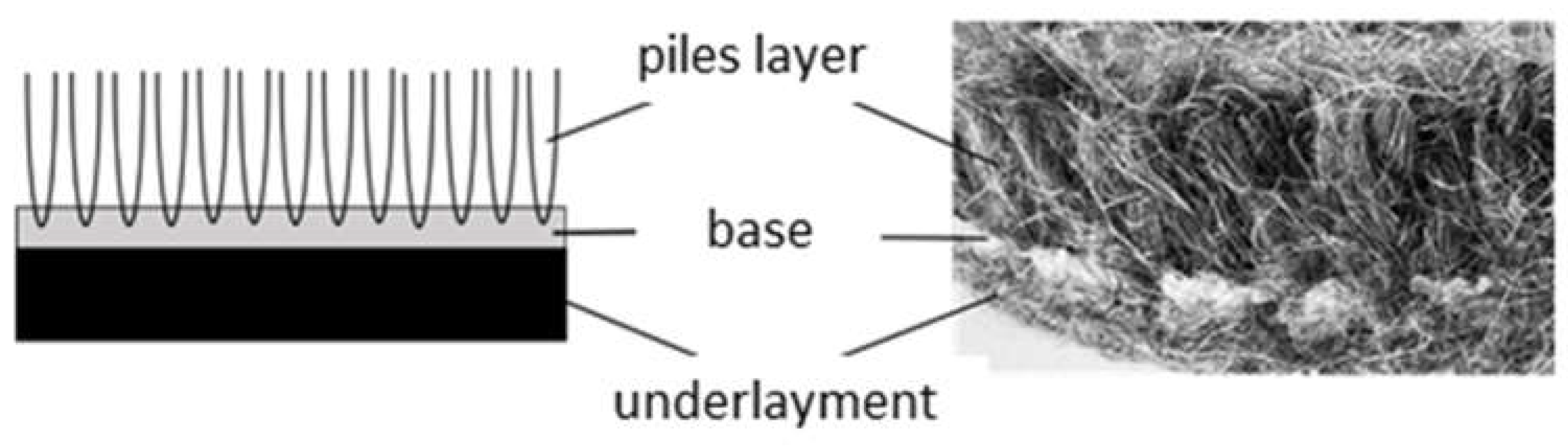
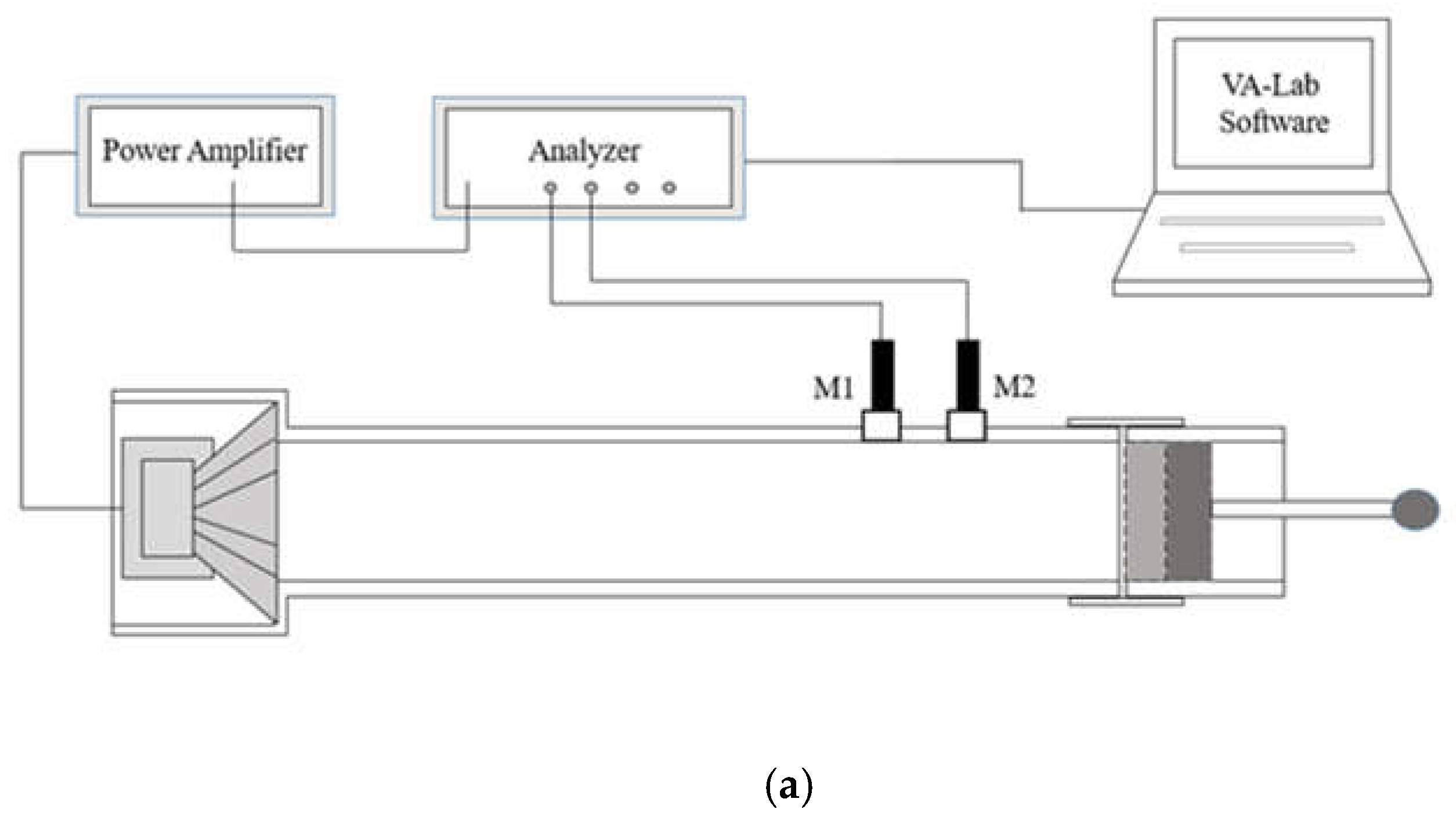
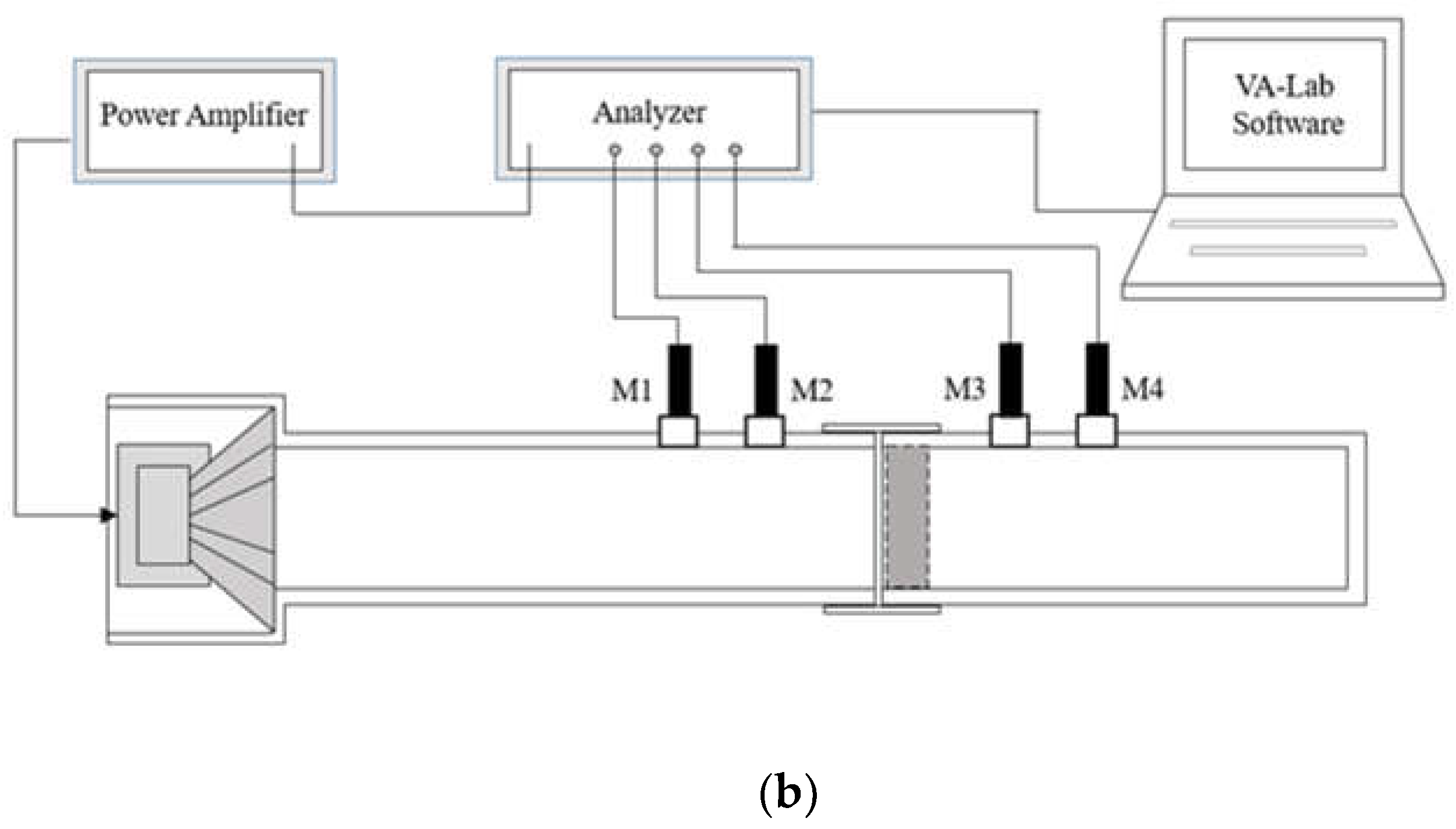
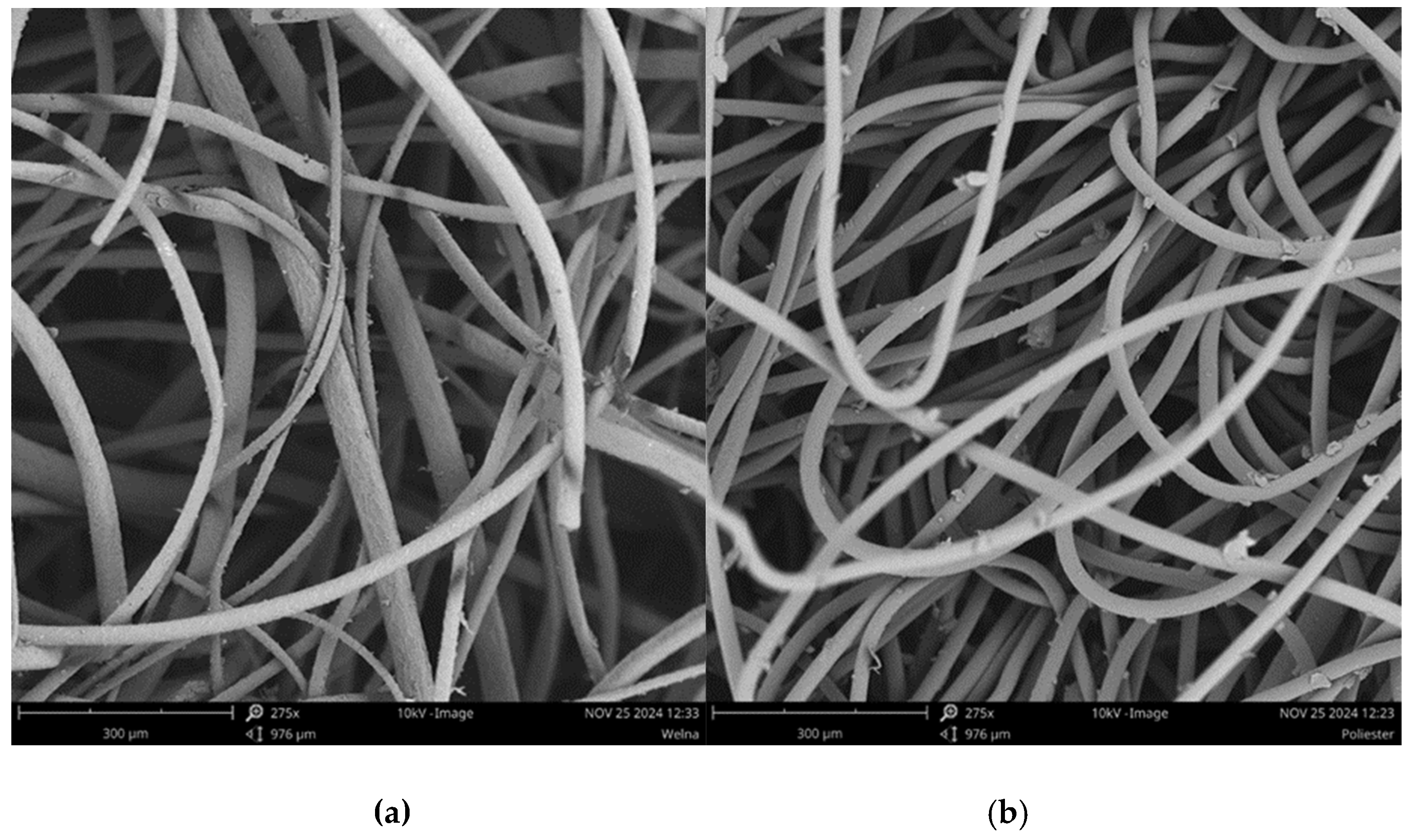
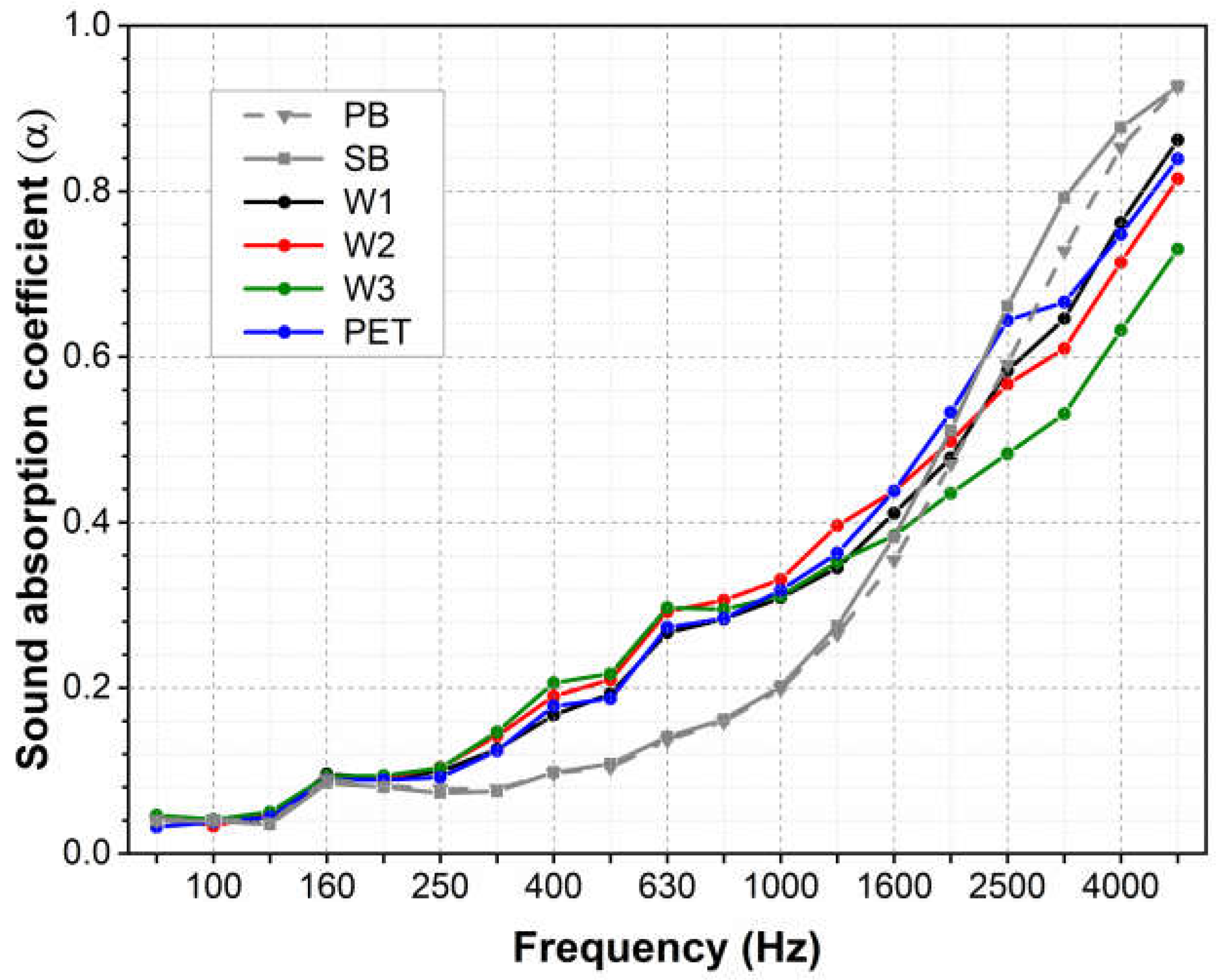
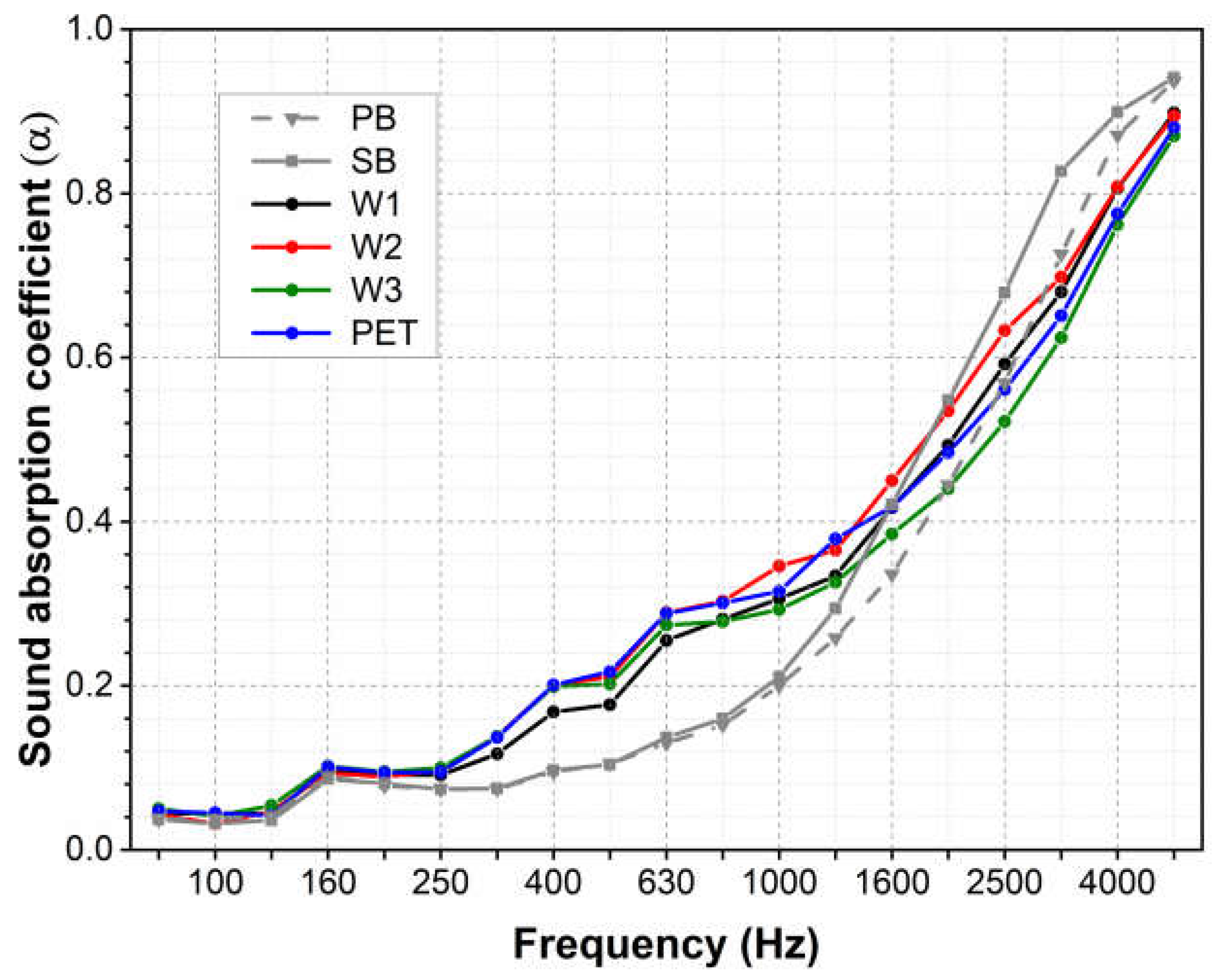
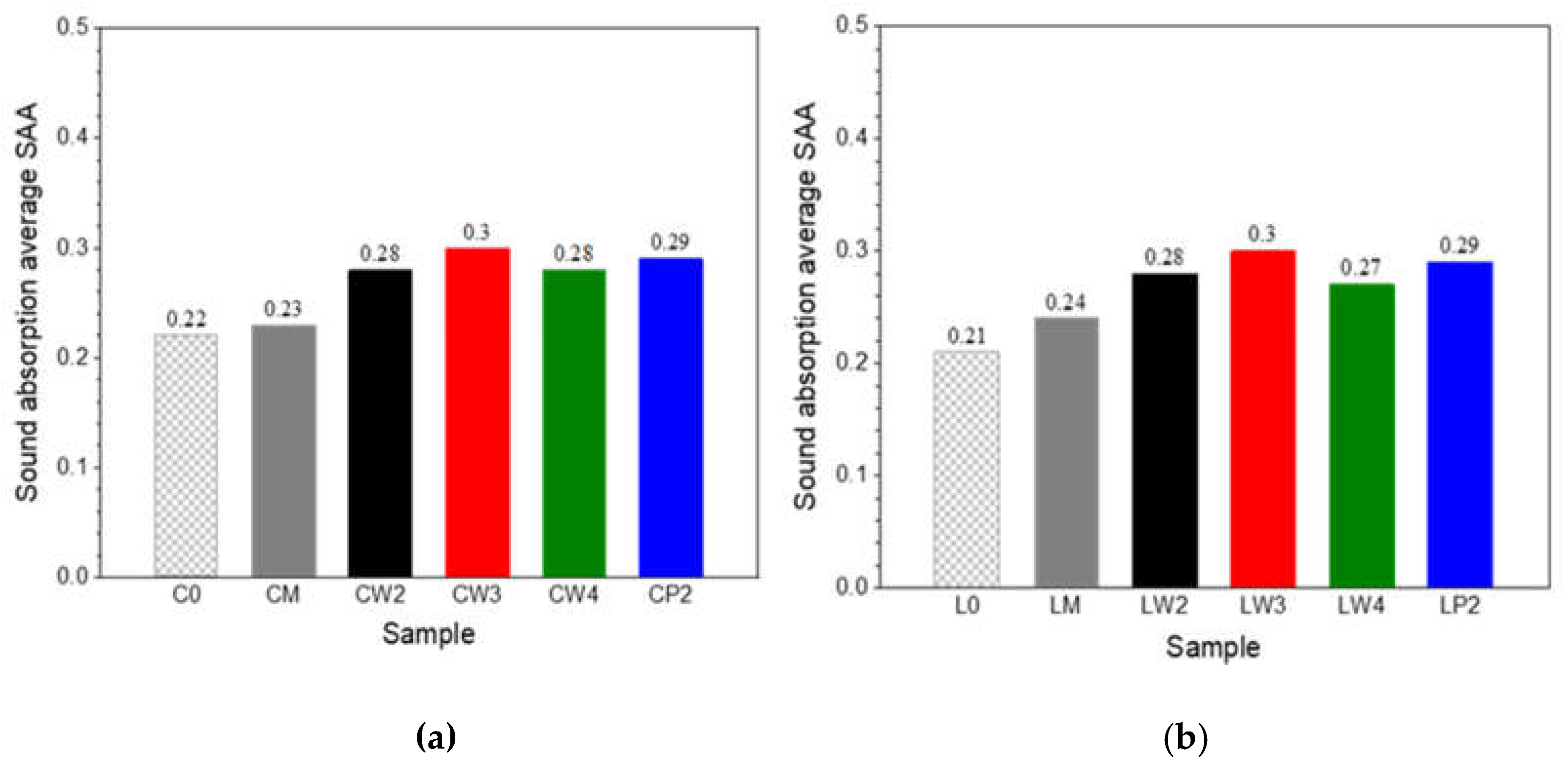
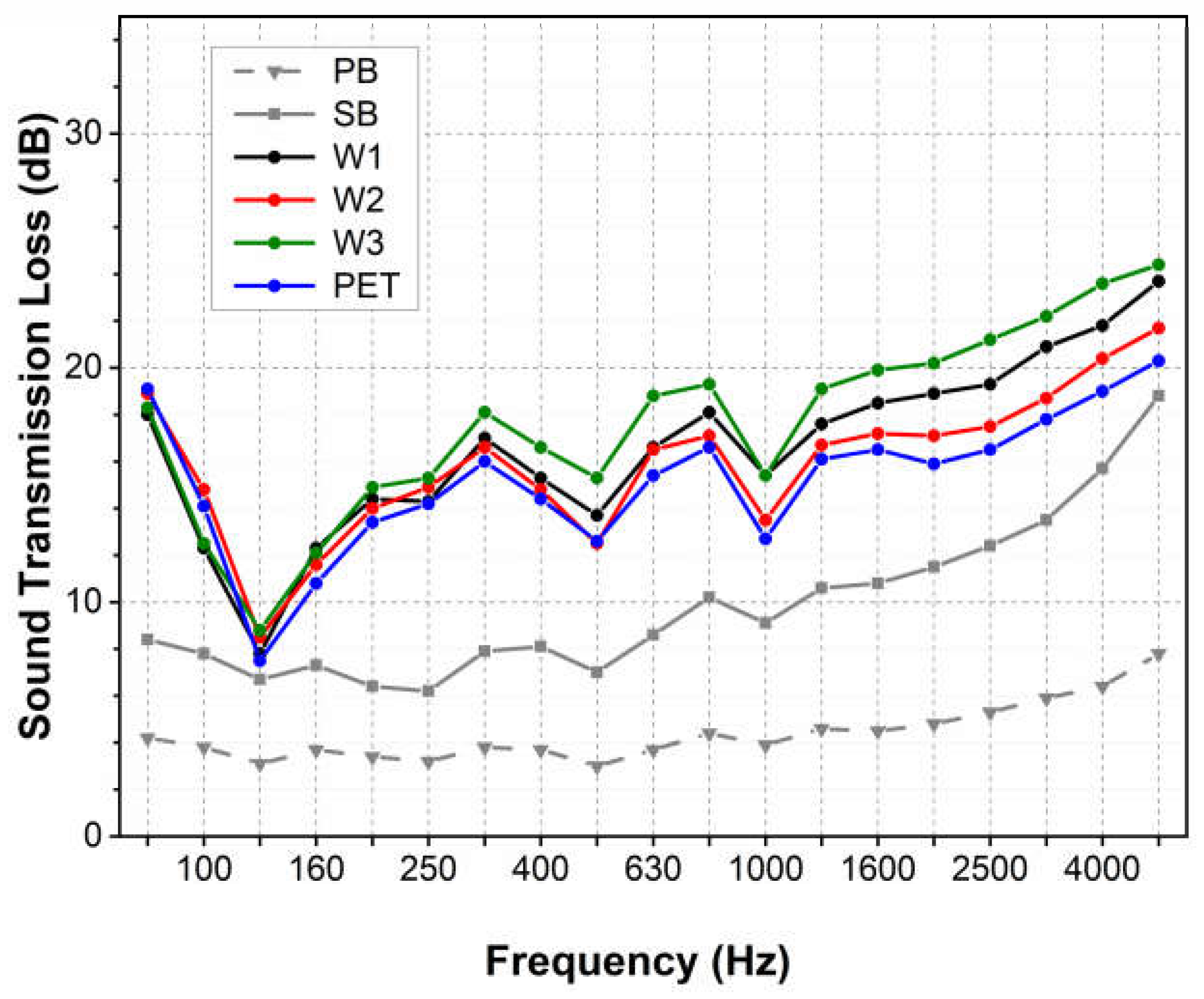
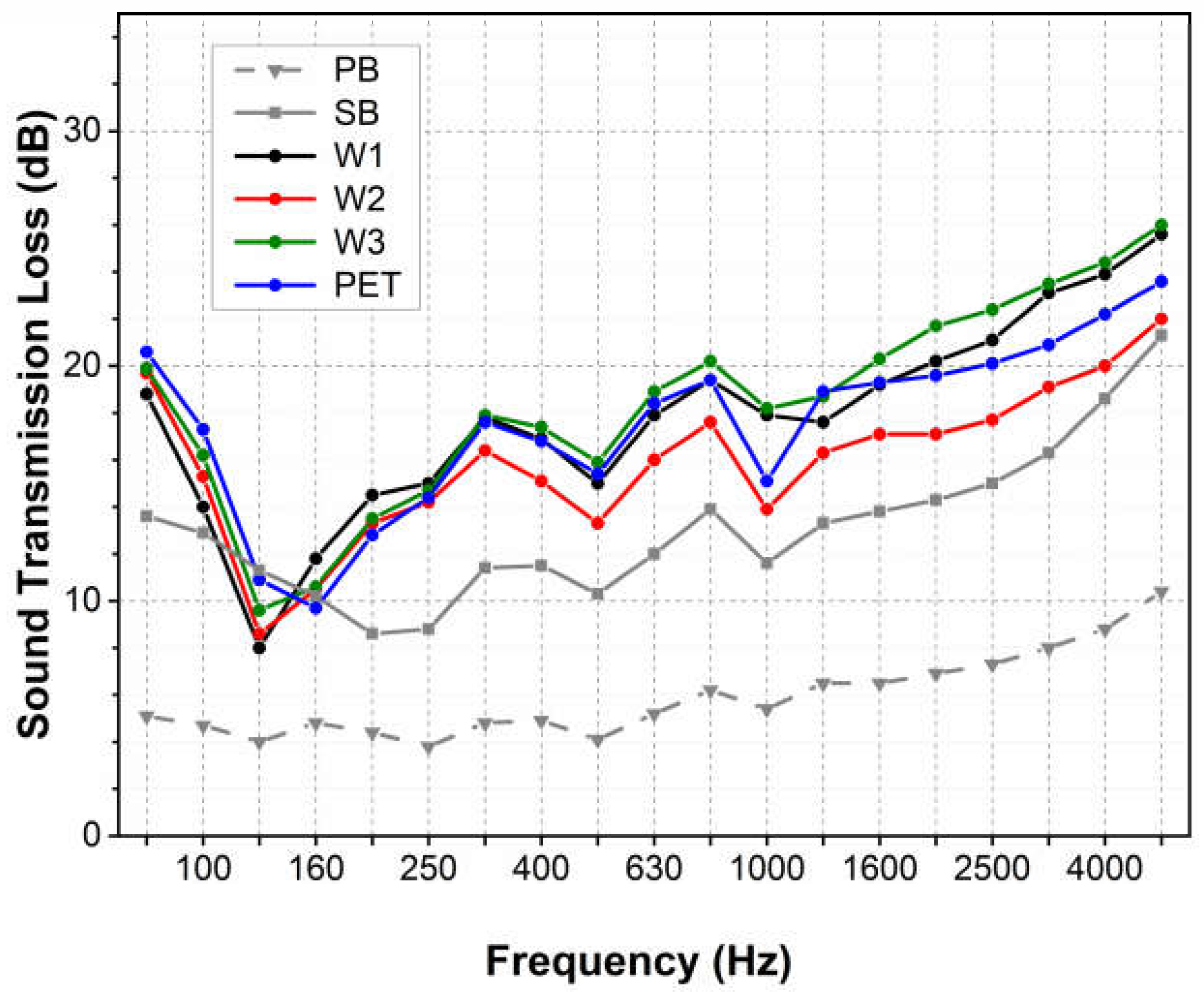
Sheep wool is a precious, renewable raw material that is nowadays disregarded and wasted. To better use local sources of wool, it was used to manufacture tufted carpets. The coarse wool of mountain sheep was used to form a carpet pile layer, while the waste wool from the tannery industry was applied to form carpet underlayment. During investigations, the acoustic performance of the carpets was assessed. The carpets' sound absorption coefficients and transmission loss were determined using the impedance tube. It was revealed that adding of the underlayment improves the carpet's sound absorption only at medium sound wave frequencies. The underlayment significantly increases transmission loss in the whole frequency range. The acoustic performance of the carpets with the wool underlayment is similar to the acoustic characteristics of the carpets with the underlayment made from polyester. It was concluded that the wool nonwoven can be used as an effective, eco-friendly, sound-absorbing carpet underlayment, which can improve wool utilisation and contribute to the reduction of environmental pollution caused by plastic residues.
Keywords:
1. Introduction
2. Materials and Methods
2.1. Materials
2.1. Methods
3. Results
3.1. Acoustic Properties of Nonwovens Used as Carpet Underlayment
3.2. Sound Absorption of Carpets with Cut and Loop Piles
3.3. Transmission Loss of Carpets with Cut and Loop Piles
4. Discussion
5. Conclusions
Author Contributions
Funding
Institutional Review Board Statement
Informed Consent Statement
Data Availability Statement
Acknowledgments
Conflicts of Interest
References
- Garg, N. Environmental Noise Control: The Indian Perspective in an International Context; 2022.
- Paul, P.; Mishra, R.; Behera, B.K. Acoustic Behaviour of Textile Structures. Textile Progress 2021, 53. [Google Scholar] [CrossRef]
- Cazzolato, B.; West, C.; Schembri, T.; Watkins, P.; Robertson, W. Enhancing Acoustic Comfort with Window Coverings: Reducing Sound Transmission and Reverberation Times with a Single Product. J Acoust Soc Am 2023, 154. [Google Scholar] [CrossRef]
- Del Rey, R.; Alba, J.; Blanes, M.; Marco, B. The Acoustic Absorption of Textile Curtains on the Function of the Fullness. Materiales de Construccion 2013, 63. [Google Scholar] [CrossRef]
- Kumar, S.; Aow, J.W.; Dexuan, W.; Lee, H.P. Investigation of Lightweight Acoustic Curtains for Mid-to-High Frequency Noise Insulations. arXiv:2108.10683 2021. [CrossRef]
- Küçük, M.; Korkmaz, Y. Acoustic and Thermal Properties of Polypropylene Carpets: Effect of Pile Length and Loop Density. Fibers and Polymers 2019, 20. [Google Scholar] [CrossRef]
- Shoshani, Y.Z.; Wilding, M.A. Effect of Pile Parameters on the Noise Absorption Capacity of Tufted Carpets. Textile Research Journal 1991, 61. [Google Scholar] [CrossRef]
- Küçük, M.; Korkmaz, Y. Sound Absorption Properties of Acrylic Carpets. Journal of the Textile Institute 2017, 108. [Google Scholar] [CrossRef]
- Ardekani, T.; Alamdar Yazdi, A.; Vadood, M.; Garai, M. Measuring and Modeling the Effect of Density and Pile Height on Sound Absorption of Double Base Persian Rug. Journal of Industrial Textiles 2022, 51. [Google Scholar] [CrossRef]
- Maleki, H.; Semnani Rahbar, R.; Zolfaghari, S.A. Effects of Weaving Parameters on Acoustic and Thermal Insulation Properties of Handmade Carpets. Journal of the Textile Institute 2024, 115. [Google Scholar] [CrossRef]
- Samuel, B.T.; Barburski, M.; Witczak, E.; Jasińska, I. The Influence of Physical Properties and Increasing Woven Fabric Layers on the Noise Absorption Capacity. Materials 2021, 14. [Google Scholar] [CrossRef]
- Ardekani, T.; Alamdar-Yazdi, A.; Vadood, M.; Garai, M. Measuring and Modelling the Effect of Base Zone on Sound Absorption of Persian Rug. Journal of the Textile Institute 2021. [Google Scholar] [CrossRef]
- Elkhateeb, A.; Adas, A.; Attia, M.; Balila, Y. Absorption Characteristics of Masjid Carpets. Applied Acoustics 2016, 105. [Google Scholar] [CrossRef]
- McCall, R.A.; McNeil, S.J. Comparison of the Energy, Time and Water Usage Required for Maintaining Carpets and Hard Floors. Indoor and Built Environment 2007, 16. [Google Scholar] [CrossRef]
- Ryder, M. Ancient Technique’s Diverse Designs. Wool Record 2001, 160. [Google Scholar]
- Serrano, A.; Meijer, S.; van Rijn, R.R.; Coban, S.B.; Reissland, B.; Hermens, E.; Batenburg, K.J.; van Bommel, M. A Non-Invasive Imaging Approach for Improved Assessments on the Construction and the Condition of Historical Knotted-Pile Carpets. J Cult Herit 2021, 47. [Google Scholar] [CrossRef]
- Wood, E.J. Developments in Wool Carpet Manufacture. In Advances in Carpet Manufacture; 2009.
- Ingham, P.; McNeil, S.; Meade, W.; Sunderland, M. Wool and Carpets - 6000 Years of Innovation, Quality and Sustainability. In Proceedings of the Key Engineering Materials; 2016; Vol. 671. [Google Scholar] [CrossRef]
- Ansari-Renani, H.R. Fiber Quality of Iranian Carpet-Wool Sheep Breeds. Media Peternakan Fakultas Peternakan Institut Pertanian Bogor 2012, 35. [Google Scholar] [CrossRef]
- Dashab, G.; Edriss, M.A.; Ghare Aghaji, A.A.; Movasagh, H.; Nilforooshan, M.A. Wool Fiber Quality of Naeini Sheep. Pakistan Journal of Biological Sciences 2006, 9. [Google Scholar] [CrossRef]
- Haugrønning, V.; Broda, J.; Espelien, I.S.; Klepp, I.G.; Kobiela-Mendrek, K.; Rom, M.; Sigaard, A.S.; Tobiasson, T.S. Upping the WOOLUME: Waste Prevention Based on Optimal Use of Materials. In Local, Slow and Sustainable Fashion; 2022. [CrossRef]
- Kicinska- Jakubowska, A.; Morales Villavicencio, A.; Zimniewska, M.; Przybylska, P.; Kwiatkowska, E. Evaluation of Wool Quality Parameters of Polish Sheep Breeds. Journal of Natural Fibers 2021. [Google Scholar] [CrossRef]
- Løvbak Berg, L.; Klepp, I.G.; Sigaard, A.S.; Broda, J.; Rom, M.; Kobiela-Mendrek, K. Reducing Plastic in Consumer Goods: Opportunities for Coarser Wool. Fibers 2023, 11. [Google Scholar] [CrossRef]
- Broda, J.; Kobiela-Mendrek, K.; Bączek, M.; Rom, M.; Espelien, I. Sound Absorption of Tufted Carpets Produced from Coarse Wool of Mountain Sheep. Journal of Natural Fibers 2023, 20. [Google Scholar] [CrossRef]
- Kobiela-Mendrek, K.; Bączek, M.; Broda, J.; Rom, M.; Espelien, I.; Klepp, I. Acoustic Performance of Sound Absorbing Materials Produced from Wool of Local Mountain Sheep. Materials 2022, 15. [Google Scholar] [CrossRef] [PubMed]
- Broda, J.; Gawlowski, A.; Rom, M.; Kobiela-Mendrek, K. Utilisation of Waste Wool from Mountain Sheep as Fertiliser in Winter Wheat Cultivation. Journal of Natural Fibers 2023, 20. [Google Scholar] [CrossRef]
- Kicińska-Jakubowska, A.; Broda, J.; Zimniewska, M.; Przybylska, P. Characteristics of Wool of Selected Polish Local Sheep Breeds with Mixed Type Fleece. Journal of Natural Fibers 2024, 21. [Google Scholar] [CrossRef]
- Jafari, M.J.; Monazam, M.R.; Kazempour, M. Providing an Optimal Porous Absorbent Pattern to Reduce Mid to Low-Frequency Sounds. J Environ Health Sci Eng 2018, 16. [Google Scholar] [CrossRef] [PubMed]
- Berg, M.; Fuchs, M.; Wirkner, K.; Loeffler, M.; Engel, C.; Berger, T. The Speaking Voice in the General Population: Normative Data and Associations to Sociodemographic and Lifestyle Factors. Journal of Voice 2017, 31. [Google Scholar] [CrossRef]
- Palak, H.; Kayaoğlu, B.K. Analysis of the Effect of Fiber Cross Section and Different Bonding Methods on Sound Absorption Performance of PET Fiber Based Nonwovens Using Taguchi Method. Journal of the Textile Institute 2020, 111. [Google Scholar] [CrossRef]
- Broda J; Baczek M Acoustic Properties of Multi-Layer Wool Nonwoven Structures. Journal of Natural Fibers 2020, 17, 1567–1581. [CrossRef]
- Shahani, F.; Soltani, P.; Zarrebini, M. The Analysis of Acoustic Characteristics and Sound Absorption Coefficient of Needle Punched Nonwoven Fabrics. J Eng Fiber Fabr 2014, 9. [Google Scholar] [CrossRef]
- Puranik, P.R.; Parmar, R.R.; Rana, P.P. NONWOVEN ACOUSTIC TEXTILES – A REVIEW. International Journal of Advanced Research in Engineering and Technology 2014, 5. [Google Scholar]
- Paul, P.; Ahirwar, M.; Behera, B.K. Acoustic Behaviour of Needle Punched Nonwoven Structures Produced from Various Natural and Synthetic Fibers. Applied Acoustics 2022, 199. [Google Scholar] [CrossRef]
- Gokarneshan, N. Acoustic Behaviour of Nonwovens. Journal of Textile Science & Fashion Technology 2020, 5. [CrossRef]
- Ghorbani, K.; Hasani, H.; Zarrebini, M.; Saghafi, R. An Investigation into Sound Transmission Loss by Polypropylene Needle-Punched Nonwovens. Alexandria Engineering Journal 2016, 55. [Google Scholar] [CrossRef]
- Liu, J.; Liu, X.; Bao, W.; Wang, S.; Chen, L.; Chen, Z.; Zuo, B.; Gao, W. The Acoustic Behaviors of Dual Layered Nonwoven Absorbers. Journal of Computational Acoustics 2014, 22. [Google Scholar] [CrossRef]
- Kucukali-Ozturk, M.; Nergis, B.; Candan, C. Design of Layered Structure with Nanofibrous Resonant Membrane for Acoustic Applications. Journal of Industrial Textiles 2018, 47, 1739–1756. [Google Scholar] [CrossRef]
- Yilmaz, N.D.; Banks-Lee, P.; Powell, N.B.; Michielsen, S. Effects of Porosity, Fiber Size, and Layering Sequence on Sound Absorption Performance of Needle-Punched Nonwovens. J Appl Polym Sci 2011, 121. [Google Scholar] [CrossRef]
- El Messiry, M.; Ayman, Y. Investigation of Sound Transmission Loss of Natural Fiber/Rubber Crumbs Composite Panels. Journal of Industrial Textiles 2022, 51. [Google Scholar] [CrossRef]
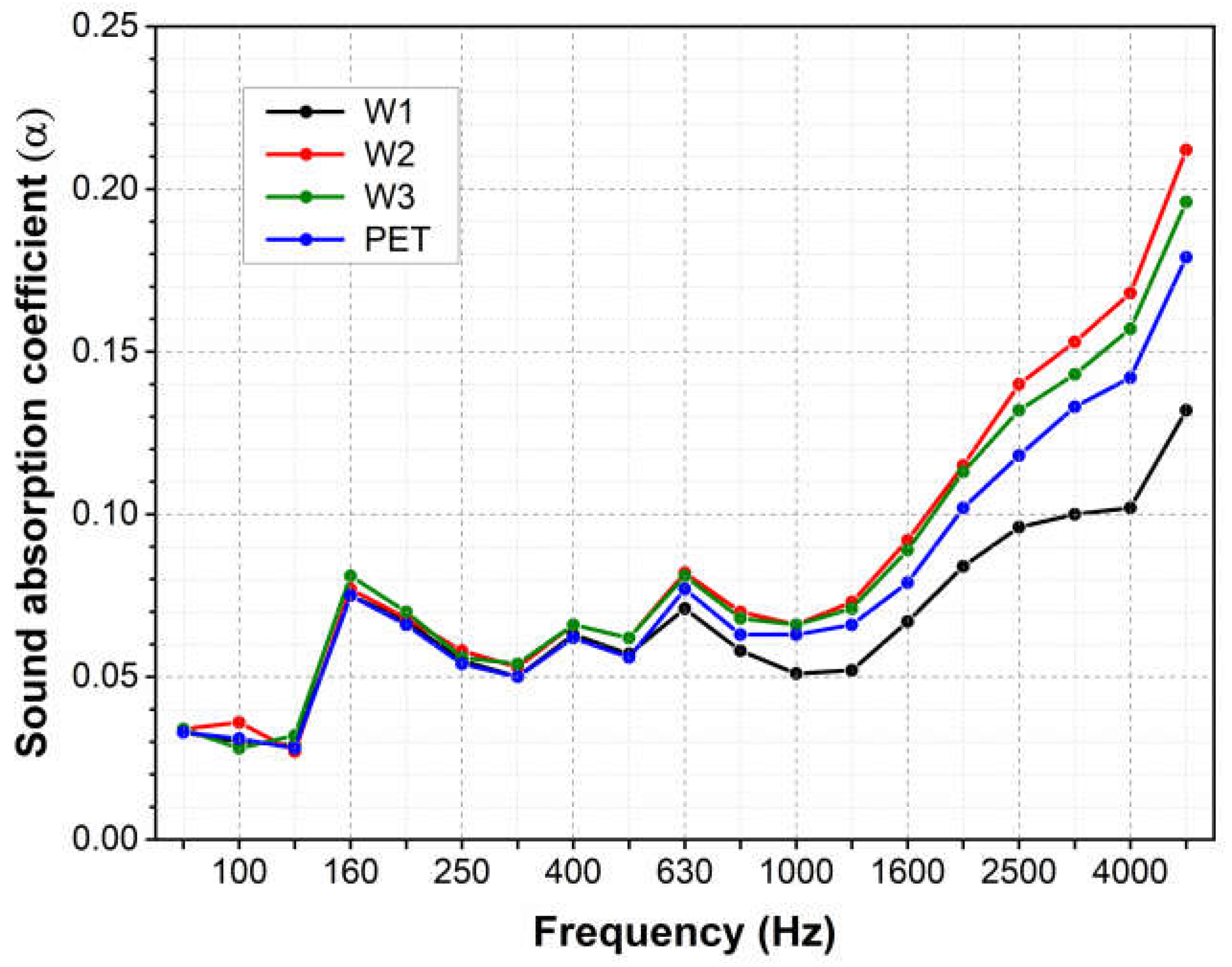
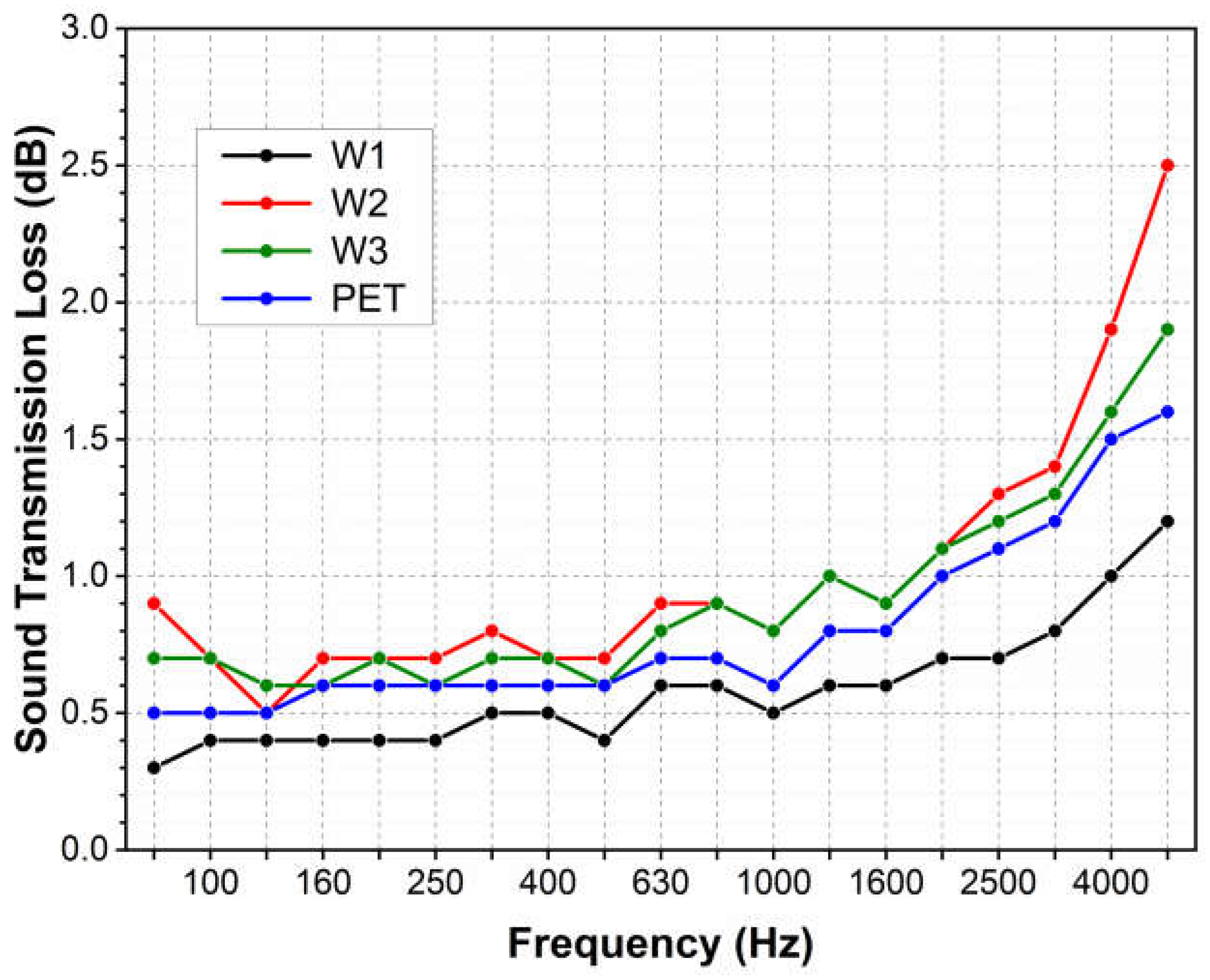

| Symbol | Material | Mass per unit area, g·m-2 | Thickness, mm |
|---|---|---|---|
| W1 | wool | 200 ± 25 | 3.6 ± 0.3 |
| W2 | wool | 300 ± 30 | 4.9 ± 0.4 |
| W3 | wool | 400 ± 40 | 5.2 ± 0.5 |
| PET | polyester | 200 ± 20 | 4.1 ± 0.3 |
Disclaimer/Publisher’s Note: The statements, opinions and data contained in all publications are solely those of the individual author(s) and contributor(s) and not of MDPI and/or the editor(s). MDPI and/or the editor(s) disclaim responsibility for any injury to people or property resulting from any ideas, methods, instructions or products referred to in the content. |
© 2024 by the authors. Licensee MDPI, Basel, Switzerland. This article is an open access article distributed under the terms and conditions of the Creative Commons Attribution (CC BY) license (https://creativecommons.org/licenses/by/4.0/).


