

Submitted:
16 July 2025
Posted:
16 July 2025
Read the latest preprint version here
Abstract
This study investigates gender disparities in leadership across four Eastern European countries, Romania, Poland, Hungary, and Bulgaria, using panel data from 2019 to 2023. Drawing on theories of self-efficacy, leader–member exchange (LMX), and organizational behavior, we propose a proxy-based framework to operationalize these constructs at the structural level. Self-efficacy is proxied by female representation in senior management and ministerial roles; LMX is inferred from part-time employment rates and career interruptions due to childcare; and organizational behavior is assessed through the alignment between educational attainment and leadership roles.Using ordinary least squares (OLS) regression, we analyze cross-country and indicator-level differences, as well as time trends. The results indicate a marked underperformance in Hungary and Romania relative to Bulgaria, especially in executive leadership roles. While women are most represented in parliamentary positions, ministerial posts remain the most resistant to gender parity.Our findings reveal that educational gains among women are not translating into equitable leadership representation, and that entrenched labor market structures continue to impede women's advancement. This study contributes to the broader understanding of how macro-level constraints both reflect and reinforce psychological and relational barriers to leadership.
Keywords:
gender leadership
; self-efficacy
; LMX
; organizational behavior
; structural inequality
; Eastern Europe
Introduction
Despite notable gains in educational attainment and workforce participation, women’s representation in leadership positions remains uneven across industries and national contexts. Recent research has increasingly examined the psychological and organizational dynamics that shape leadership emergence and effectiveness, particularly the roles of self-efficacy, LMX, and organizational behavior.
Self-efficacy, understood as the belief in one’s ability to succeed in specific tasks, is a critical attribute of effective leadership. Leaders with high self-efficacy tend to exhibit greater resilience, initiative, and capacity for innovation. LMX theory further expands this perspective by emphasizing the quality of relational exchanges between leaders and subordinates as a key determinant of performance, motivation, and engagement. Together, these constructs inform organizational behavior by shaping how individuals navigate roles, relationships, and performance expectations within complex institutional environments.
This study examines the relationship between female leadership representation and key theoretical constructs, including self-efficacy and LMX. Drawing on longitudinal data from Eurostat and the World Bank (2019–2023), the analysis focuses on four Eastern European countries, Romania, Poland, Hungary, and Bulgaria. We investigate how macro-level indicators capture the presence or erosion of self-efficacy among women in leadership roles. Additionally, we consider structural constraints, such as part-time employment and childcare-related career interruptions, that may hinder women’s advancement and shape patterns of organizational behavior.
Literature Review
Agile management emerges as a multidimensional outcome of the dynamic interplay between a leader’s self-efficacy, innovative work behavior, goal striving and commitment, and trait resilience, each construct both influencing and reinforcing the others.
2.1. Leadership and Self-Efficacy
Self-efficacy refers to an individual’s belief in their capacity to perform behaviors necessary to achieve specific outcomes. In leadership contexts, it shapes how challenges are approached, how teams are motivated, and how performance is sustained under pressure. Leaders with high self-efficacy are more likely to set ambitious goals, persist in the face of setbacks, and exhibit confidence in decision-making (Bandura, 1997; Asghar et al., 2022). High self-efficacy is also linked to greater work effectiveness, particularly within high-quality leader–member exchange (LMX) relationships. In complex environments, innovative behavior is often amplified by strong self-efficacy, with LMX acting as a mediating factor. Existing research indicates that self-efficacy mediates the relationship between employee characteristics and leadership outcomes (Fiernaningsih, 2021; Kang, 2020).
In the context of female leadership, self-efficacy plays a dual role: it fosters personal resilience in the face of structural gender barriers and supports inclusive, motivational leadership styles. It is positively associated with innovative work behavior and leadership emergence, particularly when reinforced by supportive organizational structures and effective feedback mechanisms (Sohn, 2020; Bracht et al., 2021).
2.2. Leader-Member Exchange
Leader–Member Exchange (LMX) theory emphasizes the differentiated relationships that leaders establish with individual team members, which significantly influence organizational outcomes such as job satisfaction, innovation, and organizational citizenship behavior. High-quality LMX relationships are characterized by mutual trust, respect, and professional support, and are associated with increased employee engagement, creativity, and performance (McLarty et al., 2021).
In gender-diverse teams, female leaders frequently foster high-quality LMX through transformational and empathetic leadership styles. These approaches, rooted in emotional intelligence, inclusivity, and individualized consideration have been shown to strengthen team cohesion and enhance organizational effectiveness. Moreover, such relational dynamics can act as a mitigating force against structural and cultural biases that often persist in male-dominated professional environments (Liu et al., 2021).
2.3. Organizational Behavior and Innovation Culture
Organizational behavior encompasses how individuals interact within an organization, shaping motivation, voice behavior, and performance outcomes. Effective workplace performance increasingly depends on innovative behavior, which in turn is driven by high self-efficacy, encouraging persistence, adaptability, and sustained effort. A proactive mindset enables individuals to secure psychological resources and influence their environment, thereby fostering creativity and personal initiative. Leader humility also plays a critical role, enhancing social navigation, promoting positive interactions, and facilitating group cohesion.
Creativity, both in its originality and practical application, can be cultivated through various leadership approaches. However, its impact may be moderated by organizational factors such as size, absorptive capacity, and tolerance for risk. Leaders’ social cues can significantly shape followers’ creative engagement and innovation potential (Asghar, 2022). A supportive organizational culture that values diversity, fairness, and innovation is essential for unlocking leadership potential, especially for women, by mitigating structural barriers and amplifying inclusive practices.
The literature highlights that a company’s innovation strategy is heavily shaped by its organizational culture. Hierarchical cultures tend to favor imitation and risk aversion, whereas adhocracy-oriented cultures promote creativity, experimentation, and adaptability. Managers pursuing innovation or imitation strategies should consider the cultural orientation of their firms, actively cultivating distinct norms and values to support their strategic goals. Adopting an innovation-driven strategy requires fostering adhocracy values, a strong commitment to innovation, and an entrepreneurial, dynamic organizational environment (Naranjo-Valencia, 2011; Scaliza, 2022).
Further research has explored the relationship between 360-degree feedback, creativity, and perceptions of organizational fairness. A cross-national survey of 200 participants found that the use of 360-degree feedback was positively associated with both innovation and creativity, as well as with employees’ perceived sense of fairness in the workplace (Souki, 2025). These findings suggest that inclusive and transparent performance appraisal systems may serve as important levers for enhancing innovative behavior and organizational equity.
Transformational leaders actively support creative processes by providing individuals with the resources, encouragement, and autonomy needed to think creatively and solve complex problems. Their belief in their own abilities and in the potential of their teams enables them to effectively champion innovative ideas and foster a culture of experimentation (Hansen, 2019).
Innovation-driven and agile organizational cultures, characterized by decentralized decision-making, adaptability, and openness to change are especially receptive to leadership traits commonly associated with women, such as collaboration, empathy, and emotional intelligence (Naranjo-Valencia et al., 2011; Hansen, 2019). These traits align well with the demands of agile environments, where responsiveness and team cohesion are critical. Moreover, systems that promote organizational justice, such as 360-degree feedback, have been positively linked to perceptions of fairness and creativity among employees (Souki, 2025).
Agile management, which originated in the software development sector, emphasizes flexibility, iterative progress, and team-based collaboration (Bucea-Manea-Țoniş, 2021). Leaders with high self-efficacy are more inclined to adopt agile practices, as they possess the confidence to navigate complexity and uncertainty effectively (Cojocaru, 2022). To maximize the potential of agile leadership, organizations should invest in comprehensive evaluation systems, empower employees, and improve performance review mechanisms, thereby fostering a work environment that supports creativity, equity, and continuous development (Sürücü, 2022; Kim, 2022; Sawitri, 2021; Souki, 2025; Icekson, 2024; Mustafa, 2023).
Key leadership competencies such as emotional intelligence, compassion, sound decision-making, and motivation are essential for leading in agile and innovative contexts. Emerging research suggests that integrating neuroscience into leadership training can enhance team resilience, productivity, and adaptive capacity (Song, 2020; Gu, 2020; Edison, 2019; Le, 2019; Li, 2020; Hansen, 2019).
In this study, self-efficacy is operationalized at the macro-structural level through the percentage of women in top managerial and ministerial positions. This approach rests on the assumption that higher female representation reflects both societal confidence in women’s leadership and women’s internalized belief in their own capabilities, consistent with Bandura’s (1997) assertion that self-efficacy is shaped by mastery experiences and social modeling.
While direct measures of leader–member exchange (LMX), such as survey data on trust or supervisory support are not available, we employ structural proxies including the employment gap by number of children and part-time employment rates. These indicators capture systemic constraints that may inhibit the formation of high-quality LMX relationships, such as inflexible work environments and care-related career interruptions.
Organizational behavior is inferred from patterns in women’s overall representation in managerial roles and cross-country variance in leadership attainment. These outcomes serve as structural indicators of organizational openness to diversity, internal mobility, and fairness in promotion practices.
3. Methodology
This study employs longitudinal quantitative data from Eurostat and World Bank sources, complemented by a literature-based conceptual framework. The primary objective is to examine cross-national trends and disparities in women’s representation in leadership positions across four Eastern European countries, Romania, Poland, Hungary, and Bulgaria, over the period 2019 to 2023 (EU1–EU6, 2024).
To operationalize societal-level self-efficacy among women, two proxy indicators are used: (1) the proportion of women in senior and middle management roles, and (2) the proportion of women holding ministerial positions. A decline in these indicators over time may signal a deterioration in either perceived or structural self-efficacy.
Gender disparities in part-time employment and employment gaps associated with childcare responsibilities are interpreted as structural barriers to the formation of equitable, trust-based leader–member relationships, which are central to LMX model.
The percentage of women in management and the gap between women’s educational attainment and leadership representation are used to assess the inclusivity and meritocracy of organizational behavior at the structural level. Accordingly, this study adopts a proxy-based approach to operationalize self-efficacy, LMX, and organizational behavior using nationally available institutional datasets.
Self-efficacy is proxied through indicators of women’s representation in senior management and ministerial roles. LMX is indirectly assessed through structural employment constraints, such as the prevalence of part-time work and employment penalties associated with motherhood. Organizational behavior is captured by examining the degree of alignment, or mismatch between women’s levels of educational attainment and their actual representation in leadership positions.
While these measures are indirect, they reflect the broader structural conditions that shape and constrain the psychological and relational dimensions identified in the theoretical framework. By linking macro-level indicators to micro-level constructs, the study contributes to a deeper understanding of how institutional environments influence women’s leadership trajectories.
The dataset was structured in a panel format, with each unit of analysis representing a unique combination of country, year, and indicator. Observations were sourced from official Eurostat and World Bank databases and harmonized to ensure consistency in measurement definitions across both countries and time periods. In cases where data for a given year were missing, a forward-fill method was applied to preserve time continuity while avoiding artificial data imputation.
Indicators were selected based on two primary criteria: (1) availability across all four countries during the 2019–2023 period, and (2) theoretical alignment with the constructs of self-efficacy, LMX, and organizational behavior. To assess cross-country and temporal variation, regression analysis was performed using Ordinary Least Squares (OLS), incorporating dummy variables for country and indicator effects, along with a centered year variable to capture time trends.
The empirical analysis is guided by three core hypotheses, each corresponding to one of the theoretical constructs:
H1
: Despite sustained increases in women’s tertiary education attainment, the representation of women in senior and executive leadership positions has not proportionally increased between 2019 and 2023 in Romania, Poland, Hungary, and Bulgaria.
Leaders with self-efficacy have a positive impact on organizational behavior. If the female leadership indices (self-leadership women) have decreased in the last 4-5 years, this may indicate a reduction in the self-confidence (self-efficacy) of female leaders, which could have a negative impact on the behavior organization.
LMX has a positive impact on organizational behavior. If the indices of female leadership (self-leadership women) decreased, this may indicate a reduction in the quality of the relationship between the leader and his team members (LMX), which could have a negative impact on organizational behavior.
Organizational behavior has a positive impact on organizational performance. If the female leadership indices (self-leadership women) decreased, this may indicate a reduction in organizational performance, which could be caused by negative organizational behavior.
H2
: There are no statistically significant differences across the four countries in the share of women in leadership roles, suggesting that regional socio-cultural factors may influence gender parity uniformly.
Leaders with self-efficacy have a positive impact on organizational behavior. If there are no significant differences between countries regarding women as managers, this may indicate that leaders with self-efficacy are equally present in all countries, which could have a positive impact on organizational behavior.
LMX has a positive impact on organizational behavior. If there are no significant differences between countries regarding women as managers, this may indicate that the quality of the relationship between the leader and his team members (LMX) is equal in all countries, which could have a positive impact on organizational behavior.
Organizational behavior has a positive impact on organizational performance. If there are no significant differences between countries regarding women as managers, this may indicate that the performance of organizations is equal in all countries, which could be caused by positive organizational behavior.
H3
: The gender employment gap widens with the number of children, indicating persistent structural constraints affecting women’s organizational mobility and leadership emergence.
Statistical methods overview: To empirically test cross-national differences in women’s leadership representation and employment gaps, we employed a one-way ANOVA with Welch’s correction, which accounts for unequal variances across countries. Shapiro-Wilk and Levene’s tests were used to assess the assumptions of normality and homogeneity of variances, respectively. Missing values and outliers were handled through listwise deletion and sensitivity analyses to ensure robustness and reliability of results.
4. Results
4.1. Presentation of Data Sources
a. Firms with Female Top Managers - Figure 1 supports Hypothesis H1 by illustrating trends in women's leadership roles in the private sector. The data show a decline in the percentage of firms led by women from 2019 to 2023 in most countries, except Romania. This decline, particularly in Hungary and Bulgaria, may reflect structural limits on self-efficacy and suggest a broader pattern of underrepresentation at the top management level.
According to EUROSTAT data, a greater percentage of women than men have a high degree of education when we break down the population by age (%), gender, and educational attainment. Accordingly, in 2021, 36.2% of women in the EU graduated from university education, compared to 31.0% of males, meaning that the proportion of women with postsecondary education was higher than the comparable proportion of men (EU1, 2024). In the case of the four countries examined, the same higher percentages of women than males possess a high degree of education. With the largest proportion of highly educated women (44.6%) compared to men (31.3%) in 2023, Poland leads the pack, followed by Bulgaria, Hungary, and Romania (EU2, 2024).
b. Women in Ministerial Roles - It is evident that for the past four to five years, this percentage has declined in every nation. The largest disparity was observed in Bulgaria, where the index dropped by more than half, from 38.89 to 15.78. After a very large variation in 2020, we can see a slight increase in Poland from 17.39 in 2019 to 17.65 in 2022. Hungary's fluctuation was positive, reaching 21.43%. Less than 20% of ministerial positions are held by women overall, which is quite low. Women may face discrimination or lack desire in this role, while men appear to inspire greater confidence (Figure 2).
Figure 2 reinforces Hypothesis H1 that executive roles—like ministerial positions—are the most resistant to gender parity. The significant drop in Bulgaria from 38.89% to 15.78% exemplifies the structural volatility and stagnation in female political leadership.
c. Gender Employment Gap by Number of Children - The employment gap between men and women increases with the number of children (employment trends). 2023 - In 2023, the employment rate for individuals between the ages of 18 and 64 in the EU was, on average, greater for males (78.7%) than for women (68.7%). But when more children are born, the gap between the employment rates of men and women widens. In fact, there was a 7.3 percentage point gap in the employment rates of childless men and women, with the former having a 75.1% employment rate and the latter having a 67.8%. The employment gap between men (82.8%) and women (71.3%) for those with one kid is 11.5 percentage points. The gender employment gap widened to 16.2 percentage points for those with two children (89.5% for males and 73.3% for women), and to 27.3 percentage points for those with three or more children (84.1% for men and 56.8% for women). The great majority of Member States exhibit this pattern. The gender employment gap in Romania is still 18.6 percentage points, while the biggest disparity in child count is 38.4 percentage points for those with three or more children. Regarding employment rates across all factors examined, Poland and Hungary outperform the EU average (Figure 3).
Hypothesis H3 is directly addressed in Figure 3. It illustrates how, particularly in Romania, the job gap grows as the number of children increases. This lends credence to the idea that limitations associated with parenting have an indirect effect on LMX dynamics by limiting women's organizational mobility and leadership advancement.
d. Women in Senior and Middle Management - The percentage of women working in middle and senior management overall. Since these primarily consist of managers of small businesses, it equates to major group 1 in both ISCO-08 and ISCO-88 minus category 14 in ISCO-08 (managers of hotel, retail, and other services) and minus category 13 in ISCO-88 (general managers).
The percentage of women employed in senior and middle management is rather high, almost 40% in Poland and Bulgaria in the period 2019-2023. They are preferred due to their higher emotional intelligence and ability to meet objectives. In third place is Hungary, with a smaller percentage, almost 37% and Romania is the last with a small percentage, almost 34%. Men still lead in the middle and senior management overall (Figure 4).
e. Part-Time Employment by Gender - The LMX-related elements of Hypotheses H1 and H3 are highlighted in Figure 5, which also illustrates the systemic employment barriers that prevent women from achieving leadership positions. Specifically, Poland's women's disproportionately high rates of part-time employment are a reflection of underlying labor market segregation.
Over 25% of working women have part-time jobs. Part-time employment is a crucial component of work-life balance. In 2023, 28.4% of employed women in the EU worked part-time, compared to 8.1% of males. This indicates that it is not equally divided between men and women. This leads to a significant 20.3 pp difference. The countries under analysis have some of the lowest percentages of part-time workers when compared to the EU average. The lowest proportion of women and men working part-time is observed in Bulgaria (1.5 % for women and 1.4 % for men). In Poland, there is a larger difference in percentage points between women (8.0%) and men (3.2%), namely 4.8 pp (Figure 5).
Other causes can be associated with important moments in life for women/men such as: starting primary education, first job, leaving the parental home, birth of the first child, first marriage, life expectancy. Both the EU average and the situation of the countries analyzed indicate that women leave the parental home and marry earlier than men (EU5, 2024). Analyses of these important life milestones show, for example, that on average in the EU in 2021, women left their parental home almost two years earlier than men (at the age of 25.6 years for women and 27.5 years for men). Women also married earlier in all Member States, with an age difference at first marriage of 3 years and more in Romania, and Bulgaria. In terms of children, in 2020, women in the EU were almost 30 years old when they gave birth to their first child, ranging in age from around 26 years old in Bulgaria to 28.4 years old in Hungary. In 2021, women lived longer than men in 2021. The EU average was 82.9 years for women and 77.2 years for men, a difference of 5.6 years. Among the countries analyzed, the lowest life expectancy for both women and men are in Bulgaria, and the highest in Poland.
f. Women in National Parliaments - This indicator’s relatively stronger performance (particularly in Poland) provides a contrasting case that highlights the sectoral differences in gender openness.
The percentage of women in parliaments was rather constant in the period 2019 to 2023. Polonia leads this ranking with almost 30%. It is followed by Bulgaria with almost 24%, Romania with almost 20%, and Hungary with almost 13% (Figure 6). Overall, the percentage of women in parliaments is still very low in comparison with men.
g. Overall Managerial Representation - About a third of managers in the EU are women. It can be seen that women accounted for just over a third (35%) of managers in the EU in 2021, 2022, and 34.8% in 2023. The share of women in this position did not exceed 50% in any of the EU Member States. And among the 4 countries analyzed, the highest proportions were observed in Poland (42.8%) in 2021 and 42.3% in 2023, respectively. On the other hand, among the 4 countries, the lowest percentages were recorded in Romania, where women managers represent only 33.3% of the total managers in 2023, 37.2% in Hungary, and Bulgaria with 42% (Figure 7).
In conclusion, there are structural differences between women's and men's lives in Europe, influencing women's working lives and their access to managerial positions in EU firms and in the four countries analyzed.
4.2. OLS Regression
In the second phase of our study, we created a model to examine the effects of time (2019–2023), indicator type, and nation on the value of gender equality indicators. The model used Ministerial Positions as an indicator and Bulgaria as the basis reference.
A significant amount of the variation in gender leadership metrics across the four nations and five years under study may be explained by the OLS regression model. The chosen predictors—country, indicator type, and temporal trend—account for 59% of the variation in leadership scores, according to the model's R2 of 0.59 (Table 1).
With Bulgaria as the reference country, the Country Effects analysis reveals a significant negative coefficient (–6.53, p < 0.001) for Hungary, which means that on average, Hungary performs 6.53 percentage points worse than Bulgaria on all leadership metrics. Similarly, Romania exhibits a significant decline in female leadership results (–6.07, p = 0.002). In comparison, Poland and Bulgaria do not differ substantially (–0.68, p = 0.72), indicating similar performance. Despite having high levels of education, Hungary and Romania continue to have structural or cultural hurdles that prevent women from rising to positions of leadership (Table 2).
The Indicator Effects having as reference the Ministerial Positions: Parliament Seats exhibit the highest relative scores (+14.84, p < 0.001), significantly outperforming ministerial roles. Top Managers show a modest but significant positive effect (+3.83, p = 0.045), suggesting incremental progress in the private sector. Senior Management is not statistically different from ministerial roles (+0.66, p = 0.72), indicating stagnation. The sharp contrast between parliament representation and ministerial roles suggests varying levels of gender openness depending on political versus executive domains (Table 2).
The Time Trend (Year_Centered) coefficient is –0.78 (p = 0.10), suggesting a small annual decline in overall gender leadership scores. Although not statistically significant, the negative direction aligns with observed stagnation or regression in some indicators. Structural progress is uneven or slowing, despite policy-level commitments to gender equity (e.g., SDGs) (Table 2).
Effect Size and Confidence Intervals: A strong effect is confirmed by Hungary's 95% CI (-10.28 to -2.79). The drop in Romania is comparable (-9.81 to -2.32). Additionally, the effect is relatively significant for Parliament Seats (11.10 to 18.59). The range (0.09 to 7.58) for Top Managers shows uncertainty but does not include zero, indicating a real, albeit moderate, influence. The effect is not significant for Poland, Senior Management, and Year since the t-Statistic value is below the acceptable level and the confidence interval contains zero (Bucea-Manea-Țoniș, 2024).
Every figure is consistent with the main theories and regression results. H1 is supported by Figure 1, Figure 2, Figure 4, and Figure 6, which illustrate leadership position disparities at the industry and national levels. By highlighting the systemic obstacles associated with parenthood and part-time work, Figure 3 and Figure 5 bolster H3. H2 is given nuance in Figure 7, highlighting the necessity of more thorough statistical investigation to validate surface-level visual trends.
Figure 1 supports the regression's conclusion that, when it comes to the representation of women in leadership roles, Hungary and Romania perform worse than Bulgaria. The regression analysis's negative coefficient for Hungary and Romania correlates with Figure 2's structural volatility and stagnation in female political leadership. Figure 3 lends credence to the idea that limitations associated with parenting have an indirect effect on LMX dynamics by limiting women's organizational mobility and leadership advancement. Hypothesis H1 and the regression variable "Senior Management" are supported by Figure 4. The negligible regression coefficient for this variable and the adverse country effects are consistent with the stagnation and low representation of women in Romania and Hungary. The LMX-related elements of hypotheses H1 and H3 are supported by Figure 5. The regression result indicating "Parliament Seats" as the best-performing variable in comparison to "Ministerial Positions" is supported by Figure 6. Hypothesis H2 is further contextualized in Figure 7. Although there are more female managers overall in Poland and Bulgaria, the regression results indicate that these differences are not always statistically significant, particularly when compared to Bulgaria.
Discussions
The findings of this study provide a nuanced understanding of the structural and institutional factors influencing women's leadership outcomes in Eastern Europe. The regression results show that despite some improvements in education and representation, significant disparities persist in the advancement of women into top leadership roles.
5.1. Self-Efficacy and Structural Representation
The findings of this study offer a nuanced view of the structural and institutional conditions shaping women’s leadership trajectories in Eastern Europe. Regression analysis reveals that, despite notable gains in educational attainment and modest improvements in representation, significant gender disparities remain in access to top leadership roles.
Specifically, the regression coefficients for Hungary and Romania are significantly negative when compared to Bulgaria, indicating a persistent underrepresentation of women in senior leadership positions in these countries. This is particularly striking given the high levels of tertiary educational attainment among women in both Hungary and Romania. The disconnect between educational achievement and leadership representation suggests the presence of systemic barriers that inhibit the development and expression of self-efficacy at a societal level.
These findings align with Bandura’s (1997) assertion that self-efficacy is shaped not only by individual agency but also by environmental and structural factors. In this study, macro-level indicators—such as the proportion of women in senior management and ministerial roles—serve as proxies for societal self-efficacy. Low female representation in leadership, despite educational qualifications, may reflect limited opportunities for mastery experiences and social modeling, both of which are essential for the cultivation of self-efficacy. As such, structural inequality appears to undermine both the internal belief systems and the external career pathways that support women’s leadership development.
5.2. LMX and Organizational Constraints
Although direct measures of LMX were unavailable, structural labor indicators, specifically part-time employment rates and the employment gap associated with parenthood serve as meaningful proxies. These constraints reflect the broader systemic conditions that inhibit the formation of inclusive, trust-based leader–member relationships.
Countries exhibiting larger employment penalties for mothers likely experience diminished opportunities for high-quality LMX, particularly for women leaders whose career trajectories are interrupted or constrained by caregiving responsibilities. In organizational cultures where leadership positions require continuous availability and high visibility, such interruptions may be misinterpreted as a lack of commitment or reliability, further weakening relational dynamics within teams. This supports the view that LMX quality is not solely shaped by interpersonal dynamics but is also conditioned by broader institutional and cultural frameworks that affect women's capacity to maintain stable leadership roles.
5.3. Organizational Behavior and Indicator Differences
The analysis also reveals significant variation in gender representation across different leadership domains, underscoring uneven organizational behavior and inclusivity across sectors. The most substantial gender parity was observed in parliamentary representation, which exceeded ministerial representation by 14.84 percentage points. This suggests that legislative roles may offer more accessible pathways for female participation, possibly due to differing appointment processes or public accountability mechanisms.
By contrast, senior management roles showed no significant improvement over time, while top managerial roles displayed only marginal gains. These patterns imply that while some progress has been made, particularly in political representation, structural inertia remains strong in executive and corporate sectors. This unevenness indicates inconsistency in how organizations operationalize principles of diversity, fairness, and internal mobility, core dimensions of positive organizational behavior.
Such discrepancies suggest that improvements in one area (e.g., education or parliamentary inclusion) do not automatically translate into holistic organizational inclusivity. Instead, sector-specific norms, gatekeeping practices, and institutional biases continue to shape divergent outcomes for women in leadership across the region.
5.4. Time Trend and Stagnation Concerns
Although the observed negative time trend (–0.78 percentage points per year) is not statistically significant, it nonetheless raises important concerns regarding the sustainability of progress in gender equality. Rather than reflecting continued momentum, the data suggest a plateau in women’s leadership representation across the region. This stagnation may be attributed to saturation effects in more accessible roles (e.g., middle management or parliamentary positions), as well as enduring structural resistance to deeper institutional transformation.
5.5. Summary and Implications
Overall, the findings of this study indicate that women's leadership outcomes in Eastern Europe are less influenced by individual qualifications and more strongly determined by structural, institutional, and cultural conditions. Despite consistently high levels of tertiary education among women, leadership roles remain disproportionately occupied by men, revealing a persistent disconnect between educational attainment and leadership opportunity.
This misalignment reinforces the need for interventions that extend beyond educational access. Structural reforms, such as the implementation of gender-sensitive workplace policies, flexible work arrangements, and equitable parental leave, are essential to reducing employment-related constraints and enabling leadership continuity. Additionally, targeted leadership development programs and mentorship initiatives can help cultivate self-efficacy, facilitate career progression, and dismantle informal gatekeeping structures.
For meaningful and lasting progress, both organizations and governments must proactively invest in creating environments that foster gender equity. This includes embedding equity into performance evaluation systems, promoting inclusive leadership models, and cultivating cultures that recognize and reward diverse contributions. Bridging the gap between education and leadership outcomes is not only a matter of fairness but also a strategic imperative for improving organizational effectiveness and innovation.
Conclusion
This study offers empirical insights into the structural and institutional barriers impeding women’s advancement into leadership positions in four Eastern European countries - Romania, Poland, Hungary, and Bulgaria. Despite notable progress in women’s tertiary education attainment, persistent underrepresentation in senior managerial, ministerial, and executive roles highlights the inadequacy of educational gains in overcoming entrenched gender disparities.
By operationalizing self-efficacy, LMX, and organizational behavior through macro-level proxies, the research bridges psychological theory with national structural dynamics. The regression analysis reveals that Hungary and Romania significantly underperform compared to Bulgaria, especially in high-stakes leadership domains such as ministerial appointments. Furthermore, the presence of a slight but consistent negative time trend suggests that recent progress may be plateauing, raising critical questions about the effectiveness of EU-level gender equality initiatives in transforming deeply embedded institutional norms.
These findings reinforce the argument that fostering women's leadership requires more than enhancing qualifications or educational attainment. Structural interventions are essential, particularly in addressing employment penalties tied to caregiving, rigid career progression models, and organizational cultures that undervalue inclusive leadership traits. Policy measures such as gender-equitable parental leave, flexible work arrangements, and formal mentorship programs can enhance the quality of LMX and reinforce women’s self-efficacy in leadership contexts.
Ultimately, meaningful progress in gender equity depends on aligning psychological empowerment with institutional transformation. Only by addressing both the individual and structural dimensions of leadership development can countries unlock the full potential of their female talent pool and create more equitable, resilient, and innovative organizations.
Limitations
While this study provides valuable cross-national insights into structural barriers to women’s leadership, it is subject to several limitations. Chief among these is the reliance on proxy variables to represent complex psychological and relational constructs such as self-efficacy and LMX. While indicators like leadership representation and employment gaps offer meaningful patterns, they do not directly capture individual-level beliefs, motivations, or the quality of interpersonal dynamics. As such, the interpretations of these constructs remain inferential rather than definitive.
Moreover, the use of aggregated national-level data does not account for within-country variation, organizational context, or intersectional influences such as ethnicity, socioeconomic status, or sectoral differences. These contextual factors likely influence women's leadership trajectories in nuanced ways that are not visible through macro-level indicators alone.
Future research should aim to complement this structural analysis with qualitative methods, case studies, or survey-based psychological assessments to validate and deepen the theoretical framework. Investigating how organizational cultures, leadership development practices, and interpersonal dynamics shape women's lived experiences would offer critical insight into the mechanisms driving—or hindering—leadership emergence. Longitudinal mixed-methods studies could be especially useful in tracking how systemic changes influence individual empowerment and institutional transformation over time.
Ultimately, advancing gender equity in leadership requires not only quantitative benchmarking but also a deeper understanding of the human experiences behind the data. Future work in this area is essential to move beyond symbolic gains and toward sustainable, inclusive leadership across Eastern Europe and comparable contexts.
Data Source Websites
EU1, 2024, EUROSTAT data available online https://ec.europa.eu/eurostat/cache/infographs/womenmen/bloc-2a.html?lang=en, accessed September 15th 2024. EU2, 2024, Population by educational attainment level, sex and age (%)/Tertiary education (levels 5-8), available online https://ec.europa.eu/eurostat/databrowser/view/EDAT_LFS_9903__custom_1290134/bookmark/table?lang=en&bookmarkId=1e41534c-23a1-48a7-a6b3-cd69444d3001, accessed September 15th 2024. EU3, 2024, the Employment rate of adults by sex, age groups, educational attainment level, number of children, and age of the youngest child (%), available online https://ec.europa.eu/eurostat/databrowser/view/LFST_HHEREDCH__custom_3724312/bookmark/table?lang=en&bookmarkId=49c7a2c7-2a9a-41ab-817b-d4c27c46b5ed, accessed September 15th, 2024. EU4, 2024, Percentage of part-time employment of adults by sex, age groups, number of children and age of youngest child, available online https://ec.europa.eu/eurostat/databrowser/view/LFST_HHPTECHI__custom_3724335/bookmark/table?lang=en&bookmarkId=787ada5b-3caa-4b86-8b88-452a9dbc1261, accessed September 15th 2024. EU5, 2024, Lifeline of women and men in RO_PL_HU_BG, available online https://ec.europa.eu/eurostat/cache/infographs/womenmen/bloc-1a.html?lang=en, accessed September 15th, 2024. EU6, 2024, Managers - Employment by sex, age, professional status and occupation (1 000), available online https://ec.europa.eu/eurostat/databrowser/view/LFSA_EGAIS__custom_5271507/bookmark/table?lang=en&bookmarkId=9a0280db-fa89-4452-9aaf-0ca61f44817d, accessed September 15th 2024.
Disclosure of potential conflicts of interest
The authors declare that they have no known competing financial interests or personal relationships that could have appeared to influence the work reported in this paper.
Ethical statement
The authors declare that the work described has been carried out in accordance with the Declaration of Helsinki of the World Medical Association revised in 2013 for experiments involving humans as well as in accordance with the EU Directive 2010/63/EU for animal experiments.
Research involving Human Participants and/or Animals
The Commission of Ethic gave a favorable verdict (IRB), before starting the survey dissemination.
Informed consent and patient details
The authors declare that this report does not contain any personal information that could lead to the identification of the patient(s) and/or volunteers. The authors declare that they obtained a written informed consent from the patients and/or volunteers included in the article and that this report does not contain any personal information that could lead to their identification.
References
- Asghar, F., Mahmood, S., Iqbal Khan, K., Gohar Qureshi, M., & Fakhri, M. (2022). Eminence of Leader Humility for Follower Creativity During COVID-19: The Role of Self-Efficacy and Proactive Personality. Frontiers in Psychology, 12, . [CrossRef]
- Bracht, E. M., Keng-Highberger, F. T., Avolio, B.J. & Huang, Y. M. (2021). Take a "selfie": Examining how leaders emerge from leader self-awareness, self-leadership, and self-efficacy. Frontiers in Psychology, 12, . [CrossRef]
- Bucea-Manea-Țoniş, Rocsana, Viktor Prokop, Dragan Ilic, Elena Gurgu, Radu Bucea-Manea-Țoniş, Cezar Braicu, and Alina Moanță. (2021). The Relationship between Eco-Innovation and Smart Working as Support for Sustainable Management, Sustainability, 13(3) 1437. [CrossRef]
- Bucea-Manea-Țoniș, R. (2024). Unlock the secrets of scientific research in physical activities and sports: Research methodology, Economica Publishing House. ISBN-10: 6060930700; ISBN-13: 978-6060930709; available online at https://www.amazon.com/dp/6060930700.
- Choi, Woo-Sung, Seung-Wan Kang, and Suk Bong Choi. (2021). Innovative Behavior in the Workplace: An Empirical Study of Moderated Mediation Model of Self-Efficacy, Perceived Organizational Support, and Leader-Member Exchange, Behavioral Sciences, 11(12), 182. [CrossRef]
- Cojocaru, Adin-Marian, Marilena Cojocaru, Anca Jianu, Rocsana Bucea-Manea-Țoniş, Dan Gheorghe Păun, and Paula Ivan. (2022) The Impact of Agile Management and Technology in Teaching and Practicing Physical Education and Sports, Sustainability, 14(3), 1237. [CrossRef]
- Edmi Edison, R., M. Juhro, S., Farid Aulia, A. and Archianti Widiasih, P. (2019). Transformational Leadership and Neurofeedback: The Medical Perspective of Neuroleadership. International Journal of Organizational Leadership, 8(1), 46-62. [CrossRef]
- Gu, Q., Hempel, P. S., and Yu, M. (2020). Tough love and creativity: how authoritarian leadership tempered by benevolence or morality influences employee creativity. British Journal Management, 31, 305–324. [CrossRef]
- Hansen, J.A.; Thingvad, P.S. Managing employee innovative behavior through transformational and transactional leadership styles. Public Manag. Rev. 2019, 21, 918–944. [CrossRef]
- Icekson, T., Kaye-Tzadok, A., & Ben-David, Y. (2024). Leaders in times of transition: Virtual self-efficacy, participant behaviors, and leader perceptions of adaptive interpersonal group processes. Group Dynamics: Theory, Research, and Practice, 28(1), 1–16. [CrossRef]
- Kim, S.L., Lee, D. and Yun, S. (2022), Leader boundary-spanning behavior and creative behavior: the role of need for status and creative self-efficacy, Leadership & Organization Development Journal, 43(6), 835-846. [CrossRef]
- Le, P. B., & Lei, H. (2019). Determinants of innovation capability: The roles of transformational leadership, knowledge sharing and perceived organizational support. Journal of Knowledge Management, 23(3), 527–547. [CrossRef]
- Li, W., Bhutto, T.A., Xuhui, W., Maitlo, Q., Zafar, A.U., Bhutto, N. (2020) Unlocking Employees’ Green Creativity: The Effects of Green Transformational Leadership, Green Intrinsic, and Extrinsic Motivation. Journal of Cleaner Production 255, 1–10. [CrossRef]
- Liu, J., Wang, J., Geng, Z., & Wang, Y. (2021). Linking leader-member exchange to employee voice behavior: The mediating role of self-efficacy. Social Behavior and Personality: An international journal, 49(12), . [CrossRef]
- McLarty, B. D., Muldoon, J., Quade, M., & King, R. A. (2021). Your boss is the problem and solution: How supervisor-induced hindrance stressors and LMX influence employee job neglect and subsequent performance. Journal of Business Research, 130, 308–317. [CrossRef]
- Mustafa, G., Mubarak, N., Khan, J. & Nauman, M. (2023). Impact of Leader-Member Exchange on Innovative Work Behavior of Information Technology Project Employees; Role of Employee Engagement and Self-Efficacy. Employee Responsibilities and Rights Journal 35(3/4), 581–599 . [CrossRef]
- Naranjo-Valencia, J.C., Jiménez-Jiménez, D. and Sanz-Valle, R. (2011), Innovation or imitation? The role of organizational culture, Management Decision, 49(1), 55-72. [CrossRef]
- Fiernaningsih, N., & Pudji Herijanto, M. (2021). Antecedents of variables that affect innovative behavior in the era of the covid-19 pandemic. PalArch's Journal of Archaeology of Egypt/Egyptology, 18(7), 1492-1498.
- T: A and Pandey, S (2022), Organizational Innovation in Knowledge Intensive Business Services, 2022; Sareen, A and Pandey, S (2022), Organizational Innovation in Knowledge Intensive Business Services: The role of Networks, Culture, and Resources for Innovation, FIIB Business Review, 11(1), 107-118, . [CrossRef]
- Sawitri, HSR., Suyono, J., Istiqomah, S., Sunaryo, S (2021) Linking Leaders' Political Skill and Ethical Leadership to Organizational Citizenship Behavior: The Roles of Self-Efficacy, Respect, and Leader-Member Exchange, International Journal of Business, 26 (4), 70-89, ISSN 1083-4346.
- Scaliza, JAA, Jugend, D., Jabbour, C.J.C, Laten, H., Armellini F., Twigg, D., Andrade, DF (2022) Relationships among organizational culture, open innovation, innovative ecosystems, and performance of firms: Evidence from an emerging economy context, Journal of Business Research. 14, 264-279, . [CrossRef]
- Sher, P.J.-H., Zhuang, W.-L., Wang, M.-C., Peng, C.-J. and Lee, C.-H. (2019), Moderating effect of perceived organizational support on the relationship between leader–member exchange and expatriate voice in multinational banks, Employee Relations, 41(5), 898-913. [CrossRef]
- Kang, Y. J., & Sohn, Y. W. (2020). Two-sided Effect of Empowering Leadership on Follower’s Job Stress: The Mediation Effect of Self-efficacy and Felt Accountability and Moderated Mediation by Perceived Organizational Support. Korean Journal of Industrial and Organizational Psychology, 33(4), 373–407. [CrossRef]
- Song Z, Gu Q, Cooke FL. (2020). The effects of high-involvement work systems and shared leadership on team creativity: A multilevel investigation. Hum Resour Manage. 59, 201–213. [CrossRef]
- Souki, K., Aad, S.S. and Karkoulian, S. (2025), The impact of 360-degree feedback on innovative behavior within the organization: the mediating role of organizational justice, International Journal of Organizational Analysis, 33 (3), 584-602. [CrossRef]
- Sürücü, L., Maslakçi, A. and Sesen, H. (2022), Transformational leadership, job performance, self-efficacy, and leader support: testing a moderated mediation model, Baltic Journal of Management, 17(4), 467-483. [CrossRef]
Figure 1.
Women Leadership in 2019 and 2013.
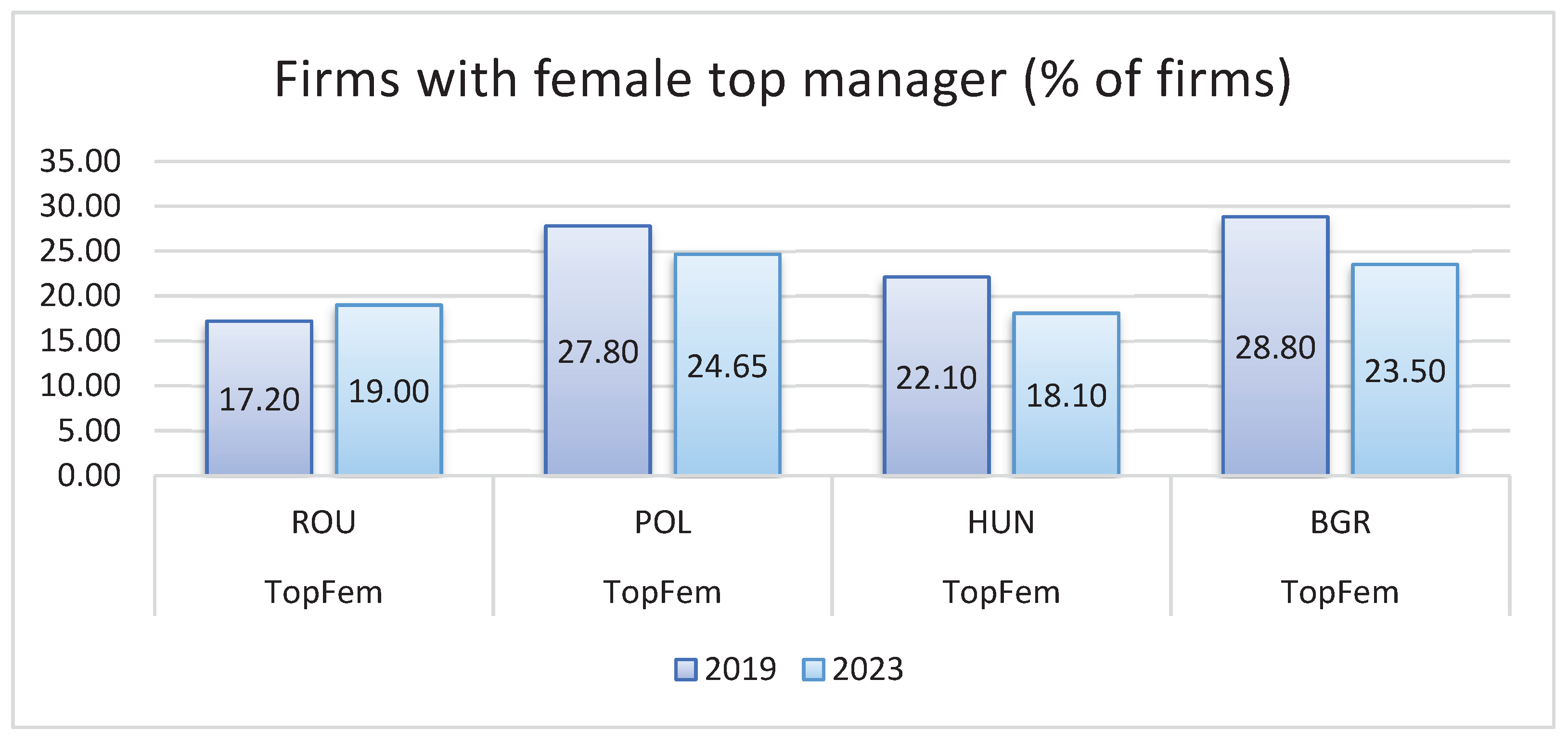
Figure 2.
Women in ministerial positions in 2019-2022.
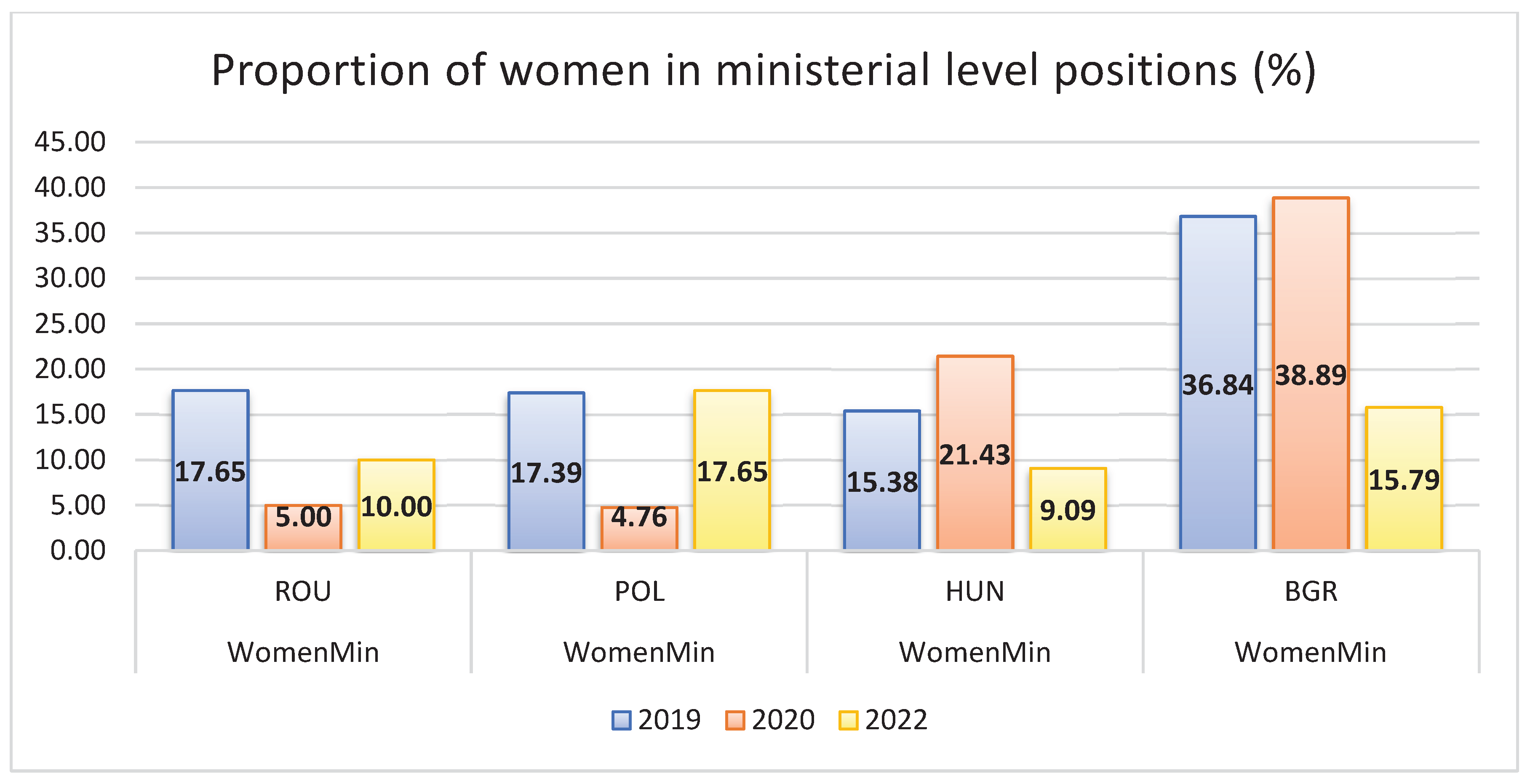
Figure 3.
Employment rate of adults by sex, age groups, educational attainment level, number of children, and age of the youngest child (%) - Figure designed by the author. Data source: EU3, 2024.
Figure 3.
Employment rate of adults by sex, age groups, educational attainment level, number of children, and age of the youngest child (%) - Figure designed by the author. Data source: EU3, 2024.
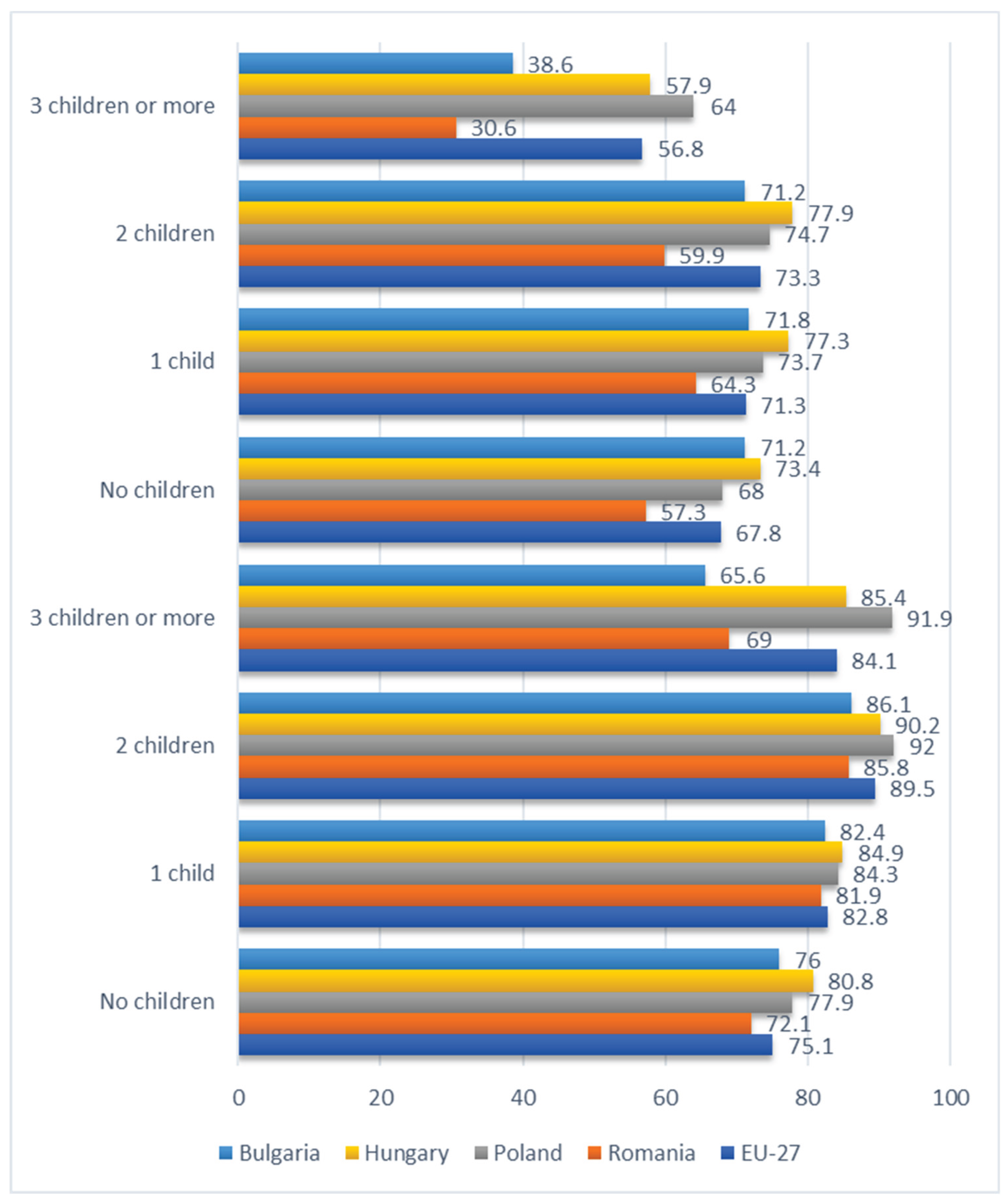
Figure 4.
Women employed in senior and middle management in 2019-2023.
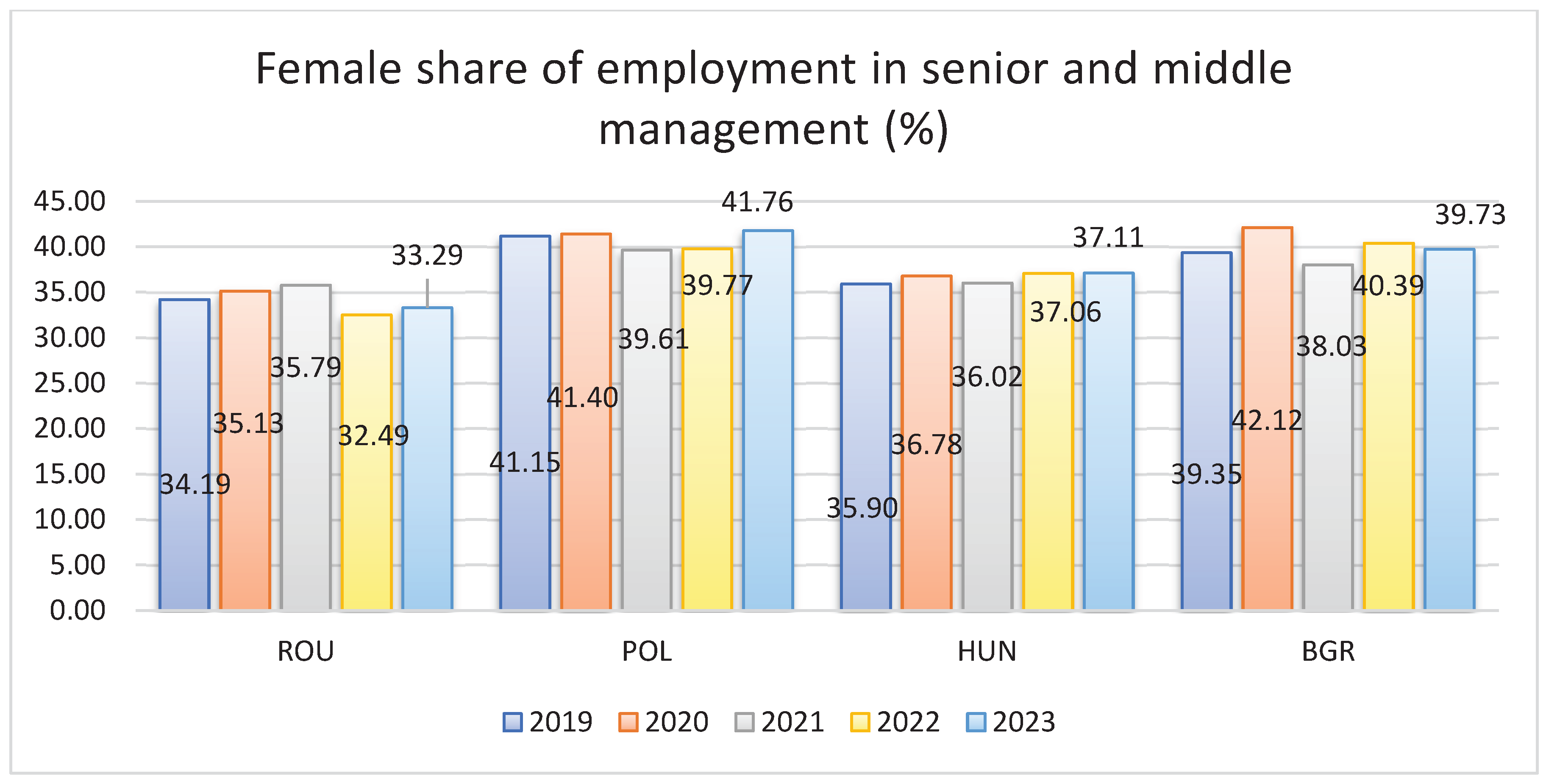
Figure 5.
Percentage of part-time employment of adults by sex, age groups, number of children, and age of the youngest child - Figure designed by the author. Data source: EU4, 2024.
Figure 5.
Percentage of part-time employment of adults by sex, age groups, number of children, and age of the youngest child - Figure designed by the author. Data source: EU4, 2024.
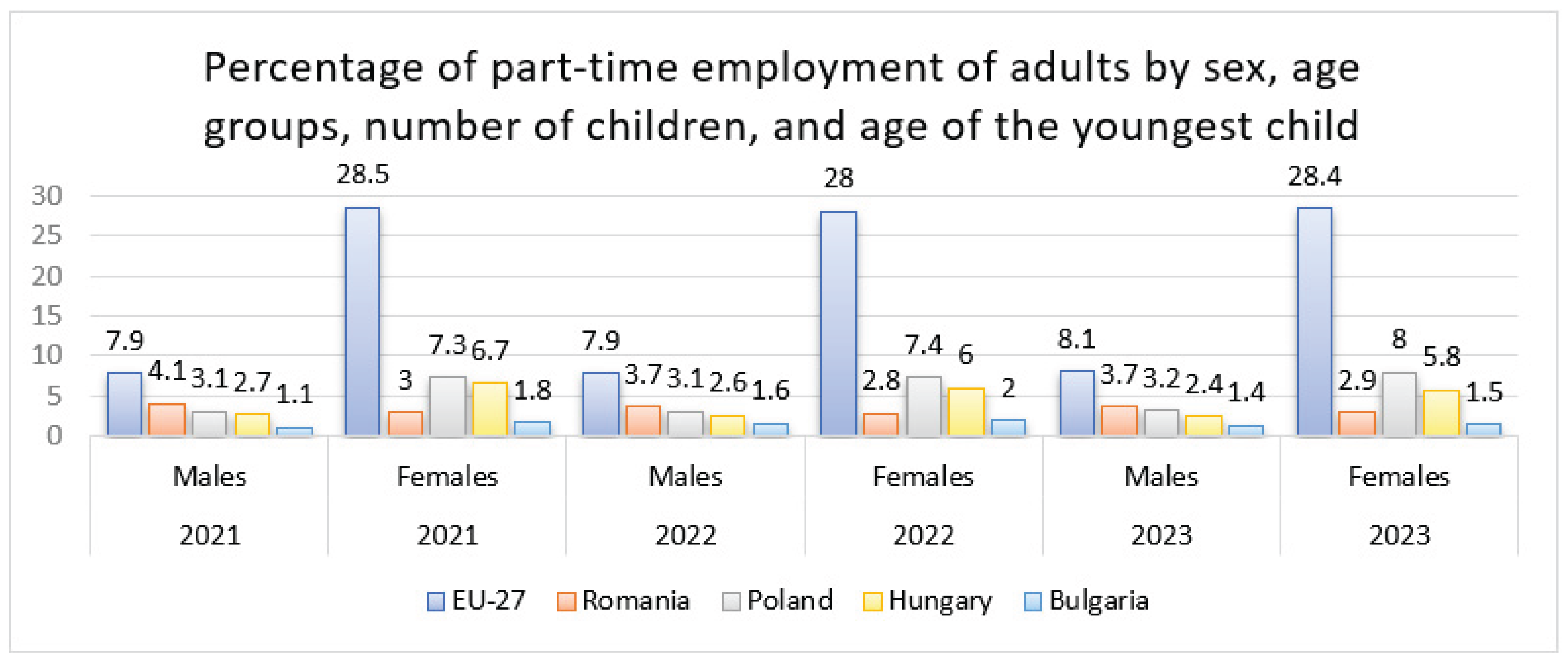
Figure 6.
Women in national parliaments in 2019-2023.
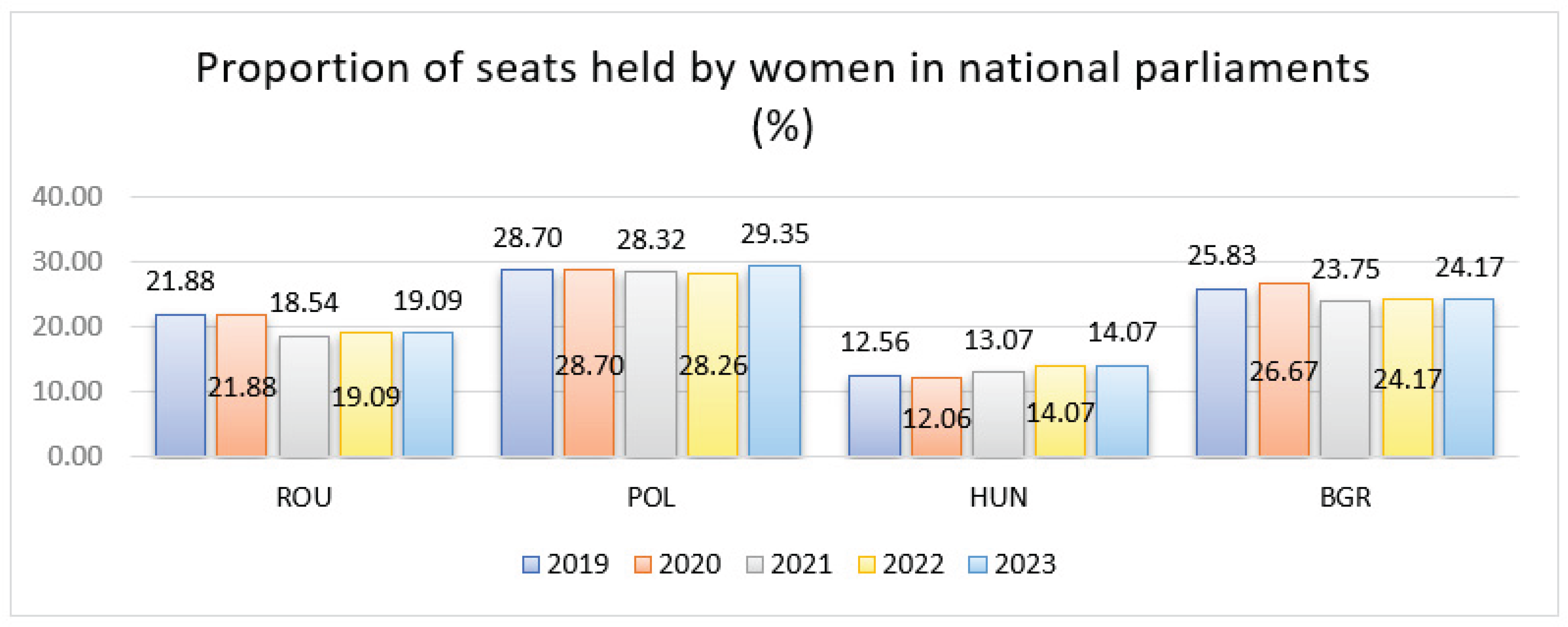
Figure 7.
Managers - Employment by sex, age, professional status, and occupation (1 000) - Figure designed by the author. Data source: EU6, 2024.
Figure 7.
Managers - Employment by sex, age, professional status, and occupation (1 000) - Figure designed by the author. Data source: EU6, 2024.
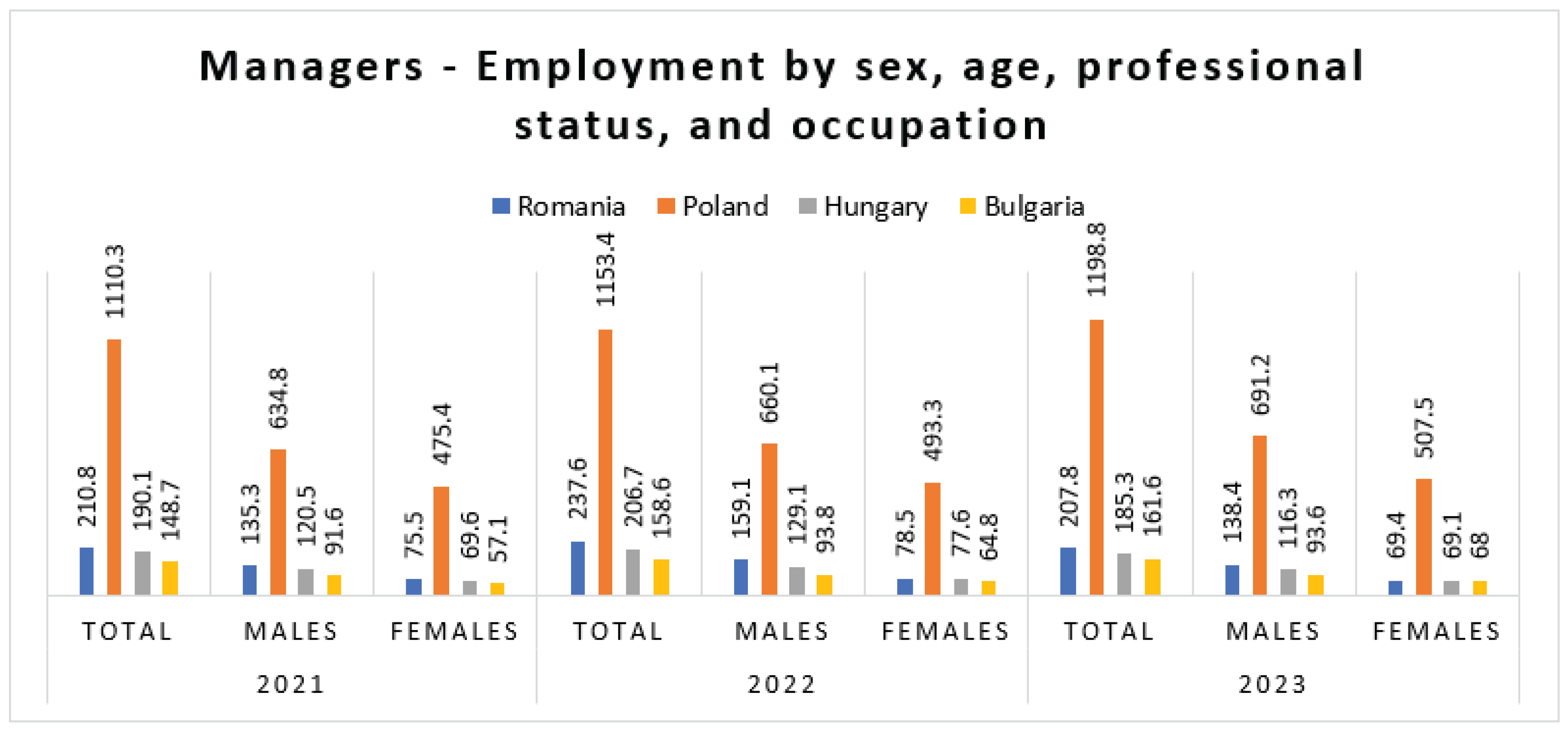

Table 1.
OLS Regression Summary – method Least Squares.
| Dependent Variable | Value |
| R-squared | 0.59 |
| Adjusted R-squared | 0.55 |
| F-statistic | 14.79 |
| Prob (F-statistic) | 8.62E-12 |
| Log-Likelihood | -251.85 |
| No. Observations | 80 |
| AIC | 519.7 |
| Df Residuals | 72 |
| BIC | 538.8 |
| Df Model | 7 |
| Covariance Type | nonrobust |
Table 2.
Regression coefficients.
| Variable | Coefficient | Std. Error | t-Statistic | P-Value | Confidence Intervals 95% | |
| [0.025 | 0.975] | |||||
| Intercept | 25.93 | 1.99 | 13.01 | 0.00 | 21.96 | 29.91 |
| Country.Hungary. | -6.53 | 1.88 | -3.48 | 0.00 | -10.28 | -2.79 |
| Country.Poland. | -0.68 | 1.88 | -0.36 | 0.72 | -4.43 | 3.06 |
| Country.Romania. | -6.07 | 1.88 | -3.23 | 0.00 | -9.81 | -2.32 |
| Indicator.Parliament Seats. | 14.84 | 1.88 | 7.90 | 0.00 | 11.10 | 18.59 |
| Indicator.Senior Management. | 0.66 | 1.88 | 0.35 | 0.72 | -3.08 | 4.41 |
| Indicator.Top Managers. | 3.83 | 1.88 | 2.04 | 0.05 | 0.09 | 7.58 |
| Year_Centered | -0.78 | 0.47 | -1.67 | 0.10 | -1.72 | 0.15 |
Disclaimer/Publisher’s Note: The statements, opinions and data contained in all publications are solely those of the individual author(s) and contributor(s) and not of MDPI and/or the editor(s). MDPI and/or the editor(s) disclaim responsibility for any injury to people or property resulting from any ideas, methods, instructions or products referred to in the content. |
© 2025 by the authors. Licensee MDPI, Basel, Switzerland. This article is an open access article distributed under the terms and conditions of the Creative Commons Attribution (CC BY) license (http://creativecommons.org/licenses/by/4.0/).
Copyright: This open access article is published under a Creative Commons CC BY 4.0 license, which permit the free download, distribution, and reuse, provided that the author and preprint are cited in any reuse.