
Submitted:
30 November 2024
Posted:
03 December 2024
You are already at the latest version
Abstract
In recent decades,museums have evolved from traditional knowledgerepositories to dynamic educational communication spaces.Whileinteractive facilities have become crucial tools for museum educationalcommunication,their effectiveness in knowledge dissemination remainsdebated among scholars and practitioners.This study explores how to optimize educational communication bydeveloping a theoretically grounded framework across three commonmuseum types:Art Museums,History Museums,and Science Museums.Based on their respective emphases on art perception,historical concepttransmission,and scientific experience provision,this paper appliesspecific theories-Experiential Learning Theory,Storytelling&NarrativeTheory,and Multiple Intelligence Theory to develop systematicguidelines for their interactive facilities design and provides threeapplications.The educational communication effects of these changes isverified through questionnaires.
Keywords:
Museum
; Interactive Facilities
; Eductional Communication
; Interdisciplinary Theories
List of Tables
| Table Number | Illustration | Page |
| 3.1 | Four Elements of Experiential Learning Theory | 4 |
| 4.1 | Three Key Considerations | 12 |
| 5.1 | Comparison of Happiness in the Dr. Sun Yat-sen Museum | 17 |
| 5.2 | Comparison of Happiness in the Dr. Sun Yat-sen Museum | 19 |
List of Figures
| Figure Number | Illustration | |
| 5.1 | Accurate Rate of Questions Before Changing in Dr. Sun Yat-sen Museum | 15 |
| 5.2 | Comparison of Accurate Rate of Questions in Dr. Sun Yat-sen Museum | 16 |
| 5.3 | Marine Specimens in the Blue Ecological Exhibition Hall | 18 |
| 5.4 | Comparison of Accurate Rate of Questions in Qingdao Science & Technology Museum | 18 |
1. Introduction
With the advent of the learning society, the role of non-formal education is becoming increasingly prominent (Yasunaga, 2014). Museums, as a significant component of the non-formal education system, play a pivotal role in social education through exhibitions and other avenues. Against this background, museums have increasingly dedicated themselves to enhancing educational means to better disseminate knowledge.
Adding entertainment factors to the educational process of museums, for instance, introducing the use of interactive facilities for edutainment is an access to let the audience engage in learning and help museums better fulfill their educational function. Several experts’ studies have proposed this point: Cumino, Spreafico, and Zich (2017) pointed out that simple interactive mini-game facilities in museums can help the audience facilitate deeper comprehension of scientific and historical concepts. As transition into the digital age, an increasing number of scholars put their eyes on advanced technologies. Hammady, R., Ma, M., & Powell, A. (2020) proposed that virtual interactive technologies are significant in facilitating the comprehension of museum content.
Nevertheless, the interactive facilities may also present several difficulties and challenges. Some experts in the museum industry, such as Taheri, B., Gannon, M. J., & Kesgin, M. (2020), found that interactive entertainment facilities place undue emphasis on the audience’s experience, potentially compromising the museum’s ability to effectively communicate its content. Inappropriate interactive facilities do hinder the conveyance of museum education: overly intricate interactive facilities may impede comprehension of the objects, while overly novel and exhilarating interactive facilities may divert the audience’s attention from critical thinking to entertainment. Therefore, interactive facilities should be scientifically instructed to avoid deviating from education and truly realizing knowledge dissemination.
In the context of classroom education and other educational activities, numerous theories have been developed to enhance knowledge dissemination, including Experiential Learning Theory, Storytelling, Narrative Theory, and Multiple Intelligences Theory. These theories have been employed for an extended period in classrooms and other basic educational activities and have demonstrated more effective methods for human beings in the process of acquiring knowledge. They can be used to instruct interactive facilities in museums, to prevent the interactive facilities from deviating from education, and to truly help museums realize educational functions.
2. Research Questions and Methodologies
2.1. Research Questions
- Evaluate and select the specific theories applicable to three common types of museums.
- Select three examples of museums that are representative of the region, and after fieldwork and evaluating the existing interactive facilities, use corresponding theories to optimize their design of interactive facilities, to enhance the educational functions.
- Analyze and compare the differences in educational effects between the new design guided by the theory and the traditional display methods and then use questionnaires to verify the changes in educational effects in museums after applying the theoretical guidance.
2.2. Research Methodology
- Analysis and Comparison
Based on the literature collection and on-site investigation, this paper compares the educational focus and display characteristics of art museums, history museums, and science and technology museums, and selects appropriate theories for these three types of museums to guide the construction of their internal interactive facilities.
- Questionnaire and Evaluation
To verify that the three examples played a better educational role after the modified design of the interactive facilities, this paper uses a questionnaire to judge whether the improvement is effective by the audience’s reception before and after the improvement of the exhibition.
3. Theory Choice
3.1. Experiential Learning Theory and Art Museums
Professor David Kolb (2015) presents the Experiential Learning Theory model in terms of four elements (Table 3.1): Concrete Experience (CE), Reflective Observation (RO), Abstract Conceptualization (AC), and Active Experimentation (AE). For an education to be successful, the learner must go through each stage -Experiencing, Reflecting, Thinking, and Acting (Mc, 2010). The educational focus of art museums is to help visitors to understand art. Appreciation and understanding of works of art are a gradual process (Rose 1988), art museums should respect this rule and create a structured, step-by-step art experience and learning process for their visitors. Therefore, Experiential Learning Theory, as a theory dedicated to guiding a step-by-step learning process, is perfect for art museums to instruct interactive facilities to achieve a cascading educational effect.
3.2. Storytelling & Narrative Theory and History Museums
The practice of storytelling is a common method of motivating students and conveying knowledge in the context of daily educational activities. It is particularly applicable to history museums. This is because a history museum is, in essence, a narrative of past events, people, and times. Storytelling makes complex narratives easier to assimilate (Sun Rui, 2024), thereby enhancing comprehension by the audience (Hughes, 2024). So, it is great for history museums to better communicate with the audience and achieve educational functions. But the special thing about a history museum is that it does not only convey knowledge of the exhibits but also a spirit or connotation. As Trofanenko (2010) said, exhibits in history museums are selective representations of the past that serve a variety of purposes, including fostering patriotism and shaping national identity. This puts higher demands on the content and expression of stories. Narrative Theory can inform good “expression” of storytelling, according to Ryan (2014), narrative theory can help not only to plot, structure, and innovate a story but also to help the story adapt to the characteristics of the “medium”. In a word, using interactive facilities as a medium for conveying stories and embedding narrative theories in storytelling is a good way to make interactive facilities positively educational.
3.3. Multiple Intelligence Theory and Science Museums
Science museums play an important role in promoting accessibility and equity in science participation (Martin, 2016). This places higher demands on science museums. The educational design of exhibitions in science museums should be based on different types of audiences and be tailored to the level of scientific mastery of each type of audience. Howard Gardner (1983), a professor at Harvard University, pointed out that every human being possesses eight intelligences: logical-mathematical, musical, spatial, bodily-kinesthetic, interpersonal, introspective, and musicological. Different types of audiences need to be mobilized with different intelligences in the learning process, which highly aligns with the challenge of audience diversity faced by science museums. Through the guidance of Multiple Intelligences Theory, science museums can design diversified interactive facilities, so that the audience with different types of intelligence can find their way of learning, thus maximizing the educational effect.
4. Design of Interactive Facilities in Different Types of Museums
4.1. Hong Kong Museum of Art
4.1.1. Suggestions for the Design of Interactive Facilities
Completely covering the four stages of Experiential Learning theory, using interactive means to achieve the gradual progress of art education work to let the audience learn in fun. The “Concrete Experiential” stage means the “approach learning” process, and in this stage, the design of interactive facilities should be mainly for entertainment purposes. Museums educators can use multimedia to provide an immersive art environment for visitors, allowing them to feel immersed and laying the groundwork for the rest of the art appreciation. Many exhibitions have such immersive installations at the entrance, such as the “Love Letters” exhibition at the Hong Kong Museum of Art, which uses a bridge to lead the audience into the world of the artist, together with a projection device of the river to create a uniquely artistic atmosphere. In the “Reflective Observation” stage, museums should integrate entertainment and education factors, increase the “purpose” of interactive facilities, and let the facilities play a role of promoting thinking, such as setting up inspiring interactive games to guide the audience to think about the meaning behind the artworks. The “Abstract Conceptualization” stage is a high-level understanding session, sublimating the depth of education. In this stage, the museum can increase the professional introduction of the artworks and use advanced technological facilities to convey the knowledge, helping the audience to build high-level art theory learning and art appreciation ability. The final stage ends with an entertainment experience, allowing the audience to internalize knowledge and sublimate ideas through creative interactive activities.
4.1.2. Example and Applications
Many art museums only have one or several of the four components. The absence of a certain component will run counter to the concept of art education that starts from the shallow to the deep and will easily lead to an imbalance between education and entertainment. Take the Hong Kong Museum of Art’s exhibition as an example, they should promote their design of interactive facilities. The “Love Letters” exhibition mentioned above uses projection devices and a bridge to bring an immersive experience to the audience, and the “Art Personalised” exhibition brings an immersive experience to the audience by setting up smells for the exhibition halls that match the temperament of each booth. Many art museums focus on creating an artistic atmosphere, according to Lewis and Williams (1994, p.35), this is in line with the “contact with the environment” element of the Concrete Experience step in the theory of “Experiential Learning”. However, in HKMoA’s most exhibitions, other interactive facilities are minimal. It is observed that some viewers, especially those who lack an art foundation, will be attracted by these novel facilities, enter the exhibition to symbolically browse around, and leave very quickly, staying in the state of “feeling entertainment”, and will not take the initiative to stay to perceive the connotation of art. The immersive “Concrete Experience” is only the first stage, the other 3 stages are equally important. Taking the “Love Letters” exhibition as an example, the following are suggestions for its interactive facilities’ improvement to realize the other three stages:
- Reflection Observation
This stage could be combined with the first stage by setting up a related reflection session in the center and rear of the immersive installation, for instance, on the wall to the left of the bridge, the question is presented in a rolling projection: “What do you think a painting about the theme of love would look like?” “If you were to create a painting about the theme of love, in what way would you present your own love story?” In addition, the questions can also be presented on panels at the front of the five different exhibition areas, and “opinion baskets” can be set up, where visitors can write down their thoughts and put them into the boxes, or they can take other people’s opinions on the questions from the boxes. This kind of intuitive thinking session triggers the audience’s curiosity and desire to explore, but it should be done appropriately, not too much, in case it takes up the space of the artwork and clutters the exhibition hall.
- Abstract Conceptualization
Like most exhibitions, the guided tours in the “Love Letters” exhibition require scanning QR codes and provide purely audio guidance, which makes many viewers lose the desire to listen. AR mobile tour system is a good auxiliary tool for art appreciation. According to Chang (2014), compared with the participants with audible (voice) guides, AR guides can effectively prolong the time that the visitors focus on the artwork, and improve the visitor’s learning effect. Set up AR guides in the “Love Letters” exhibition to provide visitors with multiple forms of interpretation, including mobile headsets, vivid 3D animation reproduction, and artist-creation highlight videos. The guided tour can be put in two areas:
- ✓
- Artwork Display Area
Set up guide buttons next to the selected important works, and the audience can point their mobile phones at the button to instantly call up the multimedia guide content of the artwork and choose the appropriate form for them, including voice narration and 3D animation interpretation.
- ✓
- The transition area between the five exhibition areas
A VR experience area can be set up using headphones and virtual glasses, to simulate the creative environment of the artist at that time, allowing the audience to gain a comprehend understanding of the artwork’s background.
- Active Experimentation
At the end of the exhibition, there will be a recreational art creation experience area, which allows visitors to participate in art activities and internalize their knowledge of art. Set up the “Virtual Art Tour”, visitors are invited to utilize controllers to virtually paint and doodle some of the paintings on display. This allows them to incorporate their personal reflections and innovative ideas generated during the exhibition into the art masterpieces. Finally, they are encouraged to take photographs to commemorate the event.
Using interactive facilities to implement the four steps of Experiential Learning enables the audience to appreciate the artistic connotations inherent in the entertainment, helping museums truly realize edutainment.
4.2. Sun Yat-Sen Museum, Hong Kong
4.2.1. Suggestions for the Design of Interactive Facilities
Use interactive facilities to tell stories throughout the exhibition and make good use of Narrative Theory to guide Storytelling, letting the audience learn in entertainment. In storytelling, narrative perspective, and narrative technique are two key points to consider. The narrative perspective should be chosen to make the audience feel like a direct participant in the story, to enhance the audience’s understanding of the exhibition, which in turn inspires the audience to create or change something on an internal level, such as values. Narrative techniques include plots, innovation, structure, etc. These need to be adjusted in time for the exhibits.
4.2.2. Example and Applications
The Dr. Sun Yat-sen Museum in Hong Kong is taken as an example here. This museum focuses on the close relationship between Dr. Sun Yat-sen and Hong Kong and demonstrates a series of precious exhibits that can show the unique characteristics of Hong Kong’s governmental system, municipal construction, and healthcare during the period of Dr Sun Yat-sen. Through these exhibits, the museum aims to provide visitors with an understanding of the contrasts between Hong Kong and Mainland China, and the reasons why Hong Kong has been able to exert a significant influence on revolutionary movements and reforms, thus achieving the enhancing the cultural identity and cultural confidence of the audience. The Dr Sun Yat-sen Museum employs a variety of text panels and audio guides to introduce its exhibits, the introductions are often limited to a single item and its immediate context, lacking a coherent storyline and multi-dimensional narrative perspectives. These educational methods are conducive to a sense of boredom among the audience and fail to facilitate deeper thinking. The following are considerations for the improvement:
- Choice of perspective of the story
The Dr Sun Yat-sen Museum should mainly tell the story in the tone of Sun Yat-sen, telling the story of himself and Hong Kong, and recounting how his revolutionary ideas were rooted in Hong Kong. This approach can make the audience feel like they are in dialogue with this great man of the generation and in the environment of the time, naturally bring out and very objectively reflect the unique system and culture of Hong Kong at Sun’s time. It is also necessary to add some dialogues to complete the story: add the dialogue between Dr. Sun and other people, for example, with the people of Hong Kong during that historical period, and other revolutionaries in Hong Kong. The concept of national self-confidence, which the museum seeks to convey, can be subtly interwoven into these dialogues and resonate with the audience.
- Ways in which the story is realized
As the audience step into the museum, the first area they enter is an immersive time tunnel where a young Sun Yat-sen (AI model) is stepping out onto the streets of Central: ‘In 1883, I first came to Hong Kong from Macao, and I was amazed by what I saw before me.’ Walking through the tunnel to the gallery I, the audience will see the young Sun Yat-sen strolling through the streets through interactive projections and listen to his first impressions and insights of this port. Then, in the virtual classroom section, the audience can “sit” next to Sun Yat-sen, flipping through his textbook notes, wearing mobile headphones, listening to his learning journey and experiencing the inspiration of the new style of education on his thinking. Stepping into the second exhibition hall, the advanced social landscape of Hong Kong is recreated through AR scenes, with Sun’s voice narrating, ‘The free air here has given us the most important protection.’ In this gallery, visitors can hear Dr Sun connecting the exhibits with his own stories, allowing the audience to inspire national self-confidence in the step-by-step narratives of this great man of his generation. In addition, after listening to the story, the audience can ask the AI Sun Yat-sen their own questions, and the AI will tell the corresponding story according to the needs of different audience members, to more satisfy the needs of different people.
- Storytelling techniques
In some circumstances, breaking away from the traditional flat narrative of stories, apply the techniques of white space in literature to the storytelling process to increase the audience’s interest, thus allow history to take on new interpretations and meanings through personal reflection and insights. For example, A ‘Secret Room Meeting Re-enactment’ session will be set up in the exhibition. By placing a half-sheet photo of the meeting and a secret letter in a hidden compartment to provide clues, the audience must search for the clues and gradually restore the history, and then listen to the full story of the meeting after completing the process. Through carefully designed white spaces, the exhibition transforms the story of Dr Sun Yat-sen and Hong Kong into an exploratory and experiential journey.
The use of interactive facilities to convey education in the form of stories, so that education and entertainment form a benign complement, to achieve a good situation in which entertainment serves the purpose of education, to realize the true meaning of edutainment in history museums.
4.3. Qingdao Science and Technology Museum
4.3.1. Suggestions for the Design of Interactive Facilities
Science museums have a diverse audience. This paper uses children’s groups as an example. When designing interactive facilities for children, museums can refer to Zhang Xiaopeng’s (2020) research results in the context of Multiple Intelligences Theory. This study proposes three core design dimensions that are important guides for enhancing the effectiveness of children’s education in science museums: Collection Development & Authentic Contexts, Multiple Intelligences Entry Points, and Practical Implementation (Table 4.1).
The first two phases focus on the selection and development of exhibits, connecting children to other galleries. Two critical aspects require attention: on the one hand, exhibits should be transformed into vivid and interactive formats; on the other hand, emphasis should be placed on using media or other interactive facilities to create an immersive exhibition environment. The third phase is the most important. At this stage, according to the exhibition’s content and children’s cognitive characteristics, the museum should select suitable intelligences to match the design of interactive facilities. The final phase allows children to internalize and apply their knowledge through a variety of interactive activities. These four phases will be interrelated and work together to serve to enhance children’s learning and visiting experience.
4.3.2. Example and Applications
Take the children’s exhibition hall in the Qingdao Science & Technology Museum as an example. The exhibition hall is built around five cartoon characters to carry out different thematic experience activities, and there are movable orbs to lead the children to explore the story of the sea. However, the construction of the children’s exhibition area lacks a coherent exhibition structure. The entire exhibition hall is devoid of exhibits, and the theme is detached from the other galleries. In addition, the interactive facilities in the hall are largely limited to cinemas and videos. These make the exhibition hall look more like a playground, making the museum less educational. Some improvements should be applied to it in conjunction with the Multiple Intelligences Theory:
- Collection Development and Authentic Contexts
Incorporating relevant thematic content from other galleries into the children’s gallery to ensure an organic connection, thus building a complete visitor experience. For example, the themes of “Marine Phenomena” in the third exhibition hall and “Blue Ecology” in the fourth exhibition hall of Qingdao Science and Technology Museum may prove challenging for children to comprehend. Therefore, besides exhibiting colorful specimens of marine life, the children’s exhibition hall can use multimedia animation to complement the introduction of marine ecosystems and use VR to create a natural environment in which the marine animals live and marine phenomena they must face, to integrate the contents of the third and the fourth exhibition halls. This will allow children to experience what they can’t get in other galleries and become more familiar with the contents of the entire museum and is a good way to promote educational dissemination.
- Multiple Intelligence
It is advisable to avoid considering Logical Intelligence and other difficult intelligence. Linguistic, Visual & Spatial, and Bodily-Kinesthetic intelligence can be combined to develop interactive facilities in the children’s exhibition hall. For instance, the virtual simulation cockpit in Hall 5 is too complex for children to operate, and there is no accompanying explanation. Therefore, museum educators could set up a small, simplified version of the deep-sea simulation cockpit, which differs from Hall 5. Take the modification of the deep-sea simulation cockpit in Hall 5 as an example: for Linguistic Intelligence, child-friendly operation instructions, marine knowledge explanations, and engaging quiz games can be designed; for Visual-Spatial Intelligence, AR technology can be utilized to present underwater world scenes, showcase marine ecosystems like coral reefs, and simplify the visual design of the operation interface; for Bodily-Kinesthetic Intelligence, a simplified control console can be designed with hands-on operation opportunities and motion-sensing interactive elements. Meanwhile, facilities like slides that are irrelevant to the theme should be reduced to avoid distracting from the learning experience.
- Practical Implementation
According to the content of the exhibition hall, some cooperative interactive projects that could allow children to enhance knowledge can be set up, such as the “Marine Ecology Maintenance” project. Children can choose to play different roles, such as scientists, fishermen, environmentalists, etc., and each role is associated with specific information and needs to communicate with each other, integrate resources, and formulate a comprehensive program for the maintenance of marine ecology. To improve the level of participation, each team’s proposal will be evaluated, and the museum workers will select the most effective one and explain it to all the children. For museum workers, this is also a good way to evaluate the effectiveness of knowledge dissemination and make improvement plans.
Here is just an example of children’s exhibition halls, where the design and construction of interactive facilities are informed by children’s cognitive processes. Museums can make efforts to develop interactive facilities covered by the theory of intelligence applicable to other groups to better realize education.
5. Evaluation of the Case Studies
This thesis used a questionnaire survey to evaluate whether the design of interactive facilities achieves good educational results. It concluded by comparing whether respondents had better knowledge and experiences after the improvements. Due to the limited ability to modify the exhibits, this study chose to make feasible supplementations to existing conditions as a basis for validation. While these supplementary measures may not fully achieve the ideal effects of the original proposals, they serve as an initial attempt to validate the effectiveness of theoretical guidance.
5.1. Dr. Sun Yat-Sen Museum
First, a questionnaire (Appendix A) is used to set 15 questions about the Sun Yat-sen Museum’s exhibits to investigate the visitor’s knowledge level. A total of 49 visitors were surveyed, and the results showed that the visitor’s response rate was mediocre, with the lowest being 25% and the highest being 54.29% (Figure 5.1).
Then, Storytelling and Narrative Theory are verified here. The research is carried out in the “Sun Yat-sen and Modern China” exhibition hall. Under limited conditions, the research designed a simple interactive system consisting of personal audio guides, interactive question cards, and a miniature electronic screen. The audio guide narrated the story from Sun Yat-sen’s perspective, while the question cards prompted thoughts related to the storyline during plot white space, and the screen was used to play videos. In the end, the audience was asked to answer the four questions, as shown in Appendix B. There were 52 people surveyed, 26 of the people did not listen to the story (Group 1), and the other 26 people used interactive facilities provided to listen to the story (Group 2). The survey results showed that the accuracy rate of questions improved (Figure 5.2). This experiment demonstrates that even with limited resources, the application of Storytelling and Narrative Theory can significantly enhance the educational effectiveness of museum exhibitions. It provides a valuable reference for history museums seeking to improve learning outcomes.
In addition, this research investigates the expectations of two groups’ happiness before the changes and then investigates the happiness again after the two groups experience different content. The scores are all 1-5, 5 is the highest, 1 is the lowest, and the average of all the results is taken. The results are shown in the Table 5.1.
This proves that Storytelling and Narrative Theory can enhance the audience’s interest in the exhibition to a certain extent and let the audience master knowledge happily. In addition, to verify whether multimedia, VR, and other high-tech facilities are more popular with the audience, the audience participating in the questionnaire was asked: “If you use other high-tech facilities instead of headphones to listen to stories, will you feel happier and more willing to learn?” The results show that more than 93% of the audience support this form. This shows that the combination of interactive facilities mentioned in the above thesis to realize Storytelling in the museum is very effective.
5.2. Qingdao Science & Technology Museum
The research conducts a practical verification of the Multiple Intelligences Theory in the Blue Ecological Exhibition Hall. Due to resource limitations, instead of building a simulated cockpit, marine specimens (Figure 5.3) are used as alternatives, focusing on verifying Language Intelligence and Visual & Spatial Intelligence. The research team designed an interactive system incorporating voice guides (introducing marine life characteristics and habits) and multimedia videos (displaying marine visual environments) to replace the planned AR technology. The experiment involved 488 child participants aged 5-14, equally divided into two groups: a control group 2 (244 children) experiencing traditional viewing and an experimental group 1 (244 children) engaging with the complete interactive system. After the tour, all participants completed a questionnaire (Appendix C) assessing their marine biology knowledge retention. The questionnaire analysis results (Figure 5.4) revealed significant differences in knowledge mastery between the groups. The largest difference appeared in Question 4: “Is an octopus an arthropod or a mollusk? What are the characteristics of their body structure?” with a 74.54% difference in accuracy rates. The smallest difference was found in Question 5: “What is the difference between seahorses and other fish? How do they reproduce?” with a 25.00% difference. Even with the smallest difference, 61 participants (25%) in the experimental group demonstrated improved learning outcomes. The experimental results indicate that applying Multiple Intelligences theory to stimulate children’s various intelligences can enhance their understanding of scientific knowledge. Although some visitors may not respond to this approach, the overall effectiveness is significant, providing valuable reference for designing children’s science exhibitions.
In addition, this research investigates the expectations of two groups’ happiness before the changes and then investigates the happiness again after the two groups experience different content. The scores are all 1-5, 5 is the highest, 1 is the lowest, and the average of all the results is taken. The results are shown in the Table 5.2.
This proves that children who have activated their intelligence feel happier in learning. What’s more, to verify whether the combination of multiple intelligences in the simulated cockpit is more popular among children, the children who participated in the questionnaire were asked: “Would you feel happier and more willing to learn if you did this activity in a simulated cockpit?”, and more than 90% of the children supported this form. This shows that the implementation of the theory of Multiple Intelligences using the simulation cockpit as a medium proposed in this paper is effective.
5.3. Hong Kong Museum of Art
Unlike history and science museums, it is difficult for art museums to quantitatively validate the level of understanding of art and the improvement of aesthetics by letting the audience answer questions about art knowledge. In this regard, this study determines the audience’s sense of art experience through the questionnaires. Due to condition limitations, it is still to make appropriate adjustments to the exhibition hall. The improvement of the “Love Letter” is as follows: for the first stage, “Concrete Experience,” the “Love Letter” Exhibition is already realized through the immersive installation at the entrance, so it will not be improved here. In the second step “Reflective Observation, one of the five exhibition halls, “Romance”, is chosen for the experiment, and the basket of ideas mentioned above is placed in the exhibition area, and the five ideas written in advance are put into the basket for the experimenters to “exchange”. In the third stage, due to the limitation of the equipment, the author uses pre-recorded audio to explain the background and connotation of the paintings, together with a video about the creation of the paintings that have been searched for on the Internet in advance, to let the experimentalists experience. Because of the complicated steps of this experiment and the limited patience of the audience, only 23 people were selected to complete the survey in this study. Select people who have already visited the “Love Letter” exhibition in the museum and ask them to visit this exhibition again with the addition of the two additional steps mentioned above. Finally, the questionnaire (Appendix D) is used to collect the opinions of the experimenters.
In addition, the experimenters are asked “Would it be easier and more enjoyable to learn about art and improve the art experience if VR and other high technology were used for guided tours?” Due to technical limitations, the last stage of the practice of virtual painting could not be realized, so this research ask the experimenters for their views on this practice. Twenty of them felt that artistic learning and experience are enhanced by the addition of the two steps, with a recognition rate of 87%. Seventeen people showed a high level of interest in the virtual painting in the last section, and the most common answer was “to help myself examine the gains from the exhibition”, and three people gave up the choice because they did not have the real experience, which indicates that the practical section was recognized to a certain degree. 23 people thought that they could have a better art experience if the guideway was replaced by a high-tech method, this indicates that the use of advanced technologies in the VR guided tour in this study is effective. Finally, 22 individuals thought they were happier than the first time they came to the “Love Letter” exhibition, and the interactive facilities made them feel the charm of joyful learning.
In conclusion, it is easy to see that the step-by-step art guiding can enhance people's sense of art experience, and let the audience have a sense of pleasure. High-tech VR guiding is more popular with the audience, and the last stage of the practice session is necessary to a certain extent.
6. Conclusion
This study examines how interactive facilities can better fulfill an educational role in museums. It concludes that theory-guided interactive facilities can play a better educational role: through the application of the step-by-step approach of Experiential Learning Theory, art museums can better fulfill their educational role in artistic enlightenment and aesthetic education; through the application of Storytelling and Narrative Theory to enhance exhibition narratives, history museums can more effectively achieve their educational goals of disseminating historical knowledge and guiding values; through the application of Multiple Intelligences Theory in designing interactive facilities, science museums can more comprehensively realize their educational function of cultivating audience’s scientific literacy and enhancing their exploratory abilities.
At the same time, research in this area still faces many challenges. First, the existing evaluation mechanisms for educational effectiveness need improvement. While questionnaires can gather direct feedback from the audience, relying solely on this method is insufficient. Future research needs to establish a more diverse evaluation system that incorporates behavioral observation, in-depth interviews, and other methods, along with a dynamic feedback mechanism for continuous optimization, to assess the educational effectiveness of interactive facilities more comprehensively. Second, theoretical guidance for interactive facility design requires continuous updating. While this study has applied classical theories such as Experiential Learning, Narrative Theory, and Multiple Intelligences Theory, new theoretical perspectives continue to emerge with the development of educational psychology. Future research could explore integrating newer theories such as Situated Cognition Theory, Constructivist Learning Theory, and Gamification Learning Theory into interactive facility design, providing richer theoretical guidance for different types of museums and optimizing educational outcomes. Exploration and practice are timeless, and museologists should always be on the road.
Acknowledgements
At this moment, with great excitement, I finally came to this part. In less than a year, I have gained so much. I still remember the moment when I received the admission offer. It was such an unforgettable moment, which meant that I would go to the school of my dreams. The days at the University of Hong Kong were ordinary but unforgettable. I am grateful that I chose to study for a master’s degree at the age of 24, which allowed me to gain a lot of knowledge and a different perspective. Of course, what I want to thank most is the people who accompanied me along this way. Firstly, I want to thank every teacher I met in the major of Museum Studies. Museum is a little unfamiliar subject to me. It is your patient guidance that made me gradually familiar with the museum industry and fell in love with this field. Secondly, I want to thank my family. It is your company that allows me to have the confidence to do what I like. Thank my parents for always silently being my strong backing. Every message and call will bring me a lot of strength. Thank my boyfriend for taking time out of his busy schedule to come to Hong Kong to be with me, and for giving me hope every time I was afraid of life. Finally, I want to thank every classmate I met at the University of Hong Kong. I am very fortunate to be able to learn and grow in such an excellent group. There are too many moments of being infected and moved. Every shining person brings me a lot of energy and keeps me motivated. This acknowledgement is short, but it melts all my emotions. I can’t say how beautiful the words are, but I will always remember this experience. Thank you all, and I will take all of this with me and move firmly into the next stage of my life.
Appendix A
- Questionnaire 1 of Dr. Sun Yat-sen Museum
- Who were the Four Great Invaders?
- In what year and month did Sun Yat-sen find the Chinese League? Where was it founded?
- What occupations did Sun Yat-sen have in Hong Kong?
- Where did Sun Yat-sen live in Hong Kong?
- What revolutionary funds did Dr Sun raise in Hong Kong?
- What important revolutionary activities did Dr. Sun Yat-sen organize in Hong Kong?
- What are the three aspects of "Three Principles of the People" proposed by Dr Sun Yat-sen?
- When did Dr Sun Yat-sen launch his major armed revolutionary movements?
- Where did Sun Yat-sen establish revolutionary bases?
- Which dynasty did Sun Yat-sen overthrow and what regime did he establish?
- What was the system of Hong Kong in the late 19th and early 20th centuries?
- What political system did Hong Kong adopt under British colonial rule?
- What were the economic policies of Hong Kong at that time?
- What were the major economic activities and industries in Hong Kong?
- What were the main reasons for the rapid economic development of Hong Kong?
Appendix B
- Questionnaire 2 of Dr. Sun Yat-sen Museum
- 1.
- What kind of economic policy was adopted in Hong Kong at that time? How did this policy affect Hong Kong?
- 2.
- What was the demographic structure and cultural atmosphere of Hong Kong society at that time? What were the characteristics?
- 3.
- Politically, Hong Kong was under British colonial rule. How did it differ from the system of government in Mainland China at that time?
- 4.
- What influences and inspirations did Dr Sun Yat-sen receive during his stay in Hong Kong?
Appendix C
- Questionnaire of Qingdao Science & Technology Museum
- 1.
- what type of animal is a sea turtle?
- 2.
- Is a shark an oviparous or mammalian animal?
- 3.
- What type of animal do dolphins belong to? Are they fetal or oviparous?
- 4.
- Are octopuses arthropods or mollusks? What are the characteristics of their body structure?
- 5.
- How do seahorses differ from other fish? How do they reproduce?
- 6.
- What is the difference between sea turtles and land turtles? What family do they belong to?
- 7.
- Although whales live in the ocean, what kind of animals do they belong to? What are the characteristics?
- 8.
- Do you know what is the difference between sea snakes and land snakes? Do you know the difference between sea snakes and land snakes?
- 9.
- Are starfish invertebrates? How do they reproduce?
- 10.
- what is the relationship between the sea cucumber and the sea cucumber, and do they belong to the same species?
Appendix D
- Questionnaire of HKMoA
- 1.
- After adding two more sessions, do you feel the art experience is better?
- 2.
- Do you think the virtual painting session in the last stage needs to be added? How would it help your art experience?
- 3.
- Would you get a better art experience by replacing the audio-visual guide in the third session with a high-tech method?
- 4.
- Did you have more fun during the process than the first time you came to the Love Letters exhibition?
References
- Yasunaga Mari. "Non-formal education as a means to meet learning needs of out-of-school children and adolescents." Montreal: UNESCO Institute for Statistics, 2014(39): 249-262.
- Cumino, C., Spreafico L., and Zich U.. ‘From Museum Education and Entertainment to Daily Life Edutainment: Tools for Understanding Geometric Shapes’. In ICERI 2017 Proceedings, 2017: 4447–4454. [CrossRef]
- Hammady, R., Ma M., and Powell A.. ‘User Experience of Markerless Augmented Reality Applications in Cultural Heritage Museums: MuseumEye as a Case Study’. In AVR 2018 Proceedings, 2018(2): 24-27. [CrossRef]
- Taheri, B., Gannon M. J., and Kesgin M. ‘Visitors’ Perceived Trust in Sincere, Authentic, and Memorable Heritage Experiences’. The Service Industries Journal, 2020(40): 705-725. [CrossRef]
- Kolb David. ‘Experiential Learning: Experience as the Source of Learning and Development Second’. Person Education Press, 2014.
- McCarthy Mary. ‘Experiential Learning Theory: From Theory to Practice.’ Journal of Business and Economics Research, 2010(5): 1-10. [CrossRef]
- Rose Gilbert. ‘How We Understand Art: A Cognitive Developmental Account of. Aesthetic Experience’. Journal of Nervous and Mental Disease, 1988(176): 176-383.
- Rui Sun. ‘An Analysis of the Social Education Work of the Museum in the New Era. Modern Education and Practice’. Journal of Cultural Studies, 2022(3): 85-87. (Chinese Simplified).
- Hughes, M., Justina Oliveira, and Crystal Bickford. ‘The Power of Storytelling to Facilitate Human Connection and Learning.’ Journal of the Center for Interdisciplinary Teaching and Learning, 2024(11): 1-9.
- Trofanenko Brenda. ‘The Educational Promise of Public History Museum Exhibits’. Theory and Research in Social Education, 2010(38): 270–288. [CrossRef]
- Ryan Laure. ‘Transmedia Storytelling: Industry Buzzword or New Narrative Experience?’ Journal of Narrative Studies, 2015(7): 1-19. [CrossRef]
- Martin Andrew, Tracy Durksen, Derek Williamson et al.. ‘The Role of a Museum Based Science Education Program in Promoting Content Knowledge and Science Motivation’. Journal of Research in Science Teaching, 2016(53): 1364-1384. [CrossRef]
- Gardner Howard. ‘Frames of mind: The Theory of Multiple Intelligences’. 1983.
- Lewis Linda, and Carol Williams. ‘Experiential Learning: Past and. Present’. New Directions for Adult and Continuing Education, 1994(1): 5–16. [CrossRef]
- Chang Kuoen, Chang Chiatzu, Hou Hueitse, et al.. ‘Development and behavioral pattern analysis of a mobile guide system with augmented reality for painting appreciation instruction in an art museum’. Journal of Computers and Education, 2014(71): 185-197. [CrossRef]
- Zhang Xiaopeng. ‘Designing Children's Educational Activities in Museums: Through the Lens of Multiple Intelligences Theory’. Natural Science Museums Studies, 2020(5): 47-52. (Chinese Simplified).
Figure 5.1.
Accurate Rate of Questions Before Changing in Dr. Sun Yat-sen Museum.
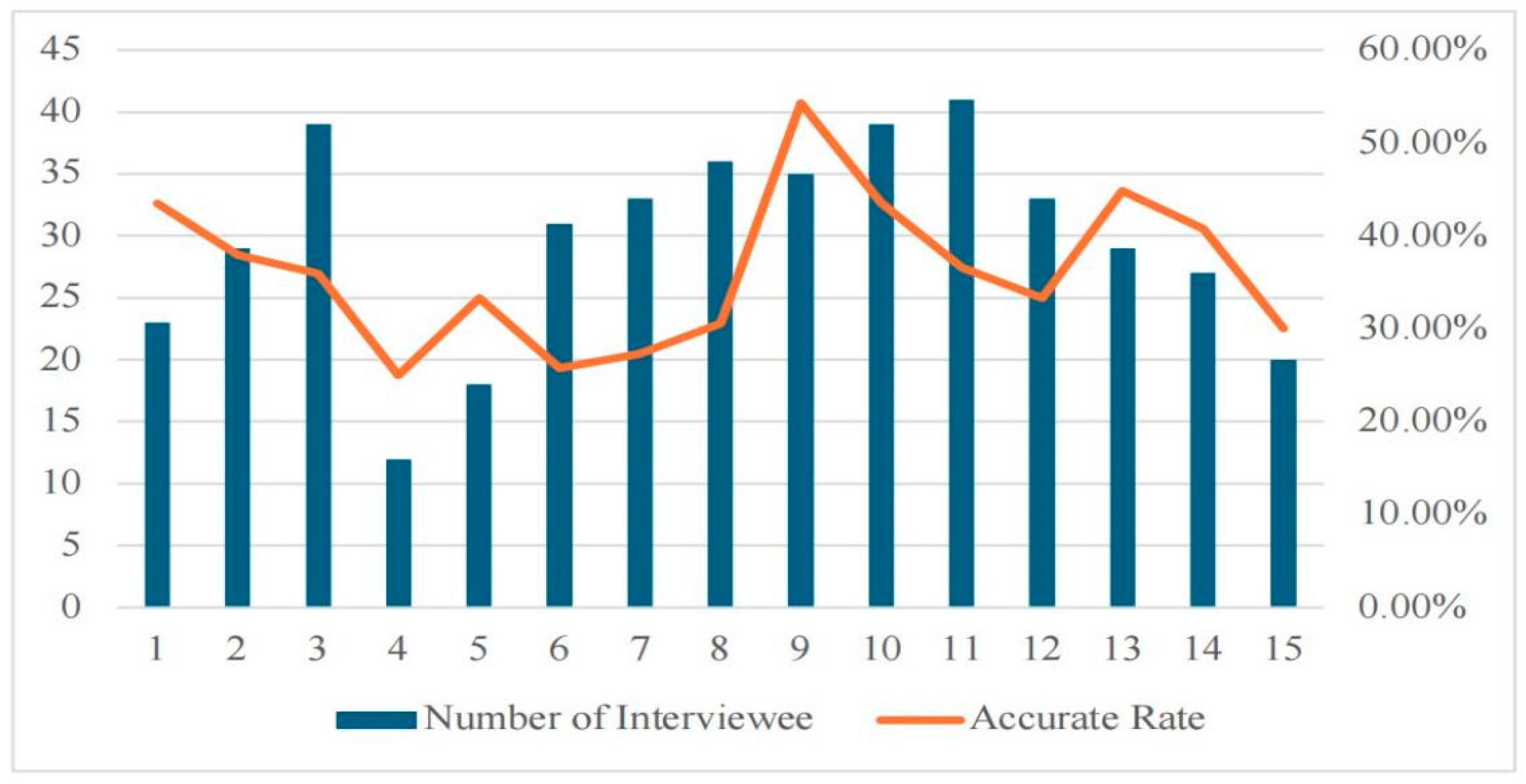
Figure 5.2.
Comparison of Accurate Rate of Questions in Dr. Sun Yat-sen Museum.
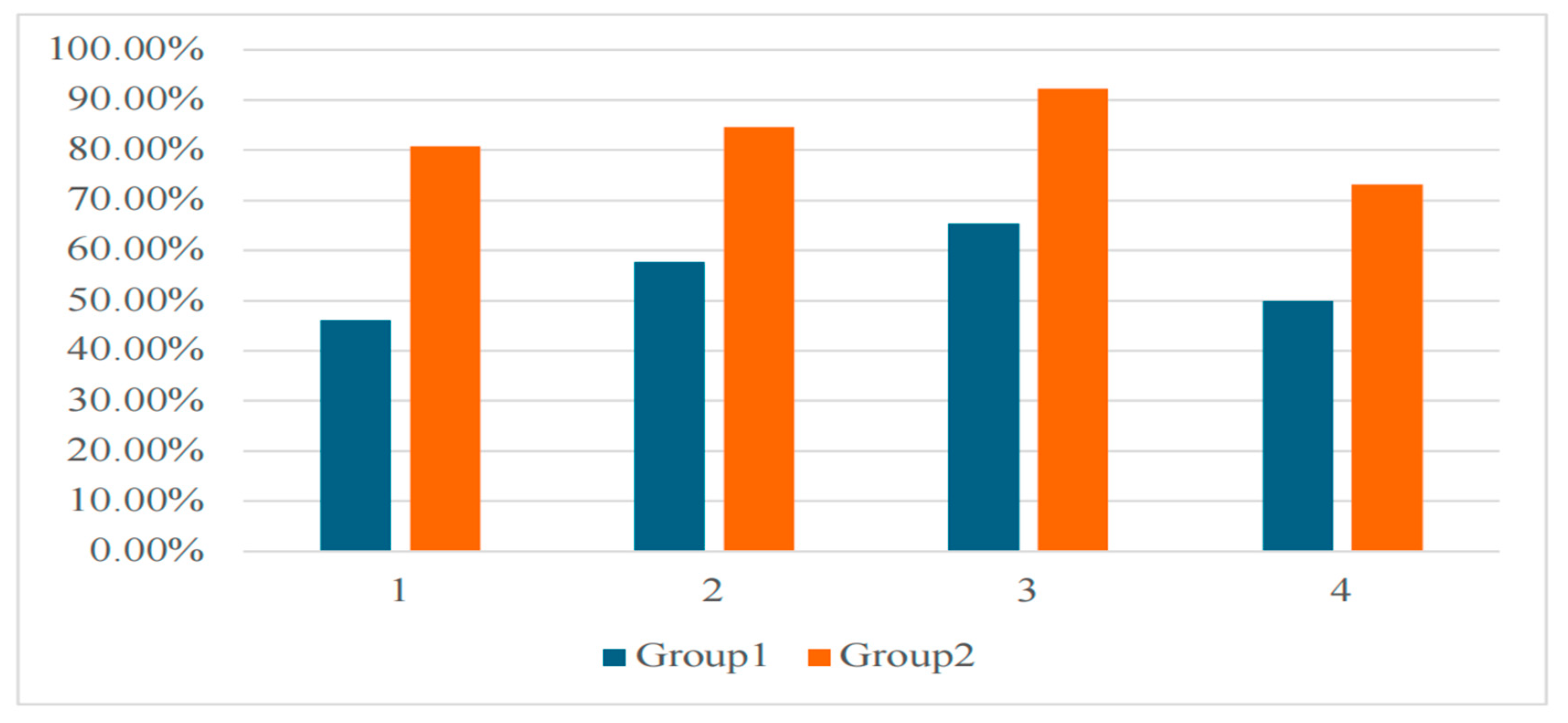
Figure 5.3.
Marine Specimens in the Blue Ecological Exhibition Hall.
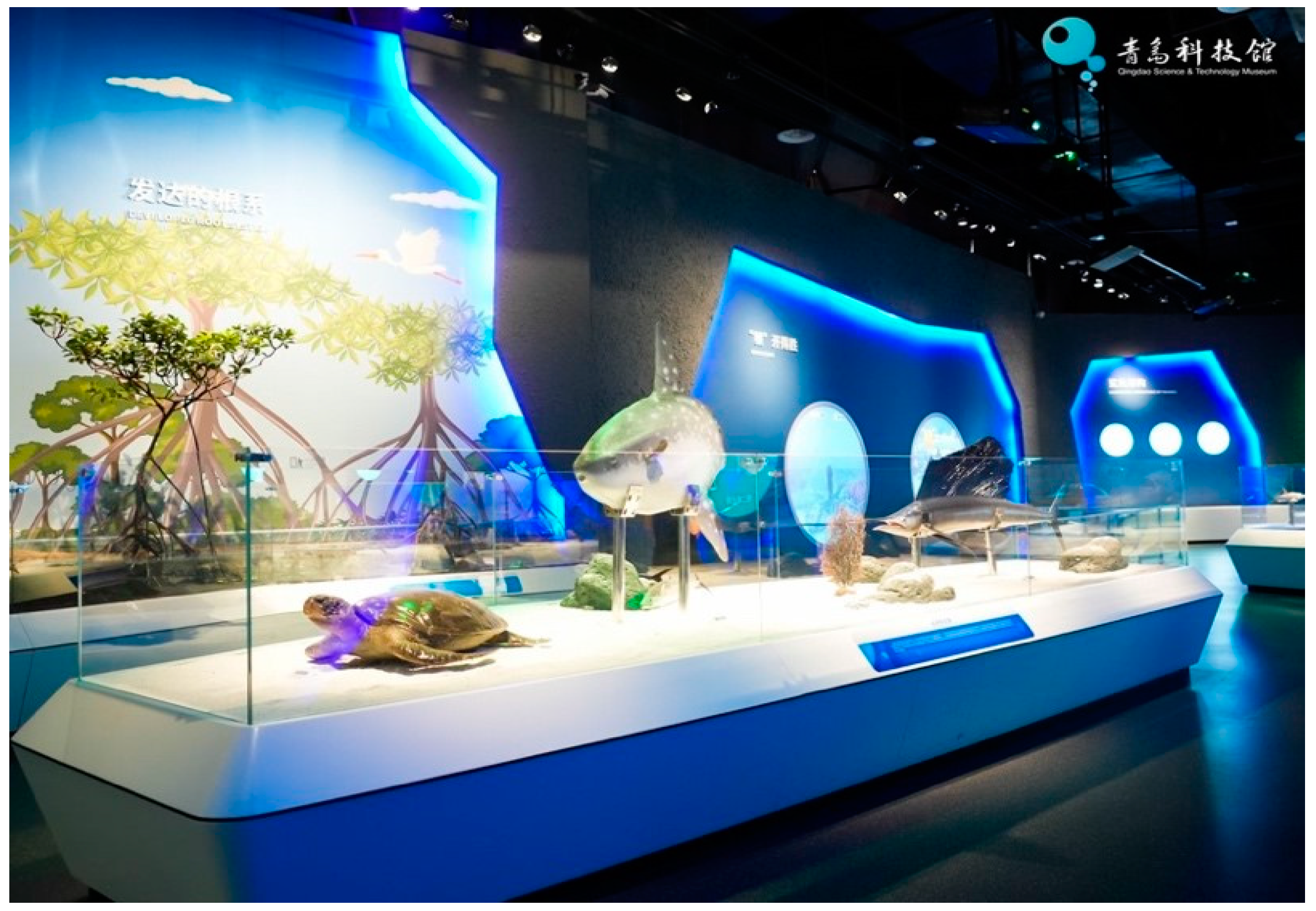
Figure 5.4.
Comparison of Accurate Rate of Questions in Qingdao Science & Technology Museum.
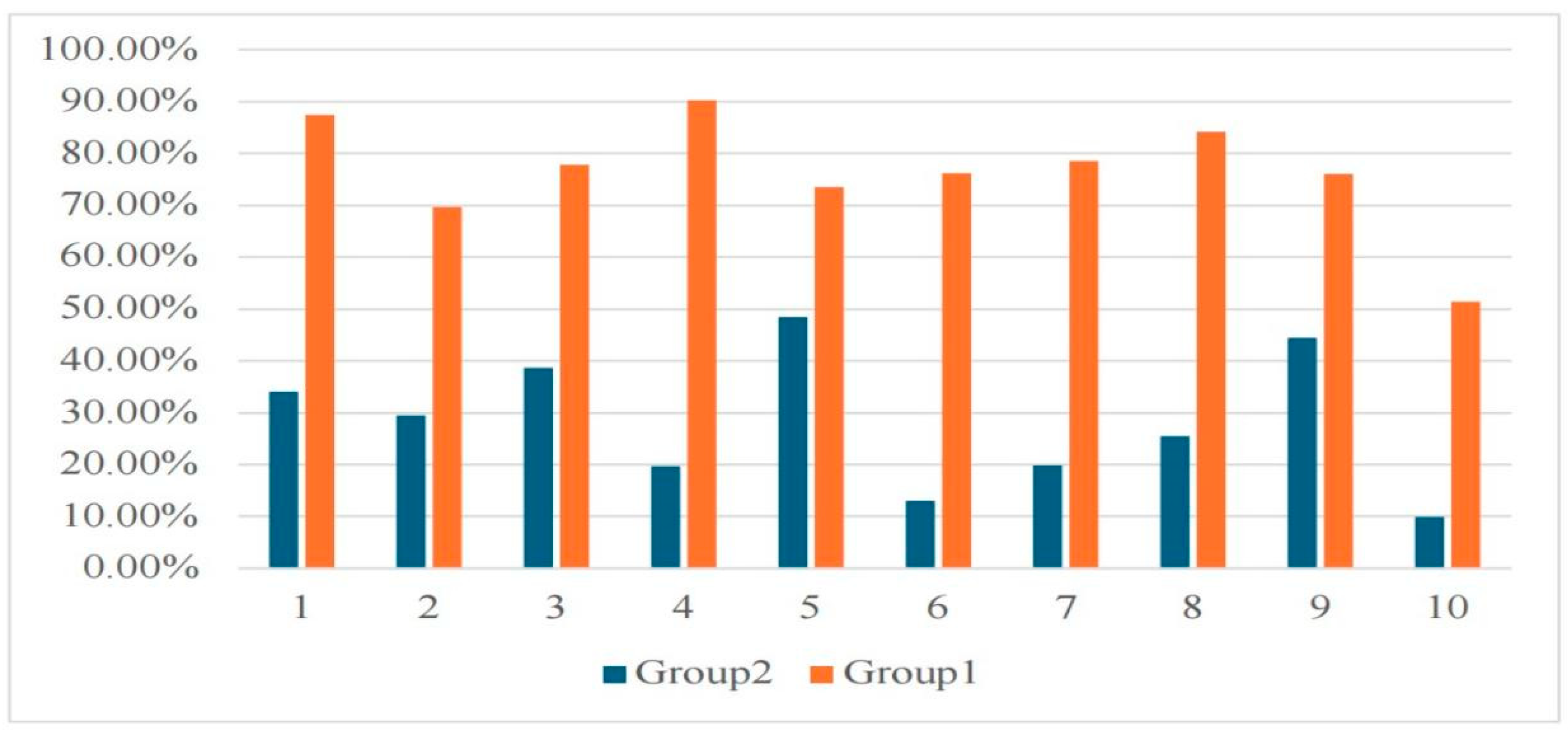

Table 3.1.
Four Elements of Experiential Learning Theory.
| Elements | Connotation |
| Concrete Experience | Approach learning |
| Reflective Observation | Engage in conscious reflection |
| Abstract Conceptualization | Begin a deeper understanding |
| Active Experimentation | Sublimate form practical activities |
Table 4.1.
Three Key Considerations.
| Considerations | How to implement |
| Collection Development | Establish a context |
| Authentic Contexts | |
| Multiple Intelligences Entry Points | Use multiple intelligences to motivate students to explore |
| Practical Implementation | Conduct practical activities to help comprehend |
Table 5.1.
Comparison of Happiness in the Dr. Sun Yat-sen Museum.

Table 5.2.
Comparison of Happiness in the Dr. Sun Yat-sen Museum.

Disclaimer/Publisher’s Note: The statements, opinions and data contained in all publications are solely those of the individual author(s) and contributor(s) and not of MDPI and/or the editor(s). MDPI and/or the editor(s) disclaim responsibility for any injury to people or property resulting from any ideas, methods, instructions or products referred to in the content. |
© 2024 by the authors. Licensee MDPI, Basel, Switzerland. This article is an open access article distributed under the terms and conditions of the Creative Commons Attribution (CC BY) license (http://creativecommons.org/licenses/by/4.0/).
Copyright: This open access article is published under a Creative Commons CC BY 4.0 license, which permit the free download, distribution, and reuse, provided that the author and preprint are cited in any reuse.


