

Submitted:
30 November 2024
Posted:
03 December 2024
You are already at the latest version
Abstract
Growing dependency and remote accessibility of automated industrial automation systems have transformed supervisory control and data acquisition (SCADA) networks from strictly isolated to highly interconnected networks. This increase in interconnectivity between systems raises operational efficiency and also increases network security threats, especially attacks from industrial viruses. This paper is concerned with the stability and optimal control analysis for a fractional-order industrial virus propagation model based on SCADA system. Firstly, we prove the existence, uniqueness, non-negativity and boundedness of the solutions for the proposed model. Secondly, the basic reproduction number \(\mathscr{R}_0^\alpha\) is determined, which suggests the conditions for ensuring the persistence and elimination of the virus. Moreover, we investigate the local and global asymptotic stability of the derived virus-free and virus-present equilibrium points. Thirdly, we present our system as optimal control problem with suitable control variables and derive optimal conditions. Lastly, a set of numerical simulations are performed followed by some conclusions of the whole work.
Keywords:
SCADA system
; stability analysis
; fractional optimal control
; numerical simulations
MSC: 26A33; 34A08; 37N99; 49J15; 91B50.
1. Introduction
The supervisory control and date acquisition (SCADA) system is widely used in industrial processes such as power system, the petroleum industry, medicine, metallurgy, chemical industry, transportation and other industries[1,2]. By the development of SCADA systems over time, modern SCADA systems have adopted standard network protocols that allow networked SCADA systems to be accessed via Ethernet. Unfortunately, this has brought about an increase in the threat of viruses in computer networks. It would bring an unimaginable disaster if SCADA systems are attacked by hackers since they are mainly used to monitor critical national infrastructures[3,4]. For example, the Stuxnet virus that spread across Iran in 2010 was able to target vulnerabilities in Microsoft systems and Siemens industrial systems, particularly Siemens SCADA systems. The Programmable Logical Controller (PLC) code can be modified by Stuxnet according to the characteristics of the target system, causing the centrifuge to accelerate abnormally until it is scrapped[5,6]. Therefore, there is an essential need to establish mathematical models to study the behavior of industrial viruses and to control their propagation. As noted in 1991 by Kephart and White, there are many similarities between biological virus propagation and computer virus propagation[7]. Since then, many scholars have also conducted in-depth research on computer viruses using biological models and analytical techniques[6,7,19,27,28].
Similar to biological population models, computer virus models usually exhibit an aspect of ecological memory: the ability of a community to respond in the present or future can be influenced by its past state or experiences[8]. This characteristic coincides with that of fractional calculus. Fractional differentiation can better express the biological memory of a system than integer differentiation[9]. The fractional-order model was initially proposed in the study of basic mathematical theory, but it has not been utilized extensively for a long time due to the difficulty of its calculation[10]. Thanks to the development of computer technology, researchers can do complex calculation using various software packages and fractional models re-entered the attention of many scholars[6,12,14,15,16,17,18,22,23,24,25,31,34,35,37,38]. The most used fractional operators are Grnwald-Letnikov, Riemann-Liouville and Caputo derivates. When talking about real problem, the Caputo derivative is highly useful since it allows traditional starting and boundary conditions be included in the derivation, and the derivative of a constant is zero, that is not the case with the Riemann-Liouville fractional derivative. The present work aims to analyze the corresponding model via the Caputo fractional derivative.
The optimal control tool is quite effective in the development of models, which refers to the search for control to optimize system performance under certain constrains[11]. These constraints are described by a dynamic system of differential equations. An integer or classic optimal control problem (OCPs) is the dynamic system governed by ordinary differential equations (ODEs) where academics have found some gaps and limitations in the formulation of these OCPs. As a generalization of classic OCPs, the fractional optimal control problems (FOCPs) appeared to address some limitations and gaps in the classical OCPs. The FOCPs consist of either the objective functional or the dynamic system or both include at least one fractional-order term[12,13]. In recent years, various optimization problems associated with FOCPs arising in biology, ecology and epidemiology were investigated by many authors[14,15,16,17,18]. In the present study, to use the limited resources to control the computer virus propagation, optimal control is introduced in the model.
In light of the discussion above, we consider a fractional industrial virus model of Caputo type. The model is reposed on an integer-order industrial virus model without memory effects established in Zhu et al[19]. One purpose in this work is to study dynamics of the proposed model. While the positivity and boundedness of solutions are established with the help of standard comparison results, the establishment of stability properties is not a simple and trivial task. As is known to all, the establishment of asymptotic stability of dynamics systems has an important role in both theory and practice but not a simple work in general. One of the most effective and powerful techniques to this problem is the Lyapunov stability theory[20,21]. However, it is not easy to construct appropriate Lyapunov functions for a given dynamical system. Another purpose in this work is to formulate the FOCP depending on the suggested fractional-order model. The proposed optimal control problem aims not only to control the spread of viruses but to achieve this economically. The objectives of this work are:
(i). The existence conditions and the locally asymptotic stability criterion are established for virus-free and virus-present equilibrium points in the proposed model.
(ii). By constructing a suitable Lyapunov function, we study the global stability of virus-free and virus-present equilibrium points of the system.
(iii). The model system is subjected to an optimal control analysis by incorporating two control efforts.
(iv). We employ the Adam-Bashforth-Moulton predictor-corrector technique to obtain numerical solution.
The rest of the paper is organized as follows: in Section 2, we present some basic properties of the Caputo fractional derivative operator and Mittag-Leffler function. In Section 3, we propose a fractional-order industrial virus model. In Section 4, we show the well-posedness of solutions. In Section 5, we study the stability of the virus-free and virus-present equilibrium points. In Section 6, we investigate FOCP. In Section 7, we illustrate the numerical simulations of the obtained results. The conclusion of this work is given in Section 8.
2. Preliminaries
In this section, we present some definitions, notions, and theorems that will be used in the next sections.
Definition 1.
([9]) The Riemann-Liouville fractional integral of order is given by
where Γ (.) is the well-known gamma function.
Definition 2.
Definition 3.
([9]) The Caputo fractional derivative of order is defined as follows:
where is a given function in the interval .
Theorem 1.
Lemma 1.
For Then, the left and right Caputo fractional derivative satisfies
Definition 4.
Let is the Laplace transform of the Then,
Definition 5.
The Mittag-Leffler function is given by
and satisfies:
(1) the property (see[23])
(2) the Laplace transform of as follows:
To prove the existence and uniqueness of the solution for fractional system, we need the following Lemma.
Lemma 2.([24]) Consider the system
with initial conditions where if satisfies the locally lipschitz condition with respect to then there exists a unique solution of (1) on
The following lemma proved in Vargas-De-León, which describes the Volterra-type Lyapunov function for the fractional order epidemic systems.
Lemma 3.([25]) Let and be positive valued function. Then, for all , one has for all
In order to prove the global stability of all possible equilibrium problems, we now state the following Lemma.
Lemma 4.([26]) (Fractional LaSalle’s invariance principle) Let Π be a positively invariant subset of D where be continuously differentiable function such that and in Π for the solutions Let ϝ be the set contains all points in Π where and Υ the largest invariant set in then every bounded solution starting in Π approaches Υ as
3. Model Formulation
The SCADA system is mainly composed of communication devices, the remote terminal unit ( RTU ), the main terminal unit ( MTU ) and human-machine interface ( HMI ). The RTU is mainly responsible for collecting real-time data from the site and send it to the master station for analysis, and then the master station will send specific commands to the RTU according to the analysis results. In this process, a virus may make the RTU send data that contradicts the field data to the master station, thus causing the MTU to send wrong commands to the RTU. Because of the self-replication ability of the virus, an infected RTU may infect other vulnerable RTUs, eventually leading to unimaginable consequences [27]. To accurately describe the propagation characteristics of industrial viruses in SCADA systems, in [19] , the following integer-order model has been given to document the propagation of industrial viruses
where and denote the susceptible compartments, latent compartments, breaking compartments and recovered compartments, respectively. This model is based on the following assumptions:
(A1) All newly connected RTUs to the SCADA system with a constant access rate of b.
(A2) Due to non-functional use, the RTU leaves the SCADA system with a probability of .
(A3) The probability of each susceptible RTU being infected is , and the probability of the susceptible node being infected at time t is .
(A4) Each susceptible RTU either latent with probability or breaks out directly with probability .
(A5) RTUs outbreak in the latent state with probability .
(A6) The virus may be removed with a probability of a due to installing and updating the latest version of antivirus software.
(A7) The spread of the virus will be suppressed with probability of inhibition when the virus outbreak reaches a certain level.
To the best of our knowledge, the model (2) has been studied and developed at some levels(see[28,29]and references therein), but its fractional-order versions have not been considered. This motives us to study the model (2) in the context of the Caputo fractional derivative. More precisely, we consider the following SLBR model
with initial conditions
where with stands for the Caputo derivative of a given function . Apparently, model (3) degenerates to system (2) when .
4. Well-Posedness
In this section, we investigate the dynamics of the existence, uniqueness, non-negativity and uniform boundedness of the solutions for the proposed SLBR model (3).
4.1. Existence and uniqueness of solutions
In this subsection, we show the existence and uniqueness for the solutions of SLBR model (3) in the region:
Theorem 2.
There always exists a unique solution for each initial condition , and , in the SLBR model (3).
Proof.
We use the approach in [24] to prove the existence and uniqueness. Consider , with
For any , it follows from (4.1)-(4.4) that
Hence, satisfies the Lipschitz condition with respect to X. Therefore, Lemma 2.2 confirms that there exists a unique solution of system (3) with initial condition . And that is what we proved. □
4.2. Non-Negativity and Uniform Boundedness
Consider the set = To prove that each solution of SLBR model (3) is non-negative and belong to , we need the following generalized mean value theorem [30] and corollary.
Lemma 5.(Generalized Mean Value Theorem) Let and for , then
with
Corollary 1.
Suppose that and , for . If , then is non-decreasing for each . If , then is non-increasing for each
Proof.
This is clear from Lemma 4.1. □
Theorem 3.
The solution of SLBR model (3) is a positive invariant set and belongs to .
Proof.
In order to demonstrate our conclusion, we use the following steps to prove the non-negativity of the solution of SLBR model (3).
Using Corollary 4.1, we can get is non-decreasing at the neighbourhood of time where and cannot cross the axis . Hence, for all
Now,we claim that the solution of starts from and remains non-negative. If not, then there exists a such that
If , then from we have =. From Corollary 4.1, it is evident that is non-decreasing at the neighbourhood of and which concludes Hence, we arrive at a contradiction.
If , then there exists a such that .
Thanks to we have , which indicates and it opposes our assumption. Therefore, we have . Again from we have , which means is non-decreasing in the neighbourhood of time where and cannot cross the axis . Hence, Similarly, from it is easy to see that Therefore, is a positive invariant set for the proposed fractional order SLBR model (3). □
Now, we are going to prove that each solution of the SLBR model (3) is uniformly bounded.
Theorem 4.
Each solution of SLBR model (3) starting in is uniformly bounded.
Proof.
Adding all equations in system (3), we get
The last equation of recovered compartments in system (3) is independent of other equations. With this in mind, we focus on the reduced system as follows:
with the following non-negative initial conditions:
5. Stability of the Equilibrium Points
The stability theory of the FDEs was introduced by Petras [32], which can be summarized as:
Lemma 6.
Consider the fractional order system
where and is a function. The equilibrium points of the above system are solutions to equation An equilibrium point is locally asymptocially stable if all the eigenvalues of the Jacobian matrix evaluated at the equilibrium satisfy and unstable if there exist an eigenvalue such that
We now discuss the existence of equilibria of system (8). To evaluate equilibrium points, we set,
we observe that system (8) has only two equilibrium points, a virus-free equilibrium point and a virus-present equilibrium point.
5.1. Equilibria and Basic Reproduction Number
The virus-free equilibrium point is given as follows: where
To consider the existence and uniqueness of the virus-present equilibrium we first calculate the basic reproduction number applying the next generation matrix approach[33]. The right-hand system (8) can be written as Here, calculates new infections in the model, and calculates other transmissions in the infected parts. and associated with system (8), are given, respectively,by
The Jacobian matrices of and at the virus-free equilibrium point are given by
The basic reproduction ratio defined as the spectral radius of the matrix , is obtained as
In the case when and , system (8) admits as a unique virus-present equilibrium point, where
Clearly, it is evident that if then system (8) does not admit any positive virus-present equilibrium. Thus, we require to assure the existence and positivity of the virus-present equilibrium point.
5.2. Local Stability
In this subsection, we investigate the local stability of the equilibria and .
Theorem 5.
If then the virus-free equilibrium point is locally asymptotically stable. If then is unstable.
Proof.
The following matrix gives the Jacobian matrix of system (8) at the virus-free equilibrium point
Obviously, is one eigenvalue of and the other two eigenvalues of are given by the roots of the following equation
where,
If , one immediately gets . Thus, by the Routh-Hurwitz criterion, the eigenvalue of have negative real part if , so that for all if If then and this suggests that admits a positive real eigenvalue , then for all if Consequently, by Lemma 5.1, one can obtain Theorem 5.1. □
Theorem 6.
If , then the virus-present equilibrium point is locally asymptotically stable for all .
Proof.
Now, we investigate the local stability of the virus-present equilibrium of system (8) by assuming that We compute and define the jacobian matrix at the virus-present equilibrium point as follows:
The characteristic equation of is given by
where the coefficients utilizing are given by
Furtherly,
Since we deduce that
Based on the above inequalities, we obtain and . Thus, according to the Routh-Hurwitz criterion, all roots of system (8) have negative real part, so that for all if By Lemma 5.1, the virus-present equilibrium point is locally asymptotically stable. □
5.3. Global Stability
This subsection focus on the global stability analysis of two equilibria and based on the direct Lyapunov method, which aims to construct an appropriate Lyapunov functionals, and the fractional LaSalle’s invariance principle. Firstly, we demonstrate the following global stability result for virus-free equilibrium point
Theorem 7.
If then the virus-free equilibrium point is globally asymptotically stable for all
Proof.
Let be the Lyapunov functional defined as
By differentiating with respect to time, we have
Since we have for all In addition, it is easy to verify that if and only if and Hence, the largest compact invariant set in is the singleton By Lemma 4.6 in [26], which generalized the integer order LaSalle’s invariance principle to fractional order system, we gain that is globally asymptotically stable if
Furthermore, under a mild condition on the parameters, we prove in the following theorems the global asymptotically stability of by using Lyapunov method[34]. □
Theorem 8.
If and , then the virus-present equilibrium of system (8) is globally asymptotically stable.
Proof.
Let the appropriate Lyapunov function as:
where are positive constants specified later.
It is easy to see that . For , we have by the fractional derivative of W that
Let us choose and in such a way that satisfy:
By solving above equations, we can obtain that
Let us rearrange the terms of in such a way that where
Since the arithmetic mean is greater than or equal to the geometric mean, we gain that Next, we are going to prove
Since and we conclude that
Collecting (6) and (10), we arrive at Thanks to and we can obtain that for all . The equality holds only at the virus-present equilibrium point Moreover, the largest invariant set of is the singleton By LaSalle’s invariance principle, the virus-present equilibrium point is globally asymptotical stability if and The proof is complete. □
Remark 1.
We would like to mention that the construction method of Lyapunov function in Theorem 5.4 is different from that Theorem 5 in Ref. [19]. The sufficient conditions for the global stability of the virus-present equilibrium point are unlike those in Ref. [19]. For model (3), we guess that the virus-present equilibrium point is also globally asymptotically stable as
6. FOCP Formulation
In this section, we formulate the FOCP to reduce the spread of infection, simultaneously reducing the related cost. To achieve our goal, we introduce two control measures: (i) improvement measures to raise public safety awareness ; (ii) treatment measures that optimize the anti-virus software to kill the virus Based on the control variables stated above the new FOCP of the Caputo fractional order model (3) is reformulated as
with initial data and the Lebesgue measurable control set is where T is the final time of implementing control measures. The objective of the control problem is to minimize the number of infected nodes under the cost of incorporating control strategies. In mathematical perspective, for a fixed terminal time T, the problem is to minimize the objective functional
where the coefficients are weight constants of infected nodes and control measures. The following theorem follows from a direct application of Theorem 4.1 in Ref.[35].
Theorem 9.
Let the control function be measurable on with value of each of lies in Then there exist adjoint variables satisfy
with the terminal conditions:
Moreover, the optimal controls and are given as
7. Numerical Results and Discussion
In this section, the system (3) and system (11)-(12) are numerically simulated, respectively. All the simulation results are helped by MATLAB software. In the upcoming subsections, simulations for various parameters and different control strategies will be given comparatively.
7.1. Numerical Results of Fractional SLBR Model
In this subsection, in order to illustrate our analytical results, we adopt the numerical solver called the Adams-Bashforth-Moulton predictor corrector algorithm for getting approximate solutions of fractional ordinary differential equations [36,37].
7.1.1. Stability Analysis of Virus-Free Equilibrium
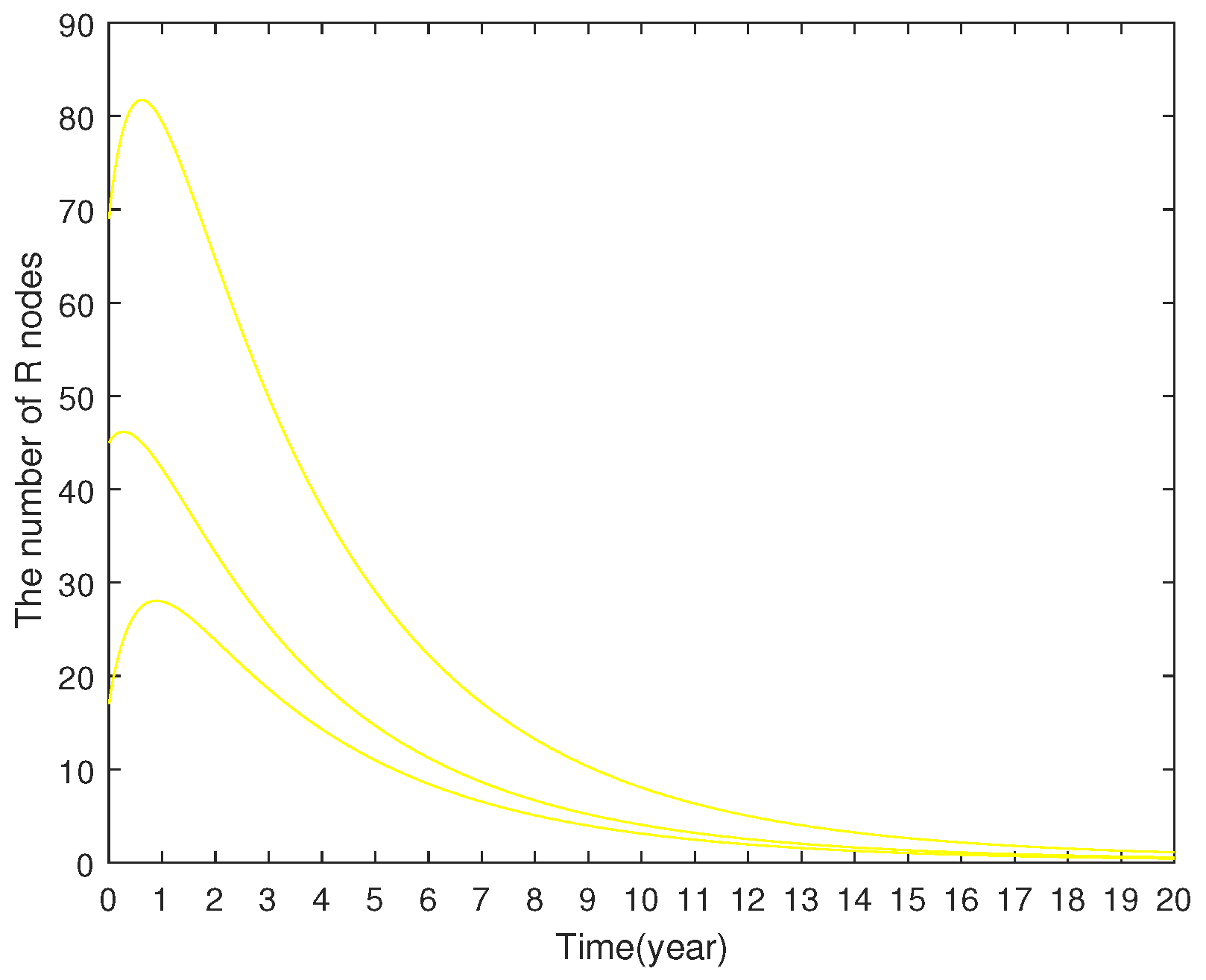
In what follows, we demonstrate numerically the analytical findings obtained in Section 5 by some graphical representation. In Figure 1-4, we plot the 2D system’s solutions using and using three sets of different initial values, which are and respectively. For this set of parameter values, . We demonstrate the comparison of four state functions under various initial conditions. It can be seen from Figure 3 that the value of all the curves eventually converges to 0, which verifies the stability of the virus-free equilibrium under different initial value conditions.
7.1.2. Stability Analysis of Virus-Present Equilibrium
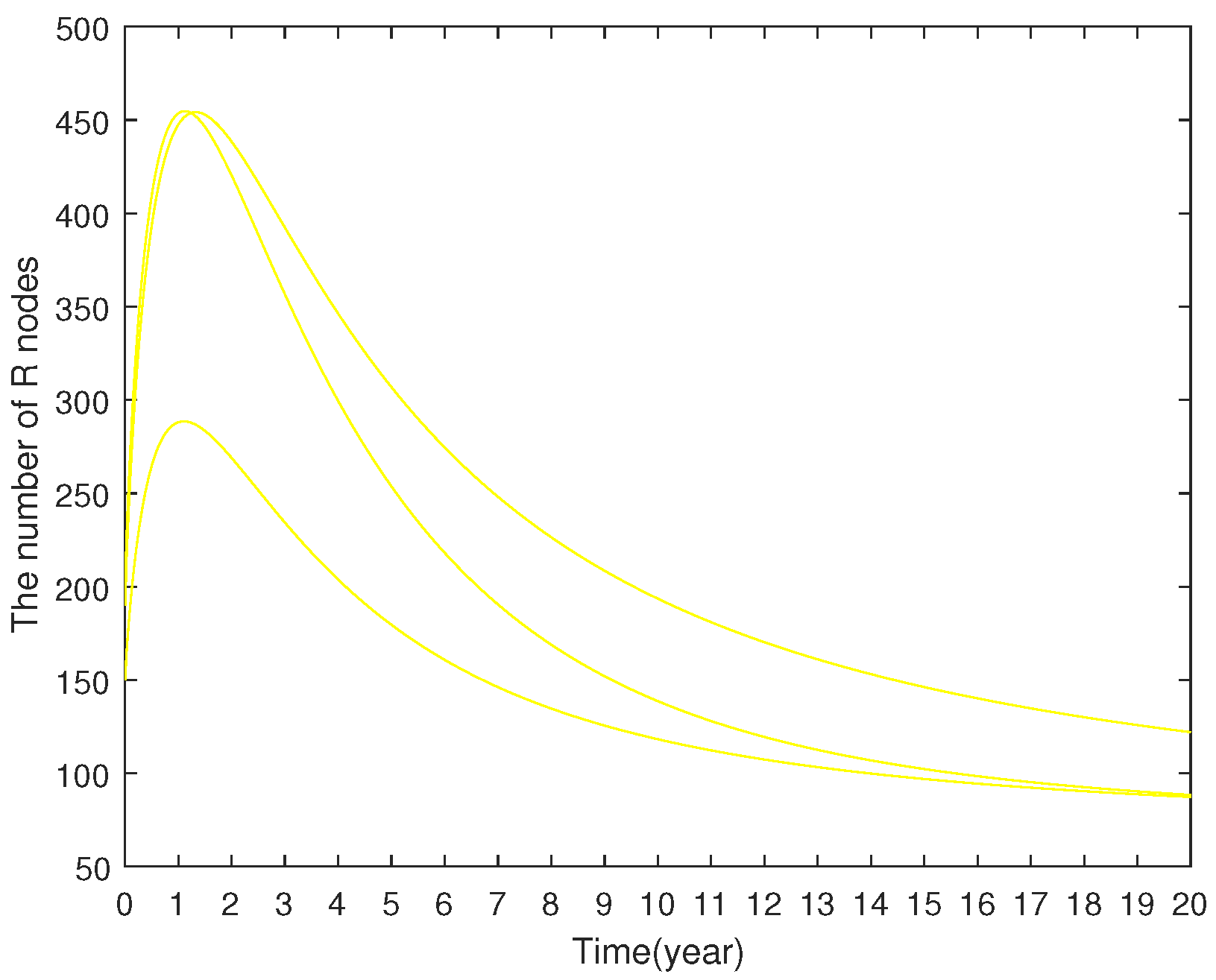
Consider system (3) with For this set of parameter values, and . Here we take three sets of different initial values, which are and respectively. As is shown in Figure 6-7, the number of L nodes and B nodes are gradually decreases and eventually keeps at a certain level. This observation is consistent with Theorem 8.
Figure 5.
Variation of S over time.
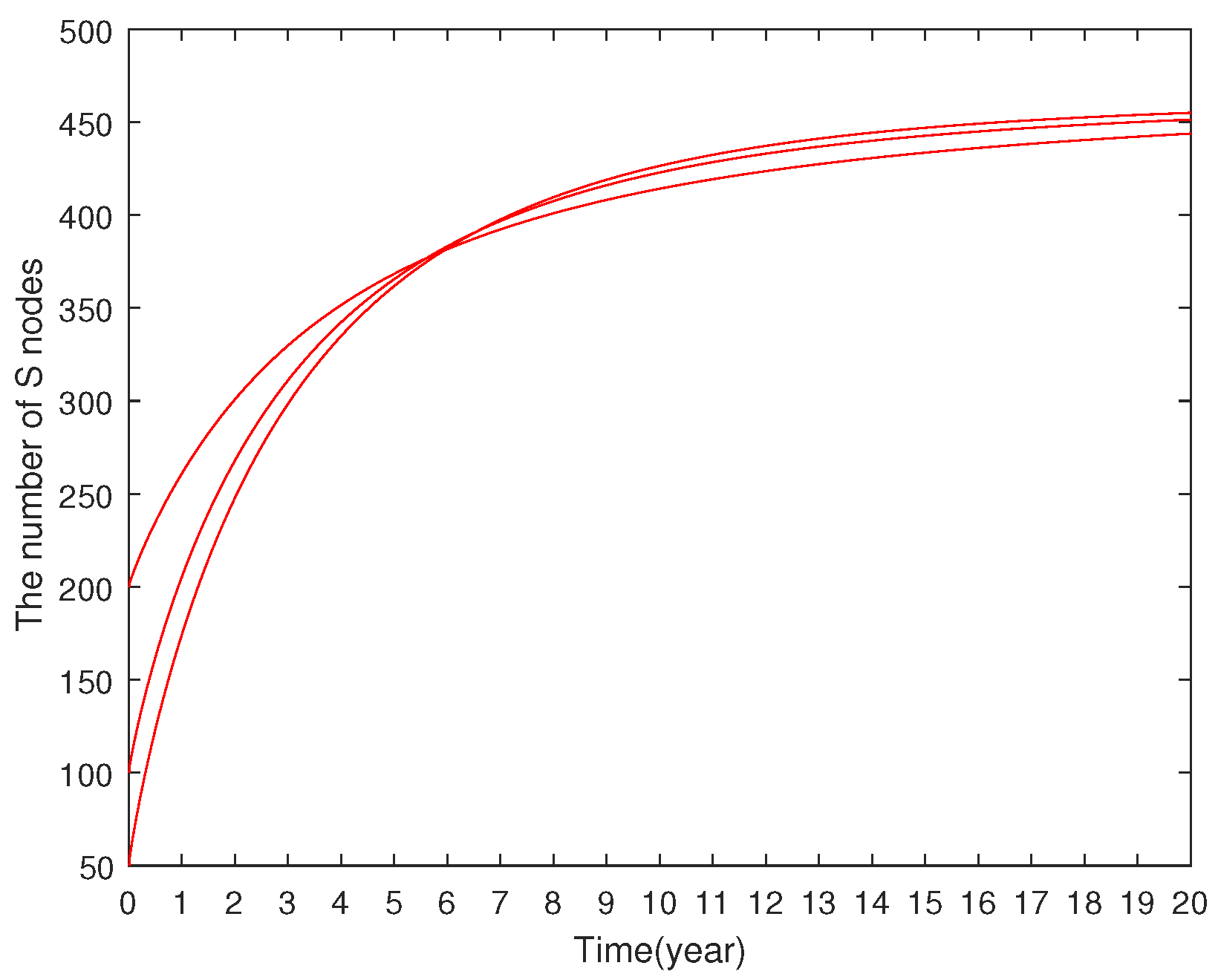
Figure 6.
Variation of L over time.
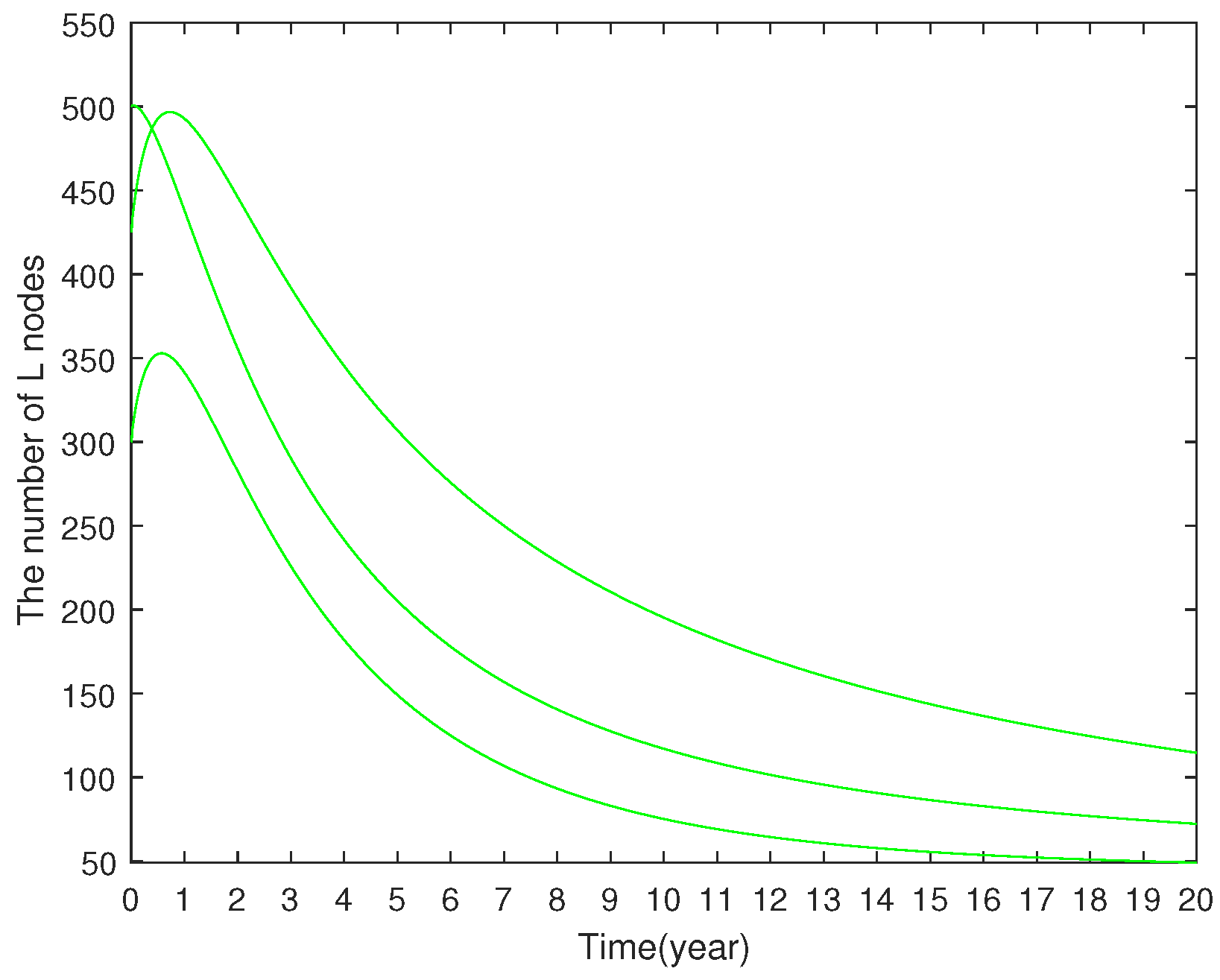
Figure 7.
Variation of B over time.
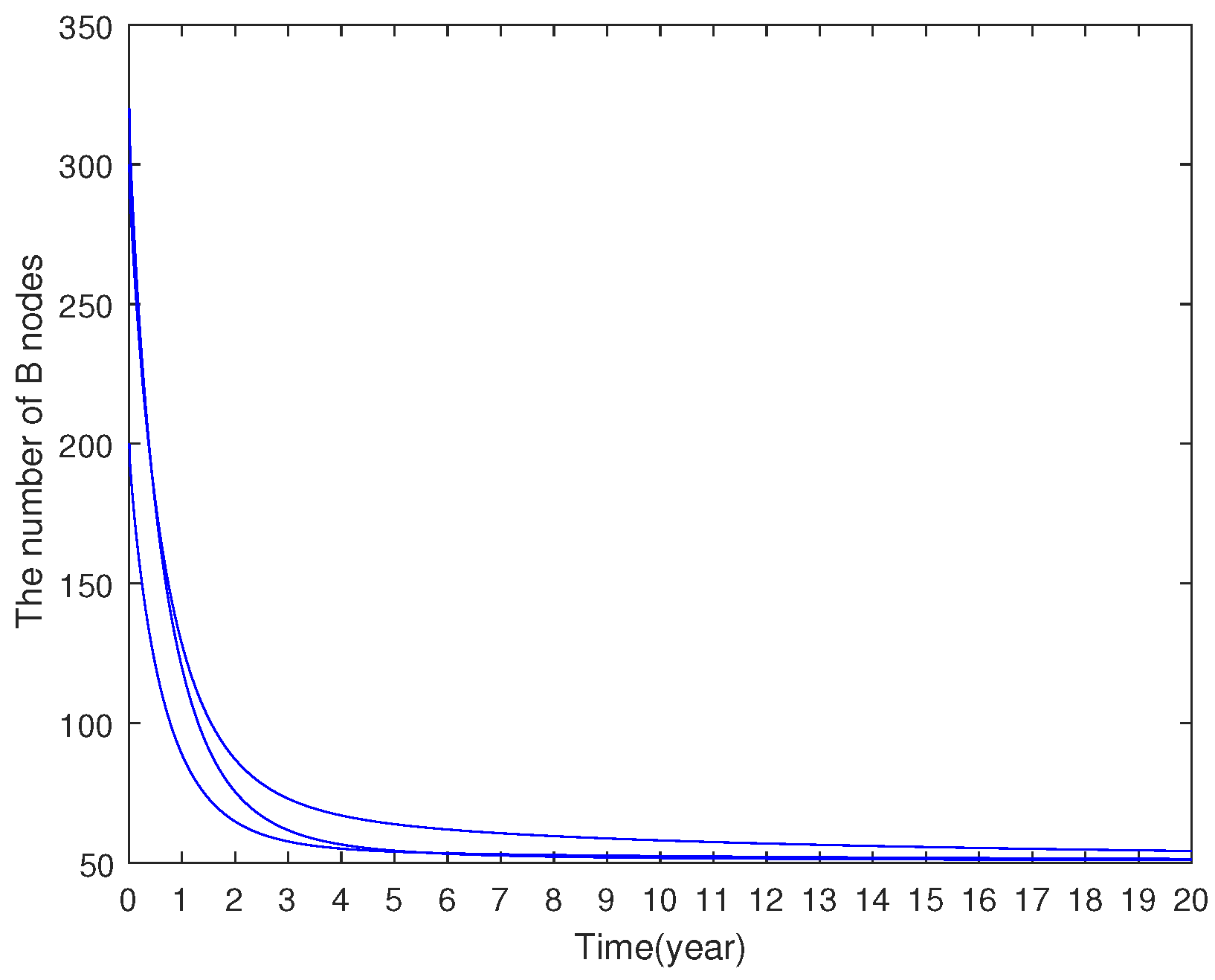
Figure 8.
Variation of R over time.
7.1.3. Model comparison
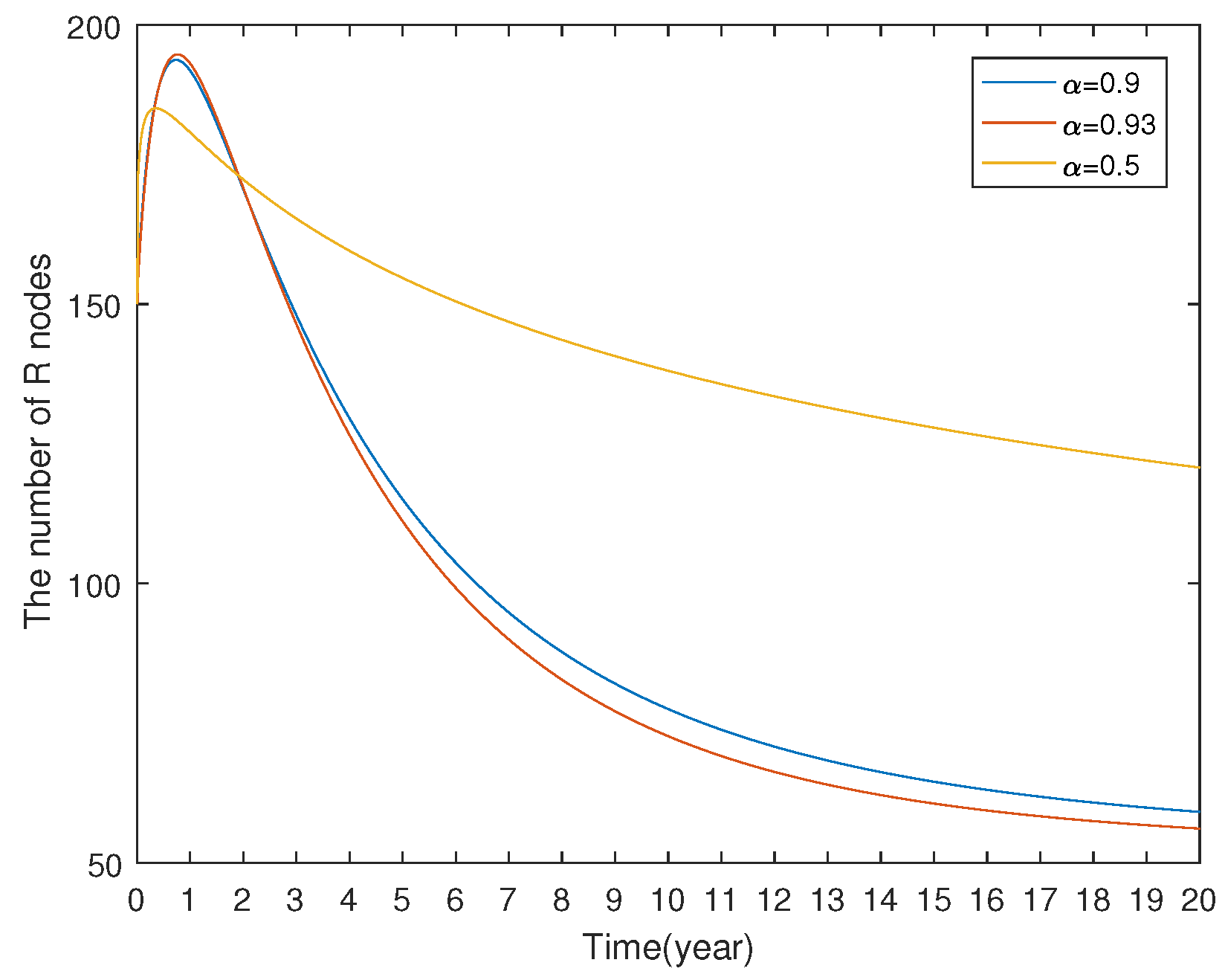
In this subsection, we present numerical comparison of several parameters in system (3). First, we show the effect of fractional order on the system’s dynamics. Here, we use parameter values given as follows: Figure 9-12 show the solution curves of system (3) with initial value when and We can see from Figure 9-12 that fractional order is a significant factor which affects the convergence speed of the solutions of system (3).
Figure 9.
Variation of S over time.
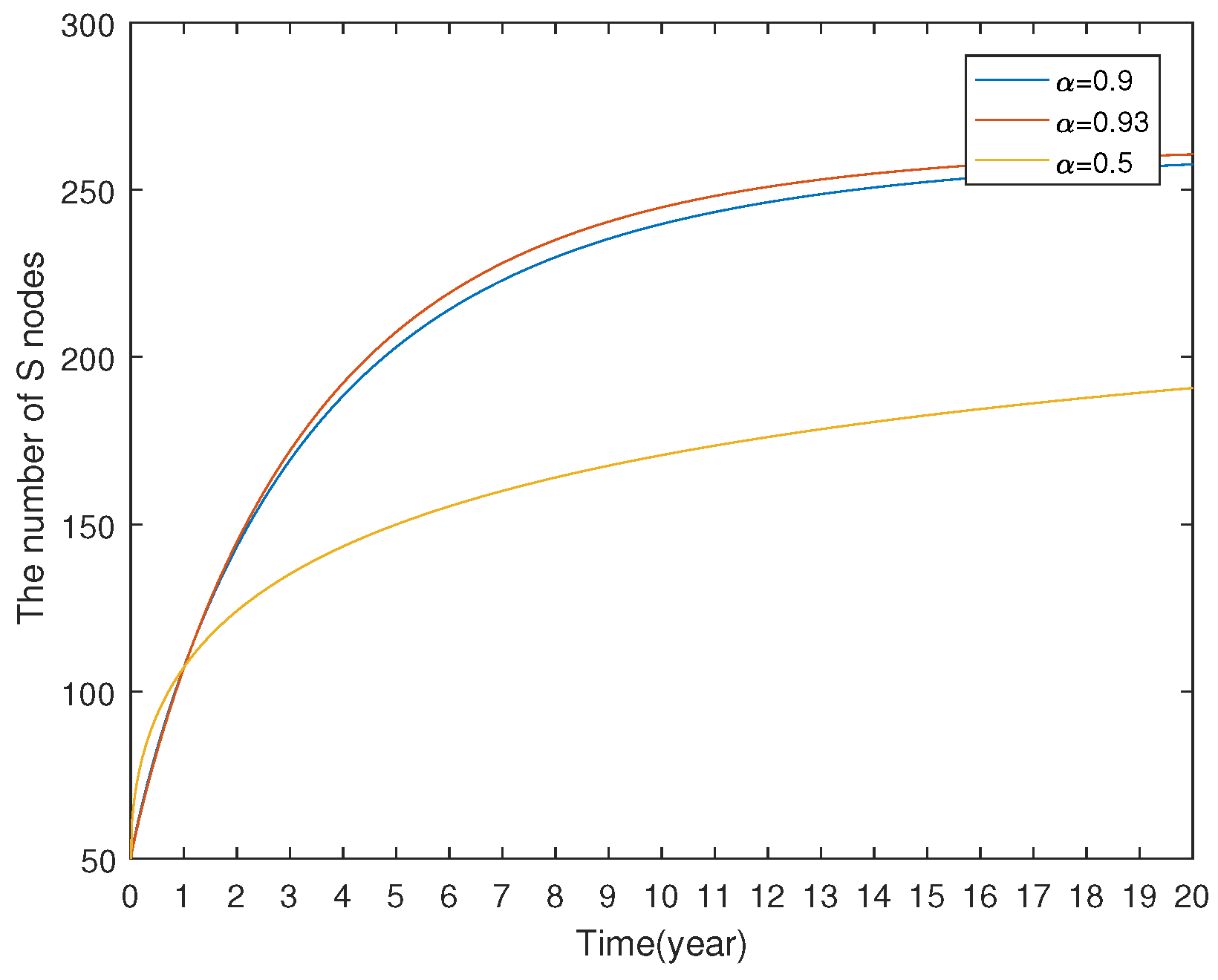
Figure 10.
Variation of L over time.
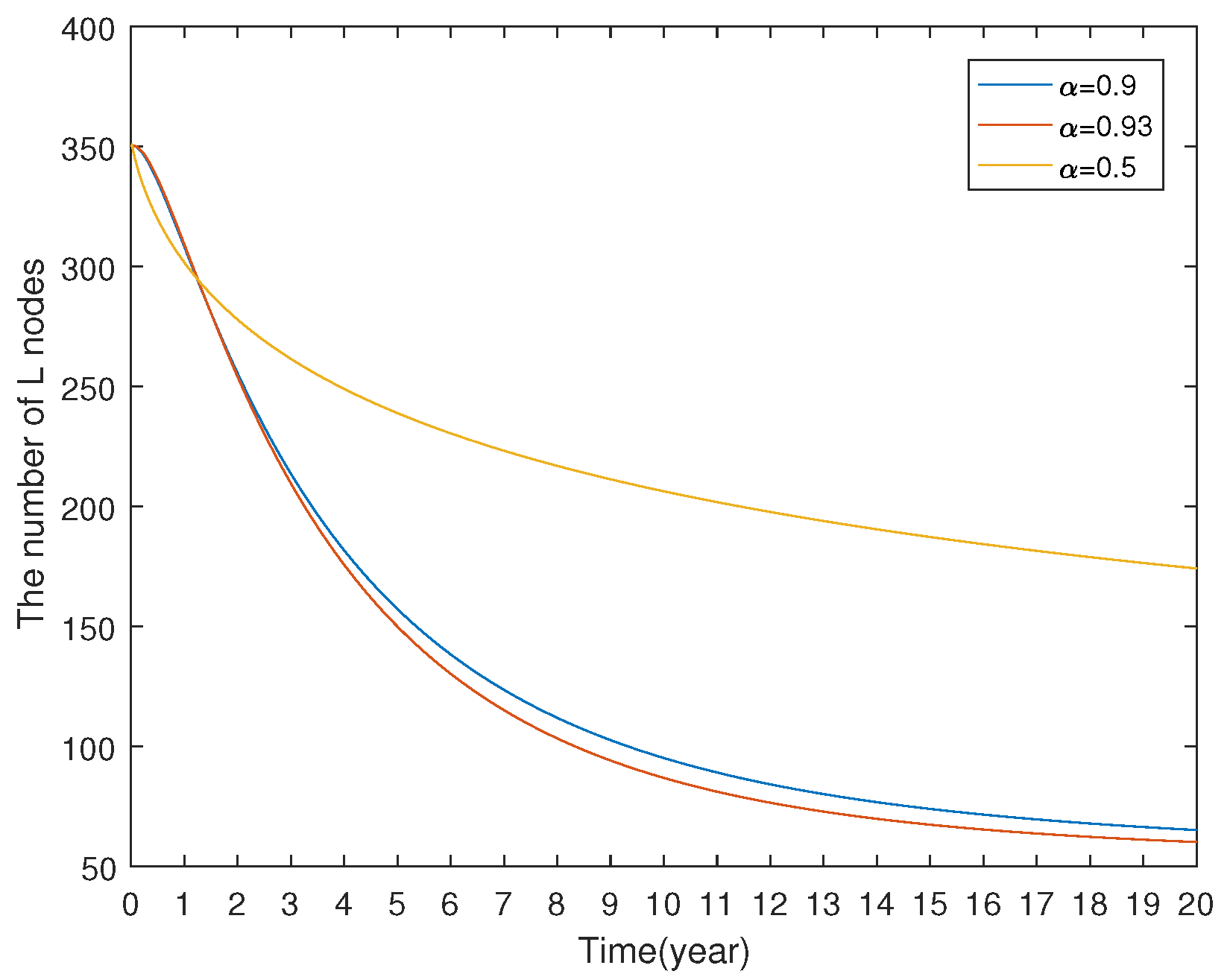
Figure 11.
Variation of B over time.
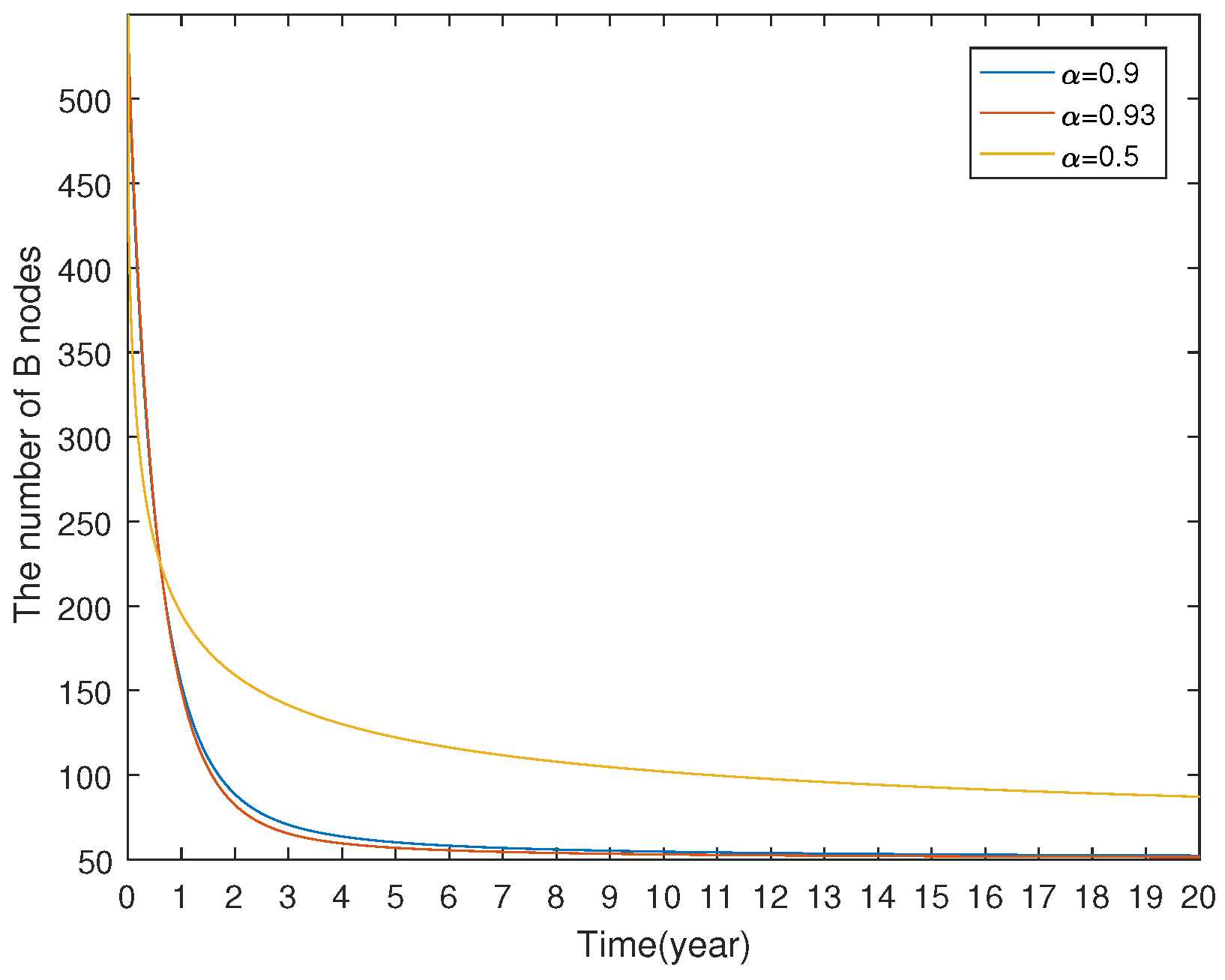
Figure 12.
Variation of R over time.
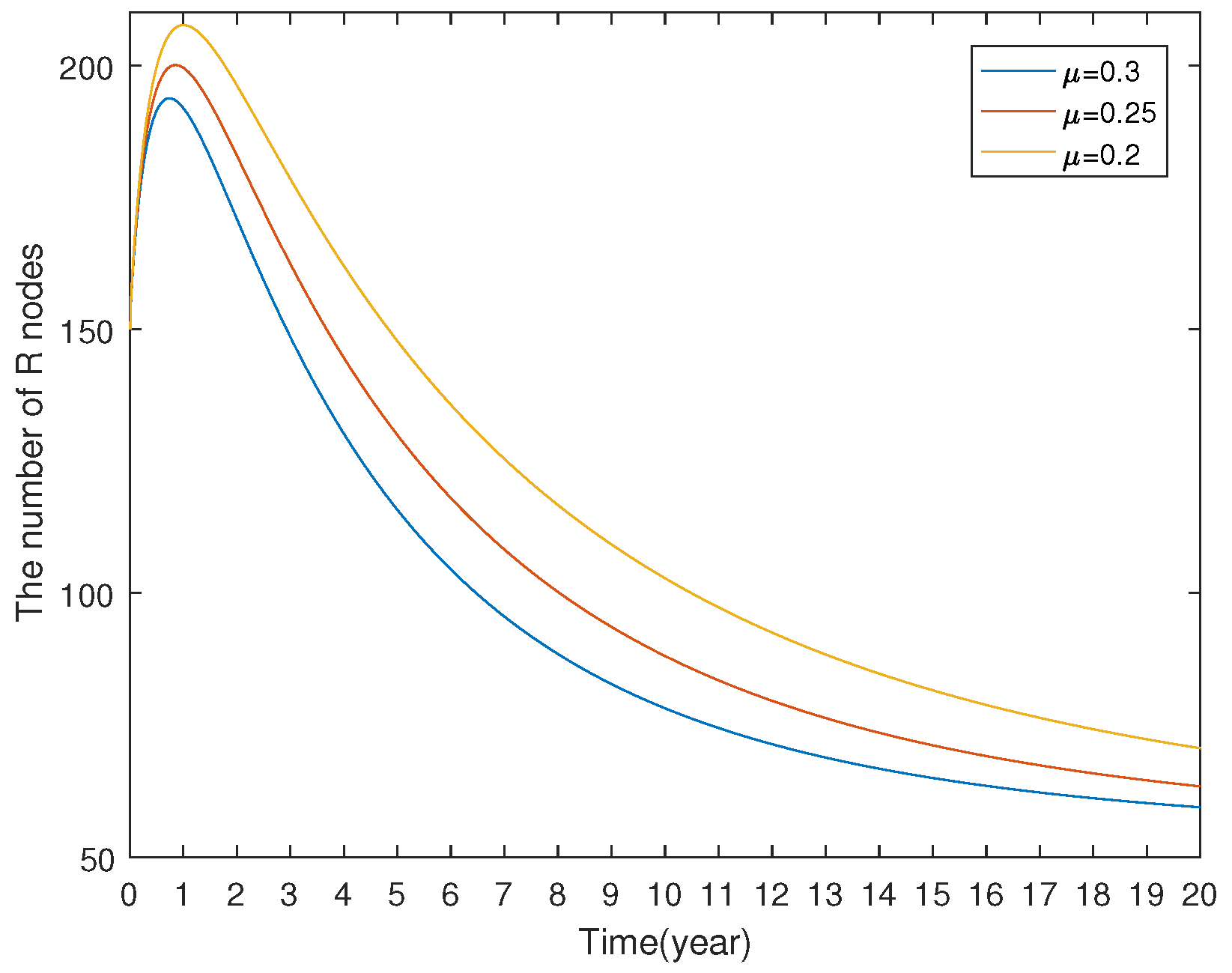
Next, we investigate the impact of parameter on the system’s dynamics. Here, we choose Figure 13-16 depict the solution curves of system (3) with initial value when and We observe that the higher the probability of the nodes leaving the SCADA system, the faster the number of L and B nodes decrease, which indicates that the nodes leaving the system is conducive to inhibiting the spread of the virus during the virus outbreak.
Figure 13.
Variation of S over time.
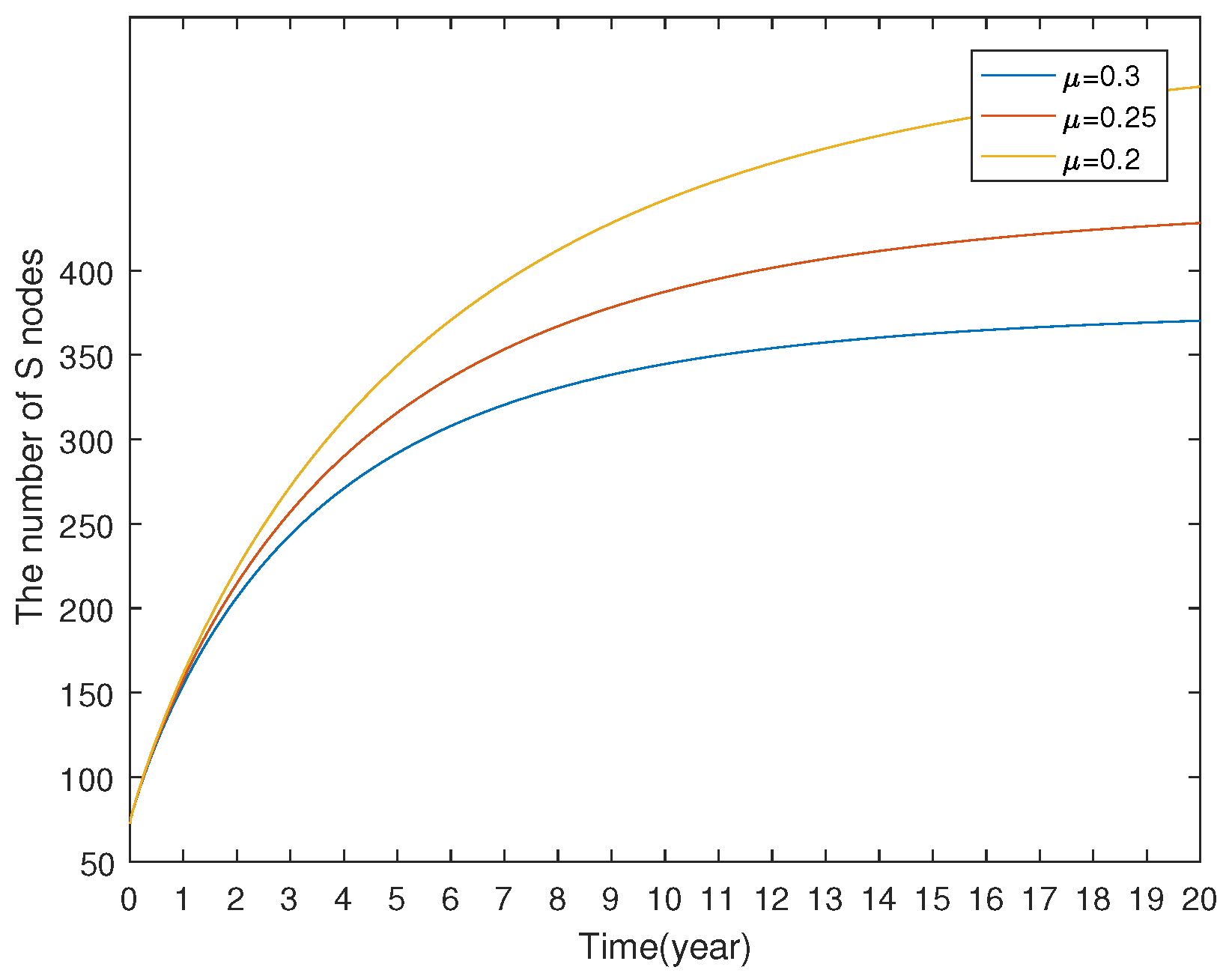
Figure 14.
Variation of L over time.
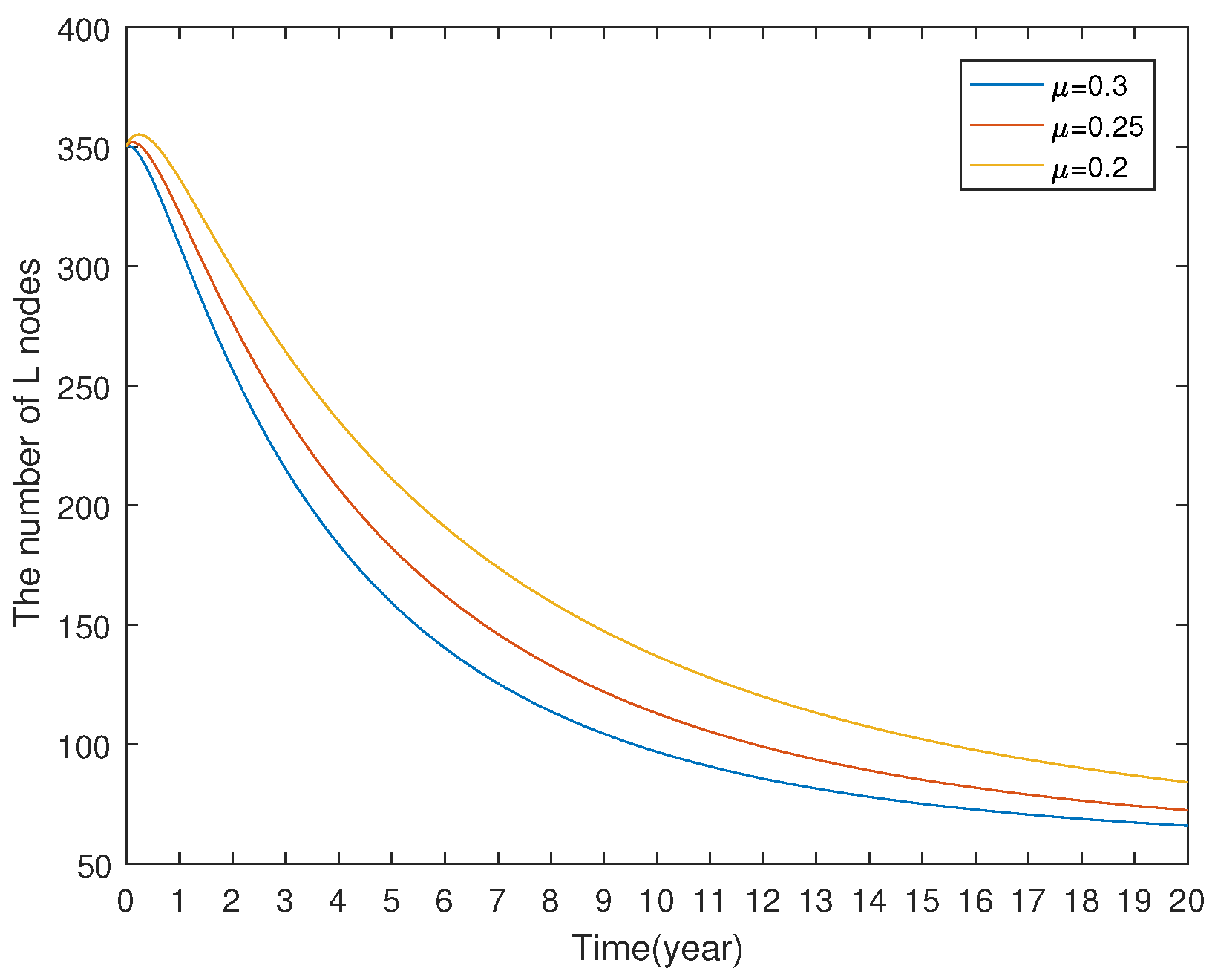
Figure 15.
Variation of B over time.
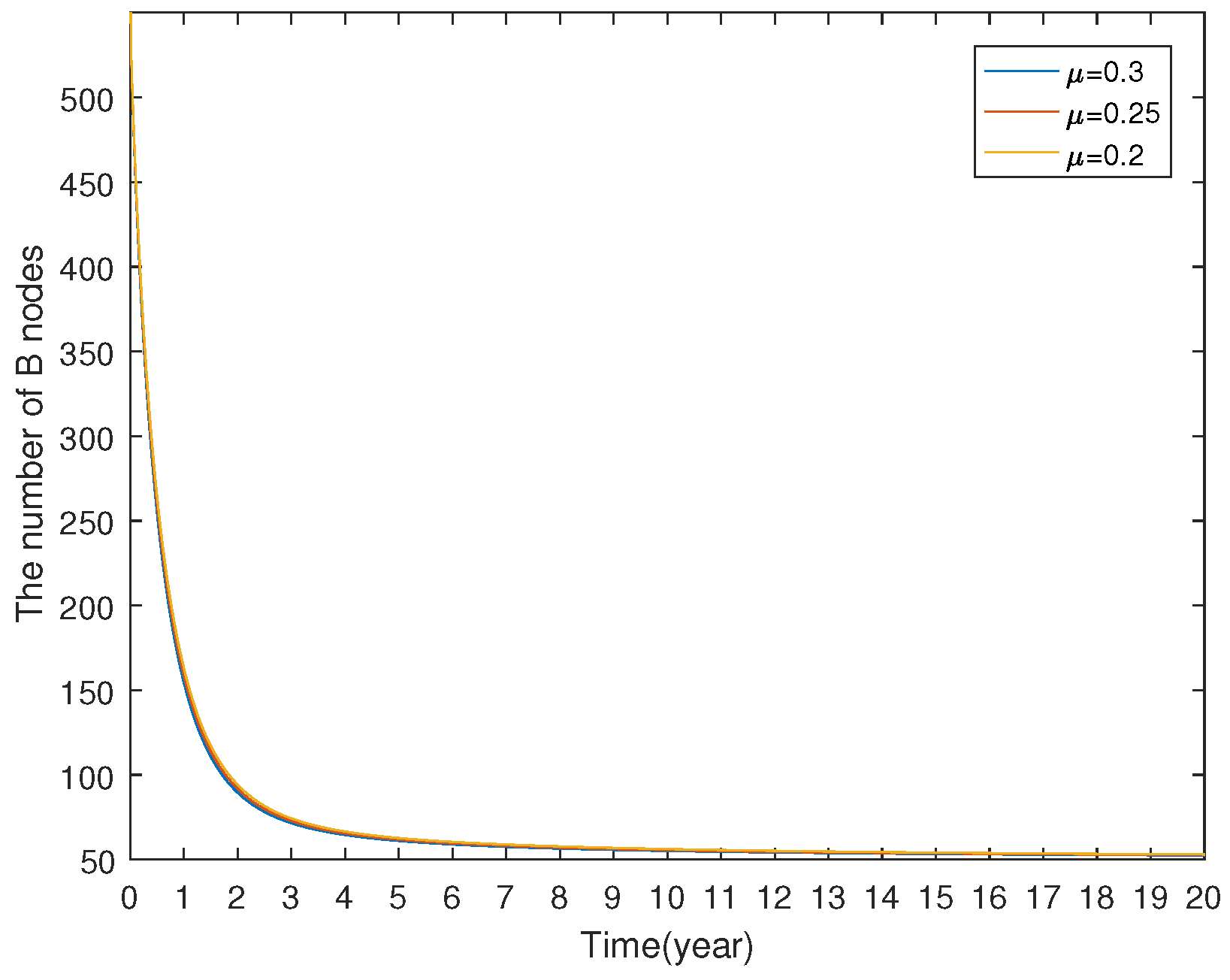
Figure 16.
Variation of R over time.
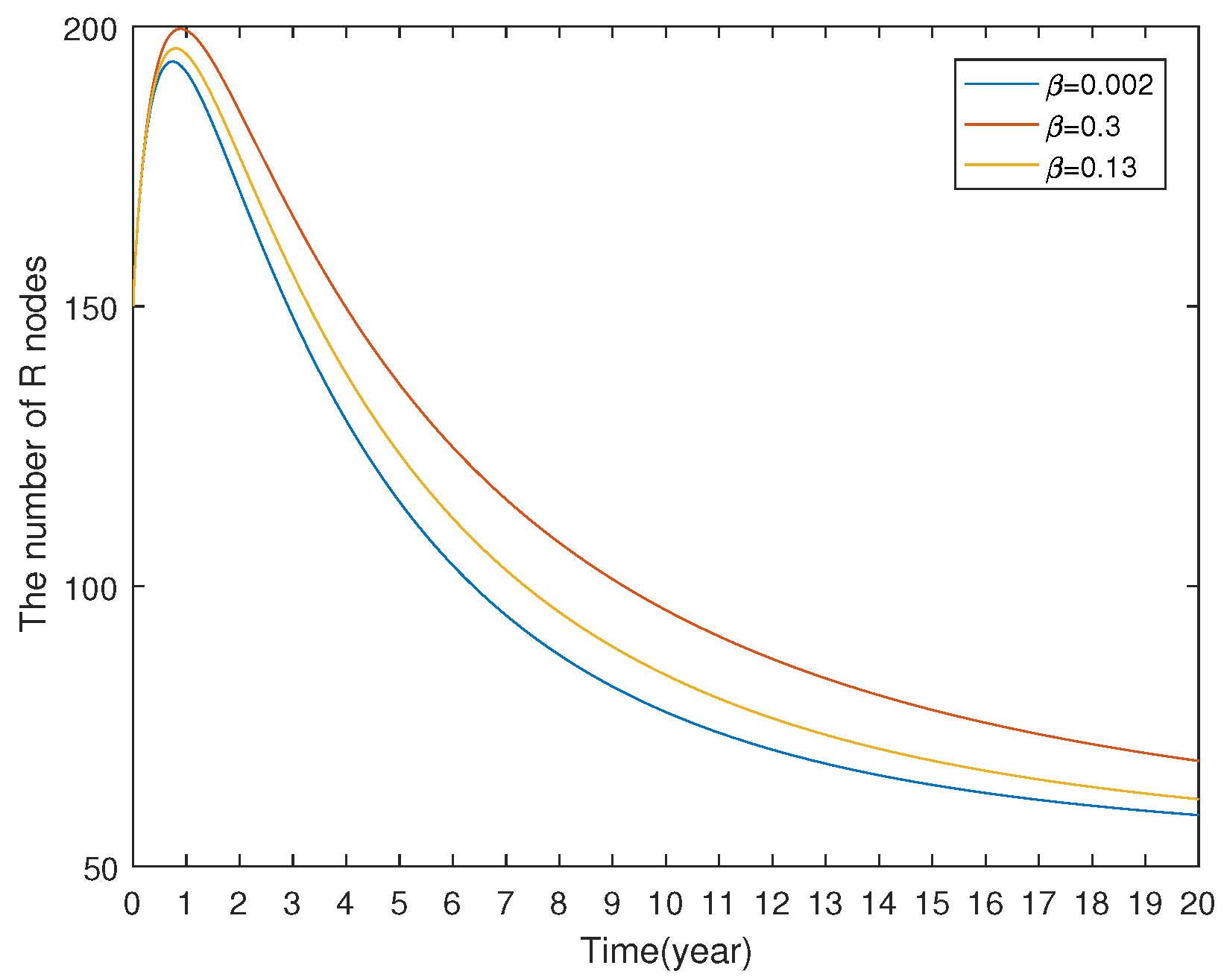
Finally, we explore the impact of parameter on the system’s dynamics. Here, we assume Figure 17-21 describe the solution curves of system (3) with initial value when and . The results show that the smaller the value of is, the easier the virus propagation is inhibited. As is shown in Figure 17-21, when , the number of S nodes increase significantly, while the number of L, B and R nodes decrease to varying degrees.
Figure 17.
Variation of S over time.
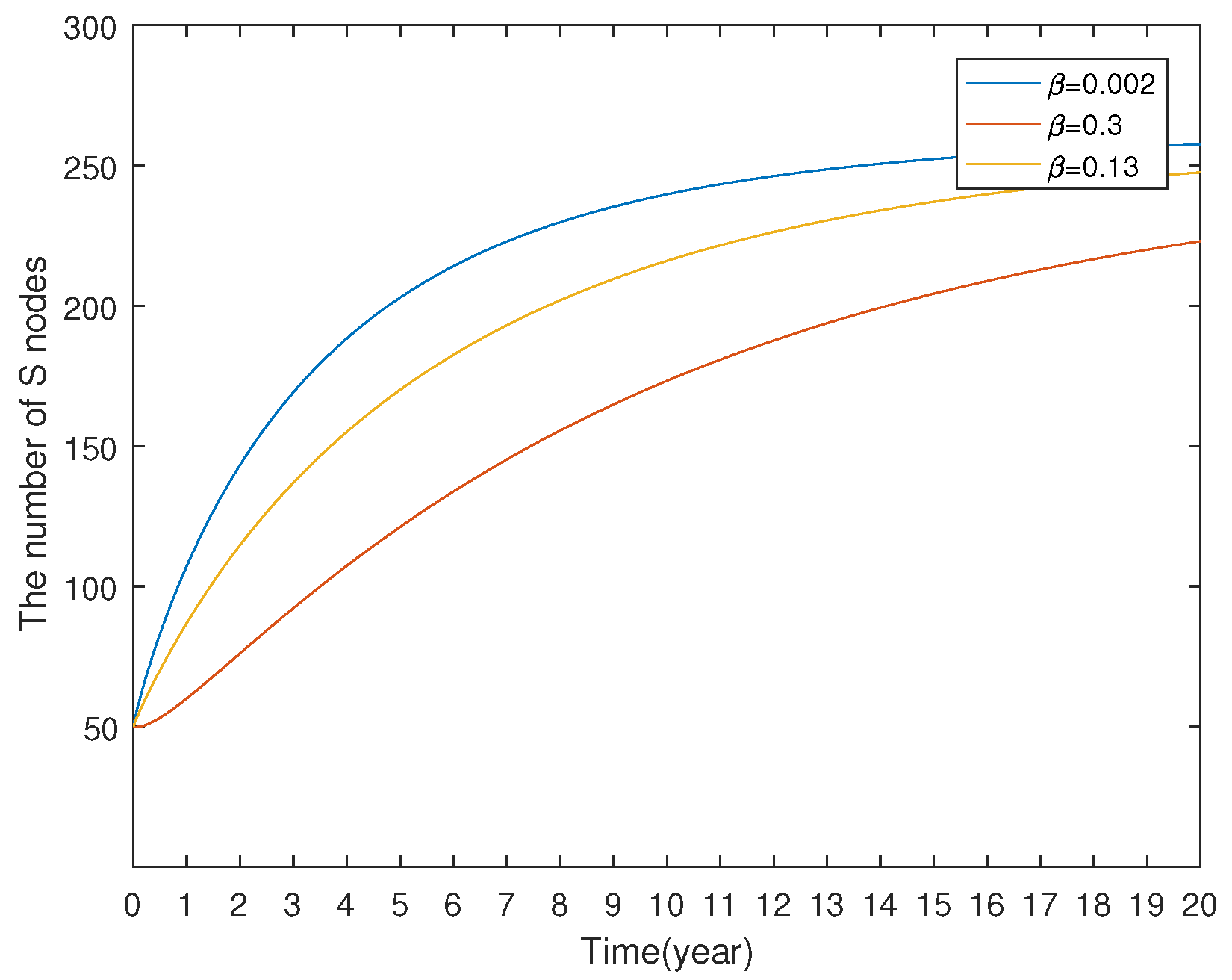
Figure 18.
Variation of L over time.
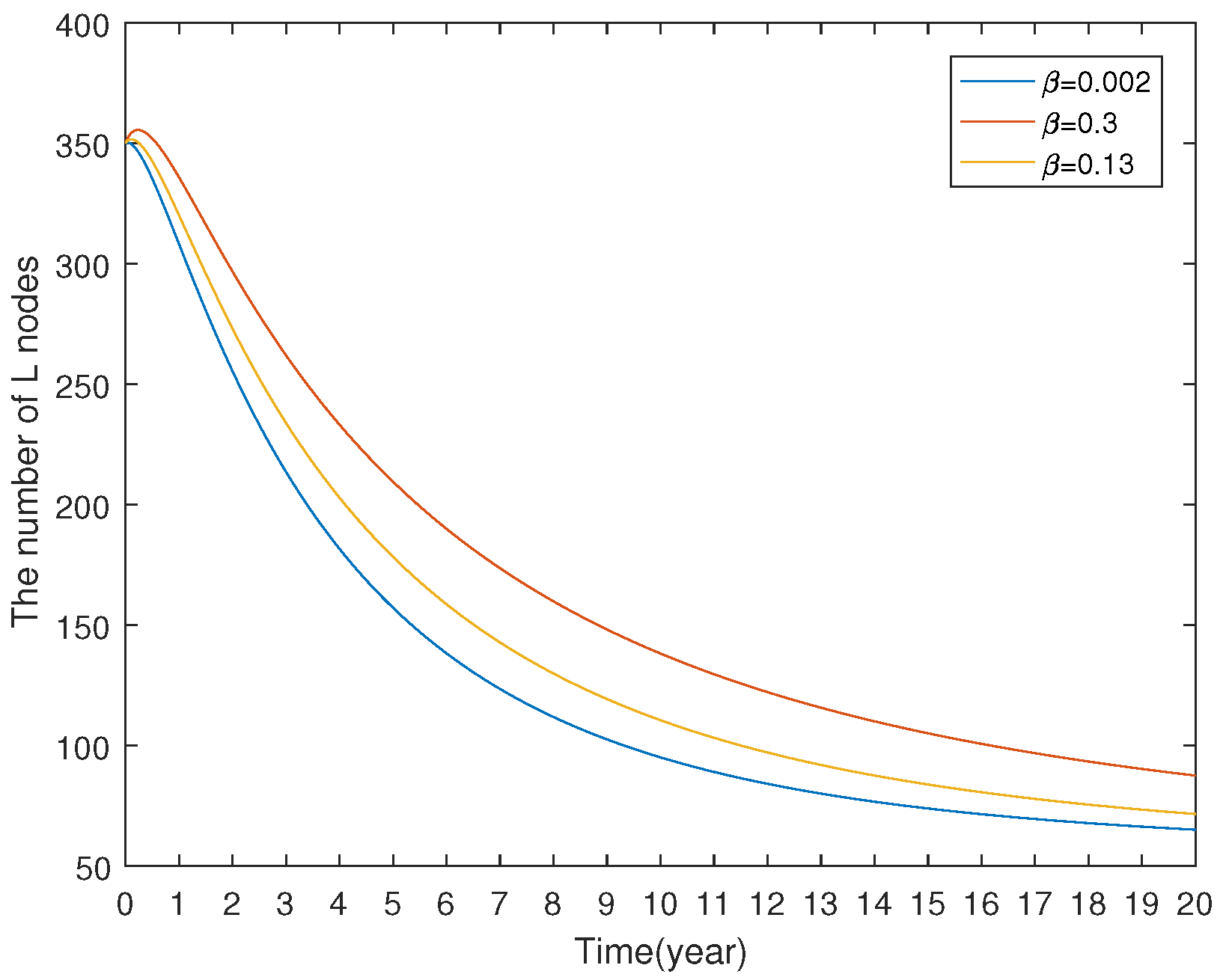
Figure 19.
Variation of B over time.
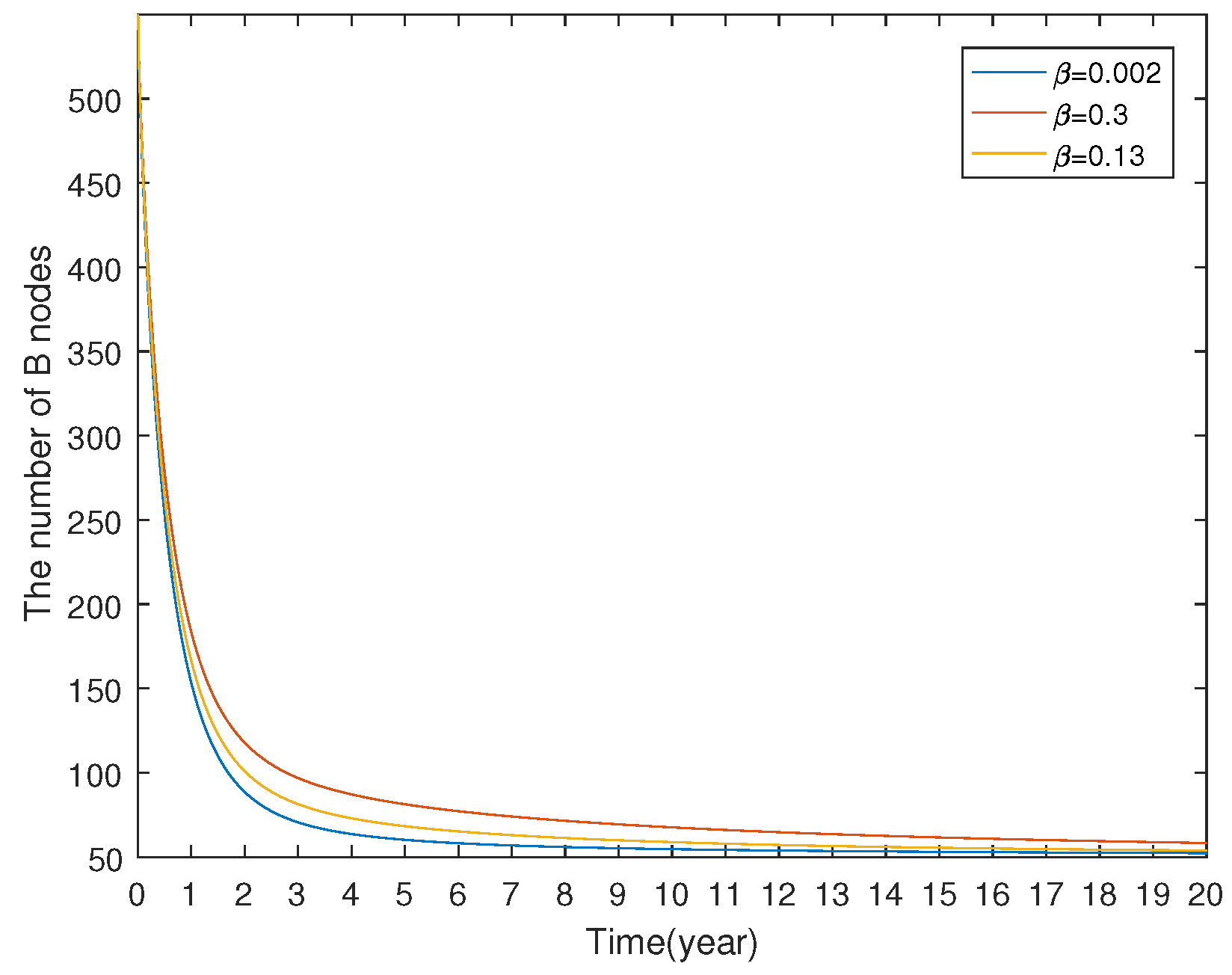
Figure 20.
Variation of R over time.
7.2. FOCP of SLBR transmission
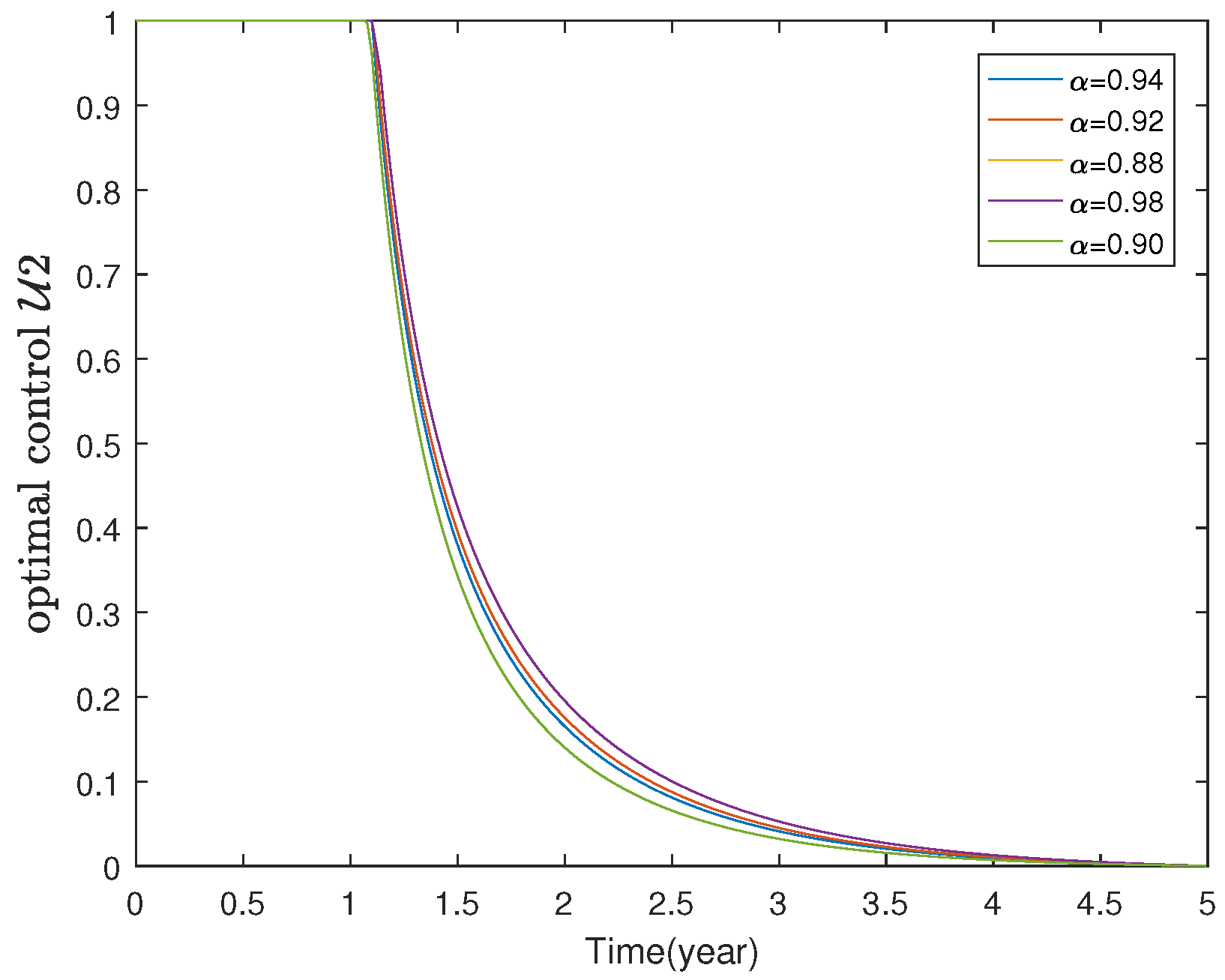
In this subsection, we apply the fractional Euler method by combining it with the forward-backward predict-evaluate-correct-evaluate method [38]. To depict the effect of optimal control on the response of the system under study, we set We assume a final time for optimal control. Figure 21-24 show the time series plots of control signals that are applied in the model with initial value when and The number of latent, breaking and recovered compartments is reduced in the case where the optimal control scheme is utilized. Figure 25-26 show the time series plots of two optimal control strategies and with different fractional order and We observe that the two control measures and should maintain maximum efforts for almost 0.5 year and 1 year respectively before decreasing to zero. The order of derivative can differ from range to range. If we vary the order of derivatives while keeping other parametric values fixed, the results are very close. This demonstrates that the spread of industrial virus is effectively controlled after raising public safety awareness and optimizing anti-virus software no matter in what range.
Figure 21.
Variation of S over time.
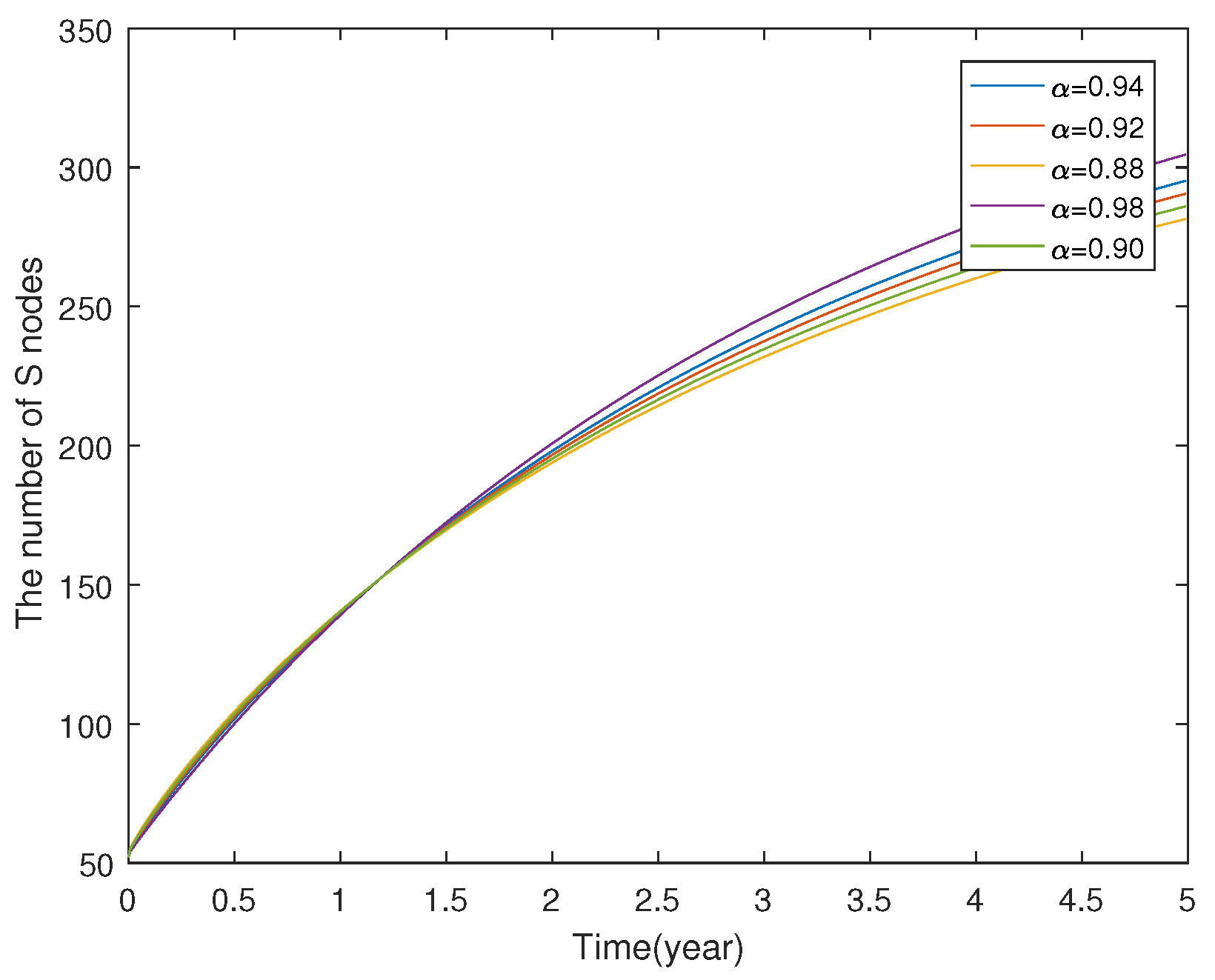
Figure 22.
Variation of L over time.
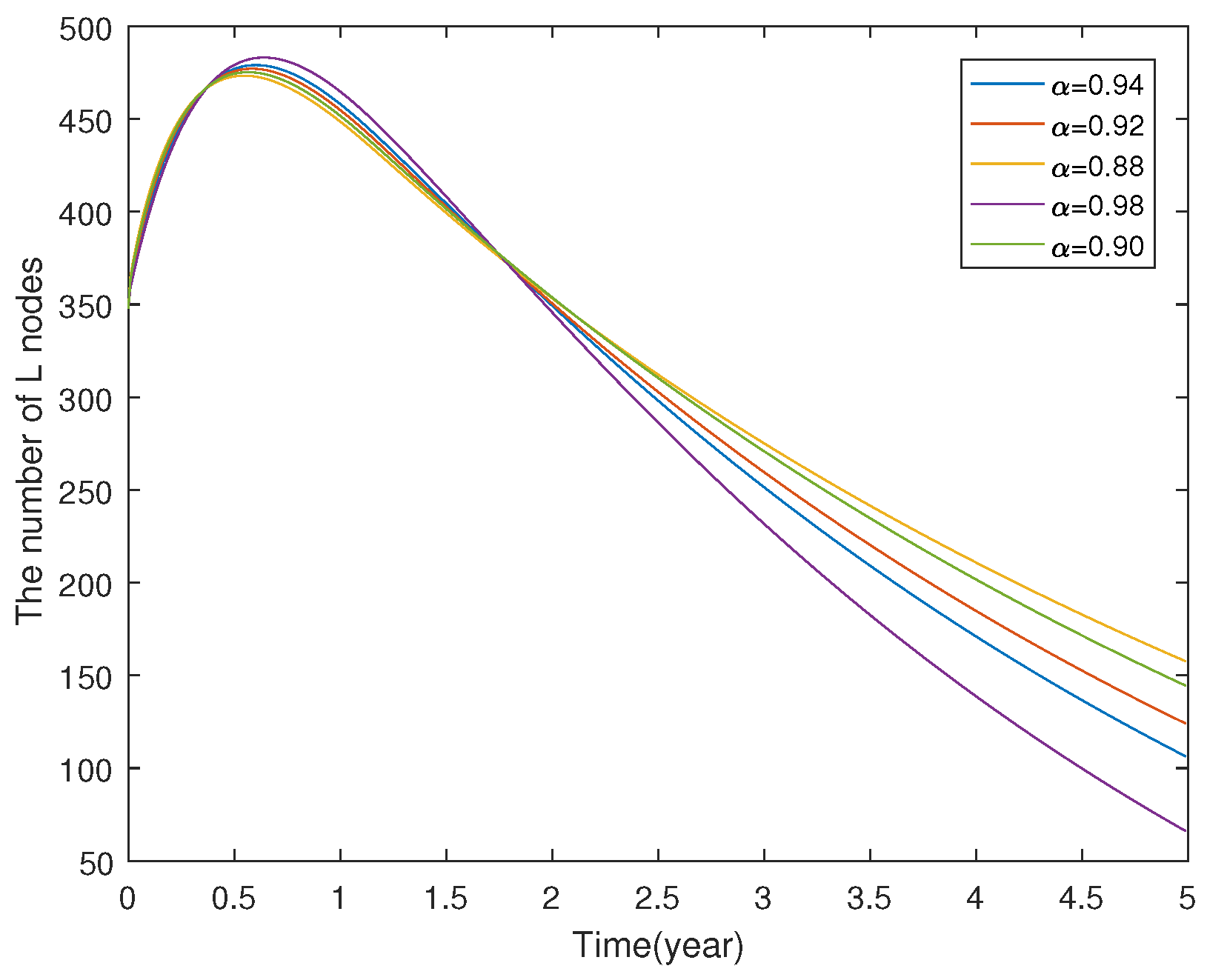
Figure 23.
Variation of B over time.
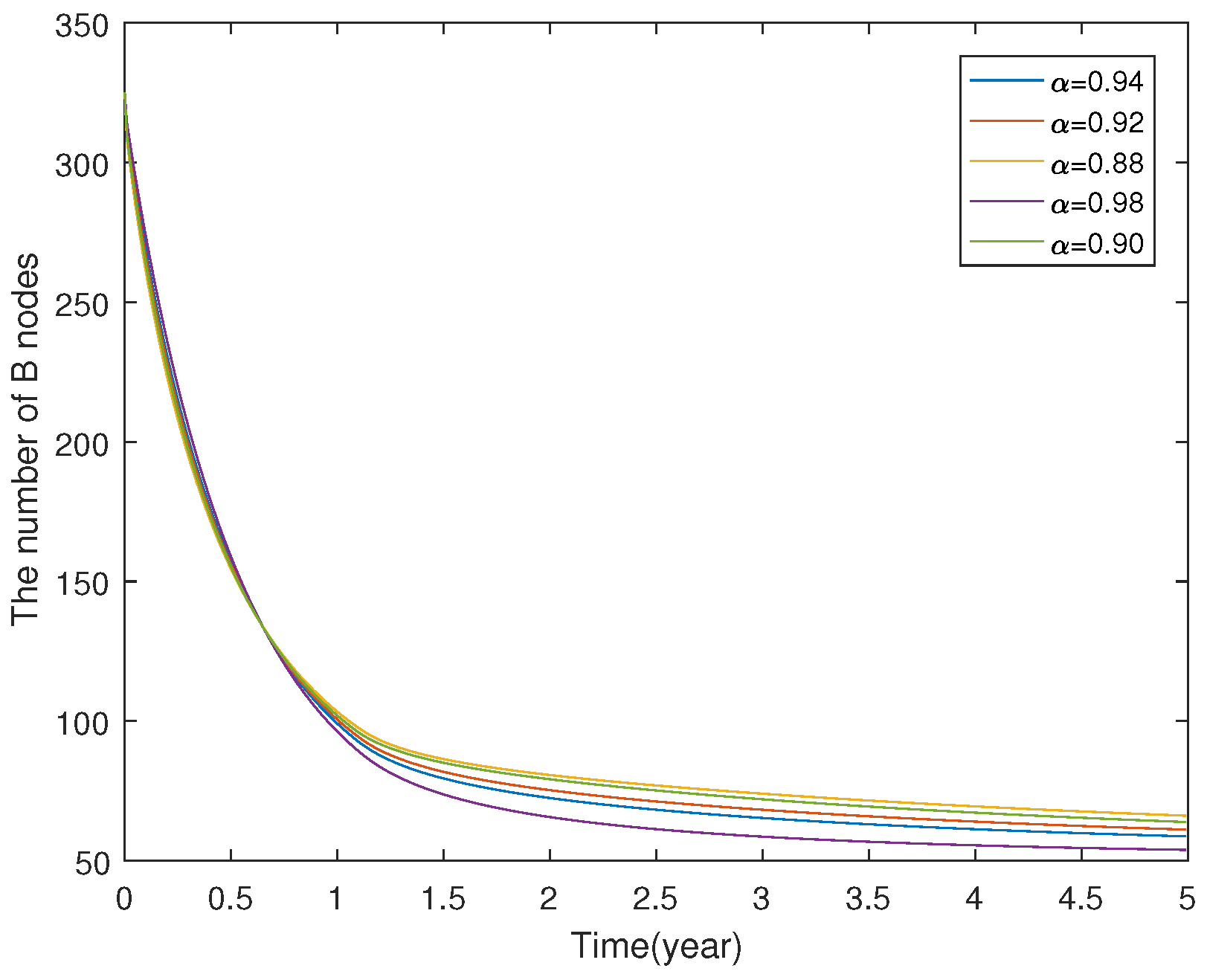
Figure 24.
Variation of R over time.
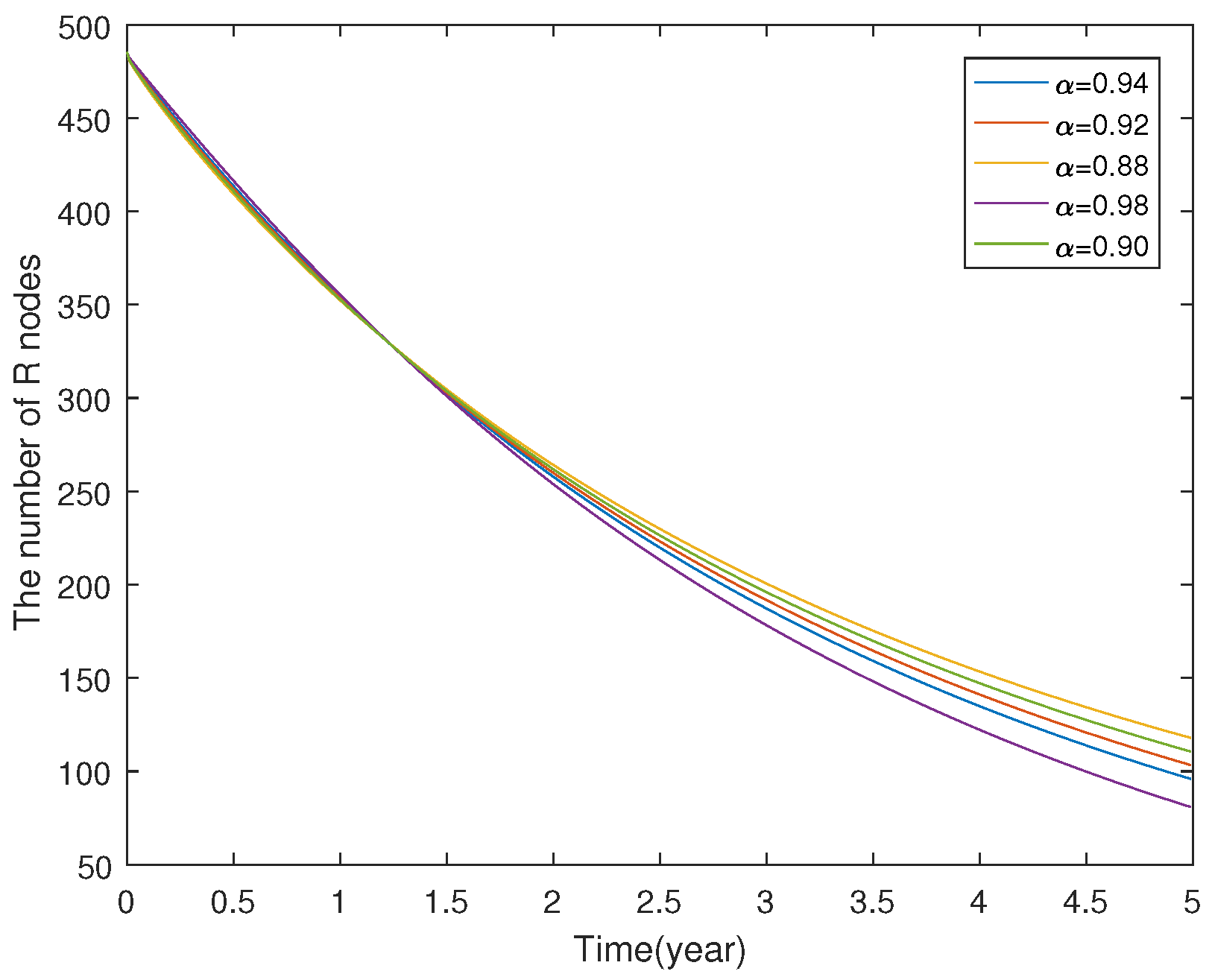
Figure 25.
Variation of over time.
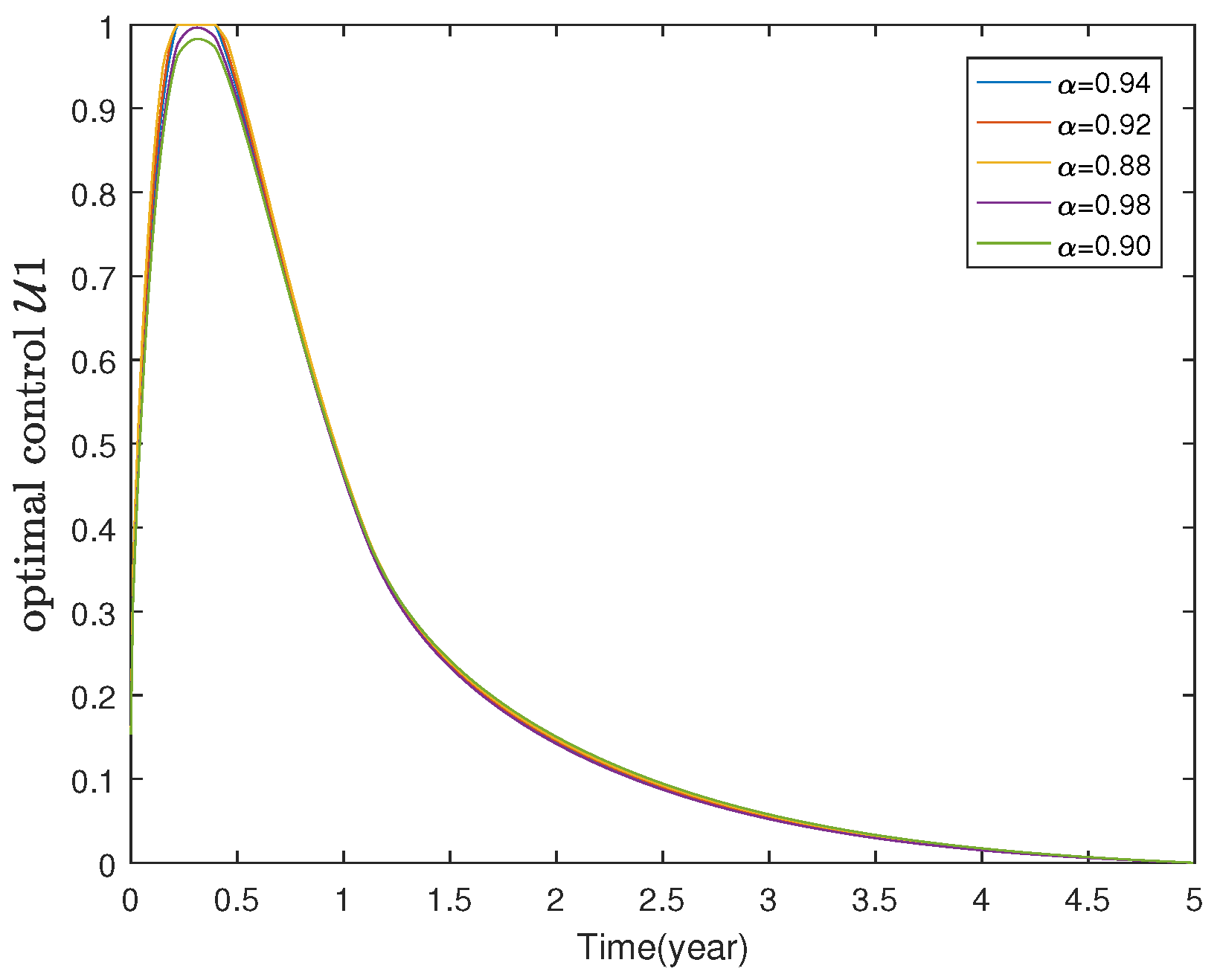
Figure 26.
Variation of over time.
8. Conclusions
In this paper, we have studied a generalized mathematical model for the transmission dynamics of industrial virus based on SCADA system in the form of fractional-order model with a well-known Caputo fractional derivative. Theoretically, we have discussed the well-posedness of the given fractional-order model such as existence and uniqueness of solutions, non-negativity and uniform boundedness as well as stability of the equilibrium points. In addition, we have considered the control parameters of the given fractional-order model as time-dependent controls in order to formulate a FOCP constrained by the proposed fractional-order model, where improvement and treatment measures have been considered as two control efforts in the given FOCP. Also, conditions for fractional optimal control of industrial virus have been derived and analyzed. Numerically, graphical representations have been used to demonstrate the analytical outcomes, providing confidence in the results obtained. It follows from the research results that we should raise public safety awareness and optimize the anti-virus software for the aim of stopping industrial virus infection. The method employed in this paper can be easily adapted to solve other mathematical models related to the spread of infectious diseases such as plant diseases, human infectious diseases and so on.
Undoubtedly, dynamics of industrial virus is far more complicated and varied than one captured by the current mathematical model. In practical applications, the computer virus may spread once a user opens an infected file. Like human infectious disease, the computer virus usually takes a so-called incubation period to exhibit symptoms or have an impact on other individuals. As a future direction, we will incorporate time delay into the present model so as to obtain more dynamic behaviors, especially the conditions of Hopf bifurcation occurring in the system we propose.
Author Contributions
Conceptualization, L.H. and D.G.; methodology, D.G.; Software S.F.and J.L.; validation, D.G.; formal analysis L.H. and D.G.; data curation, S.F. and J.L.; writing-orginal, draft preparation, L.H.; writing-review, and editing, D. G.; visualization S.F. and J.L.; supervision, D.G.; project administration, D.G.; funding acquisition, D.G. and S.F. All authors have read and agreed to the published version of the manuscript.
Funding
This work was supported by Sichuan Science and Technology Program (2022NSFSC0558), the Fundamental Research Funds of China West Normal University(XJ2024010801), the Research and Innovation Team of China West Normal University(CXTD2020-5) and the Research Project on Graduate Education Reform of China West Normal University(2022XM24, 2024XM05).
Data Availability Statement
All data that can reproduce the results in this study can be requested from the corresponding author.
Conflicts of Interest
The authors declare no conflicts of interest.
References
- Pliatsios, D.; Sarigiannidis P.; Lagkas T. A survey on SCADA systems:secure protocols, incidents, threats, and tractics. IEEE Commun. Surv. Tutor. 2020, 22, 1942-1976.
- Rezai, A.; Keshavarzi, P.; Moravej, Z. Key management issue in SCADA networks: a review. J. Eng. Sci. Technol. 2017, 20, 354-363.
- Ajmal, A. B.; Alam, M.; Khaliq, A. A.; Khan, S.; Qadir, Z.; Mahmud, M. A. P. Last line of defence: reliability through inducing cyber threat hunting with deception in SCADA networks. IEEE Access. 2021, 9, 126789-126800.
- Upadhyay, D.; Sampalli, S. SCADA(Supervisory Control and Data Acquisition)systems: vulnerability assessment and security recommendations. Comput. Secur. 2020, 89, 31.
- Ghosh, S.; Sampalli, S. A survey of security in SCADA networks: current issues and future challenges. IEEE Acess 2019, 7, 135812-135831.
- Masood, Z.; Raja, M. A. Z.; Chaudhary, N. I.; Cheema, K. M.; Milyani, A. H. Fractional dynamics of Stuxnet virus propagation in industrial control systems. Mathematics 2021, 9(17), 2160. [CrossRef]
- Kephart, J. O.; White, S. R. Directed-graph epidemiological models of computer virus, in: Proceddings. 1991 IEEE Computer Society Symposium on Research in Security and Privacy; 1991, 343-359.
- Padisak, J. Seasonal succession of phytoplankton in a large shallow lake(Balaton, Hungary)-a dynamic approach to ecological memory, its possible role and mechanisms. J. Ecol. 1992, 80(2), 217-230.
- Podlubny, I. Fractional Differential Equations Academic Press, New York, 1999.
- Petrá, I. Fractional-Order Nonlinear Systems: Modeling, Analysis and Simulation; Springer, Berlin, Germany, 2011.
- Heinz, S.; Ledzewicz, U. Geometric Optimal control: Theory, Methods and Examples; Springer, Berlin, Germany, 2012.
- Ali, H. M.; Pereira, F. L.; Gama, S. M. A. A new approach to the Pontryagin maximum principle for nonlinear fractional optimal control problem. Math. Meth. Appl. Sci. 2016, 39, 3640-3649.
- Ali, H. M. Necessary Conditions for Constrained Nonsmooth Fractional Optimal Control Problems; PhD thesis, University of Porto, Porto, Portugal, 2016.
- Ali, H. M.; Ameen, I. Save the pine forests of wilt disease using a fractional optimal control strategy. Chaos Soliton Fract. 2020, 132, 109554.
- Ali, H. M.; Ameen, I. Optimal control strategies of a fractional-order model for Zika virus infection involving various transmissions. Chaos Soliton Fract. 2021, 146, 110864.
- Vellappandi, M.; Kumar, P.; Govindaraj, V.; Albalawi, W. An optimal control problem for mosaic disease via Caputo fractional derivative. Alex. Eng. J. 2022, 61(10), 8027-8037.
- Sweilam, N. H.; Al-Mekhlafi, S. M.; Albalawi, A. O. Optimal control for a fractional order malaria transmission dynamics mathematical model. Alex. Eng. J. 2020, 59(3), 1677-1692.
- Ameen, I.; Baleanu, D.; Ali, H. M. An efficient algorithm for solving the fractional optimal control of SIRV epidemic model with a combination of vaccination and treatment. Chaos Soliton Fract. 2020, 137, 109892.
- Zhu, Q.; Zhang, G.; Luo, X.; Gan C. An industrial virus propagation model based on SCADA system. Inform. Sciences 2023, 630, 546-566.
- La Salle, J.; Lefschetz, S. Stability by Liapunov’s direct method; Academic Press, New York, 1961.
- Lyapunov, A. M. The general problem of the stability of motion. Int. J. Control. Taylor&Francis 1992, 226.
- Ameen, I.; Hidan, M.; Mostefaoui, Z.; Ali, H. M. Fractional optimal control with fish consumption to prevent the risk of coronary heart disease. Complexity 2020, 2020, 9823753.
- Diethelm, K. The Anaysis of Fractional Differential Equations: an Application-oriented Exposition Using Operators of Caputo type; Springer, Berlin, 2004.
- Li, Y.; Chen, Y.; Podlubny, I. Stability of fractional-order nonlinear dynamics systems: Lyapunov direct method and generalized Mittag-Leffler stability. Comput. Math. Appl. 2010, 59, 1810-1821.
- Vargas-De-León, C. Volterra-type Lyapunov functions for fractional-order epidemic systems. Commun. Nonlinear Sci. Numer. Simul. 2015, 24(1-3), 75-85.
- Huo, J.; Zhao, H.; Zhu, L. The effect of vaccines on backward bifurcation in a fractional order HIV model. Nonlinear Anal. Real World Appl. 2015, 26, 289-305.
- Sheng, C.; Yao, Y.; Fu, Q.; Yang, W.; Liu, Y. A cyber-physical model for SCADA system and its intrusion detection. Comput. Netw. 2020, 185, 37.
- Wu, G.; Zhang Y.; Zhang H.; Yu S.; Yu S.; Shen S. SIHQR model with time delay for worm spread analysis in IIoT-enabled PLC network 2024. Ad Hoc Netw. 2024, 160, 103504.
- Niu, W.; Fan, M. Control and Research of Computer Virus by Multimedia Technology. Int. J. Inf. Syst. Suppl. 2024, 17(1), doi: 10.4018/IJISSCM.333896.
- Odibat, Z. M.; Shawagfeh. N.T. Generalized Taylor’s formula. Appl. Math. Comput. 2007, 186(1), 286-293.
- Li, H.; Zhang, L.; Hu, C.; Jiang, Y.; Teng, Z. Dynamical analysis of a fractional-order prey-predator model incorporating a prey refuge. J. Appl. Math. Comput. 2017, 54, 435-439.
- Petras I. Fractional-order nonlinear system: modeling analysis and simulation; Beijing, Higher Education Press, 2011.
- Driessche, P. V. D.; Watmough, J. Further notes on the basic reproduction number. Math. Epidemiology 2008, Chap. 6, 159-178.
- dos Santos, J. P. C.; Monteiro, E.; Vieira, G. B. Global stability of fractional SIR epidemic model. Proc. Ser. Braz. Soc. Appl. Comput. Math. 2017, 5, 1-7.
- Kheiri, H.; Jafari, M. Optimal control of a fractional-order model for the HIV/AIDS epidemic. Int. J. Biomath. 2018, 6(11), 1850086.
- Diethelm, K.; Ford, N. J.; Freed, A. D. A predictor-corrector approach for the numerical solution of fractional differential equations. Nonlinear Dyn. 2002, 29(1-4), 3-22.
- Garrappa, R. On linear stability of predicor-corrector algorithms for fractional differential equations. Intern. J. Comput. Math. 2010, 87(10), 2281-2290.
- Rosa, S.; Torres, D. F. M. Numerical Fractional Optimal Control of Respiratory Syncytial Virus Infection in Octave/MATLAB. Mathematics 2023, 11, 1511. [CrossRef]
Figure 1.
Variation of S over time.
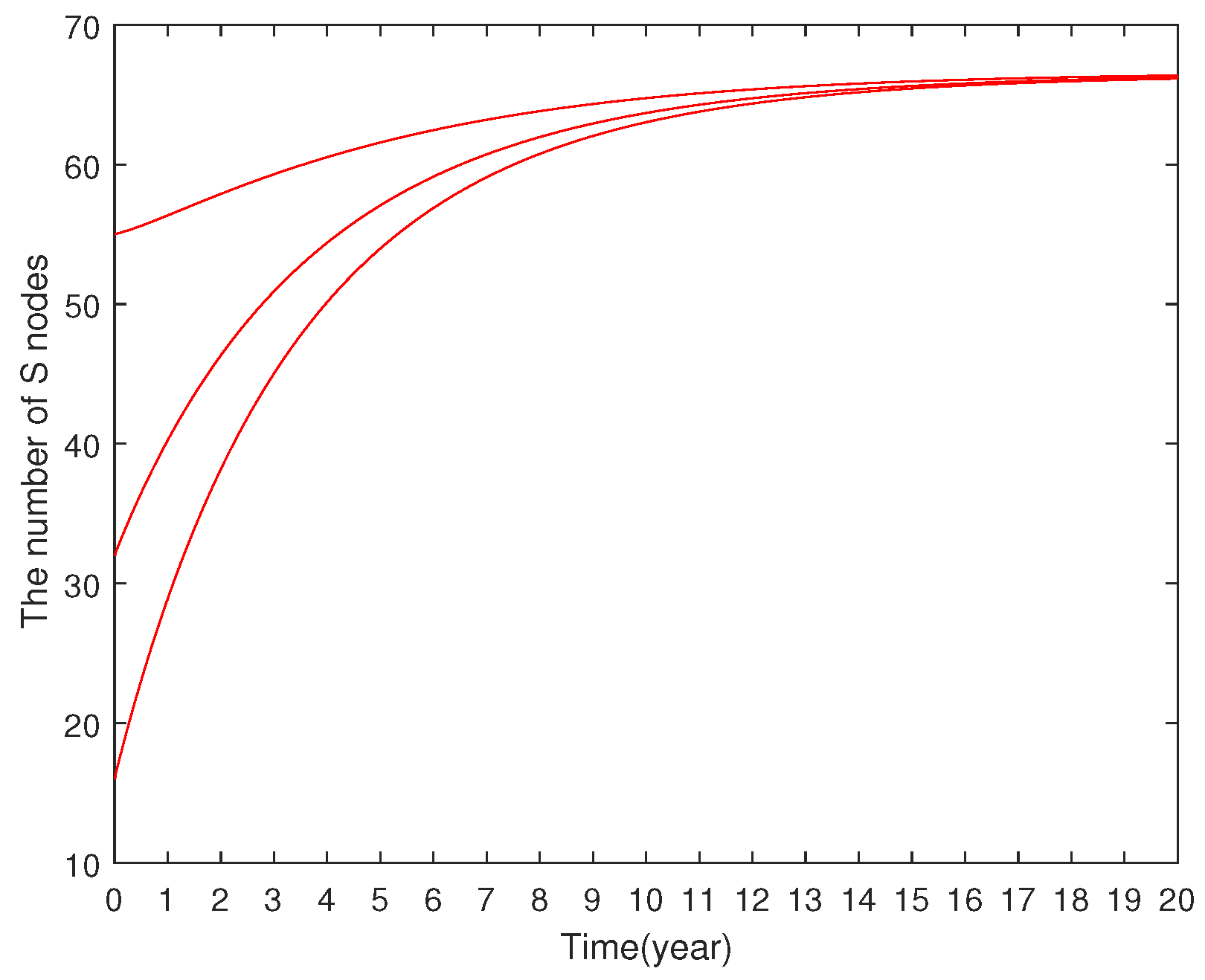
Figure 2.
Variation of L over time.
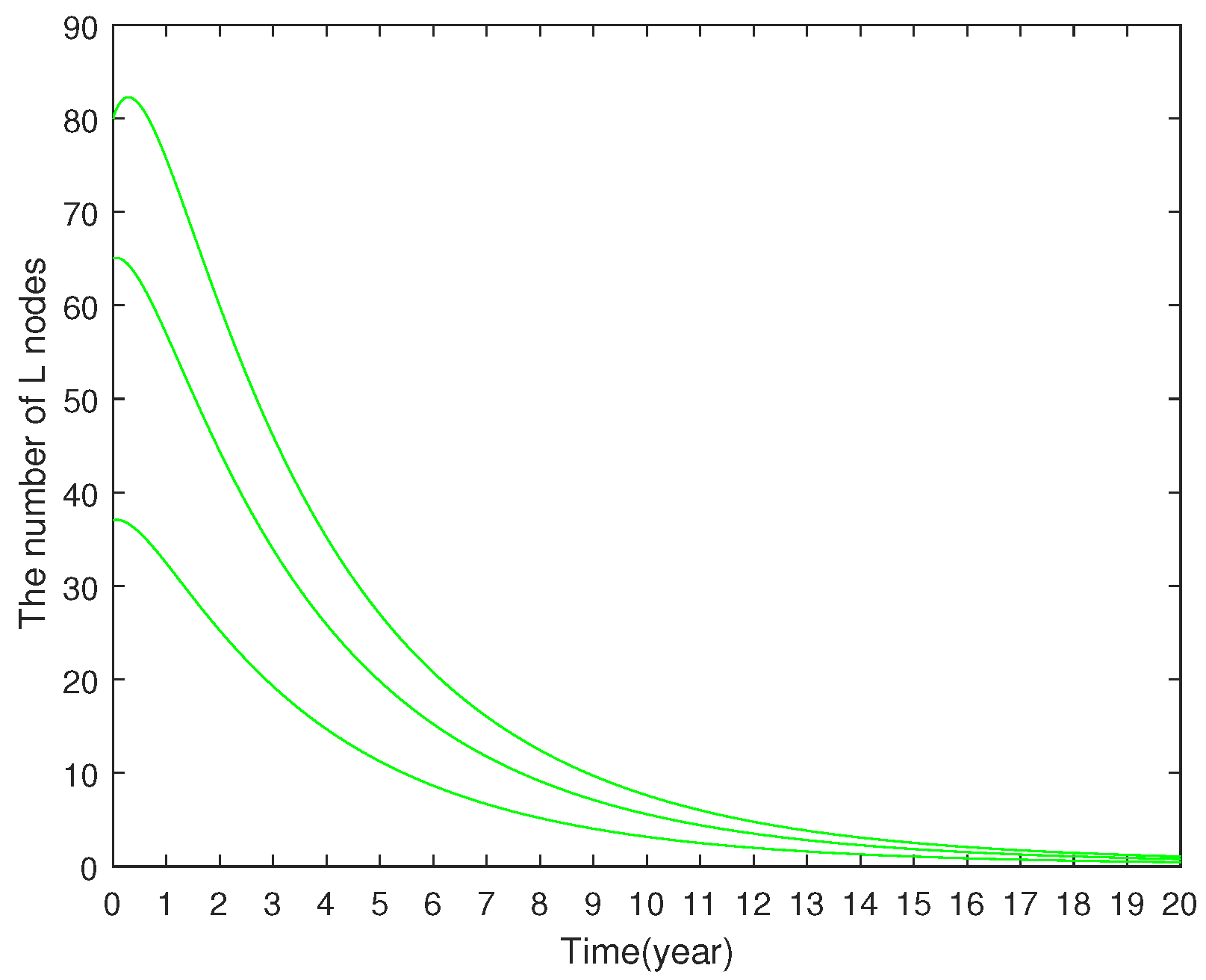
Figure 3.
Variation of B over time.
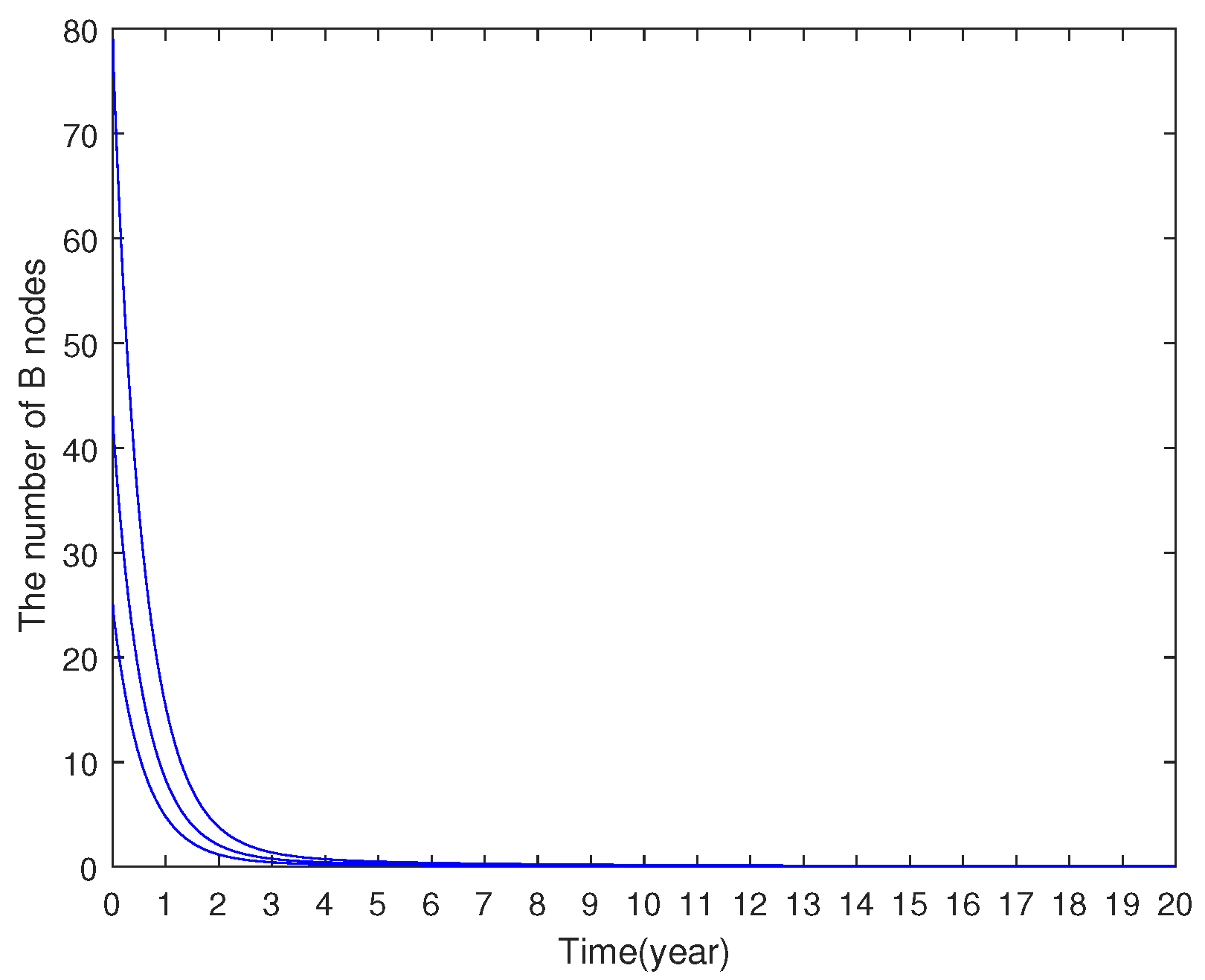
Figure 4.
Variation of R over time.
Disclaimer/Publisher’s Note: The statements, opinions and data contained in all publications are solely those of the individual author(s) and contributor(s) and not of MDPI and/or the editor(s). MDPI and/or the editor(s) disclaim responsibility for any injury to people or property resulting from any ideas, methods, instructions or products referred to in the content. |
© 2024 by the authors. Licensee MDPI, Basel, Switzerland. This article is an open access article distributed under the terms and conditions of the Creative Commons Attribution (CC BY) license (http://creativecommons.org/licenses/by/4.0/).
Copyright: This open access article is published under a Creative Commons CC BY 4.0 license, which permit the free download, distribution, and reuse, provided that the author and preprint are cited in any reuse.