

Submitted:
30 November 2024
Posted:
02 December 2024
You are already at the latest version
Abstract
The convergence of artificial intelligence (AI) and precision medicine is revolutionizing healthcare by introducing a patient-centered, data-driven approach to treatment. Precision medicine, which tailors medical care to individual characteristics, addresses the complexities and variability of diseases. Integrating AI into this domain has unlocked unprecedented potential for disease management and personalized care. AI leverages vast datasets, including genomics, clinical records, and molecular profiles, to identify patterns and predict outcomes with exceptional accuracy. Its capabilities extend beyond automation, functioning as a critical tool for informed decision-making. By analysing intricate molecular data, AI enhances diagnostic precision, detecting subtle biomarkers and anomalies often missed by traditional methods. Machine learning-powered predictive analytics further empower clinicians by forecasting disease progression and guiding treatment customization. Practical applications of AI-driven precision medicine are already evident. From diagnosing rare genetic disorders to optimizing drug therapies based on genetic profiles, AI is transforming patient care. However, challenges such as ethical concerns, data privacy, and the need for transparent algorithms remain pivotal. This review explores the synergistic relationship between AI and precision medicine, highlighting ongoing research, technological innovations, and interdisciplinary collaboration. Together, these advancements herald a transformative era in healthcare, paving the way for highly personalized and effective treatment strategies.
Keywords:
1. Introduction
Artificial Intelligence (AI):
Precision Medicine:

| Aspect | Role of AI in Precision Medicine | Future Potential |
|---|---|---|
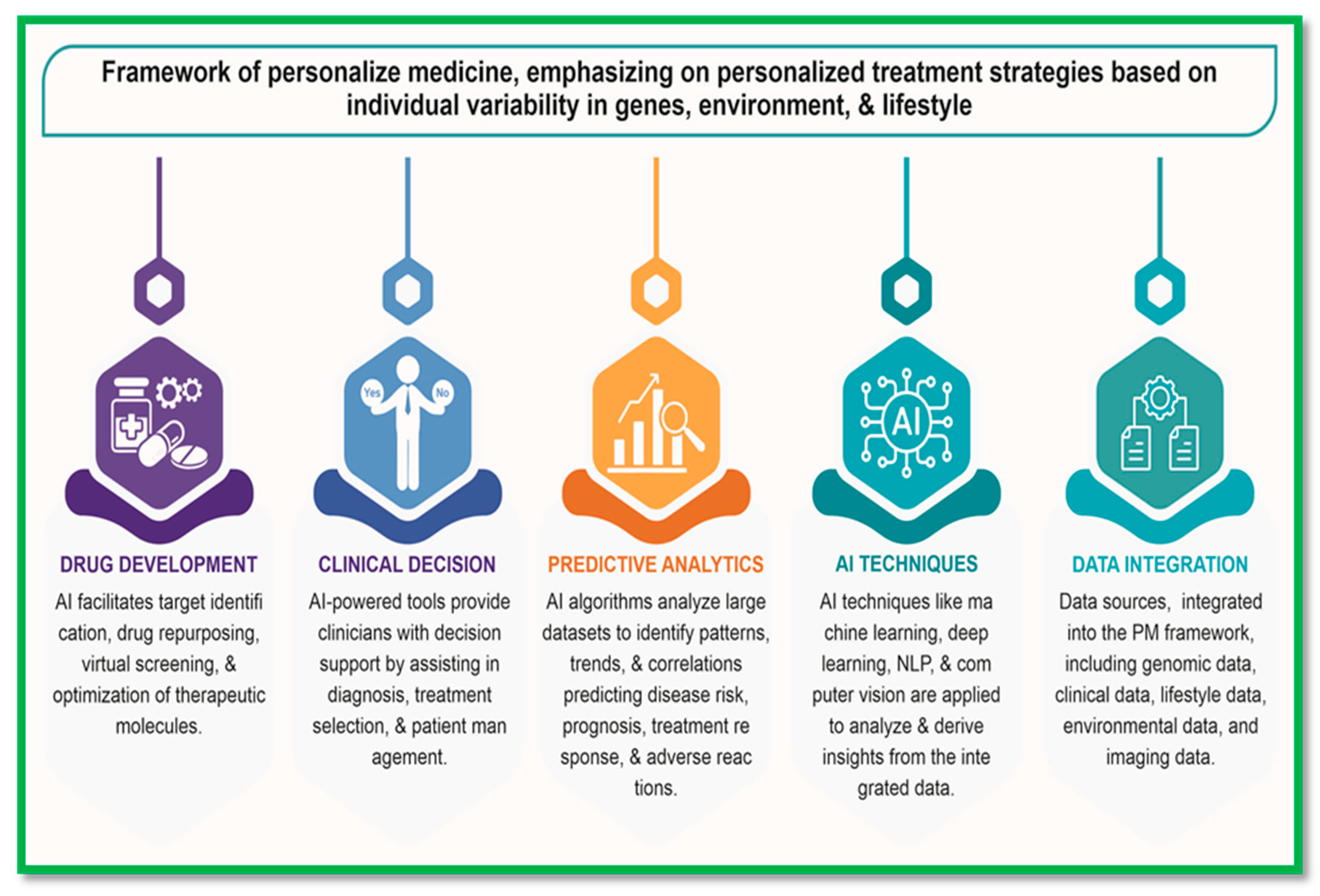
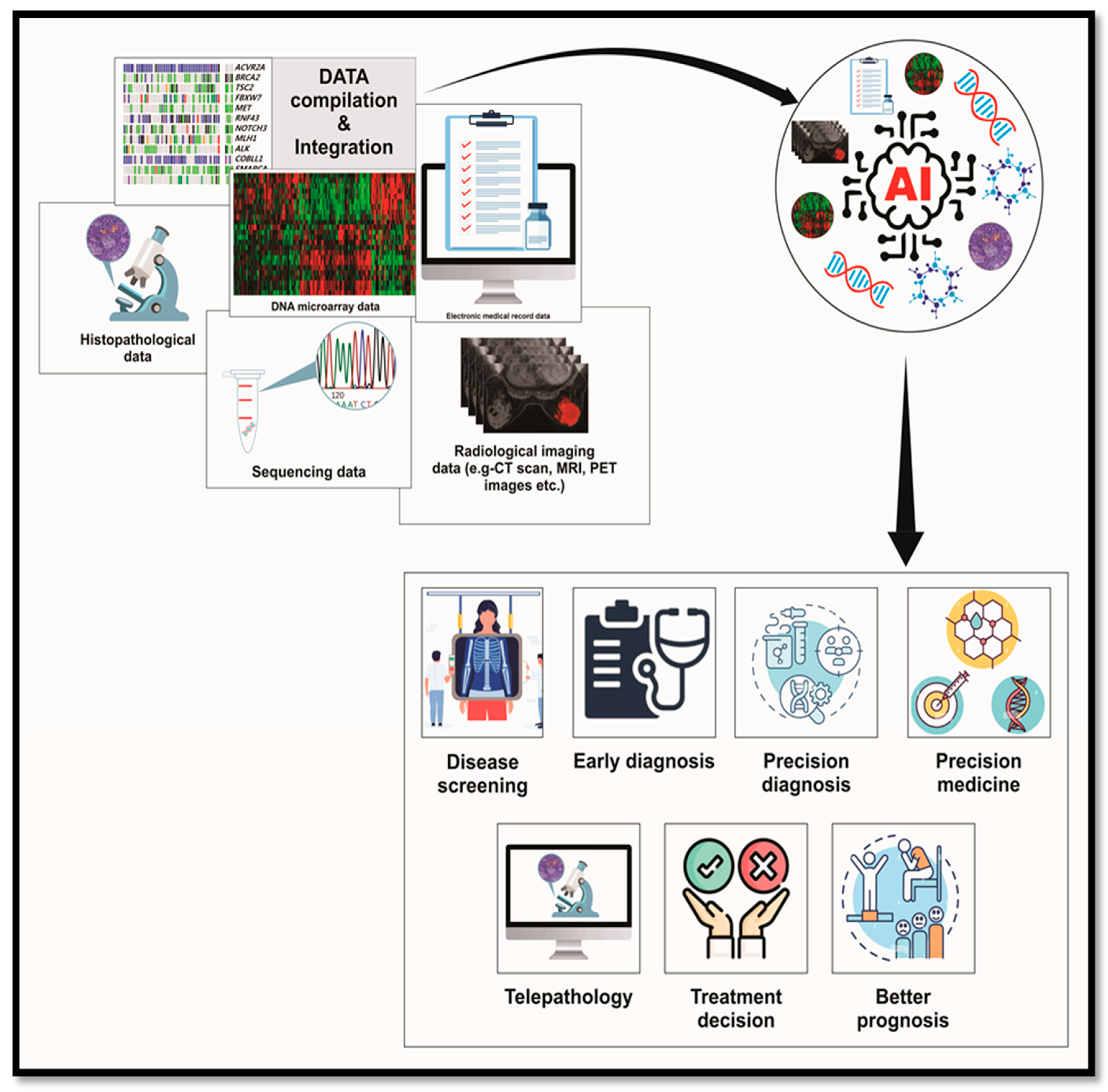
| Data Integration | Combines genomic, proteomic, and clinical data to create comprehensive patient profiles. | Enables personalized treatment plans by integrating multi-omics and real-time patient data. |
| Disease Screening | Identifies patterns in large datasets to detect diseases early through imaging and biomarkers. | Expands capabilities for non-invasive, population-wide screening programs. |
| Precision Diagnosis | Uses machine learning to analyse imaging, pathology, and molecular data for accurate, personalized diagnoses. | Develops models that predict disease progression and subtypes for tailored interventions. |
| Treatment Decision-Making | Assists clinicians by predicting treatment responses and recommending optimal therapies based on patient-specific data. | Advances in AI could lead to fully automated, adaptive treatment systems in clinical practice. |
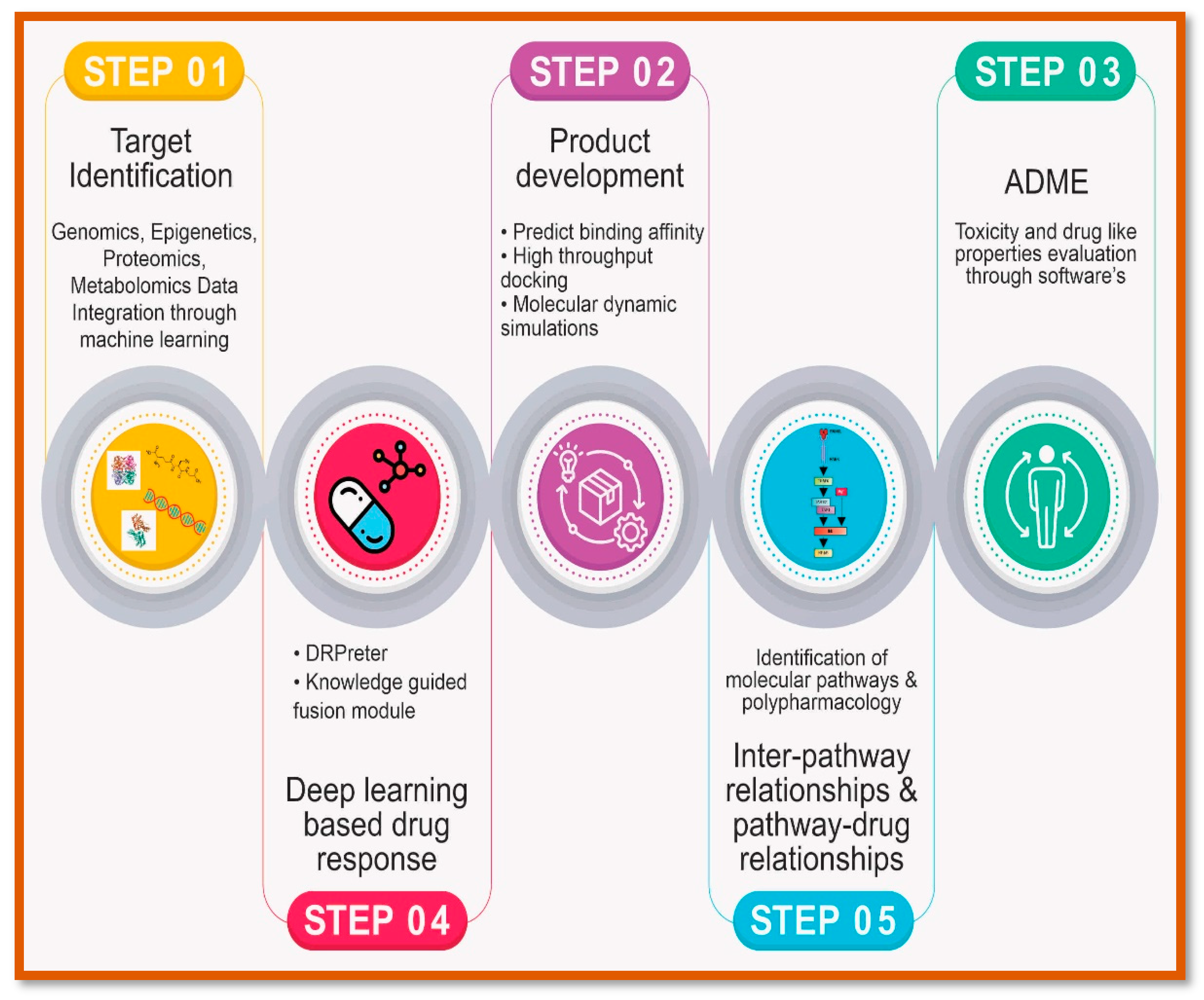
| Drug Development | Accelerates drug discovery by identifying molecular targets and predicting compound efficacy using AI simulations. | Revolutionizes pharmaceutical development with faster, cost-effective trials and AI-driven designs. |
| Telemedicine | Supports remote consultations with AI-driven diagnostic tools and real-time data analysis. | Enhances access to personalized care, especially in resource-limited regions. |
| Prognosis Prediction | Predicts disease outcomes and survival rates using AI-based risk models. | Develops dynamic prognosis tools adaptable to evolving patient health data. |
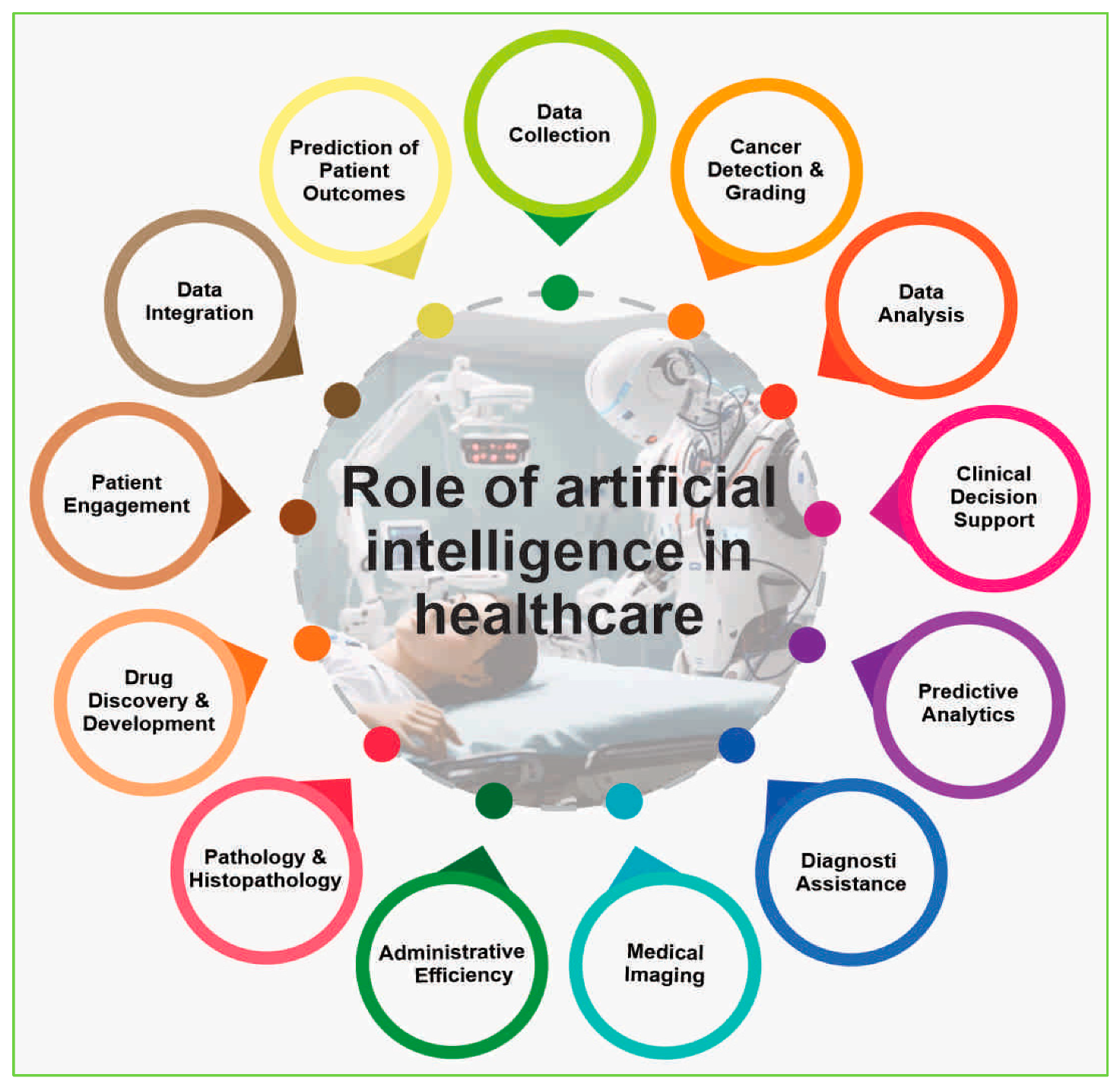
Role of AI in Healthcare
Robotics in Surgery:
The integration of Artificial Intelligence (AI) and precision medicine:
Benefits of AI in Precision Medicine:
Challenges of AI in Precision Medicine:
Case Studies and Examples:
Future Prospects of AI and precision medicine:
Ethical Considerations of AI in Precision Medicine:
Conclusion:
Author Contributions
Funding
Institutional Review Board Statement
Informed Consent Statement
Data Availability Statement
Acknowledgement
Conflicts of Interest
References
- Bajwa J, Munir U, Nori A, Williams B. Artificial intelligence in healthcare: transforming the practice of medicine. Future Healthc J. 2021, 8(2),188-194.
- Torkamani, A., Andersen, K. G., Steinhubl, S. R., & Topol, E. J. High-definition medicine. Cell,2-18, 172(6), 1102-1111.
- Esteva, A., Kuprel, B., Novoa, R. A., Ko, J., Swetter, S. M., Blau, H. M., & Thrun, S. Dermatologist-level classification of skin cancer with deep neural networks. Nature, 2019, 542(7639), 115-118.
- Wang L, Zhao YT. Development and Validation of a Prediction Model for Acute Kidney Injury Among Patients With Acute Decompensated Heart Failure. Front Cardiovasc Med. 2021 15;8:719307. [CrossRef]
- Zhavoronkov, A., Ivanenkov, Y.A., Aliper, A. et al. Deep learning enables rapid identification of potent DDR1 kinase inhibitors. Nat Biotechnol, 2019, 37, 1038–1040. [CrossRef]
- Esteva, A., Kuprel, B., Novoa, R. et al. Dermatologist-level classification of skin cancer with deep neural networks. Nature 542, 115–118 (2017). [CrossRef]
- Vitanza, A., D’Onofrio, G., Ricciardi, F., Sancarlo, D., Greco, A., Giuliani, F. (2019). Assistive Robots for the Elderly: Innovative Tools to Gather Health Relevant Data. In: Consoli, S., Reforgiato Recupero, D., Petković, M. (eds) Data Science for Healthcare. Springer, Cham. [CrossRef]
- Pushkaran, A.C., Arabi, A.A. From understanding diseases to drug design: can artificial intelligence bridge the gap?. Artif Intell Rev 57, 86 (2024). [CrossRef]
- Flaherty KT, Puzanov I, Kim KB, Ribas A, McArthur GA, Sosman JA, O'Dwyer PJ, Lee RJ, Grippo JF, Nolop K, Chapman PB. Inhibition of mutated, activated BRAF in metastatic melanoma. N Engl J Med. 2010, 363(9):809-19. [CrossRef]
- Hyman DM, Puzanov I, Subbiah V, Faris JE, Chau I, Blay JY, Wolf J, Raje NS, Diamond EL, Hollebecque A. et al. Vemurafenib in Multiple Nonmelanoma Cancers with BRAF V600 Mutations. N Engl J Med. 2015, 373(8):726-36. [CrossRef]
- Weng SF, Reps J, Kai J, Garibaldi JM, Qureshi N. Can machine-learning improve cardiovascular risk prediction using routine clinical data? PLoS One. 2017,12(4):e0174944. [CrossRef]
- Rajkomar A, Oren E, Chen K, Dai AM, Hajaj N, Hardt M, Liu PJ et al. Scalable and accurate deep learning with electronic health records. NPJ Digit Med. 2018, 1:18. [CrossRef] [PubMed]
- Collins FS, Varmus H. A new initiative on precision medicine. N Engl J Med. 2015, 372(9):793-5. [CrossRef]
- Sudlow, C., Gallacher, J., Allen, N., Beral, V., Burton, P., Danesh, J., & Collins, R. UK Biobank: an open access resource for identifying the causes of a wide range of complex diseases of middle and old age. PLoS Medicine, 2015,12(3), e1001779.
- Ghizal Fatima. Precision Medicine in Fibromyalgia Syndrome, Precision Medicine and Human Health (2024) 1: 286. [CrossRef]
- Khosravi, P., Kazemi, E., Imielinski, M., Elemento, O., & Hajirasouliha, I. Deep convolutional neural networks enable discrimination of heterogeneous digital pathology images. EBioMedicine 2018, 27, 317–328.
- Ehteshami Bejnordi B, Veta M, Johannes van Diest P, van Ginneken B, Karssemeijer N, Litjens G, van der Laak JAWM et al. Diagnostic Assessment of Deep Learning Algorithms for Detection of Lymph Node Metastases in Women With Breast Cancer. JAMA. 2017 Dec 12;318(22):2199-2210. [CrossRef]
- Bera K, Schalper KA, Rimm DL, Velcheti V, Madabhushi A. Artificial intelligence in digital pathology - new tools for diagnosis and precision oncology. Nat Rev Clin Oncol. 2019,16(11):703-715. [CrossRef]
- Litjens G, Kooi T, Bejnordi BE, Setio AAA, Ciompi F, Ghafoorian M, van der Laak JAWM, van Ginneken B, Sánchez CI. A survey on deep learning in medical image analysis. Med Image Anal. 2017, 42, 60–88. [CrossRef]
- Gurcan MN, Boucheron LE, Can A, Madabhushi A, Rajpoot NM, Yener B. Histopathological image analysis: a review. IEEE Rev Biomed Eng. 2009;2:147-71. [CrossRef]
- Ching T, Zhu X, Garmire LX. Cox-nnet: An artificial neural network method for prognosis prediction of high-throughput omics data. PLoS Comput Biol. 2018,14(4):e1006076. [CrossRef]
- Korbar B, Olofson AM, Miraflor AP, Nicka CM, Suriawinata MA, Torresani L, Suriawinata AA, Hassanpour S. Deep Learning for Classification of Colorectal Polyps on Whole-slide Images. J Pathol Inform. 2017, 8:30. [CrossRef]
- Coudray N, Ocampo PS, Sakellaropoulos T, Narula N, Snuderl M, Fenyö D, Moreira AL, Razavian N, Tsirigos A. Classification and mutation prediction from non-small cell lung cancer histopathology images using deep learning. Nat Med. 2018,4(10):1559-1567. [CrossRef]
- He, K., Zhang, X., Ren, S., & Sun, J. (2019). Deep residual learning for image recognition. In Proceedings of the IEEE conference on computer vision and pattern recognition (pp. 770-778).
- Hekler, A., Utikal, J. S., Enk, A. H., & Hauschild, A. Pathologist-level classification of histopathological melanoma images with deep neural networks. European Journal of Cancer, 2019, 115, 79–83.
- Janowczyk A, Madabhushi A. Deep learning for digital pathology image analysis: A comprehensive tutorial with selected use cases. J Pathol Inform. 2016;7:29. [CrossRef]
- Yu KH, Zhang C, Berry GJ, Altman RB, Ré C, Rubin DL, Snyder M. Predicting non-small cell lung cancer prognosis by fully automated microscopic pathology image features. Nat Commun. 2016,16;7:12474. [CrossRef]
- Lu C, Romo-Bucheli D, Wang X, Janowczyk A, Ganesan S, Gilmore H, Rimm D, Madabhushi A. Nuclear shape and orientation features from H&E images predict survival in early-stage estrogen receptor-positive breast cancers. Lab Invest. 2018,98(11):1438-1448. [CrossRef]
- Pantanowitz L, Sinard JH, Henricks WH, Fatheree LA, Carter AB, Contis L, Beckwith BA, Evans AJ, Lal A, Parwani AV; College of American Pathologists Pathology and Laboratory Quality Center. Validating whole slide imaging for diagnostic purposes in pathology: guideline from the College of American Pathologists Pathology and Laboratory Quality Center. Arch Pathol Lab Med. 2013;137(12):1710-22. [CrossRef]
- Shickel, B., Tighe, P. J., Bihorac, A., & Rashidi, P. (2018). Deep EHR: a survey of recent advances in deep learning techniques for electronic health record (EHR) analysis. IEEE journal of biomedical and health informatics, 22(5), 1589-1604.
- Pang S, Orgun MA, Yu Z. A novel biomedical image indexing and retrieval system via deep preference learning. Comput Methods Programs Biomed. 2018 May;158:53-69.
- Goldstein, B. A., Navar, A. M., Carter, R. E., Chetcuti, S. J., Groeneveld, P. W., & Schussler, J. M. (2020). Development and validation of a machine learning model to predict mortality in patients with acute myocardial infarction. JAMA cardiology, 5(5), 564-572.
- Beam, A. L., Kohane, I. S., & Palmer, N. P. (2018). Take me to your leader: the importance of ethical leadership in the age of AI. Nature medicine, 24(1), 44-45.
- Gevaert, O., Mitchell, L. A., Achrol, A. S., Xu, J., Echegaray, S., Steinberg, G. K., ... & Napel, S. (2018). Glioblastoma multiforme: exploratory radiogenomic analysis by using quantitative image features. Radiology, 273(1), 168-174.
- Kourou, K., Exarchos, T. P., Exarchos, K. P., Karamouzis, M. V., & Fotiadis, D. I. (2015). Machine learning applications in cancer prognosis and prediction. Computational and structural biotechnology journal, 13, 8-17.
- Lakhani, P., & Sundaram, B. (2017). Deep learning at chest radiography: automated classification of pulmonary tuberculosis by using convolutional neural networks. Radiology, 284(2), 574-582.
- Hosny, A., Parmar, C., Quackenbush, J., Schwartz, L. H., Aerts, H. J., & Artificial Intelligence in Radiology (AIR) Study Group. (2018). Artificial intelligence in radiology. Nature Reviews Cancer, 18(8), 500-510.
- Komura, D., & Ishikawa, S. (2018). Machine learning methods for histopathological image analysis. Computational and Structural Biotechnology Journal, 16, 34-42.
- Fuyong Xing, Yuanpu Xie, Hai Su, Fujun Liu, Lin Yang. Deep Learning in Microscopy Image Analysis: A Survey. IEEE Trans Neural Netw Learn Syst. 2018 Oct;29(10):4550-4568.
- Larson, D. B., Chen, M. C., Lungren, M. P., Halabi, S. S., Stence, N. V., Langlotz, C. P., & Patel, S. (2018). Performance of a deep-learning neural network model in assessing skeletal maturity on pediatric hand radiographs. Radiology, 287(1), 313-322.
- Najjar R. Redefining Radiology: A Review of Artificial Intelligence Integration in Medical Imaging. Diagnostics (Basel). 2023 Aug 25;13(17):2760.
- Reis-Filho JS, Kather JN. Overcoming the challenges to implementation of artificial intelligence in pathology. J Natl Cancer Inst. 2023 Jun 8;115(6):608-612.
- Anwar SM, Majid M, Qayyum A, Awais M, Alnowami M, Khan MK. Medical Image Analysis using Convolutional Neural Networks: A Review. J Med Syst. 2018 Oct 8;42(11):226.
- Garcia, J., Schroder, M., & Patel, R. (2018). Clinical artificial intelligence: the regulatory landscape in 2019. Nature Reviews Drug Discovery, 18(1), 46-47.
- Kleinberg J, Lakkaraju H, Leskovec J, Ludwig J, Mullainathan S. Human decisions and machine predictions. Q J Econ. 2018;133:237–93.
- Thomsen, A. S., Williams, J., Braun, E. A., & Kuo, J. (2021). Robotics in Surgery. In StatPearls [Internet]. StatPearls Publishing.
- Lanfranco, A. R., Castellanos, A. E., & Desai, J. P. (2004). Robotic surgery: a current perspective. Annals of surgery, 239(1), 14.
- Intuitive Surgical, Inc. (2020). da Vinci Surgical System.
- Ballantyne, G. H. (2002). Robotic surgery, telerobotic surgery, telepresence, and telementoring. Surgical endoscopy, 16(10), 1389-1402.
- Obstein, K. L., & Jones, B. (2018). Robotic technology in gastrointestinal endoscopy: A review. Techniques in gastrointestinal endoscopy, 20(4), 191-199.
- Fiorini, P., Arquilla, B., Parikh, A., Lo, M. C., Montecalvo, M. A., & Kulkarni, C. (2017). Perioperative predictive factors for surgical site infections in surgical oncology. American Journal of Surgery, 214(1), 11-18.
- Mårtensson, G., Hellström, M., & Lind, M. (2020). Risk prediction and decision making in perioperative care. British Journal of Anaesthesia, 125(4), e303-e313.
- Marescaux, J., Leroy, J., Gagner, M., Rubino, F., Mutter, D., Vix, M., ... & Smith, M. K. (2001). Transatlantic robot-assisted telesurgery. Nature, 413(6854), 379-380.
- U.S. Food and Drug Administration (FDA). (2021). da Vinci Surgical System - PMA P010012.
- W.-H. Hu, D.-H. Tang, J. Teng, S. Said, R. Rohrmann, et al. Structural health monitoring of a prestressed concrete bridge based on statistical pattern recognition of continuous dynamic measurements over 14 years. Sensors, 18 (12) (2018), p. 4117.
- Alowais, S.A., Alghamdi, S.S., Alsuhebany, N. et al. Revolutionizing healthcare: the role of artificial intelligence in clinical practice. BMC Med Educ 23, 689 (2023).
- Abdel-Hameed Al-Mistarehi M, Mijwil M. ; Youssef Filali; Mariem Bounabi; Guma Ali; Mostafa Abotaleb. Artificial Intelligence Solutions for Health 4.0: Overcoming Challenges and Surveying Applications. MJAIH 2023, 2023, 15–20.
- Vora LK, Gholap AD, Jetha K, Thakur RRS, Solanki HK, Chavda VP. Artificial Intelligence in Pharmaceutical Technology and Drug Delivery Design. Pharmaceutics. 2023 Jul 10;15(7):1916.
- Sussman L, Garcia-Robledo JE, Ordóñez-Reyes C, Forero Y, Mosquera AF, Ruíz-Patiño A, Chamorro DF, Cardona AF. Integration of artificial intelligence and precision oncology in Latin America. Front Med Technol. 2022 Oct 13;4:1007822.
- Patel SK, George B, Rai V. Artificial Intelligence to Decode Cancer Mechanism: Beyond Patient Stratification for Precision Oncology. Front Pharmacol. 2020 Aug 12;11:1177.
- Liao J, Li X, Gan Y, Han S, Rong P, Wang W, Li W, Zhou L. Artificial intelligence assists precision medicine in cancer treatment. Front Oncol. 2023 Jan 4;12:998222.
- D.M. Harmon, O. Sehrawat, M. Maanja, J. Wight, P.A. Noseworthy. Artificial intelligence for the detection and treatment of atrial fibrillation. Arrhythmia Electrophysiol Rev, 12 (2023 Apr 19), Article e12.
- Buss, S. J., Breuninger, K., Lehrke, S., Voss, A., Galuschky, C., Lossnitzer, D., Giannitsis, E. (2019). Artificial intelligence in cardiovascular imaging: state of the art and implications for the imaging cardiologist. JACC: Cardiovascular Imaging, 12(8), 1540-1555.
- Vrahatis AG, Skolariki K, Krokidis MG, Lazaros K, Exarchos TP, Vlamos P. Revolutionizing the Early Detection of Alzheimer's Disease through Non-Invasive Biomarkers: The Role of Artificial Intelligence and Deep Learning. Sensors (Basel). 2023 Apr 22;23(9):4184.
- Agrebi S, Larbi A. Use of artificial intelligence in infectious diseases. Artificial Intelligence in Precision Health. 2020:415–38.
- Asada K, Komatsu M, Shimoyama R, Takasawa K, Shinkai N, Sakai A, Bolatkan A, Yamada M, Takahashi S, Machino H, Kobayashi K, Kaneko S, Hamamoto R. Application of Artificial Intelligence in COVID-19 Diagnosis and Therapeutics. J Pers Med. 2021 Sep 4;11(9):886.
- Esteva, A., Robicquet, A., Ramsundar, B., Kuleshov, V., DePristo, M., Chou, K., Corrado, G. (2019). A guide to deep learning in healthcare. Nature Medicine, 25(1), 24-29.
- Huang, Z., Pei, W., Jay, J., & Khoshgoftaar, T. M. (2021). A review of artificial intelligence applications in cardiovascular disease. Frontiers in Cardiovascular Medicine, 8, 640093.
- Lee, C. S., Tyring, A. J., & Wu, Y. (2018). Machine learning in ophthalmology: current applications and future directions. BMJ Open Ophthalmology, 3(1), e000145.
- Topol, E. J. (2019). High-performance medicine: the convergence of human and artificial intelligence. Nature Medicine, 25(1), 44-56.
- Vamathevan, J., Clark, D., Czodrowski, P., Dunham, I., Ferran, E., Lee, G., Aranyossy, T. (2019). Applications of machine learning in drug discovery and development. Nature Reviews Drug Discovery, 18(6), 463-477.
- Kooi, T., Litjens, G., van Ginneken, B., Gubern-Mérida, A., Sánchez, C. I., Mann, R., Ginneken, B. V. (2017). Large scale deep learning for computer aided detection of mammographic lesions. Medical Image Analysis, 35, 303-312.
- Shah, P., & Kendall, F. (2020). Deep learning for medical image analysis: detecting breast cancer with machine learning. Biomedical Physics & Engineering Express, 6(1), 015012.
- Min, J. K., Dunning, A., Lin, F. Y., Achenbach, S., Al-Mallah, M. H., Budoff, M. J., Shaw, L. J. (2012). Age and sex-related differences in all-cause mortality risk based on coronary computed tomography angiography findings results from the International Multicenter CONFIRM (Coronary CT Angiography Evaluation for Clinical Outcomes: An International Multicenter Registry) of 23,854 patients without known coronary artery disease. Journal of the American College of Cardiology, 59(20), 1840-1847.
- Kwon, Y. M., Choi, M. Y., & Lee, S. H. (2020). Early diagnosis of Alzheimer's disease based on small-world brain network analysis and deep learning. Frontiers in Aging Neuroscience, 12, 590146.
- Aliper, A., Plis, S., Artemov, A., Ulloa, A., Mamoshina, P., & Zhavoronkov, A. (2016). Deep learning applications for predicting pharmacological properties of drugs and drug repurposing using transcriptomic data. Molecular Pharmaceutics, 13(7), 2524-2530.
- Xu, Y., Dai, Z., Chen, F., Gao, S., Pei, J., & Lai, L. (2017). Deep learning for drug-induced liver injury. Journal of Chemical Information and Modeling, 57(10), 2409-2418.
- Bhalla S, Laganà A. Artificial Intelligence for Precision Oncology. Adv Exp Med Biol. 2022;1361:249-268.
- Zhang C, Xu J, Tang R, Yang J, Wang W, Yu X, Shi S. Novel research and future prospects of artificial intelligence in cancer diagnosis and treatment. J Hematol Oncol. 2023 Nov 27;16(1):114.
- Chen ZH, Lin L, Wu CF, Li CF, Xu RH, Sun Y. Artificial intelligence for assisting cancer diagnosis and treatment in the era of precision medicine. Cancer Commun (Lond). 2021 Nov;41(11):1100-1115.
- Al Kuwaiti A, Nazer K, Al-Reedy A, Al-Shehri S, Al-Muhanna A, Subbarayalu AV, Al Muhanna D, Al-Muhanna FA. A Review of the Role of Artificial Intelligence in Healthcare. J Pers Med. 2023 Jun 5;13(6):951.
- Kumar K., Loebinger M.R., Ghafur S. The role of wirelessly observed therapy in improving treatment adherence. Futur. Healthcare J. 2022;9:179–182.
- Chen, Q., Allot, A., & Lu, Z. (2020). Keep up with the latest coronavirus research. Nature, 579(7798), 193.
- Majumder, M. S., & Mandl, K. D. (2020). Early in the epidemic: impact of preprints on global discourse about COVID-19 transmissibility. The Lancet Global Health, 8(5), e627-e630.
- Obermeyer, Z., & Emanuel, E. J. (2016). Predicting the Future - Big Data, Machine Learning, and Clinical Medicine. New England Journal of Medicine, 375(13), 1216-1219.
- Rajkomar, A., Hardt, M., Howell, M. D., Corrado, G., & Chin, M. H. (2019). Ensuring Fairness in Machine Learning to Advance Health Equity. Annals of Internal Medicine, 169(12), 866-872.
- Raisaro, J. L., Troncoso-Pastoriza, J. R., Misbach, M., Jouaneton, B., Gervaix, A., Lovis, C., & Manzoni, P. (2020). Federated Learning for Privacy-Preserving AI in Healthcare: Potential and Challenges. Frontiers in Public Health, 8, 188.
- Char, D. S., Shah, N. H., Magnus, D., & Implementing Machine Learning in Health Care—Addressing Ethical Challenges. New England Journal of Medicine, 378(11), 981-983.
- Beaulieu-Jones, B. K., Greene, C. S., & Goldstein, B. A. (2021). Machine learning for patient risk stratification: standing on, or looking over, the shoulders of clinicians?. NPJ digital medicine, 4(1), 1-3.
- Rajkomar, A., Hardt, M., Howell, M. D., Corrado, G., & Chin, M. H. (2020). Ensuring fairness in machine learning to advance health equity. Annals of Internal Medicine, 172(2), 137-138.
- Fatima G, Alhmadi H, Ali Mahdi A, Hadi N, Fedacko J, Magomedova A, Parvez S, Mehdi Raza A. Transforming Diagnostics: A Comprehensive Review of Advances in Digital Pathology. Cureus. 2024 Oct 19;16(10):e71890. [CrossRef] [PubMed]
- Wang, F., Casalino, L. P., & Khullar, D. (2018). Deep learning in medicine-promise, progress, and challenges. JAMA Internal Medicine, 178(6), 1-2.
- Blumenthal, D., & Tavenner, M. (2010). The “meaningful use” regulation for electronic health records. New England Journal of Medicine, 363(6), 501-504.
- McCoy, T. H., Castro, V. M., Cagan, A., Roberson, A. M., Kohane, I. S., & Perlis, R. H. (2018). Sentiment measured in hospital discharge notes is associated with readmission and mortality risk: An electronic health record study. PLoS ONE, 13(9), e0203864.
- Sittig DF, Singh H. Legal, ethical, and financial dilemmas in electronic health record adoption and use. Pediatrics. 2011 Apr;127(4):e1042-7. Epub 2011 Mar 21. [CrossRef] [PubMed]
- Topol, E.J. High-performance medicine: the convergence of human and artificial intelligence. Nat Med 25, 44–56 (2019). [CrossRef]
- Zhou N, Zhang CT, Lv HY, et al. Concordance Study Between IBM Watson for Oncology and Clinical Practice for Patients with Cancer in China. Oncologist. 2019;24(6):812-819. [CrossRef]
- Gulshan et al. (2016). Development and validation of a deep learning algorithm for detection of diabetic retinopathy in retinal fundus photographs. Nature Medicine, 22(11), 1364-1370.
- Wang L, Zhao YT. Development and Validation of a Prediction Model for Irreversible Worsened Cardiac Function in Patients With Acute Decompensated Heart Failure. Front Cardiovasc Med. 2021;8:785587. Published 2021 Dec 10. [CrossRef]
- Zhavoronkov, A., Ivanenkov, Y.A., Aliper, A. et al. Deep learning enables rapid identification of potent DDR1 kinase inhibitors. Nat Biotechnol 37, 1038–1040 (2019). [CrossRef]
- Oh, J.; Son, S.; Kwon, D.; Kim, M.; Park, Y.; Park, Y. Design of Secure and Privacy-Preserving Data Sharing Scheme Based on Key Aggregation and Private Set Intersection in Medical Information System. Mathematics 2024, 12, 1717. [Google Scholar] [CrossRef]
- Duggento A, Conti A, Mauriello A, Guerrisi M, Toschi N. Deep computational pathology in breast cancer. Semin Cancer Biol. 2021 Jul;72:226-237. Epub 2020 Aug 17. [CrossRef] [PubMed]
- Holzinger, A., Langs, G., Denk, H., Zatloukal, K., & Müller, H. (2017). Causability and explainability of artificial intelligence in medicine. Wiley Interdisciplinary Reviews: Data Mining and Knowledge Discovery, 7(6), e1212.
- Obermeyer Z, Emanuel EJ. Predicting the Future - Big Data, Machine Learning, and Clinical Medicine. N Engl J Med. 2016;375(13):1216-1219. [CrossRef]
- Char DS, Shah NH, Magnus D. Implementing Machine Learning in Health Care - Addressing Ethical Challenges. N Engl J Med. 2018 Mar 15;378(11):981-983. [CrossRef] [PubMed]
- Krittanawong C, Zhang H, Wang Z, Aydar M, Kitai T. Artificial Intelligence in Precision Cardiovascular Medicine. J Am Coll Cardiol. 2017 May 30;69(21):2657-2664. [CrossRef] [PubMed]
- R. Shah, A. Chircu. IoT and AI in Healthcare: a systematic literature review.Issues Inform Syst, 19 (3) (2018), pp. 33-41. [CrossRef]
- Miotto R, Wang F, Wang S, Jiang X, Dudley JT. Deep learning for healthcare: review, opportunities and challenges. Brief Bioinform. 2018 Nov 27;19(6):1236-1246. [CrossRef] [PubMed]
- Torkamani A, Andersen KG, Steinhubl SR, Topol EJ. High-Definition Medicine. Cell. 2017 Aug 24;170(5):828-843. [CrossRef] [PubMed]
- Hughes A, Shandhi MMH, Master H, Dunn J, Brittain E. Wearable Devices in Cardiovascular Medicine. Circ Res. 2023;132(5):652-670. [CrossRef]
Disclaimer/Publisher’s Note: The statements, opinions and data contained in all publications are solely those of the individual author(s) and contributor(s) and not of MDPI and/or the editor(s). MDPI and/or the editor(s) disclaim responsibility for any injury to people or property resulting from any ideas, methods, instructions or products referred to in the content. |
© 2024 by the authors. Licensee MDPI, Basel, Switzerland. This article is an open access article distributed under the terms and conditions of the Creative Commons Attribution (CC BY) license (http://creativecommons.org/licenses/by/4.0/).