Preprint
Article

This version is not peer-reviewed.

Long-Term Eosinophil Depletion: A Real-World Perspective on Safety and Durability of Benralizumab Treatment in Severe Eosinophilic Asthma

A peer-reviewed article of this preprint also exists.

Submitted:

27 November 2024

Posted:

29 November 2024

You are already at the latest version

Abstract

Background/Objectives: Benralizumab is an anti-IL-5 receptor alpha monoclonal antibody that induces near-complete depletion of eosinophils. This study aimed to evaluate the long-term safety and effectiveness of benralizumab in patients with severe eosinophilic asthma (SEA) over a 48-month period. Methods: This was a single-arm, retrospective, observational, multicenter study involving 123 SEA patients treated with benralizumab at a dosage of 30 mg every 4 weeks for the first three doses and then every 8 weeks. The safety endpoints focused on the frequency and nature of adverse events and the likelihood that they were induced by benralizumab. The efficacy endpoints focused on lung function, asthma exacerbations and control, and oral corticosteroid use. Results: Benralizumab, consistent with its mechanism of action, led to rapid and nearly complete depletion of eosinophils. In total, 26 adverse events (21.1%) were observed, with 1.6% related to the treatment and 0.8% categorized as serious (vagal hypotension). Bronchitis was the most common unrelated adverse event (15.4%), occurring between months 36 and 38. Of note, benralizumab maintained its effectiveness over the 48-month period, resulting in significant improvements in lung function and reductions in oral corticosteroid use and exacerbation frequency. Conclusions: Benralizumab demonstrated a favorable safety profile comparable to previously published studies with perdurable effectiveness in controlling SEA and reducing oral corticosteroid use. Finally, this study provides evidence that near-complete eosinophil depletion does not increase long-term safety risks and supports benralizumab as a reliable treatment option for SEA patients.

Keywords: 
;  ;  ;  ;  ;  ;  

1. Introduction

Severe eosinophilic asthma (SEA) is characterized by extensive eosinophilic inflammation triggered by the signaling of interleukin (IL)-5 through the IL-5 receptor alpha (IL-5Rα) [Perez-de-Llano L, 2020; Maio S, 2018; Lee JJ, 2012; Klion AD, 2020; Jacobsen EA, 2021; Dunican EM, 2017]. Since increasing blood eosinophil (Eos) counts correlate with asthma severity, leading to a higher risk of exacerbations, poor asthma control, and declining lung function [Bumbacea D, 2004; Price DB, 2015], the depletion of Eos is the primary therapeutic goal [Jackson DJ and Ian DP, 2023]. Two anti-IL-5 monoclonal antibodies (mepolizumab and reslizumab) and an anti-IL-5 receptor antibody (benralizumab) have been approved as add-on maintenance therapy for SEA [Benralizumab SPC]. Mepolizumab reduces Eos by approximately 83–86% [Ortega HG, 2014], while benralizumab causes direct, rapid, nearly complete depletion of Eos from the peripheral blood and lungs [Ghazi A, 2012]. Pharmacovigilance data on the clinical use of biological therapies in asthma confirm the safety of these treatments. Adverse events (AEs) are primarily injection-site reactions, nasopharyngitis, headaches and hypersensitivity, while the association with malignancies, effects on the cardiovascular system, alopecia and autoimmune conditions have not been verified and requires further evaluation [Cutroneo PM, 2024].
Benralizumab has demonstrated efficacy and safety in SEA patients, as shown in several clinical trials, real-world studies, and pharmacovigilance data [Bleecker, 2016; FitzGerald, 2016, Pini L, 2024]. The SIROCCO and CALIMA clinical trials showed the safety and efficacy of benralizumab versus placebo [Bleecker, 2016; FitzGerald, 2016], while the ZONDA and PONENTE clinical trials and the PROMISE and ANANKE real-life study also demonstrated the effectiveness of benralizumab in reducing the need for oral corticosteroids (OCS) [Nair P, 2017; Kavanagh JE, 2020; Vultaggio A, 2023; Menzies-Gow A, 2022; Schleich F, 2023]. The XALOC-1 real-world study assessed benralizumab's effectiveness in 1002 adults with SEA during a 48-week follow-up, showing that the treatment reduced exacerbations, OCS use and improved symptom control and lung functions [Jackson DJ, 2024]. Accordingly, the use of benralizumab has been recommended as an alternative noncorticosteroid treatment for acute exacerbations of SEA [Ramakrishnan S, 2020]. The ANDHI clinical trial showed the beneficial impact of benralizumab on health-related quality of life, exacerbation rate, lung function, and nasal polyposis symptoms [Harrison TW, 2021]. Compared with mepolizumab, benralizumab resulted in greater improvements in lung function and exacerbation frequency [Langton D, 2023] while also showing a faster onset of action [Moran AM, 2020].
Regarding the safety of benralizumab, the frequency of AEs during SIROCCO or CALIMA was comparable to that observed in the placebo arm, with no predisposition to other opportunistic infections [Kuang FL, 2019; FitzGerald JM, 2016] or malignancies [Jackson DJ, 2020]. The results from BORA and MELTEMI extension studies confirmed the sustained efficacy of benralizumab and its long-term safety. The MELTEMI study identified no new safety concerns for up to 5 years. The most common AEs in all groups were upper respiratory tract infections, headaches, and bronchitis [Busse WW, 2019; Korn S, 2021].
This work aimed to provide real-world evidence on the safety of benralizumab in SEA patients over a treatment duration extending to 48 months. For this purpose, the ability of benralizumab to deplete Eos, the incidence of AEs, and the impact on lung function and asthma control were evaluated.

2. Patients and Methods

2.1. Ethical Considerations

The study protocol was approved by the Ethics Committee Marca, protocol number 1321/CE 4 May 2023, and was conducted in accordance with the Declaration of Helsinki, as well as all applicable local laws and regulations concerning the privacy and security of personal information, including the General Data Protection Regulation (GDPR) (EU) 2016/679. Informed consent was obtained from all patients enrolled in the study.

2.2. Study Design and Study Intervention

This is a real-world, single-arm, retrospective observational multicenter study (Montebelluna, Cittadella, Treviso, Dolo, Verona, Vicenza, Rovigo, Mestre, Belluno, Modena, Brescia) to evaluate the safety and effectiveness of benralizumab 30 mg every 4 weeks for the first three doses, followed by every 8 weeks thereafter.

2.3. Patients

Patients were diagnosed according to the European Respiratory Society (ERS) and the American Thoracic Society (ATS) guidelines for severe, uncontrolled asthma receiving treatment with medium- or high-dosage inhaled corticosteroids (ICS) plus long-acting β2-agonists (LABAs) bronchodilators [Chung KF, 2014].
Benralizumab was prescribed to adult patients in accordance with Italian clinical practice, based on the eligibility and reimbursement criteria established by the Italian regulatory drug agency (Agenzia Italiana del Farmaco, AIFA). To be eligible for benralizumab treatment, patients must have had a blood Eos count ≥300 cells/μL in the absence of OCS treatment, measured at any time before benralizumab initiation. In addition to this criterion, patients were required to meet one of the following conditions: (1) at least two exacerbations in the previous 12 months despite maximum-dose inhaled therapy, treated with systemic steroid or requiring hospitalization; (2) continuous OCS treatment received during the previous year in addition to maximal inhaled therapy [Piano Terapeutico AIFA per la Prescrizione SSN di Fasenra (Benralizumab) Nell'asma Grave Eosinofilico Refrattario]. Patients were recruited from the centers of Montebelluna, Treviso, Cittadella, Dolo, Belluno, Mestre, Vicenza, Verona, Rovigo, Brescia, and Modena between January 2019 and March 2024, and they received benralizumab subcutaneously at a dose of 30 mg, with the first three doses administered every 4 weeks and every 8 weeks thereafter.

2.4. Data Collection

Demographic and disease data were collected from medical records based on assessments conducted during physicians' routine clinical practice. Demographic variables included age, sex, body mass index (BMI), current and past smoking status, the age at diagnosis and when the therapy started. Disease information comprised the presence of allergic rhinitis, chronic rhinosinusitis with nasal polyps (CRSwNP), bronchiectasis, atopy, hypersensitivity to acetylsalicylic acid (ASA) and nonsteroidal anti-inflammatory drug (NSAID), gastroesophageal reflux disease (GERD), and eosinophilic granulomatosis with polyangiitis (EGPA). Data on the severity of asthma included Eos count, asthma control test (ACT) score, pre-bronchodilator forced expiratory volume in 1 second (pre-BD FEV1), pre-bronchodilator forced vital capacity (pre-BD FVC), pre-bronchodilator forced expiratory flow (pre-BD FEF), fractional exhaled nitric oxide (FeNO), which is a non-invasive biomarker for allergic and/or eosinophilic airway inflammation in patients with asthma, and the dosage of OCS. Additionally, data on cardiovascular, metabolic, and/or neuropsychiatric comorbidities were collected.

2.5. Analysis of Safety and Efficacy Endpoints

The long-term safety and tolerability endpoints included the occurrence of AEs, serious AEs (SAEs), hypersensitivity and immunogenicity. SAEs are those events that are life-threatening, require inpatient hospitalization or prolongation of existing hospitalization, or cause death, disability or incapacity. The number and percentage of AEs and the likelihood that they were caused by benralizumab therapy were determined.
Long-term effectiveness endpoints included the depletion of blood Eos and the consequent improvement in lung function, analyzed through FEV1 and FVC. Effectiveness was also evaluated by analyzing the level of asthma control using the Asthma Control Questionnaire 6 (ACQ-6) and ACT. Additionally, the frequency of relapses and hospitalizations, the daily dosage of OCS (expressed as prednisone-equivalent mg), and the proportion of patients discontinuing OCS usage were analyzed.

2.6. Statistical Analysis

A descriptive statistical analysis was first performed to explore patients' characteristics at baseline. Percentages and frequency rates were used for categorical variables, and medians with interquartile ranges were used for continuous variables. Differences in the sample distribution of safety outcomes at various follow-up time points were assessed using the chi-squared test and Fisher's exact test, as appropriate. Respiratory function parameters were modeled using a linear mixed-effects model for longitudinal data with subject-specific random effects to estimate changes in the target outcomes for patients over the follow-up period.
Statistical analyses were performed using R v4.3. p<0.05 was considered significant.

3. Results

3.1. Characteristics of the Population Enrolled in the Study

In total, 123 patients were enrolled in the study; 69 (56.1%) were female. The median age at diagnosis was 43.5 years, and the median age at which they started treatment with benralizumab was 61 years. The median BMI was 26.0, and 67.5% of patients did not smoke. The pre-BD FEV1 and FeNO values were 71.61 and 59.72, respectively; the ACT score was 15.04, and the Eos count was 646.54 cells/mm3. Overall, 33.3% of patients had allergic rhinitis, 56.9% had CRSwNP, 36.6% had GERD, and 5.7% had EGPA; bronchiectasis was present in 26.0%, atopy in 41.5%, hypersensitivity to ASA/NSAIDs in 12.2%. Additionally, 40.7%, 27.6%, and 8.1% had cardiovascular, metabolic, or neuropsychiatric comorbidities, respectively (Table 1).

3.2. Safety Outcomes of Depleting Eosinophils with Benralizumab

Benralizumab significantly decreased the eosinophils (Eos) count, confirming its effectiveness in inhibiting IL-5Rα and inducing Eos apoptosis. Eos depletion was nearly complete at 36 months (p<0.001) and maintained through 48 months (p<0.001, Figure 1).
During the 48-month follow-up period, adverse events (AEs) occurred in 26 patients (21.1%), being that only two patients (1.6%) developed AEs related to benralizumab treatment. The two drug-related reactions occurred at baseline or near administration time and included nausea (1, 0.8%) and urticaria (1, 0.8%). A reaction potentially related to the therapy was vagal hypotension (1, 0.8%); however, its association with benralizumab use was not confirmed. None of the patients who experienced these AEs discontinued benralizumab treatment. Most infections reported as unrelated AEs were bronchitis (n=4/26, 15.4%) cases that developed between 36 and 38 months. No differences were found in the risk of developing AEs based on sex (p=0.259), age (p=0.192), BMI (p=0.846), smoking status (p=0.662), allergic rhinitis (p=0.825), CRSwNP (p=0.791) or bronchiectasis (p=0.658; Table 2).

3.3. Comparison of Safety Data from Clinical Trials and Pharmacovigilance

Comparing our data with those of clinical trials, it emerged that in this long-term real-world study, only 21.1% of patients experienced AEs, a significantly lower rate than the 62–75% observed in the clinical trials. In this work, the SAE incidence was also much lower, with only 0.8% of patients reporting SAEs (vagal hypotension) compared with the frequency of 2–13.3% observed in the clinical trials. Bronchitis was more common in this study (15.4%) and was identified as an AE unrelated to benralizumab therapy (Table 3). Additionally, no cases of malignancies were observed over the 48-month period in this real-world study.
Comparison with the pharmacovigilance data and spontaneous reporting on benralizumab highlights some key findings. Across different datasets, the most frequently reported AEs were nasopharyngitis, headaches, and, as reported here, bronchitis. The rate of SAEs in pharmacovigilance databases is higher than that reported in this study, ranging from 11.5% to 18%, with rare but notable risks such as anaphylaxis, vagal hypotension, and EGPA. Across all datasets and as observed in this study, infection risks were noted but not significantly increased. The frequency of malignancies was less than 1% in all datasets and 0% in this real-life study. Finally, discontinuation due to AEs was low in all datasets and 0% in this study (Table 4).

3.4. Effectiveness Endpoints

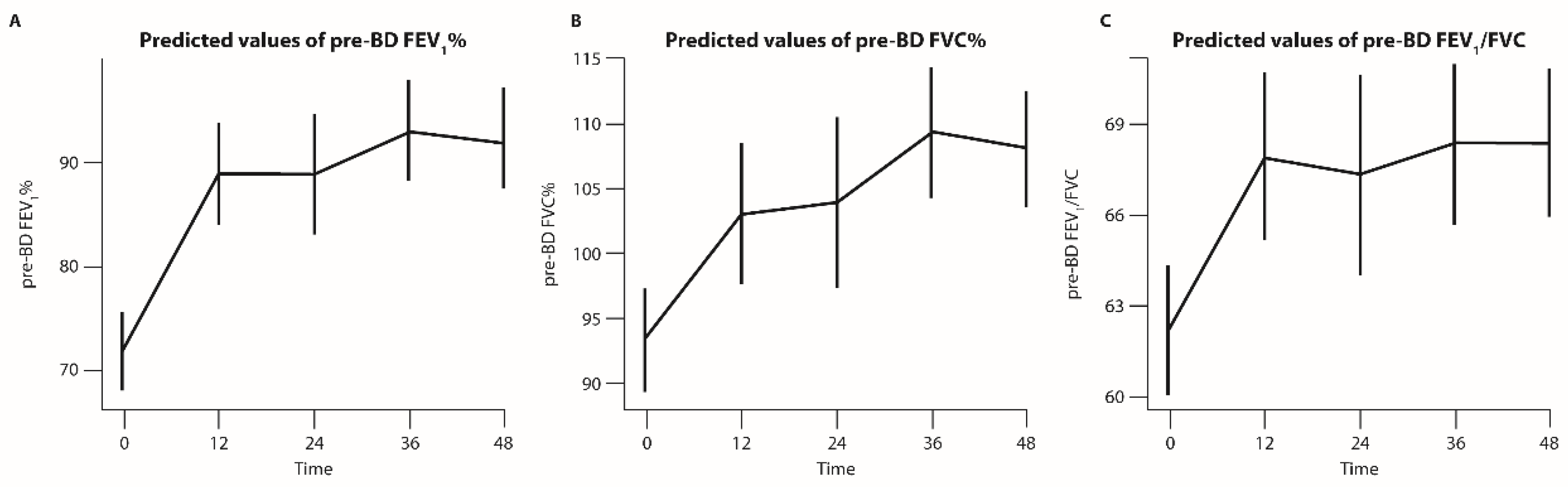
In parallel with the highly efficient depletion of Eos, lung function improved considerably, as shown by the levels of pre-BD FEV1, pre-BD FVC, and pre-BD FEV1/FVC, which significantly increased at 36 months (p<0.001) and were maintained at 48 months (p<0.001, Figure 2).
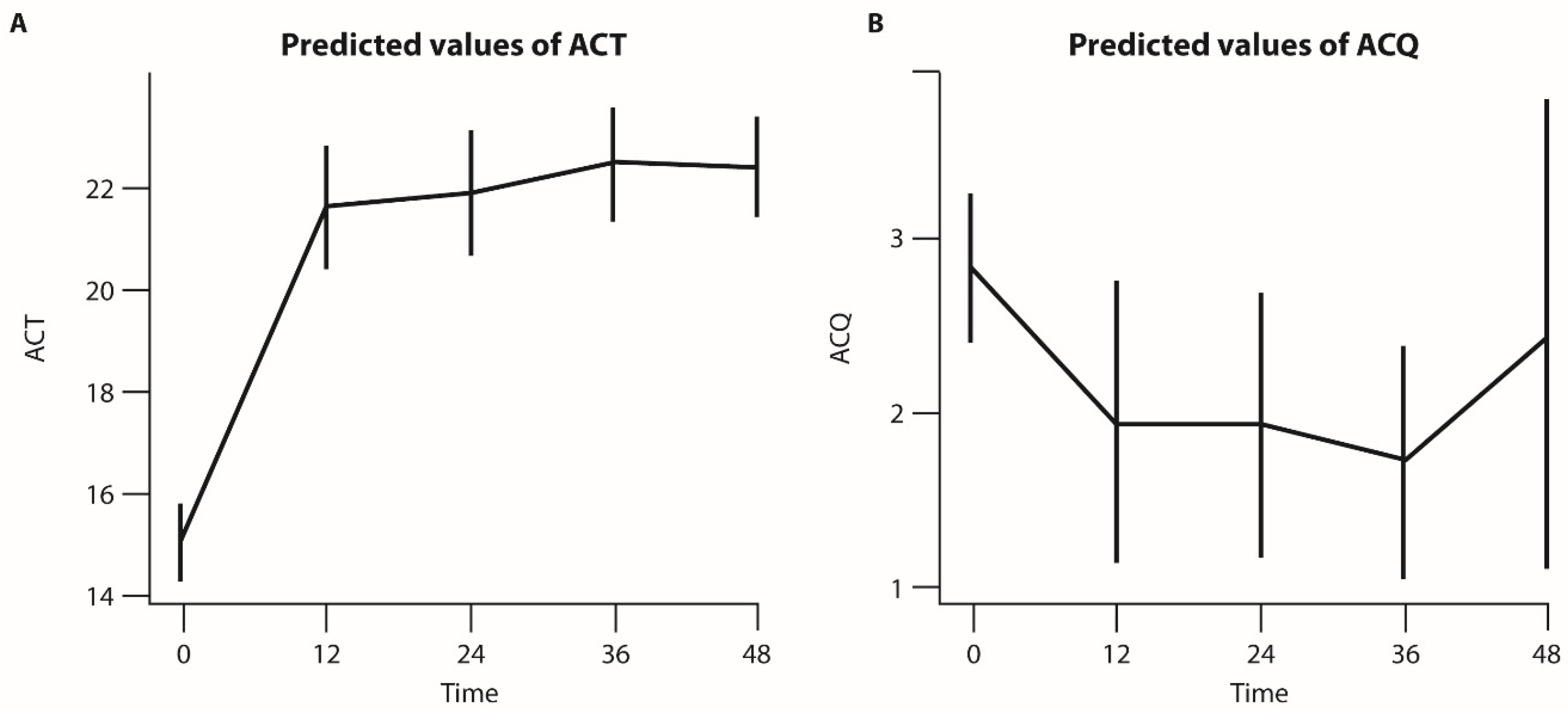
ACT values increased significantly, and improvements were maintained at 36 and 48 months (p<0.001, Figure 3A). ACQ scores were significantly lower at 36 months (p<0.01; Figure 3B). These data show that Eos depletion by benralizumab achieves continuous improvement in asthma control and maintains a good safety profile in the long term.
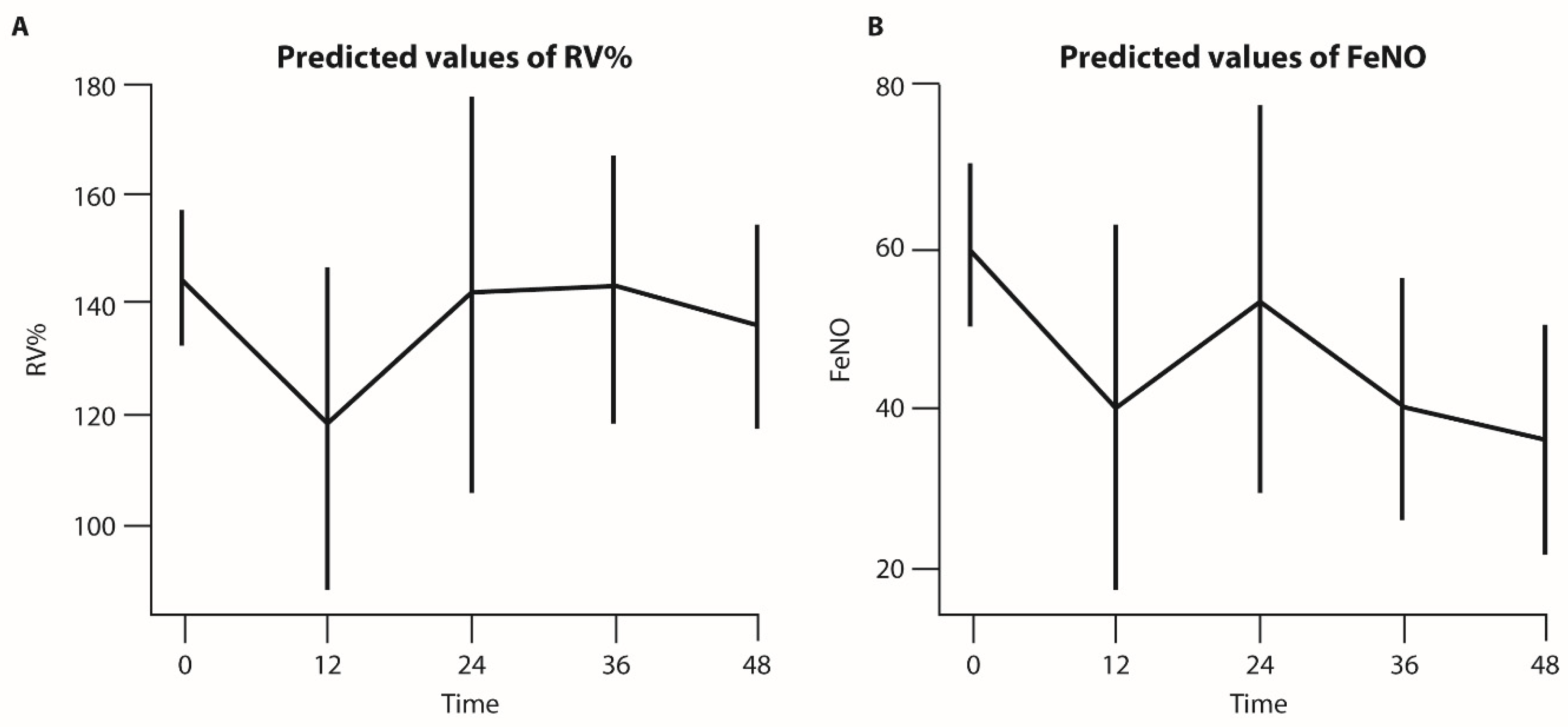
No statistical differences were observed for RV% (Figure 4A), while FeNO decreased significantly (Figure 4B).
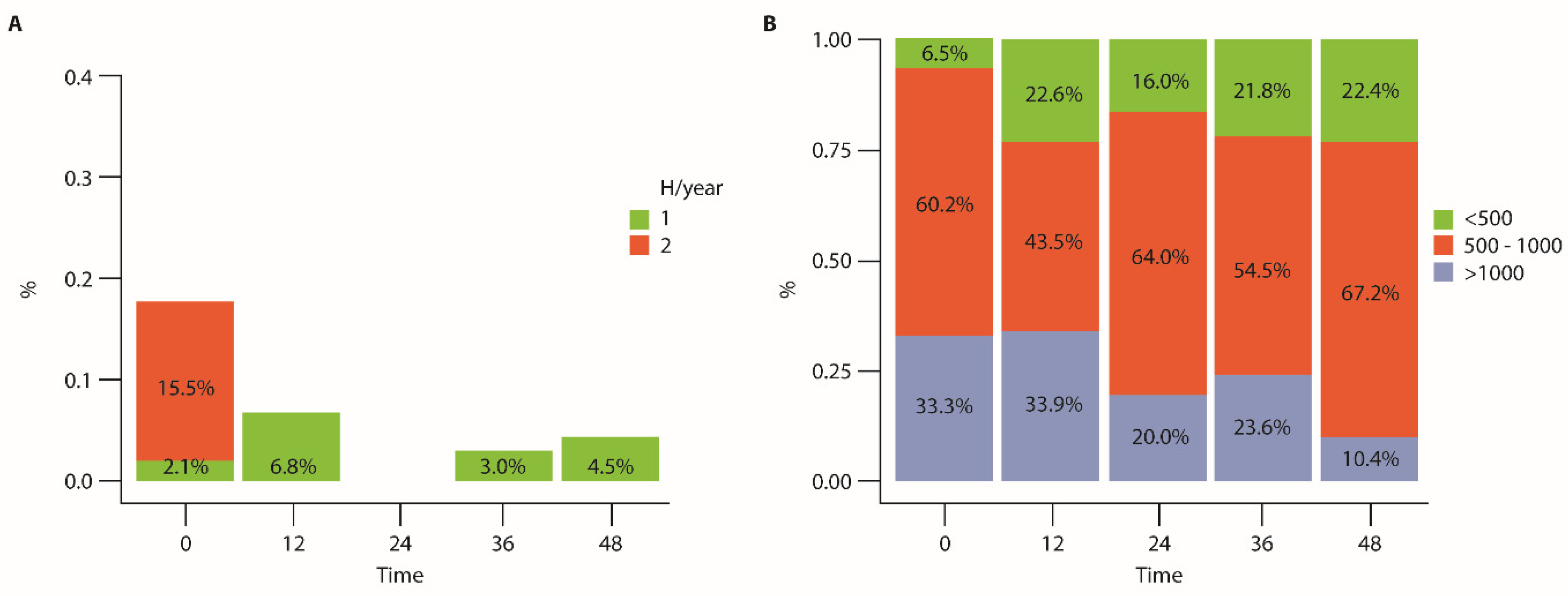
Treatment with benralizumab reduced the number of hospitalizations, which occurred at baseline (before starting treatment) at a frequency of one hospitalization per year in 15.5% of patients and two hospitalizations per year in 2.1% of patients. At 48 months, these rates were 4.5% (one hospitalization) and 0.0% (two hospitalizations, Figure 5A). Additionally, the dosage of ICS decreased from over 1,000 μg fluticasone in 33.3% of patients at baseline to 10.4% at 48 months, while the percentage of patients using a dosage <500 μg increased from 6.5% at baseline to 22.4% at 48 months (p=0.007, Figure 5B).
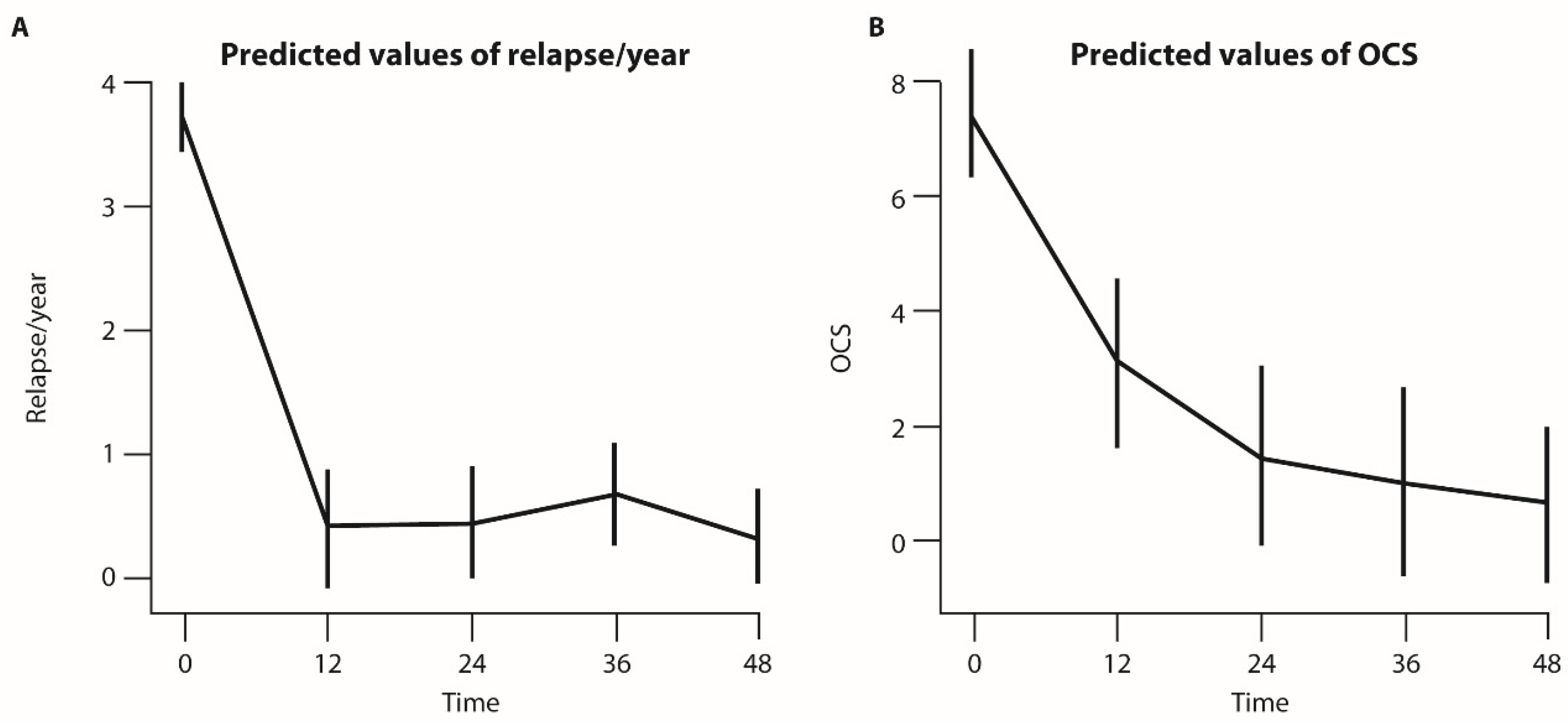
The number of hospitalizations decreased significantly at 36 and 48 months (p<0.001, Figure 6A). The dosage of OCS was reduced in 25/44 (56.8%) of patients, with a mean dosage reduction of 98% at 36 months (p<0.001), and in 42/67 (62.7%) of patients, with a mean reduction of 96% at 48 months (p<0.001, Figure 6B).

4. Discussion

SEA has a difficult-to-treat profile, and its control remains elusive despite the use of high-dose ICS combined with LABA bronchodilators [Hekking PW, 2015]. Traditional therapy to prevent exacerbations consists of OCS, which, although effective, is associated with significant AEs [Price DB, 2018]. Given the challenges in managing SEA, new biological agents have been developed over the past few decades to specifically target the eosinophilic inflammatory pathway. Biological drugs represent a major advancement in precision medicine for treating SEA, and their pharmacology is essential for selecting the most appropriate therapy for each patient, ensuring the right drug is matched to the individual's specific condition [Couillard S, 2024]. Therapies that deplete Eos have been approved for the treatment of SEA and include the anti-IL-5Rα monoclonal antibody benralizumab [RCP Benralizumab]. However, concerns have been raised about the safety of benralizumab therapy because of the role of peripheral tissue Eos in host defense against helminths [Park YM, 2010; Wen T, 2016], as well as viral, bacterial, and fungal pathogens [Rodrigo-Munoz JM, 2021; Ondari E, 2021; Figueiredo RT, 2018; Marichal T, 2017] and their infiltration in several types of tumors [Sakkal S, 2016; Jackson DJ, 2020]. The safety profile of benralizumab has been periodically reviewed, and no major concerns have been reported to date [Korn S, 2021]. To gain further insights into the safety of benralizumab, this study collected and analyzed real-world data over a 48-month follow-up, which to our knowledge is the longest real-world evidence available in the literature. In this study population, benralizumab induced sustained Eos depletion, showing a good safety profile for up to 4 years. A total of 21.1% of patients reported AEs, while drug-related non-SAEs occurred in a small percentage (1.6%) and included nausea and urticaria. Only 0.8% of patients displayed an SAE, likely related to benralizumab treatment, which consisted of vagal hypotension. None of the AEs led to discontinuation of treatment. No differences were found in AE development based on sex, age, BMI, smoking status, or comorbidities such as allergic rhinitis or bronchiectasis. Overall, the safety profile of benralizumab remains favorable, with consistent findings across spontaneous reports, clinical trials, and long-term follow-up studies. Compared with the MELTEMI clinical trial, this work showed a lower rate of AEs, particularly those related to benralizumab, which could be attributed to differences between real-world and controlled trial environments.
At the same time, by depleting Eos, benralizumab induced long-term disease control, improved lung function, and significantly reduced exacerbations, hospitalizations, and the OCS dosage required. Furthermore, a significant reduction in FeNO was observed, which could be due, as previously suggested [Contoli M, 2022], to the strong depletion of basophils and Eos induced by benralizumab.
Although benralizumab achieves almost complete Eos depletion, whereas mepolizumab causes only about 50% depletion, the literature reports a lower frequency of serious side effects in SEA patients treated with either of these two drugs compared with placebo or other treatments [Akenroye A, 2022]. Therefore, no increase in safety issues has been detected for benralizumab in comparison with mepolizumab to date. Moreover, the significant decrease in the need and dosage of OCS induced by benralizumab highlights the potential of this therapy to spare patients from AEs associated with corticosteroids.
We acknowledge that this study has some limitations, such as the small size of the population included and the retrospective nature that does not allow comparison with the placebo arm. Nonetheless, the long-term follow-up and the correlation between benralizumab therapy and the occurrence of AEs allowed us to report significant safety and efficacy real-world data.
This real-world study confirms pharmacovigilance data and the results of clinical trials, showing a good safety profile of benralizumab, similar to that evidenced by numerous real-world data. Benralizumab-induced Eos depletion did not lead to an increase in AEs or SAEs compared with other biological therapies for asthma, such as mepolizumab. The rapid Eos depletion induced by benralizumab resulted in highly effective management of SEA, allowing swift reduction or discontinuation of OCS. In conclusion, these data support the use of benralizumab as a safe and effective treatment for SEA, even in the long term.

Author Contributions

Conception and design of the study: F.M., G.S.; data collection: F.M., G.S.; data analysis: all; writing, critical revision of the manuscript and approval of the final version of the manuscript: all.

Acknowledgments and funding

The authors thank Aashni Shah, Valentina Attanasio, Lara Vecchi and Massimiliano Pianta (Polistudium srl, Milan, Italy) for medical writing, editorial and graphical assistance, and language editing. The above-mentioned activities have been unconditionally funded by AstraZeneca Italia (Milan, Italy). The authors also thank Roberto Benoni for the statistical analyses Benoni and the patients for accepting to participate in the study.

Ethics and consent

The study protocol was approved by the Ethics Committee Marca (protocol number 1321/CE 4 May 2023) and was conducted in accordance with the rules of the Declaration of Helsinki, as well as all applicable local law requirements and regulations concerning the privacy and security of personal information, including the General Data Protection Regulation (GDPR) (EU) 2016/679. Informed consent was obtained from all patients enrolled in the study for the processing of personal data.

Data availability statement

The data supporting this study's findings are available from the corresponding author upon reasonable request.

Competing interests

The authors declare that they have no competing interests.

References

  1. Akenroye A, Shen L, Namazy JA. Comparative efficacy of mepolizumab, benralizumab, and dupilumab in eosinophilic asthma: A Bayesian network meta-analysis. J Allergy Clin Immunol. 2022;150(5):1097–1105.e12. [CrossRef]
  2. European Commission. Benralizumab SPC. Available from: https://ec.europa.eu/health/documents/community-register/2018/20180108139598/anx_139598_en.pdf [Accessed 2024 Sep 8].
  3. Bleecker ER, FitzGerald JM, Chanez P, Papi A, Weinstein SF, Barker P, Sproule S, Gilmartin G, Aurivillius M, Werkström V, Goldman M. Efficacy and safety of benralizumab for patients with severe asthma uncontrolled with high-dosage inhaled corticosteroids and long-acting β2-agonists (SIROCCO): A randomised, multicentre, placebo-controlled phase 3 trial. Lancet. 2016;388(10056):2115–2127. [CrossRef]
  4. Boada-Fernández-Del-Campo C, García-Sánchez-Colomer M, Fernández-Quintana E, Poza-Guedes P, Rolingson-Landaeta JL, Sánchez-Machín I, González-Pérez R. Real-world safety profile of biologic drugs for severe uncontrolled asthma: A descriptive analysis from the Spanish Pharmacovigilance Database. J Clin Med. 2024;13(13):4192. [CrossRef]
  5. Bumbacea D, Campbell D, Nguyen N, Barnes PJ, Robinson D. Parameters associated with persistent airflow obstruction in chronic severe asthma. Eur Respir J. 2004;24(1):122–8. [CrossRef]
  6. Busse WW, Korn S, Brockhaus F, Lombard L, Newbold P, McDonald M, Wehrman A, Goldman M. Long-term safety and efficacy of benralizumab in patients with severe, uncontrolled asthma: 1-year results from the BORA phase 3 extension trial. Lancet Respir Med. 2019;7(1):46–59. [CrossRef]
  7. Chung KF, Wenzel SE, Brozek JL, Bush A, Castro M, Sterk PJ, Adcock IM, Bateman ED, Bel EH, Bleecker ER, Boulet LP, Brightling C, Chanez P, Dahlen SE, Djukanovic R, Frey U, Gaga M, Gibson P, Hamid Q, Jajour NN, Mauad T, Sorkness RL, Teague WG. International ERS/ATS guidelines on definition, evaluation and treatment of severe asthma. Eur Respir J. 2014;43(2):343–73. [CrossRef]
  8. Contoli M, Papi A, Brindicci C, Caminati M, Guerriero M, Licini A, Scurati S, Panico S, Fabbri L, Bagnasco D, Canonica GW. Effects of anti-IL5 biological treatments on blood IgE levels in severe asthmatic patients: A real-life multicentre study (BIONIGE). Clin Transl Allergy. 2022;12. [CrossRef]
  9. Couillard S, Boulet LP, Bergeron C, Laviolette M, Brault C, Bélanger A, Rousseau S, Chakir J. Choosing the right biologic for the right patient with severe asthma. Chest. 2024;S0012-3692. [CrossRef]
  10. Cutroneo PM, Bendandi B, D'Angelo V, Foti C, Casciaro M, Crimi C, Ventura MT, Vitiello P, Colombo P. Safety of biological therapies for severe asthma: An analysis of suspected adverse reactions reported in the WHO pharmacovigilance database. BioDrugs. 2024;38(5):425–48. [CrossRef]
  11. Dunican EM, Fahy JV. Asthma and corticosteroids: Time for a more precise approach to treatment. Eur Respir J. 2017;49(5):1701167. [CrossRef]
  12. Figueiredo RT, Neves JS. Eosinophils in fungal diseases: An overview. J Leukoc Biol. 2018;104(1):49–60. [CrossRef]
  13. FitzGerald JM, Bleecker ER, Nair P, Korn S, Ohta K, O'Byrne PM, Schmid-Grendelmeier P, Seibold W, Katelaris CH, Ohta K, Werkström V, Aurivillius M, Goldman M, Lee J. Benralizumab, an anti-interleukin-5 receptor α monoclonal antibody, as add-on treatment for patients with severe, uncontrolled, eosinophilic asthma (CALIMA): A randomised, double-blind, placebo-controlled phase 3 trial. Lancet. 2016;388(10056):2128–41. [CrossRef]
  14. Ghazi A, Trikha A, Calhoun WJ. Benralizumab—A humanized mAb to IL-5Rα with enhanced antibody-dependent cell-mediated cytotoxicity—A novel approach for the treatment of asthma. Expert Opin Biol Ther. 2012;12(1):113–8. [CrossRef]
  15. Harrison TW, Jackson DJ, Wenzel SE, FitzGerald JM, Bourdin A, Zangrilli JG, Gilmartin G, Goldman M, Aurivillius M. Onset of effect and impact on health-related quality of life, exacerbation rate, lung function, and nasal polyposis symptoms for patients with severe eosinophilic asthma treated with benralizumab (ANDHI): A randomised, controlled, phase 3b trial. Lancet Respir Med. 2021;9(3):260–74. [CrossRef]
  16. Hekking PW, Wener RR, Amelink M, Zwinderman AH, Bouvy ML, Bel EH. The prevalence of severe refractory asthma. J Allergy Clin Immunol. 2015;135(4):896–902. [CrossRef]
  17. Jackson DJ, Korn S, Mathur SK, Barker P, Meka VG, Martin UJ, Zangrilli JG. Safety of eosinophil-depleting therapy for severe eosinophilic asthma: Focus on benralizumab. Drug Saf. 2020;43(5):409–25. [CrossRef]
  18. Jackson DJ, Pavord ID. Living without eosinophils: Evidence from mouse and man. Eur Respir J. 2023;61(1):2201217. [CrossRef]
  19. Jacobsen EA, Jackson DJ, Heffler E, Mathur S, Pavord ID. Eosinophil knockout humans: Uncovering the role of eosinophils through eosinophil-directed biological therapies. Annu Rev Immunol. 2021;39:719–57. [CrossRef]
  20. Kavanagh JE, Hearn AP, Dhariwal J, d'Ancona G, Douiri A, Roxas C, Fernandes M, Green L, Thomson L, Nanzer AM, Kent BD, Jackson DJ. Real-world effectiveness of benralizumab in severe eosinophilic asthma. Chest. 2021;159(2):496–506. [CrossRef]
  21. Klion AD, Ackerman SJ, Bochner BS. Contributions of eosinophils to human health and disease. Annu Rev Pathol. 2020;15:179–209. [CrossRef]
  22. Korn S, Bourdin A, Chupp G, Cosio BG, Heffler E, Gibson PG, Goldman M. Integrated safety and efficacy among patients receiving benralizumab for up to 5 years. J Allergy Clin Immunol Pract. 2021;9(12):4381–92.e4. [CrossRef]
  23. Kuang FL, Legrand F, Makiya MA, Langford CA, Gilliland WR, Fay MP, Klion AD. Benralizumab for PDGFRA-negative hypereosinophilic syndrome. N Engl J Med. 2019;380(14):1336–46. [CrossRef]
  24. Langton D, Bourke P, Wright GM, Green J, Radhakrishna N, Wood-Baker R, Plummer V, Hew M. Benralizumab and mepolizumab treatment outcomes in two severe asthma clinics. Respirology. 2023;28(12):1117–25. [CrossRef]
  25. Lee JJ, Jacobsen EA, Ochkur SI, McGarry MP, Condjella RM, Doyle AD, Luo H, Wynn TA, Rosenberg HF, Epx KO. Human versus mouse eosinophils: "That which we call an eosinophil, by any other name would stain as red". J Allergy Clin Immunol. 2012;130(3):572–84. [CrossRef]
  26. Maio S, Baldacci S, Bresciani M, Simoni M, Latorre M, Murgia N, Spinozzi F, Braschi M, Antonicelli L, Brunetto B; et al. RItA: The Italian severe/uncontrolled asthma registry. Allergy. 2018;73(4):683–95. [CrossRef]
  27. Marichal T, Mesnil C, Bureau F. Homeostatic eosinophils: Characteristics and functions. Front Med. 2017;4:101. [CrossRef]
  28. Menzies-Gow A, Wechsler ME, Brightling CE, Korn S, Sher L, Martin UJ, Aurivillius M, Goldman M. Oral corticosteroid elimination via a personalised reduction algorithm in adults with severe eosinophilic asthma treated with benralizumab (PONENTE): A multicentre, open-label, single-arm study. Lancet Respir Med. 2022;10(1):47–58. [CrossRef]
  29. Moran AM, Meka VG, Zangrilli JG. Blood eosinophil depletion with mepolizumab, benralizumab, and prednisolone in eosinophilic asthma. Am J Respir Crit Care Med. 2020;202(9):1314–6. [CrossRef]
  30. Nair P, Wenzel S, Rabe KF, Bourdin A, Lugogo NL, Kuna P, Chanez P, Papi A, Khatri S, Gilmartin G; et al. Oral glucocorticoid-sparing effect of benralizumab in severe asthma. N Engl J Med. 2017;376(25):2448–58. [CrossRef]
  31. Ondari, E.; Calvino-Sanles, E.; First, N.J.; et al. Eosinophils and bacteria, the beginning of a story. Int. J. Mol. Sci. 2021, 22, 8004. [CrossRef]
  32. Ondari E, Calvino-Sanles E, First NJ, Russell REK, Bafadhel M, Pavord ID, Russell TL, Wark PAB. Eosinophils and bacteria, the beginning of a story. Int J Mol Sci. 2021;22(15):8004. [CrossRef]
  33. Ortega HG, Liu MC, Pavord ID, Brusselle GG, FitzGerald JM, Chetta A, Humbert M, Katz LE, Keene ON, Yancey SW, Chanez P. Mepolizumab treatment in patients with severe eosinophilic asthma. N Engl J Med. 2014;371(13):1198–207. [CrossRef]
  34. Park YM, Bochner BS. Eosinophil survival and apoptosis in health and disease. Allergy Asthma Immunol Res. 2010;2(2):87–101. [CrossRef]
  35. Perez-de-Llano L, Tran TN, Al-Ahmad M, Alacqua M, Bulathsinhala L, Busby J, Canonica GW, Carter V, Chaudhry I, Christoff GC; et al. Characterization of eosinophilic and non-eosinophilic severe asthma phenotypes and proportion of patients with these phenotypes in the International Severe Asthma Registry (ISAR). Am Thorac Soc. 2020;C21.
  36. Piano Terapeutico AIFA per la Prescrizione SSN di Fasenra (Benralizumab) Nell’asma Grave Eosinofilico Refrattario [Internet]. Gazzetta Ufficiale della Repubblica Italiana. Available from: https://www.gazzettaufficiale.it/atto/serie_generale/caricaDettaglioAtto/originario?atto.dataPubblicazioneGazzetta=2019-02-12&atto.codiceRedazionale=19A00829&elenco30giorni=false [Accessed 2024 Sep 8].
  37. Pini L, Bagnasco D, Beghè B, Braido F, Cameli P, Caminati M, Caruso C, Crimi C, Guarnieri G, Latorre M, Menzella F, Micheletto C, Vianello A, Visca D, Bondi B, El Masri Y, Giordani J, Mastrototaro A, Maule M, Pini A, Piras S, Zappa M, Senna G, Spanevello A, Paggiaro P, Blasi F, Canonica GW; on behalf of the SANI Study Group. Unlocking the long-term effectiveness of benralizumab in severe eosinophilic asthma: A three-year real-life study. J Clin Med. 2024;13(10):3013. [CrossRef]
  38. Price DB, Rigazio A, Campbell JD, Bleecker ER, Corrigan CJ, Thomas M, Wenzel SE, Wilson AM, Yancey SW, Bowman G; et al. Blood eosinophil count and prospective annual asthma disease burden: A UK cohort study. Lancet Respir Med. 2015;3(11):849–58. [CrossRef]
  39. Price DB, Trudo F, Voorham J, Xu X, Kerkhof M, Ling ZJ, Tran TN. Adverse outcomes from initiation of systemic corticosteroids for asthma: Long-term observational study. J Asthma Allergy. 2018;11:193–204. [CrossRef]
  40. Ramakrishnan S, Camp JR, Vijayakumar B, Hardinge FM, Downs ML, Russell REK, Pavord ID, Bafadhel M. The use of benralizumab in the treatment of near-fatal asthma: A new approach. Am J Respir Crit Care Med. 2020;201(12):1441–3. [CrossRef]
  41. Rodrigo-Munoz JM, Sastre B, Canas JA, Del Pozo V. Eosinophil response against classical and emerging respiratory viruses: COVID-19. J Investig Allergol Clin Immunol. 2021;31(1):94–107. [CrossRef]
  42. Sakkal S, Hughes JM, Haynes DR, Fox SA, Pollock JA, Szer J. Eosinophils in cancer: Favourable or unfavourable? Curr Med Chem. 2016;23(6):650–66. [CrossRef]
  43. Schleich F, Manise M, Sousa AR, Louis R. Benralizumab in severe eosinophilic asthma in real life: Confirmed effectiveness and contrasted effect on sputum eosinophilia versus exhaled nitric oxide fraction – PROMISE. ERJ Open Res. 2023;9(1):00383-2023. [CrossRef]
  44. Vultaggio A, Aliani M, Altieri E, Petroni V, Virchow JC. Long-term effectiveness of benralizumab in severe eosinophilic asthma patients treated for 96 weeks: Data from the ANANKE study. Respir Res. 2023;24(1):135. [CrossRef]
  45. Wen T, Rothenberg ME. The regulatory function of eosinophils. Microbiol Spectrum. 2016;4(6). [CrossRef]
  46. Jackson DJ, Pelaia G, Emmanuel B, Tran TN, Cohen D, Shih VH, Shavit A, Arbetter D, Katial R, Rabe APJ, Garcia Gil E, Pardal M, Nuevo J, Watt M, Boarino S, Kayaniyil S, Chaves Loureiro C, Padilla-Galo A, Nair P. Benralizumab in severe eosinophilic asthma by previous biologic use and key clinical subgroups: Real-world XALOC-1 programme. Eur Respir J. 2024;64(1):2301521. [CrossRef]
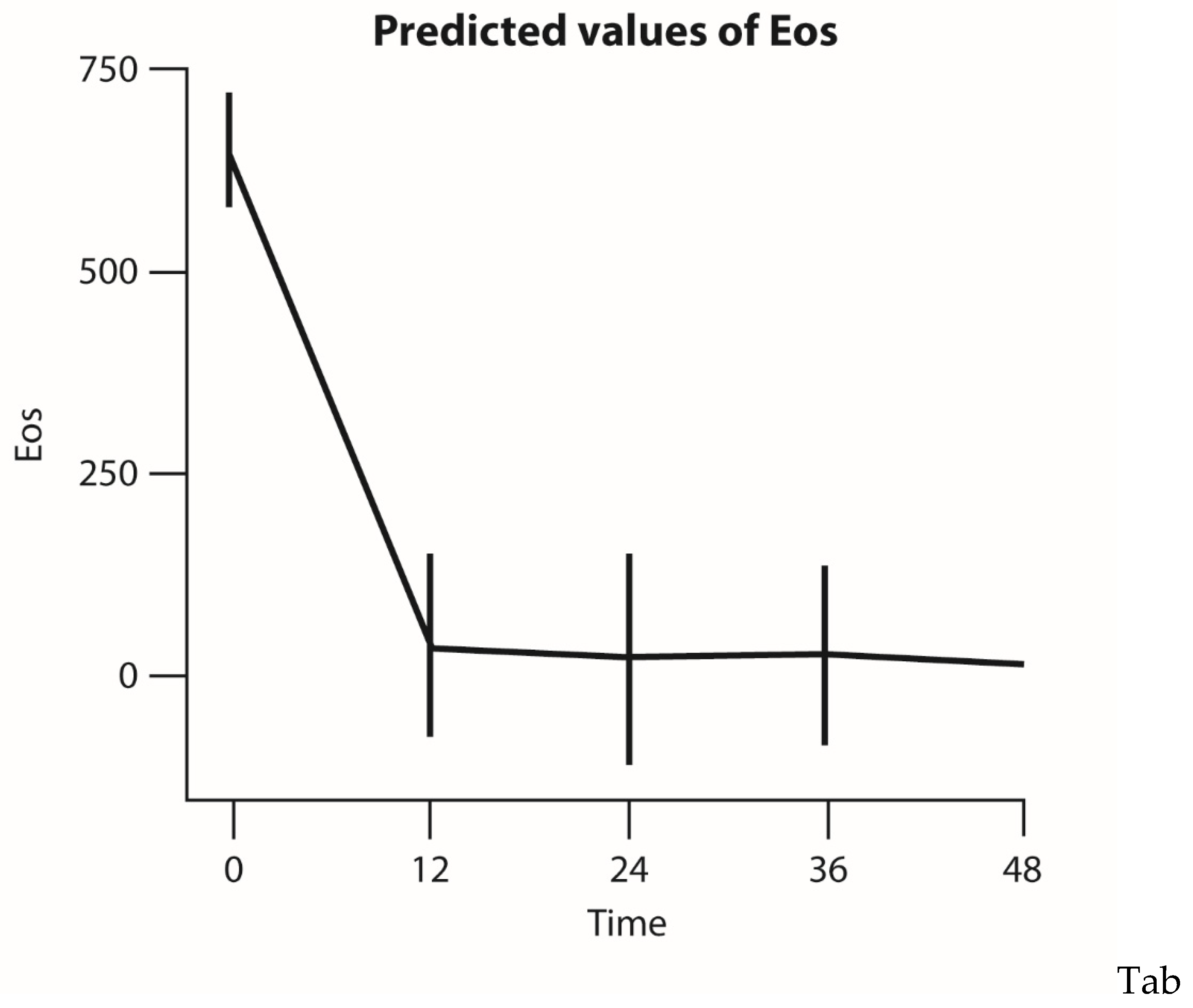
Figure 1. Analysis of eosinophil count. Graphical representation of Eos predicted values. The bars indicate 95% CI. Eos: Eosinophil.
Preprints 141047 g001
Figure 2. Graphical representation of lung function measured through pre-BD FEV1, pre-BD FVC and pre-BD FEV1/FVC. The pre-BD FEV1 (A), pre-BD FVC% (B) and pre-BD FEV1/FVC (C) were all significantly increased after treatment with benralizumab compared with baseline.
Preprints 141047 g002
Figure 3. Graphical representation of predicted values of ACT and ACQ scores over the follow-up period. ACT values significantly increased (A) while a significant decrease in ACQ was observed (B) upon treatment with benralizumab.
Preprints 141047 g003
Figure 4. Graphical representation of RV% and FeNO predicted values. RV% did not decrease significantly (A) while a significant decrease in FeNO values was observed (B) upon treatment with benralizumab.
Preprints 141047 g004
Figure 5. Analysis of hospitalizations and dosage of ICS at each time point of the follow-up period (in months). The number of hospitalizations (A) and ICS dosage (B) significantly decreased compared with baseline upon treatment with benralizumab.
Preprints 141047 g005
Figure 6. Number of predicted relapses per year and predicted OCS dosage at each time point of the follow-up period (in months). Benralizumab significantly decreased the number of relapses (A) and OCS dosage (B) compared with baseline.
Preprints 141047 g006
Table 1. Baseline characteristics of the whole sample.
Baseline characteristics Overall (N=123), median (IQR)/mean (SD)/n (%)
Age at diagnosis (years) 43.5 (30.5–55.6)
Starting therapy age (years) 61.0 (54.0–70.0)
BMI (units) 26.0 (23.2–29.8)
Smoking status (N=122)
ex 36 (29.3%)
no 83 (67.5%)
yes 3 (2.4%)
Pre-BD FEV1 (% pred.) 71.61 (21.75)
Pre-BD FVC (% pred.) 93.41 (22.28)
Pre-BD FEV1/FVC (% pred.) 62.19 (12.60)
Pre-BD FEF% (% pred.) 15.04 (4.68)
ACT score 59.72 (52.52)
FeNO (ppb) 646.54 (636.95)
Eosinophils (cells/mm3) 7.46 (8.29)
Allergic rhinitis 41 (33.3%)
CRSwNP 70 (56.9%)
Bronchiectasis (n=119) 32 (26.0%)
Atopy (n=122) 51 (41.5%)
ASA NSAID hypersensitivity 15 (12.2%)
GERD 45 (36.6%)
EGPA (n=122) 7 (5.7%)
Cardiovascular comorbidities 50 (40.7%)
Metabolic comorbidities 34 (27.6%)
Neuropsychiatric comorbidities (n=122) 10 (8.1%)
ACT: asthma control test; ASA: acetylsalicylic acid; BMI: body mass index; CRSwNP: chronic rhinosinusitis with nasal polyps; EGPA: eosinophilic granulomatosis with polyangiitis; GERD: gastroesophageal reflux disease; NSAID: nonsteroidal anti-inflammatory drug; Pre-BD FEF: pre-bronchodilator forced expiratory flow; pre-BD FEV1: pre-bronchodilator forced expiratory volume in 1 second; pre-BD FVC: pre-bronchodilator forced vital capacity; FeNO: fractional exhaled nitric oxide; OCS: oral corticosteroid.
Table 2. Adverse events reported during the 48-month follow-up following benralizumab treatment and stratified by follow-up time and causality assessment.
Adverse events Baseline, n (%) Month 12, n (%) Month 24, n (%) Month 36, n (%) Month 48, n (%) Overall, n (%)
Related
Nausea 1 (0.8%) 0 (0.0%) 0 (0.0%) 0 (0.0%) 0 (0.0%) 1 (0.8%)
Urticaria 1 (0.8%) 0 (0.0%) 0 (0.0%) 0 (0.0%) 0 (0.0%) 1 (0.8%)
Likely
Vagal hypotension 1 (0.8%) 0 (0.0%) 0 (0.0%) 0 (0.0%) 0 (0.0%) 1 (0.8%)
Not related
Altered coagulative diathesis 1 (0.8%) 0 (0.0%) 0 (0.0%) 0 (0.0%) 0 (0.0%) 1 (0.8%)
Bronchitis 0 (0.0%) 0 (0.0%) 0 (0.0%) 2 (1.6%) 2 (1.6%) 4 (3.3%)
Asthma exacerbation 0 (0.0%) 3 (2.4%) 4 (3.3%) 2 (1.6%) 5 (4.1%) 14 (11.4%)
Influenza 0 (0.0%) 0 (0.0%) 0 (0.0%) 1 (0.8%) 0 (0.0%) 1 (0.8%)
Polyarthritis 1 (0.8%) 0 (0.0%) 0 (0.0%) 0 (0.0%) 0 (0.0%) 1 (0.8%)
Pneumonia 0 (0.0%) 0 (0.0%) 0 (0.0%) 1 (0.8%) 1 (0.8%) 2 (1.6%)
Table 3. Comparison of the safety profile of benralizumab observed in this study with previous clinical trials in SEA patients.
Study Design Population Duration Key safety findings Types of adverse events
SIROCCO [Beecker ER, 2016] Phase III, randomized, double-blind, placebo-controlled 1,205 patients 48 weeks (12 months) AEs: 71–73% in benralizumab vs 78% in placebo.
SAEs: 12–13% (benralizumab) vs 14% (placebo)
Low discontinuation due to AEs (2%)
Common AEs: headaches (7–9%), nasopharyngitis (12%), upper respiratory tract infections (8–11%)
Infusion-related reactions: rare (2–4%)
CALIMA [Fitzgerald JM, 2016] Phase III, randomized, double-blind, placebo-controlled 1,306 patients 56 weeks (13 months) AEs: 74–75% in benralizumab vs 78% in placebo
Drug-related AE: 12–13% vs 8% in placebo
SAEs: 9–10% (benralizumab) vs 14% (placebo)
Similar rates of AEs between groups
Common AEs: nasopharyngitis (18–21%), headaches (8%), upper respiratory infections (7–8%)
Infusion-related reactions: low incidence (2–3%)
ZONDA [Nair P, 2017] Phase III, randomized, double-blind, placebo-controlled 220 patients requiring chronic OCS 28 weeks (7 months) AEs: 68–75% in benralizumab vs 83% in placebo
SAEs: 10% (benralizumab) vs 19% (placebo)
No increase in AEs during OCS reduction
Common AEs: nasopharyngitis (17%), worsening asthma (13%), and bronchitis (10%)
ANDHI [Harrison TW, 2021] Phase IIIb, open-label, observational 660 patients 24–32 weeks (6–8 months) AEs: 62% in benralizumab
SAEs: 8% in benralizumab
Long-term safety was confirmed with no new signals
Common AEs: similar to SIROCCO and CALIMA
Most frequent: infection-related AEs and headaches
MELTEMI [Korn S, 2021] Open-label extension study (2+ years of treatment) 1,025 patients previously treated with benralizumab in prior trials 2 years AEs: 64.6–84.6% in the benralizumab group vs 45.9–87.7% in the placebo
SAEs: 2.4–13.3% (benralizumab) vs 4.5–14.2% in placebo
Safety profile consistent, confirming long-term safety
Common AEs: nasopharyngitis (11.1–19.3%), headaches (5–12.6%), upper respiratory infections (1.6–8.9%), and bronchitis (3.6–9.2%)
Infection-related AEs similar to previous studies
ANANKE [Vultaggio A, 2023] Observational retrospective 162 patients 96 weeks No new safety concerns reported Not specifically reported
XALOC -1 [Jackson DJ, 2024] Observational real-world study 1,002 patients (380 biologic-experienced) 48 weeks (12 months) No new safety concerns reported. Not specifically detailed, but consistent with prior studies in safety profile. Not specifically reported
Long-term eosinophil depletion: a real-life perspective on safety and durability of benralizumab treatment in severe eosinophilic asthma Long-term real-world study 123 patients previously treated with benralizumab 48 months (4 years) AEs: 21.1% (26 total); only 1.6% related to treatment
SAEs: 0.8% due to vagal hypotension, leading to discontinuation
Bronchitis in 15.4% of infections, unrelated to treatment
Common AEs: bronchitis (15.4%), mostly between 36 and 38 months
Related to infusion: nausea (0.8%) and urticaria (0.8%)
SAE: vagal hypotension (0.8%), leading to discontinuation
AE: adverse event; OCS: oral corticosteroid; SAE: serious adverse event.
Table 4. Safety profile of benralizumab vs pharmacovigilance databases.
Category WHO Pharmacovigilance Database [Cutroneo PM, 2024] Spanish Pharmacovigilance Database [Boada-Fernández-Del-Campo C, 2024] Post-marketing surveillance and spontaneous AE reporting [Jackson DJ, 2020] Long-term eosinophil depletion: a real-life perspective on safety and durability of benralizumab treatment in severe eosinophilic asthma
Total cases reported Over 5,512 individual case safety reports (ICSRs) 588 reports in Spain ~36,680 patient-years (post-marketing exposure globally) 26 cases (21.1% of patients)
SAEs SAEs in 29.5% and 1.3% of cases were life-threatening 18% of total cases categorized as serious ~11.5% (SIROCCO/CALIMA trials) and 16.9% in long-term studies (up to 2 years) 0.8%: vagal hypotension
Common AEs General disorders (e.g., malaise, fatigue), injection-site reactions, nasopharyngitis, headaches and hypersensitivity Headaches (14.6%), pharyngitis (16.15%), fatigue (55 cases), pneumonia Nasopharyngitis (16%), headaches (8.1%), bronchitis (7.9%) Bronchitis (15.4%), nausea (0.8%), urticaria (0.8%)
Malignancies Very low malignancy risk (<1%) noted in long-term data Not emphasized 0.8% malignancy risk during 2-year trials (BORA) No malignancies reported
Immune system reactions Eosinophilic granulomatosis with polyangiitis (EGPA) risk noted Anaphylaxis and hypersensitivity reactions noted Hypersensitivity reactions (e.g., injection-site reactions) included in labeling Vagal hypotension (0.8%)
Discontinuation rates Not specifically reported Not reported ~2% discontinuation due to AEs (SIROCCO/CALIMA trials), mostly mild reactions None
Death reports ~3.2% related to serious adverse events No specific death reports linked directly to benralizumab therapy Deaths related to severe asthma complications in ~0.3% of long-term trial participants (BORA) None
Disclaimer/Publisher’s Note: The statements, opinions and data contained in all publications are solely those of the individual author(s) and contributor(s) and not of MDPI and/or the editor(s). MDPI and/or the editor(s) disclaim responsibility for any injury to people or property resulting from any ideas, methods, instructions or products referred to in the content.
Copyright: This open access article is published under a Creative Commons CC BY 4.0 license, which permit the free download, distribution, and reuse, provided that the author and preprint are cited in any reuse.
Prerpints.org logo

Preprints.org is a free preprint server supported by MDPI in Basel, Switzerland.

Subscribe

Disclaimer

Terms of Use

Privacy Policy

Privacy Settings

© 2026 MDPI (Basel, Switzerland) unless otherwise stated