

Submitted:
27 November 2024
Posted:
28 November 2024
You are already at the latest version
Abstract
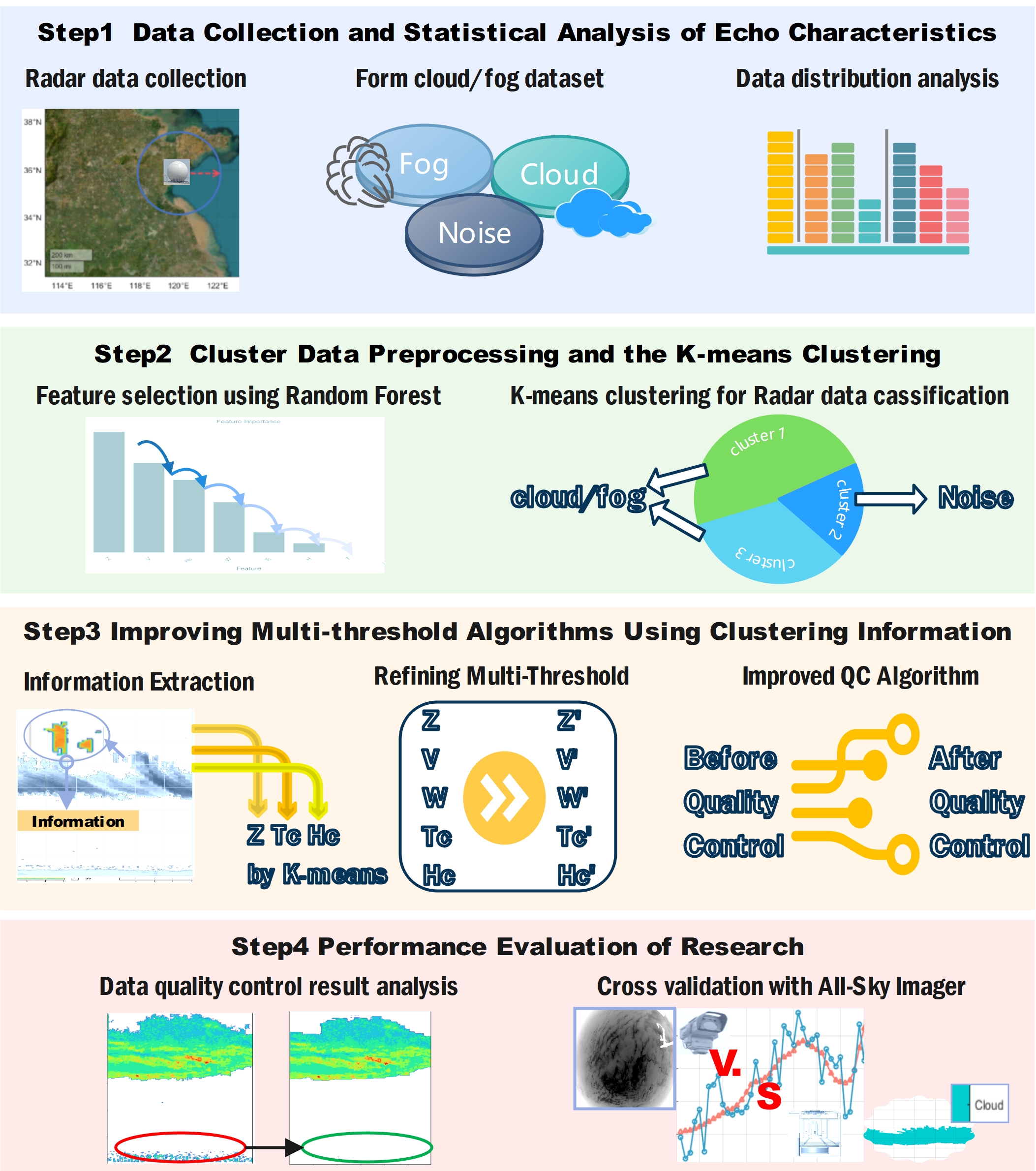
This study investigates the application of an improved multi-threshold method based on the K-means algorithm for data quality control in W-band cloud and fog radar observations. Utilizing W-band millimeter-wave cloud and fog radar data collected from March to July 2023 in the Qingdao area, a dataset of cloud and fog echo of different types was constructed and statistically analyzed. Subsequently, a multi-threshold quality control method was proposed to identify and eliminate abnormal interferences such as noise spikes, radial interference, and suspended matter clutter. This method employs the basic data and spatio-temporal information from the cloud radar as feature variables for K-means clustering and dynamically adjusts thresholds based on the clustering results. The quality-controlled data were further used for the verification analysis of cloud and fog identification . The results demonstrate that the proposed multi-threshold method effectively removes clutter and significantly reduces the impact of clutter on cloud and fog echo under weather conditions where clouds, fog, and cloud-fog coexist, while controlling the loss of cloud and fog echo within the required accuracy range.
Keywords:
1. Introduction
2. Materials and Methods
3. Proposed Methodology
3.1. Multi-Threshold Clutter Filtering Method
3.2. K-Means Clustering Method
3.2.1. Clustering Effect Evaluation Criteria
3.2.2. Cloud Radar Clustering Data Preprocessing
3.3. K-Means Improved Multi-Threshold Clutter Filtering Algorithm
3.3.1. K-Means Clustering Information Extraction
4. Experiments
4.1. Cloud Case
4.2. Marine Fog Case
4.3. Cloud and Marine Fog Coexistence Case
5. Cloud and Fog Identification After Clutter Filtering
5.1. All-Sky Imaging Instrument Verification
5.2. Manual Observation Record Comparison
6. Discussion
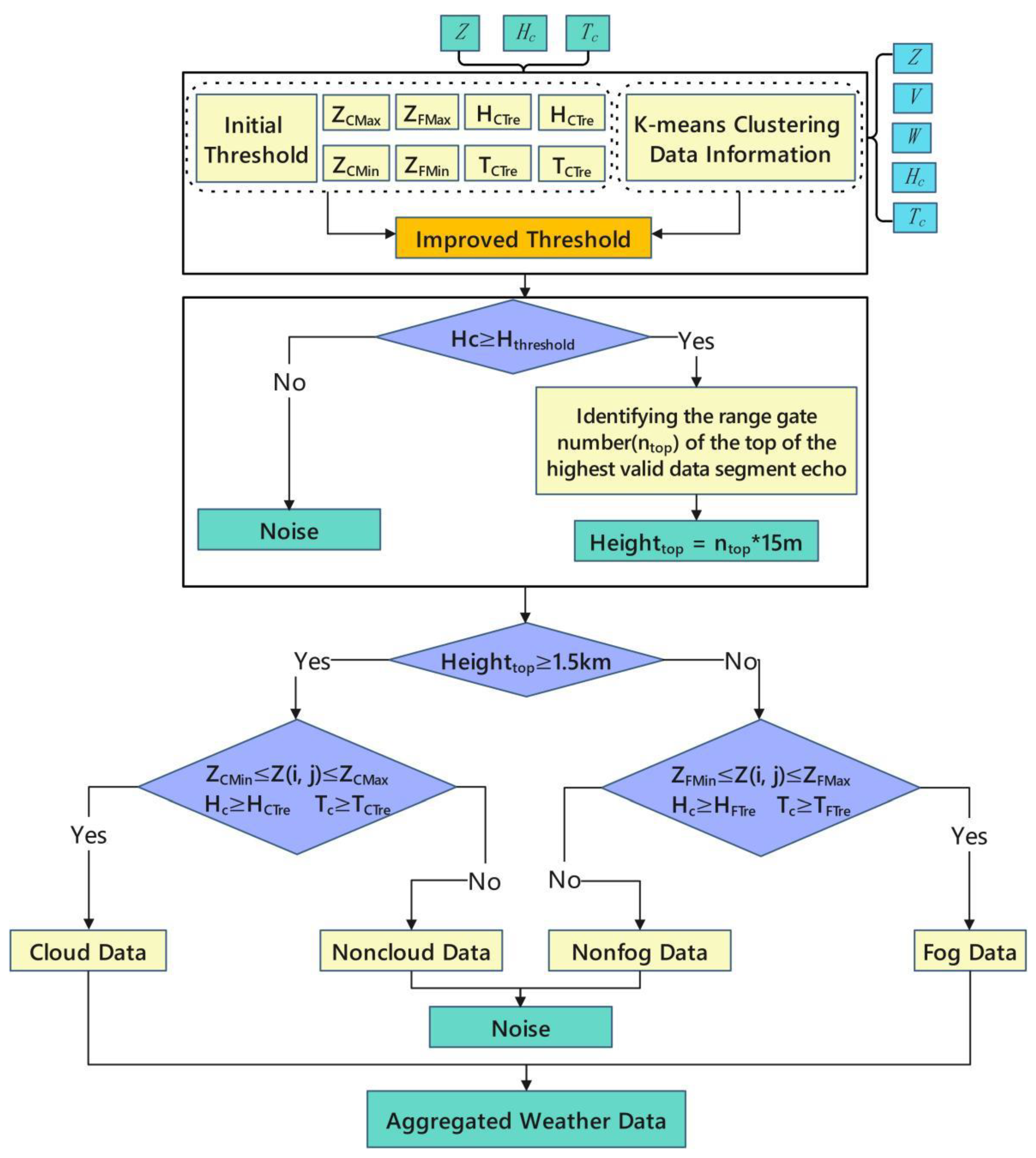
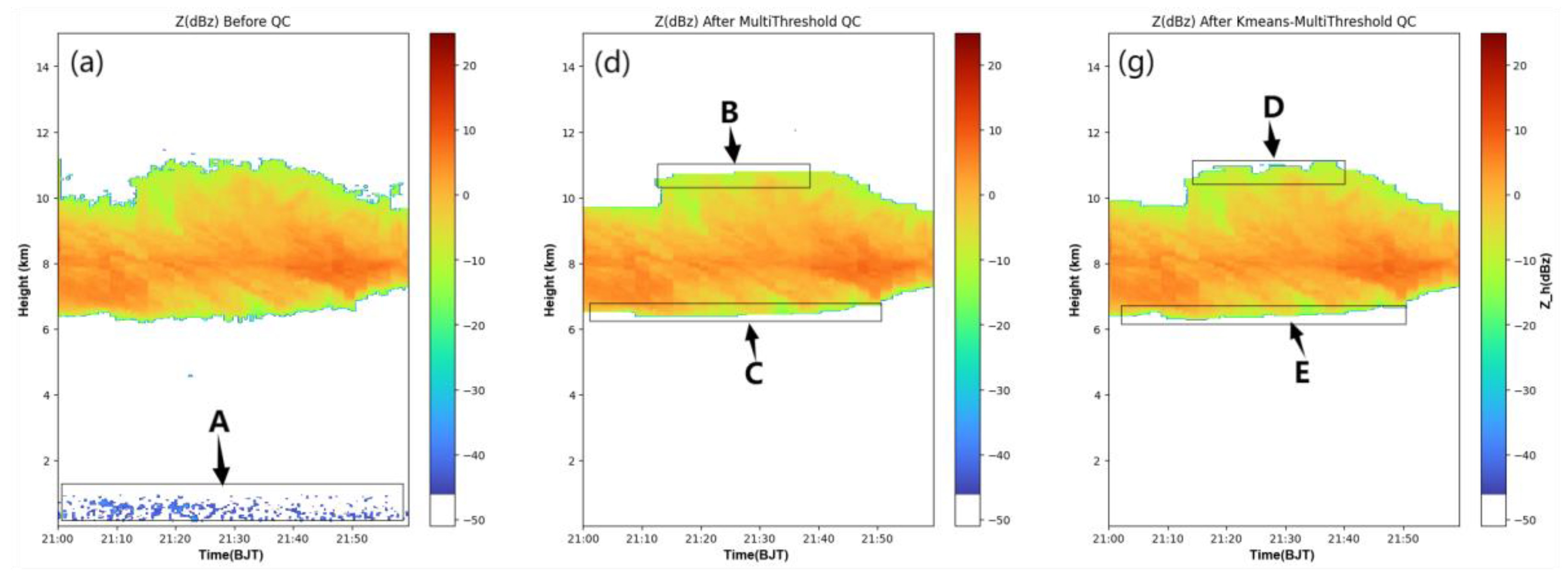
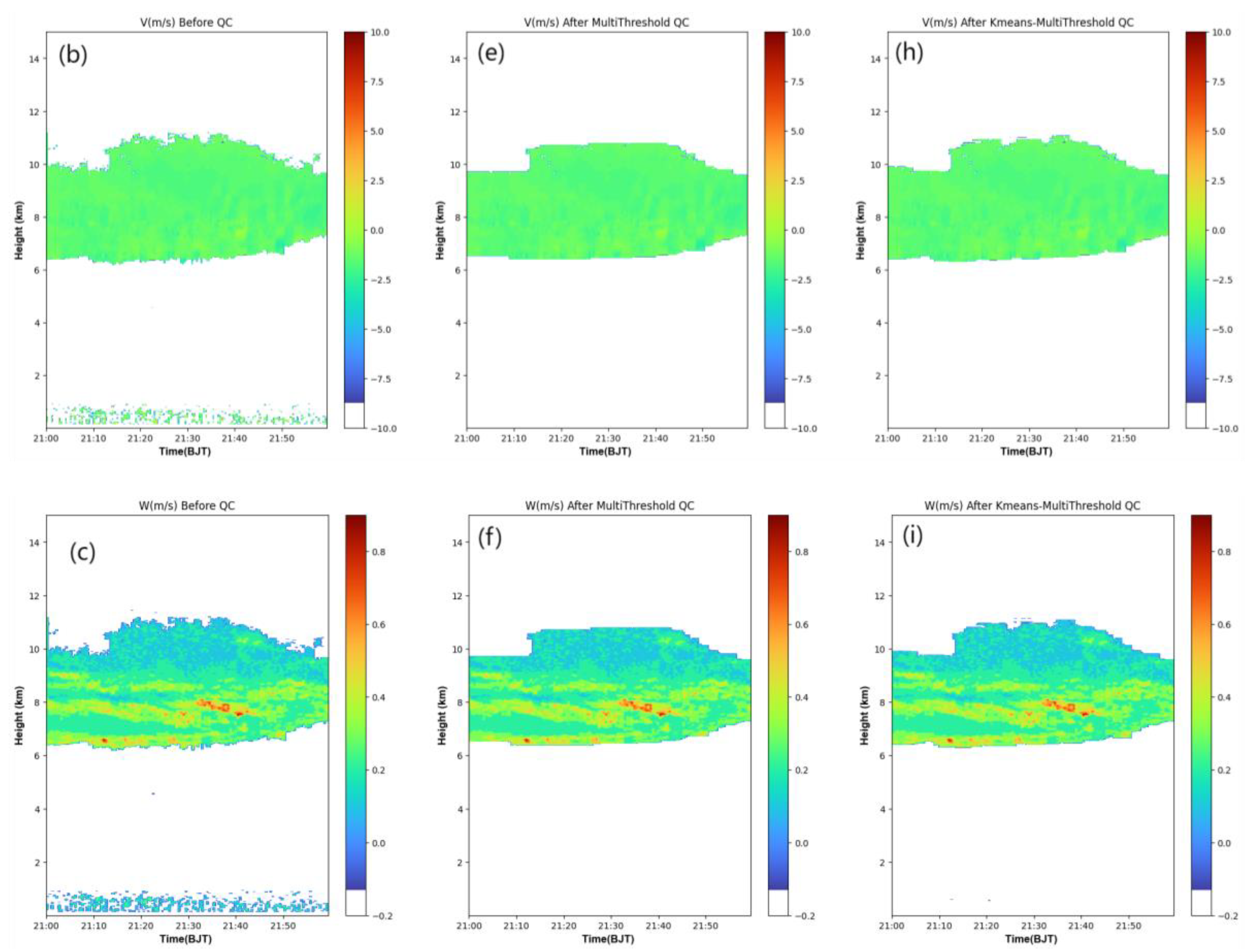
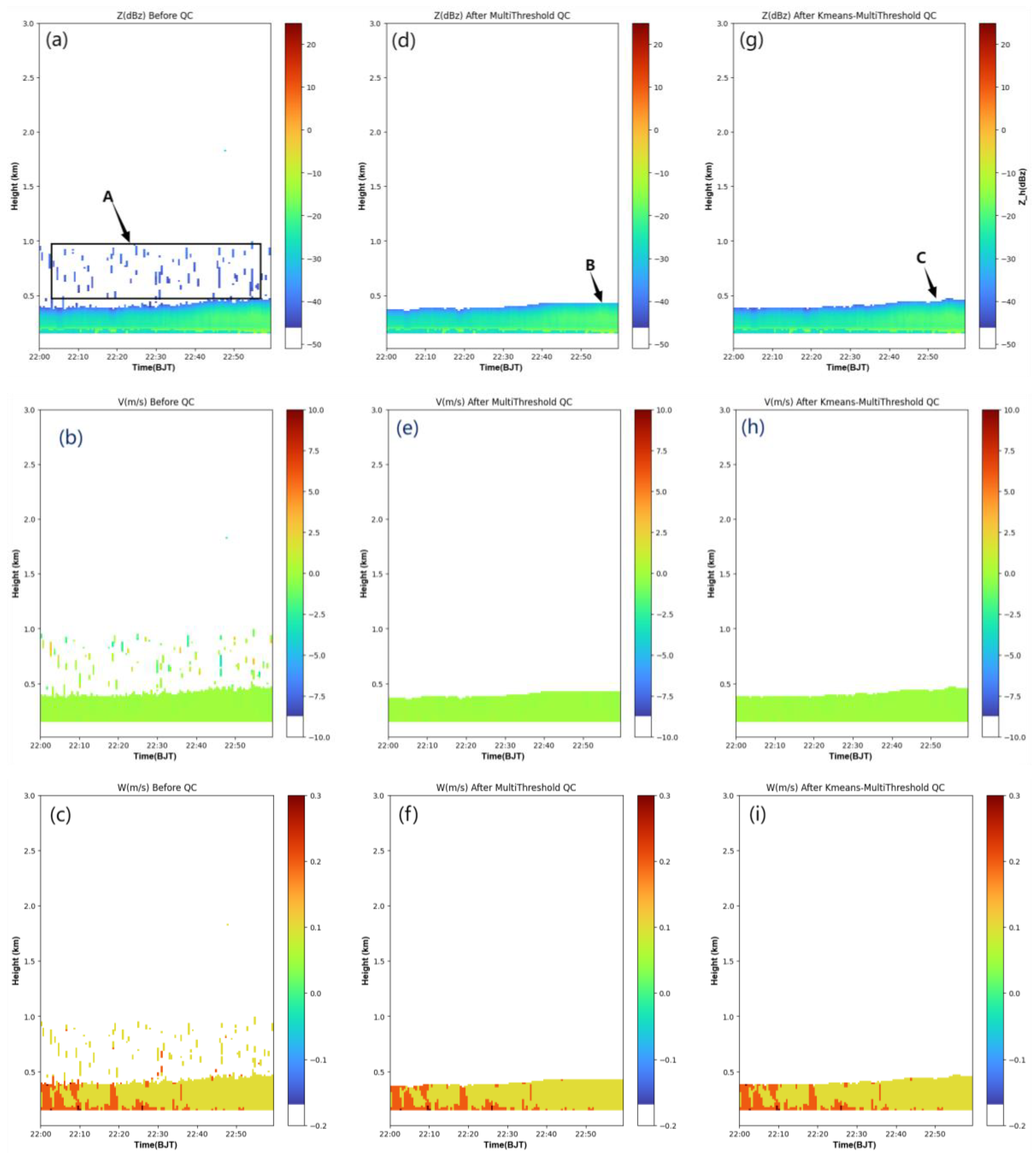
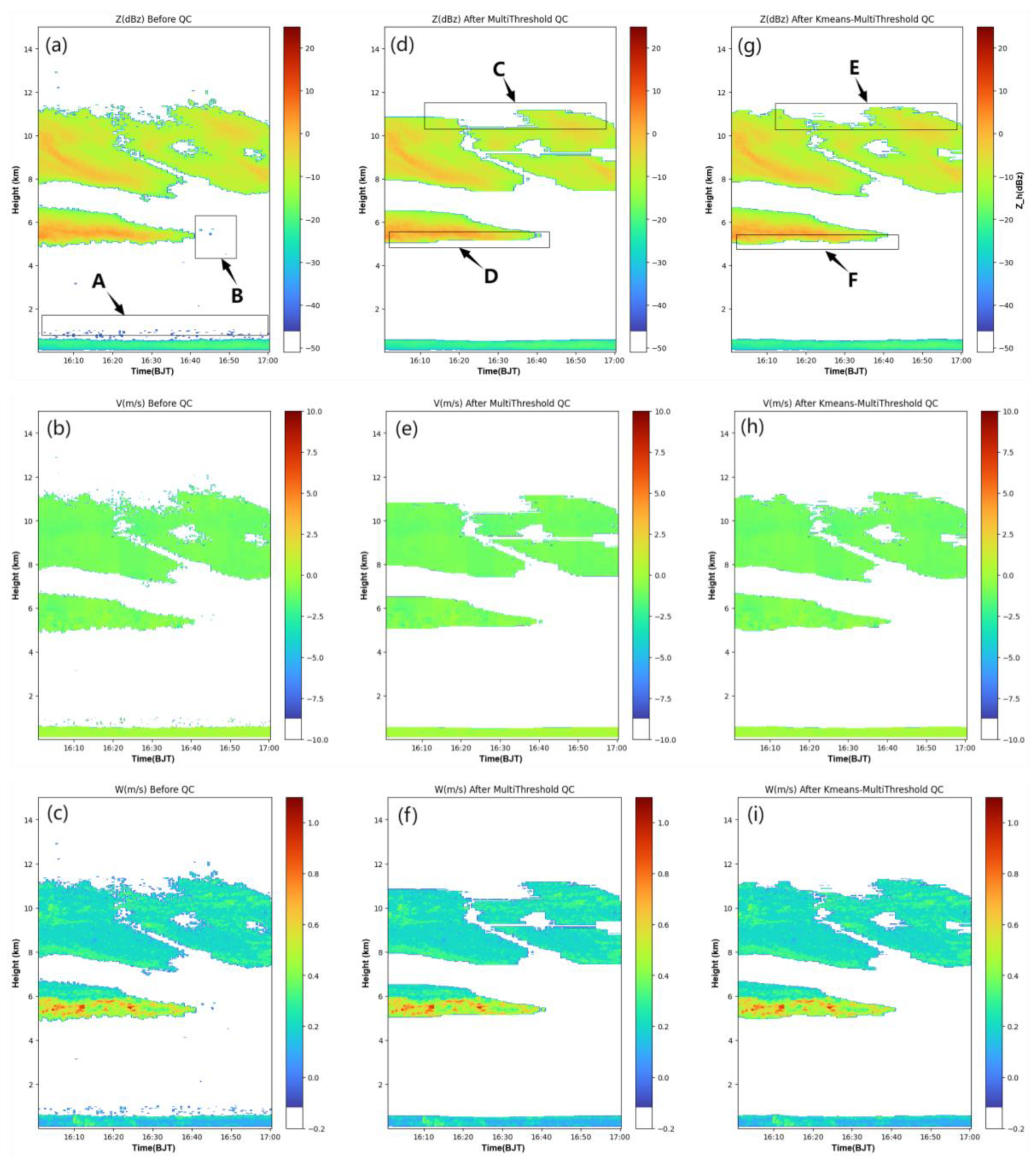
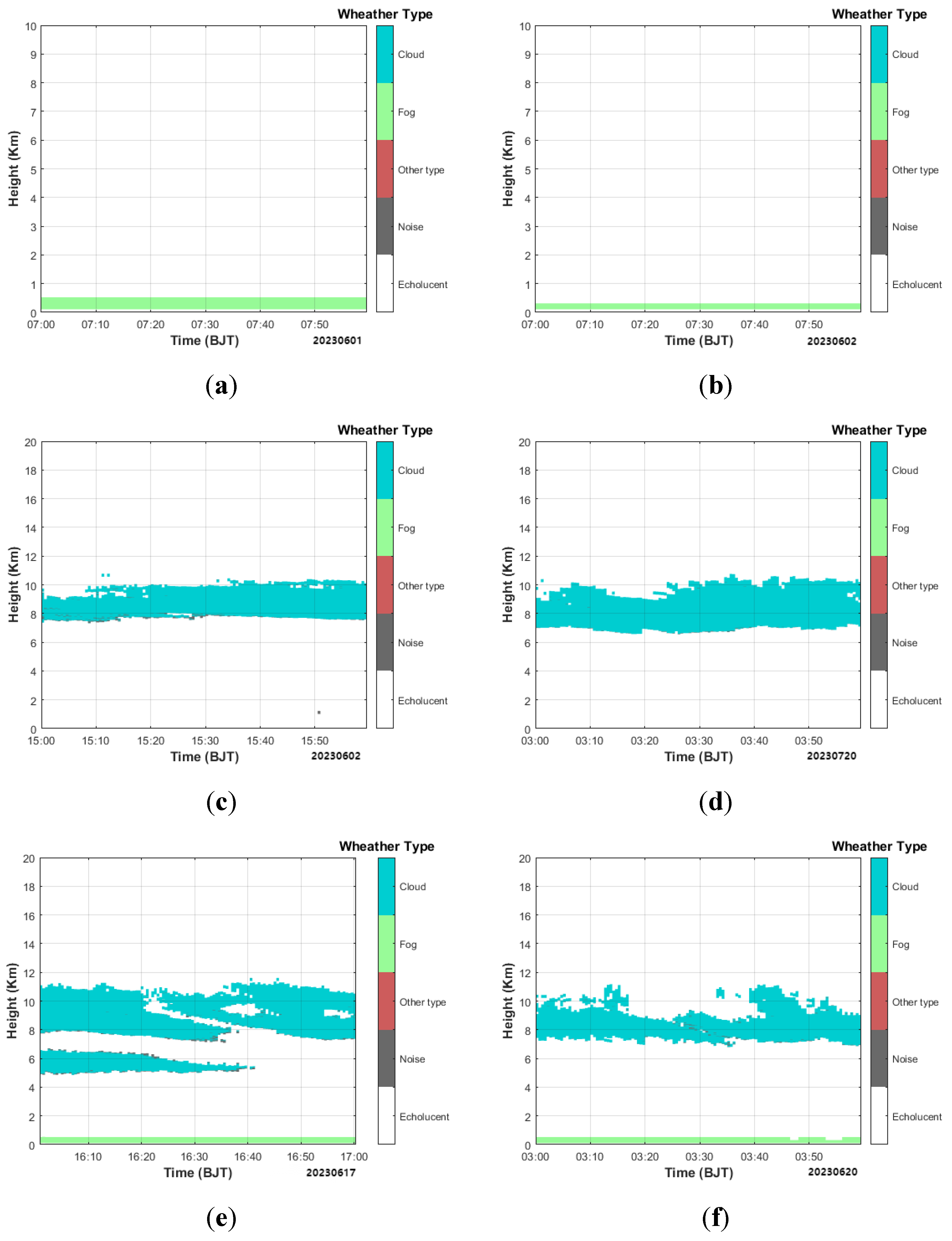
- Non-meteorological echoes in the Qingdao Huangdao area are characterized by lower reflectivity factors and poor continuity in time and space. The cloud area and fog area were identified with thresholds of -25 < Z < 15 dBZ, Hc ≥ 15, Tc ≥ 30 and -40 < Z < -5 dBZ, Hc ≥ 7, Tc ≥ 30, respectively. The thresholds were corrected using the information of cloud and fog echoes obtained from the K-means clustering, which can filter out the majority of non-meteorological echoes. For cases where non-meteorological echoes are adjacent to cloud and fog echoes, this method can effectively separate non-meteorological echoes and retain echoes that perform in line with the characteristics of cloud and fog echoes. Validation with typical cloud and fog weather cases shows that the clutter filtering method is effective.
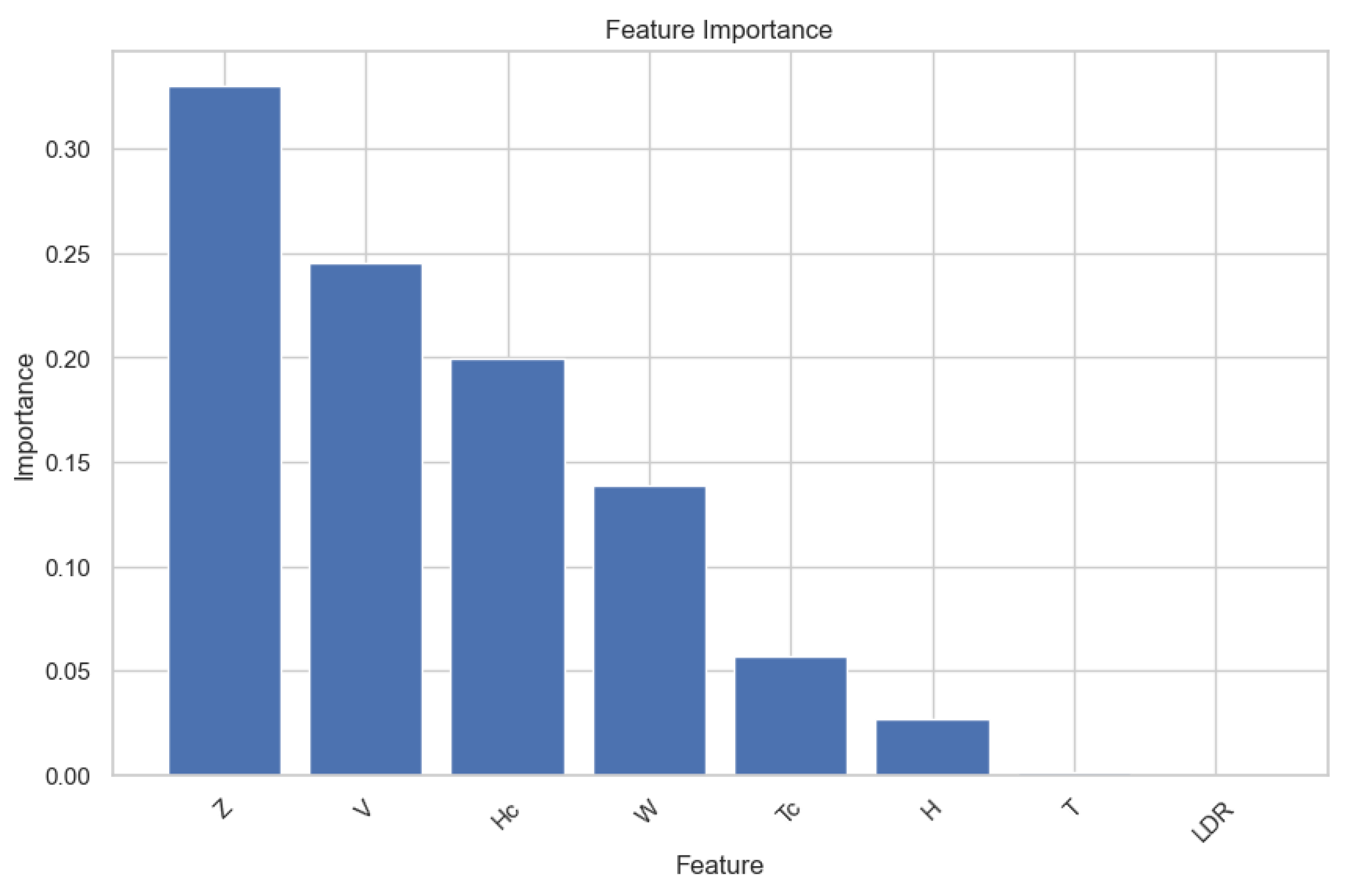
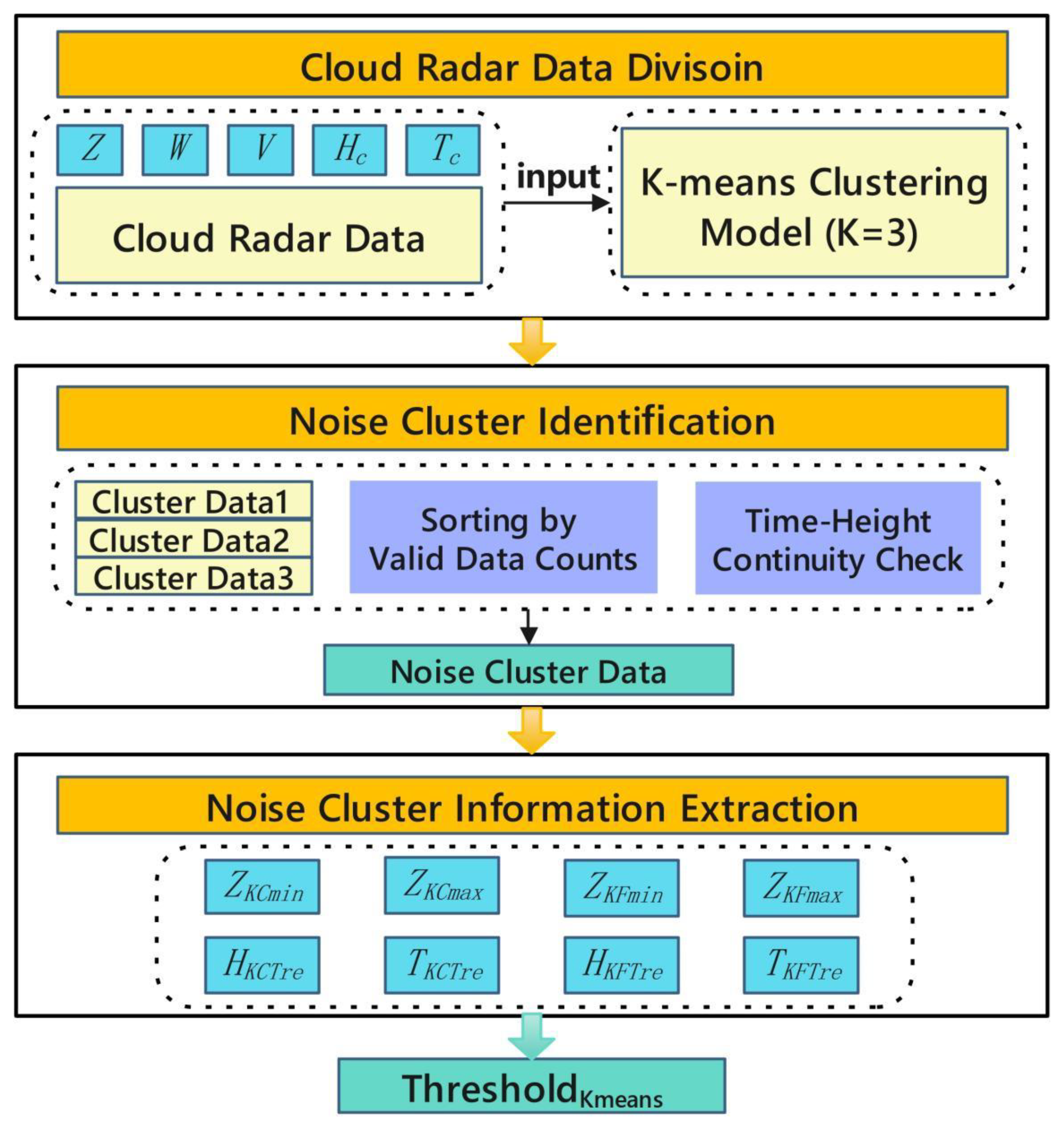
- The K-means algorithm uses information from the reflectivity factor, radial velocity, spectrum width, height gate continuity count, and time gate continuity count to obtain the non-meteorological echo cluster. It effectively extracts the distribution of non-meteorological echoes in Z, Hc, and Tc, which can better guide the correction of thresholds based on statistics. This makes the clutter filtering method capable of filtering out clutter while retaining more edge information of cloud and fog echoes.
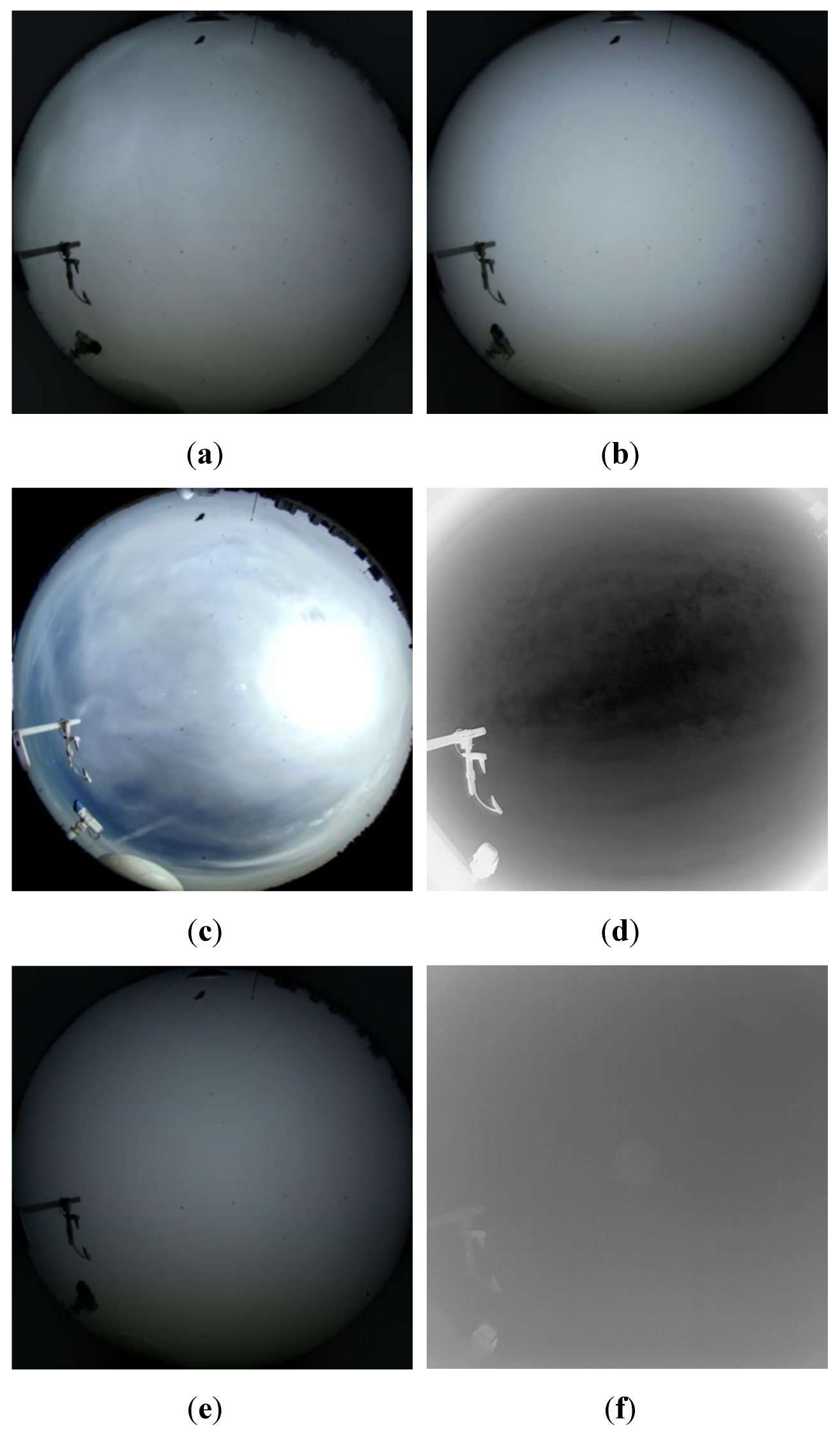
- Through the evaluation using relevant formulae, in cloudy weather conditions, the algorithm showed a Probability of Detection (POD) of 92.78% and a Missed Alarm Rate (MAR) of 7.22%. In foggy weather conditions, the POD of the algorithm was 92.86%, and the MAR was 7.14%. It should be emphasized that the verification presented here relies on a relatively small data sample. During the experimental process, due to the limited availability of data, we were restricted to analyzing data at specific timepoints (8:00, 14:00, and 20:00 each day) and under specific conditions (when the manual observation results matched the weather conditions observed by the all-sky imaging instrument). As a result, this verification is rather symbolic in nature.
Author Contributions
Funding
Data Availability Statement
Acknowledgments
Conflicts of Interest
References
- Wei, Z.; Lin, H.; Xin, M. Millimeter-wave meteorological radar’s capability in cloud measurement. Acta Meteorol. Sin. 1985, 3, 378–383. [Google Scholar] [CrossRef]
- Wang, J.; Wei, M.; Zhang, Q.; Li, X. Research progress of W-band millimeter-wave cloud radar technology. Meteorol. Sci. Technol. 2017, 5, 765–775. [Google Scholar] [CrossRef]
- Zhong, L.; Liu, L.; Ge, R.; Zhou, X. Introduction to the research and application of millimeter-wave cloud radar (HMBQ) in China. In Proceedings of the 27th Annual Meeting of the Chinese Meteorological Society - Radar Technology Development and Application; Chinese Meteorol. Soc., Ed.; [Unspecified Publisher]: [Publisher Location], China, 2010; pp. 114–125.
- Li, Z.H. Studies of fog in China over the past 40 years. Acta Meteorol. Sin. 2001, 5, 616–624. [Google Scholar] [CrossRef]
- Tan, J.; Qian, C.; Huang, B.; et al. The Current Status and Future Perspectives of Sea Fog Monitoring and Forecasting in China. Adv. Meteorol. Sci. Technol. 2024, 14, 17–23, 32. [Google Scholar] [CrossRef]
- Li, H. Application of Ground-Based Remote Sensing Vertical Observation System in Meteorological Observation Operations. Henan Sci. 2023, 42, 115–119. [Google Scholar] [CrossRef]
- Kollias, P.; Albrecht, B. The Turbulence Structure in a Continental Stratocumulus Cloud from Millimeter-Wavelength Radar Observations. J. Atmos. Sci. 2000, 57, 2417–2434. [Google Scholar] [CrossRef]
- Liu, G.; Huang, S.; Liang, Y.; et al. Application of millimeter-wave radar in port sea fog observation and visibility inversion. Arid Meteorol. 2019, 37, 993–1004. [Google Scholar]
- Hu, S.; Wang, Z.; Zhang, X.; et al. Analysis of sea fog echo characteristics and visibility inversion using millimeter-wave radar. Meteorol. 2022, 48, 1270–1280. [Google Scholar] [CrossRef]
- Gao, L. Design and Implementation of W-Band Cloud Radar System. National University of Defense Technology, 2018.
- Wu, J.; Yang, L.; Dou, F.; et al. Research on the ice cloud detection capability of spaceborne terahertz dual-frequency cloud radar. Infrared Millim. Waves 2020, 39, 718–727. [Google Scholar] [CrossRef]
- Ge, J.; Wang, J.; Wang, J.; et al. Development and application of millimeter-wave meteorological radar. J. Nanjing Univ. Aeronaut. Astronaut. 2018, 50, 577–585. [Google Scholar] [CrossRef]
- Pazmany, A.L.; McIntosh, R.E.; Kelly, R.D.; et al. An airborne 95 GHz dual polarization radar for cloud studies. IEEE Trans. Geosci. Remote Sens. 1994, 32, 731–739. [Google Scholar] [CrossRef]
- Clothiaux, E.E.; Miller, M.A.; Albrecht, B.A.; et al. An evaluation of a 94 GHz radar for remote sensing of cloud properties. J. Atmos. Oceanic Technol. 1995, 12, 201–229. [Google Scholar] [CrossRef]
- Sekelsky, S.M.; McIntosh, R.E. Cloud observations with a polarimetric 33 GHz and 95 GHz radar. Meteorol. Atmos. Phys. 1996, 59, 123–140. [Google Scholar] [CrossRef]
- Martner, B.E.; Moran, K.P. Using cloud radar polarization measurements to evaluate stratus cloud and insect echoes. J. Geophys. Res. 2001, 106, 4891–4897. [Google Scholar] [CrossRef]
- Kollias, P.; Clothiaux, E.E.; Miller, M.A.; et al. Millimeter-wavelength radars: new frontier in atmospheric cloud and precipitation research. Bull. Am. Meteorol. Soc. 2007, 88, 1608–1624. [Google Scholar] [CrossRef]
- Johannes, V.; Rambukkange, M.P.; Clothiaux, E.E.; et al. Arctic multilayered, mixed-phase cloud processes revealed in millimeter-wave cloud radar Doppler spectra. J. Geophys. Res.: Atmos. 2013, 118, 13199–13213. [Google Scholar] [CrossRef]
- Wada, E.; Hashiguchi, H.; Yamamoto, M.K.; et al. Simultaneous observations of cirrus clouds with a millimeter-wave radar and the MU radar. J. Appl. Meteorol. 2005, 44, 313–323. [Google Scholar] [CrossRef]
- Turk, F.J.; Ringerud, S.E.; Camplani, A.; Casella, D.; Chase, R.J.; Ebtehaj, A.; Gong, J.; Kulie, M.; Liu, G.; Milani, L.; et al. Applications of a CloudSat-TRMM and CloudSat-GPM Satellite Coincidence Dataset. Remote Sens. 2021, 13, 2264. [Google Scholar] [CrossRef]
- Beni, A.; Miccinesi, L.; Pagnini, L.; Cioncolini, A.; Shan, J.; Pieraccini, M. Interferometric Radars for Bridge Monitoring: Comparison among X-Bands, Ku-Bands, and W-Bands. Remote Sens. 2024, 16, 3323. [Google Scholar] [CrossRef]
- Camplani, A.; Sanò, P.; Casella, D.; Panegrossi, G.; Battaglia, A. Arctic Weather Satellite Sensitivity to Supercooled Liquid Water in Snowfall Conditions. Remote Sens. 2024, 16, 4164. [Google Scholar] [CrossRef]
- Liu, L. Reviews on retrieval methods for microphysical and dynamic parameters with cloud radar. Torrential Rain Disasters 2021, 40, 231–242. [Google Scholar] [CrossRef]
- Ji, L.; Wang, Z.; Huang, X.; Zhang, P. Comparison study of attenuation correction methods for airborne W-band radar in different cloud types. Trop. Meteorol. 2018, 34, 260–267. [Google Scholar] [CrossRef]
- Wu, J.; Ma, C.; Chen, Q.; Liu, W.; Zhang, Q.; Wang, X. Analysis on cloud physical characteristics of a light rain process in Hefei detected by W-band cloud radar. Meteorol. 2018, 44, 416–424. [Google Scholar] [CrossRef]
- Wu, J.; Wei, M.; Su, T.; Wang, X.; Li, Y.; Fan, Y. Comparison of the echoes detected by W-band and Ka-band cloud radars. J. Mar. Meteorol. 2017, 37, 57–64. [Google Scholar] [CrossRef]
- Bi, Y.; Huo, J.; Lü, D.; Su, T.; Wang, X.; Liu, B. Performance and observation analysis of the Ka and W dual-frequency millimeter-wave cloud radar in Yangbajing, Tibet. Infrared Millim. Waves 2022, 41, 470–482. [Google Scholar] [CrossRef]
- Boren, T.A.; Cruz, J.R. An artificial intelligence approach to doppler weather radar velocity de-aliasing. In Proceedings of the 23rd Conference on Radar Meteorology, Snowmass, CO, USA, (1986).
- Cui, Z.; Cheng, M.; Wu, Q.; et al. A Technique of Fast Median Filtering and Its Application to Data Quality Control of Doppler Radar. Plateau Meteorol. 2005, (05), 727–733. [Google Scholar] [CrossRef]
- Ma, Z.Y.; Zhu, C.Q.; Liu, X.M.; et al. Preliminary study on CINRAD radar data quality control methods. Meteorol. 2010, 36, 134–141. [Google Scholar]
- Görsdorf, U.; Lehmann, V.; Bauer-Pfundstein, M.; et al. A 35-GHz polarimetric Doppler radar for long-term observation of cloud parameters—description of system and data processing. J. Atmos. Oceanic Technol. 2015, 32, 675–690. [Google Scholar] [CrossRef]
- Zheng, J.; Liu, L.; Zeng, Z.; et al. Ka-Band millimeter-wave cloud radar data quality control methods. Infrared Millim. Waves 2016, 35, 748–757. [Google Scholar]
- Xiao, P. Ka-Band cloud radar data quality control and statistical analysis of vertical structure of clouds in Beijing area. Ph.D. Thesis, Chengdu University of Information Technology, Chengdu, China, 2018. [Google Scholar]
- Wan, X.; Xu, G.R.; Wan, R.; et al. Analysis of the vertical structure characteristics of non-precipitating clouds observed by Yun radar on the east side of the Tibetan Plateau. Torrential Rain and Disasters 2020, 39, 442–450. [Google Scholar]
- Pang, N.T.; Michael, S.; Vipin, K. Introduction to Data Mining, 1st ed.; Addison-Wesley Longman Publishing Co., Inc.: USA, 2005.
- Steinhaus, H. Sur la division des corps matériels en parties. Bull. Acad. Polon. Sci. 1957, 4, 801–804. [Google Scholar]
- MCQUEEN, J. Some methods for classification and analysis of multivariate observations. In Proceedings of the Fifth Berkeley Symposium on Mathematical Statistics and Probability, 1967, pp. 281–297.
- Lloyd, S. P. Least squares quantization in PCM. IEEE Trans. Inf. Theory 1982, 28, 129–136. [Google Scholar] [CrossRef]
- Zhou, X.T.; Chu, X.; Yao, Z.P. A real-time air temperature dynamic quality control method based on K-means clustering. Meteorology 2012, 38, 1295–1300. [Google Scholar] [CrossRef]
- Chen, B.; Li, H.; Han, K. Short-term photovoltaic power forecasting method based on K-means algorithm and spiking neural networks. In Proceedings of the 8th Renewable Power Generation Conference (RPG 2019), Shanghai, China, 2019, pp. 1–6. [CrossRef]
- Huang, Y.; Hou, Y.F.; Zhao, Z.Q. Application of clustering algorithm in thunderstorm warning of four supercell convective processes. Mod. Inf. Technol. 2024, 8, 145–148. [Google Scholar] [CrossRef]
- Kang, X.; Li, B.; Wu, L.; et al. Discrimination method of precipitation data from wind profiler radar based on K-means clustering analysis. Meteorol. Sci. Technol. 2013, 41, 818–824. [Google Scholar] [CrossRef]
- Li, Z.F.; Li, X.H.; Chen, K.H.; et al. Application of cluster analysis in phase identification of X-band dual-polarization radar. Meteorol. Sci. Technol. 2021, 49, 315–321. [Google Scholar] [CrossRef]
- Ahmed, U.; Khan, A.R.; Mahmood, A.; Rafiq, I.; Ghannam, R.; Zoha, A. Short-term global horizontal irradiance forecasting using weather classified categorical boosting. Appl. Soft Comput. 2024, 155, 111441. [Google Scholar] [CrossRef]
- Yin, Y.; Yong, Y.; Qi, S.; et al. Cluster analyses of tropical cyclones with genesis in the South China Sea based on K-means method. Asia-Pac. J. Atmos. Sci. 2023, 59, 433–446. [Google Scholar] [CrossRef]
- Tao, F. Research on particle spectrum retrieval and application of millimeter-wave cloud radar. Ph.D. Thesis, Nanjing University of Information Science and Technology, Nanjing, China, 2021. [Google Scholar]
- Fang, L.; Li, Y.; Sun, G.; et al. Horizontal and vertical distributions of clouds of different types based on CloudSat-CALIPSO data. Clim. Environ. Res. 2016, 21, 547–556. [Google Scholar]
- Liu, C.; Gao, L.; Wang, X.; Yu, J.; Li, J.; Ye, W. Climatic characteristics analysis of heavy fog in Shandong Province. Shandong Meteorol. 2014, 34, 26–31. [Google Scholar] [CrossRef]
- Lv, B.; Jia, B.; Han, F.; Xu, J.; Wang, J. Formation and maintenance mechanism of a persistent heavy fog in central and western Shandong. Arid Meteorol. 2014, 32, 830–836. [Google Scholar]
- Liang, W.; Hou, Z. Characteristics and forecast of heavy fog in Qingdao. Shandong Meteorol. 2001, 32, 12–17. [Google Scholar] [CrossRef]
- Sun, Y.; Yang, Y.; Zhen, Q. The characteristics of the top height of sea fog over the Yellow Sea in spring and summer based on CALIPSO satellite data. Mar. Forecast. 2020, 37, 54–61. [Google Scholar]
- Wang, X.X.; Liu, J. C.; Li, Y. Comparative study of winter fog and summer fog in the Yellow Sea. Meteorol. Res. Appl. 2022, 43, 96–100. [Google Scholar] [CrossRef]
- Syakur, M.A.; Khotimah, B. K.; Rochman, E. M. S. Integration of K-means clustering method and elbow method for identification of the best customer profile cluster. In Proceedings of the 2nd International Conference on Vocational Education and Electrical Engineering: ICVEE 2017, Surabaya, Indonesia, 9 November 2017; Institute of Physics: Surabaya, Indonesia, 2018; pp. 112–117. [Google Scholar]
- Kursa, M.B.; Rudnicki, W. R. Feature selection with the Boruta package. J. Stat. Softw. 2010, 36, 1–13. [Google Scholar] [CrossRef]
- Boutahir, M.K.; Farhaoui, Y.; Azrour, M.; Zeroual, I.; El Allaoui, A. Effect of feature selection on the prediction of direct normal irradiance. Big Data Min. Anal. 2022, 5, 309–317. [Google Scholar] [CrossRef]

| Component | Parameter Name | Parameter Specification |
|---|---|---|
| Antenna | Antenna gain | 53.51 dB |
| Horizontal beam width | 0.3° | |
| Vertical beam width | 0.3° | |
| Operation mode | Vertically directed observation | |
| Polarization mode | Transmit horizontal polarization; simultaneously receive horizontal and vertical polarization echoes | |
| Transmitter | Frequency | 93.75 GHz |
| Transmit pulse power | 15 W | |
| Transmit pulse width | 0.6 us/5 us/20 us | |
| Repetition interval staggered | 2:3 | |
| Receiver | Dynamic range | 95 dB |
| Noise figure | 8.9 dB | |
| Intermediate frequency | 60 MHz | |
| Signal processing | FFT accumulation number | 128 |
| Spectral average number | 32 | |
| Maximum detection range | 30 km | |
| Reflectivity factor | -50 dBZ to 50 dBZ | |
| Radial velocity | -15 to 15 m/s | |
| Spectrum width | 0 to 15 m/s |
| Cloud Type | Low Cloud | Medium Cloud cloud | High Cloud |
|---|---|---|---|
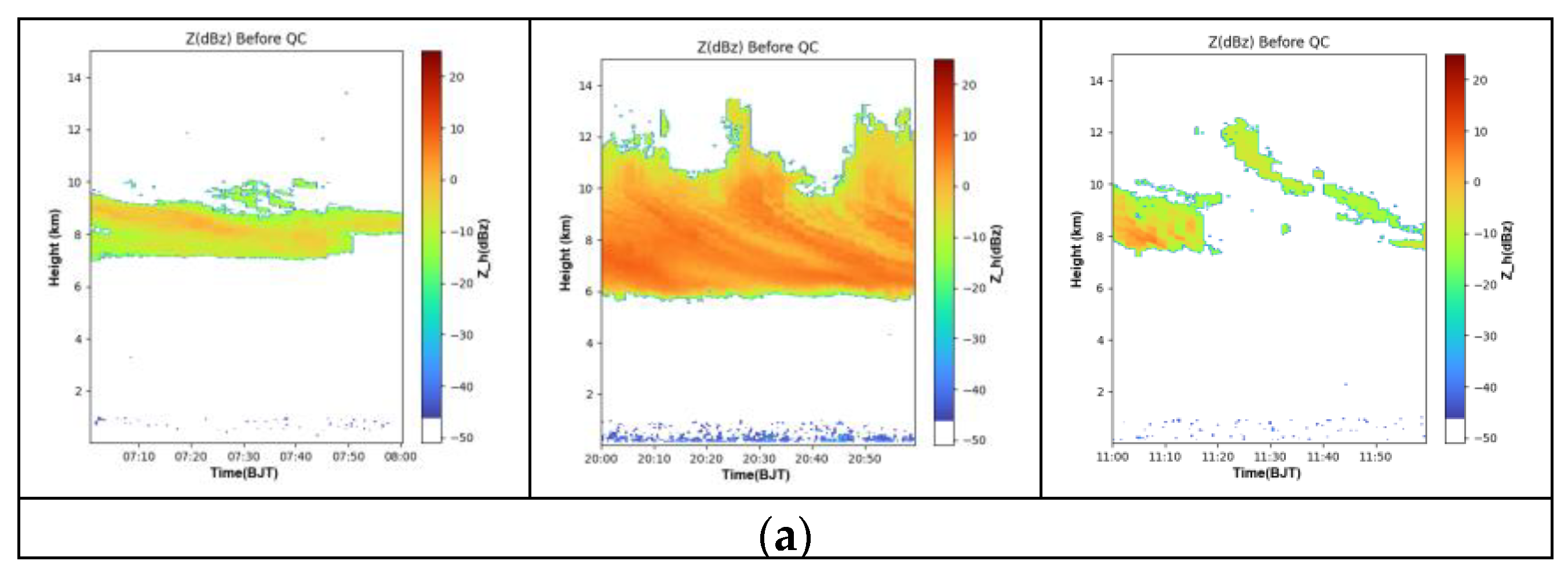
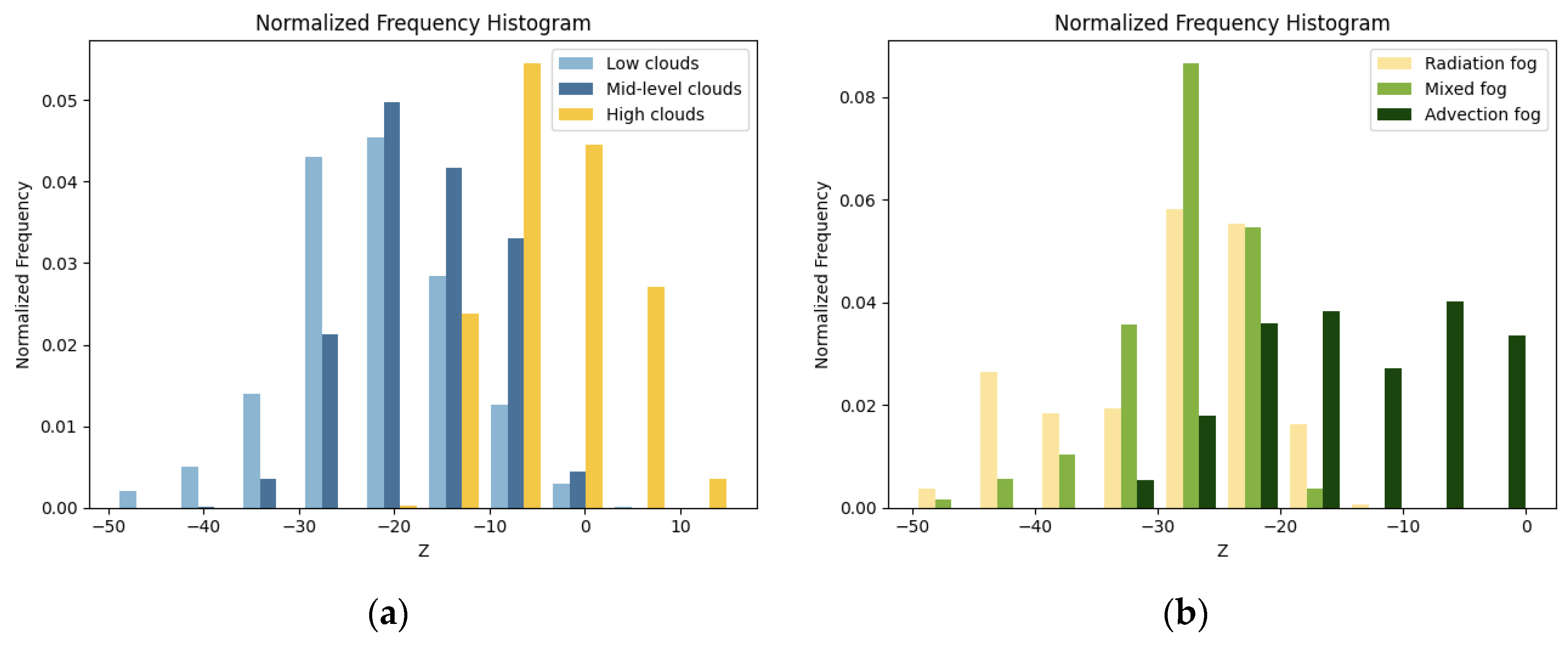
| Reflectivity (dBZ) | -49.5 to 0.5 | -39.5 to 2.5 | -21 to 15.5 |
| Average echo-top height (km) | 1.91 | 5.88 | 12.24 |
| Average echo-bottom height (km) | 0.17 | 2.02 | 6.01 |
| Fog Type | Radiation Fog | Mixed Fog | Advection Fog |
|---|---|---|---|
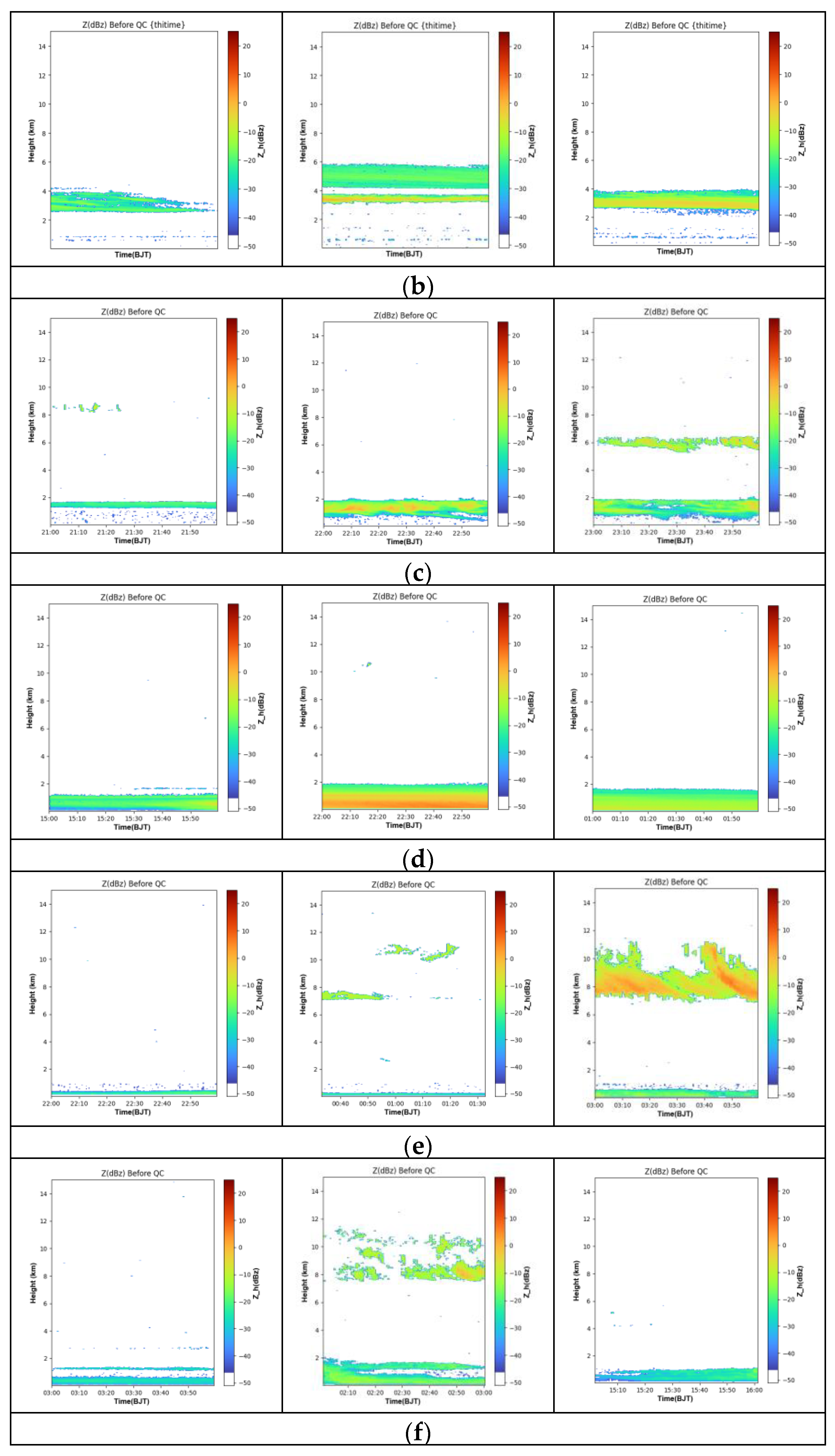
| Reflectivity (dBZ) | -49.0 to -13.0 | -43.0 to -15.5 | -34.0 to 0.5 |
| Average echo-top height (km) | 0.56 | 0.95 | 1.44 |
| Average echo-bottom height (km) | - | - | 0.23 |
| Weather Type | Cloud | Fog |
|---|---|---|
| Reflectivity threshold range (dBZ) | -40 to 15 | -40 to 0 |
| Echo-top height (km) | >1.5 | >0.1 & <1.5 |
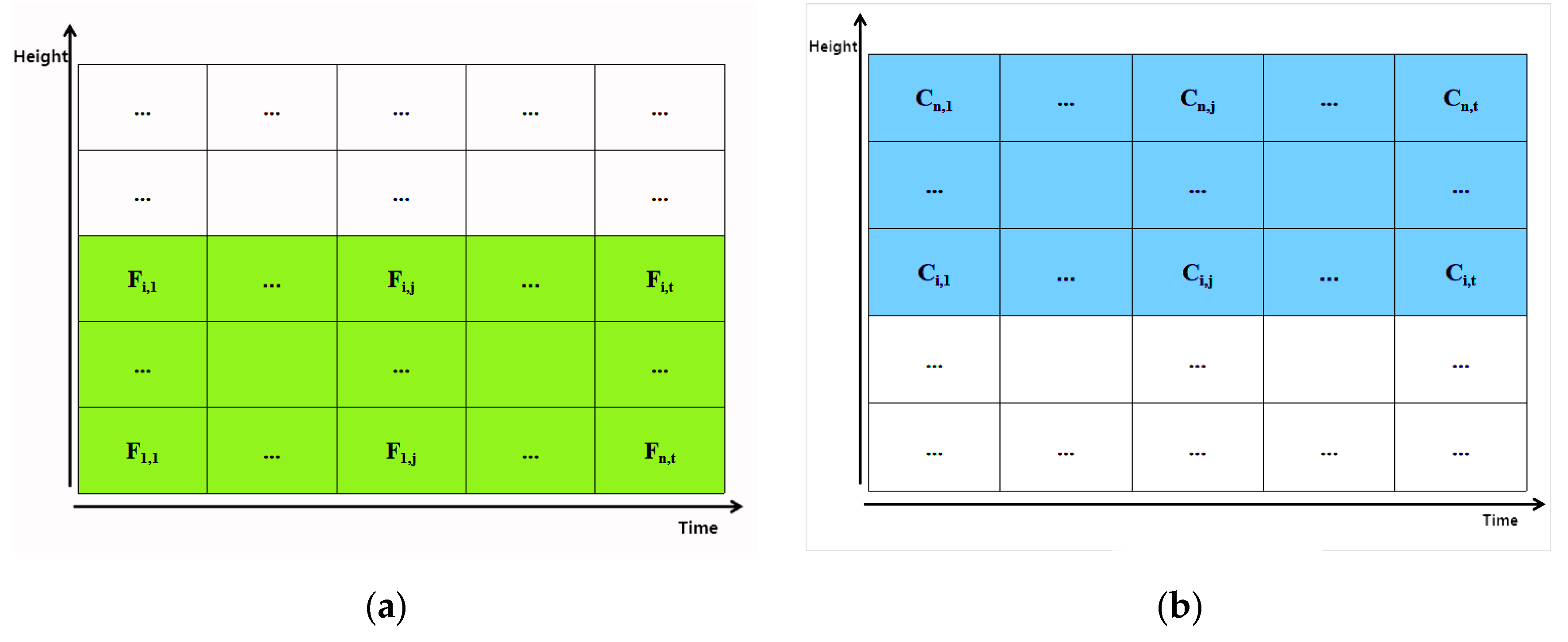
| Range gate continuity count (counts) | 15 | 7 |
| Time gate continuity count (counts) | ≥30 | ≥30 |
| Moment | Weather Conditions |
| 7:00 on June 1, 2023 | Fog |
| 7:00 on June 2, 2023 | Fog |
| 15:00 on June 2, 2023 | Cinot |
| 16:00 on June 17, 2023 | As op、Fog |
| 3:00 on June 20, 2023 | Sc tra、Fog |
| 3:00 on July 20, 2023 | Ci dens |
| Date | Manual Observation | All-Sky Imaging Instrument | Combined Observation | Positive Identification (PI) | Missed Identification (MI) | Misidentification (MIS) |
| 2023.03 | 44 | 55 | 37 | 28 | 2 | 7 |
| 2023.04 | 52 | 58 | 47 | 40 | 4 | 3 |
| 2023.05 | 36 | 43 | 31 | 22 | 1 | 8 |
| Total | 132 | 156 | 115 | 90 | 7 | 18 |
| Date | Manual Observation | All-Sky Imaging Instrument | Combined Observation | Correct Identification (PI) | Missed Identification (MI) | Misidentification (MIS) |
| 2023.03 | 41 | 10 | 10 | 7 | 1 | 2 |
| 2023.04 | 25 | 15 | 13 | 10 | 1 | 2 |
| 2023.05 | 15 | 14 | 12 | 9 | 0 | 3 |
| Total | 81 | 39 | 35 | 26 | 2 | 7 |
Disclaimer/Publisher’s Note: The statements, opinions and data contained in all publications are solely those of the individual author(s) and contributor(s) and not of MDPI and/or the editor(s). MDPI and/or the editor(s) disclaim responsibility for any injury to people or property resulting from any ideas, methods, instructions or products referred to in the content. |
© 2024 by the authors. Licensee MDPI, Basel, Switzerland. This article is an open access article distributed under the terms and conditions of the Creative Commons Attribution (CC BY) license (http://creativecommons.org/licenses/by/4.0/).


