Preprint
Article

This version is not peer-reviewed.

Characterization of Inflammatory Bowel Disease in the Elderly According to Age of Onset

A peer-reviewed article of this preprint also exists.

Submitted:

20 November 2024

Posted:

21 November 2024

You are already at the latest version

Abstract

Background/Objetives: Elderly populations are under-represented in inflammatory bowel disease (IBD) clinical trials, with limited data on phenotype, treatment patterns, outcomes and comorbidities. The main objective of this study was to evaluate, in an elderly cohort with IBD, demographic and disease characteristics, comorbidity, polypharmacy and treatment patterns according to the development of IBD at or before old age. Secondarily, the same analysis was done based on the type of IBD: ulcerative colitis (UC) or Crohn's disease (CD). Material and methods: Observational, single-center, retrospective study including 118 patients diagnosed with IBD and aged 65 years or older seen at the IBD office of the Regional University Hospital of Malaga between September and November 2022. Data were recorded on demographic, disease-related and IBD treatment-related variables, comorbidities and polypharmacy. A descriptive and analytical study was undertaken according to the age of IBD onset and type of IBD. Results: Of the patients included, 50.8% were male, 55.1% had CD and 44.9% UC. IBD onset was before age 65 years in 69.5% and ≥65 years in 30.5%. Elderly with IBD who debuted <65 presented longer disease evolution (19.67±9.82 years) and required more IBD-related surgeries (37.8%); elderly with IBD who debuted ≥65 were older (77.69±6.26 years), with no differences in the other variables. According to the type of IBD, elderly UC patients were older (74.55±6.9 years), used more aminosalicylates (77.4%) and had higher rates of polypharmacy (90.6%). Elderly CD patients had higher IBD activity (moderate/severe in 72.3%), used more biologic drugs (58.5%) and required more IBD-related surgeries (44.6%). Conclusion: Elderly patients who develop IBD before or after the age of 65 years are overall very similar in baseline and disease-related characteristics. Elderly with CD have higher IBD activity and require more biologic drugs and IBD-related surgeries. Elderly with UC are older and have higher rates of polypharmacy and aminosalicylate use.

Keywords: 
;  ;  ;  ;  

1. Introduction

Inflammatory bowel disease (IBD) is a chronic disease with an uncertain course characterized by recurrent inflammation of the digestive tract. It has periods of worsening of symptoms (flares) interspersed with periods of quiescence or inactivity (remission).
The two main forms of IBD are ulcerative colitis (UC), which principally involves inflammation of the colon mucus layer, and Crohn disease (CD), where involvement of the intestine or colon may be transmural and affect the whole digestive tract, from the mouth to the anus [1].
Although the etiopathogenesis of IBD is not certain, various studies suggest that the disease develops after an interaction between intestinal antigens and intestinal mucus, resulting in increased permeability and an altered barrier function, leading to an excessive immune response in certain patients with a genetic predisposition[2,3]. Other factors, such as diet, smoking, breastfeeding, or the consumption of antibiotics, NSAIDs or contraceptives, also play an important role in disease development [4].
The diagnosis of IBD should be established from a combination of compatible clinical, biochemical, endoscopic, histologic and radiologic findings, there being no gold standard for its diagnosis [5]. An increasing clinical suspicion of IBD, the use of non-invasive markers like fecal calprotectin, and a greater availability of diagnostic tests such as colonoscopy, have resulted in an increase in the incidence and prevalence of the disease [6,7].
Two peaks have traditionally been described in the development of IBD, one between the ages of 20 and 40 years, and the other between 60 and 70 years, with the latter group comprising 25-35% of all IBD patients [8,9]. In Spain, 1 in each 4 patients with IBD is older than 65 years, thus representing an important proportion of all patients seen at the IBD office. The increase in the number of elderly patients with IBD is partly due to an increased incidence in this age group, as well as the aging of patients with a previous diagnosis of IBD [10,11].
The term older or elderly in IBD usually refers to patients who are older than 60 or 65 years of age, although in some publications it refers to patients older than 70 or even 75 years. Most studies in this age group do not differentiate between older patients with IBD who develop their disease in old age and those who were diagnosed when they were younger and have since aged [12,13]. However, the distinction between these two subgroups can be important, as differences may exist in epidemiology, phenotype, prognosis and specific considerations concerning safety with the available treatments [14].
In general lines, older patients with IBD have an increased risk of severe and opportunistic infections, neoplasms, thromboembolic events, hospitalizations, post-surgical morbidity and mortality, requiring greater consumption of medicines and ambulatory care [15,16,17,18].However, this risk is related with the comorbidity associated not so much with their chronological age but rather with cardiovascular problems, polypharmacy and frailty; factors that have to be considered when treating IBD in the elderly. Special consideration should also be given to the clinical situation and prognostic factors, as with the younger IBD patients.
All these considerations hinder establishment of an optimum treatment strategy to manage IBD in elderly patients [19]. In general, we can state that the efficacy of the drugs available for the treatment of IBD seems similar in both young and old patients, though representation of older patients in clinical trials is scarce [9]. Those studies about the tendencies of treatment in an older population with IBD show a greater use of aminosalicylates and corticosteroids, with a lesser use of immunomodulatory and biological agents, and small molecules, probably due to fear of adverse events [20,21,22].
Achieving clinical remission in IBD is especially important in this population, thereby reducing the risk of functional worsening and increasing the quality of life of elderly IBD patients, who will have a more active and independent life [19]. All these considerations make it necessary to design new studies on the treatment of the older IBD patient in real clinical practice, helping to define and optimize the therapeutic management of these patients.
Accordingly, we present this study of real clinical practice in a cohort of elderly patients with IBD. The principal objective was to evaluate in this cohort the demographic characteristics, together with data concerning the disease, comorbidity, polypharmacy and treatment patterns depending on the age of onset of IBD, at old age or earlier. As a secondary aim, we undertook the same analysis in the patients according to their type of IBD, UC or CD.

2. Materials and Methods

2.1. Study Population and Design

This observational, single-center, retrospective study was undertaken at the Inflammatory Bowel Disease Unit of the Regional Hospital of Malaga. By consecutive sampling between September and November 2022 a total of 118 patients with IBD, 65 years of age or older, were included in the database. Patients were excluded if they did not have an established diagnosis of IBD or a routine follow-up in the IBD office. The diagnosis of IBD had to be recorded in the clinical history, previously defined according to a combination of compatible clinical, biochemical, endoscopic, histologic and/or radiologic findings.

2.2. Variables

The following variables were recorded in the database:

2.2.1. Principal Variable: Onset of IBD Before or After the Age of 65 Years. 2.2.2. Secondary Variables:

– Demographic: sex, age at last visit, smoking.
– Disease-related: type of IBD (CD or UC), localization in the case of UC (proctitis, left colitis or extensive colitis), localization in the case of CD (ileum, colon, ileocolon or upper intestine), phenotype in the case of CD (inflammatory, stenosing, penetrating or any of the 3 with perianal involvement), years of evolution of the IBD, disease activity at the last visit according to the evaluation of the IBD specialist based on clinical, biological, fecal, endoscopic and/or radiologic data (disease in remission/mild or moderate/severe disease).
– Comorbidities. Graduated according to the Charlson comorbidity index, unadjusted for age, considering comorbidity to be mild (0-2 points), moderate (3-4 points) or severe (>4 points). The Charlson index associates patient comorbidity with long-term death, bearing in mind the presence or otherwise of the following 19 variables: myocardial infarction, diabetes mellitus without organ involvement, diabetes mellitus with organ involvement, congestive heart failure, hemiplegia, peripheral vascular disease, chronic kidney disease, cerebrovascular disease, solid tumor without metastasis, solid tumor with metastasis, leukemia, lymphoma, dementia, chronic obstructive pulmonary disease, connective tissue disease, mild liver disease, moderate or severe liver disease, peptic ulcer and AIDS [23] (Annex 1).
– Polypharmacy and total number of treatments. Based on the total number of chronic active treatments in the health service electronic and intra-hospital prescriptions, polypharmacy was considered to be the use of ≥5 treatments. Drugs prescribed for an acute process were not counted in the total number of treatments.
– Treatment-related: active treatment for the IBD, chronic use of aminosalicylates, corticosteroids, topical treatment, immunomodulators, biologic/small molecule treatment and if so, type (anti-TNF, ustekinumab, vedolizumab, tofacitinib), IBD-related surgery.

2.3. Statistical Analysis

A descriptive study was undertaken of all the variables recorded, calculating the absolute and relative frequencies for the qualitative variables and the arithmetic mean and standard deviation (SD) for the quantitative variables. The 95% confidence interval of safety was estimated.
For the bivariate analysis, normality of the sample was assumed as both groups had fewer than 30 subject. The Levene test was used to evaluate homogeneity. As the study design involved independent data with two study groups, the Student t test was used to compare the quantitative variables, the Mann-Whitney U test for the qualitative ordinal variables and the Chi-square test for the qualitative nominal variables, after correction with Fisher’s exact test when necessary (if the expected frequency was less than 5). All the contrasts were bilateral and were considered to be significant if the p<0.05. The data were collected, processed and analyzed with IBM SPSS Statistics, version 29.0.1.0 (171).

2.4. Ethical and Legal Aspects

The study was undertaken in accordance with the ethical principles set out in the Declaration of Helsinki. The database was anonymized and only the principal investigator had access to it.

3. Results

A total of 118 patients, aged 65 years or older, with an established diagnosis of IBD were included. Table 1 shows the descriptive characteristics for the whole group.
Of the 118 study patients, 36 (30.5%) had received the diagnosis of IBD ≥65 years (Group 1), and the remaining 82 (69.5%) had been diagnosed with IBD previously and had aged to at least 65 years (Group 2). The demographic characteristics, as well as data concerning disease, comorbidity, polypharmacy and treatment patterns were studied in our elderly IBD patients according to whether they developed the disease in old age or before. Significant differences were found in the variables Need for IBD-related surgery (Figure 1) and Years evolution of the disease, in both cases greater in the group diagnosed with IBD <65 years; and in the variable Age at last visit, in this case greater in the group diagnosed ≥65 years. No significant differences were seen in the other variables. The results of the full analytical study are shown in Table 2.
The results are presented as absolute and relative frequencies (for the qualitative variables) and arithmetic mean plus standard deviation (for the quantitative variables). p-values <0.05 are considered statistically significant and appear in bold. a) Chi-square test; b) Chi-square test with correction by Fisher’s exact test; c) Mann-Whitney U test; d) Student t test.
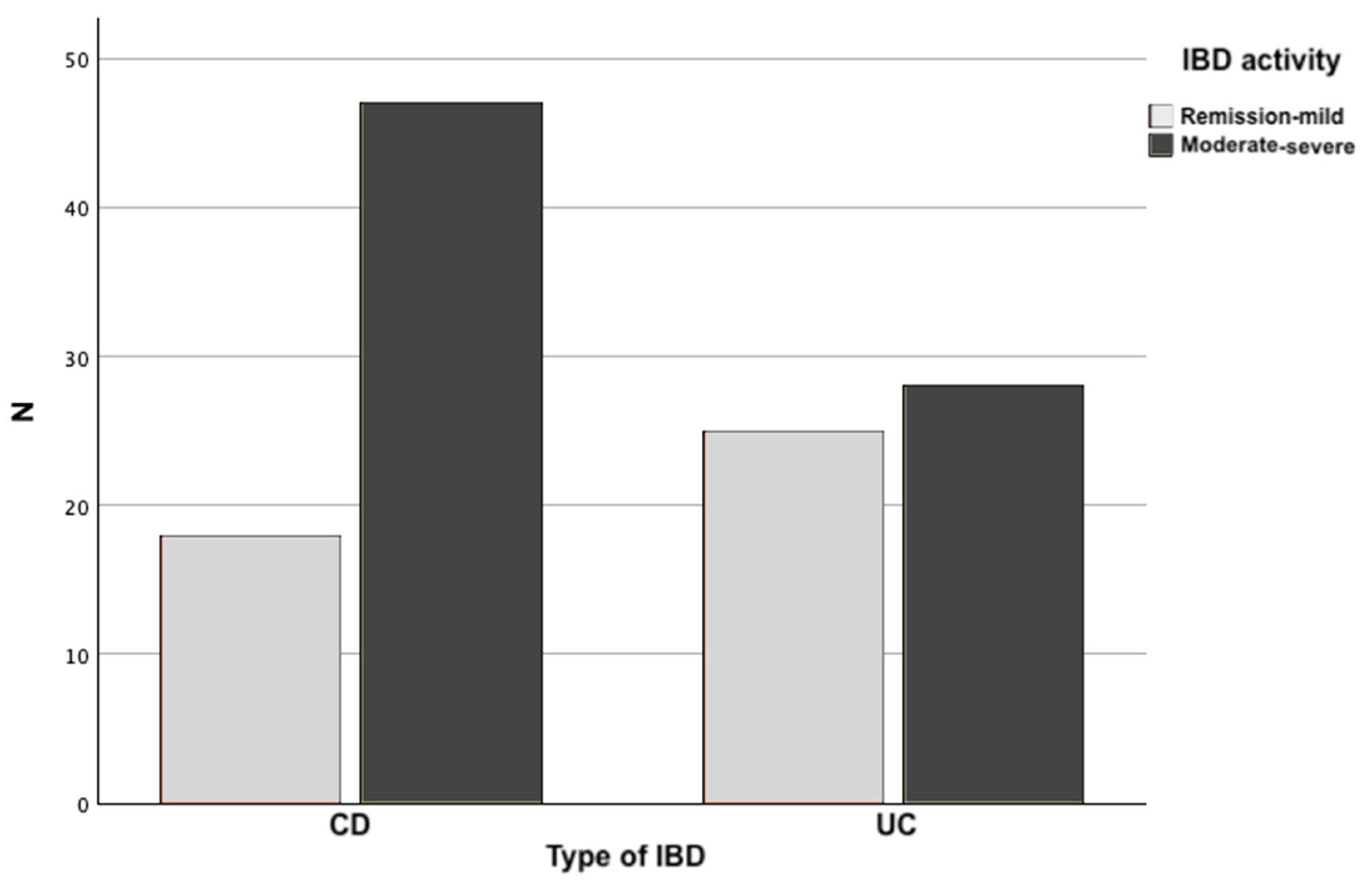
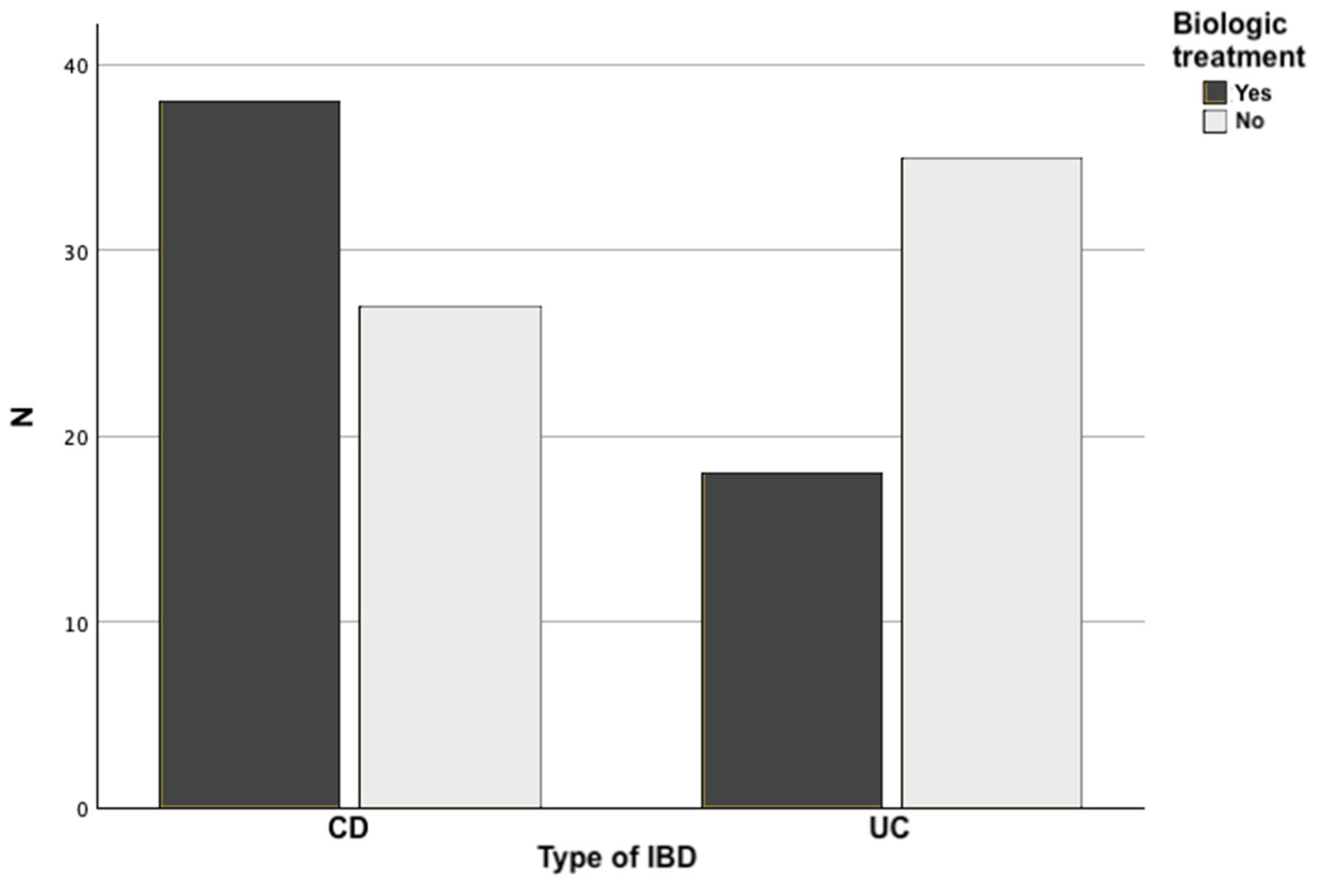
Finally, a second analysis was done, dividing the study population according to type of IBD: Crohn disease (Group 1) or ulcerative colitis (Group 2). The same characteristics were assessed in each group (demographic, disease-related, comorbidity, polypharmacy and treatment patterns). Significant differences were found in the variables polypharmacy, use of aminosalicylates and age at last visit, all greater in the UC group; as well as in the variables disease activity (Figure 2), use of biologic treatment (Figure 3) and need for IBD-related surgery, this time greater in the CD group. Significant differences were also noted in the variable sex, with more women in the CD group and more men in the UC group. No significant differences were seen for any of the other variables. Table 3 shows the results of this second analysis.
The results are presented as absolute and relative frequencies (for the qualitative variables) and arithmetic mean plus standard deviation (for the quantitative variables). P values <0.05 are considered statistically significant and appear in bold. a) Chi-square test; b) Mann-Whitney U test; c) Student t test.

4. Discussion

Elderly patients are poorly represented in clinical trials on the management of IBD. In addition, most relevant studies have focused on the adverse effects in this population of the various therapies available, thus limiting treatment options for older adults [12]. Accordingly, over recent years different papers and guidelines, as well as scientific societies, have published their position papers on IBD in the elderly, attempting to characterize this older population with IBD, identifying their differences in epidemiology, phenotype, prognosis and specific considerations of efficacy and safety of the treatments available [9,12,14,19,20,24].
Concerning epidemiology in this population, our results show a predominance of men in the elder patients with UC, and a predominance of women among those with CD. These results are in agreement with those of Taleban et al.[12] and Sturm et al.[9]
According to various studies,[9,12,14,24] CD in the elderly is more often located in the colon, presenting an inflammatory pattern, whereas UC usually affects the left colon. On the other hand, our study found a predominance of ileal involvement in CD, with an inflammatory pattern, and a similar proportion between left and extensive colitis in UC.
Study of the treatment patterns in our sample showed that almost 80% of the elderly patients with UC were on chronic treatment with aminosalicylates, similar to the percentage reported by Taleban et al. (84%) [12]. However, this same study reported the use of aminosalicylates in 80% of the patients with CD [12], whereas only 18.5% of our CD patients received this treatment. Chronic systemic steroids were used by 11.9% of our patients, much lower than the percentages reported by Juneja et al.[20] and Parian et al.[19] (35-40%). On the other hand, the use of immunomodulators (15.2%) and anti-TNF agents (12.7%) was greater in our patients than in those of Juneja et al., where immunomodulators were used by just 6% of the older patients with IBD and anti-TNF agents by 9% and 1% of older patients with CD and UC, respectively[20]. Overall, almost half the older population with IBD received biologic treatment, mainly ustekinumab. These differences in prescription patterns may be due to the fact that our sample was collected in a third-level hospital, where the patients have a more aggressive disease or are more difficult to manage.
Another aspect to consider in the treatment of IBD in the elderly is the frequency of polypharmacy, with the consequently greater risk of drug interactions and toxicity. Our study found a 76.3% rate of polypharmacy, with a mean of 7 drugs, more frequently in older UC patients. These results are similar to the prevalence of polypharmacy reported by Parian et al. in their study specifically evaluating this parameter in older patients with IBD (polypharmacy of 85%, with over 40% of their sample taking >10 drugs)[19]; and the mean number of medications reported by Juneja et al. in older patients with IBD (7±3.5)[20].
Concerning the safety of the different treatment regimens, various studies have suggested that advanced age is a risk factor for the development of severe and opportunistic infections in IBD patients treated with corticoids, immunomodulators and anti-TNF biologic agents.[15,16,17,18,25] A greater risk has also been reported for lymphomas [26] and skin cancer in older patients with IBD, particularly if they receive treatment with immunomodulators or anti-TNF drugs.[27,28,29] Nonetheless, this risk is related above all with cardiovascular comorbidity and frailty more than with chronologic age itself, as recently indicated by Kochar et al. in their study comprising over 11000 patients with IBD.[30] Our study found a predominantly mild rate of comorbidity in our older patients with IBD (67.8%), with no obvious differences after stratifying the older IBD patients according to age of onset before or after 65 years.
Distinguishing IBD in the elderly according to whether the onset is before or after 65 years may have important implications for the evolution of the disease and its prognosis, starting with the fact that IBD is usually more aggressive during the first year after its diagnosis and that the risk of infectious complications is greater in the initial moths of treatment.[31,32] A retrospective study comparing older patients with IBD who developed the disease before or after 60 years of age showed that the overall disease-related complications were similar in both groups, though treatment-related complications were greater in the patients who developed IBD after the age of 60 years.[33] Our results are similar, showing that both groups (onset before or after 65 years) were comparable regarding the epidemiology, phenotype, disease activity, comorbidity, polypharmacy and treatment patterns.
Finally, concerning the need for surgery related with the IBD, older patients are reported to have greater rates of surgery, mainly soon after the diagnosis.[34,35,36] Our results, on the other hand, showed a greater need for surgery in the older patients who developed IBD before the age of 65 years, with a longer disease evolution. In our sample, surgery was also more likely to be indicated in those patients with CD (44.6%), who also presented greater disease activity than the patients with UC.
This study, however, has certain limitations related to the fact that it was retrospective and single-center. Nevertheless, it has the strength of being carried out in real clinical practice and that it included a considerable number of patients. Of note, too, is the fact that comorbidity was assessed with the Charlson index, bearing in mind the clinical history of the patients, though in some case this may not have been up to date. Disease activity was not measured formally with standardized indices, but rather according to the overall assessment of the specialist in the IBD office. We were unable to evaluate treatment adherence by our older patients and, consequently, its importance in the presence or otherwise of polypharmacy. The fact that the study population was taken from a third-level hospital suggests that the sample represents patients with a more aggressive pattern of disease, with a greater use of advanced therapies in the treatment of their IBD (in particular biologic drugs).

5. Conclusions

In our population of older patients who had IBD, no differences were found according to whether they developed the disease before or after the age of 65 years in demography, comorbidity, polypharmacy, treatment patterns, phenotype or disease activity. However, the patients who developed the disease before the age of 65 years had a longer disease evolution and required more surgical procedures. CD was predominant among the study population, more frequently affecting women, presenting a more active course with the need for more biologic treatments and more surgery than the patients with UC, which was more common among older men with greater rates of polypharmacy and greater use of aminosalicylates. There is a high overall use of advanced therapies in the treatment of IBD in the elder patient, particularly biologic drugs.

Author Contributions

M.B.G. has carried out the database creation, data analysis and writing of the paper. R.O.M. and M.J.P. were responsible for the research question, design and revision of the manuscript. All authors are part of the Inflammatory Bowel Disease unit of the centre and have contributed with their experience in the management of disease and interpretation of the data. All authors have read and agreed to the published version of the manuscript

Funding

This research received no external funding

Institutional Review Board Statement

This study was conducted in accordance with the recom mendations of the Declaration of Helsinki and was approved by the Hospital’s Research Ethics Committee.

Informed Consent Statement

As this was a retrospective observational study, no informed consent form was required from the patients included in the study.

Data Availability Statement

Date are contained within the article.

Conflicts of Interest

The authors declare no conflicts of interest

Appendix A

ANNEXES
Annex 1. Charlson comorbidity index: components and score.
Comorbidity Score
Myocardial infarction 1
Congestive heart failure 1
Peripheral vascular disease 1
Cerebrovascular disease 1
Dementia 1
Chronic obstructive pulmonary disease 1
Connective tissue disease 1
Peptic ulcer 1
Mild liver disease 1
Diabetes without organ involvement 1
Hemiplegia 2
Moderate or severe renal disease 2
Diabetes with end-organ damage 2
Non-metastatic solid tumor 2
Leukemia 2
Lymphoma 2
Moderate or severe liver disease 3
Metastasis 6
AIDS 6

References

  1. Hinojosa del Val, J. Definiciones y clasificación. En: Mogollón F, Hinojosa J, Gassull MA, editores. Enfermedad Inflamatoria Intestinal. IV Edición. España, 2019. Pág 4-9.
  2. Ananthakrishnan, A.N.; Bernstein, C.N.; Iliopoulos, D. , et al. Environmental triggers in IBD: a review of progress and evidence. Nat Rev Gastroenterol Hepatol. 2018, 15, 39–49. [Google Scholar] [CrossRef] [PubMed]
  3. Guan, Q. A Comprehensive Review and Update on the Pathogenesis of Inflammatory Bowel Disease. J Immunol Res. 2019, 2019, 7247238. [Google Scholar] [CrossRef] [PubMed] [PubMed Central]
  4. Burke, K.E.; Boumitri, C.; Ananthakrishnan, A.N. Modifiable Environmental Factors in Inflammatory Bowel Disease. Curr Gastroenterol Rep. 2017, 19, 21. [Google Scholar] [CrossRef] [PubMed] [PubMed Central]
  5. Maaser C; Sturm A; SR, V. , et al; European Crohn’s and Colitis Organisation [ECCO] and the European Society of Gastrointestinal and Abdominal Radiology [ESGAR]. ECCO-ESGAR Guideline for Diagnostic Assessment in IBD Part 1: Initial diagnosis, monitoring of known IBD, detection of complications. J Crohns Colitis. 2019, 13, 144–164. [CrossRef] [PubMed]
  6. Molodecky, N.A.; Soon, I.S.; Rabi, D.M. , et al. Increasing incidence and prevalence of the inflammatory bowel diseases with time, based on systematic review. Gastroenterology 2012, 142, 46–54.e42. [Google Scholar]
  7. Figueroa, C. Epidemiología de la enfermedad inflamatoria intestinal. Revista Médica Clínica Las Condes, Volume 30, Issue 4, 2019.
  8. Cosnes, J.; Gower-Rousseau, C.; Seksik, P.; Cortot, A. Epidemiology and natural history of inflammatory bowel diseases. Gastroenterology. 2011, 140, 1785–1794. [Google Scholar] [CrossRef]
  9. Sturm, A.; Maaser, C.; Mendall, M. , et al. European Crohn's and Colitis Organisation Topical Review on IBD in the Elderly. J Crohns Colitis. 2017, 11, 263–273. [Google Scholar] [CrossRef] [PubMed]
  10. Jeuring, S.F.; van den Heuvel, T.R.; Zeegers, M.P. , et al. Epidemiology and Long-term Outcome of Inflammatory Bowel Disease Diagnosed at Elderly Age-An Increasing Distinct Entity? Inflamm Bowel Dis. 2016, 22, 1425–1434. [Google Scholar] [CrossRef] [PubMed]
  11. Nguyen, G.C.; Sheng, L.; Benchimol, E.I. Health Care utilization in elderly onset inflammatory bowel disease: a population-based study. Inflamm Bowel Dis. 2015, 21, 777–782. [Google Scholar] [CrossRef] [PubMed]
  12. Taleban, S.; Colombel, J.F.; Mohler, M.J. , et al. Inflammatory bowel disease and the elderly: a review. J Crohns Colitis. 2015, 9, 507–515. [Google Scholar] [CrossRef] [PubMed]
  13. Ananthakrishnan, A.N.; Shi, H.Y.; Tang, W. , et al. Systematic Review and Meta-analysis: Phenotype and Clinical Outcomes of Older-onset Inflammatory Bowel Disease. J Crohns Colitis. 2016, 10, 1224–1236. [Google Scholar] [CrossRef] [PubMed] [PubMed Central]
  14. Sousa, P.; Bertani, L.; Rodrigues, C. Management of inflammatory bowel disease in the elderly: A review. Dig Liver Dis. 2023, 55, 1001–1009. [Google Scholar] [CrossRef] [PubMed]
  15. Lichtenstein, G.R.; Feagan, B.G.; Cohen, R.D. , et al. Serious infection and mortality in patients with Crohn's disease: more than 5 years of follow-up in the TREAT™ registry. Am J Gastroenterol. 2012, 107, 1409–1422. [Google Scholar] [CrossRef] [PubMed] [PubMed Central]
  16. Nguyen, G.C.; Sam, J. Rising prevalence of venous thromboembolism and its impact on mortality among hospitalized inflammatory bowel disease patients. Am J Gastroenterol. 2008, 103, 2272–2280. [Google Scholar] [CrossRef] [PubMed]
  17. Ananthakrishnan, A.N.; McGinley, E.L.; Binion, D.G. Inflammatory bowel disease in the elderly is associated with worse outcomes: a national study of hospitalizations. Inflamm Bowel Dis. 2009, 15, 182–189. [Google Scholar] [CrossRef] [PubMed]
  18. Kaplan, G.G.; McCarthy, E.P.; Ayanian, J.Z. , et al. Impact of hospital volume on postoperative morbidity and mortality following a colectomy for ulcerative colitis. Gastroenterology. 2008, 134, 680–687. [Google Scholar] [CrossRef] [PubMed]
  19. Parian, A.; Ha, C.Y. Older age and steroid use are associated with increasing polypharmacy and potential medication interactions among patients with inflammatory bowel disease. Inflamm Bowel Dis. 2015, 21, 1392–1400. [Google Scholar] [CrossRef] [PubMed] [PubMed Central]
  20. Juneja, M.; Baidoo, L.; Schwartz, M.B. , et al. Geriatric inflammatory bowel disease: phenotypic presentation, treatment patterns, nutritional status, outcomes, and comorbidity. Dig Dis Sci. 2012, 57, 2408–2415. [Google Scholar] [CrossRef] [PubMed]
  21. Benchimol, E.I.; Cook, S.F.; Erichsen, R. , et al. International variation in medication prescription rates among elderly patients with inflammatory bowel disease. J Crohns Colitis. 2013, 7, 878–889. [Google Scholar] [CrossRef] [PubMed]
  22. Charpentier, C.; Salleron, J.; Savoye, G. , et al. Natural history of elderly-onset inflammatory bowel disease: a population-based cohort study. Gut. 2014, 63, 423–432. [Google Scholar] [CrossRef] [PubMed]
  23. Charlson, M.E.; Carrozzino, D.; Guidi, J. , et al. Charlson Comorbidity Index: A Critical Review of Clinimetric Properties. Psychother Psychosom. 2022, 91, 8–35. [Google Scholar] [CrossRef] [PubMed]
  24. Ananthakrishnan, A.N.; Nguyen, G.C.; Bernstein, C.N. AGA Clinical Practice Update on Management of Inflammatory Bowel Disease in Elderly Patients: Expert Review. Gastroenterology. 2021, 160, 445–451. [Google Scholar] [CrossRef] [PubMed]
  25. Cottone, M.; Kohn, A.; Daperno, M. , et al. Advanced age is an independent risk factor for severe infections and mortality in patients given anti-tumor necrosis factor therapy for inflammatory bowel disease. Clin Gastroenterol Hepatol. 2011, 9, 30–35. [Google Scholar] [CrossRef] [PubMed]
  26. Khan, N.; Abbas, A.M.; Lichtenstein, G.R. , et al. Risk of lymphoma in patients with ulcerative colitis treated with thiopurines: a nationwide retrospective cohort study. Gastroenterology. 2013, 145, 1007–1015.e3. [Google Scholar] [CrossRef] [PubMed]
  27. Ariyaratnam, J.; Subramanian, V. Association between thiopurine use and nonmelanoma skin cancers in patients with inflammatory bowel disease: a meta-analysis. Am J Gastroenterol. 2014, 109, 163–169. [Google Scholar] [CrossRef] [PubMed]
  28. Long, M.D.; Martin, C.F.; Pipkin, C.A. , et al. Risk of melanoma and nonmelanoma skin cancer among patients with inflammatory bowel disease. Gastroenterology. 2012, 143, 390–399.e1. [Google Scholar] [CrossRef] [PubMed] [PubMed Central]
  29. Lobatón, T.; Ferrante, M.; Rutgeerts, P. , et al. Efficacy and safety of anti-TNF therapy in elderly patients with inflammatory bowel disease. Aliment Pharmacol Ther. 2015, 42, 441–451. [Google Scholar] [CrossRef] [PubMed]
  30. Kochar, B.; Cai, W.; Cagan, A. , et al. Frailty is independently associated with mortality in 11 001 patients with inflammatory bowel diseases. Aliment Pharmacol Ther. 2020, 52, 311–318. [Google Scholar] [CrossRef] [PubMed]
  31. Solberg, I.C.; Lygren, I.; Jahnsen, J. , et al. ; IBSEN Study Group. Clinical course during the first 10 years of ulcerative colitis: results from a population-based inception cohort (IBSEN Study). Scand J Gastroenterol. 2009, 44, 431–440. [Google Scholar] [CrossRef] [PubMed]
  32. Nyboe Andersen, N.; Pasternak, B.; Friis-Møller, N. , et al. Association between tumour necrosis factor-α inhibitors and risk of serious infections in people with inflammatory bowel disease: nationwide Danish cohort study. BMJ. 2015, 350, 2809. [Google Scholar] [CrossRef] [PubMed] [PubMed Central]
  33. Rozich, J.J.; Luo, J.; Dulai, P.S. , et al. Disease- and Treatment-related Complications in Older Patients With Inflammatory Bowel Diseases: Comparison of Adult-onset vs Elderly-onset Disease. Inflamm Bowel Dis. 2021, 27, 1215–1223. [Google Scholar] [CrossRef] [PubMed] [PubMed Central]
  34. Kaplan, G.G.; Hubbard, J.; Panaccione, R. , et al. Risk of comorbidities on postoperative outcomes in patients with inflammatory bowel disease. Arch Surg. 2011, 146, 959–964. [Google Scholar] [CrossRef] [PubMed]
  35. Nguyen, G.C.; Bernstein, C.N.; Benchimol, E.I. Risk of Surgery and Mortality in Elderly-onset Inflammatory Bowel Disease: A Population-based Cohort Study. Inflamm Bowel Dis. 2017, 23, 218–223. [Google Scholar] [CrossRef] [PubMed]
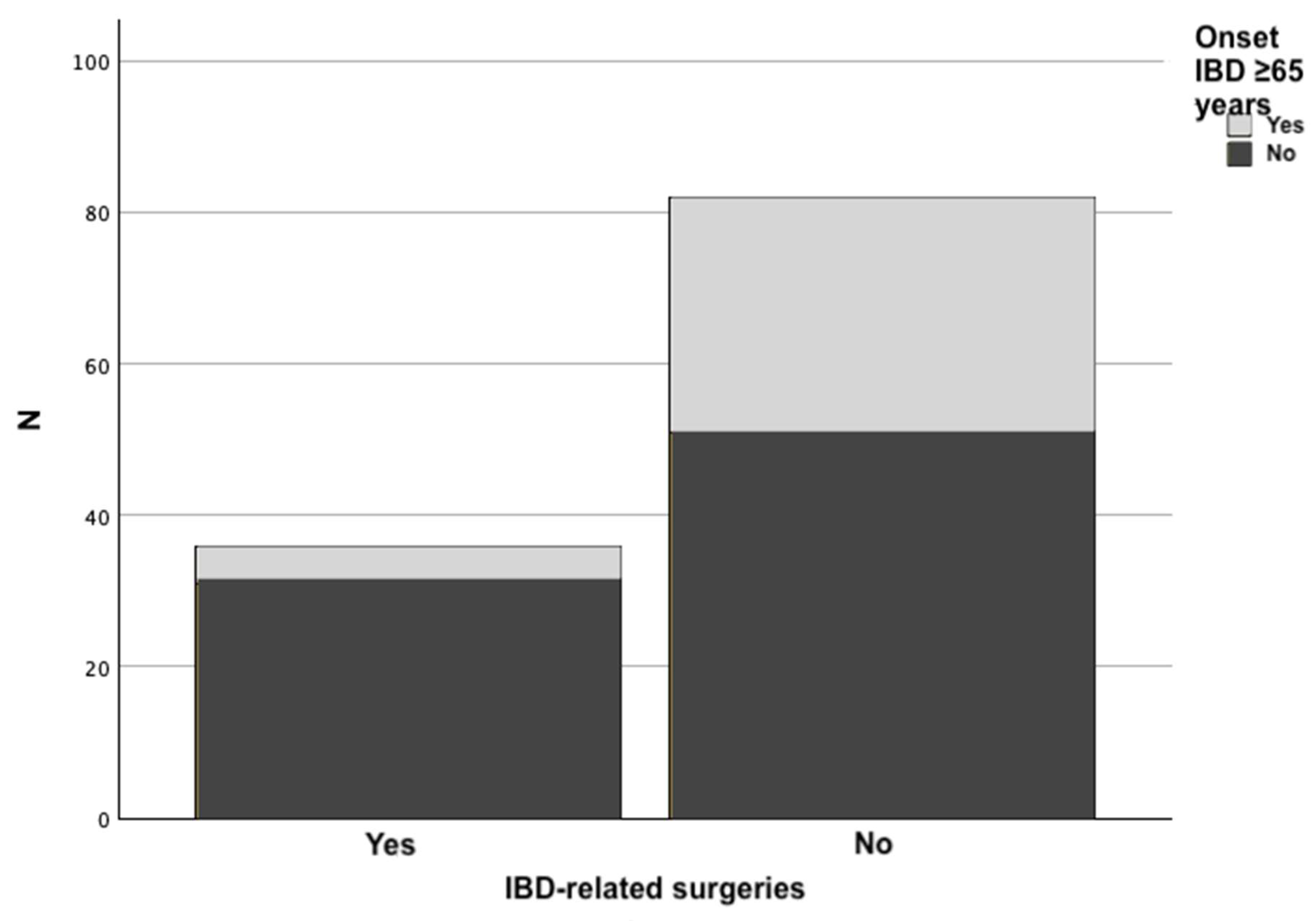
Figure 1. Need for IBD-related surgery according to IBD diagnosis before or after the age of 65 years.
Preprints 140376 g001
Figure 2. Disease activity according to type of IBD: CD or UC.
Preprints 140376 g002
Figure 3. Use of biologic treatment according to type of IBD: CD or UC.
Preprints 140376 g003
Table 1. Characteristics of the study population. The results are presented as absolute and relative frequencies (for the qualitative variables) and arithmetic mean plus standard deviation (for the quantitative variables).
N = 118
Sex
Male
Female

60 (50.8%)
58 (49.2%)
Age at last visit (years) 72.93 (± 6.21)
Smoking
Yes
No

24 (20.3%)
94 (79.7%)
Type of IBD
CD
UC

65 (55.1%)
53 (44.9%)
Localization in UC
Proctitis (E1)
Left colitis (E2)
Extensive colitis (E3)
53 (44.9%)
10 (8.5%)
22 (18.6%)
21 (17.8%)
Localization in CD
Ileum (L1)
Colon (L2)
Ileum+colon (L3)
Upper intestine (L4)
65 (55.1%)
36 (30.5%)
12 (10.2%)
18 (15.3%)
0 (0%)
Phenotype in CD
Inflammatory (B1)
Stenosing (B2)
Penetrating (B3)
B1, B2 or B3 with perianal involvement (p)
65 (55.1%)
30 (25.4%)
12 (10.2%)
12 (10.2%)
11 (9.3%)
Onset of IBD
After age 65 years
Before age 65 years

36 (30.5%)
82 (69.5%)
Years evolution of IBD 15.83 (± 10.35)
Charlson comorbidity index
Mild (0-2 points)
Moderate (3-4 points)
Severe (>4 points)

80 (67.8%)
29 (24.6%)
9 (7.6%)
IBD activity
Remission/mild
Moderate/severe

43 (36.4%)
75 (63.6%)
Polypharmacy
Yes
No

90 (76.3%)
28 (23.7%)
Total number of treatments 7.08 (± 3.26)
Active treatment for IBD
Yes
No

102 (89.8%)
12 (10.2%)
Chronic use of aminosalicylates
Yes
No

53 (44.9%)
65 (55.1%)
Chronic use of systemic steroids
Yes
No

14 (11.9%)
104 (88.1%)
Use of topical treatment
Yes
No

24 (20.3%)
94 (79.7%)
Chronic use of immunomodulators
Yes
No

18 (15.3%)
100 (84.7%)
Use of biologic or small molecule treatment
Yes
Anti-TNF
Ustekinumab
Vedolizumab
Tofacitinib
No


56 (47.5%)
15 (12.7%)
29 (24.6)
12 (10.2%)
0 (0%)
62 (52.5%)
IBD-related surgery
Yes
No

36 (30.5%)
82 (69.5%)
Table 2. Stratified analysis based on age of IBD diagnosis.
Onset IBD ≥65 years (n=36) Onset IBD <65 years (n=82) p-value
Sex
Male
Female

15 (41.7%)
21 (58.3%)

45 (54.9%)
37 (45.1%)

0.19 a)
Smoking 7 (19.4%) 17 (20.7%) 0.87 a)
Type of IBD
CD
UC

18 (50%)
18 (50%)

47 (57.3%)
35 (42.7%)

0.46 a)
Localization in UC
E1
E2
E3

4 (22.2%)
7 (38.9%)
7 (38.9%)

6 (17.1%)
15 (42.9%)
14 (40%)


0.9 a)
Localization in CD
L1
L2
L3

12 (66.7%)
3 (16.7%)
3 (16.7%)

24 (50%)
9 (18.8%)
15 (31.3%)


0.42 a)
Phenotype in CD
B1
B2
B3
B1, B2 or B3 +p

11 (61.1%)
4 (22.2%)
1 (5.6%)
2 (11.1%)

19 (40.4%)
8 (17%)
11 (23.4%)
9 (19.1%)


0.24 a)
Polypharmacy 29 (80.6%) 61 (74.4%) 0.47 a)
Active treatment for IBD 34 (94.4%) 72 (87.8%) 0.34 b)
Chronic use of aminosalicylates 21 (58.3%) 32 (39%) 0.052 a)
Chronic use of systemic steroids 5 (13.9%) 9 (11%) 0.76 b)
Topical treatment 11 (30.6%) 13 (15.9%) 0.07 a)
Immunomodulators 3 (8.3%) 15 (18.3%) 0.17 a)
Biologic treatment 14 (38.9%) 42 (51.2%) 0.22 a)
Type of biologic agent
Anti-TNF
Ustekinumab
Vedolizumab

3 (21.4%)
7 (50%)
4 (28.6%)

12 (28.6%)
22 (52.4%)
8 (19%)


0.72 a)
IBD-related surgery 5 (13.9%) 31 (37.8%) 0.009 a)
IBD activity
Remission/mild
Moderate/severe

13 (36.1%)
23 (63.9%)

30 (36.6%)
52 (63.4%)

0.96 c)
Charlson comorbidity index
Mild (0-2)
Moderate (3-4)
Severe (>4)


25 (69.4%)
9 (25%)
2 (5.6%)


55 (67.1%)
20 (24.4%)
7 (8.5%)


0.74 c)
Age at last visit (years) 77.69 (±6.26) 70.84 (±4.93) <0.001 d)
Years evolution of IBD 7.08 (±4.64) 19.67 (±9.82) <0.001 d)
Total number of treatments 7.47 (±3.11) 6.91 (±3.32) 0.39 d)
Table 3. Stratified analysis according to type of IBD.
CD (n = 65) UC (n = 53) p-value
Sex
Male
Female

27 (41.5%)
38 (58.5%)

33 (62.3%)
20 (37.7%)

0.025 a)
Smoking 16 (24.6%) 8 (15.1%) 0.2 a)
Polypharmacy 42 (64.6%) 48 (90.6%) <0.001 a)
Active IBD treatment 56 (86.2%) 50 (94.3%) 0.14 a)
Chronic aminosalicylates 12 (18.5%) 41 (77.4%) <0.001 a)
Chronic systemic steroids 9 (13.8%) 5 (9.4%) 0.46 a)
Immunomodulators 13 (20%) 5 (9.4%) 0.11 a)
Biologic treatment 38 (58.5%) 18 (34%) 0.008 a)
Type of biologic used
Anti-TNF
Ustekinumab
Vedolizumab

12 (31.6%)
18 (47.4%)
8 (21%)

3 (16.7%)
11 (61.1%)
4 (22.2%)


0.48 a)
IBD-related surgery 29 (44.6%) 7 (13.2%) <0.001 a)
IBD activity
Remission/mild
Moderate/severe

18 (27.7%)
47 (72.3%)

25 (47.2%)
28 (52.8%)

0.029 b)
Charlson comorbidity index
Mild (0-2)
Moderate (3-4)
Severe (>4)


45 (69.2%)
14 (21.5%)
6 (9.2%)


35 (66%)
15 (28.3%)
3 (5.7%)


0.84 b)
Age at last visit (years) 71.62 (±5.29) 74.55 (±6.9) 0.013 c)
Years evolution of IBD 15.98 (±11.05) 15.64 (±9.52) 0.86 c)
Total number of treatments 6.63 (±3.71) 7.64 (±2.51) 0.082 c)
Disclaimer/Publisher’s Note: The statements, opinions and data contained in all publications are solely those of the individual author(s) and contributor(s) and not of MDPI and/or the editor(s). MDPI and/or the editor(s) disclaim responsibility for any injury to people or property resulting from any ideas, methods, instructions or products referred to in the content.
Copyright: This open access article is published under a Creative Commons CC BY 4.0 license, which permit the free download, distribution, and reuse, provided that the author and preprint are cited in any reuse.
Prerpints.org logo

Preprints.org is a free preprint server supported by MDPI in Basel, Switzerland.

Subscribe

Disclaimer

Terms of Use

Privacy Policy

Privacy Settings

© 2025 MDPI (Basel, Switzerland) unless otherwise stated