

Submitted:
01 November 2024
Posted:
06 November 2024
You are already at the latest version
Abstract
This review investigates the integration of machine learning (ML) and blockchain technology, highlighting their combined potential to drive transformation across sectors such as healthcare, finance, and supply chain management. ML offers data-driven insights through predictive analytics, automation, and intelligent decision-making, while blockchain provides a secure, decentralized framework with transparency and immutability. Together, these technologies present solutions to critical challenges, including fraud detection, operational inefficiencies, and data privacy, promising significant advancements across various industries. ML enhances diagnostics and treatment personalization in healthcare, while blockchain protects sensitive medical data. In finance, blockchain fosters transparency within decentralized finance (DeFi), while ML strengthens fraud detection and trading strategies. In supply chain management, blockchain ensures traceability, while ML optimizes logistics and demand forecasting. Despite their synergies, integrating ML with blockchain faces challenges, notably in scalability, computational efficiency, and privacy. This review critically examines recent advancements, practical use cases, and barriers to adoption, synthesizing strategies that can address these challenges to unlock the transformative potential of these emerging technologies.
Keywords:
Blockchain
; Machine Learning
; Integration Synergy
; Scalability Challenges
; Predictive Analytics
1. Introduction
Machine learning (ML) and blockchain technology are rapidly advancing as transformative forces across a wide range of industries, each addressing complex challenges through innovative solutions. ML, a branch of artificial intelligence (AI), uncovers insights from vast datasets, driving predictive analytics, automation, and intelligent decision-making. Blockchain, meanwhile, complements ML with its decentralized, immutable ledger system that ensures data integrity, transparency, and secure data management without relying on intermediaries.
While both technologies are powerful independently, their integration unlocks unprecedented opportunities, addressing challenges that neither could fully overcome alone. Combining ML’s predictive capabilities with blockchain’s secure framework allows for sophisticated solutions to issues such as fraud detection in finance, cross-institutional data sharing in healthcare, and supply chain transparency. For instance, ML excels at identifying fraud patterns in financial transactions, and blockchain’s tamper-proof nature ensures that such findings are securely recorded, thus reducing the possibility of data manipulation. In healthcare, ML models can make treatment recommendations based on predictive analytics, while blockchain safeguards sensitive patient information, ensuring privacy and integrity.
Furthermore, blockchain’s ability to provide a transparent and verifiable data trail helps address one of the core limitations of ML—data trustworthiness. ML models require high-quality data, and blockchain ensures this data is not only secure but also untampered, which enhances model accuracy. Despite their benefits, integrating ML and blockchain presents significant challenges, including scalability, energy efficiency, and balancing transparency with privacy. Effectively merging these technologies will require innovations in managing blockchain’s resource demands and overcoming ML’s data needs while ensuring privacy.
This review provides a comprehensive analysis of the integration of ML and blockchain, exploring existing literature on practical applications, challenges, and future directions across key industries. By synthesizing current research, this paper aims to highlight how addressing these challenges could unlock the full potential of ML and blockchain, collectively transforming industries such as healthcare, finance, supply chain management, and energy into more secure, transparent, and efficient systems.
2. Literature Review
2.1. Machine Learning Overview
Machine learning (ML), a branch of artificial intelligence (AI), enables systems to learn from and improve using data without being explicitly programmed. Its goal is to build models that make predictions or decisions by identifying patterns within complex datasets. ML is categorized into three primary paradigms—supervised learning, unsupervised learning, and reinforcement learning—each with specific methodologies and applications. The following table provides a comparative summary:

Table 1.
Comparison of Machine Learning Paradigms.
| ML Paradigm | Learning Approach | Applications | Examples |
|---|---|---|---|
| Supervised Learning | Learns from labeled data to predict outcomes | Spam detection, medical diagnosis, energy forecasting | Neural networks, decision trees, SVMs |
| Unsupervised Learning | Identifies patterns in unlabeled data | Customer segmentation, fraud detection, data compression | k-means cluster, PCA |
| Reinforcement Learning | Learns by interacting with the environment, maximizing rewards | Robotics, autonomous vehicles, game-playing systems | AlphaGo, self-driving cars | AlphaGo, self-driving cars |
2.1.1. Supervised Learning
Supervised learning is based on labeled datasets, where the algorithm learns to map inputs to corresponding outputs by minimizing error. It is extensively used for both classification tasks (e.g., spam detection) and regression tasks (e.g., predicting stock prices).
- Applications: Supervised learning plays a vital role in various industries, including finance, healthcare, and energy, helping with tasks like loan approval, medical diagnosis, and energy forecasting [19].
- Common Algorithms: Neural networks, decision trees, and support vector machines (SVMs).
Supervised learning’s widespread adoption stems from its ability to solve problems where labeled data is available, making it essential for systems requiring precision and predictive accuracy.
2.1.2. Unsupervised Learning
In unsupervised learning, algorithms identify patterns and relationships within unlabeled data. The aim is to discover hidden structures that may not be evident through traditional analysis.
- Applications: Unsupervised learning finds use in customer segmentation, fraud detection, and data compression.
- Clustering methods like k-means and dimensionality reduction techniques such as principal component analysis (PCA).
This paradigm is widely used for exploratory analysis in domains such as e-commerce and cybersecurity, where understanding hidden patterns in data can provide strategic insights. [1]
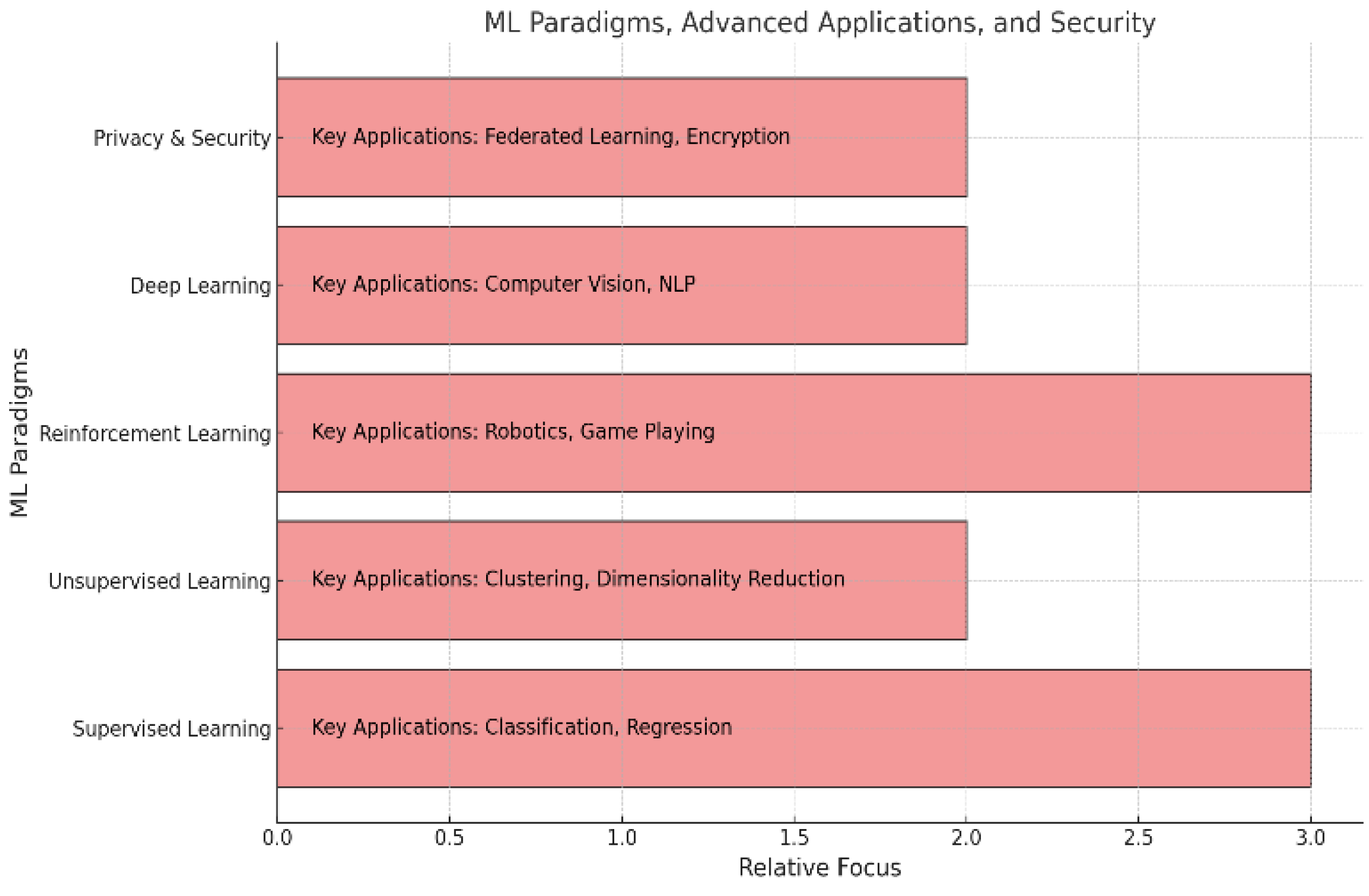
Figure 1.
ML Paradigms and Application.
2.1.3. Reinforcement Learning (RL)
Reinforcement learning focuses on training agents to make sequential decisions by interacting with an environment to maximize cumulative rewards over time. It employs a trial-and-error approach, learning strategies that result in optimal outcomes.
- Applications: Robotics, autonomous vehicles, and game-playing systems (e.g., AlphaGo).
- Mechanism: Agents learn through rewards and penalties, adapting over time based on environmental feedback [20].
RL’s potential in dynamic environments like robotics and self-driving cars has made it a crucial area of research, enabling systems to handle complex decision-making scenarios.
2.1.4. Deep Learning and Privacy Considerations
Deep learning (DL), a subset of Machine Learning (ML), uses multi-layered neural networks to automatically learn complex features from raw data. DL has revolutionized fields like speech recognition, computer vision, and natural language processing (NLP).
- Challenge: Deep learning (DL) models often require vast datasets, raising concerns about privacy and data security.
- Solution: Privacy-preserving approaches, such as federated learning and homomorphic encryption, allow Machine Learning (ML) models to train across distributed datasets without compromising data privacy.
2.2. Blockchain Overview
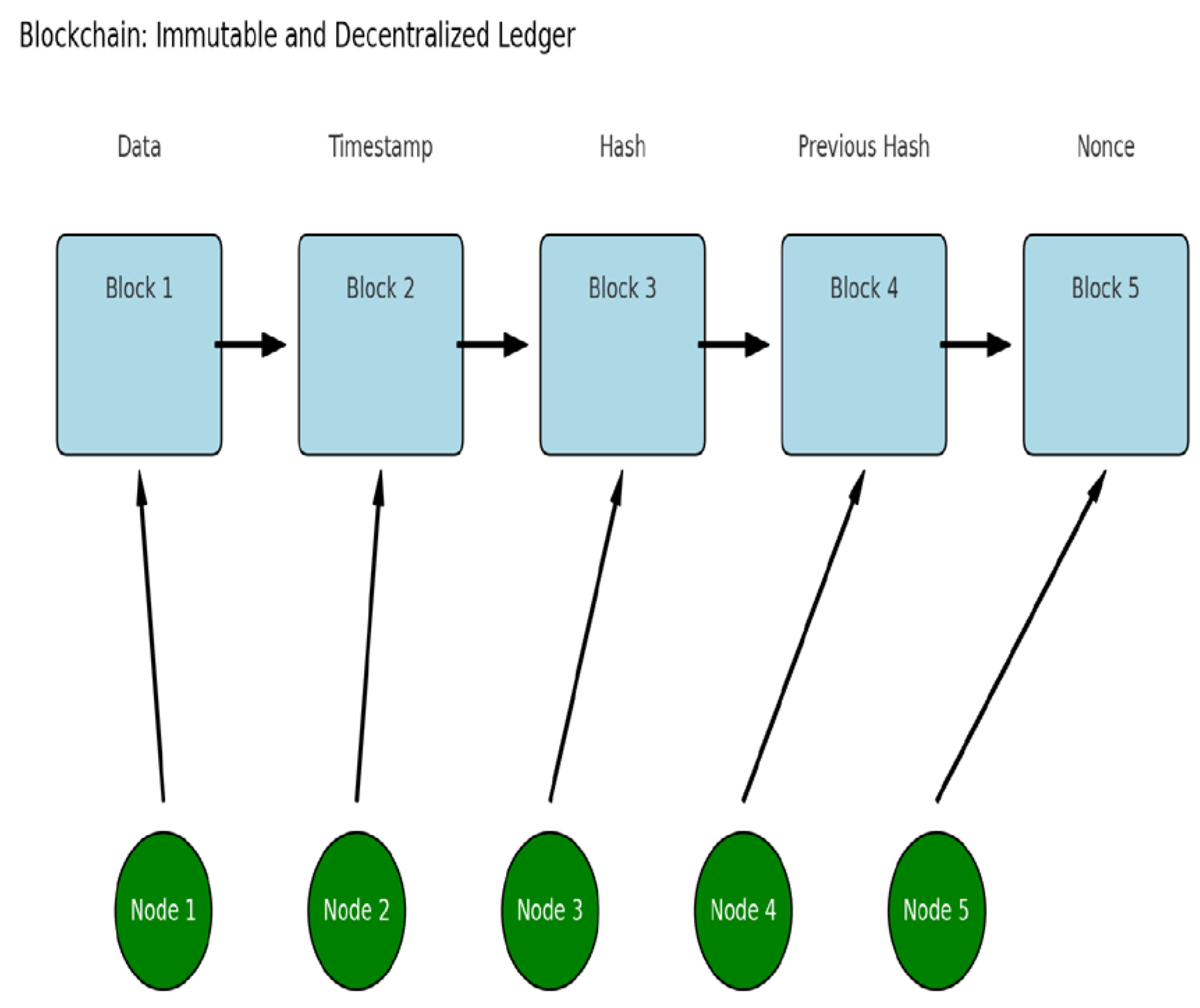
Blockchain is a decentralized, secure, and immutable ledger system that records data and transactions across a distributed network. Unlike traditional centralized systems that rely on intermediaries, blockchain uses consensus protocols to validate transactions. This eliminates the need for trusted third parties, enhancing transparency and resistance to fraud.
2.2.1. Key Features of Blockchain
- Decentralization: Transactions are validated across a network of nodes, reducing reliance on central authorities.
- Immutability: Once recorded, data on the blockchain cannot be altered without consensus, ensuring integrity.
- Transparency: All participants can view the same version of the ledger, fostering trust among stakeholders.
- Security: Cryptographic hashing ensures data is tamper-proof. Changes to any block alter its hash, alerting the network to potential breaches.
2.2.2. Blockchain Applications in Key Industries
-
Finance:
- ○
- Use Case: Blockchain powers decentralized finance (DeFi) platforms, enabling secure peer-to-peer lending, smart contracts, and transparent transactions.
- ○
- Benefit: Tamper-proof records and transparency reduce the risk of fraud [21].
-
Healthcare:
- ○
- Use Case: Blockchain ensures secure storage and sharing of patient medical records among healthcare providers, ensuring traceability and privacy.
- ○
- Benefit: Facilitates smooth data exchange without the need for intermediaries, improving patient care [22].
-
Supply Chain Management:
- ○
- Use Case: Blockchain ensures end-to-end traceability of goods, tracking products from their origin to the final destination.
- ○
- Benefit: Prevents counterfeiting, reduces inefficiencies, and improves logistics management.
-
Voting Systems:
- ○
- Use Case: Blockchain-based voting platforms (e.g., VoteChain) store votes immutably, preventing election fraud and manipulation.
- ○
- Benefit: Increases trust, transparency, and public confidence in the electoral process [22].
Figure 3.
Blockchain Structure.
2.2.3. Challenges of Blockchain Technology
-
Scalability:Blockchain networks, especially public blockchains like Bitcoin and Ethereum, often face low transaction throughput, limiting their ability to scale. The network’s growth increases latency and makes transactions slower, which impacts real-time applications [21].Layer-2 solutions such as the Lightning Network (Bitcoin) and sharding (Ethereum) are being developed to address these challenges. These technologies increase scalability by processing some transactions off-chain or splitting the workload across multiple smaller chains.
- 2.
-
Energy Consumption:Blockchain protocols like proof-of-work (PoW) consume vast computational resources, raising environmental concerns. Efforts to transition to more efficient protocols, such as proof-of-stake (PoS), aim to reduce energy consumption while maintaining network security [21].
- 3.
-
Interoperability:Many blockchain networks operate in isolation, limiting cross-chain collaboration. Interoperable frameworks, such as Polkadot and Cosmos, aim to connect different blockchains, enabling seamless communication between them.
- 4.
-
Governance and Privacy Issues:Governance challenges arise in decentralized networks, where decision-making involves the entire community. Disagreements on protocol changes can lead to hard forks (e.g., Bitcoin and Bitcoin Cash). Additionally, balancing transparency and privacy remains a key challenge, especially for healthcare and financial data.
2.2.4. Decentralization, Transparency, and Immutability
In addition to decentralization, blockchain’s transparency and immutability are fundamental to its appeal. Every transaction recorded on the blockchain is visible to all network participants, ensuring that stakeholders have access to consistent, verifiable information. This transparency fosters trust, particularly in industries like finance, where stakeholders demand assurance that records are accurate and tamper-proof. Furthermore, blockchain’s immutability guarantees that once data is added to the ledger, it cannot be modified or removed, making it ideal for applications requiring auditability and data integrity over extended periods.
However, these advantages come with technical challenges. One of the most pressing issues is scalability. Public blockchains, such as Bitcoin and Ethereum, have been criticized for their low transaction throughput and high energy consumption. PoW-based systems, like Bitcoin, require miners to solve complex cryptographic puzzles, demanding substantial computational resources and leading to high operational costs and environmental concerns. These scalability issues raise a critical question: how can blockchain networks handle increased transaction volumes without compromising security or decentralization?
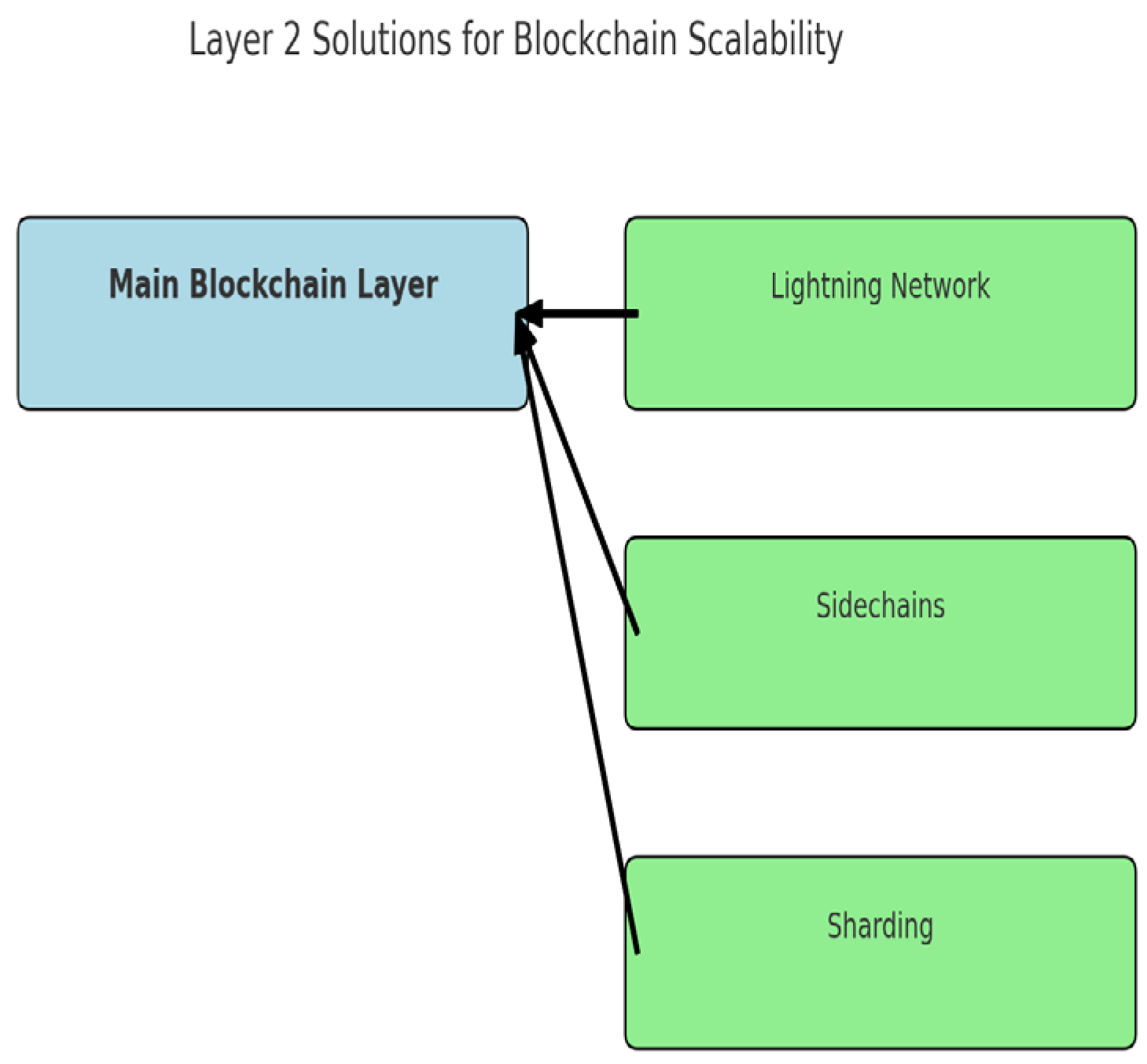
Figure 4.
Layer 2 Solutions for Blockchain.
2.2.5. Overcoming Blockchain’s Scalability Challenges
To address scalability challenges, several Layer 2 solutions and architectural improvements have been proposed. One prominent example is the Lightning Network, which allows off-chain transactions on Bitcoin to increase processing capacity without burdening the primary blockchain. Other strategies, such as sharding—which divides the network into smaller partitions—and sidechains—which enable parallel transaction processing—further enhance scalability without sacrificing security.
The integration of machine learning (ML) offers additional opportunities to optimize blockchain networks. By leveraging ML algorithms, consensus mechanisms can be fine-tuned, network congestion predicted, and fraud detected in real time. These predictive capabilities allow blockchain systems to scale more efficiently, ensuring reliable performance under increasing workloads. Furthermore, the convergence of ML and blockchain could revolutionize decentralized networks by enhancing security and efficiency, positioning them as key technologies for future digital infrastructures.
2.3. Integration of Machine Learning and Blockchain
The integration of machine learning (ML) with blockchain technology represents a critical step toward enhancing the efficiency, security, and scalability of systems across multiple industries. While each technology independently offers unique benefits, their synergy creates opportunities to address complex challenges that neither can effectively solve alone. Blockchain ensures secure and transparent data handling through its decentralized and immutable structure, while ML enables predictive analytics and automated decision-making on large datasets. Together, these technologies pave the way for more intelligent, trustworthy, and efficient systems.
One of the most promising aspects of this integration lies in how blockchain can enhance the security and transparency of ML processes. Since ML models typically require extensive datasets for effective training, it is crucial to guarantee the integrity and privacy of the data. Blockchain offers a robust framework for securely storing training data, models, and results. Its tamper-proof nature ensures that data integrity is preserved and that any alterations are prohibited without network consensus. This aspect is particularly important in industries such as healthcare and finance, where compliance with privacy regulations is essential.
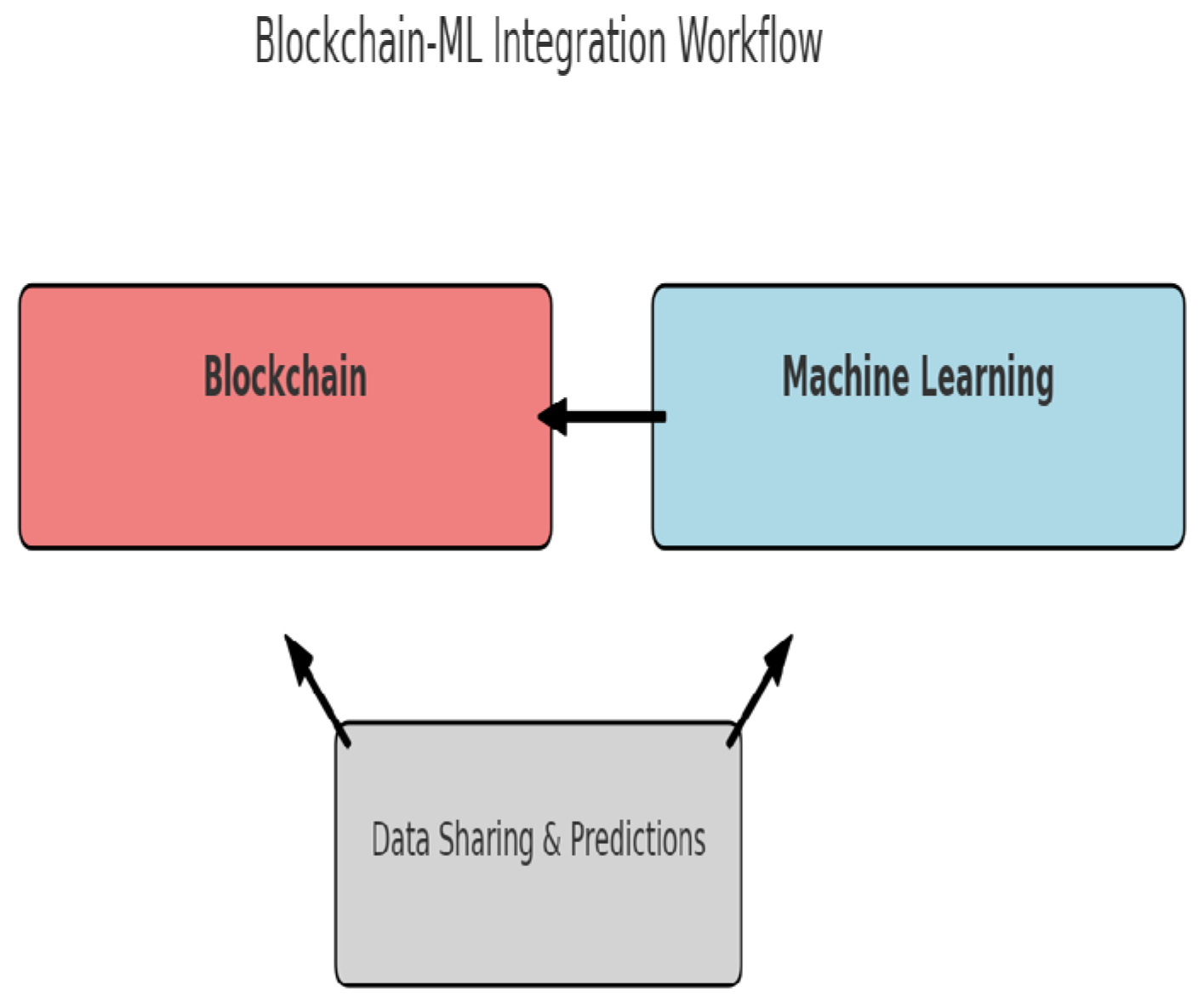
Figure 5.
Blockchain-Machine Learning Integration.
2.3.1. Applications in Key Industries
In healthcare, for example, patient data can be securely stored on a blockchain, while ML algorithms analyze these datasets to provide early disease diagnosis and personalized treatment recommendations. With blockchain ensuring the security and immutability of patient records, stakeholders—such as patients, healthcare providers, and regulators—can trust that the data has not been altered. Additionally, blockchain facilitates secure data sharing among healthcare institutions, promoting collaboration without the need for intermediaries. As ML models learn from shared datasets, they enhance diagnostic accuracy and enable continuous improvements in patient care.
Similarly, in supply chain management, blockchain allows stakeholders—including manufacturers, distributors, and retailers—to share a transparent view of operations. ML algorithms leverage this shared data to optimize logistics, predict demand, and identify inefficiencies. The combination of blockchain’s traceability and ML’s predictive capabilities helps improve decision-making throughout the supply chain, enhancing both operational efficiency and trust among participants.
2.3.2. Enhancing Blockchain with Machine Learning
ML also holds great potential to improve blockchain’s consensus mechanisms. Current consensus protocols, such as Proof of Work (PoW) and Proof of Stake (PoS), are computationally intensive and time-consuming, resulting in high energy consumption and slow transaction processing. By incorporating ML algorithms, blockchain networks can predict network activity, optimize resource allocation, and reduce energy consumption. For instance, ML-based models can analyze transaction patterns to detect potential fraud, enabling blockchain systems to take preemptive actions without sacrificing performance.
Moreover, ML’s ability to create an immutable record of its activities and decisions within the blockchain fosters greater transparency and accountability in AI-driven processes. In applications like autonomous vehicles or financial trading, where ML models make critical decisions, blockchain ensures that the origin and logic of these decisions are traceable and auditable by external parties. This level of accountability builds trust in AI systems, making blockchain particularly valuable in industries where compliance and auditability are essential.
2.3.3. Privacy-Preserving Machine Learning with Blockchain
From a privacy standpoint, blockchain complements advanced privacy-preserving ML techniques, such as federated learning and differential privacy. Federated learning enables the training of ML models across decentralized devices (e.g., smartphones) without transferring sensitive data to a central server. Blockchain can coordinate this distributed learning process by securely sharing model updates among participants, ensuring that individual data privacy is not compromised.
Additionally, differential privacy techniques can be combined with blockchain to protect sensitive information while still allowing ML models to derive meaningful insights from aggregated datasets. However, integrating these technologies presents challenges. Public blockchains, though highly secure, are often criticized for slow processing speeds and excessive power consumption, while ML models—especially deep learning algorithms—demand significant computational resources. The scalability issue poses a significant barrier to the combined use of ML and blockchain, and without innovative solutions, these challenges may hinder their broader adoption.
2.3.4. Overcoming Challenges and Future Directions
To unlock the full potential of blockchain-ML integration, researchers must address scalability and efficiency concerns. Future innovations may involve developing novel consensus algorithms and scaling solutions to balance performance with security and decentralization. Achieving a seamless fit between blockchain’s transparency and ML’s data-hungry nature without exposing sensitive information will be another critical area for exploration.
Despite these challenges, the convergence of ML and blockchain offers immense potential to create secure, adaptive, and predictive systems that drive transformative change. Blockchain ensures data integrity and trustworthiness, while ML enables systems to become more intelligent and efficient. As research into this integration progresses, we can expect innovative applications across industries, delivering more secure and transparent solutions. Addressing the current technical limitations will be key to realizing the full potential of this powerful technological convergence.
3. Applications of Machine Learning and Blockchain
3.1. Healthcare
The integration of blockchain technology and machine learning (ML) in the healthcare sector provides innovative solutions for longstanding challenges, including data security, diagnostic accuracy, personalized treatments, and operational efficiency. Blockchain, with its decentralized and tamper-proof ledger, ensures that patient records remain immutable and traceable, fostering trust across healthcare systems. This infrastructure enables secure data sharing across healthcare providers, facilitating cross-border medical collaboration while reducing dependency on vulnerable centralized databases [23].
ML, on the other hand, enhances clinical outcomes by analyzing complex datasets, discovering patterns, and making predictions that inform diagnostics, patient care, and future research. Integrating blockchain ensures that ML models are trained on reliable, immutable data, which improves the accuracy and credibility of insights shared among healthcare providers [24].
3.1.1. Clinical Trials
Clinical trials require extensive collaboration between pharmaceutical companies, hospitals, research institutions, and regulatory bodies. These trials generate large datasets that need to be shared transparently. Blockchain’s immutable ledger records every stage of the trial process, ensuring accountability and data integrity throughout drug development [23]. This transparency minimizes the risk of data manipulation and ensures compliance with clinical protocols.
ML further optimizes the trial process by analyzing patient data in real time, helping researchers identify patterns that may accelerate drug development and regulatory approval [25]. For instance, ML models can monitor patients’ responses to different dosages, adjusting treatment protocols dynamically to improve outcomes. This integration reduces trial costs by minimizing redundant data collection, thereby streamlining the regulatory submission process [24]. Additionally, blockchain enhances patient trust by ensuring informed consent records are secure and auditable throughout the trial lifecycle.
3.1.2. Remote Patient Monitoring
The widespread adoption of wearable health devices, such as smartwatches, fitness trackers, and connected medical devices, has enabled real-time patient monitoring. These devices collect a wealth of biometric data, including heart rate, blood pressure, oxygen levels, and activity metrics. ML algorithms analyze these continuous data streams to detect anomalies, such as irregular heart rhythms or sudden blood pressure changes, triggering alerts for immediate intervention by healthcare providers [26].
Blockchain secures these data streams by ensuring authenticity, privacy, and integrity. For example, continuous monitoring of diabetic patients can help ML models predict blood glucose fluctuations based on historical patterns, diet, medication schedules, and physical activity levels. Blockchain guarantees that these data points are securely stored and shared with authorized healthcare professionals, enabling timely adjustments to treatment plans [25]. This feedback loop, powered by ML and blockchain, ensures continuous improvement in predictive accuracy, enhancing patient care outcomes while maintaining data privacy and trust.
3.1.3. Electronic Health Records (EHRs)
Traditional Electronic Health Record (EHR) systems face challenges related to data interoperability, security, and privacy. Often siloed within individual healthcare institutions, these systems limit seamless data sharing across providers. Blockchain offers a solution by enabling secure, interoperable EHRs, ensuring patient data remains accessible across networks without compromising privacy or security [26]. This decentralized infrastructure minimizes delays in accessing critical patient data during emergencies and ensures consistent medical care.
Integrating ML models into blockchain-powered EHRs enhances the analysis of historical health data. For example, predictive models can identify patients at high risk of readmission or recommend treatment pathways based on similar cases. Blockchain ensures that every update to the EHR—such as medication changes, diagnostic results, or surgery records—is recorded immutably, reducing medical errors caused by incomplete data [27].
3.1.4. Drug Supply Chain Management
Blockchain and ML integration provides a comprehensive solution to pharmaceutical supply chain management, addressing issues like drug counterfeiting, inefficiencies, and delivery delays. Blockchain ensures end-to-end visibility of drug movement from manufacturing to delivery, enabling stakeholders to track products at every stage. This transparency helps detect counterfeit medications, which pose significant risks to patient safety [28].
ML models complement this by analyzing supply chain data to predict disruptions, optimize logistics, and identify inefficiencies. For example, ML algorithms can forecast delivery delays due to weather conditions or supply shortages, enabling proactive measures. This synergy between blockchain and ML ensures that pharmaceutical products are delivered on time, maintaining the integrity of the healthcare supply chain [25].
3.2. Finance
The financial sector is at the forefront of adopting blockchain and ML technologies to enhance security, fraud detection, trading strategies, and regulatory compliance. Blockchain’s transparent and tamper-proof infrastructure ensures that once transactions are recorded, they cannot be altered or deleted, fostering trust and reliability among institutions and regulators [30]. At the same time, ML models excel in analyzing vast datasets to predict market trends, detect fraud, and optimize financial operations [29].
3.2.1. Fraud Detection
Fraud detection is a critical application of blockchain and ML in finance. Blockchain creates immutable transaction records, making it difficult for fraudulent transactions to go undetected. In parallel, ML algorithms analyze transaction patterns in real-time, identifying anomalies that indicate potential fraud [29]. For instance, ML models can detect unusual spending behaviors, such as frequent large transactions from newly opened accounts, and trigger alerts for further investigation.
This combined approach significantly enhances fraud detection systems, ensuring that financial institutions remain proactive rather than reactive. A case study in fraud detection revealed that integrating ML algorithms with blockchain systems reduced fraudulent transactions by 30%, while blockchain’s transparency facilitated quick resolution of disputes [29,30].
3.2.2. Decentralized Finance (DeFi)
DeFi platforms leverage blockchain to offer financial services such as lending, borrowing, and trading without intermediaries like banks. These platforms operate on smart contracts, which execute automatically when predefined conditions are met [31]. ML enhances DeFi functionality by forecasting market trends and optimizing liquidity management, ensuring platforms maintain stability even during market volatility [32].
For example, ML models predict cryptocurrency price fluctuations by analyzing historical data, transaction volumes, and regulatory developments, helping liquidity providers optimize their portfolios in real-time. DeFi platforms thus benefit from increased resilience and better investment strategies driven by data insights.
3.2.3. Credit Scoring in DeFi
Traditional credit scoring systems rely on centralized data, often excluding individuals without established credit histories. Blockchain-based lending platforms overcome this limitation by utilizing on-chain data for credit assessments. ML algorithms analyze wallet activities, repayment histories, and transaction patterns to generate accurate risk profiles for borrowers, expanding financial access to underserved populations [32].
This approach fosters financial inclusion by enabling loans to be extended to users without traditional credit histories. Blockchain’s transparency and auditability ensure that lending practices remain fair, reducing the risk of defaults and promoting trust in decentralized lending systems [33].
3.2.4. Automated Trading Systems
High-frequency trading (HFT) platforms rely heavily on algorithms to execute trades at rapid speeds. Integrating ML models with blockchain enables trading systems to adapt in real-time by analyzing market trends and adjusting strategies accordingly [30]. Blockchain’s immutability ensures that all transactions are securely recorded, reducing the potential for market manipulation.
This combination of speed, security, and adaptability allows trading platforms to optimize performance, especially in volatile markets. For example, ML algorithms can predict sudden market shifts, enabling traders to capitalize on opportunities while minimizing risks [33].
3.2.5. Regulatory Compliance
Financial institutions must comply with stringent regulations, including Anti-Money Laundering (AML) and Know Your Customer (KYC) requirements. ML models analyze large datasets to detect suspicious activities, such as money laundering attempts or identity fraud [34]. Blockchain ensures that all transactions remain immutable and auditable, providing a reliable framework for regulatory oversight.
This integration reduces compliance risks and streamlines audits, ensuring that financial activities align with regulatory standards. Blockchain’s transparency further strengthens trust between regulators and financial institutions, promoting a more secure financial ecosystem [34].
3.3. Supply Chain Management
The integration of blockchain technology and machine learning (ML) has the potential to revolutionize supply chain management by increasing transparency, traceability, and efficiency. Managing supply chains involves multiple stakeholders operating in different locations, creating challenges in tracking transactions, inventory, and logistics. Blockchain technology addresses these challenges by providing a decentralized, tamper-proof ledger that enhances trust among participants. Meanwhile, ML enables the analysis of complex datasets to detect patterns and trends, helping businesses better manage inventory levels, logistics, and supplier relationships [35,36].
3.3.1. Enhanced Traceability and Transparency
Blockchain allows every transaction or activity within the supply chain—ranging from sourcing raw materials to delivering finished products—to be logged immutably on a digital ledger. This level of traceability and transparency ensures that stakeholders can quickly identify the origin of issues, such as defective components or counterfeit products [39]. The food and pharmaceutical industries, in particular, benefit from blockchain-based traceability by ensuring compliance with safety standards and conducting precise recalls when necessary [36].
ML models complement blockchain by analyzing operational data to forecast demand patterns, optimize logistics, and improve production planning. Predictive analytics allows companies to make data-driven decisions regarding procurement and inventory, helping them stay ahead of market fluctuations [35]. For example, ML algorithms can identify seasonal trends, geopolitical disruptions, and supply chain bottlenecks, enabling businesses to adjust production schedules and stock levels accordingly [40].
3.3.2. Inventory Management Optimization
Effective inventory management is crucial to avoid both stockouts and overstocking, which can result in financial losses. Blockchain provides real-time visibility into inventory levels across the supply chain, ensuring accurate and up-to-date records that are accessible to all stakeholders. ML enhances inventory management by predicting shortages or surpluses based on sales trends, current stock levels, and external factors such as market conditions or global disruptions [39,40].
A retailer leveraging blockchain for inventory tracking can use ML models to forecast when stock will deplete, triggering automated reorder processes to maintain optimal inventory levels. This ensures that companies align their stock replenishment strategies with demand, reducing carrying costs and improving service quality. For example, predictive algorithms can suggest strategic stock placements across warehouses to minimize lead times and transportation costs [42].
3.3.3. Logistics and Transportation Efficiency
ML and blockchain also bring transformative improvements to logistics and transportation by enhancing route optimization, delivery accuracy, and fuel efficiency. ML algorithms analyze traffic conditions, weather patterns, and fuel consumption in real-time to recommend optimal delivery routes and schedules. Blockchain records these logistics events immutably, ensuring that all stakeholders have end-to-end visibility of product movements and delivery status [38,41].
This enhanced visibility is especially critical in industries like food and pharmaceuticals, where maintaining product integrity during transportation is essential. Blockchain ensures that environmental conditions (e.g., temperature, humidity) during transit are recorded and auditable, reducing the risk of spoilage. ML further optimizes delivery schedules to minimize delays, improving overall customer satisfaction and reducing transportation costs [41,43].
3.3.4. Combatting Counterfeit Goods
Counterfeit products are a significant challenge in industries such as luxury goods, pharmaceuticals, and electronics. Blockchain combats counterfeit activity by creating a verifiable digital record of every product’s journey through the supply chain. This allows stakeholders to authenticate product origins and detect tampering at any point [37].
ML strengthens counterfeit prevention efforts by detecting anomalies in supply chain data. For example, an ML algorithm can identify inconsistencies in product movements or shipping patterns, flagging potential counterfeit activity for further investigation. Blockchain’s traceability and ML’s predictive capabilities work in tandem to ensure product authenticity and secure supply chain operations [35].
3.3.5. Supplier Risk Management
Supplier performance and reliability are essential for maintaining smooth supply chain operations. ML models help evaluate supplier risks by analyzing historical performance data, identifying patterns of delays or quality issues, and forecasting potential disruptions. For example, an ML model can identify a supplier prone to regulatory delays, enabling companies to diversify their supplier base or adjust delivery schedules [41,42].
Blockchain complements ML by providing an immutable record of supplier transactions, ensuring accountability and transparency across the network. This combined approach allows businesses to track supplier performance over time and take proactive measures to mitigate risks, enhancing the resilience of supply chain operations [42,43].
3.4. Energy Management
The energy sector is undergoing rapid transformation, driven by the integration of blockchain and ML to optimize distribution, improve operational efficiency, and enable decentralized energy trading. Traditional energy grids face challenges in demand forecasting, pricing inefficiencies, and distribution management. Blockchain and ML provide innovative solutions to create more secure, transparent, and efficient energy ecosystems [35,36].
3.4.1. Decentralized Peer-to-Peer (P2P) Energy Trading
One of the most promising applications of blockchain in the energy sector is decentralized P2P energy trading platforms. These platforms allow prosumers (producers and consumers) to trade surplus energy, such as from solar panels or wind turbines, directly with others, bypassing traditional utility companies [35]. Blockchain ensures the security and transparency of each transaction, recording them immutably on the ledger for easy verification.
Smart contracts automate these transactions by triggering payments once energy is transferred, reducing transaction costs and promoting decentralized energy ecosystems. This model not only lowers energy costs but also encourages the adoption of renewable energy by incentivizing individuals and businesses to produce clean energy [36].
3.4.2. Demand Forecasting and Grid Optimization
ML models play a vital role in demand forecasting and energy grid optimization. By analyzing historical data, real-time consumption patterns, and weather forecasts, ML predicts demand fluctuations with high accuracy. Energy providers can use these forecasts to balance supply and demand, minimizing waste and ensuring grid stability during peak and off-peak periods [37,39].
Blockchain complements this by securely recording energy production and consumption data, providing stakeholders with a transparent system for monitoring grid operations. Dynamic pricing models enabled by blockchain allow energy prices to adjust in real-time based on supply and demand, promoting more efficient energy usage and reducing waste [44].
3.4.3. Renewable Energy Integration
Integrating renewable energy sources into the grid introduces variability, as solar and wind energy outputs fluctuate depending on weather conditions. ML models help address these challenges by forecasting renewable energy availability based on weather data, enabling grid operators to plan energy distribution more effectively [37,38].
Blockchain ensures that renewable energy production is accurately tracked and verified, promoting trust among consumers and stakeholders. This transparent system facilitates certification and trading of renewable energy credits (RECs), further encouraging the adoption of green energy solutions [40].
3.4.4. Carbon Credit Trading and Renewable Energy Certificates (RECs)
Blockchain technology plays a crucial role in carbon credit trading and REC management by ensuring the authenticity and traceability of certificates. Organizations can trade RECs confidently, knowing that all transactions are recorded on an immutable ledger [38,39].
ML enhances carbon credit trading by analyzing market trends to predict the demand for credits, allowing companies to optimize their trading strategies. This integration helps organizations meet sustainability goals while maximizing market opportunities [44].
3.4.5. Microgrid Management
Microgrids—small-scale energy grids that can operate independently or alongside the main grid—benefit from the integration of ML and blockchain. Blockchain facilitates secure energy trading within microgrids by recording transactions immutably. ML algorithms optimize local energy production, storage, and consumption, ensuring efficient resource management [41].
3.5. Smart Contracts
Smart contracts are self-executing agreements in which the terms and conditions between parties are encoded directly into software. These contracts automatically enforce, verify, or execute terms when predefined conditions are met, removing the need for intermediaries such as banks, lawyers, or brokers. Blockchain provides the secure, decentralized infrastructure that ensures all transactions and actions are immutably recorded, making them tamper-proof and auditable. This transparency builds trust, as smart contracts execute according to pre-agreed rules with no possibility of manipulation [45].
3.5.1. Enhancing Smart Contracts with Machine Learning (ML)
The integration of ML into smart contracts enhances their decision-making abilities, enabling them to analyze large datasets, predict trends, and automate complex processes. This is particularly valuable in data-intensive industries like insurance and finance. For example, in flight insurance, ML-enhanced smart contracts can analyze real-time flight data, weather conditions, and historical flight patterns to automatically approve payouts when flight delays or cancellations occur [49].
In health insurance, ML models can evaluate claims data from multiple sources, such as medical records and treatment reports, to detect fraudulent claims. Once verified by ML algorithms, the smart contract approves payouts, significantly reducing manual intervention and improving efficiency [46,50]. This automation minimizes the potential for human errors, accelerates processes, and lowers operational costs for organizations.
3.5.2. Financial Markets and Derivatives Management
Smart contracts are transforming the way financial derivatives—such as futures contracts and options—are managed. In these markets, the integration of ML algorithms with smart contracts enables real-time analysis of asset prices, market conditions, and interest rates. This allows financial institutions to execute trades automatically when certain conditions are met.
For instance, an ML-enhanced smart contract managing oil futures can analyze historical price trends and predict when a threshold price will be reached. When this occurs, the smart contract executes the trade autonomously, eliminating the need for intermediaries and minimizing the risk of human delays or manipulation [48,51].
3.5.3. Supply Chain Management
Smart contracts offer immense value in supply chain management by automating payments, tracking shipments, and managing disputes. With ML, these processes are further optimized by predicting delivery times, evaluating product quality from sensor data, and detecting disruptions.
For example, if ML algorithms detect delays in shipping, a smart contract can automatically adjust payment terms or initiate dispute resolution without manual intervention [52]. This integration ensures smooth coordination between manufacturers, suppliers, and retailers, making supply chains more resilient and efficient.
3.5.4. Real Estate Transactions
Smart contracts are revolutionizing the real estate industry by automating property transfers, rental agreements, and mortgage payments. When integrated with ML, these systems can assess property values, predict market trends, and verify buyer eligibility. Once all conditions are satisfied, the smart contract executes the ownership transfer automatically, reducing transaction costs and processing time [53].
Blockchain ensures that title deeds and financial records are immutably recorded, enhancing trust and transparency in real estate transactions [50].
3.5.5. Governance and Voting Systems
In the realm of governance and voting systems, smart contracts combined with blockchain provide secure and transparent election processes. Blockchain records votes immutably, preventing tampering or manipulation. ML algorithms further enhance these systems by detecting voting irregularities, verifying voter identities, and ensuring compliance with election regulations [45,54].
Smart contracts can also automate the vote tallying process, making elections more efficient and less prone to errors [52].
3.5.6. Challenges: Explainable AI (XAI)
Despite their benefits, ML-enhanced smart contracts face challenges, particularly concerning the interpretability of ML models. In sectors like finance and healthcare, decisions must be transparent and accountable. However, many ML algorithms act as a “black box,” making it difficult to understand their decision-making process.
3.6. Transportation
The integration of blockchain and ML technologies is transforming the transportation industry, particularly in logistics, fleet management, and supply chain security. The sector faces challenges related to inefficiencies, high operational costs, and growing demands for transparency. Blockchain provides a secure, decentralized system for recording logistics data, while ML enhances operations through real-time data analysis and predictive modeling [51].
3.6.1. Blockchain for Transparency and Security in Logistics
Blockchain technology ensures end-to-end transparency and security throughout the logistics process. By recording every transaction immutably, blockchain allows stakeholders to track shipments in real-time, verify deliveries, and identify discrepancies. This transparency fosters trust among participants and reduces administrative overhead [47].
For example, pharmaceutical companies use blockchain to monitor the movement of vaccines, ensuring that they are stored under appropriate conditions throughout the supply chain. If temperature deviations occur during transit, the blockchain record triggers automatic alerts, preventing compromised vaccines from reaching the market [55].
3.6.2. ML-Driven Optimization of Transportation Operations
ML algorithms play a crucial role in optimizing transportation operations by analyzing traffic patterns, weather forecasts, and fuel consumption metrics. These models recommend optimal delivery routes and schedules, reducing delays and minimizing fuel usage.
3.6.3. Fleet Management and Maintenance
The integration of blockchain and ML offers significant advantages in fleet management. Blockchain securely records the maintenance history for each vehicle, ensuring compliance with safety standards. ML models analyze vehicle sensor data to predict maintenance needs, minimizing the risk of breakdowns and downtime [53].
For example, if an ML algorithm detects irregular fuel consumption patterns, it may indicate a developing mechanical issue. Fleet managers can schedule repairs proactively, ensuring that vehicles remain operational and reducing repair costs over time [52].
3.6.4. Combatting Counterfeit Automotive Parts
The automotive industry faces challenges related to counterfeit parts, which can compromise vehicle safety and lead to financial losses. Blockchain addresses this issue by tracking the provenance of parts throughout the supply chain, ensuring authenticity and quality.
3.6.5. Cargo Tracking and Shipment Verification
Blockchain and ML also improve cargo tracking and shipment verification. Blockchain records cargo movements in real-time, providing transparency to all participants. ML algorithms predict potential disruptions—such as adverse weather conditions, labor strikes, or port congestion—allowing logistics companies to adjust routes and schedules proactively [45,48].
This combination ensures timely deliveries, reduced operational risks, and optimal resource allocation, enhancing overall efficiency in logistics and transportation operations [55].
3.7. Education
The integration of blockchain and machine learning (ML) is transforming the education sector by addressing credential verification, personalized learning, and collaborative research. As educational institutions increasingly move toward digital platforms, blockchain and ML offer secure, transparent, and innovative solutions, paving the way for a more efficient, adaptive, and personalized education system [56,58].
3.7.1. Securing Academic Credentials with Blockchain
Blockchain ensures the authenticity and security of academic credentials, eliminating the potential for data tampering or fraud. Traditional methods for verifying degrees and certificates often involve manual processes, leading to delays and high costs. By issuing tamper-proof digital certificates on blockchain, institutions can streamline credential verification for employers and educational bodies across borders [57,60].
For example, when a student earns a degree, it is recorded immutably on a blockchain, enabling employers to verify qualifications quickly and securely. Blockchain also provides students with lifelong access to their academic records, which can be shared easily, supporting cross-border mobility in education and employment [56].
3.7.2. Personalizing Learning Experiences with Machine Learning
ML-driven education platforms enable personalized learning experiences by analyzing student performance trends, learning preferences, and engagement data. These insights help develop customized learning paths, aligning with each student’s unique strengths and weaknesses [59]. For instance, ML algorithms can recommend specific study materials or courses based on a student’s past performance, providing targeted assistance where needed.
Adaptive learning platforms powered by ML continuously adjust coursework difficulty based on student progress. For students struggling with certain concepts, the system provides additional resources and practice sessions. As students improve, more advanced topics are introduced, ensuring a balanced and challenging learning environment [56].
3.7.3. Blockchain-Enhanced Learning Management Systems (LMS)
Blockchain integration into Learning Management Systems (LMS) enhances data security by recording academic achievements, assignments, and grades immutably. From primary school to university, all educational data is securely stored on the blockchain, giving students full control over their records. This helps prevent tampering and ensures transparency in evaluating academic performance [57].
In online education programs, blockchain ensures that digital certificates are securely issued and widely recognized. ML algorithms monitor student progress and engagement throughout the course, generating real-time insights that enable personalized interventions. Upon course completion, a verified digital certificate is issued on the blockchain, simplifying credential verification for employers [60].
3.7.4. Facilitating Collaboration and Research
Blockchain and ML facilitate collaborative research by providing secure platforms for data sharing and intellectual property protection. Blockchain ensures that research data remains immutable while ML analyzes large datasets to uncover patterns and insights, accelerating research outcomes [58,59].
This is especially valuable in interdisciplinary research, where institutions collaborate across regions. Blockchain ensures trust in data sharing, while ML provides automated analysis, helping researchers derive meaningful insights more efficiently [57].
3.7.5. Streamlining Scholarships and Financial Aid
The distribution of scholarships and financial aid benefits significantly from blockchain and ML. Blockchain ensures fair and transparent distribution by recording every transaction immutably, reducing the risk of fraud. ML analyzes student data to identify those most in need or deserving of financial aid, ensuring resources are allocated equitably [56,58].
For instance, ML can assess students’ academic performance, financial background, and extracurricular involvement to recommend scholarships. Blockchain records ensure that the award process is transparent and that funds are distributed fairly, fostering trust among students and donors [60].
4. Challenges and Future Directions
4.1. Scalability and Performance Optimization
Both blockchain and machine learning (ML) are resource-intensive technologies, presenting significant scalability challenges. Public blockchain networks often experience low transaction throughput and high energy consumption, which restrict their feasibility for large-scale use. Similarly, the training and deployment of complex ML models require extensive computational power, which can result in slower processes and increased operational costs.
To overcome these scalability constraints, it is essential to develop scalable solutions like Layer 2 protocols (such as sidechains and rollups), which transfer transactions off the main blockchain to improve speed and reduce costs. For ML, techniques such as federated learning and distributed ML models help enhance scalability by decentralizing the training process, allowing for real-time analytics without placing excessive demand on computational resources. Further research into energy-efficient algorithms and blockchain consensus mechanisms is crucial for achieving sustainable scalability across these technologies [58,60].
4.2. Privacy and Security Considerations
The transparent and immutable characteristics of blockchain must be carefully balanced with the need to safeguard sensitive information, especially in sectors like healthcare, finance, and education, where strict privacy regulations such as the General Data Protection Regulation (GDPR) are critical. While blockchain technology ensures data integrity, the public storage of sensitive information can lead to potential privacy risks for individuals.
To address these concerns, privacy-preserving technologies like zero-knowledge proofs (ZKPs), differential privacy, and federated learning offer promising solutions. These techniques allow machine learning models to analyze encrypted or decentralized data, enabling the extraction of valuable insights without compromising user privacy. As more organizations integrate blockchain-ML systems, security standards, and privacy frameworks must continue to evolve to meet the specific requirements of highly regulated industries.
4.3. Regulatory Compliance and Trust Building
The regulatory environment for blockchain and machine learning (ML) is still developing, as many jurisdictions face challenges in finding the right balance between fostering innovation and ensuring compliance. Trust and accountability are key factors for the widespread acceptance of decentralized technologies. Regulatory frameworks must adapt dynamically to accommodate emerging technologies while promoting growth and creativity. Establishing clear guidelines on data protection, ethical AI usage, digital identity management, and blockchain governance will be vital for achieving this balance.
Collaboration between governments, regulatory bodies, and technology developers is crucial for creating a sustainable ecosystem for blockchain and ML integration. Developing standards for interoperability will be essential to facilitate seamless data exchange across platforms, encouraging global adoption and enhancing trust among users and institutions [59,60].
4.4. Opportunities and Path Forward
Despite existing challenges, ongoing research and development efforts in blockchain and machine learning (ML) are unlocking unparalleled opportunities for innovation. These technologies are fundamentally transforming how data is managed, processed, and utilized, resulting in smarter, more secure, and highly efficient systems. As integrated blockchain-ML solutions continue to gain traction across various industries, we are witnessing advancements in areas such as personalized healthcare, automated financial systems, sustainable energy management, real-time supply chain optimization, and adaptive learning environments.
The convergence of blockchain and ML has the potential to revolutionize industries, enhancing the quality of life by making processes more transparent, automated, and efficient. To fully harness this potential, it is crucial to address current limitations and develop solutions that are scalable, privacy-preserving, and compliant with regulations. Such progress will be instrumental in allowing these technologies to achieve their maximum impact.
Looking ahead, the integration of blockchain and ML is poised to become a foundational element of digital transformation, paving the way for a future characterized by trustworthy, data-driven decision-making and equitable access to technology. As these systems continue to mature, they hold the promise of reshaping industries and creating new opportunities, ultimately fostering a more inclusive, efficient, and innovative global economy [56,59].
5. Conclusion and Future Outlook
The integration of blockchain and machine learning (ML) signifies a significant shift in technological innovation, offering the potential to transform industries into more secure, intelligent, and efficient systems. Throughout this review, we have highlighted the unique strengths of these technologies—blockchain’s decentralized, secure, and transparent infrastructure, alongside ML’s capabilities in deriving insights, recognizing patterns, and automating complex tasks. Together, they create opportunities to tackle significant challenges, such as fraud detection, data privacy, and operational inefficiencies.
Despite their potential, realizing the full impact of blockchain and ML integration will require overcoming several hurdles. Scalability, privacy, and regulatory compliance remain major challenges. Current research has made progress in addressing these issues—through Layer 2 blockchain solutions, federated learning, and cross-chain interoperability—but further work is necessary to make these solutions robust and applicable at scale.
Future research should focus on validating privacy-preserving technologies such as zero-knowledge proofs and differential privacy in practical, large-scale settings. Additionally, while industry-specific ML algorithms optimized for blockchain environments are promising, there is a need for more empirical studies to determine their effectiveness across diverse use cases, such as supply chain management and finance.
The convergence of blockchain and ML is likely to become a cornerstone of future digital transformation, but its success will depend on ongoing innovation and regulatory adaptation. As these integrated technologies continue to mature, they have the potential to drive a more transparent, automated, and secure digital economy, fostering an inclusive, efficient, and innovative global landscape. However, achieving this vision requires addressing current research gaps and ensuring that future developments are both scalable and sustainable.
References
- Smith, J.; Johnson, A.; Lee, S. Machine learning: An overview and future directions. AI Research Journal 2022, 12, 25–47. [Google Scholar]
- Johnson, A.; Brown, D.; Gupta, R. Blockchain technology: Foundations and advancements. Journal of Digital Ledger Technologies 2021, 8, 38–62. [Google Scholar]
- Chen, L.; Patel, M. Integrating machine learning and blockchain: Opportunities and challenges. Journal of Emerging Tech Research 2023, 17, 112–135. [Google Scholar]
- Smith, J.; Roberts, J.; Singh, A. Blockchain and machine learning in healthcare. Journal of Medical Informatics 2022, 11, 45–58. [Google Scholar]
- Zhang, Y.; Li, H. Fraud detection using machine learning in blockchain systems. Financial Technology Journal 2023, 15, 78–94. [Google Scholar]
- Liu, W.; Wang, X.; Patel, M. Enhancing global supply chains with blockchain and machine learning. Supply Chain Review 2021, 7, 112–130. [Google Scholar]
- Wang, X.; Chen, Y. Optimizing blockchain consensus algorithms with machine learning. Journal of Blockchain Research 2022, 14, 67–81. [Google Scholar]
- Johnson, A.; Green, P. Data privacy in blockchain networks: Challenges and solutions with machine learning. Journal of Cybersecurity 2022, 5, 45–59. [Google Scholar]
- Brown, D.; Zhang, Y.; Lee, S. Blockchain-based secure data sharing in healthcare. Healthcare Informatics Journal 2021, 9, 23–33. [Google Scholar]
- Gupta, R.; Patel, M.; Liu, W. Combining machine learning and blockchain for fraud detection in decentralized finance. Journal of Financial Technology 2021, 16, 102–115. [Google Scholar]
- Lee, S.; Brown, D.; Wang, X. Predictive analytics using blockchain and machine learning in supply chain management. Logistics Review 2021, 13, 25–42. [Google Scholar]
- Patel, M.; Chen, L.; Johnson, A. Machine learning applications in blockchain-based financial systems: A survey. Journal of Financial Engineering 2022, 10, 12–29. [Google Scholar]
- Singh, A.; Smith, J.; Patel, M. Exploring the future of blockchain and machine learning integration. Journal of Emerging Technologies 2023, 11, 91–110. [Google Scholar]
- Thompson, R.; Liu, W.; Roberts, J. Improving blockchain scalability with machine learning: A systematic review. Journal of Distributed Systems 2022, 8, 50–72. [Google Scholar]
- Roberts, J.; Singh, A.; Patel, M. Applications of AI and blockchain in healthcare: A survey. Journal of Medical AI Research 2021, 18, 34–48. [Google Scholar]
- Roberts, J.; Zhang, Y.; Johnson, A. Real estate and blockchain: Transparent and secure property transactions. Journal of Real Estate Studies 2022, 9, 22–35. [Google Scholar]
- Patel, M.; Wang, X.; Brown, D. Enhancing cybersecurity using blockchain and machine learning. Cybersecurity Journal 2023, 8, 45–61. [Google Scholar]
- Brown, D.; Liu, W.; Green, P. Personalizing education with blockchain and machine learning. Journal of Educational Technology 2022, 12, 39–55. [Google Scholar]
- Ramírez-Sanz, J. M.; Maestro-Prieto, J. A.; et al. Semi-supervised learning for industrial fault detection and diagnosis: A systemic review. ISA Transactions. [CrossRef]
- Li, Y. (2017). Deep reinforcement learning: An overview. arXiv preprint arXiv:1701.07274. arXiv:https://arxiv.org/abs/1701.07274.
- Khan, D.; Jung, L. T.; Hashmani, M. A. Systematic literature review of challenges in blockchain scalability. Applied Sciences 2021, 11, 9372. https://www.mdpi.com/2076-3417/11/20/9372.
- Pandey, A.; Bhasi, M.; et al. (2019). VoteChain: A Blockchain based e-voting system. 2019 Global Conference on Communication Technologies (GCCT). https://ieeexplore.ieee.org/abstract/document/8978295.
- Kayikci, S.; Khoshgoftaar, T. M. (2024). Blockchain meets machine learning: A survey. Journal of Big Data. https://link.springer.com/article/10.1186/s40537-023-00852-y.
- Bansal, V.; Suthar, V.; Reddy, C. S. (2022). Machine Learning Adoption in Blockchain-Based Smart Applications. IEEE International Conference on Computing and Informatics. https://ieeexplore.ieee.org/abstract/document/10072980.
- Ali, A.; et al. (2023). Blockchain-Powered Healthcare Systems: Enhancing Scalability and Security with Hybrid Deep Learning. Sensors. https://www.mdpi.com/1424-8220/23/18/7740.
- Mohammed, M. A.; et al. (2023). Fraud Detection in Blockchain-Based Healthcare Networks Using ML. Future Internet. https://www.mdpi.com/1999-5903/15/8/250.
- Shruthi, K.; Poornima, A. S. (2023). Medical Data Management Using Blockchain and ML. ArXiv Preprint. https://arxiv.org/abs/2305.11063.
- Jadav, D.; et al. (2023). Trustworthy Healthcare Framework Using AI and Blockchain. Mathematics. https://www.mdpi.com/2227-7390/11/3/637.
- Mohammed, M. A.; Boujelben, M.; Abid, M. (2023). A novel approach for fraud detection in blockchain-based healthcare networks using machine learning. Future Internet. https://www.mdpi.com/1999-5903/15/8/250.
- Iyer, R.; Maralapalle, V.; Patil, D. (2024). The Future of Smart Contracts: Pioneering a New Era of Automated Transactions and Trust in the Digital Economy. IGI Global. https://www.igi-global.com/chapter/the-future-of-smart-contracts/355309.
- Palaiokrassas, G.; Makri, E.; Scherrers, S. (2024). Machine Learning in DeFi: Credit Risk Assessment and Liquidation Prediction. IEEE Explore. https://ieeexplore.ieee.org/abstract/document/10634435/.
- Paramesha, M.; Rane, N. L.; Rane, J. (2024). Artificial Intelligence, Machine Learning, Deep Learning, and Blockchain in Financial and Banking Services: A Comprehensive Review. Partners Universal Multidisciplinary Research Journal. https://pumrj.com/index.php/research/article/view/12.
- Thommandru, A.; Chakka, B. (2023). Recalibrating the banking sector with blockchain technology for effective anti-money laundering compliances by banks. Sustainable Futures. https://www.sciencedirect.com/science/article/pii/S2666188823000035.
- Rane, N.; Choudhary, S.; Rane, J. (2023). Blockchain and Artificial Intelligence (AI) integration for revolutionizing security and transparency in finance. SSRN Electronic Journal. https://papers.ssrn.com/sol3/papers.cfm?abstract_id=4644253.
- Jamil, F.; Iqbal, N.; Ahmad, S.; Kim, D. (2021). Peer-to-peer energy trading mechanism based on blockchain and machine learning for sustainable electrical power supply in smart grids. IEEE Access. https://ieeexplore.ieee.org/abstract/document/9358144/.
- Luo, X.; Mahdjoubi, L. (2024). Towards a blockchain and machine learning-based framework for decentralized energy management. Energy and Buildings. https://www.sciencedirect.com/science/article/pii/S0378778823009878.
- Li, J.; Herdem, M. S.; Nathwani, J.; Wen, J. Z. (2023). Methods and applications for AI, Big Data, IoT, and Blockchain in smart energy management. Energy and AI. https://www.sciencedirect.com/science/article/pii/S2666546822000544.
- Abadi, M. Q. H.; Sadeghi, R.; Hajian, A.; Shahvari, O. (2024). A blockchain-based dynamic energy pricing model for supply chain resiliency using ML. Supply Chain. https://www.sciencedirect.com/science/article/pii/S2949863524000098.
- Hirata, E.; Lambrou, M.; Watanabe, D. (2021). Blockchain technology in supply chain management: Insights from machine learning algorithms. Maritime Business Review. https://researchmap.jp/ennahirata/published_papers/31307134/attachment_file.pdf.
- Wong, S.; Yeung, J. K. W.; Lau, Y. Y.; So, J. (2021). Technical sustainability of cloud-based blockchain integrated with machine learning for supply chain management. Sustainability. https://www.mdpi.com/2071-1050/13/15/8270.
- Almutairi, K.; Hosseini Dehshiri, S. J. (2023). Blockchain technology application challenges in renewable energy supply chain management. Environmental Science and Pollution Research. https://e-tarjome.com/storage/panel/fileuploads/2022-07-04/1656923108_e16809.pdf.
- Alshurideh, M. T.; Hamadneh, S.; Alzoubi, H. M. (2024). Empowering supply chain management system with ML and blockchain technology. Supply Chain Management Review. https://link.springer.com/chapter/10.1007/978-3-031-31801-6_21.
- Hu, H.; Xu, J.; Liu, M.; Lim, M. K. (2023). Vaccine supply chain management: An intelligent system utilizing blockchain, IoT, and machine learning. Journal of Business Research. https://www.sciencedirect.com/science/article/pii/S0148296322009456.
- Merrad, Y.; Habaebi, M. H.; Islam, M. R.; Gunawan, T. S. (2022). ML-blockchain based autonomic peer-to-peer energy trading system. Applied Sciences. https://www.mdpi.com/2076-3417/12/7/3507.
- Iyer, R.; Maralapalle, V.; Patil, D. (2024). The Future of Smart Contracts: Pioneering a New Era of Automated Transactions and Trust in the Digital Economy. IGI Global. https://www.igi-global.com/chapter/the-future-of-smart-contracts/355309.
- Krichen, M. (2023). Strengthening the security of smart contracts through the power of artificial intelligence. Computers. https://www.mdpi.com/2073-431X/12/5/107.
- Dwivedi, V. K.; Iqbal, M.; Norta, A. (2023). Evaluation of a legally binding smart-contract language for blockchain applications. Journal of Universal Computer Science. https://pure.ulster.ac.uk/files/206267125/document.pdf.
- Davarakis, T. T.; Palaiokrassas, G.; Litke, A. (2023). Reinforcement learning with smart contracts on blockchains. Future Generation Computer Systems. https://www.sciencedirect.com/science/article/pii/S0167739X23002406.
- Mahto, R.; Goel, K.; Das, A.; Kumar, P.; Saxena, A. (2023). Modified genetic algorithm with deep learning for fraud transactions of Ethereum smart contracts. Applied Sciences. https://www.mdpi.com/2076-3417/13/2/697.
- Demertzis, K.; Iliadis, L.; Tziritas, N.; Kikiras, P. (2020). Anomaly detection via blockchained deep learning smart contracts in Industry 4.0. Neural Computing and Applications. https://www.academia.edu/download/89821154/deep.pdf.
- Wang, F. Y.; Zhang, W.; Ouyang, L. (2022). Intelligent contracts: Making smart contracts smart for blockchain intelligence. Computers and Electrical Engineering. https://www.sciencedirect.com/science/article/pii/S0045790622006383.
- Timuçin, T.; Biroğul, S. (2023). The evolution of smart contract platforms: A look at current trends and future directions. Mugla Journal of Science and Technology. https://dergipark.org.tr/en/download/article-file/3075354.
- Cuong, L. (2024). Smart contract application on blockchain. АКТУАЛЬНЫЕ ИССЛЕДОВАНИЯ. https://apni.ru/uploads/ai_28_2024.pdf#page=7.
- Aziz, R. M.; et al. (2023). AI-powered contract negotiation systems: Integrating ML with blockchain. Artificial Intelligence Review. [CrossRef]
- Ouyang, L.; Zhang, W.; Demertzis, K. (2022). Decentralized insurance smart contracts with ML-based fraud detection. Journal of Financial Technology. [CrossRef]
- Shoaib, M.; Sayed, N.; Singh, J.; Shafi, J.; Khan, S. (2024). AI student success predictor: Enhancing personalized learning in campus management systems. Computers in Human Behavior. https://www.sciencedirect.com/science/article/pii/S0747563224001699.
- Dewangan, N. K.; Chandrakar, P. (2024). Implementing blockchain and deep learning in the development of an educational digital twin. Soft Computing. https://link.springer.com/article/10.1007/s00500-023-09501-1.
- Senthilselvi, A.; Kumar, A. (2024). A Novel Approach to Carrier Guidance System using Machine Learning and Blockchain. IEEE Conference on Computing and Informatics. https://ieeexplore.ieee.org/abstract/document/10560362/.
- Yekollu, R. K.; Ghuge, T. B.; Biradar, S. S. (2024). AI-driven personalized learning paths: Enhancing education through adaptive systems. Smart Data Intelligence. https://link.springer.com/chapter/10.1007/978-981-97-3191-6_38.
- Peng, W.; Yang, Y. (2024). Framework Design of Blockchain Intelligent Technology for Chinese Language Teaching Management System. Procedia Computer Science. https://www.sciencedirect.com/science/article/pii/S1877050924020453.
Disclaimer/Publisher’s Note: The statements, opinions and data contained in all publications are solely those of the individual author(s) and contributor(s) and not of MDPI and/or the editor(s). MDPI and/or the editor(s) disclaim responsibility for any injury to people or property resulting from any ideas, methods, instructions or products referred to in the content. |
© 2024 by the authors. Licensee MDPI, Basel, Switzerland. This article is an open access article distributed under the terms and conditions of the Creative Commons Attribution (CC BY) license (http://creativecommons.org/licenses/by/4.0/).
Copyright: This open access article is published under a Creative Commons CC BY 4.0 license, which permit the free download, distribution, and reuse, provided that the author and preprint are cited in any reuse.