

Submitted:
23 October 2024
Posted:
24 October 2024
You are already at the latest version
Abstract
Despite extensive research on sustainable business models and the development of various tools to facilitate their implementation, barriers persist particularly concerning the governance of a local ecosystem of actors. In this paper, we bridge the literature on sustainable business models with a literature stream on governance arrangements. We analyze these governance arrangements through a qualitative study focusing on the development of two local energy systems –anaerobic digestion and district heating– by a global energy company. Our study shows the importance of securing collaboration to govern interdependencies in the ecosystem. We identify that a facilitating public policy framework combined with internal institutional, strategic and operational drivers linked to the governance of local ecosystems is crucial for the implementation of local sustainable business models.
Keywords:
sustainable business model
; governance
; local energy system
1. Introduction
Companies from the energy sector are compelled to change their activities in order to help achieve the 17 Sustainable Development Goals (SDGs). What was recently considered valuable is now changing, with customers increasingly and explicitly asking international companies to integrate a form of local value into their offer. This dynamic is supported by public authorities, who embed their energy infrastructure into global transition strategies [1,2]. Changing the energy companies’ value proposition entails changing their business model (BM), as existing BMs are struggling to create economic value and promote resource efficiency, social equity, and environmental protection [3]. BMs have garnered substantial attention in the field of management and span a broad spectrum of topics, with scholars extensively exploring definitions of the term [4], and proposing visuals to represent BMs and their components [5,6]. The transformation towards more sustainable activities is a case in point, as it requires the simultaneous transformation of BMs. Indeed, a stream of literature has been developed around sustainable business model innovation (SBMI). Scholars have clustered sustainable business innovations into archetypes, like circular business models or social enterprises [7,8]. Despite growing research on SBMs and tools developed to help companies transform their BM [9], the literature reveals many barriers to their implementation [10].
Indeed, some sustainable activities can require a strong local embeddedness on the part of companies. The strategic importance of local dimensions in successfully operationalizing some circular business models within organizational and local management contexts, for example, has already been highlighted [11]. Scholars argue that the governance of collaboration becomes of utmost importance to successfully design and operate sustainable activities [12,13] due to the local ecosystem of actors revolving around these activities [14,15]. However, while a stream of literature insisting on the interrelations between several organizations has indeed been developed around ecosystems and BMs, it gives no specifics on the local dimension of some ecosystems, but rather concentrates on strategies for globalized or innovative ecosystems [16]. Also, by focusing on classical BM components, this literature somehow overlooks the governance aspect of local and sustainable BMs [17]. We suggest leveraging the literature on multi-actor collaboration and governance to shed light on governance mechanisms that could be integrated into the design of SBMs, specifically in the context of local activities.
Local sustainable energy systems are a particularly relevant set of activities for studying the impact of local activities on the design of SBMs. A local sustainable energy system offers a decentralized approach to energy production, distribution, and consumption within a specific geographic area and with specific resources at hand [18]. Such systems require governing a complex ecosystem of actors, ranging from international companies to local communities. Through two case studies—anaerobic digestion (AD) and district heating (DH) systems—we wish to investigate the research question: What governance mechanisms are needed to account for the local ecosystem when designing a sustainable business model (SBM)? We show that securing long-term partnerships and setting up a governance of collaboration is paramount for the success of locally-embedded activities. From a business model perspective, we highlight several institutional, strategic and operational drivers linked to the design of collaboration.
Section 2 presents the literature on SBMs and their limitations in designing governance for locally embedded activities. The literature on network governance is presented, highlighting types of governance that can be established for multi-actor collaboration. In section 3, two local sustainable energy systems—AD and DH systems—are introduced, along with the data collection and analysis. A processual approach was selected to comprehend the establishment of the local SBM for the AD and biomass-based DH systems. Additionally, the governance arrangements in the two cases were analyzed and compared to provide insight into general mechanisms. Section 4 provides an analysis of these two case studies. A narrative is presented, highlighting the challenges of setting up an SBM in a local ecosystem. We then provide a description of the governance arrangements. Moving on to section 5, we discuss these emerging mechanisms and explore ways in which they can be integrated into the design of a local SBM.
2. Literature Review
2.1. Local Sustainable Business Models
A business model can be defined as a tool for analyzing how companies can generate and capture value [19] Various models have been proposed in the literature to serve this purpose [6,19,20]. To ensure that they remain competitive in a changing market, companies can engage in BM innovation, modifying their value process [21]. In such cases, BMs are dynamic, as captured by the RCOV framework (resources, competences, organization and value) developed by Demil and Lecocq [5].
However, critics have pointed out the limited scope of traditional BMs in addressing environmental and social concerns [7]. Initially, BMs primarily focused on the generation and capture of economic value [22]. To address these limitations, researchers have increasingly explored the concept of sustainable business model innovation (SBMI) [7] to study how BMs can support sustainable activities. SBMIs are defined as “innovations that create significant positive and/or significantly reduced negative impacts for the environment and/or society, through changes in the way the organization and its value-network create, deliver and capture value in their value propositions” [7] (p. 44). Such changes in BMs are perceived as a means to mitigate negative social and ecological impacts or to intentionally pursue sustainable development [23]. However, despite the growing interest in SBMs, their adoption remains limited due to barriers and challenges in their operationalization [10,24], and assessing their impact remains complex [25]. To advance knowledge in the implementation of SBMs, scholars have designed tools to support an organization’s transition towards an SBM [9] based on earlier work mapping the barriers to and drivers of SBMIs [10]. Figure 1 shows the three categories of barriers and drivers identified by the authors: institutional, strategic, and operational. Tackling these barriers enable the organization to improve its dynamic capabilities, needed for SBMI.
This literature and the associated tools remain very much company-focused, while sustainable solutions are now increasingly anchored in actor ecosystems. Thus, a whole stream of literature has developed around ecosystems and BMs [26,27,28]. However, this literature mostly looks at innovation ecosystems and platform economies, somehow overlooking the local embeddedness of some systems. Some scholars contend that integrating the local dimension into the development of BMs is crucial and strategic for effectively operationalizing solutions to these issues [11]. Indeed, environmental and social issues can be regarded as local due to their specific contextual manifestations and the involvement of particular actors [29]. Thus, sustainable models entail the participation of various actors embedded within a local network. The transition towards a local SBM requires mobilizing diverse stakeholders, including producers, recyclers, consumers, government officials, political actors, citizens, and both public and non-governmental organizations [30]. Consequently, fostering collaboration among these stakeholders necessitates the establishment of appropriate governance structures and inter-organizational management to ensure the effectiveness of the SBM [31]. These issues have received renewed attention in literature streams around the circular economy or industrial ecology, but fail to be integrated in a global discussion on BMs and governance [32,33,34].
2.2. Multi-Actor Collaboration and Governance
Foundational insights into the dynamics of network governance have been investigated within the management literature stream, with scholars portraying various governance forms [35]. The authors describe three types of network governance characterized by distinct attributes and tensions. The different types of network governance include participant-governed networks, characterized by decentralized structures where members self-govern, fostering high trust and involving a small number of participants. Another type is lead organization-governed networks, where a single organization acts as a centralized broker, leading to moderate trust, a moderate number of participants, and goal consensus. Finally, network administrative organizations (NAOs) represent a separate administrative entity managing the network, featuring centralized structures, moderate trust, and a moderate to large number of participants, with a moderate to high goal consensus.
Sustainable management research has begun to integrate studies on network governance into its literature, as evidenced by investigations into contexts related to sustainable management [36,37,38]. Governance arrangements in sustainable contexts is defined as “the way in which actors interact, apply, form, and reform rules to organize their activities, solve problems, and create opportunities for society” [14]. Governance in sustainable contexts is not merely about decision-making structures but also about the broader processes of interaction, rule formation, problem-solving, and opportunity creation among stakeholders [14]. Thus, scholars in sustainable management build on the governance forms and characteristics identified by Provan and Kenis [35]. Bridoux and Stoelhorst [38], argue that shared and lead governance offer effective solutions for managing cooperation and collaboration, and creating value among stakeholders compared with traditional centralized decision-making models when dealing with collective problems. They emphasize the decentralized, collective nature of shared or lead governance, which allows stakeholders to collaborate in decision-making processes. Their analysis details key aspects such as decision-makers and their roles, monitoring and sanctioning mechanisms, conflict resolution, and equitable value distribution for the two governance structures. Similarly, Assens and Coléno [36] analyze two cases involving the management of common goods. They find that the success of shared and administered network strategies, which is a variation of a lead form of governance, hinges on cultural and industrial proximity among actors. Cultural proximity fosters trust and collaboration, overcoming rivalry challenges, while industrial proximity facilitates operational collaboration by having all the actors within a confined geographic area. Table 1 below summarizes the characteristics of lead and shared governance.
While collaborative governance—which is the way individuals engage, implement, and revise regulations to address environmental challenges, and foster societal advancement [14]—emerges as a central theme in the management of sustainable activities, scholars emphasize different attributes, such as interdependence, lasting relationships and partnerships, hierarchical flexibility, and collective decision-making, the number of actors, and heterogeneity [12,1413,38]. These rich insights (Table 1) will serve as a basis for investigating collaborative governance of SBMs at a local level.
3. Methods
3.1. Two Local Sustainable Energy Systems
To address environmental challenges, it is crucial to explore SBMs in the energy sector. Because energy plays a pivotal role in achieving SDGs, local energy systems (LESs) have gained traction for promoting sustainability and resilience in energy production and consumption [39]. In contrast to traditional energy systems, which often rely on centralized power generation and distribution, LESs prioritize decentralized, local approaches [18] leveraging renewable sources like solar, wind, and biomass, alongside energy storage and smart grid technologies.
We examine 'Company E,' a key player in the energy transition, focusing on two LESs: One is an anaerobic digestion (AD) system, and the other, a district heating (DH) system. AD, integral to the circular economy strategy, converts bioresources into biogas, fostering local energy production and soil fertilization [40]. The demand for local biogas in Europe, driven by legislative goals, has motivated Company E's investment in biomethane plants. Centralized or decentralized DH systems—often owned by public authorities—distribute heat via a fluid to buildings. Despite past reliance on non-renewable resources, there is currently a push for integrating local and renewable energy sources [41], aligning with evolving municipal demands and regulatory requirements to integrate renewable energies and rely on local biomass.
AD and DH systems hold promise as catalysts for ecological energy transitions. Their inherent local integration makes them ideal for studying SBMs at the local level. The case studies reveal the integration of this international company (Company E) into a local ecosystem, through the development and/or operation of an LES. They allow us to highlight both this integration process and the internal and external mechanisms developed by Company E to succeed in the operationalization of its projects. While both systems share a focus on local embedding, they have contrasting features (Table 2), enabling us to identify and analyze context-dependent and general governance mechanisms.
Both systems bear the promise of being levers for an ecological energy transition. Their local embeddedness makes them relevant for studying the local operationalization of SBMs.
3.2. Data Collection and Analysis
We conducted a separate three-year qualitative study for each activity, through immersion in the company as PhD students. During this immersion, we gathered data from a variety of sources: (1) semi-structured interviews with employees (from project managers to top executives) and national stakeholders in that business sector (such as a lobbying organization or national expertise center); (2) internal and external documents (e.g., company press releases, internal project presentations, blogs); and (3) observations and informal discussions.
The exploratory interviews lasted from 30 to 120 minutes, and tackled themes like market evolutions, the company’s role, and barriers to business development. They gave us insights into the context of project development. However, to better understand the local embeddedness of our two systems, we focus here on representative case studies for each activity. For AD, we will narrate the ongoing Sigma project in Belgium (started in 2014), while for DH, we will examine the long-standing Beta system that has been operating for 50 years in eastern France but which transitioned to renewable resources in 2006. These case studies offer insights into immediate challenges and long-term impacts on the local ecosystem.
Both cases were investigated in accordance with a longitudinal case study approach [42], building on semi-structured interviews and public project documents. Some of the Beta interviews were conducted during a field trip to Beta in late June 2020. During this field trip, the semi-structured interviews were supplemented with tours, observations, and informal discussions with actors. The interview guide was structured by theme: the interviewee’s role, system history and organization, and the network of actors and their relationships. Appendix A and Appendix B present the semi-structured interviews for each case study.
During interviews and site observations, comprehensive notes were taken and consolidated right after the interview. The takeaways were highlighted and regularly discussed with colleagues over the three years. The analysis builds on a narrative sense-making approach inspired by the processual approach [43]. A problematized narrative was written, showing the integration of the energy systems into a local ecosystem [44]. To complement these narratives, a visual representation of the ecosystem was designed [43]. Data were collected separately, but the analysis was cross-checked by both PhD students to get hindsight. Moreover, to limit the risk of circularity and equifinality, the theoretical approach was developed with an external researcher [45].
Our analysis examines governance arrangements for managing collaboration in the two energy systems, comparing context-dependent and overarching features. We revisit Bocken and Geradts’ framework [10] on drivers of SBMI to explore the integration of governance arrangements into SBM design.
4. Findings
4.1. Governance of Collaboration for a Local Sustainable Energy Ecosystem
4.1.1. Sigma—Shifting to a Local Decarbonized Gas
The gas market represents a significant part of Company E's operations, yet it faces transformations due to recent energy crises and national decarbonization objectives. Adapting to these goals, Company E must provide its customers with access to locally-sourced decarbonized gas.
The Sigma project is an anaerobic digestion (AD) system. The project originated in 2014 from a shared vision between TerraAgency, a regional public agency in the Walloon Region of Belgium, and a subsidiary of Company E specializing in large-scale biomethane initiatives. The ownership structure of the Sigma plant incorporates both private and public stakeholders. Company E holds the majority stake at 40%, followed by Durabio, a waste management company, with a 20% share. On the public side, TerraAgency owns another 20% of the shares. In 2022, CivicEco—an intercommunal funding organization representing 57 towns and municipalities in the Walloon Region—became a significant stakeholder by acquiring a 20% share in Sigma. The project's objective was to capitalize on the region's abundant plant resources by converting them into biomethane, aiming for a production output of 100 GWh based on an input of 150,000 tons per year from local farmers, agro-industrial companies and community biowaste. Figure 2 presents all the actors involved in the AD system and their interactions.
Collaboration with TerraAgency facilitated access to a suitable project site, and final permits for biomethane injection were obtained in 2019. However, a significant challenge emerged later in the project's development concerning digestate disposal. The team encountered difficulties in finding suitable outlets for the 120,000 tons of digestate generated annually, leading to a temporary project halt. Despite initial expectations of securing agreements with local farmers, the process proved more complex than anticipated, with farmers either declining or requesting compensation for accepting the digestate. To address this issue, the project team explored options such as drying and exporting a portion of the digestate to offsite locations, necessitating modifications to the power plant's design and incurring additional costs. Additionally, they engaged a local consultant to facilitate discussions with farmers and redefine the power plant's design, incorporating a dehydration unit.
Furthermore, market conditions shifted during the project's progression, making it increasingly challenging to source the required 150,000 tons of plant-based feedstock annually. Although the project initially secured over 50% of the required volumes from a local partner named Lupota, specialized in industrial potato processing, market dynamics changed, impacting the availability of plant-only feedstock. Despite Lupota's commitment to supply 80,000 tons of potato waste under a long-term contract, unforeseen challenges arose. The collaboration aimed to enable biomethane production for Lupota's own use, with Company E purchasing the remaining 30,000 tons for external distribution. However, the agreement's anticipated benefits, including ‘green certificates’, were affected by changes in regulatory frameworks. Efforts to secure additional green certificates through lobbying the Walloon Region commenced in June 2022. Meanwhile, Durabio, poised to become a financial partner in the Sigma project in exchange for managing its biowaste, expressed concerns in 2023 regarding the quantity they could provide, posing a risk to Sigma's biowaste supply. To address this challenge, the project relied on an external digital feedstock mapping solution and renegotiated terms with Durabio.
Despite its complexities, the project benefited from robust local partnerships and institutional support, particularly from the Walloon Region. This collaboration provided crucial backing and afforded flexibility in adapting the power plant's design to overcome challenges encountered during its development.
4.1.1. Beta—Embedding Local Energy into the Wood Ecosystem
The Beta district heating (DH) system traces its roots back to 1968, and incorporates a diverse array of technologies. It was initially developed by the municipality in tandem with the waste incinerator to utilize surplus heat to heat the adjacent neighborhood. In addition to this surplus heat, the system has historically relied on supplementary boilers to meet consumer demand, particularly during winter when waste incinerator heat alone proves insufficient.
A significant evolution occurred in the 2000s, with a shift towards biomass and extensions of the network to an adjacent neighborhood. Presently, the Beta DH system is predominantly powered by the incineration plant—managed by the waste syndicate—and complemented by three biomass boilers. The first was erected in 2006, followed by two additional units in 2013.
Even though the DH system is owned by the metropolis, all boiler and distribution network operations are overseen by a private operator—HeatCo—which is a subsidiary of Company E. Figure 3 shows the embeddedness of the DH system into a local ecosystem: despite being a global company, Company E is dependent on local actors for heat supply and the outlet.
Transitioning to biomass necessitated extensive logistical efforts, with approximately 38,000 tons of local wood supplied annually, primarily sourced from forest sites. Since 2013, WoodPro, Company E’s procurement center, has managed wood supply for the Beta biomass boilers, acting as an intermediary between HeatCo and wood-energy producers or traders. Half of the wood supply operates under long-term contracts between WoodPro, ForestEnergy, and the NationalForestCorp. These contracts prioritize the NationalForestCorp and ForestEnergy as primary suppliers, with annual purchase quotas stipulated by WoodPro, allowing for flexibility. The remaining supply is secured through shorter-term contracts, enabling WoodPro to adjust orders based on HeatCo's annual woodchip requirements.
To ensure traceability, WoodPro employs software to monitor all orders, detailing woodchip specifics such as moisture content, supplier, transporter, and origin. However, the wood-energy supply chain faced challenges in its early stages due to a lack of professionalization. Orders were processed weekly for local suppliers, requiring careful coordination of chipping machines and forest worksites to minimize transportation and optimize usage. This process involved entrepreneurs, financed by NationalForestCorp, who bore the financial burden until woodchip delivery and quality inspection.
To support the sector's development, the region implemented a wood masterplan, advocating for long-term contracts to enhance traceability and secure partnerships. WoodIndustryAssoc, the interprofessional organization for wood in Franche-Comté, views wood energy as a vital supplementary revenue stream for the wood sector, complementing core activities and providing an outlet for waste wood. Furthermore, the combustion residues find utility in various local industries and agricultural applications, such as composting and purification.
The transition from a DH system based on fossil fuels to one based on biomass proved complex. Securing a reliable and cost-effective biomass supply necessitated significant sector restructuring, a feat made possible by Company E's commitment to long-term supplier contracts.
4.2. Governing the Interdependencies—Securing Collaboration
Our analysis of AD and DH systems shows that the local embeddedness of the two systems has become predominant over time. Going local has become part of the strategy, desired by customers. In Beta DH, the securing of local biomass resources to control the prices was a cornerstone of the project. Globally, DH needed to play a role in local development. The local authority stated that “work on communication, jobs and energy poverty have been integrated into the new contract as mandatory requirements.” Similarly, in biomethane projects, Company E had to prove the creation of local value and services to the community to enhance accessibility. Indeed, for the Sigma project, the enrolment of the industrial partner was a consequence of “the preference for a more local and circular solution to treat their biowaste, which was initially valorized in the Netherlands” as indicated by a TerraAgency director. Furthermore, both local energy projects participate in the local energy sovereignty. Apart from these two cases, a DH expert in Company E stated that “customer demands are changing completely: they want to be more committed and t make sure that the projects are going to have a positive local impact.”
To better deliver the local value proposition, Company E had undertaken several reorganizations, each intended to help the company become more locally embedded, and to build a presence in specific geographic areas. An interviewee from the Strategy Department explained that “we need to strengthen our presence in strategic geographic areas.” Specifically, a development manager explained that “we tried to cover the territory by decentralizing the agencies and distributing the teams over multiple locations to stay closer to the territories.”
Both of the analyzed projects are embedded in a complex local ecosystem with which it interacts at various levels. First, to implement or operate an LES, Company E sets up a long-term contract with local actors (the public service delegation with the public authority in the case of DH, and a shared ownership of the operating company with regional public actors in the case of AD). Second, to secure the project value chain, from its local energy inputs to its local clients, Company E shapes and secures an energy ecosystem around its project or integrates an existing one. Such embeddedness necessitates a governance of collaboration. Table 3 summarizes the characteristics of the governance in both projects according to the criteria adapted from [35]. We focus here on the second level of local embeddedness, as the long-term contract with a local actor is mostly a formal arrangement enabling further collaboration with the ecosystem. In the case of DH, this contract is a Public Service Delegation between a public authority (the metropolis of Beta) and a private operator (Company E). In Sigma, the contract addresses the issue of green certificates serving as a crucial incentive for renewable energy production. While the initial agreement with Lupota aimed to secure green certificates, challenges in obtaining them prompted Company E to engage in advocacy efforts with regional authorities. This collaborative approach underscores the importance of regulatory support in facilitating the transition to sustainable energy systems at the local level.
In both cases, the governance characteristics are closer to a lead governance [38]. In the case of Beta, the purchase center takes a delegated lead on managing the interdependencies between the DH network and the wood-energy sector, by acting as an interface between the two and acting as the DH delegate during negotiations. Within the wood-energy sector, coordination is needed to ensure the proper structuration of the sector and its interface with other wood uses. In the case of Sigma, the collaborative governance model is exemplified by the co-development partnership between TerraAgency, a local public development agency, and Company E's subsidiary in Belgium. The collaborative approach facilitated access to suitable project sites, regulatory framework development, and stakeholder engagement. Furthermore, other local entities such as CivicEco and Durabio are active in the governance of Sigma, contributing financially to the structure. Durabio’s collaboration goes beyond financial contribution, as the company is engaged in procuring local biowaste. Similarly, Lupota agreed to provide its local by-products in exchange for the local biomethane produced by Sigma. As stated by the business developer of the Sigma project “we work on keeping them informed, organizing recurrent meetings.”
The collaborative approach is characterized by the use of securing mechanisms, like long-term contracts and financial participation, which ensure a governance of the interdependencies. These arrangements secure the ecosystem and participate in value sharing between the stakeholders. They also facilitate the governance by making the collaboration more formal: Once the contract is negotiated, there is limited need for network work (trust building, alignment, involvement, etc.). However, creating this governance contract requires resources and competencies. In the case of DH, there was for instance a need to agree on the right indicators and units to account for the input wood (weight, energy, etc.), as well as the monitoring mechanisms for these indicators (before drying, after drying, before combustion, etc.). These competencies need to be developed by all stakeholders involved in such local energy projects.
For Company E, such an approach by projects created the need for new competencies. Specialists from the company confirmed that while having historical technical expertise in the gas industry, developing local biogas solutions constituted a challenge. Compared with the conventional gas activities Company E had, developing local biogas plants or sustainable DH systems was very context-specific. For biogas, it required in-depth knowledge of the local ecosystem—e.g., gas networks, inputs such as agricultural, agro-industrial, or biowaste flows, roads for logistics—to select the right plot of land and develop the plants there. Both projects rely on very local technical and natural resources, but the human resources—workforce and key partners (suppliers, funding agencies, etc.)—are also local.
4.3. Governance of Collaboration—Securing Collaboration
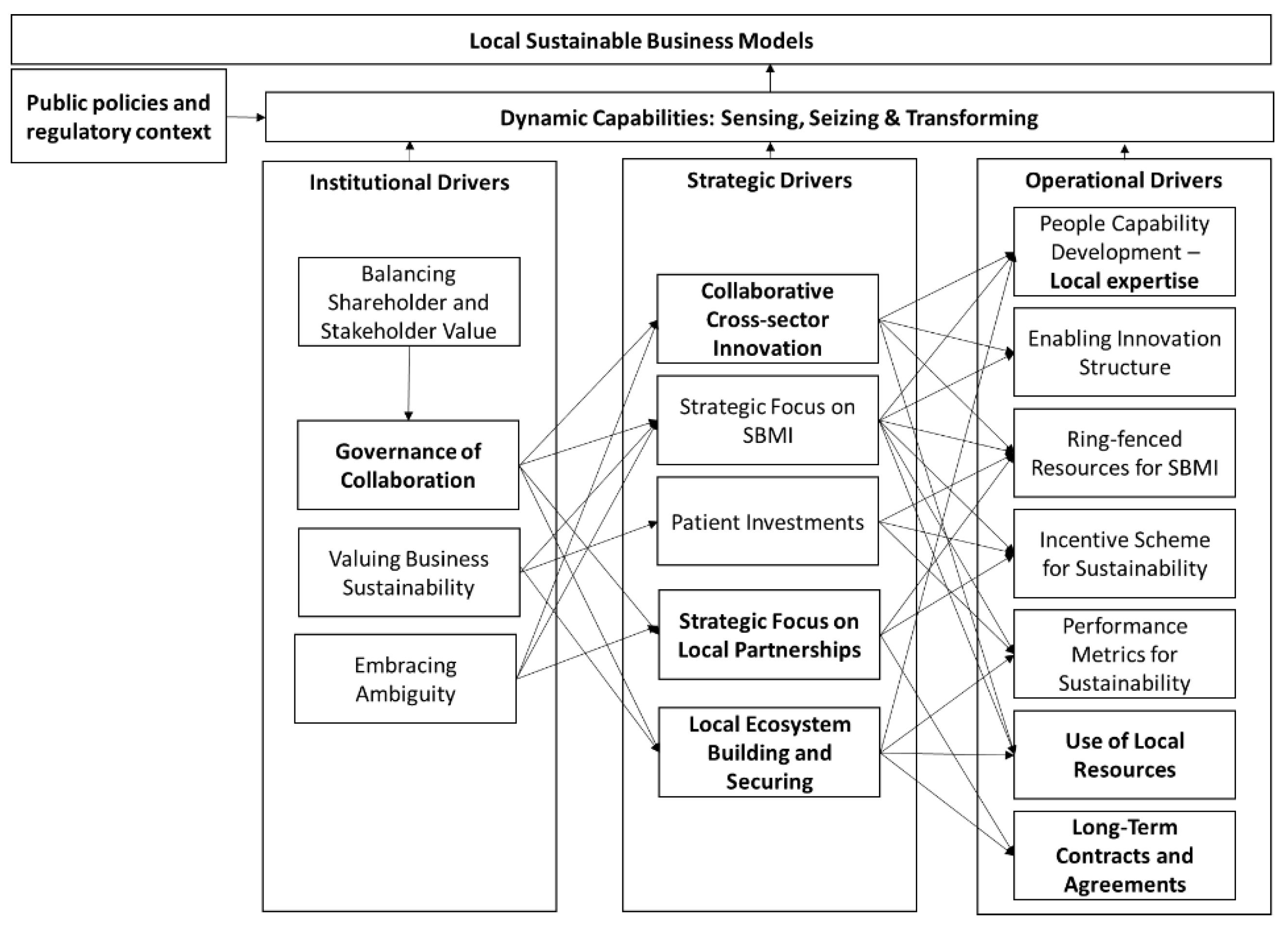
Our analysis shows how Company E had to participate in a governance of collaboration to set up a local energy system. This type of governance helps to ensure the success of its SBM and supports the creation of local value. Figure 4 shows our adaptation of Bocken and Gerardts’ representation of drivers for SBMI [10], highlighting the governance mechanisms that could support the operationalization of local SBMs.
A strategic focus on local ecosystem building and securing.
Bocken and Geradts [10] highlighted the importance of collaborative innovation instead of focusing on functional strategy. We go one step further, pointing out that such collaboration goes beyond a company’s boundaries as there is a need to manage interdependencies with the ecosystem and engage in cross-sector innovation. A strategic focus on building up and securing the local ecosystem facilitates the implementation by companies of sustainable projects and their supporting SBMs.
Operational drivers to govern local collaboration
This governance of collaboration leads to a change in operational procedures. Short-term contracts will be challenged by the need for long-term contracts securing the ecosystem. The functional expertise and its metrics will face the local expertise-building and co-construction of relevant metrics. Moreover, new internal expertise will be required. To work with the local ecosystem, Company E had to create specific competencies in the making of local projects, also defined as “territorial knowledge” by Sigma’s business developer. For instance, they have developed expertise on financing projects using regional funds. At the group level, the R&I department of Company E also designed tools to help embed their activities locally: a mapping tool to obtain an overview of the local ecosystem; a reporting tool to measure the impact of a project at the local level, etc. They also work on developing and improving their market intelligence regarding the local resources available.
Beyond the company scope—the role of public policies and the regulatory context
Recognizing the local ecosystem as a driver for SBMI means that companies acknowledge its interdependencies with local actors. To facilitate the management of such interdependencies, the local policy and regulatory context play a significant role. Supportive policy environments, such as incentives for renewable energy deployment and mandates for waste management, provide companies like Company E with the necessary framework to pursue local energy solutions. By aligning with local policy objectives and regulatory requirements, Company E navigates regulatory complexities and leverages policy incentives to drive SBMI. The working group on DH and cooling innovation published an internal communication summarizing all the innovations for public service delegation, and how Company E could set up new structures integrating the public authority in the governance of the DH operating company. Similarly, in the Sigma Project, Company E benefited from TerraAgency being part of the working group on biomethane green certification. As stated by the director of the public agency “there was a support mechanism that was to be put in place and this support mechanism was not clear. So, we took the initiative and made a proposal based on the Sigma project. Finally, this proposal was retained by the government.”
5. Conclusions—Discussion
The focus on local value creation urges companies to move towards more sustainable approaches, integrating them into the local ecosystem and maximizing their positive impact. Stakeholder collaboration emerges as a crucial aspect of sustainable energy initiatives, as evidenced by Company E's engagement with local development agencies, municipalities, waste collectors, and biomass suppliers. By fostering partnerships within the local ecosystem, Company E enhances stakeholder engagement and value co-creation, thereby increasing the likelihood of the project’s success. Collaborative governance arrangements such as long-term contracts and local expertise building facilitate communication, coordination, and consensus-building among stakeholders, ensuring the alignment of interests and goals.
In such cases, the development of a local approach appears to be key for the successful implementation of SBMs. We argue that a strategic focus on managing interdependencies and setting up a governance of collaboration is vital in the development and implementation of SBMs for LESs. Such a strategic focus requires developing expertise in leveraging local resources and securing long-term collaboration.
The contributions of this paper are theoretical and managerial. Theoretically, we add to the formalization of Bocken and Geradts [10] on drivers for SBMI. We show that governance of collaboration [35,38], while still under-studied in the literature stream of SBMs, is a key pillar when intending to put in place local sustainable activities. On a managerial level, we highlight governance arrangements that facilitate the setting up of LESs, such as long-term contracts. We also highlight the importance of developing local expertise in organizations aiming to successfully implement local projects.
In this paper, we have presented some characteristics of governance in the case of LESs, analyzing how this governance challenges conventional BMs and can drive SBMI. By investigating two case studies of LESs with distinct features in terms of ownership, operation, and stakeholders, we were able to pinpoint common arrangements fostering SBMI. However, these results need to be strengthened by further studies assessing their scope of validity, particularly in other sustainable activities with a strong local embeddedness. Our intuition is that such results could be generalized to other sectors, because concerns about circularity and re-embeddedness flourish in areas such as building [46], road construction [47], and public procurement [48], and are part of local, national and transnational strategies [49].
Author Contributions
Conceptualization, J.A. and F.A.; methodology, J.A. and F.D.; validation, F.A.; investigation, J.A. and F.D.; data curation, J.A. and F.D.; writing—original draft preparation, J.A. and F.D.; writing—review and editing, J.A., F.D. and F.A.; visualization, J.A. and F.D.; supervision, F.A. All authors have read and agreed to the published version of the manuscript.
Funding
This research was funded by the ANRT and Engie, CIFRE funding number 2020-1312 and CIFRE funding number 2019-0085 and by the research partnership Armines-Engie number 230000089.
Institutional Review Board Statement
Not applicable.
Informed Consent Statement
Not applicable.
Data Availability Statement
The data presented in this study are available on request from the corresponding author due to legal confidentiality clause.
Acknowledgments
We thank all interviewees for their time and willingness to guide us through their projects. A special thanks to all the people we have met around the Beta case study: visiting the boiler rooms and discovering a forest worksite were highlights of this study. We of course thank our supporting organizations.
Conflicts of Interest
Financial support was provided by Engie. The funders had no role in the design of the study; in the collection, analyses, or interpretation of data; in the writing of the manuscript; or in the decision to publish the results.
Appendix A

Table A1.
List of the semi-structured interviews conducted for the Beta case study.
| Case study | Organization (and role) |
Role of the interviewee | Date of the interview |
|---|---|---|---|
| Beta | ADEME – regional office (French expertise center for the ecological transition) |
Renewable and waste energy missions | June 19th, 2020 |
| Beta | Beta metropolis – energy department | Management of the Public Service Delegation contract | June 18th, 2020 |
| Beta | Beta metropolis – environment department | In charge of the ecological transition roadmap | June 22nd, 2020 |
| Beta | HeatCo (district heating operator) |
Boiler supervisor | June 18th, 2020 |
| Beta | HeatCo (district heating operator) |
Head of HeatCo | June 18th, 2020 |
| Beta | Woodpro | Energy purchaser for HeatCo | June 2nd, 2020 |
| Beta | Albea | Consultant helping the metropolis on its ecological transition | June 26th, 2020 |
| Beta | NationalForestCorp – regional office (national French wood-energy management organization) |
East agency supervisor | June 29th, 2020 |
| Beta | WoodIndustryAssoc (regional interprofessional organization for wood) |
Regional wood-energy supervisor | June 30th, 2020 |
Appendix B
Table A2.
List of the semi-structured interviews conducted for the Sigma case study.
| Case study | Organization (and role) |
Role of the interviewee | Date of the interview |
|---|---|---|---|
| Sigma | TerraAgency (regional development agency) | Director of the Energy and Sustainable Solutions branch | July 5th, 2023 |
| Sigma | Subsidiary of company E | Business developer | October 23rd, 2023 |
| Sigma | Subsidiary of company E | Business developer | November 3rd, 2022 |
| Sigma | Subsidiary of company E | Strategy advisor | October 21st, 2022 |
References
- Huovila, A.; Siikavirta, H.; Antuña Rozado, C.; Rökman, J.; Tuominen, P.; Paiho, S.; Hedman, Å.; Ylén, P. Carbon-neutral cities: Critical review of theory and practice. Journal of Cleaner Production 2022, 341, 130912. [Google Scholar] [CrossRef]
- Ulpiani, G.; Vetters, N.; Melica, G.; Bertoldi, P. Towards the first cohort of climate-neutral cities: Expected impact, current gaps, and next steps to take to establish evidence-based zero-emission urban futures. Sustainable Cities and Society 2023, 95, 104572. [Google Scholar] [CrossRef]
- Bocken, N. M. P.; Schuit, C. S. C.; Kraaijenhagen, C. Experimenting with a circular business model: Lessons from eight cases. Environmental Innovation and Societal Transitions 2018, 28, 79–95. [Google Scholar] [CrossRef]
- Massa, L.; Tucci, C. L.; Afuah, A. A Critical Assessment of Business Model Research. Academy of Management Annals 2017, 11(1), 73–104. [Google Scholar] [CrossRef]
- Demil, B.; Lecocq, X. Business Model Evolution: In Search of Dynamic Consistency. Long Range Planning 2010, 43(2–3), 227–246. [Google Scholar] [CrossRef]
- Osterwalder, A.; Pigneur, Y. Business Model Generation: A Handbook for Visionaries, Game Changers, and Challengers; John Wiley & Sons, Inc.: Hoboken, United-Stated of America, 2010. [Google Scholar]
- Bocken, N. M. P.; Short, S. W.; Rana, P.; Evans, S. A literature and practice review to develop sustainable business model archetypes. Journal of Cleaner Production 2014, 65, 42–56. [Google Scholar] [CrossRef]
- Lüdeke-Freund, F.; Carroux, S.; Joyce, A.; Massa, L.; Breuer, H. The sustainable business model pattern taxonomy—45 patterns to support sustainability-oriented business model innovation. Sustainable Production and Consumption 2018, 15, 145–162. [Google Scholar] [CrossRef]
- Coffay, M.; Bocken, N. M. P. Sustainable by design: An organizational design tool for sustainable business model innovation. Journal of Cleaner Production 2023, 427, 139294. [Google Scholar] [CrossRef]
- Bocken, N. M. P.; Geradts, T. H. J. Barriers and drivers to sustainable business model innovation: Organization design and dynamic capabilities. Long Range Planning 2020, 53(4), 101950. [Google Scholar] [CrossRef]
- Aggeri, F.; Beulque, R.; Micheaux, H. L’économie circulaire; La Découverte: Paris, France, 2023. [Google Scholar]
- Brown, P.; Von Daniels, C.; Bocken, N. M. P.; Balkenende, A. R. A process model for collaboration in circular oriented innovation. Journal of Cleaner Production 2021, 286, 125499. [Google Scholar] [CrossRef]
- Schultz, F. C.; Valentinov, V.; Kirchherr, J.; Reinhardt, R. J.; Pies, I. Stakeholder governance to facilitate collaboration for a systemic circular economy transition: A qualitative study in the European chemicals and plastics industry. Business Strategy and the Environment 2023, 33(3), 2173–2192. [Google Scholar] [CrossRef]
- Arfaoui, N.; Le Bas, C.; Vernier, M.-F.; Vo, L.-C. How do governance arrangements matter in the circular economy? Lessons from five methanation projects based on the social-ecological system framework. Ecological Economics 2022, 197, 107414. [Google Scholar] [CrossRef]
- Bourdin, S.; Colas, M.; Raulin, F. Understanding the problems of biogas production deployment in different regions: Territorial governance matters too. Journal of Environmental Planning and Management 2020, 63(9), 1655–1673. [Google Scholar] [CrossRef]
- Gomes, L. A. de V.; Farago, F. E.; Facin, A. L. F.; Flechas, X. A.; Silva, L. E. N. From open business model to ecosystem business model: A processes view. Technological Forecasting and Social Change 2023, 194, 122668. [Google Scholar] [CrossRef]
- Madsen, H. L. Business model innovation and the global ecosystem for sustainable development. Journal of Cleaner Production 2020, 247, 119102. [Google Scholar] [CrossRef]
- Balest, J.; Pisani, E.; Vettorato, D.; Secco, L. Local reflections on low-carbon energy systems: A systematic review of actors, processes, and networks of local societies. Energy Research & Social Science 2018, 42, 170–181. [Google Scholar] [CrossRef]
- Chesbrough, H. The role of the business model in capturing value from innovation: Evidence from Xerox Corporation’s technology spin-off companies. Industrial and Corporate Change 2002, 11(3), 529–555. [Google Scholar] [CrossRef]
- Rayna, T.; Striukova, L. 360° Business Model Innovation: Toward an Integrated View of Business Model Innovation: An integrated, value-based view of a business model can provide insight into potential areas for business model innovation. Research-Technology Management 2016, 59(3), 21–28. [Google Scholar] [CrossRef]
- Hamelink, M.; Opdenakker, R. How business model innovation affects firm performance in the energy storage market. Renewable Energy 2019, 131, 120–127. [Google Scholar] [CrossRef]
- Amit, R. H.; Zott, C. Business Model Innovation: Creating Value in Times of Change. SSRN Electronic Journal 2010. [Google Scholar] [CrossRef]
- Boons, F.; Lüdeke-Freund, F. Business models for sustainable innovation: State-of-the-art and steps towards a research agenda. Journal of Cleaner Production 2013, 45, 9–19. [Google Scholar] [CrossRef]
- Lygnerud, K. Challenges for business change in district heating. Energy, Sustainability and Society 2018, 8(1), 20. [Google Scholar] [CrossRef]
- Lüdeke-Freund, F.; Dembek, K. Sustainable business model research and practice: Emerging field or passing fancy? Journal of Cleaner Production 2017, 168, 1668–1678. [Google Scholar] [CrossRef]
- Li, X.; Zhang, L.; Cao, J. Research on the mechanism of sustainable business model innovation driven by the digital platform ecosystem. Journal of Engineering and Technology Management 2023, 68, 101738. [Google Scholar] [CrossRef]
- Neumeyer, X.; Santos, S. C. Sustainable business models, venture typologies, and entrepreneurial ecosystems: A social network perspective. Journal of Cleaner Production 2018, 172, 4565–4579. [Google Scholar] [CrossRef]
- Oskam, I.; Bossink, B.; de Man, A.-P. (2021). Valuing Value in Innovation Ecosystems: How Cross-Sector Actors Overcome Tensions in Collaborative Sustainable Business Model Development. Business & Society 2021, 60(5), 1059–1091. [Google Scholar] [CrossRef]
- Raulet-Croset, N. La question du territoire en sciences de gestion – Point de vue sur le territoire comme ressource pour les organisations. Question(s) de management 2021, 33(3), 33–36. [Google Scholar] [CrossRef]
- Shrivastava, P.; Guimarães-Costa, N. Achieving environmental sustainability: The case for multi-layered collaboration across disciplines and players. Technological Forecasting and Social Change 2017, 116, 340–346. [Google Scholar] [CrossRef]
- Korhonen, J.; Nuur, C.; Feldmann, A.; Birkie, S. E. Circular economy as an essentially contested concept. Journal of Cleaner Production 2018, 175, 544–552. [Google Scholar] [CrossRef]
- Abreu, M. C. S. de; Ceglia, D. On the implementation of a circular economy: The role of institutional capacity-building through industrial symbiosis. Resources, Conservation and Recycling 2018, 138, 99–109. [Google Scholar] [CrossRef]
- Cramer, J. Effective governance of circular economies: An international comparison. Journal of Cleaner Production 2022, 343, 130574. [Google Scholar] [CrossRef]
- Dagilienė, L.; Varaniūtė, V.; Bruneckienė, J. Local governments’ perspective on implementing the circular economy: A framework for future solutions. Journal of Cleaner Production 2021, 310, 127340. [Google Scholar] [CrossRef]
- Provan, K. G.; Kenis, P. Modes of Network Governance: Structure, Management, and Effectiveness. Journal of Public Administration Research and Theory 2007. [Google Scholar] [CrossRef]
- Assens, C.; Coléno, F. Organiser un réseau d’acteurs pour préserver et/ou valoriser le bien commun. In Dynamiques collectives et territoires 9 défis pour des territoires compétitifs, innovants et durables; Albert-Cromarias, A., Albertini, T., Terramorsi, P., Eds.; ISTE: London, UK, 2023 ; Volume 3, pp. 27-40.
- Assens, C.; Courie Lemeur, A. De la gouvernance d’un réseau a la gouvernance d’un réseau de réseaux. Question(s) de management 2014, 8(4), 27–36. [Google Scholar] [CrossRef]
- Bridoux, F.; Stoelhorst, J. W. Stakeholder governance: Solving the collective action problems in joint value creation. Academy of Management Review 2022. [Google Scholar] [CrossRef]
- Bauwens, T.; Gotchev, B.; Holstenkamp, L. What drives the development of community energy in Europe? The case of wind power cooperatives. Energy Research & Social Science, 2016, 13, 136–147. [Google Scholar] [CrossRef]
- Fagerström, A.; Seadi, T. A.; Rasi, S.; Briseid, T. The role of Anaerobic Digestion and Biogas in the Circular Economy. IEA Bioenergy Task 2018, 37(8). [Google Scholar]
- Net Zero by 2050—A Roadmap for the Global Energy Sector. Available online: Net Zero by 2050 – Analysis - IEA (accessed on 10.05.2024).
- Pettigrew, A. M. Longitudinal Field Research on Change: Theory and Practice. Organization Science 1990, 1(3), 267–292. [Google Scholar] [CrossRef]
- Langley, A. Strategies for Theorizing from Process Data. The Academy of Management Review 1999, 24(4), 691. [Google Scholar] [CrossRef]
- Dumez, H. Méthodologie de la recherche qualitative : Les questions clés de la démarche compréhensive; Vuibert: Paris, France, 2016. [Google Scholar]
- Dana, L.-P.; Dumez, H. Qualitative research revisited: Epistemology of a comprehensive approach. International Journal of Entrepreneurship and Small Business 2015, 26, 154–170. [Google Scholar] [CrossRef]
- Bilal, M.; Khan, K. I. A.; Thaheem, M. J.; Nasir, A. R. Current state and barriers to the circular economy in the building sector: Towards a mitigation framework. Journal of Cleaner Production 2020, 276, 123250. [Google Scholar] [CrossRef]
- Leendertse, W. L.; Schäffner, M. E. M.; Kerkhofs, S. Introducing the circular economy in road construction. In Proceedings of the Sixth International Symposium on Life-Cycle Civil Engineering, Ghent, Belgium, 28-31 October 2018. [Google Scholar]
- Ntsondé, J.; Aggeri, F. Stimulating innovation and creating new markets – The potential of circular public procurement. Journal of Cleaner Production 2021, 308, 127303. [Google Scholar] [CrossRef]
- Circular economy action plan. Available online: https://environment.ec.europa.eu/strategy/circular-economy-action-plan_en (accessed on 10.05.2024).
Figure 1.
Drivers of sustainable business model innovation (adapted from [10]).
Figure 1.
Drivers of sustainable business model innovation (adapted from [10]).
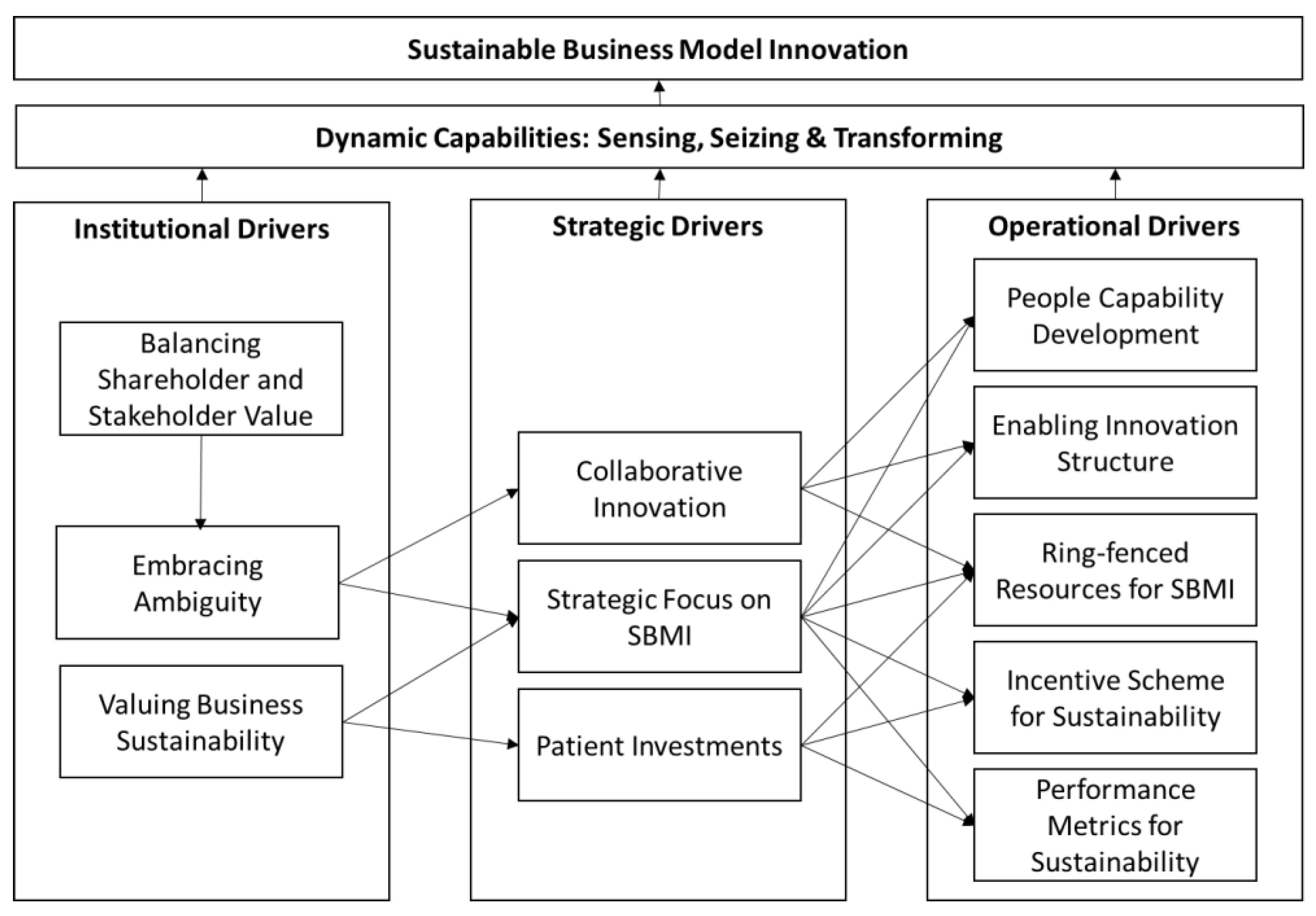
Figure 2.
The ecosystem around the Sigma AD system.1.
Figure 2.
The ecosystem around the Sigma AD system.1.
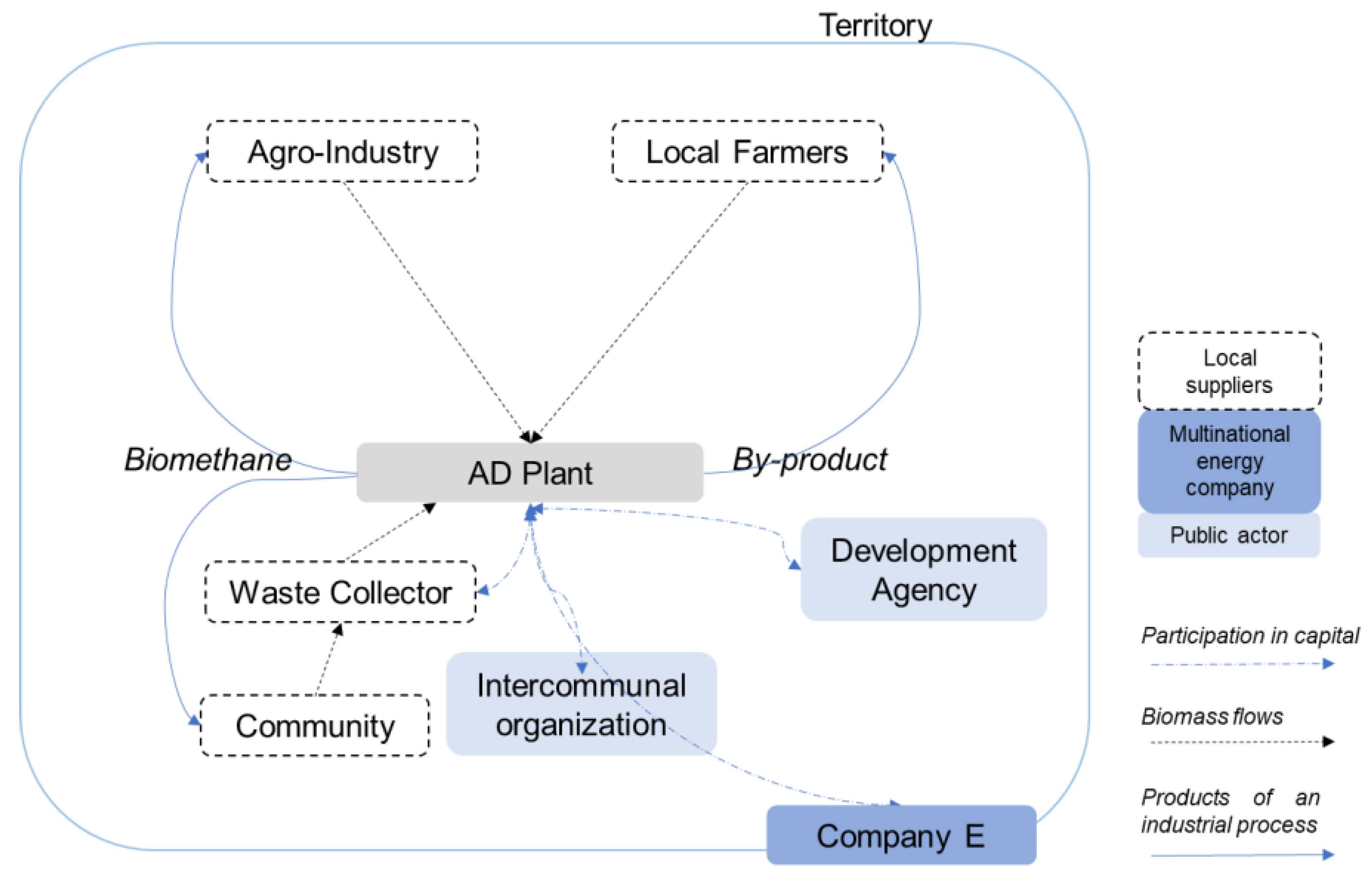
Figure 3.
The ecosystem around the Beta DH system.
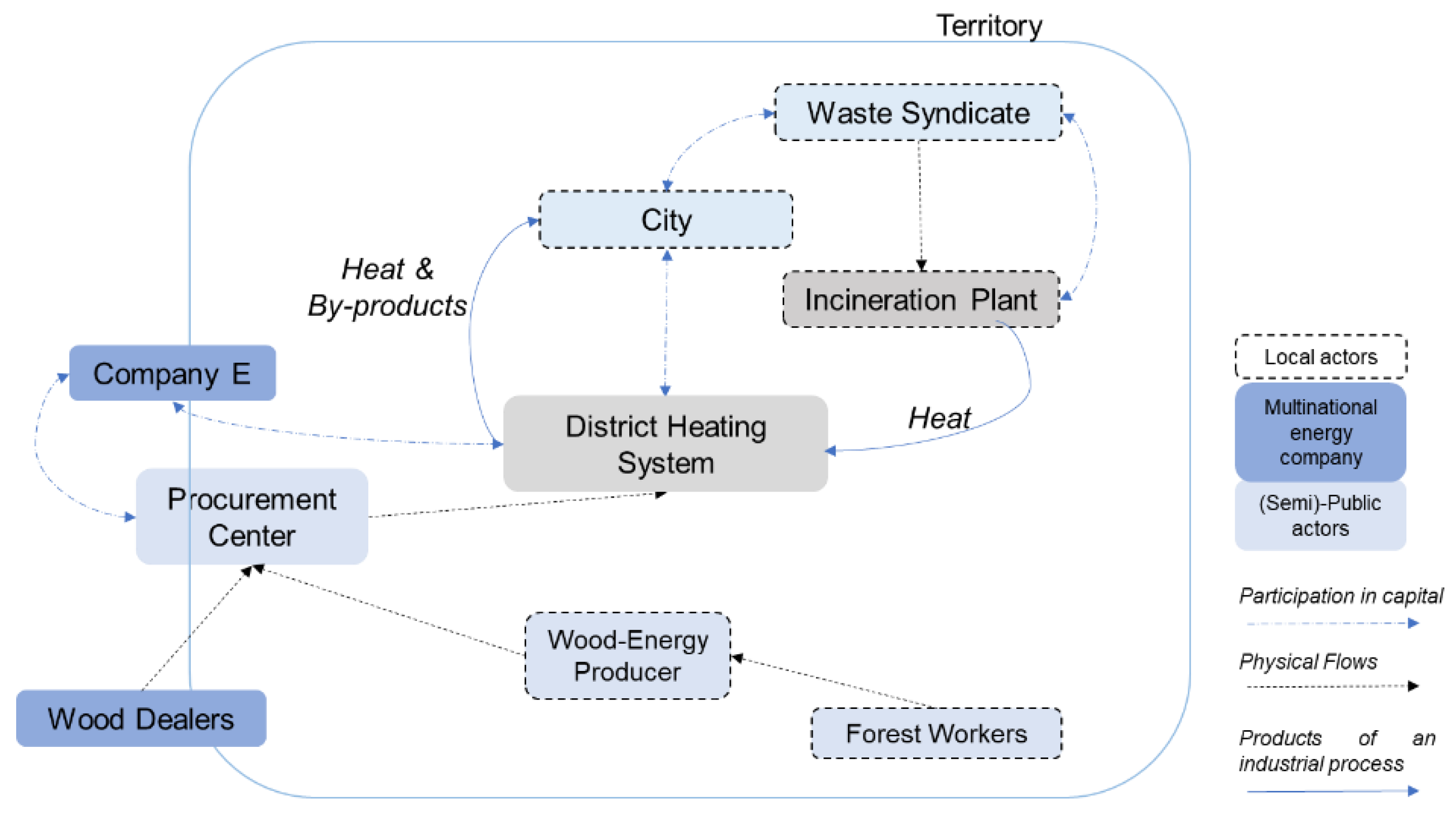
Figure 4.
Drivers for the implementation of a local sustainable business model.
| Criteria | Lead Role Governance | Shared Governance |
|---|---|---|
| Roles of Manager | Stewards whose authority is delegated by stakeholders | One decision-maker among many stakeholders |
| Decision-Making | Stakeholders have a role in decision-making | Equal participation of stakeholders in decision-making |
| Monitoring and Sanctions | Stakeholders and managers collaborate in monitoring and sanctions | Collaborative monitoring and sanctions by all stakeholders |
| Conflict Resolution Mode | Managers remain accountable to stakeholders | Stakeholders negotiate and resolve conflicts collectively |
| Distribution of Joint Value Created | Stakeholders reach agreements on value distribution | Stakeholders collectively agree on value distribution |
| Trust | Low to moderate, requires trust in stakeholders and managers | High, built on trust among all stakeholders involved |
| Number of Participants | Moderate to many. The lead structure can effectively manage a higher number of diverse participants. | Few, to promote efficiency, effective communication, equal participation, resource optimization, trust-building, and goal alignment among network members. |
| Goal Consensus | Moderate, suggesting that the lead structure takes the lead in setting network-level goals and direction. | High, indicating a strong agreement among participants on network-level goals and objectives. |
| Need for Network-Level Competencies | Moderate to strong to effectively coordinate and govern the network. These competencies are essential for managing the complexities of the network structure. | Little, as the collaborative nature of decision-making and coordination may not require extensive specialized skills at the network level. |
Table 2.
Features of AD and DH systems.
| Features | AD system | DH system |
|---|---|---|
| Ownership of the energy system | Private/Public-Private | Public: public service owned by a local authority but operated by a mandated private operator |
| Contract for operating the energy system | Long-term contract (15-20 years) | Usually long-term contract (20 years), depending on the sharing of the investments. Between the public authority and the private operator |
| Customers of the energy system | Depends on the country (private end-users - Government) | Building owners, buying heat from the private operator |
| Pricing of the energy | Fixed price according to feed-in tariffs/ Green Certificates | Two parts: fixed part for the investments, variable part for the energy |
| Context | Rural | Urban |
Table 3.
Governance characteristics in the two case studies.
| Criteria | AD | DH |
|---|---|---|
| Description of the collaboration | Interdependencies between energy, agriculture, bio-waste sectors and the methanization plant | Interdependencies between the wood-energy sector and the DH system structuring the wood-energy sector |
| Roles of the manager | Project management representative for each stakeholder (TerraAgency, Company E, CivicEco, Durabio). | No defined manager. Purchase center as an interface between DH and the wood-energy sector. |
| Decision-making | Negotiations between the stakeholders | Negotiations between the stakeholders |
| Monitoring and sanctions | Collaborative monitoring among stakeholders on supply of biowaste | Negotiated sanctions on wood-energy supply. Monitoring by the purchase center |
| Conflict resolution mode | Negotiations between the representative of each stakeholder | Not studied |
| Distribution of Joint Value Created | Distribution of value through ownership shares of capital and agreements among stakeholders. As well as specific contract agreement between supply of biomethane and biowaste | Sharing of the value through a cascade of long-term contracts securing the wood-energy sector |
| Level of trust needed | Moderate to high, built on formal agreements and collaboration among stakeholders. | Low to moderate between the DH and the wood-energy sector (formal contracts) Moderate to high within the wood-energy sector (ecosystem structuration) |
| Number of participants | Few to moderate, involving stakeholders in the energy and biowaste sectors in the capital, as well as a public development agency | Few to limit the resources needed for negotiations between DH and the wood-energy sector. Many in the wood-energy sector – participating through representatives |
| Need for a goal consensus | Moderate, with the lead structures (TerraAgency and Company E) setting network-level goals and direction in collaboration with other stakeholders | Moderate, DH sets the needs and the wood-energy sector structures itself accordingly |
| Need for network-level competencies | Moderate to high, requiring negotiation skills and coordination among diverse stakeholders to overcome challenges and adapt to regulatory frameworks | Moderate to high, need to negotiate effectively with unusual stakeholders, to adapt to the requirements of the wood-energy sector, to secure the collaboration, etc. |
| 1 | Territory in the article is a social construction encompassing the local actors and resource flows. It does not refer to any administrative structure. |
Disclaimer/Publisher’s Note: The statements, opinions and data contained in all publications are solely those of the individual author(s) and contributor(s) and not of MDPI and/or the editor(s). MDPI and/or the editor(s) disclaim responsibility for any injury to people or property resulting from any ideas, methods, instructions or products referred to in the content. |
© 2024 by the authors. Licensee MDPI, Basel, Switzerland. This article is an open access article distributed under the terms and conditions of the Creative Commons Attribution (CC BY) license (http://creativecommons.org/licenses/by/4.0/).
Copyright: This open access article is published under a Creative Commons CC BY 4.0 license, which permit the free download, distribution, and reuse, provided that the author and preprint are cited in any reuse.