

Submitted:
21 October 2024
Posted:
22 October 2024
You are already at the latest version
Abstract
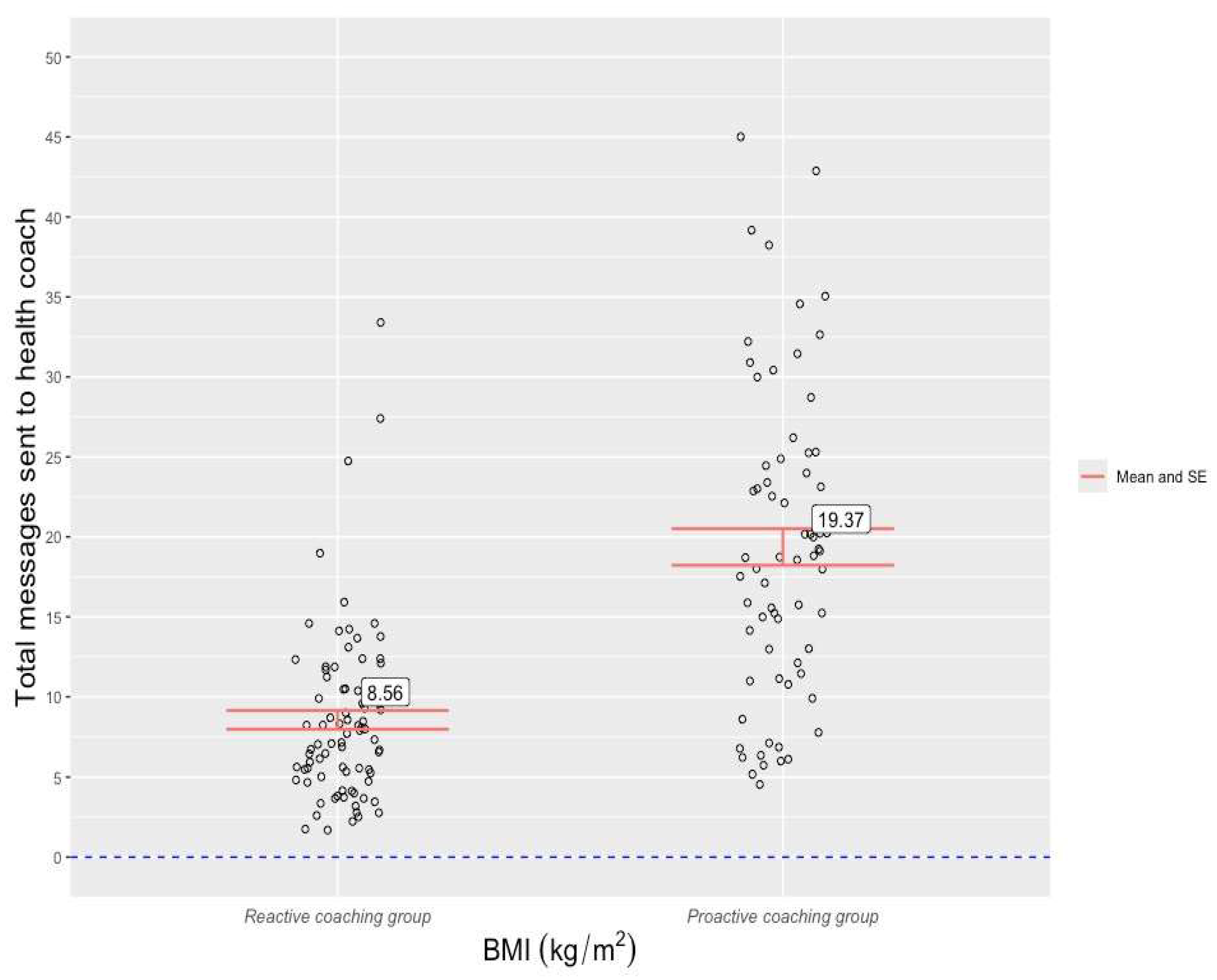
Digital weight-loss services (DWLSs) that supplement continuous lifestyle coaching with Semaglutide therapy have shown promise in delivering continuous and effective obesity care. However, the extent to which lifestyle coaching approach and Semaglutide brand influences patient engagement and program effectiveness is unknown. This study retrospectively analyzed several engagement markers and weight loss percentage over 16 weeks in a large Semaglutide-supported DWLS in the UK. The comparative analysis found that patients who received lifestyle coaching that was proactive and personalized sent a statistically higher number of messages to their health coach (M=19.37 vs M=8.55) and opened the program app more frequently (M = 49.31 days vs M = 40.06 days) than patients whose coaching was reactive and standardized. Mean 16-week weight-loss was 10.1% in the proactive group compared to 8.9% in the reactive group, but the difference was not statistically significant. A two-sample t-test found that female patients (M = 9.76) tended to lose more weight than male patients (M = 6.88), (t(152) = 1.89 , p = 0.04). The findings add vital layers of nuance to the emerging literature on Semaglutide-supported DWLSs, indicating that a proactive, personalized coaching approach leads to better patient engagement with DWLS health coaches and that Wegovy has a comparable effect to Ozempic as a supplement to DWLS coaching. Future research should seek to conduct comparable investigations of other obesity services and over a longer period.
Keywords:
1. Introduction
2. Materials and Methods
Program Overview
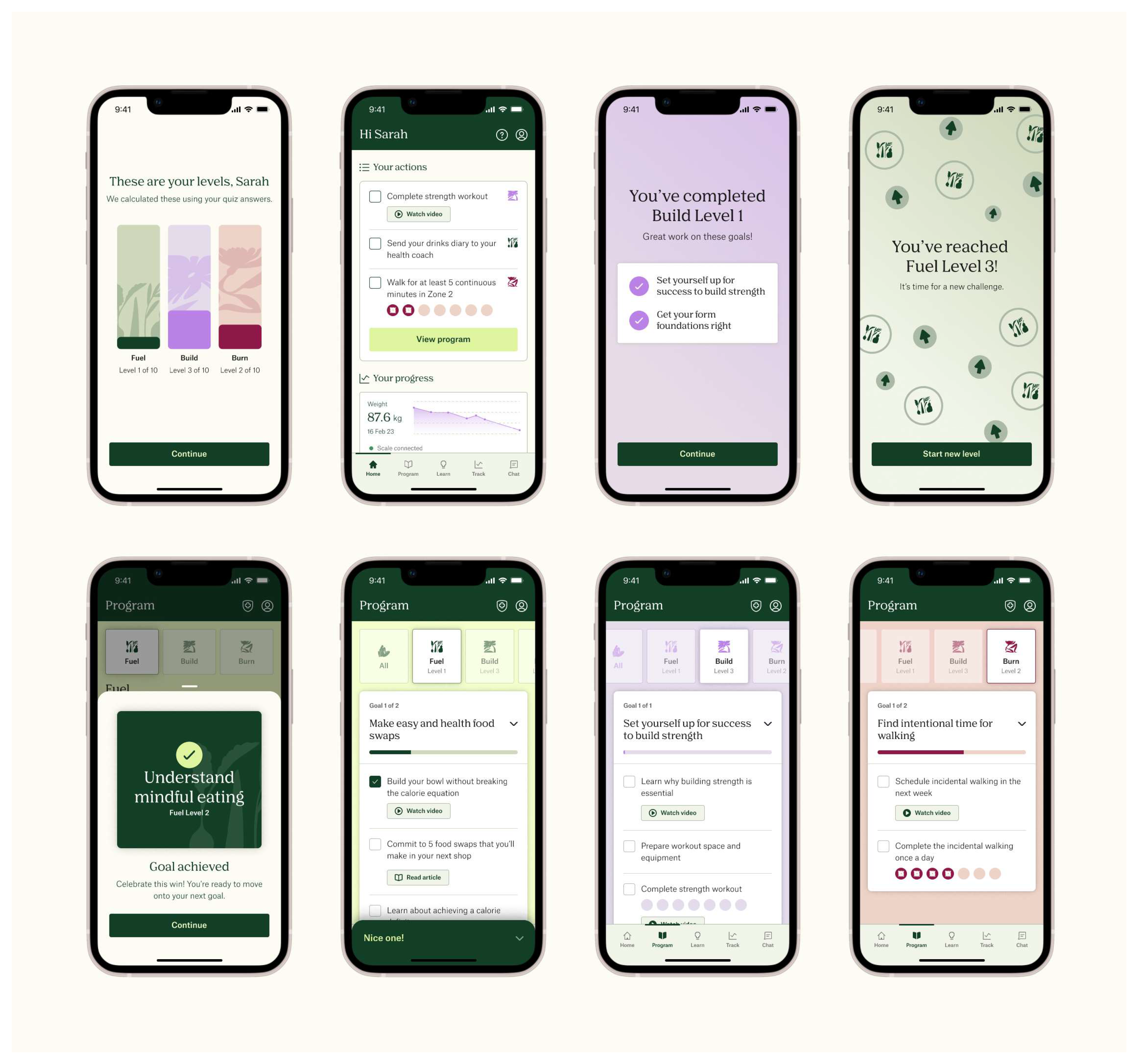
- an introductory program explainer video, with a step-by-step presentation of each app function
- an additional lifestyle preference quiz to provide health coaches with greater capacity for personalizing diet and exercise programs
- automated prompts to update ‘Actions’ every three days
- requirement of setting accountability dates for each goal
- two notifications to complete bi-weekly check-in quizzes
Participants
Measures
Statistical Analysis
3. Results
4. Discussion
5. Conclusions
Author Contributions
Funding
Institutional Review Board Statement
Informed Consent Statement
Data Availability Statement
Acknowledgments
Conflicts of Interest
References
- World Obesity Federation. Prevalence of Obesity, 2024. Available from https://www.worldobesity.org/about/about-obesity/prevalence-of-obesity.
- Anekwe, C., Jarrell, A., Townsend, M., et al. Socioeconomics of Obesity. Curr Obes Rep 2020;9:272-279.
- Javed Z, Valero-Elizondo J, Maqsood M, et al. Social determinants of health and obesity: Findings from a national study of US adults. Obesity (Silver Spring)2022;30(2):491–502.
- Verde L, Frias-Toral E, Cardenas D. Editorial: Environmental factors implicated in obesity. Front Nutr 2023;10:1171507.
- Hall, K., Kahan, S. Maintenance of lost weight and long-term management of obesity. Med Clin North Am 2018; 102:183-197.
- Finucane, F., Gibson, I., Hughes, R., et al. Factors associated with weight loss and health gains in a structured lifestyle modification programme for adults with severe obesity: a prospective cohort study.
- Talay, L., Vickers, M., Loftus, S. Why people with overweight and obesity are seeking care through digital obesity services: A qualitative analysis of patients from Australia’s largest digital obesity provider.
- Pi-Sunyer X, Astrup A, Fujioka K, et al. A randomized controlled trial of 3.0mg of Liraglutide in weight management. N Engl J Med 2015;373(1):11–22. [CrossRef]
- Wilding J, Batterham R, Calanna S, et al. Once-weekly Semaglutide in adults with overweight or obesity. N Engl J Med 2021;384(11):989–1002.
- Davies, M., Faerch, L., Jeppesen, O., et al. Semaglutide 2.4mg once a week in adults with overweight or obesity, and type 2 diabetes (Step 2): a randomized, double-blind, double-dummy, placebo-controlled, phase 3 trial. Lancet 2021;397:971-984.
- Kim, M. The neural basis of weight control and obesity. Experimental & Molecular Medicine 2022; 54:347-348.
- Ard, J., Fitch, A., Fruh, S., et al. Weight loss and maintenance related to the mechanism of action of Glucagon-like peptide-1 receptor agonists. Adv Ther. 2021; 2821-2839.
- Tullman, G. Weight loss drugs are not the only answer: Why we must redefine the obesity journey, Jan 10, 2024. World Economic Forum. Available from https://www.weforum.org/agenda/2024/01/glp-1s-are-not-the-only-answer-why-we-must-redefine-the-obesity-journey/.
- Dowsett, G., Yeo, G. Are GLP-1R agonists the long-sought-after panacea for obesity? Trends Mol Med, 2023;29:777-779.
- World Health Organization. Health Service Framework for Prevention and Management of Obesity. Geneva, 2023.
- National Institute for Health and Care Excellence. Semaglutide for managing overweight and obesity; Sep 2023.
- NHS England. Appointments in General Practice, November 2023. NHS Digital, 2024.
- Crompvoets, P., Nieboer, A., van Rossum, E. Perceived weight stigma in healthcare settings among adults living with obesity: A cross-sectional investigation of the relationship with patient characteristics in person-centred care. Health expect, 2024;27:e13954.
- Prior, S., Luccisano, S., Kilpatrick, M. Assessment and management of obesity and self-maintenance (AMOS): An evalutation of a rural, regional multidisciplinary program. Int J Environ Res public Health 2022;19:12894.
- Hill, J., You, W., Zoellner, J. Disparities in obesity among rural and urban residents in a health disparate region. BMC Public Health 2014;14:1051.
- Golovaty, I., Hagan, S. Direct-to-consumer platforms for new antiobesity medications—concerns and potential opportunities. N Eng J Med, 2024;390:677-680.
- Hinchliffe, N., Capehorn, M., Bewick. M., et al. The potential role of digital health in obesity care, 2022;39:4397-4412.
- Payne, H. No doctor, no script, no worries: Here’s your Ozempic. The Medical Republic, 10 May 2024. Available from https://www.medicalrepublic.com.au/no-doctor-no-script-no-worries-heres-your-ozempic/107426.
- Talay, L.; & Alvi, O. Digital healthcare solutions to better achieve the weight loss outcomes expected by payors and patients. Diabetes Obes. Metab 2024, 26, 2521–2523. [CrossRef]
- Talay, L. & Vickers, M. Patient adherence to a real-world digital, asynchronous weight program in Australia That Combines Behavioural and GLP-1 RA Therapy: A Mixed Methods Study. Behavior Sciences, 2024;14:480. [CrossRef]
- Talay, L. & Vickers, M. Effectiveness and care continuity in an app-based, GLP-1 RA-supported weight-loss service for women with overweight and obesity in the UK: A real-world retrospective cohort analysis. Diabetes Obes. Metab 2024,26:2984-2987. [CrossRef]
- Talay, L. & Vickers, M. Patient adherence to a digital real-world GLP-1 RA-supported weight-loss program in the UK: A retrospective cohort study. J Community Med Public Health 2024. [CrossRef]
- Talay, L. Vickers, M., Wu, S. Patient satisfaction with an Australian digital weight-loss service: A comparative retrospective analysis. Telemedicine Reports 2024;5:181-186. [CrossRef]
- Weiser, P., Wilson, A. Wegovy vs Ozempic: what is the difference? Ro Weight Loss, May 21, 2024. Available from https://ro.co/weight-loss/wegovy-vs-ozempic/.
- Suran, M. As Ozempic’s popularity soars, here’s what to know about Semaglutide and weight loss. JAMA, 2023;19:1627-1629.
- Prillaman, M. Obesity drugs aren’t always forever. What happens when you quit? Nature, 16 April 2024. Available from https://www.nature.com/articles/d41586-024-01091-8.
- Australian Government. About the Ozempic (Semaglutide) shortage 2022-2024. Therapeutic Goods Administration, 29 August 2024. Available from https://www.tga.gov.au/safety/shortages/information-about-major-medicine-shortages/about-ozempic-semaglutide-shortage-2022-2024.
- Talay, L., Vickers, M., Ruiz, L. Effectiveness of an email-based, Semaglutide-supported weight-loss service for people with overweight and obesity in Germany: A real-world retrospective cohort analysis. Obesities 2024;4:256-269.
- Novo Nordisk. Wegovy: Semaglutide Injection 2.4mg. Novo Nordisk Inc, 2024.Bagsvaerd, Denmark.

| Demographic information | Mean (SD) |
| Age | 43.03 (±10.7) years |
| Gender | Number (%) |
| Female | 139 (91.57) |
| Male | 44 (8.43) |
| Ethnicity | Number (%) |
| Caucasian | 127 (82.47) |
| Asian including subcontinent | 8 (5.19) |
| Black African of African Caribbean | 6 (3.9) |
| Latino/Hispanic | 6 (3.9) |
| Rather not say | 5 (3.25) |
| Middle Eastern | 2 (1.3) |
| Clinical information | Mean (SD) |
| BMI | 33.87 (±6.12) kg/m2 |
| Weight | 94.93 (±19.41) kg |
| Proactive Coaching Group | Reactive Coaching Group | |
|---|---|---|
| Side Effect Type—No (% of Cohort) | ||
| Gastrointestinal issues | 37 (52.8) | 51 (60.71) |
| Headaches | 27 (38.5) | 44 (44.04) |
| Fatigue or dizziness | 14 (20) | 12 (14.28) |
| Other | 3 (4.29) | 9 (10.7) |
| At least one side effect | 44 (62.9) | 54 (64.3) |
| Side effect severity—no. (% total side effects) | ||
| Mild side effects | 34(48.6) | 42 (50) |
| Moderate side effects | 18 (25.7) | 22 (26.2) |
| Severe side effects | 2 (2.9) | 3 (3.6) |
Disclaimer/Publisher’s Note: The statements, opinions and data contained in all publications are solely those of the individual author(s) and contributor(s) and not of MDPI and/or the editor(s). MDPI and/or the editor(s) disclaim responsibility for any injury to people or property resulting from any ideas, methods, instructions or products referred to in the content. |
© 2024 by the authors. Licensee MDPI, Basel, Switzerland. This article is an open access article distributed under the terms and conditions of the Creative Commons Attribution (CC BY) license (http://creativecommons.org/licenses/by/4.0/).