

Submitted:
15 October 2024
Posted:
16 October 2024
You are already at the latest version
Abstract
The presence of various pesticides in natural streams and wastewater is a significant environmental issue due to their high toxicity, which causes harmful consequences even at low quantities. One cost-effective method to remove these pollutants from water could be through adsorption using inexpensive, easily obtained adsorbent - biochar. This study demonstrates the effectiveness of using biochar produced from wheat grains to eliminate alachlor from water. The sorption properties of the biochar and the likely removal mechanisms have been defined. The study found that the biochar removed 76-94% of alachlor, depending on the initial concentration of the pesticide in water. The pseudo-second-order kinetic model (R² = 0.999) and the Langmuir isotherm model (R² = 0.996) effectively characterized the elimination of alachlor by wheat grains biochar. The analyzed biochar, with its micropores and various surface functional groups, can effectively adsorb alachlor and trap it within its structure.
Keywords:
biochar
; wheat grains
; alachlor
; water treatment
1. Introduction
Pesticides, including herbicides, insecticides, nematicides, and fungicides, are widely used to increase crop production. However, these chemicals are toxic and harmful to both human health and the environment [1]. The occurrence of pesticides in the surface and groundwater across the world is reported in many publications during the last decades and reviewed by many authors (e.g.,: Carvalho, 2017; Gonzalez-Rey et al., 2015; Ccanccapa et al., 2016; Herrero-Hernandes et al., 2017; Kim et al., 2017; Sousa et al., 2018; Szöcs et al., 2017; Zheng et al., 2016), demonstrating an increasing concern [2,3,4,5,6,7,8,9]. The increasing use of pesticides (including herbicides) worldwide raises concerns about higher and more widespread contamination of aqueous environments [10,11,12]. Sources, pathways and receptors of pesticides in the environment take into account relevant processes occurring during their transport on/between the surface (top soil and atmosphere), the surface waters and groundwater systems (shallow aquifers) as well as the influence of urban areas (sewage and sludge from wastewater treatment plants) on their occurrence in the aquatic ecosystems [13].
Alachlor (CAS no.: 15972-60-8) is a chloroacetanilide herbicide (molecular formula: C14H20ClNO2) commonly used to control broadleaf weeds and annual grasses before they emerge in crops like maize, sorghum, and soybeans [14] but also in cotton, brassicas, oilseed rape, peanuts, radish, and sugar cane [15,16]. Alachlor is the common name for 2-chloro-N-(2,6-diethylphenyl)-N-methoxymethylacetamide. It is a white odourless crystalline solid at 23°C, has a molecular weight of 269.8, water solubility of 242 mg/L at 25°C, vapour pressure of 2.9 × 10⁻³ Pa at 25°C, the log octanol–water partition coefficient of 2.6–3.1 [17], and a half-life in soil of 7–38 days [18]. Alachlor is also soluble in ether, acetone, benzene, chloroform, ethanol and ethyl acetate; it is slightly soluble in heptane.
Alachlor, after its application to plants, dissipates from soil mainly through volatilization, photodegradation and biodegradation [19]. Under certain conditions, alachlor can leach beyond the root zone and migrate to groundwater [16]. Some other environmental transport paths of alachlor include direct drainflow, surface runoff, irrigation to surface waters as well as discharges from wastewater treatment plants [13].
Alachlor is a mucous membrane irritant. The exact mechanism of potential teratogenic changes is still being investigated. In mammals, alachlor appears to form conjugates with glucuronic acid, sulfate, and mercapturic acid. Sister chromatid exchanges have been demonstrated in human lymphocytes in vivo as well as dose-dependent chromosomal aberrations in vitro in human lymphocytes [20].
According to available experimental data, evidence for the genotoxicity of alachlor is considered to be equivocal. However, a metabolite of alachlor has been shown to be mutagenic. Available data clearly indicate that this compound is carcinogenic, causing benign and malignant tumours of the nasal turbinate, malignant stomach tumours, and benign thyroid tumours. The probable oral lethal dose in humans is 0.5–5 g/kg of body weight [21].
Based on NFPA-704 M Rating System hazard identification of alachlor is as follows: Health 2, Flammability 0, Reactivity 0, Low solubility in water [17].
Pesticide contamination of surface and groundwater remains a problem due to non-point sources, such as agricultural runoff [22]. In order to remove pesticides from water, a number of different techniques are applied. These techniques include photocatalytic decomposition, chemical oxidation with hydrogen peroxide or ozone, advanced oxidation processes, membrane technologies, electrochemical decomposition, coagulation, flocculation, biological treatment, adsorption, and hybrid technologies [1,23]. Compared to other methods, adsorption is a favored option for pesticide removal due to its simplicity, operational ease, versatility, and high efficiency. Moreover, adsorption does not produce any toxic by-products [23].
Adsorption using inexpensive, readily available adsorbents could be the most cost-effective option for removing emerging contaminants from water. Biochar, an environmentally sustainable and cost-effective material typically derived from organic waste such as agricultural residues, wood byproducts, and municipal waste, has garnered significant interest due to its relevance in the context of a circular economy [24,25]. Due to its properties, such as rich carbon content, high specific surface area, high cation/anion exchange capacity, and stable structure [26,27,28,29,30], biochar is reported as a highly efficient material for removing various inorganic pollutants including heavy metals [31,32,33,34,35]. It has also been proved that biochar is a promising adsorbent for organic pollutants adsorption/removal from water and soil [36,37]. Jagadeesh and Sundaram (2023) have reviewed significant number of articles on removing microplastics, significant nutrients and organic pollutants (fertilizer’s, antibiotics, PAHs, and PCBs) [38]. The physico-chemical properties of biochar determine its capacity to remove pollutants from aqueous solutions. These properties depend on the feedstock, thermal conversion technique, and preparation conditions. The low cost of feedstock and the simple preparation process, combined with the physico-chemical properties of biochar, make its application more feasible for treating polluted aqueous streams [35]. To obtain biochar composite materials with improved adsorption performance various modification methods are currently used. They include: magnetic, acid, alkali, steam, as well as nano-metal oxide/hydroxide modifications. Such modification can improve the specific surface area, porosity and surface functional groups of biochar. Affected by the biochar raw materials, pyrolysis temperature, kinetic parameters, coexisting ions, biochar particle size and other factors, the specific adsorption mechanisms differ among biochar materials, and mainly include pore filling, electrostatic interactions, hydrogen bond bonding, hydrophobic interactions, and π—π junctions [39].
The crop residues-based biochars, mainly prepared from straws, have been studied as adsorbents for pesticide removal from water. The biochar materials derived from corn straw were successfully prepared and tested for their ability to remove carbendazim from the water environment by Wang et al. (2022) [40]. They noted that the biochar surface area, pore structure, and functional groups were all positively affected by the pyrolysis temperature, which in turn accelerated the adsorption of carbendazim. The highest adsorption capacity of carbendazim (108.1 mg/g) was obtained by corn straw biochar prepared at 700 oC and modified with FeCl3. Ćwieląg-Piasecka et al. (2023) conducted a study on the sorption of pesticides on pristine and deashed biochar [41]. They found that hydrophobic pesticides (metolachlor and carbamates) exhibited high adsorption rates of 88–98% on both biochars. Mandal and Singh (2017) used untreated and phosphoric acid-treated rice straw biochar to assess the removal of atrazine and imidacloprid from contaminated water [42]. The study demonstrated that rice biochar possesses significant potential for adsorbing both pesticides. In turn, Okoya et al. (2020) found that rice husk biochar effectively removed chlorpyrifos from water, with a removal rate of approximately 94% [43].
This study demonstrates the effectiveness of alachlor removal from water using biochar derived from wheat grains. It examines the sorption characteristics of the biochar, including kinetics and isotherms, and assesses any alterations in biochar properties following alachlor sorption to understand the potential removal mechanism. The biochar produced from wheat grains could function as an effective and affordable sorbent for removing alachlor from polluted water, while also offering a solution for the disposal of agricultural waste.
2. Materials and Methods
2.1. Chemicals
The analytical standard of alachlor was provided by Merck KGaA, Darmstadt, Germany. Deionized water was used to prepare the aqueous solutions.
2.2. Preparation of Biochar
Wheat grains originated from the Silesian Department of Grain in Czestochowa, Poland. The grains were initially washed thoroughly with tap water to remove water-soluble impurities, and then the material was washed with distilled water. The material was then dried in an oven at 105 °C for 24 h. The prepared samples were placed in a porcelain crucible and placed in a proportional–integral–derivative (PID) control muffle furnace at 650 °C (20 °C/min) for an hour in conditions of limited oxygen availability (argon atmosphere) with gas flow of 50 mL/min. The carbonized material samples were cooled and preserved in desiccators to avoid further absorption of moisture. A sieve with a mesh diameter of one millimeter was then used to pass the material through after it had been ground. The biochar was kept in a bottle made of glass at room temperature until it was required for use.
2.3. Determination of Biochar Characteristics
The elemental analysis of the pristine biochar (i.e., biochar before the sorption test) was conducted using the FlashSmart CHNS/O Elemental Analyser—Thermo Fisher Scientific apparatus. The biochar pH was measured using the Fisher Scientific Accumet AR50 pH-meter, following the procedure described by Li et al. (2013) [44].
The FT-IR analysis was performed using the Thermo Nicolet Nexus (Waltham, MA, USA) with the KBr pellet method. The biochar was examined before and after the sorption of alachlor. The spectral analysis was focused on shifts and intensity variations of absorbance bands associated with the material’s functional groups to investigate the molecular mechanisms of the sorption process.
Morphological analysis of biochar samples (before and after alachlor sorption) was conducted using a VEGA3 TESCAN scanning electron microscope. The samples were prepared by affixing them to a metal stub using an adhesive tube. The examination of the uncoated sample was conducted under high vacuum conditions. The photomicrographs of the biochar were captured utilizing secondary electrons and an accelerating voltage of 10 kV.
In order to determine the pore structure of biochar before and after alachlor sorption, low-pressure gas adsorption analyses were performed on ASAP 2020 (Micromeritics). Nitrogen was used as the adsorbate. The measurement consisted of registration the volume of gas adsorbed on the sample surface. The measurements were carried out in isothermal conditions at the temperature of liquid nitrogen (77 K) and at absolute pressure in the range of 0-100 kPa and relative pressure in the range of 0<p/p0<0.996, which is the ratio of absolute pressure to critical pressure of nitrogen in the gas phase. Before measurement, the samples were degassed for 12 h in UHV at 363 K. The Langmuir, Brunauer-Emmet-Teller (BET) and NLDFT models were used to describe the structural biochar parameters. The Langmuir model is a single-layer adsorption model. This model assumes the existence of active sites on the surface of the material, each of which can adsorb only one adsorbate molecule, and the gas molecules do not interact with each other [45]. The BET model is based on the Langmuir model and describes multilayer adsorption [46]. The NLDFT model is based on the density functional theory and allows for the analysis of the pore size distribution in the micro- and mesopore range [47].
2.4. Sorption Experiments
The batch sorption experiments were carried out using a 25 mL sealed conical flask and an incubator shaker KS 4000 IC Control. After shaking 50 mg of biochar with 10 mL of alachlor solutions ranging from 1 to 10 mg/L for 24 hours, the mixture was centrifuged at a speed of 12,000 rpm. The supernatant was then collected and filtered through a 0.45 µm membrane filter. The samples were analyzed using gas chromatography coupled with mass spectrometry to determine the pesticide content. To determine the effect of contact time on the sorption process efficiency, 50 mg of biochar was agitated with 10 mL of alachlor solution (10 mg/L) for a duration ranging from 5 to 1440 minutes.
The following equations were used to describe the effectiveness of the biochar in terms of alachlor removal and alachlor uptake during the experiment:
where C0 and Ce (mg/L) are the initial and the final alachlor concentrations (mg/L), respectively, and qe is the sorption capacity parameter describing the amount of alachlor uptake per 1 g of the biochar (mg/g), V is the volume of solution (L), and m is the mass of sorbent (g).
Analysis of the alachlor concentration in water was done by gas chromatography as follows. Agilent GC chromatography system, model 8890, equipped with a MSD single quad detector, model 5997B GC/MS and fitted with HP-5MS UI column (30 mx250μmx0.25 μm) was used with helium as carrier gas at a flow rate of 2 mL min-1. The injector, and MSD transfer line temperatures were maintained at 280 and 280 °C respectively. The oven temperature program was as follows: 120 oC, hold 1min, 15oC/min up to 180 oC, hold 1 min; 20 oC/min up to 280 oC, post run time 1 min.
MS parameters for quantitative analysis: The SIM acquisition type was used. The MS source and MS Quad temperatures were maintained at 320 and 150°C, respectively. For the recognition alachlor molecule, 4 m/z ions such as 45, 160.10, 180, and 268.9 were applied. The delay time was 5 min.
Agilent Mass Hunter Quantitative Analysis version 10.2 software was used for quantitative analysis of alachlor content in samples.
2.5. Isotherm and Kinetic Model
The sorption of alachlor on the biochar was characterized using the Langmuir and Freundlich isotherms, which are shown in Equations (3) and (4), respectively.
where, qmax (mg/g) was the maximum amount of alachlor adsorbed on the biochar; KL was the Langmuir constant (L/mg); Kf (mg/g) and 1/n were Freundlich empirical constants.
Pseudo-first- and second-order kinetics were applied to characterize the sorption rate of alachlor on biochar. These models were expressed with the following equations, respectively:
where t is the time of contact (min), qt is sorption capacity at given time t (mg/g), and qe is sorption capacity at equilibrium (mg/g), while k1 and k2 are the rate constants of pseudo-first (1/min) and pseudo-second (g/(mg×min) kinetic models, respectively.
3. Results and Discussion
3.1. Physicochemical Characteristics of Biochar
The pH value of wheat grains biochar was alkaline (9.4) while its elemental composition was as follows (in %): C—74.3, N—12.7, H—6.1 and O—6.9. The content of C, H, and O fall within the range typical of non-woody biochars, whereas the N content is rather higher relative to the literature data [48]. The presence of polysaccharides and proteins in feedstock may be the probable reason for the occurrence of nitrogen in the studied biochar [28].
3.2. Performance of Wheat Grains Biochar in Removing of Alachlor from Water
The results of alachlor removal over time are shown in Figure 1. It was observed that as the contact time increased, the efficiency of alachlor removal also increased, reaching equilibrium after 180 minutes. At that point, the removal efficiency was of 75%, however, more than 44% of alachlor was rapidly adsorbed within 5 minutes.
The efficiency of the biochar in removing alachlor also depended on the initial concentration of the pesticide in water (Figure 2). As the amount of alachlor in the tested solutions increased, its removal efficiency decreased. The highest removal efficiency (93.9%) was achieved for an initial alachlor concentration of 1 mg/L. Consequently, alachlor sorption increased with its increased concentration in water. At initial concentration of alachlor of 10 mg/L, its uptake by the biochar was of 1.59 mg/g. This value is similar to those obtained by Ćwieląg-Piasecka et al. (2023) for metolachlor and carbamates sorption on pristine wheat straw biochar [41].
3.3. Isotherm and Kinetic Models
The sorption isotherms are shown in Figure 3a,b, corresponding to the Langmuir and Freundlich models, respectively. The model parameters are listed in Table 1.
The Langmuir isotherm provides a better fitting plot, with an R² value higher than that of the Freundlich isotherm (0.996 > 0.962). This indicates that the removal mechanism is due to the homogeneous binding of alachlor onto the biochar. A Freundlich constant (n) value greater than 1 indicates a favorable adsorption process.
Pseudo-first- and second-order kinetics are shown in Figure 4a,b, respectively, and the parameters for these models are listed in Table 2.
The rate of alachlor sorption onbiochar is best described by the pseudo-second-order model with the R2 value of 0.999. The qe2 value, 1.592 mg/g, corresponds to the calculated adsorption for 10 mg/L of alachlor during 24 hours of agitation. According to the fit of the results to the second-order model, alachlor removal by wheat grains biochar was mainly attributed to chemical adsorption [49].
3.4. The Alteration of Biochar Properties as a Result of Alachlor Sorption
Based on the sorption values as a function of pressure, nitrogen adsorption isotherms were plotted for pristine biochar and after alachlor sorption (Figure 5). Nitrogen adsorption isotherms according to the IUPAC classification [50] were characterized as type I, characterizing microporous materials. For both biochar samples, a very similar isotherms was obtained, consistent with the shape of the Langmuir isotherm (Figure 1). The isotherm for the sample after sorption was lower than the isotherm for the sample before sorption, which indicates the incorporation of alachlor into the structure of biochar and filling some of the active centers on its surface.
According to the BET, Langmuir and NLDFT models, structural parameters were determined and their values are given in Table 3. The value of the Langmuir total sorption capacity amL decreased as a result of alachlor sorption from 34.27cm3/g to 25.63 cm3/g. The value of the total pore volume, determined according to the NLDFT model, also decreased and for pristine biochar and biochar after alachlor sorption it was VNLDFT = 0.06 cm3/g and VNLDFT = 0.04 cm3/g, respectively. The surface area values of the pristine material (Table 3) were within the low range obtained for biochars derived from wood and produced at a similar temperature [48]. Moreover, the biochar demonstrated a total pore volume value of less than 0.1 cm3/g—typical when assessed through N2-sorption analysis [51]. The BET specific surface area and total pore volume measurements of the examined “raw” material were comparable to those of wheat straw biochar [41].
The pore size distributions for biochar before and after alachlor sorption according to the NLDFT model is presented in Figure 6.
In the sample after alachlor sorption, a more than 2 times decrease in the pore volume with diameters below 0.87 nm was observed, compared to the pristine biochar. This indicates effective adsorption of alachlor on the biochar surface, and thus a decrease in the availability of pores. The microporous structure of biochar indicates that the analyzed adsorbent can be used for effective alachlor sorption and trapping it in its structure. The findings were supported by SEM images. The pristine biochar structure contains numerous channels and micro-pores (Figure 7a), offering abundant binding sites for alachlor adsorption. Following adsorption, these active sites become filled with the alachlor molecules (Figure 7b). The main factor recognized for the elimination of alachlor using the examined biochar, alongside various mechanisms, was pore filling [25,52].
The FT-IR spectra of biochar before and after alachlor sorption are illustrated in Figure 8. The first wide and intensive band observed around 3400 cm-1 corresponds to O-H stretching, indicating the presence of OH groups. This is consistent with the results of the elemental analysis [53]. The presence of aliphatic hydrocarbons is confirmed by the C-H stretching observed as a small band at 2920 cm-1 [53,54]. Additionally, the ester bond or carboxyl group is indicated by peaks at 1650 cm-1 and 1050 cm-1, representing C=O and C-O bonds, respectively [54]. The small band showing deformative stretching of O-H groups provides further evidence of hydroxyl groups in the biochar structure.
It is evident that the interaction between biochar and alachlor is related to hydrogen bonding. The significant decrease in intensity of bands at 3400 cm-1 strongly supports the interaction between hydroxyl groups from biochar and nitrogen/oxygen atoms from alachlor. Furthermore, the involvement of carboxyl groups in hydrogen bonding is evident from the decreased intensity and sharpened shape of the band at 1050 cm-1. The potential adsorption mechanism of alachlor on biochar surface is illustrated in Figure 9.
4. Conclusions
Biochar made from wheat grains was effective in removing alachlor from water. The most effective removal of alachlor (93.9%) using biochar was achieved when the initial pesticide concentration was 1 mg/L. Increasing the contact time of the sorbent with the pesticide improved the treatment efficiency, reaching an equilibrium state after 180 minutes. The maximum adsorption capacity of the biochar for alachlor was of 1.94 mg/g.
The microporous nature of the biochar, along with the presence of surface functional groups, facilitated the incorporation of alachlor into the biochar structure and the filling of active centers on its surface. The removal of alachlor by wheat grains biochar was mainly attributed to homogeneous adsorption with the interaction of functional groups on the biochar surface with the pesticide molecules.
Sorption of alachlor on biochar reduces the movement of pollutants and the potential risk of environmental contamination. In addition, the use of this sorbent in water and wastewater treatment could provide a sustainable solution for the recycling of agricultural waste, which is important in the context of the circular economy.
Author Contributions
Conceptualization, I.Z.; methodology, I.Z.; J.L.; A.G. and W.C.; investigation, I.Z., J.L.; A.G; J.K; S.Z.; D.K.; W.C. and T.G.; data curation, I.Z.; writing—original draft preparation, I.Z.; writing—review and editing, I.Z. and J.K-M.; visualization, I.Z., J.L. and A.G; supervision, G.M. All authors have read and agreed to the published version of the manuscript.
Funding
This research received no external funding.
Conflicts of Interest
The authors declare no conflicts of interest.
References
- Dehghani, M.H.; Ahmadi, S.; Ghosh, S.; Khan, M.S.; Othmani, A.; Khanday, W.A.; Gökkuş, Ö.; Osagie, C.; Ahmaruzzaman, Md.; Mishra, S.R.; Lima, E.C.; Mubarak, N.M.; et al. Sustainable Remediation Technologies for Removal of Pesticides as Organic Micro-Pollutants from Water Environments: A Review. Applied Surface Science Advances 2024, 19, 100558. [Google Scholar] [CrossRef]
- Carvalho, F.P. Pesticides, environment, and food safety. Food Energy Secur. 2017, 6, 48–60. [Google Scholar] [CrossRef]
- Gonzalez-Rey, M.; Tapie, N.; Le Menach, K.; Dévier, M.H.; Budzinski, H.; Bebianno, M.J. Occurrence of pharmaceutical compounds and pesticides in aquatic systems. Mar. Pollut. Bull. 2015, 96, 384–400. [Google Scholar] [CrossRef]
- Ccanccapa, A.; Masiá, A.; Navarro-Ortega, A.; Picó, Y.; Barceló, D. Pesticides in the Ebro River basin: Occurrence and risk assessment. Environ. Pollut. 2016, 211, 414–424. [Google Scholar] [CrossRef]
- Herrero-Hernández, E.; Rodríguez-Cruz, M.S.; Pose-Juan, E.; Sánchez-González, S.; Andrades, M.S.; Sánchez-Martín, M.J. Seasonal distribution of herbicide and insecticide residues in the water resources of the vineyard region of La Rioja (Spain). Sci. Total Environ. 2017, 609, 161–171. [Google Scholar] [CrossRef]
- Kim, K.-H.; Kabir, E.; Jahan, S.A. 2017. Exposure to pesticides and the associated human health effects. Sci. Total Environ. 2017, 575, 525–535. [Google Scholar] [CrossRef] [PubMed]
- Sousa, J.C.G.; Ribeiro, A.R.; Barbosa, M.O.; Fernando, M.; Pereira, R.; Silva, A.M.T. A review on environmental monitoring of water organic pollutants identified by EU guidelines. J. Hazard. Mater. 2018, 344, 146–162. [Google Scholar] [CrossRef] [PubMed]
- Szöcs, E.; Brinke, M.; Karaoglan, B.; Schäfer, R.B. Large Scale Risks from Agricultural Pesticides in Small Streams. Environ. Sci. Technol. 2017, 51, 7378–7385. [Google Scholar] [CrossRef]
- Zheng, S.; Chen, B.; Qiu, X.; Chen, M.; Ma, Z.; Yu, X. Distribution and risk assessment of 82 pesticides in Jiulong River and estuary in South China. Chemosphere 2016, 144, 1177–1192. [Google Scholar] [CrossRef] [PubMed]
- McManus, S.L.; Coxon, C.E.; Mellander, P.E.; Danaher, M.; Richards, K.G. Hydrogeological characteristics influencing the occurrence of pesticides and pesticide metabolites in groundwater across the Republic of Ireland. Sci. Total. Environ. 2017, 601–602, 594–602. [Google Scholar] [CrossRef] [PubMed]
- Moschet, C.; Wittmer, I.; Simovic, J.; Junghans, M.; Piazzoli, A.; Singer, H.; Stamm, C.; Leu, C.; Hollender, J. How a complete pesticide screening changes the assessment of surface water quality. Environ. Sci. Technol. 2014, 48, 5423–5432. [Google Scholar] [CrossRef] [PubMed]
- Sánchez-Pérez, J.M.; Montuelle, B.; Mouchet, F.; Gauthier, L.; Julien, F.; Sauvage, S.; Teissier, S.; Dedieu, K.; Destrieux, D.; Vervier, P.; et al. Role of the hyporheic heterotrophic biofilm on transformation and toxicity of pesticides. Ann. Limnol.—Int. J. Limnol. 2013, 49, 87–95. [Google Scholar] [CrossRef]
- Pietrzak, D.; Kania, J.; Kmiecik, E.; Malina, G.; Wator, K. Fate of selected neonicotinoid insecticides in soil-water systems: Current state of the art and knowledge gaps. Chemosphere 2020, 255, 126981. [Google Scholar] [CrossRef] [PubMed]
- Ghani, M.U.; Asghar, H.N.; Nadeem, H.; Shahid, M.; Zeshan, M.A.; Niaz, A.; Hussain, S.; Hussain, S. Processes Governing the Environmental Fates of Alachlor in Soil and Aqueous Media: A Critical Review. Int J. Environ. Sci. Technol. 2022, 19, 8043–8060. [Google Scholar] [CrossRef]
- The pesticide manual, 9th ed.; Worthing, C.R., Ed.; Farnham, British Crop Protection Council, 1991. [Google Scholar]
- US Environmental Protection Agency. Alachlor. Reviews in environmental contamination and toxicology 1988, 104, 9–20. [Google Scholar]
- Hayes’ Handbook of Pesticide Toxicology, 3rd ed.; 2010.
- Environmental risk analysis for chemicals; Conway, R.A., Ed.; New York, NY, Van Nostrand Reinhold, 1982. [Google Scholar]
- Chesters, G.; Simsiman, G.V.; Levy, J.; Alhajjar, B.J.; Fathulla, R.N.; Harkin, J.M. Environmental fate of alachlor and metolachlor. Rev. Environ. Contam. Toxicol. 1989, 110, 1–74. [Google Scholar] [CrossRef]
- Mangipudy, R.S.; Mehendale, H.M. Alachlor. In Encyclopedia of Toxicology, 2nd ed.; Elsevier, 2005. [Google Scholar] [CrossRef]
- Toxicology Data Bank, Bethesda, MD, National Library of Medicine.
- Neera Singh, Y.B.K. Removal of Atrazine, Metribuzin, Metolachlor and Alachlor by Granular Carbon. J. Environ. Anal. Toxicol. 2013, 03. [Google Scholar] [CrossRef]
- Ponnuchamy, M.; Kapoor, A.; Senthil Kumar, P.; Vo, D.-V.N.; Balakrishnan, A.; Mariam Jacob, M.; Sivaraman, P. Sustainable Adsorbents for the Removal of Pesticides from Water: A Review. Environ. Chem. Let.t 2021, 19, 2425–2463. [Google Scholar] [CrossRef]
- Bocșa, M.; Pintea, S.; Lung, I.; Opriș, O.; Stegarescu, A.; Humayun, M.; Bououdina, M.; Soran, M.-L.; Bellucci, S. Biochar-Based Adsorbents for Pesticides, Drugs, Phosphorus, and Heavy Metal Removal from Polluted Water. Separations 2023, 10, 533. [Google Scholar] [CrossRef]
- Wang, Y.; Chen, L.; Zhu, Y.; Fang, W.; Tan, Y.; He, Z.; Liao, H. Research Status, Trends, and Mechanisms of Biochar Adsorption for Wastewater Treatment: A Scientometric Review. Environ. Sci. Eur. 2024, 36, 25. [Google Scholar] [CrossRef]
- Amoah-Antwi, C.; Kwiatkowska-Malina, J.; Szara, E.; Thornton, S.; Fenton, O.; Malina, G. Efficacy of Woodchip Biochar and Brown Coal Waste as Stable Sorbents for Abatement of Bioavailable Cadmium, Lead and Zinc in Soil. Water Air Soil Pollut. 2020, 231, 515. [Google Scholar] [CrossRef]
- Caban, M.; Folentarska, A.; Lis, H.; Kobylis, P.; Bielicka-Giełdoń, A.; Kumirska, J.; Ciesielski, W.; Stepnowski, P. Critical Study of Crop-Derived Biochars for Soil Amendment and Pharmaceutical Ecotoxicity Reduction. Chemosphere 2020, 248, 125976. [Google Scholar] [CrossRef] [PubMed]
- Caban, M.; Folentarska, A.; Lis, H.; Kobylis, P.; Kumirska, J.; Stepnowski, P.; Ciesielski, W. Valuable Polar Moieties on Cereal-Derived Biochars. Colloids and Surfaces A: Physicochemical and Engineering Aspects 2019, 561, 275–282. [Google Scholar] [CrossRef]
- Amoah-Antwi, C.; Kwiatkowska-Malina, J.; Fenton, O.; Szara, E.; Thornton, S.F.; Malina, G. Holistic Assessment of Biochar and Brown Coal Waste as Organic Amendments in Sustainable Environmental and Agricultural Applications. Water Air Soil Pollut. 2021, 232, 106. [Google Scholar] [CrossRef]
- Amoah-Antwi, C.; Kwiatkowska-Malina, J.; Thornton, S.F.; Fenton, O.; Malina, G.; Szara, E. Restoration of Soil Quality Using Biochar and Brown Coal Waste: A Review. Science of The Total Environment 2020, 722, 137852. [Google Scholar] [CrossRef]
- Qiu, B.; Tao, X.; Wang, H.; Li, W.; Ding, X.; Chu, H. Biochar as a low-cost adsorbent for aqueous heavy metal removal: A review. Journal of Analytical and Applied Pyrolysis 2021, 155, 105081. [Google Scholar] [CrossRef]
- Biswal, B.K.; Balasubramanian, R. Use of biochar as a low-cost adsorbent for removal of heavy metals from water and wastewater: A review. Journal of Environmental Chemical Engineering 2023, 11, 110986. [Google Scholar] [CrossRef]
- Ye, Q.; Li, Q.; Li, X. Removal of heavy metals from wastewater using biochars: adsorption and mechanisms. Environmental Pollutants and Bioavailability 2022, 34, 385–394. [Google Scholar] [CrossRef]
- Mohan, D.; Sarswat, A.; Ok, Y.S.; Pittman, C.U. Organic and Inorganic Contaminants Removal from Water with Biochar, a Renewable, Low Cost and Sustainable Adsorbent—A Critical Review. Bioresource Technology 2014, 160, 191–202. [Google Scholar] [CrossRef]
- Enaime, G.; Baçaoui, A.; Yaacoubi, A.; Lübken, M. Biochar for Wastewater Treatment—Conversion Technologies and Applications. Applied Sciences 2020, 10, 3492. [Google Scholar] [CrossRef]
- Luo, Z.; Yao, B.; Yang, X.; Wang, L.; Xu, Z.; Yan, X.; Tian, L.; Zhou, H.; Zhou, Y. Novel insights into the adsorption of organic contaminants by biochar: A review. Chemosphere 2022, 287, 132113. [Google Scholar] [CrossRef] [PubMed]
- Jha, S.; Gaur, R.; Shahabuddin, S.; Tyagi, I. Biochar as Sustainable Alternative and Green Adsorbent for the Remediation of Noxious Pollutants: A Comprehensive Review. Toxics 2023, 11, 117. [Google Scholar] [CrossRef]
- Jagadeesh, N.; Sundaram, B. Adsorption of Pollutants from Wastewater by Biochar: A Review. Journal of Hazardous Materials Advances, 2023, 9, 100226. [Google Scholar] [CrossRef]
- Qiu, B.; Shao, Q.; Shi, J.; Yang, C.; Chu, H. Application of biochar for the adsorption of organic pollutants from wastewater: Modification strategies, mechanisms and challenges. Separation and Purification Technology 2022, 300, 121925. [Google Scholar] [CrossRef]
- Wang, Y.; Miao, J.; Saleem, M.; Yang, Y.; Zhang, Q. Enhanced Adsorptive Removal of Carbendazim from Water by FeCl3-Modified Corn Straw Biochar as Compared with Pristine, HCl and NaOH Modification. Journal of Environmental Chemical Engineering 2022, 10, 107024. [Google Scholar] [CrossRef]
- Ćwieląg-Piasecka, I.; Jamroz, E.; Medyńska-Juraszek, A.; Bednik, M.; Kosyk, B.; Polláková, N. Deashed Wheat-Straw Biochar as a Potential Superabsorbent for Pesticides. Materials 2023, 16, 2185. [Google Scholar] [CrossRef] [PubMed]
- Mandal, A.; Singh, N. Optimization of Atrazine and Imidacloprid Removal from Water Using Biochars: Designing Single or Multi-Staged Batch Adsorption Systems. International Journal of Hygiene and Environmental Health 2017, 220, 637–645. [Google Scholar] [CrossRef]
- Okoya, A.A.; Adegbaju, O.S.; Akinola, O.E.; Akinyele, A.B.; Amuda, O.S. Comparative Assessment of the Efficiency of Rice Husk Biochar and Conventional Water Treatment Method to Remove Chlorpyrifos from Pesticide Polluted Water. CJAST 2020, 1–11. [Google Scholar] [CrossRef]
- Li, X.; Shen, Q.; Zhang, D.; Mei, X.; Ran, W.; Xu, Y.; Yu, G. Functional Groups Determine Biochar Properties (pH and EC) as Studied by Two-Dimensional 13C NMR Correlation Spectroscopy. PLoS ONE 2013, 8, e65949. [Google Scholar] [CrossRef]
- Langmuir, I. THE ADSORPTION OF GASES ON PLANE SURFACES OF GLASS, MICA AND PLATINUM. J. Am. Chem. Soc. 1918, 40, 1361–1403. [Google Scholar] [CrossRef]
- Brunauer, S.; Emmett, P.H.; Teller, E. Adsorption of Gases in Multimolecular Layers. J. Am. Chem. Soc. 1938, 60, 309–319. [Google Scholar] [CrossRef]
- Seaton, N.A.; Walton, J.P.R.B.; Quirke, N. A New Analysis Method for the Determination of the Pore Size Distribution of Porous Carbons from Nitrogen Adsorption Measurements. Carbon 1989, 27, 853–861. [Google Scholar] [CrossRef]
- Weber, K.; Quicker, P. Properties of Biochar. Fuel 2018, 217, 240–261. [Google Scholar] [CrossRef]
- Ding, C.; Gan, Y.; Luo, J.; Cui, Y. Wheat Straw Biochar and Its Performance in Treatment of Phenanthrene Containing Water and Microbial Remediation of Phenanthrene Contaminated Soil. Front. Environ. Sci. 2022, 10, 1039603. [Google Scholar] [CrossRef]
- Thommes, M.; Kaneko, K.; Neimark, A.V.; Olivier, J.P.; Rodriguez-Reinoso, F.; Rouquerol, J.; Sing, K.S.W. Physisorption of Gases, with Special Reference to the Evaluation of Surface Area and Pore Size Distribution (IUPAC Technical Report). Pure and Applied Chemistry 2015, 87, 1051–1069. [Google Scholar] [CrossRef]
- Brewer, C.E.; Chuang, V.J. , Masiello, C.A.; Gonnermann, H.; Gao, X.; Dugan, B.; Driver, L.E.; Panzacchi, P.; Zygourakis, K.; Davies, C.A. New approaches to measuring biochar density and porosity. Biomass Bioenergy 2014, 66, 176–185. [Google Scholar] [CrossRef]
- Ambaye, T.G.; Vaccari, M.; van Hullebusch, E.D.; Amrane, A.; Rtimi, S. Mechanisms and adsorption capacities of biochar for the removal of organic and inorganic pollutants from industrial wastewater. Int. J. Environ. Sci. Technol. 2021, 18, 3273–3294. [Google Scholar] [CrossRef]
- Yang, T.; Meng, J.; Jeyakumar, P.; Cao, T.; Liu, Z.; He, T.; Cao, X.; Chen, W.; Wang, H. Effect of Pyrolysis Temperature on the Bioavailability of Heavy Metals in Rice Straw-Derived Biochar. Environ. Sci. Pollut. Res. 2021, 28, 2198–2208. [Google Scholar] [CrossRef]
- Zhou, Q.; Jiang, X.; Li, X.; Jia, C.Q.; Jiang, W. Preparation of High-Yield N-Doped Biochar from Nitrogen-Containing Phosphate and Its Effective Adsorption for Toluene. RSC Adv. 2018, 8, 30171–30179. [Google Scholar] [CrossRef]
Figure 1.
The effect of contact time on the removal of alachlor from water using biochar.
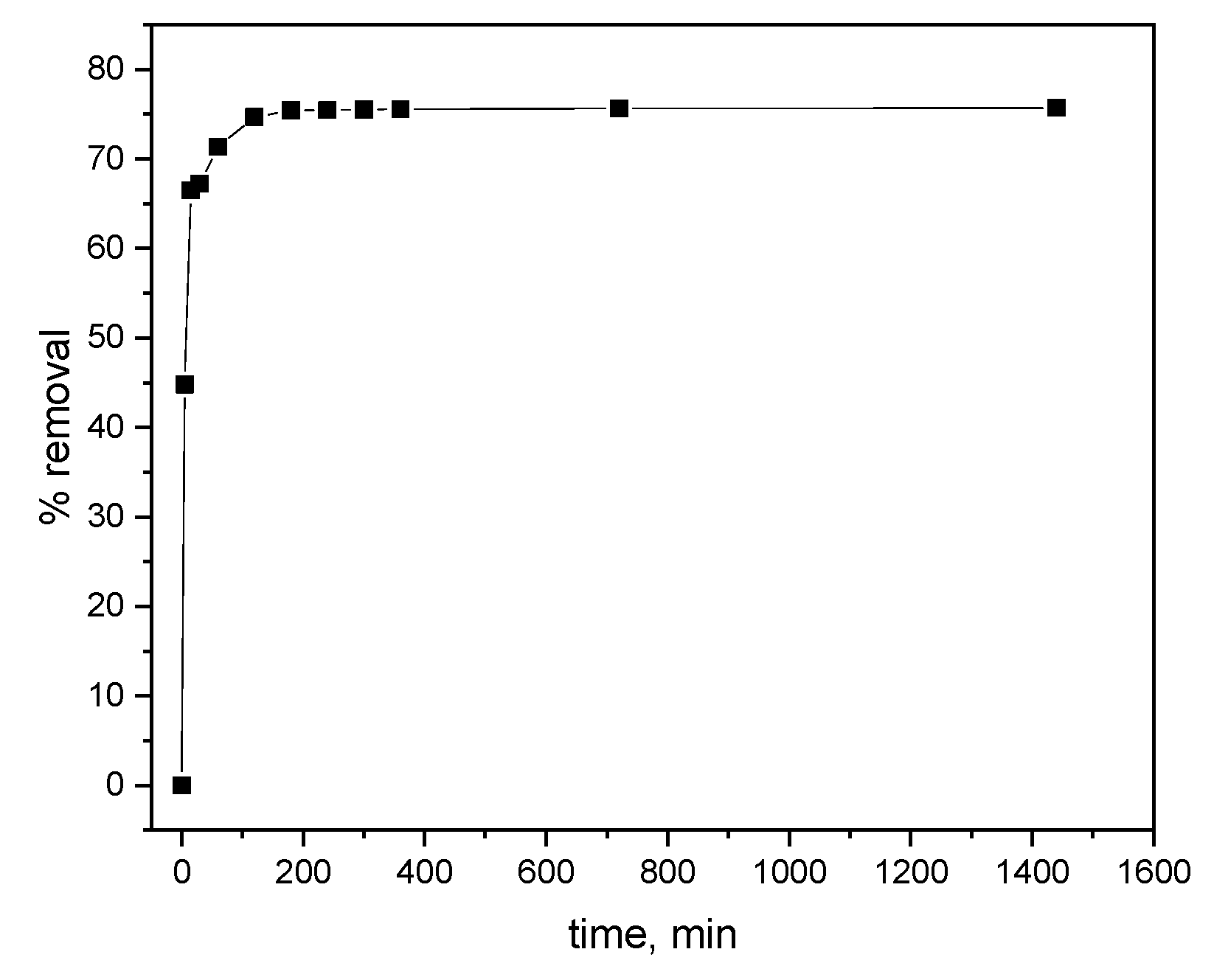
Figure 2.
Biochar efficiency for removing alachlor from water.
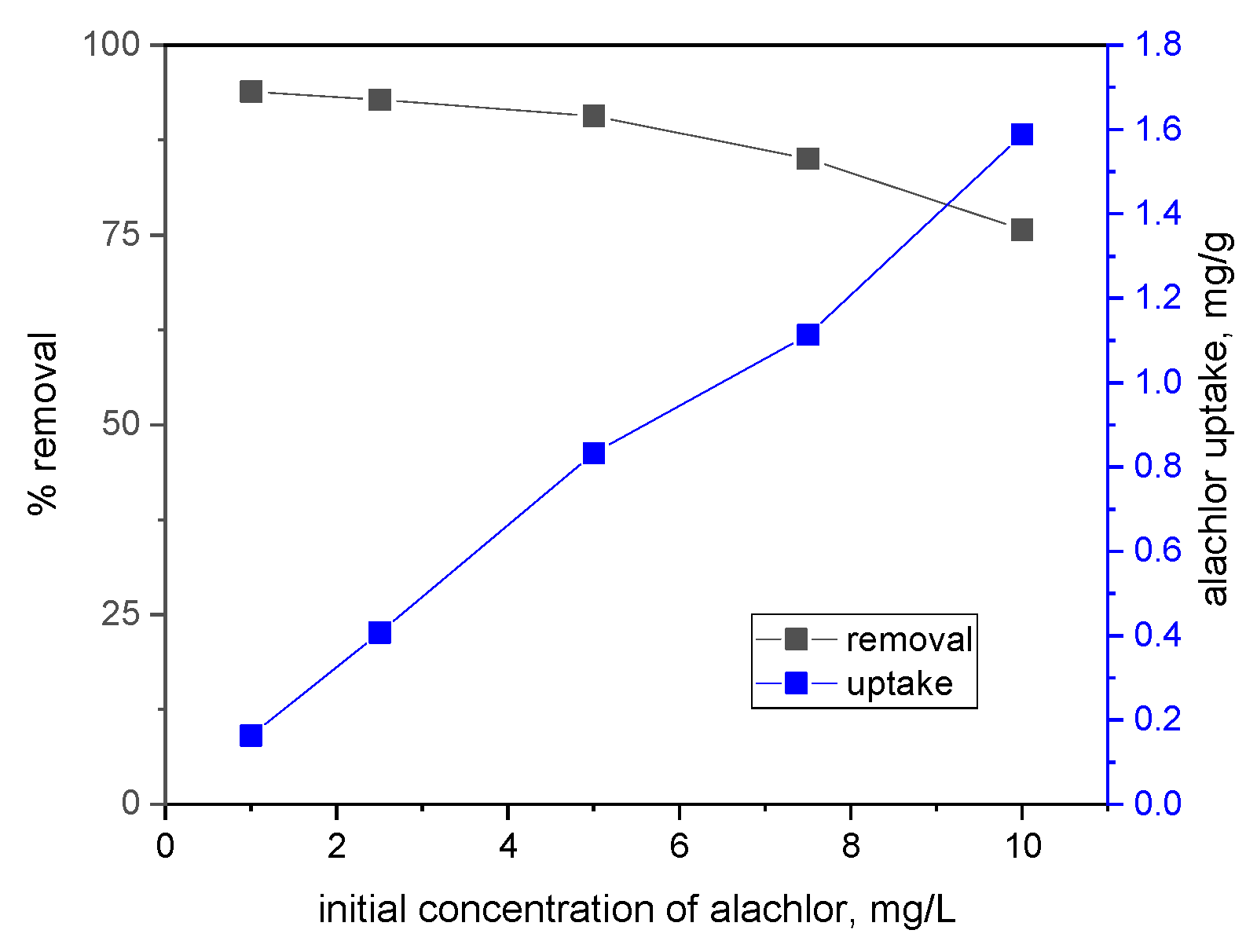
Figure 3.
Langmuir (a) and Freundlich (b) isotherms for the removal of alachlor by biochar.
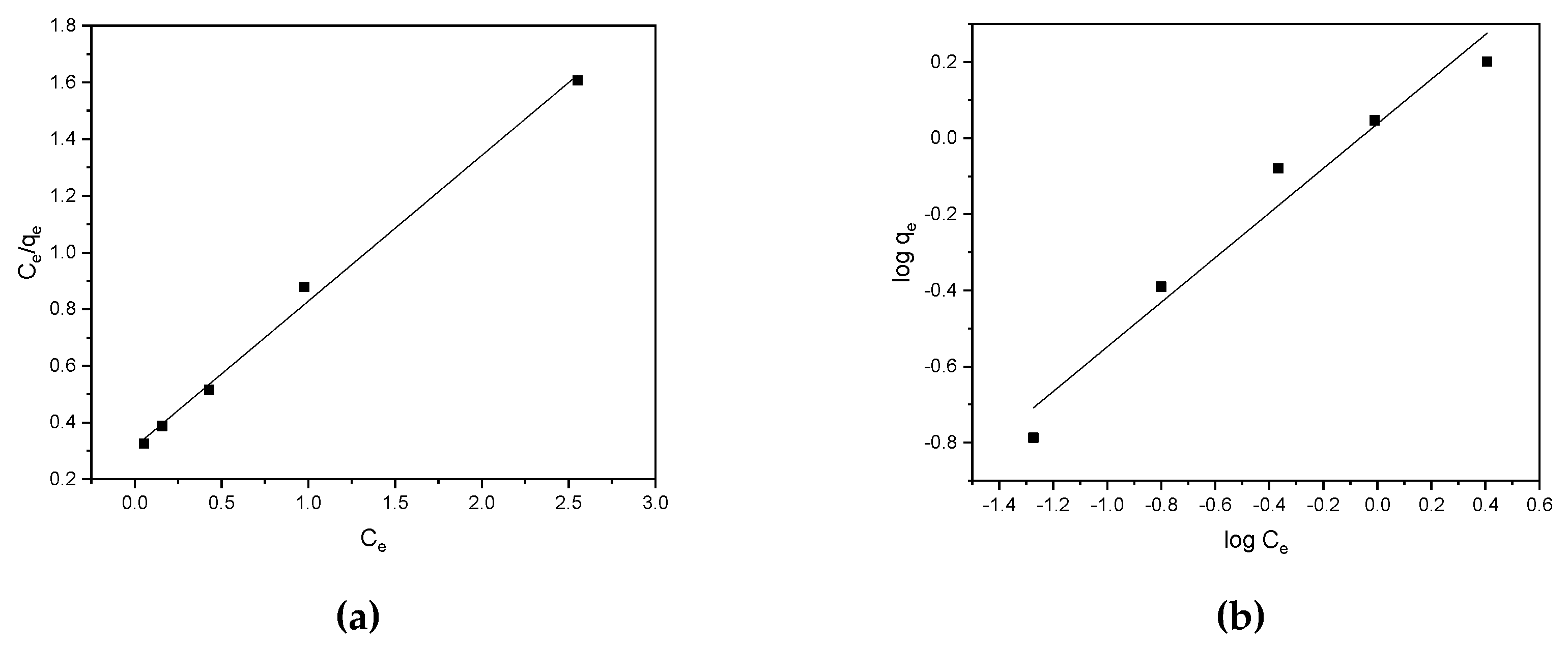
Figure 4.
The pseudo-first- (a) and pseudo-second-order (b) kinetic models for removal of alachlor by the biochar.
Figure 4.
The pseudo-first- (a) and pseudo-second-order (b) kinetic models for removal of alachlor by the biochar.
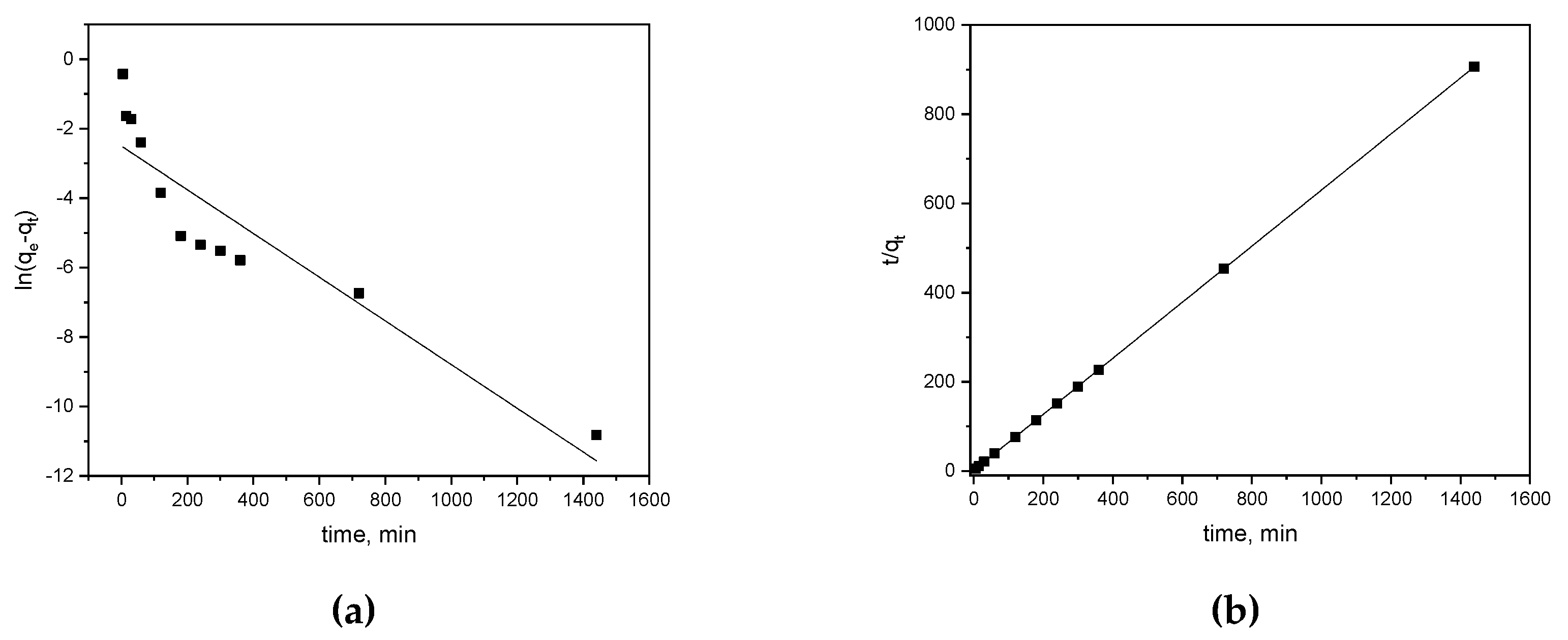
Figure 5.
Nitrogen adsorption isotherms on biochar before and after alachlor sorption.
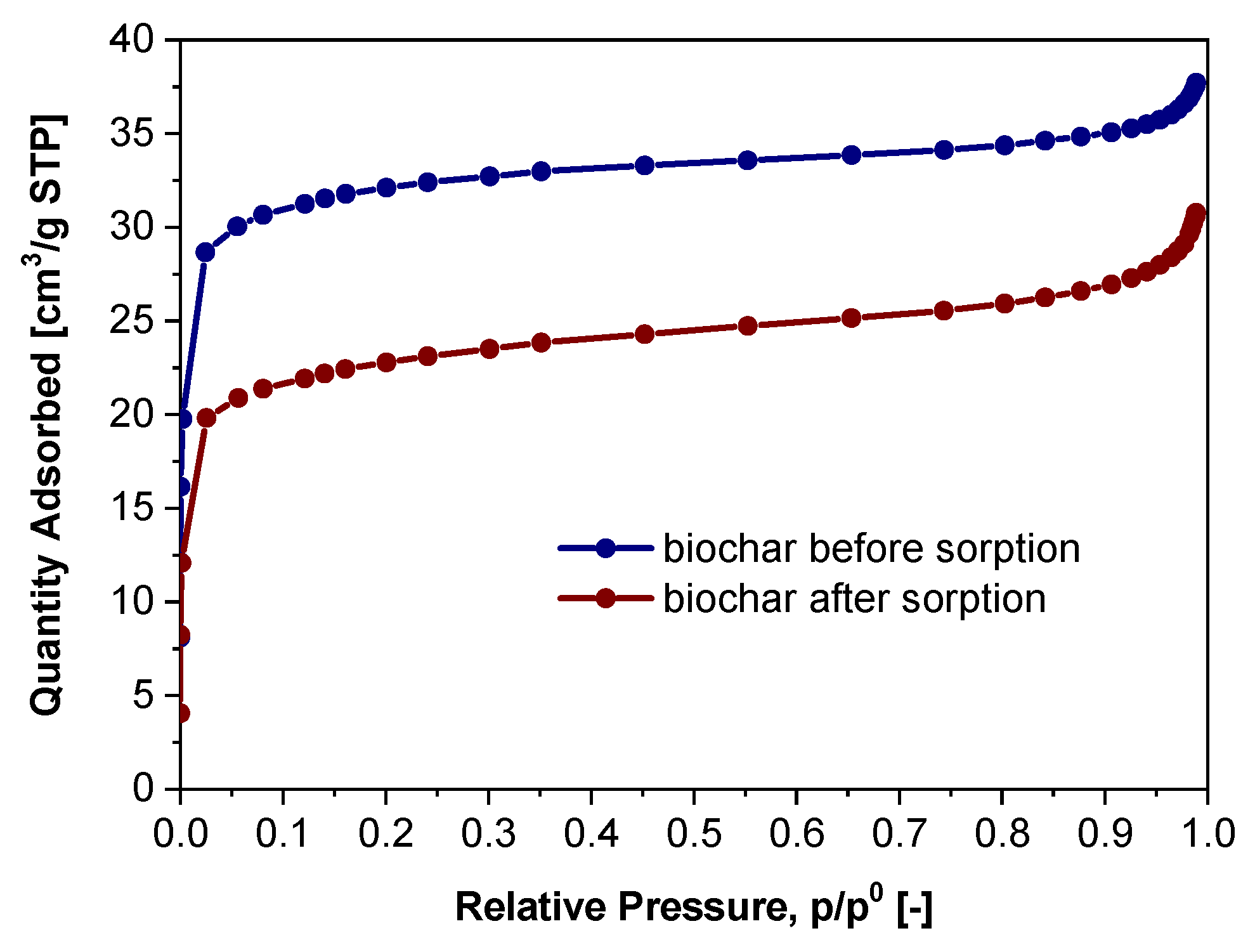
Figure 6.
Pore size distribution for biochar before and after alachlor sorption according to the NLDF model.
Figure 6.
Pore size distribution for biochar before and after alachlor sorption according to the NLDF model.
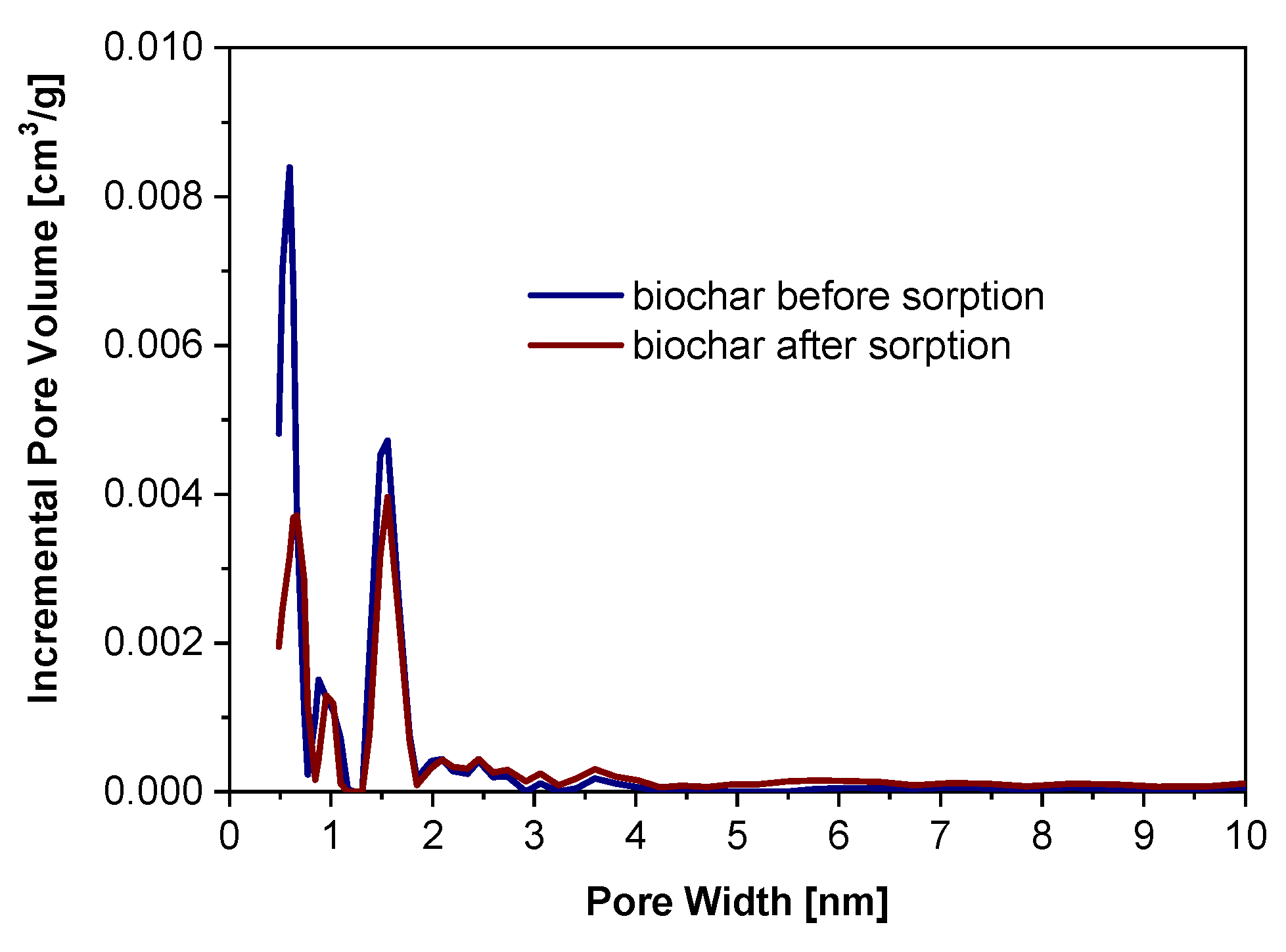
Figure 7.
The structure of biochar before and after alachlor sorption.
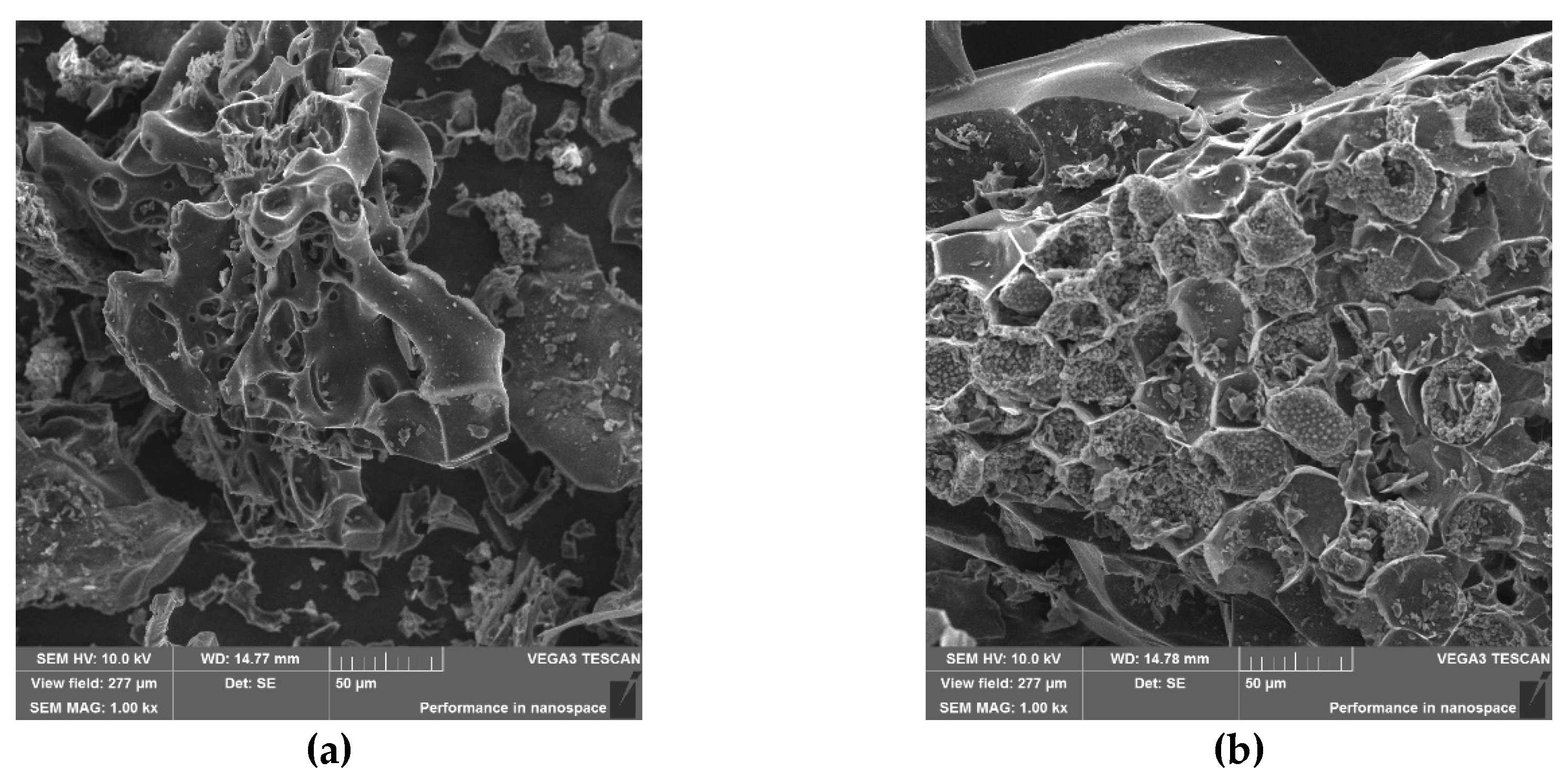
Figure 8.
The FT-IR spectra of biochar before and after sorption of alachlor.
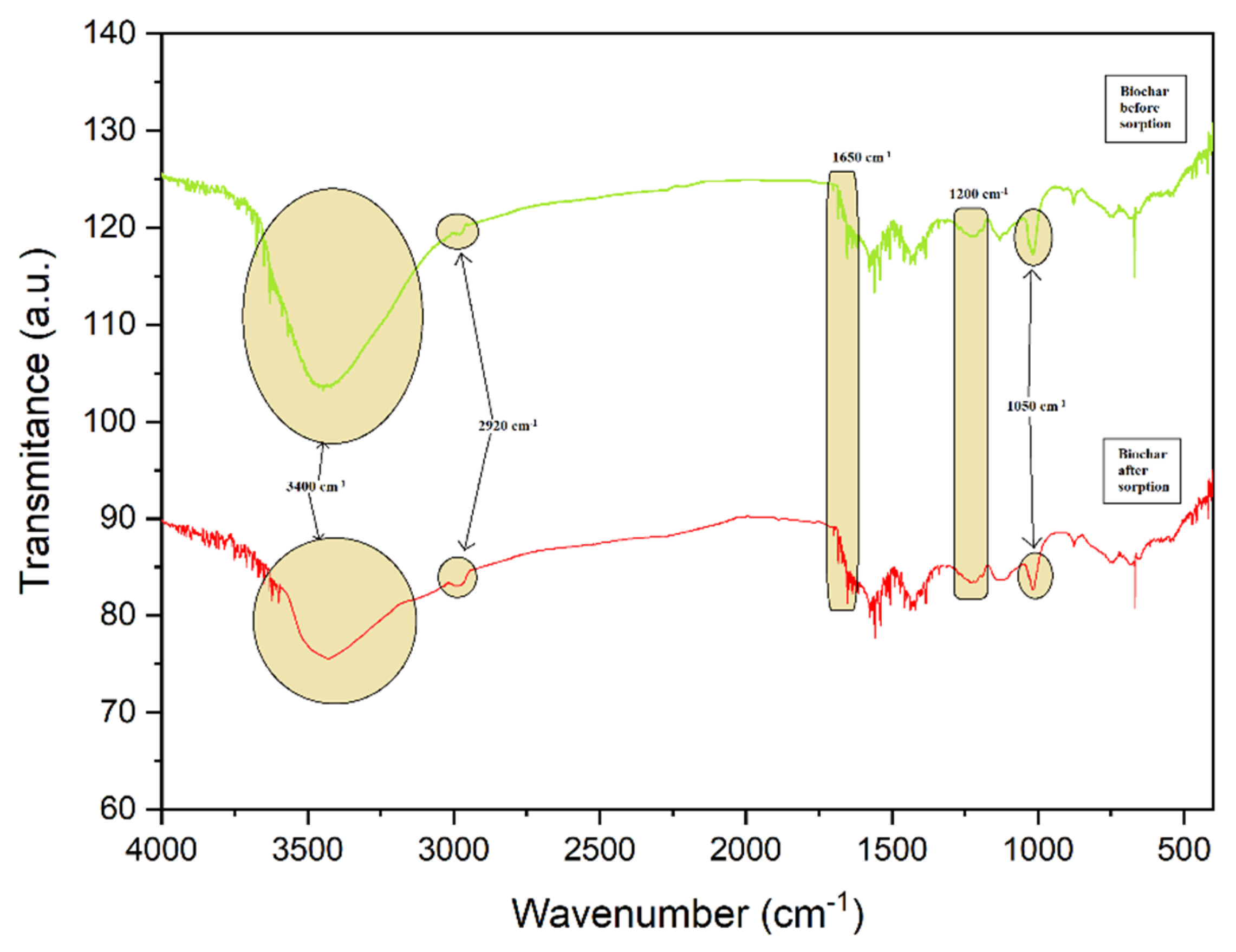
Figure 9.
Molecular interaction of biochar with alachlor during adsorption process.
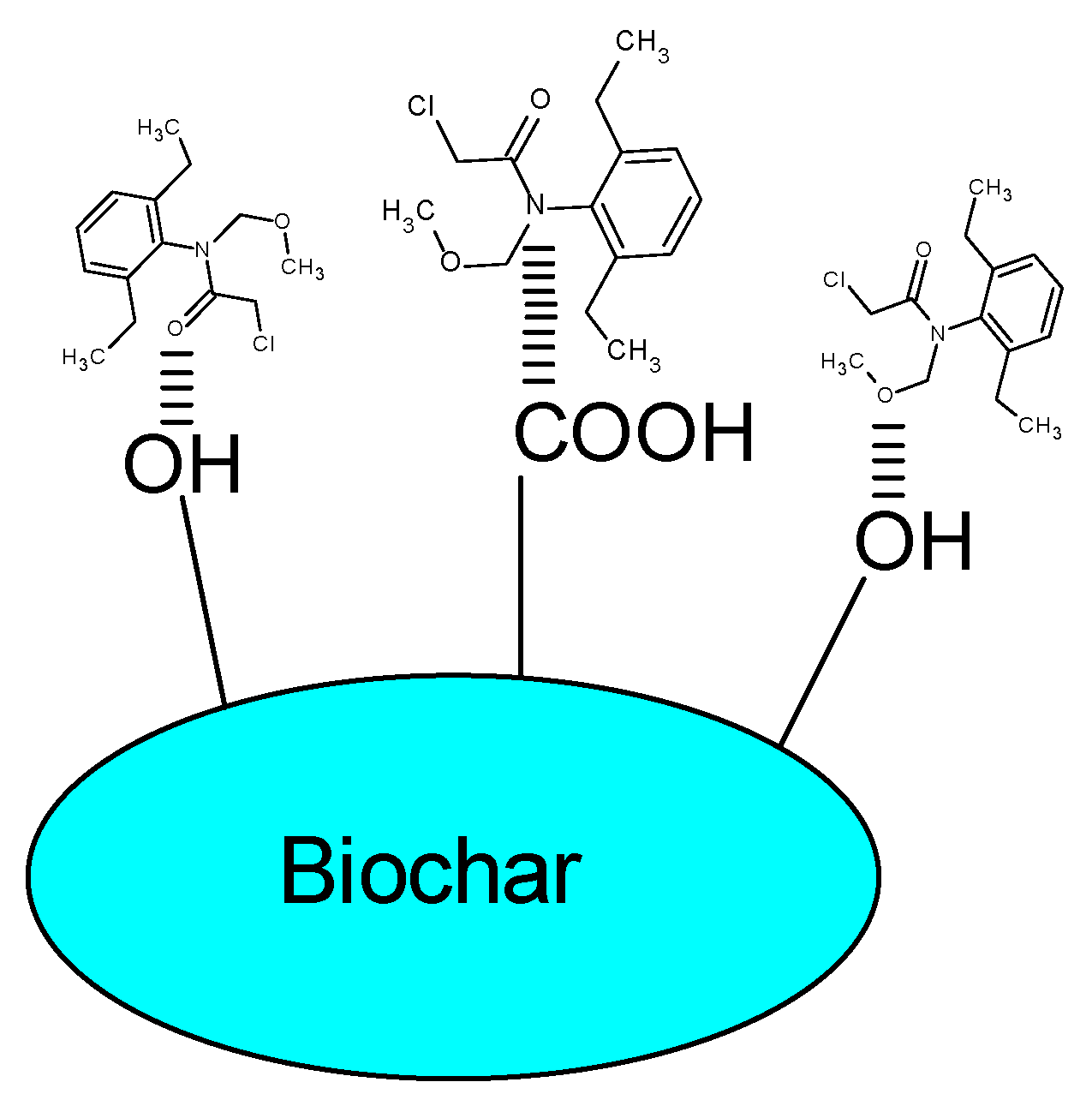

Table 1.
The isotherm parameters for sorption of alachlor on the biochar.
| Isotherm models | Parameters | Values |
|---|---|---|
| Langmuir | qmax Kl R2 |
1.94 1.64 0.996 |
| Freundlich | n Kf R2 |
1.71 1.09 0.962 |
Table 2.
Parameters of the kinetic models for sorption of alachlor on biochar.
| Kinetic model | Parameters | Values |
|---|---|---|
| Pseudo-second order | qe2 k2 R2 |
1.592 0.271 0.999 |
| Pseudo-first order | qe1 k1 R2 |
0.082 0.006 0.841 |
Table 3.
Structural parameters of biochar before and after alachlor sorption.
| Low pressure nitrogen adsorption, 77K | Symbol | Biochar before sorption | Biochar after sorption |
|---|---|---|---|
| Langmuir total sorption capacity, cm³/g STP | amL | 34.27 | 25.63 |
| Langmuir coefficient, 1/kPa | K | 0.85 | 0.48 |
| Langmuir specific surface area, m²/g | SSAL | 149.15 | 111.55 |
| BET total sorption capacity, cm³/g STP | amBET | 22.61 | 16.28 |
| BET specific surface area, m²/g | SSABET | 98.42 | 70.88 |
| NLDFT total pore volume, cm3/g | VNLDFT | 0.06 | 0.04 |
Disclaimer/Publisher’s Note: The statements, opinions and data contained in all publications are solely those of the individual author(s) and contributor(s) and not of MDPI and/or the editor(s). MDPI and/or the editor(s) disclaim responsibility for any injury to people or property resulting from any ideas, methods, instructions or products referred to in the content. |
© 2024 by the authors. Licensee MDPI, Basel, Switzerland. This article is an open access article distributed under the terms and conditions of the Creative Commons Attribution (CC BY) license (http://creativecommons.org/licenses/by/4.0/).
Copyright: This open access article is published under a Creative Commons CC BY 4.0 license, which permit the free download, distribution, and reuse, provided that the author and preprint are cited in any reuse.