

Submitted:
14 October 2024
Posted:
15 October 2024
You are already at the latest version
Abstract
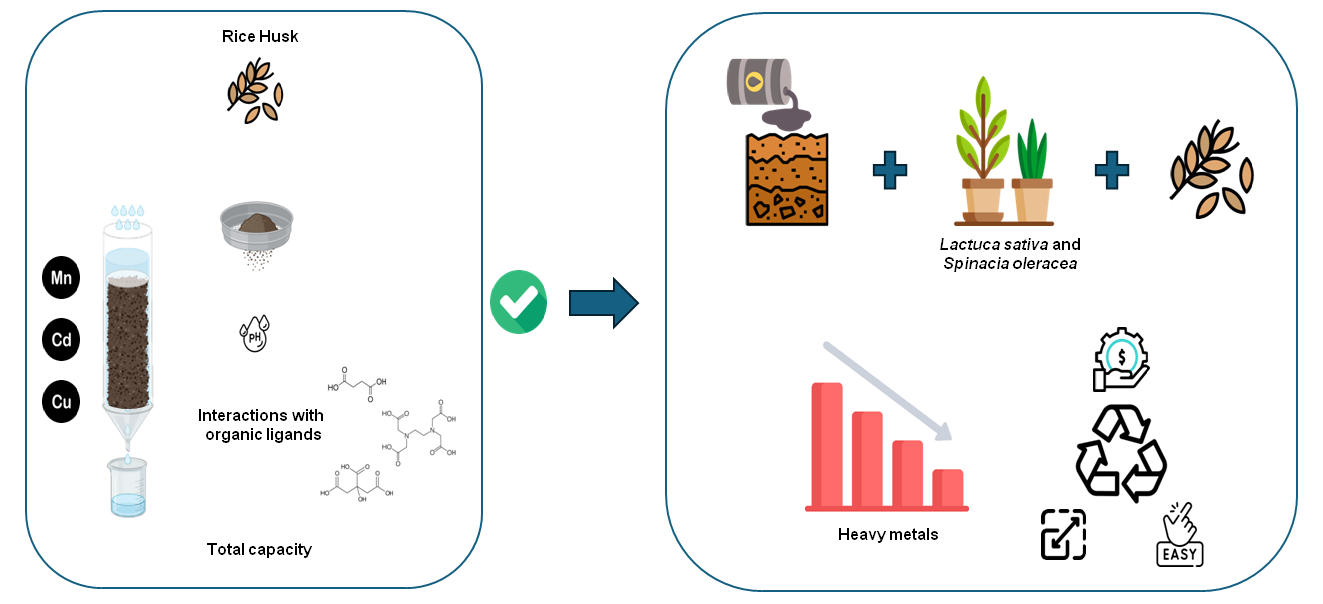
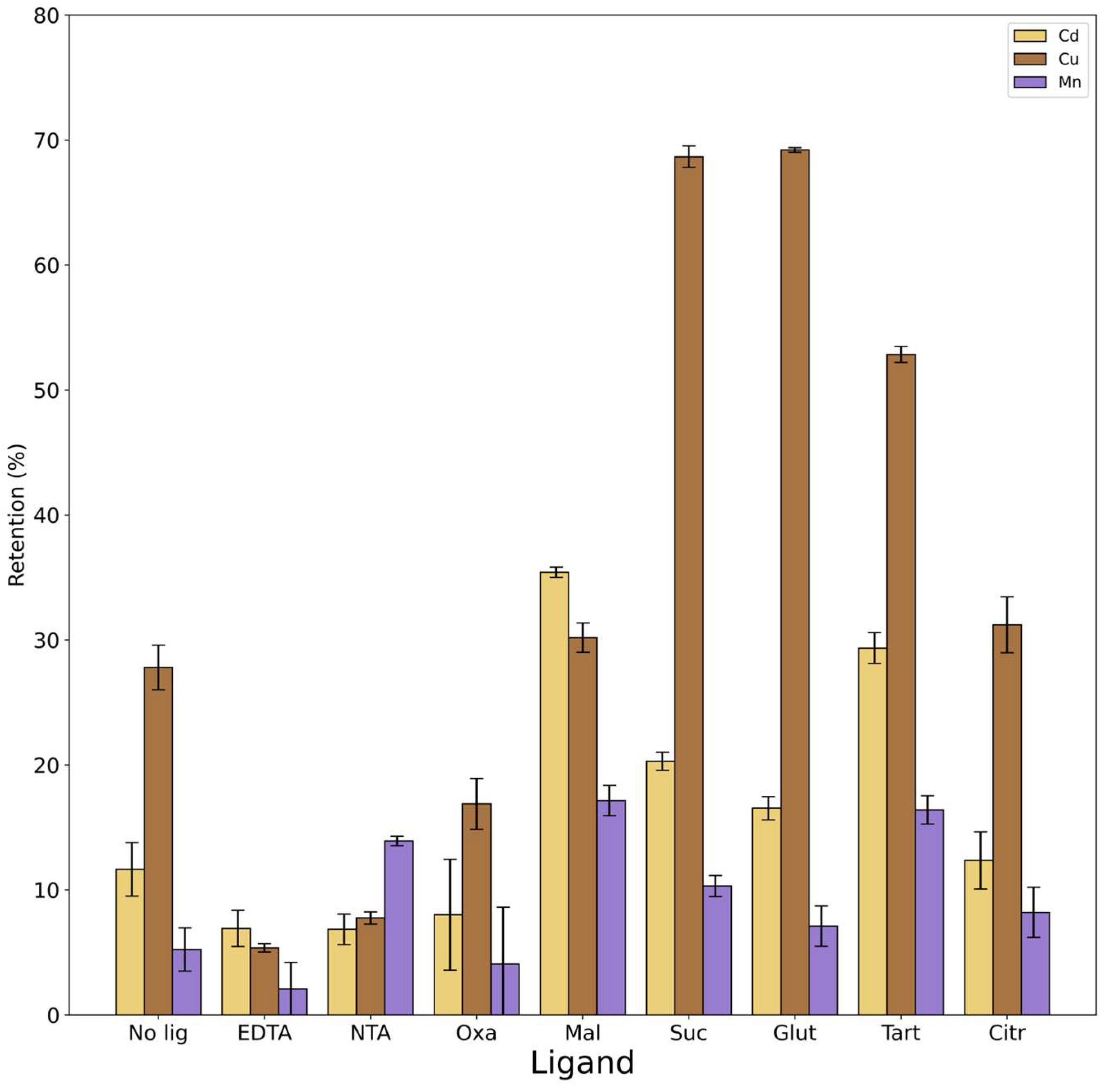
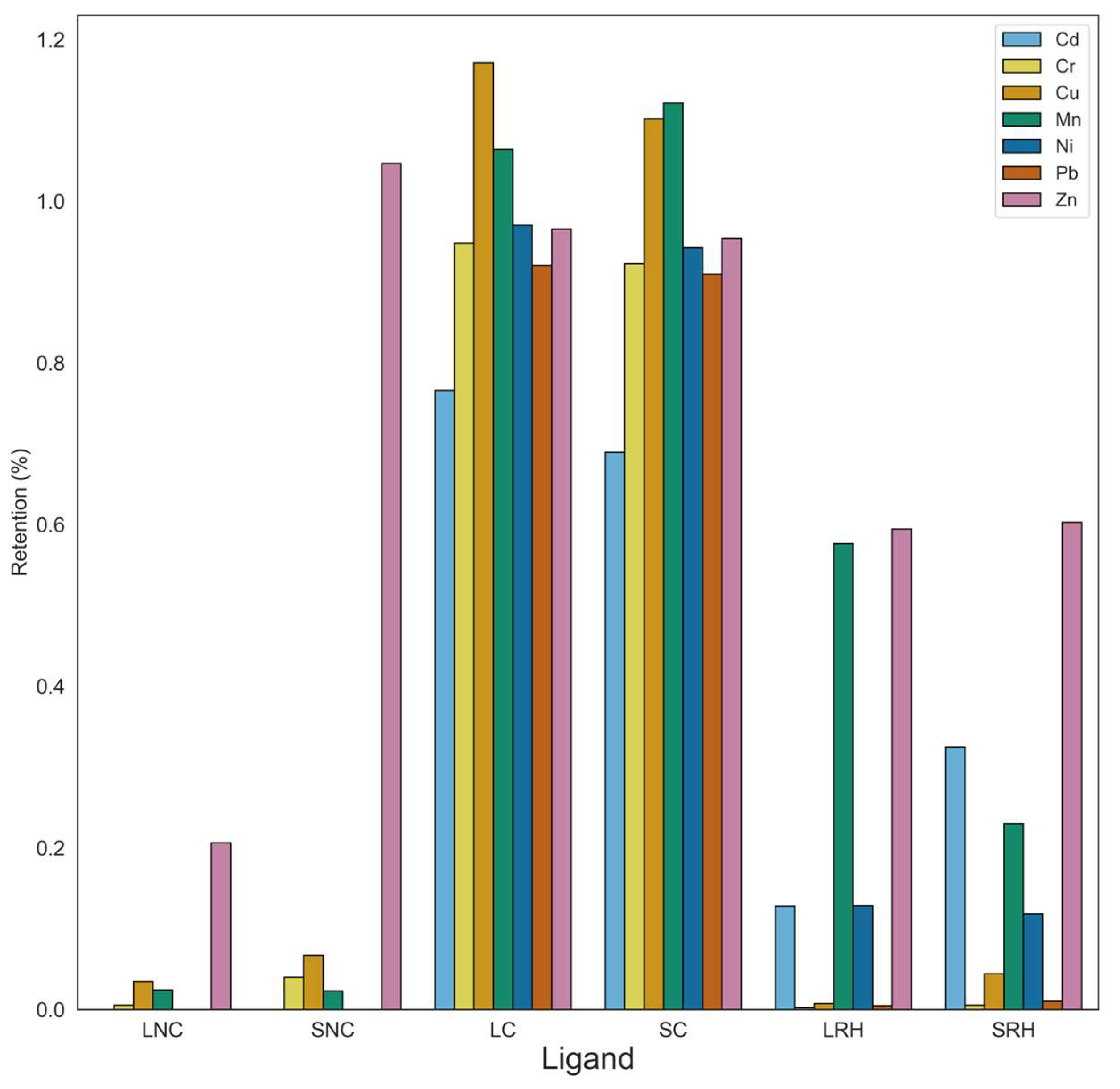
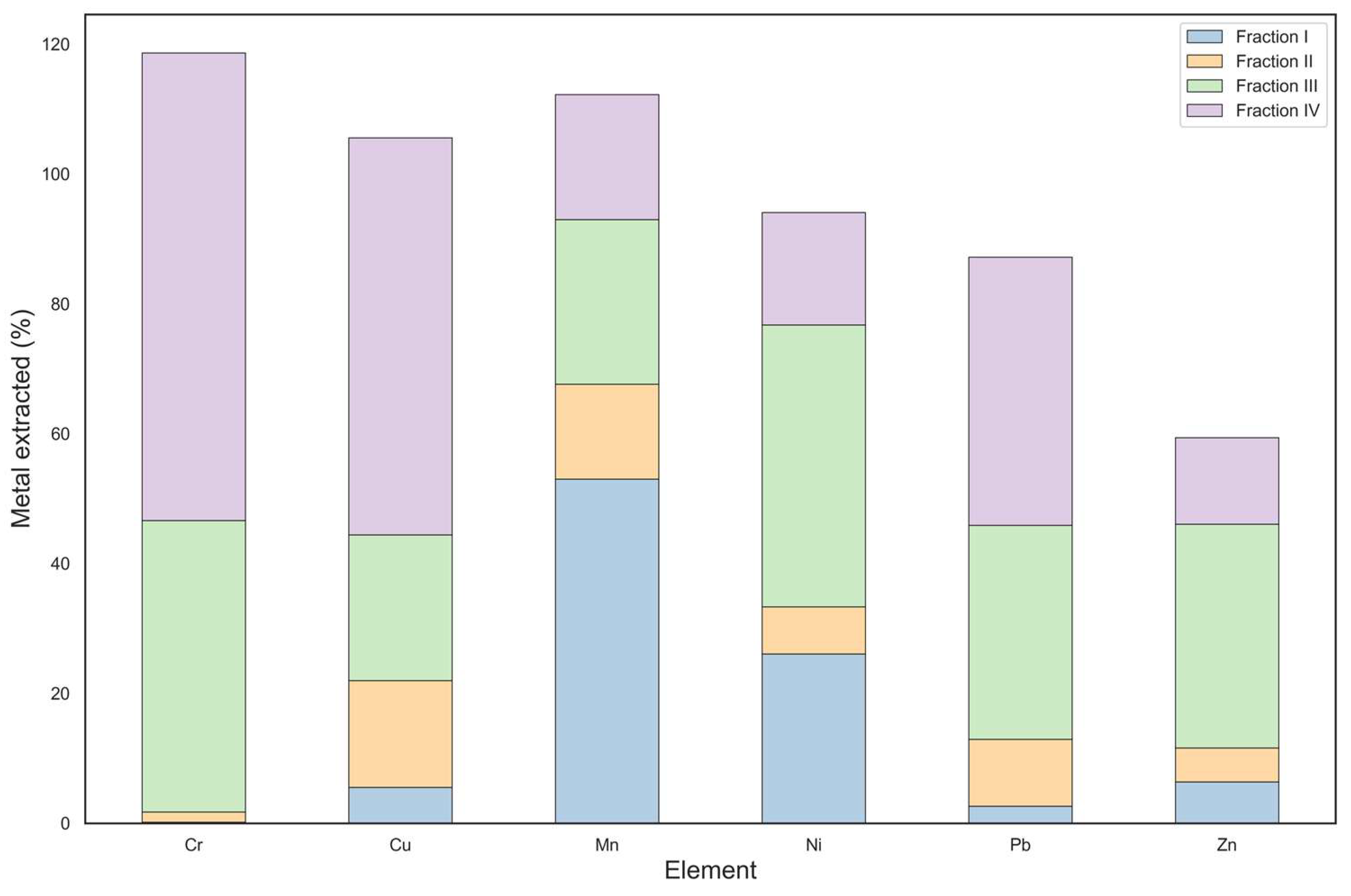
Rice husk is a waste by-product of rice production. This material has a moderate cost and is readily available, representing 20-22% of the biomass produced by rice cultivation. This study focused on the properties of rice husk in remediation of soils contaminated by heavy metals. The effect of particle size, pH, and the presence of organic ligands on sorption efficiency was evaluated for cadmium (Cd), copper (Cu), and manganese (Mn). The continuous flow method was used to select suitable operative conditions and maximize the retention of heavy metals. Subsequently, pot experiments were carried out by growing two broadleaf plants, Lactuca sativa, and Spinacia oleracea, in aliquots of soil collected in a Piedmont (Northwest Italy) site heavily contaminated by Cu, chromium (Cr), and nickel (Ni). Rice husk was added to the contaminated soil to evaluate its effectiveness in immobilizing heavy metals. The availability of Cr, Mn, Ni, Cu, Zn, Cd, and Pb in soil was studied using Tessier's sequential extraction protocol. The content of the elements was also analyzed in plants and the uptake of heavy metals was evaluated in relation to the addition of rice husk. The growth of both plants resulted more efficient in the presence of rice husk due to its ability to reduce the mobility of heavy metals in the soil. The simplicity, cost-effectiveness, and scalability of its employment make the use of rice husk suitable for practical applications in soil remediation.
Keywords:
1. Introduction
2. Materials and Methods
2.1. Apparatus and Reagents
2.2. Determination of Total Metal Content in Rice Husk
2.3. Heavy Metal Retention Tests
2.3.1. Effect of Particle Size
2.3.2. Effect of pH and Buffer Concentration
2.3.3. Effect of Ligands
2.3.4. Total Retention Capacity
2.4. Implementation in Semi-Field Conditions
2.4.1. Determination of Total Metal Content in Soil
2.4.2. Tessier Fractionation
2.4.3. Effect on Lettuce and Spinach Heavy Metal Uptake
3. Results and Discussion
3.1. Rice Husk Inorganic Characterization
3.2. Heavy Metal Retention Tests
3.2.1. Effect of Particle Size
3.2.2. Effect of pH and Buffer Concentration
3.2.3. Effect of the Presence of Ligands
3.2.4. Total Retention Capacity
3.3. Implementation in Semi-Field Conditions
3.3.1. Effect on Mobility and Reactivity of Heavy Metals in Soil
3.3.2. Effect on Lettuce and Spinach Heavy Metal Uptake
4. Conclusions
Supplementary Materials
Author Contributions
Funding
Data Availability Statement
Acknowledgments
Conflicts of Interest
References
- B. R. Kiran e M. N. V. Prasad, «Rice Husk and Wood Derived Charcoal for Remediation of Metal Contaminated Soil», in Handbook of Assisted and Amendment: Enhanced Sustainable Remediation Technology, John Wiley & Sons, Ltd., 2021, pp. 235–266. [CrossRef]
- M. A. S. Laidlaw et al., «Case studies and evidence-based approaches to addressing urban soil lead contamination», Appl. Geochem., vol. 83, pp. 14–30, ago. 2017. [CrossRef]
- L. V. Pavel e M. Gavrilescu, «Overview of ex situ decontamination techniques for soil cleanup», Environ. Eng. Manag. J., 2008.
- U. C. Gupta e S. C. Gupta, «Trace element toxicity relationships to crop production and livestock and human health: implications for management», Commun. Soil Sci. Plant Anal., vol. 29, fasc. 11–14, pp. 1491–1522, giu. 1998. [CrossRef]
- Sarker et al., «Biological and green remediation of heavy metal contaminated water and soils: A state-of-the-art review», Chemosphere, vol. 332, p. 138861, ago. 2023. [CrossRef]
- M. Shahid, C. Dumat, S. Khalid, E. Schreck, T. Xiong, e N. K. Niazi, «Foliar heavy metal uptake, toxicity and detoxification in plants: A comparison of foliar and root metal uptake», J. Hazard. Mater., vol. 325, pp. 36–58, mar. 2017. [CrossRef]
- M. Cai, M. B. McBride, K. Li, e Z. Li, «Bioaccessibility of As and Pb in orchard and urban soils amended with phosphate, Fe oxide and organic matter», Chemosphere, vol. 173, pp. 153–159, apr. 2017. [CrossRef]
- T. El Rasafi et al., «Recent progress on emerging technologies for trace elements-contaminated soil remediation», Chemosphere, vol. 341, p. 140121, nov. 2023. [CrossRef]
- M. Komárek, A. Vaněk, e V. Ettler, «Chemical stabilization of metals and arsenic in contaminated soils using oxides – A review», Environ. Pollut., vol. 172, pp. 9–22, gen. 2013. [CrossRef]
- J. Kumpiene, A. Lagerkvist, e C. Maurice, «Stabilization of As, Cr, Cu, Pb and Zn in soil using amendments – A review», Waste Manag., vol. 28, fasc. 1, pp. 215–225, gen. 2008. [CrossRef]
- N. Bolan et al., «Remediation of heavy metal(loid)s contaminated soils – To mobilize or to immobilize?», J. Hazard. Mater., vol. 266, pp. 141–166, feb. 2014. [CrossRef]
- B. S. Luh, Rice, Volume 2: Utilization. Springer Science & Business Media, 1991.
- Z. Li et al., «Review on Rice Husk Biochar as an Adsorbent for Soil and Water Remediation», Plants, vol. 12, fasc. 7, Art. fasc. 7, gen. 2023. [CrossRef]
- D. Nayyar, M. A. N. Shaikh, e T. Nawaz, «Remediation of Emerging Contaminants by Naturally Derived Adsorbents», in New Trends in Emerging Environmental Contaminants, S. P. Singh, A. K. Agarwal, T. Gupta, e S. M. Maliyekkal, A c. di, Singapore: Springer, 2022, pp. 225–260. [CrossRef]
- R.-L. Zheng et al., «The effects of biochars from rice residue on the formation of iron plaque and the accumulation of Cd, Zn, Pb, As in rice (Oryza sativa L.) seedlings», Chemosphere, vol. 89, fasc. 7, pp. 856–862, ott. 2012. [CrossRef]
- Z. Derakhshan Nejad e M. C. Jung, «The effects of biochar and inorganic amendments on soil remediation in the presence of hyperaccumulator plant», Int. J. Energy Environ. Eng., vol. 8, fasc. 4, pp. 317–329, dic. 2017. [CrossRef]
- R. Bian et al., «Copyrolysis of food waste and rice husk to biochar to create a sustainable resource for soil amendment: A pilot-scale case study in Jinhua, China», J. Clean. Prod., vol. 347, p. 131269, mag. 2022. [CrossRef]
- R. P. Buck et al., «Measurement of pH. Definition, standards, and procedures (IUPAC Recommendations 2002)», Pure Appl. Chem., vol. 74, fasc. 11, pp. 2169–2200, gen. 2002. [CrossRef]
- C. E. R. Barquilha e M. C. B. Braga, «Adsorption of organic and inorganic pollutants onto biochars: Challenges, operating conditions, and mechanisms», Bioresour. Technol. Rep., vol. 15, p. 100728, set. 2021. [CrossRef]
- M. A. E. de Franco, C. B. de Carvalho, M. M. Bonetto, R. de P. Soares, e L. A. Féris, «Removal of amoxicillin from water by adsorption onto activated carbon in batch process and fixed bed column: Kinetics, isotherms, experimental design and breakthrough curves modelling», J. Clean. Prod., vol. 161, pp. 947–956, set. 2017. [CrossRef]
- P. Rudnicki, Z. Hubicki, e D. Kołodyńska, «Evaluation of heavy metal ions removal from acidic waste water streams», Chem. Eng. J., vol. 252, pp. 362–373, set. 2014. [CrossRef]
- Ross e V. L. Willson, «One-Way Anova», in Basic and Advanced Statistical Tests: Writing Results Sections and Creating Tables and Figures, A. Ross e V. L. Willson, A c. di, Rotterdam: SensePublishers, 2017, pp. 21–24. [CrossRef]
- W. Dunnett, «A Multiple Comparison Procedure for Comparing Several Treatments with a Control», J. Am. Stat. Assoc., vol. 50, fasc. 272, pp. 1096–1121, dic. 1955. [CrossRef]
- L. Castellino et al., «PyES – An open-source software for the computation of solution and precipitation equilibria», Chemom. Intell. Lab. Syst., vol. 239, p. 104860, ago. 2023. [CrossRef]
- R. G. Böhmer, «Separation and Preconcentration Methods in Inorganic Trace Analysis. J. Minczewski, J. Chwastowska, and R. Dybczyński. Ellis Horwood ltd., Chichester, Publishers, Distributed by John Wiley & Sons, New York, Chichester, Brisbane, Toronto. 1982. ISBN 0-8531 2-1 65-6 or 0-470-271 69-8, xi + 543 pages», J. High Resolut. Chromatogr., vol. 6, fasc. 4, pp. 208–208, 1983. [CrossRef]
- M. Malandrino, O. Abollino, S. Buoso, A. Giacomino, C. La Gioia, e E. Mentasti, «Accumulation of heavy metals from contaminated soil to plants and evaluation of soil remediation by vermiculite», Chemosphere, vol. 82, fasc. 2, pp. 169–178, gen. 2011. [CrossRef]
- USDA, «Natural Resources Conservation Service, U.S. DEPARTMENT OF AGRICULTURE». Consultato: 9 luglio 2024. [Online]. Disponibile su: https://www.nrcs.usda.gov/.
- Tessier, P. G. C. Campbell, e M. Bisson, «Sequential extraction procedure for the speciation of particulate trace metals», Anal. Chem., vol. 51, fasc. 7, pp. 844–851, giu. 1979. [CrossRef]
- Abollino, A. Giacomino, M. Malandrino, E. Mentasti, M. Aceto, e R. Barberis, «Assessment of Metal Availability in a Contaminated Soil by Sequential Extraction», Water. Air. Soil Pollut., vol. 173, fasc. 1, pp. 315–338, giu. 2006. [CrossRef]
- M. Davidson, A. L. Duncan, D. Littlejohn, A. M. Ure, e L. M. Garden, «A critical evaluation of the three-stage BCR sequential extraction procedure to assess the potential mobility and toxicity of heavy metals in industrially-contaminated land», Anal. Chim. Acta, vol. 363, fasc. 1, pp. 45–55, mag. 1998. [CrossRef]
- Medyńska-Juraszek, K. Marcinkowska, D. Gruszka, e K. Kluczek, «The Effects of Rabbit-Manure-Derived Biochar Co-Application with Compost on the Availability and Heavy Metal Uptake by Green Leafy Vegetables», Agronomy, vol. 12, fasc. 10, Art. fasc. 10, ott. 2022. [CrossRef]
- K. T. Ng, P. Herrero, B. Hatt, M. Farrelly, e D. McCarthy, «Biofilters for urban agriculture: Metal uptake of vegetables irrigated with stormwater», Ecol. Eng., vol. 122, pp. 177–186, ott. 2018. [CrossRef]
- N. Soltani, A. Bahrami, M. I. Pech-Canul, e L. A. González, «Review on the physicochemical treatments of rice husk for production of advanced materials», Chem. Eng. J., vol. 264, pp. 899–935, mar. 2015. [CrossRef]
- J. Bao, «Chapter 15 - Rice», in ICC Handbook of 21st Century Cereal Science and Technology, P. R. Shewry, H. Koksel, e J. R. N. Taylor, A c. di, Academic Press, 2023, pp. 145–151. [CrossRef]
- Fapohunda, B. Akinbile, e A. Shittu, «Structure and properties of mortar and concrete with rice husk ash as partial replacement of ordinary Portland cement – A review», Int. J. Sustain. Built Environ., vol. 6, fasc. 2, pp. 675–692, dic. 2017. [CrossRef]
- V. P. Evangelou, Environmental Soil and Water Chemistry. A Wiley-Interscience Publication, 2022. Consultato: 9 luglio 2024. [Online]. Disponibile su: http://ngc.digitallibrary.co.in/handle/123456789/2313.
- J. Alloway, Heavy Metals in Soils: Trace Metals and Metalloids in Soils and their Bioavailability. Springer Science & Business Media, 2012.
- C. Harris e C. A. Lucy, Quantitative Chemical Analysis, 10th Edition. Macmillan, 2010. Consultato: 9 luglio 2024. [Online]. Disponibile su: https://www.macmillanlearning.com/college/us/product/Quantitative-Chemical-Analysis/p/1319164307.
- K. K. Krishnani, X. Meng, C. Christodoulatos, e V. M. Boddu, «Biosorption mechanism of nine different heavy metals onto biomatrix from rice husk», J. Hazard. Mater., vol. 153, fasc. 3, pp. 1222–1234, mag. 2008. [CrossRef]
- F.-M. Pellera et al., «Adsorption of Cu(II) ions from aqueous solutions on biochars prepared from agricultural by-products», J. Environ. Manage., vol. 96, fasc. 1, pp. 35–42, apr. 2012. [CrossRef]
- X. Xu, X. Cao, e L. Zhao, «Comparison of rice husk- and dairy manure-derived biochars for simultaneously removing heavy metals from aqueous solutions: Role of mineral components in biochars», Chemosphere, vol. 92, fasc. 8, pp. 955–961, ago. 2013. [CrossRef]
- Y. Li, J. Liu, Q. Yuan, H. Tang, F. Yu, e X. Lv, «A green adsorbent derived from banana peel for highly effective removal of heavy metal ions from water», RSC Adv., vol. 6, fasc. 51, pp. 45041–45048, 2016. [CrossRef]
- P. SenthilKumar, S. Ramalingam, R. V. Abhinaya, S. D. Kirupha, T. Vidhyadevi, e S. Sivanesan, «Adsorption equilibrium, thermodynamics, kinetics, mechanism and process design of zinc(II) ions onto cashew nut shell», Can. J. Chem. Eng., vol. 90, fasc. 4, pp. 973–982, 2012. [CrossRef]
- N. Basci, E. Kocadagistan, e B. Kocadagistan, «Biosorption of copper (II) from aqueous solutions by wheat shell», Desalination, vol. 164, fasc. 2, pp. 135–140, apr. 2004. [CrossRef]
- V. B. H. Dang, H. D. Doan, T. Dang-Vu, e A. Lohi, «Equilibrium and kinetics of biosorption of cadmium(II) and copper(II) ions by wheat straw», Bioresour. Technol., vol. 100, fasc. 1, pp. 211–219, gen. 2009. [CrossRef]
- W. Zheng et al., «Adsorption of Cd(II) and Cu(II) from aqueous solution by carbonate hydroxylapatite derived from eggshell waste», J. Hazard. Mater., vol. 147, fasc. 1, pp. 534–539, ago. 2007. [CrossRef]
- Papandreou, C. J. Stournaras, e D. Panias, «Copper and cadmium adsorption on pellets made from fired coal fly ash», J. Hazard. Mater., vol. 148, fasc. 3, pp. 538–547, set. 2007. [CrossRef]
- Abollino, M. Aceto, M. Malandrino, C. Sarzanini, e E. Mentasti, «Adsorption of heavy metals on Na-montmorillonite. Effect of pH and organic substances», Water Res., vol. 37, fasc. 7, pp. 1619–1627, apr. 2003. [CrossRef]
- «DECRETO 1 marzo 2019, n. 46». Consultato: 9 luglio 2024. [Online]. Disponibile su: https://www.normattiva.it/uri-res/N2Ls?urn:nir:ministero.ambiente.e.tutela.territorio.e.mare:decreto:2019-03-01;46!vig=.
- Kabata-Pendias, Trace Elements in Soils and Plants, 3a ed. Boca Raton: CRC Press, 2000. [CrossRef]
- E. Martell e R. M. Smith, Critical Stability Constants: First Supplement. Boston, MA: Springer US, 1982. [CrossRef]
- R. M. Smith e A. E. Martell, Critical Stability Constants. Boston, MA: Springer US, 1989. [CrossRef]
- G. Anderegg, «Critical survey of stability constants of NTA complexes», Pure Appl. Chem., vol. 54, fasc. 12, pp. 2693–2758, gen. 1982. [CrossRef]

| Vietnam1 | U.S.A1 | Thailand1 | Nigeria1 | North Ireland1 | Malaysia1 | Japan1 | Iraq1 | India1 | Guyana1 | Canada1 | Brazil1 | Italy2 | |
| SiO2 | 86.9 | 87–97 | 89–95 | 67–76 | 86–96 | 93.1 | 91.6 | 86.8 | 86–94 | 88–95 | 87–97 | 92.9 | 87.8 |
| Al2O3 | 0.84 | Traces | 0.5–1.0 | 3–4.90 | 0.08–0.84 | 0.21 | 0.14 | 0.4 | 0.2–5.0 | - | 0.15–0.4 | 0.18 | 1.3 |
| Fe2O3 | 0.73 | 0.38–0.54 | 2.5–2.8 | 0–0.95 | 0.03–0.73 | 0.21 | 0.06 | 0.19 | 0.3–2 | - | 0.16–0.4 | 0.43 | 1.5 |
| CaO | 1.4 | 0.25–1.0 | 1.0–1.3 | 1.36–6 | 0.3–1.4 | 0.41 | 0.58 | 1.4 | 0.5–2.5 | 0.06–1.2 | 0.4–0.49 | 1.03 | 2.2 |
| K2O | 2.46 | 0.58–2.0 | 2.4–2.5 | 0–0.1 | 0.7–2.4 | 2.31 | 2.54 | 3.84 | 0.1–2.3 | 0.6–2.5 | 2.0–3.0 | 0.72 | 4.5 |
| MgO | 0.57 | 0.12–2.0 | 0.18–0.28 | 1.3–1.81 | 0.1–0.5 | 1.59 | 0.26 | 0.37 | 0.1–1.8 | 0.17–.0.26 | 0.35–0.50 | 0.35 | 2.1 |
| Na2O | 0.11 | 0–0.15 | 0.03–0.8 | - | 0.11–0.2 | - | 0.09 | 1.15 | 0.1–0.5 | 0–0.3 | 0.10–1.12 | 0.02 | 0.4 |
| MnO2 | - | - | - | - | - | - | - | - | - | - | - | - | 0.3 |
| CuO | - | - | - | - | - | - | - | - | - | - | - | - | 0.01 |
| Total capacity (mg/g) | References | ||
| Cd | Cu | ||
| Banana peel | 30.7 | 49.5 | [42] |
| Cashew nutshell | 22.11 | - | [43] |
| Wheat shell | - | 0.83 | [44] |
| Wheat straw | 14.56 | 11.43 | [45] |
| Eggshell waste | 111.1 | 142.6 | [46] |
| Coal fly ash | 19.98 | 20.92 | [47] |
| Na-Montmorillonite | 5.20 | 3.04 | [48] |
| Risk husk | 12 | 6.6 | This work |
| Plant | Metal | Control | Contaminated Soil | Contaminated Soil + Rice Husk | Reduction Efficiency | ||||||
|---|---|---|---|---|---|---|---|---|---|---|---|
| lettuce | Cd | <0.004 | 2.85 | ± | 0.30 | 0.38 | ± | 0.02 | 87% | ||
| Cr | 0.18 | ± | 0.047 | 3094 | ± | 40 | 5.93 | ± | 0.42 | 100% | |
| Cu | 1.94 | ± | 1.334 | 3254 | ± | 215 | 18.6 | ± | 15.2 | 99% | |
| Mn | 6.14 | ± | 0.393 | 289.2 | ± | 7.5 | 171 | ± | 17 | 41% | |
| Ni | 0.97 | ± | 0.43 | 606.5 | ± | 25.5 | 68.7 | ± | 0.64 | 89% | |
| Pb | <0.125 | 632.9 | ± | 35.9 | 2.81 | ± | 2.05 | 100% | |||
| Zn | 26.98 | ± | 1.064 | 352.1 | ± | 0.2 | 198 | ± | 28.7 | 44% | |
| spinach | Cd | <0.004 | 2.57 | ± | 0.27 | 0.97 | ± | 0.03 | 74% | ||
| Cr | 1.327 | ± | 0.022 | 3011 | ± | 77 | 14.6 | ± | 3.62 | 100% | |
| Cu | 3.717 | ± | 0.457 | 3062 | ± | 6 | 109 | ± | 3.39 | 98% | |
| Mn | 5.844 | ± | 0.154 | 304.9 | ± | 8.3 | 68.3 | ± | 7.23 | 59% | |
| Ni | 1.288 | ± | 0.291 | 589.1 | ± | 6.7 | 63.4 | ± | 0.43 | 89% | |
| Pb | <0.125 | 625.7 | ± | 0.7 | 5.98 | ± | 7.52 | 99% | |||
| Zn | 136.7 | ± | 3.117 | 347.8 | ± | 0.4 | 201 | ± | 26.2 | 43% | |
Disclaimer/Publisher’s Note: The statements, opinions and data contained in all publications are solely those of the individual author(s) and contributor(s) and not of MDPI and/or the editor(s). MDPI and/or the editor(s) disclaim responsibility for any injury to people or property resulting from any ideas, methods, instructions or products referred to in the content. |
© 2024 by the authors. Licensee MDPI, Basel, Switzerland. This article is an open access article distributed under the terms and conditions of the Creative Commons Attribution (CC BY) license (http://creativecommons.org/licenses/by/4.0/).