

Submitted:
14 October 2024
Posted:
15 October 2024
You are already at the latest version
Abstract
In recent years, concerns regarding the environmental impact of microplastics (MPs) have led to increased international attention on these pollutants. Although initial focus was largely directed toward marine environments, land-based pollution sources, including MP release, has been recognized to directly affect marine ecosystems. Therefore, soil-, atmosphere-, groundwater-, and river-based research is ongoing. However, when considering sources of MP, it is necessary to examine the circular system of plastic in terms of raw materials, production, consumption, discharge, and disposal (recycling). Accordingly, the present study proposes a strategy to effectively manage MPs using this circular system. First, the factors influencing MPs in the circular system were identified, and MPs at the system’s final stage, i.e., at the waste treatment facility, were subsequently investigated. Using the concept of MP waste (MPW), strategies were then developed for effective MP management within the circular system. Applying the proposed theoretical strategy to the Korean waste management system revealed that the new policy framework improves the current MP management system. Overall, this study provides fundamental data for establishing new or improved MP management schemes from a waste sector perspective.
Keywords:
microplastic
; policy framework
; circular system
; theoretical strategy
; waste management
1. Introduction
Microplastics (MPs) are artificially or naturally fragmented micro-sized plastics in the range of 1 nm to 5 mm. MPs comprise a mixture of polymers and additives and are typically acknowledged to pose a threat to ecosystems [1,2,3]. MPs can be categorized into primary and secondary MPs based on their origin [4]. Primary MPs are intentionally manufactured at sizes <5 mm, such as microbeads and plastic pellets. Secondary MPs are generated via fragmentation of plastics in the environment, including textile fibers and tire dust, to sizes <5 mm through processes such as photodegradation, abrasion, and decomposition [2,5].
In recent years, numerous studies have reported the harmful effects of MPs on ecosystems, highlighting their physicochemical properties, bioaccumulation, and toxicity. Smaller MPs can be ingested by marine organisms, with their impact extending to birds and marine mammals [6,7,8]. Hydrophobic substances, such as polychlorinated biphenyls, persistent organic pollutants, and heavy metals, likely adhere to MP surfaces and bioaccumulate through the food chain, affecting the overall ecosystem including seawater, freshwater, and soil [9]. Furthermore, additives used in plastic manufacturing, such as plasticizers and flame retardants, may leach into the environment, acting as toxic agents [10,11]. In terms of harmful effects on human health, MPs can affect all organs, potentially traversing cellular barriers, such as the blood–brain barrier, leading to cerebral ischemia and reperfusion injury [12,13].
The UN Environment Assembly has adopted a resolution on marine plastic waste and MPs; accordingly, they recommend investigating the origins of MPs entering the oceans, developing management measures to minimize their entry, and creating international, national, and regional management strategies to strengthen international coordination [14]. Discussions on implementation are underway at the international level, involving the establishment of groups of experts from various countries, aiming for concrete measures and internationally binding agreements to reduce marine waste. The Organization for Economic Cooperation and Development has suggested conducting national surveys to identify MP sources in land and oceans as well as developing policies to minimize plastic use in each country [15,16]. At the G7 Summit, the G20 Action Plan on Marine Litter was discussed, a plan aiming to investigate marine litter (including MPs) impacts on the environment, develop measures to protect the environment from marine litter, and apply these measures in a circular system considering the life cycle of plastics [17,18].
Although initial international concern over MP pollution focused primarily on marine environments, the lack of land-based plastic management is now recognized as one of major direct contributors to marine pollution [19]. Specifically, waste plastics, the source of MPs, are discharged directly into the ocean from land or MPs generated on land are washed into the ocean [20]. The direct impact of land-generated MPs on marine environments, as well as terrestrial flora and fauna, nature overall, and humans, is particularly concerning. Consequently, investigations are underway in many countries, generally prioritizing research on MP contamination throughout the environment, including soil, air, coast, and rivers [21,22,23,24,25,26,27,28,29]. However, when considering sources of MP, a circular system approach is required for investigation, including examining the industrial system producing plastic products from raw plastics, the household system consuming and discharging the plastic products, and the waste treatment system collecting and processing waste [30]. The present study aimed to identify the causes of MP pollution in the circular system from plastic product manufacturing to waste processing, with the objectives of reducing MP occurrence and effectively managing generated MPs.
2. Factors Influencing MPs in the Circular System: From Plastic Product Manufacturing to Waste Management
To understand the factors influencing MPs within the circular system, a schematic diagram of the cyclical system, beginning from manufacturing of plastic products to waste treatment, was examined (Figure 1). Within the circular system, seven material factors (MFs) potentially causing MP pollution were identified. First, the raw material (MF-1) required for plastic product manufacturing is supplied for production. The manufactured plastic product (MF-2) is then supplied for human use or economic gain, and the waste generated during production (MF-3) is transferred to the waste treatment facility. Discarded plastic products (MF-4) as well as sewage, rainwater, groundwater, and other waters containing plastic substances from human usage or economic activities (MF-5) are disposed of through sewage treatment facilities. Recyclable waste may be separated and incorporated back into the product manufacturing process (MF-6). Finally, the risk of plastic materials leaking from each part of the circular system into the environment must be considered (MF-7).
The areas where MFs are provided and where they may occur or cluster are called causative areas (CAs). We categorized the CAs into manufacturing plastic products (CA-1), using plastic products (CA-2), and disposing of waste (CA-3). Depending on the nature of the plastic product, CA-1 includes intentional MP production through crushing, grinding, and screening of solid plastic raw materials as well as unintentional generation during manufacturing, with all being especially relevant to businesses producing plastic beads and pellets, make-up products, synthetic rubber and tires, and plastic fibers, among other products [31,32,33,34]. When MPs are generated, they are also present in the dust in the capture facility or in sludge and wastewater from the process. CA-2 includes products that contain or comprise MPs, making them an important MP source given the ease with which they wear, corrode, or degrade. Products containing MPs include skin exfoliators, cosmetics, face washes, body scrubs, toothpastes, lip balms, moisturizing creams, makeup, and detergents, among others [32,35]. Products comprising MPs include plastic beads product, antislip powder products, and fillers [32,36,37]. Products with potential (stealth) MPs include tires, synthetic clothing, tennis balls, laundry and dishwasher pods/tablets, cigarette butts, glitter, wet wipes, tea bags, paints, and takeaway cups [32,38,39,40,41,42]. Regarding CA-3, MPs may be generated during waste processing at recycling facilities, incinerators, and sewage treatment facilities [34,43,44,45]. Additionally, MP generation may occur artificially or naturally during landfilling or they may be introduced from external sources [46,47,48].
MPs at CA-1 and CA-2 can be effectively controlled if management practices are improved at specific manufacturing steps as well as in the use, discharge, and collection of certain products. In contrast, managing MPs at CA-3 is challenging as various nonplastic waste types are processed at treatment facilities along with plastic waste. Therefore, before addressing strategies to effectively manage MPs (Section 3.3), Section 3.2 examines MPs at representative facilities relevant to CA-3, i.e., landfill sites and incineration, sewage treatment, and recycling facilities.
3. MPs in Waste Treatment Facilities
To investigate MPs at the waste treatment facilities, the facilities were selected and sampled based on their representativeness, types of substances treated, main processes, throughput, and characteristics and amount of waste discharged following treatment (Table 1). One incineration facility that incinerates municipal waste (Facility A) and another that incinerates waste from recyclers (Facility B) were selected, both handling a high proportion of plastic waste. For sewage treatment, two facilities (Facilities C and D), one located in Seoul and one in Busan, two of South Korea’s largest cities, were selected. Landfill sites were selected based on processing scale. For recycling, four facilities (Facilities E–H) were selected considering facilities primarily recycling waste plastic products (e.g., household products, automobiles, and construction sites) and waste tires. Overall, samples were prepared from 14 waste types from 8 facilities. More details can be found in the Supplementary Information, Figure S1.
Prior to MP analysis, all samples were pretreated to separate inorganic (nonplastic) materials and remove organic materials (Figure 2) [49,50,51,52,53]. Samples, weighing 0.1–2.0 g (Table S1), were subjected to a float–sink process to separate inorganic materials. Given that typical plastics have a density of approximately 1.41 g/cm3 (Table S2), ZnCl2 was used as it has a density of 1.6 g/cm3 (Table S3). Following density separation, primary filtration was conducted using a 20-μm diameter metal filter (Table S4), and residual organic matter was removed using H2O2 (30%) (Table S5). Thereafter, samples were subjected to acid treatment, followed by a second filtration under the same conditions, and subsequent drying. MPs were then analyzed via Fourier transform infrared spectroscopy (FT-IR; LUMOS Ⅱ, Bruker, USA) (Figure S2) [54,55]. Analytical results were obtained through focal plane array mapping, and MP components were confirmed if the concordance rate with library data exceeded 70%.
Table 2 shows the number of MPs (≤5 μm) in the samples from each facility. High levels of polypropylene, polyethylene, and polyethylene terephthalate were detected, along with polyvinyl chloride, polyamide, polyurethane, and polymethyl methacrylate. Fly ash (sample code: IBF) from municipal incinerators with a high plastic waste proportion presented with the highest MP levels, and process residues (sample codes: RF and RG) from facilities involved in intermediate treatment for recycling had higher levels compared with samples from other facilities. The average value for all samples was 333.5 ea/g. The FT-IR spectrum and image in Figure 3 support the results provided in Table 2.
In Table 3, the results of this study are compared with those of previous studies conducted in various suspected contamination areas [45,56,57,58,59,60,61,62]. Our findings have revealed higher MP levels, partly because most previous studies were conducted before the coronavirus pandemic of 2019; increased plastic waste generated from packaging and disposable products during the pandemic likely affected the results of our study [63,64,65,66]. Additionally, differences in MP conditions, sample pretreatment methods, analysis methods, particle size ranges, target facility or region characteristics, and environmental factors (e.g., climate and season) may also have contributed to these discrepancies. Table 3 includes results from investigations conducted in specific soils, coasts, rivers, oceans, and air with suspected MP contamination [21,22,23,24,25,26,27,28,29]. Comparing these data reveals that MPs from waste treatment facilities can contaminate the environment through external runoff.
4. Theoretical Strategy for Effective Management of MPs
To minimize the impact of MPs on the surrounding environment from the circular system (Figure 1) encompassing plastic product manufacturing and waste treatment, three key measures should be implemented. First, the input of plastic raw materials (MF-1) should be reduced; this can be achieved by maximizing recycling systems to reduce landfilling and using plastic alternatives or minimizing production volumes to reduce the total amount of plastic within the circular system.
Second, microplastic leakage (MF-7) from the circular system into the environment should be curbed. For example, generated MPs may leak from the system during production. During consumption and discharge, MPs may leak when products comprising or containing them are dumped by users or disposed of illegally or unintentionally. In the disposal phase, the current processing system often overlooks MP management, leading to unintentional losses due to inadequate MP processing methods, facility limitations, and lack of management awareness.
Third, a strategic plan to effectively manage MPs within the circular system must be enforced. To this end, certain wastes or waste products impacting MPs were categorized as MP waste (MPW). The concept of MPW was applied to each part of the circular system, as shown inTable 4. During production, specific plastic manufacturing processes with high MP generation rates are targeted; waste from the processes is denoted as MPW-1. The consumption and discharge phases target specific products that comprise, contain, or exhibit a high potential to generate MPs. Moreover, MPW-2 are defined as the state in which such products are disposed of after use. During disposal, dedicated landfill facilities manage MPW-1 and MPW-2 separately from general waste as shown in Figure 4. Waste managed at dedicated landfill facilities is referred to as MPW-3. For incinerators, sewage treatment plants, and intermediate treatment plants, regular MP analysis should monitored to determine the extent of MP contamination. If MP levels exceed a certain threshold, the waste should be transferred to a dedicated landfill facility for disposal. If monitoring at a general landfill facility reveals high MP content, a separate treatment method for MP management should be applied or the establishment of a dedicated management facility should be considered.
5. Applying the Theoretical Strategy: A Case Study in South Korea
As a case study, the theoretical strategy associated with the MPW concept presented in Section 3.3 was applied to the Korean waste management system to confirm the feasibility of the MP management approach in a circular system. To apply MPW-1, a total of three separate steps can be implemented (Figure 5). First, the industries that intentionally and directly produce MPs are identified, including those with high waste plastic emissions and specific MP-generating processes (e.g., shredding, grinding, and cutting). To achieve this, the Korean Standard Industrial Classification, which categorizes and codes industrial activities for all companies in South Korea according to their nature and can be uniformly applied to compile various industry-related statistics, can be used [67]. Korean industrial sectors are categorized in the classification table as sections (21 types), divisions (77 types), groups (232 types), classes (495 types), and sub-classes (1196 types), with the industrial sectors generating MPW-1 also identified in this table. In the second step, the waste types generated by the industries identified in the first step are determined using the “List of Waste Types” stipulated in the Korean Wastes Control Act [68]. In the third step, data from the first and second steps are used to provide industry guidelines and determine waste types defined as MPW-1.
MPW-2 can be categorized into three waste product types: waste products containing MPs, those composed of MPs, and those with a potentially high incidence of MPs (the products categorized into each type are described in Section 3.1). Therefore, it is necessary to list the waste products for each of the three MPW-2 types and provide guidelines for separating them from other waste products during discharge [69]. Figure 6 presents the flow chart from waste discharge to treatment, illustrating the route for MPW-2-type waste separation and discharge to an MPW-dedicated landfill facility. If MPW-2 types are recyclable or more suited to incineration, they may be exempt from MPW-dedicated landfills.
To effectively manage MPs in landfills, several factors should be considered. First, the decomposition of buried MPs must be accelerated. Typically, plastic in the surroundings decomposes through a process from aerobic biodegradation of organic waste to methane fermentation [46,47,70]. Taking this into account, using various indigenous microorganisms, such as bacteria and fungi, can help accelerate MP degradation [71,72,73,74,75]. Second, MP-specific filtration must be installed to prevent MPs from escaping through leachate treatment facilities [46,76]. Third, various physical sorting techniques, including flotation, air flotation, and magnetic separation using hydrophobic Fe nanoparticles, should be applied to separate and recover MPs [77,78,79,80,81,82,83,84,85]. Recovered MPs can be reused as a plastic raw material or converted into hydrocarbon feeds through thermochemical processing techniques or as an adsorbent for polyaromatic hydrocarbons and heavy metals [86,87,88,89,90]. In South Korea, over 300,000 tons of waste plastics are sent to landfills annually [91]. As shown in Table 2, a substantial amount of MPs will be generated in landfills over time due to weather (e.g., wind, rain, and snow), seasonal changes, and diverse waste types [46,47]. Furthermore, all landfills have the risk of leakage as they do not account for MPs [92]. Hence, monitoring is required to determine MP contamination levels and, if necessary, facilities should be reinforced for MP management. Most importantly, implementing dedicated MP management landfills is crucial.
6. Conclusions
There is still considerable debate regarding the direct impact of MPs on human health. Because plastics are generally inert, the mechanisms underlying their absorption into animals or humans are difficult to determine. Moreover, indications suggest that overall environmental contamination from plastic dust remains relatively low. However, the urgency of addressing MPs is underscored by several factors, which does not exempt them from the general rules: large amounts of plastics in the environment contribute to their continued generation; the additives used in plastic product manufacturing are extractable and toxic chemicals; MPs can become contaminated by their surroundings and turn into a source of pollution if present in the environment improperly; MPs can gradually enter leachate after landfilling and affect groundwater; and inhalation of MPs can cause lung disease. Considering these factors, a new national MP management system is necessary. This may include institutionalizing MP management, establishing new regulations or improving existing versions to prevent MP release into the environment, and identifying and controlling MP sources. To this end, the present study explored a new policy framework to manage MPs effectively in the circular system, from plastic product manufacturing to waste treatment. We proposed a theoretical strategy to establish a management system for MPs and confirmed its feasibility through its application to the Korean waste management system. Notably, tracking MPs throughout the circular system facilitates effective MP management in waste management systems. Governments, industry managers, and researchers in other countries can use this theoretical approach to evaluate and modify their own management systems as necessary.
Supplementary Materials
The following supporting information can be downloaded at: prepints.org, Figure S1: Waste treatment facilities with incineration, sewage treatment, landfill, and intermediate treatment; Figure S2: Particle mapping and MP compound analysis of FT-IR (LUMOS Ⅱ, Bruker, USA); Table S1: Weighing the samples according to waste type; Table S2: Density values for each major plastic type; Table S3: Specific gravity of general reagents for density separation; Table S4: Characteristic of filter papers according to filtration type; Table S5: Conditions of each general solution type used for organic decomposition.
Author Contributions
The authors confirm their contributions to the paper as follows: data curation, data collection, and basic investigation: S.C.; project administration: Y.-S.Y.; draft manuscript preparation and writing: N.U.; analysis, interpretation of results, writing-review, and editing: N.U. All authors have read and agreed to the published version of the manuscript.
Funding
This study was supported by the National Institute of Environmental Research R&D Foundation, Ministry of Environment, Republic of Korea [grant number NIER-2020-01-01-052].
Institutional Review Board Statement
Not applicable.
Informed Consent Statement
Not applicable.
Data Availability Statement
The data will be made available on request from the corresponding author.
Acknowledgments
The authors acknowledge the research support provided by the Ministry of Environment (MOE) of the Republic of Korea.
Conflicts of Interest
The authors declare no conflicts of interest.
References
- Andrady, A.L. Microplastics in the marine environment. Marine Pollution Bulletin 2011, 62, 1596-1605.
- Arthur, C.; Baker, J.E.; Bamford, H.A. Proceedings of the International Research Workshop on the Occurrence, Effects, and Fate of Microplastic Marine Debris, University of Washington Tacoma, Tacoma, WA, USA, Date of Conference (9-11 September 2009).
- Eerkes-Medrano, D.; Leslie, H.A.; Quinn, B. Microplastics in drinking water: A review and assessment. Curr. Opin. Environ. Sci. Heal. 2018, 7, 69–75. [CrossRef]
- Cole, M.; Lindeque, P.; Halsband, C.; Galloway, T.S. Microplastics as contaminants in the marine environment: A review. Mar. Pollut. Bull. 2011, 62, 2588–2597. [CrossRef]
- OSPAR Commission. Assessment document of land-based inputs of microplastics in the marine environment. 2017. Available online: https://www.ospar.org/documents?v=38018 (accessed 29 September 2024).
- Kim, S.W.; An, Y.-J. Soil microplastics inhibit the movement of springtail species. Environ. Int. 2019, 126, 699–706. [CrossRef]
- Lu, Y.; Zhang, Y.; Deng, Y.; Jiang, W.; Zhao, Y.; Geng, J.; Ding, L.; Ren, H. Uptake and accumulation of polystyrene microplastics in zebrafish (danio retio) and toxic effects in liver. Environmental Science & Technology 2016, 50, 4054-4060.
- Wagner, M.; Lambert, S. Freshwater Microplastics, SpringerOpen, Switzerland, 2017.
- Law, K.L.; Thompson, R.C. Microplastics in the seas. Science 2014, 345, 144-145.
- Bittner, G.D.; Denison, M.S.; Yang, C.Z.; Stoner, M.A.; He, G. Chemicals having estrogenic activity can be released from some bisphenol a-free, hard and clear, thermoplastic resins. Environ. Health 2014, 13, 1–18. [CrossRef]
- Zimmermann, L.; Bartosova, Z.; Braun, K.; Oehlmann, J.; Völker, C.; Wagner, M. Plastic Products Leach Chemicals That Induce In Vitro Toxicity under Realistic Use Conditions. Environ. Sci. Technol. 2021, 55, 11814–11823. [CrossRef]
- Charlton-Howard, H.S.; Bond, A.L.; Rivers-Auty, J.; Lavers, J.L. ‘Plasticosis’: Characterising macro- and microplastic-associated fibrosis in seabird tissues. J. Hazard. Mater. 2023, 450, 131090. [CrossRef]
- Yang, C.-S.; Chang, C.-H.; Tsai, P.-J.; Chen, W.-Y.; Tseng, F.-G.; Lo, L.-W. Nanoparticle-Based in Vivo Investigation on Blood−Brain Barrier Permeability Following Ischemia and Reperfusion. Anal. Chem. 2004, 76, 4465–4471. [CrossRef]
- UNEP. Exploring the potential for adopting alternative materials to reduce marine plastic litter, 2018. Available online: https://www.unep.org/resources/report/exploring-potential-adopting-alternative-materials-reduce-marine-plastic-litter (accessed 29 September 2024).
- OECD. Policies to reduce microplastics pollution in water, 2021. Available online: https://www.oecd.org/env/policies-to-reduce-microplastics-pollution-in-water-7ec7e5ef-en.htm (accessed 29 September 2024).
- Tommasi, F.; Mancini, L. Plastics and microplastics: the OECD’s approach. In Proceedings of the 2nd International Conference on Microplastic Pollution in the Mediterranean Sea.
- Fadeeva, Z.; Berkel, R.V. Unlocking circular economy for prevention of marine plastic pollution: An exploration of G20 policy and initiatives. Journal of Environmental Management 2021, 277, 111457.
- Ministry of the Environment. G20 report on actions against marine plastic litter, 2020. Available online: https://www.iges.or.jp/en/pbu/g20mpl2020/en (accessed 29 September 2024).
- Guggisberg, S. Finding equitable solutions to the land-based sources of marine plastic pollution: Sovereignty as a double-edged sword. Mar. Policy 2023, 159. [CrossRef]
- Golwala, H.; Zhang, X.; Iskander, S.M.; Smith, A.L. Solid waste: An overlooked source of microplastics to the environment. Sci. Total. Environ. 2021, 769, 144581. [CrossRef]
- Hosseini, R.; Sayadi, M.H.; Aazami, J.; Savabieasfehani, M. Accumulation and distribution of microplastics in the sediment and coastal water samples of Chabahar Bay in the Oman Sea, Iran. Mar. Pollut. Bull. 2020, 160, 111682. [CrossRef]
- Park, T.J.; Lee, S.H.; Lee, M.S.; Lee, J.K.; Lee, S.H.; Zoh, K.D. Occurrence of microplastics in the Han River and riverine fish in South Korea. Science of the Total Environment 2020, 708, 134535.
- Qi, R.; Tang, Y.; Jones, D.L.; He, W.; Yan, C. Occurrence and characteristics of microplastics in soils from greenhouse and open-field cultivation using plastic mulch film. Sci. Total. Environ. 2023, 905, 166935. [CrossRef]
- Scheurer, M.; Bigalke, M. Microplastics in Swiss Floodplain Soils. Environ. Sci. Technol. 2018, 52, 3591–3598. [CrossRef]
- Sunitha, T.; Monisha, V.; Sivanesan, S.; Vasanthy, M.; Prabhakaran, M.; Omine, K.; Sivasankar, V.; Darchen, A. Micro-plastic pollution along the Bay of Bengal coastal stretch of Tamil Nadu, South India. Sci. Total. Environ. 2020, 756, 144073. [CrossRef]
- Yu, X.; Huang, W.; Wang, Y.; Wang, Y.; Cao, L.; Yang, Z.; Dou, S. Microplastic pollution in the environment and organisms of Xiangshan Bay, East China Sea: An area of intensive mariculture. Water Res. 2022, 212, 118117. [CrossRef]
- Zhao, X.; Qiang, M.; Yuan, Y.; Zhang, M.; Wu, W.; Zhang, J.; Gao, Z.; Gu, X.; Ma, S.; Liu, Z.; et al. Distribution of microplastic contamination in the major tributaries of the Yellow River on the Loess Plateau. Sci. Total. Environ. 2023, 905, 167431. [CrossRef]
- Zhou, Q.; Zhang, H.; Fu, C.; Zhou, Y.; Dai, Z.; Li, Y.; Tu, C.; Luo, Y. The distribution and morphology of microplastics in coastal soils adjacent to the Bohai Sea and the Yellow Sea. Geoderma 2018, 322, 201–208. [CrossRef]
- Zhu, X.; Huang, W.; Fang, M.; Liao, Z.; Wang, Y.; Xu, L.; Mu, Q.; Shi, C.; Lu, C.; Deng, H.; et al. Airborne Microplastic Concentrations in Five Megacities of Northern and Southeast China. Environ. Sci. Technol. 2021, 55, 12871–12881. [CrossRef]
- Awasthi, A.K.; Tan, Q.; Li, J. Biotechnological Potential for Microplastic Waste. Trends Biotechnol. 2020, 38, 1196–1199. [CrossRef]
- Haque, F.; Fan, C. Fate and Impacts of Microplastics in the Environment: Hydrosphere, Pedosphere, and Atmosphere. Environments 2023, 10, 70. [CrossRef]
- Lassen, C.; Hansen, S.F.; Magnusson, K.; Noren, F.; Hartmann, N.I.B.; Jensen, P.R.; Nielsen, T.G.; Brinch, A. Microplastics – Occurrence, effects and sources of releases to the environment in Denmark, The Danish Environmental Protection Agency, Denmark, 2015.
- Sipe, J.M.; Bossa, N.; Berger, W.; von Windheim, N.; Gall, K.; Wiesner, M.R. From bottle to microplastics: Can we estimate how our plastic products are breaking down?. Sci. Total. Environ. 2022, 814, 152460. [CrossRef]
- Stapleton, M.J.; Ansari, A.J.; Ahmed, A.; Hai, F.I. Evaluating the generation of microplastics from an unlikely source: The unintentional consequence of the current plastic recycling process. Sci. Total. Environ. 2023, 902, 166090. [CrossRef]
- Scudo, A.; Liebmann, B.; Corden, C.; Tyrer, D. Intentionally added microplastics in products – Final report of the study on behalf of the European Commission, 2017. Available online: https://www.researchgate.net/publication/327982467_Intentionally_added_microplastics_in_products_-_Final_report_of_the_study_on_behalf_of_the_European_Commission (accessed 29 September 2024).
- British Ecological Society. Microbeads: small plastics causing big problems, 2016. Available online: https://www.britishecologicalsociety.org/microbeads-small-plastics-causing-big-problems (accessed 29 September 2024).
- Zuccaro, P.; Thompson, D.C.; de Boer, J.; Llompart, M.; Watterson, A.; Bilott, R.; Birnbaum, L.S.; Vasiliou, V. The European Union Ban on Microplastics Includes Artificial Turf Crumb Rubber Infill: Other Nations Should Follow Suit. Environ. Sci. Technol. 2024, 58, 2591–2594. [CrossRef]
- Embrandiri, A.; Madu, I.E.; Rahma, M.; Rupani, P.F.; Jamaludin, M.H.; Naim, M.A.; Quaik, S. “Microplastics”: The next threat to manking?. In Handbook of research on resource management for pollution and waste treatment, 2nd ed.; Affam, A.C., Ezechi, E.H., Eds.; IGI-global, 2019; pp.106-122.
- Hoeke, S.; van Wijnen, J.; Krikke, H.; Löhr, A.; Ragas, A.M. Mapping the tire supply chain and its microplastics emissions using a multi-stakeholder approach. Resour. Conserv. Recycl. 2024, 203. [CrossRef]
- Kole, P.J.; Lohr, A.J.; Belleghem, F.G.A.J.V.; Ragas, M.J. Wear and tear of tyres: A stealthy source of microplastics in the environment. International Journal of Environmental Research and Public Health 2017, 14, 1265.
- Periyasamy, A.P.; Tehrani-Bagha, A. A review on microplastic emission from textile materials and its reduction techniques. Polym. Degrad. Stab. 2022, 199. [CrossRef]
- The Yorkshire Post. Ten ‘stealth microplastics’ to avoid if you want to save the oceans, 2018. Available online: https://www.yorkshirepost.co.uk/read-this/ten-stealth-microplastics-to-avoid-if-you-want-to-save-the-oceans-49570 (accessed 29 September 2024).
- Hassan, F.; Prasetya, K.D.; Hanun, J.N.; Bui, H.M.; Rajendran, S.; Kataria, N.; Khoo, K.S.; Wang, Y.-F.; You, S.-J.; Jiang, J.-J. Microplastic contamination in sewage sludge: Abundance, characteristics, and impacts on the environment and human health. Environ. Technol. Innov. 2023, 31. [CrossRef]
- Staplevan, M.J.; Hai, F.I. Recycling process produces microplastics. Science 2024, 383, 958–958. [CrossRef]
- Yang, Z.; Lü, F.; Zhang, H.; Wang, W.; Shao, L.; Ye, J.; He, P. Is incineration the terminator of plastics and microplastics?. J. Hazard. Mater. 2020, 401, 123429. [CrossRef]
- Hou, L.; Kumar, D.; Yoo, C.G.; Gitsov, I.; Majumder, E.L.-W. Conversion and removal strategies for microplastics in wastewater treatment plants and landfills. Chem. Eng. J. 2020, 406, 126715. [CrossRef]
- Petrovic, M.; Mihajlovic, I.; Tubic, A.; Novakovic, M. Microplastics in municipal solid waste landfills. Current Opinion in Environmental Science & Health 2023, 31, 100428.
- Yu, F.; Wu, Z.; Wang, J.; Li, Y.; Chu, R.; Pei, Y.; Ma, J. Effect of landfill age on the physical and chemical characteristics of waste plastics/microplastics in a waste landfill sites. Environ. Pollut. 2022, 306, 119366. [CrossRef]
- JPI OCEANS Standardised protocol for monitoring microplastics in seawater, 2019. Available online: https://repository.ocenbestpractices.org/handle/11329/1077 (accessed accessed 29 September 2024).
- Lee, H.-S.; Kim, Y.-J. Consideration on Quantitative and Qualitative Analysis for Microplastic in Various Madia. J. Korea Soc. Waste Manag. 2017, 34, 537–545. [CrossRef]
- Ministry of the Environment. Guidelines for harmonizing ocean surface microplastics monitoring methods, 2019. Available online: https://repository.oceanbestpractices.org/handle/11329/1361 (accessed 29 September 2024).
- Morét-Ferguson, S.; Law, K.L.; Proskurowski, G.; Murphy, E.K.; Peacock, E.E.; Reddy, C.M. The size, mass, and composition of plastic debris in the western North Atlantic Ocean. Mar. Pollut. Bull. 2010, 60, 1873-1878. [CrossRef]
- National Oceanic and Atmospheric Administration. Lab oratory methods for the analysis of microplastics in the marine environment: Recommendations for quantifying synthetic particles in waters and sediments, 2015. Available online: https://repository.library.noaa.gov/view/noaa/10296 (accessed 29 September 2024).
- Bäuerlein, P.S.; Hofman-Caris, R.C.; Pieke, E.N.; ter Laak, T.L. Fate of microplastics in the drinking water production. Water Res. 2022, 221, 118790. [CrossRef]
- Dümichen, E.; Eisentraut, P.; Bannick, C.G.; Barthel, A.-K.; Senz, R.; Braun, U. Fast identification of microplastics in complex environmental samples by a thermal degradation method. Chemosphere 2017, 174, 572–584. [CrossRef]
- Chai, J.; Shi, Y.; Wang, Y.; Yang, X.; Pi, K.; Gerson, A.R. Surfactant-assisted air flotation: A novel approach for the removal of microplastics from municipal solid waste incineration bottom ash. Sci. Total. Environ. 2023, 884, 163841. [CrossRef]
- Li, X.; Chen, L.; Mei, Q.; Dong, B.; Dai, X.; Ding, G.; Zeng, E.Y. Microplastics in sewage sludge from the wastewater treatment plants in China. Water Research 2018, 142, 75-85.
- Magni, S.; Binelli, A.; Pittura, L.; Giacomo, C.; Della, C.; Carla, C.; Regoli, F. The fate of microplastics in an Italian Wastewater Treatment Plant. Sci. Total Environ. 2019, 652, 602–610. [CrossRef]
- Mintenig, S.; Int-Veen, I.; Löder, M.; Primpke, S.; Gerdts, G. Identification of microplastic in effluents of waste water treatment plants using focal plane array-based micro-Fourier-transform infrared imaging. Water Res. 2017, 108, 365–372. [CrossRef]
- Puthcharoen, A.; Leungprasert, S. Determination of microplastics in soil and leachate from the landfills. Thai Environmental Engineering Journal 2019, 33, 39-46.
- Rahmani, A.; Boroojerdi, M.N.; Seid-Mohammadi, A.; Shabanloo, A.; Zabihollahi, S.; Zafari, D. Abundance and characteristics of microplastics in different zones of waste landfill site: A case study of Hamadan, Iran. Case Stud. Chem. Environ. Eng. 2023, 8. [CrossRef]
- Su, Y.; Zhang, Z.; Wu, D.; Zhan, L.; Shi, H.; Xie, B. Occurrence of microplastics in landfill systems and their fate with landfill age. Water Res. 2019, 164, 114968. [CrossRef]
- Devereux, R.; Ayati, B.; Westhead, E.K.; Jayaratne, R.; Newport, D. Impact of the Covid-19 pandemic on microplastic abundance along the River Thames. Mar. Pollut. Bull. 2023, 189, 114763. [CrossRef]
- Ghosh, S.; Dutta, S.; Mondal, B.K.; Chaudhuri, S. Impact of COVID-19 waste on environmental pollution and its sustainable management. In Microplastic pollution: occurrence, sources and impact of COVID-19 generated waste, 2nd ed.; Das, A.P., Mishra, S. Eds.; Springer Nature, Switzerland, 2024; pp.243-264.
- Lee, M.; Kim, H. COVID-19 Pandemic and Microplastic Pollution. Nanomaterials 2022, 12, 851. [CrossRef]
- Ray, S.S.; Lee, H.K.; Huyen, D.T.T.; Chen, S.S.; Kwon, Y.N. Microplastics waste in environment: A perspective on recycling issues form PPE kits and face masks during the COVID-19 pandemic. Environmental Technology & Innovation 2022, 26, 102290.
- Statistics Korea. Korean standard industrial classification, 2024. Available online: Kssc.kostat.go.kr/ksscNew_web/ekssc/common/selectIntroduce.do?part=2&top_menu=100&bbsId=isic_s&categoryNameCode=800&categoryMenu=001# (accessed 29 September 2024).
- Ministry of Environment. Wastes control act, 2018. Available online: https://law.go.kr/LSW/lsInfoP.do?viewCls=engLsInfoR&urlMode=engLsInfoR&lsiSeq=199145#0000 (accessed 29 September 2024).
- Hu, T.; He, P.; Yang, Z.; Wang, W.; Zhang, H.; Shao, L.; Lü, F. Emission of airborne microplastics from municipal solid waste transfer stations in downtown. Sci. Total. Environ. 2022, 828, 154400. [CrossRef]
- EPA. Landfill bioreactor performance, second interim report, 2006. Available online: https://cfpub.epa.gov/si/si_public_record_Report.cfm?Lab=NRMRL&dirEntryID=171903 (accessed 29 September 2024).
- Giacomucci, L.; Raddadi, N.; Soccio, M.; Lotti, N.; Fava, F. Polyvinyl chloride biodegradation by Pseudomonas citronellolis and Bacillus flexus. New Biotechnol. 2019, 52, 35–41. [CrossRef]
- Munir, E.; Harefa, R.S.M.; Priyani, N.; Suryanto, D. Plastic degrading fungi Trichoderma viride and Aspergillus nomius isolated from local landfill soil in Medan. IOP Conf. Series: Earth Environ. Sci. 2018, 126, 012145. [CrossRef]
- Skariyachan, S.; Patil, A.A.; Shankar, A.; Manjunath, M.; Bachappanavar, N.; Kiran, S. Enhanced polymer degradation of polyethylene and polypropylene by novel thermophilic consortia of Brevibacillus sps. and Aneurinibacillus sp. screened from waste management landfills and sewage treatment plants. Polym. Degrad. Stab. 2018, 149, 52–68. [CrossRef]
- Yamano, N.; Nakayama, A.; Kawasaki, N.; Yamamoto, N.; Aiba, S. Mechanism and Characterization of Polyamide 4 Degradation by Pseudomonas sp.. J. Polym. Environ. 2008, 16, 141–146. [CrossRef]
- Yoshida, S.; Hiraga, K.; Takehana, T.; Taniguchi, I.; Yamaji, H.; Maeda, Y.; Toyohara, K.; Miyamoto, K.; Kimura, Y.; Oda, K. A bacterium that degrades and assimilates poly(ethylene terephthalate). Science 2016, 351, 1196–1199. [CrossRef]
- Singh, S.; Malyan, S.K.; Maithani, C.; Kashyap, S.; Tyagi, V.K.; Singh, R.; Malhotra, S.; Sharma, M.; Kumar, A.; Panday, B.K.; et al. Microplastics in landfill leachate: Occurrence, health concerns, and removal strategies. J. Environ. Manag. 2023, 342, 118220. [CrossRef]
- Budhiraja, V.; Mušič, B.; Krzan, A. Magnetic Extraction of Weathered Tire Wear Particles and Polyethylene Microplastics. Polymers 2022, 14, 5189. [CrossRef]
- Grbic, J.; Nguyen, B.; Guo, E.; You, J.B.; Sinton, D.; Rochman, C.M. Magnetic Extraction of Microplastics from Environmental Samples. Environ. Sci. Technol. Lett. 2019, 6, 68–72. [CrossRef]
- Le, L.T.; Bui, X.B.; Tran, C.S.; Chiemchaisri, C.; Pandey, A. Chapter 9 – Membrane and Filtration processes for microplastic removal. Current Developments in Biotechnology and Bioengineering 2023, 203-220.
- Li, Q.; Wu, J.; Zhao, X.; Gu, X.; Ji, R. Separation and identification of microplastics from soil and sewage sludge. Environ. Pollut. 2019, 254, 113076. [CrossRef]
- Nabi, I.; Bacha, A.U.R.; Zhang, L. A review on microplastics separation techniques form environmental media. Journal of Cleaner Production 2022, 337, 130458.
- Rhein, F.; Nirschl, H.; Kaegi, R. Separation of Microplastic Particles from Sewage Sludge Extracts Using Magnetic Seeded Filtration. Water Res. X 2022, 17, 100155. [CrossRef]
- Shi, C.; Zhang, S.; Zhao, J.; Ma, J.; Wu, H.; Sun, H.; Cheng, S. Experimental study on removal of microplastics form aqueous solution by magnetic force effect on the magnetic sepiolite. Separation and Purification Technology 2022, 288, 120564.
- Swart, B.; Pihlajamäki, A.; Chew, Y.J.; Wenk, J. Microbubble-microplastic interactions in batch air flotation. Chem. Eng. J. 2022, 449. [CrossRef]
- Zhang, Y.; Jiang, H.; Bian, K.; Wang, H.; Wang, C. Is froth flotation a potential scheme for microplastics removal? Analysis on flotation kinetics and surface characteristics. Sci. Total. Environ. 2021, 792, 148345. [CrossRef]
- Cruz-Salas, A.A.; Velasco-Pérez, M.; Mendoza-Muñoz, N.; Vázquez-Morillas, A.; Beltrán-Villavicencio, M.; Alvarez-Zeferino, J.C.; Ojeda-Benítez, S. Sorption of Total Petroleum Hydrocarbons in Microplastics. Polymers 2023, 15, 2050. [CrossRef]
- Gamez, E. Investigation of microplasitcs and their absorption of polycyclic aromatic hydrocarbons and compounds of concern in water associated with their removals by engineering systems, 2020. Available online: https://www.csusb.edu/sites/default/files/Eduardo%20Gamez_Final%20Report.pdf (accessed 29 September 2024).
- Liu, Q.; Wu, H.; Chen, J.; Guo, B.; Zhao, X.; Lin, H.; Li, W.; Zhao, X.; Lv, S.; Huang, C. Adsorption mechanism of trace heavy metals on microplastics and simulating their effect on microalgae in river. Environ. Res. 2022, 214, 113777. [CrossRef]
- Liu, S.; Huang, J.; Zhang, W.; Shi, L.; Yi, K.; Yu, H.; Zhang, C.; Li, S.; Li, J. Microplastics as a vehicle of heavy metals in aquatic environments: A review of adsorption factors, mechanisms, and biological effects. J. Environ. Manag. 2022, 302, 113995. [CrossRef]
- Prado, N.O. Sorption of polycyclic aromatic hydrocarbons (PAHs) on microplastics in the freshwater, brackish, and saline environments. Master’s Thesis, The University of Tokyo, 2020.
- Korea Environment Corporation. Status of waste generation and disposal in Korea, 2022. Available online: https://www.recycling-info.or.kr/rrs/stat/envStatList.do?menuNo=M13020201 (accessed 29 September 2024).
- Ponti, M.G.; Allen, D.; White, C.J.; Bertram, D.; Switzer, C. A framework to assess the impact of flooding on the release of microplastics form waste management facilities. Journal of Hazardous Materials Advances 2022, 7, 100105.
Figure 1.
Factors influencing MPs within the circular system from plastic product manufacturing to waste treatment facility. (MF-1: raw material (raw plastic), MF-2: plastic product, MF-3: waste generated during production, MF-4: discarded plastic product, and MF-5: sewage, rainwater, groundwater, and other waters containing plastic substances from human usage or economic activities, MF-6: recyclable waste, MF-7: leaked plastic materials from the circular system into the environment; CA-1: manufacturing plastic products, CA-2: using plastic products, and CA-3: disposing of waste)
Figure 1.
Factors influencing MPs within the circular system from plastic product manufacturing to waste treatment facility. (MF-1: raw material (raw plastic), MF-2: plastic product, MF-3: waste generated during production, MF-4: discarded plastic product, and MF-5: sewage, rainwater, groundwater, and other waters containing plastic substances from human usage or economic activities, MF-6: recyclable waste, MF-7: leaked plastic materials from the circular system into the environment; CA-1: manufacturing plastic products, CA-2: using plastic products, and CA-3: disposing of waste)
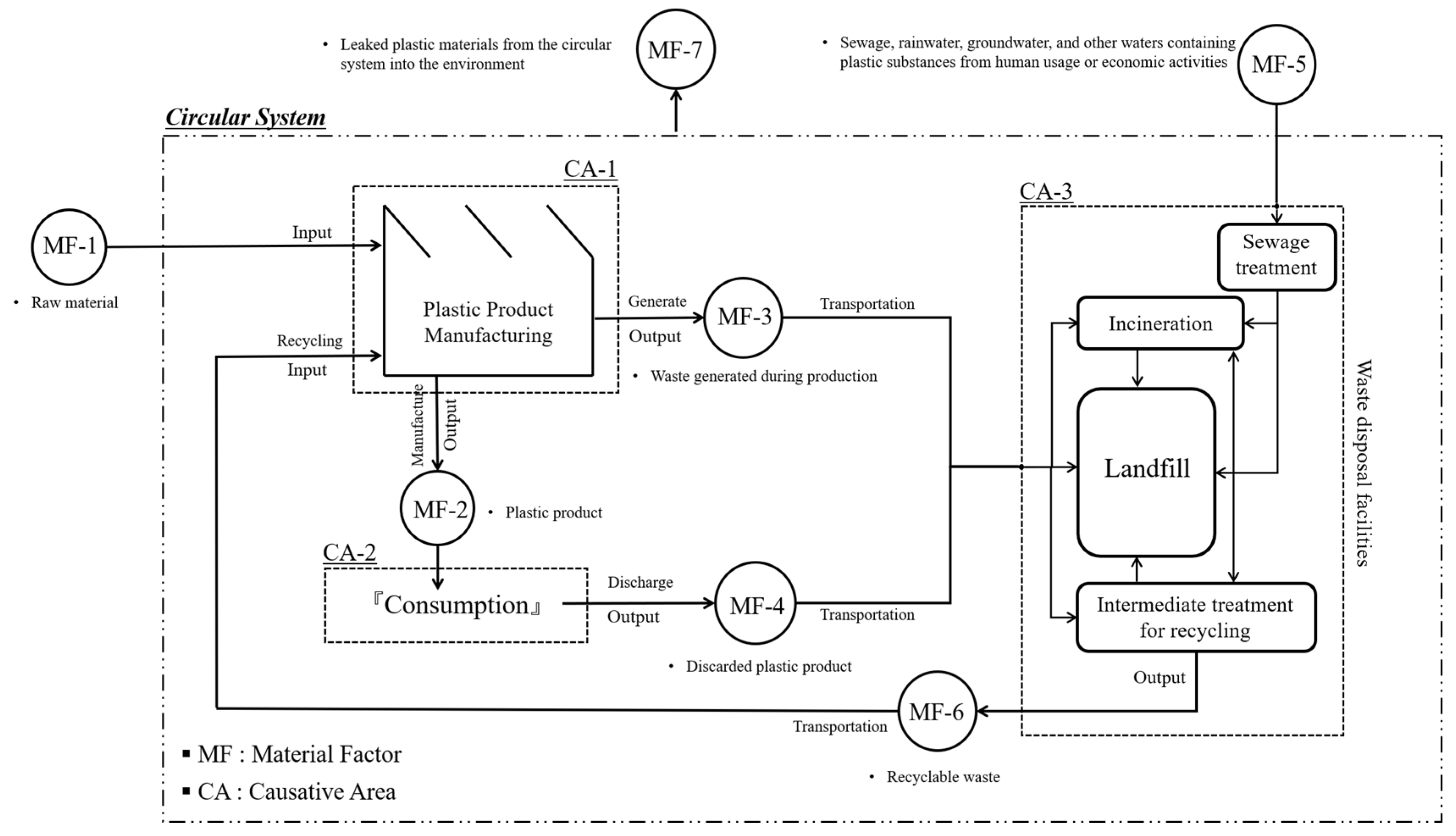
Figure 2.
Schematic flow diagram for preparing samples of FT-IR analysis.
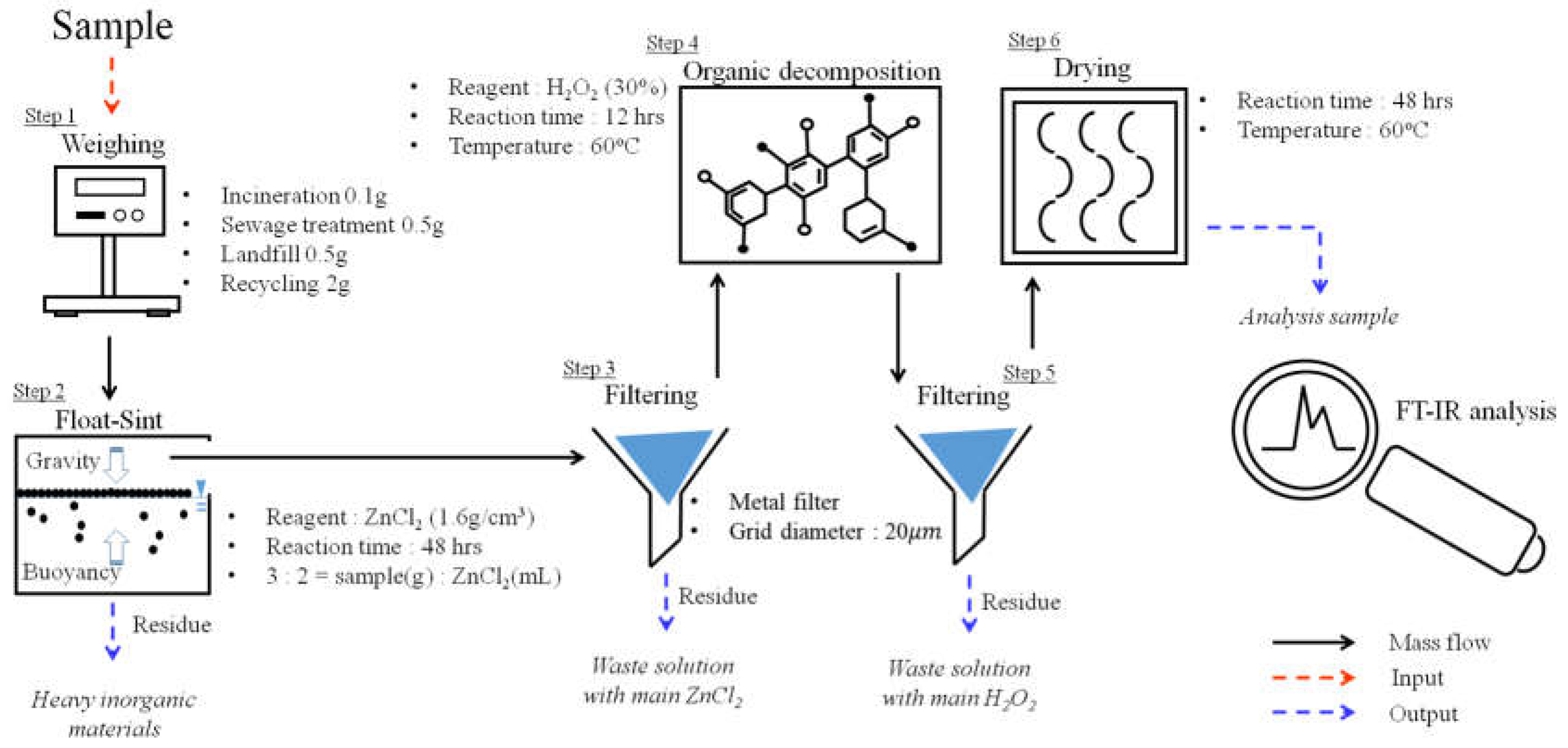
Figure 3.
FT-IR spectrum and image of MPs.
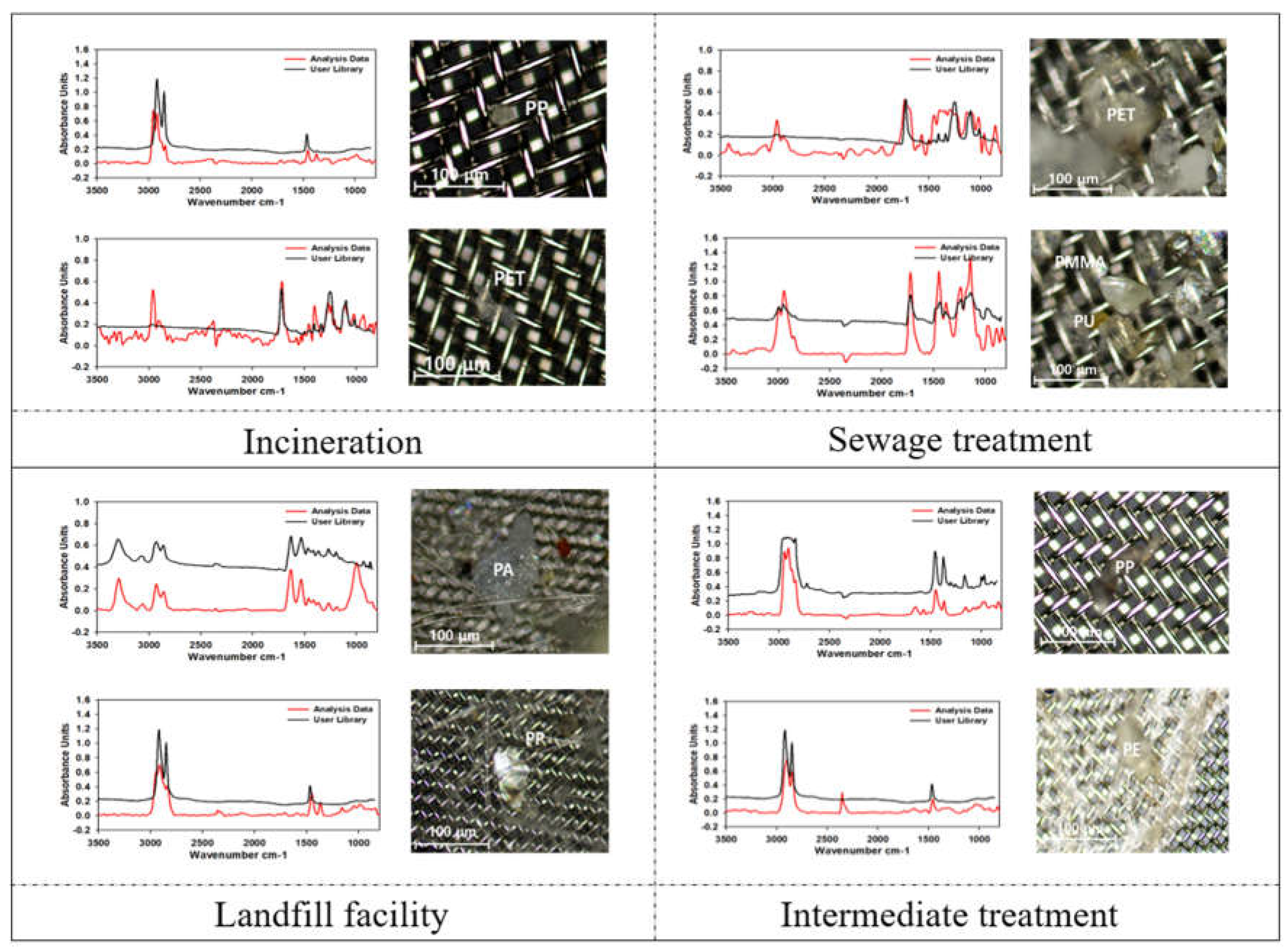
Figure 4.
Flows of MPW-1, MPW-2, and MPW-3 in each part of the circular system.
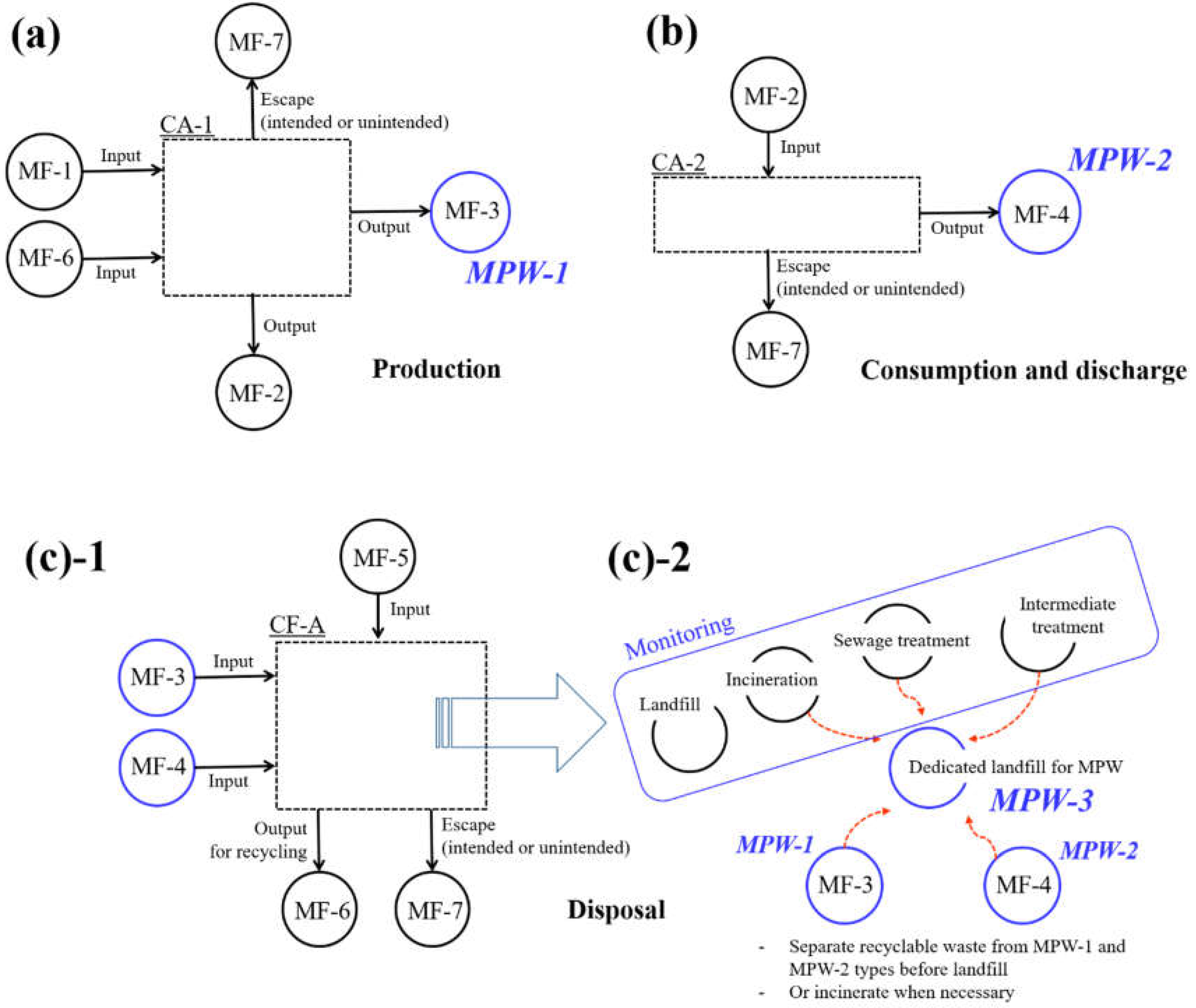
Figure 5.
Implementation of three separate steps for applying MPW-1 in the Korean waste management system.
Figure 5.
Implementation of three separate steps for applying MPW-1 in the Korean waste management system.
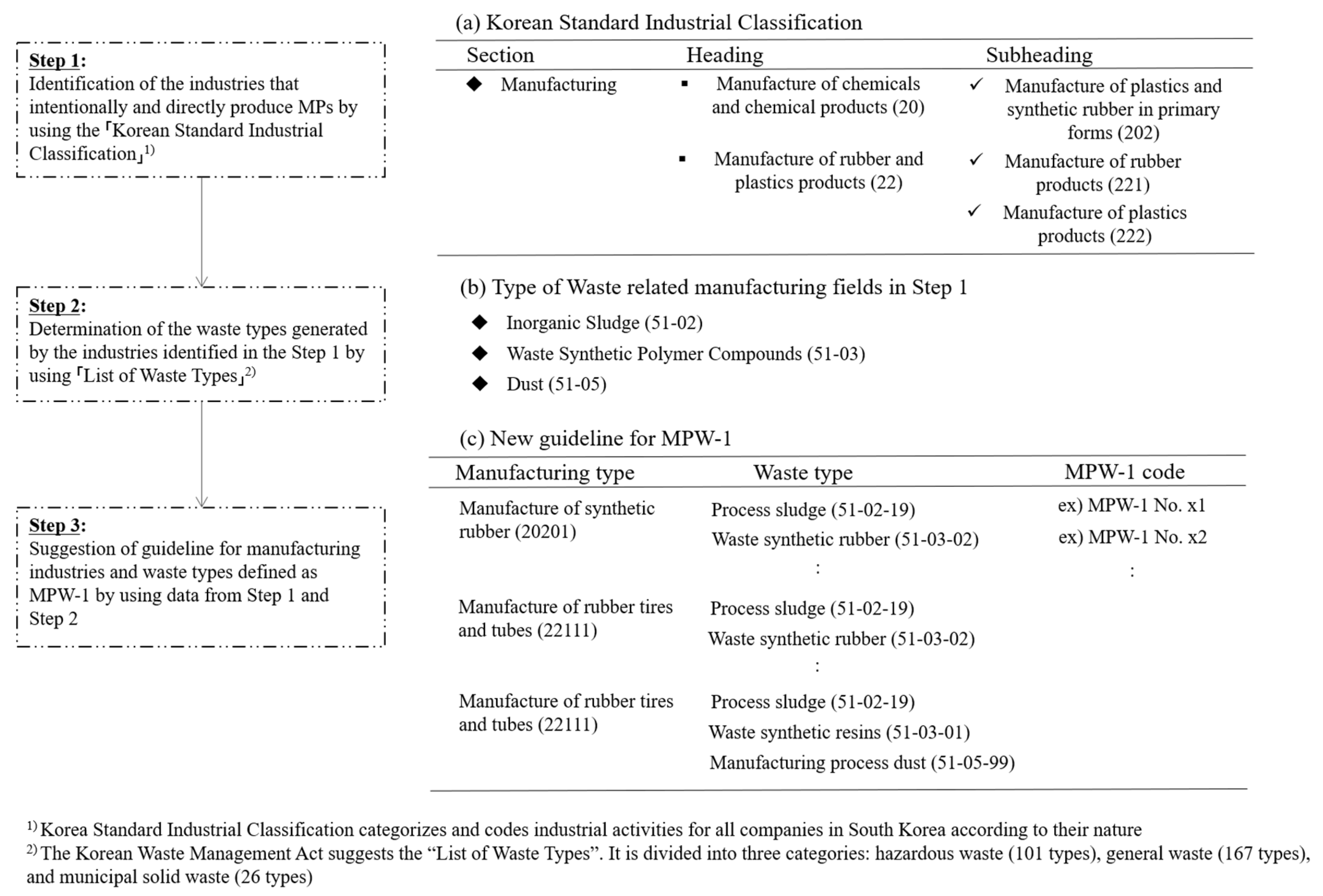
Figure 6.
Illustration of the route for MPW-2 type waste separation and discharge to an MPW-dedicated landfill facility.
Figure 6.
Illustration of the route for MPW-2 type waste separation and discharge to an MPW-dedicated landfill facility.
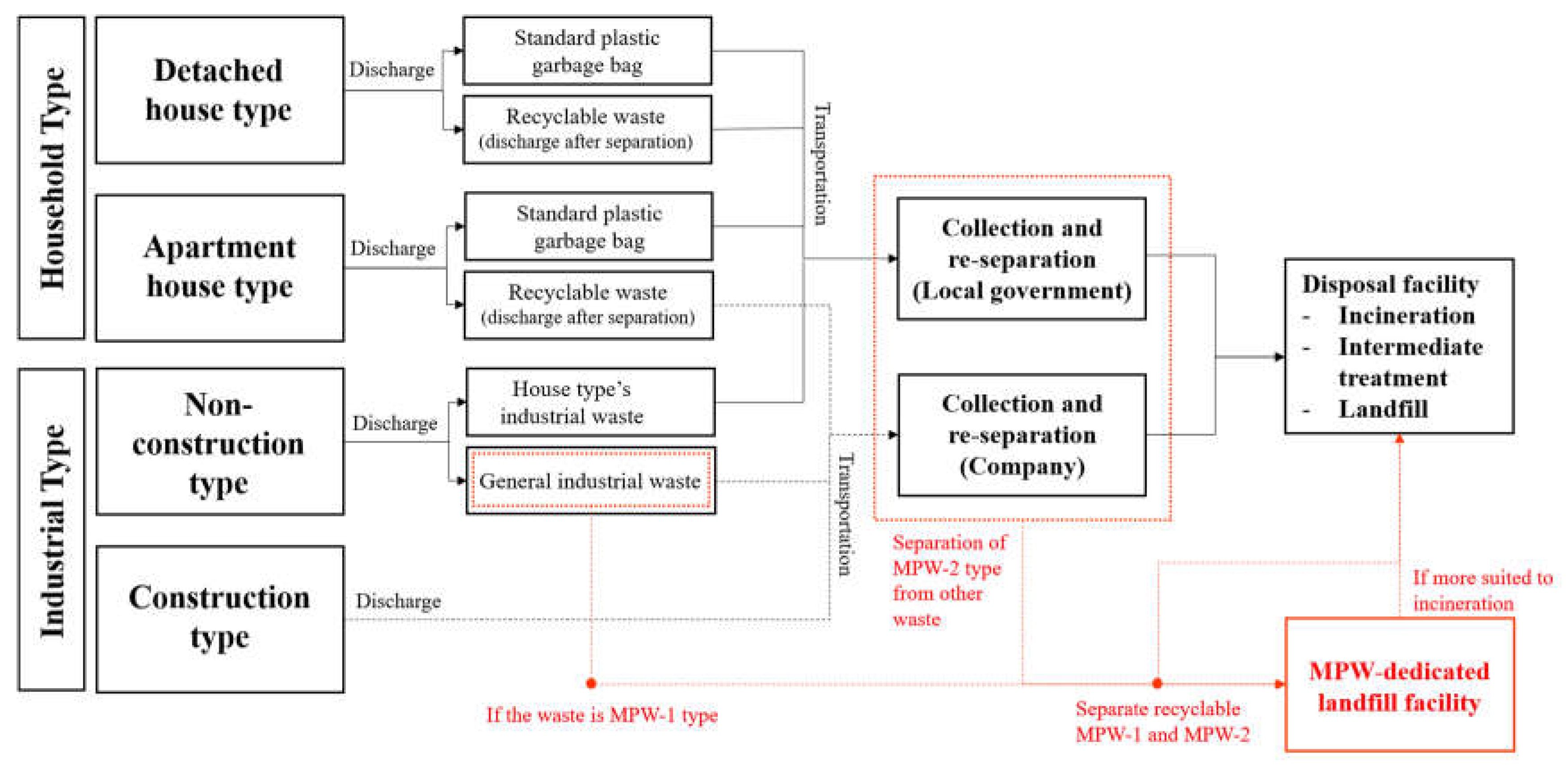

Table 1.
Table 1. Characteristics of the four facility types.
| Facility Type | Material Carried into Facility | Main Process | Waste Generated after Process | |||
|---|---|---|---|---|---|---|
| Type | Particle | Sample Code | ||||
| Incineration | A facility1) | Plastic waste and waste plastic-products 20%, rubber 1.3%, fiber 5% | Incinerator with grate combustion furnace | Bottom ash | Various | IAB |
| Fly ash | Very fine (< 0.1mm) |
IAF | ||||
| Fly ash (medicated) |
Very fine (< 0.1mm) |
IAFm | ||||
| B facility2) | Plastic waste and waste plastic-products >30% | Incinerator with fluidized bed furnace | Bottom ash | Various | IBB | |
| Fly ash | Very fine (< 0.1mm) |
IBF | ||||
| Sewage treatment | C facility3) | Sewage9) | Dewatering process with polyacrylamide coagulant | Sludge | Usually fine (< 5 mm) |
SCW |
| Drying process with polyacrylamide coagulant | Sludge | Usually fine (< 5 mm) |
SCD | |||
| D facility4) | Sewage9) | Dewatering process with polyacrylamide coagulant | Sludge | Usually fine (< 5 mm) |
SDW | |
| Drying process with polyacrylamide coagulant | Sludge | Usually fine (< 5 mm) |
SDD | |||
| Landfill | Mixture of municipal solid waste and construction waste | Landfill sites | Landfilled waste | Various | LW | |
| Intermediate treatment | E facility5) | Waste plastic-products | Melting, electric heater, and cutting processes | Process residues |
Various | RE |
| F facility6) | Waste plastic-products | Melt mixer process | Process residues |
Various | RF | |
| G facility7) | Waste plastic-products (scrap car) | Crushing, cutting process | Process residues |
Various | RG | |
| H facility8) | Waste tire | Crushing, cutting process | Process residues |
Various | RH | |
1) A facility for incineration of municipal solid waste. 2) B facility for incineration of residues generated from intermediate treatment facilities. 3) C facility located in Seoul metropolitan city. 4) D facility located in Busan metropolitan city. 5) E facility manufacturing plastic chipping. 6) F facility manufacturing plastic popcorn. 7) G facility manufacturing plastic flake. 8) H facility manufacturing recyclable tire raw-material. 9) Sewage with wastewater, rainwater, groundwater, etc. containing plastic materials in human life or economic activities.
Table 2.
Number of MPs (≤5 μm) in the samples from incineration, sewage treatment, landfill facility, and intermediate treatment (The experiments were repeated. Each data point was determined in triplicate, and standard deviations of the data were estimated for each case.).
Table 2.
Number of MPs (≤5 μm) in the samples from incineration, sewage treatment, landfill facility, and intermediate treatment (The experiments were repeated. Each data point was determined in triplicate, and standard deviations of the data were estimated for each case.).
| Sample Code | ea/g | ||||||||
|---|---|---|---|---|---|---|---|---|---|
| PP1) | PE2) | PET3) | PVC4) | PA5) | PU6) | PMMA7) | Total | ||
| Incineration | IAB | 40 | 10 | 30 | - | - | - | - | 80 |
| IAF | - | 12 | - | - | - | - | - | 60 | |
| IAFm | 40 | 130 | 10 | - | - | - | - | 180 | |
| IBB | 80 | 140 | 20 | - | - | 20 | - | 260 | |
| IBF | 270 | 720 | 30 | - | 10 | - | 10 | 1040 | |
| Sewage treatment | SCW | 232 | 142 | 6 | - | - | - | - | 380 |
| SCD | 38 | 6 | 62 | - | - | 3 | 1 | 114 | |
| SDW | 160 | 66 | 16 | - | 46 | - | - | 288 | |
| SDD | 12 | - | - | - | - | - | - | 12 | |
| Landfill | LW | 208 | 138 | 22 | 12 | 8 | 12 | 12 | 412 |
| Intermediate treatment | RE | 116 | 21 | 2 | - | 1 | 2 | - | 142 |
| RF | 5 | 1 | 850 | - | - | - | - | 856 | |
| RG | 497 | 32 | 4 | - | - | - | - | 533 | |
| RH | 309 | 1 | 2 | - | - | - | - | 312 | |
1) PP: polypropylene.2) PE: polyethylene.3) PET: polyethylene terephthalate.4) PVC: polyvinyl chloride.5) PU: polyurethane.6) PA: polyamide.7) PMMA: polymethyl methacrylate.
Table 3.
Abundance of MPs in various suspected contamination area.
| Location | Particle | Plastic type | Abundance range | References | |
|---|---|---|---|---|---|
| Incineration | Seoul, Korea | <5mm | PA, PE, PET, PMMA, PP, PU | 60-1040 ea/g | This paper |
| Wuhan, China | <5mm | PA, PE, PMMA, PP, PS, PVC | 0.5 ea/g | [56] | |
| Eight different cities in China | 50um-1mm | PE, PET, PP, PS, ABS | 0.2 ea/g | [45] | |
| Sewage treatment |
Seoul and Busan, Korea | <5mm | PA, PE, PET, PMMA, PP, PU | 12-380 ea/g | This paper |
| Northern Italy | 10um-5mm | AN, PE, PET | 113 ea/g | [58] | |
| Oldenburg and Holdorf, Germany | <500um | PE, PET, PP | 1-24 ea/g | [59] | |
| 11 provinces of China | 37um-5mm | PA, PE, PO, PS | 1.6-56.4 ea/g | [57] | |
| Landfill | Incheon, Korea | <5mm | PA, PE, PET, PMMA, PP, PU, PVC | 420 ea/g | This paper |
| Shanghai, China | 0.23-4.97mm | EPM, PE, PEUR, PP, PS | 20-91 ea/g | [62] | |
| 11 landfill sites of Thailand | <330um | PE, PET, PP | 0.1-2.3 ea/g | [60] | |
|
Intermediate treatment |
Hamadan, Iran | 30-150um more abundant | PE, PET, PP | 0.6-10.3 ea/g | [61] |
| Incheon, Gyeonggi, Jeonbuk, and Gwangju, Korea | <5mm | PE, PET, PP | 42-856 ea/g | This paper | |
| Coastal soil | Shandong, China | <5mm | PE, PEU, PP, PS | <0.1-14.7 ea/g | [28] |
| Floodplain soil | Swiss | <5mm | PE, PP, PS, PVC | 0.59 ea/g | [24] |
| Typical soil | Beijing, Shandong, and Xinjiang, China | <5mm | PA, PE, PP, PS, UF | 18.3-40.2 ea/g | [23] |
| River | Beijing, China | <2mm | PE, PET, PP, PS | 0.1-0.6 ea/g | [27] |
| Seoul, Korea | 0.1-5mm | PE, PFTE, PTEE | 0-234.5 ea/m3, 1-48 ea/fish |
[22] | |
| Coastal | South India | 0.3-6.7mm | PET, PTFE, PVE, PVDF | Wet sediment 0.1-1.6 ea/g, Dry sand <0.1-1.5 ea/g |
[25] |
| Southeast Iran | 0-4.75mm | PE, PET, PTE | 0.2 ea/g | [21] | |
| Xiangshan Bay, China | <330um | RY, PE, PET, PP, PS, PVC | Water 0.17 ea/m3, Sediment 0.1 ea/g |
[26] | |
| Airborne | Beijing, Tianjin, Shanghai, Nanjing, and Hangzhou, China | <0.1-9.6mm | RY, PAA, PAN, PE, PES, PET | Northern 358 ± 132 ea/m3 Southeast 230 ± 94 ea/m3 |
[29] |
Table 4.
Appling the concept of MPW to each part of the circular system.
| Circular System | Range | Related Factors | Type of MPW | |
|---|---|---|---|---|
| Material Factor (MF) | Causative Area (CA) | |||
| Production | • Field: production field of plastic product • Input: raw material and recyclable waste • Output: manufactured plastic product and waste generated during production |
MF-1, MF-2, MF-3, MF-6, and MF-7 | CA-1 | During production, waste from the specific plastic manufacturing processes with high MP generation rates is denoted as MPW-1. |
| Consumption and Discharge |
• Field: consumption and discharge fields of plastic product • Input: manufactured plastic product • Output: discarded plastic product |
MF-2, MF-4, and MF-7 | CA-2 | MPW-2 are defined as the state in which specific products are disposed of after use: such products comprise, contain, or exhibit a high potential to generate MPs. |
| Disposal | • Field: disposal field of waste or waste product • Input: waste generated during production, discarded plastic product, and sewage • Output: recyclable waste |
MF-3, MF-4, MF-5, MF-6, and MF-7 | CA-3 | Waste including MPW-1 and MPW-2 managed at dedicated landfill facilities is referred to as MPW-3. |
Disclaimer/Publisher’s Note: The statements, opinions and data contained in all publications are solely those of the individual author(s) and contributor(s) and not of MDPI and/or the editor(s). MDPI and/or the editor(s) disclaim responsibility for any injury to people or property resulting from any ideas, methods, instructions or products referred to in the content. |
© 2024 by the authors. Licensee MDPI, Basel, Switzerland. This article is an open access article distributed under the terms and conditions of the Creative Commons Attribution (CC BY) license (http://creativecommons.org/licenses/by/4.0/).
Copyright: This open access article is published under a Creative Commons CC BY 4.0 license, which permit the free download, distribution, and reuse, provided that the author and preprint are cited in any reuse.


