

Submitted:
11 October 2024
Posted:
12 October 2024
You are already at the latest version
Abstract
The global smelting business of nickel using rotary kilns and electric furnaces is expanding due to the growth of the secondary battery market. Efficient operation of electric furnaces requires consistent calcine temperature in rotary kilns, which involves shearing processes. Direct measurement of calcine temperature in rotary kilns presents challenges due to inaccuracies and operational limitations, and while AI predictions are feasible, reliance on them without understanding influencing factors is risky. To address this challenge, various algorithms including XGBoost, LightGBM, CatBoost, and GRU were employed for calcine temperature prediction, with CatBoost achieving the best performance, followed by XGBoost, LightGBM, and GRU in terms of MAPE. The influential factors on calcine temperature were identified using SHAP from XAI in the context of the CatBoost model. By incorporating seven out of twenty operational factors, the calcine temperature increased from 840℃ in 2023 to 907℃ by April 2024, concurrently reducing the power ratio of the electric furnace by 7.8%.
Keywords:
Pyrometallurgy
; Rotary kiln
; CatBoost
; XAI
; SHAP
1. Introduction
The objective of this study is to identify the deviation between the actual calcine temperature of rotary kilns involved in ferronickel production and the predicted values generated by machine learning and deep learning models. Additionally, the study aims to identify key variables influencing the predictions using XAI's Shapley Value Explanations. Subsequently, the goal is to reduce the calcine temperature deviation by utilizing these key variables. A rotary kiln, utilized as a rotating furnace, utilizes a burner to provide a heat source for heating and processing raw materials while rotating a structure made of refractory material that can endure high temperatures within a lengthy steel cylinder [1]. In recent times, investments in rotary kilns using the rotary kiln and electric furnace(RK-EF) method for producing nickel, a primary material for secondary batteries, have been actively progressing in nations like Indonesia [2]. In the RK-EF process, a rotary kiln serves as a preliminary reduction process to create calcine which is sintered nickel ore for feeding to an electric furnace. The raw materials include nickel ore and a reductant, with a fuel like pulverized coal or LNG being injected into a burner to act as a heat source for burning the reducing agent. Nickel ore is initially supplied with around 30% moisture content, and as the adhering moisture is dried, the crystalized moisture is eliminated, following which it is discharged from the rotary kiln, reaching temperatures of approximately 700~1,000℃. Raw materials such as ore are natural resources, exhibiting significant variations in composition and particle size [3]. For instance, smelters producing ferronickel utilize a blend of ore with nickel content ranging from 1.4 to 2.6% and iron content between 9 to 25%. The reaction occurring in the rotary kiln alters with changes in the iron content of the ore, necessitating adjustments to the operational settings of the rotary kiln depending on the dust production rate [4]. Calcine is produced roughly ninety minutes after the ore is introduced into the rotary kiln and then discharged from the kiln. To ensure the effective and economical functioning of the electric furnace process downstream of the rotary kiln, enhancing the calcine temperature is imperative, along with minimizing temperature deviations[5]. Various factors can influence the calcine temperature of a kiln, such as the quantity of ore, pellet, coal for reduction, coal through the scoop feeder, and amounts of pulverized coal to the burner, pressure in the rotary kiln, concentrations of CO(g), O2(g), SOx, NOx in the flue gas, and the temperature of the kiln body. Therefore, identifying the key variables that influence the calcine temperature and analyzing operational factors, such as coal input and air ratio, which can determine operational adjustments in response to changes, are essential for precise control of the calcine temperature in the rotary kiln [6].
A common method to measure calcine temperature involves utilizing a thermocouple [7]. Given that only around 6 to 8% of the internal volume of a rotary kiln comprises calcine, continuous temperature monitoring is challenging even with two thermocouples positioned at 180-degree intervals. The temperature of the calcine under measurement is directly influenced by the burner flame temperature, as well as the flow rate and pressure of primary and secondary combustion air supplied to the kiln burner [8]. Moreover, thermocouples placed in high-temperature zones have a relatively short lifespan of a few months due to oxidation in high-temperature environments and abrasion from ore, even when shielded in a protective tube [9]. Alternatively, non-contact temperature measurement devices like pyrometers that detect infrared radiation energy emitted by calcines can be employed, yet they face limitations in addressing issues related to significant errors in measured values linked to the extent of dust generation [10].
Numerous scholars have analyzed sintering conditions by examining flame images [11]. Raw materials within rotary kilns undergo sintering when they surpass a specific temperature, and the calcine temperature serves as an indicator for identifying sintering conditions [12]. However, flame images are subject to various influencing factors, including dust generation due to raw material characteristics, burner primary and secondary combustion air flow rates and pressures, as well as the quantity and quality of fuel supplied to the burner [13]. The utilization of flame images for measuring sintering conditions is constrained due to alterations in flame brightness and shape resulting from the mentioned factors [14]. Furthermore, research based on flame images is limited in deducing the factors influencing the control of calcine temperature to a predicted level by distinguishing and anticipating sintering conditions, such as overheating, normal sintering, and undercooling [15].
When it comes to the design of a rotary kiln, the initial step involves conducting mass balance and heat balance calculations. The heat produced by the burner through the combustion of coal injected with the raw material is used to generate heat, which is then discharged as sensible heat of calcine, shell heat loss of rotary kiln body, and exhaust gas. This heat is utilized to dry the moisture present in the raw material and alter the phase of the raw material. An assessment based on heat balance can be carried out to estimate the temperature of calcine using available data. However, such an evaluation necessitates the expertise of an individual with practical knowledge of the rotary kiln process [16]. The raw materials fed into the rotary kiln are transformed into calcine after a few hours. Since the heat supplied by the burner is released as exhaust gas after interacting with the raw material within a few seconds, it is essential to consider time delays [17]. Consequently, forecasting the temperature of calcine through induction modeling and simulation, as well as predicting calcine temperature based on mass and heat balance, is limited due to low accuracy levels because the internal condition of rotary kiln is varied in time not in equilibrium all the time [18].
To address these limitations, numerous researchers have predicted calcine temperature by modeling based on the analysis of extensive operational data. Firstly, fuzzy rules serve as an efficient method for managing uncertain and ambiguous information by simulating human reasoning processes. Nevertheless, interpreting the outcomes requires the expertise of individuals experienced in establishing numerous rules [19]. Secondly, Support Vector Machine (SVM) can optimize margins even with limited data, ensuring a well-suited model and reducing overfitting [20]. However, the process of converting time series data into a format for SVM modeling and feature extraction is complex. Since SVM is a black box model, it may pose challenges in identifying factors influencing model predictions and explaining results [21]. Moreover, SVM heavily relies on hyperparameters, leading to additional computational costs to determine optimal settings [22]. Thirdly, Recurrent Neural Networks (RNN) like Long Short-Term Memory (LSTM) necessitate substantial data and are prone to overfitting [23]. Although they excel in nonlinear and time-delay studies, predictive calculations are time-consuming, especially during remodeling [24].
The raw materials utilized in rotary kilns, such as ore and coal, are sourced from nature, and variations in composition and particle size can impact rotary kiln operations [25]. Additionally, issues like malfunctions in front and rear end equipment which is from overheating(clinker formation, dust generation rate increasing) can alter the calcine quality and productivity of the rotary kiln.
The primary objective of forecasting calcine temperature in rotary kilns is to sustain the target temperature with lowest variations, considering factors influencing its temperature. Despite the possibility of predicting calcine temperature using operational data through techniques like Fuzzy rules, SVM, and LSTM, limitations exist in identifying and modifying factors affecting calcine temperature in multivariate and time-series prediction models [26].
Explainable Artificial Intelligence (XAI) emerges as a solution to this challenge [27]. This study aims to elucidate the factors influencing calcine temperature by quantitatively predicting their contribution to model predictions using SHAP (SHapley Additive exPlanation) techniques of XAI. SHAP boasts game theory attributes that ensure a fair distribution of Shapley values, enabling intuitive and equitable calculation of predictive contributions. Being model-agnostic, SHAP can be applied across various machine learning models, ranging from simple linear models to intricate deep learning models. Furthermore, SHAP offers diverse visualization tools like summary plot, dependence plot, and force plot to facilitate a comprehensive understanding of prediction explanations [28].
The main contents of the paper are as follows.
1) The primary focus of this research paper pertains to the intentional delineation of its contents, centering on the utilization of modeling techniques aimed at forecasting the temperature of calcine within the operational framework of a rotary kiln. Specifically, the data employed in this study emanates from the RK-EF process that facilitates the production of ferronickel. Through a meticulous analysis, the model that demonstrates the highest level of accuracy in predicting the calcine temperature is identified, followed by a comprehensive elucidation of the underlying reasons for its efficacy.
2) In the pursuit of enhancing the precision of calcine temperature prognostication, a meticulous examination of the various factors influencing this predictive process is conducted for each model under consideration. This analytical endeavor is facilitated by the application of SHAP techniques within the realm of XAI, leading to the derivation of pivotal insights into the dynamics governing the forecasted calcine temperature.
3) To validate the reliability and robustness of the model exhibiting the most superior predictive capability in terms of calcine temperature, a meticulous verification process ensues. This verification methodology entails a comparative analysis of the deviations observed in the predicted changes in calcine temperature with the actual operational fluctuations recorded in the existing system. Furthermore, the objective is to achieve improvements over the existing operational standards by applying the optimal values of the key factors identified through SHAP analysis to the operations.
The main contributions in this paper are as follows.
1) A model that best predicts the calcine temperature using operational data from a rotary kiln producing ferronickel with actual nickel laterite was developed, and the rationale for its superior performance was provided. This model could be utilized in future research related to predictive models using operational data in the field of pyrometallurgy.
2) Using XAI-based SHAP analysis on the best model, the key factors contributing most significantly to the prediction of calcine temperature were identified. These insights could be applied in future operations to maintain calcine temperature and reduce variations.
2. Rotary Kiln Process and XAI
2.1. Rotary Kiln Process
The RK-EF process, used to produce ferronickel from laterite ore, involves a process in which a rotary kiln is utilized to elevate the temperature of calcine, eliminating nickel ore adhesion and crystalized moisture. This results in a reduction of the energy needed in the subsequent electric furnace process. The primary components of a rotary kiln include a burner system, kiln body, and exhaust gas treatment system. The burner system is responsible for providing heat for the combustion of a reducing agent mixed with the nickel ore inside the kiln body. Various heat sources such as LNG, oil, and pulverized coal are utilized for this purpose. The kiln body is lined with refractory material to ensure longevity at high temperatures. In inclined rotary kilns, nickel ore is transformed into calcine after rotation and is discharged after undergoing drying and preliminary reduction processes within. Some rotary kilns feature a scoop feeder, a device used to separately introduce a reducing agent into the kiln body. This agent extends the high-temperature zone of the kiln, enhancing the degree and temperature of the preliminary reduction process. Additionally, an environmental treatment facility is necessary to address air pollutants like NOx, SOx, and dust emitted during the combustion and processing phases in the rotary kiln. Efforts are required to minimize NOx emissions by reducing the amount produced by the burner within the kiln. If NOx levels surpass environmental standards, removal through facilities like SCR becomes essential. Roughly 30% of the sulfur content in the fuel and raw materials employed in the rotary kiln is released as SOx and can be eliminated through environmental treatment systems like SDR and Scrubber. Dust removal is commonly carried out using cyclone and bag filters.
2.2. XAI
XAI, also known as eXplainable Artificial Intelligence, proves to be a valuable approach in elucidating the rationale behind decision-making processes that stem from the outcomes generated by artificial intelligence models [29]. XAI is a technique that adds explainability to artificial intelligence models, allowing us to understand the rationale behind the decisions made by the model when reaching a specific conclusion. The term "explanatory power" refers to how well people can comprehend the basis of the decisions made by the AI model. As the amount of data (number of features) increases, the issue of complexity becomes more pronounced. XAI can help mitigate these complexity issues, enabling us to trust the system's output and confidently use AI for future decision-making. For this reason, XAI is also referred to as "Interpretable AI" or "Transparent AI."
We aim to utilize the SHAP method, one of the XAI techniques, to extract key variables that influence the preliminary reduction process in the rotary kiln and aid in process management and calcine temperature prediction.
2.3. SHAP
SHAP (SHapley Additive Explanations) is a technique based on game theory that expands its applicability by allowing additive usage grounded on the independence of variables. Shapley values quantify how much each variable contributes to the overall prediction. According to Shapley values, the contribution of each variable can be represented by the extent of change in the overall prediction when the contribution of the variable is excluded [30].
Shapley values can be negative, in which case it can be interpreted that a particular feature has a negative impact on the prediction. If the value is positive, it indicates that the feature is positively influencing the prediction. SHAP has characteristics that can overcome the drawbacks of other XAI techniques such as Feature Importance and Partial Dependence Plots (PDP). Feature Importance is a technique that identifies the variable that has the greatest impact on the prediction by permuting it. Permutation involves randomly changing the value of each feature in turn and measuring the effect of that change on the prediction. While this method is powerful, the importance can vary with each execution of the algorithm due to the limitations of the permutation process and error-based estimation. Additionally, Feature Importance overlooks feature dependencies, so it should be avoided in models where there is a correlation between features.
Partial Dependence Plots (PDP) work by adjusting the value of the feature of interest, inputting it into the model, and then averaging the prediction. However, PDPs have the limitation of only being able to display relationships up to three dimensions, meaning they cannot represent higher dimensions, which can lead to distorted results.
SHAP, on the other hand, calculates the impact on the model while considering feature dependencies and has the advantage of being able to visualize even when there are many features. Given that the independent variables used to accurately predict calcine temperature have high inter-variable correlation and high dimensionality, SHAP was deemed more suitable than Feature Importance or PDP, and the analysis was conducted based on this methodology.
The SHAP methodology serves as an instrumental framework for the examination of operational datasets by augmenting the transparency of predictive models and facilitating the selection of pertinent features. Consequently, the implementation of SHAP to bolster the interpretive clarity and transparency of predictive maintenance models utilized within data centers has evidenced that quantifying the contribution of each variable permits data center managers to comprehend the model's outputs and promote anticipatory decision-making, thus enhancing both model transparency and operational efficacy [31]. SHAP has elucidated the influence of diverse variables on the incidence of expressway collisions, demonstrating its utility for the analysis of operational data through the lens of highway traffic safety management [32]. Furthermore, the analytical capabilities of the model were refined by evaluating the interpretability of the predictive model concerning arch dam stress, employing LightGBM in conjunction with SHAP to identify salient features impacting arch dam stress [33]. In this manner, SHAP is adeptly employed across various domains to fortify explanatory power and enhance model performance by shedding light on the determinants that affect predictive models.
3. Materials and Methods
The research methodology outlined in this paper consists of five main stages: the first stage is data collection, the second stage is data preprocessing, the third stage is model training, the fourth stage is model performance evaluation, and the fifth stage is key variable extraction and analysis of variable importance. Data collection utilized datasets from SNNC Co., Ltd., a subsidiary of POSCO. Data preprocessing considered techniques such as missing data imputation, outlier detection, and feature engineering. In the third stage, model training and forecasting were performed using Boosting-based algorithms and the GRU (Gated Recurrent Unit) method for time series modeling. The fourth stage involved evaluating the model performance using metrics such as Mean Absolute Error (MAE), Mean Absolute Percentage Error (MAPE), and Mean Squared Error (MSE) to compare the models and select the optimal one. Finally, in the fifth stage, SHAP (SHapley Additive exPlanations) was applied to extract the key variables influencing the preliminary reduction process and to assess their importance, with the aim of adjusting variables to increase the calcine temperature.
3.1. Data Collection
The data used in this study were collected from the rotary kiln at SNNC Co., Ltd. The data collection period spans six months, from April 1, 2023, to September 30, 2023, with minute-by-minute data. The independent variables used can be found in Table 1; however, due to corporate security concerns, only about 6 variables will be disclosed, with the dependent variable being the calcine temperature. In this paper, we aim to propose a methodology to improve the calcine temperature in the rotary kiln preliminary reduction process by training models on the rotary kiln data, identifying key variables influencing the process using the SHAP technique, and evaluating the impact of these variables to implement improvements in operations.
3.2. Data Processing
The most critical step in data analysis is data preprocessing. In particular, handling missing values due to equipment malfunctions or human errors, and addressing outliers caused by scheduled maintenance, clinker discharge, and other factors are essential preprocessing tasks. Preprocessing can also involve removing or replacing highly correlated variables, eliminating variables with similar meanings, and generating derived variables.
3.3. Model Training
To predict calcine temperature, four algorithms were employed: XGBoost, LightGBM, CatBoost, and GRU.
3.3.1. XGBoost
XGBoost is designed to enhance the speed and accuracy of Gradient Boosting Machines (GBM). It features rapid training through parallel processing, a flexible learning system, overfitting prevention, and scalability for various scenarios. XGBoost adds a regularization term to the objective function to prevent overfitting and optimizes it quickly using second-order Taylor approximation. The algorithm uses an approximate method for finding the best split based on the percentile of feature distributions, which is more efficient than the exact greedy algorithm (EGA). It also addresses data sparsity with a sparsity-aware split and reduces the cost of sorting data for tree learning through a block structure in the in-memory unit, enabling parallel processing and supporting column subsampling. XGBoost has three main features.
3.3.2. LightGBM
LightGBM was developed to address the efficiency issues of XGBoost. It maintains the accuracy of previous algorithms while offering improved efficiency, being notably lightweight. LightGBM, based on Gradient Boosting Decision Tree (GBDT), is a powerful algorithm in terms of computational complexity. Unlike traditional GBDT, which requires accessing all features and data, LightGBM employs Gradient-based One-side Sampling (GOSS) and Exclusive Feature Bundling (EFB) to reduce computational complexity. GOSS balances the reduction of data instances with maintaining accuracy, and EFB groups mutually exclusive features to increase training speed without sacrificing accuracy.
3.3.3. CatBoost
CatBoost is an algorithm effective for handling categorical variables. To prevent data leakage, it uses Ordered Target Encoding and Ordered Boosting, which helps prevent overfitting due to the Random Permutation that shuffles the order of the data in the training set. In addition to these features, CatBoost efficiently encodes categorical features using multiple characteristics and integrates them into the boosting process, reducing predictive shift and improving model performance.
3.3.4. GRU
GRU (Gated Recurrent Unit) is a type of Recurrent Neural Network (RNN) designed to solve the vanishing gradient problem and is a simplified version of Long Short-Term Memory (LSTM) with fewer parameters, often resulting in faster training times while maintaining performance. The GRU model is a type of RNN designed to address the long-term dependency problem associated with gradient vanishing. GRU enhances RNN by adding a cell state to the hidden state, allowing it to consider more past data and make more accurate future predictions.
3.4. Model Evaluation
To evaluate whether a model can effectively extract variables that explain key factors influencing calcine temperature prediction, the model's performance is compared using three primary evaluation metrics: MAE, MSE, and MAPE. MAE, which is the mean absolute error, is calculated by taking the absolute difference between the actual and predicted values, summing them up, and then averaging them. This metric is particularly useful when dealing with a high number of outliers. MSE, or mean squared error, is obtained by squaring the difference between the actual and predicted values and then averaging the results. MAPE, the mean absolute percentage error, expresses MAE as a percentage, addressing the issue of scale dependency in error measurement.
3.5. Extraction of Key Variables
The Shapley Value has the advantage of revealing the importance of each variable based on combinations of multiple independent variables, and it also allows us to understand the positive or negative impact of each variable. For example, if the Shapley Value of a certain independent variable is negative, it indicates that the variable lowers the calcine temperature, while a positive value suggests that it increases the calcine temperature. In this study, we aim to identify the key variables influencing the calcine temperature using the SHAP technique, focusing on the variables collected from the preliminary reduction process in the rotary kiln.
4. Research Experiment and Results
4.1. Data Collection
This study utilized minute-by-minute operational data spanning six months, from April 1, 2023, to September 30, 2023, from SNNC Co., Ltd., a subsidiary of POSCO. A total of 115,619 data points were used. After data preprocessing, the training data consisted of approximately 94,019 data points from April 1 to August 31, while the test data consisted of approximately 21,600 data points from September 1 to September 30. Due to corporate security concerns, the exact number and nature of the 30 explanatory variables cannot be disclosed. However, key variables such as temperatures at various positions of the rotary kiln, reductant coal feeding rate, and NOx concentration in the offgas were employed, based on the expertise of operational specialists, to predict the dependent variable, calcine temperature (℃). A summary of the rotary kiln dataset is presented in Table 2, and an example of the rotary kiln data is provided in Table 3.
4.2. Data Processing
Due to the nature of the smelting industry, which utilizes naturally sourced raw ore, there is significant variability in the operational data which is shown in Figure 1.
The primary objective of this study is to accurately predict the minute-by-minute calcine temperature (℃). Given the inherent variability and noise in the raw operational data, immediate analysis is not feasible. Therefore, we performed three types of data preprocessing before proceeding with the analysis.
First, we addressed missing values. Each variable had missing values, and we employed different imputation methods based on the characteristics of each variable. Specifically, missing values caused by equipment anomalies or unclear reasons were replaced with the preceding values. For the rotary kiln internal temperatures, which exhibited high inter-variable correlations, we used regression imputation.
Second, we handled outliers. There were two types of outliers: those with identifiable causes and those without. We employed rule-based outlier detection, replacing outliers with the 10-minute average or median values preceding the outlier. Notably, for the dependent variable calcine temperature (℃), outliers often occurred due to clumping of calcine inside the kiln, clinker discharge, scheduled maintenance, or other operational patterns causing sudden temperature drops. Consequently, we removed instances where values continuously fell below a specific threshold.
Third, we generated derived variables and identified relationships between variables to reduce dimensionality. New variables were generated by combining existing variables with new derived variables that were not originally present in the data. Additionally, variables with comparable meanings were eliminated if they exhibited lower correlation coefficient values in relation to the dependent variables.
4.3. Model Training
The purpose of this study is to accurately predict the calcine temperature, extract and identify key variables influencing calcine temperature predictions. The dependent variable is calcine temperature, and the independent variables consist of 30 variables collected from the rotary kiln. In this study, the training data covers the period from April 1 to August 31, 2023, while the test data spans the month of September 2023. The goal is to predict approximately 21,600 data points. Modeling was performed using boosting models such as XGBoost, LightGBM, and CatBoost, and predictions were made using the deep learning time series model GRU. To prevent overfitting, 5-fold cross-validation was employed, and Bayesian optimization was used to optimize the hyperparameters.
4.4. Model Evaluation
The performance results of the XGBoost, LightGBM, CatBoost, and GRU models are shown in Table 4. CatBoost outperformed all other models across all evaluation metrics (MAE, MSE, MAPE). Based on these comparison results, CatBoost was selected as the model to be used for the SHAP technique to extract and identify key variables.
4.5. Extraction of Key Variables
The SHAP method, a technique in XAI was employed to analyze the variables used in the prediction model. The primary variable identified was X10, and the top 10 variables collectively explained a significant percentage of the model's predictive power. Specifically, the SHAP analysis revealed that when certain variables increase or decrease, the calcine temperature (℃) correspondingly rises or falls. Variables X10, X9, and X22 were among the highest contributors to the model's predictions, indicating their substantial impact on the calcine temperature. The SHAP analysis not only identified the most influential variables but also elucidated their directional impact on the calcine temperature, enhancing the interpretability and transparency of the prediction model.
The primary factors that influenced the comprehensive predictive model were prioritized as follows: X10, X9, X15 and X8, as shown in Figure 2. The thermocouples which measures inner temperature of rotary kiln positioned nearest to the calcine outlet exhibit the strongest correlation with the calcine temperature. This relationship can be attributed to the impact of calcine temperature, supplied by the burner, on the NOX, O2 components of offgas. Additionally, the rotation speed of the rotary kiln RPM, influences the duration that the ore remains in the kiln after being fed through the inlet.
Moreover, we compared the variability in calcine temperature changes under this preemptive control with the variability observed in conventional operations. A direct correlation between the increase in calcine temperature and the rise in factors such as X10, X9 and X8 were observed. Furthermore, there is an inverse relationship noted where the calcine temperature decreases with the elevation of variables like X14, X7 and X12, as shown in Figure 3.
In conclusion, the SHAP method identified the key factors impacting calcine temperature, and preemptive control of these factors demonstrated a reduction in temperature variability compared to standard operational practices, confirming the model's efficacy.
5. Conclusions
This paper studies aimed to predict calcine temperature and identify influencing factors using XAI's SAHP to address rising power costs linked to renewable energy and fossil fuels. Temperature predictions were executed utilizing XGBoost, LightGBM, CatBoost, and GRU algorithms. The prediction accuracy was highest with CatBoost, achieving a MAPE of 0.036, followed by XGBoost at 0.045, LightGBM at 0.040, and GRU at 0.079. Using XAI's SAHP with CatBoost, we derived influential factors impacting calcine temperature based on its superior predictive performance. Typically, rotary kiln operations sustain optimal conditions by adjusting parameters informed by expert experience; however, variability in nickel laterite composition necessitates precise identification of factors to maintain calcine temperature stability. By implementing SHAP-derived variables X10, X9, X15, X8, X14, X7, and X16 from April 2024, the average calcine temperature rose from 843℃ in 2023 to 907℃, enabling a 7.8% reduction in electric furnace power units and lowering manufacturing costs.
Despite successful predictions with the CATBoost algorithm and factor derivation through SAHP, further enhancements in accuracy and adherence to model guidance are essential for practical application. Future research should focus on improving the model’s predictive capabilities for autonomous control of rotary kiln operational variables.
Author Contributions
Conceptualization, J.H.; methodology, S.I.; software, S.I.; validation, S.I. and J.H.; writing—original draft preparation, review and editing, J.H. and S.I.; supervision, J.H. All authors have read and agreed to the published version of the manuscript.
Funding
This research received no external funding.
Data Availability Statement
The datasets used and analyzed during the current study are available from the corresponding author upon reasonable request.
Conflicts of Interest
The authors declare no conflicts of interest.
References
- Guillin-Estrada, W.D., et al., Transient operation effects on the thermal and mechanical response of a large-scale rotary kiln. Results in Engineering, 2022. 14: p. 100396. [CrossRef]
- Rizky, M.A., U. Sukamto, and A. Setiawan, Literature Review: Comparison of Caron Process and RKEF On The Processing of Nickel Laterite Ore For Battery. Jurnal Mineral, Energi, dan Lingkungan, 2023. 6(2): p. 47-56. [CrossRef]
- Faramarzi, F., The measurement of variability in ore competence and its impact on process performance. 2020.
- Liu, C., et al., Numerical Analysis on Characteristics of Reduction Process within a Pre-Reduction Rotary Kiln. Metals, 2021. 11(8): p. 1180. [CrossRef]
- Wei, X., et al., Theoretical and Numerical Research on Heat Transfer Mechanism and Temperature Characteristics of Electric Rotary Alumina Kiln. Journal of Thermal Science and Engineering Applications, 2022. 14(12): p. 121002. [CrossRef]
- Huang, K., et al., Rotary kiln temperature control under multiple operating conditions: An error-triggered adaptive model predictive control solution. IEEE Transactions on Control Systems Technology, 2023. 31(6): p. 2700-2713. [CrossRef]
- Vallan, A., et al., On the use of temperature measurements as a Process Analytical Technology (PAT) for the monitoring of a pharmaceutical freeze-drying process. Pharmaceutics, 2023. 15(3): p. 861. [CrossRef]
- Mateus, M.M., T. Neuparth, and D.M. Cecílio, Modern Kiln Burner Technology in the Current Energy Climate: Pushing the Limits of Alternative Fuel Substitution. Fire, 2023. 6(2): p. 74. [CrossRef]
- Zhang, H., et al., An Accelerated-Based Evaluation Method for Corrosion Lifetime of Materials Considering High-Temperature Oxidation Corrosion. Sustainability, 2023. 15(11): p. 9102. [CrossRef]
- Safarloo, S., A. Tapetado, and C. Vázquez, Experimental Validation of High Spatial Resolution of Two-Color Optical Fiber Pyrometer. Sensors, 2023. 23(9): p. 4320. [CrossRef]
- Li, W., D. Wang, and T. Chai, Flame image-based burning state recognition for sintering process of rotary kiln using heterogeneous features and fuzzy integral. IEEE Transactions on Industrial Informatics, 2012. 8(4): p. 780-790. [CrossRef]
- Chen, H., et al., Spatio-temporal graph attention network for sintering temperature long-range forecasting in rotary kilns. IEEE Transactions on Industrial Informatics, 2022. 19(2): p. 1923-1932. [CrossRef]
- Sun, B., et al., Study on the Image Processing Methods for a Flame Exposed to an Incense Smoke Environment. Fire, 2023. 6(7): p. 270. [CrossRef]
- Taira, K. and M. Matsumura, In Situ Temperature Measurement of Sinter Beds at High Spatial and Time Resolution. ISIJ International, 2018. 58(5): p. 808-814.
- Dweck, J., et al., Calcined sludge sintering evaluation by heating microscopy thermal analysis. Journal of thermal analysis and calorimetry, 2009. 95(3): p. 985-989. [CrossRef]
- Bojanovský, J., et al., Rotary Kiln, a Unit on the Border of the Process and Energy Industry—Current State and Perspectives. Sustainability, 2022. 14(21): p. 13903.
- Quintero-Coronel, D.A., et al., Large-and Particle-Scale energy assessment of reduction roasting of nickel laterite ore for Ferronickel production via the rotary Kiln-Electric furnace process. Thermal Science and Engineering Progress, 2022. 32: p. 101331. [CrossRef]
- Tang, F., et al., Temperature field prediction model for zinc oxide rotary volatile kiln based on the fusion of thermodynamics and infrared images. IEEE Transactions on Instrumentation and Measurement, 2023. [CrossRef]
- Wang, X., et al., Fuzzy-clustering and fuzzy network based interpretable fuzzy model for prediction. Scientific Reports, 2022. 12(1): p. 16279. [CrossRef]
- Shalaby, M., M. Farouk, and H.A. Khater, Data reduction for SVM training using density-based border identification. Plos one, 2024. 19(4): p. e0300641. [CrossRef]
- Tsai, M.-F., et al., Time series feature extraction using transfer learning technology for crop pest prediction. Agronomy, 2023. 13(3): p. 792. [CrossRef]
- Gu, Q., et al., A novel F-SVM based on FOA for improving SVM performance. Expert Systems with Applications, 2021. 165: p. 113713. [CrossRef]
- Yu, Q., et al., Enhancing long short-term memory (LSTM)-based streamflow prediction with a spatially distributed approach. Hydrology and Earth System Sciences, 2024. 28(9): p. 2107-2122. [CrossRef]
- Babaei, H., et al., A machine learning model to estimate myocardial stiffness from EDPVR. Scientific Reports, 2022. 12(1): p. 5433. [CrossRef]
- Shi, Q., J. Tang, and M. Chu, Optimal Process Parameters for Direct Carbothermal Reduction of Vanadium–Titanium Magnetite in a Rotary Kiln. steel research international, 2023. 94(12): p. 2300176. [CrossRef]
- Nketiah, E.A., et al., Recurrent neural network modeling of multivariate time series and its application in temperature forecasting. Plos one, 2023. 18(5): p. e0285713. [CrossRef]
- Shafiabady, N., et al., eXplainable Artificial Intelligence (XAI) for improving organisational regility. Plos one, 2024. 19(4): p. e0301429. [CrossRef]
- Wojtuch, A., R. Jankowski, and S. Podlewska, How can SHAP values help to shape metabolic stability of chemical compounds? Journal of cheminformatics, 2021. 13: p. 1-20.
- Anjara, S.G., et al., Examining explainable clinical decision support systems with think aloud protocols. Plos one, 2023. 18(9): p. e0291443. [CrossRef]
- Molnar, C., Interpretable machine learning. 2020: Lulu. com.
- Gebreyesus, Y., et al., AI for Automating Data Center Operations: Model Explainability in the Data Centre Context Using Shapley Additive Explanations (SHAP). Electronics, 2024. 13(9): p. 1628. [CrossRef]
- Li, J., et al., Analyzing Freeway Safety Influencing Factors Using the CatBoost Model and Interpretable Machine-Learning Framework, SHAP. Transportation Research Record, 2023: p. 03611981231208903. [CrossRef]
- Li, B., et al., Prediction model for high arch dam stress during the operation period using LightGBM with MSSA and SHAP. Advances in Engineering Software, 2024. 192: p. 103635. [CrossRef]
Figure 1.
Raw operation data with variabilities and noises.
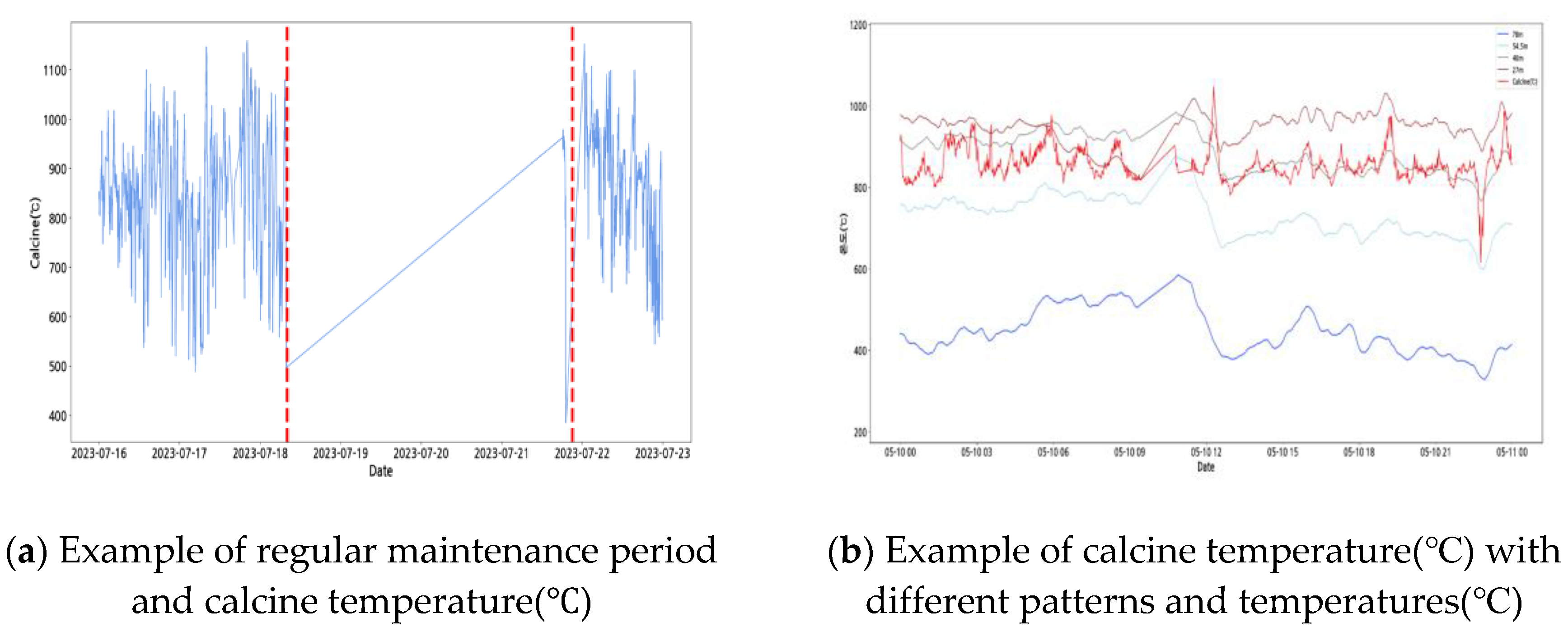
Figure 2.
Mean of SHAP values
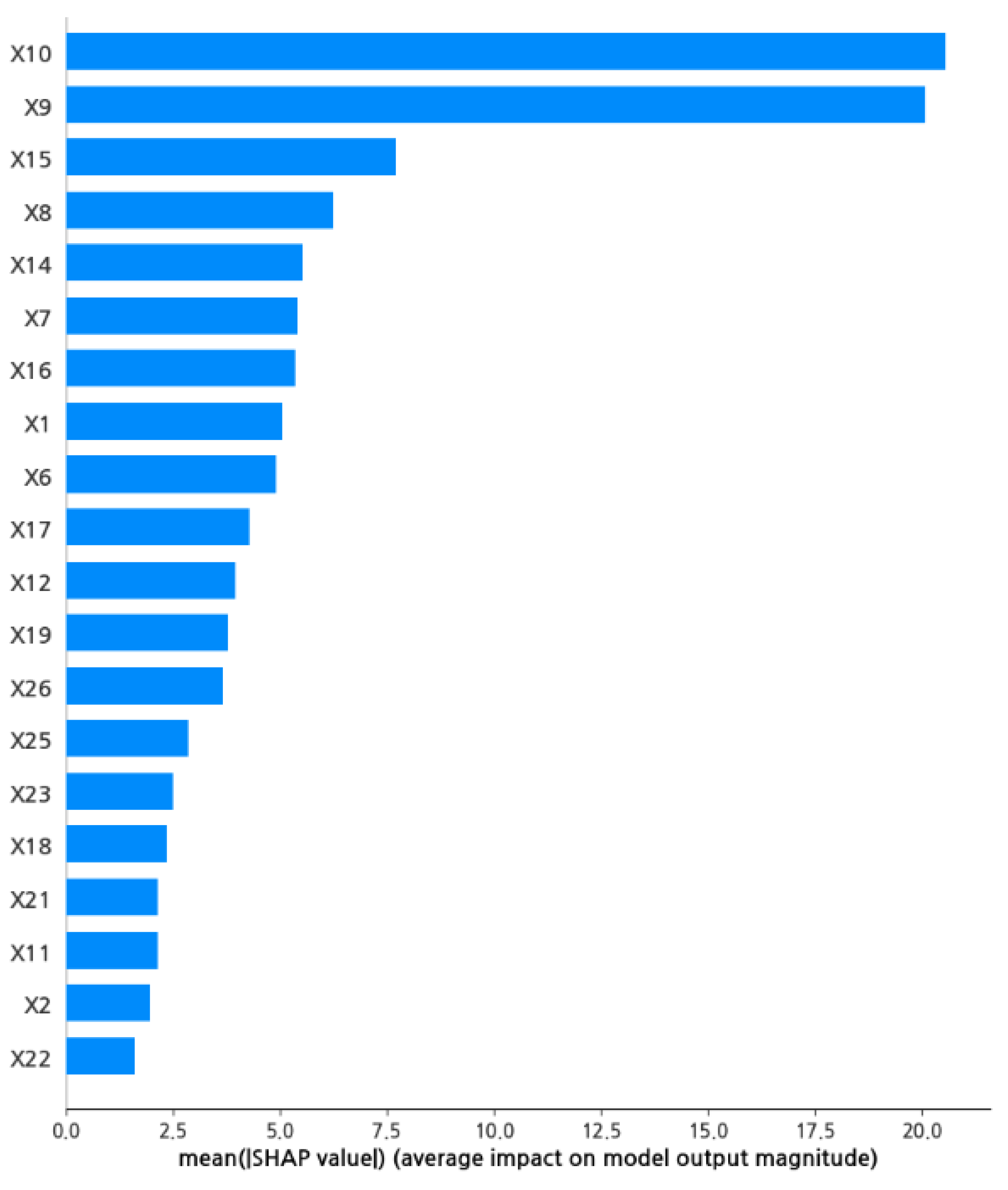
Figure 3.
SHAP values with different variables
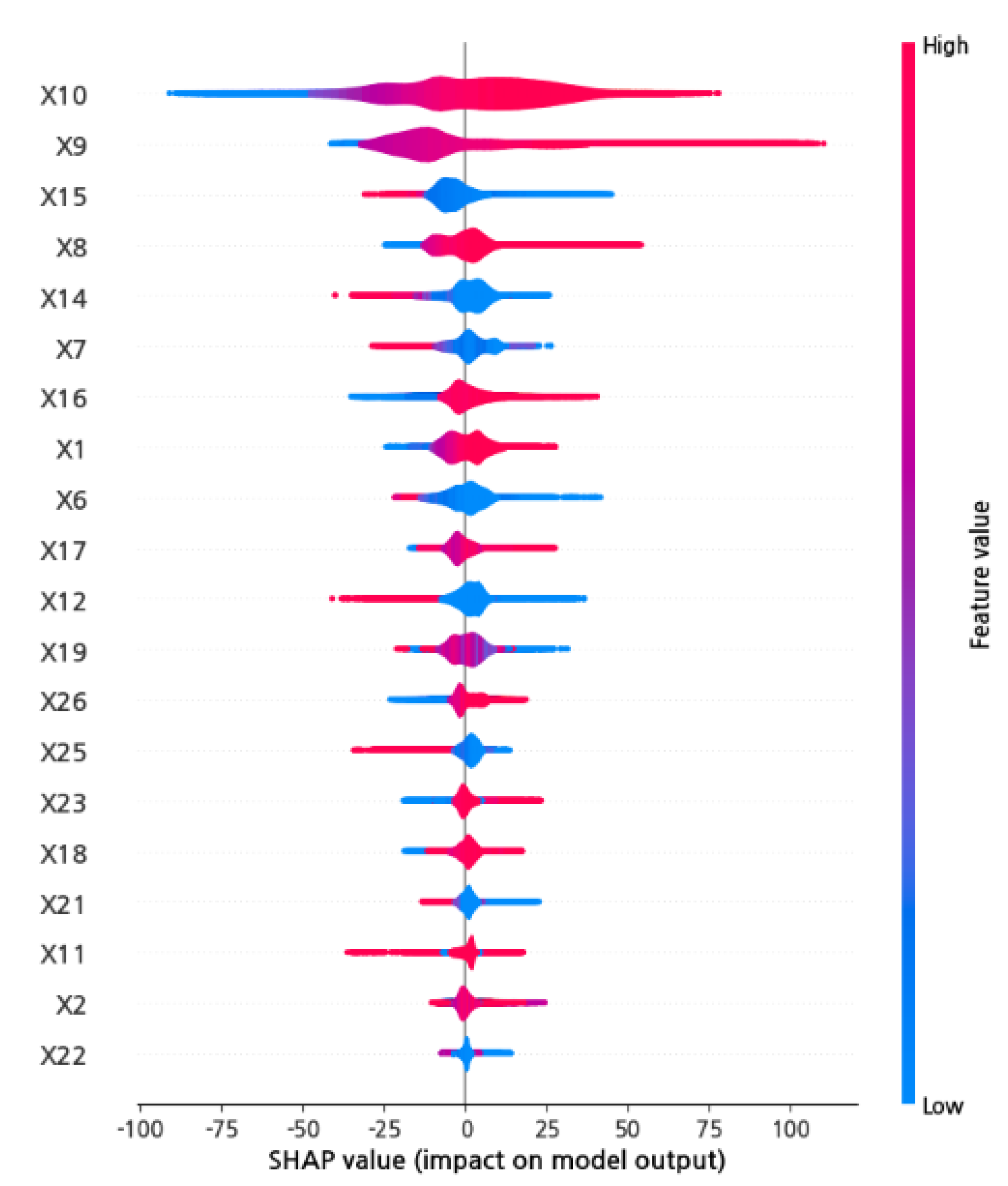

Table 1.
Independent variables of rotary kiln process data.
| Independent variable | Unit | Independent variable | Unit |
|---|---|---|---|
| Moisture | % | Dried ore feeding amount | Ton |
| Inner temperature of rotary kiln A | ℃ | Reductant coal unit consumption | kg/dmt |
| Coal feeding ration through a scoop feeder facility | % | O2 content in the offgas | % |
Table 2.
A summary of rotary kiln dataset.
| Description | Variable name | |
|---|---|---|
| Explanatory variables | 27m(℃), Reductant, Feeding rate, NOx | X01, …, X30 |
| Response variables | Calcine temperature(℃) | Calcine temperature(℃) |
Table 3.
Examples of variables.
| Date | X1 | X2 | … | Calcine temperature(℃) |
|---|---|---|---|---|
| 2023.04.01 00:01:00 | 36.22 | -1.45 | … | 925 |
| 2023.04.01 00:02:00 | 36.23 | -1.39 | … | 930 |
| … | … | … | … | 943 |
| 2023.09.30 23:57:00 | 46.13 | -0.96 | … | 722 |
| 2023.09.30 23:58:00 | 47.86 | -0.69 | … | 714 |
| 2023.09.30 23:59:00 | 47.86 | -1.15 | … | 691 |
Table 4.
Model evaluation metrics results.
| Model | MAE | MSE | MAPE |
|---|---|---|---|
| XGBoost | 41.73 | 2,539.72 | 0.045 |
| LightGBM | 39.24 | 2,575.97 | 0.040 |
| CatBoost | 38.22 | 2,500.36 | 0.036 |
| GRU | 48.13 | 3,200.14 | 0.079 |
Disclaimer/Publisher’s Note: The statements, opinions and data contained in all publications are solely those of the individual author(s) and contributor(s) and not of MDPI and/or the editor(s). MDPI and/or the editor(s) disclaim responsibility for any injury to people or property resulting from any ideas, methods, instructions or products referred to in the content. |
© 2024 by the authors. Licensee MDPI, Basel, Switzerland. This article is an open access article distributed under the terms and conditions of the Creative Commons Attribution (CC BY) license (http://creativecommons.org/licenses/by/4.0/).
Copyright: This open access article is published under a Creative Commons CC BY 4.0 license, which permit the free download, distribution, and reuse, provided that the author and preprint are cited in any reuse.