

Submitted:
24 September 2024
Posted:
29 September 2024
You are already at the latest version
Abstract
This paper presents the redesign process of FLIC, a web application developed for creating personal learning pathways in higher education, now adapted for primary and secondary education as FLIC-IPAFLEX. This redesign addresses the need to personalise learning through flexible pathways and supports teachers in designing learning situations (LS) in accordance with the criteria established by the new Education Law (LOMLOE). The SCRUM model, integrated into Design-Based Research (DBR), was employed, implementing several iterative cycles involving teachers to validate the tool's utility. The platform facilitates the creation, publication, and reuse of LS by enabling the filtering of competencies, evaluation criteria, and basic knowledge, as well as integrating with Google Classroom, an application widely used by teachers. The results show a positive user evaluation, highlighting its ease of use and capacity to foster collaboration among teachers, thereby promoting the co-design of flexible and adaptive LS. FLIC-IPAFLEX aims to contribute to the field of learning design technologies, aligning with the demands of compulsory education and supporting collaborative processes within the educational environment.
Keywords:
learning itineraries
; learning design
; technology‐enhanced learning
; Learning design tools
; primary education
; secondary education
1. Introduction
Digital technologies offer multiple opportunities for diversification of learning experiences. Despite this, traditional standardized curricula often do not consider the particular pace, preferences and academic capacities of students. Thus, education systems face the challenge of addressing the diverse learning needs of each student, taking advantage of the possibilities offered by digital technologies to move towards inclusive education. This makes the search for personalized learning itineraries a central theme in educational technology research [1].
The construction of personalized learning itineraries, tailored to learners' interests, academic levels and needs, is presented as a promising solution to the limitations of conventional teaching methodologies [2,3,4]. Such a construct falls squarely within learning design, which has its roots in instructional design, and both share the goal of systematizing the process of finding effective solutions to educational problems. Learning design”, or better ‘design for learning’ (LD), can be defined as a construct that explicitly documents a set of learning tasks, which may present different granularities, from a single task to a course, with the set of resources and tools that support the completion of those tasks. In this case, the teacher in his role of learning designer [5,6] fulfills the function of managing the details of a learning unit (aka, a learning situation): coordinating the different roles (learners, groups and teachers exercising guidance and scaffolding), designing the activities and associated environments (learning resources, tools and services) that enable learners to meet the learning objectives [7]. The learning situation, although it may be of different dimensions, must be able to be instantiated and reused many times for different people and in various environments, including online environments [8].
To be able to represent and propose to other teachers and students the different learning situations, sharing and exchanging them, it is necessary to have tools that support the representation of such designs, their publication or the exchange and adaptive reuse of them [9,10].
1.1. Personalisation through Flexible Learning Itineraries
The literature on personalization includes the search for personalized learning itineraries as a fundamental aspect of educational technology research [2,11,12,13,14]. Brusilovsky [15] conceives the learning itinerary as a sequence of activities with defined objectives to help students build their knowledge or skills in a subject. From this perspective, personalized learning itineraries have their foundation in cognitive and constructivist learning theories. The pedagogical principles of these theories emphasize, on the one hand, the active participation of learners, the emphasis on the structure and organization of knowledge, and the linking of new knowledge to the learner's previous cognitive structures, and on the other hand, it involves teachers in their role as designers of learning determining which instructional methods and strategies will help learners to actively explore topics and advance their thinking, encouraging learners to develop their own understanding of knowledge [1].
Personal learning itineraries act as a guide through content, processes and activities for learners, while providing sufficient flexibility for the learner to exercise autonomy and self-direction in their own learning process [16]. This requires tools that contribute to the representation of designs, their publication, sharing and adaptive reuse [9,10].
Research on personalization and adaptability in educational technology goes back decades. The problem of personalized guidance of learning experiences has some history in the field of adaptive educational systems (AES). One of the first recognized AES, SCHOLAR [17], focused on guiding students to the most relevant facts and questions about the geography of South America. Since then, numerous proposals have emerged. Among them, LAMS, an ML tool developed to help teachers create, monitor and execute online learning activities [18]; or Coppercore [19], CeLS [20] as design representation tools, among the earliest ones.
1.2. Digital Technologies for the Personalization of the Learning Process
Efforts to develop supports and tools for digitally enhanced learning have been based on three key ideas [22]:
- Designs can be represented in systematic ways that formally document their pedagogical features.
- Representations can be shared for other teachers to adopt and adapt to their contexts, to improve and re-share.
- Technological tools can be developed to support the creation, representation, sharing, and adaptation of designs.
The adaptation of the learning process to individual differences through digital technologies has different aspects: organizing pre-established categories of students according to different characteristics, in the first case, use of recommendation systems, negotiation, etc., in the second, and learning analytics, algorithms that aim at adapting the curriculum and practices to such individual differences, artificial intelligence through the management of huge amounts of data, use of automated teaching robots or others, in the third [12,23,24,25].
This type of research draws essentially from two perspectives: from the system architecture point of view (the flexible combination of different educational tools in an adaptive infrastructure) and from the data point of view (the exploitation of information about users for the selection and configuration of educational content) [26]. In the first case, there are open standards, especially Service Oriented Architectures, Web Services and Microservices, and in the second, intelligent tutoring systems and learning analytics, which combine technical and educational approaches.
Advances in digital and information processing technologies mean that opportunities to implement learning personalization are becoming increasingly available.
Over the last two decades, several learning design (LD) tools have been developed that allow teachers to define their designs, share them, and be able to be adopted by their peers. Celik and Magoulas [12] in their systematic review identify 31 such digital learning design tools. In terms of organizing tools into different categories, Britain [27] classified the tools as authoring environments, execution environments, and integrated environments. Persico and Pozzi [28], for their part, classify these types of LD tools according to their functions: authoring and sharing tools, learning assessment and analysis planners, reflection tools and pedagogical planners, delivery tools, and repositories.
For their part, de-Benito et al. [29] make a proposal for the classification of digital technologies that support the process of co-design of learning itineraries, they differentiate between tools used in the processes of: communication (interpersonal and for the creation, storage and management of shared documents); planning (for the organization of activities, events and tasks, organization and management of learning itineraries and sequences, and planning of the teaching-learning process); and, reflection and evaluation (both students and teachers reflect and evaluate learning and the processes to achieve them, through portfolios and the development of resources in different formats).
1.3. FLIC: Flexible Learning Itineraries Configurator
The Flexible Learning Itineraries Configurator (FLIC) is an application developed for the construction of learning itineraries in higher education, based on the choice of didactic or learning sequences. It is a self-developed web application, within the framework of the EDU2017-84223-R project, based on Python, which communicates with the Moodle LMS database, sharing and integrating registered users and learning sequences, which are configured as courses in the virtual classroom. Users configure their itineraries in an agile way, and the application is responsible for transferring this configuration to the virtual classroom, generating enrollments to courses or specific groups within a course (Figure 1).
FLIC responds to the detected need for an application that facilitates the elaboration and registration of the personal learning itinerary, allowing a variety of possibilities depending on the user's profile [10,16,29,30]. Thus, FLIC can be characterized as a personalized recommender system that connects students with appropriate educational proposals based on the structures and requirements of higher education, on the one hand, and on the other hand, based on the aptitudes, needs and preferences of the students.
Therefore, FLIC, would fit both in the category of creation and exchange tools, as well as in the category of reflection tools and pedagogical planners, discussed above, since it facilitates the organization of concepts, topics, activities and resources to achieve authentic learning experiences and at the same time, the collaboration between teachers when designing and sharing proposals from a conception of the process from the co-design [10].
This paper presents a process of redesigning FLIC, an application already used in previous projects, to a new version that supports flexible learning designs according to the individual characteristics of the student, but in this case aimed at compulsory education levels. For this purpose, several alternative sequences of learning objects are generated.
2. Materials and Methods
The design and development process of the FLIC application was carried out from the perspective of Design-Based Research (DBR) [31,32,33], widely used in the field of Educational Technology, very similar to the agile methodologies used in software development. In this case, we chose to adapt the process to the SCRUM methodology, which constitutes a reference framework for the development of the proposal [34], based on its three basic pillars: transparency, inspection and adaptation (scrum. org) It was applied through an iterative and incremental process that provides flexibility and agility for the design and redesign of the personal learning itinerary management application, based on the requirements that may arise in each iteration, with constant communication between the developers, the research team and the potential recipients of the product, the teachers.
Therefore, the objective has been to develop an application that enables the creation of flexible learning itineraries for primary and secondary schools, in accordance with the law and educational regulations in force in the context of application. The current legislation promotes a change in the organization of the activities proposed by the teacher for the students. Thus, it is established that the key and specific competences to be acquired by students will be structured in learning situations (LS). Therefore, the need arises to design and develop a new version of FLIC, called IPAFLEX, which allows teachers to design their LS and share them with other teachers. In addition, to link it with the Learning Management System (LMS) used in the classroom, such as Google Classroom.
Figure 2 shows the development phases of the application, in which the IBD methodology has been adapted to the SCRUM model.
Starting phase corresponds to the Analysis and Exploration phase of the model proposed by McKenney & Reeves [32]. It includes the realization of different types of activities related to the creation of the work team (teachers, researchers and developers); defining the Prioritized Product Backlog (specification of the requirements of the environment for the management of learning itineraries (FLIC), among all the team members), according to the different educational contexts foreseen; and the planning of the Launch. The creation of the Backlog makes it possible to identify the characteristics and functionalities to be included in the application, making it possible to establish the priority and value actions in each iterative cycle, as well as the possible problems, to develop a preventive strategy against unforeseen events or threats that may jeopardize the viability of the project. In the Product Backlog, the requirements for the development of two prototypes are established, one of them adapted to primary education and the other to compulsory secondary education.
The Sprint development includes the different iterative cycles that will allow to achieve a product with the specifications of the Product Backlog. These cycles are carried out in the design and construction phase of the artifact. Each Sprint includes: Sprint Planning; Sprint Backlog (includes the sprint objectives, the tasks to be developed, the work items to be developed); Sprint review (the result obtained in the Sprint is analyzed to determine the necessary adaptations and the next steps to reach the next Sprint); and, Sprint Retrospective (oriented to increase the quality and efficiency of the work process and the final product). Each Sprint, thanks to the evaluation and reflection phase, offers incremental value to obtain the final product, as well as the generation of design principles.
For the development of the application, four Sprints have been carried out:
Sprint 1: Definition of FLIC-IPAFLEX Requirements by the Research Team
The first Sprint consisted of the review of the functionalities of the original FLIC application and the analysis of the requirements of the new version, to adapt to the needs derived from the implementation of the new education law in Spain, the LOMLOE [35]. On the one hand, a review of the concepts to be adopted in the research was carried out and, on the other, a discussion on flexibilization and personalized learning itineraries was held, using for this purpose the nominal group technique, devised by Van de Ven and Delbecq [36] and which is a face-to-face structured group method with the achievement of group consensus [37]. In both cases, the professionals who participated were 10 researchers, two experts in educational technology and two teachers from different primary school cycles. This conceptualization and subsequent discussion made it possible to determine the needs of primary and secondary teachers, to assess the strengths of FLIC implementation in higher education and to determine the necessary adaptations for this new educational context. From this Sprint, a first version of a template for the design of learning situations (LS) in the application was obtained [38].
Sprint 2: Review of the Requirements and Adaptations of the Original FLIC to the New Version by the Research Team and Teachers
Based on the results obtained in the first Sprint, a second nominal group was carried out. This time it consisted of 10 members of the research team and 8 teachers (5 primary and 3 secondary). The objective of this nominal group was to reach a consensus on the template for the design of LS and to review the requirements and functionalities to be covered by the application. The information collection techniques used were mainly the nominal group and individual interviews with teachers.
Sprint 3: Development of the Application and Experimentation with FLIC-IPAFLEX by the Teachers
This Sprint includes the development of the prototype of the new application, in which members of the research team and the developer participated, and the teachers' experimentation with the prototype. A new nominal group was conducted with the participants in Sprint 2. This Sprint allowed adjusting the requirements of the application, as well as aspects related to the interface. In this case, the tracking notebook was used for the development of the application, which allowed direct and fluid communication between the research team and the developer. On the other hand, once the face-to-face sessions were over, a final evaluation was carried out by means of a group interview on the impressions obtained when using the application, the aspects to be improved and the errors found.
Sprint 4: Implementation of the first Prototype with Future Teachers
In this last Sprint, a partial implementation of the prototype was carried out with future teachers, 4 groups of 3rd year Primary Education students. The information obtained after group interviews revealed that the prototype was functional and adequate. This Sprint made it possible to verify that the adjustments made were appropriate to the needs of the teachers, as well as that the interface was intuitive and practical.
3. Results
After completing the four sprints, results have been obtained related to the design and development of new version functionalities, the design of learning situations (LS), and the user interface.
Following the original design, FLIC-IPAFLEX has been developed using Python as the programming language and MySQL as the database management system. The application runs on the web and is accessible via a browser, thereby facilitating its availability and use across different devices and operating systems. The application's architecture and functionality are structured around the implementation and adaptation of the following key modules:
- Learning Situations (LS) design module: Enables the creation, storage, and retrieval of learning situations.
- Curricular configuration module: Directly connects with the LS Design Module and allows administrative users to configure the relationships and dependencies between subject areas, competencies, and other curricular elements established in the LOMLOE education law.
- User management module: Allows for the addition of users to the platform, as well as the administration of roles and permissions.
- Authentication module: Provides controlled access to the platform through the management of user credentials and permissions.
- LMS platform connection module: Facilitates integration with learning management systems (LMS), enabling communication between the application and educational platforms.
- Learning objects module: Acts as a repository of educational resources that can be integrated into learning situations.
3.1. Related to the Features of the New Version of the Itinerary Configurator
Sprint 1 and 2 allowed the research team to identify the main features of the new version of the flexible learning itinerary configurator, FLIC-IPAFLEX.
From the analysis of the information gathered in the two Sprint, the functionalities that the application should cover were identified. Table 1 shows a list of the main adaptations carried out for the development of FLIC-IPAFLEX. It is important to point out the configuration element of the itineraries, which are now Learning Situations according to the needs of the LOMLOE education law. On the other hand, the adaptation to the new implementation context leads to changes in the roles of teacher and student profiles and in the possibilities of integration with LMS platforms.
3.2. Related to the Learning Situation Design Module
Sprint 1 and 2 helped to establish the necessary fields for the design of learning situations and the possibilities for designing, publishing, sharing and implementing them.
First, it was essential to identify the problems encountered by teachers in designing and implementing learning situations in accordance with the implementation of new legislation and regulations imposed by national and regional decision-makers. The main recommendations made by the teachers and the research team (Table 2) refer to aspects affecting the format of the learning situation form and technical considerations.
In Sprint 3 the features of FLIC-IPAFLEX were established and through implementation and testing with real users in Sprint 4 the functionalities were adjusted, as shown in Table 3.
Throughout Sprints 3 and 4, different errors and suggestions for improvement were detected (Table 4), both by members of the research team and teachers (Sprint 3), as well as by Primary Education Teaching students (Sprint 4).
Moreover, the process that the teachers follow to design and implement itineraries based on learning situations is shown in Figure 3 and described below:
- 1.
-
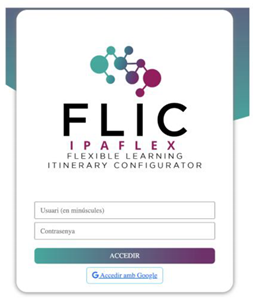
The teacher proceeds to log into the application at URL: https://ipaflex-pruebas.uib.es/login/.
- 1.1.
- Previously the teacher must be registered.
- 1.2.
- They can use their Google account or another email address.
- 2.
- Selection of the level in which you teach (Early childhood, primary education, secondary education)
- 3.
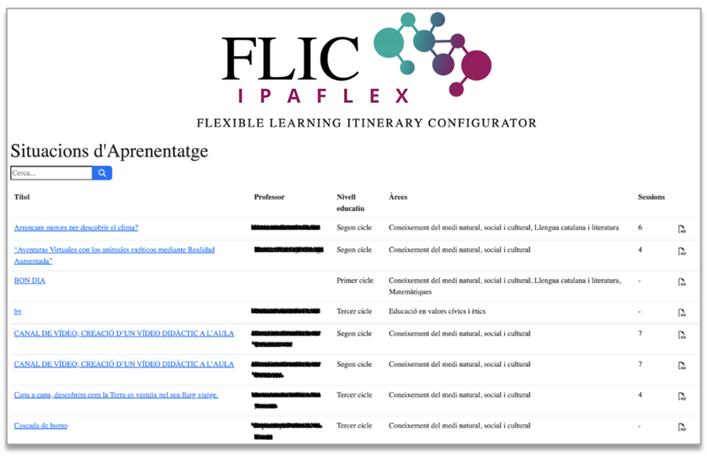
- Access to your personal place where, by default, you will see the learning situations you have created; although you can also access to the LS created by other teachers (see Appendix A.2.).
- 4.
-
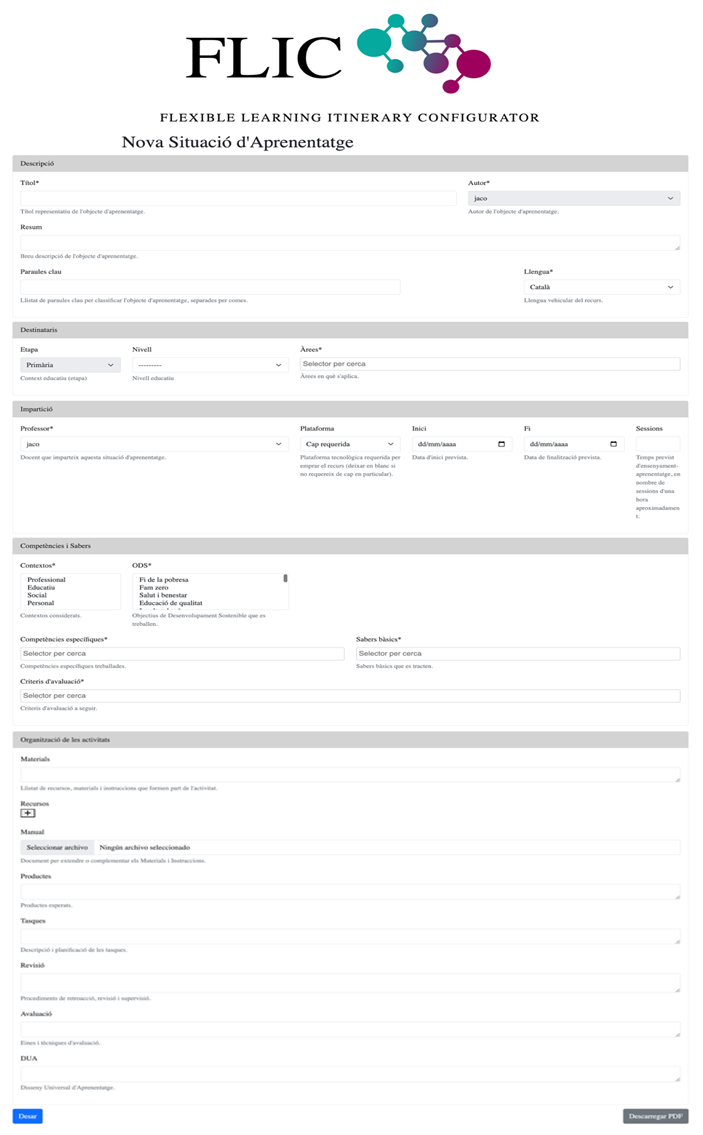
The teacher can create a new learning situation following the structure proposed by the current legislation (LOMLOE) through a simple form (see Appendix A.3.)
- 4.1.
- This form presents different types of fields (free description, single choice and multiple choice)
- 4.2.
- Another feature of the form is that some fields are binding, since the selection of the area(s) that the teacher is intended to work with that LS, enables the specific competences of the area(s) chosen. As well as the choice of competences allows filtering the basic knowledge and evaluation criteria according to the competences selected.
- 4.3.
- In the materials and resources section, the teacher can integrate a PDF if needed, but also links to online resources that may be of interest to students when the LS is carried out
- 5.
-
Once the LS has been designed, you can:
- 5.1.
- Download the LS in PDF format
- 5.2.
- Transfer it to the Google Classroom (if you are logged in with your Google account)
- 6.
- In case of transferring the LS to the Google Classroom, the application generates a specific classroom for the LS with all the resources, where the teacher will only have to select the students who will have access to it.
3.3. In relation with the User Interface
The validation of the first version of FLIC in terms of usability [39] yielded predominantly positive results in relation to the user interface, obtaining an average rating of 20.39 in UMUX and 84.97 in SUS (System Usability Scale) from Lewis [40], a notable-high value. The usefulness, ease of use and visual interactivity of the tool for sequence selection were highlighted as positive aspects.
Based on these results, the interface of the new version of FLIC-IPAFLEX has been developed considering the contributions made by teachers in the third Sprint, trying to respond to the needs of teachers and trying to maintain a simple and intuitive interface in line with the first version (see Figure 4 and Appendix A)
4. Discussion
The implementation of the new education law (LOMLOE)[35] generated some confusion among the educational community as to how it should be applied, as expressed in the media, social networks, etc. On the one hand, in each region of the country, those responsible for education had to establish their own guidelines for educational centers and, on the other hand, teachers, students and families had to adapt and try to understand the changes that this new law implied.
In this context, the proposal arose to adapt an application, developed by the research group for higher education, to support the design of learning situations, the main axis of the new law, in accordance with the guidelines established in the regulations.
This proposal is framed in works related to learning design in the line proposed by [9,41], in which models are generated that can be shared and reused among members of the same institution or others, supporting co-design processes among teachers [8,42].
The application of the SCRUM methodology, under the paradigm of Design-Based Research (DBR) has allowed a practical and effective approach to respond to the real needs of educational practice. SCRUM is an agile methodology for the collaborative solution of complex problems that involves a multidisciplinary team and in which the participation of the teachers themselves is a key factor for the success of the solution. [43]
This has made it possible to identify (in Sprint 1 and 2) the real needs of teachers and the functionalities that the application should cover. This tool offers teachers a resource that simplifies and improves pedagogical planning [22], allowing the creation of flexible learning itineraries adapted to the individual characteristics of students [3,30]. In addition, FLIC-IPAFLEX promotes collaboration among professionals through the exchange of learning situations, thus contributing to enriching educational practices and fostering more inclusive teaching.
From a technical point of view, it is worth highlighting the incorporation of multiple selection fields (language, level, area(s), platform, contexts, SDGs, specific competencies, basic knowledge and evaluation criteria) in accordance with the guidelines of the regulations, so that it allows the automatic filtering of specific competencies according to the selected area(s), as well as basic knowledge and evaluation criteria.
In relation to the interface design, the main features of the previous version of FLIC, which was rated as remarkable-high according to the UMUX and SUS scales applied in its validation by higher education students [39], have been retained. In this new version, the ease of use has been preserved and the tool has been considered useful by the faculty and trainees involved in Sprint 3 and 4.
Finally, FLIC-IPAFLEX's communication with learning management systems (LMS) brings significant added value by enabling the automatic implementation of personalized learning itineraries in the virtual environment. The LMS connection module allows the integration of the application into the LMS, favoring the customization and flexibility of the organization of resources and activities in the VLE [44], as well as the creation of groups for the configuration of personalized learning itineraries, allowing a smooth transition from design to teaching practice [24]
Limitations and Future Fields of Development
Despite the progress made with FLIC-IPAFLEX, there is a limitation to consider regarding its integration with the LMS platforms used by teachers. Currently it is only connected to Google Classroom and the connection to new LMS must be done manually by programming, which limits the scalability and flexibility of the tool. This fact makes it difficult for managing users (privileged users) to set up new connections with different educational platforms autonomously.
As a future line of development, the creation of a new module is proposed that allows authorized users to configure new connections with different LMS platforms without the need for direct intervention from the programmer. This advance would facilitate the integration of FLIC-IPAFLEX in new educational environments, streamlining the implementation processes of learning situations in their final environment and increasing its accessibility and usefulness for a greater number of teachers and centers.
5. Conclusions
The main contribution of this paper has been to articulate an integrative approach to flexible learning design and to make it possible through an itinerary system. The results indicate that FLIC, now redesigned as FLIC-IPAFLEX enables collaboration among practitioners to share and co-edit authored learning designs of different types and enable automatic implementation of these learning designs in VLEs. This is a significant contribution to the field of learning design technologies, as the usefulness and ease of use of FLIC was highly valued by participants, both in terms of the sharing functions that allow co-editing, commenting or duplicating learning designs for reuse, and the browsing functions that facilitate exploration of learning designs.
FLIC-IPAFLEX is presented as an application with the potential to generate learning designs in accordance with current regulations, which facilitates the work of teachers in that it integrates the competences, knowledge and evaluation criteria described in the regulations and allows teachers to focus on educational design. At the same time, it is configured as an open system, in which the learning situations and the didactic resources associated with them can be shared with teachers from the same center or other educational centers. The communication of the application with the school's LMS allows the implementation of personalized learning situations in the form of flexible itineraries, adapted to the needs and interests of the students.
In conclusion, FLIC-IPAFLEX is functional, since both the product obtained and its use by teachers in real educational contexts answer our research question by demonstrating that it is possible to provide a system that configures flexible learning itineraries and contributes to the co-design of learning. The results highlight the usefulness of FLIC-IPAFLEX functions and show that the selection of integrated design options is adapted to the needs of compulsory education teachers and their institutions.
Author Contributions
Conceptualization, Ja.M-G., and J.S.; data curation Ja.M-G., B.dB-C. and J.S.; formal analysis, Ja.M-G., B.dB-C, Ju.M-G. and J.S.; investigation Ja.M-G., B.dB-C., Ju.M-G. and J.S.; methodology Ja.M-G., B.dB-C, Ju.M-G. and J.S.; supervision B.dB-C. and J.S.; writing—original draft Ja.M-G., B.dB-C., Ju.M-G. and J.S.; writing—review and editing, Ja.M-G., B.dB-C., Ju.M-G. and J.S. All authors have read and agreed to the published version of the manuscript.
Funding
This work has been sponsored by the Comunitat Autonòma de les Illes Balears through the Direcció General de Recerca, Innovació I Transformació Digital with funds from the Tourist Stay Tax Law (PDR2020/49 - ITS2017-006).
Institutional Review Board Statement
All subjects gave informed consent for inclusion before participating in the study. The study was conducted in accordance with the Declaration of Helsinki, and the fundamental principles of research integrity were respected in accordance with the Research Ethics Committee of the University of Balearic Islands.
Informed Consent Statement
Informed consent was obtained from all subjects involved in the study.
Data Availability Statement
Dataset available on request from the authors.
Conflicts of Interest
The authors declare no conflicts of interest.
Appendix A. User Interface
Appendix A.1. Log in
Appendix A.2. List of Existing Learning Situations
Appendix A.3. Form to Design New Learning Situations
References
- Sampson, D.; Karagiannidis, C.; Kinshuk. Personalised Learning: Educational, Technological and Standardisation Perspective. Inter. Educ. Mult. 2002, 4, 24–39. [Google Scholar]
- Nabizadeh, A.H.; Leal, J.P.; Rafsanjani, H.N.; Shah, R.R. Learning path personalization and recommendation methods: A survey of the state-of-the-art. Expert Syst. Appl. 2020, 159, 113596. [Google Scholar] [CrossRef]
- Pérez-Garcias, A.; Tur Ferrer, G.; Villatoro Moral, S.; Darder-Mesquida, A. Flexible Learning Itineraries in Digital Environments for Personalised Learning in Teacher Training. RIED-Rev. Iber. Educ. Dist. 2022, 25, 173–193. [Google Scholar] [CrossRef]
- Zalavra, E; Papanikolaou, K; Dimitriadis, Y. ; Sgouropoulou, C. Representing learning designs in a design support tool. Educ. & Infor. Techol. 2023, 28, 6563–6594. [Google Scholar] [CrossRef]
- Goodyear, P. Teaching as design. HERDSA Rev. High. Educ. 2015, 2, 27–50. [Google Scholar] [CrossRef]
- Laurillard, D. Teaching as a design science: Building pedagogical patterns for learning and technology; Routledge: London, 2012. [Google Scholar]
- Koper, R.; Tattersall, C. Preface to learning design: A handbook on modelling and delivering networked education and training. J. Int. Med Educ. 2005, 1, 3–20. [Google Scholar] [CrossRef]
- Koper, R. An introduction to learning design. In Learning Design. A Handbook on Modeling and Delivering Networked Education and Training; Koper, R., Tattersall, C., Eds.; Springer: The Netherlands, 2005. [Google Scholar]
- Conole, G. Designing for Learning in an Open World; Springer: New York, 2013. [Google Scholar] [CrossRef]
- Salinas, J.; de-Benito, B. Construction of personalized learning pathways through mixed methods. Comunicar, 2020, 65, 31–42. [Google Scholar] [CrossRef]
- Al-Shaikhli, D.; Courtenage, S. A literature review of personalisation, search, and navigation methods in open elearning. Int. J. Inf. Educ. Technol. 2018, 8, 26–33. [Google Scholar] [CrossRef]
- Celik, D.; Magoulas, G. D. A Review, Timeline, and Categorization of Learning Design Tools. In 15th International Conference on Web-Based Learning (pp. 3–13). Rome, Italy, 2016. [CrossRef]
- Martin, F.; Chen, Y.; Moore, R. L.; Westine, C. D. Systematic review of adaptive learning research designs, context, strategies, and technologies from 2009 to 2018, Educ. Tech. Res. Dev. 2020, 68, 1903–1929. [Google Scholar] [CrossRef]
- Mikić, V.; Ilić, M.; Kopanja, L.; Vesin, B. Personalisation methods in e-learning-A literature review. Comput. Appl Engin. Educ., 2022, 30, 1931–1958. [Google Scholar] [CrossRef]
- Brusilovsky, P. A framework for intelligent knowledge sequencing and task sequencing. In: C. Frasson, G. Gauthier and G. McCalla (eds.) Proceedings of Second International Conference on Intelligent Tutoring Systems, ITS'92, Montreal, Canada, -12, 1992, Springer-Verlag, 1992, 499-506. 10 June.
- Salinas, J.; de-Benito-Crosetti, B.; Moreno-García, J.; Lizana Carrió, A. (2022). New flexible designs and modes of organisation in higher education. Pixel-Bit. Revista de Medios y Educación 2022, 63, 65–91. [Google Scholar] [CrossRef]
- Carbonell, J. R. AI in CAI: An artificial intelligence approach to computer aided instruction. IEEE Transactions on Man-Machine Systems MMS 1970, 11, 190–202. [Google Scholar] [CrossRef]
- Dalziel, J. Implementing learning design: the learning activity management system (LAMS). In ASCILITE: 20th Annual Conference of the Australasian Society for Computers in Learning in Tertiary Education; Australasian Society for Computers in Learning in Tertiary Educatio: Wollongong, NSW, 2003. [Google Scholar]
- Britain, S. A. Review of Learning Design: Concept, Specifications and Tools. A report for the JISC E-learning Pedagogy Programme, 2004. http://www.jisc.ac.uk/uploaded_documents/ACF83C.doc.
- Ronen, M.; Kohen-vacs, D.; Raz-fogel, N. Adopt & adapt: structuring, sharing and reusing asynchronous collaborative pedagogy. International Conference on Learning Sciences (ICLS), 599–605. Bloomington, IL, 2006. http://dl.acm.org/citation.cfm?id=1150121.
- Li, K. C.; Wong, B. T. Features and trends of personalised learning: a review of journal publications from 2001 to 2018. Interact. Learn. Environ. 2021, 29, 182–195. [Google Scholar] [CrossRef]
- Bennett, S.; Lockyer, L.; Agostinho, S. Towards sustainable technology-enhanced innovation in higher education: Advancing learning design by understanding and supporting teacher design practice. Br. J. Educ. Technol. 2018, 49, 1014–1026. [Google Scholar] [CrossRef]
- Dagnino, F. M.; Dimitriadis, Y. A.; Asensio-Pérez, J. I.; Pozzi, F.; Rubia-Avi, B. Exploring teachers’ needs and the existing barriers to the adoption of Learning Design methods and tools: A literature survey. Br. J. Educ. Technol. 2018, 49, 998–1013. [Google Scholar] [CrossRef]
- Hernández-Leo, D.; Asensio-Pérez, J.I.; Derntl, M.; Pozzi, F.; Chacón, J.; Prieto, L.P.; Persico, D. An Integrated Environment for Learning Design. Frontiers ICT 2018, 5, 9. [Google Scholar] [CrossRef]
- Saçak, B.; Bozkurt, A.; Wagner, E. Learning Design versus Instructional Design: A Bibliometric Study through Data Visualization Approaches. Educ. Sci., 2022, 12, 752. [Google Scholar] [CrossRef]
- Ziemann, F.; Nguyen, D.; Blum, F.; Lucke, U. Personalized Recommendations for Individual Learning Pathways: Supporting Ukrainian Refugee Students in Continuing their University Education. In: Desnos, J. -F.; López Nores, M. (Eds.): Proceedings of European University Information Systems Congress. EasyChair (EPiC Series in Computing, 95), 2023, 170-180, 2023. [CrossRef]
- Britain, S. Learning design systems: current and future developments. In Rethinking Pedagogy for a Digital Age: Designing and Delivering E-Learning; Routledge: Oxford, 2007; pp. 103–104. [Google Scholar]
- Persico, D.; Pozzi, F. Informing learning design with learning analytics to improve teacher inquiry. Br. J. Educ. Technol. 2015, 46, 230–248. [Google Scholar] [CrossRef]
- de-Benito, B.; Moreno-García, J.; Villatoro Moral, S. Technological environments in co-designing personalized learning paths in higher education. Edutec. Rev. Electron. Techon. Educ. 2020, 74, 72–93. [Google Scholar] [CrossRef]
- de-Benito, B.; Lizana, A.; Moreno-García, J.; Salinas, J. Codiseño de itinerarios flexibles de aprendizaje para modelos de enseñanza semipresencial. En Olmos-Migueláñez, S.; Rodríguez-Conde, M.J.; Bartolomé, A.; Salinas, J.; Frutos Esteban, F.J.; García-Peñalvo, F.J. (eds.) La influencia de la tecnología en la investigación educativa post-pandemia. IUCE-Universidad de Salamanca/Octaedro, 2022, pp. 105–106.
- Armstrong, M.; Dopp, C.; Welsh, J. Design-Based Research. In R. Kimmons, The Students' Guide to Learning Design and Research. EdTech Books, 2018. https://edtechbooks.org/studentguide/design-based_research.
- McKenney, S.E.; Reeves, T. Conducting Educational Design Research. NY: Routledge, 2012.
- Reeves, T.C. (2006). Design research from the technology perspective. En Vanden Akker, J., Gravemeijer, K., McKenney, S., y Nieveen, N. (Eds.), Educational design research. Routledge, 2006, pp. 86–109.
- Schwaber, K.; Sutherland, J. Scrum Guide. The Definitive Guide to Scrum: The Rules of the Game 2020, (November Issue). https://scrumguides.org/docs/scrumguide/v2020/2020-Scrum-Guide-US.pdf.
- Ley Orgánica 3/2020, de 29 de diciembre, por la que se modifica la Ley Orgánica 2/2006, de 3 de mayo, de Educación (LOMLOE). Boletín Oficial del Estado, núm. 340, de 30 de diciembre de 2020. https://www.boe.es/boe/dias/2020/12/30/pdfs/BOE-A-2020-17264.pdf. 2020.
- Van de Ven, A.; Delbecq, A. The nominal group as a research instrument for exploratory health studies. Am. J. Public Health 1972, 62, 337–342. [Google Scholar] [CrossRef]
- Varga-Atkins, T.; McIsaac, J.; Willis, I. Focus Group meets Nominal Group Technique: an effective combination for student evaluation? , Innovations Educ. Teach. Int. 2017, 54, 289–300. [Google Scholar] [CrossRef]
- Munar, J.; de-Benito, B.; Darder, A. Diseño de situaciones de aprendizaje mediante técnicas de cocreación. En EDUTEC. XXVI International Congress on Educational Technology. University of Panama: Panamá, 2023.
- Moreno-García, J.; De-Benito, B.; Lirola Sabater, F.; Salinas Ibáñez, J. Análisis de la usabilidad de la aplicación FLIC (flexible learning itinerary configurator). In de-Benito Crosetti, B.; Pérez-Garcias, A., Agudelo Velásquez, O.L., Eds.; Lizana Carrió, A. (Eds.), Propuestas educativas transformadoras mediante codiseño educativo e itinerarios de aprendizaje en entornos digitales. Madrid: Dykinson, 2024; pp. 89–104. [Google Scholar] [CrossRef]
- Lewis, J,R. Measuring Perceived Usability: The CSUQ, SUS and UMUX. Int. J. Human-Comput. Interac. 2018, 34, 1148–1156. [Google Scholar] [CrossRef]
- Conole, G.; Wills, S. Representing learning designs – making design explicit and shareable. Educ. Med. Int., 2013, 50, 24–38. [Google Scholar] [CrossRef]
- Villatoro, S.; de-Benito, B. Self-Regulation of Learning and the Co-Design of Personalized Learning Pathways in Higher Education: A Theoretical Model Approach. J. Interact. Media Educ. 2022, 1. [Google Scholar] [CrossRef]
- Tinoca, L.; Piedade, J.; Santos, S.; Pedro, A.; Gomes, S. Design-Based Research in the Educational Field: A Systematic Literature Review. Educ. Sci. 2022, 12, 410. [Google Scholar] [CrossRef]
- Alario-Hoyos, C.; Wilson, S. Comparison of the main alternatives to the integration of external tools in different platforms. Proc. International Conference of Education 2010, 3466–3476. [Google Scholar]
Figure 1.
Process of building and implementing a flexible itinerary in the original FLIC application
Figure 1.
Process of building and implementing a flexible itinerary in the original FLIC application
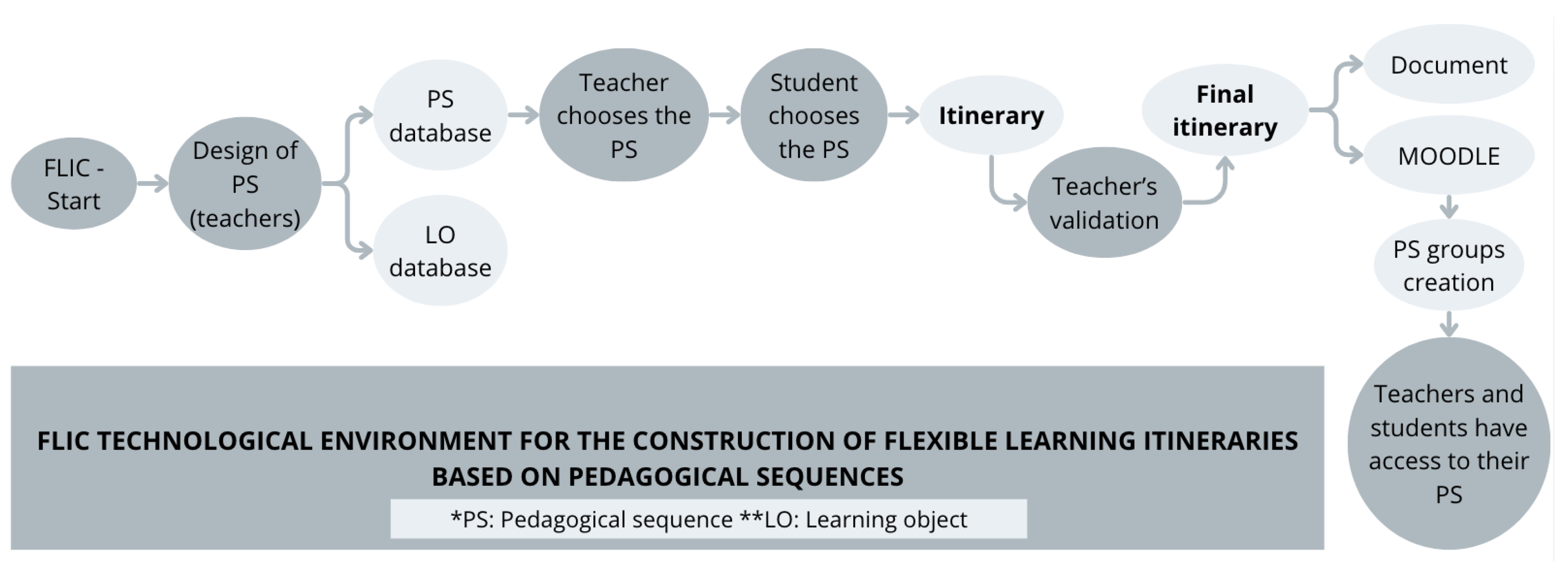
Figure 2.
Phases of the FLIC-IPAFLEX application redesign process according to the SCRUM model based on the IBD methodology.
Figure 2.
Phases of the FLIC-IPAFLEX application redesign process according to the SCRUM model based on the IBD methodology.
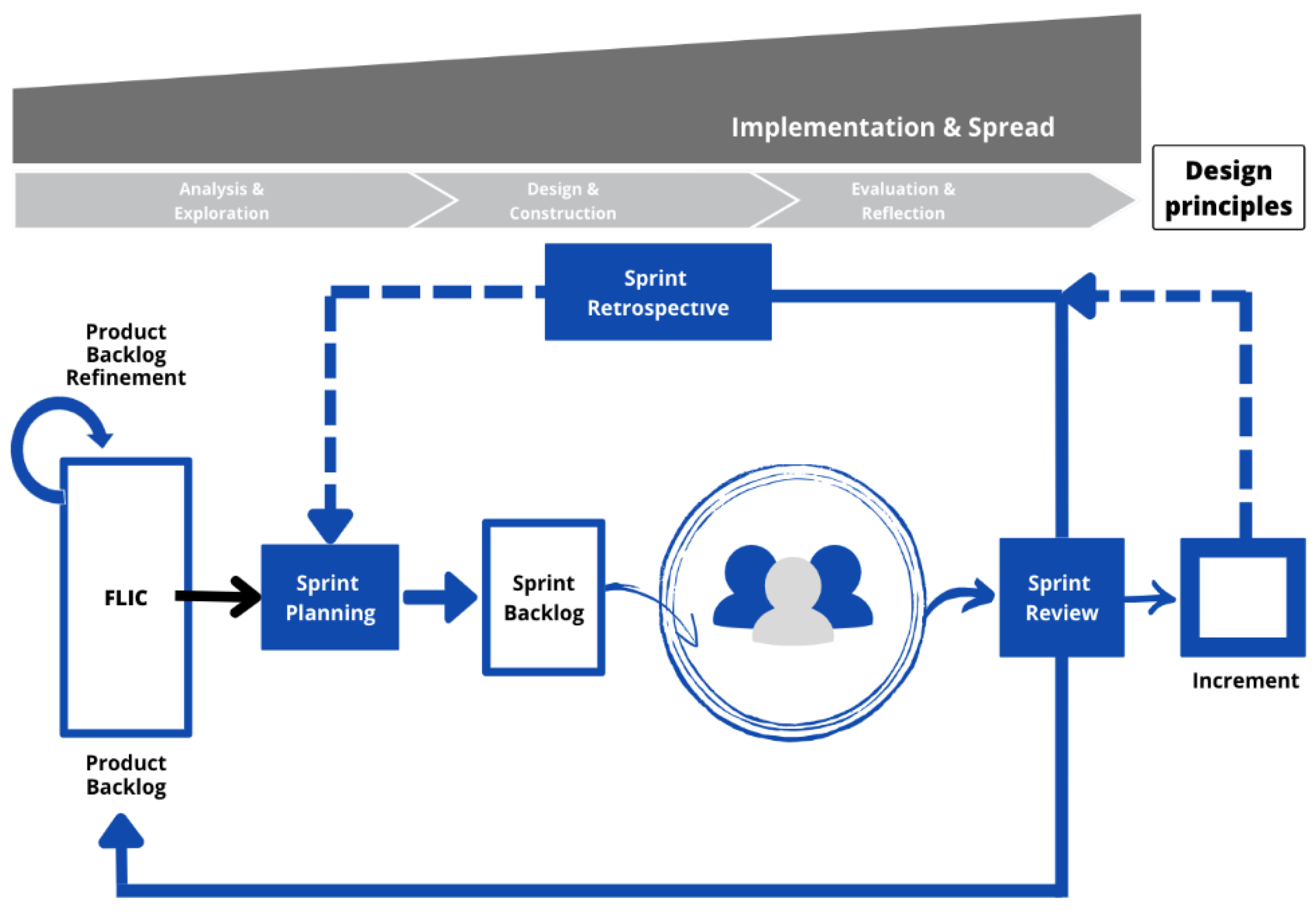
Figure 3.
Process of designing and implementing a LS with FLIC-IPAFLEX
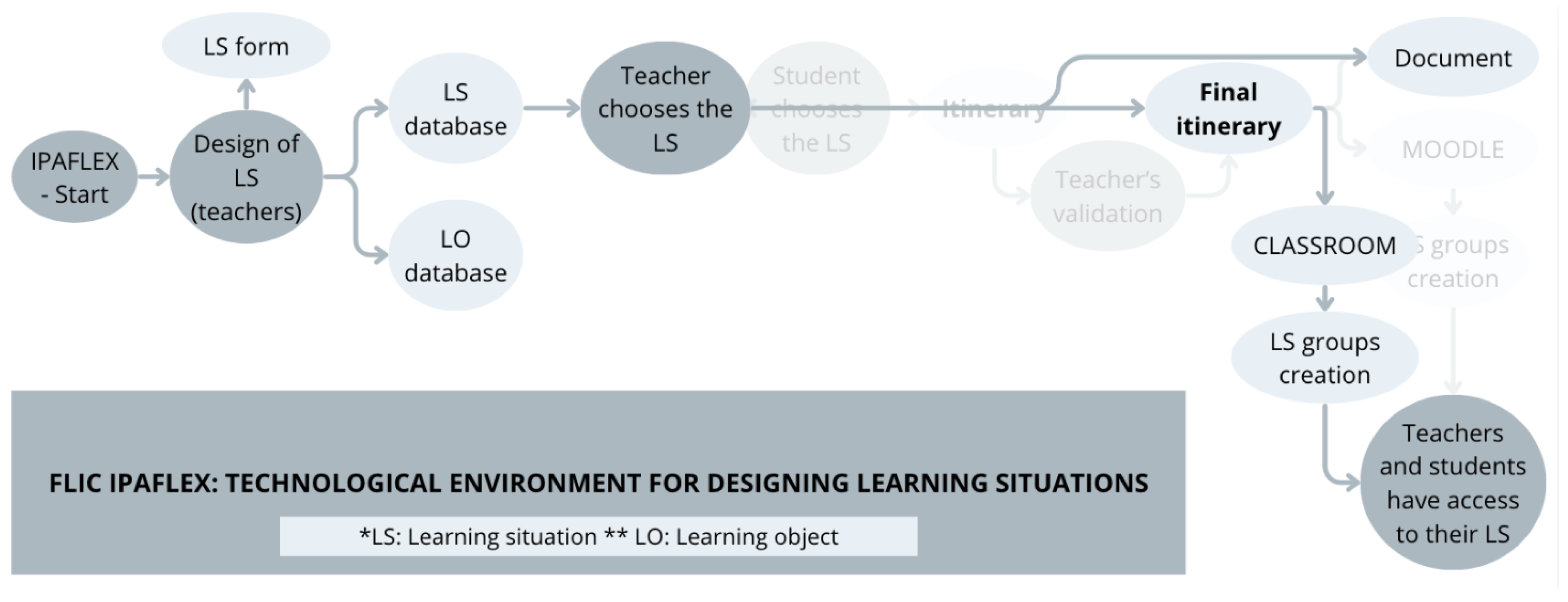
Figure 4.
User interface. Teacher’s personal space
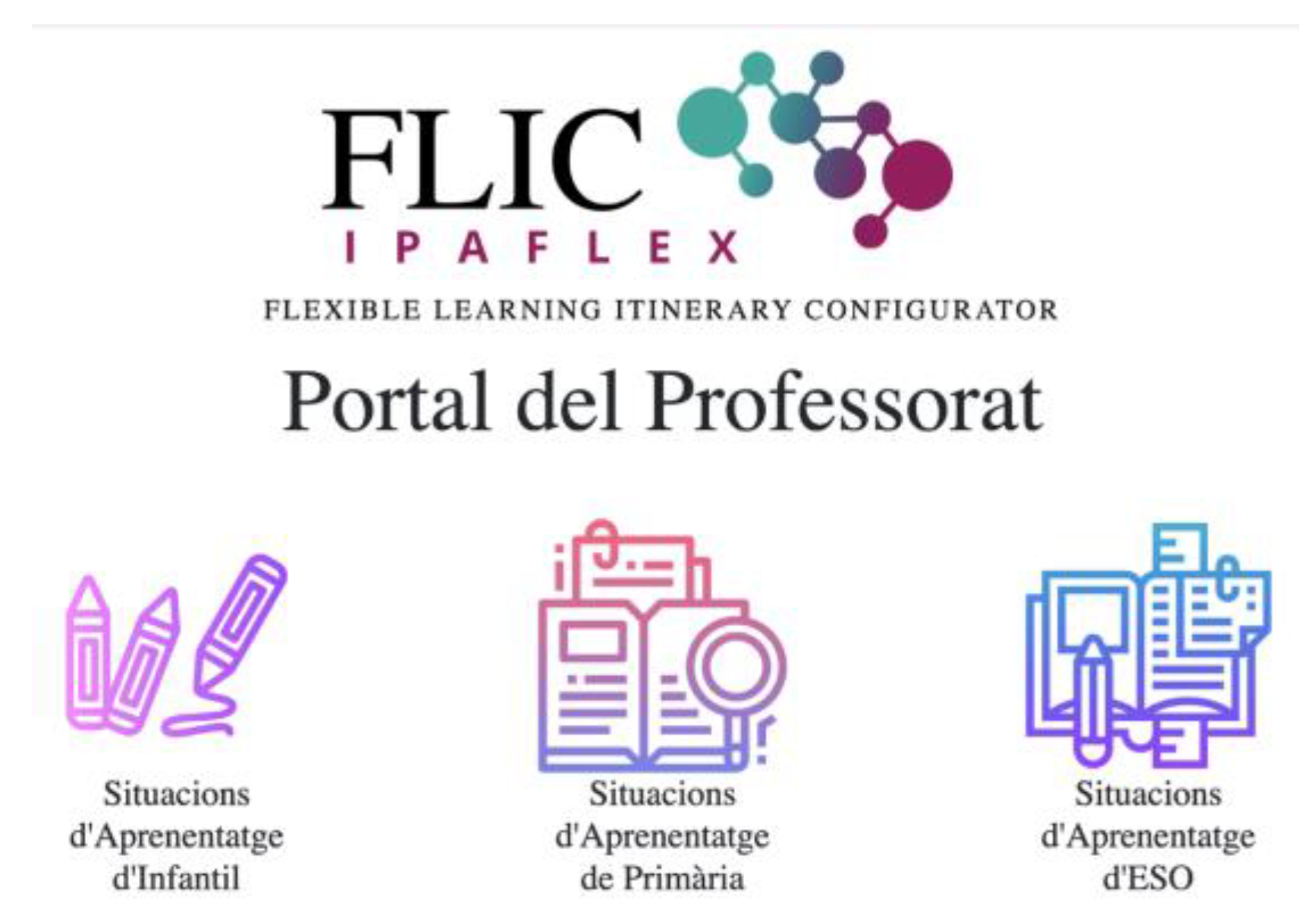

Table 1.
Feature adaptations.
| Feature | FLIC | FLIC-IPAFLEX |
|---|---|---|
| Itinerary configuring unit |
|
|
| Teacher’s profile |
|
|
| Student profile |
|
|
| Integration with LMS |
|
|
Table 2.
Contributions from teachers during Sprint 2.
| Type | Field | Teachers’ contributions |
|---|---|---|
| Format | Evaluation criteria | The codes in parentheses that appear in the standards should appear. |
| Format | Basic knowledge | The codes that appear in the standards should appear |
| Format | UDL | Maintain as open response field |
| Technical | Context and SDG | These fields should be multiple choice fields |
| Technical | Materials | Possibility to upload files and/or links |
| Technical | Basic knowledge | Possibility of linking knowledge field to stages (and not only to levels) |
| Technical | Platform access | Allow new user registration |
| Technical | LS download | Possibility of downloading in PDF format |
Table 3.
FLIC-IPAFLEX features.
| Aspect | Feature |
|---|---|
| Learning situations’ design |
|
| Search |
|
| Collaboration and distribution |
|
Table 4.
Bugs detected during Sprint 3 and 4.
| Sprint | Type | Affected field(s) | Bugs detected or suggested modifications |
| 3 | Technical | LS download | Button does not work It only appears in edition mode (it should appear once LS is published and in the list of LS) |
| 3 | Technical | Learning objects | Button does not work (should link to database) |
| 3 | Technical | Navigation | On “create a LS” screen, there should be a button to return home |
| 3 | Technical | List of LS | Possibility to filter by fields |
| 3 | Technical | Dates | Start/end dates should not be mandatory fields |
| 3 | Technical | SDG | Field should not be mandatory |
| 3 | Technical | Platform access | Possibility to recover password Possibility to log in with Google account |
| 3 | Content | Primary | “Subjects” should be “Areas” |
| 3 | Content | Teacher | Change field description |
| 3 | Content | Sessions | Change field description |
| 3 | Content | Context | Typo mistake |
| 3 | Content | SDG | Change in field description |
| 3 | Content | Basic knowledge | Typo mistake |
| 3 | Technical | LMS integration | Get platform linked to Google Workspace |
| 3 | Technical | Resources | Possibility to add more than one file and links |
| 3 | Technical | List of LS | Possibility to view LS created by other teachers |
| 3 | Format | Navigation | Use of sans serif fonts Center icons on the teacher’s home page Use different icons for each level |
| 3 | Technical | List of LS | Possibility to search and filter LS Do not display educational level Do not display start/edn date Add download option |
| 3 | Technical | SDG | Add possibility to select several SDG |
| 3 | Technical | Author | Distinguish original author and teacher that adapts the LS |
| 3 | Technical | Resources | Possibility to add more than one file and/or link(s) Possibility to include the title of the resource |
| 3 | Technical | Dates | Do not transfer dates from the platform to the LMS |
| 3 | Technical | LMS integration | The LS must be transferred as a task in to the LMS (Google Classroom) Title, description and resources fields should be transferred |
| 3 | Technical | Levels | Possibility to integrate early childhood education |
| 3 | Content | UDL | Change in the field description |
| 4 | Format | LS download | Keep table structure in the PDF Keywords do not appear in the PDF If the “Review” field is not filled in, the “Tasks” content appears in this field |
| 4 | Technical | Basic knowledge | When more than an area is selected, only the knowledge of one of them is displayed |
| 4 | Technical | Context and SDG | Difficulties to select more than one of each |
| 4 | Content | Basic knowledge | One basic knowledge is missing in 1st grade of primary school (Catalan language area) |
Disclaimer/Publisher’s Note: The statements, opinions and data contained in all publications are solely those of the individual author(s) and contributor(s) and not of MDPI and/or the editor(s). MDPI and/or the editor(s) disclaim responsibility for any injury to people or property resulting from any ideas, methods, instructions or products referred to in the content. |
© 2024 by the authors. Licensee MDPI, Basel, Switzerland. This article is an open access article distributed under the terms and conditions of the Creative Commons Attribution (CC BY) license (http://creativecommons.org/licenses/by/4.0/).
Copyright: This open access article is published under a Creative Commons CC BY 4.0 license, which permit the free download, distribution, and reuse, provided that the author and preprint are cited in any reuse.