

Submitted:
21 September 2024
Posted:
24 September 2024
You are already at the latest version
Abstract
The article addresses the problem of course development in virtual teaching and learning spaces by teachers to support blended learning in the Ecuadorian unified baccalaureate. For this purpose, a documentary analysis of 465 papers selected by a search in Scopus and Google Scholar about blended learning and 145 papers selected by a search in Scopus and Google Scholar about development of virtual courses was carried out. The definition of the first concept is qualitatively different from the previous ones by analysing it as a form of organisation and assessing the configuration of face-to-face and distance learning depending on the educational objective. The second concept defined presents the unrepeatable and unique character of each course given by the configuration of its digital resources, the characteristics of these resources and the new qualities that are conferred on them. Subsequently, based on them, the methodology that contributed to the development of courses in virtual spaces as a support to blended learning is proposed. Unlike other methodologies, the proposal explicitly states its conceptual apparatus and the necessary requirements for its introduction in an educational organization. It incorporates important actions that do not appear in other methodologies such as cross-cutting processes including quality assurance with its corresponding metrics, maintenance, recall and evaluation of previous actions.
Keywords:
blended learning
; e‐learning
; virtual course
Introduction
Information and Communication Technologies (ICT) have been incorporated into various human activities, including education, both inside and outside the classroom. Therefore, teachers should not be oblivious to the advances in society. Such is the case of virtual teaching and learning spaces (VLEs), which are becoming more and more diffuse, enriching, variable, and their process and organisation are constantly undergoing changes; therefore, their derivations with respect to teaching and learning in the medium and long term are essential to evaluate.
However, the methodologies for the development of virtual courses such as PACIE and ADDIE (Galindo-Dominguez, 2021), among others, are oriented towards the development of entirely distance courses. This means that they do not combine face-to-face activities or take them into account in their proposals, as well as the activities of the teacher and students in these face-to-face spaces. The use of these methodologies or models predominates in undergraduate and postgraduate courses for open universities that bring training closer to students with difficulties of access to educational institutions. Instructional design provides very general tools to design any course, but not the phases oriented to quality management or course maintenance, as they provide more general indications for their design (Cosgrove & Olitsky, 2020; Kwon et al., 2021). In general, these methodologies present roles that need to be performed by professionals, which does not allow for their application in the research context (Kumar et al., 2022; Wang et al., 2021).
However, despite these directives, there are still aspects that need to be overcome in order to develop virtual courses to support blended learning that have a negative impact on the adequate development of students. When investigating the educational reality, several inadequacies were detected, which are explained below:
- No system of phases and stages has been identified that would lead to the development of online courses for blended learning involving teachers.
- Existing models such as ASSURE, ADDIE, among others, are proposed for designing online courses and do not respond to blended learning.
- The digital teaching resources developed by teachers lack organisation to ensure that affective relationships are established between the personalised components of the teaching-learning process.
- The Web of Science and Scopus search engines do not detect papers that reveal avenues for developing courses for blended learning support outside the methodologies already analysed that should not be applied in the context of analysis.
In view of the above, the following scientific problem arises: How to develop the courses in the EVEAs in order to support the blended learning of the different subjects?
In order to solve the problem, it is first necessary to define the concept of blended learning, as well as the development of online courses and to carry out an analysis of methodologies, it is necessary to apply research methods such as documentary analysis.
Methodology and Materials
Figure 1 shows the document review process carried out and how the search was structured, as well as the search engines used. Searches were carried out using the terms blended learning and virtual courses; in the case of Scopus, the search was only carried out in English because the titles in Spanish have an English version. The process has 2 stages; the first, called search, which describes the sources from which the information is extracted, such as Scopus, Google Scholar and Dimensions, handled in the theoretical part of the object of study. The second stage called development, where several considerations are raised to search for the key words of the study (blended learning, virtual courses), the extraction of information from of the definitions and contributions of various authors.
Results
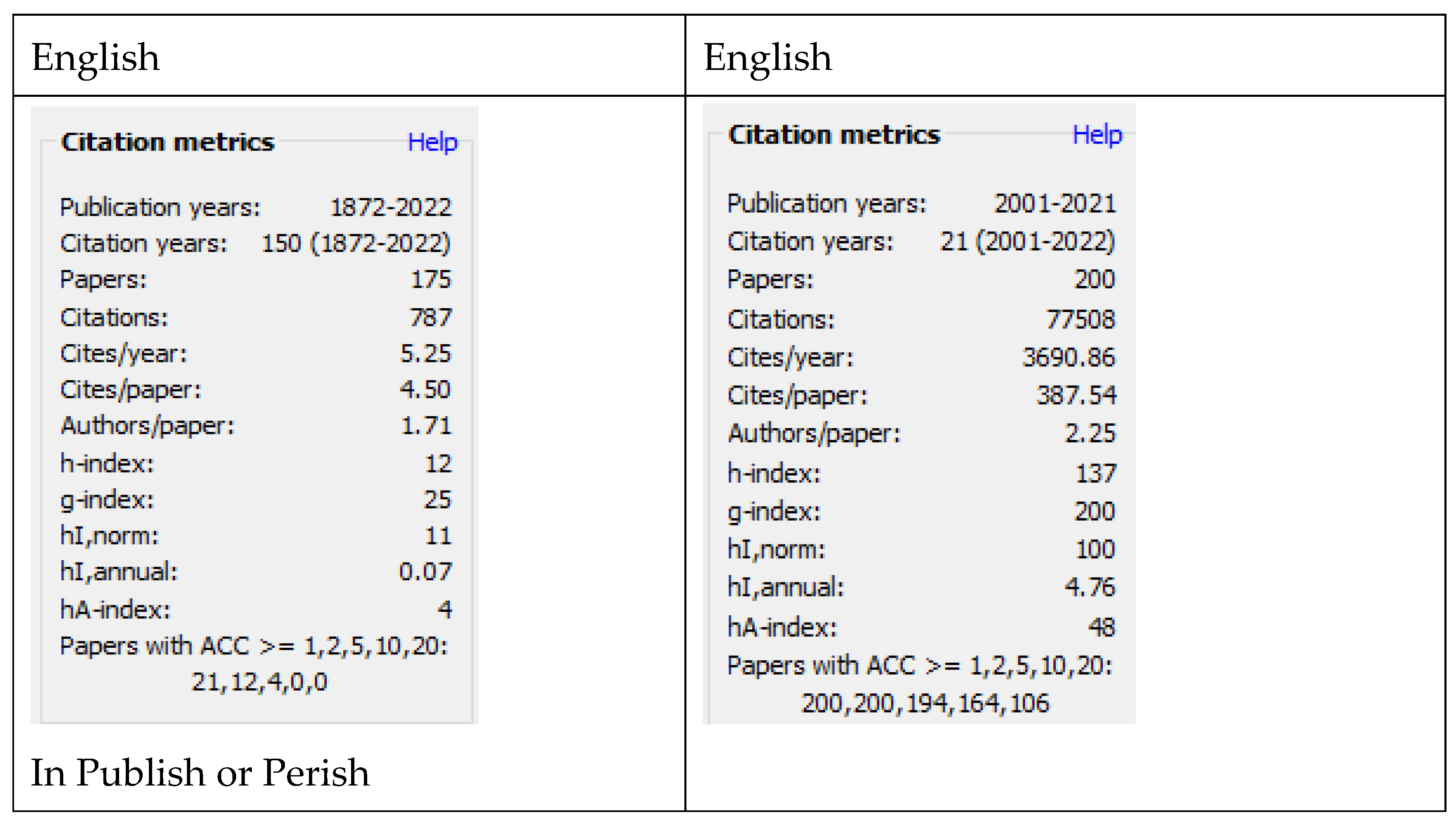
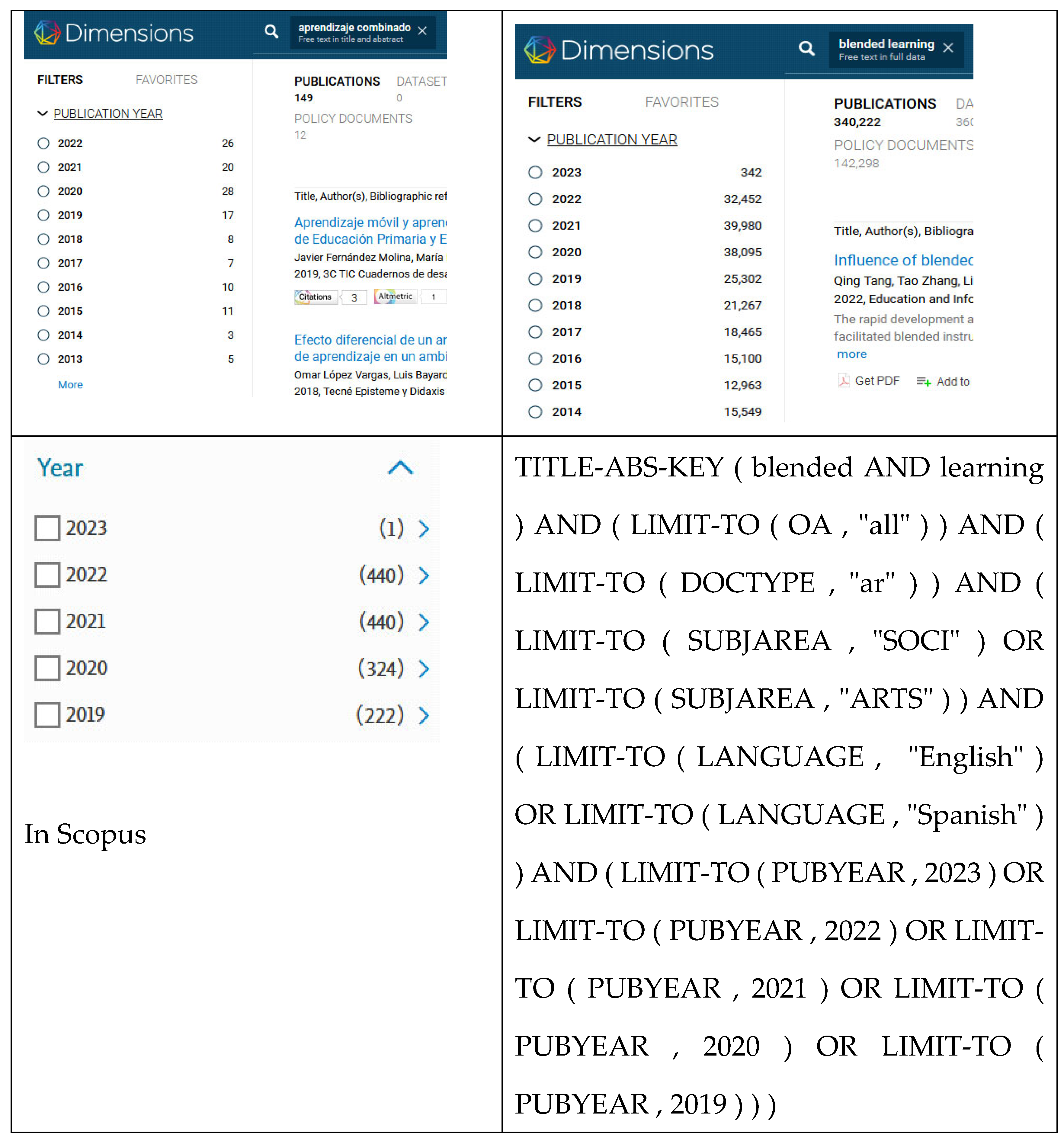
In the case of the Google Scholar search, 10 articles were obtained with more than 12 citations using terms in Spanish and 165 articles with more than 130 citations, of which those articles that were essays or theoretical reviews were selected as it was necessary to analyse the concept of blended learning. In the case of Scopus, 1,427 articles were obtained, of which 300 were selected as essays or theoretical reviews on the subject.
Figure 2.
Outcomes of Virtual Curses.
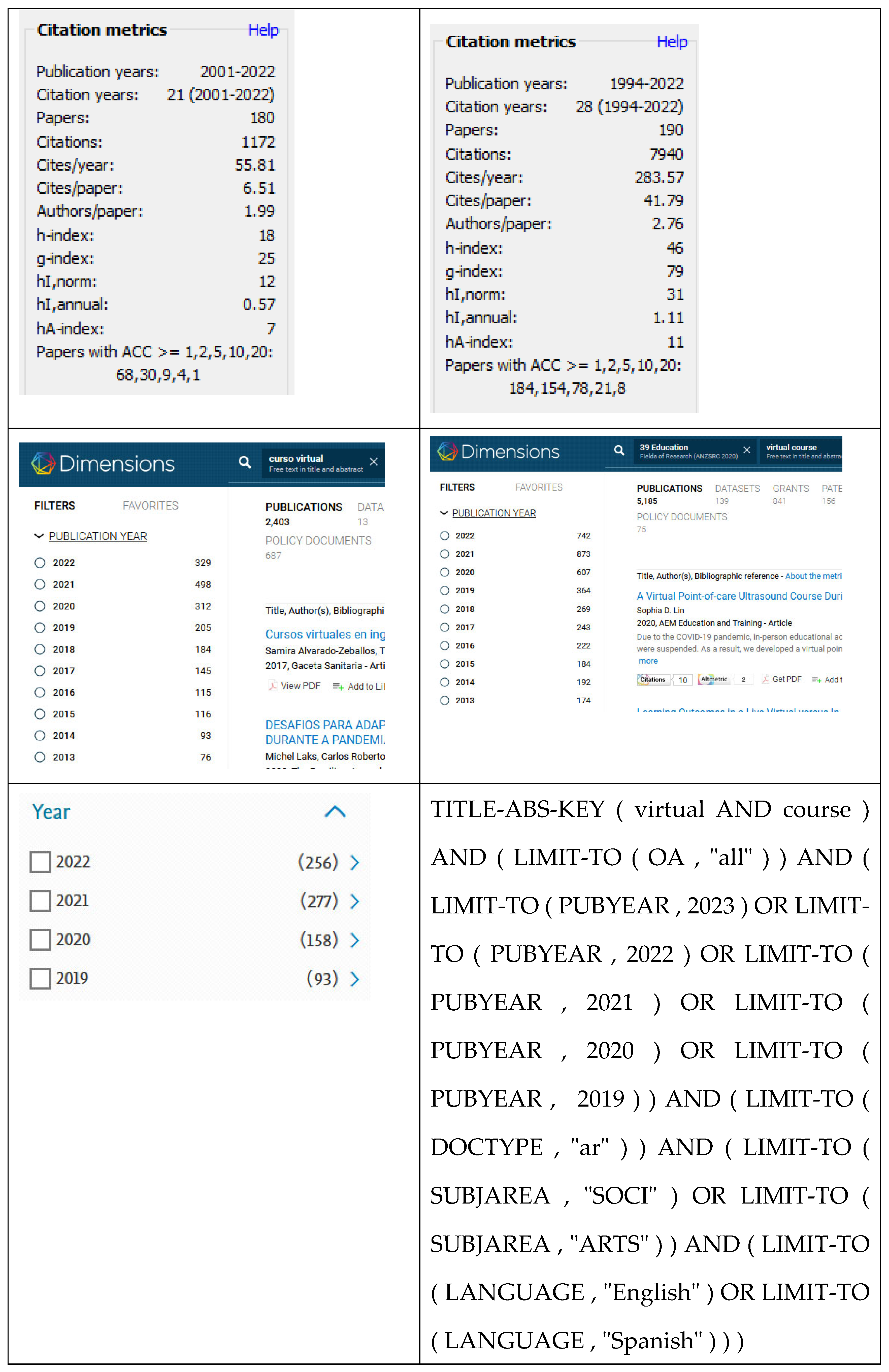
As for the results on the development of virtual courses, 17 articles were obtained with more than 20 citations in Spanish and 55 articles with more than 40 citations for a total of 75 articles, with 10 repetitions, so 65 articles were selected from Google Scholar. In the case of Scopus, 784 articles were obtained, but only 70 were taken because they were review articles or essays. Subsequently, all articles were inserted into the Endnote bibliographic reference management system, which allows all articles to be managed and integrated with the Microsoft Word word processor.
Discussion
- Discussion about blended learning
Several specialists (Jane Clark & Post, 2021; Martin et al., 2022), assume blended learning as a modality in which a synergy is achieved between the aspects that are essential in both face-to-face and non-face-to-face training. For Im (2021), the integration of modalities broadens the moments and spaces of the teaching-learning process and allows a more personalised attention to each of the students at the same time as it allows a greater number of objectives to be met. However, this author conceives blended learning only as a system of actions between the teacher and the student, which leaves out the analysis of the characteristics of the media and assessment, among other personal and non-personal components.
In Maureira-Cabrera et al. (2020, p. 34), they recognise blended learning as the most important "... integration of diverse digital resources developed to solve specific situations ... any combination of a wide variety of media developed to solve specific teaching problems". This statement recognises the need for the integration of blended learning and warns of the need for its use in teaching; however, it has serious shortcomings, one of which is in the reduction of blended learning to teaching media. It also fails to recognise the need for a reorganisation of the components of the process, especially the personal and non-personal components of the process by combining the face-to-face and the non-face-to-face.
Other authors such as Villavicencio Bermúdez et al. (2016) define blended learning as a hybrid that occurs in the face-to-face and online classroom, where the online components become a natural extension of traditional learning. It is interesting to assume the non-face-to-face as an extension of the face-to-face processes, which places the face-to-face in the centre and the non-face-to-face in the secondary role, an issue with which the author of this thesis does not agree.
The previous conceptions do not consider situations in which only the implementation of assessment processes for students is combined in a face-to-face manner and the rest of the process takes place in a non-face-to-face manner; this is the case of the Open University model (Jane Clark & Post, 2021). Neither are these divergences or separations between the face-to-face and the non-face-to-face seen in the definitions addressed so far, so that for this research they are two processes that are configured subordinate to the objectives of the subject. The authors emphasise the need to transform the education system in order to support the configuration of face-to-face and distance learning with the use of virtual tools that support the rest of the components of the process. The transformation of the education system involves recognising the features of blended learning proposed by several authors (Heilporn et al., 2021; Maureira-Cabrera et al., 2020). These features can be summarised as
- Enable students to select different learning routes allowing your curriculum to be flexible.
- Pre-eminence of independent study for students
- Develop an online environment with hypermedia interfaces that is pleasing to the eye by incorporating visual symbols that eliminate text as far as possible.
- Include didactic resources that promote autonomous student learning.
- Provide as many and as varied communication resources as possible between the personal components of the process.
- Enhance forms of formative assessment using periodic submission of assignments that increase their complexity during online learning.
Following the critique of the research on blended learning presented so far, the importance of declaring a definition that overcomes the limitations detected so far is recognised. Therefore, it is not possible to consider blended learning as a technology, method or integration of activities that gives preponderance to one type over another; for this research it is assumed that blended learning is a form of organization of the teaching-learning process in which the extensive use of digital educational resources predominates, where physical and online presence are configured for the training of students depending on the proposed objectives. It is then necessary to state the essential aspects that are important to highlight from the analysis of this definition.
Unlike the definition of Wang et al. (2017) and Maureira-Cabrera et al. (2020) which proposes blended learning as a combination or integration of face-to-face and non-face-to-face; in the proposal of this article it is approached as a configuration. It implies that there is a reordering of face-to-face and non-face-to-face moments depending on the educational objective set by the educational organisation. Nor is blended learning analysed as a modality (Maureira-Cabrera et al., 2020; Zhao & Song, 2021), as it is approached as a form of organisation, which implies considering that the other components of the process are organised differently in face-to-face and non-face-to-face learning.
The proposed definition states that blended learning depends on the socio-historical context in which it takes place. Derived from this statement, the psychological underpinning is Vygostky's cultural historical approach. It is therefore recognised that the configuration of face-to-face and non-face-to-face interaction with other people and the teaching content makes it possible to declare the objectivity of this process unlike other studies that do not analyse it by focusing on the virtual environment (Al-Samarraie & Saeed, 2018; Asarta & Schmidt, 2020). The subject-object relationship is not characterised by its immediacy, but is mediated by the possibilities of the technologies used in the non-presence, to achieve the development of students to interact with them and the access they have to them. As a starting point for this process, it is necessary to diagnose them, which also includes access to technological resources, as proposed by several authors (González Hernández, 2021c; Vidal-Duarte and Padrón Álvarez, 2020). It is necessary to recognise that the interaction of the subject with the object does not depend solely on the sensory organs or their skills, but that the technological component is introduced as a mediator and not like a centre of the learning and teach process (Jane Clark & Post, 2021; Wang et al., 2017). The forms of interaction of the learner with the object supported by technologies must encompass a wide variety of possibilities of access that do not constitute a barrier (Martin et al., 2022).
It can be inferred from the definition that learning in technology-mediated activities is essentially social and that communication between the personal components of the process plays a particularly important role. In non-face-to-face activities it is necessary to consider with greater emphasis the study in groups as an essential way to achieve a process that develops the personality of the students permeated by the spatial and temporal separation in which they take place in contrast to studies that address non-face-to-face activities as a complement to face-to-face activities (Alammary, 2019; Yu et al., 2021). Much attention should be paid to the processes of group interaction, the formation of the group, as well as communication with the teachers in order to achieve in the students the necessary communicative elements that will allow them to live in society. Learning must lead to the integral formation of the students during the configuration of face-to-face and non-face activities, which is why attention to diversity is unavoidable.
This definition overcomes those opinions in which presence is more important than non-presence (Heilporn et al., 2021), configuring the relationships between the different components of the teaching-learning process in a unique and unrepeatable integration of moments by assuming as a form of organization. It is essential to take into account the objectives as the response to the social needs for the development of the students in order to structure that unique relationship referred to in the previous sentence and not other aspects such as meaningful learning (Torres-Toukoumidis et al., 2018), vocational processes (Im, 2021), or other specific aspects (Peng & Fu, 2021) that do not contribute to the integral development of their personality. From this statement we can see the need not to pay attention to various stereotypes recognised in the literature (Martin et al., 2022; Zhao & Song, 2021) in order to integrate the two learning moments that the student possesses by recognising the objective as the guiding component of the configuration of face-to-face and non-face-to-face activities. Hence, the fulfilment of the objective during the face-to-face activities extends to the non-face-to-face activities, which achieves an extension of its assessment both spatially and temporally.
- 2.
- Discussion about the development of online courses
An essential aspect of the courses in this modality is the quality of their development. The research carried out by Hazim Torres et al. (2019) the authors determine a methodology made up of a group of stages that allow the quality of online courses to be managed: Diagnosing how committed the human capital is to the development of these courses; determining the potential of the human capital with the development of these courses; choosing those responsible for the management of the development stages; the need to commit the human capital to the development processes of the online courses; the importance of the continuous assessment of the processes carried out and the introduction of relevant adjustments. The authors' proposal highlights as a negative aspect the strong emphasis on the management of non-educational organisations, which is detrimental to the training of students. However, it recognises the need to control the quality of the resources that are developed in each of the iterations and for this the use of automated tools is vital (Stracke, 2019).
For several authors (De Medio et al., 2020; Pil Kang et al., 2020) there are three units to be developed in virtual courses:
- Didactic unit: deals with the more general elements that allow for the structuring of teaching processes that lead students' learning towards the proposed social objectives.
- Management units: these correspond to the organisational elements necessary for the virtual course to be properly financed.
- Technology units: this component includes all the electronic equipment and software to be used in such a way that they all come together in a software ecosystem, as well as the processes that lead to the maintenance of the platform that supports the virtual course.
However, the units make no direct mention of the various technologies, the work required to manage the resources, as well as the infrastructure as important parts of the process for the blended learning support that underpins them. Nor do they devote space to the aesthetic elements whose role in digital resources is crucial. These issues raised constitute limitations to the definition above.
A necessary aspect in the development of online courses is the management of the necessary technological resources. For other authors (Petrovica et al., 2020; Saldías Kiefer and Reyes-Lillo, 2021) accessibility, navigability and usability are desired qualities of any online course and should therefore be indicators of its quality. In the case of navigability, the aforementioned authors emphasise the need to guide students during their interaction with the digital didactic resources inserted in the course and, to this end, they propose that the navigation routes be indicated in them.
Also important in this section is the organisation of the virtual courses on the technological platform of the educational institution. A structure that reflects the school organisation by grades and semesters would help students to easily locate the course they are looking for in the virtual space. At the same time, it is part of the management of a course to frequently store all the digital didactic resources it has and to export them in one of the known formats that allow them to be imported or stored in alternative servers from where they can be retrieved.
Among the elements that make up the organisation of the didactic components of the virtual course for blended learning are: objectives, contents, methods, means (materials), evaluation, teacher, student, structure of the subject, forms of organisation and the authors consulted that make up the content of the virtual course (Cabero-Almenara et al., 2022) where the technological, pedagogical, organisational, didactic, structural, managerial, social and aesthetic aspects stand out:
Technological: design of technologies using tools to enable viewing from different devices, computer and telematic equipment, software, digital media, bibliographic material, interaction, hardware and software dependency, security, privacy, material sharing and reuse, quality metrics.
Pedagogical: to have a clear objective of student training, to make the pedagogical strategy explicit, to incorporate teaching planning, to have a system of evaluation activities in line with the objectives of the course, to structure a system of independent activities in line with the objectives of the subject, to structure activities that enhance communication between the personal components of the process.
Management: didactic cooperation between teachers, management of learning by the student, management of learning by the teacher, tools that allow intensive use of information; quality of the development process of the resources of each course, the course itself and the course system if several subjects are integrated in iterative and incremental processes, the organisation of teachers and students for the development of virtual courses.
Structural: pre-production, production and post-production phases; instructional quality of the software, motivation, context, usage scenario, process monitoring, evaluation; computational design (various artefacts for business and architecture modelling).
Social: Communication, elements, technology.
Aesthetics: user-friendly graphic design, interfaces, learning channels (visual, kinaesthetic and auditory), ease of use, learning, operation, navigation, user interface. All these aspects are important to take into account when developing a virtual course to support blended learning.
One of the unavoidable processes for blended learning is undoubtedly assessment. For Pieschl and Sivyer (2021), different ways of assessing students' learning can converge in face-to-face and non-face-to-face moments from the variety of evaluative resources of digital resources while at the same time allowing respect for the functions of this process. The regulatory function is revealed in the feedback that the teacher obtains from the students' actions and the actions taken to correct the errors detected. Another function, the formative one, is expressed in this process of interaction between the student and the teacher in which they learn about the positive, interesting and negative aspects of the students' learning process.
In order to implement evaluation in a virtual course, it is necessary to include resources that can send messages to the learners that allow them to document the mistakes made in the shortest possible time and to each of them separately, taking into account the characteristics of each of those involved in the learning process. It is important to structure the evaluation in such a way that those involved in the process can address the mistakes made. It is important to highlight that in this assessment process it is necessary to address errors in the content that is being learned and the ways used to achieve its appropriation. Following this idea, the online course becomes a learning space (González Hernández, 2021) because of the way in which they are involved in collaborative learning where everyone learns from everyone else, forming a group based on the community of interests. Therefore, online courses enhance the traceability of the educational processes of both the teacher and the student and increase student attendance in such a way that it adjusts to the context and attends to the levels of development reached by the personality of each student.
Although these technological elements are important, the crux lies in the pedagogical intentionality given to each of the digital materials by each student and the group. In this way, each digital resource will solve the students' learning shortcomings by taking into account its potential for the most accurate assessment of the students' learning. Following this idea, the digital didactic resources available to the students should promote a system of didactic aids that promote the gradual and ascending development of their cognitive independence, at the same time as they promote more and more integrative learning that takes them from the current development zone to the next one.
One of the essential aspects in the learner is in the digital learning resources to be placed in virtual courses. The reuse of digital learning resources that are designed for virtual courses (Petrovica et al., 2020). In this sense, there are several options to achieve the interoperability of courses developed on one platform or another in such a way that a course can be implemented in one and transferred to another without major stumbling blocks as they allow the use of multiple free tools such as ExeLearning, HotPotatoes and others that export the resources designed to these formats. This research recognises the importance of designing the digital didactic resources that make up the virtual courses using these standards and those tools that allow their generation. In this way, the reusability of the digital resources developed is endorsed, as well as the standardisation of the virtual course environments. On the other hand, proposals have been made for methodologies for the development of online courses. There are many proposals (Chih-Hung et al., 2022; Mu & Guo, 2022; Weldon et al., 2021; Yu-Ping et al., 2022) for the development of online courses but in general they respond to the diagnosis of learners and cognitive objectives, the teaching methods to be used, the communication system to be used as well as the ways to achieve assessment.
The digital learning resources that make up the content of a virtual course, as well as the course itself as a configuration of them, can be considered as learning objects (Sharma and Mir, 2020). This statement allows considering the use of the different methodologies of application development (software) using its fundamental phases: requirements gathering, architecture determination, coding, testing (Panji Sasmito et al., 2021; Saiful, 2020). The use of these methodologies contributes to creating a stable and robust product. However, other authors (Vogel et al., 2021) state that traditional software development methodologies do not deal with didactic aspects such as the treatment of students, continuous learning assessment among others; an issue with which the author of this research agrees. The phases described in each conventional methodology are repeated for the development of each software in iterations that complete their development when they are complex.
Another conception of virtual courses refers to virtual course systems (Llerena Ocaña, 2017; Llerena Ocaña and González Hernández, 2017) which are oriented in the case of the aforementioned research to the development of educational intentions that need more than one virtual course to achieve them, as is the case of the resolution of interdisciplinary problems. The aforementioned authors offer a methodology that is especially important when it is decided to integrate several virtual courses for the training of students, but it cannot be applied to independent courses. From the research defining the virtual course system (Llerena Ocaña and González Hernández, 2017) we assume the indicators that characterise it in an integral manner (Medina et al., 2021).
From the analyses carried out so far, a virtual course for blended learning is defined as the configuration of digital didactic resources in the form of a system with an emphasis on social processes, which meet certain technological, aesthetic and ergonomic standards and require a management process to be used, obtained during a process of development where the didactic components of blended learning are manifested for the achievement of an educational intentionality expressed in the objective.
This definition of a virtual course goes beyond the definitions used so far, as it considers the virtual course as a configuration that confers a unique and unrepeatable character to each course. This configuration character of virtual courses allows us to affirm that virtual courses have the digital resources necessary to fulfil their educational purpose, unlike other studies (Jahnke et al., 2021; Ruiz-Palmero et al., 2020; Wong et al., 2019) that do not specify the educational objective as the attractor of this complex system. In virtual course various didactic components are expressed through digital didactic resources, guided by the objective in the unity of the general and the particular. The general is understood from the didactic components that must be present in every course and the particular in how they are expressed in their integration to fulfil the objective. It is also necessary to highlight that the digital didactic resources are conceived subordinate to the objective category as an expression of social needs.
The recognition of the social as an important part of the activities in the virtual course is another difference of this conception to others (Po-Jen et al., 2021; Xinyang et al., 2021). Learning in virtual courses should be based on students' social interaction and activity in order to achieve multicultural group formation and not only focus on interaction aspects as proposed in current literature (Folorunso Ayanbode et al., 2022; Wen, 2022). The conception of social process in the definition points to the creation of long-lasting affective bonds over time that allow people to emerge emotions during their interaction with digital resources and people. It should also enable the creation of learning communities to go beyond the course content and allow them to transgress what is given in the course, moving the conception of the teacher-centred course (Ozfidan et al., 2021; Scherer et al., 2021) to a conception of group work of all those involved.
Virtual course management has also been absent from the theoretical findings on learning on interactive platforms, so its rescue in the definition is crucial in contrast to others (Tuan Pham, 2022; Wang & Hung, 2022). Platform managers and accompanying equipment enable sustainability, usability and navigability, which are essential resources to consider. Managing virtual courses and integrating them with anti-plagiarism platforms, academic management systems or others in the digital ecosystem of educational organisations are complex processes that are also not taken into account in the literature on virtual course management as they focus only on the course and the teacher (Judge & Murray, 2017; Kwon et al., 2021).
- 3.
- Methodology to develop virtual courses
The graphical representation of the methodology is shown below
Figure 3.
Graphical representation of the methodology.
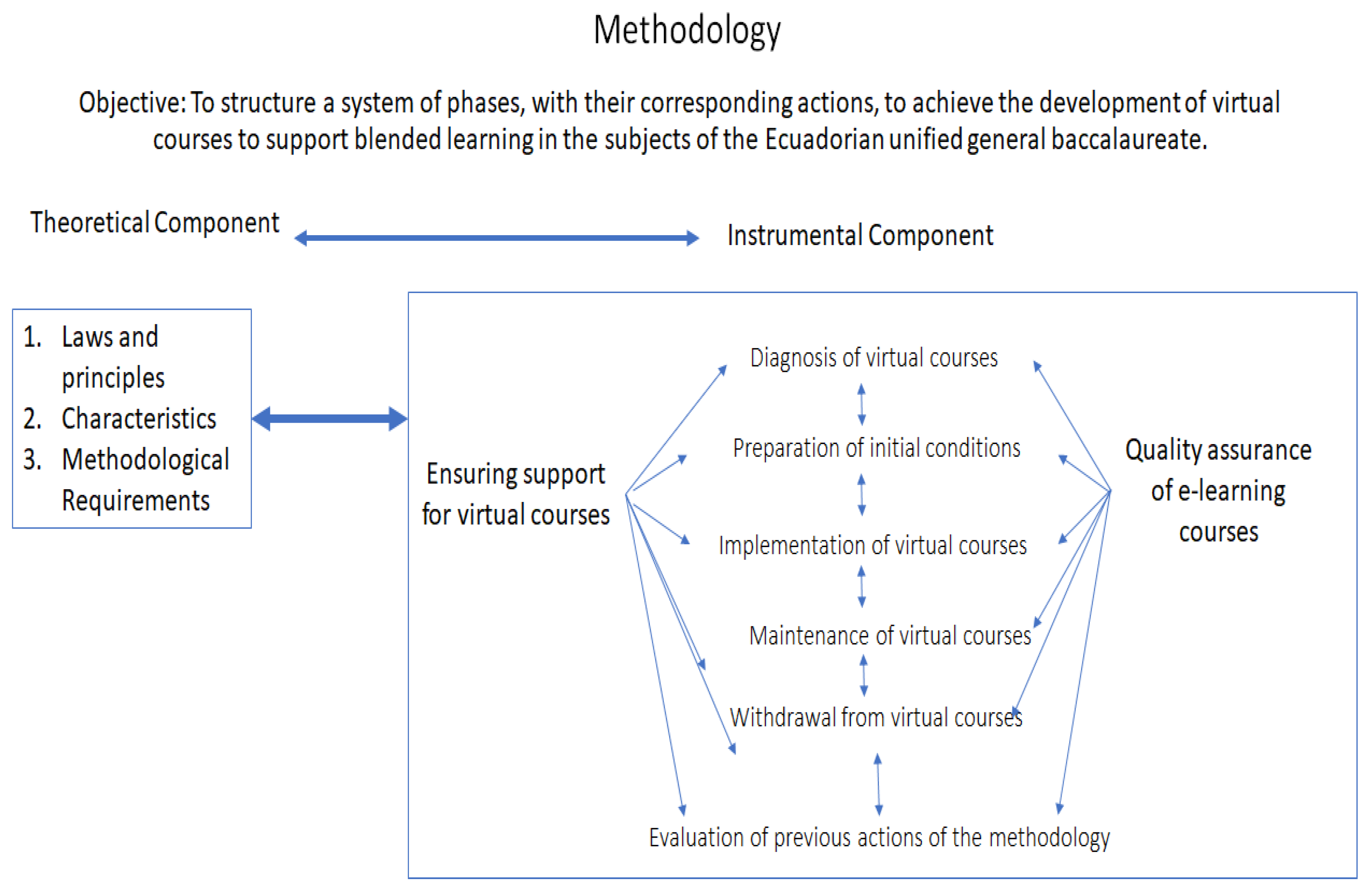
Overall objective: To structure a system of phases, with their corresponding actions, that achieves the development of online courses in support of blended learning.
Substantiation
The methodology is based on several social sciences in combination with technical sciences, among which computer science and telecommunications stand out due to the technological substratum of the proposal. The methodology presented here is based on the theoretical foundations set out in the first chapter and the technological conditions that are present in the educational centres.
The structure of human interaction with the environment can take on a variety of variants which are manifested in blended learning. One aspect of this interaction with the environment is in the relationship to objects, especially teaching content, in which there is a developmental spiral in which learners transform the taught content into appropriate content, and this appropriate content in turn transforms the learner. A further aspect is in social relations. Interpersonal relationships are mediated by the communication between the different subjects that participate in the methodology proposed in Triadó-Ivern et al. (2015), an aspect that is taken into account during the development of online courses and in the use of these during the learning that is studied in this article. The participants of these interpersonal relationships during the use of online courses are the teacher, the learner and the group. All actions performed by students and teachers in virtual courses involve interaction with the content and with the rest of the personal components through the different communication mechanisms that have been designed.
The starting point of the methodology is the appropriation needs of the contents for the development of digital didactic resources on the part of the teachers and the motivation that drives them to do so, as well as in the case of the students the appropriation of the contents found in the virtual course and the motivations to achieve it; which expresses the two moments of the cognitive-affective relationship in the methodology. When the student interacts with the virtual courses, he/she is an active, conscious and goal-oriented subject, who can construct his/her learning under the guidance of the rest of the personal components of the process during the face-to-face and non-face-to-face moments of blended learning. The activities are carried out in interaction with other people through multiple forms of collaboration and communication that are implemented in the virtual course, which allows the self-regulation of their behaviour during the activities.
The pedagogical foundation is explained by considering the categories of formation, development and education, considering that the formative is closely related to the affective-valuative and cognitive by incorporating into the personality everything that can be learned (González Hernández, 2022; Naveira Carreño & González Hernández, 2021).
The didactic design of EVEA courses to support blended learning should consider the following aspects:
- Carrying out a diagnosis of students and teachers regarding the mastery of the computer tools that are used, technological devices and the educational needs of the students.
- Articulation between pedagogical, didactic, technological and organisational aspects in correspondence with the pedagogical model assumed in the blended learning.
- Planning and organisation of activities linked to the objectives of the course, the proposed methodology and the social representations that students and teachers have about learning, in a way that favours collaboration between students and with the teacher during blended learning and the mediating role of the teacher that guarantees its educational value.
- Use of computer tools to enhance communication in the development of the courses through this modality.
- Selection of learning resources to favour affordability in correspondence with the virtual environment, revealing educational potentials.
- Consider all forms and types of evaluation in every assessment process undertaken.
The methodology reaffirms its particularity by defining phases and actions for developing virtual courses in blended learning where the interrelationships between the components of the process in face-to-face and non-face-to-face moments are revealed. It also shows the particularity of the product of the activity: the virtual course insofar as it addresses the interrelationships between the objectives of the subject, the socio-historical context of the students and the conduct of the process by the teachers. In another sense, the development of virtual courses by the teacher allows them to be contextualised to the student in order to achieve the planned objectives.
In order to solve the problem of the development of virtual courses, a system of phases has been structured based on the analysis of other research that has set important precedents (Carlos-José & González-Hernández, 2017; Llerena-Ocaña & González-Hernández, 2017).
Phase One - Diagnosis of the current situation of online courses in relation to blended learning
The phase synthesises a system of actions to diagnose the situation of the virtual courses to support blended learning at the moment of applying the methodology. At this stage, the validity of a system for the training of teachers who participate in the systems necessary for the development of virtual courses is assessed. Special emphasis is placed on the use of free systems that do not require extensive programming knowledge, which results in a quicker appropriation by the teachers. This will enable them to take on the following phases with greater independence.
Objective: To diagnose the current status of the development of virtual courses for blended learning.
The actions to be carried out in this phase are detailed below:
- Characterisation of the development of information competences in teachers and students to enable them to appropriate the technological resources necessary to develop digital didactic resources.
- Characterisation of the knowledge that teachers have about the contents that are taught in their teaching and that are found in the study plan.
- Elaboration of instruments to find out how teachers develop the development of virtual courses and the contents of their subject.
- Diagnosis of the software ecosystem of the institution: it is important to know the network architecture with its equipment and software that support the online course platforms, the speed of information transfer between the different channels, the levels of connectivity of the resources and how these are integrated to support the spaces must be diagnosed with load and stress tests.
- Diagnosis of teachers' knowledge of blended learning.
Second Phase: Managing the school context to ensure the development of online courses in support of blended learning.
Objective: To manage the school context in order to solve the inadequacies detected in the previous phase to achieve the desired purpose.
It is essential in this phase to guarantee the conditions for the deployment of the platform that will support the online courses to be developed by the teachers. It is vital to meet the requirements set out in the previous phase for the selection of these platforms. At the same time, school management must make teachers aware of the changes to come in terms of technologies as well as organisational pathways to be taken into account when implementing blended learning. Although this stage leads to the solution of the problems detected in the diagnosis, it is possible to foresee certain important actions that allow the problems detected in other research to be solved. The following actions are planned for the development of this stage:
- Careful attention to the shortcomings and potentialities detected in order to build on the potentialities to eradicate the shortcomings.
- Development of workshops, seminars and meetings that allow teachers to socialise the contents of their subjects that each of them teaches in each group.
- Establish efficient communication mechanisms between teachers in the study of the tools and technologies to be used.
- Increasing actions aimed at relations between subjects by grouping teachers in teams by knowledge areas in such a way that no barriers are created in communication between them.
- Implementation of training actions for all human resources involved in the process so that they act in line with the needs of the context.
- Analysis of the files related to iterations of the methodology to detect shortcomings in the implementation of its actions and include them as study material for the teaching teams. Successful processes should also be included so that good practices are appropriated.
In this phase, each of the actions is documented through the preparation of the minutes of the meetings between teachers for their improvement, as well as the levels of satisfaction and dissatisfaction that they have. As a first prototype, the images constructed by the teachers on the structure that their virtual course should have are obtained as a first prototype.
Phase Three: Structuring online courses to support blended learning.
Objective: to develop digital teaching resources for online courses that support the integration of face-to-face and non-face-to-face.
The phase is characterised by starting the development of the structural components of each online course by those teachers who have been trained as leaders in perfecting this task. The formation of the teams under the direction of the leaders will allow the implementation of collections that only they will be able to manage once they are introduced in the EVA. For the development of this phase it is important to structure the following actions:
- Launching of requests for active participation from each teacher who will be allocated part of their time fund for this purpose.
- Elaboration of the contents that will form part of the digital teaching resources.
- Selection of the teaching units to be worked on and the teachers responsible for each one.
- Identification of the essential elements to ensure that courses developed on another platform can be introduced on one platform.
- Develop visual aspects to increase their presence in the e-learning course.
- Plan the scope of each digital didactic resource and the moments that are configured in blended learning based on the conditions of each student.
- Categorising one's own digital learning resources.
- Determine the experimental scope and the tutorial scope.
If the aim is to structure a configuration of virtual courses, then the phases proposed by the study carried out in Llerena-Ocaña and González Hernández (2020) should be followed, which should be adjusted to the purposes of this methodology: Determine a system of phases that support the configuration of the face-to-face and non-face-to-face moments. The purpose of this sub-phase is: To determine the configuration of the online courses taking into account the didactic objective to which they respond.
The development of the phase takes place on the basis of the following actions:
- Unwrap the views of each content that will be shown to users.
- Manage subject collectives to help teachers develop digital teaching resources with the system approach needed to restructure each virtual course and integrate it with the others.
- Manage in the access directory each of the spaces dedicated to each particular course and which can be managed by that teacher.
- Determine the routes for testing each course separately and all of them.
Phase 4: Quality management of online courses
In this action of the methodology, the need arises to manage the quality processes necessary for the product to be optimal depending on the objective pursued in each subject and degree. The objective is to: Determine the effective ways to guarantee quality Establish the quality assurance actions for each virtual course and its digital teaching resources. To this end, the following actions are established:
- The establishment of actions for the quality assurance of a digital learning resource should start from the moment of the request for its development until it is decided to withdraw it because it has become obsolete. The main criterion to be determined in this case is the fulfilment of the pedagogical objective for which it was created, as the rest of the components are subordinated to this.
- Application of empirical methods such as Iadov's technique to measure how much learners enjoy interacting with the courses.
- Organise the results of the application of the empirical methods by priorities to implement them in the online courses.
The metrics proposed by Medina et al. (2021) open up a space for analysis of quality management in the development of virtual courses. The studies found so far (Margaryan et al., 2015; Wang et al., 2021) focus on the result (course, digital resource, social interaction, learning object, among others) and not on managing quality from the development processes.
Phase Five: Strengthening the support for online courses.
Objective: To establish the necessary assurance actions for the support of the digital didactic resources that make up the online courses.
It is important that the digital learning resources developed by teachers are available to students at all times. These actions play an essential role as they allow the continuous interaction of teachers and students through the courses structured on the platform. The actions to be implemented are:
- Increasing digital learning resources to provide new learning opportunities for students.
- Establish ways to obtain student feedback on digital learning resources that have been improved or included to validate their relevance.
Sixth Phase: Continuous improvement of the online courses
Objective: To establish actions for the improvement of online courses in order to adapt them to changes in the environment.
When educational environments undergo transformations such as changes in curricular design, educational policies, introduction or elimination of content, it is necessary to introduce modifications to the courses that can be as minimal as changing the images or even eliminating the course and replacing it with another one. To achieve this it is important:
- Determination of curricular transformations and their impact on the online course.
- Determination of the level of change required and the changes needed.
- Identification of the best performing teachers who can address the necessary modifications.
- Introduce the modifications determined by the subject groups in conjunction with the person in charge of the virtual course on the platform.
- Apply empirical methods to find out how much pupils like working with the modifications made.
Seventh Phase: Elimination of the online courses
Objective: To establish the actions to remove courses when their presence on the platform is no longer required.
Educational policies, curricula, subjects are susceptible to modifications over time and these may lead to the need to eliminate some of the courses. Online course managers must be prepared to implement a system of actions that will not allow an obsolete course to fall into the hands of students.
Actions to be taken:
- Determination of the curricular transformations and the course(s) to be eliminated.
- Determination of the repercussions for the rest of the courses if one course is eliminated.
- Delete selected courses.
- Development of alternative systems: The impact should be duly documented using the templates of the software withdrawal. Next, the actions of this methodology should be started from stage two, generating a new increment in the configuration of digital didactic resources in the virtual course, which reaffirms the iterative and incremental character of this methodology.
Phase Eight: Assessment of the phases proposed above and their contribution to blended learning.
Objective: To determine a system of tasks that will make it possible to obtain the relevant evaluations that will make it possible to correct any faults that may occur and that may be detrimental to the educational objectives of students and teachers.
Each of the proposed actions aims to detect the failures in each of the actions described above, which is why this phase is transversal in the methodology. To achieve this, the following is proposed:
- Establish the most effective channels of communication in full confidence that allow teachers to expose strengths, weaknesses and opportunities to reach consensus at each stage in order to detect failures.
- Collective critical reflection on the successes and failures that have occurred throughout the process that can enhance the team's experience in these development processes.
- Implement an assurance system based on a quality assessment metric for virtual courses proposed in the literature (Medina et al., 2021).
Educational software development methodologies do not implement all phases of other software development processes and are well established in the literature (Barfield, 2021) and that is the main difference of the proposal made in this article. Current proposals (Andrade-Arenas et al., 2022; Smith Nash, 2018) on virtual course development constitute virtual course development guides in which phases related to course support and quality assurance that are presented in the proposal of this article are not stated. Another reference on virtual course development addresses the standardisation of courses in Moodle (Mintii et al., 2020), however it focuses on elements of structure and evaluation. The methodological proposal of this article addresses central pedagogical, technological, social, ergonomic and aesthetic aspects that are proposed throughout its actions and transcend specific elements such as the optimisation of the teacher's work and the students' perceptions of a particular subject (Huang-Yao & Shu-Chiao, 2021; Mintii et al., 2020).
The proposed methodology includes phases related to the validation, maintenance and withdrawal of virtual courses that are not present in other proposed methodologies (Donnelly & Maguire, 2020; Smith Nash, 2018). Each of these phases provides a set of actions and documentation to be generated, as well as declares the actors involved to complete the life cycle of a virtual course. There are still elements that need to be explored in more depth, such as the tests that must be carried out for this type of course.
Conclusions
The documentary analysis of the development of e-learning courses enables the author to take a theoretical stance on blended learning and its fundamental qualities, which allows him to define the concept. In addition, the fundamental concepts of the blended learning platform are assumed. At the same time, the development of e-learning courses for blended learning is defined on the basis of the previously assumed literature.
The proposed methodology structures a system of actions and operations based on philosophical, psychological, didactic, sociological and technological foundations. The stages behave as a system with an internal logic that goes from the diagnosis of the inadequacies of the school organisation to the withdrawal of courses due to the emergence of new needs.
References
- Alammary, A. (2019). Blended learning models for introductory programming courses: A systematic review. PLoS One, 14(9), e0221765. [CrossRef]
- Al-Samarraie, H., & Saeed, N. (2018). A systematic review of cloud computing tools for collaborative learning: Opportunities and challenges to the blended-learning environment. Computers & Education, 124, 77-91. [CrossRef]
- Andrade-Arenas, L., Llulluy Nuñez, D., Vilchez Sandoval, J., Reyes Perez, W., & Gonzales Choquehuanca, E. (2022). Proposal of a Model for the Development of University Teacher Training Through Virtual Courses. iJEP, 12(3), 89-109. [CrossRef]
- Asarta, C. J., & Schmidt, J. R. (2020). The effects of online and blended experience on outcomes in a blended learning environment. The Internet and Higher Education, 44. [CrossRef]
- Barfield, W. (2021). The Cambridge Handbook of the Law of Algorithms. Cambridge University Press.
- Cabero-Almenara, J., Barroso-Osuna, J. M., Gutiérrez-Castillo, J. J., & Palacios-Rodríguez, A. (2022). Developing digital and entrepreneurial competences in pedagogy. Degree of acceptance of a training proposal. RiiTE Revista Interuniversitaria de Investigación en Tecnología Educativa (12), 49-63. [CrossRef]
- Carlos-José, A., & González-Hernández, W. (2017). Methodology for the implementation of a repository of learning objects during the teaching of Analytic Geometry in the Mathematics Degree at the Higher Institute of Educational Sciences of Sumbe. Campus Virtuales, 6(2), 31-50.
- Chih-Hung, L., Wun-Hau, W., & Tsu-Nan, L. (2022). Using an Online Learning Platform to Show Students' Achievements and Attention in the Video Lecture and Online Practice Learning Environments. Educational Technology & Society, 25(1), 155-165.
- Cosgrove, S. B., & Olitsky, N. H. (2020). Research-based instructional strategies in a flipped principles of microeconomics classroom. International Review of Economics Education, 33, 100175. [CrossRef]
- De Medio, C., Limongelli, C., Sciarrone, F., & Temperini, M. (2020). MoodleREC: A recommendation system for creating courses using the moodle e-learning platform. Computers in Human Behavior, 104, 106-168. [CrossRef]
- Donnelly, R., & Maguire, T. (2020). Establishing and sustaining national partnerships in professional development and the recognition of open courses in teaching and learning through digital badges. Australasian Journal of Educational Technology, 36(5), 1-17.
- Folorunso Ayanbode, O., Fagbe, A., Owolabi, R., Oladipo, S., & Ruth Ewulo, O. (2022). Students’ interactions, satisfaction and perceived progress in an online class: Empirical evidence from Babcock university Nigeria. Cogent Education, 9(1), 1-22. [CrossRef]
- Galindo-Dominguez, H. (2021). Flipped Classroom in the Educational System: Trend or Effective Pedagogical Model Compared to Other Methodologies? Educational Technology & Society, 24(3), 44-60.
- González Hernández, W. (2021). Learning spaces and ways of organising teaching: a characterisation from the perspective of subjectivity. Revista de Estudios y Experiencias en Educación (REXE), 20(42), 17-27. [CrossRef]
- González Hernández, W. (2022). The Teaching-Learning Process or the Teaching Process and the Learning Process. Culture & psychology. [CrossRef]
- Hazim Torres, J. A., Febles Rodríguez, J. P., & Febles Estrada, A. (2019). Standards for evaluating the quality of virtual courses in Higher Education. UCE Ciencia. Postgraduate Journal, 7(1), 4-9.
- Heilporn, G., Lakhal, S., & Bélisle, M. (2021). An examination of teachers' strategies to foster student engagement in blended learning in higher education. International Journal of Education Technology Higher Education, 18(25), 1-25. [CrossRef]
- Heilporn, G., Lakhal, S., & Bélisle, M. (2021). An examination of teachers’ strategies to foster student engagement in blended learning in higher education. International Journal of Education Technology Higher Education, 18(25), 1-25. [CrossRef]
- Huang-Yao, L., & Shu-Chiao, T. (2021). Student perceptions towards the usage of AR-supported STEMUP application in mobile courses development and its implementation into English learning. Australasian Journal of Educational Technology, 37(3), 88-103.
- Im, T. (2021). Online and blended learning in vocational training institutions in South Korea. Knowledge Management & E-Learning, 13(2), 194-208. [CrossRef]
- Im, T. (2021). Online and blended learning in vocational training institutions in South Korea. Knowledge Management & E-Learning, 13(2), 194-208. [CrossRef]
- Jahnke, I., Riedel, N., Singh, K., & Moore, J. (2021). Advancing Sociotechnical-Pedagogical Heuristics for the Usability Evaluation of Online Courses for Adult Learners. Online Learning Journal, 25(4), 416-439. [CrossRef]
- Jane Clark, C. E., & Post, G. (2021). Preparation and synchronous participation improve student performance in a blended learning experience. Australasian Journal of Educational Technology, 37(3), 187-199.
- Jane Clark, C. E., & Post, G. (2021). Preparation and synchronous participation improve student performance in a blended learning experience. Australasian Journal of Educational Technology, 37(3), 187-199.
- Judge, D. S., & Murray, B. (2017). Student and Faculty Transition to a New Online Learning Management System. Teaching and Learning in Nursing, 12(4), 277-280. [CrossRef]
- Kumar, S., Ritzhaupt, A., & Pedro, N. S. (2022). Development and validation of the Online Instructor Support Survey (OISS). Online Learning Journal, 26(1), 221-244. [CrossRef]
- Kwon, S., Kim, W., Bae, C., Cho, M., Lee, S., & Dreamson, N. (2021). The identity changes in online learning and teaching: instructors, learners, and learning management systems. International Journal of Education Technology Higher Education, 18(67), 1-18. [CrossRef]
- Kwon, S., Kim, W., Bae, C., Cho, M., Lee, S., & Dreamson, N. (2021). The identity changes in online learning and teaching: instructors, learners, and learning management systems. International Journal of Education Technology Higher Education, 18(67), 1-18. [CrossRef]
- Llerena-Ocaña, L. A., & González Hernández, W. (2020). Formation of the competence "to develop web systems in virtual learning spaces". Revista Cubana de Educación Superior, 39(1), 1-16.
- Llerena-Ocaña, L.-A., & González-Hernández, W. (2017). The competence to develop web systems in the training of computer professionals: an approach to its study. ReiDoCrea, 6(2), 229-245.
- Margaryan, A., Bianco, M., & Littlejohn, A. (2015). Instructional quality of Massive Open Online Courses (MOOCs). Computers & Education, 80, 77e83. [CrossRef]
- Martin, F., Wu, T., & Wan, L. (2022). A Meta-Analysis on the Community of Inquiry Presences and Learning Outcomes in Online and Blended Learning Environments. Online Learning Journal, 26(1), 325-359. [CrossRef]
- Martin, F., Wu, T., & Wan, L. (2022). A Meta-Analysis on the Community of Inquiry Presences and Learning Outcomes in Online and Blended Learning Environments. Online Learning Journal, 26(1), 325-359. [CrossRef]
- Maureira-Cabrera, Vásquez-Astudillo, M., Garrido-Valdenegro, F., & Olivares-Silva, M. J. (2020). Assessment and co-assessment of learning in blended learning in higher education. Alteridad, 15(2), 174-189. [CrossRef]
- Maureira-Cabrera, Vásquez-Astudillo, M., Garrido-Valdenegro, F., & Olivares-Silva, M. J. (2020). Evaluación y coevaluación de aprendizajes en blended learning en educación superior. Alteridad, 15(2), 174-189. [CrossRef]
- Medina, P., González, W., Robayo, D., López, G., & Freire, T. (2021). Metric to evaluate virtual courses: case Ecuador. 2021; -4. [CrossRef]
- Mintii, I. S., Shokaliuk, S. V., Vakaliuk, T. A., Merzlykin, O. V., & Mintii, M. M. (2020). Development of a Standard Moodle Course to Optimize the Teacher's Work in Distance Education. Universal Journal of Educational Research, 8(12), 6659-6666. [CrossRef]
- Mu, D., & Guo, W. (2022). Impact of Students' Online Learning Burnout on Learning Performance - the Intermediary Role of Game Evaluation. iJET, 17(02), 239-253. [CrossRef]
- Naveira Carreño, W. J., & González Hernández, W. (2021). Conceptual analysis of the teaching-learning process of Mathematics in Higher Education. Revista Conrado, 17(78), 266-275.
- Ozfidan, B., Fayez, O., & Ismail, H. (2021). Student Perspectives of Online Teaching and Learning During the COVID-19 Pandemic. Online Learning Journal, 25(4), 461-485. [CrossRef]
- Panji Sasmito, A., Kustono, D., Purnomo, Elmunsyah, H., & Nurhadi, D. (2021). Development of Android-Based Teaching Material in Software Engineering Subjects for Informatics Engineering Students. iJEP, 11(2), 25-40. [CrossRef]
- Peng, R., & Fu, R. (2021). The effect of Chinese EFL students’ learning motivation on learning outcomes within a blended learning environment. Australasian Journal of Educational Technology, 37(4), 61-74.
- Petrovica, S., Anohina-Naumeca, A., & Kikans, A. (2020). Definition and Validation of the Subset of SCORM Requirements for the Enhanced Reusability of Learning Content in Learning Management Systems. Applied Computer Systems, 25(2), 134-144. [CrossRef]
- Pil Kang, S., Byun, J., Law, V., Kyung Seo, Y., & Ferris, K. (2020). Adaptation and validation of the measure of organizational citizenship behavior in collaborative learning. Knowledge Management & E-Learning, 12(3), 280-297. [CrossRef]
- Po-Jen, C., Yuan-Hsun, L., & Pao-Ta, Y. (2021). Micro:bit Robotics Course: Infusing Logical Reasoning and Problem-Solving Ability in Fifth Grade Students Through an Online Group Study System International Review of Research in Open and Distributed Learning, 22(1), 21-40.
- Ruiz-Palmero, J., Fernández-Lacorte, J.-M., Sánchez-Rivas, E., & Colomo-Magaña, E. (2020). The implementation of Small Private Online Courses (SPOC) as a new approach to education. International Journal of Educational Technology in Higher Education, 17(27), 1-12. [CrossRef]
- Saiful, J; (2020). Mobile Teacher Professional Development (MTPD): Delving into English Teachers' Beliefs in Indonesia. International Review of Research in Open and Distributed Learning, 21(4), 144-160.
- Scherer, R., Howard, S. K., Tondeur, J., & Siddiq, F. (2021). Profiling teachers’ readiness for online teaching and learning in higher education: Who’s ready? Computers in Human Behavior, 118, 106675. [CrossRef]
- Smith Nash, S. (2018). Moodle Course Design Best Practices. Design and develop outstanding Moodle learning experiences (Second Edition ed.). Packt Publishing.
- Stracke, C. M. (2019). Quality Frameworks and Learning Design for Open Education. International Review of Research in Open and Distributed Learning, 20(2), 181-243.
- Torres-Toukoumidis, Á., Romero-Rodríguez, L. M., & Pérez-Rodríguez, A. (2018). Ludificación y sus posibilidades en el entorno de blended learning: revisión documental. RIED. Revista Iberoamericana de Educación a Distancia, 21(1), 95-111. [CrossRef]
- Triadó-Ivern, X. M., Aparicio-Chueca, P., & Jaría-Chacón, N. (2015). Value Added Contributions of Science Parks-the Case of the Barcelona Scientific Park. International Journal of Innovation Science, 7(2), 139-151.
- Tuan Pham, A; (2022). Engineering Students’ Interaction in Online Classes via Google Meet: A Case Study During the COVID-19 Pandemic. iJEP, 12(3), 158-170. [CrossRef]
- Villavicencio Bermúdez, N., Abreu, M. P., Valareso, S. B., & Pupo, I. P. (2016). Experiences in process integration in software project-oriented organizations. Revista Cubana de Ciencias Informáticas, 10(No. Especial Uciencia), 171-185.
- Vogel, M., Knapik, P., Cohrs, M., Szyperrek, B., Pueschel, W., Etzel, H., Kuhrmann, M. (2021). Metrics in automotive software development: A systematic literature review. Journal of Software: Evolution and Process, 33, 1-39. [CrossRef]
- Wang, C., & Hung, S. (2022). Gender, regions and multimedia applications: A medium-scale study of online learners towards media environments. Cogent Education, 9(1), 1-14. [CrossRef]
- Wang, Q., Quek, C. L., & Hu, X. (2017). Designing and Improving a Blended Synchronous Learning Environment: An Educational Design Research. International Review of Research in Open and Distributed Learning, 18(3), 99-118.
- Wang, X., Lee, Y., Lin, L., Mi, Y., & Yang, T. (2021). Analysing instructional design quality and students' reviews of 18 courses out of the Class Central Top 20 MOOCs through systematic and sentiment analyses. The Internet and Higher Education, 50, 1-10. [CrossRef]
- Wang, X., Lee, Y., Lin, L., Mi, Y., & Yang, T. (2021). Analyzing instructional design quality and students’ reviews of 18 courses out of the Class Central Top 20 MOOCs through systematic and sentiment analyses. The Internet and Higher Education, 50, 1-10. [CrossRef]
- Weldon, A., Ma, W., Ho, I., & Li, E. (2021). Online learning during a global pandemic: Perceived benefits and issues in higher education. Knowledge Management & E-Learning, 13(2), 161-181. [CrossRef]
- Wen, L. (2022). Influence of Emotional Interaction on Learners’ Knowledge Construction in Online Collaboration Mode. iJET, 17(02), 77-92. [CrossRef]
- Wong, J., Khalil, M., Baars, M., de-Koning, B. B., & Paas, F. (2019). Exploring sequences of learner activities in relation to selfregulated learning in a massive open online course. Computers & Education, 140, 2-14. [CrossRef]
- Xinyang, L., Lan, W., & Williams, A. (2021). The Scale of Online Course Anxiety: Assessing College Students’ Anxiety in Online Courses. Online Learning Journal, 25(4), 440-460. [CrossRef]
- Yu, L., Chen, S., & Recker, M. (2021). Structural relationships between self-regulated learning, teachers’ credibility, information and communications technology literacy and academic performance in blended learning. Australasian Journal of Educational Technology, 37(4), 33-50.
- Yu-Ping, C., Shu-Chen, C., & Yueh-Min, H. (2022). An internet articles retrieval agent combined with dynamic associative concept maps to implement online learning in an artificial intelligence course. International Review of Research in Open and Distributed Learning, 23(1), 1-19.
- Zhao, S., & Song, J. (2021). What kind of support do teachers really need in a blended learning context? Australasian Journal of Educational Technology, 37(4), 116-129.
Disclaimer/Publisher’s Note: The statements, opinions and data contained in all publications are solely those of the individual author(s) and contributor(s) and not of MDPI and/or the editor(s). MDPI and/or the editor(s) disclaim responsibility for any injury to people or property resulting from any ideas, methods, instructions or products referred to in the content. |
© 2024 by the authors. Licensee MDPI, Basel, Switzerland. This article is an open access article distributed under the terms and conditions of the Creative Commons Attribution (CC BY) license (https://creativecommons.org/licenses/by/4.0/).
Copyright: This open access article is published under a Creative Commons CC BY 4.0 license, which permit the free download, distribution, and reuse, provided that the author and preprint are cited in any reuse.


