
Submitted:
18 September 2024
Posted:
18 September 2024
You are already at the latest version
Abstract
There is a need to find innovative learning methods that enable accelerated learning of a foreign language. This study examined the effect of computer-assisted language learning (CALL) in acquiring a foreign language, which combines cognitive and emotional stimuli in the background.
The study explored two factors related to the acquisition of a foreign language: the duration and scope of the learning process and the depth of internalization of the newly acquired language. Another objective was to assess the learning method in two learning environments, a multimedia setting and a virtual reality headset (VRH), to determine if the learning environment affects the learning results and leads to better vocabulary retention.
One hundred native French speakers, with an average age of 47.5, participated in the study and had no prior knowledge of a new native language. We randomly divided the participants into two groups (multimedia and VRH). They studied 550 words in a new native language for five days: 30 minutes each evening and 15 minutes in the morning.
The post-learning test pointed out that both groups improved their vocabulary scores significantly. Approximately one month after the learning experience, we administered a knowledge retention test to 32 participants and found that the level of knowledge had been retained. Finally, background variables (e.g., gender, age, previous knowledge of the new native language) did not affect the learning results.
The findings indicate that CALL, which integrates background cognitive and emotional stimuli in both learning environments, significantly accelerates learning pace, broadens the scope of newly acquired words, and ensures retention. The level of improvement observed in our study is notably higher than reported in the literature that had previously evaluated CALL and in-class language acquisition.
Keywords:
Accelerated learning
; Acquisition of a foreign language
; Luznov model
; CALL
; VR learning environment
Introduction
The most widely accepted method of learning a foreign language involves incremental vocabulary acquisition through repeated exposure in numerous contexts and situations (Vela & Rushidi, 2016; Terehoff, 2000). However, this process is both slow and time-consuming. In addition, brief exposure to new vocabulary frequently leads to only superficial processing of the new words and is insufficient in creating associations and connections with other words (Waring & Nation, 2004). It also does not contribute to the learner’s ability to retain and recall the new words ( Read, 2004; Vidal, 2003). Furthermore, learning a foreign language is often accompanied by anxiety, which affects cognitive performance (Picard & Klein, 2002; Al-Shboul et al., 2013; Awan et al. 2010; Khan, 2010).
In this regard, the use of computers for learning foreign languages, Computer-Assisted Language Learning (CALL), has dramatically evolved over the years. Initially, this technological learning environment became the dominant teaching method in itself (Mohammadi et al., 2011; Tafazoli et al., 2019), but gradually this trend changed with the understanding that technology alone is insufficient for learning (White & Reinders, 2010). Nonetheless, studies that sought to integrate pedagogical practices into a computerized environment failed to produce the expected improvement as it was challenging to maximize the advantages of technological interfaces combined with new pedagogical methods (Mushynska, 2018; Rahimpour, 2011; Zhao, 2005).
The combination of needing to shorten the duration of learning, improving the depth of processing, and reducing the level of stress that accompanies learning led us to develop a specific study method that helps to reduce the gap between these needs and the language study methods used today.
Our study aimed to examine whether learning a foreign language could be accelerated. We queried whether applying different audio and visual components (based on the learning acceleration pedagogy) would lead to accelerated learning of vocabulary in a foreign language, and we tested it in two learning environments: 2D computerized and VRH. We posit that the interaction between these components accelerates learning in both learning environments.
In this study, we strove to go one step further and develop an easy learning method based on a technological system that utilizes components that provide cognitive stimulation and emotional aspects to relieve tension. We aimed for a system that is not merely a technological learning tool but rather a system that maximizes the advantages of technology in order to meet the cognitive and emotional needs that emerge during the learning process, thereby streamlining the learning experience. We have inserted emotional and cognitive background elements in the system to teach words and to determine how background stimuli present in most learning settings affect the learning process’s speed.
The theories for this study were sourced from the Pedagogy of Accelerated Learning (Bancroft, 1995). To apply the principles within a technological environment, we further relied on the Dual Coding Theory ( Clark & Paivio, 1991) and the model of the Levels of Processing (Laufer & Goldstein, 2004).
Our study aimed to examine whether learning a foreign language could be accelerated. We asked whether applying different audio and visual components (based on the learning acceleration pedagogy) would lead to accelerated vocabulary learning in a foreign language, and we tested it utilizing a 2D computer environment and compared it with a VR headset (VRH) environment. We found that the interaction between the components accelerates learning in both learning environments.
Our objective was to determine the possibility of more effective memorization and the reduction of anxiety, thereby contributing to a more profound processing accompanied by an acceleration of the learned vocabulary. The novel aspect of this study is the identification and examination of the cognitive and emotional components within the learning environment, which contribute to shortening the learning process with better vocabulary retention.
Literature Review
Language is multifaceted and includes Vocabulary, grammar, writing and spoken expression. In the past, the prevailing perception was that it was desirable to study the entirety of these aspects concurrently, and since written text contains all of these components, reading was considered an effective way to attain mastery of a language and enrich the learner’s Vocabulary (Read, 2004). However, studies showed that to achieve reasonable reading comprehension, the learner must know 98% of the words in the text (Waring & Nation, 2004). The interdependence between the knowledge of vocabulary and the ability to read meant that vocabulary was deemed a cornerstone in learning a foreign language.
Vocabulary is a reservoir of words at one’s disposal which constitutes the essential key to communicating and understanding social situations. It was found that the size of vocabulary predicts learning skills (Elley & Nation, 2010)..
Computer-Assisted Language Learning
Computer Assisted Language Learning (CALL) is an approach that focuses on developing new technologies and methods for acquiring a foreign language. Researchers reviewing studies in the field that combine learning pedagogy and technology found that there were many references to the benefits of CALL technology, but there were few references relating to the need to adapt pedagogical principles and combine them with technological options (Mohammadi et al., 2011; Tafazoli et al., 2019). In addition, even studies that sought to implement classroom-based pedagogical practices in a computerized environment did not substantially improve learning ( Mushynska, 2018; Rahimpour, 2011; Tafazoli et al., 2019; Zhao, 2005).
This highlighted the need to construct unique pedagogical teaching practices incorporating technological advantages to create psycho-linguistic learning environments (White & Reinders, 2010). It was thought this would compensate for the lack of motivation that often characterizes independent learning (Doughty & Long, 2003). In addition, various models and methods were developed to streamline learning systems, but these were found to be ineffective, both in terms of the depth of processing and in terms of reducing the learning period ( Joseph et al., 2009; Watanabe, Shiung, Choi & Robbins, 2009).
Computer-Assisted Acceleration of Foreign Language Learning
One of the main questions is how to accelerate the learning process. Accelerated learning can occur when a learning environment meets the learner’s cognitive and emotional needs. The aspect of accelerating the time required to learn a foreign language began to be examined in the research literature in the early 1960s. These years were characterized by demographic changes and massive immigration between countries, creating a need for rapid foreign language learning accordingly.
The accelerated learning method was developed in the 1960’s by Luznov, a Bulgarian psychotherapist, in order to address the main challenge of learning a foreign language, namely, memorization.
Luznov was the first to consider accelerated learning as a teaching technique that places the learner at the center of the experience. This technique viewed the individual in a holistic manner, connecting cognitive and emotional elements during the learning processes in order to overcome negative perceptions that had previously hindered the learning processes, in general, and the learning of foreign languages, in particular (Lozanov, 2005). His approach, which developed from the study of suggestion and its effect on human behavior, included using auditory and visual variables (such as baroque music, aural messages, and measured breathing in a peaceful environment). These background cognitive and emotional stimuli evoke a physical response that creates harmony between the various body systems: heart rate, breathing and brain activity in alpha wave frequency (Bos, 2006).
Throughout the years, continual efforts have been to implement accelerated learning with different methods in the classroom and compare them to conventional learning (Colliander & Fejes, 2020; Kuninori, 2008; Akbiyik & Simsek, 2009; Guclu, Arslan & Ustunyer, 2017). Kuninori (2008) investigated the effects of music, relaxation and suggestion – on the students’ affect and development of communicative competence in Japanese language as a foreign language. Two classes were randomly assigned as a control and an experimental group. No significant effect on language learning between the two groups was found. It was found that teacher’s positive messages (suggestion) influenced students’ affect positively. Also, Akbiyik & Simsek (2009) compared the effect of the learning environment on accelerated learning by comparing two environments: in-class instruction in which the teacher promotes actions that accelerate learning versus computer-based activities that accelerate learning. No differences were found in the achievements between the two groups. In another study (Guclu, Arslan & Ustunyer, 2017), foreign students learnt to speak and read Turkish: the control group learnt through conventional teaching, while the experimental group participated in various activities, such as listening to music and singing. Students from both groups were asked to repeat the words before going to sleep and the following morning. They found that students from the experimental group acquired more new vocabulary than those in the control group.
Hence, accelerated learning through different methods is a practice that eliminates the need for memorization and reduces the period of learning, creating a unique state of retention. In order to reach this state, consideration must be given to how the human brain works during the learning process by using background cognitive and emotional Stimuli.
The principles of accelerated learning and the design of the educational computerized environment included the stimulation of the brain in order to create alpha waves. Alpha waves, with a frequency between 8-13 Hz, are linked to relaxation, mindfulness, and abstract thinking – a state that enhances memory (Bos, 2006). Researchers found that maintaining active stimulation of alpha waves throughout the learning process improves memory performance, similar to our inborn abilities (Nan et al., 2012). Other researchers found that this stimulation reduced the feeling of overload and strengthened the feeling of relaxation (Evans, 2017). Furthermore, researchers recorded how alpha wave activity enables accelerated learning (Meier, 2000). It was further found that the use of alpha waves improves working memory (Antonenko et al., 2010; Gevins & Smith, 2003); decreases the sense of cognitive overload (Antonenko et al., 2010; Gevins & Smith, 2000); enhances processing skills of semantic memory and generates an overall state of relaxation and mental alertness (Bos, 2006).
One of the mechanisms we used to stimulate the brain in alpha frequency activity was measured breathing. Measured breathing has been found to induce relaxation by diverting attention from distractions while focusing on the breathing rhythm. Hence, our system sought to focus the learner’s attention on measured breathing instead of the effort required to receive and process new words (Bos, 2006; Côté & Gaffney, 2021).
Binaural frequencies were the second mechanism we used to stimulate the brain in alpha-frequency activity. A binaural frequency is created when a different frequency is played in each ear, and the processing of each frequency creates a third frequency, which results from the gap between the two frequencies and is lower than the range of hearing (Draganova et al., 2008). Adjusting the frequency creates the binaural beat in brain wave activity, making it possible to influence cognitive functions such as concentration, focus, information processing, etc. (Wahbeh et al., 2007). Indeed, various studies observed the effect of altering binaural frequencies on cognitive abilities and working memory (Kraus & Porubanova, 2015). In addition, long-term memory (Garcia-Argibay et al., 2017), recall, and retention abilities (Freunberger et al., 2011) were also found to be affected as they reduce mental overload (On et al., 2013).
To stimulate the alpha frequency in the brain, we utilized music as a third mechanism. Music has a broad effect on altering thoughts concerning the functioning of numerous variables and is even capable of temporarily regulating cognitive functions (Thaut, 2005). Music converts mechanical energy into electrical signals of different wavelengths and stimulates several systems simultaneously: the auditory system, sight, cognition, emotion, memory, and the motor system, leading to coordination and synchronization (Ellis & Thayer, 2010; Hodges, 2000; Patel, 2010). As the brain strives for harmony and synchronization, it tends to calculate cyclic and rhythmic movement. Various studies have found this activity to affect cognitive functions and motor performance while anticipating and predicting the next auditory cycle (Reybrouck et al., 2019; Thaut, 2005).
Among the various types of music, Baroque music was found to be advantageous for learning. Baroque music, which maintains a constant rate of 50-70 beats per minute, creates a rhythmic pattern that affects physiological states such as heart rate, pulse, and breathing (Thaut, 2005). The synchronization created between the rhythm of the music and the body contributes to relaxation and stimulates thought (Peterson & Thaut, 2007). Furthermore, it was found that listening to Baroque music reduces cognitive overload, thereby improving working memory, concentration, recall, and comprehension ( De Groot, 2006). Finally, Baroque music was found to reduce tension and lower the stress level during the learning process (Hodges, 2000; Stansell, 2005).
An additional background stimulus was the use of auditory messages. The vocabulary (words and expressions) were played at a frequency above150Hz(audible) while simultaneously at 60 Hz (barely audible). Messages can be visual or auditory, visible or masked, or transmitted below the threshold of hearing or sight. Mitchell et al. (2002) presented subliminal messages of words and found that these messages automatically activate various strategies that affect the memory’s retention ability. The use of auditory subliminal messages started at the beginning of the twentieth century and continues to this day, though its effect remains controversial in the research literature (Filimon, 2010). When Mitchell et al. (2002) presented written subliminal messages, he found that they affect knowledge acquisition and retention.
More recent studies integrated subliminal stimuli messages within a learning system in a virtual environment. The assumption was that an environment of immersion that contributes to a sense of ease and removes emotional barriers will allow messages to be processed and absorbed effectively, resulting in improved and accelerated learning. Chalfoun & Frasson (2008) utilized messages which served as background cognitive stimuli and supported learning. It was found that in addition to the shortened learning period, the participants’ motivation increased in accordance with their sense of relaxation, thereby having a positive effect on their performance. To enable messages to be processed and absorbed, we integrated barely audible stimuli messages into the learning system.
However, despite the numerous studies conducted in this field that combine foreign language learning and technology, the implementation of accelerated learning in a computerized environment is still in its infancy. In the current research, we inserted emotional and cognitive background elements to teach words and to determine how a cluster of stimuli in the background, present in most learning settings, affects the speed of the learning process. The novel aspect of this study is the evaluation of specific cognitive and emotional components within a learning setting that accelerates learning a new language.
Learning a Foreign Language Using a Virtual Reality Interface
We conducted the study in a 2D computerized and Virtual Reality Headset (VRH) environment. The use of VRH in an educational framework, in general, and foreign language learning, in particular, enables the learner to interactively immerse in experiential learning situations and active learning, which is beneficial for language acquisition (Schwienhorst, 2002). In addition, the VRH environment creates a learning experience that simulates real-world situations which are dynamic and communicative and include speaking, reading, writing, and interpretation of facial expressions as opposed to traditional learning that breaks language down into the components of speaking-reading-writing (Lin & Lan, 2015; Peeters, 2019; Peixoto et al., 2019; Tandel & Dhimar, 2017). For example, one study used typical everyday scenarios, such as a visit to a virtual restaurant where the participants enacted the roles of attendants serving customers (Ebert et al., 2016). This option presented the opportunity to review this lesson numerous times, and teachers have found this to be an effective tool (Lin & Lan, 2015; Peixoto et al., 2019; Schwienhorst, 2002). In addition to the pedagogical advantages, the VRH environment of language learning was found to reduce anxiety and emotional barriers (Slater et al., 1999), alleviate boredom, minimize distractions (Dalim et al., 2020), and provide flexibility in adapting the learning environment to the specific needs of each pupil (Chen et al., 2018).
Tai et al. (2020) found that an interactive learning environment with the assistance of VRH motivates vocabulary learning to a greater extent than a 2D learning environment. The study examined two groups: one group took part in an interactive VRH environment that simulated daily life, and the second group passively observed this scenario. In a 35-minute lesson that introduced 25 new words, the first group (VRH) achieved markedly better results. It was further found that retention of information increased when a VRH environment was utilized (Krokos et al., 2019). In other words, using VRH enables a more effective learning experience and plays a significant role in retaining the learned information.
In sum, research findings regarding the effect of background cognitive and emotional stimuli on accelerated learning led us to hypothesize that (1) the implementation of background cognitive and emotional stimuli significantly increases the scope of knowledge in both the 2D computerized and the VRH environments. In light of the research findings regarding the VHR environment, we also (2) hypothesized that learning achievements in the VRH environment would be better than those in a 2D computer environment.
Learning Processing
Another aspect of the learning process deals with the depth of processing new information and its retention. According to Fabio’s dual coding studies, it was found that using two forms of representational information – verbal and visual – leads to long-term information retention (Clark & Paivio, 1991). In our study, we utilized visual and verbal representations of the learned words while integrating the background cognitive and emotional stimuli.
In addition, according to the model of the levels of processing, the differences between the various types of memory (short-term, long-term, and working memory) become evident by the volume of information processed. Instead of separating the types of memory, the model suggests referring to them as different levels that are part of a continuing process of information retention (Laufer & Goldstein, 2004).
When discussing knowledge of vocabulary, it is customary to distinguish between the size of the vocabulary (number of known words) and the depth of vocabulary knowledge. Nation (2001) described several aspects of ‘word knowledge’ and divided it into three categories: the form of the word, its meaning, and the ability to use it. This distinction differentiates between the ability to recall the word from memory (form) and the need for a clue to identify the meaning. Laufer and Goldstein (2004) added a distinction between the ability to retrieve a word from an internal association, which depends on the meaning one wishes to express, constituting active knowledge, versus the ability to recognize the word, which is passive knowledge. Using this distinction, they tested the level of knowledge and its strength and created a corresponding scale representing different types of associative knowledge. They differentiated between the ability to recall and recognize the word actively or passively. We based our study on this set of principles.
Thus, our (3) third hypothesis was that participants would achieve higher recall scores in questions than in recognition questions.
In conclusion, our study aimed to evaluate if accelerated learning occurred within a short time frame. The accelerated learning method, which includes background cognitive and emotional stimuli promotes accelerated foreign language learning in a relaxed, less stressful environment. We employed this accelerated learning method in both 2D computerized and VRH environments to examine their impact on the learning process.
Method
Participants
One hundred native French speakers; 86 females and 14 males participated. We approached a small group of new immigrants from France who were in the midst of a move to Israel. They represented a relatively small population but were highly representative of the immigrants' language learning challenges.
We selected the non-Hebrew speakers who were motivated to learn the new language. We amassed the group over a year, slowly adding individuals who met the criteria, thereby providing an accurate representation of this population.
Participation in the research was voluntary, and the participants did not receive any compensation.
In our study, we utilized only variables found in the literature (age, gender, prior knowledge of the new language). Other background variables (such as motivation to learn, challenges of adapting to a new country, emotional stress associated with immigration, adaption to new surroundings) may have affected the learning speed, but we could not test them.
They had no prior knowledge of Hebrew; therefore, we were assisted by an interpreter. Their ages ranged from 20-71 years, and the average age was 47.5 years (N = 100). The participants were randomly divided into two groups: the first group (N = 50), which learned Hebrew through virtual reality headsets (VRH), and the second group (N = 50), which learned by way of computer screens (2D). All participants had basic computer skills. Participants in both groups wore headphones that transmitted the new vocabulary with binaural frequencies, baroque music, and auditory messages.
Before the pre-learning test, the participants were asked to evaluate their knowledge of Hebrew and answer the question: "To what extent do you speak the Hebrew language?" The answers were on a scale ranging from: (a). "Do not speak Hebrew at all" (between 0-5 words); (b). "A few words" (between 5-10 words); (c). "Low level" (between 10-20 words); (d). "Basic conversation skills". Eighteen participants stated that they did not speak the language at all; 65 indicated that they understood very few words, and 17 reported minimal knowledge. None of the participants chose the fourth answer ("Basic conversation skills"). Table 1 shows differences between the study groups according to gender, age, and level of Hebrew.
Table 1 shows that 92.0% of the 2D computer learning group were females compared to 80.0% of the VRH learning group. χ2 test showed that there was no significant difference between the groups. Additionally, as reported by the participants, no differences were found in their knowledge of Hebrew. The average age was similar in both groups: VRH (N = 50) – 47.8, 2D computerized (N = 50) – 47.4. All participants had basic computer skills. To sum up, the results revealed no significant differences between the groups in background variables confirming this random process.
The Technological Components
We used pedagogical and technological tools to examine whether it is possible to accelerate learning. We hold that their interaction has an acceleration effect.
The Auditory Components
The auditory components included binaural frequencies – one ear received fixed beats of 200 Hz, while the other received fixed beats of 210 Hz. The different frequencies in the auditory system created a third sound which was 10 Hz. The beats were played throughout the entire learning process.
Baroque music was played throughout the learning process at a constant rate of 70 beats per minute. A French-speaking announcer read the learning words, first in Hebrew and then in French.
The vocabulary (words and expressions) were played at a frequency above 150Hz (audible) while simultaneously at 60 Hz (barely audible).
While reading the words first in the learning language – Hebrew and then in the French language, visual images (photos) were shown, which provided clues to the meaning of the words.
Measured breathing – The learning started with a 5-minute video of measured breathing intended to relax the user. Then, it was accompanied by instructions to follow a pattern of measured breathing consisting of 2 seconds of inhalation, 4 seconds of air holding, and 2 seconds of exhalation (see the illustration of breathing cycles).
Illustration 1: Illustration of the breathing cycles.

After each breathing cycle, a written word was presented in the mother tongue (French) and in the new language (Hebrew in Latin letters; see illustration 2).
Illustration 2: is a visual representation of the vocabulary.
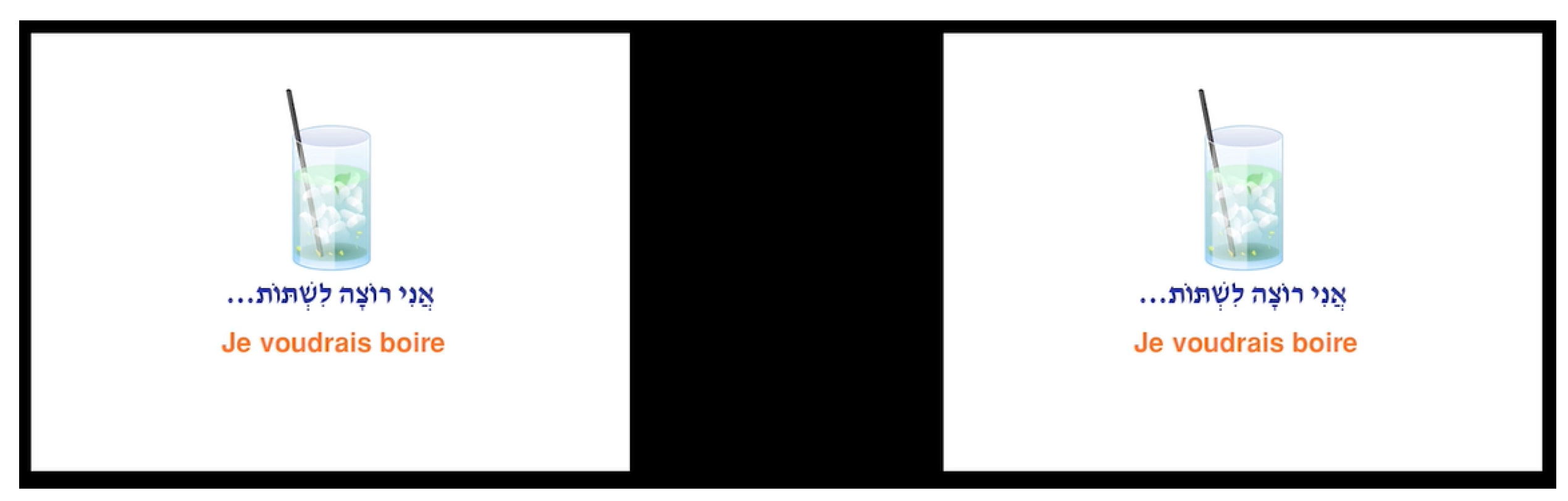
The speed of the visual and auditory presentation of the words corresponded to the speed of the measured breathing.
Research Procedure
A week before the learning sessions, the participants took a pre-learning test to determine their knowledge of Hebrew. The test was sent to the participants as a shared document to be filled in individually. It was impossible to go back to the end of each page or edit the document after completing it.
The participants were randomly divided into two learning environments: the 2D computerized and VRH environment. Four days before the beginning of the learning process, participants were provided with a set of earphones. Participants in the VRH group also received a headset.
We utilized a learning kit of 3500 words and phrases for Hebrew learning [Alphmax- first Hebrew words] divided into units by topics. Five hundred and fifty words and phrases in Hebrew were introduced, covering four categories (basic words, shopping, leisure, and weather). The sampling of the words in each unit was conducted randomly according to the order of appearance of the words in the unit in a series of three, that is, words 1, 3, 6, 9, etc.
The learning process – the words were learned over five days. Every evening, the participants were introduced to an average of 110 new words in 30 minutes. The activity began with a 5-minute video of measured breathing intended to relax the user. Immediately after this video, the learning segment began. In both learning environments, 110 new words were projected and heard, first in the mother tongue (French) and then in the new language (Hebrew). The new word was played at a higher frequency (10 Hz) and simultaneously below 60 Hz, barely audible.
The speed of the visual and auditory presentation of the words corresponded to the speed of the measured breathing: 2 seconds of inhalation, 4 seconds of holding the air followed by 2 seconds exhalation. The Smily icon (Illustration 1) representing the breathing phases remained at the top left of the screen as a reminder of the breathing rhythm.
Baroque music was played in the background at a frequency of 70 beats per second. At the same time, binaural frequencies were also played during the learning process, maintaining a frequency difference of 10 Hz between the two ears within the audible range.
The next morning, a new session visually repeated the words learned in the previous evening from the reading file. This study presented the words in Hebrew and French, together with Hebrew transliterated into Latin letters.
We contacted the participants by phone, offering support and assistance. No one requested a change in their learning environment or mentioned any particular challenges.
The total study duration was approximately 5 hours, one hour each day for five days. A learning day began in the early evening when the participants received a link to a folder containing two files: a video file to watch that evening and a reading file to be read the following morning. The reading file was a repetition of the words learned the previous evening, with instructions reading it only once.
On the sixth day, at the end of the learning process, the participants received a post-learning test, which evaluated the scope of newly acquired words. The test was sent to them in a format that did not allow for going back and making corrections. There was a maximum time limit of 15 minutes. A month later, we conducted a follow-up test. We retested the participants to evaluate their retention of the new vocabulary. The post-test was identical to the second test, as we aimed to measure retention. This test was sent to them in the same format in which they could not make corrections and was limited to 15 minutes response time. Thirty-two participants took this test.
The Tests
To evaluate the depth of processing and learning retention, three tests were administered: pre-learning, post-learning (the day after the end of the learning process), the learning process, and a follow-up test (a month after the learning process). The test we used, based on Laufer & Goldstein's (2004) model, distinguishes between the types of knowledge (active/passive knowledge) and the depth of processing (form recall/meaning recognition). The first distinction indicates the learners’ ability to produce a word in the acquired language (active knowledge) as opposed to their ability to provide its meaning when presented (passive knowledge). The second distinction indicates the depth of processing between those who remember the form of the word or its meaning and those who cannot do so but can identify the form or meaning from a set of options.
Active recall - presents a word in the mother tongue (French) and the participant was required to write the Hebrew word in Latin letters. The participant was given the first sound of the Hebrew word as a clue. The reliability of the tool is α = 0.97
For example: ____________________________ Boire – L (the first letter of the Hebrew word "Lishtote" [drink])
Passive recall – presented the word in Hebrew, and the participants were required to translate it into their mother tongue. The first letter of the word was given as a clue. The reliability of the tool α = 0.94
For example: "Lishtote" ___________ B (the first letter of "Boire" in French)
Active recognition – the third level of knowledge. Recognition of a word from a set of options was presented in the mother tongue and the option of choosing the correct translation from four words. The possibilities included one correct meaning and three semantically unrelated distractors. The reliability of the tool is α = 0.98
For example:
"Boire": a. lishtote b. mechonit c. har d. beged yam
Passive recognition - The word is presented in the new language with four options in the mother tongue from which the correct meaning must be chosen. The options include the proper meaning and three semantically unrelated distractors. The reliability of the tool is α = 0.98
For example: "Lishtote": a. boire b. voiture c. montagne d. maillot de bain
The four parts of the test each had 13 questions, for a total of 52 equaling 10% of the 550 words introduced. The four parts of the test were arranged according to the level of difficulty, with the first test consisting of passive recognition questions, the second part - of active recognition questions, the third part - passive recall questions, and the fourth part - of active recall questions indicating the highest level of information processing. Each section of the test was presented in increments of increasing difficulty: the first questions in each part contained frequently used Hebrew words followed by less frequently used words. We selected the vocabulary according to their level of frequency and difficulty in the Hebrew language as specified in the reports of the National Center for Measurement and Evaluation (see Table 2).
The Learning Environments
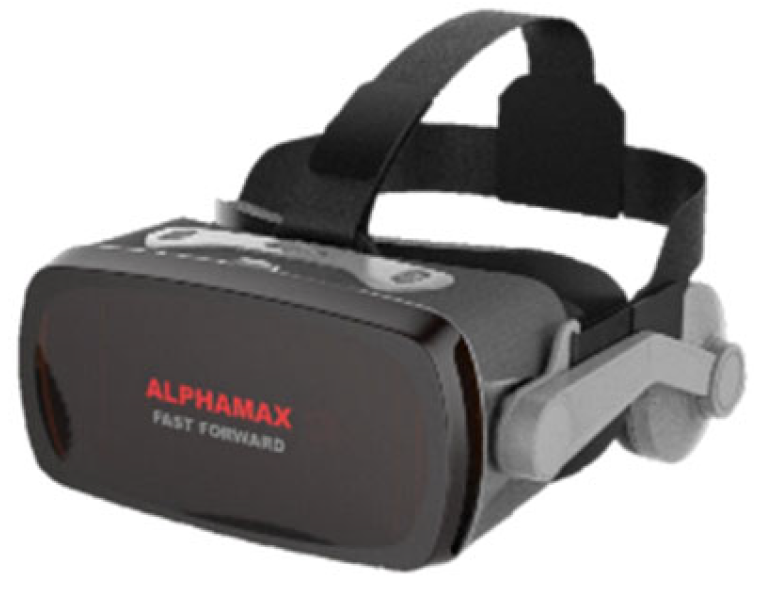
The 2D and 3D learning interfaces were similar, except that the 3D interface utilized an immersive VR headset (see illustration 3). The VRH environment included stereoscopic three-dimensional (S3D) photos that create the illusion of depth. The images presented words that were accompanied by text in Hebrew and French. Further, the VR in our study was not interactive and did not offer the option to manipulate the virtual space.
Iluustration 1: VR Headset.
Results
We asked whether utilizing background cognitive and emotional stimuli in a VRH learning environment would lead to accelerated learning of vocabulary in a new language with better results when compared to a 2D computerized learning environment.
As a preliminary analysis, we calculated χ2 tests and t-test to examine the differences between study groups in demographic variables.
χ2 tests indicated no significant difference between the groups in gender (male, female, χ2 (1) = 2.99, p = .084) nor in the level of prior Hebrew knowledge (low, medium, high, χ2 (2) = 2.67, p = .263). In addition, t-test for independent samples indicates no significant difference between the groups concerning age (t (98) = .23, p = .818).
Testing Research Hypothesis
The research hypothesis was that both groups (2D and VRH) would significantly improve their foreign language knowledge after the learning sessions. In addition, we compared the level of newly acquired knowledge between the groups. We hypothesized that the VRH learning environment would yield a more significant improvement than the 2D.
In order to examine the differences in outcome variables (the test scores) following the learning sessions and to determine whether these differences changed across the study groups, we used 2x3 mixed-design linear mixed-models (due to missing values at the follow-up test). We introduced the time variable (pre-learning test, post-leaning test, and follow-up test) and the group variable (2D, VRH) as independent variables, and the test scores (active/passive recognition, active/ passive recall, and total score) as dependent variables. We conducted a post-hoc analysis for pairwise comparisons, meaning comparisons of the change across time in each group separately. Bonferroni correction was made due to multiple comparisons. See Table 1 for differences in outcome variables following the learning sessions by the groups.
As shown in Table 3, the main effects of the period were significant for all of the 'tests scores'. In addition, effects of the 'interactions’ were not significantly different, indicating that the differences between the time levels were not significantly altered across the groups. Examination of the post-hoc analysis indicated a significant improvement in all test scores in the post-learning test and the follow-up test compared to the scores in the pre-learning test. These findings confirm hypothesis 1 and refute hypothesis 2.
Figure 1 shows the scores for each part of the test (active/passive recognition, active/ passive recall). It also provides the scores for pre-learning test, post-learning test and follow-up test).
Figure 1 indicates that there were significant improvements in the passive and active recall score as well as the total score in the follow-up test when compared to the scores at the post-learning test, that is in addition to the significant improvements in scores from pre-test to post-test in all tests and total score. These findings support hypothesis 3, namely, that the participants achieve distinctly better scores in recall questions.
Discussion
The novel aspect of this study is the integration of cognitive and emotional components into a learning environment. No learning environment exists without any external factors, but to the best of our knowledge, no previous research has addressed this issue. In our study, we focused on various background stimuli and examined how their integration within the learning environment assists in accelerating learning.
The results of this study indicate that learning vocabulary using a technology-based system with background cognitive and emotional stimuli, both 2D and VRH interfaces accelerated learning and resulted in a significant increase in the recall of new vocabulary within a short time frame. These findings relate to the extent of the newly acquired vocabulary and the depth of processing and are clearly reflected in the pre- to post-learning test scores. These findings support our hypothesis (1) that implementing this accelerated learning method results in a significant increase in knowledge. They further support hypothesis 3)) that the participants achieve better scores in recall questions. Furthermore, the follow-up test, conducted a month after the initial learning process, pointed to a high retention level and better recall test results.
Significantly, when comparing learning achievements in 2D and VRH no distinct differences were observed in learning achievements (hypothesis 2 is refuted). In other words, neither learning environment offered particular advantages regarding acquired knowledge and the depth of processing.
In conclusion, we found that our two learning systems contributed to accelerated learning, high depth processing, and better retention.
New Language Acquisition Utilizing a Technology-Based System with Background Stimuli
Conventional in-class learning experiences are often accompanied by distractions particularly when the learning consists of memorization and repetition, both of which negatively impact motivation. Studies found that learning environment simulating a specific language's authentic lingual environment enhances the acquisition of a foreign vocabulary (Hsiao et al., 2017; Tai et al., 2022). Therefore, one of the basic teaching assumptions regarding foreign language acquisition is that immersion and enhanced exposure in a natural language environment contribute to accelerated learning (Hein et al., 2021; Peixoto et al., 2019). This assumption supports learning a foreign language in a VRH environment, simulating daily life situations via technology. Clear visual presentation and an interactive learning experience isolate the learner from the real world, thus reducing distractions and increasing motivation (Palmeira et al., 2020).
In addition, this technology offers the advantage of shifting from theoretical learning that breaks down language into speaking-reading-writing to an interactive learning environment that simultaneously includes multiple communication channels including speaking, reading, writing and even facial expressions. Studies indicate a connection between the immersive experience within a virtual reality environment and improved learning. In comparisons made between learning in a VRH and a 2D computerized environment, it was found that learning in an immersive VRH environment contributes to motivation and leads to better results (Ebert et al., 2016; Legault et al., 2019; Palmeira et al., 2020; Passig et al., 2016; Peixoto et al., 2019).
Unlike studies where the learning occurred in an interactive space within a virtual environment, our study tested the effect of stereoscopic three-dimensional images (S3D) on vocabulary acquisition without the option of interactive spatial manipulation. As previously mentioned, no significant learning achievements were found between the 2D and the VRH environments. Similar findings were observed in previous studies. In Kaplan's study (Kaplan-Rakowski et al., 2022), it was found that only three-dimensional stereoscopic images without the interactive component did not result in improved achievements when compared with learning from 2D images. Furthermore, in Legault's study (2019), participants were presented with 60 new words in a 25-minute learning session, some images were stereoscopic images and some were 2D images. However, unlike our study, Legault's participants chose which word to learn and were able to repeat the word as many times as they deemed necessary. In the Legault's post-learning test, it was found that the virtual learning environment was more effective for the weaker students who were able to repeat the words many times, while the use of 2D images was more effective for the stronger students (Legault et al., 2019).
Accelerated Learning—The Learning Period Concerning New Vocabulary Acquired
Our study found that acquiring vocabulary using computer-assisted-language-learning (CALL) with additional background cognitive and emotional stimuli led to an increase in new vocabulary in a short time frame. This was true with both 2D and VRH interfaces.
When comparing studies of computer-assisted-language learning (CALL), which does not include accelerated learning components, our study showed that more words were learned in a short learning period. It is noteworthy that previous studies did not highlight the time required for learning. Still, rather than achievements even when computerized learning was employed, the outcome resulted in only a small increase in vocabulary. Despite some vocabulary increase, it was small in relation to the time invested (Alfadil, 2020; Legault et al., 2019; Lin & Lan, 2015; Tai et al., 2020).
For example, in Tai’s study (Tai et al., 2022), the participants were exposed to 25 words for 35 minutes, and in Alfadil's (2020) study, 30 words were learned over 12 days, each study session lasting 45 minutes. In Lin & Lan (2015), 90 new words were presented during seven sessions, each lasting an hour. Legaut's study (2019) presented participants with 60 new words during a 25-minute study session. Moreover, it was possible to repeat and memorize the same word in all of these studies without time limitation.
Unlike other learning systems, our study was not based on memorization or repetition. The participants were first exposed to new words in the evening and again the following morning. The learners were exposed to 550 new words in the framework of 5 study units, each consisting of 45 minutes without offering the possibility of repetition.
Alternative explanations for the study's findings exist. Still, they don't seem to alter the conclusion that the learning acceleration system is the primary factor contributing to the learners' achievements. For example, even if participants reviewed words before the first test, they were only tested on 53 randomly selected words out of 550, making it unlikely that additional review fully accounts for their high scores. The participants conducted the test independently, but the file was locked to prevent changes, and the response time was limited. Finally, participants were unaware of a second test a month later, making it unlikely they prepared in advance.
It is worth noting that good results were achieved in this study in a short time frame with the assistance of background cognitive and emotional stimuli that were integrated into the learning system. These components contribute to accelerated vocabulary learning with a high level of processing and retention.
Information Processing: Retention and Recall
The question of information retention and recall was addressed by testing the depth of knowledge processing. A significant improvement in learning was found between the pre to post-learning with a considerable improvement in the active recall test in both tests, thereby confirming hypothesis 3.
These findings correspond with the Levels of Processing model by Laufer & Goldstein (2004), which links the depth of information processing to its retention in memory and recall. The results of the tests, particularly the active recall test, indicate that a high level of processing of new vocabulary occurred within a remarkably short time.
In addition, previous studies distinguished between levels of processing and found that memorization and repeated exposure were required only in cases of low levels of processing (Chang, 2017). By contrast, when words were processed deeply, the recall was enhanced, and long-term retention improved without the need for repetition or memorization (Jacoby et al., 2005). For example, Krokos et al. (2019) found that information displayed in space and associatively linked to elements presented in the learning environment increases the depth of processing and memory retention.
The results of our study indicate that knowledge is retained at all levels of processing. Unlike previous studies, our learning method did not require memorization or repetition.
Conclusions
Our study offers an alternative learning method that enables quick and relatively easy acquisition of a new language.
To the best of our knowledge, there has been no research concerning the relationship between learning a new language with a technology-based system that utilizes background cognitive and emotional stimuli to accelerate and enhance the learning process.
The learning system employed in our study promotes a practical pedagogical experience that integrates the background stimuli of measured breathing, binaural frequencies, alpha waves, and music. Combining these components reduces stress and enhances neurological memory processing, retention, and recall. These components foster a relaxed and focused learning experience that aids in the processing of new material to a greater degree while accelerating the learning process.
The study results indicate that learning vocabulary using a technology-based system based on background cognitive and emotional stimuli assists in accelerating the learning process.
The study is novel in that it identified specific background stimuli and found that their interaction generated accelerated learning utilizing both a 2D and VRH environments. This acceleration occurred within a short period and was reflected in the acquisition of new vocabulary and active recall.
In other words, neither learning environment (2D or VRH) was advantageous regarding the level of acquired vocabulary and the depth of processing. Most importantly, the learning systems we tested contributed to accelerated learning and a high level of processing and retention.
In sum, shifting the accelerated learning method from conventional in-class instruction to a technology-based system that combines background cognitive and emotional stimuli creates a unique learning experience that presents an exciting opportunity for accelerating the learning process while achieving a greater depth of processing and retention.
Recommendations
Further research should be conducted to evaluate the accelerated learning method in an immersive and interactive environment utilizing other frameworks and populations. Schools, organizations, and universities can provide a unique setting for testing accelerated learning over a more extended time with additional conducting follow-up tests.
The participants in our study were all adults. For adults, acquiring a foreign language is often accompanied by emotional barriers that might affect the quality of learning and impede its pace. Hence, we recommend that future evaluations of this method be conducted with children.
It would be worthwhile to evaluate the levels of stress experienced throughout the learning process to understand better the impact of the background stimuli on the learner’s sense of relaxation.
Furthermore, as our study focused on acquiring words and phrases, future studies should aim to assess new language conversational skills attained with this method.
Finally, further exploration of the accelerated learning method's contribution in other areas may prove worthwhile. It may determine what specific type of knowledge is best suited for accelerated learning.
Limitations
As this research constitutes a preliminary evaluation of the accelerated learning method, there might be variables we did not consider that might affect the results. Our sample of 100 participants facilitated a potential variance among the participants (learning skills, socio-economic background, and personal barriers in acquiring a new language). We addressed gender, age, prior knowledge of the new language, and experience with digital platforms. We did not verify other confounding factors.
As most of the participants in the study were women, there may have been a gender bias.
In addition, the pre-test and the follow-up tests were unsupervised. However, to deter cheating, the test format that the participants received was locked in a manner that rendered it impossible to change the answers. In order to ensure a fair level of difficulty, 53 words were randomly selected from an inventory of 550 newly acquired words.
References
- Alfadil, M. Effectiveness of virtual reality game in foreign language vocabulary acquisition. Computers and Education 2020, 153, 103893. [Google Scholar] [CrossRef]
- Al-Shboul, M.M.; Ahmad, I.S.; Nordin, M.S.; Rahman, Z.A. Foreign Language Anxiety and Achievement: Systematic Review. International Journal of English Linguistics 2013, 3, 31–45. [Google Scholar] [CrossRef]
- Akbiyik, C.; Simsek, N. Accelerated learning in classroom and computer environments. Eurasian Journal of Educational Research 2009, 37, 32–52. [Google Scholar]
- Antonenko, P.; Paas, F.; Grabner, R.; van Gog, T. Using electroencephalography to measure cognitive load. Educational Psychology Review 2010, 22, 425–438. [Google Scholar] [CrossRef]
- Awan, R.N.; Azher, M.; Anwar, M.N.; Naz, A. An Investigation of Foreign Language Classroom Anxiety and Its Relationship with Students Achievement. Journal of College Teaching & Learning (TLC) 2010, 7, 33–40. [Google Scholar] [CrossRef]
- Bos, D.O. EEG-based emotion recognition. The Influence of Visual and Auditory Stimuli, The Influence of Visual and Auditory Stimuli 2006, 56, 1–17. [Google Scholar] [CrossRef]
- Chalfoun, P.; Frasson, C. Subliminal priming enhances learning in a distant virtual 3D Intelligent Tutoring System. IEEE Multidisciplinary Engineering Education Magazine 2008, 3, 125–130. [Google Scholar]
- Chang, S.H. The effects of test trial and processing level on immediate and delayed retention. Europe’s Journal of Psychology 2017, 13, 129–142. [Google Scholar] [CrossRef] [PubMed]
- Chen, Z.H.; Chen HJ, H.; Dai, W.J. Using narrative-based contextual games to enhance language learning: a case study. Journal of Educational Technology & Society 2018, 21, 186–198. [Google Scholar]
- Clark, J.M.; Paivio, A. A Dual Coding Theoretical Model of Reading. Educational Psychology Review 1991, 3, 149–210. [Google Scholar] [CrossRef]
- Colliander, H.; Fejes, A. The re-emergence of Suggestopedia: Teaching a second language to adult migrants in Sweden. Language, Culture and Curriculum, Language Culture and Curriculum 2020, 34, 1–14. [Google Scholar] [CrossRef]
- Côté, S.; Gaffney, C. The effect of synchronous computer-mediated communication on beginner L2 learners’ foreign language anxiety and participation. Language Learning Journal 2021, 49, 105–116. [Google Scholar] [CrossRef]
- Dalim, C.S.C.; Sunar, M.S.; Dey, A.; Billinghurst, M. Using augmented reality with speech input for non-native children’s language learning. International Journal of Human Computer Studies 2020, 134, 44–64. [Google Scholar] [CrossRef]
- De Groot, A.M. Effects of stimulus characteristics and background music on foreign language vocabulary learning and forgetting. Language Learning 2006, 56, 463–506. [Google Scholar] [CrossRef]
- Doughty, C.J.; Long, M.H. Optimal psycholinguistic environments for distance foreign language learning. Language Learning and Technology 2003, 7, 50–80. [Google Scholar]
- Draganova, R.; Ross, B.; Wollbrink, A.; Pantev, C. Cortical steady-state responses to central and peripheral auditory beats. Cerebral Cortex 2008, 18, 1193–1200. [Google Scholar] [CrossRef] [PubMed]
- Ebert, D.; Gupta, S.; Makedon, F. (2016). Ogma - A virtual reality language acquisition system. ACM International Conference Proceeding Series, 29-June-20. [CrossRef]
- Ellis, R.J.; Thayer, J.F. Music and autonomic nervous system (dys)function. Music Perception 2010, 27, 317–326. [Google Scholar] [CrossRef]
- Evans, J.R. (2017). Historical Overview of Rhythmic Stimulation Procedures in Health and Disease. In J. R. Evans & R. P. Turner (Eds.), Rhythmic Stimulation Procedures in Neuromodulation (pp. 1–31). Academic Press. [CrossRef]
- Filimon, R.C. (2010). Beneficial subliminal music: binaural beats, hemi-sync and meta-music. Proceedings of the 11th WSEAS International Conference on Acoustics & Music: Theory & Applications, (pp. 103-108).
- Freunberger, R.; Werkle-Bergner, M.; Griesmayr, B.; Lindenberger, U.; Klimesch, W. Brain oscillatory correlates of working memory constraints. Brain Research 2011, 1375, 93–102. [Google Scholar] [CrossRef]
- Garcia-Argibay, M.; Santed, M.A.; Reales, J.M. Binaural auditory beats affect long-term memory. Psychological Research 2017, 83, 1124–1136. [Google Scholar] [CrossRef] [PubMed]
- Gevins, A.; Smith, M.E. Neurophysiological measures of cognitive workload during human-computer interaction. Theoretical Issues in Ergonomics Science 2003, 4, 113–131. [Google Scholar] [CrossRef]
- Guclu, B.; Arslan, M.; Ustunyer, I. Teaching Vocabulary in Turkish language for foreigners at beginner level using suggestopedia. International Journal of Research in Social Sciences 2017, 7, 36–43. [Google Scholar]
- Hein, R.M.; Wienrich, C.; Latoschik, M.E. A systematic review of foreign language learning with immersive technologies (2001-2020). AIMS Electronics and Electrical Engineering 2021, 5, 117–145. [Google Scholar] [CrossRef]
- Hodges, D.A. Implication of Music and Brain Research: This introductoray article offers an overview of neuro-musical research and articulate some basic premises derived from this research. Music Educators Journal 2000, 87, 17–22. [Google Scholar] [CrossRef]
- Hsiao, I.Y.T.; Lan, Y.-J.; Kao, C.-L.; Li, P. Visualization analytics for Second language vocabulary learning in virtual worlds. Journal of Educational Technology & Society 2017, 20, 161–175. [Google Scholar]
- Jacoby, L.L.; Shimizu, Y.; Daniels, K.A.; Rhodes, M.G. Modes of cognitive control in recognition and source memory: Depth of retrieval. Psychonomic Bulletin and Review 2005, 12, 852–857. [Google Scholar] [CrossRef] [PubMed]
- Joseph SR, H.; Watanabe, Y.; Shiung, Y.; Choi, B.; Robbins, C. Key Aspects of Computer Assisted Vocabulary Learning (Cavl): Combined Effects of Media, Sequencing and Task Type. Research and Practice in Technology Enhanced Learning 2009, 4, 133–168. [Google Scholar] [CrossRef]
- Khan, Z.A. The Effects of Anxiety on Cognitive Processing in English Language Learning. English Language Teaching 2010, 3, 199–209. [Google Scholar] [CrossRef]
- Kaplan-Rakowski, R.; Lin, L.; Wojdynski, T. Learning Vocabulary Using 2D Pictures is More Effective than Using Immersive 3D Stereoscopic Pictures. International Journal of Human-Computer Interaction 2022, 38, 299–308. [Google Scholar] [CrossRef]
- Kraus, J.; Porubanova, M. The effect of binaural beats on working memory capacity. Studia Psychologica 2015, 57, 135–145. [Google Scholar] [CrossRef]
- Krokos, E.; Plaisant, C.; Varshney, A. Virtual memory palaces: Immersion aids recall. Virtual Reality 2019, 23, 1–15. [Google Scholar] [CrossRef]
- Laufer, B.; Goldstein, Z. Testing vocabulary knowledge: Size, strength, and computer adaptiveness. Language Learning 2004, 54, 399–436. [Google Scholar] [CrossRef]
- Legault, J.; Zhao, J.; Chi, Y.-A.; Chen, W.; Klippel, A.; Li, P. Immersive Virtual Reality as an Effective Tool for Second Language Vocabulary Learning. Languages 2019, 4, 13. [Google Scholar] [CrossRef]
- Lin, T.J.; Lan, Y.J. Language learning in virtual reality environments: Past, present, and future. Journal of Educational Technology & Society 2015, 18, 486–497. [Google Scholar]
- Lozanov, G. (2005). Suggestopedia Principal (S. Krippner (ed.). Taylor & Francis e-Library.
- Meier, D. (2000). The accelerated learning handbook: a creative guide to designing and delivering faster, more effective training programs. McGraw Hill Professional.
- Mohammadi, N.; Ghorbani, V.; Hamidi, F. Effects of e-learning on language learning. Procedia Computer Science 2011, 3, 464–468. [Google Scholar] [CrossRef]
- Mushynska, N. Means of future economists’ professional self-development in the educational process of foreign language studying. Economics, Ecology, Socium 2018, 2, 45–56. [Google Scholar] [CrossRef]
- Nan, W.; Rodrigues, J.P.; Ma, J.; Qu, X.; Wan, F.; Mak, P.-I.; Mak, P.U.; Vai, M.I.; Rosa, A. Individual alpha neurofeedback training effect on short term memory. International Journal of Psychophysiology 2012, 86, 83–87. [Google Scholar] [CrossRef] [PubMed]
- Nation, P.I. (2001). Learning vocabulary in another language. Cambridge University Press. [CrossRef]
- On, F.R.; Jailani, R.; Zaini, H.N.; Zaini, N.M. Binaural beat effect on brainwaves based on EEG. Colloquium on Signal Processing and Its Applications, 2013, 339-343 IEEE. [CrossRef]
- Palmeira, E.G.Q.; Saint Martin, V.B.; Gonçalves, V.B.; Moraes, Í.A.; Lamounier Júnior, E.A.; Cardoso, A. The Use of Immersive Virtual Reality for Vocabulary Acquisition: A Systematic Literature Review. Cbie 2020, 532, 532–541. [Google Scholar] [CrossRef]
- Passig, D.; Tzuriel, D.; Eshel-Kedmi, G. Improving children’s cognitive modifiability by dynamic assessment in 3D Immersive Virtual Reality environments. Computer and Education 2016, 95, 296–308. [Google Scholar] [CrossRef]
- Patel, A.D. Music, biological evolution, and the brain. Emerging Disciplines 2010, 91–144. [Google Scholar]
- Peeters, D. Virtual reality: A game-changing method for the language sciences. Psychonomic Bulletin and Review 2019, 26, 894–900. [Google Scholar] [CrossRef]
- Peixoto, B.; Pinto, D.; Krassmann, A.; Melo, M.; Cabral, L.; Bessa, M. Using virtual reality tools for teaching foreign languages. World Conference on Information Systems and Technologies 2019, 581–588. [Google Scholar] [CrossRef]
- Rahimpour, M. Computer Assisted Language Learning. International Journal of Instructional Technology and Distance Learning 2011, 8, 3–9. [Google Scholar]
- Read, J. Research in Teaching Vocabulary. Annual Review of Applied Linguistics 2004, 24, 146–161. [Google Scholar] [CrossRef]
- Reybrouck, M.; Podlipniak, P.; Welch, D. Music and noise: Same or different? What our body tells us. Frontiers in Psychology 2019, 10, 6. [Google Scholar] [CrossRef] [PubMed]
- Schwienhorst, K. Why virtual, why environments? Implementing virtual reality concepts in computer-assisted language learning. Simulation & Gaming 2002, 33, 196–209. [Google Scholar] [CrossRef]
- Kuninori, S. The effects of music, relaxation and suggestion on tertiary students’ affect and achievement in learning Japanese as a foreign language. Australian Review of Applied Linguistics 2008, 31, 16.1–16.22. [Google Scholar]
- Stansell, J.W. (2005). The use of Music for Learning Languages: A review. University of Illinois at Urbana-Champaign. [CrossRef]
- Tafazoli, D.; Huertas, C.; Gomez, E. Gomez, E. Technology-Based Review on Computer-Assisted Language Learning: A Chronological Perspective. Píxel-Bit. Revista de Medios y Educación, 2019, 54. Available online: https://recyt.fecyt.es/index.php/pixel/index.
- Tai, T.Y.; Chen HH, J.; Todd, G. The impact of a virtual reality app on adolescent EFL learners’ vocabulary learning. Computer Assisted Language Learning 2022, 35, 1–26. [Google Scholar] [CrossRef]
- Terehoff, I. Learning by living the language: The benefits of foreign exchange programs. National Association of Secondary School Principals. 2000, 86, 83–84. [Google Scholar] [CrossRef]
- Thaut, M.H. (2005). Rhythm, Music, and the Brain. New York: Routledge. [CrossRef]
- Vela, V.; Rushidi, J. The Effect of Keeping Vocabulary Notebooks on Vocabulary Acquisition and Learner Autonomy. Procedia - Social and Behavioral Sciences 2016, 232, 201–208. [Google Scholar] [CrossRef]
- Vidal, K. Academic Listening: A Source of Vocabulary Acquisition? Applied Linguistics 2003, 24, 56–89. [Google Scholar] [CrossRef]
- Wahbeh, H.; Calabrese, C.; Zwickey, H.; Zajdel, D. Binaural beat technology in humans: A pilot study to assess neuropsychologic, physiologic, and electroencephalographic effects. Journal of Alternative and Complementary Medicine 2007, 13, 199–206. [Google Scholar] [CrossRef]
- Waring, R.; Nation IS, P. Second language reading and incidental vocabulary learning. Angles on the English-Speaking World 2004, 4, 97–110. [Google Scholar]
- Watanabe, S.J. Watanabe, S.J., Yukiko & Shiung, Yi-Jiun & Choi, Bosun & Robbins, Cody. Key Aspects of Computer Assisted Vocabulary Learning (Cavl): Combined Effects of Media, Sequencing and Task Type. Research and Practice in Technology Enhanced Learning. 2009, 4, 133–168. [Google Scholar] [CrossRef]
- White, C.; Reinders, H. (2010). The theory and practice of technology in materials development and task design. In N. Harwood (Ed.), English Language Teaching Materials: Theory and Practice (pp. 58–80). Cambridge University Press.
- Zhao, Y. Technology and Second Language Learning: Promises and Problems. William and Flora Hewlett Foundation, January, 2005, 1–31. http://citeseerx.ist.psu.edu/viewdoc/download?doi=10.1.1.133.3222&rep=rep1&type=pdf.
Figure 1.
Differences in Outcome Variables Following the Learning sessions.
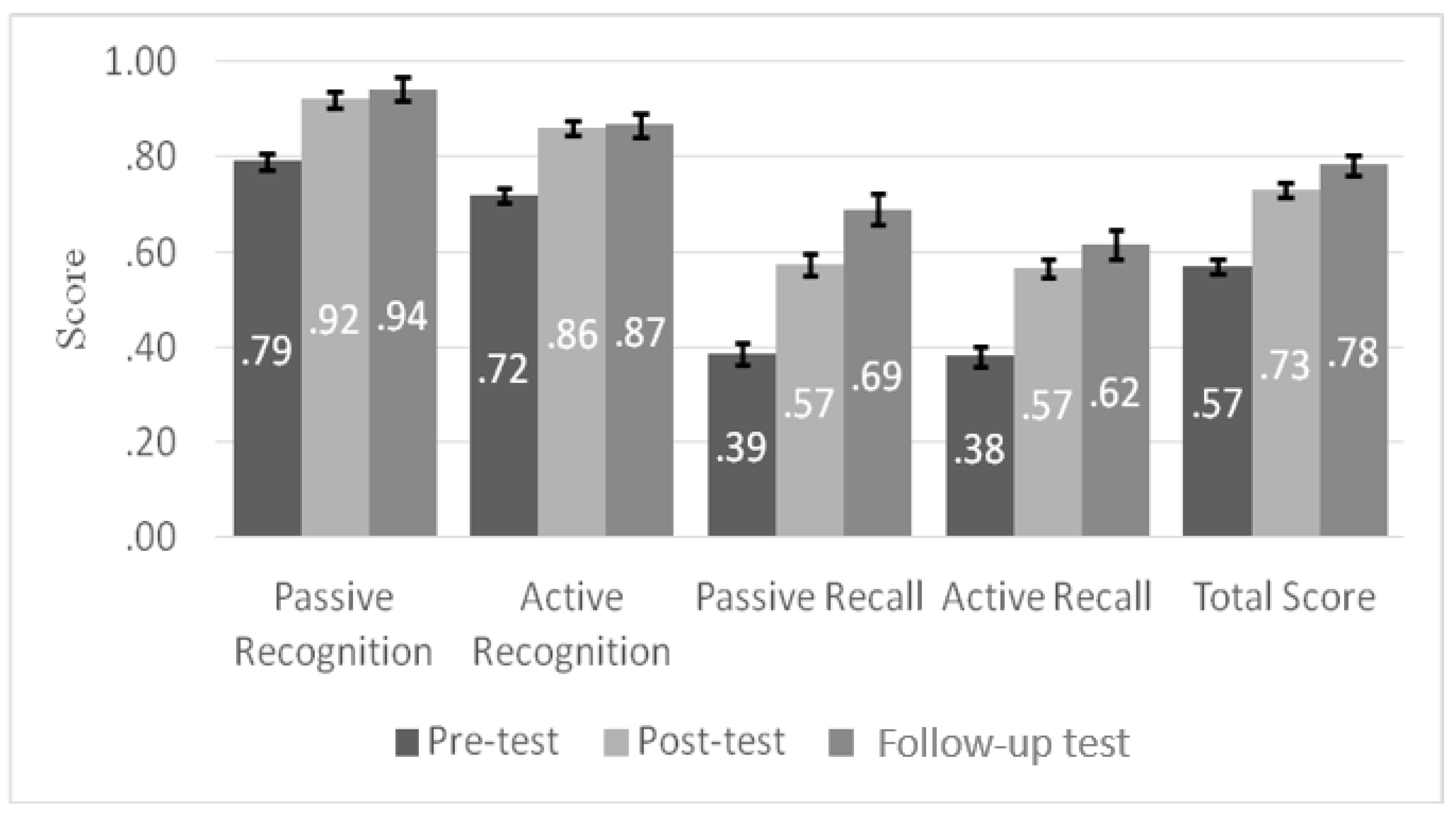

Table 1.
Differences between the groups according to the background variables.
| Group | ||||||
|---|---|---|---|---|---|---|
| VRH | 2D | |||||
| (N = 50) | (N = 50) | |||||
| n \ M | %\ SD | n \ M | % \ SD | Statistics | P | |
| Gender | (1) = χ22.99 | 0.84 | ||||
| Females | 40 | 80 | 46 | 92 | ||
| Males | 10 | 20 | 4 | 8.0 | ||
| Hebrew level | (2) = χ22.67 | 0.263 | ||||
| Low | 12 | 6 | 24 | 12 | ||
| Medium | 68 | 34 | 62 | 31 | ||
| High | 20 | 10 | 14 | 7 | ||
| Age | 47.88 | 10.35 | 47.38 | 11.26 | t (98) =.23 | 0.818 |
Table 2.
A sample of vocabulary introduced by frequency of use and level of difficulty as well as 4 degrees of strength of knowledge.
Table 2.
A sample of vocabulary introduced by frequency of use and level of difficulty as well as 4 degrees of strength of knowledge.
| Frequency | Active Recall | Passive Recall | Active Recognition | Passive Recognition |
| High | which | good morning | milk | I said |
| Medium | beach | rainbow | yesterday evening | puddle |
| Low | can you spell it? | moonlight | argue | exhibition |
Table 3.
Differences in Outcome Variables Following the Learning sessions by Study Groups.
| Descriptive Statistics | Mixed Model Effects | Post-hoc Analysis for Time | |||||||||||||
| Pre-test | Post-test | follow-up test | Post-test | Followup-test | Follow up-test | ||||||||||
| (N = 100) | (N = 100) | (N = 33) | - Pre-test | - Pre-test | - Post-test | ||||||||||
| M | SD | M | SD | M | SD | Effects | F | p | d | p | d | p | d | p | |
| Passive Recognition | |||||||||||||||
| Computer | 0.74 | 0.24 | 0.87 | 0.16 | 0.9 | 0.11 | Time | 36.55 | <.001 | 0.51 | <.001 | 0.38 | <.001 | 0.07 | 1 |
| VRH | 0.84 | 0.2 | 0.97 | 0.08 | 0.97 | 0.09 | Group | 9.15 | 0.003 | 0.47 | <.001 | 0.32 | 0.001 | 0.03 | 1 |
| Total | 0.79 | 0.23 | 0.92 | 0.13 | 0.93 | 0.1 | Interaction | 0.12 | 0.885 | 0.69 | <.001 | 0.49 | <.001 | 0.07 | 1 |
| Active Recognition | |||||||||||||||
| Computer | 0.69 | 0.2 | 0.82 | 0.14 | 0.81 | 0.11 | Time | 44.05 | <.001 | 0.51 | <.001 | 0.29 | 0.002 | -0.03 | 1 |
| VRH | 0.75 | 0.2 | 0.9 | 0.12 | 0.92 | 0.13 | Group | 9.47 | 0.003 | 0.58 | <.001 | 0.41 | <.001 | 0.06 | 1 |
| Total | 0.72 | 0.2 | 0.86 | 0.13 | 0.86 | 0.13 | Interaction | 0.66 | 0.517 | 0.77 | <.001 | 0.49 | <.001 | 0.02 | 1 |
| Passive Recall | |||||||||||||||
| Computer | 0.31 | 0.19 | 0.46 | 0.27 | 0.6 | 0.23 | Time | 64.12 | <.001 | 0.46 | <.001 | 0.55 | <.001 | 0.27 | 0.005 |
| VRH | 0.46 | 0.19 | 0.68 | 0.21 | 0.74 | 0.26 | Group | 19.56 | <.001 | 0.65 | <.001 | 0.55 | <.001 | 0.16 | 0.165 |
| Total | 0.39 | 0.21 | 0.57 | 0.26 | 0.67 | 0.25 | Interaction | 1.18 | 0.31 | 0.78 | <.001 | 0.78 | <.001 | 0.3 | 0.001 |
| Active Recall | |||||||||||||||
| Computer | 0.34 | 0.19 | 0.5 | 0.25 | 0.55 | 0.22 | Time | 58.49 | <.001 | 0.53 | <.001 | 0.42 | <.001 | 0.09 | 0.802 |
| VRH | 0.42 | 0.19 | 0.63 | 0.17 | 0.71 | 0.18 | Group | 10.5 | 0.002 | 0.67 | <.001 | 0.5 | <.001 | 0.11 | 0.616 |
| Total | 0.38 | 0.19 | 0.57 | 0.22 | 0.63 | 0.22 | Interaction | 0.88 | 0.417 | 0.85 | <.001 | 0.65 | <.001 | 0.14 | 0.28 |
| Total Score | |||||||||||||||
| Computer | 0.52 | 0.18 | 0.66 | 0.18 | 0.71 | 0.15 | Time | 91.85 | <.001 | 0.67 | <.001 | 0.57 | <.001 | 0.15 | 0.246 |
| VRH | 0.62 | 0.17 | 0.8 | 0.12 | 0.84 | 0.15 | Group | 16.5 | <.001 | 0.8 | <.001 | 0.63 | <.001 | 0.15 | 0.253 |
| Total | 0.57 | 0.18 | 0.73 | 0.16 | 0.77 | 0.16 | Interaction | 0.65 | 0.522 | 1.04 | <.001 | 0.85 | <.001 | 0.21 | 0.044 |
*** p < .001.
Disclaimer/Publisher’s Note: The statements, opinions and data contained in all publications are solely those of the individual author(s) and contributor(s) and not of MDPI and/or the editor(s). MDPI and/or the editor(s) disclaim responsibility for any injury to people or property resulting from any ideas, methods, instructions or products referred to in the content. |
© 2024 by the authors. Licensee MDPI, Basel, Switzerland. This article is an open access article distributed under the terms and conditions of the Creative Commons Attribution (CC BY) license (http://creativecommons.org/licenses/by/4.0/).
Copyright: This open access article is published under a Creative Commons CC BY 4.0 license, which permit the free download, distribution, and reuse, provided that the author and preprint are cited in any reuse.


