

Submitted:
11 September 2024
Posted:
14 September 2024
You are already at the latest version
Preprints on COVID-19 and SARS-CoV-2
Abstract
Amidst the Covid-19 pandemic, open spaces provided solace for people during social
isolation but also heighten risks, particularly in areas lacking proper management. This
was especially critical in regions already facing challenges like low human
development, extreme poverty, limited healthcare access, as seen in Pará Coastal
Zone (NE Brazil). To address this, this study introduced the Pandemic Risk Index
(PRI), evaluating Covid-19 risk using demographic, social, economic, and
epidemiological indicators. Applied to municipalities in the area, PRI highlighted preexisting vulnerabilities shaping the region’s pandemic response and overall risk. PRI
analysis revealed temporal and spatial variations in risk levels, identifying areas where
the use of open spaces like beaches, presented a higher transmission risk. The results
emphasized the significance of effective governance, improved healthcare, and
containment measures, lowers risk levels. affect risk levels, and becomes one of the
most important challenges, especially in remote areas with limited services and
access.
Keywords:
pandemic
; Covid-19
; risk Index
; social vulnerability
; beaches
1. Introduction
The Covid-19 pandemic, caused by the novel coronavirus SARS-CoV-2, has left an unprecedented mark on recent pandemics. Social isolation emerged as a primary measure to curb the virus’s spread, with many countries swiftly adopting it (Alfano and Ercolano, 2020; Atalan, 2020). Lockdowns and quarantines restricted public movement, leading to global disruptions in social and economic activities (Asahi et al., 2021; Coccia, 2021). Reopening recreational spaces in 2020 became pivotal for some governments aiming to revive the economy and safeguard mental health, considering these spaces as safe leisure options amid the pandemic (Neca and Rechia, 2020).
Coastal areas, especially beaches, gained popularity during the peak of the pandemic, offering well-being and leisure opportunities (Kane et al., 2021). However, reports of mismanagement and overcrowding at beaches surface in 2020 and 2021 in various countries, including Brazil, USA, United Kingdom, and Thailand among others (Garbuio and Ribeiro, 2020; Kane et al., 2021; Robinson et al., 2021; Khamung and Hsu, 2022).
Brazil, among the hardest-hit nations, had recorded over 36 million Covid-19 cases and 690,000 deaths by the end of 2022 (WHO, 2023). The pandemic response was mainly directed by state and municipal governments, dictating closures and reopening’s based on local health conditions, and in compliance with government decrees (Garbuio and Ribeiro, 2020; Santos et al., 2020; Carneiro and Allis, 2021).
This study focuses on the state of Pará due to its location in one of the Brazil’s poorest regions, characterized by a medium Human Development Index (HDI) of 0.646 compared to Brazil overall HDI of 0.727 (high) in 2022, according to the United Nations Development Program (UNDP). In this region, many municipalities grapple with dire conditions, such as limited access to healthcare and basic sanitation services (Hannah et al., 2020; Donde et al., 2021) and was significantly impacted by the pandemic, being one of the most affected regions in northern Brazil.
The coastal zone of Pará has various water bodies, including beaches, lakes, rivers, and streams, frequently used for recreation by local and regional communities (Tack et al., 2020). Many coastal municipalities in this area depend on these recreational activities for their economic livelihood (Silva, 2019; Silva, 2020; Amorim et al., 2021). Despite rising Covid-19 cases and deaths, many mayors yielded to pressure and reopened these spaces at the start of the Amazon region’s summer school holidays in July 2020 (FIOCRUZ/ICICT, 2022). It’s worth noting that the vaccination campaign commenced in 2021, coinciding with the relaxation of restrictions.
In light of this scenario, this study focused on addressing two main questions: How did the socio-economic conditions of coastal municipalities prior to the pandemic contribute to their vulnerability? Did the municipalities have the capacity to provide safe spaces during the pandemic? We analyzed these questions at a regional level, aiming to identify and categorize coastal municipalities based on their performance. To address these questions, a Pandemic Risk Index (PRI) was developed and applied in each municipality, considering demographic, social, economic, and epidemiological indicators.
The advantages of using this index are that it can be applied to any region that has been heavily affected by epidemics such as Covid-19, and that it can be used to analyze risks over time. In this study, the PRI was applied to the Pará Coastal Zone, since beach environments were heavily used during this period despite being highly vulnerable to social issues (Nicolodi & Pettermann et al., 2011; Lins-de-Barros, 2017).
2. Literature Review
The use of socio-economic indicators in identifying and solving problems is undoubtedly an important tool for adopting management measures, as it makes it possible to identify local risks and vulnerabilities (Lal et al., 2022; Bowen and Riley, 2003; Van Koningsveld el at., 2005) and is therefore essential for the effective mitigation of problems in the short and long term, in a corrective and preventive manner, as has been done previously by other authors (Câmara et al., 2021; Santos et al., 2021; Nesticò and Maselli, 2020).
In 2020, with the emergence of the Covid-19 pandemic, the use of socioeconomic indicators for risk assessment once again proved necessary. Some studies highlighted how socioeconomic disadvantage (SED) was strongly related to the number of cases and deaths caused by the disease, and that there was an urgent need for socioeconomic data, as it directly affected the development of public health measures (Khalatbari-Soltani et al., 2020; Rocha et al., 2021).
Several studies have highlighted the impact of the Covid-19 pandemic on recreational dynamics around the world, due to strict quarantine and distancing measures (Kane et al., 2021; Rogerson et al., 2021; Rajaonson and Tanguay, 2022). More detailed risk analyses using socioeconomic and health indicators and indices during the pandemic, such as the one carried out by Asfahan et al. (2020), show a strong relationship between these indicators and the Covid-19 mortality rate, indicating that countries with low economic investment would be more severely affected by the impact of the pandemic.
When this issue is placed in the socio-economic context of coastal cities in the Amazon, which depend on tourism, the need for effective coastal management measures during the pandemic becomes clear. The Human Development Index (HDI), the Social Vulnerability Index (SVI) and the epidemiological data, when focused on the coastal zone of Pará, show that the cities are highly vulnerable to epidemics and socioeconomic disasters (Rodrigues and Rodrigues, 2020; Guimarães et al., 2023).
The use of open spaces for recreational activities is a common practice, especially in the second half of the year when rainfall decreases in the region (Souza Filho et al., 2003; Pinto et al., 2011; Espírito Santo and Szlafsztein, 2016; Oliveira et al., 2011; Pessoa et al., 2013; Moraes et al., 2005). July is the peak month for visits to Amazonian beaches and a study made by Pereira et al. (2022) showed that many visitors went to the beaches without considering preventive measures efficiently. In addition, although in July 2020 and 2021 the health conditions resulting from COVID-19 in Brazil were considered alarming (advance of the pandemic and tendency for an increase in the number of cases and deaths), strong pressure from the population and economic sectors led the competent authorities to allow the use of leisure areas, not only in coastal cities, but throughout the state of Pará (Pará, Decree No. 777, of May 23, 2020; FIOCRUZ/ICICT, 2022).
Some risk analysis studies relating socioeconomic indicators to epidemic diseases have been carried out in the region (Freitas et al., 2016; Barcellos et al., 2010; Junior et al., 2014), but no methodologies were found involving socioeconomic and epidemiological indicators that contributed to decision-making during the Covid-19 pandemic. At the time, it was not known what impacts this would have on the use of open spaces in cities with high-risk potential, such as the study area. In fact, state and municipal decrees were the main means of communication between the authorities and the population during the pandemic in that location. Unfortunately, during the drafting of the recommendations established n, the risk factors prior to the crisis caused by the pandemic were not taken into account in the decrees.
In summary, this work aims to fill gaps in the literature on the socio-economic conditions of the Amazon coastal region. This robust approach aims to help build new techniques that promote integrated coastal management in a sustainable and safe way, not only in the Amazon region, but in places with similar socio-economic and environmental characteristics, in adverse situations that compromise recreational practices in open places.
3. Study Area
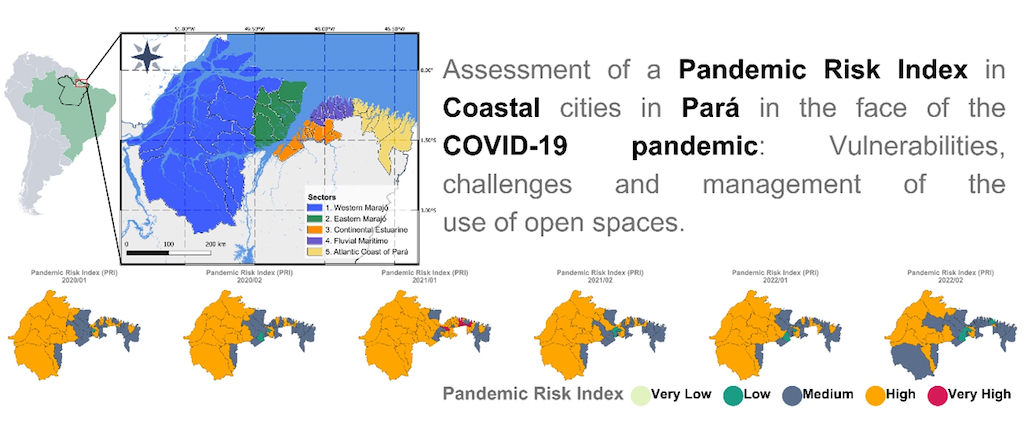
This study was conducted in municipalities situated within the Amazonian coastal zone, in the state of Pará, located in the northern region of Brazil. Pará is the second largest state of the country (1,245,870.704 km²) and the second most populous in the Northern region (8,116,132 inhabitants), according to the IBGE (2022). The Pará Coastal Zone (PCZ) encompasses 47 municipalities, covering approximately 10% of the state’s total land area, spanning almost 104 thousand km2 (Figure 1). The PCZ is subdivided into five sectors, each characterized by specific features as detailed in Table 1. The regional economy is based on agriculture, fishing, service industries, and tourism (IBGE, 2022). Much like the entire northern region, the PCZ faces disparities and inadequate access to essential services such as public healthcare, limited basic sanitation infrastructure, and elevated poverty indicators (IBGE, 2022; SNIS, 2022). In addition, access to many communities is limited by the vast hydrographic network, including the world’s largest river basin, the Amazon. In terms of the national Human Development Index (HDI) ranking, the state of Pará ranks 24th out of the 27 Brazilian states. Notably, nearly half of the coastal municipalities in Pará have a low Municipal Human Development Index-HDI (UNDP, 2010).
The tourist attraction of many municipalities within the PCZ predominantly centered around beach tourism, with a multitude of beaches stretching across over 1200 km of the coastal zone (Pereira et al., 2016; SEMAS, 2020). This region forms part of the world largest continuous expanse of mangroves in the world, offering a plethora of rivers, estuaries, and scenic coastal landscapes (Lacerda et al., 2022; Monteiro et al., 2009). The climate and precipitation in the coastal zone of Pará influence the viability of beach-related tourism. With the cessation of rainfall, the month of July emerges as the peak time for visiting beaches (Pereira et al., 2014; Sousa et al., 2017).
4. Methods
This study focuses on the development and implementation of a specific index called the Pandemic Risk Index (PRI). As previously mentioned, the PRI was created to assess the impact of socio-economic factors on the vulnerability of coastal municipalities to the pandemic and their ability to provide safe spaces. As mentioned before, it can be applied to any region that has been heavily affected by epidemics such as Covid-19.
The index comprises six sub-indexes, organized into three distinct categories, each contributing to the overall risk, as outlined in Table 2. Subsequently, the PRI was used to categorize 47 municipalities in the Pará coastal zone (Figure 1) over the period from 2020 to 2022.
(i) Block I: Pre-pandemic risk factor sub-indexes
Block I comprise two essential sub-indexes designed to provide a comprehensive understanding of pre-pandemic risk factors within the study area. As in other studies (e.g., Souza et al. 2020), we considered two sub-indexes to characterize municipalities in terms of their social profile: the Municipal Human Development Index (MHDI) and the Social Vulnerability Index (SVI). These sub-indexes are:
- Municipal Human Development Index (MHDI) Sub-Index: The MHDI sub-index encompasses over 200 socioeconomic indicators, considering factors such as health, education, and income (see Table 3). The MHDI is an adaptation of the global methodology used in Brazil since 1998. The MHDI takes into account the availability of indicators, showing the reality of Brazilian municipalities more accurately. The index was used because, as the most recent Human Development Report by the United Nations Development Programme (UNDP) in 2022 shows, it was strongly influenced by the Covid-19 pandemic, as the value of the global Human Development Index was lower than expected for two years in a row (2020 and 2021). The Index ranges from 0 to 1, where higher values, closer to 1, indicate a heightened risk in terms of human development. MHDI values were sourced from the Brazilian Institute of Geography and Statistics (IBGE) and subsequently converted into the MHDI scale, as presented in Table 4.
- Social Vulnerability Index (SVI) Sub-Index: The Social Vulnerability Index is complementary to the MHDI and is also an important metric for analyzing risks, especially in the context of the Covid-19 pandemic. Studies such as Cestari et al (2021) and Silva & Procópio (2020) recognize how the Social Vulnerability Index in the pandemic context accentuates the precarious conditions produced by social inequality, revealing the high fragility of the population vulnerable to infections caused by the virus. This sub-index measures the social vulnerability of the population within each municipality and it includes aspects related to the urban infrastructure, human capital and income and work (Table 3). Here, the SVI sub-index is categorized as a risk index and its values can vary from 0 to 1, as outlined in Table 4, with values approaching 1 signifying a greater degree of vulnerability within the municipality. These values were obtained from the Institute of Applied Economic Research (IPEA).
(ii) Block II: Financial and Health Assessment Sub-Indexes
Block II is tailored specifically for this study and focuses on evaluating the financial and health conditions of the municipalities under investigation. This block consists of two essential sub-indexes:
- Economic Capacity Index (ECI):The Economic Capacity Index assesses financial risk and the ability of the community to manage its financial resources efficiently, as economically disadvantaged populations are disproportionately affected by disasters (Flanagan et al., 2011). This index was used because a financially vulnerable municipality is unlikely to provide its residents with resources for disaster management. This reality disproportionately hurts poor people who do not have the income or assets to prepare for, mitigate or treat the causes of a potential disaster (Cutter et al., 2003). In this study, it considers indicators such as public revenues and expenses. Revenues encompass all taxes mandated by the Constitution, including taxes, fees, contributions, and others, which fund expenses, public investments, and personnel payments. Expenses include any expenditure related to the acquisition of products and services, contracting of works, and government purchases. Classification intervals were established by averaging the percentage ratios of expenditures to revenues among the top ten municipalities in Brazil with the highest MHDI (ranging from 0.822 to 0.862 in the year 2022). The average percentage of 90% was set as the "Very Low" risk limit. Values between 0% and 20% and above 90.1% were classified as "High risk," indicating either ineffective utilization of financial resources or a significant burden on the municipal budget. ECI values were subsequently transformed into a scale ranging from 0 to 1, with values closer to 1 representing a higher level of economic risk (as indicated in Table 4). Values above 100% were considered as 1 in the scale, accounting for municipalities in debt.
- Basic Sanitation Index (BSI): The Basic Sanitation Index reflects the health conditions of the population and includes three indicators: water supply, sanitary sewerage and urban waste collection. The inclusion of this indicator in the construction of the PRI provides an alarming picture of sanitation conditions in the North of Brazil. In Pará, according to the National Sanitation Information System (SNIS), in 2022 only 55% of the state’s population will have access to water, 9.2% to sanitation and 75% to solid waste collection. França (2020) and Silva et al. (2023) show in their studies a strong correlation between the low coverage of the sewerage and water networks and the high rate of Covid-19 infections in the state. For this study, the scores for these indicators were determined by considering the percentage of the population served by basic sanitation services for each indicator in the different regions of Brazil (North, Northeast, Southeast, South and Central-West). The average percentage of the population covered by water supply and urban waste collection in these regions was around 80% and 45% for sanitation. Therefore, we chose these percentages as an ideal reference for each variable to indicate a low level of risk, as shown in Table 4. The BSI was calculated by averaging the scores of the three aforementioned indicators, and the results were converted into a scale ranging from 0 to 1, with values closer to 1 indicating a higher level of health risk.
(iii) Block III: Epidemiological, Financial, and Prevention Data Sub-Indexes
Block III, developed exclusively for this study, encompasses epidemiological, financial, and prevention data collected between March 2020 and December 2022. It was analyzed every six months, except for the first half of 2020, as the first official case in the state of Pará was registered in March of that year. This block includes two critical sub-indexes:
- Epidemiological Index (EI): The epidemiological index provides information on the current situation of the pandemic, taking into account the level of incidence (number of infected cases) and the level of mortality (number of deaths). Until the end of 2022, Pará was the state with the highest number of infections and deaths from Covid-19 in the entire northern region of the country. Presenting these data as PRI indicators allows us to understand the consequences of the pandemic and relate them to the conditions of the municipalities studied. This sub-index aims to capture the severity and impact of the pandemic within each municipality. The classification of these sub-indexes follows guidelines outlined by the Consejo Interterritorial del Sistema Nacional de Salud on March 26, 2021 (www.sanidad.gob.es), as detailed below:
Incidence level = (number of infected*100000/total population)/26
Level of mortality = (number of deaths*1000000/total population)/26
Where: 100000 is the unit of measurement of cases
1000000 the unit of measurement of deaths
26 to number of weeks in an analysis semester
The values of the Incidence Level and Level of Mortality were individually transformed into a scale ranging from 0 to 1, where values closer to 1 indicate a higher level of epidemiological risk, as shown in Table 4. The EI is calculated by averaging the incidence and mortality levels and shares the same classification scale of 0 to 1, where values closer to 1 indicate the highest level of risk.
- Prevention and Control Index (PCI): The Prevention and Control Index focuses on the government’s response to the pandemic. From the beginning of the pandemic, the Brazilian government adopted a negative attitude and underestimated the impact of the crisis, which delayed the public health measures needed to control the epidemic and exacerbated the spread of the disease, increasing the number of cases and deaths that could have been avoided (Szwarcwald et al., 2022). In this sub-index, we include indicators such as the number of people vaccinated and the allocation of financial resources from different sources, including own, state, federal and consolidated resources. These indicators reflect the government’s efforts in terms of prevention and control measures and the allocation of resources to meet the challenges posed by the pandemic. The Prevention Rate (PR) is determined by the number of doses administered per semester. It is important to note that there was no vaccination in the first year of the pandemic. The PR calculation formula is as follows:
PR = ((number of 1st dose vaccinations*1) + (number of 2nd dose vaccinations*2) + (number of 3rd dose vaccinations*3) + (number of 4th dose vaccinations*4))/(population*4) + cumulative value from the previous semester)
The Control Rate (CR) is based on the financial resources allocated to combat the pandemic, which were obtained every six months. This rate was normalized by the total population and divided by the value of the semester with the highest average resources. It is calculated as follows:
CR = (value/total population) / R$ 996.00
In this equation, the variable “value” represents the municipal financial amount for each semester. It is divided by the total population and further divided by R$ 996.00, which corresponds to the highest average per capita of resources among the studied semesters (equivalent to $188 per capita).
The values of the Prevention Rate and Control Rate are separately rescaled into a range from 0 to 1, where values closer to 1 indicate higher levels of risk, as indicated in Table 4. The PCI is determined by averaging the Prevention Rate and Control Rate, following the same rating scale of 0 to 1, where values closer to 1 indicate higher levels of risk.
The Pandemic Risk Index (PRI) is calculated as the arithmetic mean of all indicators, ranging from 0 and 1, as shown in Table 5. A value closer to 1 suggests a higher risk to the population during the pandemic.
To examine the dynamic relationships between the indicators within the sub-indexes and their correlation with the final PRI value, Spearman’s rank correlation coefficient (r) was computed. This analysis was conducted using the STATISTICA 12.5 software (StatSoft, 2014).
5. Results
To analyze the risk conditions in the PCZ, the sub-indexes representing the municipalities before the pandemic (Block I and II) were assessed, focusing on social, economic, and sanitary parameters. Subsequently, the sub-indexes during the pandemic (Block III) that reflect epidemiological aspects and crisis control measures were analyzed on a semester basis.
5.1. Risk Condition before the Pandemic
The MDHI indicated that 46.8% of the studied municipalities were at a “High risk” level in terms of human development. Concerning the SVI, a substantial 57.4% of the municipalities were classified under a “Very high-risk” category.
Prior to the pandemic, the financial situation of these municipalities was far from ideal. The ECI results revealed that 80.9% of them faced a “Very high-risk” financial condition, indicating that their annual budgets exceeded the revenues. Notably, the indicators within this sub-index (Revenues and Expenses) showed a positive correlation with the MDHI (Table 6).
The BSI findings showed that 48.9% of the municipalities in the study area had “Low-risk” sanitary conditions. This sub-index takes into account parameters like water supply, sewage management, and solid waste collection. Importantly, the absence of one parameter may be compensated by the presence of another, particularly given the lower distribution rates of these services in the northern region compared to the rest of the country. The BSI indicators exhibited significant and positive correlations with the indicators of Municipal Revenues and Expenses from the ECI and significant negative correlations with the MDHI (Table 6).
The spatial distribution of the risk classification of each sub-index before the pandemic is shown in Figure 2.
5.2. Risk Conditions during the Pandemic
Figure 3 illustrates the evolving risk levels throughout the pandemic, as measured by the EI sub-index. At the onset of the pandemic in the first semester of 2020, approximately 70.2% of the municipalities fell into the “Medium risk” category. However, the first semester of 2021 emerged as the most challenging period, with a remarkable 74.4% of the municipalities facing “High or Very high risk” conditions. This underscores the severe impact the pandemic had during that particular period.
In 2022, a decline in the number of infected and fatalities, coupled with advances in vaccination efforts, had a notably positive effect on the EI results. Consequently, the majority of municipalities were classified as “Low” or “Very low risk”, with percentages of 42.6% and 59.6% in the first and second semesters, respectively.
The correlation between the EI indicators (Number of Covid-19 cases and deaths) and the PCI indicators, particularly the number of vaccinated individuals (Supplementary Materials, Table S1), revealed significant and positive associations. This strongly suggests that the vaccination campaign played a pivotal role in mitigating pandemic risk within the studied municipalities.
The PCI sub-index (Figure 4) reflects government efforts to mitigate the impacts of the pandemic, encompassing both the virus Prevention Rate (vaccination) and the Control Rate (financial resources allocated to crisis management). In 2020, vaccination data was unavailable, and during the first semester, 70.2% of the municipalities were categorized as “Medium-risk”. As previously mentioned, the first half of 2021 proved to be particularly challenging for numerous municipalities, with a significant surge in infections and fatalities. This led most of them into a “High risk” category. Despite the start of vaccination campaigns during this period, the PCI indicated that 76.6% of the municipalities still remained in a “High-risk” condition.
In the following year, while conditions improved, a substantial proportion of the municipalities continued to exhibit high PCI values (51% and 31.9% in the two semesters of 2022, respectively). This suggests that persistent challenges and difficulties were encountered in effectively managing the pandemic and reducing the risk levels across the studied municipalities.
5.3. Overall Risk Condition
The average PRI for all municipalities in the PCZ consistently fell within the “Medium risk” category, ranging from 53.1% to 63.7% during five of the analyzed semesters. However, in the first semester of 2021, the average PRI spiked to 70.2%, indicating a “High risk” classification. This increase was primarily attributed to the challenging epidemiological situation characterized by a concerning trend of rising Covid-19 infections and deaths (Figure 5A).
When evaluating the PRI variations across different sectors of the PCZ, a noticeable disparity in risk levels became evident. In the first semester of 2021, all PCZ sectors shared a "High risk" status. Sector 1 (Western Marajó), however, consistently exhibited the most unfavorable PRI values, maintaining a “High-risk” classification throughout all semesters. In contrast, Sector 3 (Continental Estuarine) consistently secured the most favorable PRI values within the risk scale, holding a "Medium risk" classification (Figure 5B).
This divergence in risk levels among sectors is closely linked to their geographic location. Sector 3, which includes the state capital of Belém and its metropolitan municipalities, had better access to human and financial resources, contributing to more favorable outcomes in comparison to other sectors. This disparity underscores the importance of considering each region’s unique characteristics when assessing risks and implementing prevention and control measures. It highlights the necessity of directing resources and efforts to more vulnerable areas with elevated risk levels to ensure the safety and well-being of their populations.
On the other hand, Sectors 1 (Western Marajó) and 4 (Fluvial Maritime) consistently demonstrated the poorest classifications across the analyzed semesters. Geographical remoteness and limited access to basic services in municipalities within these sectors led to lower indicator values, resulting in significantly heightened risk levels.
Several coastal municipalities, renowned for their tourist significance, including Soure, Salvaterra, Barcarena, Bragança, and Salinópolis, consistently maintained "Medium risk" classifications throughout all analyzed semesters. In contrast, municipalities such as Quatipuru, Chaves, Gurupá, Maracanã, and several others consistently held an average classification of "High risk" across all six semesters. Figure 6 illustrates the temporal variations in classification for each of the 47 municipalities in the PCZ.
6. Discussion
Numerous studies have contributed valuable insights into risk profiles during these challenging times (Chang and McAleer, 2020; Coccia, 2020; Ambika et al., 2021; Pang et al., 2021). However, the Pandemic Risk Index (PRI) has been specifically designed to assess vulnerability and coping capacity in response to the Covid-19 pandemic while being applied to one of the most impoverished regions of the country, severely affected by the virus (Mendonça et al., 2020; Sardinha et al., 2021; Silva et al., 2021). This was made possible through the comprehensive array of PRI indicators, facilitating a holistic analysis of the risk factors impacting the study area. Additionally, the temporal classification offers a comprehensive overview, enabling the identification of issues affecting the studied municipalities during each semester since the pandemic’s onset.
To interpret the PRI results effectively, it is essential to discuss the pre-pandemic socioeconomic conditions, the epidemiological situation throughout the pandemic, the governmental responses at federal, state, and municipal levels, and the implications of the PRI for future pandemic scenarios.
6.1. Pre-Pandemic Socioeconomic Conditions
Before the pandemic, many of the municipalities, especially those located farther from the state capital, faced challenges in accessing basic services. These issues are pronounced in the PCZ, with the Marajó Island municipalities, such as Bagre, Chaves, and Melgaço, ranking among the lowest in the Human Development Index across the country. The SVI plays a crucial role in risk analysis, given its significant impact on preparedness, response, and recovery from health crisis like the Covid-19 pandemic (Aksha et al., 2019; Coelho et al., 2020). The North region of Brazil has municipalities with the highest levels of social vulnerability in the country (Hummell et al., 2016; Souza et al., 2020), and studies indicate that regions with higher social vulnerability experienced higher mortality rates during the Covid-19 pandemic (Fallah-Aliabadi et al., 2022). Afuá and Breves, in Sector 1 of the PCZ, exhibited the worst SVI and PRI results among the coastal municipalities studied.
The positive correlation between the ECI and the MHDI is attributed to municipal income’s role in calculating the MHDI, reflecting the population’s standard of living. The PRI results reveal concerning data, indicating that many municipalities faced poor economic conditions, with Sector 1 municipalities, such as Afuá and Bagre, topping the economic risk rankings. Wealthier countries effectively managed the Covid-19 crisis (Schellekens et al., 2020; Ghecham, 2022), while poorer regions were more susceptible to its impacts (Dauderstädt, 2022).
Sanitation coverage and access to water supply was insufficient in many Brazilian municipalities, a significant concern given the importance of efficient sewage systems in disease prevention, especially in the context of Covid-19 (Hannah et al., 2020; Donde et al., 2021). According to the National Sanitation Information System, in 2021, only 8.4% of the total population of the state of Pará was served by a sewage system. This is reflected in the study area in the fact that 41 of the 47 municipalities analyzed lack a sewage system.
The pre-pandemic socioeconomic conditions paint a worrisome picture, with many municipalities, particularly those in sector 1 of the PCZ, exhibiting low human development, high social vulnerability, limited economic capacity, and inadequate sanitation coverage. These challenges are prevalent throughout Brazil, especially in the North region, characterized by lower social and economic indicators (IBGE, 2022; IPEA, 2022). Access in this sector is limited because there are almost no roads, and in many municipalities the only transport is by river. The difficult access to many municipalities, such as Afuá and Breves, also contributes to the precarious conditions and therefore to the increased risks.
6.2. Pandemic Risk Conditions and Actions: PRI Application
During 2020 (first wave of infection) and the first half of 2021 (second wave), the EI sub-index indicated elevated risk levels in the municipalities of the Pará Coastal Zone. These results align with infection and death peaks during the same periods (Moura et al., 2022). The North region of Brazil, particularly the state of Pará, experienced earlier peaks during the waves, potentially due to the pre-pandemic socioeconomic conditions discussed earlier (e.g., Moura et al., 2022; Siqueira et al., 2023).
The PCI sub-index exhibited favorable results, signifying reduced risk in coastal municipalities during the year 2022 due to the increased vaccination rates and declining Covid-19-related deaths.
The ineffective leadership and the politicization of immunization contributed to a decreased vaccine adherence (Galhardi et al. 2022). The consequence was an increase in the number of deaths and the emergence of new virus variants, such as the P.1 variant (known as gama) originated in Manaus, the capital of the state of Amazonas (Genomahcov/FIOCRUZ, 2022; Silva and Pena, 2021).
State governments, like Pará’s, responded to the first Covid-19 case by implementing measures, including school closures, restrictions on non-essential businesses, and the closure of beaches and recreational areas. In Belém, the capital of Pará, the state government took steps to improve the public health system by constructing new hospitals and increasing the number of beds available to cater to the population’s needs. These actions improved rankings in the PRI for certain metropolitan areas but not for geographically distant municipalities, where disparities may be rooted in cultural and socio-economic factors.
6.3. The PRI and the Coastal Zone
The decision to test the PRI in the coastal municipalities of Pará state was driven by the unique context of these areas, particularly their extensive use of open spaces such as beaches. While the use of beaches for leisure activities was restricted in the first semester of 2020 due to Covid-19 restrictions, there was a significant increase in their use in summer of 2020 and 2021 (Pereira et al., 2021). Thus, this assessment aims to shed light on the risks associated with open spaces in these areas, considering factors such as local health infrastructure, adherence to preventive measures, and the epidemiological situation.
Risk management deficiencies left municipalities ill-prepared to handle the pandemic, especially in managing open recreational spaces, including beaches and bathing areas. Beachgoers in some areas such as Atalaia (Salinópolis) and Ajuruteua (Bragança) showed low adherence to protective measures such as masks, alcohol gel and social distancing (Pereira et al., 2021). Interestingly, the lack of public services, such as cleaning, which further increased the risk, was perceived negatively by beachgoers, who did not feel completely safe during these periods.
The PRI analysis revealed distinct temporal and spatial patterns, pinpointing sectors, municipalities, and specific semesters as “High risk” areas during the pandemic. Sectors 1 and 4, exhibited elevated risk conditions, particularly in the first half of 2021 during the initial wave of infections. Sector 4 encompasses coastal towns where open spaces are extensively used for leisure activities (Sousa et al., 2011, 2016). Notably, sector 5, the most touristic area within the PCZ, experienced its highest PRI value in the first half of 2021.
Many of the PCZ’s beaches are situated within environmental protection areas and are subject to close monitoring by environmental defense agencies, particularly in sectors 1 and 2 (Pessoa et al., 2019). However, beach inspections and closures only occurred during the first infection peak between April and May 2020. In July, despite the rising number of infections, beaches were reopened to visitors, resulting in frequent cases of overcrowding (Globo G1 Pará, 2020; Jornal Liberal, 2020).
Sector 5 comprises most of the PCZ’s leisure beaches, and the approach to beach management during the pandemic was relatively consistent. Mayors of coastal municipalities in this sector, such as Bragança and Salinópolis, aligned with state guidelines and issued municipal decrees imposing social distancing measures, including closure periods between April and June 2020 (Salinópolis Municipal Decree No. 015/2020; Bragança Municipal Decree No. 069/2020). However, these same beaches resumed welcoming visitors during the peak visitation in July 2020. During this period, a low perception of risk and non-compliance with sanitary measures significantly heightened the risk of infections among regular beachgoers (Pereira et al., 2021).
6.4. Implications of the PRI for Future Pandemic Scenarios
The information resulting from the application of the Pandemic Risk Index is important and can have an impact on the authorities’ management actions, providing input for decision-making based on policies to face the challenges of the pandemic or any future health crisis. This study provides an overview of the risks caused by the pandemic that goes beyond factors related to recreational activities in open environments to understanding how the lack of basic services and infrastructure affect regions with a low level of human development and a lack of financial resources, as is the case in the Amazon coastal region.
When applied to the municipalities of the Pará Coastal Zone, the PRI results showed that the selected indicators provide significant information on the economic, social and health conditions in the area studied, signaling the peaks of infection, mortality rates and the effectiveness or otherwise of government measures. This information has provided an in-depth assessment of the understanding of risk dynamics, indicating the vulnerability of each municipality studied, which goes beyond health issues and encompasses broader socio-economic and political factors.
With regard to recreational areas, the future use of this methodology for risk analysis in health crisis situations could help mitigate the negative effects on these spaces, making them relatively safer environments. In addition, the temporal nature of the Index analysis allows many recreational sites, which are limited by climatic and seasonal factors, to have the necessary organization and attention from the authorities, so that there are no economic and social implications for these cities that depend largely on the tourism sector.
Finally, this work suggests that governments should address these concerns, especially in more remote areas with limited services and access, and that monitoring indicators over time is essential to assess whether decision-making is efficient and thus ensure more promising scenarios in possible future health crisis scenarios.
7. Conclusions
The PRI is a valuable tool designed to assess vulnerability and coping capacity of municipalities of the Pará Coastal Zone during the Covid-19 pandemic that provides a holistic analysis of risk factors.
The municipalities of the PCZ faced significant challenges before the pandemic such as low developed social and poor economic conditions, and lack of access to sewage systems. This pre-existing vulnerability played a significant role in the region’s response to the pandemic and contributed to the overall risk in the area.
The PRI analysis permitted to identify specific sectors, municipalities, and semesters that experienced the highest risks during the pandemic. Sector 1 (Western Marajó) obtained the worst ratings among the sectors due to geographical, health, social and economic issues, with all municipalities facing the most elevated risks in the initial half of 2021.
Open recreational spaces, like beaches, contributed to risk in the coastal region. A lack of risk perception and non-compliance with safety measures among beachgoers further heightened the risk of infections, particularly during peak visitation periods.
Government responses at all levels played a critical role in shaping the PRI results. Effective governance, such as improving public health infrastructure and imposing containment measures, positively influenced the PRI rankings.
The PRI has broader implications for future pandemic-like scenarios. It emphasizes the importance of addressing not only health-related concerns but also socioeconomic and political factors. The monitoring of PRI indicators can support timely decision-making for public safety.
Impact Statement
This paper provides us with a complex risk panorama that goes beyond the factors aimed at tourism in open environments and allows us to understand in depth old problems that plague regions with a low level of human development and a lack of financial resources, as occurs in the Amazon coastal region. The information arising from the application of the Pandemic Index Risk is undoubtedly important and has an impact on the management actions taken by authorities and managers specializing in tourism.
The future use of this methodology for risk analysis in disaster situations, such as the Covid-19 pandemic, helps to mitigate the effects of the advance of the crisis on these spaces, enabling them to be safe environments for tourism. Furthermore, the temporal nature of the Index analysis allows many tourist locations, which are limited by climatic and seasonal factors, the necessary organization and attention on the part of the authorities, so that there are no economic and social implications for these cities that depend on large part of the tourism sector.
Supplementary Materials
The following supporting information can be downloaded at the website of this paper posted on Preprints.org.
Conflicts of Interest
No conflicts of interest to report.
References
- Aksha, S. K., Juran, L., Resler, L. M., & Zhang, Y. (2019). An analysis of social vulnerability to natural hazards in Nepal using a modified social vulnerability index. International Journal of Disaster Risk Science, 10, 103-116. [CrossRef]
- Alfano, V., & Ercolano, S. (2020). The efficacy of lockdown against Covid-19: a cross-country panel analysis. Applied Health Economics and Health Policy, 18, 509-517. [CrossRef]
- Ambika, S., Basappa, U., Singh, A., Gonugade, V., & Tholiya, R. (2021). Impact of social lockdown due to COVID-19 on environmental and health risk indices in India. Environmental Research, 196, 110932. [CrossRef]
- Amorim, G. S., Almeida, V. S. G., de Siqueira Mendes, F. L., de Almeida Barbosa, H. D., & Hamoy, J. A. (2021). Praia do Farol, Cotijuba (PA), Percepções e Uso pelo Turismo. Revista Hospitalidade, 27-46.
- Asahi, K., Undurraga, E. A., Valdés, R., & Wagner, R. (2021). The effect of COVID-19 on the economy: Evidence from an early adopter of localized lockdowns. Journal of Global Health, 11. [CrossRef]
- Asfahan, S., Shahul, A., Chawla, G., Dutt, N., Niwas, R., & Gupta, N. (2020). Early trends of socio-economic and health indicators influencing case fatality rate of COVID-19 pandemic. Monaldi Archives for Chest Disease, 90(3). [CrossRef]
- Atalan, A. (2020). Is the lockdown important to prevent the COVID-19 pandemic? Effects on psychology, environment and economy-perspective. Annals of Medicine and Surgery, 56, 38-42. [CrossRef]
- Barcellos, C., Feitosa, P., Damacena, G. N., & Andreazzi, M. A. (2010). Highways and outposts: economic development and health threats in the central Brazilian Amazon region. International Journal of Health Geographics, 9(1), 1-10. [CrossRef]
- Behrens, J., Løvholt, F., Jalayer, F., Lorito, S., Salgado-Gálvez, M. A., Sørensen, M., & Vyhmeister, E. (2021). Probabilistic tsunami hazard and risk analysis: A review of research gaps. Frontiers in Earth Science, 9, 628772. [CrossRef]
- Bowen, R. E., & Riley, C. (2003). Socio-economic indicators and integrated coastal management. Ocean & Coastal Management, 46(3-4), 299-312. [CrossRef]
- Burton, C. G., Toquica, M., Asad, K. M. B., & Musori, M. (2022). Validation and development of composite indices for measuring vulnerability to earthquakes using a socio-economic perspective. Natural Hazards, 111(2), 1301-1334. [CrossRef]
- Câmara, S. F., Pinto, F. R., da Silva, F. R., de Oliveira Soares, M., & De Paula, T. M. (2021). Socioeconomic vulnerability of communities on the Brazilian coast to the largest oil spill (2019–2020) in tropical oceans. Ocean & Coastal Management, 202, 105506. [CrossRef]
- Carneiro, J., & Allis, T. (2021). How does tourism move during the COVID-19 pandemic? Revista Brasileira de Pesquisa em Turismo, 15. [CrossRef]
- Cestari, V. R. F., Florêncio, R. S., Sousa, G. J. B., Garces, T. S., Maranhão, T. A., Castro, R. R., ... & Moreira, T. M. M. (2021). Vulnerabilidade social e incidência de COVID-19 em uma metrópole brasileira. Ciência & Saúde Coletiva, 26, 1023-1033. [CrossRef]
- Chang, C. L., & McAleer, M. (2020). Alternative global health security indexes for risk analysis of COVID-19. International Journal of Environmental Research and Public Health, 17(9), 3161. [CrossRef]
- Coccia, M. (2020). An index to quantify environmental risk of exposure to future epidemics of the COVID-19 and similar viral agents: Theory and practice. Environmental Research, 191, 110155. [CrossRef]
- Coccia, M. (2021). Different effects of lockdown on public health and economy of countries: Results from first wave of the COVID-19 pandemic. Journal of Economics Library, 8(1), 45-63. [CrossRef]
- Coelho, F. C., Lana, R. M., Cruz, O. G., Villela, D. A., Bastos, L. S., Pastore y Piontti, A., Davis, J. T., Vespignani, A., Codeço, T. C., & Gomes, M. F. (2020). Assessing the spread of COVID-19 in Brazil: Mobility, morbidity and social vulnerability. PLoS One, 15(9), e0238214. [CrossRef]
- Consejo Interterritorial del Sistema Nacional de Salud, 2020. Actuaciones de respuesta coordinada para el control de la transmisión de Covid-19. https://www.sanidad.gob.es/profesionales/saludPublica/ccayes/alertasActual/nCov/documentos/Actuaciones_respuesta_Covid_26.03.2021.pdf (accessed 17 June 2023).
- Cutter, S. L., Boruff, B. J., & Shirley, W. L. (2012). Social vulnerability to environmental hazards. In Hazards vulnerability and environmental justice (pp. 143-160). Routledge.
- Dauderstädt, M. (2022). International inequality and the COVID-19 pandemic. Intereconomics, 57(1), 40-46. [CrossRef]
- Donde, O. O., Atoni, E., Muia, A. W., & Yillia, P. T. (2021). COVID-19 pandemic: Water, sanitation and hygiene (WASH) as a critical control measure remains a major challenge in low-income countries. Water Research, 191, 116793. [CrossRef]
- Espirito-Santo, C. M., & Szlafsztein, C. F. (2016). Gestão de risco de desastres em planos diretores de três municípios da zona costeira do estado do Pará, Brasil. Revista de Gestão Costeira Integrada-Journal of Integrated Coastal Zone Management, 16(2), 223-230. [CrossRef]
- Fallah-Aliabadi, S., Fatemi, F., Heydari, A., Khajehaminian, M. R., Lotfi, M. H., Mirzaei, M., & Sarsangi, A. (2022). Social vulnerability indicators in pandemics focusing on Covid-19: A systematic literature review. Public Health Nursing, 39(5), 1142-1155. [CrossRef]
- Flanagan, B. E., Gregory, E. W., Hallisey, E. J., Heitgerd, J. L., & Lewis, B. (2011). A social vulnerability index for disaster management. Journal of homeland Security and Emergency Management, 8(1), 0000102202154773551792. [CrossRef]
- Freitas, L. R., Duarte, E. C., & Garcia, L. P. (2016). Trends of main indicators of leprosy in Brazilian municipalities with high risk of leprosy transmission, 2001–2012. BMC Infectious Diseases, 16, 1-10. [CrossRef]
- França, S. A. S. (2020). A importância do direito à água e ao saneamento para o combate à Covid-19 (Paper 468). Papers do NAEA, 1(1). [CrossRef]
- Fundação Oswaldo Cruz (Fiocruz) - MonitoraCovid-19, 2020. Instituto de Comunicação e Informação Científica e Tecnológica em Saúde (ICICT). https://bigdata-covid19a.icict.fiocruz.br/ (accessed 12 June 2023).
- Galhardi, C. P., Freire, N. P., Fagundes, M. C. M., Minayo, M. C. D. S., & Cunha, I. C. K. O. (2022). Fake News and vaccine hesitancy in the COVID-19 pandemic in Brazil. Ciência & Saúde Coletiva, 27, 1849-1858. [CrossRef]
- Garbuio, M. E. M. S., & Ribeiro, E. A. W. (2020). A COVID-19 e sua influência no comportamento e fruição das praias marítimas urbanas de Balneário Camboriú, Santa Catarina, Brasil. Revista Turismo em Análise, 31(3), 455-476. [CrossRef]
- Ghecham, M. A. (2022). The impact of COVID-19 on economic growth of countries: What role has income inequality in it? Economies, 10(7), 158. [CrossRef]
- Globo G1 Pará (2020). Veranistas lotam praias do Pará no terceiro final de semana de julho, mesmo com pandemia. https://g1.globo.com/pa/para/noticia/2020/07/20/veranistas-lotam-praias-do-para-no-terceiro-final-de-semana-de-julho-mesmo-com-pandemia.ghtml (accessed 22 August 2022).
- Guimarães, B. G., Begalli, M., Magalhães, P., Chiroque-Solano, P. M., Maziviero, M. C., & Guedes Pinto, J. P. (2023). The Covid-19 Protection Index (CPI) as a Way to Identify Vulnerabilities and Disparities Across Brazilian Territories. In Geohazards and Disaster Risk Reduction: Multidisciplinary and Integrated Approaches (pp. 459-482). Cham: Springer International Publishing. [CrossRef]
- Hannah, D. M., Lynch, I., Mao, F., Miller, J. D., Young, S. L., & Krause, S. (2020). Water and sanitation for all in a pandemic. Nature Sustainability, 3(12), 1068-1068. [CrossRef]
- Hummell, B. M.L., Cutter, S. L., & Emrich, C. T. (2016). Social vulnerability to natural hazards in Brazil. International Journal of Disaster Risk Science, 7, 111-122. [CrossRef]
- Instituto Brasileiro de Geografia e Estatísticas (IBGE), 2022. Censo Cidades. https://cidades.ibge.gov.br/brasil/pa/braganca/panorama (accessed12 June 2023).
- Instituto de Pesquisa Econômica Aplicada (IPEA), 2022. Atlas da Vulnerabilidade Social das Cidades Brasileiras. Available online: http://ivs.ipea.gov.br (accessed 13 June 2023).
- Jornal Liberal 1ª Edição, 2020. Praias do distrito de Outeiro ficam lotadas no final de semana, apesar da pandemia. https://globoplay.globo.com/v/8747309/?s=0s (accessed 2 September 2022).
- Junior, S. G., Pamplona, V. M., Corvelo, T. C., & Ramos, E. M. (2014). Quality of life and the risk of contracting malaria by multivariate analysis in the Brazilian Amazon region. Malaria Journal, 13, 1-7. [CrossRef]
- Kane, B., Zajchowski, C. A., Allen, T. R., McLeod, G., & Allen, N. H. (2021). Is it safer at the beach? Spatial and temporal analyses of beachgoer behaviors during the COVID-19 pandemic. Ocean & Coastal Management, 205, 105533. [CrossRef]
- Khalatbari-Soltani, S., Cumming, R. C., Delpierre, C., & Kelly-Irving, M. (2020). Importance of collecting data on socioeconomic determinants from the early stage of the COVID-19 outbreak onwards. J Epidemiol Community Health, 74(8), 620-623. [CrossRef]
- Khamung, R., & Hsu, P. S. (2022). Social distancing and beach open spaces: recreational experiences of tourists at Bangsaen beach after the pandemic. Cogent Social Sciences, 8(1), 2143056. [CrossRef]
- Lacerda, L. D., Ferreira, A. C., Borges, R., & Ward, R. (2022). Mangroves of Brazil. In Mangroves: Biodiversity, Livelihoods and Conservation (pp. 521-563). Singapore: Springer Nature Singapore. [CrossRef]
- Lal, P., Kumar, A., Prasad, A., Kumar, S., Saikia, P., Dayanandan, A., & Khan, M. L. (2022). COVID-19 pandemic hazard–risk–vulnerability analysis: A framework for an effective Pan-India response. Geocarto International, 37(25), 9098-9109. [CrossRef]
- Lins-de-Barros, F. M. (2017). Integrated coastal vulnerability assessment: A methodology for coastal cities management integrating socioeconomic, physical and environmental dimensions-Case study of Região dos Lagos, Rio de Janeiro, Brazil. Ocean & Coastal Management, 149, 1-11. [CrossRef]
- Medina, N., Abebe, Y. A., Sanchez, A., & Vojinovic, Z. (2020). Assessing socioeconomic vulnerability after a hurricane: A combined use of an index-based approach and principal components analysis. Sustainability, 12(4), 1452. [CrossRef]
- Mendonça, M. H. M., Silva Junior, A. G., Cunha, C. L. F., & Latgé, P. K. (2020). A pandemia COVID-19 no Brasil: ecos e reflexos nas comunidades periféricas. APS em Revista, 2(2), 162-168. [CrossRef]
- Monteiro, M. C., Pereira, L. C. C., de Oliveira Guimarães, D., & da Costa, R. M. (2009). Ocupação territorial e variações morfológicas em uma praia de macromaré do litoral Amazônico, Ajuruteua-PA, Brasil. Revista de Gestão Costeira Integrada-Journal of Integrated Coastal Zone Management, 9(2), 91-99.
- Moraes, B. C. D., Costa, J. M. N. D., Costa, A. C. L. D., & Costa, M. H. (2005). Variação espacial e temporal da precipitação no estado do Pará. Acta amazonica, 35, 207-214. [CrossRef]
- Moura, E. C., Cortez-Escalante, J., Cavalcante, F. V., Barreto, I. C. D. H. C., Sanchez, M. N., & Santos, L. M. P. (2022). Covid-19: evolução temporal e imunização nas três ondas epidemiológicas, Brasil, 2020–2022. Revista de Saúde Pública, 56. [CrossRef]
- Neca, B. R., & Rechia, S. (2020). Ficar em casa ou ocupar os espaços de lazer ao ar livre? Reflexões e possibilidades para uma apropriação segura dos diferentes espaços públicos de lazer em tempos de pandemia. LICERE-Revista do Programa de Pós-graduação Interdisciplinar em Estudos do Lazer, 23(4), 471-509. [CrossRef]
- Nesticò, A., & Maselli, G. (2020). Sustainability indicators for the economic evaluation of tourism investments on islands. Journal of Cleaner Production, 248, 119217. [CrossRef]
- Nicolodi, J. L., & Pettermann, R. M. (2011). Vulnerability of the Brazilian coastal zone in its environmental, social, and technological aspects. Journal of Coastal Research, 1372-1379.
- Oliveira, S. M. O., Pereira, L. C. C., Vila-Concejo, A., Gorayeb, A., De Sousa, R. C., Souza-Filho, P. W. M., & Da Costa, R. M. (2011). Natural and anthropogenic impacts on a macrotidal sandy beach of the Brazilian Amazon (Ajuruteua, Pará) guidelines for coastal management. Journal of Coastal Research, 1385-1389.
- Pang, S., Hu, X., & Wen, Z. (2021). Environmental risk assessment and comprehensive index model of disaster loss for COVID-19 transmission. Environmental Technology & Innovation, 23, 101597. [CrossRef]
- Pará, 2020. Decreto estadual nº 609 de 16 de março de 2020. Dispõe sobre as medidas de enfrentamento, no âmbito do Estado do Pará, à pandemia da corona vírus Covid-19.
- Pará, 2020. Decreto estadual nº 777 de 23 de maio de 2020. Dispõe sobre as medidas de enfrentamento, no âmbito do Estado do Pará, à pandemia da corona vírus Covid-19.
- Pereira, L. C. C., Oliveira, S. M. O., Costa, R. M., Costa, K. G., & Vila-Concejo, A. (2013). What happens on an equatorial beach on the Amazon coast when La Niña occurs during the rainy season? Estuarine, Coastal and Shelf Science, 135, 116-127. [CrossRef]
- Pereira, L. C. C., de Sousa Felix, R. C., Dias, A. B. B., Pessoa, R. M. C., Silva, B. R. P., Costa Baldez, C. A., & Jimenez, J. A. (2021). Beachgoer perceptions on health regulations of COVID-19 in two popular beaches on the Brazilian Amazon. Ocean & Coastal Management, 206, 105576. [CrossRef]
- Pereira, L. C. C., Vila-Concejo, A., & Short, A. D. (2016). Coastal morphodynamic processes on the macro-tidal beaches of Pará state under tidally-modulated wave conditions. Brazilian Beach Systems, 95-124. [CrossRef]
- Pereira, L. C. C., Vila-Concejo, A., Costa, R. M., & Short, A. D. (2014). Managing physical and anthropogenic hazards on macrotidal Amazon beaches. Ocean & Coastal management, 96, 149-162. [CrossRef]
- Pessoa, R. M. C., Pereira, L. C. C., Sousa, R. C., Magalhães, A., & Costa, R. M. (2013). Recreational carrying capacity of an Amazon macrotidal beach during vacation periods. Journal of Coastal Research, (65), 1027-1032. [CrossRef]
- Pessoa, R. M.C., Jiménez, J. A. Q., Costa, R. M., & Pereira, L. C. C. (2019). Federal conservation units in the Brazilian amazon coastal zone: An adequate approach to control recreational activities? Ocean and Coastal Management, 178, 104856-1. [CrossRef]
- Pinto, K. S. T., Pereira, L. C. C., Vila-Concejo, A., Gorayeb, A., Sousa, R. C., & Da Costa, R. M. (2011). Effects of the lack of coastal planning on water quality and land use on a macrotidal beach (Atalaia, Pará) in the Amazon Region. Journal of Coastal Research, 1401-1405.
- Rajaonson, J., & Tanguay, G. A. (2022). An exploratory analysis of the negative environmental impacts of pandemic tourism on Canadian destinations. Annals of Tourism Research Empirical Insights, 3(2), 100071. [CrossRef]
- Rede Genômica Fundação Oswaldo Cruz (Genomahcov/FIOCRUZ), 2020. https://www.genomahcov.fiocruz.br/ (accessed 16 June 2023).
- Robinson, J. M., Brindley, P., Cameron, R., MacCarthy, D., & Jorgensen, A. (2021). Nature’s role in supporting health during the COVID-19 pandemic: A geospatial and socioecological study. International Journal of Environmental Research and Public Health, 18(5), 2227. [CrossRef]
- Rocha, R., Atun, R., Massuda, A., Rache, B., Spinola, P., Nunes, L., & Castro, M. C. (2021). Effect of socioeconomic inequalities and vulnerabilities on health-system preparedness and response to COVID-19 in Brazil: a comprehensive analysis. The Lancet Global Health, 9(6), e782-e792. [CrossRef]
- Rodrigues, J. C., & Rodrigues, J. C. (2020). Condições de desigualdades e vulnerabilidades socioespaciais em cidades da Amazônia paraense: elementos promovedores da expansão e dispersão da Covid-19? Hygeia: Revista Brasileira de Geografia Médica e da Saúde, (Especial), 132. [CrossRef]
- Rogerson, J. M. (2021). Tourism business responses to South Africa’s covid-19 pandemic emergency. Geo Journal of Tourism and Geosites, 35(2), 338-347. [CrossRef]
- Santos, J. V. L., Prudente, J. V., Parente-Ribeiro, L., & Lins-de-Barros, F. (2020). Efeitos e desafios da pandemia da Covid-19 para a economia de praia: o caso do negócio de barracas no Rio de Janeiro, Brasil. [CrossRef]
- Santos, M. R. D. S., Vitorino, M. I., Pereira, L. C. C., Pimentel, M. A. D. S., & Quintão, A. F. (2021). Socioenvironmental Vulnerability to Climate Change: Conditions of Coastal Municipalities in Pará State. Ambiente & Sociedade, 24. [CrossRef]
- Sardinha, D. M., Loiola, R. S. P., Ferreira, A. L. D. S., de Sá, C. A. F., Rodrigues, Y. C., Lima, K. V. B., Guimarães, R. J. P. S., & Lima, L. N. G. C. (2021). Risk factors associated with the severity of COVID-19 in a region of the Brazilian Amazon. Scientific Reports, 11(1), 20569. [CrossRef]
- Schellekens, P., & Sourrouille, D. M. (2020). COVID-19 mortality in rich and poor countries: a tale of two pandemics? World Bank Policy Research Working Paper, (9260).
- Secretaria de Meio Ambiente e Sustentabilidade (SEMAS), 2020. https://www.semas.pa.gov.br/wp-content/uploads/2020/11/SEMAS_Guia-GERCO_compressed.pdf (accessed 12 June 2023).
- Silva, F. D. C. D., Chaves, A. F. F., Moraes, V. M. C., Lessa, R. J. D. O., & Dourado, O. C. (2023). Correlação entre saneamento básico e vulnerabilidade à pandemia de covid-19 no Brasil. Engenharia Sanitaria e Ambiental, 28, e20220145. [CrossRef]
- Silva, C. G. D. (2020). Desenvolvimento turístico na Amazônia: uma análise socioespacial fundada nos circuitos da economia urbana em Salinópolis, Pará.
- Silva, C. G., Sousa, L. V. A., Paiva, L. S., Morais, T. C., Ribeiro, M. A. L., Ribeiro, M. R., & Monteiro, C. B. M. (2021). COVID-19 mortality and lethality in the state of Pará, legal Amazon, Brazil. Revista Brasileira de Crescimento e Desenvolvimento Humano, 31(3). [CrossRef]
- Silva, G. V. D. (2019). A importância do turismo para o desenvolvimento econômico local: um estudo em Alter do Chão o (Caribe Amazônico), Santarém, Pará, Brasil. Turismo y Desarrollo Local, (27).
- Silva, S. J. R., & Pena, L. (2021). Collapse of the public health system and the emergence of new variants during the second wave of the COVID-19 pandemic in Brazil. One Health, 13, 100287. [CrossRef]
- Silva, M. H. A., & Procópio, I. M. (2020). The fragility of the Brazilian health system and social vulnerability in front of COVID-19.
- Siqueira, C. A. D. S., Freitas, Y. N. L., Cancela, M. D. C., Carvalho, M., da Silva, L. P., Dantas, N. C. D., & de Souza, D. L. B. (2022). COVID-19 in Brazil: trends, challenges, and perspectives after 18 months of the pandemicCOVID-19 en Brasil: tendencias, desafíos y perspectivas después de 18 meses de pandemia. Rev Panam Salud Publica, e74-e74. [CrossRef]
- Sistema Nacional de informações sobre Saneamento (SNIS), 2022. Painel de informações sobre Saneamento. https://www.gov.br/mdr/pt-br/assuntos/saneamento/snis. (accessed 13 June 2023).
- Sousa, R. C., Pereira, L. C. C., & Jiménez, J. A. (2016). Estuarine beaches of the Amazon coast: environmental and recreational characterization. Journal of Coastal Research, (75), 705-709. [CrossRef]
- Sousa, R. C., Pereira, L. C. C., Silva, N. I. S., Oliveira, S. D., Pinto, K. S. T., & Costa, R. M. (2011). Recreational carrying capacity of three Amazon macrotidal beaches during the peak vacation season. Journal of Coastal Research, 1292-1296.
- Sousa-Felix, R. C., Pereira, L. C. C., Trindade, W. N., de Souza, I. P., da Costa, R. M., & Jimenez, J. A. (2017). Application of the DPSIR framework to the evaluation of the recreational and environmental conditions on estuarine beaches of the Amazon coast. Ocean & Coastal Management, 149, 96-106. [CrossRef]
- Souza, C. D. F., Machado, M. F., & do Carmo, R. F. (2020). Human development, social vulnerability and COVID-19 in Brazil: a study of the social determinants of health. Infectious Diseases of Poverty, 9(04), 50-59. [CrossRef]
- Souza-Filho, P. W. M., Tozzi, H. A. M., & El-Robrini, M. (2003). Geomorphology, Land-use and Environmental Hazards in Ajuruteua Macrotidal Sandy Beach, Northern Brazil. Journal of Coastal Research, 580-589.
- Statsoft, version 12.5; data analysis software system; I. N. C. STATISTICA: EUA, 2014.
- Tack, E. S., Barbosa, H. D. A., Nascimento, V. L. Q., & Pinto, P. M. (2020). O turismo balnear na Amazônia: realidades e perspectivas em Bragança (PA). Revista Iberoamericana de Turismo, 10(1).
- Szwarcwald, C. L., Boccolini, C. S., da Silva de Almeida, W., Soares Filho, A. M., & Malta, D. C. (2022). COVID-19 mortality in Brazil, 2020-21: consequences of the pandemic inadequate management. Archives of Public Health, 80(1), 255. [CrossRef]
- United Nations Development Programme (UNDP), 2010. http://www.pnud.org.br/idh/ (accessed on 13 June 2023).
- Van Koningsveld, M., Davidson, M. A., & Huntley, D. A. (2005). Matching science with coastal management needs: the search for appropriate coastal state indicators. Journal of Coastal Research, 21(3), 399-411. [CrossRef]
- World Health Organization (WHO), 2020. coronavirus disease (Covid-19) dashboard. https://Covid19.who.int/ (accessed 13 June 2023).
Figure 1.
Study area (The Pará coastal zone, Pará, Brazil). It comprises five coastal sectors and 47 coastal municipalities.
Figure 1.
Study area (The Pará coastal zone, Pará, Brazil). It comprises five coastal sectors and 47 coastal municipalities.
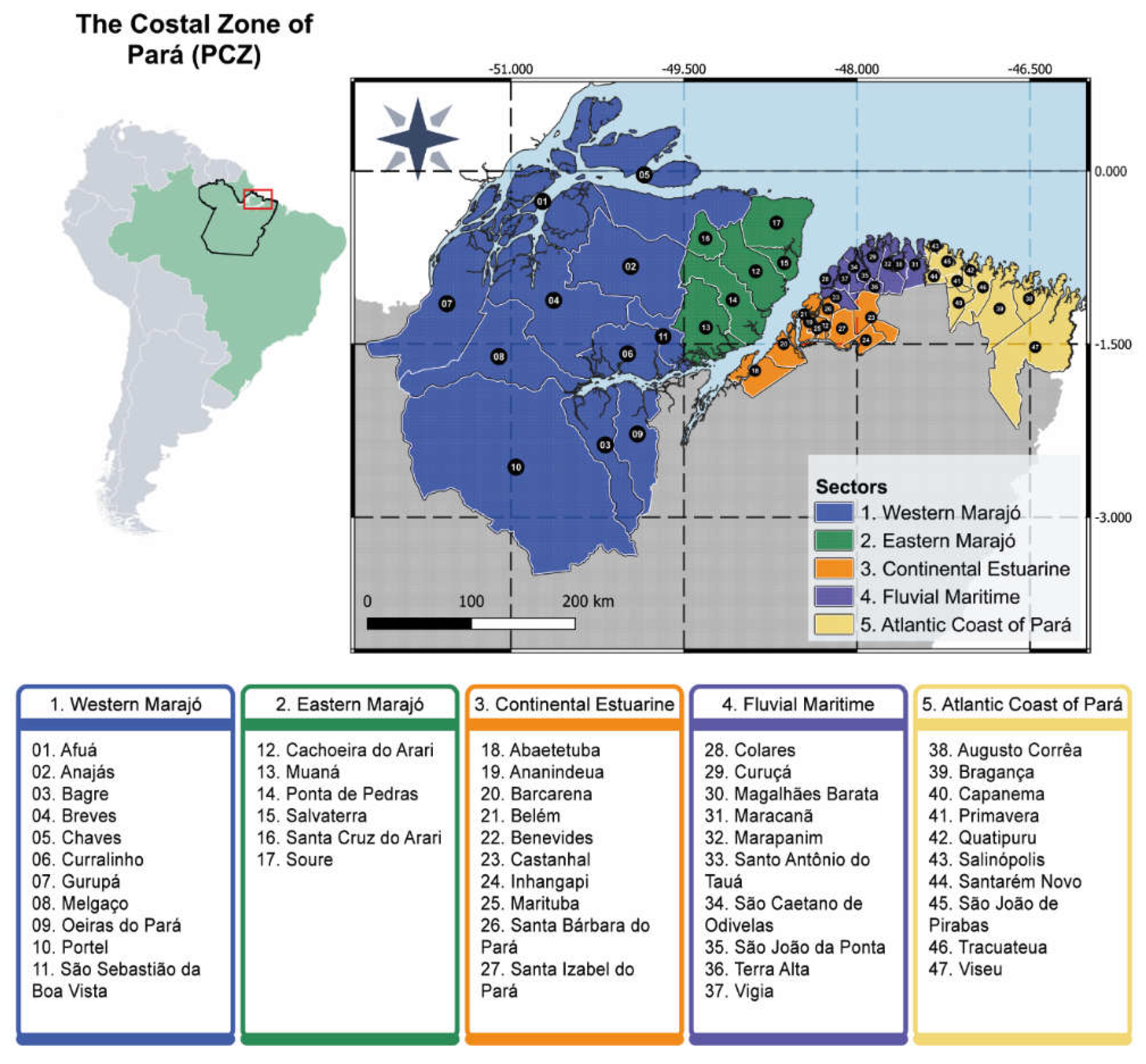
Figure 2.
Spatial distribution of sub-index rankings that reflect risk conditions prior to the start of the pandemic.
Figure 2.
Spatial distribution of sub-index rankings that reflect risk conditions prior to the start of the pandemic.
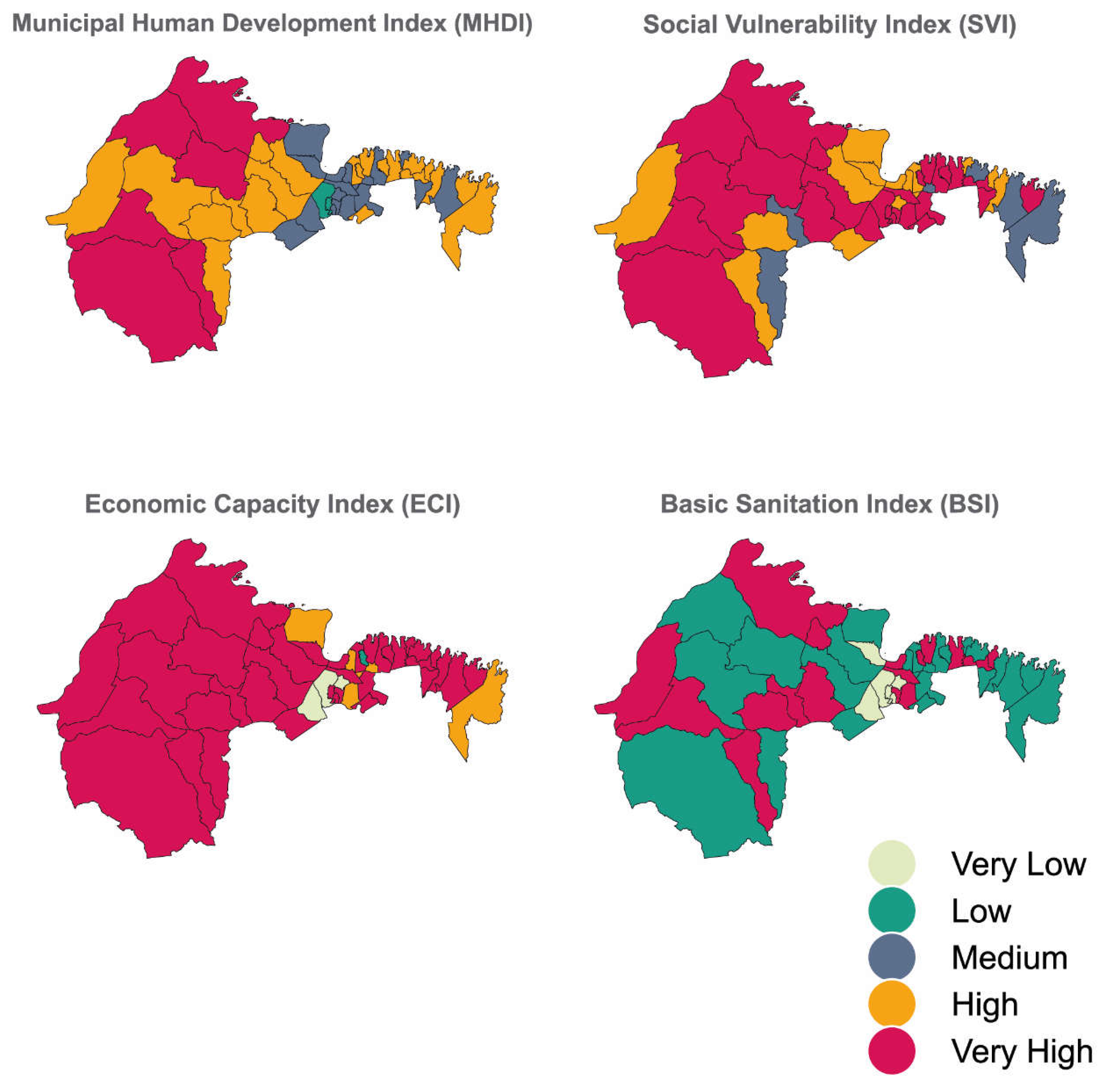
Figure 3.
Distribution of risk classifications from the Epidemiological Index, shown by semester through the years 2020 and 2022.
Figure 3.
Distribution of risk classifications from the Epidemiological Index, shown by semester through the years 2020 and 2022.
Figure 4.
Distribution of risk classifications from the Prevention and Control Index, shown by semester through the years 2020 and 2022.
Figure 4.
Distribution of risk classifications from the Prevention and Control Index, shown by semester through the years 2020 and 2022.
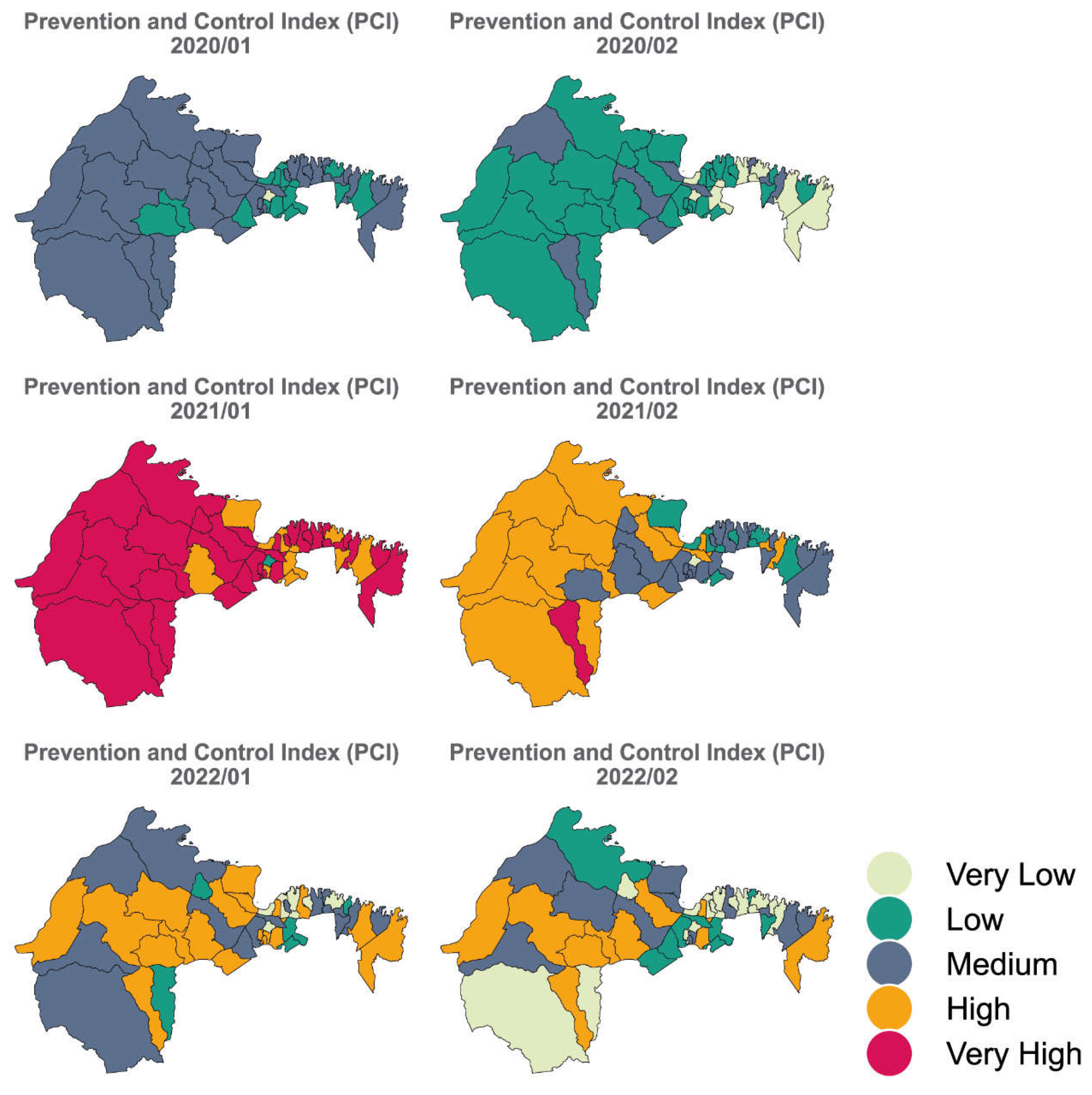
Figure 5.
PRI Risk Conditions. A Percentage of classifications in each semester of analysis from 2020 to 2022. B Average MCCI classifications for the sectors in each semester of analysis.
Figure 5.
PRI Risk Conditions. A Percentage of classifications in each semester of analysis from 2020 to 2022. B Average MCCI classifications for the sectors in each semester of analysis.
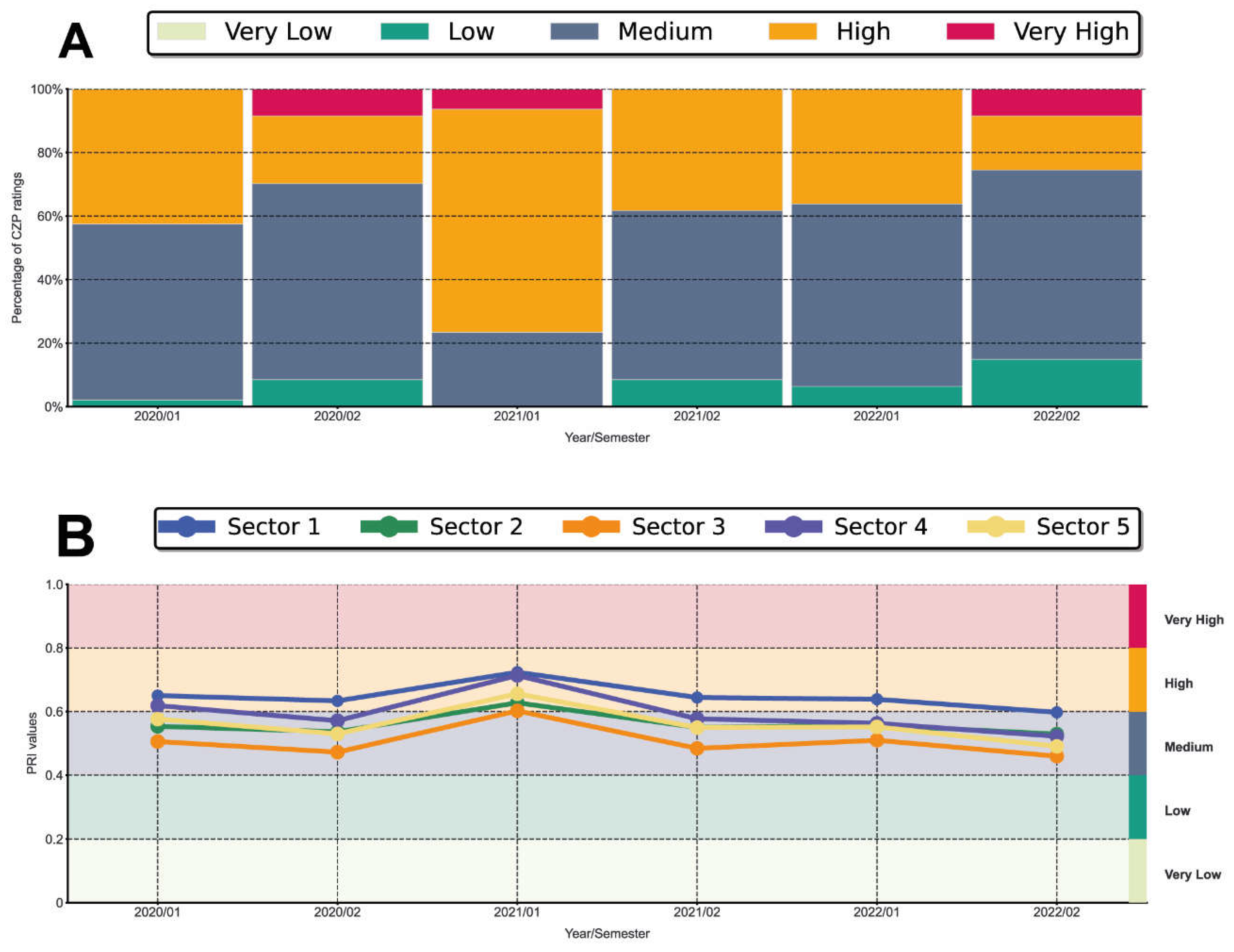
Figure 6.
Temporal evolution of the PRI classification of coastal municipalities by semester of study.
Figure 6.
Temporal evolution of the PRI classification of coastal municipalities by semester of study.
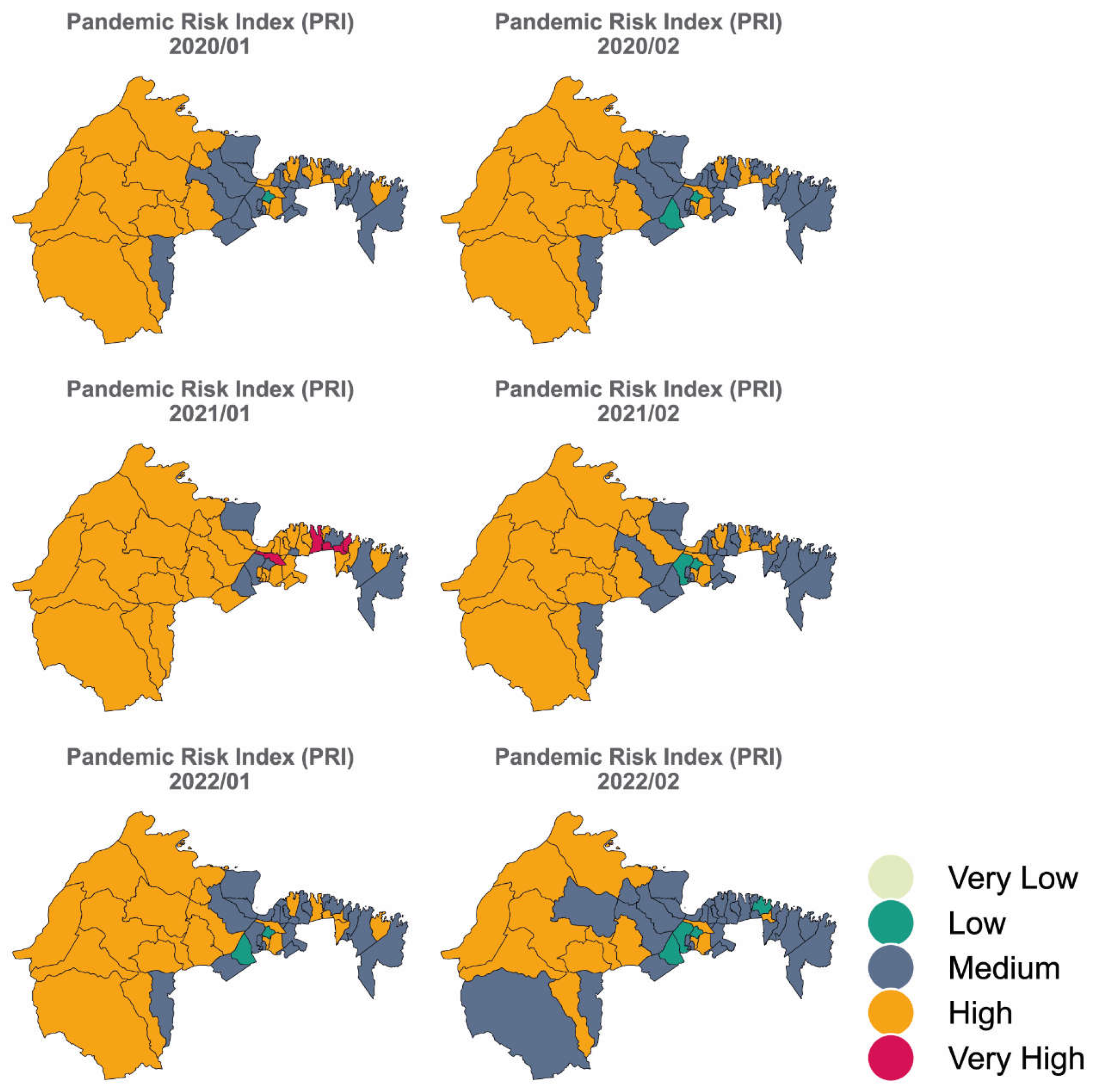

Table 1.
General characteristics of the sectors of the Pará Coastal Zone.
| Sector | Municipalities | Population | Surface (km2) | Number of Beaches | Observations |
|---|---|---|---|---|---|
| 1 - Western Marajó | 11 | 443.711 | 66.197.111 | ~ 50 | A substantial part of the population in this sector is composed of traditional and riverside communities |
| 2 - Eastern Marajó | 6 | 150.111 | 15.079.911 | 40 | In this sector are located the most visited beaches of Marajó Island, aggregating great ecological and economic importance to the region |
| 3 - Continental Estuarine | 10 | 2.537.782 | 5.900.334 | 128 | This sector covers the state capital, Belém, and municipalities corresponding to its metropolitan region; this is the most populous area. |
| 4 - Fluvial Maritime | 10 | 223.397 | 4.800.888 | 157 | Economic activities are supported in this sector through agriculture, fishing, family farming, and tourism |
| 5 - Atlantic Coast of Pará | 10 | 419.114 | 11.069.422 | 90 | This area comprises different environments such as lakes, creeks, dune fields, and mangrove vegetation. Tourism is an important segment of the local economy, mainly at the most popular beaches. |
| Total | 47 | 3.774.115 | 103.047.666 | ~ 465 |
Table 2.
Pandemic Index Risk (PRI): Blocks, sub-indices, indicators, weights, periods and sources.
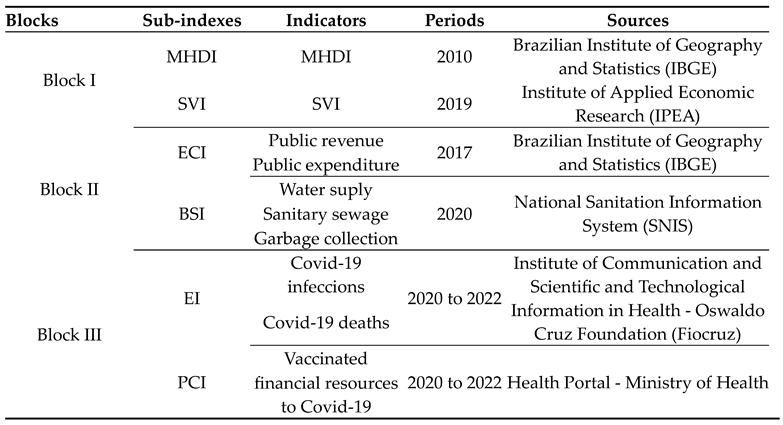
Table 3.
Description of the sub-indexes, components and indicators of block I.
| Block I | ||
|---|---|---|
| Sub-Indexes | Components | Indicators |
| MHDI | Long and healthy life | Life expectancy at birth |
| Access to education | Education of the adult population | |
| School flow of the young population | ||
| Life standard | Per capita income | |
| SVI | Urban infrastructure | Garbage collection |
| Inadequate water and sewage | ||
| Commuting time from home to work | ||
| Human capital | Child mortality | |
| Children aged 0 - 5 years out of school | ||
| People who do not study, do not work and low income | ||
| Children aged 6 to 14 out of school | ||
| Young Mothers from 10 to 17 years old | ||
| Mothers without elementary education + children up to 15 | ||
| Illiteracy | ||
| Children at home that no one has complete basic education | ||
| Income and Work | Income less than or equal to BRL 255 ** | |
| Low-income dependent elderly people | ||
| Vacancy | ||
| Child labor | ||
| Informal occupation without elementary education | ||
* Indicators adapted to municipalities. ** In 2010, BRL 255 was equivalent to USD 153.61.
Table 4.
Standardization scale of the three PRI blocks.
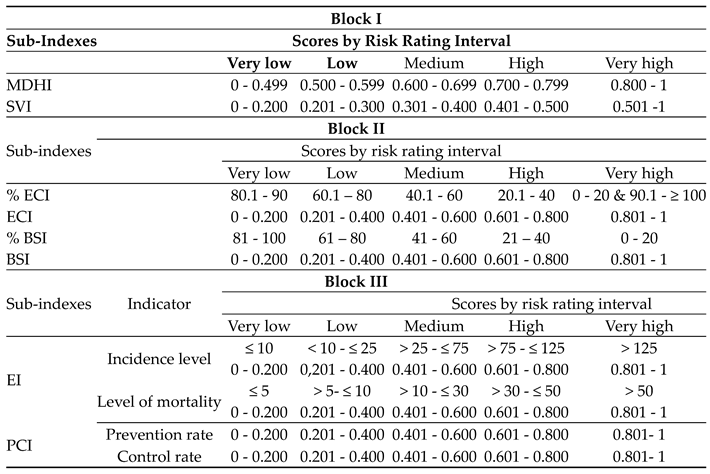
Table 5.
Final classification of Pandemic Index Risk (PRI).
| Pandemic Risk Index (PRI) | ||||
|---|---|---|---|---|
| Very Low | Low | Medium | High | Very High |
| 0 - 0.200 | 0.201 - 0.400 | 0.401 - 0.600 | 0.601 - 0.800 | 0.801 - 1 |
Table 6.
Correlation between Block I and Block II sub-indices. Bold numbers represent significant correlations.
Table 6.
Correlation between Block I and Block II sub-indices. Bold numbers represent significant correlations.
| Sub-Indices and Indicators | MHDI | SVI | Income | Expenses | Sewage | Water |
|---|---|---|---|---|---|---|
| SVI | 0.24 | |||||
| Income | -0.39 | 0.16 | ||||
| Expenses | -0.37 | 0.10 | 0.97 | |||
| Sewage | -0.43 | 0.10 | 0.34 | 0.34 | ||
| Water | -0.40 | 0.03 | 0.69 | 0.65 | 0.41 | |
| Solid waste | -0.40 | 0.03 | 0.69 | 0.65 | 0.41 | 0.67 |
Disclaimer/Publisher’s Note: The statements, opinions and data contained in all publications are solely those of the individual author(s) and contributor(s) and not of MDPI and/or the editor(s). MDPI and/or the editor(s) disclaim responsibility for any injury to people or property resulting from any ideas, methods, instructions or products referred to in the content. |
© 2024 by the authors. Licensee MDPI, Basel, Switzerland. This article is an open access article distributed under the terms and conditions of the Creative Commons Attribution (CC BY) license (http://creativecommons.org/licenses/by/4.0/).
Copyright: This open access article is published under a Creative Commons CC BY 4.0 license, which permit the free download, distribution, and reuse, provided that the author and preprint are cited in any reuse.