
Submitted:
29 August 2024
Posted:
30 August 2024
You are already at the latest version
Abstract
This report aims to document the extent of plastic waste pollution in lorry stations in Accra, assess its impact on public health and propose actionable solutions for effective waste management in stations. By highlighting the severity of the issue as well as providing recommendations for solutions, we seek to inform and inspire municipal assemblies, policymakers and other stakeholders to take decisive action against plastic waste pollution in lorry stations in Accra. Plastic waste pollution is a growing concern in Ghana, with lorry stations being particularly affected due to high foot traffic and inadequate waste management infrastructure within stations. This report is significant because of its implications for addressing public health hazards, continuing the ongoing efforts to reduce plastic pollution in Ghana and addressing community concerns. Through this comprehensive analysis, Mckingtorch Africa aims to drive meaningful change and create a cleaner, healthier Ghana for present and future generations.
Keywords:
plastic pollution
; plastic waste
; waste pollution
; pollution
; plastic
; lorry stations
; ghana
; stations
Introduction
- The Plastic Waste Problem in Ghana
Plastic waste pollution is a growing environmental challenge in Ghana, with serious implications for public health, the economy and the environment. As the country’s population and urbanization continue to rise, so too does the consumption of plastic products, particularly single-use plastics such as bags, bottles, and packaging materials in Ghana. Unfortunately, inadequate waste management infrastructure, low levels of public awareness and limited recycling facilities have led to widespread plastic waste accumulation in both urban and rural areas.
It is estimated that 1.1 millions tons of plastic waste is generated annually in Ghana, that is 3,000 metric tons daily (Anie & Odoom, 2023, pg. 7). But only a slim 5% of that is recycled while about 86% of Ghana’s plastic waste is improperly disposed thus it ends up in landfills, waterways and public spaces, contributing to severe environmental degradation and poor sanitation. Plastic waste pollution also clogs drainage systems, leading to flooding during heavy rains, as well as contaminates soil and water sources, posing significant risks to both human health and wildlife. Furthermore, inadequate waste management systems in many urban areas of Ghana has resulted in waste being burned in open dumps or household backyards. This practice results in grand negative consequences for air pollution and air quality as when burnt, plastic emits various pollutants which poses severe threats to plant, animal and human health (Erinosho, 2022).
The economic consequences of plastic waste pollution are equally concerning. The cost of cleaning up plastic waste, managing its impact on infrastructure and addressing related health issues places a significant financial burden on local governments and communities. Moreover, plastic pollution negatively affects tourism, agriculture and fisheries, all of which are vital to Ghana’s economy (Erinosho, 2022).
- Who We Are
Mckingtorch Africa is a dedicated environmental organization committed to addressing the pressing issue of plastic waste pollution in Ghana. Our mission is to develop and implement sustainable solutions that protect the environment and create sustainable communities. We believe that through research, advocacy, and community engagement, we can create a cleaner and healthier future for all Ghanaians.
All of our efforts are grounded in a deep understanding of the local context and a commitment to working collaboratively with communities, local authorities and other stakeholders. By fostering partnerships and leveraging local knowledge, we aim to develop and promote effective strategies that can be scaled and replicated across the country. Mckingtorch Africa's work is guided by the principles of sustainability, inclusivity and innovation, ensuring that our interventions are not only impactful but also equitable and adaptable to the needs of diverse communities.
Since its founding in 2019, Mckingtorch Africa has achieved some impressive milestones in the waste space, some notable ones are…
- Building the first ever bus shelter in Africa made from 3.5 tonnes of recycled plastic waste recovered from around Accra in 2022
- Contributed to Ghana’s national plastic waste management policy which passed into law by Ghana’s parliament in 2020
- Partnered with the UN Basel Convention in Switzerland to produce and distribute 2000 reusable bags from recycled plastic waste in 2022
- Have had academic and research partnerships with the University of Michigan in the U.S, the University of Toronto in Canada, the University of Brighton in the U.K. and Academic City University College in Ghana
- Create and sell various sustainable goods made from plastic waste such as sandals, desks, mats, bags, chairs and much more
- This year began facilitating the ECOFEM project which seeks to empower women to create these recycled product businesses through providing them training, equipping and a co-working space as well as develop a waste recovery mobile app to setup 1300 plastic waste recovery aggregation business that allow women to recover and sell plastic waste
- Purpose of the Report
This report aims to document the extent of plastic waste pollution in lorry stations in Accra, assess its impact on public health and propose actionable solutions for effective waste management in stations. By highlighting the severity of the issue as well as providing recommendations for solutions, we seek to inform and inspire municipal assemblies, policymakers and other stakeholders to take decisive action against plastic waste pollution in lorry stations in Accra.
Plastic waste pollution is a growing concern in Ghana, with lorry stations being particularly affected due to high foot traffic and inadequate waste management infrastructure within stations. This report is significant because of its implications for addressing public health hazards, continuing the ongoing efforts to reduce plastic pollution in Ghana and addressing community concerns. Through this comprehensive analysis, Mckingtorch Africa aims to drive meaningful change and create a cleaner, healthier Ghana for present and future generations.
Prevalence of Plastic Waste in Lorry Stations
- Overview
Plastic waste pollution is a pervasive problem in lorry stations throughout Accra. These stations, which serve as vital hubs for transportation and commerce, are increasingly becoming hotspots for plastic waste accumulation. The high foot traffic, various vendors present and constant activity in these areas contribute to the significant generation of plastic waste, which includes discarded plastic bottles, water sachets, bags, food wrappers and other single-use plastic items. The inadequate waste management infrastructure in many of these stations exacerbates the problem, leading to unsightly and unsanitary conditions that impact both the environment and public health as much of this plastic waste ends up on the ground of these stations.
- Data Collection Methods
To accurately assess the prevalence of plastic waste in lorry stations, we employed a multifaceted data collection approach which included the following;
- 1.
- Site Visits: On July 17th and 23rd our team conducted site visits to several major stations in Accra, including Circle Station, Madina Station and Kufour Station. During these visits, detailed observations were made regarding waste disposal practices, the availability and condition of waste bins as well as the general cleanliness of the stations.
- 2.
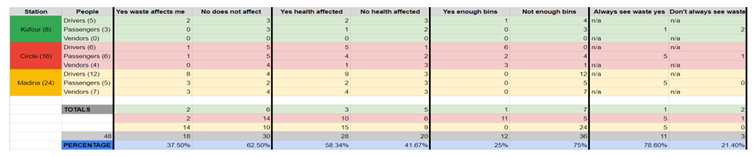
- Interviews: Interviews were conducted with drivers, passengers and vendors at each station to gather qualitative data on their perspectives regarding the plastic waste problem. They were asked questions about how the waste affects them, health effects from the waste, current waste management efforts at the station and what further waste management solutions they think should be implemented (see full list of questions in the Appendix). These interviews provided valuable insights into the everyday experiences and challenges faced by those who use and work in these stations (see full interview data in the Appendix).
- 3.
- Photographic Documentation: Photographs were taken at the stations to visually capture the extent of the plastic waste pollution. These images serve as a powerful visual aid to illustrate the severity of the issue.
- General Research Findings
Our research revealed several critical findings regarding the prevalence of plastic waste in lorry stations throughout Accra. Some general key findings were…
- High Volume of Waste: Lorry stations generate substantial amounts of plastic waste daily. Many types of plastic waste, namely single-use plastic bags, bottles, water sachets and food wrappers, can be seen all over the ground at the stations as these items are often discarded carelessly or swept out of vehicles.
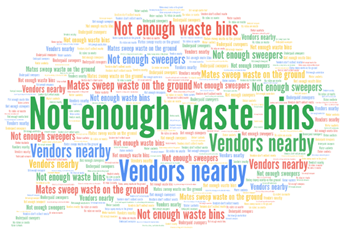
- Inadequate Waste Management: Many lorry stations lack sufficient waste management infrastructure. Waste bins are either absent, insufficient in number, or poorly maintained. This results in waste being left on the ground or in makeshift dumping areas, contributing to unsanitary conditions. This was noted by many of the people we interviewed as the main reason for high waste pollution levels at the stations, among other reasons all of which can be seen in the visual to the right.
 |
- Impact of Commercial Activities: The high volume of commercial activities in lorry stations, such as food vending and retail, contributes significantly to plastic waste generation. Vendors frequently use plastic packaging and single-use items, which are then discarded by customers on the ground.
- Public Concern Over Plastic Waste: Interviews and observations revealed a general lack of awareness or concern about proper waste disposal among station users. Many people are accustomed to discarding waste indiscriminately on the ground, contributing to the accumulation of plastic litter. However, many people we spoke to showed great concern about the issue of waste pollution at stations and wished there were better waste management options nearby for them to use. Notably, drivers were most concerned about the problem and how it affects their health, in comparison to passengers and vendors.
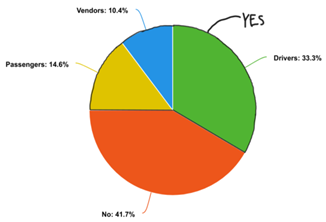 |
| Do people think their health is affected by plastic waste pollution? |
- Station Specific Research Findings
Currently, at Madina Station plastic waste pollution is a huge problem as large amounts of waste can be seen all over the ground at the station every day at all times. In fact, all 5 of the passengers we interviewed claimed they always see large amounts of waste when they visit the station. The immense amount of waste seen at Madina Station can largely be to blame on the fact that there are no waste bins at the station thus there is no way for people to properly dispose of their waste while there. Thus, as can be expected, all 24 people interviewed at this station claimed there were not enough waste bins available for them to use. Plus, the station only gets swept once per day at night thus much waste piles up throughout the day. In general, the sentiment from those interviewed at Madina Station was that the plastic waste pollution problem was grave there, with some even stating that this is one of the most polluted stations in the city, and that waste management efforts needed to be greatly improved.
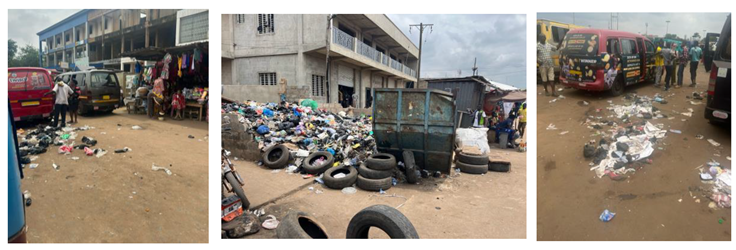 | ||
| Images of the Waste Pollution At Madina Station | ||
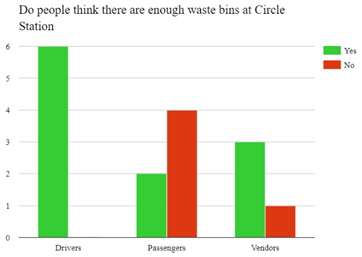
At Circle Station, the issue of plastic waste pollution is much better than at many of the other lorry stations around the city as significantly less amounts of waste can be seen on the ground at the station. This improvement can largely be attributed to the adequate amount of waste bins which can be found all around the station thus people can dispose of their waste in bins rather than on the ground with ease. Plus the station gets sweeped three times a day, once in the morning, once around midday and once in the evening. This more frequent cleaning is another reason why Circle Station is one of the cleanest in the city. Yet the station still faces a waste pollution problem and passengers still regularly see waste on the ground at the station when they visit. Despite the waste pollution issue being much better here than at most other lorry stations in Accra, many people we interviewed still think there is room for improvement in Circle’s waste management practices, notably almost half of the interviews still believe more waste bins are needed at the station. In general, the sentiment from those interviewed at Circle Station was that it is one of the cleaner stations in the city but the station still faces a plastic waste pollution problem and can continue to improve its waste management practices.
 |
| Do passengers always see waste when they come to Circle Station? |
 |
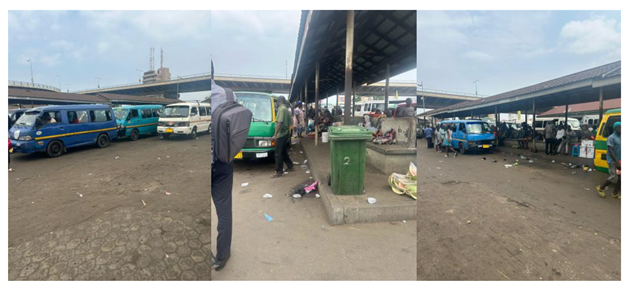 |
| Images of the Waste Pollution At Circle Station |
Finally, at Kufour Station plastic waste pollution is still a problem but not as prominent as it is for some other lorry stations as plastic waste can still often be seen all over the ground at the station but in smaller quantities than at Madina Stations. The station being on the cleaner side can be attributed to the waste management efforts made to curb plastic waste pollution there such as having sweepers and waste collectors come once per day at night as well as having some small waste bins placed sparingly throughout the station. However, many interviewees stated that they think the amount of waste bins at the station was not enough and given the small nature of the waste bins provided they often fill up thus becoming unusable. In general, the sentiment from those interviewed at Kufour Station was that the plastic waste pollution problem there is not grave however, it is still quite present as waste still litters the ground and waste management practices could be greatly improved.
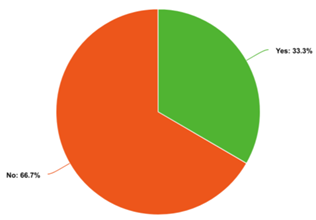 |
| Do passengers always see waste when they come to Kufour Station? |
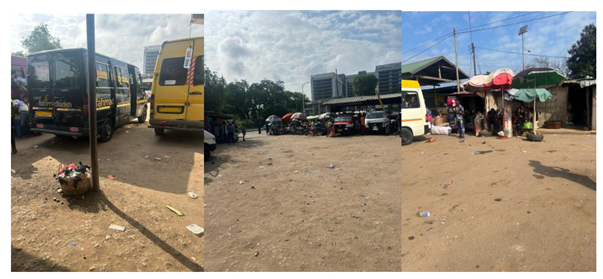 |
| Images of the Waste Pollution At Kufour Station |
Overall, our findings underscore the urgent need for effective waste management strategies in lorry stations to address the pervasive problem of plastic waste pollution.
Health Issues Associated with Plastic Waste
- Health Problems
The accumulation of plastic waste in lorry stations throughout Accra poses various significant health risks to drivers, passengers, vendors and nearby residents, some of which have been identified below;
- Respiratory Problems: The burning of plastic waste releases toxic fumes containing harmful chemicals such as dioxins, furans, and polychlorinated biphenyls. Plus, at stations, these harmful chemicals often mix with vehicle fuel fumes making them more toxic. Inhalation of these substances can lead to respiratory problems, including chronic bronchitis, asthma and other lung diseases (Mustapha, 2012, pg. 4).
- Food Contamination: Vendors in lorry stations often sell food items that may come into contact with plastic waste. Chemicals from the plastic can leach into food, leading to the ingestion of toxic substances. Plus, often the plastic waste polluting the stations has come into contact with other harmful substances such as saliva from others, fuel, etc. Consuming contaminated food can cause gastrointestinal issues and other long-term health problems (Pereira, et al., 2024, pg. 6).
- Infections and Diseases: Plastic waste provides breeding grounds for disease-carrying vectors such as rats and flies. Stagnant water collected in discarded plastic containers can lead to an increase in mosquito populations and contribute to the spread of malaria, among other harmful illnesses. Additionally, the presence of rats and flies can increase the risk of diseases such as typhoid fever and cholera (Mustapha, 2012, pg. 5).
- Physical Injuries: Sharp-edged plastic items and broken glass mixed with plastic waste which litters the grounds of lorry stations can cause physical injuries. These injuries can become infected and lead to more severe health issues (Pereira, et al., 2024, pg. 6).
- Endocrine Disruption: Some plastics contain chemicals such as BPA. These chemicals are known endocrine disruptors and can interfere with the body's hormonal functions, potentially leading to reproductive issues, developmental problems in children and other health concerns (Pereira, et al., 2024, pg. 6).
- Community Impacts
These aforementioned health risks associated with plastic waste pollution are already having profound effects on the daily lives of those who frequent lorry stations in Accra, and will continue to impact them if nothing is done to reduce the plastic waste problem in stations.
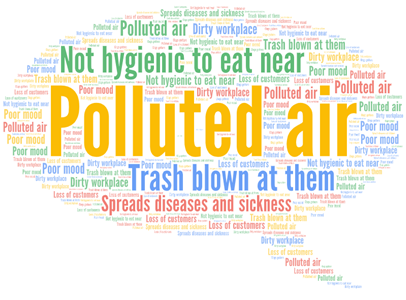 |
When interviewed, many community members listed the health impacts they feel the plastic waste pollution they face at lorry stations which has been visualized on the left. One concern mentioned by 8 community members was being wary of consuming food and water sold at the stations due to the visible presence of plastic waste as well as worries about the diseases and illnesses the waste spreads which make eating and drinking unhygienic. Moreover, 12 people we interviewed reported feeling as though the plastic waste at stations is creating polluted air which they must breathe while working or visiting the stations, with many of these 12 community members sharing worries about how this air may cause health problems. Another health problem 9 community members shared was concerns around physical injury and contact with waste in stations which they say is often hard to avoid and sometimes the waste is even blown towards them by wind. Notably, there are concerns about sharp plastic waste and waste from drug usage causing health problems.
Furthermore, there are various health-related impacts the plastic waste pollution in lorry stations has on nearby communities which were not mentioned by those interviewed. The first being how waste accumulation from lorry stations can lead to waste pollution being worse in nearby communities due to overspill of waste which brings with it the various health problems for those who live near lorry stations. One notable way this waste overspill happens is through gutters which move waste away from stations into adjacent neighbourhoods and can cause many problems for these communities when waste from lorry stations chokes the gutters and drains such as regular flooding as heavy rains now have nowhere to pass which then affects productivity and increased risk of displacement and death from flooding. Another unmentioned health impact the plastic waste pollution in stations has on community members is the economic burden of dealing with the health issues caused by plastic waste pollution. Medical costs for treating diseases and injuries can strain household budgets and the loss of productivity due to illness can affect livelihoods. These economic hardships can be devastating for some as they further exacerbate financial strains (Mustapha, 2012, pg. 4-5).
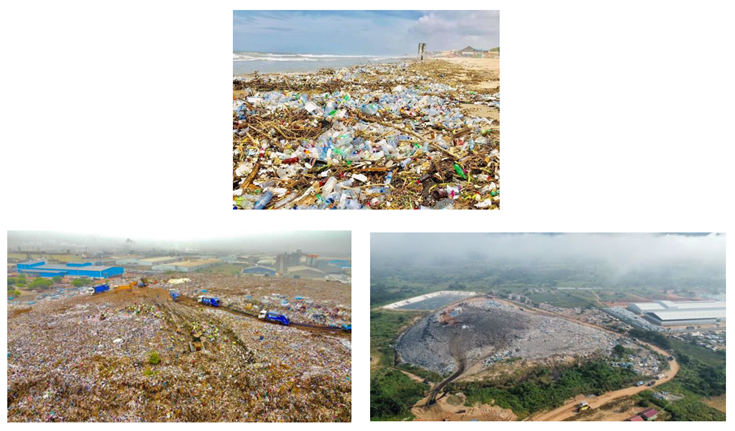
Additionally, there are grave impacts the plastic waste pollution problem is having that go beyond impacting peoples’ health. The immense amount of waste and overall poor waste management in Accra has led to several environments in the city and beyond to be polluted. A notable example is the beach fronts in Accra, the majority of which are heavily polluted from waste that is brought to the beaches by drains and gutters clogged with waste from the city and then washed into the sea. The heavy environmental pollution of beach fronts in Accra has resulted in these places becoming unsafe and unsanitary for people to visit. Moreover, the immense amount of waste coming from Accra has resulted in the landfills which serve the city in Greater Accra Region having to move further away to find additional landfill sites for the waste generated in the city, such as the one seen below which is about 150 meters high and more than the length of a football pitch. Thus, more of the environment is being polluted by the creation of new landfills and those who reside near these new sites must now face the grave health impacts which come from living near a landfill.
 |
These various health impacts and other negative effects from plastic waste pollution underscore the urgent need for effective waste management strategies to be implemented in lorry stations across the city to mitigate these health risks. Addressing these issues is not only crucial for public health but also for improving the overall quality of life for those who depend on these transportation hubs.
Proposed Waste Management Interventions
- Community Suggestions of Waste Management Strategies
During our interviews at lorry stations across the city, many suggestions were made by passengers, drivers and vendors as to what waste management strategies could be implemented at stations to improve the current efforts and reduce the plastic waste pollution problem which has been visualized on the right.
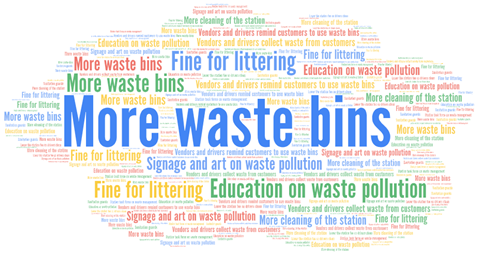 |
The suggestions which were the most common among all interviewees at all three stations were implementing fines for those who put their waste on the ground rather than in a waste bin, which 12 of 48 people suggested, as well as for education sessions, materials, street art or signage to be given to passengers and drivers about using waste bins and recycling, another solution 12 people suggested. Plus, by far the most popular suggestion from interviewees at all the stations, with 24 people mentioning it, was for more waste bins to be at stations that are easy to access as well as emptied often to make them simple to use.
There were also some suggestions given by those we interviewed which were less common but were still heard various times at all the stations visited. The first is that vendors and drivers should be responsible for collecting waste from their customers as well as remind them to use the station-provided waste bins rather than put their waste on the ground, a suggestion mentioned by 5 interviewees. Another suggestion, made by 6 people, was that stations need to be cleaned more often by sweepers as many people were unhappy that most lorry stations are only cleaned once a day which results in waste to pile up.
Finally, some people we interviewed had very original solutions to the waste problem which they shared with us. Such as having sanitation guards be posted at lorry stations to ensure people follow the rules and use the waste bins, which was suggested by 2 people. Or, lowering station use fees so drivers themselves would be inclined to clean the stations, also suggested by 2 people. Finally, another suggestion made by 2 people was for stations to introduce sanitation task forces whose job would be to keep the station clean, remind people to use waste bins as well as educate people about the importance of recycling and not leaving trash on the ground.
- Selected Waste Management Interventions
Overall, during our interviews, we heard many great suggestions from passengers, drivers and vendors alike at the station we visited. However, with our expertise in plastic waste, these communities made suggestions along with our expert ideas about how to tackle the plastic waste pollution in lorry stations. Mckingtorch Africa has taken it upon ourselves to highlight the solutions we think are most viable and effective for improving waste management at lorry stations in Accra.
The first of these interventions is increasing the number of waste bins at lorry stations. Not only is this a simple solution which can easily be implemented but, if done well, having more waste bins can have a substantial impact on reducing the waste pollution in stations. As per our interview results, many people noted that the main cause of the waste problem is a lack of easily available waste bins, thus not only are more bins needed at stations but they need to be accessible and placed all over the station so no one ever has to go far to find a proper place to dispose of their waste. Furthermore, for these waste bins to be effective, they must be accompanied by a metal skip at each station that can hold 3 times the daily volume of waste generated from the stations. Thus, if 5 tonnes of waste are generated each day at Madina station, then there should be a skip that can hold 15 tonnes of waste there. This increased size of the skips is to ensure that even when regular collection of the waste is missed, the bins do not overflow. When the station's waste bins are full they should be emptied into the skip along with any waste generated by vendors or drivers. Additionally, the skips need to have tight covers and not be open as this will cause diseases and flies that eventually spread to food being sold and consumed in the stations. Finally, there should be dedicated spaces for the skips and waste recovery at the lorry stations which should not be encroached upon by vendors or drivers.
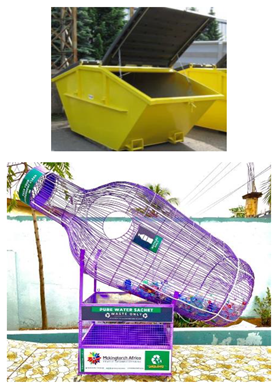 |
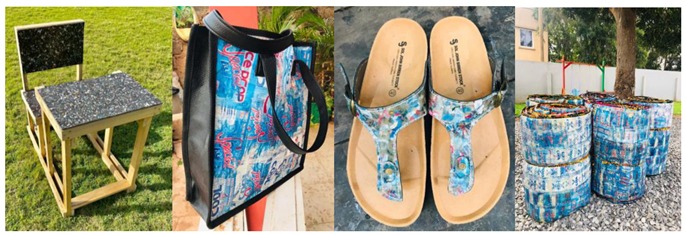
In addition to having regular waste bins and skips be available, having Mckingtorch Plastic Recovery Receptacles present as well will further reduce the plastic waste problem at lorry stations. Not only are these receptacles easy to use as their plastic bottle shape makes it clear that you can place your empty bottles and water sachets there but they can help reduce how often waste bins must be emptied as people segregate their waste. Plus, by segregating waste, the plastic bottles and sachets can be given a new life through this sustainable intervention as Mckingtorch Africa will use these plastics to create products, such as desks, bags, footwears, mats and more (as seen in the images below) as well as create employment opportunities for women and other youth as they create these sustainable products.
 |
The second solution Mckingtorch Africa believes could have a positive impact on lorry station’s waste management is implementing education for station goers (vendors, passengers, drivers, etc.) on waste pollution, littering and recycling. This could be in the form of informative street art and signs, education sessions for community members or even simple reminders from vendors and drivers to put trash in waste bins. This solution is essential for several reasons. First, education can significantly reduce plastic waste pollution by raising awareness about the harmful effects of littering and improper waste disposal. When people understand the environmental and health consequences of their actions, they are more likely to adopt responsible behaviors. Plus informative street art and signs can serve as constant visual reminders, reinforcing the importance of proper waste disposal and recycling. And, simple reminders from vendors and drivers can reinforce the habit of using waste bins and discourage littering.
The next solution that is crucial for reducing plastic waste pollution in stations is implementing fines for littering, this threat of a fine will deter individuals from littering. When people know there are immediate financial consequences for improper waste disposal, they are more likely to use the waste bins provided. This behavior change will directly reduce the amount of plastic waste accumulating in lorry stations. The money collected through these fines can be used as sustainable revenue which can further contribute to funding the improvement of cleanliness, sanitation and waste management at the station. To make it easy to enforce these fines, sanitation guards or officers could be implemented at stations who can be on the watch for people dropping their waste or station staff and drivers could be the ones dealing out the fines. Consistently having people looking out for those littering and giving out fines will help to solidify the commitment to these new rules and fines as well as reinforce the message that one must use the provided waste bins.
Another intervention that is key for combating the plastic pollution problem in stations is encouraging plastic bottle and sachet waste recovery and sale to recycling companies. By encouraging women and other youth to safely engage in this practice can allow them to generate income and make 100 to 200 GHS on sales in a day. Thus, this is not only an intervention which will improve the waste problem at stations but also positively impact the lives of those in the community.
The final intervention Mckingtorch Africa is highlighting is more frequent and regular cleaning of stations. This intervention works best in conjunction with the other waste management solutions Mckingtorch Africa and community members have suggested which work to reduce the amount of waste which is even left on the ground to begin with. Having station sweepers who come multiple times a day and do a good job each time cleaning the whole station is essential to help with the waste pollution problem as no matter how many waste bins, fines or education you provide, there will inevitably still be some waste which makes its way onto the ground, thus consistent and frequent station sweeping is key for ensuring waste free and hygienic lorry stations. A successful example of how having consistent and frequent cleaning of a lorry station helps reduce plastic waste pollution can be seen at Circle Station as they have their station cleaned three times every day, which leads to the station having little to no waste on the ground.
The Role of Municipal Assemblies
Municipal Assemblies have a critical role in addressing plastic waste pollution in lorry stations as they hold the power and responsibility to make impactful changes in waste management within their jurisdiction. By enhancing infrastructure, improving waste collection services, raising public awareness and enforcing regulations, Assemblies can significantly reduce the various negative impacts plastic waste is currently having on local communities in Accra.
The importance of taking action to address plastic waste pollution in lorry stations cannot be overstated. There are numerous reasons why action to reduce plastic pollution in lorry stations throughout Accra is crucial. The first is to reduce the adverse health effects that the waste is having on communities, which this report details. Furthermore, effective waste management can have substantial economic benefits as clean and well-maintained lorry stations can attract more business and tourism, boosting local economies. Additionally, reducing health issues related to plastic waste pollution can decrease medical costs and improve the overall productivity of local communities. Moreover, Municipal Assemblies are accountable to their constituents and must act in the best interest of the communities they serve. Addressing plastic waste pollution demonstrates a commitment to social responsibility and public welfare. It can foster trust and confidence in local governance and encourage community participation in sustainability efforts.
Municipal Assemblies have the authority and resources to implement comprehensive waste management systems that can significantly reduce plastic waste pollution. Thus we implore them to address the plastic waste pollution problem in lorry stations in an effective manner with a multi-faceted approach that includes policy development, infrastructure improvement, public engagement, and enforcement. This would include enhancing waste management infrastructure, as per our suggested solution to increase the number of waste bins at stations as well as add skips and Mckingtorch Plastic Recovery Receptacles to stations. It would also include improving waste collection services to ensure regular collection and since Assemblies already partner with various waste management companies, the addition of skips in dedicated spaces and proper service for these skips should be an easy addition to the existing partnerships and services of the waste management companies. On top of this, it would also include educational programs to raise awareness on plastic waste pollution, both of which were mentioned in our suggested interventions. Plus, this would include enforcing existing waste management regulations more rigorously by implementing penalties or fines for littering, another one of the suggested interventions. Furthermore, regular assessments of waste management practices in lorry stations to identify areas for improvement would be key along with feedback mechanisms that allow the public to report waste management issues.
Finally, to further effectively combat plastic waste pollution in lorry stations, Mckingtorch Africa believes that Municipal Assemblies should leverage collaboration opportunities with various stakeholders such as NGOs, community groups and the private sector, namely waste management companies. Collaborative efforts can enhance resource allocation, provide technical expertise and foster community engagement all with the main goal of creating cleaner and healthier environments for Ghanaians.
Conclusion
In conclusion, plastic waste pollution in lorry stations in Accra is a significant environmental and public health issue that demands immediate attention and action. Our research has highlighted the extent of the problem, the health risks it poses, and the critical role municipal assemblies play in addressing this challenge. The findings underscore the urgency of implementing effective waste management strategies to safeguard public health, protect the environment, and promote sustainable development. Most importantly, this report emphasizes the pivotal role of municipal assemblies in managing waste. It is time to act decisively to protect our environment and health, fostering a sustainable future for future generations.
Appendix
- Interview Questions
Drivers and Mates
- How does the current waste situation impact your daily work and health?
- Do you think plastic waste poses any health or safety risks to commuters?
- What do you think are the main reasons for the waste problem here? Are there enough waste collection bins available at the station?
- How can the waste management system be improved from your perspective?
Passengers
- How often do you encounter plastic waste while being at the station? Does it affect your experience in the station?
- Have you noticed any health issues caused by the waste problem?
- Why do you think there is a plastic waste problem in stations? Are there enough empty bins available to dispose of plastic waste?
- Do you have any idea for how the plastic waste problem in stations could be improved?
Vendors
- How does the current plastic waste situation impact your daily work, business and health?
- How do you currently dispose of plastic waste generated from your business? Are the available waste disposal facilities adequate for your needs?
- What measures do you think can be taken to deal with waste management in the station?
- Interview Data
 |
References
- Anie, A.J. & Odoom, Y. (2023). Upstream approaches to reducing the generation of plastic waste in Ghana: An Experiment by UNDP Accelerator Lab in Ghana. United Nations Development Programme Ghana.
- Erinosho, B. (2022). Plastic Pollution in Ghana. LEAP UN Environment Program. https://leap.unep.org/en/countries/gh/case-studies/ghana.
- Mustapha, H. (2012). Dealing With Plastic Waste in Metropolitan Accra: Challenges and Policy Instruments. Universidad Austral de Chile, Santiago, Chile.
- Pereira, A., Hollas, C., Amaral, K., Veiga, L., & Ferron, M. (2024). Impacts of Plastic Pollution on Human Health; Insights from SMEP Programme. UK International Development.
Disclaimer/Publisher’s Note: The statements, opinions and data contained in all publications are solely those of the individual author(s) and contributor(s) and not of MDPI and/or the editor(s). MDPI and/or the editor(s) disclaim responsibility for any injury to people or property resulting from any ideas, methods, instructions or products referred to in the content. |
© 2024 by the authors. Licensee MDPI, Basel, Switzerland. This article is an open access article distributed under the terms and conditions of the Creative Commons Attribution (CC BY) license (http://creativecommons.org/licenses/by/4.0/).
Copyright: This open access article is published under a Creative Commons CC BY 4.0 license, which permit the free download, distribution, and reuse, provided that the author and preprint are cited in any reuse.