

Submitted:
23 July 2024
Posted:
24 July 2024
You are already at the latest version
Abstract
This study delves into the transformative growth of private higher education in China, highlighting the rapid and diverse expansion following the COVID-19 pandemic. Although previous studies have reported expansion and difficulties, a thorough examination of the relationship between institutional adaptation and the development of human capital remains unexplored. This study examines how private higher education institutions modify their job-related courses to suit the demands of the job market, evaluates the effect on the employability of graduates, and investigates ways to control costs without sacrificing academic quality. This study analyzes data from the Ministry of Education, Wind Information, and Shenwan Hongyuan Research to gain insights into the impact of human capital theory and institutional theory on private higher education in China. Enrollment trends, program alignment, financial sustainability, and quality enhancement activities are all examined using detailed analysis. Private higher education institutions play a critical role in developing a skilled labor force by filling skill gaps and meeting the demands of an evolving job market. The findings also emphasize the importance of quality assurance procedures, strategic program development, and collaborations with businesses. In conclusion, the study emphasizes the imperative for more research and policy action. This is crucial to securing the lasting effectiveness and influence of private higher education institutions on China's socioeconomic progress and human capital development in the post-pandemic era.
Keywords:
Private Higher Education
; China
; Human Capital Theory
; Institutional Theory
I. Introduction
China's academic and economic development has been further accelerated by the challenges and opportunities presented by the post-pandemic era, with the country's private higher education industry expanding quickly. This phenomenon, characterized by the rapid expansion and diversification of private higher education institutions (HEIs), has garnered significant scholarly attention due to its potential to alter the human capital landscape of the country and spur economic growth, especially as China navigates the post-pandemic recovery (Hayhoe et al., 2012; Ling et al., 2023).
Prior research has primarily focused on assessing the growth of private universities and examining program diversity and enrollment trends (Ou & Hou, 2019; Kanagaraj, K., 2019; Xia et al., 2022). Despite providing valuable insights into the scope and magnitude of private higher education, these studies usually overlook the intricate connection that emerges between institutional adaptation and the expansion of human capital (de Morais, D. M. G., Facó, J. F. B., & do Carmo Romeiro, M., 2020; Zhang, H. 2021). This study gap necessitates a deeper investigation of how private universities handle the complex interplay among societal norms, legal requirements, and business interests.
A thorough evaluation of how well academic programs satisfy the demands of the labor market is necessary given the direction higher education is taking. Although prior studies (Pană & Fanea-Ivanovici, 2019; Oman, Z. U., Pandey, S., & Gaddam, A., 2022) acknowledge the significance of employable skills and knowledge, a more sophisticated comprehension of how skill development programs successfully address specific labor market demands is necessary (Lee, S. H., 2020; Ghosh, P., Goel, G., & Bhongade, A., 2022). This information is particularly crucial for understanding China's private higher education institutions (HEIs), as they operate in a dynamic setting with shifting legal requirements and business demands (Tang, N., & Shi, W., 2017).
Furthermore, research studies often report high employment rates for graduates; however, little is known about the nature of these positions, chances for career progression, and the long-term impacts of education on earnings and social mobility (Zhang, H., 2021; Tomaszewski, W., Perales, F., Xiang, N., & Kubler, M., 2021). A comprehensive assessment of the impact of vocational and technical programs on graduate employability should consider income levels, career progression opportunities, and long-term earning potential in addition to job placement rates (NGU, S. W., & Teneng, P. P., 2020). This comprehensive approach offers invaluable insights into how private higher education institutions drive human capital development and socioeconomic mobility, underscoring their pivotal role in China's educational landscape.
Further research is needed to explore how governmental policies and financial constraints impact specific aspects of education quality in private universities, such as faculty development, program innovation, and student outcomes. While financial sustainability is widely recognized as important (Li & Morgan, 2011), little is known about the specific strategies employed by private higher education institutions (HEIs) to manage their finances and adapt to shifting regulatory environments, particularly with regard to regulatory frameworks and financial subsidies (Chebeň, J., Lančarič, D., Munk, M., & Obdržálek, P., 2020; Cernostana, Z., 2017). A deeper understanding of these strategies is required to ensure the ongoing provision of excellent education in a rapidly changing socioeconomic context.
Therefore, by examining the dynamics of private higher education in China through the prisms of institutional theory and human capital theory, this study seeks to close these research gaps.
1. In what ways, specifically in vocational and technical education, have private higher education institutions in China modified their curricula to satisfy the demands of the evolving labor market and legal requirements as specified by institutional theory and human capital theory?
2. In terms of job placement, pay scales, and career advancement at private higher education institutions, what impact have technical and vocational education programs had on graduates' employability, and what does this signify for China's overall human capital development landscape?
3. How do financial limitations and government regulations, such as changes to financial subsidies and regulatory frameworks, affect private universities' attempts to raise the caliber of their programs, and what are the possible consequences for the industry's continued expansion?
By examining program diversity, employment results, financial sustainability, enrollment trends, and quality improvement initiatives, this study aims to deepen our understanding of the multiple factors affecting private higher education in China. The knowledge gained from this research has implications for understanding how human capital is developed in private higher education and for navigating the complex institutional environment of a country experiencing rapid economic growth, such as China.
II. Literature Review
Exploring the rapid expansion of private higher education institutions (HEIs) in China offers insights into the intricate relationship between institutional adaptation, human capital development, and the evolving educational landscape. The field's pertinent literature is evaluated, with a focus on the current state, issues, and context of private higher education in China.
The Landscape of Private Higher Education in China: Growth, Challenges, and Opportunities
In recent decades, China's private higher education institutions (HEIs) have significantly increased due to a confluence of factors. The expanding middle class and intense rivalry in the job market are the primary causes of the increased demand for higher education (Hayhoe et al., 2012; Ling et al., 2023). Due to the increased demand, private higher education institutions can thrive by offering a wider variety of programs to a larger group of students. Second, government measures have actively promoted higher education diversity, as Li and Morgan (2011) claim, promoting involvement from the commercial sector and fostering innovation. Financial incentives, relaxed regulations, and a focus on meeting the specific skill-based demands of the workforce have all been part of these measures. Finally, the desire for upward social mobility is a major factor driving families' search for a top-notch education. Private schools are becoming more and more popular among parents who want to give their children better opportunities for the future since they are thought to offer a more rigorous or specialized learning environment (Marginson, 2016).
This quick expansion has expanded access to higher education, particularly for underprivileged individuals who would not have been able to attend traditional public schools (Mok & Wu, 2016). Furthermore, private HEIs have proven to be highly skilled at tailoring their program offerings to the shifting demands of the labor market. In order to satisfy the needs of rapidly growing enterprises, they have had remarkable success developing specialized technical and vocational programs (Xia et al., 2022). A focus on market-relevant knowledge and practical skills has become necessary due to the rapidly industrializing economy's growing demand for skilled labor (Jacob et al., 2018).
Despite their significant contribution to China's educational reform, private higher education institutions nevertheless face several challenges. Obtaining financial stability, maintaining consistency in quality across institutions, changing laws, and dispelling public perceptions about graduates from private colleges are all significant obstacles (Zhang, H. 2021). These problems are made worse by the intense competition for students and resources in the higher education sector.
Notwithstanding these challenges, opportunities for advancement and creativity still exist. Private higher education institutions are increasingly using technology integration to enhance student results, offer innovative pedagogical approaches, and expand access to high-quality education (Xue & Li, 2022). They are also forming international connections and partnering with universities abroad to share best practices, develop collaborative programs, and provide students with a global perspective. Additionally, public-private partnerships are becoming more prevalent. Through them, organizations can pool resources, share knowledge, and collaborate on initiatives to address pressing social and economic needs.
However, for the private higher education sector to prosper and effectively aid in China's development, better knowledge of the variables affecting it is needed. Part of this involves examining how institutional pressures, the development of human capital, and the quality of education offered interact. To effectively meet the evolving needs of China's workforce and its dynamic economy, policymakers, educators, and stakeholders must address these concerns and promote a robust and sustainable private higher education sector.
Theoretical Frameworks: Human Capital Theory and Institutional Theory
A multidisciplinary analytical approach is necessary to examine the underlying factors that determine the growth and strategic orientation of private higher education institutions (HEIs) in China, given the dynamic nature of higher education. This study examines the strategic and operational nuances of these organizations using two prominent theoretical frameworks: institutional theory and human capital theory (HCT). These frameworks offer a thorough and academic perspective on the relationship that exists between an individual's educational investment and the larger institutional forces that shape educational policies and practices.
The Human Capital Theory (HCT), as proposed by Becker (1993) and Mincer (1974), views education as an investment that has the potential to increase an individual's earning capacity and productivity. It emphasizes how important it is for people to invest in their education to acquire the knowledge and abilities that will increase their employability. Private higher education institutions, according to Becker (1993), have a major influence on economic growth because they give students the knowledge and skills they need to engage in a competitive and dynamic market. Furthermore, according to HCT, education can lead to personal prosperity by enabling people to improve their living conditions and progress in their occupations (Mincer, 1974). By offering a variety of programs and meeting market demands, private higher education institutions can encourage this individual success.
Parallel to this, institutional theory—described by Meyer & Rowan (1977) and DiMaggio & Powell (1983)—highlights the impact of outside factors on organizational practices and structures. The intricate institutional framework in which private higher education institutions in China function is influenced by societal ideals, market forces, and government laws. The way these institutions function, adapt, and compete in the higher education market is greatly influenced by external factors.
According to Li and Morgan (2011), private higher education institutions are influenced by several factors, such as government regulations, funding, and curriculum requirements. According to Ou and Hou (2019), market dynamics, such as competition for students and resources, also influence institutional strategy. Finally, the expectations of society regarding the value and applicability of education, along with perceptions of the relative merits of private institutions, have a significant impact on the legitimacy and performance of these organizations (Zhang, H. 2021). In order to understand the organizational structures, strategic choices, and overall impacts of these influences on private higher education institutions (HEIs) in the Chinese educational system, it is imperative to acknowledge their influence.
Alignment with Labor Market Needs: Vocational Programs and Employability
Success among China's private higher education institutions has been attributed to their swift adaptation of their curricula, particularly those pertaining to vocational training, to the shifting demands of the labor market (Xiong, Yang, & Shen, 2022). Private colleges have distinguished themselves from the competition by being able to adjust to the needs of industry. This has helped them attract students and create a skilled labor force that propels economic growth. The post-pandemic period has brought to light even more the necessity for private higher education institutions to adapt their curricula as China's economy navigates a new landscape of shifting industry demands and technological advancements.
Research consistently demonstrates that private universities actively adjust their curricula to meet the specific needs of various industries (Cao & Kusakabe, 2022; Chen, J., & Pastore, F., 2024). Graduates who emphasize practical skills and industry-specific knowledge tend to have higher employment rates since employers are increasingly looking for people with readily transferable talents (Jacob et al., 2018). Studies have revealed that graduates from private higher education institutions (HEIs) offering specialized vocational programs have higher employment rates than graduates from traditional academic programs, particularly in industries like manufacturing, technology, and healthcare (Cao & Kusakabe, 2022). The rapidly evolving national economy and the growing demand for technological skills—which private higher education institutions have played a key role in providing—are reflected in this pattern.
Research on the quality of education provided, the long-term career prospects of graduates, and the impact of these programs on social mobility is still lacking, despite studies showing that vocational programs offered by private higher education institutions have high employment rates (Zhang, H. 2021). Focusing solely on job placement rates will not provide a complete understanding of these projects' performance, especially given the post-pandemic context and significant labor market shifts.
An extensive inquiry is necessary to find out more about the quality of education offered by private HEIs, particularly about their vocational programs. This study should investigate how much graduates' practical skill development has increased, how much the workplace values and uses their talents, and how closely program content matches actual industry needs. (Chen, J., & Pastore, F., 2024). Furthermore, factors other than job placement rates, like pay scales, opportunities for career promotion, and the long-term impacts of schooling on personal income and social mobility, must be considered in a comprehensive assessment of graduate employability (Zhang, H. 2021). The emphasis on adaptability and continuing education following the pandemic, along with the changing nature of work in many industries, make this particularly crucial.
Such a comprehensive analysis would make a significant contribution to the field by offering a fuller understanding of the actual effects of private HEIs on the growth of human capital and socioeconomic mobility in China, particularly as the nation navigates the post-pandemic recovery. Policymakers, educators, and employers need a better understanding of this issue to ensure that private higher education institutions (HEIs) continue to provide excellent instruction that equips graduates for success in a changing and dynamic job market.
Quality Assurance and Financial Sustainability: Challenges and Adaptations
Maintaining academic quality while managing financial restrictions and shifting regulatory contexts is a significant challenge for China's private higher education institutions (Li & Morgan, 2011). There is fierce competition for students, fluctuating regulatory settings, and sometimes little government funding for higher education. The way these institutions operate is impacted by each of these elements.
Private universities have implemented several strategies to ensure their financial sustainability. They are seeking philanthropic contributions, collaborating with businesses, broadening their sources of income, and even offering supplementary services like language instruction and professional development programs (Liu, X., 2023). However, as a result of this shift towards a more market-driven approach, concerns have been raised regarding potential conflicts of interest, the potential to put profit ahead of educational quality, and the necessity of strong governance mechanisms to guarantee ethical conduct.
As previously indicated, another crucial adaptation strategy is to concentrate on gaining knowledge and practical abilities unique to the sector. By offering vocational programs that are closely matched with market demands, private higher education institutions (HEIs) may improve employability for graduates, increase student enrollment, and generate revenue through tuition fees and partnerships with businesses (Cao & Kusakabe, 2022; Chen, J., & Pastore, F., 2024). This focus on practical skills may also help to fulfill China's ongoing need for a skilled labor force in its rising economy.
Despite these efforts, questions about the quality of education offered by some private HEIs still exist (Zhang, H. 2021). Critics point out issues such as uneven quality between schools, a lack of resources in some cases, and potential compromises in academic integrity due to financial limitations. These concerns highlight the need for a more thorough understanding of the methods private higher education institutions employ to preserve quality despite financial constraints (Xiong, Yang, & Shen, 2022).
III. Methodology
This study examines the dynamic environment of private higher education in China using a secondary data analysis methodology based on the ideas of institutional theory and human capital theory. This methodology makes use of readily available data sources to illuminate broad trends and offer a detailed insight into the evolution of the sector.
The study is predicated on a carefully selected collection of secondary data, the majority of which came from reputable sources. The Ministry of Education's data can provide an overview of China's higher education system overall. This data includes enrollment figures, graduation rates, and other important metrics for both public and private colleges that help situate the research within the existing policy framework.
To provide a comprehensive financial perspective, the research makes use of data from Wind Information, a leading financial data platform. The website offers valuable insights regarding industry studies, financial reports from educational institutions, and investment trends that impact the education sector. The analysis is further enhanced by the comprehensive investigations and analysis offered by renowned financial research business Shenwan Hongyuan Research, which is specifically focused on the Chinese education market. These studies provide an in-depth look at shifting market dynamics, industry trends, and regulatory developments.
To attain analytical depth and rigor, the research uses a theme analysis technique based on the concepts of institutional theory and human capital theory. The data gathered from the aforementioned sources is systematically sorted based on how well it corresponds with specific subjects that are crucial to the study. The aforementioned themes include enrollment trends, which investigate the growth of private higher education institutions with respect to enrollment size, geographic distribution, and program diversity; program alignment with labor market needs, which scrutinizes the development and implementation of vocational and technical programs in response to industry demands; financial sustainability, which delves into the funding models, revenue diversification strategies, and policy-related challenges faced by private HEIs; and quality enhancement initiatives, which assess the measures taken to ensure the quality of education provided, including faculty development, quality assurance mechanisms, and industry partnerships. By using this theme framework, which is based on the theoretical tenets of human capital theory and institutional theory, the research aims to shed light on the intricate relationships affecting private higher education in China, highlighting noteworthy advancements and current issues.
However, the study acknowledges the inherent limitations of secondary data analysis. The representativeness of the used data sets depends on the accuracy and completeness of the original sources. It also says that the period and specificity of data collection within those sources might not exactly meet the study goals and that there might be variations in the quality of the data from different sources.
The study adheres to stringent methodological requirements to resolve these limitations. A rigorous screening procedure is used on the data sources to ensure the validity and correctness of the data used. The validity and usefulness of the data for the study themes are evaluated using critical evaluation techniques. By comparing data from many sources, triangulation techniques are also used to increase the analysis's resilience and accuracy. Furthermore, the study recognizes the limitations and potential bias in the data and approaches generalization cautiously.
In summary, this methodological approach provides a comprehensive and insightful study of the revolutionary changes occurring in China's private higher education sector. It is founded on the theoretical frameworks of institutional theory and human capital theory. This study aims to shed light on the sector's evolving position in China's socioeconomic environment by using a theme analysis method, identifying potential limitations, and adhering to strict data screening and triangulation protocols.
IV. Data Analysis and Discussion
Higher education privatization is now a fundamental component of China's academic and economic reforms. As the world turns its attention to understanding this transition, a detailed analysis of the private higher education sector becomes essential. Understanding its development and predicting its future course require this. By combining theoretical underpinnings with empirical data, this study will examine a variety of subjects, such as enrollment trends, employment outcomes, and institutional responses to outside influences. These elements clearly show how important private higher education is to China's efforts to develop a workforce that is competent and able to effectively adapt to the nation's shifting social, economic, and regulatory demands. The following sections aim to break down this complexity by constructing thematic threads that will provide interesting perspectives into China's private higher education sector.
Alignment of Private Higher Education with Labor Market Demands
To fully appreciate the role that private higher education institutions (HEIs) play in economic development and growth, one must understand the symbiotic relationship between labor market needs and HEIs (Xiong, Yang, & Shen, 2022). Human Capital Theory (HCT), which maintains that education with an emphasis on applied skills increases production both nationally and individually, lends strong support to this strategy (Becker, 1993; Mincer, 1974; Yi, X., Zhang, J., Yan, H., & Zhou, L., 2023).
Studies show that private universities in China are purposefully aligning themselves with this ideology. Table 1, "Vocational Education Disciplines Show Gradual Progressive Patterns," illustrates the purposeful hierarchical structure of vocational education, which aims to progressively create higher skill sets in response to shifting economic demands. This approach aligns with HCT's focus on education as a way to support the development of human capital and make it possible to enter the job market (Becker, 1993; Chen, J., & Pastore, F., 2024).
This alignment is further supported by Table 2, which illustrates how private HEIs prioritize the development of practical skills to improve graduate employability (Xiong, Yang, & Shen, 2022). "Private universities pay attention to the development of applied skills and have a high employment rate to shape a good reputation." This emphasis on market-relevant skills, which not only aligns with labor market needs but also strengthens institutional reputation, creates a cyclical process predicted by HCT (Becker, 1993; Liu, X., 2023) and supported by signaling theory, which maintains that educational credentials signal a graduate's productivity to employers (Spence, 1973; Cheng, M., Adekola, O., Albia, J., & Cai, S., 2022).
Further evidence of the effectiveness of this tactic can be found in Figure 1, which contrasts the higher employment rates of graduates from Eastern Education Brands—a business well-known for its specialized vocational programs—with the national average. This accomplishment shows how curriculums can be changed by private higher education institutions to meet specific market demands (Chen, J., & Pastore, F., 2024; Xue, E., & Li, J., 2022). By emphasizing experiential learning and the development of practical skills, these colleges are educating their graduates to be productive members of the workforce (Becker, 1993; Schultz, 1961; Zha, Q., Guangfen, Y., & Shiming, Z., 2017).
Disparities in Educational Access and Quality
Examining the disparities in educational access and quality within China's higher education sector reveals significant gaps between public and private higher education institutions, especially when seen through the prisms of institutional theory and human capital theory. One obvious disparity is the alignment of educational output with market demands. Figure 2 illustrates how the talent pool in China is much more research-oriented (60%) than application-oriented (40%), in stark contrast to the application-oriented ratios found in the US (67.6%) and Germany (57.4%). This discrepancy suggests that China's higher education system may not be keeping up with the nation's evolving economic needs, which emphasize the importance of vocational training and transferable skills.
This difference is further emphasized by the different enrollment growth rates between public and private HEIs, as seen in Figure 3. Public universities' compound annual growth rate (CAGR) dropped from 4.4% in 2015 to 2.9% in 2025; in contrast, private universities are predicted to see an astounding 8.7% CAGR during the same period, up from 5.3% in 2015. According to the Human Capital Theory, this suggests that people are starting to think that private universities offer higher returns on their educational investments, because their curricula better match the demands of the labor market (Becker, 1993; Mincer, 1974). Additionally, by offering more market-driven vocational and technical programs that bridge the knowledge gap between education and employment, private higher education institutions may be able to close the talent gap.
Still, this approach gains further depth through the use of institutional theory. Divergences in enrolment trends could also stem from the way public and private universities navigate legal mandates and public opinion (DiMaggio & Powell, 1983; Meyer & Rowan, 1977). Private higher education institutions usually struggle with concerns about equity and access, especially for students from underprivileged backgrounds, even if they may respond more quickly to market demands. Conversely, although subject to stricter regulations, public HEIs offer a more structured path for equitable admission. The complex interaction between market forces and institutional institutions necessitates a balanced approach when developing policy. Policymakers must address the growing gaps in quality and access between the public and private sectors to ensure a balanced and equitable educational ecosystem that effectively supports the development of human capital while adjusting to shifting institutional and market demands (Xiong, W., Yang, J., & Shen, W., 2022).
Evolution of Private HEIs in Response to Regulatory Changes
An examination of the growth of private higher education institutions (HEIs) in China using the prism of institutional theory reveals how these establishments are proactively adapting to a shifting regulatory environment (DiMaggio & Powell, 1983; Meyer & Rowan, 1977). Their teaching strategies and organizational structures are influenced by the complex interactions between evolving cultural norms, market forces, and legislative changes that they have to deal with.
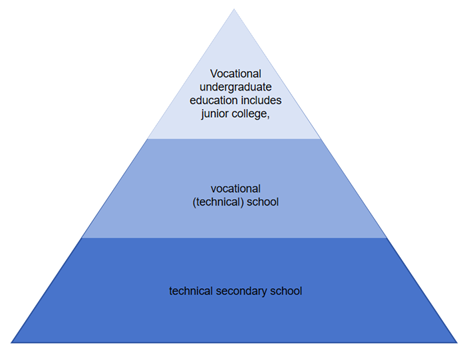
Table 3 illustrates this process of adaptation by highlighting the "continuous advancement of China's vocational education system." The diagram illustrates a clear progression in vocational education, from introductory courses to more complex bachelor's degrees. This structured progression, which reflects a well-timed response to legislative constraints emphasizing vocational training and specialized skills, demonstrates how private HEIs are coordinating with national aims. The emergence of vocational undergraduate programs, in particular, suggests that the public is becoming more aware of the benefits of specialized education and that private higher education institutions are able to adjust to these changing viewpoints (Meyer & Rowan, 1977). This initiative demonstrates a commitment to raising the quality and relevance of vocational education to meet both market and regulatory requirements.
Furthermore, private universities don't only react to outside influences; they actively create their own operating environment. A dynamic scenario where public money is declining and enrollments are increasing is shown in Figure 3 and Figure 4. Financial pressure has made private universities more flexible, forcing them to produce innovative strategies for funding and sustainability without sacrificing the quality of instruction they offer (DiMaggio & Powell, 1983).
One example of this proactive approach is the growth of undergraduate vocational programs, as seen in Figure 1. Private higher education institutions are demonstrating their commitment to producing workforce-ready graduates and bolstering their competitive advantage, according to Becker (1993) and Deephouse & Suchman (2008), by developing programs that meet market demands and increase graduate employability.
This strategic alignment with market objectives is further illuminated by the Human Capital Theory (Becker, 1993), which emphasizes the importance of matching educational attainment with labor market demands for national economic progress. Private higher education institutions are actively changing the educational landscape rather than only responding to legislative changes to produce a highly qualified workforce.
The Relationship Between Financial Investment and Educational Quality
A valuable analytical tool for examining the intricate relationship between financial investment and the standard of academic accomplishment in Chinese HEIs is human capital theory, together with institutional theory. These frameworks help us better understand how HEIs allocate funding to raise academic standards and align program offerings with student requirements.
Figure 4 makes this dynamic clear. Between 2010 and 2015, government funding for public universities rose dramatically per student. This is in line with the Human Capital Theory (Becker, 1993; Schultz, 1961), which maintains that investments of this nature are necessary to raise labor standards and advance economic development. The extra funding shows that efforts are being made to encourage academic achievement and teach students employable skills.
However, there was a relative stagnation in subsidy levels between 2015 and 2020, with minimal growth and a decline in CAGR. According to institutional theory, this shift might represent a conscious reallocation of funds or a push for public universities to become more operationally efficient and to diversify their revenue streams (Meyer & Rowan, 1977; DiMaggio & Powell, 1983). This adaptation to a changing educational and financial landscape highlights the dynamic interaction between institutional structures and outside factors.
Figure 5 and Figure 6 illustrate the remarkable expansion in both the size and growth rates of the education sector, offering more perspective. This expansion indicates a considerable commitment to high-quality education in keeping with the goals of human capital development, particularly between 2018 and 2025. The industry's projected 9225-billion-yuan scale by 2025 highlights this significant financial investment. However, the rapid growth also presents challenges for maintaining quality as it expands.
The Human Capital Theory (Schultz, 1961; Becker, 1993), which sees education as a catalyst for enhancing human capital and raising socioeconomic standing, is congruent with this expansion. This trend can also be simultaneously analyzed using the Institutional Theory, which maintains that educational institutions reflect both governmental policies and social trends (Scott, 2008). Cooperative investment is driving educational advancement, as seen by the convergence of government-led efforts and the public's desire for high-quality education.
The financial investments made in higher education institutions (HEIs) are subject to a multitude of intricate issues that impact the quality of education provided. Figure 4, Figure 5, and Figure 6 provide for an examination of these elements from the perspectives of institutional theory and human capital theory. Prioritizing quality control and efficient resource management is essential as the education industry grows. Government subsidies have benefited public higher education institutions; however, policymakers and higher education leaders must strike a balance between investment and strategic initiatives to maintain educational quality, market relevance, and sustainable growth in the face of shifting financial and regulatory conditions.
The Impact of Institutional Adaptations on Graduate Employability
Higher education institutions (HEIs) are always changing to adapt to new opportunities and challenges. This dynamic character is clarified by the ideas of institutional theory and human capital theory, which emphasize the critical connection between institutional modifications and graduate employability. The ability of HEIs to adapt to shifting socioeconomic conditions, legal frameworks, and market needs has a direct bearing on graduates' career paths.
The career paths of those with bachelor's and associate's degrees are depicted in Figure 7, which is a powerful illustration. Considering Figure 1's observations on how Eastern Education Group's vocational programs consistently result in high graduation employment rates, this data highlights the importance of institutional adaptability. The exceptional job outcomes of these programs demonstrate a profound understanding of the needs of the labor market and the broader socioeconomic context (DiMaggio & Powell, 1983; Becker, 1993).
In response to shifting demands in the labor market, Schultz (1961) claims that the data shows a deliberate change within HEIs toward a concentration on vocational training and education. This adaptation shows their commitment to being competitive and relevant by giving graduates skills that employers are looking for (Deephouse & Suchman, 2008).
More information can be obtained by examining the shifting employability rates of those with bachelor's and associate's degrees. The slight decline in the employment rates of those with bachelor's degrees suggests that certain industries may have reached saturation, underscoring the need for HEIs to adapt their curricula and program offerings to meet shifting market demands (Mincer, 1974; Becker, 1993).
On the other hand, the increasing trend in associate's degree holders' employability rates indicates a changing labor market paradigm. Employers are starting to appreciate the specific occupational skills that these schools provide more and more. This suggests that higher education institutions are adapting by aligning their curricula with these preferences; this involves restructuring their curricula, placing a greater emphasis on practical skills, and developing stronger relationships with industry partners (Becker, 1993; Spence, 1973).
The employment results of Eastern Education Group's vocational programs are consistently high, exceeding national norms, as Figure 1 further supports this narrative. This demonstrates the advantages of educational institutions adapting their courses to the demands of business and providing students with specialized training.
The flexibility present in private higher education institutions can be examined using the theory of institutional isomorphism, which maintains that institutions converge on effective tactics in response to market and regulatory restrictions (DiMaggio & Powell, 1983). Meyer and Rowan (1977) claim that this has a particular impact on Chinese vocational education since institutions are forced to prioritize specialized training and skills due to regulatory frameworks and industry-specific abilities.
The research indicates a noteworthy correlation between the employability of graduates and institutional adaptability, underscoring the importance of higher education institutions' capacity to adapt to changing external circumstances and shifts in the labor market. This flexibility, driven by market competition as well as government incentives, ensures that graduates have skills that employers value, increasing their employability and enabling academic institutions to play a key role in the development of human capital.
By placing these findings within an institutional analysis and human capital theory framework, it may be possible to gain a more thorough understanding of how private higher education institutions (HEIs) in China support the growth of human capital while navigating larger socioeconomic and regulatory challenges. In order to serve China's greater developmental goals, private higher education institutions (HEIs) remain significant players in the education industry. This dual viewpoint aids in our understanding of the policy and its implications for strategy.
V. Conclusion
China's contemporary urban landscape is undergoing a significant metamorphosis, propelled by the confluence of consumer preferences and technological innovation. The present research delves into the complex interplay between cultural consumption venues and urban vitality, shedding light on the ways in which the digital audiovisual sector is transforming cultural engagement and augmenting the attraction of urban landscapes.
Our study demonstrates that experience consumption is becoming increasingly popular in China's cities. Immersion experiences that combine education, escapism, entertainment, and beauty are becoming more valued by consumers, especially those in the expanding middle class. This change is consistent with the experience economy paradigm, which holds that intangible experiences are more valuable than material possessions. More evidence of the need for significant and lasting interactions comes from the demands for authenticity, cultural contextualization, and social connection.
This change has been mostly driven by the incorporation of digital technologies like VR, AR, and interactive displays. These technologies are improving accessibility and fostering participation in cultural narratives, in addition to generating new forms of entertainment. The concepts of spatial production theory are in line with the more egalitarian and participatory cultural consumption ethos that has resulted from the dissolution of barriers between the physical and virtual spheres.
It is impossible to overestimate the influence of spatial dynamics on cultural consumption. Accessibility, the stories they represent, and the physical layout of cultural sites all influence the whole experience. With their rich cultural and historical background, spaces of representation are essential for building a sense of belonging. Cultural consumption is fundamentally social, and this is further reinforced by the value of social connection and shared experiences.
A comprehensive approach to cultural offerings is required due to the varying preferences of different age groups. Older generations might favor more conventional types of cultural participation, but younger groups show a stronger preference for immersive experiences and digital advancements. Recognizing these distinctions is crucial to developing cultural venues that are accessible, inclusive, and serve a wide range of audiences.
The study's conclusions have important ramifications for corporations, cultural institutions, and legislators. While maintaining cultural authenticity and guaranteeing fair access, it is imperative to embrace digital innovation to establish dynamic and inclusive urban cultural ecosystems. The long-term effects of these changes on social cohesion, cultural legacy, and urban growth should be the subject of future research. Furthermore, studies on the moral issues raised by the commercialization of culture and the possibility of social injustice in the experience economy are required to guarantee a fair and sustainable cultural environment.
In summary, China's metropolitan centers are seeing a transformation in their cultural landscape due to the digital audiovisual revolution, which is creating a dynamic and ever-changing cultural ecology. Through comprehending and utilizing the interaction of technology, experience, and space, we can build dynamic, welcoming cities that enhance the quality of life for all citizens and boost the economy.
References
- Becker, G.S. (1993). Human capital: A theoretical and empirical analysis, with special reference to education (3rd ed.). University of Chicago Press.
- Cao, L.; Kusakabe, T. A comparative study on the supply of applied human resources for regional labour market needs in China’s private higher education. Industry and Higher Education 2022, 36, 870–881. [Google Scholar] [CrossRef]
- Cernostana, Z. (2017). Financial sustainability for private higher education institutions (No. 17/2017). Institute of Economic Research Working Papers.
- Chebeň, J.; Lančarič, D.; Munk, M.; Obdržálek, P. Determinants of economic sustainability in higher education institutions. Amfiteatru Economic 2020, 22, 462–479. [Google Scholar] [CrossRef]
- Chen, J.; Pastore, F. Dynamics of returns to vocational education in China: 2010–2017. Humanities and Social Sciences Communications 2024, 11, 1–15. [Google Scholar] [CrossRef]
- Cheng, M.; Adekola, O.; Albia, J.; Cai, S. Employability in higher education: a review of key stakeholders’ perspectives. Higher Education Evaluation and Development 2022, 16, 16–31. [Google Scholar] [CrossRef]
- de Morais, D.M.G.; Facó, J.F.B.; do Carmo Romeiro, M. Modelagem do desempenho das instituições de ensino superior privadas: Um estudo para o segmento de pequeno e médio porte. Regae-Revista de Gestão e Avaliação Educacional 2020, 9, 1–17. [Google Scholar] [CrossRef]
- Deephouse, D.L.; Suchman, M. (2008) “Legitimacy in Organizational Institutionalism” In, R. Greenwood, C. Oliver, R. Suddaby, & K. Sahlin (Eds.), The SAGE Handbook of Organizational Institutionalism (pp. 49-77). London: SAGE Publications.
- DiMaggio, P.J.; Powell, W.W. The Iron Cage Revisited: Institutional Isomorphism and Collective Rationality in Organizational Fields. American Sociological Review 1983, 48, 147–160. [Google Scholar] [CrossRef]
- Ghosh, P.; Goel, G.; Bhongade, A. Skilling the Indian youth: A State-level analysis. Benchmarking: An International Journal 2022, 29, 3379–3395. [Google Scholar] [CrossRef]
- Hayhoe, R.; Li, J.; Lin, J.; Zha, Q. (2012). Portraits of 21st Century Chinese Universities: In the Move to Mass Higher Education (Vol. 30). Springer Science & Business Media.
- Hayhoe, R.; Li, J.; Lin, J.; Zha, Q.; Zha, Q. Understanding China’s move to mass higher education from a policy perspective. Portraits of 21st century Chinese universities: In the move to mass higher education 2012, 20-57.
- Jacob, W.J.; Mok, K.H.; Cheng, S.Y.; Xiong, W. Changes in Chinese higher education: financial trends in China, Hong Kong and Taiwan. International Journal of Educational Development 2018, 58, 64–85. [Google Scholar] [CrossRef]
- Kanagaraj, K. (2019). A study on the opinions of university teachers on privatization of higher education in India.
- Lee, S.H. (2020). Skills development driven by labor market demand. Anticipating and Preparing for Emerging Skills and Jobs: Key Issues, Concerns, and Prospects, 271-277.
- Li, F.; Morgan, W.J. (2011). Private higher education in China: Problems and possibilities. In Higher education reform in China (pp. 66-78). Routledge.
- Ling, Y.; Chung, S.J.; Wang, L. Research on the reform of management system of higher vocational education in China based on personality standard. Current Psychology 2023, 42, 1225–1237. [Google Scholar] [CrossRef]
- Liu, L. Opportunities and challenges for private education in China: A review of the latest policy revisions. ECNU Rev. Educ. 2023, 6, 141–154. [Google Scholar] [CrossRef]
- Liu, X. (2023). Development of Private Higher Education in the People’s Republic of China. In The Development and Governance of Private Universities in China (pp. 35-63). Springer Nature Singapore.
- Marginson, S. The worldwide trend to high participation higher education: Dynamics of social stratification in inclusive systems. Higher education 2016, 72, 413–434. [Google Scholar] [CrossRef]
- Meyer, J.W.; Rowan, B. Institutionalized Organizations: Formal Structure as Myth and Ceremony. American Journal of Sociology 1977, 83, 340–363. [Google Scholar] [CrossRef]
- Mincer, J. (1974). Schooling, Experience, and Earnings. National Bureau of Economic Research.
- Mok, K.H.; Wu, A.M. Higher education, changing labour market and social mobility in the era of massification in China. Journal of Education and Work 2016, 29, 77–97. [Google Scholar] [CrossRef]
- NGU; SW; Teneng, P.P. Unlocking graduates’ employability: The Case of technical high school graduates of the Diamaré Division, Far North Region, Cameroon. American Journal of Educational Research 2020, 8, 705–717. [CrossRef]
- Oman, Z.U.; Pandey, S.; Gaddam, A. (2022). A study on impact of conceptual and practical based learning on employability.
- Ou, D.; Hou, Y. Bigger pie, bigger slice? The impact of higher education expansion on educational opportunity in China. Res. High. Educ. 2019, 60, 358–391. [Google Scholar] [CrossRef]
- Pană., Fanea-Ivanovici. Institutional Arrangements and Overeducation: Challenges for Sustainable Growth. Evidence from the Romanian Labour Market. Sustainability 2019. [CrossRef]
- Schultz, T.W. Investment in Human Capital. The American Economic Review 1961, 51, 1–17. [Google Scholar]
- Spence, M. Job market signaling. Quarterly Journal of Economics 1973, 87, 355–374. [Google Scholar] [CrossRef]
- Su, S. The policy environment of private higher education in China: A discussion based upon property ownership rights. Asia Pacific Education Review 2012, 13, 157–169. [Google Scholar] [CrossRef]
- Tan, E. Human capital theory: A holistic criticism. Review of educational research 2014, 84, 411–445. [Google Scholar] [CrossRef]
- Tang, N.; Shi, W. Youth employment and technical and vocational education and training (TVET) in China. Vocational Education and Training in Times of Economic Crisis: Lessons from Around the World 2017, 269-283.
- Tomaszewski, W.; Perales, F.; Xiang, N.; Kubler, M. Beyond graduation: Socio-economic background and post-university outcomes of Australian graduates. Research in higher education 2021, 62, 26–44. [Google Scholar] [CrossRef]
- Xia, L.; Ali, A.; Wang, H.; Wu, X.; Qian, D. A dynamic analysis of the asymmetric effects of the vocational education and training on economic growth, evidence from China. Frontiers in psychology 2022, 13. [Google Scholar] [CrossRef] [PubMed]
- Xiong, W.; Yang, J.; Shen, W. Higher education reform in China: A comprehensive review of policymaking, implementation, and outcomes since 1978. China Economic Review 2022, 72, 101752. [Google Scholar] [CrossRef]
- Xue, E.; Li, J. (2022). Reform and Development of Private Vocational Education in China. In China’s Vocational Education Reform: Explorations and Analysis (pp. 107-124). Springer Singapore.
- Yi, X.; Zhang, J.; Yan, H.; Zhou, L. (2023). Vocational education reform and corporate skilled human capital: Evidence from China. Managerial and Decision Economics.
- Zha, Q.; Guangfen, Y.; Shiming, Z. Higher vocational education reform and development in China. Chinese Education & Society 2017, 50, 425–428. [Google Scholar] [CrossRef]
- Zhang, H. An Institutional Dilemma in China’s Skills-development System: Evidence from Two Apprenticeship Reforms. The China Quarterly 2021, 248, 1103–1128. [Google Scholar] [CrossRef]
Figure 1.
Employment Rates of Eastern Education Brands vs National Average.
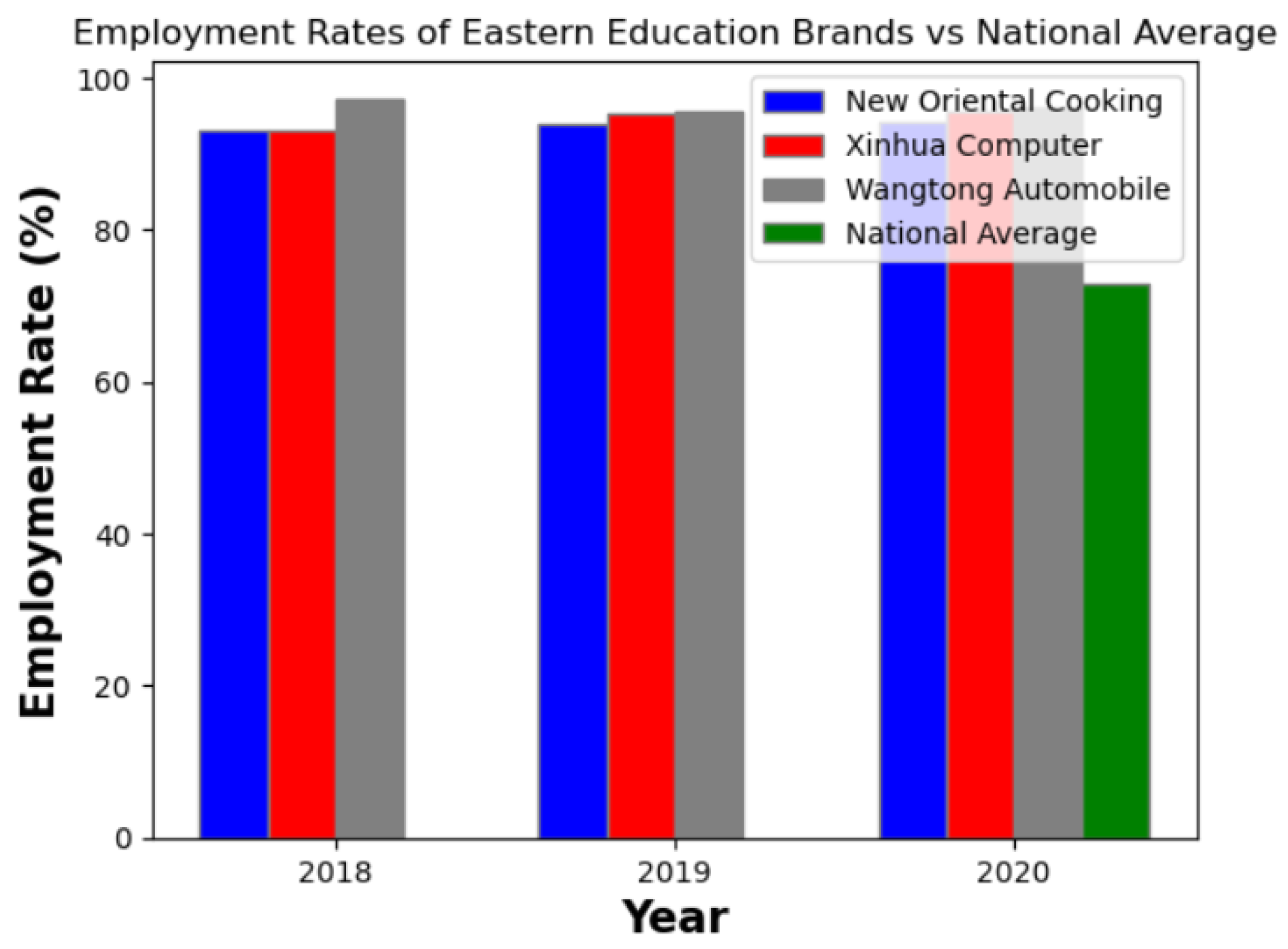
Figure 2.
Proportion of Research-Oriented and Application-Oriented Talents in China, the United States, and Germany.
Figure 2.
Proportion of Research-Oriented and Application-Oriented Talents in China, the United States, and Germany.
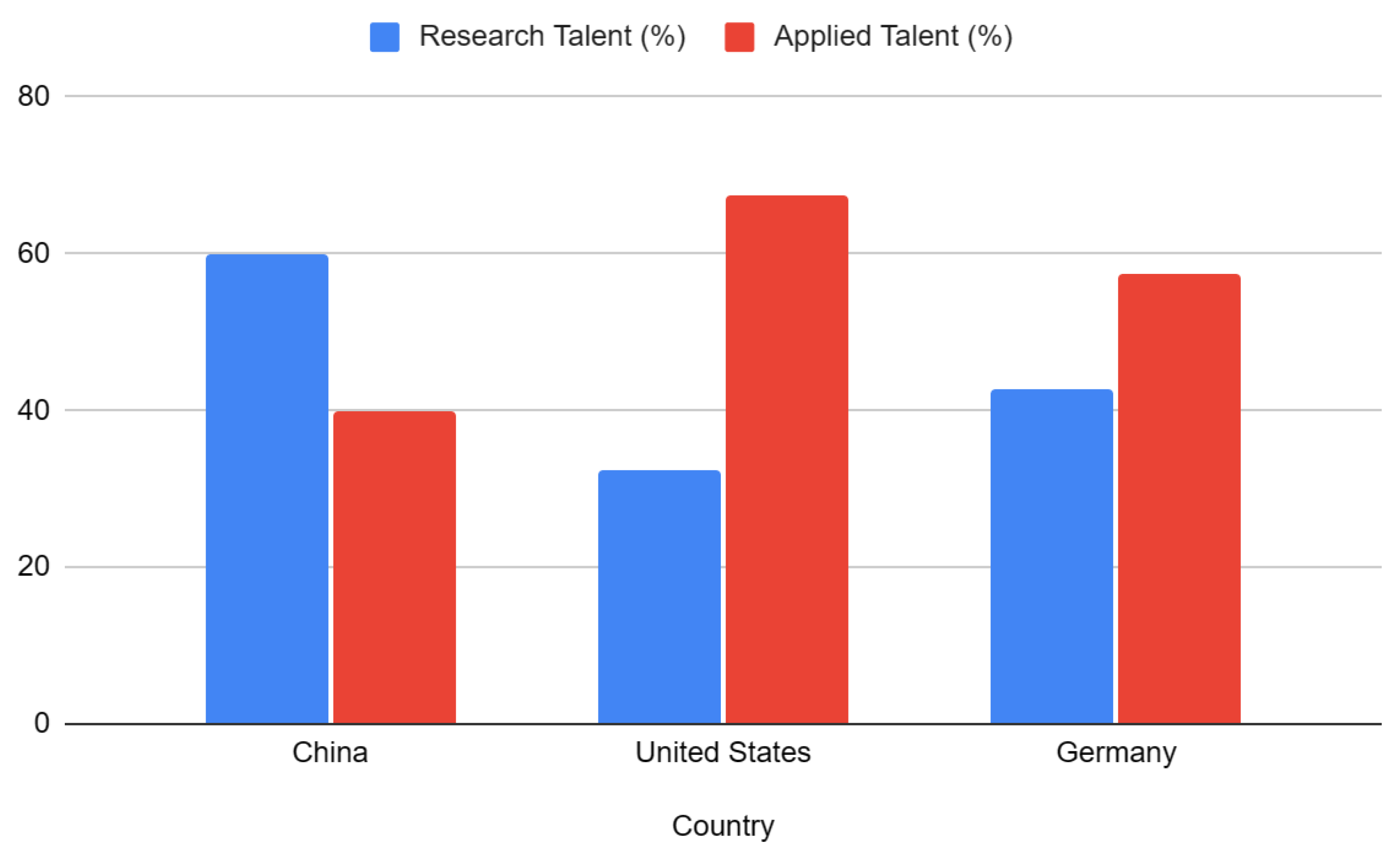
Figure 3.
Number of Students in Public vs Private Schools.
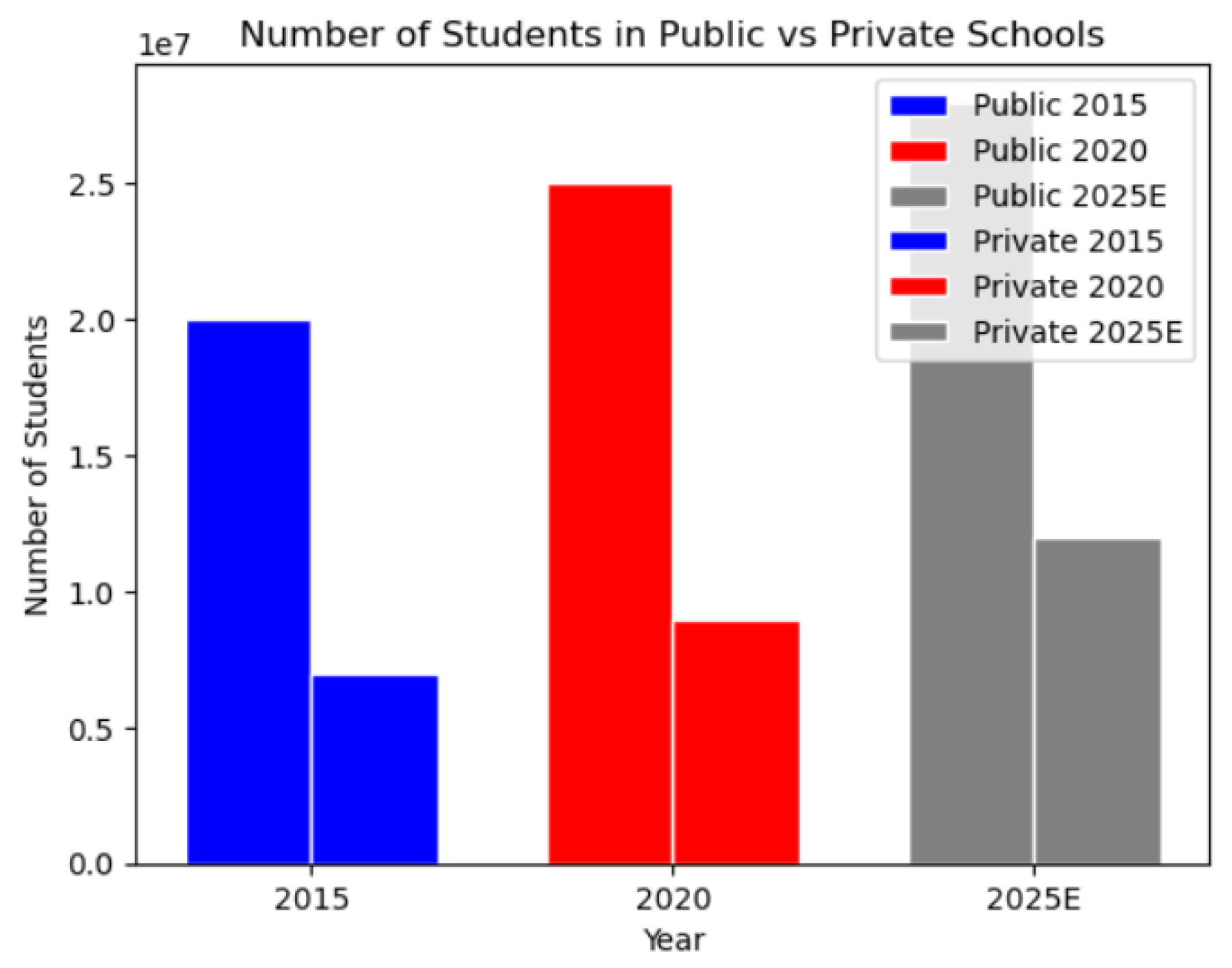
Figure 4.
Average Subsidy per Public Univeristy Student and CAGR.
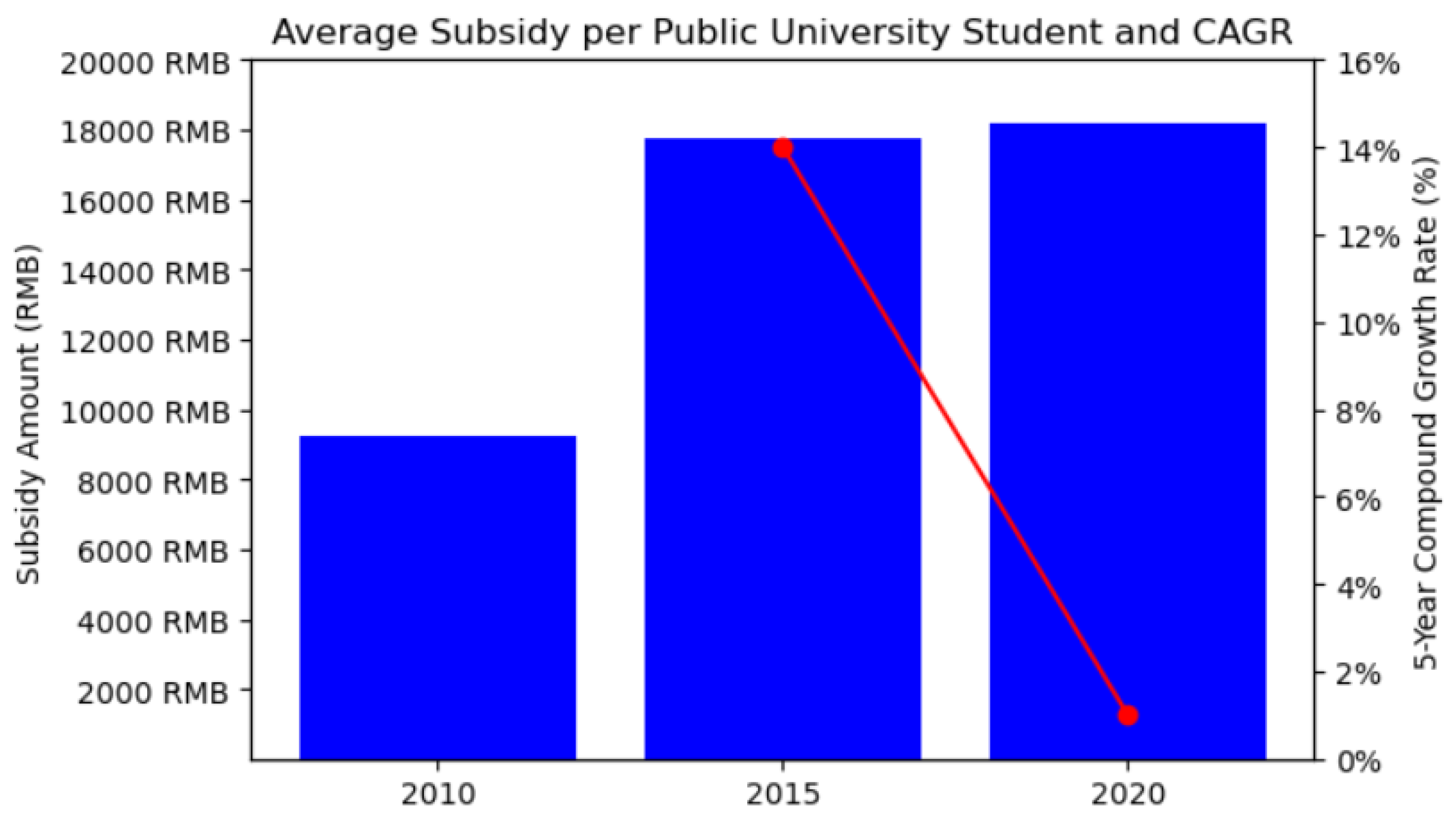
Figure 5.
Number of College Students in China (2010-2030).
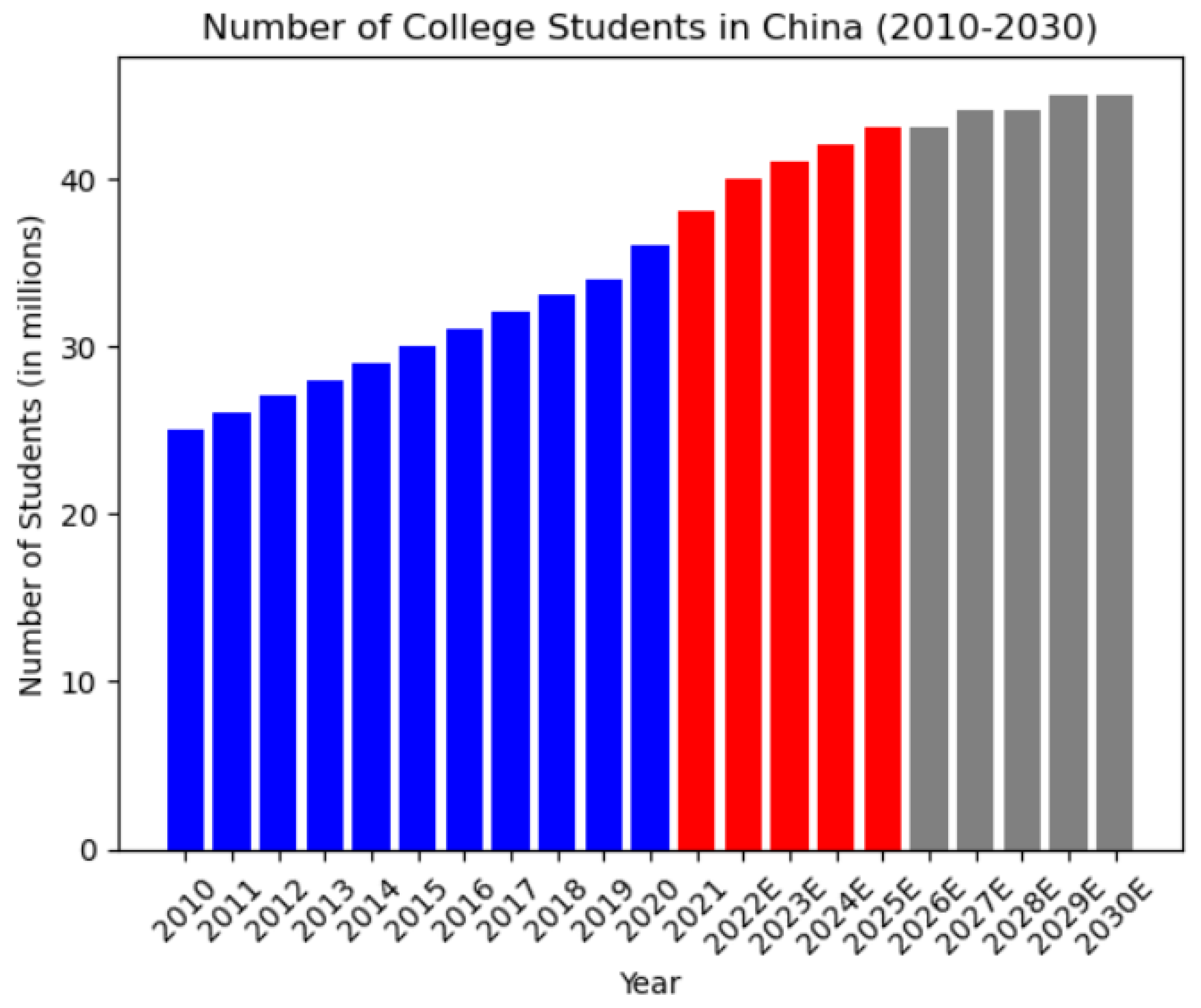
Figure 6.
Quality Education Industry Scale and Growth Rates(2018-2025).

Figure 7.
The Surplus of Bachelor’s Degree Gradutates Indicates Market Saturation.
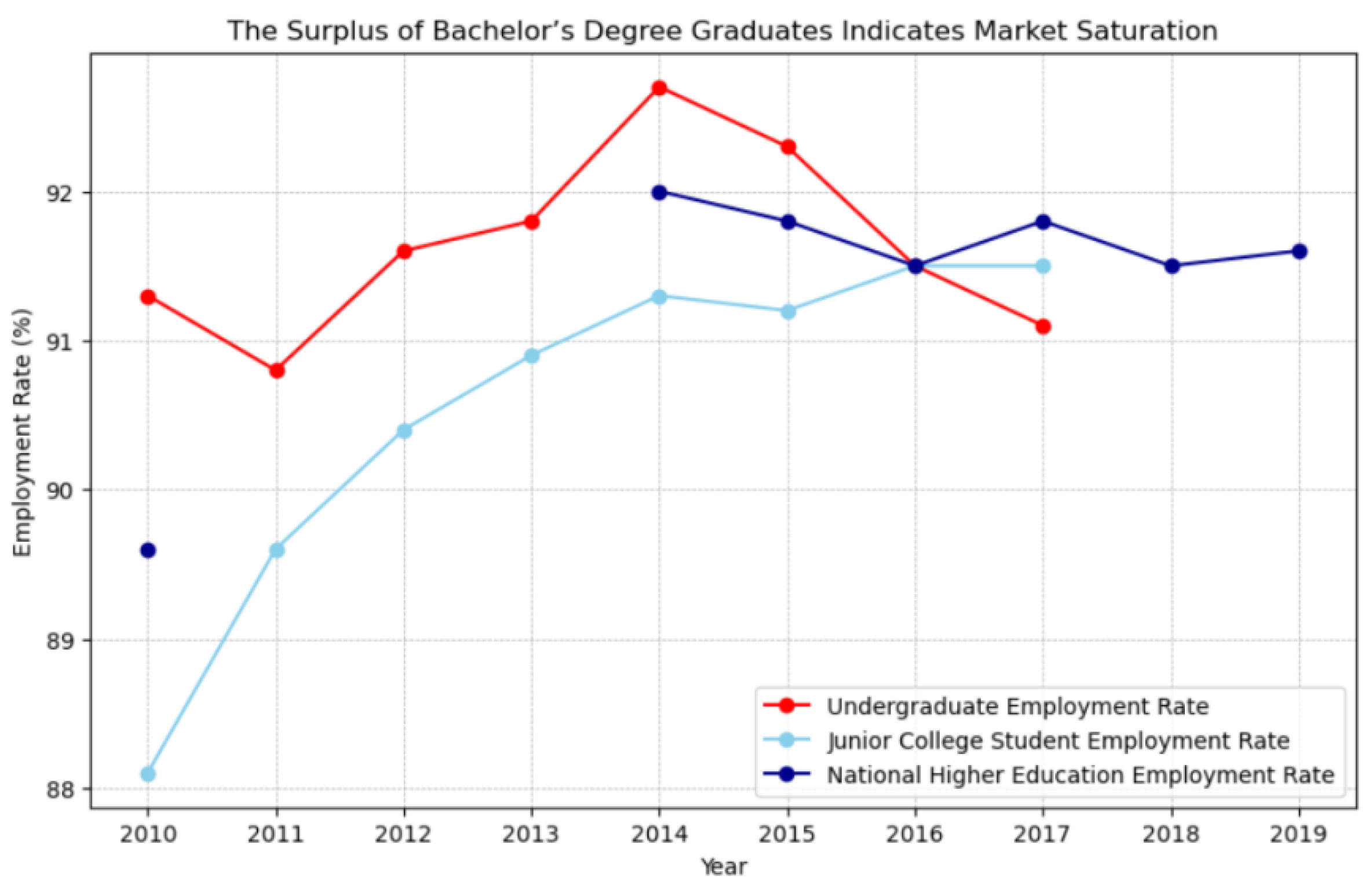

Table 1.
Vocational Education Disciplines Show Gradual Progressive Patterns.
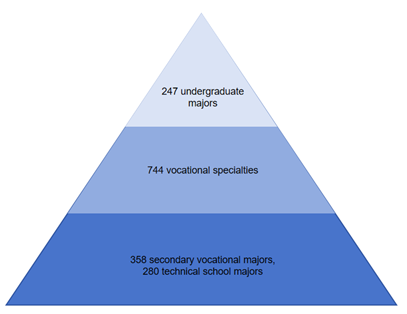 |
Table 2.
Private universities pay attention to the development of applied skills, high employment rate to shape a good reputation.
Table 2.
Private universities pay attention to the development of applied skills, high employment rate to shape a good reputation.
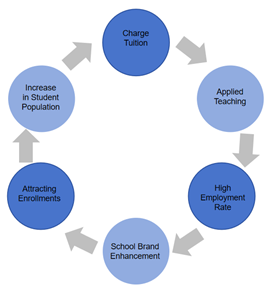 |
Table 3.
The vocational education system continues to improve, and the emergence of vocational undergraduate education enhances social recognition.
Table 3.
The vocational education system continues to improve, and the emergence of vocational undergraduate education enhances social recognition.
 |
Disclaimer/Publisher’s Note: The statements, opinions and data contained in all publications are solely those of the individual author(s) and contributor(s) and not of MDPI and/or the editor(s). MDPI and/or the editor(s) disclaim responsibility for any injury to people or property resulting from any ideas, methods, instructions or products referred to in the content. |
© 2024 by the authors. Licensee MDPI, Basel, Switzerland. This article is an open access article distributed under the terms and conditions of the Creative Commons Attribution (CC BY) license (http://creativecommons.org/licenses/by/4.0/).
Copyright: This open access article is published under a Creative Commons CC BY 4.0 license, which permit the free download, distribution, and reuse, provided that the author and preprint are cited in any reuse.