

Submitted:
10 December 2024
Posted:
10 December 2024
You are already at the latest version
Abstract
This research aims to enhance scholarly understanding Analysis of potential Value Creation research on managing transit oriented that may arise from Mass Rapid Transit resources through an extensive literature review, analyzing 235 papers from the Scopus database spanning 2011-2024, with a specific focus on value creation managing transit-oriented area. Data collection was conducted on January 1, 2024, using Harzing's Publish or Perish tool. The selected studies are associated with keywords such as 'managing transit orientation (154 papers), Value creation MRT (45 papers), Innovation MRT (36 papers)/ In the filtering process, 235 papers were assessed, excluding those unrelated to the research focus on the cash flow statement. The inclusion of 31 carefully selected articles reflects a targeted approach, ensuring alignment with the research focus on value creation in managing transit orientation a relevant dataset for analysis. This article was created by accessing several scientific articles regarding the application of identification in managing transit orientation using Vos viewer. Value creation research in managing transit oriented is needed to explore the following areas: Long-term sustainability of identified core competencies, Competitive Imitation, Organizational Adaptability, Industry Specific Applications, Performance Measurement, Dynamic Capability Development, Cross-Cultural Perspective. Potential areas for further research include Incorporate additional contingent factors into the model, such as environmental dynamism and competitiveness, to test the validity of the Resource-Based View (RBV) model. Extend the analysis to small and medium-sized businesses to examine how organizational structure and competitive strategy impact performance in this context.
Keywords:
Sustainable
; Value Creation
; VRIO
; Transit Oriented Development
; Mass Rapid Transport
; Systematic Literature Review
1. Introduction
One of the solutions to overcome the problem of congestion is to encourage people to use public transportation to support their mobility [1]. This is also a major concern for the government, which has developed a strategy to make integrated transportation development a priority. The presence of the transit-oriented area management concept with a number of facilities supporting passenger mobility and feeder transportation systems from buffer areas is also expected to increase the number of users of this rail-based transportation. The ultimate goal is that people have the choice not to use private vehicles for daily mobility. Transit-oriented area management is an effort by Mass Rapid Transit (MRT) to diversify sources of income from ticket sales with the aim of keeping its services viable and sustainable. Transit-oriented area management generates income from the estate management of transit areas owned or managed by the company.
The management of transit-oriented (TOD) areas as a diversification of ticket revenue is the Hong Kong MTR. As one of the big cities in the world that has a mature metro network, Hong Kong MTR is diversifying its income from non-ticket revenue. Hong Kong MTR has a property development program called “R+P
” or “Rail plus Property," where they integrate property development with subway or metro rail stations [2]. This approach allows Hong Kong MTR to capitalize on the high property values around stations and metro train tracks. Based on the 2022 financial report, MTR Hong Kong generated around USD 1.5 billion from the non-ticket revenue sector [2]. The composition of non-ticket income comes from the real estate development business (renting land use around train stations for commercial purposes), income from renting advertising space in station buildings, income from renting retail space, sponsorship, proper passenger flow planning when designing station layout, and allocating more space to unpaid areas where passenger stay times are longer.
Hong Kong MTR seeks to achieve better integration between public transportation, property development, and local community needs through TOD management projects. In addition to supporting better mobility, TOD management can include elements such as housing, offices, retail, and public facilities to create a diverse and sustainable environment. The operation of the MRT, in general, is the basis for the company to start developing and managing property or business at the station, the Depot, and the surrounding area. Ticket income from train operations is the leading business (core business) of PT MRT, a captive market. Meanwhile, non-ticket income from business development and management at stations and property around the station is an extended business that the corporation must develop. In previous years, business development plans have been carried out using a business model based on property management at the station, the depot, and the surrounding area [3].
The business schemes being developed include advertising cooperation, including the provision of advertising space in the station area, station naming rights, partnerships in services to service users such as payment cards and telecommunications signaling, as well as a retail business, including management of regular tenants and Micro, Small and Medium Enterprise tenants (MSMEs) [4]. In the pursuit of advancing our comprehension of entrepreneurial dynamics on a global scale, we have formulated a key research question: Analysis of potential Value Creation research on managing transit-oriented that may arise from Mass Rapid Transit resources?. Transit-oriented development (TOD) is a concept that emphasizes the creation of sustainable, walkable communities centered around public transportation hubs. The implementation of Mass Rapid Transit (MRT) systems aims to improve urban mobility and reduce reliance on private vehicles. However, to fully realize the potential benefits of MRT, it is essential to explore how value creation can be effectively managed within the context of TOD. This research question aims to analyze potential value creation strategies that can emerge from the resources provided by MRT systems, focusing on their implications for urban development, economic growth, and community well-bein
The Resources Based View (RBV) principle is related to the notion of competitive advantage. Achieving sustainable competitive advantage requires companies to adopt profit-oriented economic policies or strategies [5]. Resources whose attributes are beneficial can be obtained if the resource has different statistics, is difficult to imitate, and is indeed challenging to replace. RBV is a smart choice for performance development and maximization. In recent decades, the RBV has exerted great influence in this domain of economic strategy and management. RBV is used to refine strategic management ideas. The theory of competitive advantage is the most significant contribution to resource-oriented business philosophy. The underlying assumption is that the outcome of company management goals is a competitive advantage that can be achieved sustainably over time. Companies must be able to produce above-average performance to gain a lasting competitive advantage [6]. According to the RBV, unique, valuable, inimitable, and non-substitutable resources enable organizations to achieve superior performance. In the context of MRT and TOD, the RBV can be applied to identify and utilize specific resources that contribute to effective urban development. By leveraging capabilities for efficiency, By analyzing the capabilities derived from MRT resources, stakeholders can determine how to optimize operational efficiency and service quality. Efficient management of transit resources—such as scheduling, maintenance, and customer service—can lead to increased ridership and revenue generation, directly contributing to value creation.
There are approaches in relation to efficiency, which is the Resource-based View (RBV) perspective, which is a resource-based approach. The RBV approach sees companies with superior systems and profitable structures rather than higher education institutions engaging in strategic investments that can discourage entry and raise prices above costs in the long run [7]. The RBV concept involves competitive advantage through the possession of certain important resources, especially those that are unique, have more valuable features, are difficult to use, and are easy to use. When companies maximize resource potential well, they can generate profits. Optimizing the RBV to make strategic human resource decisions, management, identification, development, and utilization of key resources is optimized to maximize company value [8].
According to the RBV, managers should hold only unique, priceless, unusual, inimitable, and irreplaceable resources if they are to achieve substantial growth. This conceptual approach places a strong emphasis on a company's unique resources and assets, which must be diverse, unique, and durable to maintain competitiveness over the long term. In accordance with the concept in RBV, the analysis that will be carried out in RBV theory applies to the specific context of transit-oriented development (TOD) as follows:
1. Identify Key Resources. Determine the key resources owned by PT MRT Jakarta, such as MRT infrastructure, surrounding land, information technology, relations with the government, and management capabilities.
2. Competitive Advantage Analysis. Identify competitive advantages (core competencies) that emerge from these resources, such as does PT MRT Jakarta have expertise in planning and managing transit-oriented areas?
3. Analysis of the relationship with transit-oriented area management in explaining how these resources and core competencies can be integrated into the management of transit-oriented areas. How can MRT infrastructure and managerial expertise support the development and management of transit-oriented areas?
Value creation refers to giving something of value to receive something of higher value. In a work environment, this may mean creating new products or services to meet customer needs or simplifying processes so that the company functions more smoothly and efficiently [9]. There are many ways to create value in the workplace, and most organizations encourage this because it increases business success. Recently, research on value creation has become of increasing interest not only among business, economists, and marketing scholars but also information systems and related disciplines. This is because the hybrid offering of physical and digital products accelerates digitalization, big data, and automation, which influences value-creation strategies in organizations. Researchers are starting to consider technological attributes in the context of value-creation activities. This needs to Identify potential Value Creation that may emerge from PT MRT Jakarta's resources and core competencies [10]. In addition, linkage to Sustainability by considering how managing transit-oriented areas can contribute to sustainability, both from an economic (corporate), social, and environmental perspective
2. Materials and Methods
This study used a Systematic Literature Review (SLR) method. SLR is a form of secondary study that uses a well-defined methodology to identify, analyze, and interpret facts and data related to research questions to produce unbiased conclusions that can be carried out and tested repeatedly [11]. In contrast to conventional narrative reviews, systematic literature reviews (SLRs) use reproducible, transparent, and scientific producers. In order to address a particular research subject, it is helpful to compile all relevant articles and documents that meet our pre-established inclusion criteria. In order to reduce the likelihood of bias throughout the search, identification, appraisal, synthesis, analysis, and summary of research, it employs clear and methodical methods [12].
A well-executed technique with minimum mistakes can yield dependable data and conclusions from the study, which in turn can assist scientists and decision-makers in taking appropriate action. A well-designed SLR procedure is crucial because it guarantees that the job is meticulously planned out before the review process really begins [13]. However, statistical methods must be used for the resulting results in a meta-analysis. The sample used is a purposive sample with several scientific article criteria [14].
The study delves into various dimensions of value creation in managing transit orientation, covering definitions, influencing factors, outcomes, and recent research developments. To ensure the reliability and relevance of sources, an exhaustive search targeted scientific articles from reputable journals published between 2018 and 2023 in English and readily accessible on online databases. The studies were retrieved through the Scopus database, with data collection conducted on January 1, 2024, using Harzing's Publish or Perish tool. The selected studies are associated with keywords such as 'managing transit orientation (154 papers),' Sustainable Value creation MRT (45 papers),' 'Innovation MRT (36 papers)/ In the filtering process (Figure 1), 235 papers were assessed, excluding those unrelated to the research focus on the cash flow statement. We read and reviewed the titles [15], abstracts, and issues, which included literature review papers and meta-analyses. This scientific study is based on a synthesis of articles published in Scopus in English between 2018 and 2023 from a variety of sources and journals. The Scopus database was chosen since it has the most prominent citations and covers over 20,000 peer-reviewed papers. Scopus lists Elsevier, Emerald, Taylor & Francis, and Springer as peer-reviewed. The final results for SLR comprised 18 articles. The review system for this paper followed the literature review process [16]. The final data collected from Scopus was transferred to a summary table using Microsoft Excel, which listed the bibliographic information as well as specifics about main components such as variables, theories employed, techniques, and all of the data required for analysis [17]. We used the VOSviewer tool to perform co-authorship, co-occurrence, and citation analysis to determine the units of analysis from keywords, nations, and authors. The writing analysis and concept were based on the SLR paper [18].
The inclusion of 18 carefully selected articles reflects a targeted approach, ensuring alignment with the research focus on value creation in managing transit orientation, a relevant dataset for analysis. This article was created by accessing several scientific articles regarding the application of identification in managing transit orientation using a VOS viewer. The selected scientific articles spanned six years, from 2019 to 2023. Search using a number of keywords: value creation MRT, managing transit orientation, sustainable value business creation. The research range of six years and a large number of keywords in this research are based on the fact that there is not much research focusing on talent identification; therefore, the range of years and keywords must be expanded. Meanwhile, to maintain research quality, researchers only used scientific articles indexed by Scopus Q1 until Q4 [19].
3. Results and Discussion
The development and management of TOD cannot be handed entirely over to Mass Rapid Transportation. Based on the existing TOD management pattern, it is challenging for MRT to invite developers at TOD to negotiate regarding the pros and cons of developing TOD. Building owners need certainty and trust from the government, which cannot be given to MRT alone. Without legal clarity and full intervention from the DKI Jakarta Provincial Government, it will be challenging for MRT to invite developers and landowners around the station area to work together to develop TOD.
The findings derived from the systematic literature review have been meticulously compiled and are elucidated in detail in Table 1. This comprehensive tabulation encapsulates the diverse range of research studies, encompassing varying methodologies, respondent profiles, and geographical locations. The table serves as a valuable repository of insights, offering a nuanced understanding of the sustainable value creation in the MRT landscape across different contexts [20]. Each entry in Table 1 provides a snapshot of the research, including details such as the authors, respondent demographics, country of study, research methods employed, and critical findings.
The difference between the studies is that the methodology used in this research is a literature review combined with a conceptual analysis. The author critically analyzes existing literature and concepts related to value propositions from various sources to develop a comprehensive understanding of stakeholder perspectives on the value proposition concept. The difference between studies about the methodology used in this research is the development of a model that describes the process of building sustainable competitive advantage, both static and dynamic aspects. The model developed is based on the strategic tool framework VRIO (Value, Rareness, Imitability, Organization).
In order to get an initial picture regarding the latest scientific achievements (state of the art) in the field of sustainable food supply chain management, the author conducted a limited bibliometric analysis. Literature sources for this bibliometric analysis are still limited to the Scopus database. Network analysis is assisted by VOS viewer software to be able to describe the connections between keywords on the topic. Table 2. summarizes the bibliometric analysis protocol performed by the authors.
In the first stage of the search, the author only entered keywords and the range of publication years 2018-2023. From this first stage, 177,520 articles, books, and other written sources were obtained. Then, the author continued the second stage of filtering by limiting the selection to only articles that fell into the business, management, accounting, and English language categories, and the type was journals at the final stage. From this second stage of screening, the author obtained 88 articles that met the criteria. The third stage is the network analysis stage using VOS viewer software. The author chose to make a bibliometric analysis using RIS extension data from Scopus by looking for connections between keywords contained in the 88 articles. The results can be seen in Figure 1 below.
Figure 1.
Network analysis results using VOSviewer.
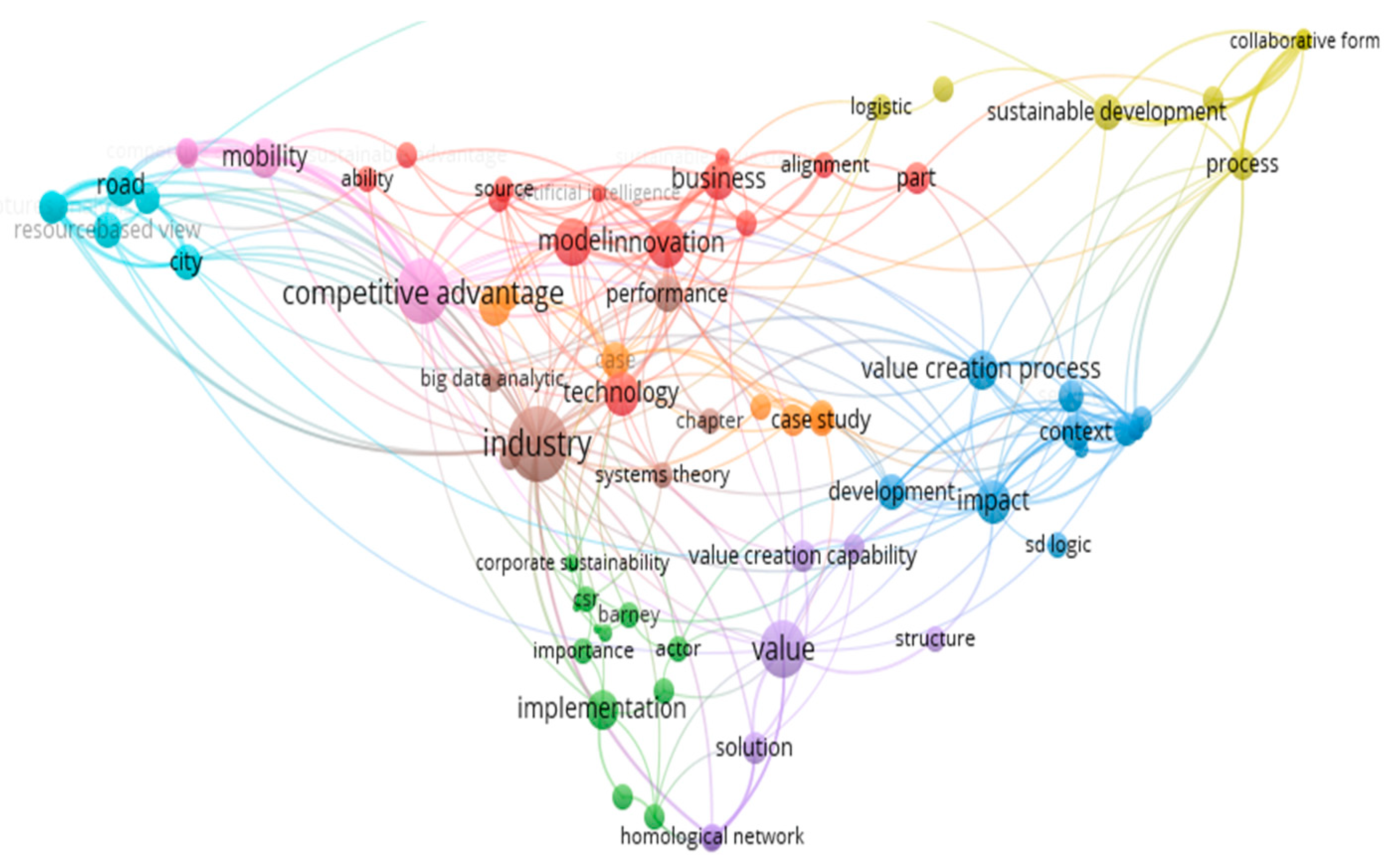
In the analysis using VOS viewer, the author uses a minimum limit of 3 occurrences of the same keyword from all selected articles, which will appear as a description of the keyword network. Keywords that appear less than this minimum limit are not displayed. The purpose of this limitation is to obtain keywords that are quite commonly used in research on related topics. From Figure 4, it can be seen that 10 clusters and 874 links were formed, with value creation, RBV, and sustainability being the main keywords that appeared. It can be seen that this keyword has a close relationship with the words value, company, innovation, model, and industry.
Figure 2 depicts the network color-coded by year of publication. Keywords that are widely used in publications in 2022 and beyond are industry, value creation function, innovation ecosystem, customer, and dynamic performance management. Based on the year of publication, it can be understood that topics related to value creation in the industry have been increasingly researched in recent years.
Based on the article's findings, additional potential for value creation that can be identified include:
1. Explore the impact of technological advances in digital media, applications, and different payment systems on customer value perceptions and behavior.
2. Investigate the effectiveness of new media, such as social media and messaging apps, in disseminating marketing campaigns, promotions, and customer engagement activities.
3. Examination of the relationship between quality and price and its influence on customers' willingness to pay for higher quality products.
4. Study of the value of various forms of payment in terms of practicality, convenience, speed, and time optimization for customers.
5. Analyze the influence of product-related attributes, such as quality, freshness, traceability, and design, on customer value perceptions and purchasing behavior.
Value creation research in managing transit-oriented is needed to explore the following areas: Long-term sustainability of identified core competencies, Competitive Imitation, Organizational Adaptability, Industry Specific Applications, Performance Measurement, Dynamic Capability Development, and Cross-Cultural Perspective [20]. Potential areas for further research include Incorporating additional contingent factors into the model, such as environmental dynamism and competitiveness, to test the validity of the Resource-Based View (RBV) model. Extend the analysis to small and medium-sized businesses to examine how organizational structure and competitive strategy impact performance in this context [21].
Potential areas for value creation in managing transit-oriented research include Evaluate unobservable sources of competitive advantage, evaluating systemic attributes or complex combinations of resources, assessing the value generated by the resource versus the cost of the resource, exploring the possibility of creating or combining the VRIO framework with other frameworks in the form of Bricolage, Examining how individual cognitive preferences, motivations, and pressures from the organizational context influence responses to VRIO or other strategy frameworks, Field-based research to enhance understanding of how the use of VRIO plays out in the full context of strategy creation [22].
RBV is used to refine management strategy ideas where the focus is on improving company performance, so it is necessary to examine the relationship between organizational structure, competitive strategy, and its impact on company performance [23]. The research concluded that the RBV model shows a shift in focus to improving internal factors (resources and capabilities), so alignment between strategy, structure, and performance is needed [24]. The shift in focus to improving internal factors influences a view that emphasizes the importance of a company's internal resources and capabilities in achieving sustainable competitive advantage [25].
Intangible resources (especially innovation and reputation) also drive product performance. This finding is in line with Sunje & Pasic's (2011) research on the process of developing sustainable competitive advantage based on the VRIO (Value, Rareness, Imitability, Organization) framework. Although VRIO is able to encourage companies to evaluate resources relative to competitors and competitive dynamics, VRIO also has limitations [27]. When there are many businesses offering the same products, it will be difficult for them to remain profitable without finding new ways of creating value for customers. What was then formulated was that value creation cannot be separated from the involvement of financial, non-financial, and time dimensions [28].
There are eight principles in TOD development, such as mixed function development; maximizing building density around the station; simple, direct, and intuitive transit connections; an attractive, safe, and comfortable space experience for pedestrians; social justice; reducing the impact of development on the environment, infrastructure resilience; and developing local economies that attract investment and new job opportunities [29]. Even though it has clear principles in its development, in fact, there are a number of challenges in developing TOD. Apart from location, improvements are also being made regarding regulations to make them ideal [30]. This is not easy because companies have to involve various related agencies in drafting these regulations.
In order to realize TOD development is walkable, clean, inclusive, modern, and safe, PT MRT Jakarta, as the area manager, is faced with conditions where the TOD development area is an area that has developed (brownfield) [29]. This means that there are other parties in the area who have the potential to act as either supporters or obstacles [29].
Apart from collaborating with developers and landowners along the MRT route, TOD development is also carried out by utilizing land and assets belonging to the provincial government. Its utilization is carried out with a cooperative utilization agreement to obtain management/commercialization rights. However, it cannot be denied that the problem that arises is the time needed to obtain land management rights through asset utilization collaboration [29].
To create a more sustainable and inclusive city, policymakers should prioritize public transportation access and diversity in the built environment, as well as travel behavior. The key impacting elements were resource complementarity among stakeholders, a cooperative environment, and partnership synergy. Furthermore, by analyzing the relationship between access distance and land use intensity, it was discovered that transit-oriented development (TOD) measurement units are located within the network buffer zone surrounding transit areas. These investments are evaluated by an integrated cost-benefit analysis that takes into account the social, environmental, and economic externalities of the project.
The value created in the development and management of TOD can be seen from two perspectives, namely financial and non-financial value [30]. This value perspective can be seen from the perspective of PT MRT itself and the community who are consumers/users of TOD development. The value of developing and managing TOD can be seen in Table 3 below.
As a comparison, the management of TOD as a diversification of ticket revenue is the Hong to reach 22% of the total revenue received by 2023. The Hong Kong MTR seeks to achieve better integration between public transportation, property development, and the needs of local communities through TOD management projects. In addition to supporting better mobility, TOD management can include elements such as housing, offices, retail, and public facilities to create a diverse and sustainable environment.
The proposed improvements to the value creation strategy at PT MRT are critical for successfully implementing Transit-Oriented Development in Jakarta. By engaging stakeholders, integrating land use planning, enhancing accessibility, marketing effectively, forming business partnerships, and maintaining a feedback loop, PT MRT can significantly improve its service delivery and contribute to sustainable urban development. As urban areas continue to grow, adopting these strategies will position PT MRT as a leader in transit-oriented development, ultimately benefiting the community and the environment. By committing to these actions, PT MRT can not only enhance its value creation strategy but also play a pivotal role in shaping a more sustainable, accessible, and vibrant urban future.
As comparison as well in Based on findings on MTR Hong Kong generated around USD 1.5 billion from the non-ticket revenue sector. The composition of non-ticket income comes from the real estate development business (renting the use of land around train stations for commercial purposes), income from renting advertising space in station buildings, income from renting retail space, sponsorship, proper passenger flow planning when designing station layout, and allocating more space to unpaid areas where passenger stay times are longer.
Figure 3 shows that the proportion of income from KBT (property rental and property management) management at MTR Hong Kong will reach 22% of the total income received in 2022. MTR Hong Kong seeks to achieve better integration between public transportation, property development and the needs of local communities through KBT management projects. In addition to supporting better mobility, KBT management can include elements such as housing, offices, retail and public facilities to create a diverse and sustainable environment.This research also found that to create sustainable value creation, there are several areas that MRT can do such as customer retention programs, invensive marketing programs, exploring new opportunities in places, integration of lifesylte, digitalization system, innovatife lifestyle and collaboration with more stakeholders as found in Table 4.
5. Conclusions
This research illuminates the contextual nuances and distinct factors influencing value creation across various regions, spanning from Indonesia and beyond. This also shows that a standard approach to data collection and analysis in innovation research is still lacking, so further quantitative research is needed so that this research can be more statistically generalized. Further research is needed to explore the following areas: Validate the Value Proposition of Patient Preference, Teleconsultation Readiness, Comparative Analysis, and Probabilistic Choice Model. These areas of further research will contribute to increasing understanding of the value proposition in adult community hearing rehabilitation, ultimately leading to more patient-centered and effective rehabilitation practices. Based on the discussion regarding shifts in strategic management research, potential areas for further research could include Investigating the effectiveness of various diversification strategies based on resource linkages versus market linkages and how companies can effectively align human resource management practices with strategic management to maintain competitive advantage. Explore the complexity of imitation or resource acquisition. This research can provide insight into how companies can leverage their internal resources and capabilities to achieve sustainable competitive advantage in a dynamic business environment.
This study can expand and give insight into the built TOD area by compelling the stakeholder collaboration and government to reach the goal. The practical contribution of this research has an impact on policymakers, planners, and industry practitioners. Based on the existing TOD management pattern, it is very difficult for MRT to invite developers at TOD to negotiate regarding the pros and cons of developing TOD. Building owners need certainty and trust from the government, which cannot be given to MRT alone. Without legal clarity and full intervention from the Provincial Government, it will be very difficult for MRT to invite developers and landowners around the station area to work together to develop TOD.
Future research could contribute to a deeper understanding of value creation in business and its implications for stakeholders. The research suggests several areas for further research. The need for qualitative and quantitative data from a normative perspective on the value proposition. Systematic exploration of the origins of the value proposition concept and empirical research on its development process. Explore and assess alternative processes for developing value propositions. Investigate examples of value proposition misalignment and how stakeholder feedback occurs. Explore co-creation opportunities with other stakeholders.
Further research could aim to collect larger sample sizes to provide more robust insights into the relationship between firm resources and product innovation, and future research could address research limitations by exploring the nature of product innovation and firm resources in more depth. This research suggests that further research should correlate value proposition elements with individual innovation success.
Author Contributions
Zulfadli Ardiansyah (ZA), Dikky Indrawan (DI), Marimin (MM), Yurianto (YY) Conceptualization, Z.A. and D.I.; methodology, Z.A.; software, M.M.; validation, D.I., Y.Y. and M.M.; formal analysis,; investigation, D.I.; resources, Z.A.; data curation, D.I.; writing—original draft preparation; writing—review and editing; visualization, Z.A.; supervision, M.M.; project administration, Z.A.; funding acquisition, Y.Y. All authors have read and agreed to the published version of the manuscript.
Funding
This research received no external funding.
Informed Consent Statement
Not applicable.
Data Availability Statement
Not applicable.
Acknowledgments
We would like to extend our gratitude to all parties for their support, which has significantly contributed to the publication of this article.
References
- Alvino, F., Di Vaio, A., Hassan, R., & Palladino, R. (2021). Intellectual capital and sustainable development: a systematic literature review. Journal of Intellectual Capital, 22 (1), 76–94. [CrossRef]
- Aldo A, Nurahma T. 2022. Pengaruh Keberadaan MRT Jakarta Terhadap Aktifitas Karyawan Perkantoran di SCBD. Jurnal Muara Sains, Teknologi, Kedokteran, dan Ilmu Kesehatan. 6(1): 1-6. [CrossRef]
- Andersen J. 2011. Resource-based competitiveness: managerial implications of the resource-based view. Strategic Direction. 26(5): 3-5. [CrossRef]
- Barnes C, Blake H, Pinder D. 2009. Creating & Delivering Your Value Proposition: Managing Customer Experience for Profit. London (UK): Kogan Page.
- Barney & Clark. 2007. Resource Based Theory. Creating and Sustaining Competitive Advantage. Oxford University Press, Oxford.
- Bu Q, Jin Y, Li Z. 2020. How does a customer prefer community or brand? The impacts of customer experience on customer loyalty based on the perspective of value cocreation. The perspective of value co-creation Journal of Contemporary Marketing Science. 3(3): 281-302. [CrossRef]
- de Oliviera M, Prest MA, Seabra RD. 2021. Usability evaluation model of an application with emphasis on collaborative security: An approach from social dimensions. Journal of the Brazilian Computer Society. 27(1). [CrossRef]
- Desarbo, W. S., Jedidi, K., & Sinha, I. 2001. Customer value analysis in a heterogeneous market. Strategic Management Journal, 22(9), 845–857. [CrossRef]
- Desarbo WS, Jedidi K, Sinha I. 2013. Customer value analysis in a heterogeneous market. Strategic Management Journal. 22(9): 845–857. [CrossRef]
- Gummerus J. 2013. Value creation processes and value outcomes in marketing theory. Marketing Theory. 13(1): 19–46. [CrossRef]
- Hartmann PM, Zaki M, Feldmann N, Neely A. 2016. Capturing value from big data-a taxonomy of data-driven business models used by start-up firms. International Journal of Operations & Production Management. 36(10): 1382–1406.
- Julienti L, Bakar A, Hartini A. 2010. Assessing the relationship between firm resources and product innovation performance (A resource-based view). Business Process Management Journal. 16(3): 420-435. [CrossRef]
- Lindic J, da Silva CM. 2011. Value proposition as a catalyst for a customer focused innovation. Management Decision. 49(10): 1694-1708. [CrossRef]
- Lindic J , da Silv, CM. 2011. Value proposition as a catalyst for a customer focused innovation. Management Decision. 49(10): 1694-1708. [CrossRef]
- Lund K, Ordonez R, Nielsen JB, Christiansen S, Houmoller SS, Schmid JH, Gaehede M, Hammershoi D. 2023. Value propositions of public adult hearing rehabilitation in Denmark. Audiol. Res. (13): 254–270. [CrossRef]
- Meirelles DS. e, D’Andrea D. 2021. From private label to co-branded credit card: An assessment of the impact of a change in value proposition over customer value perception and company value capture. Journal of Financial Services Marketin. 26(1): 52-65. [CrossRef]
- Mejtoft T. 2011. Internet of Things and Co-creation of Value. In IEEE International Conference on Internet of Things, and Cyber, Physical and Social Computing. [CrossRef]
- Ng ICL, Smith LA. 2012b. An integrative framework of value. Review of Marketing Research. 9: 207–243. [CrossRef]
- Nurnadhifa H, Latifah HN. 2021. Sistem Mass Rapid Transit (MRT) DKI Jakarta: studi kasus transfer kebijakan pendapatan non-farebox di Indonesia. Public Inspiration: Jurnal Administrasi Publik. 6(2): 97-106. [CrossRef]
- Ortega EMP, Azorin ZFM, Cortes RC. (2018). Competitive strategy, structure and firm performance (A comparison of the resource-based view and the contingency approach). Management Decision. 48(8): 1282-1303. [CrossRef]
- Paananen A, Seppänen, M. (2013). Reviewing customer value literature: Comparing and contrasting customer values perspectives. Intangible Capital. 9(3): 708–729. [CrossRef]
- Paul JK. 2016. Does VRIO help managers evaluate a firm’s resources? Management Decision. 53(8): 1806-1822. [CrossRef]
- Paulo R. Cond et al. (2018). Value proposition: application of value creation activities model in The Supermarket (Vcam-S). Revista de Administração Mackenzie. 19(4). [CrossRef]
- Payne A, Frow P. 2014. Developing superior value propositions: A strategic marketing imperative. Journal of Service Management. 25(2): 213-227. [CrossRef]
- Pennie F, Payne A. 2011. A stakeholder perspective of the value proposition concept. European Journal of Marketing. 45(1/2): 223-240. [CrossRef]
- Ramaditya, Muhammad, Mohamad Syamsul Maarif, Joko Affandi, and Anggraini Sukmawati. “Improving private higher education strategies through fuzzy analytical hierarchy process: insight from Indonesia.” International Journal of Management in Education 17, no. 4 (January 1, 2023): 415–33. [CrossRef]
- Saiful Bahri and Muhammad Ramaditya, “Innovation of the finished banknotes business model changes in Indonesian banknotes printing,” Journal of Open Innovation Technology Market and Complexity 10, no. 3 (September 1, 2024): 100323, . [CrossRef]
- Syamsari, Syamsari, Muhammad Ramaditya, Irma Andriani, and Ayu Puspitasari. 2022. "Selecting Priority Policy Strategies for Sustainability of Micro, Small, and Medium Enterprises in Takalar Regency" Sustainability 14, no. 23: 15791. [CrossRef]
- Mais, R. G., Ramaditya, M., Saleh, M. H., Kamil, K., Nafisah, S., Utami, Y. T., & Fadilah, S. N. (2022). Sosialisasi dan Pendampingan Penyusunan Sustainability Report (SR) PT Karya Masyarakat Madani (KMM) sesuai Standard Gri 300-400. Progress Conference, 5(2), 127–133. Retrieved from https://proceedings.itbwigalumajang.ac.id/index.php/progress/article/view/452.
- Brillikatrin, P. G., & Ramaditya, M. (2023). HIGHER EDUCATION (PTS) DEVELOPMENT STRATEGY IN INDONESIA IN FACING THE ERA OF CHANGE. JURNAL CAFETARIA, 4(1), 175-184. [CrossRef]
- Huang, X.; Yuan, W.; White, M.; Langenheim, N. A Parametric Framework to Assess Generative Urban Design Proposals for Transit-Oriented Development. Buildings 2022, 12, 1971. [CrossRef]
- Da Silveira Arruda, N., Ramirez, C. M. A., Tobón, C. a. P., & Palacio, D. P. M. (2017). Transit-oriented Development in the metropolitan governance a comparison between the Colombian case and the South Korean experience. Revista Facultad De Ingeniería Universidad De Antioquia, 85, 53–69. [CrossRef]
- Iamtrakul, P.; Padon, A.; Chayphong, S.; Hayashi, Y. Unlocking Urban Accessibility: Proximity Analysis in Bangkok, Thailand’s Mega City. Sustainability 2024, 16, 3137. https://doi.org/10.3390/su16083137.
- Furlan, R., Zaina, S., & Patel, S. (2020). The urban regeneration’s framework for transit villages in Qatar: the case of Al Sadd in Doha. Environment Development and Sustainability, 23(4), 5920–5936. [CrossRef]
- Li, X.; Yuan, J.; Liu, X.; Ke, Y.; Jia, S. Identifying Critical Influencing Factors of the Value Creation of Urban Rail Transit PPP Projects in China. Buildings 2022, 12, 1080. [CrossRef]
- Abutaleb, A., McDougall, K., Basson, M., Hassan, R., & Mahmood, M. N. (2019). Towards a conceptual framework for understanding the attractiveness of Rail Transit-Oriented Shopping Mall Developments (TOSMDS). Urban Rail Transit, 5(4), 225–239. [CrossRef]
- Iamtrakul, P.; Chayphong, S. Exploring Spatial Accessibility to Urban Activities Based on the Transit-Oriented Development Concept in Pathum Thani, Thailand. Sustainability 2024, 16, 2195. [CrossRef]
- Shao, J., Hu, Z., Li, B., Luo, J., & Xi, J. (2019). A sustainable urban design framework for the suburbanisation of coastal southeaster Australia. Environmental Science and Pollution Research, 26(14), 13931–13947. [CrossRef]
Figure 2.
Network by year of publication.
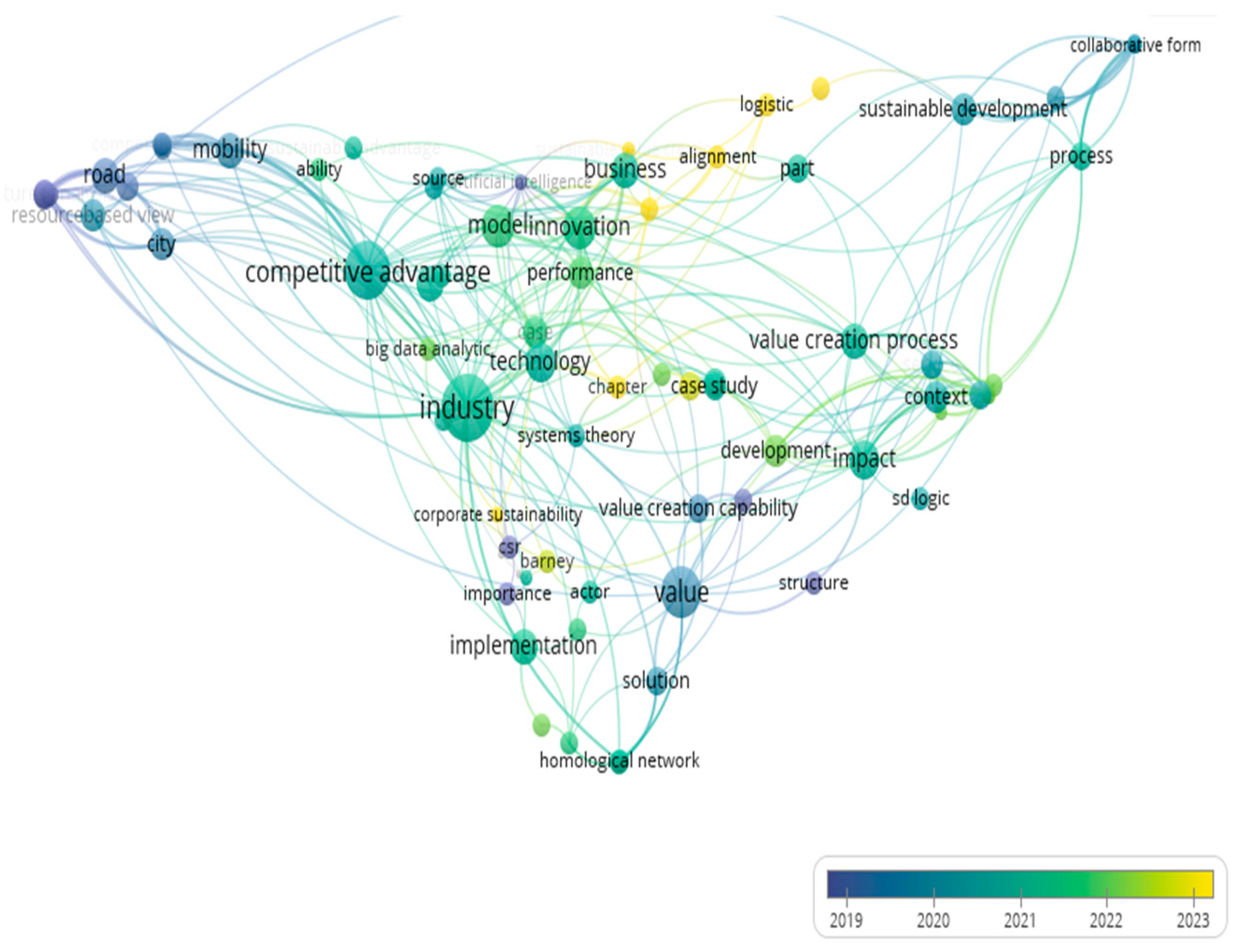
Figure 1.
Proportion of Hong Kong MTR revenue in 2022.
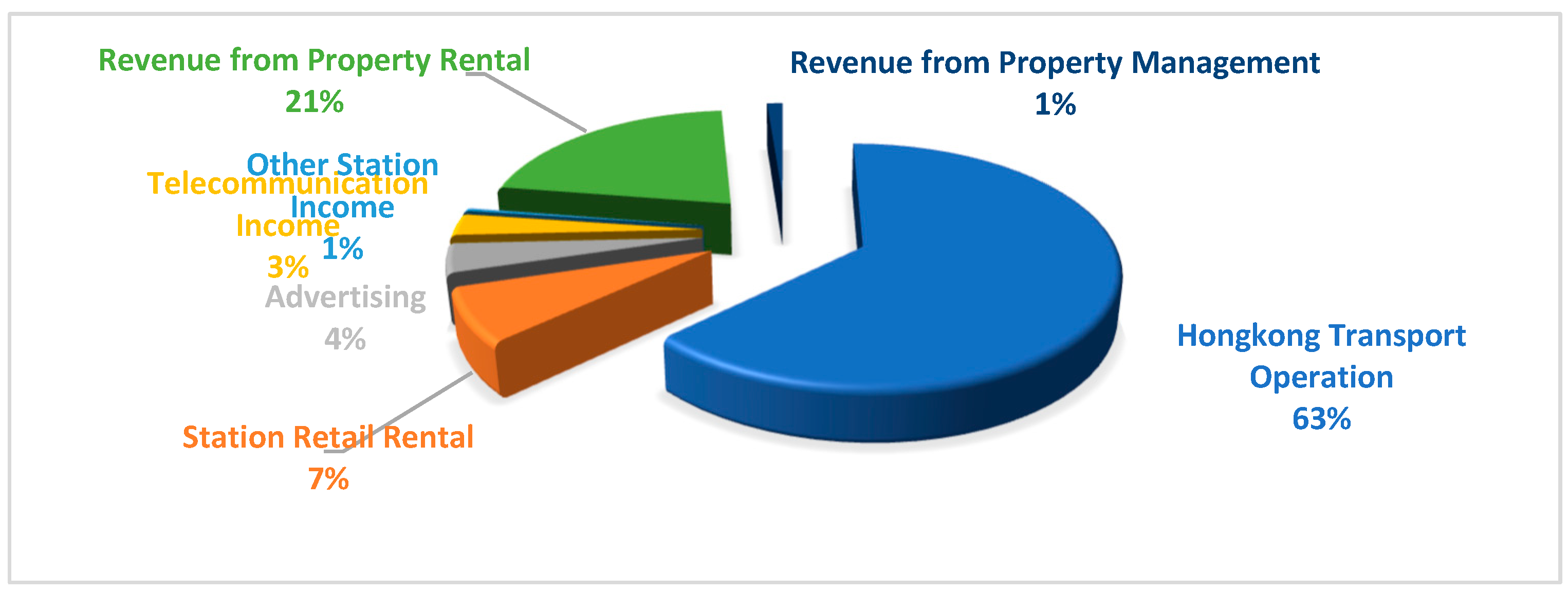

Table 1.
Findings of Sustainable Value Creation Managing Transit Orientation MRT.
| No. | Topic | Objective | Findings | Theory | Method |
| 1 | Exploring Spatial Accessibility to Urban Activities Based on the Transit-Oriented Development Concept in Pathum Thani, Thailand |
This study empirically examined and searched for understanding of the enhanced accessibility to urban activities through the TOD concept by focusing on bus stops and rail mass transit |
upon examining the relationship between access distance and the intensity of land use activities, it became apparent that within the network buffer zone encircling the transit areas, designated as transit-oriented development (TOD) measurement units. |
the enhanced accessibility to urban activities through TOD by using network analysis, Getis-Ord Gi* hotspot analysis, and bivariate local Moran’s. |
Spatial analysis was applied to examine and understand the issues |
| 2 | Does Sustainable Transport Deliver Societal Value? Exploring Concepts, Methods, and Impacts with Case Studies |
This paper investigates how sustainability in the transport sector can be conceptualized, assessed, and implemented |
These investments are assessed using an integrated cost–benefit analysis that goes beyond traditional assessments, considering the benefits and avoided costs of the externalities of a project in the social, environmental, and economic dimensions |
This raises the need for transportation infrastructure to be more sustainable so that it can enable more sustainable development. T |
The Sustainable Asset Valuation (SAVi) The method and resulting integrated simulation models are used to assess the multidimensional outcomes of conventional and sustainable transport investments |
| 3. | Value Proposition: Application of Value Creation Activities Model In the Supermarket (Vcam-S). |
The aim of this article is to explore the application of the Value Creation Activity Model in a supermarket context (VCAM-S). The author aims to investigate and present the value proposition in the supermarket industry, specifically focusing on the value creation activity model. | The main findings of this research are as follows: a. As a theoretical basis for value propositions, loyalty, innovation, expectations, strategies, and tendencies in identifying value activities and their respective value sources. b. Identify various value creation activities in the supermarket sector, such as providing convenience in finding products, offering a mix of products with welfare attributes, launching product novelties, and providing a product mix with practicality attributes. c. The Value Proposition Framework is based on research findings and provides a structure for understanding and applying value propositions in a supermarket context. |
The theoretical basis used in the research is to explore the concept of value proposition as a position statement that defines target customers, why customers buy, and what the company sells. | The methodology used in this research involves two main stages. a. The first stage consisted of a bibliographic review, where articles in the field of marketing and supermarket retail were researched and analyzed. b. The second stage involved collecting primary data through personal interviews with 12 professionals from the supermarket sector. |
| 4. | Modeling An Organizational Sustainable Competitive Advantage. |
The aim of this research is to develop a model that describes the process of building sustainable competitive advantage for organizations, including static and dynamic aspects. | The main finding of this research is the development of a model of sustainable competitive advantage in organizations. This model consists of static and dynamic aspects. | The theoretical background of this research revolves around developing a model for building sustainable competitive advantage in organizations. It is based on the VRIO (Value, Rareness, Imitability, Organization) strategic tool framework, which is an extension of internal analysis. | The methodology used in this research is the development of a model that describes the process of building sustainable competitive advantage, both static and dynamic aspects. The model developed is based on the strategic tool framework VRIO (Value, Rareness, Imitability, Organization). |
| 5. | Competitive strategy, structure and firm performance (A comparison of the resource-based view and the contingency approach). |
The purpose of this research is to examine the relationship between organizational structure, competitive strategy, and company performance. This research aims to contribute to the understanding of how these factors interact and impact company performance. | The main finding of this research is that the relationship between organizational structure and company performance is influenced by competitive strategy. This study emphasizes the importance of considering the fit between strategy, structure, and performance, and suggests that the Resource-Based View (RBV) model provides valuable insights in this context. |
The theoretical background of this research is mainly based on strategic management and organizational theory. This article draws on various theoretical frameworks such as the resource-based view of the firm, core competencies, strategic fit, environmental fit, and contingency theory. | The methodology used in this research involved collecting data from companies with 250 or more employees, using opinion scales to assess organizational structure and competitive strategy, and using subjective performance measures. |
| 6. | Does VRIO help managers evaluate a firm’s resources? |
The aim of research on the VRIO method is to evaluate whether the method helps managers analyze company resources. | A key finding from research on VRIO methods and their impact on strategic actions and analysis of corporate resources is that although VRIO encourages users to evaluate resources relative to competitors and competitive dynamics, VRIO also has limitations. | The research focuses on the theoretical background of the VRIO (Value-Rarity-Imitability-Organization) method and its impact on strategic actions and corporate resource analysis. | Research papers on VRIO methods and their impact on strategic actions and enterprise resource analysis use experimental methods to directly evaluate user analyzes guided by VRIO relative to those that are not. |
| 7. | Assessing the relationship between firm resources and product innovation performance (A resource-based view). |
The aim of this research is to investigate the relationship between firm resources and product innovation performance in the context of manufacturing firms. | This research emphasizes the importance of intangible resources, especially product reputation, in driving product innovation performance in the context of manufacturing firms in Malaysia. | The theoretical background in this research is based on the Resource-Based View (RBV) of strategic management. The RBV focuses on the firm as a unique collection of resources and emphasizes that not all resources have the potential to provide a firm with a sustainable competitive advantage. | The methodology used in this research involved developing a questionnaire based on accepted scale development methods for business research. The questionnaire was then distributed via a mail survey to technology entrepreneurs. |
| 8. | Value proposition as a catalyst for a customer focused innovation. |
The aim of this research is to investigate the role of value propositions as innovation catalysts. This research focuses on identifying value proposition elements and their relationships in different contexts, such as product, industry, or customer life cycles. | The main findings of this article include a comprehensive list of novelties and general characteristics discovered through research. | This research draws on various theoretical backgrounds to support its research, including: a. Business Model Innovation. b. Value Proposition Theory. c. Innovation Theory. d. This research uses a case study approach. e. Interdisciplinary Perspective. |
The methodology used in this research involved an embedded design, which aims to reduce the limitations of single case studies by allowing for more in-depth analysis through examination of subunits. The unit of analysis chosen is individual novelty, making it possible to carry out systematic and detailed case analysis. |
| 9. | Value Propositions of Public Adult Hearing Rehabilitation in Denmark. |
The aim of this article on adult community hearing rehabilitation in Denmark is to identify and evaluate the value proposition of the hearing rehabilitation process in the Danish public health system. | Key findings from this research include the following: 1. Identify the Value Proposition. 2. The Importance of the Diagnostic Process. 3. Involvement of Closest Family. 4. Characteristics of Human Practitioners. 5. Physical Presence. 6. Methodological Approach. 7. Research Population. These findings provide insight into the factors that patients consider important in the hearing rehabilitation process of Danish adults. |
The theoretical background used in research on adult community hearing rehabilitation in Denmark involves exploring value propositions in the context of the Danish public health system. This research applies 2-step inductive and deductive theme-based analysis to identify 21 value propositions relevant to the hearing rehabilitation process. | The methodology used in this research involves two main steps: 1. Harvesting Value Proposition. 2. 2-step inductive and deductive theme-based analysis was used to identify 21 value propositions deemed relevant for further assessment. |
| 10. | Resource-based competitiveness: managerial implications of the resource-based view. |
The purpose of this research is to discuss the shift in strategic management research from focusing on company products to focusing on internal factors such as resources and capabilities. | The main finding of research discussing the shift in strategic management research is that there has been a transition from focusing on a company's products to concentrating on internal factors such as resources and capabilities. | This research discusses the shift in strategic management research from a focus on company products to internal factors such as resources and capabilities. This shift is based on the theoretical framework of the resource-based view, which emphasizes the importance of a company's internal resources and capabilities in achieving sustainable competitive advantage. |
The methodology used in the research addressing this shift in strategic management research is not mentioned explicitly in the context provided. This research primarily focuses on the practical implications of the resource-based view and discusses how companies can benefit from adopting a more resource-based approach in their strategic management practices. |
| 11 | A Parametric Framework to Assess Generative Urban Design Proposals for Transit-Oriented Development |
This study proposes a framework that integrates the generative design method and data-driven decision-making approach for urban design solutions that better implement the basic principles of TOD |
It is demonstrated that this approach succeeds in selecting optimal TOD design solutions. The role of designers’ decision-making in generative urban design |
summarized by scholars for promoting TODs through urban design have failed to promote the progress of the urban design |
Rhinoceros3D-Grasshopper (GH) is chosen as the platform to conduct the assessment process |
| 12 | Transit-oriented Development in the metropolitan governance: a comparison between the Colombian case and the South Korean experience |
Thr creation of Seoul Metropolitan Area (SMA) in order to respond to a territorial reorganization associated to a public transport supply that resulted in a model of transit-oriented development (TOD). |
The implications emerged from this comparison are used to generate guidelines through three themes: a) governance; b) financial system and c) operational aspects. |
reorganization of the collective public transportation bus system and a future transition to a model of Transport - and People -Oriented Development (TOD). |
The methodology of this research was based on a previous work stage and six stages developed after visiting the Korean Research Institute for Human Settlements |
| 13 | Unlocking Urban Accessibility: Proximity Analysis in Bangkok, Thailand’s Mega City |
This study aims to examine urban accessibility, focusing on multi-travel connections to amenities and public transport. |
envisioning a more sustainable and inclusive city with adequate development of public transportation access is essential in urban areas, prompting policy-level initiatives to enhance the environment and elevate the overall commuting experience |
t focuses on understanding how the level of engagement of road users in social activities contributes to wellbeing by addressing proximity access through a multidisciplinary approach aimed at enhancing accessibility and integrating the built environment |
The comprehensive and inclusive Accessibility by Proximity Index (API) is proposed as a tool to evaluate the level of access to essential services and activities for residents |
| 14 | The urban regeneration’s framework for transit villages in Qatar: the case of Al Sadd in Doha |
emphasizes the importance of linking Doha Metro system with urban growth through transit-oriented developments (TODs), a model maximizing the integration between transport systems and land use, through the development of sustainable, vibrant. |
(1) built environment diversity and density and (2) travel behavior. The revealed comprehensive approach for the urban regeneration of the Al Sadd TOD is based on a framework for enhancing its (1) mixedused urban fabric and (2) multimodal transportation systems |
The strategy for monitoring and assessing the potential benefts of the investigated TOD is grounded on the on-site analysis (based on graph theory) |
The strategy for monitoring and assessing the potential benefts of the investigated TOD |
| 15 | Identifying Critical Influencing Factors of the Value Creation of Urban Rail Transit PPP Projects in China |
public-private partnership (PPP) is usually adopted in URT project development to benefit the public and private sectors |
Resources complementarity among stakeholders, cooperation environment, and partnership synergy were identified as the main influencing factors. |
The grounded theory approach was adopted to deduce the influencing factors of value creation through analyzing the various types of articles related to Chinese URT PPP projects. |
This research helps broaden the understanding of how public and private sectors should cooperate and collaborate in URT projects to realize value maximization and promote the sustainable development of URT PPP projects |
| 16 | Towards a Conceptual Framework for Understanding the Attractiveness of Rail Transit-Oriented Shopping Mall Developments (TOSMDs) |
Transit-oriented development (TOD) links residential, retail, commercial, and community service developments to frequent, accessible rail transit services to stimulate sustainable development |
The study revealed fragmented causes of attractiveness factors of rail TOSMDs. It contributes to further understanding of TOD as it crossreviews retail and urban design literature findings |
the researchers’ analytic observations (themes) clarifying transit-oriented shopping mall developments’ (TOSMDs) attractiveness factors | Systematic Analysis |
| 17 | Sustainability Of The Free Public Transport Model In The Republic Of Croatia |
the research aims to clarify the potential transformative power of free public transportation, offering a clear understanding that could inform policy, planning, and social perspectives |
This work seeks to illuminate the ecological benefits of increased public transportation usage, such as reducing greenhouse gas emissions, air pollution, and traffic congestion. | The results of previous research suggest that the introduction of free public transport can increase the number of individual trips taken by public transport. |
From a social standpoint, the work is crucial in exploring how free public transportation can improve accessibility and mobility for all segments of society, particularly benefiting those in lower socio-economic strata. I |
| 18 | Evaluating the challenges and impacts of mixed-use neighborhoods on urban planning: an empirical study of a megacity, Karachi, Pakistan |
The present research aimed to examine the land-use type, and its distribution in the area of Gulshan-e-Iqbal I, and investigate the causes of the failure of Mixed-Use Neighborhood development. | The present research aimed to examine the land-use type, and its distribution in the area of Gulshan-e-Iqbal I, and investigate the causes of the failure of Mixed-Use Neighborhood development and to prove the problem environmental impact assessment of the area have also been done. | Urbanization is a major force to change physical, social, and economic changes worldwide [34], which directly and indirectly causes several changes on a large scale. In this scenario, the concept of mixed land use has been adopted to fill the gaps developed by residential vacancy and community decline | The present research aimed to examine the land-use type, and its distribution in the area of Gulshan-e-Iqbal I, and investigate the causes of the failure of Mixed-Use Neighborhood development and to prove the problem environmental impact assessment of the area have also been done. |
| 19. | A Model of Value Creation: Strategic View. | The main aim of the research is to propose a model of value creation in three dimensions: financial, non-financial and time. | The research presents the following key findings: a. Stakeholder Values. b. Multidimensional Approach. c. Time Dimension. d. Value Creation Practices. e. The challenge of maintaining a broad value perspective during a crisis. |
The theoretical background used in this article mainly focuses on the concept of value creation and stakeholder theory. | The methodology used in the research involves a proposed value creation model in three dimensions: financial, nonfinancial, and time. |
| 20 | A stakeholder perspective of the value proposition concept. | The aim of this research is to explore the concept of value proposition (VP) and its role as a stakeholder alignment mechanism in marketing systems. | The main finding of this research is that value propositions play an important role in creating shared value between various stakeholders and act as a valuable alignment mechanism in marketing systems. | The theoretical background used is to integrate insights from the relationship marketing literature, which emphasizes the role of various stakeholders in creating and capturing value. |
The methodology used in this research is a literature review combined with conceptual analysis. The author critically analyzes existing literature and concepts related to value propositions from various sources to develop a comprehensive understanding of stakeholder perspectives on the value proposition concept. |
Table 2.
Author's bibliometric analysis protocol.
| Step | Description |
| Topic | Business Sustainability Model |
| Rationale | There is still a lack of initial description of the Jakarta MRT business model as manager of the TOA area and its development using a value creation approach. |
| Information Sources | Scopus |
| Keywords | Sustainable Business, Sustainable, or Sustainable Value Creation or Public Transportation |
| Inclusion Criteria | Subject categories: Business, Management, Accounting; English; Article type: Journal; Stage: Final |
Table 3.
Value perspective in the development and management of TOD.
| Value Perspective | |
| Financial Value | Non-financial value |
| - Income from property management and businesses around the station | - The area around the station is more organized - Provision of infrastructure to support pedestrian mobility - Optimization of idle DKI Provincial Government assets - Increased regional connectivity - Increased interest in riding the MRT |
Source: [27].
Table 4.
Value creation factors of PT MRT.
| No | Value Creation | Agility | Customize | Adaptiveness | Compromise | Responsiveness | Contingency | Adjustment | Resilience | Variability | Localness |
| 1 | Customer retention program | x | x | x | |||||||
| 2 | Intensive marketing programs | x | x | x | x | x | |||||
| 3 | Exploring New opportunities | x | x | x | x | ||||||
| 4 | Integration of new lifestyle | x | x | x | x | ||||||
| 5 | Digitalization system | x | x | x | x | x | x | ||||
| 6 | Innovative Lifestyle | x | x | x | x | x | x | ||||
| 7 | Collaboration with more stakeholders | x | x | x | x | x | x |
Disclaimer/Publisher’s Note: The statements, opinions and data contained in all publications are solely those of the individual author(s) and contributor(s) and not of MDPI and/or the editor(s). MDPI and/or the editor(s) disclaim responsibility for any injury to people or property resulting from any ideas, methods, instructions or products referred to in the content. |
© 2024 by the authors. Licensee MDPI, Basel, Switzerland. This article is an open access article distributed under the terms and conditions of the Creative Commons Attribution (CC BY) license (http://creativecommons.org/licenses/by/4.0/).
Copyright: This open access article is published under a Creative Commons CC BY 4.0 license, which permit the free download, distribution, and reuse, provided that the author and preprint are cited in any reuse.


