

Submitted:
19 June 2024
Posted:
21 June 2024
You are already at the latest version
Abstract
Electric Transformers make up some of the most critical components of a power system. Their reliable operation is critical for an efficient power grid as well as economic viability for the transformer operators and owners. Power transformers, like other High Voltage (HV) electrical equipment experience aging and insulation degradation due to chemical, mechanical and electrical forces during their operation. Partial Dischargers (PD) are localized electrical discharges that develop within insulation systems of HV electrical equipment such as transformers. In transformers, PD occurs in different forms and various locations and insulation both internal and external of the transformer. PD originates as small pulses but tends to increase in size and intensity which can result in complete insulation failure. Monitoring partial discharges has proven to provide valuable information on the state of the insulation systems of the power transformer, allowing transformer operators to make calculated decisions for the maintenance and life of plant plans. This systematic literature review aims to systematically examine the use of machine learning techniques in classifying PD in transformers to present a complete indicator to allow for future research in the field. The systematic review surveyed a total of 81 research literature published from 2010 to 2023 that fulfilled a specific methodology which was developed as part of this study. The results revealed that supervised learning has been the most widely used Artificial Intelligence (AI) algorithm utilized, primarily in the form of Support Vector Machine (SVM). Regarding PD, the survey revealed that most researchers tend to use numerous types of PD and compare them to one another. Furthermore, the use of artificial PD defect models to simulate the occurrence of PD is widely used versus the use of actual power transformers. Most of the literature tends to not specify the physical characteristics of PD, such as the magnitude of PD, PD inception voltage and PD extinction voltage.
Keywords:
systematic review
; partial discharge
; transformer
; machine learning
; artificial intelligence
1. Introduction
Insulation systems play a pivotal role in the proper functioning and long-term operation of high-voltage electrical equipment such as transformers, cables, switchgear, motors and generators [1,2]. Insulation systems in transformers are divided into liquid and solid insulation [3]. Oil makes up the liquid insulation [4,5,6], while solid insulation in transformers includes kraft paper [7,8], Nomex [9,10] and pressboard [10]. PD develops within the insulation systems of HV electrical equipment, these are localized electrical discharges that can degrade the dielectric capability and lead to premature failure of the transformer [11,12].
While PD is a phenomenon that impacts all HV electrical equipment, such as gas-insulated switchgear, cables, motors, generators etc. this systematic literature review will focus only on electrical transformers. Transformers make up an essential part of an electrical reticulation or network, as they allow for efficient long-range interconnection of transmission lines while also ensuring that the voltage is transformed to the levels required by different end users. The failure of a transformer results in the loss of power supply to portions of the electrical network, with potential costly damage as well as a loss of production or income for customers. Losses may also lead to long downtime as the manufacturing process of a large transformer can take more than 24 months. Monitoring PD in electrical transformers forms a great basis for planning essential preventative maintenance, which can prevent costly failures before they occur and allow the transformer owner to plan adequately and execute the most ideal maintenance during planned outages.
The emergence of Artificial Intelligence (AI) has allowed scholars to research possible means of improving the condition monitoring of equipment. The use of AI has been shown to greatly improve the time taken to analyze and classify PD in the monitored equipment, while also improving the accuracy of detection compared to manually performed analysis. Studies in the use of Machine Learning (ML) techniques for PD classification in transformers have been around for some time, however, this Systematic Literature Review (SLR) will place a limit to only that literature published between the years 2010 and 2023. Further restrictions were applied by discounting literature about any HV electrical equipment other than electrical transformers, as well as disregarding other faults occurring in transformers but considering only partial discharge faults. The SLR presented a series of Research Questions (RQ) as labelled below:
- RQ1: Which resource publication sources have been predominantly utilized in the literature to study the use of machine learning in monitoring electrical transformer partial discharge?
- RQ2: From which countries do the publications on transformer partial discharge monitoring with the use of machine learning originate?
- RQ3: How has the research on the automatic classification of transformer partial discharge using machine learning evolved over the period under review?
- RQ4: Which partial discharge types does the collected literature investigate?
- RQ5: From which sources was the partial discharge data used in the literature collected?
- RQ6: Which PD measuring methods are used in the sampled literature?
- RQ7: Which measuring equipment is used in the measuring of PD in the literature?
- RQ8: Which national and international standards are referenced in the literature?
- RQ9: Which feature extraction methods are mostly utilized in the collected literature?
- RQ10: Which machine learning algorithms are the most utilized for monitoring partial discharge in electric transformers?
- RQ11: What are the challenges that are experienced when utilizing machine learning in classifying transformer partial discharge as documented in the literature?
- RQ12: What are the possible future research opportunities highlighted in the literature?
2. Recent and Related Research Works
Employing machine learning techniques has proven to greatly improve the classification and recognition of different types of partial discharge mechanisms occurring in different parts of power transformers, both inside and outside, and in oil or air. Table 1 shows a collection of literature analyzing the use of machine learning algorithms to classify PD in power transformers.
3. Materials and Methods
This systematic literature review (SLR) commences by defining the topic, the developing clear research questions with an emphasis on answering pertinent literature gaps. A search methodology to collect literature which falls within the defined topic ensues from there which is followed by developing an inclusion and exclusion criterion which will be used to form a decision of the literature to be considered. The required data is collected from the literature, which is collected, this data is utilized to assess the research development in the field at hand.
Figure 1.
SLR flow diagram.

3.1. Proposed Inclusion and Exclusion Criteria
Table 2 sets out the criteria used to determine which literature from the publication sources would be included and which would be excluded from the review. This is to ensure that the literature utilized for the review aligns with the focus of this research.
3.2. Literature Sources and Search Techniques
The literature to be reviewed was collected from reputable online research repositories. An extensive search was conducted on scholarly works published on the following online repositories: Google Scholar, IEEE Explore, Science Direct, Springer Link, Wiley Online Library, Academia, Research Gate and Multidisciplinary Digital Publishing Institute (MDPI). A set of keywords relating to the SLR research topic was utilized to maximize the relevant results while also reducing the return of unnecessary or unrelated literature. Table 3 presents the list of keywords employed in searching for the literature.
Bearing in mind that the search keywords produce the basis for obtaining applicable literature, the appropriate selection of keywords is crucial for the collection of literature in the SLR. A custom range is applied to the search to limit the results to the period between 2010 and 2023. This search brought forward a total of 21812 scholarly works across the seven online repositories. 21668 research papers were automatically eliminated on initial screening; therefore 144 research papers were downloaded as part of the survey. Applying the inclusion and exclusion criterion shown in Table 5 to the 144 research papers resulted in the elimination of 63 papers and a total of 81 scholarly works qualified to be used in this survey. Table 4 shows the list of online repositories that were utilized as well as the total number of results achieved before the initial screening.
The process used for performing this SLR is a Preferred Reporting Items for Systematic Review and Meta-Analysis (PRISMA) flowchart, shown in Figure 2.
3. Results
The literature collected after the PRISMA flowchart is used to formulate the responses to the twelve research questions developed in section 1 concerning transformer partial discharge classification using machine learning algorithms.
RQ1: Which resource publication sources have been predominantly utilized in the literature to study the use of machine learning in monitoring partial discharge in electrical transformers?
Figure 3 shows literature published in journals to greatly dominate the publications of scholarly works on using machine learning algorithms for the classification of partial discharge in electric transformers. From analysis of the collected literature, 56 of the 81 literatures under review were journal papers, this makes up more than double the number of conference papers, which account for only 25 publications in the period under review. This indicates a vast preference for scholars to publish their works in journals.
RQ2: From which countries do the publications on transformer partial discharge monitoring with the use of machine learning originate?
The representation of countries in the study of using machine learning techniques for classification of partial discharge in transformers was found to be wide, with 20 countries being represented in the literature collected of works published between 2010 and 2023. This indicates that this is a field of study that has gained interest worldwide, but also indicates the importance that scholars and users have placed in monitoring and understanding the health of their transformers. The motivation for these countries to invest in research can be related to the need to reduce costly transformer failures, extend the life of their assets, improve condition monitoring, adequately improve planned maintenance, and eliminate grid failures which can have massive economic impacts.
From the 20 countries represented in the literature, it can be seen in Figure 4 that China has contributed most of the literature at 32%. The superiority of China in this research indicates a continued sign of China’s active investment and contribution to the advancement of technology in the field of artificial intelligence. When it comes to the field of power transformers and partial discharge, it can be attributed to the large landscape of China, the economy which has been one of the fastest growing in recent years and the economy’s reliance on a reliable electrical grid. The research further places India in second position with 10% of the publications, Spain in third with 7% and closely followed by Indonesia with 6%.
RQ3: How has the research on the automatic classification of transformer partial discharge using machine learning evolved over the period under review?
Publications of partial discharge source classification using machine learning algorithms have shown very steady and consistent growth over the period from 2010 to 2023 as shown in Figure 5. While four papers were published in the year 2010, the following year saw a decline to the lowest publications in the period under review, with only one documented paper published in 2011. The years from 2012 to 2017 consisted of publications of 3 or 5 papers per year. The greatest documented studies came in the year 2018, which peaked at 12 publications in that year. The interest in this study has remained post-2018, with publications remaining consistently higher than the preceding years.
The number of documented papers in the years up to 2017 indicates persistent interest in developing the knowledge base and research in the field. The huge increase in 2018 can be related to an increased understanding attained in the field from the research of the years thus far. The results of years post-2018 can be attributed to further development and building on the successes and research attained thus far.
RQ4: Which partial discharge types does the collected literature investigate?
A total of 231 partial discharges were analyzed in the 81 publications under review, as can be seen in Figure 6. Corona and surface discharge are the two predominantly tested types of PD in the research in transformer partial discharge classification using machine learning algorithms. Corona discharge was investigated in 55 research papers while surface discharge in 50 of the research papers. 75.3% of the research papers under review investigated multiple partial discharge types in one publication. The benefit for researchers to investigate multiple PD types is that transformers are constructed with solid and liquid insulation systems, these insulation systems are susceptible to a variety of degradation mechanisms due to their chemical compositions. Investigating multiple PD allows the researchers to develop models for different types of PD while also comparing the accuracy of the model for each PD type.
RQ5: From which sources was the partial discharge data used in the literature collected?
The study of the sources used to collect partial discharge data to be used in the context of transformer partial discharge classification using machine learning techniques opens some notable information. The leading source of PD data is collected from artificial PD defect models, this makes up 35% of the results from the literature that was reviewed. Artificial defect models are laboratory-constructed models of different designs and sizes. These models are specifically set up to simulate a particular PD defect type. Figure 7 illustrates an example of four PD defect models used in the classification of multiple PD defects using machine learning algorithms. In Figure 7, defect model (a) is an air gap defect model, (b) is a floating defect, (c) is a surface defect and (d) is a tip defect model.
Artificial defect models are preferred by researchers as they can model the specific PD defect that they are looking for. In a Machine learning algorithm, this data allows for better training of the algorithm and permits fewer outliers as the data collection is specific to the defect. The testing phase of the algorithm is also improved, as the algorithm is trained with specific data and can deal better with outlying data points.
PD experimental setups came second with 25% of the publications as can be seen in Figure 8, while data collected from actual transformers came third with 16% of the publications in the period between 2010 and 2023.
RQ6: Which PD measuring methods are used in the sampled literature?
Partial discharge is a complex physical process with random distribution properties [11], the discharges produce phenomena such as sound, light, and electromagnetic waves and release electric charges. These phenomena are used in the detection and measurement of PD within a transformer. Within the literature reviewed for transformer partial discharge classification using machine learning algorithms in the period between 2010 and 2023, the most used detection methods were Ultra High Frequency (UHF) and Electric with 30% and 27% respectively. The UHF method is mostly preferred due to its high resistance to external disturbances such as electromagnetic interference, which can be expected in industrial areas where PD testing takes place [94]. It further has a high signal-to-noise ratio as well as good signal detection sensitivity [95]. The electrical method also has its advantages, which include excellent PD signal recording in laboratory environments, high sensitivity, low noise levels, low signal attenuation and high precision measurements [96].
Acoustic emission came third with 17% of the publications while optical had 9%. Acoustic emission benefits from noise resistance which makes it an asset for online measurements, and since sensors can be placed at different locations of the test device it provides better discharge position information [97]. In 15% of the reviewed literature, the researchers did not specify the technique they utilized to measure the PD, this is a gap in the literature on which researchers can further improve.
The PD measuring techniques noted in Figure 8 are not without their drawbacks. While the UHF method has exceptional sensitivity, it cannot be calibrated. The Electrical method is mainly used in laboratory environments and is not for onsite or online use, it is also highly sensitive to electromagnetic interference. Acoustic emission has low sensitivity, adds complexity to data handling and processing and requires additional costs due to the requirement of multiple sensors [96].
RQ7: Which measuring equipment is used in the measuring of PD in the literature?
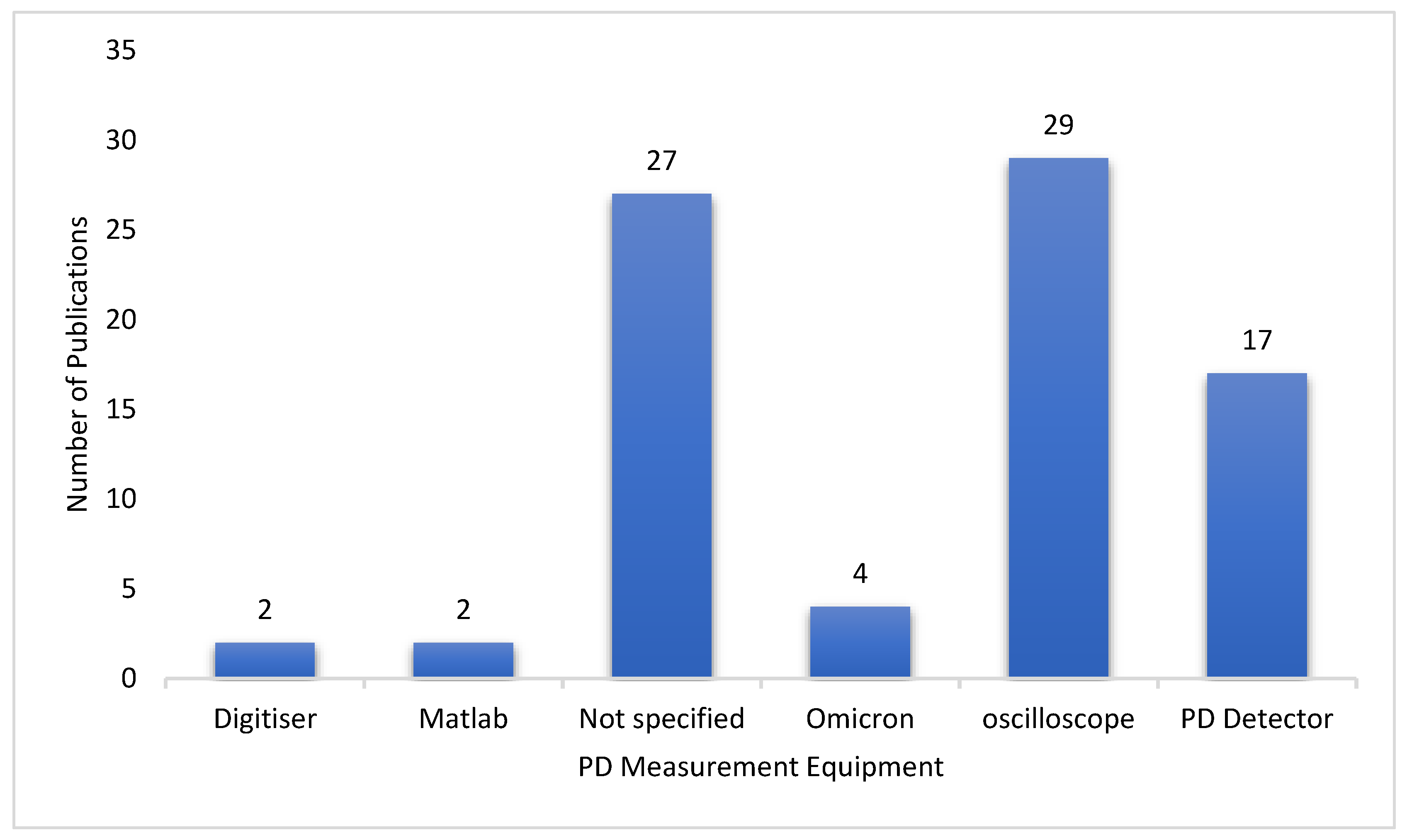
The analysis of measuring equipment used in the collection of PD activity for the research into transformer partial discharge classification using machine learning techniques indicates a lack of variety. The oscilloscope is the most preferred measurement device with 29 research papers citing its use. This high preference for using the oscilloscope can be attributed to its availability in research laboratories. This is also well with the data received in Figure 7 of RQ5 where it was determined that 60% of the sources of PD data in this literature were collected from artificial PD defect models and experimental setups. Since most of the research has been done in laboratories, it is more cost-effective to utilize the available equipment where it can achieve the results. From the 81 scholarly works reviewed, 27 publications did not specify the equipment used to measure the data which was utilized. This is because the primary focus of this research is developing machine algorithms which can classify transformer partial discharge at a very high accuracy. The works on experimental setups and data collection are already well-developed and the literature is well-publicized. The use of various types of PD detectors was the third most utilized means of measuring PD in this collected literature, the PD detectors were cited in 17 publications in the period between 2010 and 2023. The PD detectors are generally used by companies who specialize in performing PD tests, they are generally used on actual power transformers and on tests which occur outside the laboratories.
Figure 9.
Partial discharge data collection equipment.
RQ8: Which national and international standards are referenced in the literature?
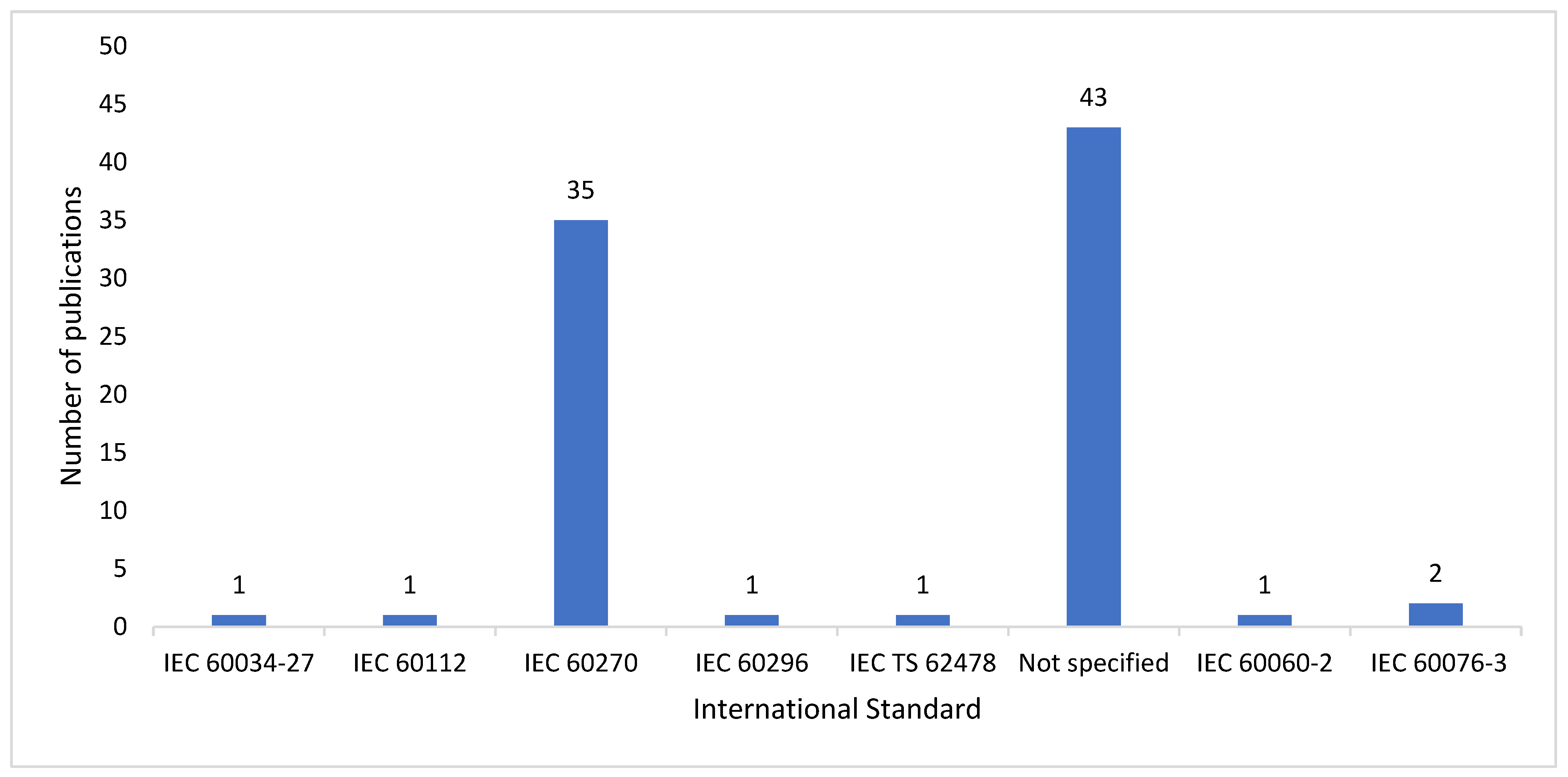
The analysis of the international standards used in the research on transformer partial discharge classification using a machine learning algorithm is as expected, with the IEC 60270 dominating the literature with 35 publications citing this standard. The IEC 60270 is the High-voltage test technique for partial discharge measurements, it defines the requirements for PD measurements, the measuring systems, measurement techniques, types of tests, circuits etc. Therefore, it is expected that researchers will utilize this standard for guidance. Other international standards that feature in the literature include IEC 60076.3, IEC 60034-27, IEC 60112, IEC 60296, IEC 62478, and IEC 60060.
IEC 60076.3 is Power transformers – insulation levels, dielectric tests and external clearances in air, IEC 60034-27 is rotating electric machines – Measurement of insulation resistance and polarization index of winding insulation of rotating electric machines, IEC 60112 is Method for the determination of the proof and the comparative tracking indices of solid insulating materials, IEC 60296 is the Fluids for electrotechnical applications – unused mineral insulating oils for transformers and switchgear, and IEC 60060-1 is High-voltage test techniques – General definitions and test requirements. As can be seen, the above standards all refer to High-voltage electrical tests or insulation tests. These standards are all valid for the research on transformer partial discharge as PD is a high-voltage discharge that occurs in the insulation systems of transformers.
Figure 10.
Partial Discharge employed standards.
RQ9: Which feature extraction methods are mostly utilized in the collected literature?
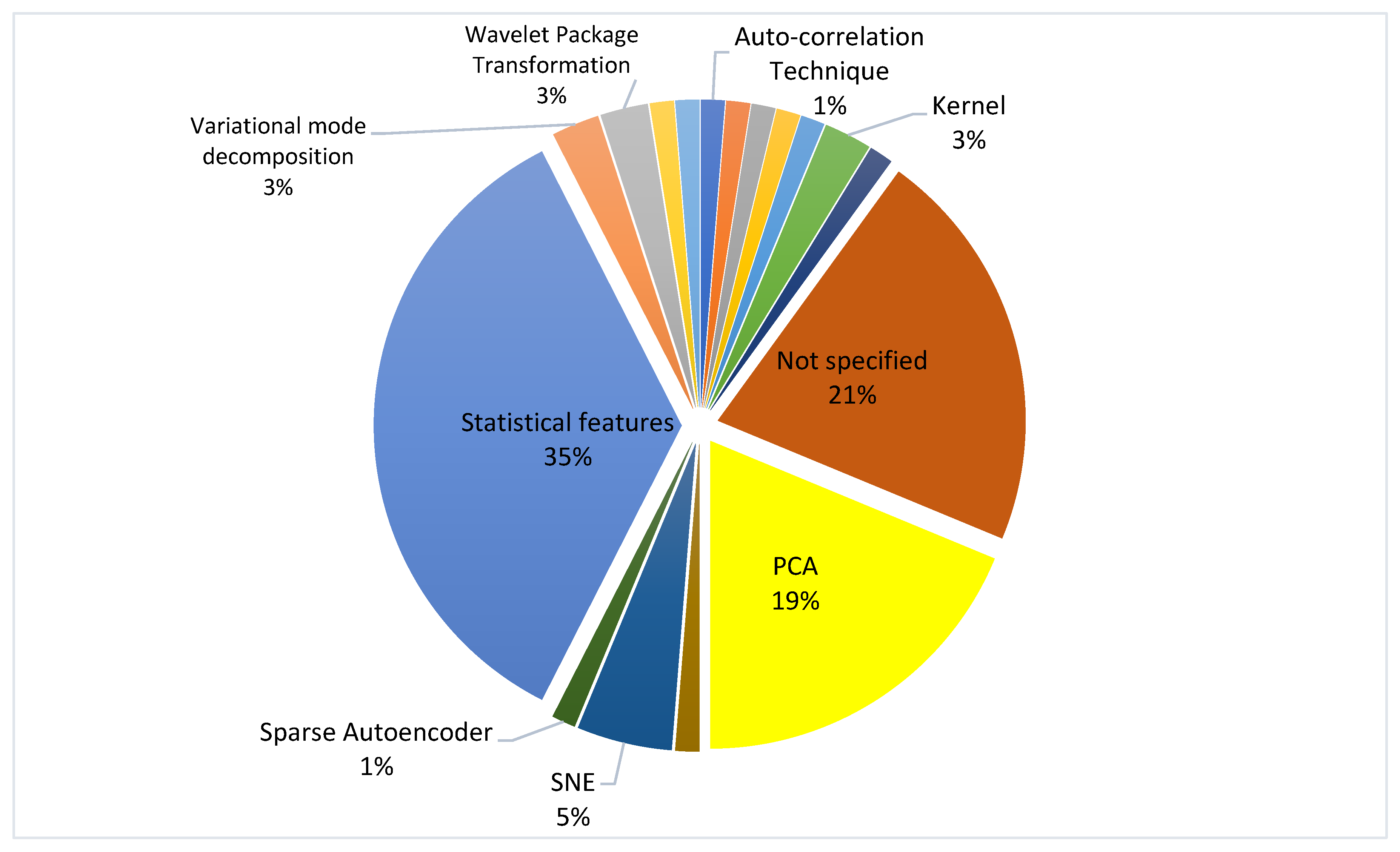
Feature extraction is a process of extracting relevant features from the raw data used in machine learning, it reduces the amount of data without losing vital information required for developing the algorithm. Feature extraction therefore reduces the memory required, reduces computation time, and improves the efficiency and the accuracy of the developed model. The analysis of the feature extraction techniques used in the literature for transformer partial discharge classification using machine learning algorithms indicates that researchers are open to utilizing a large variety of techniques, however, most of the scholarly works published between 2010 and 2023 indicated a preference towards utilizing statistical features. These far outweighed the rest of the techniques, with 35% of publications indicating their use.
Principal Component Analysis (PCA) came in second with only 19% of the publications. PCA is a linear technique with the advantage of reducing dimensionality and identifying key variables, this makes its use very attractive to researchers. A total of 18 feature extraction techniques were found in this study which indicates a wide variety of choices and willingness for scholars, however, 21% of publications did not specify the technique utilized. The possible reasons for not specifying are that for that data the researchers did not use a feature extraction technique, or the authors chose to place a major focus on the primary objective of the research. This indicates a likely gap in documenting from the perspective of those research papers.
Figure 11.
Feature Extraction Techniques.
RQ10: Which machine learning algorithms are the most utilized for monitoring partial discharge in electric transformers?
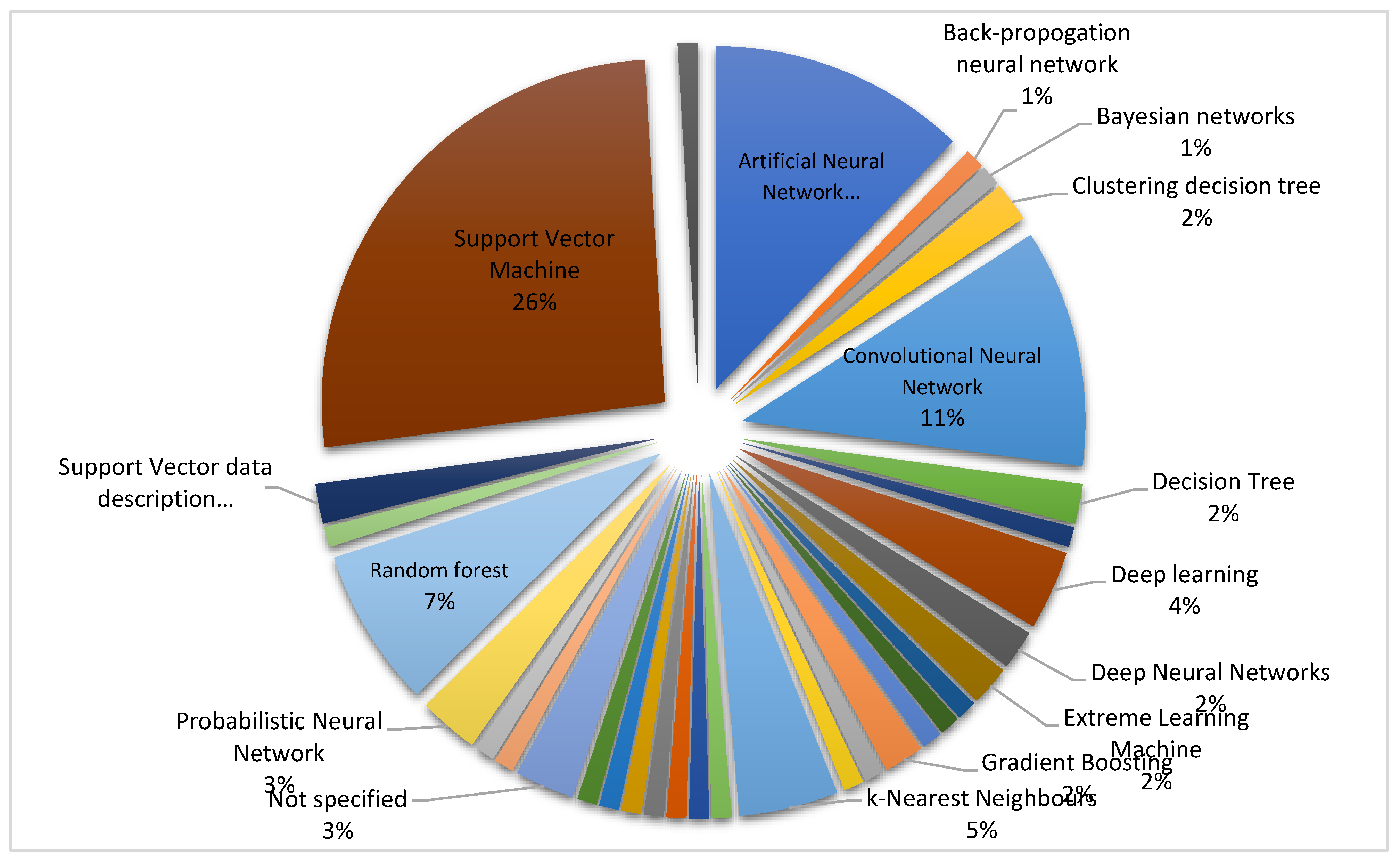
A remarkably noticeable variety of artificial intelligence (AI) algorithms can be identified in the literature for transformer partial discharge classification using machine learning algorithms. Support vector machine (SVM) stands out as the most abundantly utilized with 26% of researchers in the literature opting for it. SVM is a powerful and very popular supervised learning algorithm that is highly useful for use in a two-dimensional space as it determines an ideal hyperplane for classifying data. The preference of researchers to use SVM indicates the likelihood of mostly linear data being prevalent in transformer PD samples.
Artificial neural networks (ANN) and convolutional neural networks (CNN) come in second and third place, with 12% and 11% of the publications respectively. ANN and CNN are neural networks, which lean towards deep learning algorithms.
Figure 12.
Employed Machine Learning Algorithms.
RQ11: What are the challenges that are experienced when utilizing machine learning in classifying transformer partial discharge as documented in the literature?
Some challenges and constraints on transformer partial discharge classification with machine learning algorithms which have been recorded in the reviewed literature are:
- Determining the effect of frequency on degradation induced by PD.
- The effect of nanostructured insulators on PD resistance and how coarse a surface is.
- PD mechanism in the presence of space charge resulting from cavity discharge.
- The correlation between PD breakdown under DC voltage.
RQ12: What are the possible future research opportunities highlighted in the literature?
The possible future research opportunities that have been highlighted in the literature include the following:
- Understanding of the propagation of PD signals inside transformers.
- The optimization of the design of PD sensors.
- Proper calibration techniques for PD charge.
- Research into surface tracking and flashover due to static electrification in the interface of oil and pressboard.
- Further research into the interpretation of automated classification of PD formed under the presence of conducting particles, moisture, temperature etc.
4. Contribution of the Study
The significance of this SLR is in contributing to the advancement of the technology area relating to the automated classification of partial discharge in power transformers. Its contribution is in providing an extensive and discerning review of the research and development undertaken in this field in the last decade. The SLR analyses the literature in question and studies in detail the landscape of the literature, revealing the most preferred publication sources for scholars and researchers, the countries engaged in the research, and the evolution of the research over the period under consideration. The SLR further analyses the role of PD in transformers by divulging the types of PD that have been researched indicating improvement in the field where single-source PD analysis has largely been replaced by multisource analysis and classification. The source of PD data collection indicates the preference for collecting data from artificial PD models and the SLR also unveils the types of PD measuring methods that are preferred as well as the PD measuring equipment that have been used. Moreover, it delves into the use of artificial intelligence in classifying PD in transformers by analyzing the feature extraction techniques used by researchers and the most favoured machine learning algorithms. Lastly, the SLR identifies the challenges experienced by researchers and scholars in the field of transformer PD classification using machine learning algorithms and further establishes possible opportunities or research gaps that can further improve the advancement of this research area. Therefore, this SLR offers a platform to indicate the present state of the research on transformer PD classification using machine learning algorithms and thus provide a basis for further development and growth.
5. Conclusions
This paper provides an in-depth analysis and review of existing research and literature in the field of transformer partial discharge classification with the use of machine learning algorithms. The foundation of this paper introduces the electrical transformer, with particular emphasis on the solid and liquid insulation systems. This is then accompanied by a focus on the explanation of partial discharge, its development within transformer dielectric, its effects on the transformer as well as how it can be used to monitor the health of the transformers. The use of artificial intelligence in monitoring and classifying PD activity is then introduced, together with the advantages it provides.
This systematic review included a robust methodology developed using the Preferred Reporting Items for Systematic Review and Meta-Analysis (PRISMA) flowchart. Because of the PRISMA flowchart as well as a well-developed inclusion and exclusion criteria, a total of 81 research papers published on reputable research repositories between 2010 and 2023 were examined as part of this review. The study develops a series of pertinent research questions which need to be answered to provide insight into the critical elements surrounding the development in the field of utilizing AI to classify PD in electric transformers.
The review commences with identifying the prevalent publication sources in the collected literature, indicating a substantial inclination towards journals over conference papers and research articles. After that, it studies which countries have contributed to the literature in this field, this revealed a significant range of involvement with 20 countries from diverse continents participating in this field showing worldwide interest in the development. However, China dominated the number of publications in the period under review, which is indicative of their continued investment in technology and the field of artificial intelligence as well as its practical use on electric transformers.
The paper further reviewed PD’s existence in transformers in detail, starting with examining the types of PD that have been most widely researched. This highlighted the propensity for scholars to investigate multiple types of PD, training their algorithm on each type and comparing the accuracy. This reveals that researchers are moving more towards multisource PD classification algorithms rather than single-source ones which were more prevalent in the past. Secondly, it identified the types of sources used to generate the PD data, artificial defect models surpassed transformer models and actual transformers respectively in the top 3, thus indicating that most PD data used in the literature has been collected in laboratory environments, but furthermore, it indicates that this may be the most reliable form of data for training of the machine learning algorithms. The third PD assessment was that of the methods used to measure the PD activity, Ultra-high frequency, Electric and Acoustic emissions were among the most utilized methods. This assessment further indicated a wide variety of testing methods which are disposable for researchers, scholars, and PD testing companies, and which can be utilized in laboratory settings, onsite, offline as well as online. Oscilloscopes were identified as the most preferred equipment for recording PD activity, this further expounds on most of the research occurring in laboratory environments, as oscilloscopes are readily available in most electrical Engineering laboratories.
The SLR concluded by identifying the AI aspect of this research, finding that statistical features were predominant in the feature extraction space. However, a large portion of the literature did not specify the feature extraction methods used thus leaving a sizeable gap in this space. Support Vector Machine dominated the machine learning algorithms in the literature, due to its simple nature for classifying linear data. However, the wide variety of machine learning algorithms recorded in the data indicates great future development in this space.
Author Contributions
Both authors were responsible for conceptualization, methodology, validation, formal analysis, investigation, resources, writing—original draft preparation, writing—review editing and visualization. All authors have read and agreed to the published version of the manuscript.
Funding
Not applicable.
Institutional Review Board Statement
Not applicable.
Informed Consent Statement
Not applicable.
Data Availability Statement
The original contributions presented in the study are included in the article, further inquiries can be directed to the corresponding author.
Conflicts of Interest
Not applicable.
References
- R. Brutsch and M. Chapman, “Insulating systems for high voltage rotating machines and reliability considerations,” in IEEE International Symposium on Electrical Insulation, San Diego, CA, USA, 2010.
- G. L. Moses, “The purpose of electrical insulation,” in EI National Conference on the application of electrical insulation, Chicago, IL, USA, 1960.
- Vimal Angela Thiviyanathan, Pin Jern Ker, Yang Sing Leong, Fairuz Abdullah, Aiman Ismail, Md. Zaini Jamaludin, ”Power transformer insulation system: A review on the reactions, fault detection, challenges and future prospects,” Alexandria Engineering Journal, Volume 61, Issue 10, 2022, Pages 7697-7713, ISSN 1110-0168. [CrossRef]
- G. Paul, Electrical power equipment maintenance and testing, Boca Raton: CRC Press, 2009.
- V. A. Thiviyanathan, P. J. Ker, Y. S. Leong, F. Abdullah, A. Ismail and M. Z. Jamaludin, “Power transformer insulation system: A review on the reactons, fault detection, challenges and future prospects,” Alexandria Engineering Journal, vol. 61, pp. 7697-7713, 2022. [CrossRef]
- T. K. Saha and P. Purkait, Transformer ageing: Monitoring and estimation techniques, Singapore: John Wiley and Sons, 2017, pp. 1-36.
- Adekunle, S. O. Oparanti and I. Fofana, “Performance assessment of cellulose paper impregnated in nanofluid for power transformer insulation application: A review,” Energies, vol. 16, no. 4, pp. 1-32, 2023. [CrossRef]
- Fernandez, F. Delgado and A. Ortiz, “Thermal degradation assessment of Kraft paper in power transformers insulated with natural esters,” Applied Thermal Engineering, vol. 104, pp. 129-138, 2016. [CrossRef]
- Arroyo-Fernandez, J. Jablert, E. M. Rodriguez-Celis, S. Duchesne, B. Morin and I. Fofana, “Changes in mechanical properties of impregnated Nomex papers 410 and 910 during accelerated aging,” Polymer Testing, vol. 83, pp. 1-13, 2020. [CrossRef]
- G. Kaliappen and M. Rengaraj, “Ageing assessment of transformer solid insulation: A review,” Materials today: Proceedings, vol. 47, no. 1, pp. 272-277, 2021. [CrossRef]
- S. Govindarajan, A. Morales, J. A. Ardilla-Rey and N. Purushothaman, “A review on partial discharge diagnosis in cables: Theory, techniques and trends,” Measurement, vol. 216, no. 112882, pp. 1-19, 2023. [CrossRef]
- IEC 60270:2015 High-voltage test techniques - Partial discharge measurements, 2015.
- Abdullahi Abubakar Mas’ud, Ricardo Albarracin, Jorge Alfredo Ardila-Rey, Firdaus Muhammad-Sukki, Hazlee Azil Illias, Nurul Aini Bani, Abu Bakar Munir, “Artificial Neural Network application for partial discharge recognition: Survey and future directions,” energies, 2016, vol 9, pages 574-592. [CrossRef]
- Tomasz Boczar, Sebastian Borucki, Daniel Jancarczyk, Marcin Bernas, Pawel Kurtasz, “Application of selected machine learning techniques for identification of basic classes of partial discharges occurring in paper-oil insulation measured by acoustic emission,” Energies, 2022, vol. 15 pages 5013-5028. [CrossRef]
- V. M. Catterson, B. Sheng, ”Deep Neural Networks for understanding and diagnosing partial discharge data,”.
- Marek Florkowski, “Classification of partial discharge images using deep convolutional neural network,” Energies, 2020, vol. 13, pages 5496-5513. [CrossRef]
- A. Hunter, L. Hao, P. L. Lewin, D. Evagorou, A. Kyprianou, G. E. Georghiou, “Comparison of two partial discharge classification methods,” Conference record of the 1988 international symposium, July 2010. [CrossRef]
- Lian Duan, Jun Hu, Gen Zhao, Kunjin Chen, Jinliang He, “Identification of partial discharge defects based on deep learning method,” IEEE transactions on power delivery, August 2019.
- Peng Xie, “Analysis of fault of insulation aging of oiled paper of a large-scale power transformer and the prediction of its service life,” IEEJ Transactions on electrical and electronic engineering, 2019, vol. 14, pages 1139-1144. [CrossRef]
- Sonia Barrios, David Buldain, Maria Paz Comech, Ian Gilbert, Inaki Orue, “Partial discharge classification using deep learning methods – Survey of recent progress,” Energies, 2019, vol 12, pages 2485-2501. [CrossRef]
- Mohammad Homaei, Seyed Mahdi Moosavian, Hazlee Azil Illias, “Partial discharge localization in power transformers using neuro-fuzzy technique,” IEEE Transactions on power delivery, vol 29, issue 5, October 2014. [CrossRef]
- Shibo Lu, Hua Chai, Animesh Sahoo, B. T. Phung, “Condition Monitoring based on partial discharge diagnostics using machine learning methods: A comprehensive state-of-the-art review,“ IEEE Transactions on Dielectrics and Electrical Insulation, vol. 27, issue no. 6, pp 1861-1888, December 2020. [CrossRef]
- MD Rashid Hussain, Shady S. Refaat, Haitham Abu-Rub, “Overview and partial discharge analysis of power transformers: A literature review,” IEEE Access, vol 9, 2021. [CrossRef]
- Ibrahim B. M. Taha, Sobhy S. Dessouky, Ramy N. R. Ghaly, Sherif S. M. Ghoneim, “Enhanced partial discharge location determination for transformer insulating oils considering allocations and uncertainties of acoustic measurements,” Alexandria Engineering Journal, 2020, vol. 59, pp. 4759-4769. [CrossRef]
- Jonathan Wang, Keshang Wu, Alex Sim, Seongwook Hwangbo, “Feature Engineering and Classification models for partial discharge events in power transformers,” BDCAT, December 5-8 2017, Austin, Texas, USA.
- Herman H. Sinaga, B. T. Phung, Trevor R. Blackburn, “Recognition of single and multiple partial discharge sources in transformers based on ultra-high frequency signals,” IET Generation, Transmission and Distribution, 2014, vol. 8, issue no. 1, pp. 160-169. [CrossRef]
- Hui Ma, Junhyuck Seo, Tapan Saha, Jeffery Chan, Daniel Martin, “Partial discharge sources classification of power transformer using pattern recognition techniques,” 2013 Annual Report Conference on Electrical Insulation and Dielectric Phenomena, October 2013, pp. 1193-1196.
- Keyvan Firuzi, Mehdi Vakilian, B. Toan Phung, Trevor R. Blackburn, “Partial discharges pattern recognition of transformer defect model by LBP and HOG features,” IEEE Transactions on power delivery, vol. 34, issue no. 2, April 2019. [CrossRef]
- Mustafa Harbaji, Khaled Shaban, Ayman El-Hag, “Classification of common partial discharge types in oil-paper insulation system using acoustic signals,” IEEE Transactions on Dielectrics and Electrical Insulation, vol. 22, issue no. 3, June 2015. [CrossRef]
- Abdullahi Abubakar Masud, Jorge Alfredo Ardilla-Rey, Ricardo Albarracin, Firdaus Muhammad-Sukki, Nurul Aini Bani, “Comparison of the performance of artificial neural networks and fuzzy logic for recognizing different partial discharge sources,” Energies, 2017, vol. 10, pp. 1060-1080. [CrossRef]
- Subrata Biswas, Debangshu Dey, Biswendu Chatterjee, Sivaji Chakravorti, “An approach based on rough set theory for identification of single and multiple partial discharge source,” Electrical Power and Energy Systems, vol. 46, 2013, pp. 163-174. [CrossRef]
- Tianan Jiang, Jian Li, Yuanbing Zheng, Caixin Sun, “Improved Bagging Algorithm for pattern recognition in UHF signals of partial discharges,” Energies, 2011, vol. 4, pp. 1087-1101. [CrossRef]
- Hui ma, Jeffery C. Chan, Tapan K. Saha, Chandima Ekanayake, “Pattern recognition techniques and their applications for automatic classification of artificial partial discharge sources,” in IEEE Transactions on Dielectrics and Electrical Insulation, vol. 20, no. 2, pp. 468-478, April 2013. [CrossRef]
- Yafei jia, Yongli Zhu, “Partial discharge pattern recognition using variable model-based class discrimination with kernel partial least squares regression,” in IET Science, Measurement and Technology, 2018, vol. 12, issue no. 3, pp. 360-367. [CrossRef]
- Emilio Parrado-Hernandez, Guillermo Robles, Jorge Alfredo Ardilla-Rey, Juan Manuel Martinez-Tarifa, “Robust Condition Assessment of Electrical Equipment with one class support vector machines based on the measurement of partial discharges,” Energies, 2018, vol. 11, pp 486-504. [CrossRef]
- Jiacheng Gao, Yongli Zhu, Yafei Jia, “Pattern recognition of unknown partial discharge based on improved SVDD,” in IET Science, Measurement and Technology, 2018, vol. 12, iss, no. 7, pp. 907-916. [CrossRef]
- Benjamin Adam, Stefan Tenbohlen, “Classification of superimposed partial discharge patterns” Energies, 2021, vol. 14, pp. 2144-2154. [CrossRef]
- Haikun Shang, Kwok Lun Lo, Feng Li, “Partial discharge feature extraction based on ensemble empirical mode decomposition and sample entropy,” Entropy, 2017, vol 19, pp. 439-458. [CrossRef]
- Shuangrui jia, Yunfei Jia, Zewei Bu, Simeng Li, Liang Lv, Shengchang Ji, “Detection technology of partial discharge in transformer based on optical signal,” 9th International conference on power and energy systems engineering, September 2022, Kyoto, Japan.
- Daria Wotzka, Wojciech Sikorski, Cyprian Szymczak, “Investigating the capability of PD-type recognition based on UHF signals recorded with different antennas using supervised machine learning,” Energies, 2022, vol 15, pp. 3167-3187. [CrossRef]
- Xuewen Yan, Yuanyuan Bai, Wenwen Zhang, Chen Cheng, Jihong Liu, “Partial discharge pattern-recognition method based on embedded artificial intelligence,” Applied Sciences, 2023, vol. 13, pp 10370-10387. [CrossRef]
- Ph-Hung Chen, Hung-Cheng Chen, An Liu, Li-Ming Chen, “Pattern recognition for partial discharge diagnosis of power transformer,” Proceedings of the Ninth International Conference on Machine Learning and Cybernetics, Qingdao, China, 11-14 July 2010.
- Wei Lee Woon, Ayman El-Hag, Mustafa Harbaji, “Machine learning techniques for robust classification of partial discharges in oil-paper insulation systems,” IET Science, Measurement and technology, 2016, vol. 10 issue 3, pp. 221-227. [CrossRef]
- The-Duong Do, Vo-Nguyen Tuyet-Doan, Yong-Sung Cho, Jong-Ho Sun, “Convolutional-neural network-based partial discharge diagnosis for power transformer using UHF sensor,” IEEE Access, vol. 8, 2020.
- Yuanyuan Sun, Shuo Ma, Shengya Sun, Ping Liu, Lina Zhang, Jun Ouyang, Xianfeng Ni, “Partial discharge pattern recognition of transformers based on MobileNets Convolutional Neural Network,” Applied Sciences, 2021, vol. 11, pp. 6984-6998. [CrossRef]
- Xiu Zhou, Xutao Wu, Pei Ding, Xiuguang Li, Ninghui He, Guozhi Zhang, Xiaoxing Zhang, “Research on transformer partial discharge UHF pattern recognition based on Cnn-lstm,” Energies, 2020, vol. 13, pp. 61-74. [CrossRef]
- Qin-qing Zhang, Hui Song, Ge-hao Sheng, “Online sequential extreme learning machine for partial discharge pattern recognition of transformer,” IEEE/PES Transmission and Distribution Conference and Exposition, Denver, Co, USA, 2018, pp. 1-9.
- Guillermo Robles, Emilio Parrado-Hernandez, Jorge Ardilla-Rey, Juan Manuel Martinez-Tarifa, “Multiple partial discharge source discrimination with multiclass support vector machines,” Expert systems with applications, vol. 55, 2016, pp. 417-428. [CrossRef]
- Ismail Hartanto Kartojo, Yan-Bo Wang, Guan-Jun Zhang, Suwarno, “ Partial discharge defect recognition in power transformer using random forest,” IEEE 20th Conference on Dielectric Liquids (ICDL), Roma, Italy, 23-27 July 2019.
- Ze Li, Yon Qian, Hui Wang, Xiaoli Zhou, Gehoa Sheng, Xiuchen Jiang, “A novel image-orientation feature extraction method for partial discharges,” IET Generation, Transmission and Distribution, vol. 16, Issue 6, 2021, pp. 1139-1150. [CrossRef]
- B. M. Ashwin Desai, R. Sarathi, Joe Xavier, A. Senugupta, “Partial discharge source classification using time-frequency transformation,” IEEE 13th International Conference on Industrial and Information Systems (ICIIS), 2018.
- Jie Guan, Minkai Guo, Sen Fang, “Partial discharge pattern recognition of transformer based on deep forest algorithm,” 2nd International Symposium on Big Data and Applied Sciences, Journal of Physics: Conference series, 2019.
- Shijun Wang, Chang Ping, Guobin Xue, “Transformer partial discharge pattern recognition based on random forest,” IP Conference series: Journal of Physics, series 1176, 2019.
- Yanchun Xu, Haiting Xia, Shasha Xie, Mi Lu, “The pattern recognition of multisource partial discharge in transformers based on parallel feature domain,” IET Science, Measurement and Technology, 2021, vol. 16, pp. 163-173. [CrossRef]
- Sara Mantach, Ahmed Ashraf, Hamed Janani, Behzad Kordi, “A convolutional neural network-based model for multi-source and single-source partial discharge pattern classification using only single-source training set,” Energies, 2021, vol 14, pp. 1355-1371. [CrossRef]
- Herman Sinaga, Toan Phung, Trevor Blackburn, “Recognition of single and multiple partial discharge sources in transformers based on ultra-high frequency signals,” EIT on Transmission and Distribution, 2014, vol. 8, pp. 160-169. [CrossRef]
- Yan-Bo Wang, Ding-Ge Chang, Shao-Rui Qin, Yu-Hang Fan, Hai-Bao Mu, Guan-Jun Zhang, “Separating multi-source partial discharge signals using linear prediction anysis and isolation forest algorithm,” IEEE Transactions on instrumentation and measurement, vol. 69, no. 6, June 2020.
- Shih-Cheng Horng, Chin-Tan Lee, “Classification and Detection of partial discharge in cast-resin transformers” 2020 International Automatic Control Conference (CACS). Hsinchu, Taiwan, 2020, pp. 1-6.
- Michal Kubicki, Daria Wotzka, “A classification method for select defects in power transformers based on the acoustic signals,” Sensors, 2019, vol. 19, pp. 5212-5227. [CrossRef]
- He Jin, Liu Chuanghua, Tang Qinghua, Zhang Chunhui, Cao Meng, Xu Xuan, “Partial discharge pattern recognition algorithm based on sparese self - coding and extreme learning machine,” 2018 2nd Conference on Energy Internet and Energy System Integration (EI2), Beijing, China, 2018, pp. 1-6.
- Wen Si, Simeng Li, Huaishuo Xiao, Qingquan Li, Yalin Shi, Tongqiao Zhang, “Defect pattern recognition based on partial discharge characteristics of oil-pressboard insulation for UHVDC converter transformer” Energies, 2018, vol. 11, pp. 592-611. [CrossRef]
- Arismar Morais Goncalves Junior, Helder de Paula, Wallace do Couto Boaventura, “Practical partial discharge pulse generation and location within transformer windings using regression models adjusted with simulated signals” Electric Power Systems Research, 2018, pp. 118-125.
- Rubio-Serrano, M. V. Rojas-Moreno, J. Posada, J. M. Martinez-Tarifa, G. Robles, J. A. Garcia-Souto, “Electro-acoustic detection, identification and location of partial discharge sources in oil-paper insulation systems,” in IEEE Transactions on Dielectrics and Electrical Insulation, vol. 19, no. 5, pp. 1569-1578.
- Bylli Kongne, Ghislain Mengata Mengounou, Moukengue Imano Adolphe, “The detection and classification of partial discharges in power transformer using the acoustic method,” International journal of emerging trends in Engineering research, vol. 10, no. 5, May 2022.
- Shuqi Zhang, Chengrong Li, Ke Wang, Jinzhong Li, “Improving recognition accuracy of partial discharge patters by image-oriented feature extraction and selection technique,” IEEE Transactions on Dielectrics and Electrical Insulation, vol. 23, no. 2, April 2016. [CrossRef]
- R. Rostaminia, M. Saniei, M. Vakilian, S. S. Mortazavi, V. Parvin, “Accurate power transformer PD pattern recognition via its model,” IET Science, Measurement and Technology, vol. 10, pp. 745-753.
- Rahmat Allah Hooshmand, Moein Parastegari, Masoud Yazdanpanah, “Simultaneous location of two partial discharge sources in power transformers based on acoustic emission using the modified binary partial swarm optimisation algorithm” IET Science, Measurement and Technology, vol. 7, issue 2, pp. 119-127. [CrossRef]
- Qinqin Zhang, Hui Song, Jun Lin, Gehao Sheng, “Fault identification based on PD Ultrasonic signal using RNN, DNN and CNN,” 2018 Condition Monitoring and Diagnosis (CMD), 2018, Perth, WA, Australia, pp. 1-6.
- Satish Polisetty, Ayman El-Hag, Shesha Jayram, “Classification of common discharges in outdoor insulation using acoustic signals and artificial neural network” in IET High Voltage, 2019, vol. 4, issue 4, pp. 333-338.
- Ephraim, T. Iorkyase, Christos Tachtatzis, Pavlos Lazaridis, Ian A. Glover, Robert C. Atkinson, “Radio location of partial discharge sources: a support vecotr regression approach,” in IET Science, Measurement and Technology, 2018, vol. 12, issue 2, pp. 230-236. [CrossRef]
- Wei Lee Woon, Zeyar Aung, Ayman El-Hag, “Intelligent monitoring of transformer insulation using convolutional neural network,” Analytics for Renewable Energy Integration. Technologies, Systems and Society, 2018, DARE. [CrossRef]
- Bingshu Chen, Yue Hu, Lan Wu, Wencong Xu, Hao Sun, “Partial discharge identification based on unsupervised representation learning under repetitive impulse excitation with ultra-fast slew-rate” IEEE Transactions on Power Delivery, vol. 39, no. 2, 2023. [CrossRef]
- R. Sarathi, I. P. Merin Sheema, R. Abirami, “Partial discharge source classification by support vector machine,” 2013 IEEE 1st International Conference on Condition Assessment Techniques in Electrical Systems, 2013. [CrossRef]
- Po-Hung Chen, Hung-Cheng Chen, An Liu, Li-Ming Chen, “Pattern recognition for partial discharge diagnosis of power transformer,” Proceedings of the ninth International Conference on Machine learning and Cybernetics, Qingdao, China, 11-14 July 2010.
- Jakrin Butdee, Waree Kongprawechnon, Kiroki Nakahara, “Pattern recognition of partial discharge faults using convolutional neural network (CNN),” 2023 8th International Conference on Control and Robotics Engineering, 2023.
- Meng Liu, Ying Lin, Qingdong Zhu, Yi Yang, Chao Gu, “Power Transformer discharge fault identification based on deep learning” 2022 4th International Conference on Applied Machine Learning (ICAML), Changsha, China, 2022, pp. 339-344.
- Hitesh Kumar Banjare, Rakesh Sahoo, Subrata Karmakar, “Study and analysis of various partial discharge signals classification using machine learning applications” in IEEE 6th International Conference on Condition Assessment Techniques in Electrical Systems (CATCON), 2022.
- G. D. P. Mahidhar, B. Aneesh Kumar, R. Sarathi, N. Taylor, H. Edin, B. M. Ashwin Desai, “Understanding of incipient discharges in transformer insulation by reconstruction of digital twins for the discharges using generative adversarial networks” Electrical Insulation Conference (EIC), virtual event, 7-28 June 2021.
- Jiyuan Guo, Shicheng Zhao, Bangdou Huang, Hang Wang, Yi He, Chuyan Zhang, Cheng Zhang, Tao Shao, “Identification of partial discharge based on composite optical detection and transformer-based deep learning model,” IEEE Transactions on Plasma Science, 2023. [CrossRef]
- Yu Xi, Li Yu, Bo Chen, Guangqin Chen, Yimin Chen, “Research on pattern recognition method of transformer partial discharge based on artificial neural network” Security and Communication Networks, 2022. [CrossRef]
- D. Karthik Prabhu, R. V. Maheswan, B. Vigneshwaran, “Deep learning based power transformer monitoring using partial discharge patterns” Intelligent Automation and Soft Computing, 2022, vol. 34, iss. 3, pp. 1441-1454.
- Permit Mathuhu Sekatane, Pitshou Bokoro, “Partial discharge localization through k-NN and SVM,” Energies, 2023, vol. 16, pp. 7430-7446. [CrossRef]
- D. Rediansyah, R. A. Prasojo, Suwarno, A. Abu-Siada, “Artificial intelligence-based power transformer health index for handling data uncertainty,” in IEEE Access, vol. 9, pp. 150637-150648, 2021.
- Bua-Nunez, J. E. Posada-Roman, J. Rubio-Serrano, J. A. Garcia-Souto, “Instrumentation system for location of partial discharges using acoustic detection with piezoelectric transducers and optical fiber sensors,” in IEEE Transactions on Instrumentation and Measurement, vol. 63, no. 5, pp. 1002-1013, May 2014.
- Mu-kuen Chen, Jeng-ming Chen, Chao-yuan Chen, “Partial discharge detection by RF coil in 161kV power transformer,” in IEEE Transactions on Dielectrics and Electrical Insulation, 2014, vol. 2, no. 3, pp. 1405-1414. [CrossRef]
- Yan-Bo Wang, Yu-Hang Fan, Shao-Rui Qin, Ding-Ge Chang, Xian-Jun Shao, Hai-Bao Mu, Guan-Jun Zhang, “Partial discharge localisation methodology for power transformers based on improved acoustic propagation route search algorithm,” IET Science, Measurement and Technology, 2018, vol. 12, iss. 8, pp. 1023-1030.
- Qi An, Panshuo Yan, Kepeng Wang, Xiaohui Han, Guoqing An, Zhenbin Du, Ping He, “Partial discharge fault identification of transformer based on CNN-SVM and multi-model fusion,” 2023.
- Taufik Rossal Sukma, Umar Khayam, Suwarno, Ryouya Sugawara, Hina Yoshikawa, Masahiro Kozako, “Classification of partial discharge sources using waveform parameters and phase-resolved partial discharge pattern as input for the artificial neural network,” 2018 Condition Monitoring and Diagnosis (CMD), Perth, WA, Australia, 2018, pp. 1-6.
- S. Sowndarya, Sujatha Balaraman, “Diagnosis of partial discharge in power transformer using convolutional neural network,” Journal of soft computing paradigm, 2022, vol. 4, pp. 29-38. [CrossRef]
- Jose Miguel Monzon-Veron, Pablo Gonzalez-Dominguez, Santiago Garcia-Alonso, “Characterization of partial discharges in dielectric oils using high-resolution CMOS image sensor and convolutional neural networks,” Sensors, 2024, vol. 24, pp. 1317-1352. [CrossRef]
- R. K. Brar, A. H. El-Hag, “Application of machine learning in discharge classification,” 2020 IEEE Conference on Electrical Insulation and Dielectric Phenomena (CEIDP), East Rutherford, NJ, USA, 2020, pp. 43-46.
- Hao, P. L. Lewin, “Partial discharge source discrimination using a support vector machine,” in IEEE Transactions on Dielectrics and Electrical Insulation, vol. 17, no. 1, pp. 189-197, February 2010.
- T. Sukumar, G. Balaji, B. Vigneshwaran, A. Prince, S. P. Kumar, “Recognition of single and multiple partial discharge patterns using deep learning algorithm,” 2021 International Conference on Artificial Intelligence and Smart Systems (ICAIS), Coimbatore, India, 2021, pp. 184-189.
- Costa, D. Diogo, P. Branco, “Large Power Transformers: Time Now for Addressing their monitoring and failure investigation techniques,” Energies, 15, 4697. [CrossRef]
- Xiaohua Zhang, Bo Pang, Shaoyu Liu, Uan Li, Yifan Liu, Leijie Qi, Qing Xie, “Review on Detection and Analysis of Partial discharge along Power Cables”, energies 2021, vol 17, pages 76-92, doi.org/10. 3390.
- Hua Chai, B.T. Phung, Steve Mitchell,”Application of UHF sensors in power system equipment for partial discharge detection: a review” sensors 2019, vol 18 edition 5, 1029. [CrossRef]
- M.M. Yaacob, M.A. Alsaedi, J.R. Rashed, A.M. Dakhil, S.F. Atyah, “Review on partial discharge detection techniques related to high voltage power equipment using different sensors” photonic sensors, vol 4, no 4, 2014, pages 325-337. [CrossRef]
Figure 2.
Suggested PRISMA flowchart.
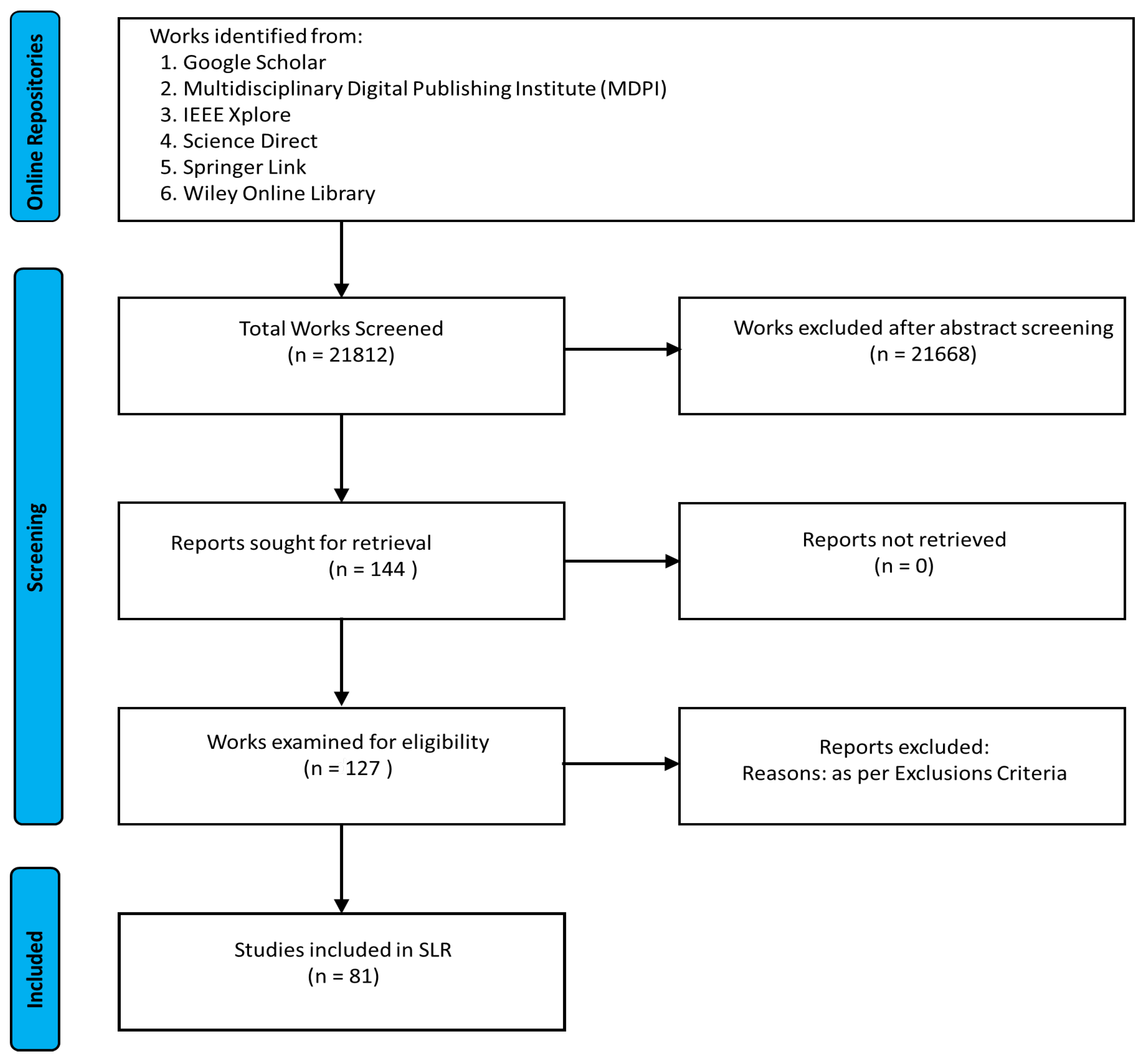
Figure 3.
Research publication sources.
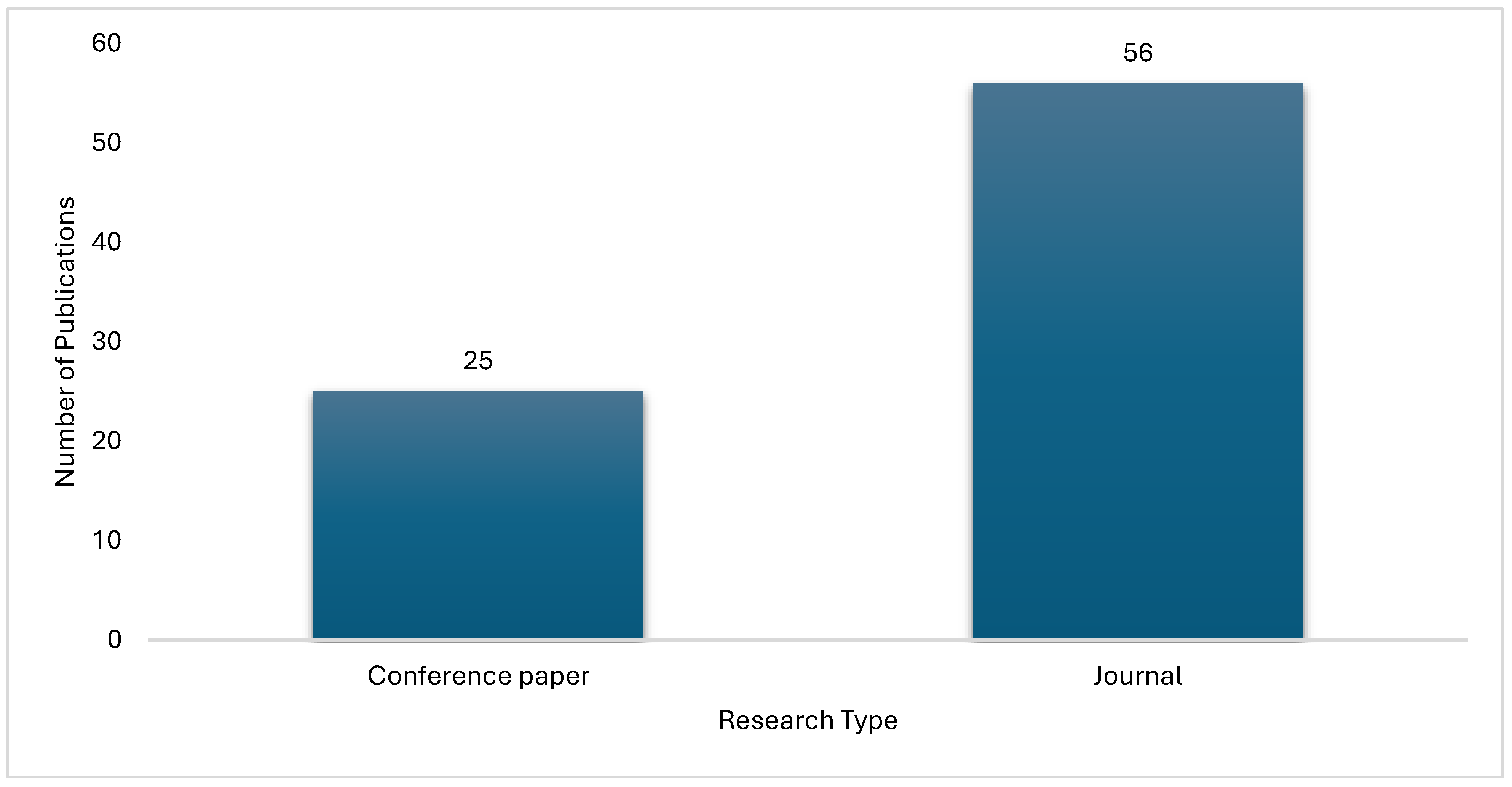
Figure 4.
Countries represented in the literature.
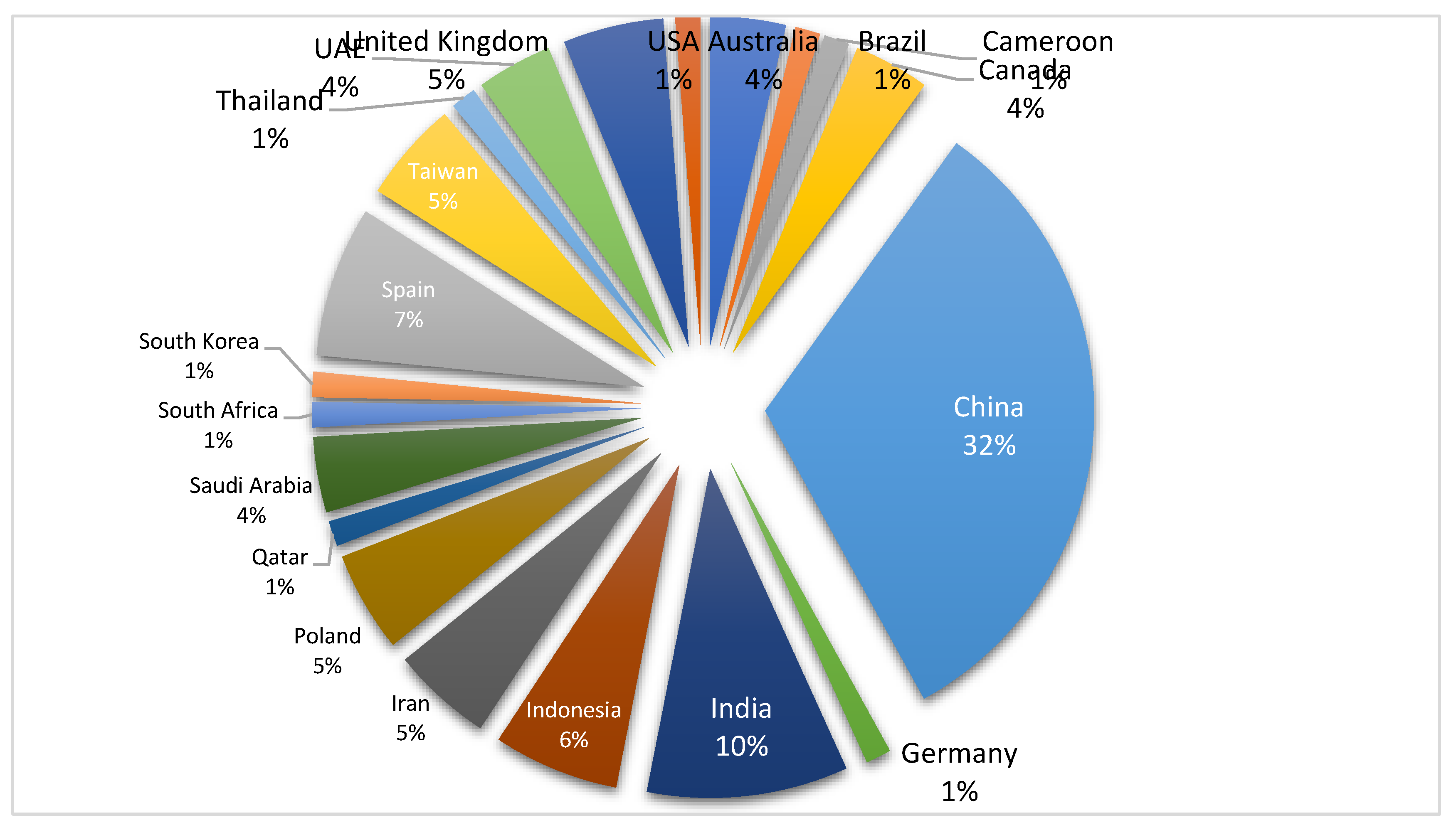
Figure 4.
Timeline of literature publications.
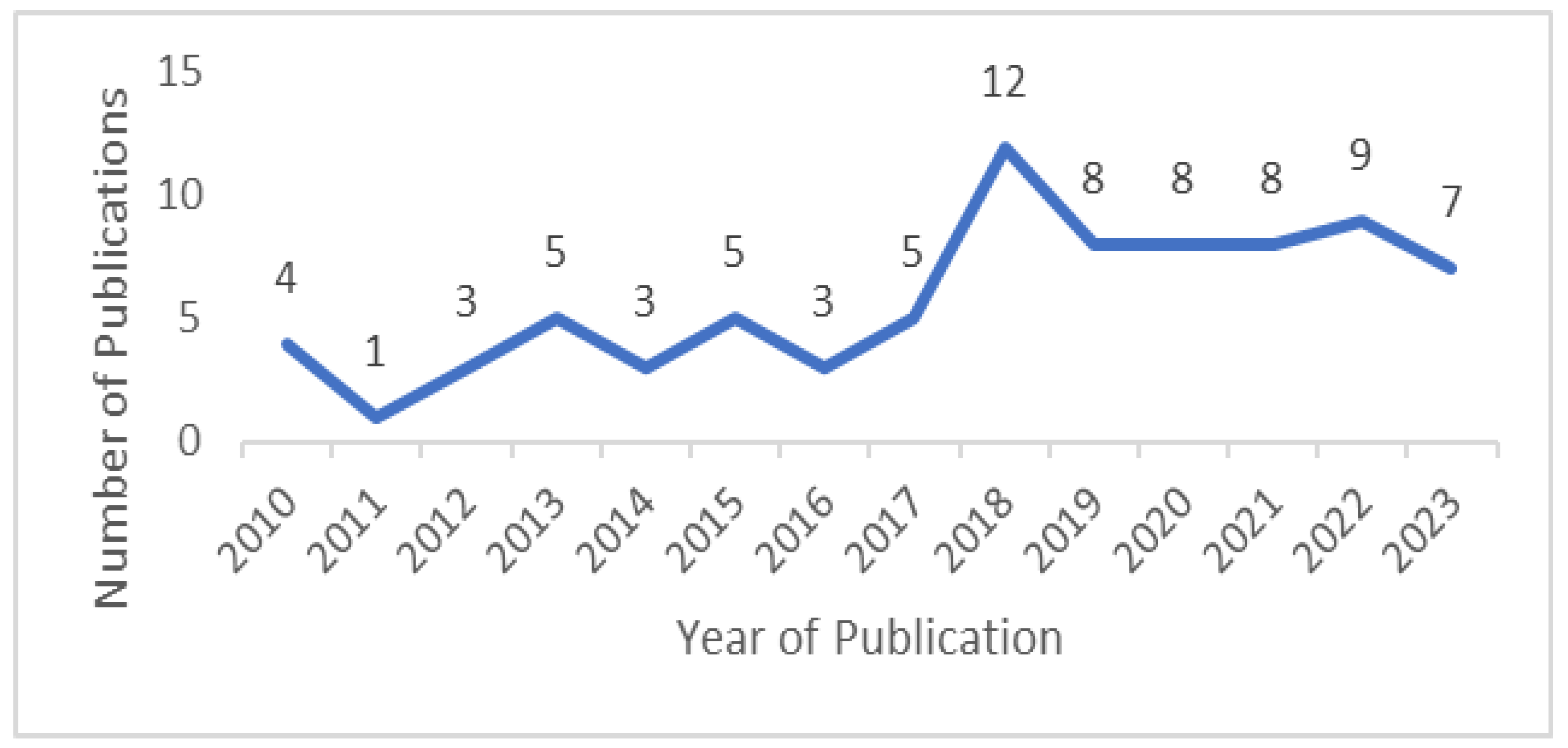
Figure 5.
Types of partial discharges.
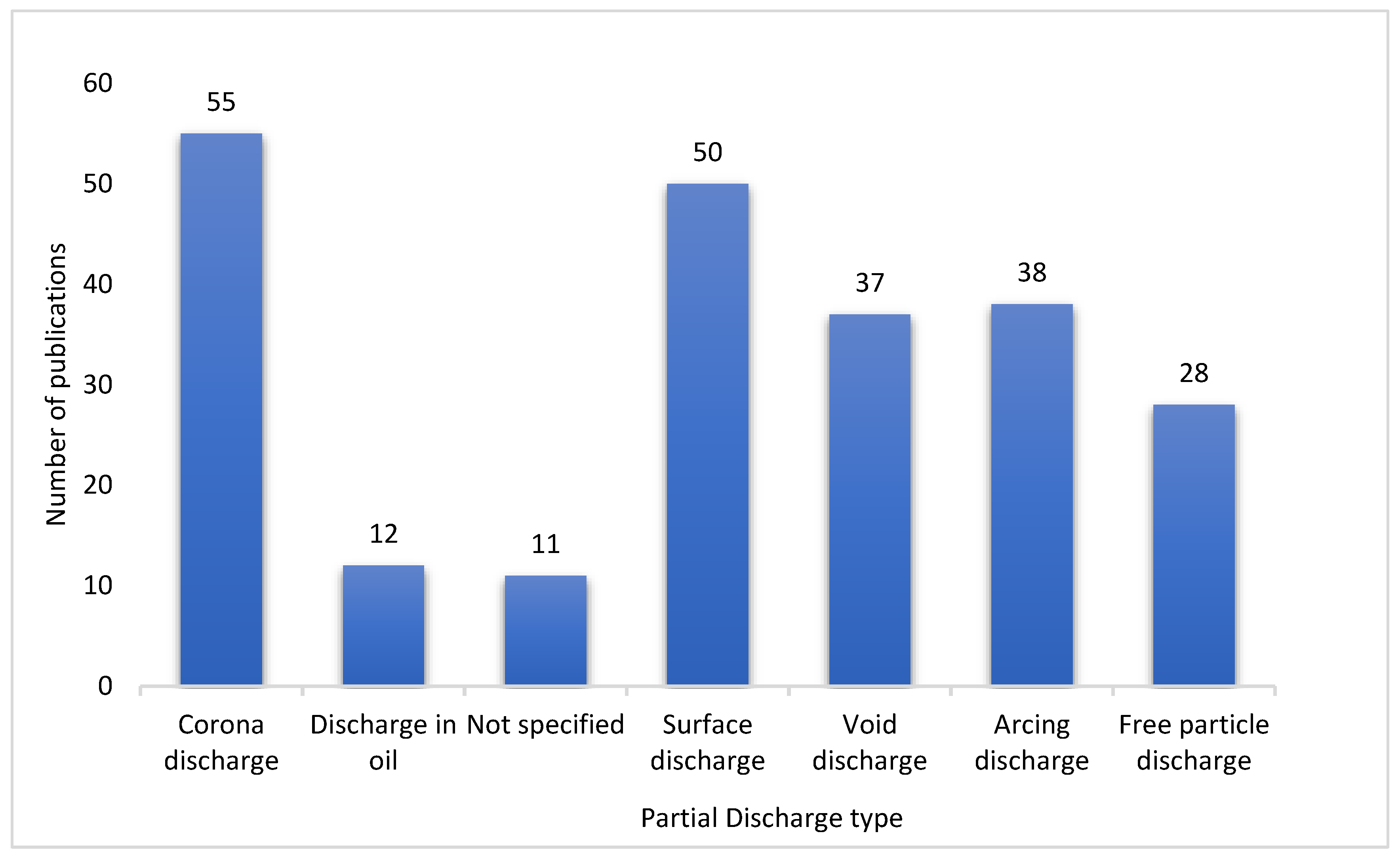
Figure 6.
Artificial PD defect models [72].
Figure 6.
Artificial PD defect models [72].
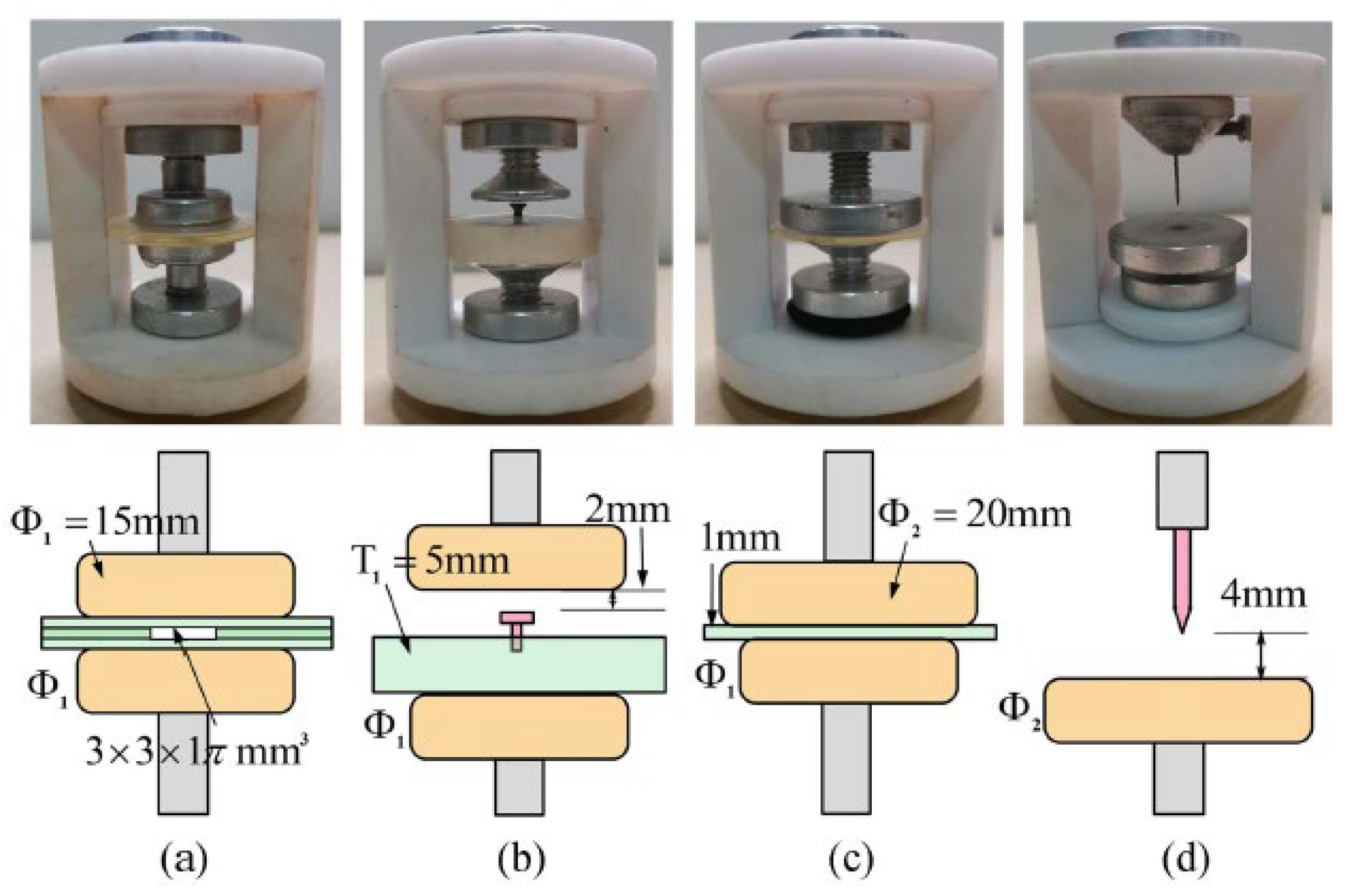
Figure 7.
Sources of Partial Discharge.
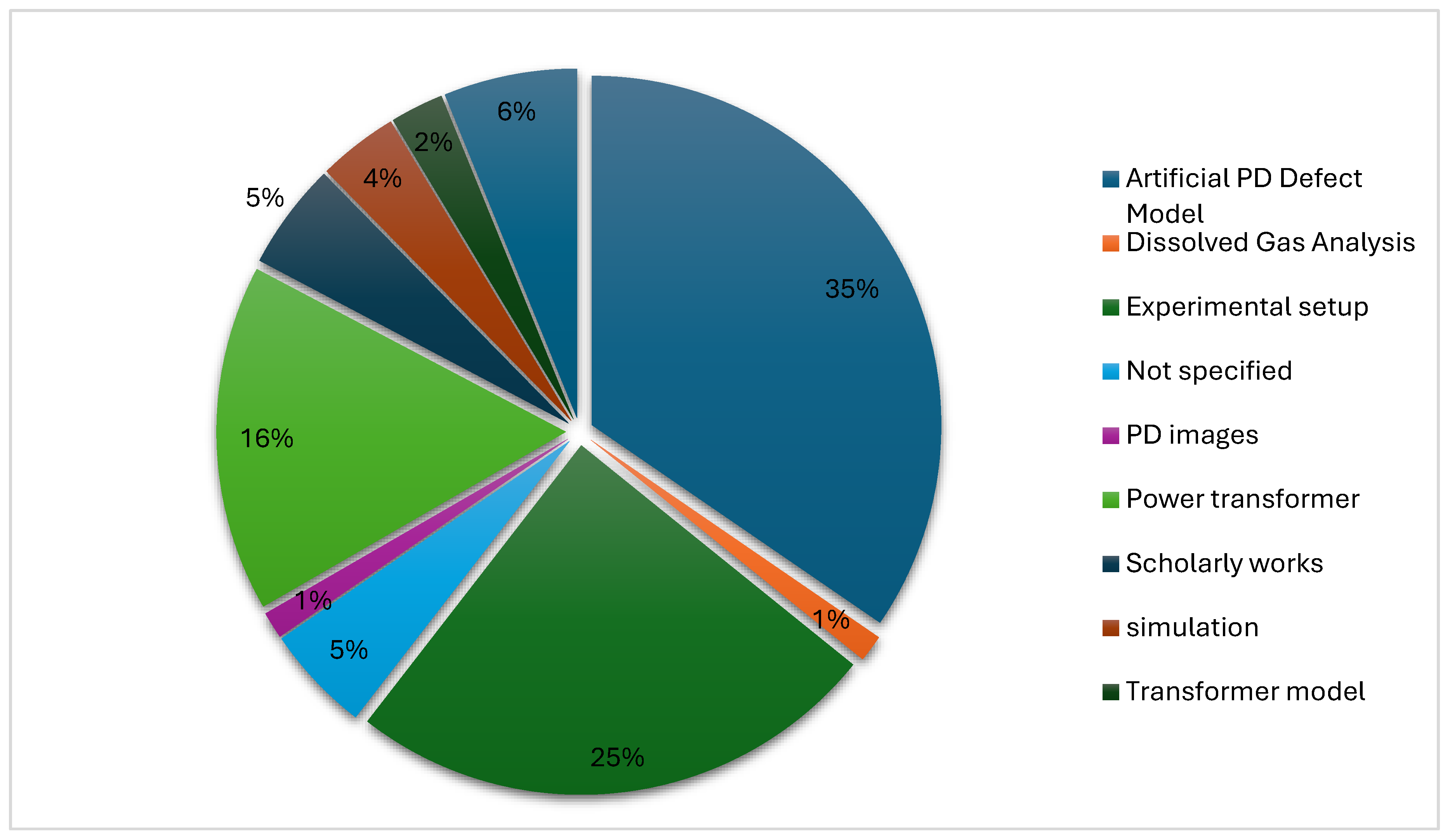
Figure 8.
Partial Discharge Measuring Techniques.
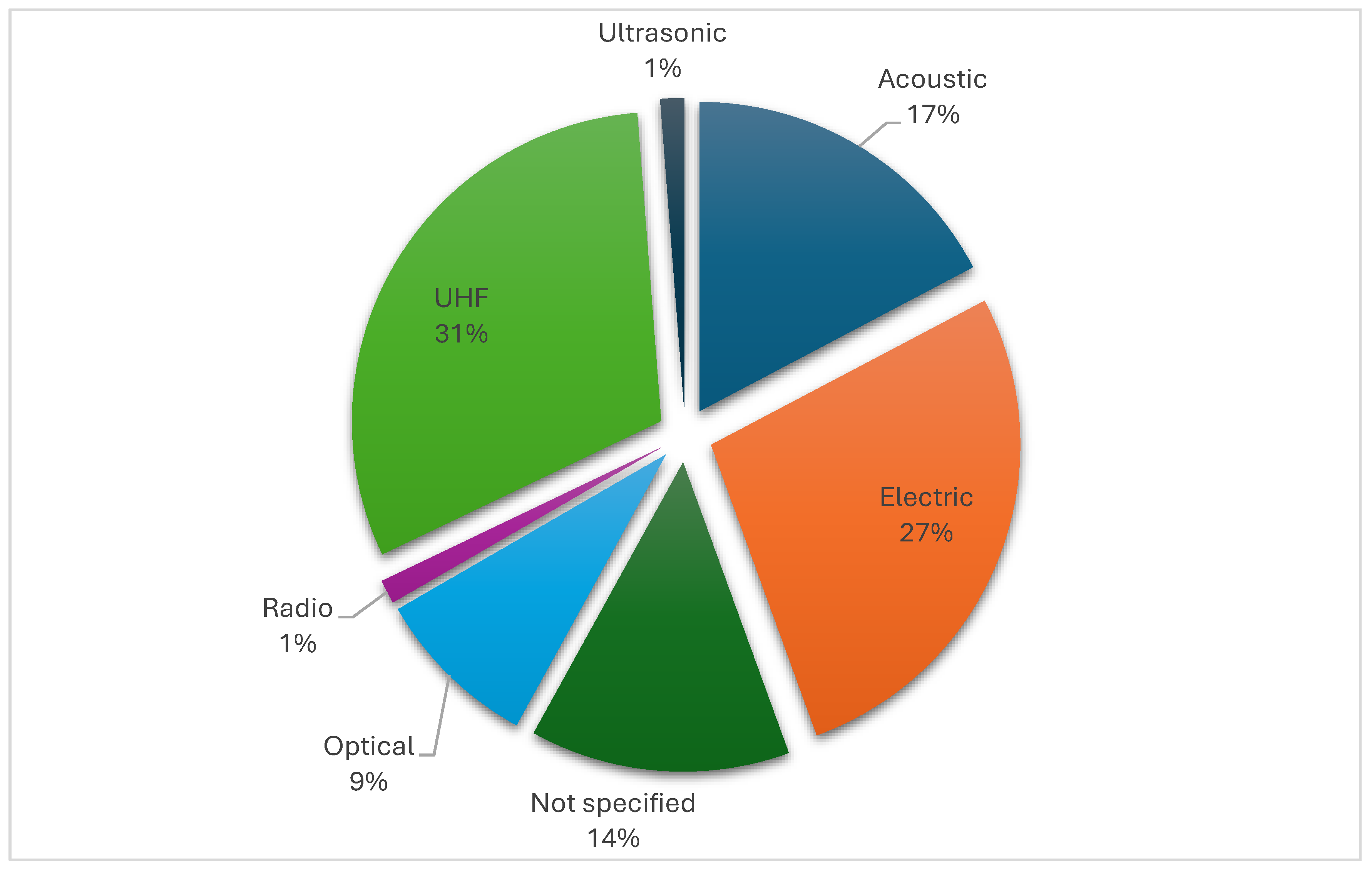

Table 1.
Transformer PD Literature.
| Ref. Year | Year | Data Source | ML Algorithm | PD Source | Summary |
|---|---|---|---|---|---|
| [13] | 2016 | Energies Journal | Artificial Neural Network | Artificial PD Defect Model | Focuses on reviewing published literature on the use of ANN for partial discharge pattern recognition and proposes improvements such as establishing the optimal training weights, use of extensive PD data for training, recognition of different levels of PD degradation as well as techniques to shorten training time. |
| [14] | 2022 | Energies Journal | Support Vector Machine, K-Nearest Neighbors, Naïve Bayes, Classification, Random Forest, Probabilistic Neural Network | Not specified | Analyses 8 partial discharge classes occurring in transformer solid and liquid insulation systems in a laboratory setup measured with the use of acoustic emission techniques. PD data is analysed with 5 different classification algorithms and the results are compared against one another. |
| [15] | 2015 | IEEE Electrical Insulation Conference | Deep Neural Network | Not specified | Illustrates the improvements in partial discharge diagnostic accuracy which can be attained by the application of deep neural networks. |
| [16] | 2020 | Energies Journal | Convolutional Neural Network | PD images | Presents the application of a neural network based on the CNN architecture to partial discharge images to diagnose the aging of electrical insulation. |
| [17] | 2010 | International Symposium | Support Vector Machine, Probabilistic Neural Network | Experimental setup | Compares the performance of two partial discharge classification methods, namely SVM and PNN, on four PD sources to determine the classification accuracy. |
| [18] | 2019 | IEEE Transactions on Power Delivery | Deep learning | Artificial PD Defect Model | Explores a novel approach of using PD current as input signal from four kinds of PD defects, while implementing two dimensionality reduction techniques, PCA and T-SNE, to the data to improve classification accuracy. |
| [19] | 2019 | IEEJ Transactions on electrical and electronic engineering | Support Vector Machine | Solid insulation | Utilizes a Weibull distribution-based method on the PD of a power transformer oil-paper insulation to determine the remaining service life of the transformer. |
| [20] | 2019 | Energies | Deep neural network, Convolutional Neural Network | Scholarly works | Reviews the progress made on the use of Deep learning Artificial intelligence methods for the automatic identification of partial discharge in transformers over the period between 2015 to 2023. |
| [21] | 2014 | IEEE Transactions on Power Delivery | Neuro-Fuzzy Technique | Power transformer | Introduces a neuro-fuzzy PD recognition technique on a medium voltage transformer to enhance the recognition accuracy compared to orthogonal transforms and calibration line methods for the main types of PD. |
| [22] | 2020 | IEEE Transactions on Dielectric and Electrical Insulation | Probabilistic Neural Network, Support Vector Machine | Scholarly works | Presents a review of literature on conventional machine learning algorithms applied to PD diagnostics, with a focus on input signals, sampling rates, core methodologies and recognition accuracies. |
| [23] | 2021 | IEEE Access | Artificial Neural Network | Transformer bushing | Reviews PD detection, localization, and severity with the use of machine learning techniques, then draws on the advantages and disadvantages of the various PD detection methods. |
| [24] | 2020 | Alexandria Engineering Journal | Artificial Neural Network | Experimental setup | Employ several acoustic sensors, strategically positioned at pre-specified locations of a transformer, and the time difference of arrival (TDOA) of the signals to enhance determining the location or source of PD. |
| [25] | 2017 | BDCAT Conference | Support Vector Machines, Random-Forest, Logistic Regression, Fussy Support Vector Machine, Gradient Boosting | Experimental setup | Introduces a stacking ensemble strategy to four types of PD data and illustrates the accuracy improvement from 99.31% to 99.61% over existing classification methods. |
| [26] | 2014 | IET Generation, Transmission and Distribution | Probabilistic Neural Network | Experimental setup | Researches the use of a multivariate denoising tool to enhance the overall correctness of single and multiple partial discharge sources where PD data is collected with the use of a UHF sensor. |
| [27] | 2013 | Conference on Electrical Insulation and Dielectric Phenomena | Support Vector Machine | Artificial PD Defect Model | Develops a Hybrid Discrete Wavelet transform algorithm to target the classification of multiple PD sources occurring in the same data sample. |
| [28] | 2019 | IEEE Transactions on Power Delivery | Support Vector Machine | Artificial PD Defect Model | Employs Local Binary Pattern (LBP) and Histogram of Oriented Gradient (HOG) techniques to extract image features from greyscale images which are used for PD pattern recognition. |
| [29] | 2015 | IEEE Transactions on Dielectrics and Electrical Insulation | Support Vector Machine | Experimental setup | Addresses the issue of classifying varying PD types collected via acoustic emission under differing measurement conditions such as PD source location, oil temperatures and barrier insertion. |
| [30] | 2017 | Energies Journal | Artificial Neural Network, Fuzzy Logic | Artificial PD Defect Model | Compares the accuracy of artificial neural networks and Fuzzy logic in recognizing different partial discharge sources. |
| [31] | 2013 | Electrical Power and Energy Systems | Support Vector Machine | Experimental setup | Utilizes multiple optical sensors inside a steel tank in a laboratory setup to develop a method of identifying single and multiple partial discharge sources. |
| [32] | 2011 | Energies | Improved Bagging Algorithm, Support Vector Machine, Back Propagation Neural Network | Experimental setup | Introduces an Improved Bagging Algorithm (IBA) which enhances the generalization capability and improves the accuracy of the Backpropagation neural network. |
| [33] | 2013 | IEEE Transactions on Dielectrics and Electrical Insulation | Bayesian networks, k-nearest Neighbors, Multi-layer perceptron, Fuzzy Support Vector Machine | Artificial PD Defect Model | Investigates three challenging issues linked to the automatic classification of artificial PD sources, namely acquiring symbolic characteristics using feature extraction, identifying different types of PD using pattern recognition algorithms, and identifying multiple PD sources. |
| [34] | 2018 | IET Science, Measurement and Technology | Kernel partial least squares regression (KPLS) | Artificial PD Defect Model | Introduces the variable predictive model-based class discrimination (VPMCD) method which is based on kernel partial least squares (KPLS) regression to exploit the inter-relations of extracted features of PD signals. |
| [35] | 2018 | Energies | One Class Support Vector Machine | Power Transformer | Researches the use of a One-Class Support Vector Machine (OCSVM) as an alternative to the binary SVM for PD assessment, indicating the benefit of noise-eliminating capabilities for PD assessment. |
| [36] | 2018 | IET Science, Measurement and Technology | Support Vector Machine | Test transformer | Develop a method of identifying unknown partial discharge patterns utilizing an improved Support Vector Data Description (SVDD). This method produces higher recognition accuracy, is more efficient and can be used to recognize unknown PD types where regular supervised algorithms fall short. |
| [37] | 2021 | Energies | Artificial Neural Network | Artificial PD Defect Model | Adopts the use of long short-term memory neural networks to solve the issue of overlapping partial discharge types, achieving 99% accuracy on single class recognition and 43% for multiclass. |
| [38] | 2017 | Entropy | Artificial Neural Network | Transformer bushing | Proposes a new feature extraction method which is derived from Ensemble Empirical Mode Decomposition (EEMD) and Sample Entropy (SamEn) achieving satisfactory recognition results experimental data. |
| [39] | 2022 | International conference on power and energy systems engineering | Not specified | Artificial PD Defect Model | Manufactures an optical PD detection device for the detection of PD occurring inside a transformer, thus evaluating the advantages of optical detection over other PD detection methods such as UHF, ultrasonic etc. |
| [40] | 2022 | Energies | k-Nearest Neighbors | Experimental setup | Utilizes four different types of UHF antennas to research their influence on the efficacy of partial discharge classification in a transformer. |
| [41] | 2023 | Applied Science | Convolutional Neural Network | Artificial PD Defect Model | Develop a novel partial discharge recognition algorithm which deals with the shortfalls of common artificial intelligence systems, such as complexity, high power requirements, high memory use and cost. |
| [42] | 2010 | International Conference on Machine Learning and Cybernetics | Artificial Neural Network | Power Transformer | Proposes a novel PD pattern recognition tool utilizing 3D patterns and PD fingerprints that can be easily implemented on MATLAB software. The novel system achieves better recognition rates than current methods. |
| [43] | 2016 | IET Science, Measurement and Technology | Decision Tree | Experimental setup | Studies the use of Acoustic sensors for measuring and distinguishing between different types of partial discharges occurring in transformer oil-paper insulation. Classification is improved however the sensors still have limitations due to the environment. |
| [44] | 2020 | IEEE Access | Convolutional Neural Network | Artificial PD Defect Model | Applies a Convolutional Neural Network method to six transformer-based partial discharge faults and achieves an improvement of 18.78% over the performance of SVM. |
| [45] | 2021 | Applied Science | Support Vector Machine | Experimental setup | Offers a novel MobileNets Convolutional Neural Network method for recognition of partial discharges in transformers, reduces complexity, increases speed, and obtains improved classification performance. |
| [46] | 2020 | Energies | Convolutional Neural Network, long term short term memory network | Transformer model | Develops a PD pattern recognition tool predicated on convolutional neural network and long short-term memory (LSTM) network to achieve better overall performance on recognition of PD patterns for floating defects, metal protrusion, void and surface discharge compared to the common CNN. |
| [47] | 2018 | IEEE/PES Transmission and Distribution Conference and Exposition | Online sequential extreme learning machine (OS-ELM) | Power Transformer | Tackles the limitations of traditional partial discharge recognition algorithms by producing a novel Online Sequential Extreme Learning Machine (OS-ELM) which can produce faster learning speed, higher recognition accuracy and improved stability for large data samples. |
| [48] | 2016 | Expert Systems with applications | Support Vector Machine | Transformer parts | Investigate the use of a support vector machine to distinguish between multiple types of partial discharge in a noisy environment. |
| [49] | 2019 | Conference on Dielectric Liquids | Random Forest, Support Vector Machine, Linear Discriminant, k-nearest Neighbours | Experimental setup | Presents the use of Random Forest algorithm for transformer partial discharge recognition which is compared to classification performed by other machine learning techniques. Random Forest achieved the highest accuracy with 94.44% followed by cubic SVM and LD at 83.33% and 77.78% respectively |
| [50] | 2021 | IET Generation, Transmission and Distribution | Support Vector Machine | Experimental setup | Utilizes an image-based feature extraction method based on upright speed-up features resulting in increased accuracy and better noise handling. |
| [51] | 2018 | IEEE International Conference on Industrial and Information Systems | Support Vector Machine | Artificial PD Defect Model | Develops a Time-frequency classification method with the use of UHF PD signals collected from transformer oil and accuracy tested with different barriers and spacing between sensors. |
| [52] | 2019 | 2nd International Symposium on big data and applied science | Deep Forest | Artificial PD Defect Model | Proposes the use of deep learning methods for automatic feature learning and pattern recognition as a replacement for classical feature extraction required when using shallow neural networks. |
| [53] | 2019 | IP Conference series | Random Forest | Scholarly works | Examines the application of Random Forest algorithm for transformer PD recognition which achieves higher recognition accuracy compared to SVM and kNN when tested using the tenfold method. |
| [54] | 2021 | IET Science, Measurement and Technology | Support Vector Machine | Artificial PD Defect Model | Extracts partial discharge adaptive features by employing a stacked auto-encoder algorithm to address the obstacles facing pattern recognition of multisource partial discharges. |
| [55] | 2021 | Energies | Convolutional Neural Network | Artificial PD Defect Model | Researches the use of single-source PRPD patterns to train a convolutional neural network model and tests the model on single and multi-source PD patterns which results in an improvement from 77.3% to 99.6% for multi-source PDs over traditional CNN architecture. |
| [56] | 2014 | EIT on Transmission and Distribution | Support Vector Machine | Scholarly works | Focuses on the use of UHF signals to detect single and multiple PD sources of the void and floating metal types, then applies denoising methods before extracting the appropriate features. Then proves this as a capable technique which can be used for classification |
| [57] | 2020 | IEEE Transactions on Instrumentation and Measurement | Isolation Forest | Experimental setup | Introduces a PD separation methodology using linear prediction analysis (LPA) and isolation forest algorithm (IFA) which proves successful in distinguishing between multisource PD signals in a 35 kV transformer during testing. |
| [58] | 2020 | International Automatic Control Conference | Clustering Decision Tree | Power Transformer | Proposes a PD identification system which integrates the decision tree and the clustering scheme for use in cast-resin transformers. The performance of the new system is compared to the Weka method and attains superior classification error rates. |
| [59] | 2019 | Sensors | Support Vector Machine, k-Nearest Neighbors | Power Transformer | Develops a method of classifying different fault signals, including PD inside a transformer with the use of data collected via acoustic emission signals. The developed algorithm achieves classification accuracies above 98%. |
| [60] | 2018 | 2nd Conference on Energy Internet and Energy System Integration | Extreme Learning Machine, Sparse self-encoder | Artificial PD Defect Model | Achieves improved PD pattern recognition accuracy as well as increased training speed by utilizing sparse self-coding and extreme learning machine networks. |
| [61] | 2018 | Energies | Least Squares Support Vector, Random Forest | Solid insulation | Investigate the characteristics of PD occurring in the oil-pressboard of converter transformers under both AC and DC voltage, then utilize random forest for defect recognition and ultimately discuss the comparison in performance between LSSV and RF. |
| [62] | 2018 | Electric power systems research | Multiple Linear Regression | Experimental setup | Proposes new methodologies for generating and locating high-frequency experimental PD current pulses based on multiple linear aggression models. |
| [63] | 2012 | IEEE Transactions on dielectrics and electrical insulation | Not specified | Experimental setup | Utilizes an inductive loop sensor to analyze wave energy distribution and differentiate between two PD sources occurring in transformer oil-paper insulation systems. |
| [64] | 2020 | International journal of emerging trends in Engineering Research | Not specified | Not specified | Demonstrates the performance of the acoustic emission method for recognition and classification of 3 different PD sources produced in a prototype transformer, then utilizes spectral analysis to show the frequency range of each PD source. |
| e [65] | 2016 | IEEE Transactions on Dielectrics and Electrical Insulation | fuzzy k-nearest Neighbour, Back-propagation neural network, Support Vector Machine Machine | Artificial PD Defect Model | Utilizes image-oriented feature extraction and selection algorithms on PD data thereby improving the classifier accuracy by an average of 5% to 7% compared phase resolved partial discharge patterns of the same PD data. |
| [66] | 2016 | IET Science, Measurement and Technology | Support Vector Machine | Artificial PD Defect Model | Simulates 5 partial discharge sources inside a transformer model, and extracts features via PCA which are applied to the SVM algorithm for classification. The results indicate an accurate classification of the five PD patterns. |
| [67] | 2012 | IET Science, Measurement and Technology | Modified binary partial swarm optimization | Power Transformer | Develops a novel modified binary partial swarm optimization (MBPSO) method used to localize PD sources of an arc furnace transformer from a steel company. The efficiency of the algorithm is found to be comparable to existing algorithms. |
| [68] | 2018 | Condition Monitoring and Diagnosis | Deep Neural Networks, Convolutional Neural Network | Simulation | Proposes new transformer PD fault identification methods, with PD data collected via ultrasonic testing, and features classified by Recurrent Neural Network, Deep Neural Network, and Convolutional Neural Network. CNN achieves the best average accuracy of 99.82% |
| [69] | 2019 | IET High Voltage | Artificial Neural Network | Experimental setup | Uses Artificial Neural networks to Classify different discharges on outdoor insulators which were tested with the use of acoustic sensors. The results are compared to controlled samples tested in a laboratory and both achieve recognition rates higher than 85%. |
| [70] | 2018 | IET Science, Measurement and Technology | Support Vector Regression, Artificial Neural Network | Experimental setup | Examines the use of a system of low-cost radio sensors for continuous partial discharge monitoring and develops models based on support vector regression and least squares support vector regression (LSSR), with LSSVR being the recommended algorithm due to its low complexity. |
| [71] | 2018 | Analytics for Renewable Energy Integration | Convolutional Neural Network, Random Forest, Decision Tree, Support Vector Machine | Experimental setup | Compares the classification performance of deep learning to traditional methods on three different partial discharge types which were collected using acoustic emission sensors on a transformer. |
| [72] | 2023 | IEEE Transactions on Power Delivery | Ridge Regression | Artificial PD Defect Model | Investigates partial discharges due to repetitive impulse excitation occurring in power electronic devices. The PD data is measured with the use of UHF sensors and processed with a ridge regression classifier improving accuracy to 98.6% over classical deep learning models. |
| [73] | 2013 | IEEE 1st International Conference on Condition Assessment Techniques in Electrical Systems | Support Vector Machine | Artificial PD Defect Model | Utilizes PCA to extract features from phase-resolved partial discharge patterns which are used as input to support vector machine algorithm for classifying PD data of six PD types. The highest classification results are achieved on corona discharge, discharge in oil and particle movement discharge, each at 100% accuracy. |
| [74] | 2010 | Proceedings of the ninth international conference on machine learning and cybernetics | Artificial Neural Network | Power Transformer | Suggests a four-layer artificial neural network model for transformer partial discharge pattern recognition which is applied to field transformers. The proposed pattern recognition approach improves the overall recognition rate from 88.25% to 95.25% over current methods. |
| [75] | 2023 | 8th International Conference on Control and Robotics Engineering | Convolutional Neural Network, Support Vector Machine | PD images | Evaluates the use of a convolutional neural network for PD recognition versus traditional methods which include feature extraction steps. The results indicate that the proposed method can classify different types of PD. |
| [76] | 2022 | 4th International conference on Applied machine learning | Deep learning | Power Transformer | Presents the use of a deep learning model for transformer partial discharge fault identification thus achieving classification accuracy of up to 99.31%, 97.92% and 93.75% on the training set, validation set, and test set respectively. |
| [77] | 2022 | 6th International conference on condition assessment techniques in electrical systems | Artificial Neural Network, Support Vector Machine, Random Forest | Artificial PD Defect Model | Analyzes four different types of PD and classifies it using artificial neural network, support vector machine and random forest. 100% accuracy is achieved for corona defects with SVM and RF. |
| [78] | 2021 | Electrical insulation conference | Generative adversarial network | Artificial PD Defect Model | Develop digital twins with the use of generative adversarial networks to identify incipient discharges occurring within defects in transformer insulation systems. The UHF signal discharges can simulate the digital twin of the transformer however more studies are required to understand the classification accuracy. |
| [79] | 2023 | IEEE Transactions on Plasma Science | Deep learning | Experimental setup | Looks into the detection and identification of poor PD signals in noisy environments by utilizing implantable optical detection tools, optical emission spectroscopy and ultraviolet monitoring. The collected PD data is fed to a deep learning model to determine the recognition and classification accuracy. The Developed model achieves a precision of 100% and an accuracy of 99% |
| [80] | 2022 | Security and Communication Networks | Convolutional Neural Network | Simulation | Combines the benefits of artificial neural networks with accurate feature extraction to produce a novel transformer PD pattern recognition model and proves the value of applying the model to practice. |
| [81] | 2022 | Intelligent Automation and soft computing | Convolutional Neural Network | Artificial PD Defect Model | Proposes a deep learning-based partial discharge classification algorithm which addresses the disadvantages of traditional algorithms, which include the generation of high dimensional data as well as the need for additional steps required in the processing which results in high memory requirements as well as slower process times, and higher costs. |
| [82] | 2023 | Energies | Support Vector Machine, k-Nearest Neighbor | Power Transformer | Suggests the use of kNN and SVM techniques for imputing missing DGA data of a PD source, resulting in enhanced accuracy and precision when contrasted to methods lacking data imputation. |
| [83] | 2021 | IEEE Access | Random Forest, k-Nearest Neighbors, Support Vector Machine, Artificial neural network, Naïve Bayes, AdaBoost | Dissolved Gas Analysis | Applies several artificial intelligence algorithms to tackle the shortcomings of handling data uncertainty in the transformer health index. Random Forest models provide a higher accuracy at 97%. |
| [84] | 2014 | IEEE Transactions on Instrumentation and Measurement | Support Vector Machine | Experimental setup | Proposes a novel multichannel instrumentation system of PD location in transformers based on acoustic emission detection with the use of piezoelectric and optic sensors. |
| [85] | 2014 | IEEE Transaction on Dielectrics and Electrical Insulation | k-Nearest Neighbors | Power Transformer | Utilizes copper coil radio frequency sensors to detect PD in a transformer which provides a simple and reliable online PD detection and localization method. |
| [86] | 2018 | IET Science, Measurement and Technology | Artificial Neural Network | Transformer model | Places focused on the catadioptric phenomenon of acoustic emission wave propagation do develop the reduction of PD localization errors in power transformers. |
| [87] | 2023 | ResearchGate | Convolutional Neural Network, Support Vector Machine | Artificial PD Defect Model | Introduces a multi-dimensional intelligent state model composed of CNN-SVM mode to overcome the low recognition accuracy of single intelligent state recognition models. The accuracy and consistency of the model are improved by 3.33% and 16.66% respectively |
| [88] | 2012 | 2018 Condition Monitoring and Diagnosis | Artificial neural network | Artificial PD Defect Model | Utilizes waveform parameters and PD patterns from four artificial PD sources collected with the use of the types of sensors to develop an artificial neural network algorithm for the classification of PD sources in a transformer, achieving recognition rates between 90% and 96%. |
| [89] | 2022 | Journal of Soft Computing Paradigm | Support vector machine, Convolutional neural network | Simulation | Employs the phase-amplitude response of PRPD patterns which are classified using a convolutional neural network to diagnose partial discharge of a 132/11 kV and a 132/25 kV transformer. |
| [90] | 2023 | Sensors | Convolutional neural network | Power Transformer | Analyses partial discharges occurring within bubbles in transformer insulation mineral oil with the use of a CMOS image sensor. Developing a classification method which achieves a classification accuracy of 95% for the validation set and 82% for the test set. |
| [91] | 2020 | IEEE Conference on Electrical Insulation and Dielectric Phenomena | Support Vector Machine | Artificial PD Defect Model | Proposes the classification of different partial discharges occurring in outdoor electric insulators with the use of different machine learning algorithms and achieves a 93% recognition rate for five PD defects using SVM with RBF kernels consistently achieving the highest recognition rates. |
| [92] | 2010 | IEEE Transactions on Dielectrics and Electrical Insulation | Support Vector Machine | Artificial PD Defect Model | Studies the use of a wide bandwidth PD measurement system which includes a radio frequency current transducer sensor to perform online automatic PD source identification. |
| [93] | 2021 | International Conference on Artificial Intelligence and Smart Systems | Support Vector Machine | Artificial PD Defect Model | Demonstrates a new technique for partial discharge prediction with the use of a Deep Learning algorithm and tests it on void, corona and surface discharges occurring in transformer insulation systems. |
Table 2.
Inclusion and Exclusion Criteria.
| Criteria | Inclusion Criteria | Exclusion Criteria |
|---|---|---|
| Topic | Scholarly work must be about the use of machine learning in the classification of partial discharge in electric transformers. | Articles that do not relate to machine learning, partial discharge, or electric transformers, and do not include machine learning. |
| Research Framework | Work must include a research framework or methodology. | Articles without a clear research framework. |
| Language | Articles are written in English. | Articles written in any other language other than English |
| Publication Period | Articles published between 2011 and 2023. | Articles published before 2011 |
| Publication Type | Articles published by reputable publishers. | Work that is not formally published. |
| Topic | Scholarly work must be about the use of machine learning in the classification of partial discharge in electric transformers. | Articles that do not relate to machine learning, partial discharge, or electric transformers, and do not include machine learning. |
Table 3.
Proposed Keyword Search.
| Keyword Search |
|---|
| “Machine learning” |
| “Transformer” “Transformer condition monitoring” |
| “Partial discharge” “PD” |
| “Artificial intelligence” |
Table 4.
Results achieved from literature search.
| No. | Online Repository | Number of Results |
|---|---|---|
| 1 | Google Scholar | 16529 |
| 2 | Multidisciplinary Digital Publishing Institute (MDPI) | 260 |
| 3 | IEEE Explore | 233 |
| 4 | Springer Link | 3904 |
| 5 | ResearchGate | 43 |
| 6 | Science Direct | 715 |
| 7 | Wiley Online Library | 128 |
| Total | 21812 |
Disclaimer/Publisher’s Note: The statements, opinions and data contained in all publications are solely those of the individual author(s) and contributor(s) and not of MDPI and/or the editor(s). MDPI and/or the editor(s) disclaim responsibility for any injury to people or property resulting from any ideas, methods, instructions or products referred to in the content. |
© 2024 by the authors. Licensee MDPI, Basel, Switzerland. This article is an open access article distributed under the terms and conditions of the Creative Commons Attribution (CC BY) license (http://creativecommons.org/licenses/by/4.0/).
Copyright: This open access article is published under a Creative Commons CC BY 4.0 license, which permit the free download, distribution, and reuse, provided that the author and preprint are cited in any reuse.


