

Submitted:
30 May 2024
Posted:
31 May 2024
You are already at the latest version
Abstract
The increasing focus on sustainability and the adoption of green practices across industries underscore the necessity of equipping future professionals with competencies in implementing sustainable solutions. This study explores the perceptions of former students from two departments within the technological sector towards sustainability practices. A cross-sectional online survey was carried out among alumni from two programs at the University of Thessaly, a university recognized for its commitment to sustainability and green initiatives as a member of the INVEST European University alliance. The survey questionnaire included background inquiries and 16 statements designed to gauge alumni perspectives towards sustainability practices. Specifically, it aims to assess their views through self-assessment and compare differences between the two alumni groups. Responses were collected on a 5-point Likert scale ranging from strongly disagree to strongly agree. A total of 300 graduates from the Computer Science and Telecommunications as well as Electrical Engineering undergraduate programs were encouraged to take part in the survey, achieving a response rate of 69%. Of those who responded, 61% (n = 126) represented the Computer Science and Telecommunications group, while 39% (n = 81) were from the Electrical Engineering program. Our findings indicate a generally positive attitude towards sustainability, with statistically significant differences in perspectives on the implementation of sustainable technologies and stakeholder engagement. These results underscore the necessity of integrating sustainability education deeply within the curricula of technological programs to cultivate a workforce capable of addressing future environmental challenges. This study illuminates the critical role of educational frameworks in shaping the sustainability competencies of technology professionals.
Keywords:
Green
; digital
; Professionals' Views
1. Introduction
The landscape of industries is rapidly evolving with the advent of sustainability practices, wherein various green technologies and eco-friendly initiatives are becoming integral components of modern systems (Fulekar et al., 2014). Climate change and environmental degradation have further emphasized the urgent need for adopting sustainable solutions across sectors (Iatrellis et al., 2022). Globally, initiatives such as the Paris Agreement and the Sustainable Development Goals (SDGs) have become prominent agendas for strategic development, emphasizing the importance of sustainability and the integration of green practices into various industries (Kanie et al., 2019).
Understanding the perspectives of professionals in their career journey is essential for designing effective training strategies. However, studies frequently highlight a disconnection between the competencies taught and the evolving requirements of the industry, suggesting that many graduates feel unprepared to implement sustainable solutions effectively within their professional landscape (Nizam et al., 2020). Moreover, many researchers underline the critical lack of integration of practical sustainability skills in technical education, which can hinder the ability of professionals to contribute meaningfully to environmental sustainability initiatives (Malik et al., 2019; Ramakrishna, 2021).
Within the academic landscape, initiatives such as the INVEST European University project (https://www.invest-alliance.eu/) funded by ERASMUS+ are at the forefront of addressing the evolving needs of students and industries, with a strong emphasis on sustainability (Kokkinos et al., 2024). The INVEST project is dedicated to establishing a modern European University that meets the needs and expectations of the new generation of Europeans, positioning them as leaders in promoting sustainable practices across regions. Central to the project's vision is the establishment of a fully operational, innovative, and collaborative network of universities committed to achieving higher standards in education, training, research, and innovation through international collaboration and excellence. By prioritizing sustainability within academia, the INVEST project acts as a catalyst for preparing future professionals to tackle environmental challenges and advance green initiatives in their respective industries.
In light of these developments, this study aims to elucidate the attitudes of former students from the programs of Computer Science and Telecommunications, and Electrical Engineering of University of Thessaly, a member of the INVEST alliance, towards sustainability practices. Through self-evaluation and comparison between the two alumni groups, this research seeks to provide insights into their perceptions following their participation in various educational activities of the INVEST project. These activities, held during the three-year pilot phase of the IVNEST project, included various educational programs where participants had the opportunity to engage in project-based learning focused on sustainability principles and practices. By comprehending alumni views in this context, INVEST University and educational institutions at large can refine their programs to better equip future technology professionals to tackle environmental challenges, thus fostering a more sustainable and environmentally conscious workforce for the future.
The rest of the paper is organized as follows. Section 2 presents the methods employed in this study, including the study design, questionnaire development, and data analysis procedures. Section 3 outlines the results of the study, focusing on the perceptions of technology professionals towards sustainability education and green practices. Section 4 delves into a discussion of the findings, contextualizing them within existing literature and highlighting the implications for technology education and professional development. Strengths and limitations of the study are also addressed in this section. Finally, Section 5 provides an ethical statement detailing the procedures followed to ensure the integrity and confidentiality of the data collected. In conclusion, Section 6 summarizes the key findings of the study and emphasizes the importance of integrating sustainability education into technology curricula to prepare future professionals for addressing environmental challenges in their respective fields.
2. Methods
2.1. Research Approach
This cross-sectional study involved alumni from the Computer Science and Telecommunications, and Electrical Engineering programs, which were originally part of an applied science university (TEI of Thessaly (https://www.teilar.gr/index_en.php)) that was later absorbed by a comprehensive university (University of Thessaly (https://www.uth.gr/en)). These alumni had previously participated in various educational activities organized by the INVEST project from 2020 to 2023, which delineated the pilot phase of the INVEST project. These activities aimed to provide students with interdisciplinary learning opportunities and practical experiences in sustainability, which serves as the primary focal point of the INVEST University alliance. While most activities were conducted in person, some were conducted online using virtual platforms, particularly during the COVID-19 pandemic. The participation of students in these activities formed the basis of the study sample.
2.2. Study Questionnaire
An online survey was conducted to assess former students' perceptions of sustainability and green practices, utilizing the Microsoft Forms tool. The survey took place from January 10th to March 25th, 2024. Our survey underwent development based on literature and expert reviews from INVEST University. The survey statements were carefully crafted to ensure clarity and comprehensibility to students. Any ambiguities or uncertainties were addressed through the inclusion of explanatory texts to provide context and clarification.
The study sample comprised alumni ensuring a level of familiarity with academic coursework and online learning environments. This ensured that participants were sufficiently equipped to understand and respond to the survey questions.
Our research utilized a survey questionnaire in Greek, consisting of four demographic queries and sixteen statements that were designed to assess participant attitudes towards sustainability and green practices, organized into five thematic categories:
- Utilization of Sustainable Practices and Technologies: this category encompasses statements related to the practical implementation and utilization of sustainable technologies.
- Readiness to Adopt Sustainable Practices: this category evaluates participants' preparedness and inclination towards embracing sustainable practices, including their awareness of key sustainability initiatives and platforms.
- Integration of Sustainability into the Work Environment: this category explores participants' perspectives on the importance of embedding sustainability principles within their work environments and communities, including the transformative impact of adopting sustainable practices.
- The role of stakeholders in sustainability initiatives: this category assesses the role of stakeholders, including professionals, organizations, and communities, in driving sustainability initiatives and fostering collaborative approaches towards environmental responsibility. In the context of sustainability initiatives, stakeholders may include government bodies, regulatory agencies, non-governmental organizations (NGOs), local communities, industry partners, research institutions, and advocacy groups, among others, as clarified in the survey.
- Cultivating a Culture of Innovation and Experimentation: this category investigates participants' openness to experimentation and innovation in developing sustainable solutions, as well as their interest in contributing to transformative changes within their organizations.
2.3. Data Analysis
In our study focusing on green and sustainability-related perceptions among former students from the programs of Computer Science and Telecommunications and Electrical Engineering, we applied a 5-point Likert scale to assess responses. Responses categorized as Strongly agree' and 'Moderately agree' were merged into the 'Agree' category, while responses categorized as Strongly disagree,' 'Moderately disagree,' and 'Neutral' were merged into the 'Disagree' category.
Categorical variables were displayed using percentages and assessed through Pearson’s chi-square test. Continuous variables, represented by means and standard deviations, were examined using the independent samples t-test. A p-value of less than 0.05 was deemed to indicate statistical significance.
3. Results
The study involved a total of 300 respondents, resulting in a response rate of 69.0%. Among these, 126 were former students from the Computer Science and Telecommunications program and 81 were students from the Electrical Engineering program (see Table 1). Within the Computer Science and Telecommunications program, respondents included students from various specializations, such as software engineering (n = 72), telecommunications (n = 33), and hardware (n = 21). The response rates were 74% for students from the Computer Science and Telecommunications program and 62% for students from the Electrical Engineering program.
Both participant groups exhibited similar demographic characteristics, primarily aged between 23 and 34 years old, with the majority possessing at least an undergraduate level degree and having at least six months of working experience, in their respective fields. Statistically significant differences were noted in the duration of work experience.
3.1. Respondents Exhibit Positive Perceptions towards Sustainability and Green Practices
Both alumni groups, comprising professionals in technology fields, exhibited positive views towards sustainability practices and initiatives (see Table 2). Based on the survey responses, a majority of alumni believed that proficiency in implementing sustainable practices is crucial for their work environment/community (S3.1). They also recognized the importance of effectively utilizing sustainable technologies in implementing solutions (S1.2). Furthermore, there was consensus among participants regarding the vital role of active stakeholder engagement in achieving better outcomes in terms of environmental sustainability (S1.4).
Moreover, alumni acknowledged that the adoption of green technologies by stakeholders significantly contributes to achieving environmental sustainability (S1.1). They also understood that the adoption of sustainable practices brings about transformative changes in the routines of professionals in technology fields (S3.2). Reflecting on their undergraduate education, respondents emphasized the importance of capacity building for implementing sustainable practices (S5.3). Furthermore, they expressed confidence in their ability to use sustainability tools to facilitate their work in technology fields (S2.1).
Alumni demonstrated a good level of awareness about the national and global key initiatives and platforms related to environmental sustainability (S2.2). Many expressed interest in experimenting with innovative solutions to address challenges in their workplace (S5.2). They recognized that sustainability initiatives shape technology fields more towards environmental responsibility (S4.3). Moreover, respondents believed that undergraduate education for professionals in technology fields should foster a mindset towards innovation (S5.4).
Furthermore, participants acknowledged that sustainability is changing the role of stakeholders to actively govern their involvement in environmental sustainability initiatives (S4.1). They advocated for fostering a culture of experimentation in technology organizations to drive innovation in sustainable practices (S5.1). Additionally, respondents perceived a transition in the role of professionals in technology fields from traditional problem-solving to becoming motivating experts who collaborate more closely with stakeholders (S4.2). However, fewer alumni seek opportunities to collaborate on projects focused on product development that explore sustainable solutions and promote environmental responsibility in technology fields (S5.5).
3.2. The Differences among Respondents from Both Groups
Figure 1, Figure 2, Figure 3, Figure 4 and Figure 5 provide a thematic categorization of the 16 statements, illustrating the percentages of students from the programs of Computer Science and Telecommunications and Electrical Engineering who expressed positive attitudes towards sustainability and green practices ('Agree' and Strongly agree').
Overall, the disparities between alumni from the Computer Science and Telecommunications and Electrical Engineering programs regarding their perceptions towards sustainability and green practices were minimal. Statistical analysis was conducted using the chi-square test, revealing significant differences in statements regarding the national and global key initiatives and platforms related to environmental sustainability (Figure 2, S2.2), and in their views of how sustainability practices will shape the relationship between stakeholders and environmental professionals (Figure 4, S4.1 and S4.2). Furthermore, noteworthy distinctions were observed concerning the incorporation of sustainable practices into undergraduate education for professionals in technology fields (Figure 5, S5.3), as well as in the active pursuit of collaborative opportunities for sustainable product development within technology sectors (Figure 5, S5.5).
Additionally, minor differences were observed in the attitudes of respondents from the Computer Science, Telecommunications, and Electrical Engineering programs, particularly regarding other aspects of the theme "Cultivating a Culture of Innovation and Experimentation". While the variances observed in Figure 5 regarding statements S5.1 and S5.4 were not deemed statistically significant, respondents from both programs generally leaned towards embracing a culture of experimentation in their prospective workplaces. Conversely, a higher proportion of alumni from the Electrical Engineering program indicated the opinion that university education for professionals should prioritize enhancing skills for implementing sustainable technologies and practices, as well as cultivating a mindset conducive to innovation and practice enhancement.
4. Discussion
We thoroughly investigated fundamental information regarding alumni's perceptions towards green competence building and sustainability practices within the technological sector. To our knowledge, this is first study to investigate the views of graduates from programs related to technology in an interdisciplinary context. In a comparative study assessing the sustainable behavior of potential professionals, particularly focusing on multidimensional aspects using item response theory, it was found that future professionals exhibited varying levels of sustainable behavior across different dimensions (Lohn et al., 2017). Our study revealed that alumni from programs such as Computer Science and Telecommunications and those from Electrical Engineering demonstrated comparable attitudes towards green competence building and sustainability practices, with marginal differences noted between the two groups of professionals.
Nonetheless, diverse attitudes among professionals towards sustainability have also been documented. For instance, a study at the National University of Lomas de Zamora, Buenos Aires, aimed to gauge the perception and knowledge of sustainability among university students, future Argentinian professionals (Damico et al., 2022). The research highlighted a gap in sustainability education within higher education institutions, indicating the need for further integration of sustainability topics into curricula to better equip graduates for future challenges. Holdsworth et al. highlighted the potential of participatory and reflective teaching methods in promoting sustainability education (Holdsworth & Sandri, 2014), while Erskine et al. added a student perspective, indicating a preference for working in companies that embrace sustainability as a core value (Erskine & Johnson, 2012).
Our findings align with previous research demonstrating the importance of embedding sustainability principles within educational programs to foster responsible management education and leadership development (Cripps & Smith, 2023). Additionally, our study contributes to the understanding of how higher education institutions can play a crucial role in developing sustainability competencies among future professionals, in line with the objectives outlined by previous research (Molina, 2020).
Furthermore, a notable divergence emerged in student perceptions concerning their familiarity with key sustainability resources, analogous to our findings (Figure 2, S2.2). A study investigated college students' awareness of sustainability issues at a university in southeastern Texas, finding that while 95.8% of students consider sustainability important, only a minority were knowledgeable about it (Msengi et al., 2019). Another study conducted in the Eastern Province of Saudi Arabia highlighted similar challenges in students' sustainability awareness. Despite hearing about sustainability from educational sources, many students lacked comprehensive knowledge on key information and initiatives (Alsaati et al., 2020).
The discourse on sustainability in technology fields has pivoted towards increased stakeholder involvement, aligning with our findings on the changing role of stakeholders (S4.1). Enhanced stakeholder engagement is integral to fostering environmental sustainability (Watson et al., 2018). Our study revealed statistically significant disparities in alumni views regarding the transformative impact of sustainability on professional roles (see Figure 4, S4.1 and S4.2). Notably, other studies exhibited more positive attitudes towards these changes, echoing earlier research (Allen et al., 2014; Amaeshi et al., n.d.). This discrepancy may stem from program-specific educational priorities, with certain programs prioritizing sustainability integration more prominently.
Aligned with current literature (Söderholm, 2020), the majority of alumni expressed a keen interest in experimenting with innovative sustainable solutions to address challenges in their workplace (S5.2), highlighting the importance of fostering a mindset towards innovation in undergraduate education for professionals in technology fields (S5.4). However, reservations persist regarding the institutionalization of experimental cultures in technology organizations (S5.2). Perhaps one explanation for this caution can be attributed to entrenched preferences for evidence-based practices within the technology sector, as highlighted in research by Dosso (Dosso et al., 2018). Empirical studies, as emphasized by Baldassarre, play a crucial role in driving innovation dissemination, particularly in technology sectors (Maria Teresa Baldassarre et al., n.d.).
Surprisingly, a noteworthy subset of one out of four alumni questioned the necessity of incorporating innovation-focused topics in undergraduate education (Table 2, S5.4). This skepticism may reflect entrenched paradigms within technology education, which traditionally prioritize technical proficiency over innovation, particularly considering that both the Computer Science and Telecommunications and Electrical Engineering programs stem from applied science institutions.
Finally, while the literature suggests that engaging in projects that explore sustainable solutions and promote environmental responsibility in technology fields is crucial (Majerník et al., 2023), alumni across both programs exhibited tepid interest in this avenue (S5.5). Nonetheless, closer collaboration between technology professionals and industry stakeholders is imperative to harness the full potential of sustainable technologies(García de Leaniz & Ruiz, 2018). Consequently, interdisciplinary approaches in technology education are warranted to foster greater engagement with sustainable innovation and product development.
In conclusion, our study sheds light on the views of technology professionals towards green competence building and sustainability practices. While overarching optimism towards sustainability pervades both alumni cohorts, nuanced disparities in perceptions underscore the need for targeted educational interventions and institutional reforms to cultivate sustainable innovation within the technology sector.
In alignment with the insights gleaned from our study, the INVEST project is poised to tailor undergraduate programs to resonate with the findings, thereby fostering curricula that nurture green competence and sustainability practices among future technology professionals. Furthermore, as part of the INVEST initiative, we introduced Living Labs designed to provide students with hands-on, project-based learning experiences (Iatrellis et al., 2023). These Living Labs aim to empower students to tackle complex challenges together with the regional stakeholders and devise innovative solutions in the realm of sustainability. By integrating these experiential learning opportunities into our educational framework, we aspire to equip students with the skills and mindset necessary to drive sustainable innovation and address pressing environmental issues. Through these concerted efforts, we envisage cultivating a cohort of graduates who are not only proficient in technology but also deeply committed to advancing sustainability practices in their respective fields.
4.1. Strengths and Limitation
Our study showcased several strengths, including a commendable response rate of 69.0%, indicating active participation from graduates in the School of Technology programs of University of Thessaly, Greece. The study sample was drawn from a member university of the INVEST European University project, ensuring diversity in educational settings and potentially increasing the transferability of the findings to similar institutions within the alliance. Furthermore, given the structural similarities in educational frameworks across European universities within the alliance, the results may have broader relevance, although further investigation is necessary to validate this assertion.
Despite these strengths, our study encountered some limitations. The reliance on self-assessment for evaluating competencies introduces potential subjective biases, which could influence the interpretation of the results. Additionally, the study did not evaluate alumni' perceptions before their participation in the INVEST’s sustainability-focused activities, limiting our ability to establish causal relationships. Finally, the division of variables into two groups may have slightly distorted the results, possibly resulting in an incomplete portrayal of the real-world situation.
5. Ethical Statement
The research adhered to the guidelines set forth in the INVEST Open Science Code, which upholds principles of research integrity and ethical standards. Compliance with the EU General Data Protection Regulation (GDPR) and INVEST European University standards was ensured throughout the study.
Alumni were invited to partake in the survey via email, with clear emphasis on voluntary participation. The email outlined the study's purpose, underscored the participants' right to withdraw at any point, and provided the option to withhold consent for data usage. Prior to participation, explicit consent for data collection and utilization was obtained from all alumni.
To prevent coercion, no incentives were offered for participation. As participant anonymity was strictly preserved during all phases of data collection and analysis, formal ethics committee approval was not deemed necessary for this study.
6. Conclusions
In conclusion, this study provides valuable insights into the perceptions of technology professionals towards green competence building and sustainability practices. Despite nuanced disparities between alumni cohorts from the programs of Computer Science and Telecommunications, and Electrical Engineering, overarching optimism towards sustainability pervades both groups. These findings underscore the importance of integrating sustainability education into the curriculum of undergraduate programs within the technological sector. The study highlights the need for targeted educational interventions and institutional reforms to cultivate sustainable innovation within the technology sector. Additionally, closer collaboration between technology professionals and industry stakeholders is imperative to harness the full potential of sustainable technologies and promote environmental responsibility within the technology sector.
Moving forward, interdisciplinary approaches in technology education are warranted to foster greater engagement with sustainable innovation and product development. This study lays the groundwork for future research initiatives aimed at further exploring the intersection of sustainability, technology education, and professional development. Overall, the findings contribute to the ongoing discourse on sustainability integration within educational frameworks and underscore the importance of preparing future professionals to tackle environmental challenges in their fields.
References
- Allen, J.H.; Beaudoin, F.; Lloyd-Pool, E.; Sherman, J. Pathways to Sustainability Careers: Building Capacity To Solve Complex Problems. Sustainability 2014, 7, 47–53. [Google Scholar] [CrossRef]
- Alsaati, T.; El-Nakla, S.; El-Nakla, D. Level of Sustainability Awareness among University Students in the Eastern Province of Saudi Arabia. Sustainability 2020, 12, 3159. [Google Scholar] [CrossRef]
- Amaeshi, K. , Muthuri, J. N., & Ogbechie, C. (n.d.). Incorporating Sustainability in Management Education An Interdisciplinary Approach.
- Cripps, K.; Smith, S. Embedding a sustainability mindset in responsible management education. Int. J. Organ. Anal. [CrossRef]
- Damico, A.B.; Aulicino, J.M.; Di Pasquale, J. What Does Sustainability Mean? Perceptions of Future Professionals across Disciplines. Sustainability 2022, 14, 9650. [Google Scholar] [CrossRef]
- Dosso, M.; Martin, B.R.; Moncada-Paternò-Castello, P. Towards evidence-based industrial research and innovation policy†. Sci. Public Policy 2018, 45, 143–150. [Google Scholar] [CrossRef]
- Erskine, L.; Johnson, S.D. Effective Learning Approaches for Sustainability: A Student Perspective. J. Educ. Bus. 2012, 87, 198–205. [Google Scholar] [CrossRef]
- Environment and Sustainable Development; Springer Science and Business Media LLC: Dordrecht, GX, Netherlands, 2014.
- García de Leaniz, P. M. , & Ruiz, M. E. G. (2018). Integrating Sustainability and CSR in the Value Chain of the Information Technology Sector (pp. 38–49). [CrossRef]
- Holdsworth, S.; Sandri, O. Sustainability Education and the Built Environment: Experiences from the Classroom. J. Educ. Built Environ. 2014, 9, 48–68. [Google Scholar] [CrossRef]
- Iatrellis, O. , Bania, A., Eweg, R., Timonen, L., & Arabska, E. (2023). INVESTL2 Ontology: Semantic Modeling of Sustainable Living Labs. In Lecture Notes in Intelligent Transportation and Infrastructure: Vol. Part F1378 (pp. 1753–1768). Springer Nature. [CrossRef]
- Iatrellis, O. , Samaras, N., & Bania, A. (2022). RES-Q: Self-evolving Post-disaster Response Plans Utilizing Semantics.
- Kanie, N.; Griggs, D.; Young, O.; Waddell, S.; Shrivastava, P.; Haas, P.M.; Broadgate, W.; Gaffney, O.; Kőrösi, C. Rules to goals: emergence of new governance strategies for sustainable development: Governance for global sustainability is undergoing a major transformation from rule-based to goal-based. But with no compliance measures, success will require an unprecedented level of coherency of action founded on new and reformed institutions nationally and internationally. Sustain. Sci. 2019, 14, 1745–1749. [Google Scholar] [CrossRef]
- Kokkinos, K.; Samaras, N.; Iatrellis, O. European Universities Best Practices: The Case of INVEST EU Alliance. Eur. Sci. J. ESJ 2024, 25, 135–135. [Google Scholar] [CrossRef]
- Lohn, V.M.; Tezza, R.; Alperstedt, G.D.; Campos, L.M.S. Future Professionals: A Study of Sustainable Behavior. Sustainability 2017, 9, 413. [Google Scholar] [CrossRef]
- Chovancová, J.; Majerník, M.; Drábik, P.; Štofková, Z. Environmental Technological Innovations and the Sustainability of their Development. Ecol. Eng. Environ. Technol. 2023, 24, 245–252. [Google Scholar] [CrossRef]
- Malik, M.N.; Khan, H.H.; Chofreh, A.G.; Goni, F.A.; Klemeš, J.J.; Alotaibi, Y. Investigating Students’ Sustainability Awareness and the Curriculum of Technology Education in Pakistan. Sustainability 2019, 11, 2651. [Google Scholar] [CrossRef]
- Maria Teresa Baldassarre, Danilo Caivano, & Giuseppe Visaggio. (n.d.). Empirical Studies for Innovation Dissemination: ten years of experience.
- Molina, C. (2020). Management Education for a Sustainable World (pp. 217–235). [CrossRef]
- Msengi, I.; Doe, R.; Wilson, T.; Fowler, D.; Wigginton, C.; Olorunyomi, S.; Banks, I.; Morel, R. Assessment of knowledge and awareness of “sustainability” initiatives among college students. Renew. Energy Environ. Sustain. 2019, 4, 6. [Google Scholar] [CrossRef]
- Nizam, H.A.; Zaman, K.; Khan, K.B.; Batool, R.; Khurshid, M.A.; Shoukry, A.M.; Sharkawy, M.A.; Aldeek, F.; Khader, J.; Gani, S. Achieving environmental sustainability through information technology: "Digital Pakistan" initiative for green development. Environ. Sci. Pollut. Res. 2020, 27, 10011–10026. [Google Scholar] [CrossRef] [PubMed]
- Ramakrishna, S. Incorporating sustainability into the university curriculum. Dry. Technol. 2021, 39, 1–4. [Google Scholar] [CrossRef]
- Söderholm, P. The green economy transition: the challenges of technological change for sustainability. Sustain. Earth 2020, 3. [Google Scholar] [CrossRef]
- Watson, R.; Wilson, H.N.; Smart, P.; Macdonald, E.K. Harnessing Difference: A Capability-Based Framework for Stakeholder Engagement in Environmental Innovation. J. Prod. Innov. Manag. 2018, 35, 254–279. [Google Scholar] [CrossRef]
Figure 1.
Utilization of Sustainable Practices and Technologies.
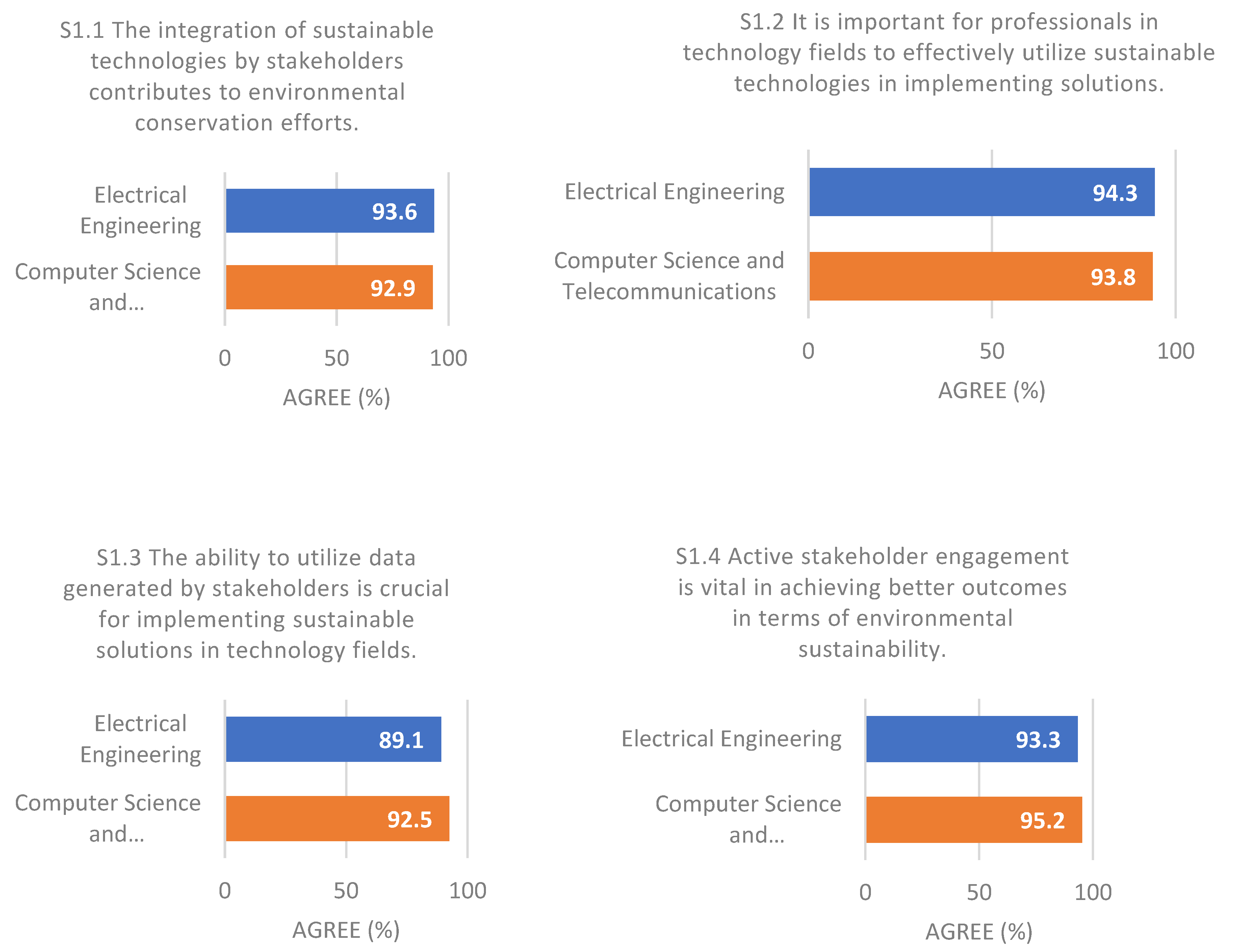
Figure 2.
Readiness to Adopt Sustainable Practices (statistically significant differences in S2.2 were determined by chi-square test).
Figure 2.
Readiness to Adopt Sustainable Practices (statistically significant differences in S2.2 were determined by chi-square test).
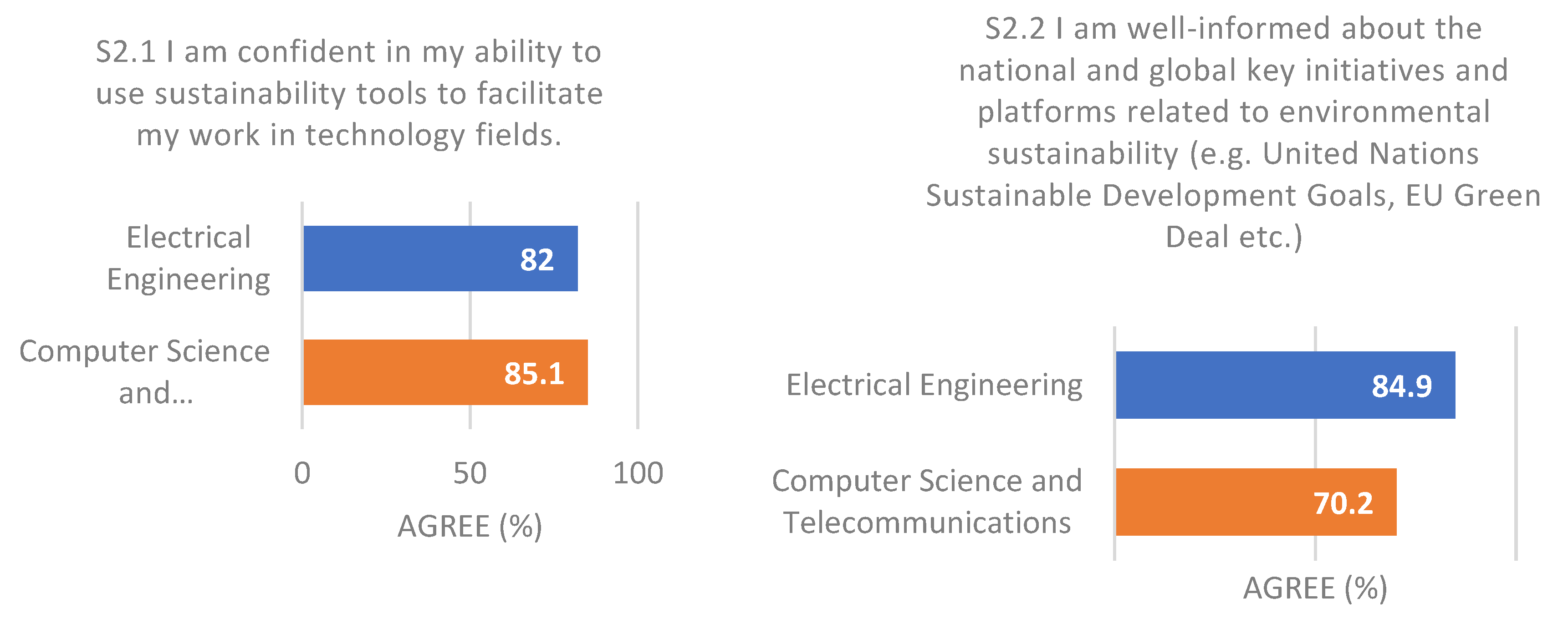
Figure 3.
Integration of Sustainability into the Work Environment.
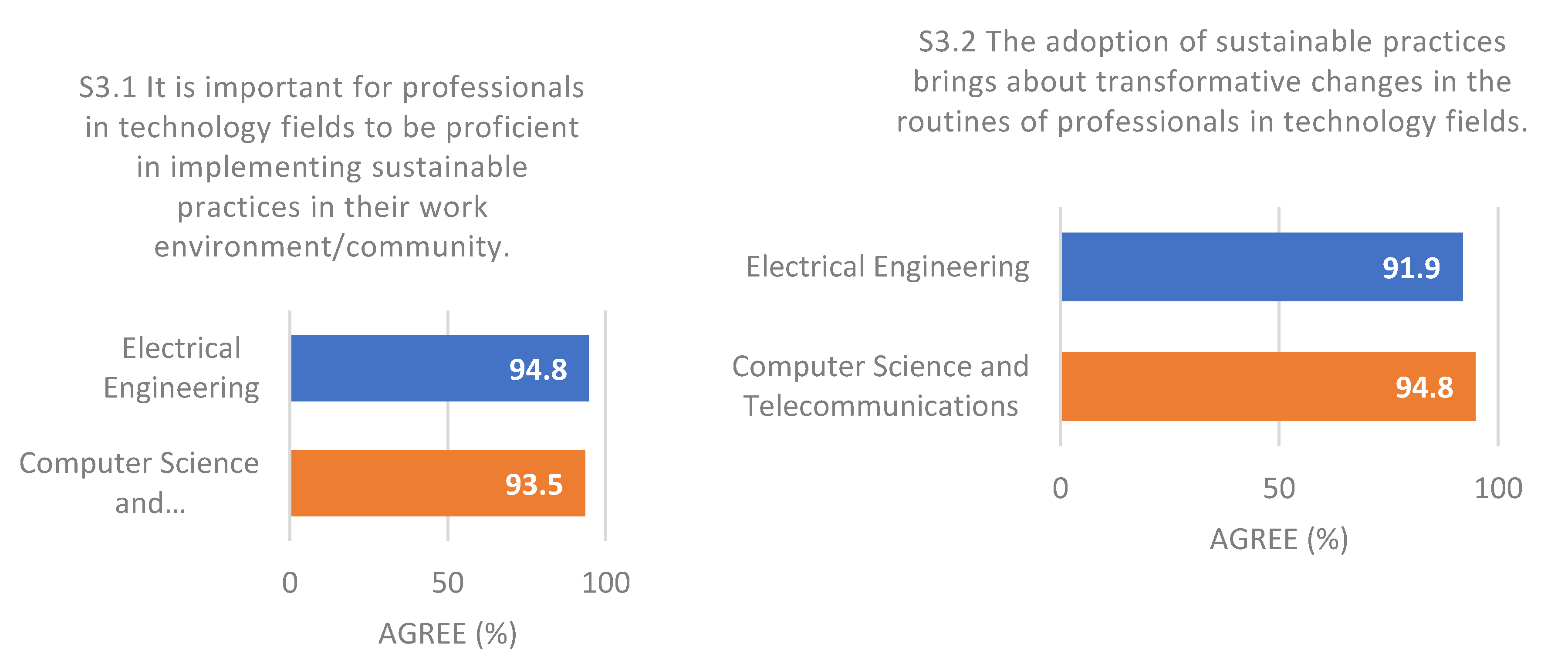
Figure 4.
The role of stakeholders in sustainability initiatives (statistically significant differences in S4.1 & S4.2 were determined by chi-square test).
Figure 4.
The role of stakeholders in sustainability initiatives (statistically significant differences in S4.1 & S4.2 were determined by chi-square test).
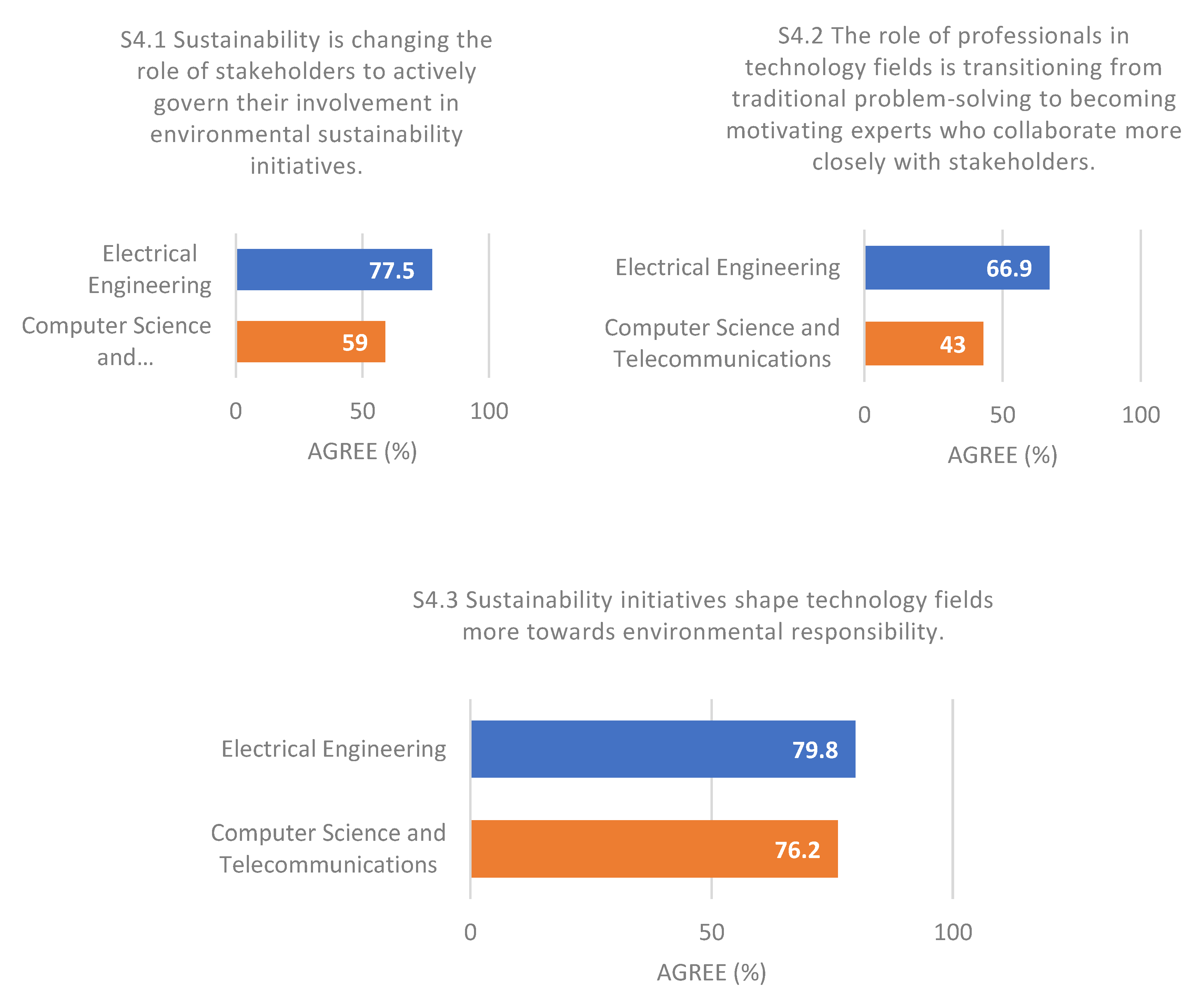
Figure 5.
Cultivating a Culture of Innovation and Experimentation (statistically significant differences in S5.3 & S5.5 were determined by chi-square test).
Figure 5.
Cultivating a Culture of Innovation and Experimentation (statistically significant differences in S5.3 & S5.5 were determined by chi-square test).
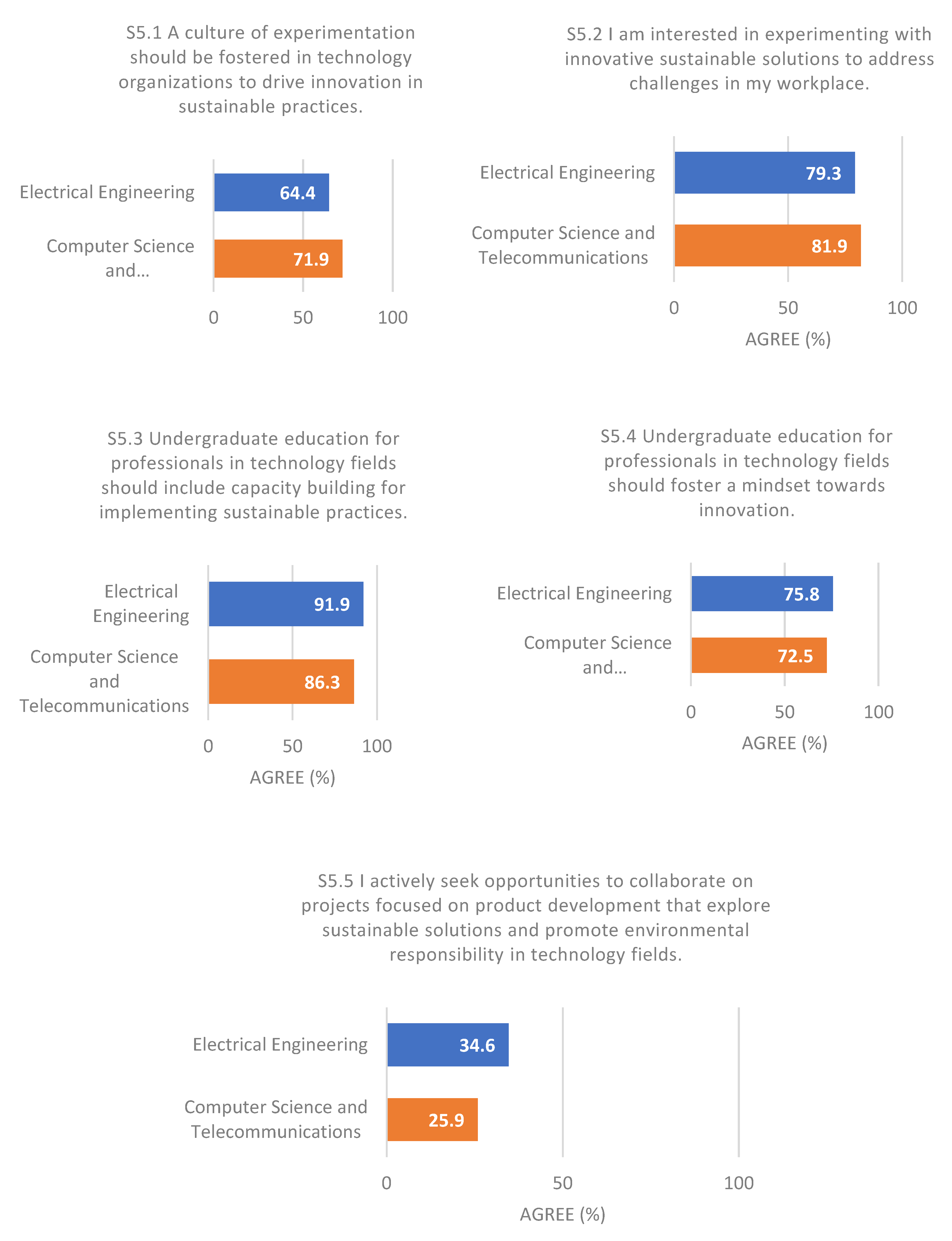

Table 1.
Statements regarding alumni perspectives on their proficiency in sustainable practices. The term 'Agree' indicates the percentage of respondents who either agreed or strongly agreed with each statement. The statements are arranged in descending order of agreement level, ranging from 'Strongly agree' to 'Strongly disagree'.
Table 1.
Statements regarding alumni perspectives on their proficiency in sustainable practices. The term 'Agree' indicates the percentage of respondents who either agreed or strongly agreed with each statement. The statements are arranged in descending order of agreement level, ranging from 'Strongly agree' to 'Strongly disagree'.
| # | Statement | Agree | Rank |
|---|---|---|---|
| S1.4 | Active stakeholder engagement is vital in achieving better outcomes in terms of environmental sustainability. | 94.3 | 1 |
| S3.1 | It is important for professionals in technology fields to be proficient in implementing sustainable practices in their work environment/community. | 94.2 | 2 |
| S1.2 | It is important for professionals in technology fields to effectively utilize sustainable technologies in implementing solutions. | 94.1 | 3 |
| S3.2 | The adoption of sustainable practices brings about transformative changes in the routines of professionals in technology fields. | 93.3 | 4 |
| S1.1 | The integration of sustainable technologies by stakeholders contributes to environmental conservation efforts. | 93.2 | 5 |
| S1.3 | The ability to utilize data generated by stakeholders is crucial for implementing sustainable solutions in technology fields. | 90.8 | 6 |
| S5.3 | Undergraduate education for professionals in technology fields should include capacity building for implementing sustainable practices. | 89.1 | 7 |
| S2.1 | I am confident in my ability to use sustainability tools to facilitate my work in technology fields. | 83.5 | 8 |
| S5.2 | I am interested in experimenting with innovative sustainable solutions to address challenges in my workplace. | 80.6 | 9 |
| S4.3 | Sustainability initiatives shape technology fields more towards environmental responsibility. | 78.0 | 10 |
| S2.2 | I am well-informed about the national and global key initiatives and platforms related to environmental sustainability (e.g. United Nations Sustainable Development Goals, EU Green Deal etc.) | 77.5 | 11 |
| S5.4 | Undergraduate education for professionals in technology fields should foster a mindset towards innovation. | 74.2 | 12 |
| S4.1 | Sustainability is changing the role of stakeholders to actively govern their involvement in environmental sustainability initiatives. | 68.3 | 13 |
| S5.1 | A culture of experimentation should be fostered in technology organizations to drive innovation in sustainable practices | 68.2 | 14 |
| S4.2 | The role of professionals in technology fields is transitioning from traditional problem-solving to becoming motivating experts who collaborate more closely with stakeholders. | 55.0 | 15 |
| S5.5 | I actively seek opportunities to collaborate on projects focused on product development that explore sustainable solutions and promote environmental responsibility in technology fields. | 30.2 | 16 |
Table 2.
Demographic Characteristics of the Respondents.
| Participant demographics | Computer Science and Telecommunications alumni (n=126) | Electrical Engineering alumni (n=81) | P-value |
|---|---|---|---|
| 1. Age | |||
| Age (years) mean ± SD | 25.3±2.1 | 25.9±2.8 | t-test 0.122 |
| 2. Gender | |||
| F | 43 | 20 | 0.151 |
| M | 83 | 61 | |
| 3. Education | |||
| Bachelor’s degree | 126 | 81 | |
| Postgraduate degree | 24 | 12 | |
| Doctoral degree | 0 | 0 | |
| 4. Work experience | |||
| Work experience (years), mean ± SD | 0.7 ± 1.1 | 0.6 ± 1.4 | t-test <0.001 |
| Work experience in technology sector (years), mean ± SD | 0.7 ± 1.3 | 1.2 ± 1.3 | t-test <0.001 |
Disclaimer/Publisher’s Note: The statements, opinions and data contained in all publications are solely those of the individual author(s) and contributor(s) and not of MDPI and/or the editor(s). MDPI and/or the editor(s) disclaim responsibility for any injury to people or property resulting from any ideas, methods, instructions or products referred to in the content. |
© 2024 by the authors. Licensee MDPI, Basel, Switzerland. This article is an open access article distributed under the terms and conditions of the Creative Commons Attribution (CC BY) license (http://creativecommons.org/licenses/by/4.0/).
Copyright: This open access article is published under a Creative Commons CC BY 4.0 license, which permit the free download, distribution, and reuse, provided that the author and preprint are cited in any reuse.