

Submitted:
28 May 2024
Posted:
29 May 2024
You are already at the latest version
Abstract
The population growth of major cities in Iran and the lack of attention to scientific and managerial principles in urban planning in recent years have created numerous issues for citizens and urban planners, pushing cities towards instability. Tehran, as the capital of Iran, is among the cities facing numerous urban challenges. It appears that these factors will present serious challenges to the city's future sustainability. Many articles have assessed and analyzed indicators of sustainability in cities, but less attention has been paid to indicators of instability and real issues that pose challenges to urban planning sustainability. In this regard, the present study aims to identify the challenges of sustainability in urban planning by re-evaluating indicators related to urban sustainability and assessing indicators of instability in urban planning from a realistic perspective. The results indicate that the major indicators of urban planning instability have been summarized into three economic, social, and environmental indices. In the economic index, the unstable components in urban planning include uncertainty in economic policies, housing prices, non-standard housing, income, employment, unemployment, cost of living, and female-headed households. In the environmental index, the unstable components in urban planning consist of climate change, heat islands, floods, transportation management, energy security, noise and air pollution, urban traffic, water quality and quantity, waste disposal quality, urban green infrastructure, environment as an aesthetic issue, and changing the approach to the environment with changes in individuals. In the social index, the unstable components in urban planning encompass social interaction, access to facilities and services, access to social harms services, sense of identity and belonging, neighborly relations, social segregation, public participation in city affairs, and security and welfare.
Keywords:
Challenges of sustainability
; sustainable development
; urban planning
; innovation
; Tehran metropolis
1. Introduction
Since 2007, urban centers have transformed into predominant human habitats. For the first time in human history, more than half of the world's population now resides in urban centers and is even increasing at a faster pace (United Nations, 2014; Niemets et al., 2021). The urban population is currently facing chronic and emerging urban challenges (UN Habitat, 2022). Modern cities are dynamically facing numerous challenges, including sustainability (Tekouabou et al., 2022). The net population growth is currently almost entirely occurring in urban areas, and by 2050, urban environments must accommodate an additional 2.6 billion people, including 86% from the developed world and 64% from the developing world (Girma et al., 2019; Razia & Ah., 2023; United Nations, 2019; Zheng et al., 2023). The widespread adoption of sustainable cities is one of the key global commitments for sustainable urban development (Serbanica & Constantin, 2023). The expansion of cities on one hand signifies the general socio-economic development globally, while on the other hand, it brings along numerous economic, social, and environmental challenges (Niemets et al., 2021). Urbanization is the process of urban growth and the increase in the number of urban areas, populations, and related activities. Alongside its numerous advantages, urbanization entails several drawbacks, including the conversion of agricultural lands into built-up areas and the proliferation of land speculation (Melo, 2018; Woldegerima et al., 2017). Additionally, ecological impacts such as loss of biodiversity and disruptions in hydrological processes occur (Benti et al., 2022; Mohamed & Worku, 2021). Furthermore, transportation issues have become significant, severely affecting the physical and mental health of urban populations due to air and noise pollution, accidents, congestion, and traffic (Heidari et al., 2023; Chakhtoura & Pojani, 2016). The interaction between society and the environment is rapidly deteriorating due to increasing pressure from human activities since the mid-twentieth century. This has led to the emergence of global human problems with social, environmental, and economic dimensions (Niemets et al., 2021; Razia & Ah., 2023). Metropolitan areas are dynamically confronted with various challenges, including digitalization, sustainability, resilience, economic development, and more. Urban planners and designers must develop urban frameworks to address these challenges effectively. To overcome these challenges, current urban research is striving to integrate increasing complexity with the aim of enabling processes that are integrated within urban environments and contribute to their dynamics (Tekouabou et al., 2022). Urban sustainability studies emphasize practical issues such as urban planning (Serbanica & Constantin, 2023). In this regard, cities play an increasingly significant role in both the emergence and resolution of global issues and instabilities within urban planning (Niemets et al., 2021). Planning for a better urban future requires a comprehensive new perspective to understand all challenges (Serbanica & Constantin, 2023; Elmqvist et al., 2019). The challenges of instability regarding environmental quality, social life, and global economy are among the concerns of urban planners (Heidari et al., 2023; Zhou, 2012). Urban planners should employ concepts of integrated urban and regional planning for the effectiveness of urban areas and their management by different regions (Benti et al., 2022; Serbanica & Constantin, 2023). Given that the global community, and particularly cities, are facing numerous economic, environmental, and social threats in the late twenty first century, planners have combined their efforts to study and overcome these challenges (Niemets et al., 2021). The Brundtland Report (1987) serves as the basis for global community action to find ways to control the negative consequences of meeting the needs of the present generation while preserving the interests and ability to meet the needs of future generations (Sustainable Development Goals, 2021), as emphasized by Heidari et al. (2023).
The current research is necessary because the consequences of instability in urban planning in Tehran are significant, to the extent that it will engulf the entire urban space and lead to more problems in the city. Furthermore, it may pose challenges to the sustainable development of the country. Given the characteristics outlined for the city under study, the importance of this issue becomes more evident. Tehran, the capital of Iran, is experiencing rapid urban growth as a developing city. In just a few decades, Tehran has transformed into one of the largest urban agglomerations in the Middle East. Currently, Tehran is facing various social, economic, and environmental challenges. Therefore, the aim of the current research is to first identify the challenges of sustainability in urban planning using indicators of unsustainability in Tehran. Subsequently, the goal is to evaluate the role of each of these instability indicators in urban planning in Tehran.
2. Theoretical Foundations
Since the mid-twentieth century, concurrent with the acceleration of industrial development in various societies, the world population has also experienced significant growth (Heidari et al., 2023; Niemets et al., 2021). The twenty first century presents significant challenges for humanity, including rapid urbanization (Bagyaraj et al., 2023), population growth, as well as socio-economic, physical, and environmental stressors (Hatami et al., 2023). Given that the condition and appearance of the Earth are rapidly changing, urbanization processes are increasingly impacting on a global scale (Niemets et al., 2021). Unplanned urbanization without proper landscape and urban planning destroys natural and human landscapes (Benti et al., 2021), It potentially reduces ecosystem services (Kindu et al., 2018), It reduces urban green spaces and natural vegetation cover (Girma et al., 2019), It increases the formation of heat islands (Arsiso et al., 2018), It strengthens surface runoff (Erena et al., 2018), It increases pollution (Mohamed & Worku, 2021), It leads to climate change and natural hazard threats (Serbanica & Constantin, 2023), as well as increases traffic congestion and accidents in transportation (Heidari et al., 2023). Monitoring changes in urban extent, as well as urban infrastructure, inner-city areas, and socio-economic sectors, is vital given the urgent need for sustainable development in cities and human settlements (Zheng et al., 2023). These challenges necessitate various urban planning approaches such as integrated urban planning methods and a better understanding of planning (Kindu et al., 2018; Benti et al., 2022). For formulating such plans, we need the evolution of spatial planning, which precisely starts from densely populated areas such as the Greater Tehran metropolitan area and ultimately requires detailed planning for all urban aspects (Ziari & Mahdnejad, 2021). Planning, especially in providing housing and shelter facilities, has been based on political and military objectives. After 1979, the advancement of these objectives in new cities has not been based on scheduled timelines and is considered a functional challenge in urban planning (Ziari, 2006).
Today, sustainable development is a recognized term that signifies the need for integrating economic, social, and environmental aspects of development and policy (Fattah & Morshed, 2021). Environmental sustainability preserves natural resources, minimizes pollutants, and mitigates the effects of climate change on ecosystems. Social sustainability considers health and safety considerations, as well as access to and distribution of benefits and costs among social groups. Economic sustainability, on the other hand, focuses on economic growth, cost-effectiveness, and financial sustainability (Santos & Ribeiro, 2013; Heidari et al., 2023). However, after the revolution, fewer cities have been planned (Ziari & Gharakhlou, 2009). Urban challenges related to urban planners and their work environment include self-development, unclear urban boundaries, inappropriate landscape alignment, weak stakeholder interaction, and a focus on physical planning (Benti et al., 2021). Cities are currently the champions of an unprecedented crisis that entangles the environment, economy, and society. In response to the threats posed by urban planning, what now pertains to the protection of these areas are environmental, economic, and social policies (El M'hadi & Cherkaoui, 2023; Longstreth, 2011). With the expansion of cities and population growth, especially in developing areas, ensuring social sustainability in urban areas has become more essential (Razia & Ah., 2023). Social sustainability is a critical dimension that addresses issues such as poverty, equality, justice, and human settlements (United Nations, 1987). While urban areas have undergone fundamental transformations worldwide in recent decades, bottom-up urban planning tools, instead of improving their negative consequences, have been significantly compromised. For instance, rural-urban migration reflects one of the spatial forces that profoundly alters the urban form resulting from industrialization and capital accumulation, thereby exacerbating social inequality and instability (Habibi et al., 2022). By focusing on these social issues, we can create a better quality of life for everyone and build a truly widespread sustainable future. However, due to rapid urban growth, implementing social sustainability initiatives for cities in developing countries has become challenging (Razia & Ah., 2023). Among the broader challenges of sustainability, unsustainable urban metabolism patterns or increasing social inequalities such as urban poverty, social segregation, and lack of social interaction contribute to the lack of sustainability in urban planning (Serbanica & Constantin, 2023; Razia & Ah., 2023). It is worth mentioning that from a social perspective, human well-being cannot be sustained without a secure environment, a healthy ecosystem, and a thriving economy that meets the basic needs of societies, both at the national and global levels (Talan et al., 2020). Sustainable development is based on the three dimensions of environmental, economic, and social parameters. In this regard, environmental parameters and then economic ones have become the focus of planners and policymakers. The social dimension of sustainable development, due to its intangible nature, has been neglected. Therefore, conducting research in this area (social sustainability) is essential (Farhadikhah & Ziari, 2021).
Rapid urbanization and economic progress have accelerated movement in developing cities worldwide (Fattah & Morshed, 2021). Innovation is essential for economic growth and development, transformed into a political decision-making and institutional design reference (Fastenrath et al., 2023). Higher overall income rates and employment instability, especially among low-educated families, those with young children, and those who do not own homes, can pose more serious challenges for urban planning (Morrissey et al., 2020). Government efficiency and policy uncertainty in economic policies can weaken the economic development of a city, especially in a transitioning economy (Cheng et al., 2023).
Urbanization manifests in a global and comprehensive dimension (Niemets et al., 2021). For large cities experiencing rapid urbanization, creating livable urban environments has become a challenge for urban planners and decision-makers, especially in the context of current climate change (Zhang et al., 2023). One of the forefront challenges for cities, especially those in developing countries, is addressing the instability of environmental ecosystems. According to Chapin's definition, a sustainable or unsustainable urban environment is understood as the link between living and non-living communities (Chapin et al., 2002). In recent years, there has been an increasing interest in urban environmental sustainability, leading to its central importance in contemporary international discussions in response to global climate change and rapid urbanization (El M'hadi & Cherkaoui., 2023). However, transformative processes in urban and peri-urban areas, excessive population growth, and industrial production often create negative and uncontrolled impacts on the environment (Niemets et al., 2021). The high population density resulting from urbanization has affected the livability of cities (Zhang et al., 2023). The increase in fossil fuel consumption has led to an increase in greenhouse gas emissions, ultimately resulting in climate change. These changes have led to temperature rises and alterations in the heat island effect of cities. These changes are more significant for Tehran, which has less geographical purification. Currently, tackling this phenomenon has become one of the most important challenges in urban planning (Boostani & Sadeghiha., 2022). Planned green urban infrastructure should be considered as an integral part of the city, as it is essential for the sustainable performance of the city. Planning green urban infrastructure should be based on specific principles to address various sustainability-related challenges. However, research on green urban infrastructure planning is often conducted in highly developed countries, while relatively limited information exists regarding the integration of principles into current green space planning practices in developing countries (Girma et al., 2019). The trend towards increasing demand for travel and goods transportation, despite the benefits of transportation development, has raised serious concerns in the global community due to its negative consequences such as greenhouse gas emissions, air pollution, increased energy consumption, traffic congestion, and transportation accidents (Heidari et al., 2023; Janic, 2006). The use of vehicles with low passenger capacity, excessive travel production, inadequate public transportation options, narrow road widths, and the reduction of green areas are mainly responsible for instability (Fattah & Morshed, 2021). Iran is one of fifteen countries with a very high share of greenhouse gas emissions (Boostani & Sadeghiha, 2022). The city of Tehran, like some other major cities, faces challenges of air and noise pollution, congestion, heavy traffic, and high rates of accidents, which are among the unsustainability challenges of urban planning in Tehran (Heidari et al., 2023; Janic, 2006). Sustainable urban planning aims to maximize energy and resource efficiency, establish a zero-waste system, promote the production and use of renewable energy, advocate for carbon neutrality, minimize environmental pollution, and promote human-centered activities and environments (Niemets et al., 2021). Developing countries, including Iran, often face challenges of unsustainable regional development. After the Islamic Revolution in Iran, despite the establishment of institutional frameworks and the preparation of regional development plans, most researchers and experts have agreed on the occurrence of unsustainable regional development and undesirable management systems in regional development plans. (Ziari & Mohammadi., 2016).
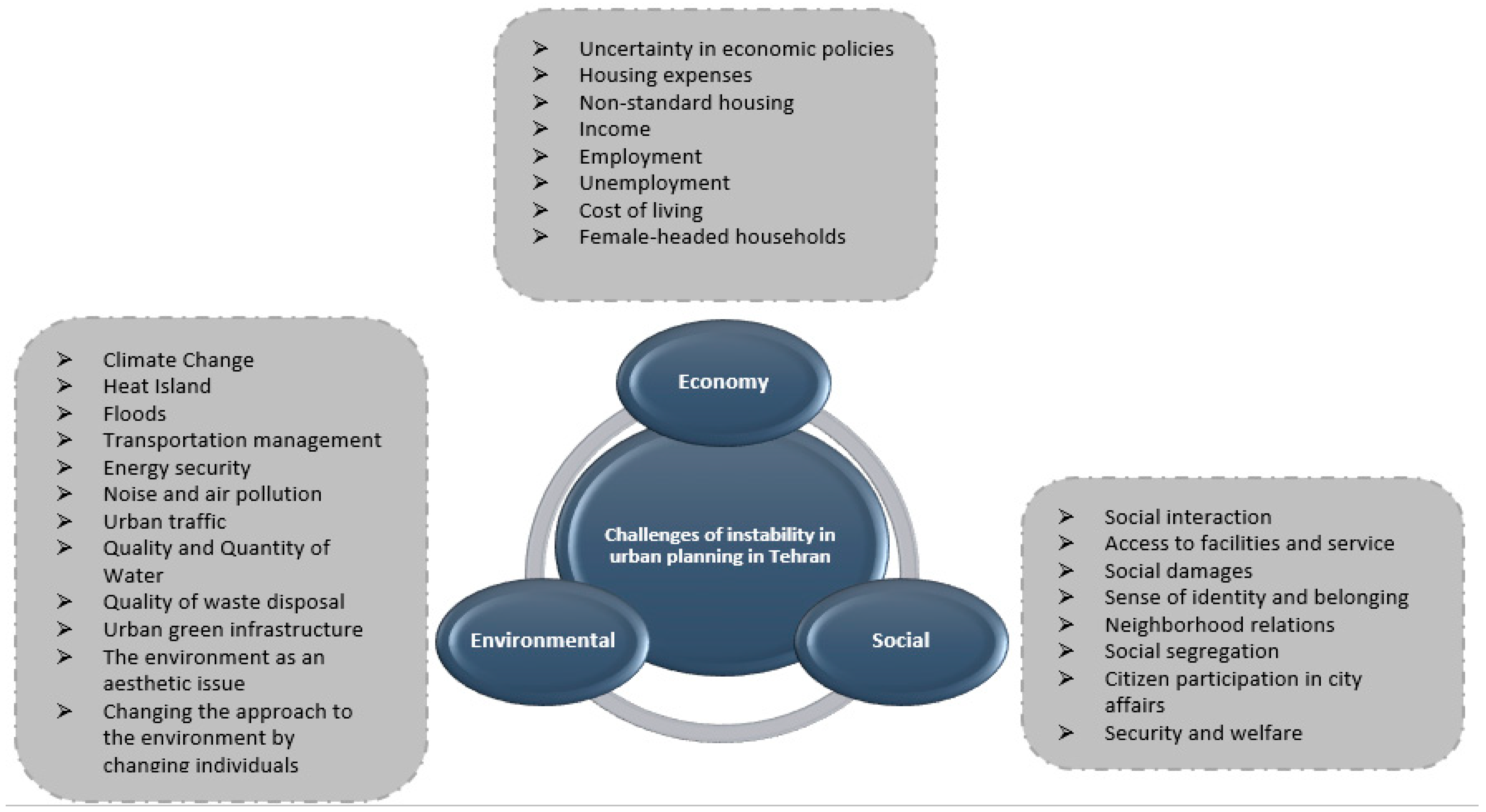
The challenges of sustainability in urban planning have been investigated by various researchers across different indicators. Morrissey et al. (2020) have identified income, public assistance, and employment as indicators of economic instability, et al. (2022) have referred to other indicators of economic instability, including ineffective policies and lack of capacity for collecting and storing big data. Cheng et al. (2023) have examined the indicators of economic instability in China and the results have shown that government efficiency and economic system uncertainty can be among the main reasons for instability. Fattah and Morshed (2021), in developing countries, have found that indicators of environmental instability include transportation systems, pollution, traffic congestion, narrow roads, reduction of ecological areas, and inadequacy of public transportation options. Boostani and Sadeghiha (2022) investigated environmental sustainability challenges in Iran and found that climate change, green infrastructure, promotion of participation, and greenhouse gases can have significant impacts on the instability of urban planning. Zhang et al. (2023) conducted research on environmental planning sustainability challenges in Shenzhen, revealing that flooding, pollution, and public facilities are among the environmental sustainability challenges. Benti et al. (2022) investigated social sustainability indicators in the study area of Addis Ababa City Administration and Oromia Regional State, Ethiopia, and found that land tenure insecurity and civic participation can significantly impact social instability, posing challenges in various other aspects as well. Razia and Ah (2023) studied the developing city of Dehka and found that social vulnerabilities, lack of political stability, and prolonged delays in the approval process of planning can contribute to the instability of social planning. Serbanica and Constantin (2023) introduce safety and urban cohesion, interaction, urban inclusivity, and flexibility as other significant factors in the realm of social planning instability. Figure 1 presents the conceptual theoretical model of the research.
3. Methodology
The aim of this research is to identify the challenges of urban planning sustainability, specifically in the megacity of Tehran. The research method of this study is descriptive-analytical in nature, with an applied purpose. It follows a logical framework within the scientific research process and is based on analysis of scientific resources and documents. In this research, extensive studies were conducted on credible sources to identify the challenges of urban planning sustainability in Tehran. For gathering information for this research, a library-based approach and studying the content of documents have been utilized. As a result, the identification of challenges has been carried out in three dimensions: economic, environmental, and social, each of which comprises components that have significant impacts on the sustainability challenges in urban planning in Tehran.
4. The Scope of the Research
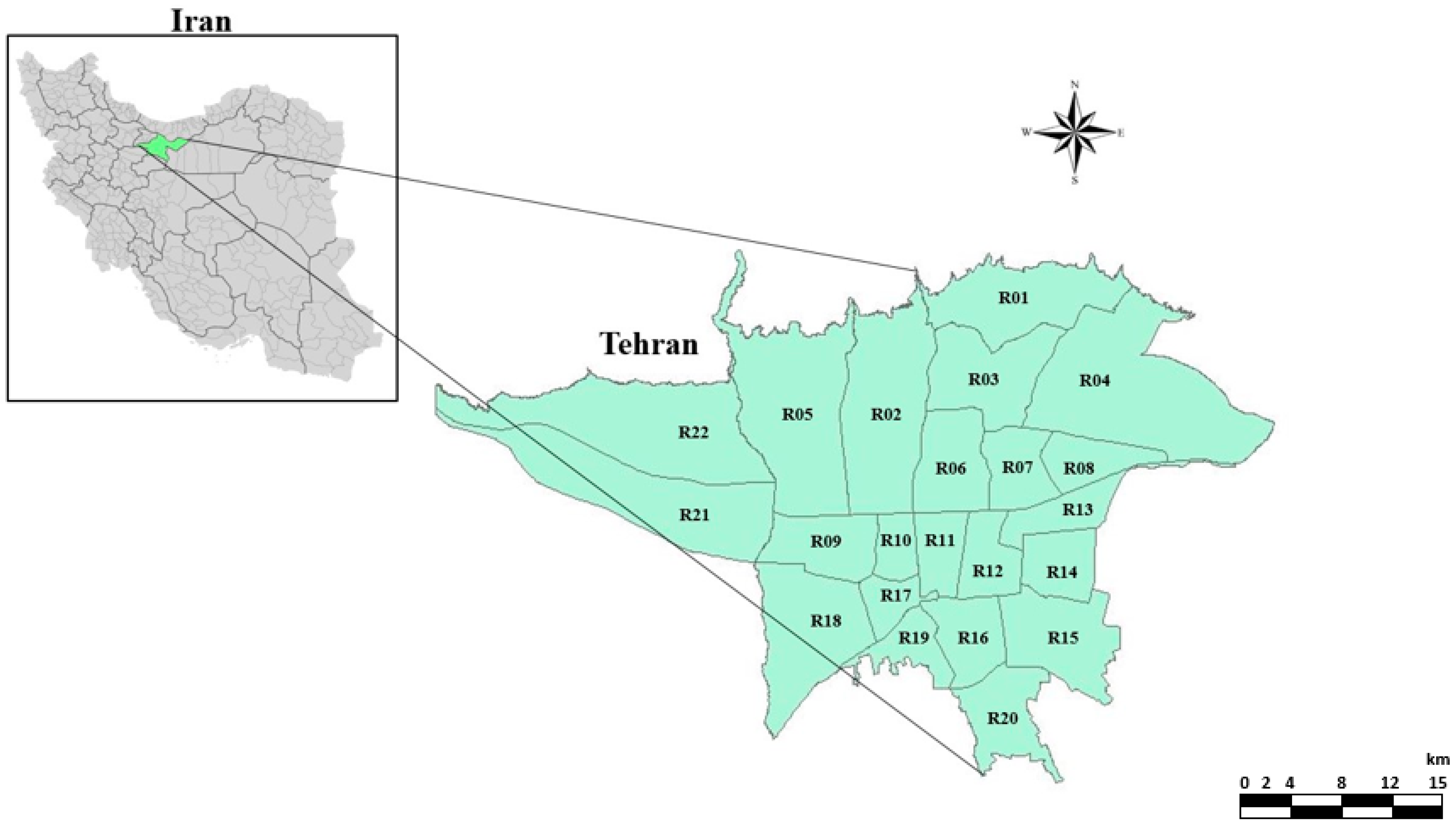
The scope of the research includes the city of Tehran. Tehran, as the capital of Iran and Tehran Province, had an estimated population of approximately 9.43 million people in the city and 16 million people in the Greater Tehran metropolitan area as of the year 2022. In terms of size, Tehran ranks thirty-fourth globally (World Population Review, 2019). The Greater Tehran metropolitan area is the second most populous metropolitan area in the Middle East. It is divided into 22 municipal districts, each with its own administrative center. The current elevation of Tehran from sea level ranges from approximately 900 to 1800 meters. This city does not meet desirable standards in terms of quality of life and is, in other words, faced with challenges in sustainability of urban planning. The unique political, economic, cultural, and geographical position of Tehran has led many people from across the country to come to this city for various purposes such as work, education, healthcare, administrative tasks, buying or selling goods, recreation, and more, gradually settling in it. With approximately 20% of Iran's population, 2 million automobiles, 30,000 industrial units, 134 industrial zones, contributing to 40% of the national gross domestic product, and covering an area of 730 square kilometers, Tehran has unfortunately not provided favorable conditions for its residents. Regardless of critical issues such as water supply, sewage disposal, and transportation, it is now recognized as one of the most polluted major cities in the world.
Figure 2.
Research Area Location.
5. Discussion and Findings
The three main axes for sustainable urban planning include economic, environmental, and social indicators. Therefore, the rapid increase in sustainability challenges in the city is influenced by a set of economic, environmental, and social indicators. Each of these factors somehow contributes to accelerating and exacerbating the challenges of sustainability in urban planning in Tehran. According to studies conducted, the rapid urbanization in the 21st century has led to an increase in sustainability challenges. Now, there are even more challenges involved in urban planning. If these challenges are not addressed in urban planning initiatives, we will witness further instability in all aspects of the city.
Based on the above discussions, it has been clarified that unsustainability indices are directly related to urban planning, which is essentially executed by urban planners. Urban planners are responsible for the execution of projects and initiatives, and their performance directly impacts the sustainability or unsustainability of a city. The indices identified for examining the challenges of sustainability in urban planning in Tehran will be briefly outlined below.
6. Challenges of Sustainable Urban Planning in the Tehran Metropolis
- ➢
- Economic challenges:
In recent years, many government officials worldwide have left their positions without being replaced in another position. However, unfortunately, this has not happened in Iran and Tehran, where key positions have been retained by the same managers over the past four decades, with little attention paid to this phenomenon. Vacant government offices create three types of uncertainty: when the new officials will come to power, who those new officials will be, and what the future government, especially in terms of economic policy, will do. As a result, while both formal financial circulation and vacant government offices contribute to uncertainty in economic policy, empty government offices may create a higher level of uncertainty. In addition to creating uncertainty in economic policies, empty government offices may reduce government efficiency, particularly decision-making efficiency. The vacancy of government offices in urban areas, coupled with increased economic policy uncertainty and reduced government efficiency, diminishes economic development in the city. This, in turn, initiates challenges of instability in economic programs. The impact of economic challenges on a city's vacant spaces varies depending on the level of advertising pressure. In cities with higher advertising pressure and less developed infrastructure, the effect is more pronounced, while in cities with less marketing or weaker business environments, the impact is stronger (Cheng et al., 2023). Household economic instability has increased over the past few decades, particularly during economic downturns such as the Great Recession (2007-2009). Following the Great Recession, many children lived in families experiencing high levels of economic instability, where income and employment instability were defined to include. For some families, instability was almost a "normative" event. (Moffitt & Zhang et al., 2018). The urban population distribution in modern cities indicates that most urban populations reside in central and provincial areas, where they are expected to face challenges related to non-standard housing. (Habibi et al., 2022). The overall income rate and employment instability, especially among low-educated families, those with young children, and those who were not homeowners, have been high. Economic instability, especially declining employment, has been accompanied by an increase in family problems. These trends, especially among low-income and low-literacy workers and their families, as well as single-parent families, have serious consequences for the financial health of households. The term instability may be used to describe any positive or negative change in an individual's or family's life, and its operational definition may vary based on the organization or availability of data, including what income source is measured (individual or household income, earned or unearned income); the specific terminology used (instability versus instability); the frequency, predictability, and timing of changes (annual, weekly, monthly); how the change is measured (standard deviation, percentage change coefficient, or percentage change in income); and how much or what type of change is substantial enough to be considered a witness to instability (Morrissey et al., 2020). Poverty, class division, unemployment, inflation, and government budget deficits are indicative of the negative consequences of ineffective government policies (Habibi et al., 2022).
With increasing research on economic challenges, there is a growing diversity in how instability is conceptualized and measured. The results underscore the unsustainable benefits of public assistance programs and suggest that safety net programs should consider economic instability when designing programs and benefits. Utilizing adaptive measures can reveal fundamental trends and help identify groups particularly affected by economic instability (Morrissey et al., 2020). Planners and business leaders are regularly reminded of the extent to which innovation is essential for economic growth and development (Fastenrath et al., 2023).
The vacancies in government offices, and to some extent their inefficiency, not only create uncertainty in economic policies but also reduce the efficiency of the government, especially in decision-making (Habibi et al., 2022). With the increase in uncertainty in economic policies and the decrease in government efficiency, the economic development of Tehran city has declined, leading to the onset of instability challenges in economic programs (Habibi et al., 2022). The presence of covert networks of influence within municipal administrations, land grabbing, and land use changes in commissions are among the most significant destabilizing issues affecting the economic programs of Tehran city. This results in sudden increases in land prices, particularly in the housing sector. The lack of proper planning at both macro and micro scales leads to arbitrary decision-making, allowing for easy changes in land use and its status. This ultimately drives the urban economy towards instability. The distribution of the urban population in Tehran indicates that the majority reside in central areas, where they are expected to face challenges related to non-standard housing. Additionally, rural-to-urban migration patterns contribute to the population distribution on the outskirts of Tehran, further exacerbating issues related to non-standard housing. These circumstances pose serious challenges to the economic planning of Tehran. Given that the economy of the Iranian capital, Tehran, relies on service provision, any changes in the number of service recipients and the way services are delivered can impact the economy of Tehran. The lack of proper planning for the development and provision of adequate services can be a significant factor contributing to economic instability in urban planning. Ultimately, this can affect the quality of life for citizens. Low-income levels, the existence of precarious and unstable employment opportunities, unemployment, and the high cost of urban living are among the economic issues related to urban economies. One of the sustainable challenges observed in today's urban planning in Tehran is the issue of female-headed households. The number of such households in Tehran is increasing daily, and it is worth mentioning that some of them have migrated from nearby cities and villages to Tehran. They require proper management to prevent normative problems.
- ➢
- Environmental challenges:
The lack of interaction between humans and the environment leads to widespread environmental problems and associated challenges. (Ziari & Mahmood., 2022). For megacities experiencing rapid urbanization, creating sustainable urban environments has become a challenge for urban planning and decision-makers, especially in the context of current climate change. The impact of climate change on urban instability has become an important issue, necessitating the inclusion of relevant indicators in assessing instability in vulnerable areas (Zhang et al., 2023; El M'hadi & Cherkaoui, 2023). Climate change is a phenomenon that has always been a concerning topic worldwide, subject to discussion and analysis (Boostani & Sadeghiha, 2022). Extreme weather events resulting from climate change and urban disasters pose a threat to the sustainability of cities on a global scale. Urban disasters, as one of the consequences of climate change, are experienced by cities worldwide, leading to urban decay. It is worth mentioning that weather-related disasters such as urban heat island effects and flooding have detrimental impacts on urban ecosystems and human lifestyles, ultimately affecting urban sustainability. Therefore, confirming the influence of climate change on urban planning instability is crucial (Shi et al., 2022). The lack of supportive policies by experts and urban planners regarding the issue of flooding resulting from heavy rainfall is among the challenges of urban planning sustainability. In recent years, especially during the summer season, water shortages have become an undeniable issue affecting public in Tehran. However, experts and urban planners have pointed out the phased objectives of local governments in controlling flooding when discussing how to address floods. There have always been plans to address flood-prone areas, and in fact, the number of these areas has decreased each year on the government's agenda. However, it seems that treating symptoms without addressing the root cause may not be effective. These experts and urban planners reflect on past progress in water management and emphasize the need for advancement in addressing waterlogging beyond simplistic policies for phased control of specific waterlogging areas (Zhang et al., 2023). With the development of transportation, its negative consequences including greenhouse gas emissions, air pollution, increased energy consumption, traffic congestion, and transportation accidents have raised serious concerns in the global community (Heidari et al., 2023). Transportation has always been one of the essential needs in human societies. However, its expansion in recent years has been met with fundamental challenges in planning. Transportation accounts for approximately 25% of global carbon dioxide emissions (Singh et al., 2020). The use of vehicles with lower passenger capacity, excessive travel production, insufficient public transportation options, narrow road widths, and the reduction of productive ecological areas are mainly responsible for instability (Fattah & Morshed, 2021). In transportation, energy consumption, carbon dioxide emissions, and other pollutants are increasing more rapidly than any other sector (Abdel Wahed Ahmed & Abd El Monem, 2020; Niemets et al., 2021). Urban planners have realized that by utilizing green infrastructure and promoting collaboration and participation, they can reduce undesirable urban environmental impacts and move towards a low-carbon city (Boostani & Sadeghiha, 2022). Existing green spaces provide single function services and integrating them with grey infrastructure is limited. Issues related to connecting green spaces, such as green corridors and greenways, are not well recognized in planning methodologies. Lack of awareness, financial constraints, inadequate professional knowledge, and poor public cooperation and participation are the most important factors hindering the integration of green infrastructure planning principles in urban development (Girma et al., 2019). The significant entry of polluting companies and factories noticeably impacts the instability of urban plans (Niemets et al., 2021), affecting a considerable portion of residential communities. It is worth mentioning that economic activities can play the most significant role in depleting environmental resources and ultimately posing challenges (Ziari & Mahmood, 2022). Residential areas intermingled with commercial and industrial enterprises exacerbate conflicts. Almost all urban planners and experts in the early years were influenced by pollution control. However, with the relocation of heavily polluting industries, organizing the remaining polluting companies has become a significant challenge in environmental management. The extensive geographical scope, difficulty in tracking resources, time-consuming and resource-intensive inspection methods are prominent issues in enforcing environmental laws (Zhang et al., 2023). The physical and mental health of the urban population is severely impacted by air pollution, noise pollution, accidents, congestion, and traffic (Heidari et al., 2023). Attention to the environment, particularly regarding water and energy consumption, calls for new models for urban living based on policies and actions aimed at improving sustainability towards the quality of modern urban life (Lucchi & Buda, 2022).
These challenges demand urban planners and managers to focus on enhancing urban ecological performance through innovation and industrial transformation that align with environmental needs. To enhance ecological performance while simultaneously adapting to the negative impacts of climate change, changes in production methods (such as industrial structure, energy structure) and lifestyle (such as transportation) need to be made to reduce emissions and conserve resources (Shi et al., 2022). Effective planning brings renewable resource consumption to a level of sustainable performance, reuses and recycles its components, reduces land use and noise production, and enables the safe and ecologically compatible fulfillment of individuals' and communities' basic needs, as well as equity within and between generations (Heidari et al., 2023). The adoption of environmentally friendly plans and tools has become an essential imperative known as the "21st-century issue." In the face of threats posed by modern urban planning, what now pertains to the protection of these cities is environmental policies (El M'hadi & Cherkaoui, 2023). For sustainable urban growth, a well-functioning transportation management system is crucial, and integrating transportation planning into urban planning helps urban designers implement policies for long-term sustainable urban development (Fattah & Morshed, 2021).
Tehran faces three types of climate hazards: climate hazards resulting from geography, climate hazards resulting from weather resistance, and climate change hazards resulting from global warming. The development of Tehran has led to the development of urban heat islands in the city. On some days of the year, pollution levels increase to the extent that human life becomes nearly impossible. Climate change has led to rising temperatures and changes in urban heat islands, which is more significant for Tehran, given its less ventilated geographical location. Such phenomena are due to the increase in greenhouse gases in the atmosphere. Tehran is a city whose topographical features have shielded it from local and regional winds. Tehran is one of the largest cities in the world, currently affected by air pollution, dust storms, and sudden storms. The annual average temperature is around 18 degrees Celsius, and with decreasing temperatures, the likelihood of pollution in the city increases. Furthermore, the temperature in the center of Tehran is higher than its outskirts, causing wind to blow from the outskirts towards the center of the heat island, leading to increased pollution in the center. Given its large population in a confined space, alongside unregulated industrial establishments, the city of Tehran is the most critical point in terms of environmental pollution, especially air pollution (Boostani & Sadeghiha, 2022). Annually, between 4000 to 5000 citizens in Tehran lose their lives directly due to suspended particulate matter in the air (Deputy of Transportation and Traffic of Tehran Municipality). Tehran is situated at higher altitudes above sea level, surrounded by the Alborz Mountain range. Temperature inversion is a phenomenon that occurs especially in winter and prevents pollutants from dispersing. Recent trends indicate that reducing air pollution will not be easy: significant population growth (partly due to migration from other cities), industrial development, urbanization, and increased fuel consumption are significant obstacles to achieving sustainable planning for clean air in Tehran (Naderi & Abbassian, 2017). Like some major cities, Tehran suffers from air and noise pollution, congestion, heavy traffic, and frequent accidents. Minimizing natural resource consumption and reducing energy consumption are top priorities for improvement (Heidari et al., 2023). It is likely that if institutions in urban top tiers were solely focused on planning at some point, now is the time for horizontal and vertical communication and collaboration to operate more efficiently (Boostani & Sadeghiha, 2022). Today, environmental issues constitute one of the most fundamental axes of instability in urban planning, stemming from the conflict and confrontation between the city and the natural environment. A proper understanding and perception of the current state of the urban environment play a crucial role in determining necessary changes in urban planning. In the Fifth Development Plan of Iran (2009-2015) and its extension, the Sixth Plan (2014-2023), the environment has occupied a completely peripheral position, receiving much less emphasis compared to economic and social issues. In the Seventh Five-Year Development Plan, which was approved by the parliament at the end of 2023, there is no section dedicated to the environment. Analysis of satellite images indicates that in the northern part of Tehran and the Lavasan to Gachsar axis, extending 70 kilometers in length and 80 kilometers in width, a 50% instability in environmental dimensions and indicators has been observed (Ziari, 2023). The water issue in Tehran has gradually become one of the most fundamental challenges facing the capital of Iran. Due to excessive extraction from underground water sources in southern Tehran, the city is confronted with land subsidence. If proper planning is not undertaken for reducing the population burden in Tehran and gradually modernizing the water and sewage system, the challenges in this sector will gradually escalate into unresolved problems in the decades ahead. For solving the problem of waste disposal in Tehran, the optimal location for collecting city waste should be an area with minimal soil permeability and not prone to predominant urban slopes and winds. Additionally, to preserve the environment and the city's beauty, the surrounding area should be fenced off. Finally, for better performance of urban environmental programs, public participation should be sought through citizen surveys. Given that today the importance of the environment is evident to everyone, in some major cities around the world and particularly in Iran, especially in its capital Tehran, the environment is merely addressed as an aesthetic issue. Even worse, with each change in environmental stewards, the approaches to environmental management also change. This lack of consistency leads to a lack of long-term and proper planning in this regard, exacerbating environmental challenges, including the numerous sinkholes in southern Tehran.
- ➢
- Social challenges:
With the expansion of cities and the increase in population in developing areas, ensuring the sustainability of social planning in urban areas has become more crucial. Social sustainability is a vital dimension that addresses issues such as poverty, equality, justice, and human habitats, and by focusing on these principles, we can mitigate the challenges of sustainability in planning. However, due to rapid urban growth, implementing sustainable social planning for cities in developing countries has become challenging (Razia & Ah., 2023). Urban social problems such as urban poverty, social segregation, and lack of social interaction contribute to the absence of social sustainability (Ali et al., 2019). Rural-urban migration reflects one of the spatial forces that drastically alter the urban form resulting from industrialization and capital accumulation, thus accelerating social inequality (Habibi et al., 2022). In 1961, the World Health Organization (WHO) introduced basic principles of human settlements and emphasized the importance of safety, health, comfort, and well-being in human habitation. These principles established fundamental criteria for assessing human settlements and served as the basis for sustainable and unsustainable urban planning assessment systems (Zhang et al., 2023). High population density resulting from urbanization can impact urban planning. Conflicts arising in residential areas, lack of public amenities, and security challenges hinder achieving sustainability in cities, particularly complicating urban planning efforts (Okeke et al., 2020). Human settlements should address basic human needs, including security, physiological well-being, a sense of identity and belonging, self-esteem, and self-actualization. Moreover, research findings have indicated a significant positive correlation between the overall quality of urban residential environments and urban social instability (Zhang et al., 2023). The quality and accessibility of these basic amenities not only assist in assessing community well-being but also ensure a more equitable representation of sustainable conditions for all urban residents (Sheikh & Van Ameijde, 2022).
Urban experts and city planners believe that the pace of urban planning and development has been faster than the construction speed of public service facilities, leading to an imbalance between supply and demand. As a result, areas lacking essential infrastructure such as schools, medical facilities, and transportation centers experience supply shortages. However, when it comes to addressing the solution, most urban experts and city planners expressed pessimism about short-term progress and believed that long-term planning is needed (Zhang et al., 2023). Urban planning always considers a comprehensive long-term vision with high technical superiority, which international experts consider a challenge for timely implementation. These challenges hinder the development of socially sustainable urban environments, creating obstacles for residents living in them. We must urgently and effectively address these issues. This requires proper planning, policymaking, and implementation of socially sustainable initiatives. Planning for a better urban future requires a comprehensive new vision to understand all challenges, including broader sustainability challenges, such as unsustainable urban metabolism patterns or increasing social inequalities. In this regard, we call for integrated solutions to address interconnected challenges while encouraging "holistic approaches" (Serbanica & Constantin, 2023).
This research examines the challenges of implementing social sustainability planning for cities in developing countries, focusing on Tehran as a representative city. Tehran, as a country experiencing rapid urbanization, has turned the instability of human settlements into a significant goal in Tehran's urban planning. It can boldly be stated that the social index is the most significant factor contributing to the rapid development of cities, alongside causing instability in urban planning. With the rapid urbanization growth, social dynamics in Tehran are undergoing significant transformations. These changes affect the city's network fabric and prompt efforts to improve and expand social relationships among residents. Moreover, there is a focus on creating facilities and amenities for the lower strata of society to foster their growth and development, as well as to ensure their utilization of social amenities. On one hand, this entails the establishment of necessary coordination for providing social services, and on the other hand, it involves the development and construction of residential centers in Tehran. The continuous increase in Tehran's urban population has led to various challenges, particularly for urban planners. One notable issue is the rise in crime rates, which results in social damages within the city of Tehran. Today, in Tehran, we are witnessing a decrease in urban solidarity and citizenship, with urbanization prevailing over citizenship. This trend has led to the emergence of various abnormalities and, at a higher level, the occurrence of urban crimes and disruption in the social order and functioning of urban plans. Increased social damages, reduced neighborly relations, social segregation, lack of identity and belonging, lack of security and well-being, and numerous similar issues all contribute to a form of instability in social planning. The geographical perspective of social justice in the city is synonymous with the distribution of various urban facilities and services and access to them. However, the unfair distribution of these resources in Tehran leads to social crises and complex spatial problems. In a large city like Tehran, mechanisms for citizen participation in urban planning are necessary. However, citizen participation in urban affairs is limited to only partial involvement in participatory projects with municipalities. One of the problems with the lack of citizen participation is the general public's lack of awareness of their rights and position in urban planning.
7. Conclusions
Tehran is, on one hand, a center of numerous challenges, and on the other hand, it serves as a locomotive to address these challenges through the implementation of sustainable and innovative planning strategies, aiming to move towards the tracks of sustainable development. This entails the essential coordination between social-economic development and environmental conditions. In recent decades, the metropolis of Tehran has experienced fundamental instability in various dimensions, including economic, social, and environmental aspects. The management and planning tools of the Tehran metropolis, which have been separated from bottom-up efforts, have been significantly impaired rather than improving the associated challenges. The challenges identified relate to the planners of the Tehran metropolis and their working environments, including self-development, unclear urban boundaries, inadequate landscape, weak stakeholder engagement, and a focus on physical planning. Therefore, to maintain the sustainability of urban planning, the implementation of a city's geographic information system, increasing active participation of local communities, and regulating and implementing active development options for urban areas, particularly the Tehran metropolis, are recommended.
Today, the increasing challenges of sustainability in urban planning, particularly in the Tehran metropolis, are considered one of the acute issues and problems. The population growth and rapid urbanization in the Tehran metropolitan region (within a radius of 100 kilometers) have led to economic, environmental, and social pressures, with these indicators themselves comprising many components of urban problems. Smart urban planning can play a crucial role in shaping the urban form and guiding the urban planning process towards sustainability. The concept of smart urban planning involves integrating all elements into the planning process to address the challenges of urban planning sustainability. In other words, to address the challenges of urban planning sustainability in the metropolitan area of Tehran, all urban plans must be economically viable, socially peaceful, and environmentally compatible. Urban planning measures for the Tehran metropolitan area are reaction to minimize the impacts of identified challenges. The outcome is that an assessment of the sustainability challenges in the urban planning of the Tehran metropolitan area has been conducted, considering several indicators. The research results indicate that overall, economic, environmental, and social indicators pose challenges in urban planning in the Tehran metropolitan area. In economic indicators, the components of unsustainability in planning include uncertainty in economic policies, housing prices, non-standard housing, income, employment, unemployment, cost of living, and female-headed households. In environmental indicators, the components of unsustainability in planning include climate change, heat islands, floods, transportation management, energy security, noise and air pollution, urban traffic, water quality and quantity, waste disposal quality, urban green infrastructure, environmental aesthetics, and the change in attitude towards the environment is tied to changes in individuals. In social indicators, the components of unsustainability in planning include social interaction, access to facilities and services, social vulnerabilities, sense of identity and belonging, neighborly relations, social segregation, public participation in urban affairs, and security and welfare.
References
- Abdel Wahed Ahmed, M. M., & Abd El Monem, N. (2020). Sustainable and green transportation for better quality of life: A case study of Greater Cairo, Egypt. HBRC Journal, 16(1), 17-37.
- Ali, H. H., Al-Betawi, Y. N., & Al-Qudah, H. S. (2019). Effects of urban form on social sustainability: A case study of Irbid, Jordan. International Journal of Urban Sustainable Development, 11(2), 203-222.
- -Arsiso, B. K., Tsidu, G. M., Stoffberg, G. H., & Tadesse, T. (2018). Influence of urbanization-driven land use/cover change on climate: The case of Addis Ababa, Ethiopia. Physics and Chemistry of the Earth, Parts A/B/C, 105, 212-223. [CrossRef]
- -Bagyaraj, M., Senapathi, V., Karthikeyan, S., Chung, S. Y., Khatibi, R., Nadiri, A. A., & Lajayer, B. A. (2023). A study of urban heat island effects using remote sensing and GIS techniques in Kancheepuram, Tamil Nadu, India. Urban Climate, 51, 101597. [CrossRef]
- -Benti, S., Terefe, H., & Callo-Concha, D. (2021). Challenges and prospects to sustain natural and working landscapes in urban areas in Ethiopia. Current Research in Environmental Sustainability, 3, 100071. [CrossRef]
- -Benti, S., Terefe, H., & Callo-Concha, D. (2022). Managing the challenges of competing interests of different regions in setting the boundaries of neighboring urban areas: The case of Addis Ababa city administration and Oromia regional state, Ethiopia. Heliyon, 8(10). [CrossRef]
- -Boostani, P., & Sadeghiha, M. (2022). Identification of critical uncertainties in Tehran to achieve the development of a low-carbon city using scenario writing method. Cleaner Engineering and Technology, 6, 100405. [CrossRef]
- -Chakhtoura, C., & Pojani, D. (2016). Indicator-based evaluation of sustainable transport plans: A framework for Paris and other large cities. Transport Policy, 50, 15-28. [CrossRef]
- -Chapin, F. S., Matson, P. A., Mooney, H. A., & Vitousek, P. M. (2002). Principles of Terrestrial Ecosystem Ecology.
- -Cheng, M., Yao, Y., Jin, J. Y., Nainar, K., & Meng, Y. (2023). Leadership vacuum and urban economic development: Evidence from a transition country. Journal of Comparative Economics. [CrossRef]
- -Deputy of Transportation and Traffic, Tehran Municipality.
- -El M'hadi, H., & Cherkaoui, A. (2023). Urban planning of business parks (BPs): Ecological challenges and commitment to sustainable development, the case study of the technopole ‘CasaNearshore’. Alexandria Engineering Journal, 67, 23-30.
- -Elmqvist, T., Andersson, E., Frantzeskaki, N., McPhearson, T., Olsson, P., Gaffney, O., ... & Folke, C. (2019). Sustainability and resilience for transformation in the urban century. Nature Sustainability, 2(4), 267-273. [CrossRef]
- -Erena, S. H., Worku, H., & De Paola, F. (2018). Flood hazard mapping using FLO-2D and local management strategies of Dire Dawa city, Ethiopia. Journal of Hydrology: Regional Studies, 19, 224-239. [CrossRef]
- -Farhadikhah, H., & Ziari, K. (2021). Social sustainability between old and new neighborhoods: A case study of Tehran neighborhoods. Environment, Development and Sustainability, 23, 2596-2613. [CrossRef]
- -Fastenrath, S., Tavassoli, S., Sharp, D., Raven, R., Coenen, L., Wilson, B., & Schraven, D. (2023). Mission-Oriented Innovation Districts: Towards challenge-led, place-based urban innovation. Journal of Cleaner Production, 138079. [CrossRef]
- -Fattah, M. A., & Morshed, S. R. (2021). Assessing the sustainability of transportation system in a developing city through estimating CO2 emissions and bio-capacity for vehicular activities. Transportation Research Interdisciplinary Perspectives, 10, 100361.
- -Girma, Y., Terefe, H., Pauleit, S., & Kindu, M. (2019). Urban green infrastructure planning in Ethiopia: The case of emerging towns of Oromia special zone surrounding Finfinne. Journal of Urban Management, 8(1), 75-88. [CrossRef]
- -Habibi, K., Arefi, M., Doostvandi, M., & Ashouri, K. (2022). Reproduction of urban informality in Iran: Its key factors, tools, and challenges. Journal of Urban Management, 11(3), 381-391. [CrossRef]
- -Habitat, U. N. (2022). World Cities Report 2022: Envisaging the future of cities. United Nations Human Settlements Programme.
- -Hatami, A., Sasanpour, F., Asadzadeh, H., & van Bodegom, P. M. (2023). Scenario analyses to achieve smart sustainability in Tehran.
- -Heidari, I., Eshlaghy, A. T., & Hoseini, S. M. S. (2023). Sustainable transportation: Definitions, dimensions, and indicators–Case study of importance-performance analysis for the city of Tehran. Heliyon.
- -Janić, M. (2006). Sustainable transport in the European Union: A review of past research and future ideas. Transport Reviews, 26(1), 81-104. [CrossRef]
- Kindu, M., Schneider, T., Döllerer, M., Teketay, D., & Knoke, T. (2018). Scenario modeling of land use/land cover changes in Munessa-Shashemene landscape of the Ethiopian highlands. Science of the Total Environment, 622, 534-546. [CrossRef]
- -Longstreth, R. (2011). Sustainability & Historic Preservation: Toward a Holistic View. University of Delaware.
- -Lucchi, E., & Buda, A. (2022). Urban green rating systems: Insights for balancing sustainable principles and heritage conservation for neighborhood and cities renovation planning. Renewable and Sustainable Energy Reviews, 161, 112324.
- -Melo, C. (2018). City and country relationships in the metropolitan area of Valencia: Territorial policies for the L'Horta landscape. Cultura territorial e innovación social: ¿Hacia un nuevo modelo metropolitano en Europa del Sur, 423-433.
- -Moffitt, R., & Zhang, S. (2018). Income volatility and the Panel Study of Income Dynamics (PSID): Past research and new results. In AEA Papers and Proceedings (Vol. 108, pp. 277-280). 2014 Broadway, Suite 305, Nashville, TN 37203: American Economic Association.
- -Mohamed, A., & Worku, H. (2021). Urban land cover and morphometric analysis for flash flood vulnerability mapping and riparian landscape conservation in Kebena River watershed, Addis Ababa. Applied Geomatics, 13(1), 15-28. [CrossRef]
- -Morrissey, T. W., Cha, Y., Wolf, S., & Khan, M. (2020). Household economic instability: Constructs, measurement, and implications. Children and Youth Services Review, 118, 105502. [CrossRef]
- -Naderi, M., & Abbassian, M. (2017). World Bank report on air pollution in Tehran. Report of the World Bank and Air Quality Control Company.
- -United Nations. (2014). World urbanization prospects: The 2014 revision, highlights. Department of Economic and Social Affairs, Population Division, United Nations, 32 (2014). Science of the Total Environment, 737, 139784.
- -United Nations. (2019). World population prospects 2019. Department of Economic and Social Affairs, 141.
- -Niemets, K., Kravchenko, K., Kandyba, Y., Kobylin, P., & Morar, C. (2021). World cities in terms of the sustainable development concept. Geography and Sustainability, 2(4), 304-311. [CrossRef]
- -Okeke, F. O., Eziyi, I. O., Udeh, C. A., & Ezema, E. C. (2020). City as Habitat: Assembling the fragile city. Civil Engineering Journal, 6(6), 1143-1154. [CrossRef]
- -Razia, S., & Ah, S. H. A. B. (2023). A call to action: Unpacking the challenges to implementing social sustainability initiatives in a developing country city. Heliyon, 9(8). [CrossRef]
- -Santos, A. S., & Ribeiro, S. K. (2013). The use of sustainability indicators in urban passenger transport during the decision-making process: The case of Rio de Janeiro, Brazil. Current Opinion in Environmental Sustainability, 5(2), 251-260. [CrossRef]
- -Serbanica, C., & Constantin, D. L. (2023). Misfortunes never come singly: A holistic approach to urban resilience and sustainability challenges. Cities, 134, 104177. [CrossRef]
- -Sheikh, W. T., & van Ameijde, J. (2022). Promoting livability through urban planning: A comprehensive framework based on the theory of human needs. Cities, 131, 103972.
- -Shi, C., Guo, N., Zeng, L., & Wu, F. (2022). How climate change is going to affect urban livability in China. Climate Services, 26, 100284. [CrossRef]
- -Singh, A., Gurtu, A., & Singh, R. K. (2020). Selection of sustainable transport system: A case study. Management of Environmental Quality: An International Journal, 32(1), 100-113.
- -Talan, A., Tyagi, R. D., & Surampalli, R. Y. (2020). Social dimensions of sustainability. Sustainability: Fundamentals and Applications, 183-206.
- -Tekouabou, S. C. K., Diop, E. B., Azmi, R., Jaligot, R., & Chenal, J. (2022). Reviewing the application of machine learning methods to model urban form indicators in planning decision support systems: Potential, issues, and challenges. Journal of King Saud University-Computer and Information Sciences, 34(8), 5943-5967. [CrossRef]
- -United Nations. (1987). Report of the World Commission on Environment and Development, Our Common Future. United Nations.
- -Woldegerima, T., Yeshitela, K., & Lindley, S. (2017). Characterizing the urban environment through urban morphology types (UMTs) mapping and land surface cover analysis: The case of Addis Ababa, Ethiopia. Urban Ecosystems, 20(2), 245-263. [CrossRef]
- -Zhang, W. H., Yuan, Q., & Cai, H. (2023). Unraveling urban governance challenges: Objective assessment and expert insights on livability in Longgang District, Shenzhen. Ecological Indicators, 155, 110989. [CrossRef]
- -Zheng, Q., Seto, K. C., Zhou, Y., You, S., & Weng, Q. (2023). Nighttime light remote sensing for urban applications: Progress, challenges, and prospects. ISPRS Journal of Photogrammetry and Remote Sensing, 202, 125-141. [CrossRef]
- -Zhou, J. (2012). Sustainable transportation in the US: A review of proposals, policies, and programs since 2000. Frontiers of Architectural Research, 1(2), 150-165. [CrossRef]
- -Ziari, K. (2006). The planning and functioning of new towns in Iran. Cities, 23(6), 412-422. [CrossRef]
- -Ziari, K., & Gharakhlou, M. (2009). A Study of Iranian New Towns During Pre- and Post-Revolution.
- -Ziari, K., & Mahmood, R. (2022). Developing strategic planning for the sustainability of the natural environment in areas with tourism capability: The case study of Lashkarak-Dizin tourist axis. Urban Tourism, 9(4), 1-22.
- -Ziari, K., & Mohammadi, A. (2016). Pathology of regional development management in Iran during the period 2005-2015. Regional Science Inquiry, 8(3), 47-63.
- -Ziari, K., Ebrahimipour, M., & Ardalan, D. (2023). Physical resilience of riverside cities against floods. Environmental Science & Policy, 148, 103548. [CrossRef]
- -Ziari, K., Mahdnejad, H. (2021). New Perspectives in Urban Planning (Concepts, Patterns, Theories). Tehran: Tehran University Press.
Disclaimer/Publisher’s Note: The statements, opinions and data contained in all publications are solely those of the individual author(s) and contributor(s) and not of MDPI and/or the editor(s). MDPI and/or the editor(s) disclaim responsibility for any injury to people or property resulting from any ideas, methods, instructions or products referred to in the content. |
© 2024 by the authors. Licensee MDPI, Basel, Switzerland. This article is an open access article distributed under the terms and conditions of the Creative Commons Attribution (CC BY) license (http://creativecommons.org/licenses/by/4.0/).
Copyright: This open access article is published under a Creative Commons CC BY 4.0 license, which permit the free download, distribution, and reuse, provided that the author and preprint are cited in any reuse.


