

Submitted:
16 April 2024
Posted:
17 April 2024
You are already at the latest version
Abstract
Cardiovascular diseases (CVDs) a leading cause of mortality worldwide. Therefore, there is in-creasing interest in dietary interventions to reduce risk factors associated with these conditions. Cherries and berries are rich sources of bioactive compounds and have attracted attention for their potential cardiovascular benefits. This review summarizes the current research on the effects of cherries and berries consumption on cardiovascular health, including in vivo studies and clinical trials. These red fruits are rich in phenolic compounds, such as anthocyanins and flavonoids, which have multiple bioactive properties. These properties include antioxidant, anti-inflammatory, and vasodilatory effects. Studies suggest that regular consumption of these fruits may reducing in-flammation and oxidative stress, leading to lower blood pressure, improved lipid profiles, and enhanced endothelial function. However, interpreting findings and establishing optimal dosages is challenge due to the variability in fruit composition, processing methods, and study design. Despite these limitations, the evidence highlights the potential of cherries and berries as components of preventive strategies against CVD. Further research is needed to maximize their health benefits and improve clinical practice.
Keywords:
cherries
; berries
; red fruits
; phenolic compounds
; cardiovascular diseases
1. Introduction
Cardiovascular diseases (CVDs) are responsible for an estimated 18.6 million deaths worldwide, each year [1]. The World Health Organization (WHO) defines CVD as a group of conditions that affect the heart and blood vessels, including cerebrovascular disease, congenital heart disease, rheumatic heart disease, peripheral artery disease, deep vein thrombosis, and pulmonary embolism [2]. While there are many pharmaceutical treatments for cardiovascular problems, long-term use of current medications can result in several adverse effects, including haemorrhagic stroke, rhabdomyolysis, and renal failure [3].
Diets that are rich in naturally occurring bioactive compounds have attracted considerable interest due to their ability to maintain or improve cardiovascular health [2,4]. Due to their high content of bioactive compounds, high consumption of fruits and vegetables has been associated with a reduced incidence of CVD [5,6]. Red fruits, such as cherries and berries are a rich source of nutrients and are low in calories (Table 1). They are rich in vitamins, minerals and antioxidants, and low in fat, containing mostly unsaturated fat, making them a good choice for promoting a heart health. Additionally, they are also a good source of fibre. Including a variety of these fruits in the diet provides a wide range of nutrients, to promote overall health and wellbeing [7].
Red fruits contain a significant number of phenolic compounds, such as phenolic acids (hydroxycinnamic and hydroxybenzoic acids), flavonoids (flavanols, flavonols, and anthocyanins), and stilbenes (resveratrol) [7]. These secondary metabolites have been extensively studied and are characterized by their strong antioxidant capacity and a spectrum of bioactive properties, including anti-proliferative, anti-diabetic, anti-cancer, antimicrobial, anti-inflammatory, and antiviral effects [9].
Therefore, this review aims to provide a comprehensive synthesis of the current research evidence on cherries and berries consumption, as observed by in vivo studies and clinical trials, with a focus on their potential impact on CVDs. The aim is to shed light on the complex relationships between the consumption of red fruit and cardiovascular health, exploring both the established benefits and potential areas for further investigation.
2. Cardiovascular Disease
CVD is the leading cause of death worldwide, with an estimated number of 18.6 million deaths in 2019 [1]. 85% of these deaths were caused by heart attacks and strokes, which are typically sudden occurrences mostly caused by a blockage that stops blood from reaching the brain or heart. This blockage is often caused by an accumulation of fatty deposits on the inner walls of the arteries that supply blood to the brain or heart [10]. Atherosclerosis is the primary cause of CVD, being characterized by that accumulation of lipids and inflammation in the large arteries (see Figure 1), and it is a multifactorial disorder caused and exacerbated by risk factors, such as dyslipidaemia, oxidative and inflammatory stress, diabetes mellitus, hypertension, smoking, aging, and genetic abnormalities [11,12]. In 2020, diseases of the circulatory system caused approximately 1.70 million deaths in the European Union (EU) [13].
CVDs cover a range of conditions, including coronary heart disease (affects the blood vessels that supply the heart muscle), cerebrovascular disease (affects the blood vessels that supply the brain), peripheral arterial disease (affects the blood vessels that supply the arms and legs), and other CVDs, such as rheumatic heart disease (caused by streptococcal bacteria that damages the heart muscle and heart valves), congenital heart disease (heart structural malformations present from birth), cardiomyopathies and cardiac arrythmias [10,14]. Approximately 80% of CVD cases are caused by behavioural risk factors like smoking, poor diet, and physical inactivity. Intermediate risk factors for CVD, such as obesity, high blood pressure, blood sugar, and cholesterol, can be directly caused by behavioural risk factors [10].
The economic impact of CVD continues to grow, making it the most expensive condition, surpassing both diabetes and Alzheimer's disease [15]. It is estimated that CVD had a $906 billion global economic burden in 2015, which is projected to increase by 22% by 2030 [16]. The epidemiological transition and increased incidence of lifestyle-related disorders, such as type 2 Diabetes and hypertension, have contributed to the growing burden of CVD worldwide [17]. CVD is the leading cause of death and morbidity in people with diabetes [18]. The incidence of CVD in young adults is increasing, and has been linked to several variables, including obesity, overweight, tobacco use, and unhealthy diet, suggesting that the disease is not confined to a specific age group [19]. The impact of CVD is also observed in different geographical regions, as studies have reported different prevalence rates of CVD in different populations, including rural and urban settings [20]. Studies have shown that the prevalence of CVD varies across European countries, with some regions experiencing higher rates of CVD than others. For instance, Turkey has been reported to have the highest rate of premature CVD in Europe [21]. In addition, the prevalence of CVD has been reported to be higher in women than in men in Europe [22].
Common symptoms of CVD include chest pain, shortness of breath, and fatigue [23]. However, it is important to note that the prodromal symptoms of CVD may be significantly more atypical in women than in men, suggesting the need for increased vigilance in the cardiovascular evaluation of women with non-anginal symptoms [24]. Depressive symptoms have been associated with adverse cardiovascular events, particularly in patients with coronary heart disease, with the association being largely explained by behavioural factors, particularly physical inactivity [25].
Treatment of CVD involves a variety of approaches to manage the condition. Novel treatments include smoking cessation therapy, antiplatelet, antithrombotic, lipid-lowering and antihypertensive agents, nonpharmacological therapy for nonvalvular atrial fibrillation and more traditional treatments, such as caloric restriction [26]. However, the most important for CVD management is prevention through healthy lifestyle practices. According to the WHO, reducing salt intake, increasing fruit and vegetable intake, smoking cessation, regular physical activity, and alcohol abstinence have been shown to reduce the risk of CVD [10].
3. Phenolic Composition of Cherries and Berries
Phenolic compounds are a class of bioactive molecules that have been extensively studied and have numerous health benefits. These compounds, formed by multiple hydroxyl groups on aromatic rings, are secondary metabolites of plants, involved in protection against ultraviolet radiation or aggression by pathogens [27]. They are used in the pharmaceutical industry for the treatment of various diseases, in the food industry as additives, natural preservatives, colourings, and in the cosmetic industry for their antimicrobial, antioxidant, and anti-inflammatory properties, as well as protection against UV radiation [28].
Certain fruits, including cherries, berries, grapes, apples and pears can contain up to 200-300 mg of polyphenols per 100 of fresh weight. Additionally, polyphenols can be found in beverages, such as tea, wine and coffee with approximately 100 mg per serving. Other foods such as chocolate, cereals and dried legumes may also contain these compounds [29]. The daily intake of polyphenols obtained from a normal diet rich in fruits, vegetables, and plant-based beverages is approximately 1 g, with variations depending on the amount of polyphenol-rich beverages consumed [30]. Numerous epidemiological studies have investigated the correlation between the consumption of polyphenol-rich foods and chronic diseases, suggesting that these chemicals have a preventive effect against CVDs [31].
The generality of plants contains phenolics, the most prevalent classes being phenolic acids, flavonoids, and tannins [30]. Phenolic acids can be further divided into two groups: hydroxycinnamic acids (C6–C3) and hydroxybenzoic acids (C6–C1). Most edible plants include very little hydroxybenzoic acid (gallic, salicylic, and vanillic acids), with the exception of some red fruits, onions, and black radish. Hydroxycinnamic acids (p-coumaric, caffeic, ferulic and sinapic acids) are the most present phenolics in highly consumed foods, like coffee, cereals and fruits [31].
The second major class of polyphenols found in the human diet is called flavonoids [31]. Flavonoids can be classified into anthocyanidins (found in berries and wine), flavones (herbs), isoflavones (soyabean), flavonols (tea, broccoli, onions and tomatoes), flavanones (citrus fruits and juices) and flavan-3-ols (cocoa, tea, wine and fruits) [27].
Anthocyanins are pigments that appear as red in acidic conditions and as blue in alkaline conditions, and exist in flowers, fruits and tubers of plants. Cyanidin, malvidin, delphinidin, peonidin, petunidin and pelargonidin are the most common types; these coloured pigments are powerful antioxidants and they can be found in berries, blackcurrants and other red to blue coloured fruits [32]. The stability of anthocyanins is affected by pH, light, temperature, and their structure [33].
Tannins are high molecular weight compounds with diverse chemical structures, which can be divided into condensed tannins or proanthocyanidins, complex tannins and hydrolysable tannins (gallic acid or ellagic acid). Foods in which they can be found include fruits, vegetables, legume seeds, cereals, and beverages such as wine, tea, cocoa, nuts, and cider [34].
Table 2 provides an overview of the main compounds identified in the studied fruits. Both tart cherry and sweet cherry exhibit similarity in their hydroxycinnamic acid profiles, sharing compounds such as 3,5-dicaffeoylquinic acid, 3-p-coumaroylquinic acid and chlorogenic acid, indicating a close botanical relationship between the two species. Blackberry has a diverse collection of hydroxycinnamic acids, indicating its distinctive phytochemical fingerprint. Blueberry contains several caffeic acid derivatives, contributing to its antioxidant potential [35]. Among the hydroxybenzoic acids, gallic acid stands out and is found in sweet cherry, blackberry, blueberry and red raspberry. This compound may contribute to the unique health properties associated with these fruits, such as protection against gastrointestinal, metabolic, neuropsychological and CVDs [36,37,38,39].
The anthocyanin content presents a rich variety of compounds unique to each fruit. Tart cherry contains cyanidin-3-O-glucoside and related derivatives, highlighting its potential health-promoting effects, as this compound has been intensively studied as one of the most abundant anthocyanins, widely distributed in red to blue fruits [40] and showing health benefits in humans with diseases such as CVD and cancer [41,42]. Sweet cherry shares common anthocyanins with tart cherry but exhibits quercetin-3-4′-di-O-glycoside. Blackberry shows a spectrum of cyanidin and malvidin derivatives. Blueberry is characterized by numerous anthocyanin derivatives, which contribute to its attractive colour spectrum, which is one of the most important sensory characteristics of berry products [43]. Strawberry and red raspberry show variations in anthocyanin composition, with unique glycosides and derivatives.
In the flavonoid category, tart cherry and sweet cherry share common flavonoids, including catechin, epicatechin, isorhamnetin, and quercetin derivatives. Blackberry has a wide range of flavonoids, while blueberry and strawberry have a profile that includes catechin, epicatechin, kaempferol, and quercetin derivatives. Blackberry, blueberry, strawberry, and red raspberry have different tannin compositions. Blackberry is rich in casuarinin, ellagic acid, and procyanidin dimer. Blueberry shows ellagic acid and procyanidin dimer. Strawberry's tannin profile includes agrimoniin, ellagic acid derivatives, glucogallin, and various procyanidins. Red raspberry displays ellagic acid derivatives, procyanidin dimer, and sanguiin derivatives.
The diversity observed across in the fruits highlights the importance of consuming a variety of fruits to maximize the intake of different bioactive compounds associated with well-being. The plant content and composition of polyphenolic compounds is variable, as it can be influenced by factors, such as growing conditions and climate, plant variety, processing and analytical methods used for identification [44]. Figure 2 displays the chemical structure of the most common compounds found in the fruits studied.
Considering the diversity and health-promoting potential of the compounds present in the cherries and berries analysed, the next chapter discusses the research that has been carried out on the administration or consumption of different preparations of these fruits and the relationship between their composition and their CVD-preventing mechanisms.

Table 2.
Phenolic compounds found in tart cherry, sweet cherry, blackberry, blueberry, strawberry and red raspberry fruits, by class.
Table 2.
Phenolic compounds found in tart cherry, sweet cherry, blackberry, blueberry, strawberry and red raspberry fruits, by class.
| Compound class | Fruit (species) |
Reported compounds | References |
|---|---|---|---|
| Hydroxycinnamic acids and derivates |
Tart cherry (Prunus cerasus) |
3,5-dicaffeoylquinic acid, 3-p-coumaroylquinic acid, 4-p-coumaroylquinic acid, chlorogenic acid, neochlorogenic acid | [45,46] |
| Sweet cherry (Prunus avium) | 3,5-dicaffeoylquinic acid, 3-p-coumaroylquinic acid, 4-p-coumaroylquinic acid, chlorogenic acid, neochlorogenic acid, p-coumaric acid | [45,46,47] | |
|
Blackberry (Rubus spp.) |
3-O-caffeoylquinic acid, 3-O-caffeoylquinic acid dimer, caffeic acid, ferulic acid, ferulic acid-O-hexoside, neochlorogenic acid, p-coumaric acid, sinapic acid, trans-cinnamic acid | [48,49,50] | |
|
Blueberry (Vaccinium corymbosum) |
Caffeic acid, caffeoylhexose, chlorogenic acid, ferulic acid, feruloylhexose, malonyl-caffeoylquinic acid, malonyl-dicaffeoylquinic acid | [51,52] | |
|
Strawberry (Fragaria × ananassa) |
Cinnamoyl-glucose, cinnamoyl xylosylglucose, O-p-coumaroylhexose, 1-O-feruloylglucose, 1-O-trans-cinnamoyl-β-glucose, p-coumaric acid, p-coumaric acid derivatives, p-coumaroyl hexose | [53,54,55] | |
|
Red raspberry (Rubus idaeus) |
Caffeic acid, caffeic acid-O-glucoside, chlorogenic acid | [56,57,58] | |
| Hydroxybenzoic acids and derivates |
Tart cherry (Prunus cerasus) |
- | |
| Sweet cherry (Prunus avium) | Gallic acid | [47] | |
|
Blackberry (Rubus spp.) |
Gallic acid, vanillic acid, protocatechuic acid | [48,49,50] | |
|
Blueberry (Vaccinium corymbosum) |
Gallic acid | [51] | |
|
Strawberry (Fragaria × ananassa) |
- | ||
|
Red raspberry (Rubus idaeus) |
Gallic acid, lambertianin C | [57,58] | |
| Anthocyanins and derivatives |
Tart cherry (Prunus cerasus) |
Cyanidin-3-O-glucoside, cyanidin-3-O-xylosyl-rutinoside, cyanidin-3-O-rutinoside, cyanidin-3-sophoroside, cyanidin-3-O-glucosy-lrutinoside, delphinidin-3-O-rutinoside, peonidin-3-O-rutinoside | [45,46,59] |
| Sweet cherry (Prunus avium) | Cyanidin-3-O-glycoside, cyanidin-3-O-glucoside, cyanidin-3-O-glucosyl-rutinoside, cyanidin-3-O-rutinoside, peonidin-3-O-rutinoside, quercetin-3-4′-di-O-glycoside | [45,46,47] | |
|
Blackberry (Rubus spp.) |
Cyanidin-3-O-hexoside, cyanidin-3-O-pentoside, cyanidin-3-O-acetylglucoside, cyanidin-3-O-arabinoside, cyanidin-3-O-glucoside, cyanidin-3-O-xyloside, delphidin-3-O-glucoside, malvidin-3-O-glucoside | [48] | |
|
Blueberry (Vaccinium corymbosum) |
Cyanidin-3-O-arabinoside, cyanidin-3-O-galactoside, cyanidin-3-O-glucoside, delphinidin-3-O-arabinoside, delphinidin-3-O-galactoside, delphinidin-3-O-glucoside, malvidin-3-O-arabinoside, malvidin-3-O-galactoside, malvidin-3-O-glucoside, peonidin-3-O-arabinoside, peonidin-3-O-galactoside, peonidin-3-O-glucoside, petunidin-3-O-arabinoside, petunidin-3-O-galactoside, petunidin-3-O-glucoside | [51,52] | |
|
Strawberry (Fragaria × ananassa) |
Cyanidin-3-O-glucoside, cyanidin-3-O-glucosyl-rutinoside, cyanidin-3-O-hexoside, cyanidin-3-O-pentoside, cyanidin-3-malonylglucoside, pelargonidin-3,5-diglucoside, pelargonidin-3-acetylglucoside, pelargonidin-3-galactoside, pelargonidin-3-glucoside, pelargonidin-3-rutinoside, pelargonidin hexosides | [53,54,55] | |
|
Red raspberry (Rubus idaeus) |
Cyanidin-3-O-glucoside, cyanidin-3-O-glucosyl-rutinoside, cyanidin-3-O-rutinoside, cyanidin-3-O-sambubioside, cyanidin-3-O-sophoroside, pelargonidin-3-O-glucoside, pelargonidin-3-O-sophoroside | [56,58] | |
| Flavonoids other than anthocyanins |
Tart cherry (Prunus cerasus) |
Catechin, epicatechin, isorhamnetin, kaempferol-3-O-hexoside, kaempferol-3-O-rutinoside, quercetin, quercetin-3-O-glucoside, quercetin-3-O-glucosyl-rutinoside, quercetin-3-O-rhamnoside, quercetin-3-O-rutinoside | [45,46] |
| Sweet cherry (Prunus avium) | Catechin, epicatechin, isorhamnetin, isorhamnetin-3-O-hexoside, kaempferol-3-O-hexoside, kaempferol-3-O-rutinoside, quercetin, quercetin-3-O-glucoside, quercetin-3-O-glucosyl-rutinoside, quercetin-3-O-rhamnoside, quercetin-3-O-rutinoside | [45,46,47] | |
|
Blackberry (Rubus spp.) |
3-Hydroxy-3-MG-quercetin-O-hexoside, catechin, epicatechin, isorhamnetin, kaempferol-3-O-coumaroylglucoside, kaempferol-3-O-galactoside, kaempferol-3-O-hexoside, kaempferol-O-acetylhexoside, quercetin, quercetin-3-O-galactoside, quercetin-3-O-glucoside, quercetin-3-O-glucuronide, quercetin-O-acetylhexoside, quercetin-3-O-glucuronide, quercetin-O-hexoside, quercetin-O-pentoside, quercetin-3-O-rutinoside | [48,49,50] | |
|
Blueberry (Vaccinium corymbosum) |
Catechin, epicatechin, quercetin, quercetin 3-O-rutinoside | [51,52] | |
|
Strawberry (Fragaria × ananassa) |
Catechin, dihydroflavanone-O-coumaroylhexoside, dihydrokaempferol, isorhamnetin, isorhamnetin-O-acetylhexoside, isorhamnetin-O-deoxyhexoside, kaempferol, kaempferol-3-coumaroylglucoside, kaempferol-3-glucoside, kaempferol-3-glucuronide, kaempferol-3-hexoside, kaempferol-O-acetylhexoside, quercetin-3-O-glucoside, quercetin-3-O-glucoside derivative, quercetin-3-glucuronide, quercetin-3-malonylglucoside, quercetin-O-pentoside, taxifolin-3-O-β-arabinoside | [53,54,55] | |
|
Red raspberry (Rubus idaeus) |
Brevifolincarboxylic acid, catechin, catechin derivative, epicatechin, epigallocatechin, kaempferol, kaempferol-3-glucoside, kaempferol-3-glucuronide, quercetin, quercetin-3-glucoside, quercetin-3-glucuronide, quercetin-3-O-galactoside, quercetin-3-O-glucoside, quercetin-3-O-rhamnosyl-galactoside, quercetin-3-O-galactoside, quercetin-3-O-rutinoside, tiliroside | [56,57,58] | |
| Tannins and derivatives |
Tart cherry (Prunus cerasus) |
- | |
| Sweet cherry (Prunus avium) | - | ||
|
Blackberry (Rubus spp.) |
Casuarinin, ellagic acid, ellagic acid-O-glucuronide, ellagic acid-O-hexoside, ellagic acid-O-pentoside, pedunculagin I, procyanidin dimer | [48,49,50] | |
|
Blueberry (Vaccinium corymbosum) |
Ellagic acid, procyanidin dimer | [51,52] | |
|
Strawberry (Fragaria × ananassa) |
Agrimoniin, davuriicin D2, davuriicin M1, digalloyl-tetraHHDP-diglucose, ellagic acid, ellagic acid deoxyhexoside, ellagic acid pentoside, galloyl-diHHDP-glucose, glucogallin, methyl ellagic acid deoxyhexoside, pedunculagin, potentillin, procyanidin dimer, procyanidin pentamer, procyanidin trimer, tetragalloylglucose | [53,54,55] | |
|
Red raspberry (Rubus idaeus) |
Ellagic acid, ellagic acid pentoside, ellagic acid-4-O-acetylxyloside, galloyl-diHHDP-glucose, procyanidin dimer, sanguiin H-2, sanguiin H-6, sanguiin H-6 isomer, sanguiin H-10 isomer | [56,57,58] |
-: not reported.
4. The Role of Cherry and Berries Consumption in Cardiovascular Disease
Several in vivo studies and clinical trials have demonstrated the effects of cherries and berries consumption on various health parameters associated with CVD or its risk factors (Table 3). Effects include decreases in blood pressure, improvement of lipid profiles, reduction of inflammation and oxidative stress, and improvement of endothelial function, among others.
The risk of CVD is increased by hypertension, particularly isolated systolic hypertension [60]. Mean reductions in brachial systolic blood pressure of at least 5.6 mmHg over five years have been associated with a 25–40% and 20–25% reduced risk of coronary heart disease and stroke, respectively [61]. An in vivo study analysed the effects of tart cherry consumption in obese rats. The study demonstrated that juice and seed supplementation caused a reduction in systolic blood pressure. The authors attribute this effect to the vasodilatory capacity of anthocyanins [62]. Cardiovascular research has examined rats as genetic models of obesity, including the Zucker obese rat, the ob/ob rat, and the spontaneously hypertensive obese rat [63,64,65].
Several clinical trials have demonstrated that the consumption of these fruits can reduce blood pressure. Some studies refer blood pressure lowering effects with concentrate tart cherry juices. The clinical trials by Desai et al. 2019 and 2021 with metabolic-syndrome adults demonstrated a reduction in blood pressure of 11 mmHg and 5 mmHg, respectively, 2 hours after consumption of concentrated cherry juice, and after 6 days of consumption [66,67]. The metabolic syndrome has been identified as a predictor of long-term total and cardiovascular mortality, emphasizing its clinical relevance in CVD risk assessment [61]. In men with early hypertension, the consumption of tart cherry concentrated juice had a blood pressure-lowering effect similar to that obtained with antihypertensive drugs in mildly hypertensive subjects; this effect was associated with peak plasma protocatechuic acid and vanillic acid metabolites [68]. According to the research on the chemical composition of tart cherry, the authors did not find a record of the presence of these compounds in fruits (Table 2). However, Obón et al. found that vanillic acid is present in tart cherry juice [69]. In fact, in vitro studies have demonstrated that hydroxybenzoic acids influence the behaviour of vascular smooth muscle cells [70]. As for sweet cherries, only one clinical trial has proven that a sweet cherry drink was able to significantly reduce the systolic blood pressure of obese adults, demonstrating the fruit’s potential to reduce hypertension in subjects with a body mass index (BMI) ≥ 35 [71]. Freeze-dried blueberries have been shown to reduce systolic blood pressure in sedentary adults and in obese adults with metabolic syndrome when consumed daily [72,73] and freeze-dried strawberries reduced the blood pressure in adults with hypercholesterolemia [74].
Endothelial function is a key marker of cardiovascular health. Damage to the endothelium can disrupt the balance of blood flow regulation, leading to endothelial dysfunction, the underlying condition for atherosclerosis, hypertension, and other CVDs [75,76]. Oxidative stress plays a role in the pathophysiology of atherosclerosis by disrupting the coupling of endothelial nitric oxide (NO) synthase, causing endothelial dysfunction. It also damages endothelial proteins, lipids, and DNA [77]. An in vivo study conducted on hypertensive rats demonstrated a reduction in systolic blood pressure after one week of administering an ethyl acetate extract of red raspberry, revealing a gradual reduction over the week [78]. At the same time, the extract reduced serum endothelin and increased serum nitric oxide, leading the authors to suggest that the systolic blood pressure-lowering effects of red raspberry are associated with the maintenance of the NO/ET (nitric oxide/endothelins) balance. Oxidative stress appears to affect vascular function through the regulation of endothelin-1 (ET-1) and the depletion of bioavailable NO [79]. Hypertensive patients have been found to have low NO levels, demonstrating the importance of NO in blood pressure control [80]. The phenolic compounds in the fruits seem to be responsible for these effects. Lazzè et. al described that the anthocyanidins (aglycon forms of anthocyanins) delphidin and cyanidin decrease the production of ET-1 in human umbilical vein endothelial cells, showing an inhibitory effect on the protein and mRNA levels of ET-1. On the other hand, the compounds increased the protein levels of endothelial nitric oxide synthase (eNOS) [79]. Cyanidin-3-glucoside, an anthocyanin, has been found to increase nitric oxide synthesis by upregulating the expression of endothelial nitric oxide synthase (eNOS) [81]. The production of nitric oxide by endothelial nitric oxide synthase influences blood pressure, and therefore is crucial for cardiovascular homeostasis [81].
Currently, hypertension can be treated with a variety of synthetic angiotensin-converting enzyme (ACE) inhibitors, another enzyme that affects vascular function, either by converting angiotensin I to angiotensin II, which causes vasoconstriction [82], or by degrading bradykinin, a potent vasodilator [83]. However, these drugs may have negative side effects [84]. Bioactive compounds present in these fruits, such as ferulic, p-coumaric, trans-cinnamic, caffeic, gallic, ellagic, vanillic and protocatechuic acids, quercetin, kaempferol and epicatechin, have been shown to inhibit ACE’s activity [85], making them potential natural ACE inhibitors, while reducing the negative effects of synthetic options.
Several other studies have shown that cherries and berries can improve endothelial function. Meister et al. (2023) evaluated changes in the protein expression of pro-oxidant and inflammatory markers as an indicator of the microvasculature in rats exposed to e-cigarette. They concluded that blackberry consumption attenuated vascular oxidative stress caused by e-cigarette exposure [86]. Woolf et al. (2023) found improvements in endothelial function in postmenopausal women with hypertension after 12 week of blueberry consumption; they attributed this effect to a reduction in oxidative stress and linked it to polyphenol metabolites found in plasma [87].
Some studies have proposed different mechanisms that may be behind these antioxidant and anti-inflammatory effects. Martinelli et al. (2022) found that the antioxidant properties of tart cherry were associated with a reduction in protein carbonyls levels (markers of protein oxidation) and, in particular, 4-HNE (4-hydroxynonenal), which is associated with myocardial damage; they associated the anti-inflammatory effect of the fruit to a reduction in retroperitoneal IL-6 and TNF-α mRNA expression, NF-κB activity, and plasma IL-6 and TNF-α levels [62].
Consumption of blueberry powder also reduces the mRNA levels of inflammatory markers TNF-α, IL-6 and TLR4 in the monocytes of adults with metabolic-syndrome [88]. In obese subjects, intake of dark sweet cherries for 30 days reduced IFNy levels by 30% and showed a trend towards a 5% reduction in MCP-1. These are two pro-inflammatory cytokines involved in the obesity-induced inflammatory response, associated with increased CVD, and their suppression may be considered a dietary approach to reduce obesity complications [71]. CRP, another marker of inflammation, was reduced by sweet cherry supplementation in obese rats. In the same study, the activity of the antioxidant enzymes GPx, GR and CAT was increased by the consumption of the fruit, indicating a reduction in oxidative stress [89].
Rangel-Huerta et al. conducted a review and found that dietary phenolic compounds, including catechols, stilbenes, anthocyanins, catechins, flavanols and flavonols, isoflavones and procyanidins have shown a wide range of anti-inflammatory and antioxidant effects through the control of various mentioned biomarkers, such as CRP, TNF-α, IL-6, among many others [90].
Frequent consumption of a high-fat diet can increase the risk of obesity, which is strongly associated to cardiovascular disorders [91]. Dysregulated lipid metabolism leads to excessive accumulation of lipids in the liver and adipose tissue, which leads to the synthesis of pro-inflammatory cytokines, and contributes to chronic inflammation, while a high-fat diet decreases antioxidant enzymes activity and induces oxidative stress [92,93,94]. Elevations in indicators such as triglycerides, cholesterol, and low-density lipoprotein cholesterol (LDL-C) are of concern, as they are risk factors for the development of CVD [95]. Some of these phenolic-rich fruits appears to have an effect on the lipid profile in vivo and in humans (Table 3).
A study has reported that the daily consumption of 500 g of strawberries for one month reduced the total cholesterol (8.8%), LDL-C (13.7%) and triglyceride levels (20.8%) of healthy adults [95]. In addition, the consumption of blueberry and raspberry cookies caused a significant reduction in LDL-C in healthy women, which the author attributed to a synergistic effect between the intake of dietary fibre, unsaturated fatty acids and a high dose of anthocyanins [96]. Previously, anthocyanins, including 3-O-β-glucosides, 3-O-β-galactosides and 3-O-β-arabinosides of cyanidin, delphinidin, petunidin, peonidin, malvidin and delphinidin have demonstrated an ability to increase HDL-C and decrease LDL-C in dyslipidaemic subjects after 12 weeks of supplementation [97]. Anthocyanins such as malvidin and its derivatives can reduce the expression of HMG-CoA reductase, an enzyme that catalyses an important step in the synthesis of cholesterol [98]. Anthocyanins, namely cyanidin 3-O-β-glucosides, have also been shown to inhibit the cholesteryl ester transfer protein (CETP) [97], a protein involved in the transfer of cholesteryl esters from HDL to other plasma lipoprotein fractions, and thus its suppression may increase cholesterol levels in the potentially protective HDL fraction, while lowering them in the proatherogenic non-HDL fractions [99]. Research has demonstrated that anthocyanins and hydroxycinnamic acids, mainly caffeic acid, ferulic acid, and chlorogenic acid, reduce the activity of lipolytic enzymes, such as pancreatic lipase and may inhibit fat absorption in the intestinal lumen [100,101].
According to Burton-Freeman et al. (2010), consumption of a freeze-dried strawberry beverage was able to decrease LDL-C oxidation after 10 days in overweight and hyperlipidaemic adults [102]. The oxidative conversion of LDL-C into oxidized-LDL (ox-LDL) is one of the main events in the development of atherosclerosis, and dietary polyphenols have been shown to inhibit this process [103].
Dziadek et al. (2019) found consumption of sweet cherries improved the lipid profile of rats on a high-fat cholesterol diet via an effect on lipid metabolism derived from the regulation of the expression of certain genes: decreased expression of Fasn, Acaca, Scd1, Mlxipl and Srebf1 in liver and adipose tissue and increased expression of Cpt1a and Ppar-α in liver [89]. Acaca and Fasn are involved in lipogenesis, regulating the conversion of acetyl-CoA to malonyl-CoA and malonyl-CoA to palmitate, respectively [104]; Scd1 and Srebf1 regulate these enzymes and induce Scd1, which controls fatty acids synthesis [105]. PPAR-α is responsible for the regulation of genes involved in fatty acid oxidation, including Cpt1a, which regulates an enzyme with a crucial role in mitochondrial β-oxidation [106].
Table 3.
In vivo studies and clinical trials with the administration of cherries and berries and their effects on cardiovascular disease-related factors.
Table 3.
In vivo studies and clinical trials with the administration of cherries and berries and their effects on cardiovascular disease-related factors.
| Fruit (species) |
Type of study | Subjects | Fruit preparation | Procedure | Main results | Ref. |
|---|---|---|---|---|---|---|
|
Tart cherry (Prunus cerasus) |
in vivo | Dietary-induced obese rats | Seed powder or seed powder + juice |
Supplementation with seed powder (1 mg/g of fat) or seed powder (1 mg/g of fat) + juice (1 mg AC), daily for 17 weeks daily for 17 weeks | Reduction of systolic blood pressure, oxidative stress, and inflammation | [62] |
| Dietary-induced obese rats | Seed powder or seed powder + juice |
Supplementation with seed powder (1 mg/g of fat) or seed powder (1 mg/g of fat) + juice (1 mg AC), daily for 17 weeks | No effects in accumulation of visceral fat Reduction of inflammatory markers |
[107] | ||
| Clinical trial | Middle-aged adults (48 ± 6 yo) | Concentrate juice | Consumption of 30 mL concentrate in 240 mL water, 2x per day for 3 months | No effects in vascular function or metabolic health | [108] | |
| Older adults (65-80 yo) | Concentrate juice | Consumption of 68 mL concentrate in 412 mL water, daily for 12 weeks | Reduction of systolic blood pressure and LDL-C | [109,110] | ||
| Healthy adults (18-65 yo) | Concentrate juice | Consumption of 30 mL concentrate in 300 mL water, 2x per day for 20 days | No effects in systolic blood pressure and anthropometric, energy expenditure, substrate oxidation, haematological, diastolic blood pressure/resting heart rate, psychological well-being, and sleep efficacy measurements |
[111] | ||
| MetS adults (49 ± 12 yo) | Capsules or concentrate juice | Consumption of 30 mL concentrate in 100 mL water or 10 capsules with 130 mL water, on different occasions | Reduction of systolic blood pressure | [66] | ||
| Early hypertension men (31 ± 9 yo) | Concentrate juice | Consumption of 60 mL concentrate juice, once | Reduction of systolic blood pressure | [68] | ||
| MetS adults (20 – 60 yo) | Juice | Consumption of 240 mL juice, 2x per day for 12 weeks | Reduction of cardiometabolic biomarkers | [112] | ||
| Healthy adults (30-50 yo) | Concentrate juice | Consumption of 30 mL concentrate in 220 mL water, daily for 6 weeks | No effect on arterial stiffness, hsCRP and cardiovascular disease markers Increase in plasma antioxidant capacity |
[113] | ||
| Healthy adults (18-65 yo) | Seed extract | Consumption of 250 mg extract, daily for 14 days | Reduction of circulating neutrophils and ferritin levels Increase in mean cell volume, serum transferrin, mean peroxidase index, and representation of peripheral blood lymphocytes |
[114] | ||
| MetS adults (50 ± 10 yo) | Concentrate juice | Consumption of 30 mL concentrate in 100 mL water | Reduction of systolic blood pressure and mean arterial pressure, total cholesterol, LDL-C, total-C:HDL-C ratio and respiratory exchange ratio | [67] | ||
|
Sweet cherry (Prunus avium) |
in vivo | Dietary-induced obese rats | Freeze-dried fruit | Supplementation of 5 or 10% of freeze-dried cherries, daily for 12 weeks | Reduction of body weight, oxidative stress, and inflammation Improvement of liver function and lipid profile |
[89,115] |
| Clinical trial | Obese adults (≥ 18 yo) | Juice supplemented with powder | Consumption of 200 mL of juice, daily for 30 days | Reduction of systolic and diastolic blood pressure, and of blood inflammatory biomarkers No effect in lipids |
[71] | |
|
Blackberry (Rubus spp.) |
in vivo | Dietary-induced obese rats | Freeze-dried fruit | High fat and sucrose diet supplemented with 10% blackberry or 10% blackberry + raspberry | Reduction of inflammation and oxidative stress (alteration of redox proteins from the myocardium), when combined with raspberry | [116] |
| Atherosclerosis rat models | Freeze-dried powder | High fat diet supplemented with 2% of powder, ad libitum for 5 weeks | Reduction of plaque accumulation, senescence associated-β-galactosidase and Nox1 expression in the aorta of male rats No effects in lipid profile |
[117] | ||
| Ovariectomized rats | Freeze-dried powder | Diet supplemented with 5 or 10% of powder, daily for 100 days | Reduction of ovariectomy-induced weight gain and downregulation of inflammation related genes Improvement of lipid profile |
[118] | ||
| Rats exposed to e-cigarette vapor | Freeze-dried powder | Diet supplemented with 5% of powder, daily for 16 weeks | Mitigated the increase of oxidative stress markers Reduced endothelial dysfunction No effects in serum antioxidant capacity |
[86] | ||
| Dietary-induced obese rats | Freeze-dried powder | High fat and sucrose diet supplemented with 10% blackberry or 10% blackberry + raspberry, daily for 20 weeks | Reduction of aortic oxidative stress and oxidative burden to the endothelium | [119] | ||
| Clinical trial | Healthy adults | Juice | High fat and high carbohydrate diet supplemented with 250 mL of juice, 3x per day for 14 days | Reduction of plasma triglycerides, total cholesterol, and glucose levels No effect in LDL-C and HDL-C |
[120] | |
|
Blueberry (Vaccinium corymbosum) |
in vivo | Particulate matter-exposed rats | Blueberry anthocyanin-enriched extract | Administration of 0.5, 1 or 2 g/kg of extract, daily for 5 weeks | Improvement of abnormal ECG Reduction of cardiac injury biomarkers |
[121] |
| Clinical trial | Healthy adults (18-60 yo) | Fresh fruit or freeze-dried powder | Consumption of 160 g of fresh fruit or 20 g of powder, daily for 1 week | No effect in blood pressure, endothelial function, plasma lipids, and nitrite levels Increase of plasma NO2− levels |
[122] | |
| metS adults (50 ± 3 yo) | Freeze-dried powder | Consumption of 50 g powder in 480 mL water with vanilla extract or “Splenda”, daily for 8 weeks | Reduction of systolic diastolic blood pressure, oxidized LDL-C and MDA No effects in lipid profiles |
[72] | ||
| metS adults (50 - 75 yo) | Fresh fruit | Consumption of 75 or 150 g of blueberries, daily for 6 months | Improved endothelial function, systemic arterial stiffness and reduced cyclic guanosine monophosphate concentrations No effects in pulse wave velocity, blood pressure, NO, and plasma thiol status |
[123] | ||
| metS adults (> 20 yo) | Freeze-dried powder | Consumption of 22.5 g of powder mixed into 29.6 mL yogurt and skim milk-based smoothie, 2x per day for 6 weeks | No effects in blood pressure Improvement of resting endothelial function |
[124] | ||
| metS adults (63.4 ± 7.4) | Freeze-dried powder | Consumption of 26 g of powder with a 500 g energy-dense milkshake, once | Reduced cholesterol Increased HDL-C, fractions of HDL and Apo-AI |
[125] | ||
| Sedentary adults (40 – 70 yo) | Freeze-dried powder | Consumption of 38 g of powder, daily for 7 days; consumption once, again, after 3 weeks | Reduced systolic blood pressure No effect in diastolic blood pressure |
[73] | ||
| Adults with metS risk (22 – 53 yo) | Freeze-dried powder | Consumption of 25 g of powder in 300 mL water, 2x per day for 8 weeks | No effect in markers of cardiometabolic health Changed expression of 49 genes and abundance of 35 metabolites of immune related pathways |
[126] | ||
| Pre and stage 1-hypertensive Postmenopausal women (45 – 65 yo) | Freeze-dried powder | Consumption of 11 g of powder in 240 mL, 2x per day for 8 weeks | Decreased one marker of oxidative DNA damage after 4 but not 8 weeks No effect in inflammation, and antioxidant defence biomarkers |
[127] | ||
| Hypertension postmenopausal women (45 – 65 yo) | Freeze-dried powder | Consumption of 11 g of powder in water, 2x per day for 12 weeks | Improved endothelial function No effects in blood pressure, arterial stiffness, blood biomarkers and endothelial cell protein expression |
[87] | ||
| metS adults ( ≥ 20 yo) | Freeze-dried powder | Consumption of 22.5 g of powder mixed into 356 mL yogurt and skim-milk based smoothie, 2x per day for 6 weeks | Reduction of oxidative stress and expression of inflammatory markers in monocytes | [88] | ||
| Healthy women (30 – 50 yo) | Blueberry and raspberry pomace cookies | Consumption of 4 cookies (32 g), daily for 4 weeks | Reduction of LDL-C, ALT and AST Increase in adiponectin levels |
[96] | ||
|
Red raspberry (Rubus idaeus) |
in vivo | Dietary-induced obese rats | Freeze-dried fruit | High fat and sucrose diet supplemented with 10% raspberry or 10% blackberry + raspberry | Reduction of inflammation and oxidative stress (alteration of redox proteins from the myocardium), when combined with blackberry | [116] |
| Obese diabetic rats | Freeze-dried powder | Administration of 0.8 g of powder, daily for 8 weeks | Reduction of expression of proteins related to cardiac remodelling and oxidative and inflammatory stress No effects in heart lipid composition, adipokines, and morphology |
[128] | ||
| Spontaneously hypertensive rats | Ethyl acetate extract | Administration of 100 or 200 mg/kg of extract, daily for 5 weeks | Reduction of blood pressure (increased with dose), MDA (high dose), plasma endothelin (high dose) Increase in nitric oxide (low dose) and superoxide dismutase levels |
[78] | ||
| metS rat models | Freeze-dried powder | Supplementation of the equivalent to 1 and ½ cup of fresh fruit in humans, daily for 8 weeks | Improvement of aorta vasoconstriction and vasorelaxation | [129] | ||
| Clinical trial | Overweight pre-diabetic adults (20 – 60 yo) | Frozen fruit | Consumption of 125 or 250 g of fruit with a high carbohydrate breakfast in 3 separate days | No effects in oxidative stress and inflammatory biomarkers | [130] | |
| Healthy women (30 – 50 yo) | Blueberry and raspberry pomace cookies | Consumption of 4 cookies (32 g), daily for 4 weeks | Reduction of LDL-C, ALT and AST Increase in adiponectin levels |
[96] | ||
|
Strawberry (Fragaria × ananassa) |
Clinical trial | metS adults (47 +-3 yo) | Freeze-dried fruit beverage | Consumption of 50 g of powder with 4 cups of water, daily for 8 weeks | Reduction of total and LDL-C and circulating adhesion molecules | [131] |
| Healthy adults (27 +- 3.2 yo) | Fresh fruit | Consumption of 500 g of fruit, daily for 1 month | Reduction of total cholesterol, LDL-C and triglycerides levels and oxidative stress markers No effects in HDL-C |
[95] | ||
| Obese adults (20 – 50 yo) | Freeze-dried powder | Consumption of 80 g of powder mixed in a milkshake, yogurt, cream cheese or water-based sweetened beverage, 2x per day for 3 weeks | Reduction of plasma cholesterol, small HDL particles, Increased LDL particle size |
[132] | ||
| Overweight or obese adults (28 +- 2 yo) | Freeze-dried powder | High fat meal with 40 g of powder, once | No effects in vascular function and postprandial triglycerides | [133] | ||
| Healthy male adolescents (14 – 18 yo) | Freeze-dried powder | Consumption of 25 g of powder with water, 2x per day for 1 week | Increase of reactive hyperaemia index | [134] | ||
| Hyperlipidaemic adults (50.9 +- 15 yo) | Freeze-dried fruit beverage | Consumption of a 10 g freeze-dried fruit beverage, daily for 6 weeks + 3 moments of consumption of a high fat diet | Reduction of postprandial triglycerides and oxidized LDL | [102] | ||
| Obese adults 53 ± 13 yo) | Freeze-dried powder | Consumption of 32 g or 13 g of powder with water, daily for 4 weeks | Reduction of LDL, VLDL and LDL particles, serum PAI-1 (high dose) No effect in lipid profile |
[135] | ||
| Overweight adults (50.9 ± 15 yo) | Freeze-dried fruit beverage | Consumption of 10 g freeze-dried fruit beverage, daily for 6 weeks | Reduction of postprandial PAI-1, IL-1β No effects in platelet aggregation, hsCRP, TNF-α |
[136] | ||
| Moderate hypercholesteremia (53 ± 1 yo) | Freeze-dried fruit beverage | Consumption of 25 g freeze-dried fruit beverage, 2x per day for 4 weeks | Reduction of systolic blood pressure No effects in LDL, total cholesterol, triglycerides, hsCRP |
[74] | ||
| Healthy adults (20 – 60 yo) | Fruit pulp | Consumption of 500 g of pulp, daily for 30 days, followed by a washout period and new consumption period | Reduction of paraoxonase PON-1 activity No effects in the lipid profile |
[137] | ||
| Obese adults (49 ± 10 yo) | Freeze-dried powder | Consumption of 25 g or 50 g of powder in 474 mL of water, daily for 12 weeks | Increased plasma antioxidant biomarkers | [138] | ||
| Overweight or obese adults (50 ± 1.0 yo) | Freeze-dried powder | Consumption of 13 g or 40 g of powder in water, daily for 4 weeks | Reduction of total cholesterol (with low dose) No effects in vascular function, inflammation, or HDL efflux |
[139] | ||
| Overweight or obese adult males (31.5 yo) | Freeze-dried powder | Consumption of 25 g of powder in a high carbohydrate meal, 16 hours after 40 minutes of intense physical exercise | Reduction of postprandial lipaemia No effects in postprandial triglycerides and lipid related oxidative stress markers |
[140] | ||
| Diabetic women (51.57 ± 10 yo) | Freeze-dried powder | Consumption of 25 g of powder in water, 2x per day for 6 weeks | Improvement of glycaemic control and antioxidant status Reduction of lipid peroxidation and inflammatory response No effects in serum glucose and anthropometric indices |
[141] | ||
| Adults with abdominal adiposity and high serum lipids (49 ± 10 yo) | Freeze-dried powder | Consumption of 25 g or 50 g of powder in 474 mL of water, daily for 12 weeks | Reduction of total and LDL-C, LDL particles, lipid peroxidation No effects in adiposity, blood pressure, glycaemic control, or inflammation |
[60,142] | ||
| Pre and stage 1-hypertensive postmenopausal women (45 – 65 yo) | Freeze-dried powder | Consumption of 12.5 or 25 g of powder in 240 mL, 2x per day for 8 weeks | No effects in blood pressure or vascular function | [60] |
AC = anthocyanins; yo = years old; MetS = metabolic syndrome; LDL = low-density lipoprotein; LDL-C = low-density lipoprotein cholesterol; HDL = high-density lipoprotein; HDL-C = high-density lipoprotein cholesterol; VLDL = very low density lipoprotein; total-C = total cholesterol; ECG = electrocardiogram; MDA = malondialdehyde; ALT = alanine aminotransferase; AST = aspartate aminotransferase; PAI-1 = plasminogen activator inhibitor-1; hsCRP = high-sensitivity C-reactive protein; TNF-α = tumor necrosis factor; PON-1 = paraoxonase 1; IL-1β = interleukin 1 beta; Apo-AI = Apolipoprotein A1 ; NO = nitric oxide.
Research suggests several mechanisms for the prevention and/or treatment of CVD, but these mechanisms are hard to precise, due to the pleiotropic effect of these compounds [89]. Despite the potential of cherries in berries to reduce risk factors related to CVD, such as blood pressure, endothelial function and lipid profiles (Figure 3), some of these studies have not yet shown a beneficial effect of the fruit consumption on these parameters, and the results are not sufficient to confirm a therapeutic potential. Further research is needed to investigate the optimal dose, duration, and form of fruit consumption for maximise the health benefits.
One of the most important aspects that has a major impact on the outcomes of this research is the type of preparation, as it affects the compounds available in the fruit. Juices and concentrates are popular fruit preparations due to their convenience and palatability [143]. However, the processing involved in juice extraction and concentration can result in the loss of certain nutrients and phytochemicals, especially fibre [144]. In addition, concentrates often contain higher concentrations of sugars and calories, which may counteract some of the health benefits associated with fruit consumption. Whole fruits should be chosen whenever possible to ensure adequate fibre intake [145].
Freeze-dried fruit powders offer a convenient and concentrated source of nutrients and phytochemicals. The freeze-drying process preserves the fruit's flavour, colour, and nutritional content, making it an attractive option for supplementation or incorporation into various food products [146]. In addition, this type of preparation can limit the seasonal variation issues associated with fresh fruit, as the properties of freeze-dried fruit are preserved for a longer period and the same composition can be used throughout the year. However, it's important to note that some heat-sensitive nutrients and antioxidants can still be lost during processing.
Ground fruit seeds are often used as supplements or added to food preparations. Incorporating seed powders in the diet can provide additional nutrients and phytochemicals, and they have been identified as an important source of antioxidants, demonstrating higher antioxidant activity than the edible parts of the fruit [147,148]. However, it is important to note that excessive consumption of seed powder may not be suitable for everyone, particularly those with certain dietary restrictions or allergies [149].
Fruit pulp, whether consumed in its natural form or as an ingredient in various food preparations, offers the benefits of the whole fruit, including fibre, vitamins, minerals, and phytochemicals. However, the processing and cooking methods can affect the stability and bioavailability of certain nutrients and phytochemicals [150].
It is also important to assess the safe doses for consumption of these bioactive compounds. Anthocyanins do not appear to be toxic when consumed in a normal amount; an LD50 of 25000 mg in mice and 20000 mg in rats per kg of body weight (bw) has been defined with no adverse effects, while, in rabbits, the blood pressure was not affected after oral administration of 6g/kg bw of anthocyanin glycosides; in guinea pigs and dogs it has been reported that a dose of 3 g/kg bw does not cause subchronic toxicity [151]. Many studies mention the use of approximately 1 or 2 cups of berries (or a dose of a formulation that is equivalent to this amount) [123,125,130]. Basu et al. claimed that a dose of 50 g of blueberries, which is equivalent to approximately 350 g or 2.3 cups, was well tolerated by the metabolic-syndrome subjects in their trial [72]. This dose is in accordance with the WHO recommendation of a consumption of 400 g of fruits and vegetables per day [152]. However, further studies on a variety of compounds and doses in human cells are needed to ensure the safety of this consumption.
5. Limitations and Future Perspectives
The limitations of this type of study are related to the difficulty of assessing the relationship between fruit consumption and health outcomes. The first challenge is the natural variability of fruits. Fruit composition can be strongly influenced by a variety of factors, including location, climate, and agricultural practices. This can affect the nutritional value and potential health benefits of the fruit. Fruit preparation (concentrates, juices, freeze-dried) is another important factor, as fruits can be subjected to processing that changes their composition, potentially affecting their bioactive compounds and nutrient content.
The small sample sizes of some studies may affect the statistical significance. In addition, short intervention periods may not capture the long-term effects of fruit consumption on health outcomes. Such limitations emphasize the need for larger, longer-term studies to provide stronger evidence. Furthermore, not all studies can adequately control for factors such as diet, physical activity, and medication use, which can interfere with the associations between fruit consumption and health outcomes, hiding the true effect of the fruit.
Another challenge is ensuring that participants adhere to fruit consumption interventions, which requires strategies to monitor and encourage compliance throughout the duration of the study. Finally, studies that focus on specific populations or geographical regions further limit the generalizability of the results. Findings from homogeneous populations may not apply to more diverse or representative populations, highlighting the need for studies conducted across varied demographic and geographic contexts. Therefore, long-term prospective studies are essential in the future to better understand the cumulative effects of fruit consumption on chronic disease risk and overall health outcomes. Studies with larger sample sizes and diverse study populations should be prioritized.
It is important to evaluate the underlying mechanisms by which specific fruits or their bioactive compounds exert beneficial effects, using experimental models and biomarker analyses. The synergistic effects of fruits in the context of overall dietary patterns (e.g., Mediterranean diet) are also important. Finally, the results of this type of research need to be translated into dietary recommendations and public health policies to promote fruit consumption as part of a healthy diet.
6. Conclusions
The consumption of cherries and berries has significant potential to reduce the risk factors associated with CVD, which remains a leading cause of mortality worldwide. The rich selection of bioactive compounds present in these fruits, including phenolic acids, flavonoids, and anthocyanins, offer multiple health benefits ranging from blood pressure reduction and lipid profile improvements as well as enhancement of endothelial function, due to their capacity to attenuate inflammation and oxidative stress. However, despite the promising findings from various in vivo studies and clinical trials, several challenges and limitations can be found when assessing the relationship between fruit consumption and health outcomes, ranging from the variability of the fruits themselves, influenced by factors such as location, climate, and agricultural practices, which can affect their nutritional value and bioactive compound content, to the type of fruit preparation, whether juice, concentrate, or freeze-dried, which can alter the composition of bioactive compounds, and potentially affect their health benefits. In addition, limitations in study design, such as small sample sizes, short duration of intervention, and inadequate control of confounding factors, can affect the strength of the evidence. To address these challenges, longer-term studies with diverse study populations are needed to better understand the cumulative effects of fruit consumption on chronic disease risk and overall health outcomes. These studies should prioritize the evaluation of the underlying mechanisms by which specific fruits or their bioactive compounds exert beneficial effects, using experimental models and biomarker analyses. By overcoming these barriers, it is possible to improve our understanding of the role of cherries and berries in cardiovascular health, not only benefiting individuals by enhancing their well-being, but also improving strategies for the prevention and management of CVD on a global scale.
Author Contributions
Conceptualization, L.R.S. and F.C.; methodology, L.R.S. and F.C.; investigation, L.R.S. and F.C.; writing—original draft preparation, F.C.; writing—review and editing, F.C., L.R.S. and R.A.L.; supervision, L.R.S.; project administration, L.R.S.; funding acquisition, L.R.S. All authors have read and agreed to the published version of the manuscript.
Funding
This research was funded by project PRR-C05-i03-I-000143 (RedFruit4Health), and by Fundação La Caixa and Fundação para a Ciência e Tecnologia (FCT) under the Programa Promove Project PD21-00023 (PharmaStar).
Institutional Review Board Statement
Not applicable.
Informed Consent Statement
Not applicable.
Data Availability Statement
No new data were created or analysed in this study. Data sharing is not applicable to this article.
Conflicts of Interest
The authors declare no conflicts of interest.
References
- Roth, G.A.; Mensah, G.A.; Johnson, C.O.; Addolorato, G.; Ammirati, E.; Baddour, L.M.; Barengo, N.C.; Beaton, A.; Benjamin, E.J.; Benziger, C.P.; et al. Global Burden of Cardiovascular Diseases and Risk Factors, 1990-2019: Update From the GBD 2019 Study. J Am Coll Cardiol 2020, 76, 2982–3021. [Google Scholar] [CrossRef] [PubMed]
- Wallace, T.C. Anthocyanins in Cardiovascular Disease. Advances in Nutrition 2011, 2, 1–7. [Google Scholar] [CrossRef] [PubMed]
- Dieterle, T. Nebenwirkungen Und Interaktionen Häufig Eingesetzter Kardiologischer Medikamente. Therapeutische Umschau 2015, 72, 701–710. [Google Scholar] [CrossRef] [PubMed]
- Samtiya, M.; Aluko, R.E.; Dhewa, T.; Moreno-Rojas, J.M. Potential Health Benefits of Plant Food-Derived Bioactive Components: An Overview. Foods 2021, 10. [Google Scholar] [CrossRef] [PubMed]
- Mellendick, K.; Shanahan, L.; Wideman, L.; Calkins, S.; Keane, S.; Lovelady, C. Diets Rich in Fruits and Vegetables Are Associated with Lower Cardiovascular Disease Risk in Adolescents. Nutrients 2018, 10. [Google Scholar] [CrossRef]
- He, F.J.; Nowson, C.A.; Lucas, M.; MacGregor, G.A. Increased Consumption of Fruit and Vegetables Is Related to a Reduced Risk of Coronary Heart Disease: Meta-Analysis of Cohort Studies. J Hum Hypertens 2007, 21, 717–728. [Google Scholar] [CrossRef] [PubMed]
- Bortolini, D.G.; Maciel, G.M.; Fernandes, I. de A.A.; Rossetto, R.; Brugnari, T.; Ribeiro, V.R.; Haminiuk, C.W.I. Biological Potential and Technological Applications of Red Fruits: An Overview. Food Chemistry Advances 2022, 1. [Google Scholar] [CrossRef]
- Instituto Nacional de Saúde Doutor Ricardo Jorge (INSA) Tabela de Composição de Alimentos 2023.
- Cosme, F.; Pinto, T.; Aires, A.; Morais, M.C.; Bacelar, E.; Anjos, R.; Ferreira-Cardoso, J.; Oliveira, I.; Vilela, A.; Gonçalves, B. Red Fruits Composition and Their Health Benefits—A Review. Foods 2022, 11. [Google Scholar] [CrossRef] [PubMed]
- WHO Cardiovascular Diseases (CVDs). Available online: https://www.who.int/news-room/fact-sheets/detail/cardiovascular-diseases-(cvds) (accessed on 23 February 2024).
- Cicero, A.F.G.; Colletti, A.; Bajraktari, G.; Descamps, O.; Djuric, D.M.; Ezhov, M.; Fras, Z.; Katsiki, N.; Langlois, M.; Latkovskis, G.; et al. Lipid-Lowering Nutraceuticals in Clinical Practice: Position Paper from an International Lipid Expert Panel. Nutr Rev 2017, 75, 731–767. [Google Scholar] [CrossRef]
- Björkegren, J.L.M.; Lusis, A.J. Atherosclerosis: Recent Developments. Cell 2022, 185, 1630–1645. [Google Scholar] [CrossRef]
- Eurostat Hospital Discharges by Diagnosis, in-Patients, per 100 000 Inhabitants; 2023.
- European Comission Cardiovascular Diseases Prevention. Available online: https://knowledge4policy.ec.europa.eu/health-promotion-knowledge-gateway/cardiovascular-diseases-prevention_en#definitionofcardiovasculardiseases (accessed on 22 March 2024).
- Dunbar, S.B.; Khavjou, O.A.; Bakas, T.; Hunt, G.; Kirch, R.A.; Leib, A.R.; Morrison, R.S.; Poehler, D.C.; Roger, V.L.; Whitsel, L.P. Projected Costs of Informal Caregiving for Cardiovascular Disease: 2015 to 2035: A Policy Statement From the American Heart Association. Circulation 2018, 137, e558–e577. [Google Scholar] [CrossRef] [PubMed]
- The Global Economic Burden of Non-Communicable Diseases; 2011.
- Mendoza, W.; Miranda, J.J. Global Shifts in Cardiovascular Disease, the Epidemiologic Transition, and Other Contributing Factors: Toward a New Practice of Global Health Cardiology. Cardiol Clin 2017, 35, 1–12. [Google Scholar] [CrossRef] [PubMed]
- Matheus, A.S.D.M.; Tannus, L.R.M.; Cobas, R.A.; Palma, C.C.S.; Negrato, C.A.; Gomes, M.D.B. Impact of Diabetes on Cardiovascular Disease: An Update. Int J Hypertens 2013, 2013. [Google Scholar] [CrossRef]
- Leopold, J.A.; Antman, E.M. Ideal Cardiovascular Health in Young Adults With Established Cardiovascular Diseases. Front Cardiovasc Med 2022, 9. [Google Scholar] [CrossRef] [PubMed]
- Nanda, H.; Shivgotra, V.K.; Kumar, M. Prevalence of Cardiovascular Diseases among the Urban and Rural Geriatric Population of India. Int J Health Sci (Qassim) 2022, 7721–7735. [Google Scholar] [CrossRef]
- Tokgozoglu, L.; Kayikcioglu, M.; Ekinci, B. The Landscape of Preventive Cardiology in Turkey: Challenges and Successes. Am J Prev Cardiol 2021, 6. [Google Scholar] [CrossRef] [PubMed]
- Nuzzo, A.; Rossi, R.; Modena, M.G. Hypertension Alone or Related to the Metabolic Syndrome in Postmenopausal Women. Expert Rev Cardiovasc Ther 2010, 8, 1541–1548. [Google Scholar] [CrossRef]
- Barnett, L.A.; Prior, J.A.; Kadam, U.T.; Jordan, K.P. Chest Pain and Shortness of Breath in Cardiovascular Disease: A Prospective Cohort Study in UK Primary Care. BMJ Open 2017, 7. [Google Scholar] [CrossRef]
- Naderi, S.; Cho, L.S. Cardiovascular Disease in Women: Prevention, Symptoms, Diagnosis, Pathogenesis. Cleve Clin J Med 2013, 80, 577–587. [Google Scholar] [CrossRef]
- Whooley, M.A.; De Jonge, P.; Vittinghoff, E.; Otte, C.; Moos, R.; Carney, R.M.; Ali, S.; Dowray, S.; Na, B.; Feldman, M.D.; et al. Depressive Symptoms, Health Behaviors, and Risk of Cardiovascular Events in Patients with Coronary Heart Disease. JAMA 2008, 300, 2379–2388. [Google Scholar] [CrossRef]
- Huffman, M.D.; Bhatnagar, D. Novel Treatments for Cardiovascular Disease Prevention. Cardiovasc Ther 2012, 30, 257–263. [Google Scholar] [CrossRef] [PubMed]
- Manach, C.; Scalbert, A.; Morand, C.; Rémésy, C.; Jiménez, L. Polyphenols: Food Sources and Bioavailability. Am J Clin Nutr 2004, 79, 727–747. [Google Scholar] [CrossRef] [PubMed]
- Albuquerque, B.R.; Heleno, S.A. 8.; Oliveira, M.B.P.P.; Barros, L.; Ferreira, I.C.F.R. Phenolic Compounds: Current Industrial Applications, Limitations and Future Challenges. Food Funct 2021, 12, 14–29. [Google Scholar] [CrossRef] [PubMed]
- Rahman, M.M.; Rahaman, M.S.; Islam, M.R.; Rahman, F.; Mithi, F.M.; Alqahtani, T.; Almikhlafi, M.A.; Alghamdi, S.Q.; Alruwaili, A.S.; Hossain, M.S.; et al. Role of Phenolic Compounds in Human Disease: Current Knowledge and Future Prospects. Molecules 2022, 27. [Google Scholar] [CrossRef]
- Ovaskainen, M.-L.; Törrönen, R.; Koponen, J.M.; Sinkko, H.; Hellström, J.; Reinivuo, H.; Mattila, P. Dietary Intake and Major Food Sources of Polyphenols in Finnish Adults. J Nutr 2008, 138, 562–566. [Google Scholar] [CrossRef] [PubMed]
- Habauzit, V.; Morand, C. Evidence for a Protective Effect of Polyphenols-Containing Foods on Cardiovascular Health: An Update for Clinicians. Ther Adv Chronic Dis 2012, 3, 87–106. [Google Scholar] [CrossRef] [PubMed]
- Khoo, H.E.; Azlan, A.; Tang, S.T.; Lim, S.M. Anthocyanidins and Anthocyanins: Colored Pigments as Food, Pharmaceutical Ingredients, and the Potential Health Benefits. Food Nutr Res 2017, 61. [Google Scholar] [CrossRef] [PubMed]
- Laleh, G.H.; Frydoonfar, H.; R. Heidary, R.; R. Jameei, R.; S. Zare, S. The Effect of Light, Temperature, PH and Species on Stability of Anthocyanin Pigments in Four Berberis Species. Pakistan Journal of Nutrition 2005, 5, 90–92. [Google Scholar] [CrossRef]
- Montes-Ávila, J.; López-Angulo, G.; Delgado-Vargas, F. Tannins in Fruits and Vegetables: Chemistry and Biological Functions. In Fruit and Vegetable Phytochemicals; Wiley, 2017; pp. 221–268. [Google Scholar]
- Tajner-Czopek, A.; Gertchen, M.; Rytel, E.; Kita, A.; Kucharska, A.Z.; Sokół-Łętowska, A. Study of Antioxidant Activity of Some Medicinal Plants Having High Content of Caffeic Acid Derivatives. Antioxidants 2020, 9, 412. [Google Scholar] [CrossRef]
- Mard, S.A.; Mojadami, S.; Farbood, Y.; Kazem, M.; Naseri, G.; Ali, S.; Phd, M. The Anti-Inflammatory and Anti-Apoptotic Effects of Gallic Acid against Mucosal Inflammation-and Erosions-Induced by Gastric Ischemia-Reperfusion in Rats; 2015; Vol. 6;
- Gandhi, G.R.; Jothi, G.; Antony, P.J.; Balakrishna, K.; Paulraj, M.G.; Ignacimuthu, S.; Stalin, A.; Al-Dhabi, N.A. Gallic Acid Attenuates High-Fat Diet Fed-Streptozotocin-Induced Insulin Resistance via Partial Agonism of PPARγ in Experimental Type 2 Diabetic Rats and Enhances Glucose Uptake through Translocation and Activation of GLUT4 in PI3K/p-Akt Signaling Pathway. Eur J Pharmacol 2014, 745, 201–216. [Google Scholar] [CrossRef]
- Mansouri, M.T.; Farbood, Y.; Sameri, M.J.; Sarkaki, A.; Naghizadeh, B.; Rafeirad, M. Neuroprotective Effects of Oral Gallic Acid against Oxidative Stress Induced by 6-Hydroxydopamine in Rats. Food Chem 2013, 138, 1028–1033. [Google Scholar] [CrossRef] [PubMed]
- Priscilla, D.H.; Prince, P.S.M. Cardioprotective Effect of Gallic Acid on Cardiac Troponin-T, Cardiac Marker Enzymes, Lipid Peroxidation Products and Antioxidants in Experimentally Induced Myocardial Infarction in Wistar Rats. Chem Biol Interact 2009, 179, 118–124. [Google Scholar] [CrossRef] [PubMed]
- Olivas-Aguirre, F.J.; Rodrigo-García, J.; Martínez-Ruiz, N.D.R.; Cárdenas-Robles, A.I.; Mendoza-Díaz, S.O.; Álvarez-Parrilla, E.; González-Aguilar, G.A.; De La Rosa, L.A.; Ramos-Jiménez, A.; Wall-Medrano, A. Cyanidin-3-O-Glucoside: Physical-Chemistry, Foodomics and Health Effects. Molecules 2016, 21. [Google Scholar] [CrossRef] [PubMed]
- Hassellund, S.S.; Flaa, A.; Kjeldsen, S.E.; Seljeflot, I.; Karlsen, A.; Erlund, I.; Rostrup, M. Effects of Anthocyanins on Cardiovascular Risk Factors and Inflammation in Pre-Hypertensive Men: A Double-Blind Randomized Placebo-Controlled Crossover Study. J Hum Hypertens 2013, 27, 100–106. [Google Scholar] [CrossRef] [PubMed]
- Knobloch, T.J.; Uhrig, L.K.; Pearl, D.K.; Casto, B.C.; Warner, B.M.; Clinton, S.K.; Sardo-Molmenti, C.L.; Ferguson, J.M.; Daly, B.T.; Riedl, K.; et al. Suppression of Proinflammatory and Prosurvival Biomarkers in Oral Cancer Patients Consuming a Black Raspberry Phytochemical-Rich Troche. Cancer Prevention Research 2016, 9, 159–171. [Google Scholar] [CrossRef] [PubMed]
- Rein, M.J.; Heinonen, M. Stability and Enhancement of Berry Juice Color. J Agric Food Chem 2004, 52, 3106–3114. [Google Scholar] [CrossRef] [PubMed]
- Turkmen, N.; Sarı, F.; Velioglu, Y.S. Factors Affecting Polyphenol Content and Composition of Fresh and Processed Tea Leaves. Akademik Gıda 2009, 7, 29–40. [Google Scholar]
- Picariello, G.; Ferranti, P.; De Cunzo, F.; Sacco, E.; Volpe, M.G. Polyphenol Patterns to Trace Sweet (Prunus Avium) and Tart (Prunus Cerasus) Varieties in Cherry Jam. J Food Sci Technol 2017, 54, 2316–2323. [Google Scholar] [CrossRef] [PubMed]
- Picariello, G.; De Vito, V.; Ferranti, P.; Paolucci, M.; Volpe, M.G. Species- and Cultivar-Dependent Traits of Prunus Avium and Prunus Cerasus Polyphenols. Journal of Food Composition and Analysis 2016, 45, 50–57. [Google Scholar] [CrossRef]
- Gonçalves, J.; Ramos, R.; Rosado, T.; Gallardo, E.; Duarte, A.P. Development and Validation of a HPLC–DAD Method for Quantification of Phenolic Compounds in Different Sweet Cherry Cultivars. SN Appl Sci 2019, 1. [Google Scholar] [CrossRef]
- Spínola, V.; Pinto, J.; Llorent-Martínez, E.J.; Tomás, H.; Castilho, P.C. Evaluation of Rubus Grandifolius L. (Wild Blackberries) Activities Targeting Management of Type-2 Diabetes and Obesity Using in Vitro Models. Food and Chemical Toxicology 2019, 123, 443–452. [Google Scholar] [CrossRef] [PubMed]
- Stoenescu, A.-M.; Trandafir, I.; Cosmulescu, S. Determination of Phenolic Compounds Using HPLC-UV Method in Wild Fruit Species. Horticulturae 2022, 8, 84. [Google Scholar] [CrossRef]
- Liao, X.; Greenspan, P.; Srivastava, A.; Pegg, R.B. Characterizing the Phenolic Constituents of U.S. Southeastern Blackberry Cultivars. J Berry Res 2020, 10, 311–327. [Google Scholar] [CrossRef]
- Može, Š.; Polak, T.; Gašperlin, L.; Koron, D.; Vanzo, A.; Poklar Ulrih, N.; Abram, V. Phenolics in Slovenian Bilberries (Vaccinium Myrtillus L.) and Blueberries (Vaccinium Corymbosum L.). J Agric Food Chem 2011, 59, 6998–7004. [Google Scholar] [CrossRef] [PubMed]
- Gavrilova, V.; Kajdžanoska, M.; Gjamovski, V.; Stefova, M. Separation, Characterization and Quantification of Phenolic Compounds in Blueberries and Red and Black Currants by HPLC-DAD-ESI-MSn. J Agric Food Chem 2011, 59, 4009–4018. [Google Scholar] [CrossRef]
- Fernández-Lara, R.; Gordillo, B.; Rodríguez-Pulido, F.J.; Lourdes González-Miret, M.; del Villar-Martínez, A.A.; Dávila-Ortiz, G.; Heredia, F.J. Assessment of the Differences in the Phenolic Composition and Color Characteristics of New Strawberry (Fragaria x Ananassa Duch.) Cultivars by HPLC-MS and Imaging Tristimulus Colorimetry. Food Research International 2015, 76, 645–653. [Google Scholar] [CrossRef] [PubMed]
- Aaby, K.; Mazur, S.; Nes, A.; Skrede, G. Phenolic Compounds in Strawberry (Fragaria x Ananassa Duch.) Fruits: Composition in 27 Cultivars and Changes during Ripening. Food Chem 2012, 132, 86–97. [Google Scholar] [CrossRef] [PubMed]
- Nowicka, A.; Kucharska, A.Z.; Sokół-Łętowska, A.; Fecka, I. Comparison of Polyphenol Content and Antioxidant Capacity of Strawberry Fruit from 90 Cultivars of Fragaria × ananassa Duch. Food Chem 2019, 270, 32–46. [Google Scholar] [CrossRef] [PubMed]
- Yang, J.; Cui, J.; Chen, J.; Yao, J.; Hao, Y.; Fan, Y.; Liu, Y. Evaluation of Physicochemical Properties in Three Raspberries (Rubus Idaeus) at Five Ripening Stages in Northern China. Sci Hortic 2020, 263. [Google Scholar] [CrossRef]
- Kula, M.; Majdan, M.; Głód, D.; Krauze-Baranowska, M. Phenolic Composition of Fruits from Different Cultivars of Red and Black Raspberries Grown in Poland. Journal of Food Composition and Analysis 2016, 52, 74–82. [Google Scholar] [CrossRef]
- Borges, G.; Degeneve, A.; Mullen, W.; Crozier, A. Identification of Flavonoid and Phenolic Antioxidants in Black Currants, Blueberries, Raspberries, Red Currants, and Cranberries. J Agric Food Chem 2010, 58, 3901–3909. [Google Scholar] [CrossRef] [PubMed]
- Lukhmana, N.; Kong, F.; Singh, R.K. Micronization Enhanced Extractability of Polyphenols and Anthocyanins in Tart Cherry Puree. Food Biosci 2022, 50, 102063. [Google Scholar] [CrossRef]
- Feresin, R.G.; Johnson, S.A.; Pourafshar, S.; Campbell, J.C.; Jaime, S.J.; Navaei, N.; Elam, M.L.; Akhavan, N.S.; Alvarez-Alvarado, S.; Tenenbaum, G.; et al. Impact of Daily Strawberry Consumption on Blood Pressure and Arterial Stiffness in Pre- and Stage 1-Hypertensive Postmenopausal Women: A Randomized Controlled Trial. In Proceedings of the Food and Function; Royal Society of Chemistry, November 1 2017; Vol. 8, pp. 4139–4149. [Google Scholar]
- Collins, R.; Peto, R.; MacMahon, S.; Godwin, J.; Qizilbash, N.; Collins, R.; MacMahon, S.; Hebert, P.; Eberlein, K.A.; Taylor, J.O.; et al. Blood Pressure, Stroke, and Coronary Heart Disease. The Lancet 1990, 335, 827–838. [Google Scholar] [CrossRef] [PubMed]
- Martinelli, I.; Tomassoni, D.; Bellitto, V.; Roy, P.; Micioni Di Bonaventura, M.V.; Amenta, F.; Amantini, C.; Cifani, C.; Tayebati, S.K. Anti-Inflammatory and Antioxidant Properties of Tart Cherry Consumption in the Heart of Obese Rats. Biology (Basel) 2022, 11. [Google Scholar] [CrossRef] [PubMed]
- Martinelli, I.; Tomassoni, D.; Moruzzi, M.; Roy, P.; Cifani, C.; Amenta, F.; Tayebati, S.K. Cardiovascular Changes Related to Metabolic Syndrome: Evidence in Obese Zucker Rats. Int J Mol Sci 2020, 21, 2035. [Google Scholar] [CrossRef]
- Mukaddam-Daher, S.; Menaouar, A.; El-ayoubi, R.; Gutkowska, J.; Jankowski, M.; Velliquette, R.; Ernsberger, P. Cardiac Effects of Moxonidine in Spontaneously Hypertensive Obese Rats. Ann N Y Acad Sci 2003, 1009, 244–250. [Google Scholar] [CrossRef] [PubMed]
- Conti, M.; Renaud, I.M.; Poirier, B.; Michel, O.; Belair, M.-F.; Mandet, C.; Bruneval, P.; Myara, I.; Chevalier, J. High Levels of Myocardial Antioxidant Defense in Aging Nondiabetic Normotensive Zucker Obese Rats. American Journal of Physiology-Regulatory, Integrative and Comparative Physiology 2004, 286, R793–R800. [Google Scholar] [CrossRef] [PubMed]
- Desai, T.; Roberts, M.; Bottoms, L. Effects of Montmorency Tart Cherry Supplementation on Cardio-Metabolic Markers in Metabolic Syndrome Participants: A Pilot Study. J Funct Foods 2019, 57, 286–298. [Google Scholar] [CrossRef]
- Desai, T.; Roberts, M.; Bottoms, L. Effects of Short-Term Continuous Montmorency Tart Cherry Juice Supplementation in Participants with Metabolic Syndrome. Eur J Nutr 2021, 60, 1587–1603. [Google Scholar] [CrossRef]
- Keane, K.M.; George, T.W.; Constantinou, C.L.; Brown, M.A.; Clifford, T.; Howatson, G. Effects of Montmorency Tart Cherry (Prunus Cerasus L.) Consumption on Vascular Function in Men with Early Hypertension. American Journal of Clinical Nutrition 2016, 103, 1531–1539. [Google Scholar] [CrossRef]
- Obón, J.M.; Díaz-García, M.C.; Castellar, M.R. Red Fruit Juice Quality and Authenticity Control by HPLC. Journal of Food Composition and Analysis 2011, 24, 760–771. [Google Scholar] [CrossRef]
- Keane, K.M.; Bell, P.G.; Lodge, J.K.; Constantinou, C.L.; Jenkinson, S.E.; Bass, R.; Howatson, G. Phytochemical Uptake Following Human Consumption of Montmorency Tart Cherry (L. Prunus Cerasus) and Influence of Phenolic Acids on Vascular Smooth Muscle Cells in Vitro. Eur J Nutr 2016, 55, 1695–1705. [Google Scholar] [CrossRef] [PubMed]
- Arbizu, S.; Mertens-Talcott, S.U.; Talcott, S.; Noratto, G.D. Dark Sweet Cherry (Prunus Avium) Supplementation Reduced Blood Pressure and Pro-Inflammatory Interferon Gamma (IFNγ) in Obese Adults without Affecting Lipid Profile, Glucose Levels and Liver Enzymes. Nutrients 2023, 15. [Google Scholar] [CrossRef] [PubMed]
- Basu, A.; Du, M.; Leyva, M.J.; Sanchez, K.; Betts, N.M.; Wu, M.; Aston, C.E.; Lyons, T.J. Blueberries Decrease Cardiovascular Risk Factors in Obese Men and Women with Metabolic Syndrome. Journal of Nutrition 2010, 140, 1582–1587. [Google Scholar] [CrossRef] [PubMed]
- McAnulty, L.S.; Collier, S.R.; Pike, J.; Thompson, K.L.; McAnulty, S.R. Time Course of Blueberry Ingestion on Measures of Arterial Stiffness and Blood Pressure. J Berry Res 2019, 9, 641–664. [Google Scholar] [CrossRef]
- Huang, L.; Xiao, D.; Zhang, X.; Sandhu, A.K.; Chandra, P.; Kay, C.; Edirisinghe, I.; Burton-Freeman, B. Strawberry Consumption, Cardiometabolic Risk Factors, and Vascular Function: A Randomized Controlled Trial in Adults with Moderate Hypercholesterolemia. J Nutr 2021, 151, 1517–1526. [Google Scholar] [CrossRef] [PubMed]
- Lüscher, T.F.; Vanhoutte, P.M. The Endothelium: Modulator of Cardiovascular Function; CRC Press, 2020; ISBN 9780429281808. [Google Scholar]
- Daiber, A.; Steven, S.; Weber, A.; Shuvaev, V.V.; Muzykantov, V.R.; Laher, I.; Li, H.; Lamas, S.; Münzel, T. Targeting Vascular (Endothelial) Dysfunction. Br J Pharmacol 2017, 174, 1591–1619. [Google Scholar] [CrossRef] [PubMed]
- Mozos, I.; Luca, C.T. Crosstalk between Oxidative and Nitrosative Stress and Arterial Stiffness. Curr Vasc Pharmacol 2017, 15. [Google Scholar] [CrossRef]
- Jia, H.; Liu, J.W.; Ufur, H.; He, G.S.; Liqian, H.; Chen, P. The Antihypertensive Effect of Ethyl Acetate Extract from Red Raspberry Fruit in Hypertensive Rats. Pharmacogn Mag 2011, 7, 19–24. [Google Scholar] [CrossRef]
- Lazzè, M.C.; Pizzala, R.; Perucca, P.; Cazzalini, O.; Savio, M.; Forti, L.; Vannini, V.; Bianchi, L. Anthocyanidins Decrease Endothelin-1 Production and Increase Endothelial Nitric Oxide Synthase in Human Endothelial Cells. Mol Nutr Food Res 2006, 50, 44–51. [Google Scholar] [CrossRef]
- Erkan, E.; Devarajan, P.; Kaskel, F. Role of Nitric Oxide, Endothelin-1, and Inflammatory Cytokines in Blood Pressure Regulation in Hemodialysis Patients. American Journal of Kidney Diseases 2002, 40, 76–81. [Google Scholar] [CrossRef] [PubMed]
- Xu, J.W.; Ikeda, K.; Yamori, Y. Upregulation of Endothelial Nitric Oxide Synthase by Cyanidin-3-Glucoside, a Typical Anthocyanin Pigment. Hypertension 2004, 44, 217–222. [Google Scholar] [CrossRef] [PubMed]
- Zhang, R.Z.; Xu, X.H.; Chen, T.B.; Li, L.; Rao, P.F. An Assay for Angiotensin-Converting Enzyme Using Capillary Zone Electrophoresis. Anal Biochem 2000, 280, 286–290. [Google Scholar] [CrossRef] [PubMed]
- Imig, J.D. ACE Inhibition and Bradykinin-Mediated Renal Vascular Responses. Hypertension 2004, 43, 533–535. [Google Scholar] [CrossRef] [PubMed]
- Yu, M.; Kim, H.J.; Heo, H.; Kim, M.; Jeon, Y.; Lee, H.; Lee, J. Comparison of the Antihypertensive Activity of Phenolic Acids. Molecules 2022, 27, 6185. [Google Scholar] [CrossRef] [PubMed]
- Al Shukor, N.; Van Camp, J.; Gonzales, G.B.; Staljanssens, D.; Struijs, K.; Zotti, M.J.; Raes, K.; Smagghe, G. Angiotensin-Converting Enzyme Inhibitory Effects by Plant Phenolic Compounds: A Study of Structure Activity Relationships. In Proceedings of the Journal of Agricultural and Food Chemistry, December 4 2013; Vol. 61, pp. 11832–11839. [Google Scholar]
- Meister, M.L.; Feresin, R.G. Blackberry Consumption Protects against E-Cigarette-Induced Vascular Oxidative Stress in Mice. Food Funct 2023, 14, 10709–10730. [Google Scholar] [CrossRef] [PubMed]
- Woolf, E.K.; Terwoord, J.D.; Litwin, N.S.; Vazquez, A.R.; Lee, S.Y.; Ghanem, N.; Michell, K.A.; Smith, B.T.; Grabos, L.E.; Ketelhut, N.B.; et al. Daily Blueberry Consumption for 12 Weeks Improves Endothelial Function in Postmenopausal Women with Above-Normal Blood Pressure through Reductions in Oxidative Stress: A Randomized Controlled Trial. Food Funct 2023, 14, 2621–2641. [Google Scholar] [CrossRef] [PubMed]
- Nair, A.R.; Mariappan, N.; Stull, A.J.; Francis, J. Blueberry Supplementation Attenuates Oxidative Stress within Monocytes and Modulates Immune Cell Levels in Adults with Metabolic Syndrome: A Randomized, Double-Blind, Placebo-Controlled Trial. Food Funct 2017, 8, 4118–4128. [Google Scholar] [CrossRef] [PubMed]
- Dziadek, K.; Kopeć, A.; Piątkowska, E. Intake of Fruit and Leaves of Sweet Cherry Beneficially Affects Lipid Metabolism, Oxidative Stress and Inflammation in Wistar Rats Fed with High Fat-Cholesterol Diet. J Funct Foods 2019, 57, 31–39. [Google Scholar] [CrossRef]
- Rangel-Huerta, O.D.; Pastor-Villaescusa, B.; Aguilera, C.M.; Gil, A. A Systematic Review of the Efficacy of Bioactive Compounds in Cardiovascular Disease: Phenolic Compounds. Nutrients 2015, 7, 5177–5216. [Google Scholar] [CrossRef]
- Ofei, F. Obesity - A Preventable Disease. 2005, 39, 98–101. [Google Scholar] [PubMed]
- Furukawa, S.; Fujita, T.; Shimabukuro, M.; Iwaki, M.; Yamada, Y.; Nakajima, Y.; Nakayama, O.; Makishima, M.; Matsuda, M.; Shimomura, I. Increased Oxidative Stress in Obesity and Its Impact on Metabolic Syndrome. Journal of Clinical Investigation 2004, 114, 1752–1761. [Google Scholar] [CrossRef] [PubMed]
- Todoric, J.; Löffler, M.; Huber, J.; Bilban, M.; Reimers, M.; Kadl, A.; Zeyda, M.; Waldhäusl, W.; Stulnig, T.M. Adipose Tissue Inflammation Induced by High-Fat Diet in Obese Diabetic Mice Is Prevented by n-3 Polyunsaturated Fatty Acids. Diabetologia 2006, 49, 2109–2119. [Google Scholar] [CrossRef] [PubMed]
- Veeramani, C.; Alsaif, M.A.; Al-Numair, K.S. Lavatera Critica, a Green Leafy Vegetable, Controls High Fat Diet Induced Hepatic Lipid Accumulation and Oxidative Stress through the Regulation of Lipogenesis and Lipolysis Genes. Biomedicine and Pharmacotherapy 2017, 96, 1349–1357. [Google Scholar] [CrossRef] [PubMed]
- Alvarez-Suarez, J.M.; Giampieri, F.; Tulipani, S.; Casoli, T.; Di Stefano, G.; González-Paramás, A.M.; Santos-Buelga, C.; Busco, F.; Quiles, J.L.; Cordero, M.D.; et al. One-Month Strawberry-Rich Anthocyanin Supplementation Ameliorates Cardiovascular Risk, Oxidative Stress Markers and Platelet Activation in Humans. Journal of Nutritional Biochemistry 2014, 25, 289–294. [Google Scholar] [CrossRef] [PubMed]
- Popović, T.; Šarić, B.; Martačić, J.D.; Arsić, A.; Jovanov, P.; Stokić, E.; Mišan, A.; Mandić, A. Potential Health Benefits of Blueberry and Raspberry Pomace as Functional Food Ingredients: Dietetic Intervention Study on Healthy Women Volunteers. Front Nutr 2022, 9. [Google Scholar] [CrossRef] [PubMed]
- Qin, Y.; Xia, M.; Ma, J.; Hao, Y.; Liu, J.; Mou, H.; Cao, L.; Ling, W. Anthocyanin Supplementation Improves Serum LDL- and HDL-Cholesterol Concentrations Associated with the Inhibition of Cholesteryl Ester Transfer Protein in Dyslipidemic Subjects. Am J Clin Nutr 2009, 90, 485–492. [Google Scholar] [CrossRef] [PubMed]
- Friesen, J.A.; Rodwell, V.W. The 3-Hydroxy-3-Methylglutaryl Coenzyme-A (HMG-CoA) Reductases. Genome Biol 2004, 5. [Google Scholar] [CrossRef] [PubMed]
- Barter, P.J.; Rye, K.A. Cholesteryl Ester Transfer Protein Inhibition as a Strategy to Reduce Cardiovascular Risk. J Lipid Res 2012, 53, 1755–1766. [Google Scholar] [CrossRef]
- Buchholz, T.; Melzig, M.F. Polyphenolic Compounds as Pancreatic Lipase Inhibitors. Planta Med 2015, 81, 771–783. [Google Scholar] [CrossRef]
- Marrelli, M.; Loizzo, M.R.; Nicoletti, M.; Menichini, F.; Conforti, F. In Vitro Investigation of the Potential Health Benefits of Wild Mediterranean Dietary Plants as Anti-Obesity Agents with α-Amylase and Pancreatic Lipase Inhibitory Activities. J Sci Food Agric 2014, 94, 2217–2224. [Google Scholar] [CrossRef] [PubMed]
- Burton-Freeman, B.; Linares, A.; Hyson, D.; Kappagoda, T. Strawberry Modulates Ldl Oxidation and Postprandial Lipemia in Response to High-Fat Meal in Overweight Hyperlipidemic Men and Women. J Am Coll Nutr 2010, 29, 46–54. [Google Scholar] [CrossRef] [PubMed]
- Forni, C.; Facchiano, F.; Bartoli, M.; Pieretti, S.; Facchiano, A.; D’Arcangelo, D.; Norelli, S.; Valle, G.; Nisini, R.; Beninati, S.; et al. Beneficial Role of Phytochemicals on Oxidative Stress and Age-Related Diseases. Biomed Res Int 2019, 2019. [Google Scholar] [CrossRef] [PubMed]
- Joseph, S.B.; Laffitte, B.A.; Patel, P.H.; Watson, M.A.; Matsukuma, K.E.; Walczak, R.; Collins, J.L.; Osborne, T.F.; Tontonoz, P. Direct and Indirect Mechanisms for Regulation of Fatty Acid Synthase Gene Expression by Liver X Receptors. Journal of Biological Chemistry 2002, 277, 11019–11025. [Google Scholar] [CrossRef] [PubMed]
- Kucharski, M.; Kaczor, U. Stearoyl-CoA Desaturase – the Lipid Metabolism Regulator. Postepy Hig Med Dosw 2014, 68, 334–342. [Google Scholar] [CrossRef] [PubMed]
- Van Raalte, D.H.; Li, M.; Haydn Pritchard, P.; Wasan, K.M. Peroxisome Proliferator-Activated Receptor (PPAR)-: A Pharmacological Target with a Promising Future, 2004.
- Moruzzi, M.; Klöting, N.; Blüher, M.; Martinelli, I.; Tayebati, S.K.; Gabrielli, M.G.; Roy, P.; Micioni Di Bonaventura, M.V.; Cifani, C.; Lupidi, G.; et al. Tart Cherry Juice and Seeds Affect Pro-Inflammatory Markers in Visceral Adipose Tissue of High-Fat Diet Obese Rats. Molecules 2021, 26. [Google Scholar] [CrossRef] [PubMed]
- Kimble, R.; Keane, K.M.; Lodge, J.K.; Howatson, G. The Influence of Tart Cherry (Prunus Cerasus, Cv Montmorency) Concentrate Supplementation for 3 Months on Cardiometabolic Risk Factors in Middle-Aged Adults: A Randomised, Placebo-Controlled Trial. Nutrients 2021, 13. [Google Scholar] [CrossRef] [PubMed]
- Chai, S.C.; Davis, K.; Zhang, Z.; Zha, L.; Kirschner, K.F. Effects of Tart Cherry Juice on Biomarkers of Inflammation and Oxidative Stress in Older Adults. Nutrients 2019, 11. [Google Scholar] [CrossRef] [PubMed]
- Chai, S.C.; Davis, K.; Wright, R.S.; Kuczmarski, M.F.; Zhang, Z. Impact of Tart Cherry Juice on Systolic Blood Pressure and Low-Density Lipoprotein Cholesterol in Older Adults: A Randomized Controlled Trial. Food Funct 2018, 9, 3185–3194. [Google Scholar] [CrossRef]
- Sinclair, J.; Bottoms, L.; Dillon, S.; Allan, R.; Shadwell, G.; Butters, B. Effects of Montmorency Tart Cherry and Blueberry Juice on Cardiometabolic and Other Health-Related Outcomes: A Three-Arm Placebo Randomized Controlled Trial. Int J Environ Res Public Health 2022, 19. [Google Scholar] [CrossRef]
- Johnson, S.A.; Navaei, N.; Pourafshar, S.; Jaime, S.J.; Akhavan, N.S.; Alvarez-Alvarado, S.; Proaño, G.V.; Litwin, N.S.; Clark, E.A.; Foley, E.M.; et al. Effects of Montmorency Tart Cherry Juice Consumption on Cardiometabolic Biomarkers in Adults with Metabolic Syndrome: A Randomized Controlled Pilot Trial. J Med Food 2020, 23, 1238–1247. [Google Scholar] [CrossRef] [PubMed]
- Lynn, A.; Mathew, S.; Moore, C.T.; Russell, J.; Robinson, E.; Soumpasi, V.; Barker, M.E. Effect of a Tart Cherry Juice Supplement on Arterial Stiffness and Inflammation in Healthy Adults: A Randomised Controlled Trial. Plant Foods for Human Nutrition 2014, 69, 122–127. [Google Scholar] [CrossRef] [PubMed]
- Csiki, Z.; Papp-Bata, A.; Czompa, A.; Nagy, A.; Bak, I.; Lekli, I.; Javor, A.; Haines, D.D.; Balla, G.; Tosaki, A. Orally Delivered Sour Cherry Seed Extract (SCSE) Affects Cardiovascular and Hematological Parameters in Humans. Phytotherapy Research 2015, 29, 444–449. [Google Scholar] [CrossRef] [PubMed]
- Dziadek, K.; Kopeć, A.; Piątkowska, E.; Leszczyńska, T. High-Fructose Diet-Induced Metabolic Disorders Were Counteracted by the Intake of Fruit and Leaves of Sweet Cherry in Wistar Rats. Nutrients 2019, 11. [Google Scholar] [CrossRef] [PubMed]
- Najjar, R.S.; Knapp, D.; Wanders, D.; Feresin, R.G. Raspberry and Blackberry Act in a Synergistic Manner to Improve Cardiac Redox Proteins and Reduce NF-ΚB and SAPK/JNK in Mice Fed a High-Fat, High-Sucrose Diet. Nutrition, Metabolism and Cardiovascular Diseases 2022, 32, 1784–1796. [Google Scholar] [CrossRef]
- Serino, A.; Zhao, Y.; Hwang, J.; Cullen, A.; Deeb, C.; Akhavan, N.; Arjmandi, B.; Salazar, G. Gender Differences in the Effect of Blackberry Supplementation in Vascular Senescence and Atherosclerosis in ApoE−/− Mice. Journal of Nutritional Biochemistry 2020, 80. [Google Scholar] [CrossRef]
- Kaume, L.; Gilbert, W.C.; Brownmiller, C.; Howard, L.R.; Devareddy, L. Cyanidin 3-O-β-d-Glucoside-Rich Blackberries Modulate Hepatic Gene Expression, and Anti-Obesity Effects in Ovariectomized Rats. J Funct Foods 2012, 4, 480–488. [Google Scholar] [CrossRef]
- Meister, M.L.; Najjar, R.S.; Danh, J.P.; Knapp, D.; Wanders, D.; Feresin, R.G. Berry Consumption Mitigates the Hypertensive Effects of a High-Fat, High-Sucrose Diet via Attenuation of Renal and Aortic AT1R Expression Resulting in Improved Endothelium-Derived NO Bioavailability. Journal of Nutritional Biochemistry 2023, 112. [Google Scholar] [CrossRef] [PubMed]
- Quesada-Moruá, M.S.; Hidalgo, O.; Morera, J.; Rojas, G.; Pérez, A.M.; Vaillant, F.; Fonseca, L. Hypolipidaemic, Hypoglycaemic and Antioxidant Effects of a Tropical Highland Blackberry Beverage Consumption in Healthy Individuals on a High-Fat, High-Carbohydrate Diet Challenge. J Berry Res 2020, 10, 459–474. [Google Scholar] [CrossRef]
- Wang, Z.; Pang, W.; He, C.; Li, Y.; Jiang, Y.; Guo, C. Blueberry Anthocyanin-Enriched Extracts Attenuate Fine Particulate Matter (PM2.5)-Induced Cardiovascular Dysfunction. J Agric Food Chem 2017, 65, 87–94. [Google Scholar] [CrossRef]
- Wang, Y.; Gallegos, J.L.; Haskell-ramsay, C.; Lodge, J.K. Effects of Blueberry Consumption on Cardiovascular Health in Healthy Adults: A Cross-Over Randomised Controlled Trial. Nutrients 2022, 14. [Google Scholar] [CrossRef] [PubMed]
- Curtis, P.J.; Van Der Velpen, V.; Berends, L.; Jennings, A.; Feelisch, M.; Umpleby, A.M.; Evans, M.; Fernandez, B.O.; Meiss, M.S.; Minnion, M.; et al. Blueberries Improve Biomarkers of Cardiometabolic Function in Participants with Metabolic Syndrome-Results from a 6-Month, Double-Blind, Randomized Controlled Trial. American Journal of Clinical Nutrition 2019, 109, 1535–1545. [Google Scholar] [CrossRef] [PubMed]
- Stull, A.J.; Cash, K.C.; Champagne, C.M.; Gupta, A.K.; Boston, R.; Beyl, R.A.; Johnson, W.D.; Cefalu, W.T. Blueberries Improve Endothelial Function, but Not Blood Pressure, in Adults with Metabolic Syndrome: A Randomized, Double-Blind, Placebo-Controlled Clinical Trial. Nutrients 2015, 7, 4107–4123. [Google Scholar] [CrossRef] [PubMed]
- Curtis, P.J.; Berends, L.; van der Velpen, V.; Jennings, A.; Haag, L.; Chandra, P.; Kay, C.D.; Rimm, E.B.; Cassidy, A. Blueberry Anthocyanin Intake Attenuates the Postprandial Cardiometabolic Effect of an Energy-Dense Food Challenge: Results from a Double Blind, Randomized Controlled Trial in Metabolic Syndrome Participants. Clinical Nutrition 2022, 41, 165–176. [Google Scholar] [CrossRef]
- Rousseau, M.; Horne, J.; Guénard, F.; de Toro-Martín, J.; Garneau, V.; Guay, V.; Kearney, M.; Pilon, G.; Roy, D.; Couture, P.; et al. An 8-Week Freeze-Dried Blueberry Supplement Impacts Immune-Related Pathways: A Randomized, Double-Blind Placebo-Controlled Trial. Genes Nutr 2021, 16. [Google Scholar] [CrossRef] [PubMed]
- Johnson, S.A.; Feresin, R.G.; Navaei, N.; Figueroa, A.; Elam, M.L.; Akhavan, N.S.; Hooshmand, S.; Pourafshar, S.; Payton, M.E.; Arjmandi, B.H. Effects of Daily Blueberry Consumption on Circulating Biomarkers of Oxidative Stress, Inflammation, and Antioxidant Defense in Postmenopausal Women with Pre- and Stage 1-Hypertension: A Randomized Controlled Trial. In Proceedings of the Food and Function; Royal Society of Chemistry, January 1 2017; Vol. 8, pp. 372–380. [Google Scholar]
- Noratto, G.; Chew, B.P.; Ivanov, I. Red Raspberry Decreases Heart Biomarkers of Cardiac Remodeling Associated with Oxidative and Inflammatory Stress in Obese Diabetic Db/Db Mice. Food Funct 2016, 7, 4944–4955. [Google Scholar] [CrossRef] [PubMed]
- Vandenakker, N.E.; Vendrame, S.; Tsakiroglou, P.; Klimis-Zacas, D. Red Raspberry (Rubus Idaeus) Consumption Restores the Impaired Vasoconstriction and Vasorelaxation Response in the Aorta of the Obese Zucker Rat, a Model of the Metabolic Syndrome. J Berry Res 2021, 11, 89–101. [Google Scholar] [CrossRef]
- Xiao, D.; Zhu, L.; Edirisinghe, I.; Fareed, J.; Brailovsky, Y.; Burton-Freeman, B. Attenuation of Postmeal Metabolic Indices with Red Raspberries in Individuals at Risk for Diabetes: A Randomized Controlled Trial. Obesity 2019, 27, 542–550. [Google Scholar] [CrossRef]
- Basu, A.; Fu, D.X.; Wilkinson, M.; Simmons, B.; Wu, M.; Betts, N.M.; Du, M.; Lyons, T.J. Strawberries Decrease Atherosclerotic Markers in Subjects with Metabolic Syndrome. Nutrition Research 2010, 30, 462–469. [Google Scholar] [CrossRef]
- Zunino, S.J.; Parelman, M.A.; Freytag, T.L.; Stephensen, C.B.; Kelley, D.S.; MacKey, B.E.; Woodhouse, L.R.; Bonnel, E.L. Effects of Dietary Strawberry Powder on Blood Lipids and Inflammatory Markers in Obese Human Subjects. British Journal of Nutrition 2012, 108, 900–909. [Google Scholar] [CrossRef]
- Richter, C.K.; Skulas-Ray, A.C.; Gaugler, T.L.; Lambert, J.D.; Proctor, D.N.; Kris-Etherton, P.M. Incorporating Freeze-Dried Strawberry Powder into a High-Fat Meal Does Not Alter Postprandial Vascular Function or Blood Markers of Cardiovascular Disease Risk: A Randomized Controlled Trial. American Journal of Clinical Nutrition 2017, 105, 313–322. [Google Scholar] [CrossRef] [PubMed]
- Djurica, D.; Holt, R.R.; Ren, J.; Shindel, A.W.; Hackman, R.M.; Keen, C.L. Effects of a Dietary Strawberry Powder on Parameters of Vascular Health in Adolescent Males. British Journal of Nutrition 2016, 116, 639–647. [Google Scholar] [CrossRef] [PubMed]
- Basu, A.; Izuora, K.; Betts, N.M.; Kinney, J.W.; Salazar, A.M.; Ebersole, J.L.; Scofield, R.H. Dietary Strawberries Improve Cardiometabolic Risks in Adults with Obesity and Elevated Serum Ldl Cholesterol in a Randomized Controlled Crossover Trial. Nutrients 2021, 13. [Google Scholar] [CrossRef] [PubMed]
- Ellis, C.L.; Edirisinghe, I.; Kappagoda, T.; Burton-Freeman, B. Attenuation of Meal-Induced Inflammatory and Thrombotic Responses in Overweight Men and Women After 6-Week Daily Strawberry (Fragaria) Intake; 2011; Vol. 18. [Google Scholar]
- Zasowska-Nowak, A.; Nowak, P.J.; Bialasiewicz, P.; Prymont-Przyminska, A.; Zwolinska, A.; Sarniak, A.; Wlodarczyk, A.; Markowski, J.; Rutkowski, K.P.; Nowak, D. Strawberries Added to the Usual Diet Suppress Fasting Plasma Paraoxonase Activity and Have a Weak Transient Decreasing Effect on Cholesterol Levels in Healthy Nonobese Subjects. J Am Coll Nutr 2016, 35, 422–435. [Google Scholar] [CrossRef] [PubMed]
- Basu, A.; Morris, S.; Nguyen, A.; Betts, N.M.; Fu, D.; Lyons, T.J. Effects of Dietary Strawberry Supplementation on Antioxidant Biomarkers in Obese Adults with Above Optimal Serum Lipids. J Nutr Metab 2016, 2016. [Google Scholar] [CrossRef] [PubMed]
- Richter, C.K.; Skulas-Ray, A.C.; Gaugler, T.L.; Meily, S.; Petersen, K.S.; Kris-Etherton, P.M. Randomized Double-Blind Controlled Trial of Freeze-Dried Strawberry Powder Supplementation in Adults with Overweight or Obesity and Elevated Cholesterol. Journal of the American Nutrition Association 2023, 42, 148–158. [Google Scholar] [CrossRef] [PubMed]
- O’DOHERTY, A.F.; JONES, H.S.; SATHYAPALAN, T.; INGLE, L.; CARROLL, S. The Effects of Acute Interval Exercise and Strawberry Intake on Postprandial Lipemia. Med Sci Sports Exerc 2017, 49, 2315–2323. [Google Scholar] [CrossRef]
- Moazen, S.; Amani, R.; Homayouni Rad, A.; Shahbazian, H.; Ahmadi, K.; Taha Jalali, M. Effects of Freeze-Dried Strawberry Supplementation on Metabolic Biomarkers of Atherosclerosis in Subjects with Type 2 Diabetes: A Randomized Double-Blind Controlled Trial. Ann Nutr Metab 2013, 63, 256–264. [Google Scholar] [CrossRef] [PubMed]
- Basu, A.; Betts, N.M.; Nguyen, A.; Newman, E.D.; Fu, D.; Lyons, T.J. Freeze-Dried Strawberries Lower Serum Cholesterol and Lipid Peroxidation in Adults with Abdominal Adiposity and Elevated Serum Lipids. Journal of Nutrition 2014, 144, 830–837. [Google Scholar] [CrossRef]
- Bhardwaj, R.L.; Pandey, S. Juice Blends-a Way of Utilization of under-Utilized Fruits, Vegetables, and Spices: A Review. Crit Rev Food Sci Nutr 2011, 51, 563–570. [Google Scholar] [CrossRef]
- Mounir, S.; Siliha, H.; Ragab, M.; Ghandour, A.; Sunooj, K.V.; Farid, E. Extraction of Fruit Juices. In Extraction Processes in the Food Industry; Elsevier, 2024; pp. 197–245. [Google Scholar]
- Gill, J.M.R.; Sattar, N. Fruit Juice: Just Another Sugary Drink? Lancet Diabetes Endocrinol 2014, 2, 444–446. [Google Scholar] [CrossRef] [PubMed]
- Mattioli, S.; Dal Bosco, A.; Castellini, C.; Falcinelli, B.; Sileoni, V.; Marconi, O.; Mancinelli, A.C.; Cotozzolo, E.; Benincasa, P. Effect of Heat- and Freeze-Drying Treatments on Phytochemical Content and Fatty Acid Profile of Alfalfa and Flax Sprouts. J Sci Food Agric 2019, 99, 4029–4035. [Google Scholar] [CrossRef] [PubMed]
- Deng, G.F.; Shen, C.; Xu, X.R.; Kuang, R.D.; Guo, Y.J.; Zeng, L.S.; Gao, L.L.; Lin, X.; Xie, J.F.; Xia, E.Q.; et al. Potential of Fruit Wastes as Natural Resources of Bioactive Compounds. Int J Mol Sci 2012, 13, 8308–8323. [Google Scholar] [CrossRef] [PubMed]
- Soong, Y.Y.; Barlow, P.J. Antioxidant Activity and Phenolic Content of Selected Fruit Seeds. Food Chem 2004, 88, 411–417. [Google Scholar] [CrossRef]
- Karlsen, M.C.; Ellmore, G.S.; McKeown, N. Seeds-Health Benefits, Barriers to Incorporation, and Strategies for Practitioners in Supporting Consumption among Consumers. Nutr Today 2016, 51, 50–59. [Google Scholar] [CrossRef]
- Silva, C.E. de F.; Abud, A.K. de S. Tropical Fruit Pulps: Processing, Product Standardization and Main Control Parameters for Quality Assurance. Brazilian Archives of Biology and Technology 2017, 60. [Google Scholar] [CrossRef]
- EFSA Panel on Food Additives and Nutrient Sources added to Food (ANS) Scientific Opinion on the Re-evaluation of Anthocyanins (E 163) as a Food Additive. EFSA Journal 2013, 11. [CrossRef]
- WHO Healthy Diet. Available online: https://www.who.int/news-room/fact-sheets/detail/healthy-diet (accessed on 15 March 2024).
Figure 1.
Atherosclerosis progression.
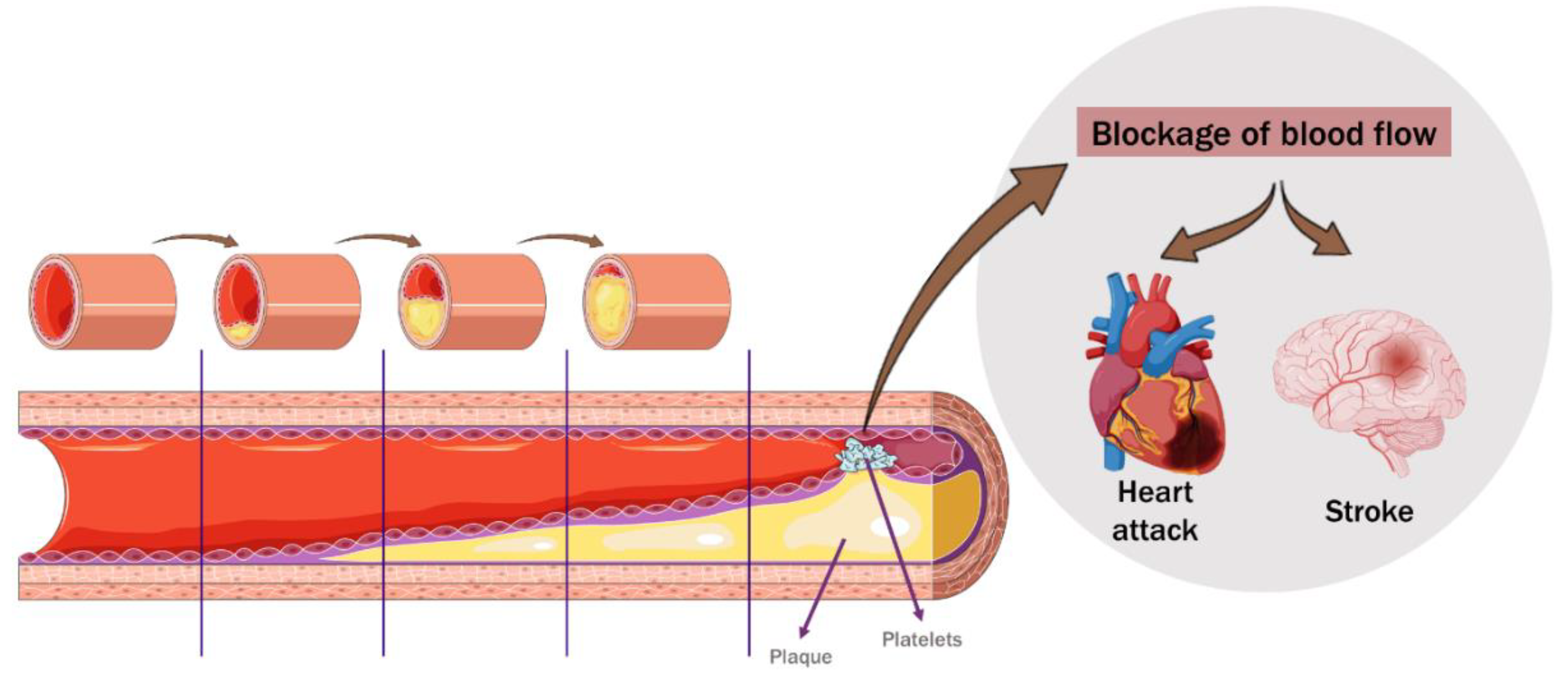
Figure 2.
Chemical structures of the most common compounds found in the cherries and berries. A: Hydroxycinnamic acids; B: Hydroxybenzoic acids; C: Anthocyanins; D: Tannins; E: Flavonoids other than anthocyanins.
Figure 2.
Chemical structures of the most common compounds found in the cherries and berries. A: Hydroxycinnamic acids; B: Hydroxybenzoic acids; C: Anthocyanins; D: Tannins; E: Flavonoids other than anthocyanins.
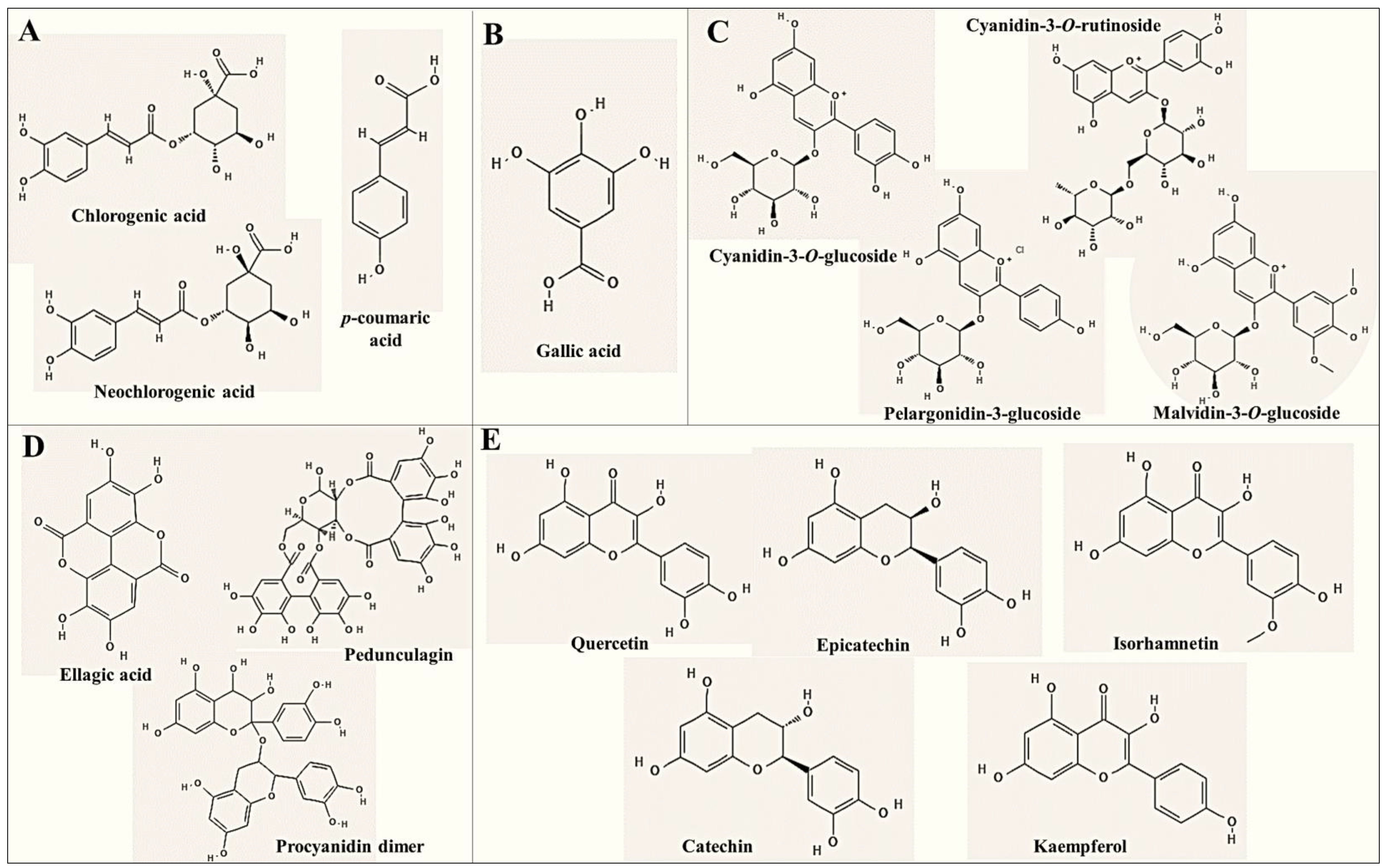
Figure 3.
Preventive cardiovascular disease effects of cherries and berries.
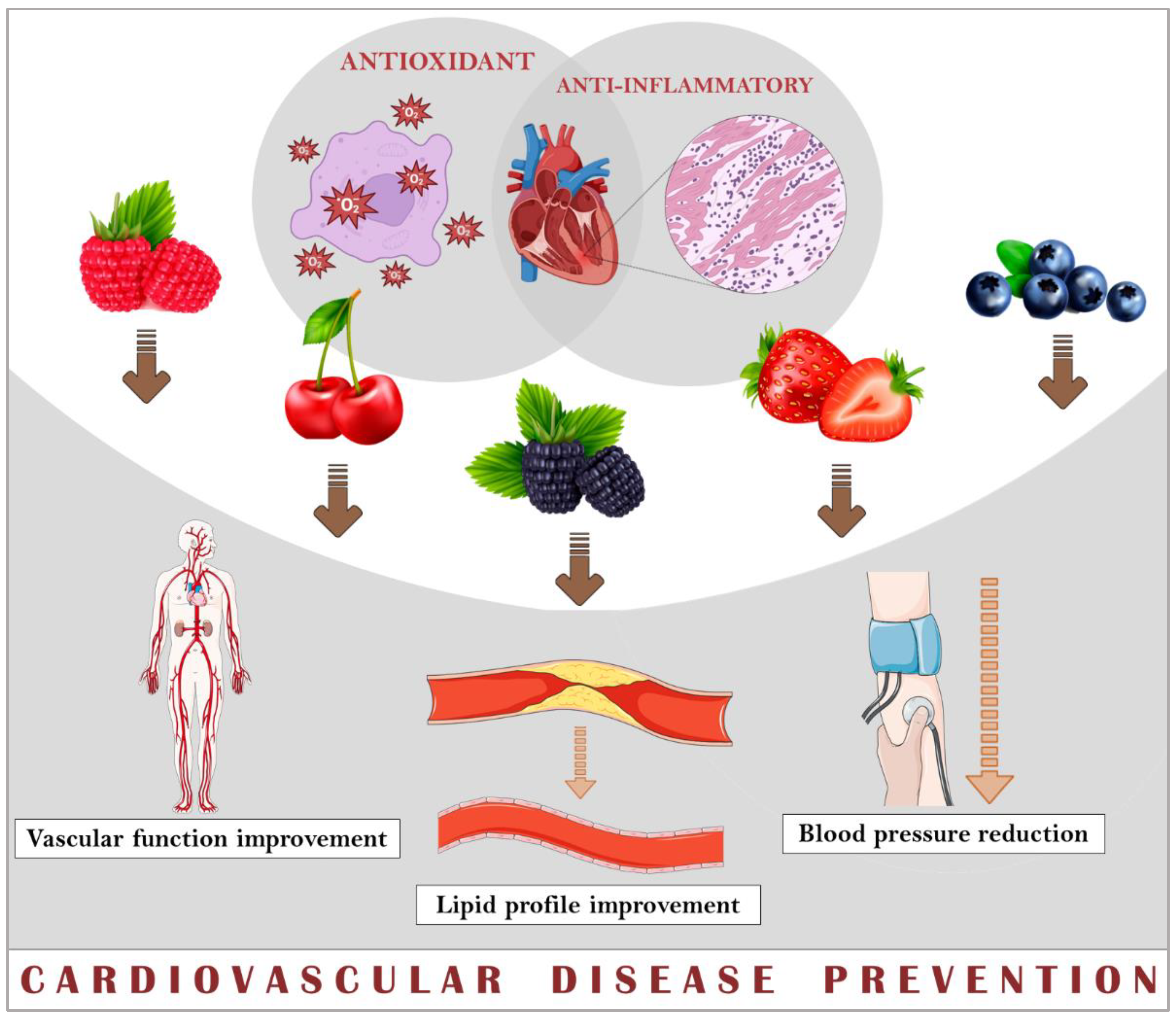
Table 1.
Nutritional composition of cherry and berries (cherry, blackberry, blueberry, strawberry, raspberry) [8].
Table 1.
Nutritional composition of cherry and berries (cherry, blackberry, blueberry, strawberry, raspberry) [8].
| Cherry | Blackberry | Blueberry | Strawberry | Raspberry | |
|---|---|---|---|---|---|
| Amount per 100 g of edible portion | |||||
| Energy (g) | 67.00 | 43.00 | 43.00 | 34.00 | 49.00 |
| Lipids (g) | 0.70 | 0.90 | 0.60 | 0.40 | 0.60 |
| Saturated fatty acids (g) | 0.20 | 0.00 | 0.10 | 0.00 | 0.00 |
| MUFA (g) | 0.20 | 0.00 | 0.10 | 0.10 | 0.10 |
| PUFA (g) | 0.20 | 0.30 | 0.20 | 0.20 | 0.30 |
| Linoleic acid (g) | 0.20 | 0.20 | 0.12 | 0.10 | 0.20 |
| Trans fatty acids (g) | 0.00 | 0.00 | 0.00 | 0.00 | 0.00 |
| Carbohydrates (g) | 13.30 | 4.50 | 6.40 | 5.30 | 5.10 |
| Sugar (g) | 13.30 | 4.20 | 6.40 | 5.30 | 5.10 |
| Oligosaccharides (g) | 0.00 | 0.00 | 0.00 | 0.00 | 0.00 |
| Fibre (g) | 1.60 | 4.60 | 3.10 | 2.00 | 6.70 |
| Protein (g) | 0.80 | 1.40 | 0.50 | 0.60 | 0.90 |
| Salt (g) | 0.00 | 0.00 | 0.00 | 0.00 | 0.00 |
| Water (g) | 82.60 | 88.00 | 87.00 | 90.10 | 84.30 |
| Organic acids (g) | 0.40 | 0.90 | 1.40 | 0.80 | 1.90 |
| Cholesterol (mg) | 0.00 | 0.00 | 0.00 | 0.00 | 0.00 |
| Vitamin A (µg) | 24.00 | 27.00 | 8.00 | 4.00 | 2.00 |
| Carotene (µg) | 141.00 | 164.00 | 47.00 | 26.00 | 10.00 |
| Vitamin D (µg) | 0.00 | 0.00 | 0.00 | 0.00 | 0.00 |
| α-tocopherol (mg) | 0.13 | 4.42 | 1.90 | 0.20 | 0.20 |
| Thiamine (mg) | 0.04 | 0.02 | 0.04 | 0.03 | 0.03 |
| Riboflavin (mg) | 0.06 | 0.04 | 0.07 | 0.06 | 0.02 |
| Niacin (mg) | 0.20 | 0.54 | 0.42 | 0.60 | 0.60 |
| Tryptophan/60 (mg) | 0.10 | 0.20 | 0.05 | 0.20 | 0.20 |
| Vitamin B6 (mg) | 0.04 | 0.05 | 0.06 | 0.05 | 0.05 |
| Vitamin B12 (µg) | 0.00 | 0.00 | 0.00 | 0.00 | 0.00 |
| Vitamin C (mg) | 6.00 | 16.50 | 0.15 | 0.47 | 0.30 |
| Pholate (µg) | 5.00 | 25.00 | 11.5 | 47.00 | 0.33 |
| Ash (g) | 0.43 | 0.40 | 0.25 | 0.58 | 0.54 |
| Sodium (mg) | 1.00 | 1.80 | 0.30 | 2.00 | 1.00 |
| Potassium (mg) | 210.00 | 240.00 | 110.00 | 140.00 | 230.00 |
| Calcium (mg) | 14.00 | 28.00 | 19.00 | 25.00 | 26.00 |
| Phosphorous (mg) | 15.00 | 33.00 | 20.00 | 26.00 | 23.00 |
| Magnesium (mg) | 10.00 | 22.00 | 9.00 | 10.00 | 20.00 |
| Iron (mg) | 0.40 | 0.60 | 0.60 | 0.80 | 0.50 |
| Zinc (mg) | 0.10 | 0.50 | 0.20 | 0.10 | 0.30 |
| Selenium (µg) | n.a. | 0.10 | 0.10 | n.a. | n.a. |
| Iodol (µg) | n.a. | 0.40 | 1.00 | 3.80 | n.a. |
n.a. = not available.
Disclaimer/Publisher’s Note: The statements, opinions and data contained in all publications are solely those of the individual author(s) and contributor(s) and not of MDPI and/or the editor(s). MDPI and/or the editor(s) disclaim responsibility for any injury to people or property resulting from any ideas, methods, instructions or products referred to in the content. |
© 2024 by the authors. Licensee MDPI, Basel, Switzerland. This article is an open access article distributed under the terms and conditions of the Creative Commons Attribution (CC BY) license (http://creativecommons.org/licenses/by/4.0/).
Copyright: This open access article is published under a Creative Commons CC BY 4.0 license, which permit the free download, distribution, and reuse, provided that the author and preprint are cited in any reuse.