

Submitted:
27 March 2024
Posted:
28 March 2024
You are already at the latest version
Abstract
Background: With its impressive natural language processing and comprehension skills, ChatGPT-4 (Chat Generative Pre-Trained Transformer) is a technology that shows great promise for use in a number of medical fields. This article provides a thorough description of the possible uses of OpenAI's state-of-the-art language model, ChatGPT-4, in musculoskeletal imaging. Purpose for review: MSK Radiologists need to evolve about their knowledge and understanding of the roles of ChatGPT and its implications in daily practice. We aim to emphasize the advantages of ChatGPT-4 on the musculoskeletal imaging field and its potential to enhance radiologist working checklist review items, and the overall productivity of radiology reports. Recent findings: The fact of that specialists in radiology, rheumatology, orthopedic surgery, and other fields are conversant with ChatGPT. Furthermore, opinions are generally well, despite the fact that many people have reservations about the new technology, which is still developing [1]. Compared to GPT-4V based ChatGPT, GPT-4 based ChatGPT showed noticeably better diagnostic accuracy. Although ChatGPT, which is based on GPT-4, performed diagnostically on par with radiology residents, however, it demonstrated lower performance than a musculoskeletal radiologist [2].
Keywords:
musculoskeletal imaging
; Artificial Inetellgence
; ChatGPT
Introduction
Artificial intelligence (AI) is expanding quickly in many fields, including medicine, and does so without requiring human intellect. Diagnostics, such as tumor and fracture identification, are useful uses in orthopedic surgery. Clinicians should be aware of AI’s limits, though, as preventing biases and avoidable errors requires the creation of strong reporting and validation systems [3]. There are various methods and application were assumed to be as artificial intelligence tools, some of them are ChatGPT and Bard could help in radiology knowledge, which showed while selecting the best chatbot, it’s crucial to take into account its presumptions and the reliability of its responses [4]. In other hand, considering all the variables, including the residents’ limited time, inexperience, and lack of understanding, using the Internet has been quite beneficial for on-call tasks. The most popular resource was “Radiopaedia”, which the inhabitants selected because to its free availability, ease of use, lack of additional registration requirements, and attractive mobile viewing layout. Because ChatGPT currently lacks images that are essential for aspiring radiologists and because it lacks references or proof for the information it offers, its value as an artificial intelligence-assisted radiology educational resource is debatable [5]. Furthermore, while ChatGPT-3 answered questions from radiologists’ daily clinical routine properly, only 37.9% of “true,” recognizable references gave sufficient background information for 37.5% of the questions that were answered correctly. These findings serve as a clear reminder of ChatGPT-3’s limitations [6]. Conversely, ChatGPT-4 may prove to be an invaluable interactive anatomy resource. By offering accurate guidance on anatomical terminology and thorough and well-organized descriptions of anatomy. It also aids in understanding therapeutic importance of a structure and its link. It’s crucial to remember that it does acknowledge that AI should play an assistant role [7]. Generally, in a few of minutes or seconds, the AI technology can assist in identifying knowledge gaps, which can make a time significancy [8]. On the other hand, orthopedic evaluation assessments, the residents outperformed ChatGPT-3.5 and GPT-4 in several experimental studies by providing more accurate answers to questions. When it comes to providing answers to orthopedic resident evaluation examination queries, GPT-4 outperforms ChatGPT-3.5. In comparison to questions containing graphics, ChatGPT-3.5 and GPT-4 both fared better on text-only questions [9]. To our knowledge there was no study assessed the implementation of the artificial intelligence tools through the musculoskeletal radiology field. Thus far, we aimed to evolve the musculoskeletal Radiologists of understanding of the roles of ChatGPT and its implications in daily practice, as well as to emphasize the advantages of ChatGPT on the musculoskeletal imaging field and its potential to enhance radiologist working, and the overall productivity of radiology reports.
Methods
In December 2023, we will perform a thorough search of many databases, such as PubMed and Google Scholar, for this narrative review. We will focus our search by using keywords like “radiology,” “musculoskeletal imaging,” “artificial intelligence,” “machine learning,” and “ChatGPT-4.” The publications that addressed the goals of the study will be chosen. We will assess the article titles and abstracts before retrieving the whole contents. We have limited our evaluation to studies that discuss ChatGPT-4’s use in musculoskeletal imaging, while also taking into account our own experiences with the program. We only look for English-language publications in our search. The articles cover a range of topics related to the use of ChatGPT-4 in musculoskeletal imaging subjects in mind.
We will explore questions that were created with the MRI, CT, and X-ray
Role of ChatGPT-4 in Musculoskeletal Imaging
ChatGPT and other AI-based language models have shown outstanding capabilities, it remains unclear how well these models will function in real-world circumstances, especially in professions like medicine where sophisticated and high-level thinking is required. Furthermore, there are significant ethical issues that need to be addressed even though using ChatGPT to write scientific articles and other scientific outputs may have certain advantages [10]. Additionally, the application of artificial intelligence for activities like board exam preparation and differential diagnosis has been investigated in the medical industry, using models such as ChatGPT [11]. The application of ChatGPT-4 has the potential to revolutionize the field by offering insightful information, supporting decision-making processes, and enhancing diagnostic accuracy. Imaging studies can be predicted using large language models with better performance suggests that more medical-text training is beneficial. This demonstrates how large language models can be used in radiologic decision-making [12]. More recently, Although ChatGPT4 offers encouraging opportunities for quick figure production, their existing capabilities are unable to meet the exacting requirements set by research on musculoskeletal radiography [13].
Clinical Applications of ChatGPT-4
A. Protocoling:
By evaluating patient data and clinical indications, artificial intelligence can help ensure examination compliance by recommending the best imaging studies for individual patients [14]. Thus far, here we explored an example of knee MRI request protocoling with inclusive result from ChatGPT optimize radiology workflows Figure 1.
B. Writing the MRI Reports:
Enhancing diagnostic capabilities and decision-making processes in the realm of musculoskeletal imaging with the integration of ChatGPT-4 is a promising area of focus. The artificial intelligence generated layperson report summaries received high marks overall for completeness and accuracy, with very few being considered to be erroneous or misleading. The generative artificial intelligence, like ChatGPT-4, may be used to automate the creation of musculoskeletal imaging summaries that are easy for patients to understand [15].
ChatGPT-4 apps for MRI report authoring offer a substantial chance to boost diagnostic accuracy Figure 2 and Figure 3.
C. Writing the CT Reports:
The GPT-4 model was given specially designed prompts for report generation, template creation that improves clinical decision-making, and patient education and communication [16]. A single question was utilized to generating the radiology report even within the daytime or during the on-calls, which is necessary to improve clinical judgment and come up with catchy titles for each portion of a radiology report Figure 4 and Figure 5.
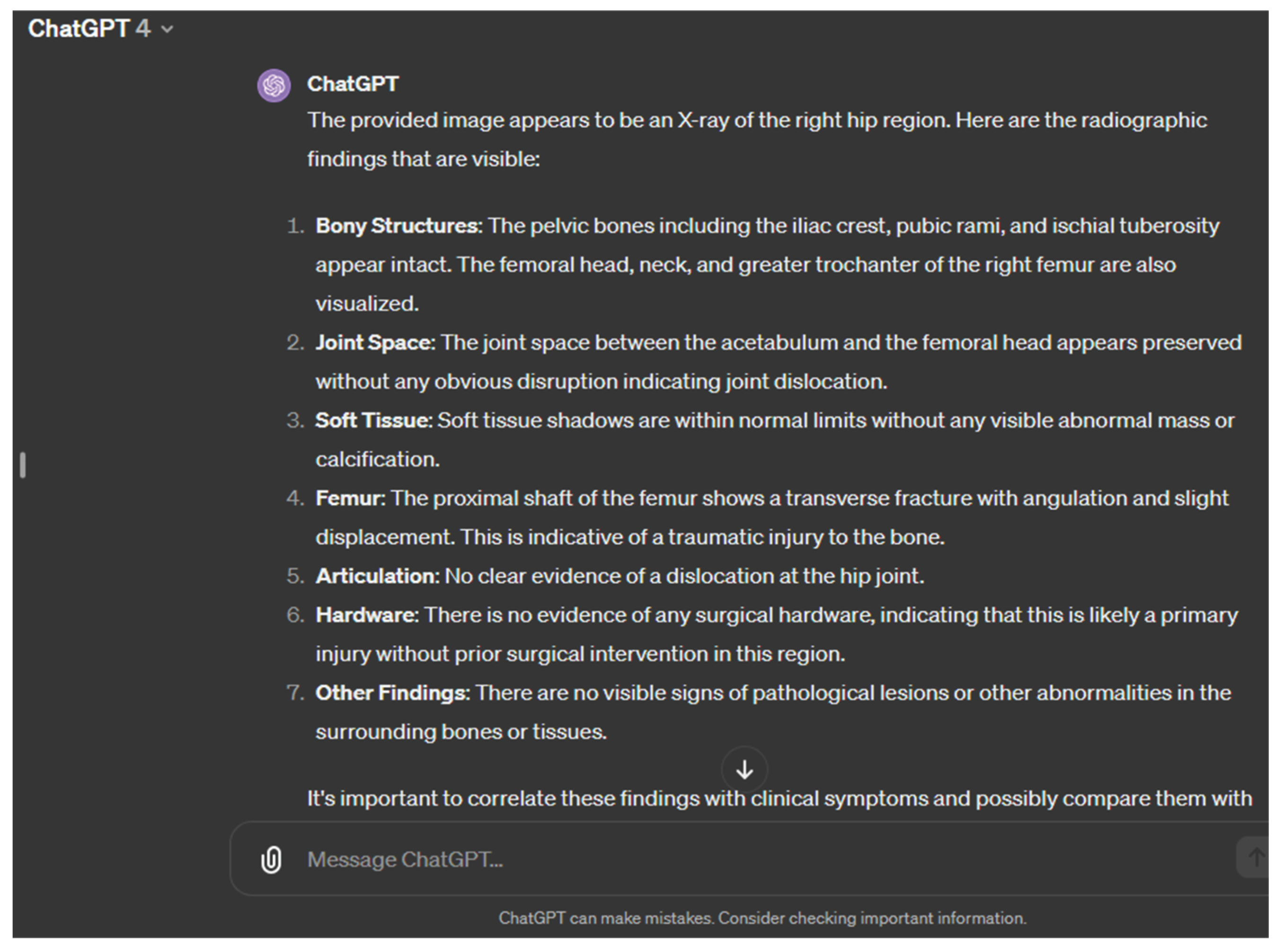
D.Writing the X-ray Reports:
One branch of this advancement, which is defined by distal radius fracture, is automated text report writing. The natural language processing program ChatGPT received command files that were organized in accordance with a template provided by the Radiological Society of North America (RSNA) and Arbeit gemeinschaft Osteosyntheses (AO) classifiers. The assignment to create a suitable radiological report fell to ChatGPT. ChatGPT exhibits the capacity to modify output files in reaction to slight modifications in input command files. Deficits in medical interpretation of findings and technical terminology were discovered [17].
Challenges in the Use of ChatGPT-4 in Musculoskeletal Imaging
Using ChatGPT presents several ethical, legal, and regulatory issues. The absence of standards in data collecting and processing is one of the primary issues. Artificial intelligence systems have a hard time correctly analyzing and interpreting radiology data since these data are sometimes extremely complicated and varied [17]. In 2023, study investigates the application of the artificial intelligence language model such as ChatGPT, demonstrating shortcomings include its inability to assign information to a source and its misalignment with user intent, despite its merits in offering diagnostic procedures, it shows how AI may help with clinical decision assistance, but it also emphasizes the need for further development in subsequent iterations [18]. Deep learning techniques using of artificial intelligence have demonstrated potential in the identification of diverse musculoskeletal disorders across multiple imaging modalities. The researchers acknowledge that because of the need to identify structures of interest and inconsistent image quality, “current deep learning techniques have limitations for identifying internal abnormalities of the knee and other joints.” Although it shows promise in identifying spinal canal stenosis, it is still unclear how precisely each level’s severity of stenosis will be determined [19]. Currently, constraints, such as the requirement for superior training data, moral issues, and additional study and development to enhance its functionality. Notwithstanding these difficulties, ChatGPT has the potential to have a big influence on medical imaging and radiology diagnostics. The review paper emphasizes that in order to guarantee that ChatGPT is utilized to its maximum potential in enhancing radiological diagnosis and patient care [20]. ChatGPT, can adds errors and false information, is easily recognized by software as AI-generated, and lack of depth of insight and appropriateness [21]. Overall, ChatGPT-4 has the potential to revolutionize musculoskeletal imaging, there are obstacles to overcome in order to fully realize its benefits in improving diagnostic procedures. These obstacles include those related to technical development, accuracy in answering medical questions, ethical issues, and domain-specific limitations.
Future Considerations of Artificial Intelligence in Musculoskeletal Imaging
Rajesh Iyengar (2023) posed the question: What role would ChatGPT play in radiology tomorrow? has demonstrated remarkable results in radiology applications. It can help with image interpretation, provide reports, and optimize workflow. The effectiveness of ChatGPT in radiology will depend on upcoming security measures. Its use can result in more accurate diagnoses, quicker report turnaround times, and better working conditions for radiologists [22]. With ChatGPT, a standard classroom may become a more participatory, learner-centered reading room. By using them, report quality can be raised, and manual entry errors can be decreased [23]. The artificial intelligence has the ability to help radiologists with diagnosis and to increase the effectiveness and precision of medical imaging analysis. Visual-guided therapy, automated detection and diagnosis, and automatic image analysis and interpretation are a few of the major uses of AI in radiology. AI can also assist in lessening radiologists’ burden. AI is not likely to take the role of radiologists anytime soon. Even though AI can help radiologists with their diagnostics, a final diagnosis still needs to be made by a qualified professional [24]. Artificial intelligence has many potential applications, but there are also several obstacles that must be carefully considered. It is clear that artificial intelligence, and especially ChatGPT models, have the power to completely transform healthcare practice, research, and teaching [25]. These technologies have promise for a variety of therapeutic applications and provide useful answers to problems. Furthermore, radiology may benefit from the use of artificial intelligence and deep learning techniques, which could improve imaging quality and speed while enhancing earlier advancements in the area [26,27].
A controlled usage of AI based tools is desperately needed to shield medical professionals and patients from mistakes and injuries. By taking the first concrete action, it is urged to increase the public’s understanding of this significant and critical issue [28]. Furthermore, to fully utilize AI models’ potential in specialized medical domains, one must comprehend the limitations and capabilities of these models as well as implementation activities must be carried out in an organized way in order to provide evidence of the clinical added value of AI applications [29]. Ultimately, artificial intelligence in musculoskeletal imaging has enormous potential to revolutionize medical diagnosis and decision-making. The application of AI models such as ChatGPT in musculoskeletal imaging can result in major improvements in patient treatment and results by tackling issues with performance validation, ethical considerations, regulatory frameworks, and domain-specific restrictions.
Conclusions
1. Investigating ChatGPT-4’s potential uses in musculoskeletal imaging offers fascinating prospects to transform radiography patient care and diagnosis. ChatGPT-4 has the potential to improve patient outcomes, expedite radiology operations, and improve diagnostic accuracy by improving the generation of MRI, CT, and X-ray reports. But issues like assuring model reliability, domain-specific constraints, and ethical implications must be addressed.
2. Future initiatives should focus on validation, ethical monitoring, and regulatory frameworks to fully harness AI’s potential while protecting the value of human expertise in healthcare. In order to advance medical science and achieve notable advancements in patient care and healthcare outcomes, human skill and technology must work together.
Author Contributions
All authors have read and approved the manuscript. Dr.Salha and Dr.Saud were involved in literatures review and writing of this manuscript. SA acted as a person who starting write this manuscript, offered guidance on publication. SA is the consultant who involved with the review of this manuscript.
Funding
This research received no specific grant from any funding agency.
Data Availability Statement
The data used during the current study are not publicly available due to patient privacy but are available from the corresponding author upon reasonable request.
Conflicts of Interest
The authors declare that they have no conflict of interest.
References
- Iyengar, K.P.; Yousef, M.M.A.; Nune, A.; Sharma, G.K.; Botchu, R. Perception of Chat Generative Pre-trained Transformer (Chat-GPT) AI tool amongst MSK clinicians. J. Clin. Orthop. Trauma 2023, 44, 102253. [Google Scholar] [CrossRef] [PubMed]
- Horiuchi, D. , Tatekawa, H., Oura, T., Shimono, T., Walston, S. L., Takita, H.,... & Ueda, D. (2023). Comparison of the diagnostic accuracy among GPT-4 based ChatGPT, GPT-4V based ChatGPT, and radiologists in musculoskeletal radiology. medRxiv, 2023-12.
- Lisacek-Kiosoglous, A.B.; Powling, A.S.; Fontalis, A.; Gabr, A.; Mazomenos, E.; Haddad, F.S. Artificial intelligence in orthopaedic surgery. Bone Jt. Res. 2023, 12, 447–454. [Google Scholar] [CrossRef] [PubMed]
- Patil, N.S.; Huang, R.S.; van der Pol, C.B.; Larocque, N. Comparative Performance of ChatGPT and Bard in a Text-Based Radiology Knowledge Assessment. Can. Assoc. Radiol. J. 2023. [Google Scholar] [CrossRef] [PubMed]
- Sethi, H.S.; Mohapatra, S.; Mali, C.; Dubey, R. Online for On Call: A Study Assessing the Use of Internet Resources Including ChatGPT among On-Call Radiology Residents in India. Indian J. Radiol. Imaging 2023, 33, 440–449. [Google Scholar] [CrossRef] [PubMed]
- Wagner, M.W.; Ertl-Wagner, B.B. Accuracy of Information and References Using ChatGPT-3 for Retrieval of Clinical Radiological Information. Can. Assoc. Radiol. J. 2023, 75, 69–73. [Google Scholar] [CrossRef] [PubMed]
- Totlis, T.; Natsis, K.; Filos, D.; Ediaroglou, V.; Mantzou, N.; Duparc, F.; Piagkou, M. The potential role of ChatGPT and artificial intelligence in anatomy education: a conversation with ChatGPT. Surg. Radiol. Anat. 2023, 45, 1321–1329. [Google Scholar] [CrossRef] [PubMed]
- Ariyaratne, S.; Iyengar, K.P.; Botchu, R. Will collaborative publishing with ChatGPT drive academic writing in the future? Br. J. Surg. 2023, 110, 1213–1214. [Google Scholar] [CrossRef] [PubMed]
- Massey, P.A.; Montgomery, C.; Zhang, A.S. Comparison of ChatGPT–3.5, ChatGPT-4, and Orthopaedic Resident Performance on Orthopaedic Assessment Examinations. J. Am. Acad. Orthop. Surg. 2023, 31, 1173–1179. [Google Scholar] [CrossRef]
- Cascella, M.; Montomoli, J.; Bellini, V.; Bignami, E. Evaluating the Feasibility of ChatGPT in Healthcare: An Analysis of Multiple Clinical and Research Scenarios. J. Med Syst. 2023, 47, 1–5. [Google Scholar] [CrossRef]
- Ali, R. , Tang, O., Connolly, I., Fridley, J., Shin, J., Sullivan, P., … & Asaad, W. (2023). Performance of chatgpt, gpt-4, and google bard on a neurosurgery oral boards preparation question bank. [CrossRef]
- Zaki, H.A.; Aoun, A.; Munshi, S.; Abdel-Megid, H.; Nazario-Johnson, L.; Ahn, S.H.; Zaki, H.A.; Aoun, A.; Munshi, S.; Abdel-Megid, H.; et al. The Application of Large Language Models for Radiologic Decision Making. J. Am. Coll. Radiol. 2024. [Google Scholar] [CrossRef]
- Ajmera, P. , Nischal, N., Ariyaratne, S., Botchu, B., Bhamidipaty, K. D. P., Iyengar, K. P.,... & Botchu, R. (2024). Validity of ChatGPT-generated musculoskeletal images. Skeletal Radiology, 1-11.
- Mese, I.; Taslicay, C.A.; Sivrioglu, A.K. Improving radiology workflow using ChatGPT and artificial intelligence. Clin. Imaging 2023, 103, 109993. [Google Scholar] [CrossRef] [PubMed]
- Kuckelman, I.J.; Wetley, K.; Yi, P.H.; Ross, A.B. Translating musculoskeletal radiology reports into patient-friendly summaries using ChatGPT-4. Skelet. Radiol. 2024, 1–4. [Google Scholar] [CrossRef] [PubMed]
- Bajaj, S.; Gandhi, D.; Nayar, D. Potential Applications and Impact of ChatGPT in Radiology. Acad. Radiol. 2023. [Google Scholar] [CrossRef] [PubMed]
- Bosbach, W.A.; Senge, J.F.; Nemeth, B.; Omar, S.H.; Mitrakovic, M.; Beisbart, C.; Horváth, A.; Heverhagen, J.; Daneshvar, K. Ability of ChatGPT to generate competent radiology reports for distal radius fracture by use of RSNA template items and integrated AO classifier. Curr. Probl. Diagn. Radiol. 2024, 53, 102–110. [Google Scholar] [CrossRef] [PubMed]
- Rao, A.; Kim, J.; Kamineni, M.; Pang, M.; Lie, W.; Succi, M.D. Evaluating ChatGPT as an Adjunct for Radiologic Decision-Making. medRxiv. [CrossRef]
- Kijowski, R.; Liu, F.; Caliva, F.; Pedoia, V. Deep Learning for Lesion Detection, Progression, and Prediction of Musculoskeletal Disease. J. Magn. Reson. Imaging 2019, 52, 1607–1619. [Google Scholar] [CrossRef] [PubMed]
- Srivastav, S.; Chandrakar, R.; Gupta, S.; Babhulkar, V.; Jaiswal, A.; Prasad, R.; Wanjari, M.B.; Agarwal, S. ChatGPT in Radiology: The Advantages and Limitations of Artificial Intelligence for Medical Imaging Diagnosis. Cureus 2023, 15, e41435. [Google Scholar] [CrossRef]
- Currie, G.; Singh, C.; Nelson, T.; Nabasenja, C.; Al-Hayek, Y.; Spuur, K. ChatGPT in medical imaging higher education. Radiography 2023, 29, 792–799. [Google Scholar] [CrossRef] [PubMed]
- Botchu, R.; Iyengar, K.P. Will ChatGPT Drive Radiology in the Future? Indian J. Radiol. Imaging 2023, 33, 436–437. [Google Scholar] [CrossRef]
- Tippareddy, C.; Jiang, S.; Bera, K.; Ramaiya, N. Radiology Reading Room for the Future: Harnessing the Power of Large Language Models Like ChatGPT. Curr. Probl. Diagn. Radiol. 2023. [Google Scholar] [CrossRef]
- Lecler, A.; Duron, L.; Soyer, P. Revolutionizing radiology with GPT-based models: Current applications, future possibilities and limitations of ChatGPT. Diagn. Interv. Imaging 2023, 104, 269–274. [Google Scholar] [CrossRef]
- Sallam, M. ChatGPT Utility in Healthcare Education, Research, and Practice: Systematic Review on the Promising Perspectives and Valid Concerns. Healthcare 2023, 11, 887. [Google Scholar] [CrossRef] [PubMed]
- Fritz, J.; Runge, V.M. Scientific Advances and Technical Innovations in Musculoskeletal Radiology. Investig. Radiol. 2022, 58, 1–2. [Google Scholar] [CrossRef] [PubMed]
- Lin, D.J.; Walter, S.S.; Fritz, J. Artificial Intelligence–Driven Ultra-Fast Superresolution MRI. Investig. Radiol. 2022, 58, 28–42. [Google Scholar] [CrossRef] [PubMed]
- Baumgartner, C.; Baumgartner, D. A regulatory challenge for natural language processing (NLP)-based tools such as ChatGPT to be legally used for healthcare decisions. Where are we now? Clin. Transl. Med. 2023, 13, e1362. [Google Scholar] [CrossRef]
- Strohm, L.; Hehakaya, C.; Ranschaert, E.R.; Boon, W.P.C.; Moors, E.H.M. Implementation of artificial intelligence (AI) applications in radiology: hindering and facilitating factors. Eur. Radiol. 2020, 30, 5525–5532. [Google Scholar] [CrossRef]
Figure 1.
Using ChatGPT for providing knee MRI protocol for an MRI request by an orthopedic physician for a patient presented with left knee pain and giving way after a history of football trauma two years ago, is currently to rule out anterior cruciate ligament rupture.
Figure 1.
Using ChatGPT for providing knee MRI protocol for an MRI request by an orthopedic physician for a patient presented with left knee pain and giving way after a history of football trauma two years ago, is currently to rule out anterior cruciate ligament rupture.
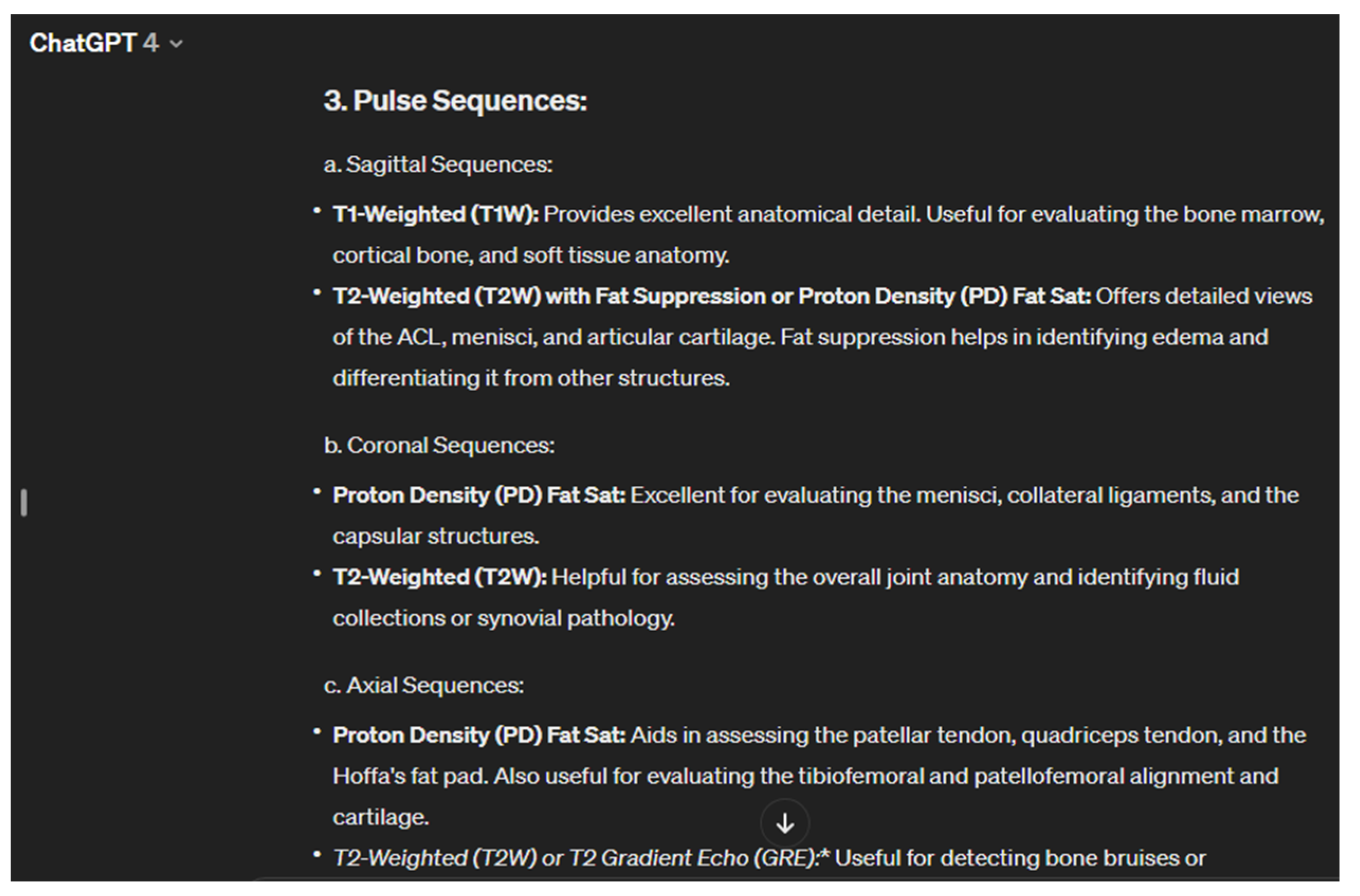
Figure 2.
Using Chat GPT4 with exploring the question for writing of the knee MRI report.
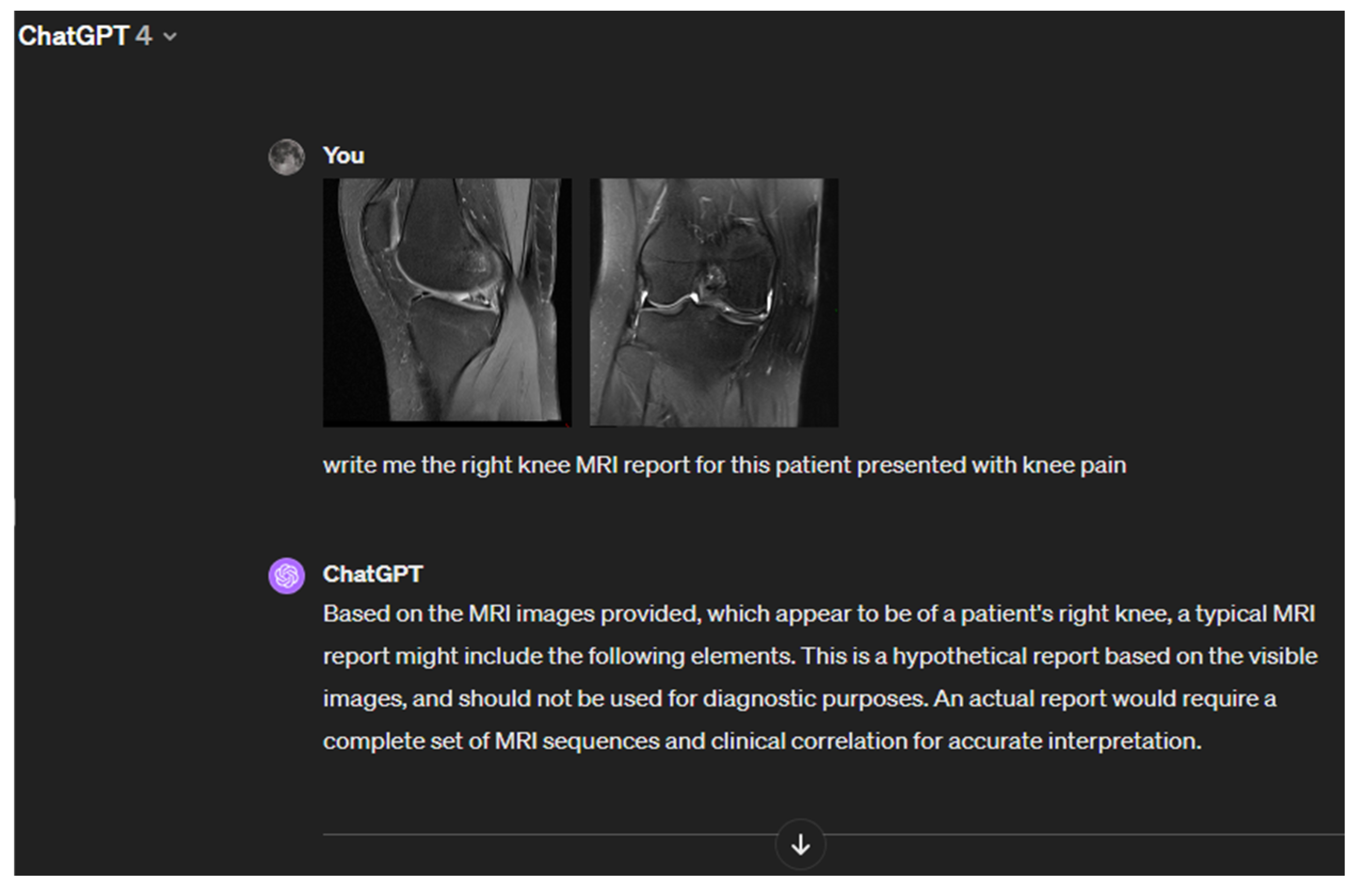
Figure 3.
Using Chat GPT4 for writing of the knee MRI report. This is a more concise version of the knee MRI report with well structured template summarizing the main images findings.
Figure 3.
Using Chat GPT4 for writing of the knee MRI report. This is a more concise version of the knee MRI report with well structured template summarizing the main images findings.
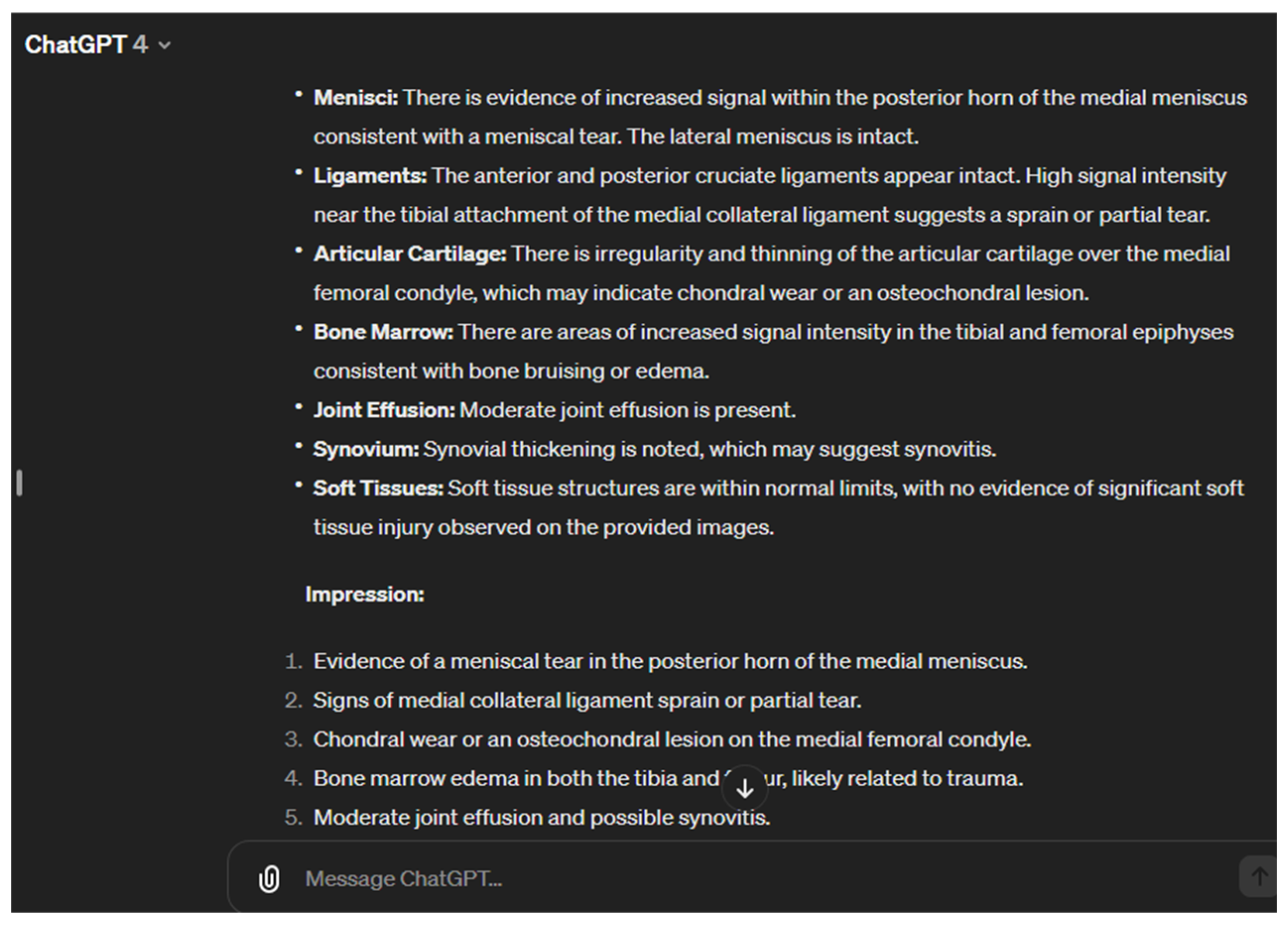
Figure 4.
Use of ChatGPT4 for writing the CT report of right knee.
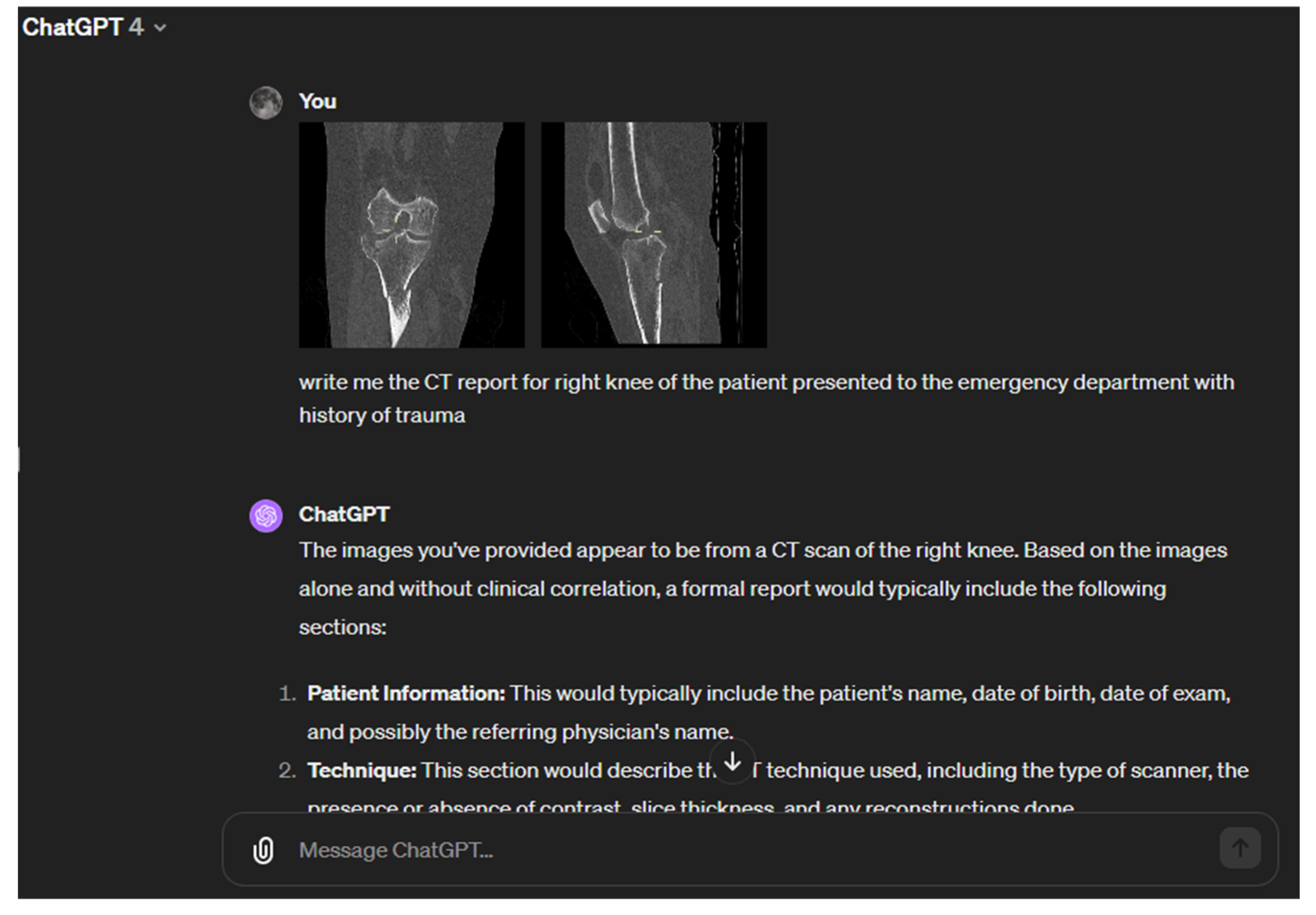
Figure 5.
ChatGPT4 can act as a virtual answering question and providing a well formal structured radiology reports on various musculoskeletal entities. This help studies getting better understanding of the subject matter and finalize the preliminary reports.
Figure 5.
ChatGPT4 can act as a virtual answering question and providing a well formal structured radiology reports on various musculoskeletal entities. This help studies getting better understanding of the subject matter and finalize the preliminary reports.
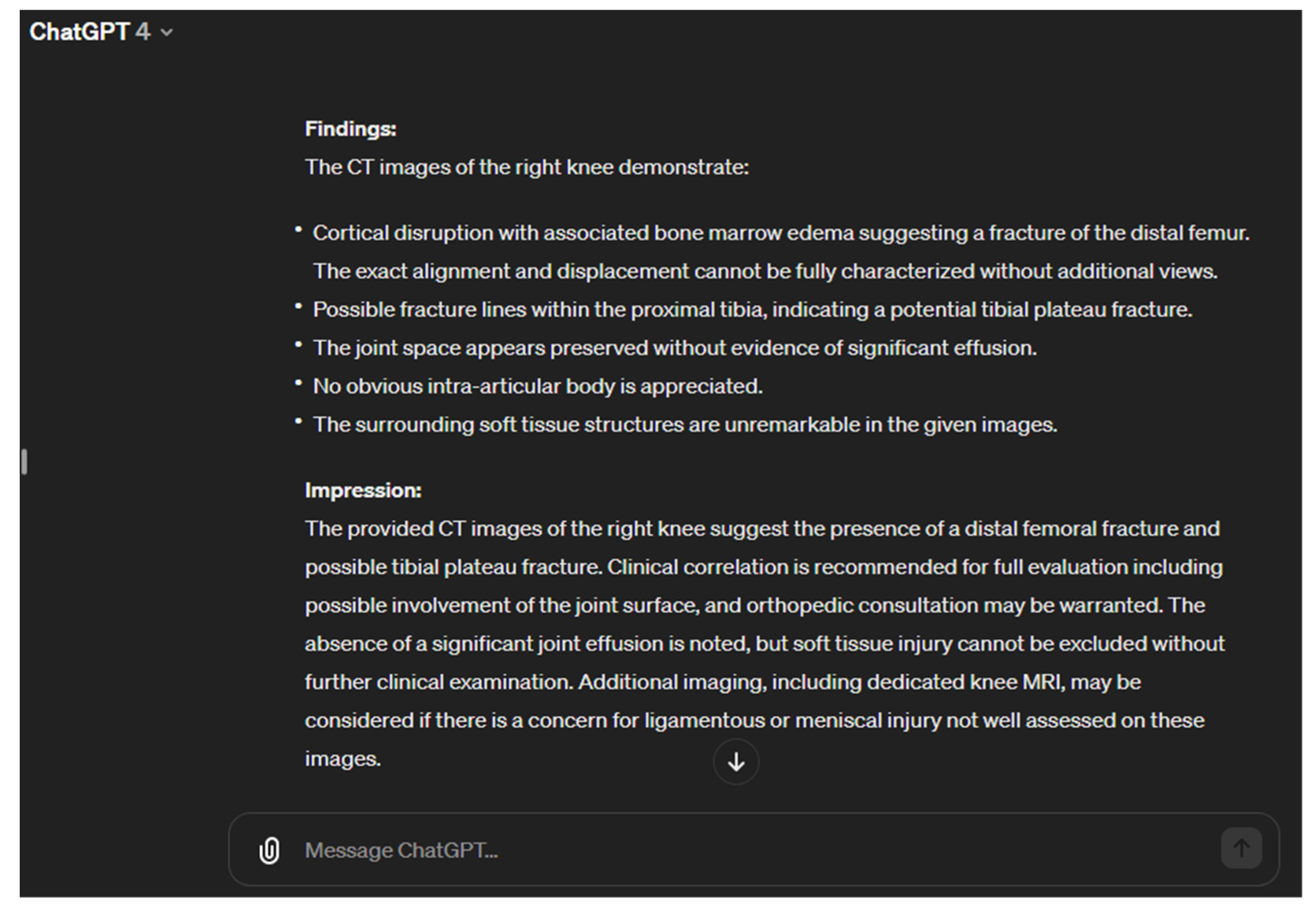
Figure 6.
Use of ChatGPT 4 in generating of the X-ray reports in emergency settings.
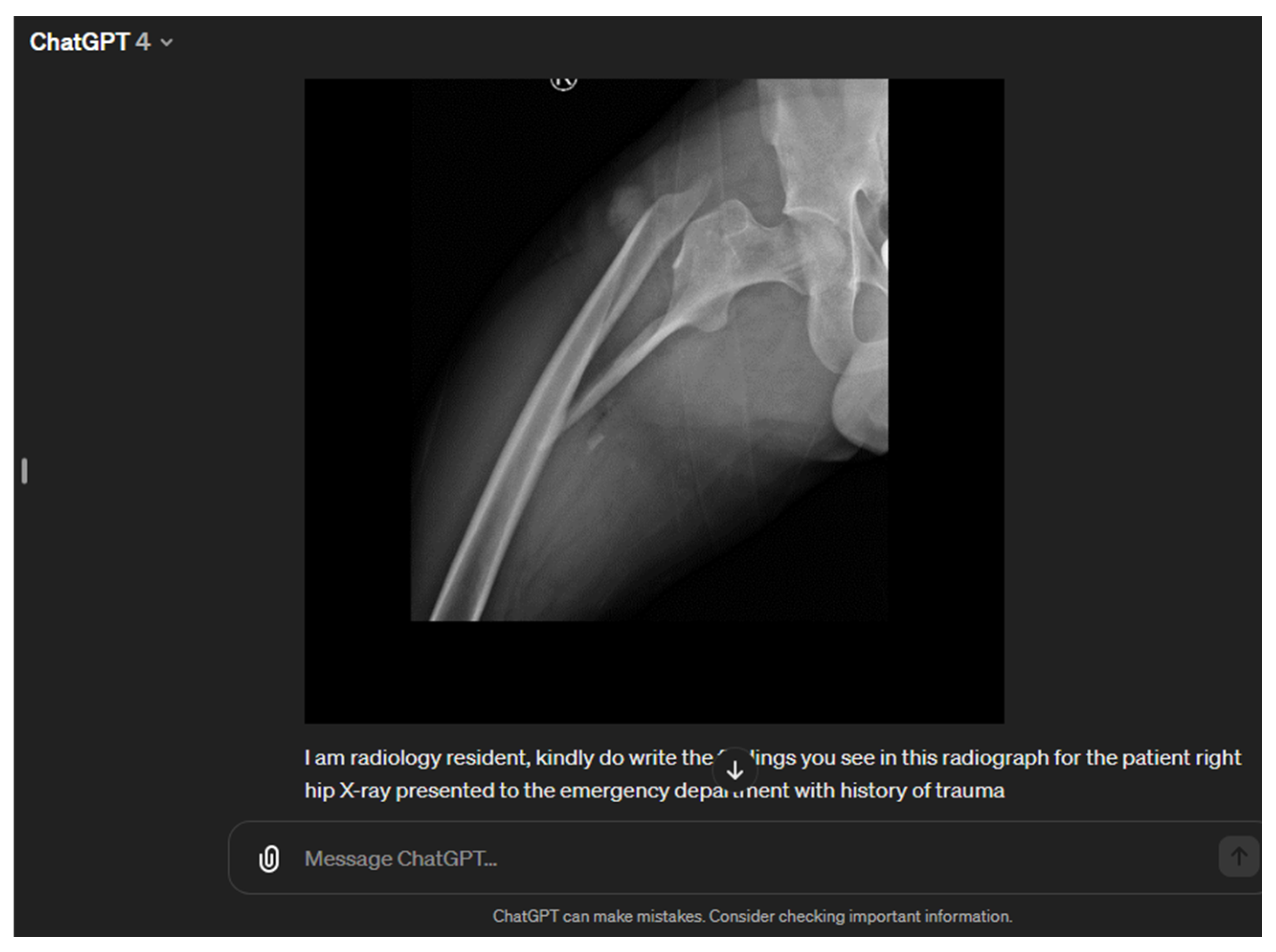
Figure 7.
Use of ChatGPT 4 in generating of the X-ray reports in emergency settings.
Disclaimer/Publisher’s Note: The statements, opinions and data contained in all publications are solely those of the individual author(s) and contributor(s) and not of MDPI and/or the editor(s). MDPI and/or the editor(s) disclaim responsibility for any injury to people or property resulting from any ideas, methods, instructions or products referred to in the content. |
© 2024 by the authors. Licensee MDPI, Basel, Switzerland. This article is an open access article distributed under the terms and conditions of the Creative Commons Attribution (CC BY) license (http://creativecommons.org/licenses/by/4.0/).
Copyright: This open access article is published under a Creative Commons CC BY 4.0 license, which permit the free download, distribution, and reuse, provided that the author and preprint are cited in any reuse.


