

Submitted:
14 March 2024
Posted:
15 March 2024
You are already at the latest version
Abstract
This study aims to spatially analyze the distribution characteristics of vacant homes in Asan-si, Chungcheongnam-do, and understand the differences in factors causing vacant homes by type. We use a variety of statistical methods to examine these factors and identify key influencing factors such as the number of vacant stores, changes in overall population, land use complexity, and physical characteristics of land and buildings. The findings reveal that the factors contributing to the occurrence of vacant homes vary significantly by region and property type, highlighting the need for region-specific policies. For instance, in old town areas, small lot ratios and land use complexity are significant, while in rural village, the average number of floors and land use complexity play a major role. This study underscores the diversity of factors influencing vacant homes, suggesting that policies should be tailored to the unique characteristics of different regions to effectively address this issue.
Keywords:
vacant home
; poisson
; negative binomial regression
; spatial regression
1. Introduction
South along with economic growth, the population began to concentrate in urban areas, and the urbanization rate reached 91.8% in 2019. However, recently, not only South Korea but also many countries considered economically advanced are facing serious social issues such as low birth rates, aging populations, and low growth. The impact of these issues has become more pronounced after the COVID-19 pandemic. Ministry of Public Administration and Security emphasized that 2020 marked the beginning of population decline, a surge in one- and two-person households, and the lowest birth rate ever, necessitating changes across all social and economic sectors. In reality, the majority of domestic cities are experiencing population decline (as of 2020, only 5 out of 17 provinces and cities saw population growth), and both urban and non-urban areas are witnessing an increase in abandoned and unused land and buildings. In 2019, there were 322 construction projects abandoned, 1,517,815 vacant homes (National Statistical Portal), and 3,829 closed schools (Ministry of Education). The original downtown areas are seeing an increase in abandoned property as population, industry, and public institutions move out to new developments on the outskirts of the city, and the number of vacant stores has surged due to the impact of COVID-19. Given these structural social changes and changes in urban resource demand, urban planning needs to move away from the traditional focus on quantitative expansion and vertical/horizontal extension. Instead, there is a need for a short-term efficient management and recycling of existing resources, and a long-term shift towards compact and mixed-use development management.
The increase in vacant houses leads not only to social and economic issues in the area, such as increased crime and decreased property values but also to the spread of urban decline, negatively affecting the surrounding residential environment [1,2,3,4,5].
The purpose of this study is to spatially analyze the characteristics of increasing vacant homes at the municipal and neighborhood levels, resulting from socio-economic changes such as low birth rates, aging populations, development polarization, and population outflows from regional cities. The study aims to identify the factors leading to vacant homes from a comprehensive urban perspective and to analyze how these factors differ by local neighborhood conditions. By doing so, it seeks to find insights for addressing the issue of vacant houses in small and medium-sized cities, considering the diverse and changing socio-economic landscape. For the purpose of this research, which is to analyze the factors leading to the occurrence of vacant houses, the study was conducted with three areas of focus. First, the relationship between urban decline and the occurrence of vacant homes was considered. Numerous prior studies have identified vacant homes as both a cause and an outcome of urban decline, indicating that the increase in vacant homes is closely related to urban decline [6,7]. It’s argued that one of the typical phenomena resulting from urban decline is the emergence of vacant homes [8]. Moreover, the pattern of vacant homes can serve as an important indicator in defining shrinking cities [9]. This focus emphasizes the intricate link between the physical state of urban areas and their socio-economic vitality, suggesting that addressing vacant homes is not only a matter of urban scapes or safety but also a crucial element in combating urban decline.
Second, the study considered the differences in urban structure and development characteristics between large cities and small cities. A distinctive feature of urban development in Korea is the universal issue of downtown decline due to suburbanization. In most cities across the country, residential development has been carried out on the outskirts of the city [10]. However, the pattern of downtown decline differs between large cities and small cities. In large cities, industrial development along with increased labor demand and productivity improvements have led to business agglomeration, enriching goods and services available. This, coupled with the convenience of various facilities, has attracted residents and businesses from surrounding cities. On the other hand, small cities have experienced a continuous decrease in population and industry due to a reduction in agricultural demand caused by advancements in agricultural technology, a small number of industrial facilities, and poor living and business environments [11].
Third, the study identified that the factors and the impacts regarding vacant homes occurrences differ between large cities and small cities. In large cities, houses often become vacant due to speculative purchases made with the intention of profiting from the designation or cancellation of redevelopment areas. Even if there is an outflow of population and industry from the original downtown areas due to new town developments, the impact is lessened because of the influx from surrounding cities. Additionally, large cities have a high diversity in their industrial structure and a significant proportion of high-value-added advanced knowledge industries, which lowers the likelihood of continuous urban decline [12]. However, in small cities, the smaller scale of the housing market can lead to a chain reaction of vacancies due to oversupply, and there is a high risk of this situation worsening due to a decrease in population and demand. Fundamentally, the lack of demand and feasibility makes it difficult to push forward with redevelopment projects, leading to an increase in vacant homes
2. Selection of Research Target
The selection of the research site is the first step in this study, which focuses on finding a representative area among South Korea’s medium-sized cities that can suggest policy directions for solving the vacant house problem. The selection criteria are as follows: First, similarity in development characteristics and urban form. Priority was given to medium-sized cities that share similar development characteristics and urban forms with South Korea. This is to increase the generalizability of the research results. Second, representativeness of medium-sized cities. Through the analysis of various indicators, the aim was to select a city that can represent South Korea’s medium-sized cities. This is to specify the research scope and facilitate an in-depth analysis of the vacant house problem. Considering these criteria and the presence of a vacant house information system, Chungcheongnam-do was initially selected, excluding Gyeonggi-do and Jeju-do from the metropolitan governments. Among the 15 cities and counties in Chungcheongnam-do, both Asan and Seocheon cities showed population distribution Gini coefficients similar to the national average. Furthermore, upon reviewing local statistics centered on indicators identified in prior research as affecting the occurrence of vacant homes, Asan city was ultimately found to match the characteristics of a medium-sized city in numerous indicators. The period of study targets the year 2020, prior to the impacts of the COVID-19 pandemic.
3. Literature Review and Theoretical Framework
3.1. Background and Factors Causing Vacant Homes
Cities are the foundation for populations to live, containers for their activities, and spaces where the future of the population can be anticipated. The issues arising from population changes are diverse, especially those occurring in physical spaces, which have a more profound perceived impact. In Korea, population overconcentration in the metropolitan areas and accelerated outflow from provincial areas, along with imbalanced national land development, have led to the problems of population and industry exodus centered around old downtown areas in regional cities. As a result, vacant properties such as closed schools, abandoned industrial facilities, defunct stations, vacant homes, and empty stores have emerged.
Vacant and abandoned properties are defined in various ways across studies, with terms like “vacant land” and “empty home” being most commonly used. The American Planning Association (APA) defines “vacant land” as land or buildings that are not actively used for any purpose, or plots of land without any improvements [13]. “Abandoned property” encompasses a broader concept, including physical neglect and the relinquishment of tax and economic value. According to the Legal Information Institute, abandoned property is defined as private property that the owner has intentionally for saken all control over rights to. Other terms include “lost space,” representing structural and functional loss, “blighted property,” referring to land that has become desolate and abandoned, “erelict land” and “brownfield” for polluted and neglected lands, “TOADS” for contaminated lands impacting surrounding areas, and “void” for abandoned spaces in architecture. This study focuses on vacant homes, which are privately owned and occur frequently in both urban and rural areas, presenting difficult challenges to address.

Table 1.
Classification of abandoned property Types According to previous research.
| International research | Korea research | ||
|---|---|---|---|
| division | definition | Public owned | Private ownership |
| Vacant land, empty home | physically neglected and unmanaged properties with little to no use | former facilities, abandoned stations, closed schools | vacant homes and store, undeveloped plots |
| Abandoned property | absence of occupancy, structural and functional damage, and the owner’s abandonment of economic responsibility | - | - |
| Lost space | spaces that are not effectively utilized and contribute nothing to their surroundings | traffic islands, spaces under bridges or roads | - |
| Blighted property | similar to vacant and abandoned properties but emphasizes physical damage and resultant harm to the surrounding area | - | - |
| Derelict land, Brown fiend | land that has been polluted and abandoned due to its previous industrial or commercial use | military base relocation sites | inoperative industrial facilities, abandoned mines |
| TOADS | temporarily obsolete and deserted lands, similar to derelict lands but with an emphasis on the impact on surrounding lands | - | - |
| Void | spaces that are out of sync with their surroundings, not recognized or used | - | old industrial facilities and Asan Rose Village |
| Under utilized property | assets that are not used to their full potential or only used intermittently or irregularly | Cheonan Asan Station plaza | older industrial parks or shopping districts |
Vacant homes are the result of various factors such as population, industry, economy, culture, neighborhood environment, and their physical condition acting on a space in a complex. They can be seen as urban products that arise from the processes of urban growth, decline, and change. Previous studies have classified the factors leading to the occurrence of vacant homes into four categories. First, there are urban growth and morphological factors. This perspective views vacant properties as a result of urban growth processes and changes in urban form and spatial structure. In the early 1900s, sociologists at the University of Chicago, centered around Ernest W. Burgess and known as the Chicago School, established an ecological perspective on urban activity changes, adaptation, and competition, which they analyzed in terms of urban space. Similarly, M. R. Conzen differentiated streets, plots, and buildings as factors constituting urban form, and viewed the city as changing its composition and organization through the correlation, interaction, and recombination of these elements[14].
Second, socio-economic factors. The occurrence of vacant homes is influenced by changes in social and economic conditions such as population decline, aging, decline in local industries, and the new opening or relocation of infrastructure (roads, railways, stations, etc.). Most socio-economic factors appear simultaneously with the “urban growth and morphological factors” previously explained. Among socio-economic factors, the most significant impact on the occurrence of vacant homes is due to population decline and aging. After the mid-1970s, when the urban population surpassed the rural population, the rural population began to decrease rapidly. A generation later, in the early 2000s, the issue of vacant homes in rural areas emerged as a social problem, and measures were initiated to address this issue by supplementing the relevant laws and regulations. The decline in local industries is also an important factor. It has been shown that abandoned and vacant homes are scattered in areas where the fishing industry has declined, such as Mukho Port in Donghae City and Jeongrajin Port in Samcheok City, and in areas where coal mines have closed, such as Cheoram in Taebaek City and Dogye-eup in Samcheok City [15].
Third, urban planning and policy factors. Vacant homes can occur due to urban planning and related laws and regulations, as well as policy implementation by central and local governments. Korea limits the use, coverage ratio, and floor area ratio of buildable buildings through the zoning system and designates land use districts and other measures to complement these restrictions. Additionally, for the purpose of preserving certain areas for specific goals, use zones are designated and managed. Buildings located in specific use districts or zones may face restrictions on construction activities such as additions or reconstruction, leading to difficulties in maintenance and eventually to being abandoned. The district unit plan is a scheme that can partially strengthen or relax restrictions on land use to rationalize land use and enhance its function. However, if a district unit plan is decided upon when there are existing buildings, vacant homes may occur if the homeowners or purchasers find it difficult to develop according to the district unit plan.
Fourth, neighborhood environment and physical factors. These can be considered the most direct factors leading to the occurrence of vacant homes. In Korea, the issue of vacant houses began to emerge in rural areas. And studies have shown that vacant homes and abandoned properties occur in aging residential areas in the provinces [16]. That are prevalent in aging residential areas formed on poor infrastructural hillside locations, where a relatively high proportion of the elderly population is evident, and buildings are often left abandoned after the death of the elderly residents [15]. A study on the factors leading to property neglect in New York City found that the quality of property maintenance, neighborhood vacancy rates, and the condition of neighboring houses are significant factors contributing to the occurrence of vacant houses [17], and it was analyzed that property neglect occurs less in areas with a lower rate of housing decay [18].
3.2. The Negative Impact of Vacant Homes on the Region
Numerous prior studies have indicated that vacant homes impact the surrounding neighborhood areas. The most renowned theory in this context is the “Broken Window Theory.” This theory, proposed by American criminologists James Q. Wilson and George L. Kelling in 1982, posits that leaving a broken window unattended can lead to a spread of crime centered around that spot. The occurrence of vacant homes initially leads to physical issues such as fires, diseases, crime, safety hazards, and deterioration of the living environment. Subsequently, it can lead to urban blight, including the degradation of city aesthetics and population exodus (Figure 1). However, one of the core aspects of the “Broken Window Theory” is that the problems resulting from physical damage can spread across various sectors. Therefore, it emphasizes that swift action is necessary to address the issue of vacant homes, to prevent the waste of administrative efforts and public funds.
3.3. Theoretical framework
To analyze the causes of vacant homes, it is necessary to review theoretical backgrounds on the growth, development, and decline of cities, national economic growth policies, and characteristics such as urban growth dynamics. The theoretical establishment of a city’s growth process, based on changes in the city’s size, population, and functions, is known as the urban development stage theory. Van den Berg (1982) expanded upon the concepts of Klaassen & Paelinck (1979) and Klaassen et al (1981), focusing on how the relationship between urban centers and suburban areas changes according to the level of population growth, and presented stages of urban development [19]. The development is divided into four stages and eight periods: 1st stage urbanization, 2nd stage suburbanization, 3rd stage desurbanization, and 4th stage reurbanization. According to the theory, as a city goes through urbanization to reach the suburbanization stage, the rate of population movement from urban to suburban areas exceeds the natural increase rate, leading to a stage of absolute dispersion where the urban population decreases and the suburban population increases. Then, reaching the desurbanization stage, the city undergoes a stage of population dispersion across the entire urban area. From an overall urban perspective, stages 1 and 2 are seen as periods of population increase, while stages 3 and 4 are viewed as periods of decrease. Asan city, for instance, is in the 2nd stage, 4th period, where the overall city population is increasing, but the urban center population is decreasing, and the population in the outskirts and suburban areas is increasing.
Prior studies have shown that vacant homes arise as a result of urban decline and that the increase and entrenchment of vacant homes can serve as a catalyst for further decline. According to a survey on vacant houses in Daegu Metropolitan City, 18.9% of respondents indicated that urban decline, such as the aging of urban infrastructure, was the cause of vacant homes [20]. Furthermore, studies have demonstrated that vacant homes clustering in declining areas can accelerate regional decline [21]. Thus, it is necessary to include factors such as the aging of urban infrastructure and indicators of urban decline when analyzing the causes of vacant homes.
Cities in South Korea possess diverse characteristics based on their size, function, and location. More than 50% of the total population resides in the metropolitan area of Seoul, the country’s primary city. National infrastructure and industries are concentrated along the axis connecting Seoul and Busan. There are metropolitan cities and special cities with populations of over one million, metropolitan areas consisting only of urban regions, mixed urban-rural cities in the provinces, and agriculturally functional small towns and rural districts, reflecting a wide variety of conditions. Due to the differing conditions across cities, research on the causes of vacant homes has been conducted at various levels, including nationwide, in large cities, and in regional medium-sized cities. Furthermore, within the same city, the causes of vacant homes can vary depending on the local conditions of different areas. Many prior studies have focused on the spatial autocorrelation of vacant homes occurrences, analyzing the causes based on spatial data[5,18,29,30]. This study focuses on Asan City as a case study to analyze the causes of vacant homes, considering the spatial distribution of vacant houses. It analyzes the causes of vacant home occurrences from both a city-wide perspective and a localized perspective.
4. Materials and Methods
4.1. Variable Settings
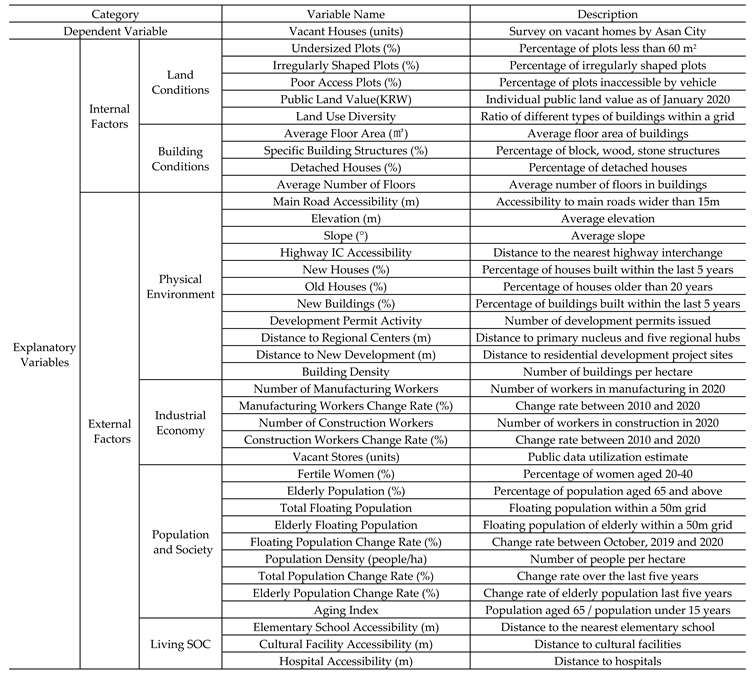
The dependent variable, vacant homes, refers to homes that have been empty for over a year according to relevant laws. A survey on the state of vacant homes in 2020, which included checking actual occupancy and whether the house had been demolished, found a total of 266 vacant homes in Asan City. Due to the potential distortions in statistical surveys caused by the COVID-19 pandemic starting from 2021, data from 2020 will be used. Review of previous research has shown that many variables have been considered in determining the factors that influence the occurrence of vacant homes, depending on the purpose of the research. These factors can be divided into internal factors, which consider the characteristics of the building or land itself, and external factors, such as the physical environment and social conditions surrounding the property. Small and irregular plots, as well as poor accessibility, are commonly seen in old residential areas or old downtowns, and there is generally a tendency for people to avoid these poor living conditions as economic development and living conditions improve. Therefore, land characteristics that have a direct correlation with the occurrence of vacant homes were selected as explanatory variables. With improved access to data through public data platforms, the use of building registry information has increased. In areas near downtowns where vacant homes are commonly found, the average building floor area is small, structures other than reinforced concrete are common, and the ratio of single-story buildings is high. Considering these characteristics, average floor area, specific building structure, single-family home ratio, and average number of floors were utilized. Among external factors, the most explanatory variables were selected from the physical environment surrounding the vacant homes. Housing ratio, distance to main roads, road accessibility, new development projects, and the progress of redevelopment projects are representative indicators of the physical environment of an area. Elevation and slope are indicators showing the development conditions of the land, and the ratio of new to old homes is an indicator that can analyze the investment situation in the area. Distance to the regional center, main road accessibility, and highway interchange accessibility can analyze the level of transportation services in the area, and the distance to new development project sites is an indicator to reflect the impact of nearby development projects. Considering the industrial economy sector, Asan City is an industrial city based on manufacturing, and manufacturing and construction play a crucial role in the city’s economic development, thus the number of workers in manufacturing and construction and their rate of change were selected as variables. In the population and social sector, the ratio of women of childbearing age and the elderly population ratio have been shown to be related to the occurrence of vacant homes in numerous studies and are used to predict the sustainability and decline of the area. Floating population is one of the most frequently used big data to assess the vitality of an area. To understand changes in housing demand, population density, total population change rate, and the rate of change in the elderly population were selected. Lastly, the value of home is determined by its residential utility [22], which is influenced by factors determining residential location [23]. The central government publishes national land surveys that diagnose changes in living conditions in grids, among which access to elementary schools, cultural facilities, and hospitals were selected as explanatory variables in the living SOC (Social Overhead Capital) area.
Table 2.
Variable composition and explanation.
4.2. Analysis Methods and Procedures
I analyze the factors contributing to the occurrence of vacant homes across Asan City, and investigate the factors for vacant home occurrences on a localized level according to the characteristics of different areas. To begin with, i conduct a spatial analysis of the current status of vacant homes in Asan City to examine patterns of spatial concentration and dispersion. The spatial analysis unit proceeds with a 500m x 500m grid, reflecting an appropriate radius of 500m for density analysis at the micro-level within urban areas [24,25]. Three types of analysis are conducted for spatial distribution. The first is Quadrat analysis, which analyzes the density of points within a grid that has been divided into regular intervals [26]. The second is Kernel Density Estimation. The Kernel Function is non-negative, symmetric around the origin, and has an integral value of one. The density value calculated from the point to the set distance is reassigned to the grid to identify hot spots. Lastly, according to the First Law of Geography [27], everything is related, but things that are closer are more related than those that are further away. If the subject, which is assumed to have a cause and effect, shows a systematic pattern in space, it can be considered to have Spatial Autocorrelation, and we utilize the commonly used Moran’s I statistic for measurement.
Once areas of high vacant home occurrences are identified through spatial distribution analysis, we standardize and set regions. Cluster analysis is performed using the attribute values of the explanatory variables selected in section 4.1 for these standardized regions. The type of location conditions derived are considered for naming and are used to analyze the localized impact on vacant home occurrences.
The explanatory variables presented in section 4.1 are selected as all possible variables that are expected to influence the occurrence of vacant homes in Asan City. Among them, to identify the factors that actually have an impact, we perform the Pearson correlation coefficient. The selected explanatory variables are correlated with the occurrence of vacant homes, but they do not explain the cause and effect. In social sciences, regression analysis, which is the most widely used statistical method to set equations among these variables to explain their interrelationships and causality, is performed. For regression analysis, there are assumptions about the error term, and failure to meet these can lead to incorrect analysis results. Especially when spatial heterogeneity and homogeneity of the explanatory variables are shown, similar trends in errors can be observed, and in such cases, a statistical model that reflects spatial similarities and differences may be more suitable. In addition, since the number of vacant homes is countable data indicating the frequency of occurrence and cannot take negative values, it is important to construct a model that has a function capable of appropriately reflecting the distribution of the count data to estimate the impact of the explanatory variables. Therefore, i examine model fit and explanatory power through multiple regression analysis, Poisson regression models, and negative binomial regression models, and compare the results of models with spatial weights applied through spatially weighted regression models to examine the factors for vacant home occurrences from a city-wide perspective of Asan City. Lastly, Geographically Weighted Regression is conducted on a localized level to estimate the factors for vacant home occurrences for each type of high-density vacant home area.
5. Analysis Results
5.1. Spatial Statistical Analysis and Type Classification
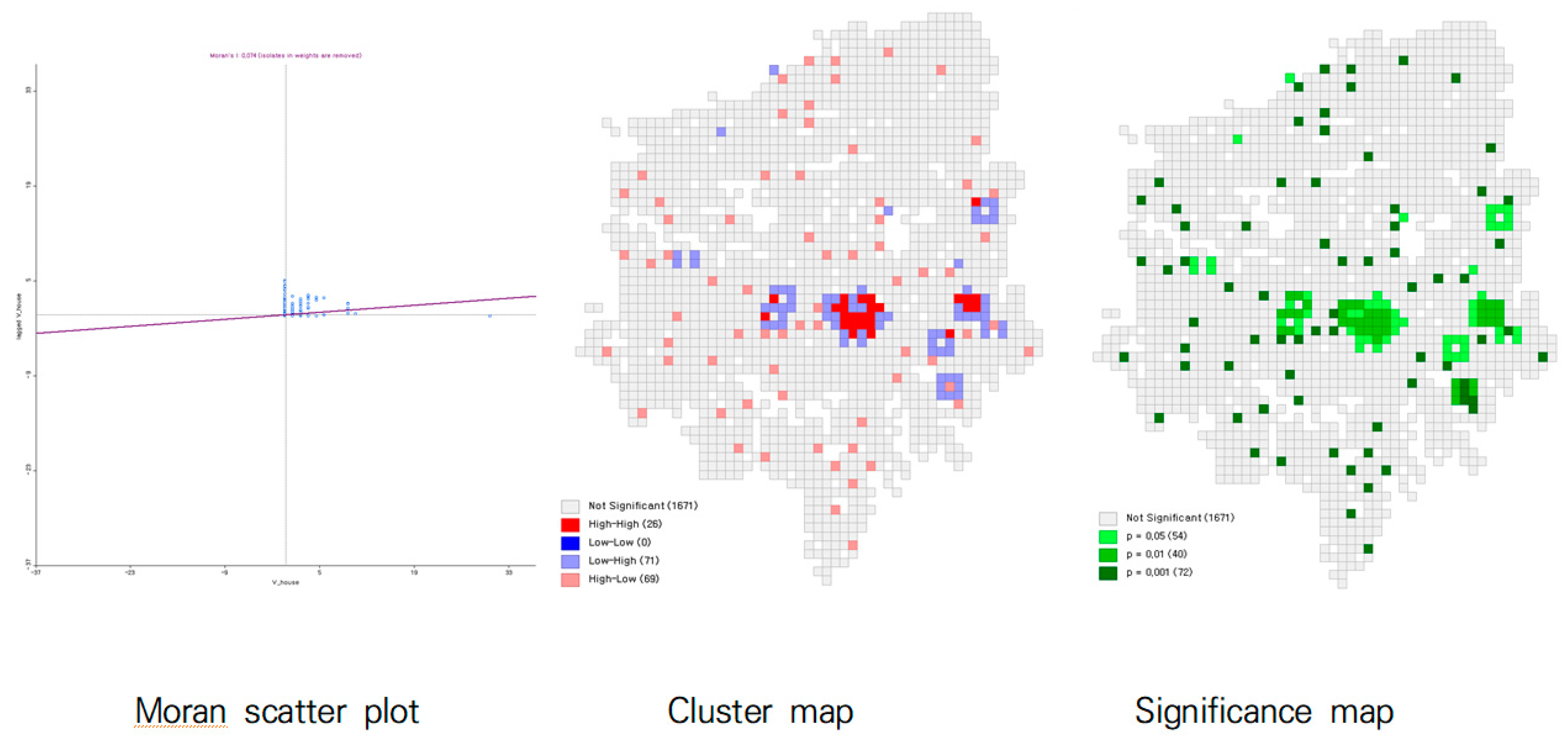
Base d on the vacant home data from Asan city, a quadrat analysis was conducted using ArcGIS. The entire area of Asan city was divided into 500m x 500m grids, and among these, 1,844 grids containing buildings were analyzed. Generally, if the variance-to-mean ratio equals 1, it is interpreted as regular; if less than 1, as random; and if greater than 1, as clustered [28]. The analysis results of vacant homes show a variance-to-mean ratio of 5.05, indicating that vacant homes in Asan city are clustered. The Global Moran’s I statistic for vacant homes in Asan city is 0.075, indicating a low level of spatial autocorrelation overall. The results of the Local Moran’s I analysis for deriving clustered areas of vacant homes revealed the distribution of HH type clusters in certain areas, including the old downtown centers around Onyang1-dong and Onyang2-dong, as well as in Baebang-eup and Tangjeong-myeon.
Figure 2.
Results of spatial autocorrelation analysis of Vacant homes in asan city.
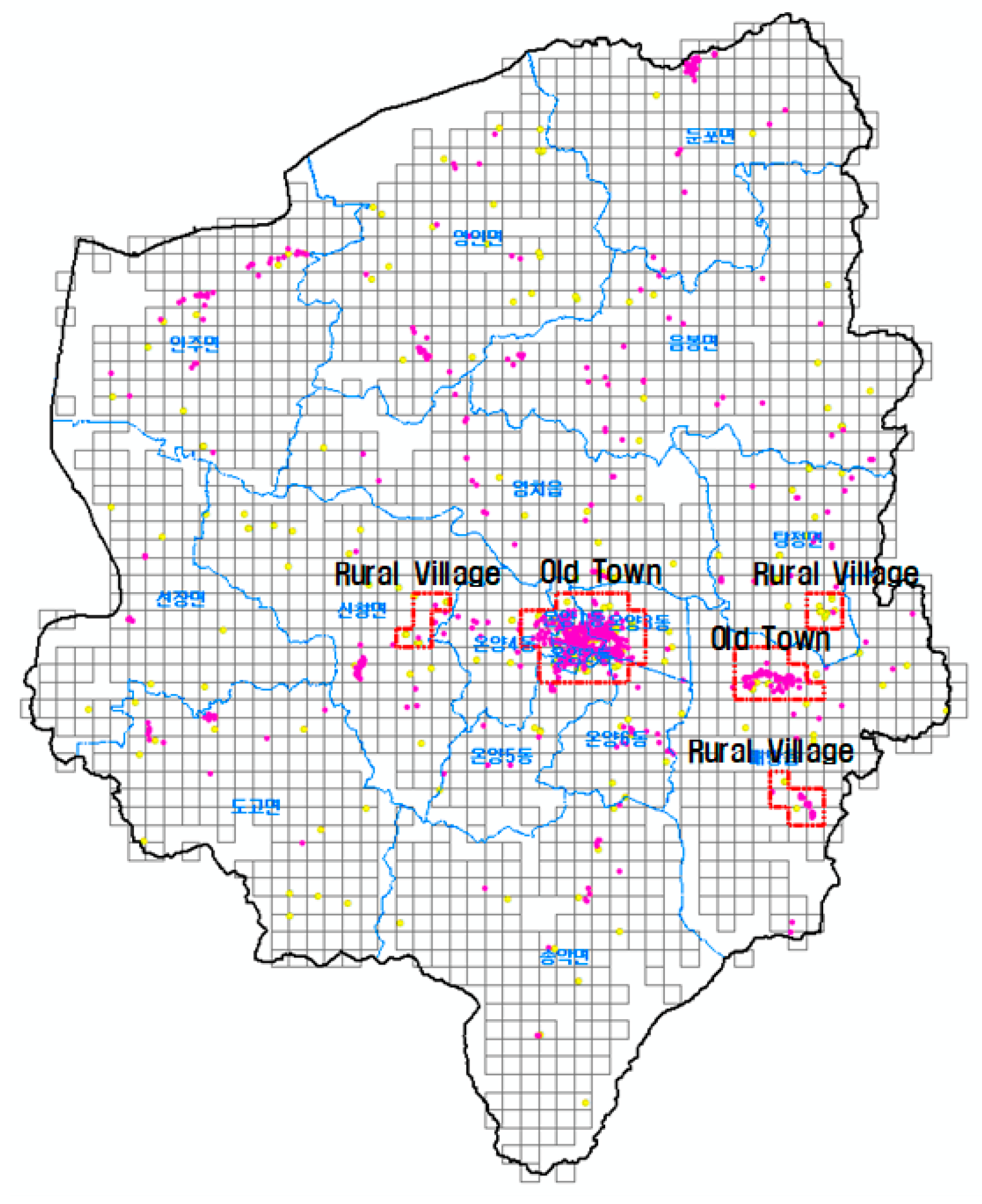
To standardize areas with a high concentration of vacant homes and derive clustered areas, as well as to categorize regions with similar characteristics, cluster analysis was performed. K-means clustering analysis was conducted to minimize the variance within each group. The dendrogram analysis using the Ward linkage method suggested that dividing into two clusters was appropriate. Cluster 1 is characterized by a high ratio of poor road connectivity, low individual land prices, low building density, and low pedestrian traffic. It also has low accessibility to main roads and a high proportion of block, log, and stone structures, defining it as a “rural village type.” Cluster 2 is defined by a large average floor area, high average number of floors, and high individual land prices. It has a high ratio of detached houses, high building and population densities, and a large elderly population, defining it as an “old town type.”
Figure 3.
Types of vacant home clusters.
5.2. Factors Causing Vacant Homes in Asan City from a Global Perspective
To analyze the factors affecting the occurrence of vacant homes in Asan city from a global perspective, the correlation between 36 explanatory variables and the number of vacant homes was examined. When there are too many explanatory variables, issues such as model overfitting and multicollinearity can arise, necessitating the elimination of explanatory variables through correlation analysis. Pearson correlation analysis, the most commonly used method for analyzing the correlation between interval and ratio scale variables, was conducted. The final explanatory variables selected after excluding variables with significant correlation at the 0.01 level and suspected of multicollinearity are ‘vacant stores’, ‘undersized plot ratio’, ‘average number of floors’, ‘total population change rate’, ‘distance to new development projects’, ‘number of construction workers’, and ‘land use mix’, totaling seven.
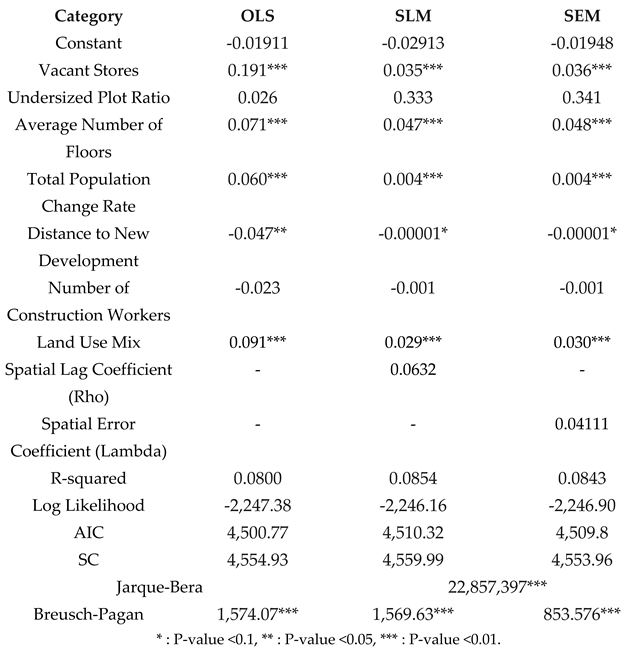
To select the optimal analysis model for the factors influencing the occurrence of vacant homes, the Lagrange Multiplier Test for the general regression model was conducted. The results showed that the LM-lag value was significantly higher than the LM-error value, suggesting that the spatial lag model is more appropriate for analyzing the factors influencing vacant home occurrences in Asan city than the spatial error model.
The results of the general regression model, spatial lag model, and spatial error model are as follows in (Table 3). The Log Likelihood statistic is highest for the SLM model, indicating the best fit to the data among the models tested. However, considering the balance between model fit and complexity, as indicated by the AIC and SC values, the SLM model does not necessarily perform the best, suggesting that the increase in model complexity does not proportionally increase the fit. Given the diverse conditions within Asan city, selecting a model based solely on simple statistical comparisons may not always be the best approach. The coefficient of determination is highest for the SLM, meaning it explains the variability in the observed data slightly better than the other models and captures the data structure more accurately by including spatial autocorrelation. However, the relatively low coefficient of determination values for all models suggest that the explanatory power of the models is limited, indicating the need for additional variables or changes to the model.
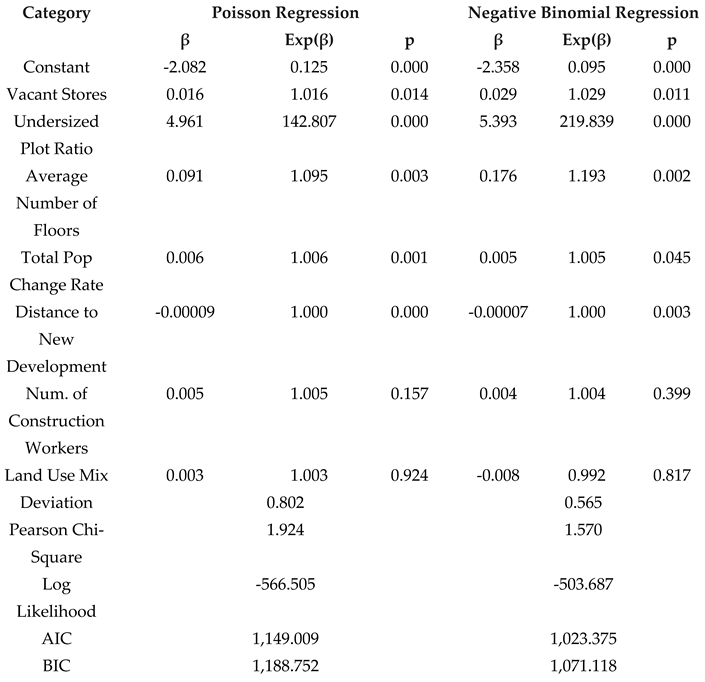
The research analysis unit of a 500m grid encompasses a total of 1,844 grids across Asan city, but since 1,690 of these grids have a dependent variable of vacant homes equal to zero, the distribution is skewed towards zero rather than following a normal distribution. Since the probability of occurrence is very low, resulting in many zero outcomes, and because the number of vacant homes is countable data, further analysis was conducted using Poisson regression models and negative binomial regression models. The comparison of Log Likelihood, AIC, and BIC statistics showed that the negative binomial regression model has a greater impact on some variables compared to the Poisson regression model and also showed superior performance metrics. It has a higher explanatory power compared to the previously analyzed OLS, SLM, and SEM models. The analysis results from the negative binomial regression model revealed that the factors influencing the occurrence of vacant homes in Asan city from a global perspective are ‘vacant stores’, ‘undersized plot ratio’, ‘average number of floors’, ‘total population change rate’, and ‘distance to new development’. It was found that an increase of one unit in vacant stores leads to an increase of 0.03 homes being vacant. This indicates a strong positive correlation between vacant homes and vacant stores, both of which are idle real estate resulting from urban decline.
Table 4.
Analysis results of PRM, NBRM.
5.3. Factors Causing Vacant Homes in Asan City from a Local Perspective
The analysis of the models from a global perspective generally indicated low explanatory power, leading to the conclusion that additional explanatory models are needed based on the characteristics of different regional types. Therefore, a localized analysis of the factors causing vacant homes was conducted, targeting two types of areas identified as having a high concentration of vacant homes: “Old town type” and “Rural Village.” All seven variables utilized in the global model were applied to construct and analyze the Geographically Weighted Regression (GWR) model.
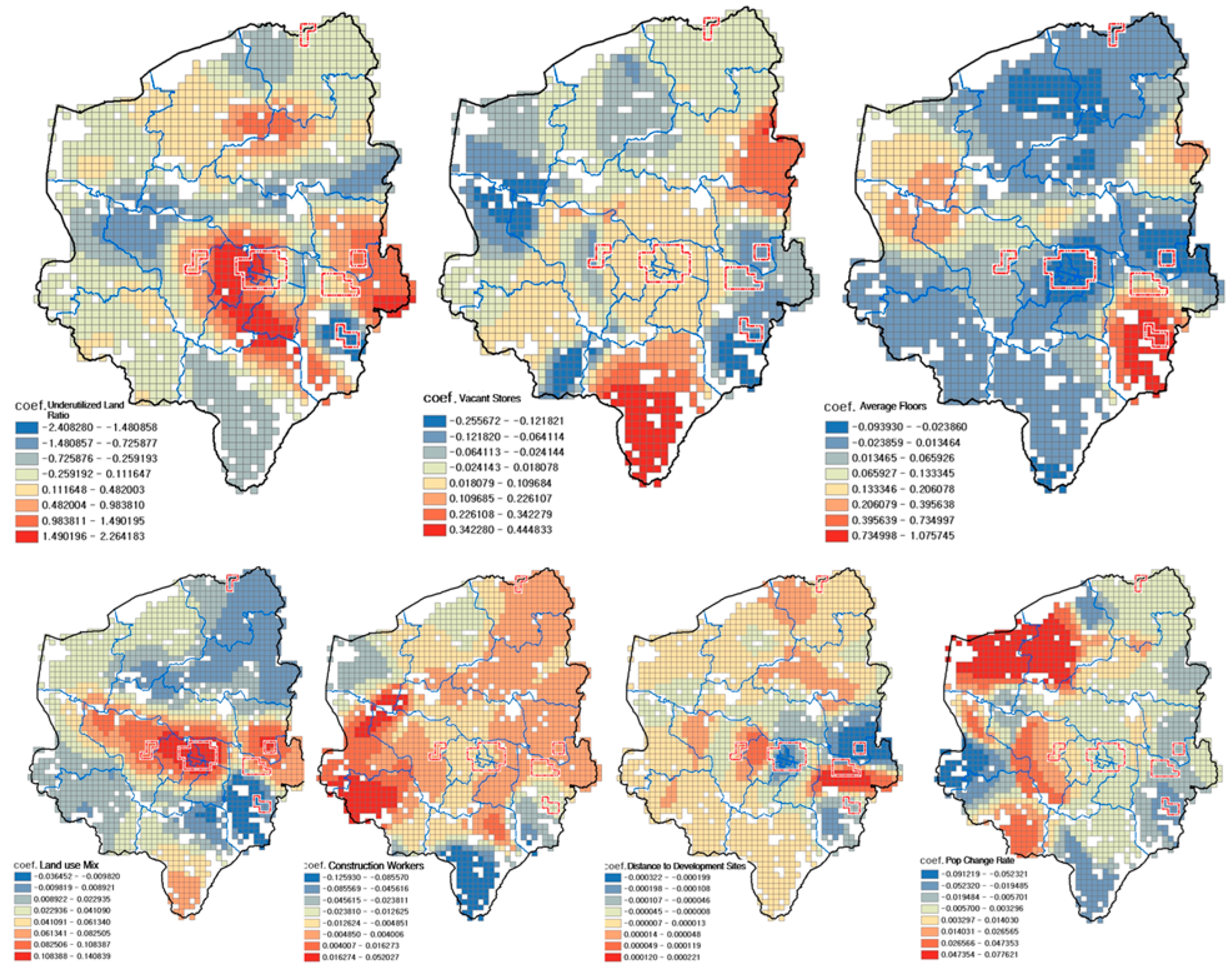
The regression coefficients of the seven explanatory variables acted as different influencing factors in different regions, confirming that the factors affecting the occurrence of vacant homes exhibit spatial heterogeneity at the regional level. Comparing the local regression coefficients for factors influencing vacant home occurrences by type, the Old town type showed the highest coefficients for the undersized plot ratio and land use mix, while the Rural Village type showed the highest for average number of floors and land use mix. Examining the degree of influence of the explanatory variables predicted to be the main factors in the occurrence of vacant homes in the Old town type, it was found that a 1% increase in population decreases the number of vacant homes by 0.003, a 1 km increase in distance from new development projects decreases the number of vacant homes by 0.1, and an increase of one construction worker decreases the number of vacant homes by 0.006. From a localized perspective, it can be seen that an increase in the total population growth rate, avoiding new development projects in nearby areas, and an increase in the economically active population in the region’s main industries act as factors that reduce the occurrence of vacant homes, as suggested by numerous previous studies.
Table 5.
Analysis results of GWR.
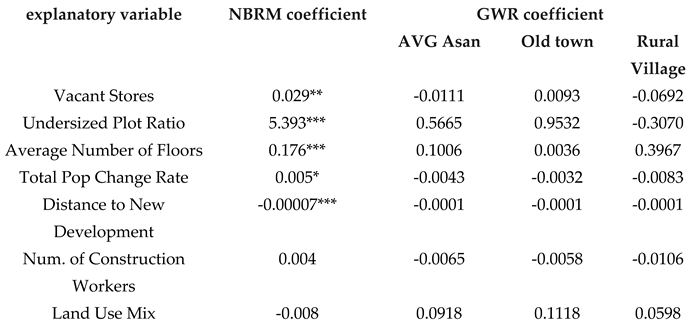
Figure 4.
GWR Coefficients by Factors.
6. Conclusions
Korea is facing the reality of a keyword known as “regional extinction.” The phenomenon of shrinking cities, predominantly affecting regional urban areas, coupled with the rise in vacant homes within original downtown sectors due to insufficient post-regeneration efforts, and the growing concern over escalating numbers of vacant properties in existing cities triggered by central government-driven housing expansion initiatives, represents critical challenges that demand our attention. To prepare countermeasures for the vacant home problem caused by urban decline, an empirical analysis study was conducted targeting Asan city, one of the medium-sized cities in the provinces. The study thoroughly reviewed the relationship between urban decline and the occurrence of vacant homes, the characteristics of development and decline in large and medium cities, and the factors and impacts of vacant home occurrence in large and medium cities, proceeding with status analysis, selection of explanatory variables, and analysis of causative factors.
In Asan city, 266 vacant homes are distributed, and through dot distribution patterns and regional characteristic analysis, the spatial types of areas with a high concentration of vacant homes in Asan city were defined as “Old town type” and “Rural Village type.” Considering the population, industry, and location characteristics of Asan city, and factors causing vacant homes presented in previous studies, 36 explanatory variables were derived and categorized into internal and external factors. The analysis of factors causing vacant homes from a global perspective in Asan city revealed that vacant stores, average number of floors, total population change rate, distance to new development projects, and land use mix are factors triggering vacant homes. The analysis of factors causing vacant homes from a localized perspective through Geographically Weighted Regression (GWR) showed that undersized plot ratio and land use mix are the most significant influencing factors for the Old town type, and average number of floors and land use mix for the Rural Village. The favorable population and industrial conditions unique to Asan city, differentiating it from the general medium cities, also act as negative influencing factors on the occurrence of vacant homes.
The analysis of population growth patterns in downtown and suburban areas of Asan city indicates that Asan city is in the suburbanization stage according to Berg (1982)’s urban development stages, and should be considered a growing city. However, despite being a growing city, the occurrence of vacant homes due to the decline of some areas, such as the original downtown, is problematic, and if it reaches the stage of deurbanization where both downtown and outer population decrease, the idle real estate problem can be very difficult to address. Despite acting as a factor reducing vacant homes in some areas due to the solid population and industrial base in Asan city, physical environments (such as undersized plots and land use mix) have a significant impact on the occurrence of vacant homes. In the paradigm of shrinking cities where low birth rates, aging, and low growth are becoming entrenched, policies should be pursued towards reducing vacant stores, promoting natural and social increases in population, and reusing existing facilities rather than new development projects to prevent the occurrence of idle real estate including vacant homes within the city. At the same time, quick revitalization through designation of maintenance areas is necessary for regions like Old town type and Rural Village where vacant homes are locally concentrated. It is crucial for the public, including Asan city, land and housing owners, to prevent regional decline caused by a few vacant homes through active vacant home maintenance including infrastructure such as roads and parks.
This study was conducted focusing on the analysis of factors causing vacant homes in Asan city from both global and localized perspectives. Important policy implications were obtained, and the following limitations of the study were recognized: First, the absence of statistical data related to vacant stores. They occur frequently along with vacant homes and are a direct factor in their occurrence, yet public statistics are not established. Second, the application limit according to urban characteristics. Asan city represents the characteristics of provincial medium-sized cities but is a recently growing city, different from local small cities facing the crisis of regional extinction due to population decrease. Third, the unification of related statistics. Vacant homes are defined and managed differently in various laws such as the Building Act, Vacant House Act, and Rural Community Development Act, and statistical data are provided differently by each ministry. Future research is expected to be substantial, capable of being reflected in policy, if these aspects are supplemented and vacant home causative factors are intercompared through various urban form classifications.
Author Contributions
Conceptualization, J-H. C.; Data Curation, J-H. C.; Formal analysis, J-H. C. and S-S. H.; Investigation and Methodology, J-H. C. and M-J. W.; Project administration, J-H. C.; Resources, Software, and Supervision, S-S. H and M-J. W.; Validation and Visualization: J-H. C; Writing, J-H. C
Funding
This research received no external funding
Conflicts of Interest
The authors declare no conflict of interest
References
- Accordino, J.; Johnson, G. T. Housing and Community Development Policy: Addressing the Vacant and Abandoned Property Problem. Journal of Urban Affairs. 2020, 22, 301–315. [Google Scholar] [CrossRef]
- Spellman, W. Abandoned buildings: Magnets for crime. Journal of Criminal Justice. 1993, 21, 481–495. [Google Scholar] [CrossRef]
- Noh, M.-J.; Yoo. S.-J. An Study on the Cause of Abandoned Vacant Houses. Korea Real Estate Review. 2016, 26, 7–21. [Google Scholar]
- Shim, J.-S. Central and Local Governments’s Policies ass a Response to the Problems of Vacant Houses: Lessons from the Case of Japan. Journal of the Korean Cadastre Information Association. 2017, 19, 3–15. [Google Scholar] [CrossRef]
- Jung, S.-Y.; Jun, H.-J. Exploring Spatial Dependence in Vacant Housing Growth. Journal of Korea Planning Association. 2019, 54, 89–102. [Google Scholar] [CrossRef]
- Morckel, V. C. Empty Neighborhoods: Using Constructs to Predict the Probability of Housing Abandonment. Housing Policy Debate. 2013, 23, 469–496. [Google Scholar] [CrossRef]
- Baba, H.; Asami, Y. Regional Differences in the Socio-economic and Built-environment Factors of Vacant House Ratio as a Key Indicator for Spatial Urban Shrinkage. Urban and Regional Planning Review. 2017, 4, 251–267. [Google Scholar] [CrossRef]
- Kim, H.-J.; Seong, E.-Y.; Yeo, K.-H. Exploring Predominant Neighborhood Factors for Proactive Management of Vacant Houses. Journal of the Urban Design Institute of Korea Urban Design. 2020, 21, 137–150. [Google Scholar] [CrossRef]
- Martinez-Fernandez, C.; Audirac, I.; Fol, S.; Cunningham-Sabot, E. Shrinking Cities: Urban Challenges of Globalization. International Journal of Urban and Regional Research. 2012, 36, 213–225. [Google Scholar] [CrossRef] [PubMed]
- Kim, K.-J. Causes and Consequences of Urban Decline in Korean Cities. The Korean Urban Geographiccal Society. 2010, 13, 43–58. [Google Scholar]
- Ahn, J.-G.; Ko, Y.-S.; Kim, D.-K. A study on the urban development plan for the change of urban structure in local small and medium-sized cities. Journal of Housing and Urban Finance. 2021, 6, 23–37. [Google Scholar] [CrossRef]
- Lee, S.-D. Take the path of urban innovation; Gyeonggi Research Institute: Gyeonggi-do, South Korea, 2013. [Google Scholar]
- Davidson, M.; Dolnick, F. A Planners Dictionary; Abe Books Inc.: Raleigh, NC, USA, 2004. [Google Scholar]
- Oh, J.-G.; Kim, K.-H. A Study on the Concept of Underused Multi-Dimensional Space and Design Characteristics of Space Renewal. Journal of the Architectural Institute of Korea. 2011, 27, 87–96. [Google Scholar]
- Lim, Y.-K.; Lim, H.-S. Neighborhood Regeneration Policy Proposal on the Revitalization and Reclamation of Vacant Urban Spaces; Architecture & Urban Research Institute: Sejong, South Korea, 2012. [Google Scholar]
- Urban Regeneration Project Team. Urban Decline Status Data Construction and Comprehensive Information System Development; Ministry of Land, Transport and Maritime Affairs: Sejong, South Korea, 2010. [Google Scholar]
- Sternlieb, G.; Burchell, R. W.; Hughes, J. W.; Listokin, D. Planned Unit Development Legislation: A Summary of Neccessary Considerations. Journal of Law & Policy. 1974, 7, 71–100. [Google Scholar]
- Han, S.-K. A Study on Spatial Cluster and Fixation Process of the Vacant Houses in Iksan. The Korea Spatial Planning Review. 2018, 97, 17–39. [Google Scholar]
- Berg, L. V.; Drewett, L.; Klaassen, L.H. Etal. In Urban Europe: A Study of Growth and Decline; Pergamon Press Release: Oxford, 1982. [Google Scholar]
- Kang, M.-N. Etal. A Study on the Implications of Vacant Housing Policy; Korea Research Institute for Human Settlements: Sejong, South Korea, 2017. [Google Scholar]
- Kim, J.-H.; Nam, J. A Study on Vacant House Distribution and Management of Urban Declining Area. Journal of the Korean Regional Science Association. 2016, 32, 105–122. [Google Scholar]
- Kim, H.-J.; Lee, J.-G.; Jung, I.-H. Forecasting for Spatial Patterns of Empty Houses in Rural Area Using Probabilistic Choice Model. JOURNAL OF THE RESIDENTIAL ENVIRONMENT 2016, 14, 15–27. [Google Scholar] [CrossRef]
- Han, E.-J.; Son, S.-Y. An Analysis on Spatial Autocorrelation between Increased Foreigners and Residential Mobility in Seoul. Journal of Korea Planning Association. 2017, 52, 201–224. [Google Scholar] [CrossRef]
- Goodwin, M. T.; Unwin, D. Defining and Delineating the Central Areas of Towns for Statistical Monitoring Using Continuous Surface Representations. Transactions in GIS. 2002, 4, 305–317. [Google Scholar] [CrossRef]
- Borruso, G. Network Density Estimation: Analysis of Point Patterns over a Network. Lecture Notes in Computer Science. 2005, 3482, 126–132. [Google Scholar]
- Yu, K.-B. Generalization of Point Feature in Digital Map through Point Pattern Analysis. The journal of GIS Association of Korea. 1998, 6, 11–23. [Google Scholar]
- Tobler, W. R. A Computer Model Simulation of Urban Growth in the Detroit Region. Economic Geography. 1970, 46, 234–240. [Google Scholar] [CrossRef]
- Lee, J.-S.; Kim, S.-D. A Study on the Spatial Distribution of the Vacant Houses and their Accessibility : Focused on the Vacant Houses in Okcheon-gun, Chungcheongbuk-do. Journal of Korean Society of Media and Arts, 2021, 21, 791–802. [Google Scholar]
- Jang, M.-J.; Kwon, S.-M. An Analysis of the Determinants of Vacant Housing Occurrence. Journal of the Korean Urban Management Association. 2021, 34, 77–96. [Google Scholar] [CrossRef]
- Kamata, Y.; Kang, J.-E. Empirical Comparative Analysis of Trends and Factors Affecting Vacant Houses in Korea and Japan. Journal of Korea Planning Association. 2020, 55, 56–72. [Google Scholar] [CrossRef]
Figure 1.
Negative effects of Vacant homes.
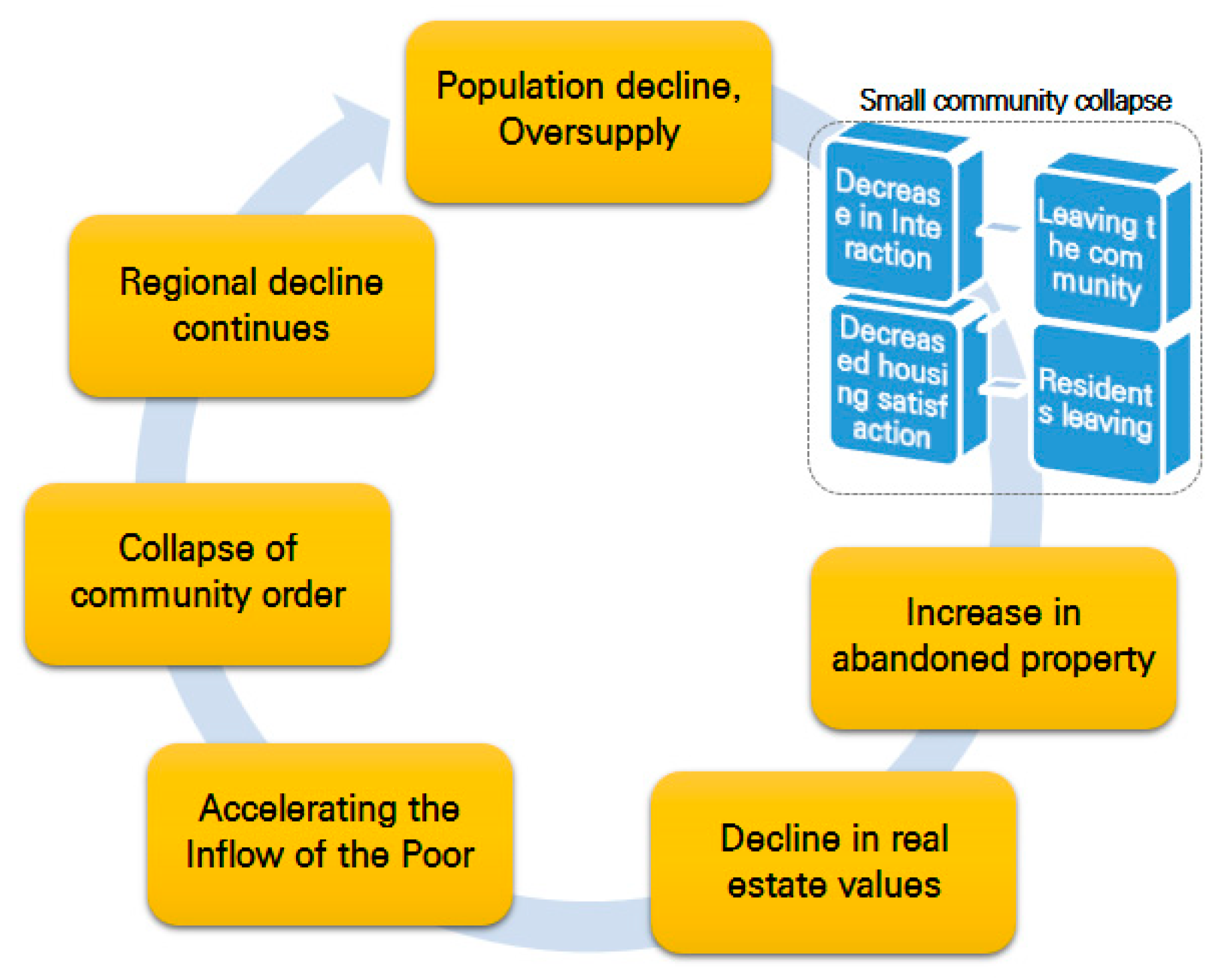
Table 3.
Analysis results of OLS, SLM, SEM.
Disclaimer/Publisher’s Note: The statements, opinions and data contained in all publications are solely those of the individual author(s) and contributor(s) and not of MDPI and/or the editor(s). MDPI and/or the editor(s) disclaim responsibility for any injury to people or property resulting from any ideas, methods, instructions or products referred to in the content. |
© 2024 by the authors. Licensee MDPI, Basel, Switzerland. This article is an open access article distributed under the terms and conditions of the Creative Commons Attribution (CC BY) license (http://creativecommons.org/licenses/by/4.0/).
Copyright: This open access article is published under a Creative Commons CC BY 4.0 license, which permit the free download, distribution, and reuse, provided that the author and preprint are cited in any reuse.