

Submitted:
26 February 2024
Posted:
27 February 2024
You are already at the latest version
Abstract
This article presents a critical review of the current and future state of “business architecture” within the enterprise architecture frameworks. The review is conducted in the following four stages. In the first stage of analysis, the research and publication questions are established. In the second stage, the search for information is designed and implemented using the Prisma methodology, and once the selection criteria were applied, 75 article-type documents were selected from Scopus, WoS, and Dimensions databases. In the third stage, the information analysis is conducted, and then it is synthesized. Finally, in fourth stage, the discussion is elaborated. This research contributes in understanding the current and future trends of business architecture in Industry 4.0. Considering the challenges of the changing market, the results show the need to implement architectures and dynamic business models, including their artifacts, in a globalized context immersed in new technologies.
Keywords:
enterprise architecture
; business architecture
; Industry 4.0
; business model
; digital transformation
; business sustainability
; digital economy
1. Introduction
Since business architecture relates to the productivity, efficiency, and agility, it is regarded as a fundamental aspect for a factory or company. Organizations need to assess their operation and behavior in terms of business architecture, which allows them to make better strategic decisions [1]. Making a strategic fit within the enterprise architecture is a major challenge for organizations, and it determines their success or failure. Research in enterprise modeling has led to the development of a wide range of modeling techniques for further understanding of the enterprise architecture [2]. There are different work frameworks, such as the Open Group Architecture Framework (TOGAF) and the Reference Architecture Model for Industry 4.0 (RAMI 4.0) for intelligent industry, to model business architecture.
The fourth industrial revolution, Industry 4.0 (I4.0), is committed to the competitiveness of the future manufacturing sector. However, it needs a common agreement for its implementation. Tools are required to benefit companies’ transition toward interconnected smart factories, especially small-and medium-sized companies and factories emerging from new technologies.
According to research carried out by the Department of Mechanical Engineering of the Eastern Mediterranean University on different architectural frameworks for I4.0, it is necessary to define the areas and knowledge required to implement I4.0. Consequently, a road map to the fourth industrial revolution and a generic framework for practical uses are lacking [3].
I4.0 implies greater company organization and shorter innovation, development, and production times. Companies must strengthen the value chain with new business models and architectures, driving demand customization. Intelligent industry seeks the efficient use of resources using the information, communication, automation, internet of things, big data, artificial intelligence, collaborative robots, and simulation technologies [4,5].
Although RAMI 4.0 has a good level of acceptance, it still needs more actual applications in the industry. The lack of specifications in the standard itself hinders the implementation of this architecture [6].
2. Theoretical framework
2.1. Enterprise Architecture
Enterprise architecture has a broad vision of the company to fulfill strategic and operational goals. Enterprise architecture includes business architecture, information systems architecture, and technology architecture. It defines methods and models of the organizational structure with the appropriate use of technology [7,8].
2.2. Business Architecture
Business architecture describes the strategic organization of the company focused on the commercial activity to obtain profits. It aligns the strategic goals of the organization with its technology, resources, infrastructure, and business processes and capabilities. Business architecture aims to improve the organization’s management, generating a competitive advantage in the market, by making better decisions to achieve higher profitability [9].
2.3. Industry 4.0
I4.0 is the fourth industrial revolution or technological revolution that integrates different technologies, such as big data, industrial automation (robotics), simulations, integration systems, cyber-physical systems, internet of things, cyber security, computing in the cloud, additive manufacturing, and augmented reality, for the continuous improvement of the industry. I4.0 combines information and communication technologies with digital manufacturing and production processes [10,11,12].
2.4. Enterprise Architecture Framework
2.5. Reference Architecture Model for Industry 4.0 (RAMI)
Figure 1 shows the three-dimensional business architecture model, RAMI, which is conceived for I4.0. It currently supports European companies, such as Siemens, ABB, and Festo, dedicated to automation [17].
The first dimension of RAMI 4.0 is on the vertical axis. The layers of the model represent different perspectives based on the organization of business processes, functional descriptions of assets, information such as the necessary data, communications for access to the information, the integration for the transition from the real world to the digital world, and the assets or physical things in the real world. The second dimension is the axis of the life cycle and the product value chain based on the IEC 62890 Standard, and the last dimension is the axis of the functional classification of the different stages of I4.0, including process management in the industry and risk management in the design of control systems based on ISA-95, IEC 62264, and IEC 61512 Standards [17].
In greater detail about RAMI [18], the vertical axis of the RAMI model has six layers, which relate as follows:
The "asset layer" shows the physical objects that connect to the digital world through the "integration layer", processing the information using system drivers, human-machine interface devices, humans, sensors, and others. The "communication layer" provides standardized communications between the integration and information layers.
The information layer manages the total number of sales, orders, suppliers, locations, products, and materials in the factory and the components and machines to manufacture the products. The information layer transforms the data appropriately for the upper layers using software in the form of applications and files.
The next layer on the vertical axis is the "functional layer", responsible for production standards, actions, processing, and control of the system. Provides users with product features such as cloud services (restoration functionality / backup). The last layer is the "business layer", which is made up of business strategy, business environment, and business objectives.
All the layers of the vertical axis connect with the horizontal axis of the left part of Fig. 1, which is the life cycle and the value flow of the industrial production process.
The second horizontal axis represents the hierarchical layer based on international standards for integrating business control systems. This axis has six layers in which the "Devices” layer can be highlighted, allowing you to control machines or systems intelligently, and the layer called" Connected World" is at the top. These layers show the fundamental points of view for the organization of Industry 4.0
3. Methodology
This research aims to know the Framework and the appropriate methodology to carry out a business architecture for the manufacture of large-scale drone swarms. Enterprise architecture (EA) is a systemic approach that helps organizations model and describe themselves in different layers, such as strategy, business, application, and technology [19]. Making Business Architecture without fundamental Business Architecture is doing IT architecture. Only doing IT architecture is one of the main reasons why only 35% of the digital transformations of 850 companies worldwide were successful, according to a study carried out in 2020 by The Boston Consulting Group [20].
This critical review [21] aims to identify the current and future state of business architecture. To meet these goals, the following four stages are established: In the first stage of analysis, the research and publication questions are established. In the second stage, the search for information is designed and implemented using the Prisma methodology. In the third stage, the analysis of the information is conducted and synthesized. Finally, in fourth stage, the discussion is elaborated, interpreting the information, answering the research questions, and defining a research hypothesis. Figure 2 shows the proposed methodology.
3.1. Search criteria and selection of bibliography
3.2. Search criteria
The second stage begins with four activities: identifying the search keywords, selecting the databases, designing the search formula, and searching the databases. The criteria used to search and select articles using the Prisma methodology are described below.
The search criteria for selecting articles was “business architecture”, in abstract title and keywords. During the review, only formal literature (scientific publications, academic articles) was considered. The queries were made in the international databases, Scopus, Wos, and Dimension, and only documents written in English and published between 2018 and January 19, 2023 were viewed, using AND and OR Boolean operators. The search formulas, customized for each database, is shown in Table 3.
The search process, illustrated in Figure 3, was conducted in four phases using the Prisma methodology. In the Phase 1, 1,465 documents were found, using the search criteria “business architecture” in the title, abstract, and keywords (Table 4). In Phase 2 or screening, 595 documents published between 2018 and 2023 were selected. In Phase 3, the documents corresponding to article-type publications were chosen. Finally, in Phase 4, duplicate articles were eliminated, and a new language and publication type review was performed, and papers presented at congresses were eliminated. Eventually, 75 articles were obtained.
3.3. Data extraction strategies
To answer the publication questions, after obtaining the 75 papers in PDF format according to the search criteria and with the help of the Mendeley desktop tool, the following information was extracted from each paper: Work ID, job title, URL, source, year, country, number of pages, language, type of publication, name of publication, authors, affiliation, number of citations, abstract, keywords, sample size [22].
3.4. Data synthesis
The data collected for the publication questions were tabulated and presented as quantitative data to prepare a statistical comparison between the different solutions for each question. To answer the research questions, the researchers made an additional filter to search titles and summaries of the documents, identifying those that contribute to the answers sought.
4. Findings
In the third stage, the information is analyzed, showing the results to the PQ.
4.1. PQ1, PQ2, and PQ3: Results regarding the number of publications, search criteria, and origin of the documents.
Figure 4 shows the distribution of the 75 selected articles, based on the year of publication, without marking a trend. Regarding the frequency of the words found in the titles of the articles, the three words with the highest frequency are architecture, business, and company, showing correspondence between the 75 articles included and the search criteria “Business architecture” (Figure 5, a bar graph). On performing the frequency analysis by keywords, 371 words were found, and the five most used keywords are enterprise architecture, business architecture, TOGAF, enterprise, and business model, adding up to 16.7% of the total keywords.
When analyzing the number of articles by country, it was found that Indonesia is the country with the highest number of publications (25 articles), followed by China (7 publications), Colombia, Poland, and the United Kingdom (4 publications each) between 2018 and 2023. Twenty-six countries associated with the nationality of the authors of the articles were considered for the analysis. Indonesia and China corresponds to 40% of the nationalities of the authors (Figure 6).
4.2. PQ4, PQ5, PQ6 y PQ7 Results regarding the impact by number of citations
On analyzing the number of citations concerning the number of articles published annually, 2022 is the year with the highest total number of citations (Figure 7); whereas, year 2019 is the year with the lowest total number of citations. It is highlighted that years 2019 and 2022 had the same number of articles, 17 articles, published annually. Documents published in 2022 corresponds to 56% of the total citations in the last five years from 2018 to 2022, displaying a rising interest in topics related to business architecture.
Considering the average number of citations per article in the year, Figure 7 shows that 2018 and 2022 have the highest average citations per article. Comparatively, between 2018 and 2022, the number of documents published per year increased by 58.8%; whereas, the total number of citations had a greater increase, by 83%. Thus, again showing a growing interest in business architecture-related topics.
When conducting the analysis considering the number of articles per country and defining the number of citations of these documents by ranges, it can be seen that Indonesia is the country with the highest number of publications (Figure 8). However, most articles are rarely cited, unlike Norway whose only published article is highly cited. Articles from Canada and the United States are not frequently cited, having a citation number of less than 5.
Regarding the authors, Table 5 shows the ten authors with the highest number of publications, and Nilo Legowo stands out with four articles. Table 6 shows the authors with the highest number of citations, Qiang Zhi secures the first place, and Zhengshu Zhou has a total of 1,104 citations with article “Empirically modeling enterprise architecture using ArchiMate.” The authors with the greatest production are not the most cited ones.
Table 7 shows the 75 articles and their citations, arranged from highest to lowest, by number of citations. The ten most cited articles have 93.1% of the total citations of all articles.
Table 8 shows the names of the four journals with the highest number of publications on topics associated related to business architecture from 2018 to 2023. The other 70 articles have been published in 70 different journals. It is worth mentioning that the publications are not concentrated in a specific group of journals.
4.3. PQ8: Results regarding the writing in the abstracts of the articles
While analyzing the wording in the abstracts of the 75 articles, it is found that the goal and neutral wording predominates in 86% of the documents (Figure 9). Regarding feelings and polarity in the writing of the abstracts, Figure 10 shows that 41.3% of the articles were written calmly and with a sense of joy. It was also found that the two most cited articles were written objectively and without polarity.
4.3. PQ9: What are the keywords corresponding to Business Architecture Frameworks that appear in the co-occurrence network in the search for Business Architecture?
To respond to PQ9, the researchers developed a co-occurrence network for keywords (see Figure 11).
In the co-occurrence network, it is possible to visualize the keywords most used by the authors as a set. It is observed that "Enterprise Architecture" and "TOGAF" are together in 7 revised articles, with a problem-solution relationship, since TOGAF is a Framework for designing a Business Architecture. It is also noted that the keywords "Enterprise Architecture" and "Business Architecture" are in 4 articles. This relationship is an integration because Business Architecture is part of Business Architecture.
5. Discussion
In the fourth stage, the information is discussed based on the answers to the PQ and the answers to the RQ then a research hypothesis is formulated.
5.1. RQ1: ¿What frameworks are proposed or discussed in the papers regarding the design of business architectures?
In the fourth stage, the information is discussed based on the answers to the RQ and then a research hypothesis is formulated.
5.2. RQ1: ¿What frameworks are proposed or discussed in the papers regarding the design of business architectures?
Based on the 75 papers reviewed, a decent number of documents, approximately 25%, recognize TOGAF as a Framework to be used when designing an enterprise architecture [7,8,24,34,42,45,53,60,64,66,68,72,73,78,79,81,87,91] While the Zachman Framework is only proposed by one document [55], Other authors suggest processes for specific applications without reference to frameworks such as TOGAF or Zachman. [15,65,74,80,82].
5.3. RQ2: What are the proposed frameworks for smart industry?
The current industry must make a transition to the concept of smart factories. Only few studies were found that address this type of business architecture models [29,35], [85].
By expanding the search to include “RAMI” and “enterprise architecture”, eight more documents were found in Scopus (one article, one book, and six conference articles) (see Table 9). In this new search, the following was found: a comparison is made between RAMI and TOGAF, contributing to the implementation of RAMI for business architectures in intelligent enterprises [96]. Another paper proposes the fusion of RAMI 4.0 and TOGAF and evaluates it with a real industrial case [6]. Finally, it is proposed as future work to apply the ArchiMate modelling language (TOGAF) to the RAMI 4.0 framework to develop an enterprise architecture [95].
With I4.0, the demand for custom manufacturing products grows, it is necessary to standardize the programming and development for intelligent manufacturing [17].
For I4.0, architectures have been proposed, however, consensus is still required for the use of any one of them. The industry has specifically promoted two architectures, Reference Architecture Model for Industry 4.0 (RAMI) and Industrial Internet Reference Architecture (IIRA) [93].
5.4. RQ3: What business architecture application examples are there in unmanned aerial vehicles (UAV) manufacturing technology industries?
A business model for services based on UAV was found, focused on the communication process through the 5G mobile network. This process is presented as a development to solve large-scale services with UAVs with safety and reliability. However, there are still challenges to the integration of mobile network operators [61].
5.5. RQ4: What examples of business architecture applications have been carried out considering responsible consumption?
A company that is focused on business sustain manufactures long-term value products seeking excellent financial results and a positive impact on the society. Business sustainability integrates environmental protection with responsible consumption. In this review, articles with a business sustainability approach were referred to [32,43,49,84].
5.6. RQ5: What are the challenges of business architecture?
As companies currently face a constantly changing market and an extremely competitive environment, business models, artifacts, and their architecture must not be static [57]. Otherwise, enterprise architectures become obsolete in a short time [70]. Therefore, they must be adaptive and agile.
Additionally, digital technologies advance at a high speed, thus forcing companies to transform their business architectures to generate value. However, this cannot always be achieved as there is a gap between strategy and its application [28].
The digital economy brings new business models, new platforms, and new services creating other economic activities. The traditional industry must be transformed for it to drive the economy and social development [27].
Regarding the models for the I4.0, RAMI 4.0 has a good level of acceptance, but this needs more real applications in the industry due to a lack of specifications in the standard itself, which hinders the implementation of this architecture [6]. This architecture model represents a challenge. RAMI offers a good overview of the architecture of smart factories, but has limitations and a need for more clarity for users [18]. Designs of new business architectures for smart industry must respond to new technologies in Industry 4.0 [6]. Designs should use Frameworks that involve new technologies with a clear methodology for implementation [18]. Business Architecture models must allow analyzing a company in context [6].
5.7. RQ6: Are the countries that propose the Frameworks to work EA at 4.0 the same ones that socialize the results of the implementations?
In 2015, the ZVEI, the Association of German Electrical and Electronic Manufacturers, presented the Reference Architecture Model for Industry 4.0 (RAMI 4.0). RAMI currently has the backing of European automation companies such as Siemens, ABB, and Festo. However, Indonesia is the country that most socializes its results in publications [17].
5.8. RQ7: Are companies interested in new AE architectures proposed by the Academy for Industry 4.0?
Industry promoted the development of two reference architectures of Industry 4.0, the Industry 4.0 Reference Architecture Model (RAMI) and the Industrial Internet Reference Architecture (IIRA); however, according to [93], only a minority of researchers knew about these architectures and generated their proposals. Thus, there is a disconnect between the technological normalisation promoted by industry and the academic research on Industry 4.0 [93].
5.9. Discussion of the results of the publication questions
Companies are betting on innovation and technology to be more productive, it is to be expected then to find a lot of scientific literature on business architecture, however, this is not the case. The scarcity of scientific publications on business architectures may indicate that, although companies are interested in the implementation of Industry 4.0, they are not interested in showing their architectures and business models, as they are intangible assets of a company, causing the academic world to disagree in publications on the real advances that may exist in the industry.
5.10. Limitations
The review shows that the Asian and European continents have the highest production of documents on “business architecture” in the last six years. However, some authors use the terms “business architecture” and “enterprise architecture” interchangeably, which could broaden the results scenario in future reviews.
It is essential to mention that selecting only English-language documents significantly reduces the number of documents included in this review. For instance, 54 documents were excluded because they were written in Indonesian. This limits the review, however, the trend of high production in the Asian continent is preserved in the results shown in this document.
5.11. Hypothesis
The current “Framework” of Business Architecture lacks characteristics and artifacts that allow modeling Business Architecture for the manufacture of swarms of crewless aerial vehicles in the context of Industry 4.0.
6. Conclusions
The 2030 Agenda and the sustainable development goals propose the promotion of inclusive, sustainable, and innovative manufacturing. However, although there are two reference models for business architecture in I4.0, supported by the industry itself, a roadmap is still unclear for its implementation in real manufacturing cases in a standardized manner. There is, therefore, an opportunity to develop implementation methodologies in frameworks already recognized as RAMI or IIRA.
Smart industry seeks shorter innovation, development, and production times. New business models and business architectures are required to strengthen the value chain regarding the demand for customized products with greater flexibility in manufacturing processes.
During this review, it was found that there is a lack of documents addressing the implementation of business architectures in the context of I4.0 with a responsible and efficient use of resources. And also, literature was found that states that a clear methodology for implementing the RAMI framework is lacking; examples of implementation are missing. However, it was also found that a mature methodology such as the ADM of the TOGAF framework can be used to implement RAMI through modelling languages such as Archimate.
Another research opportunity is to develop business architectures for emerging technology companies, which would allow them to have an organizational structure for business, technology, and innovation management since its inception.
The RAMI Framework proposes a business architecture for Industry 4.0 accepted by the industry, which, according to the review, needs more applications and clarity for implementation. The researchers propose to implement a digital transformation from the design of the business architecture, integrating the philosophy of the RAMI Framework with the methodology already established by the TOGAF Framework (with more than 25 years of experience).
For the implementation of the new Business Architecture in the context of Industry 4.0, the RAMI philosophy can be integrated with the TOGAF ADM by modelling the business architecture in ArchiMate and simulating it in tools such as BPsim.
7. Future work
Modelling and publishing Industry 4.0 business architectures to bring academia and industry closer together.
Acknowledgments
This research has been funded by Dirección General de Investigaciones of Universidad Santiago de Cali under call No. 02-2023. The authors are particularly grateful to Virginia Chaina, Raúl Horacio Saroka, Claudio Felipe Freijedo and Daniel Piorun, professors of the Master in Strategic Management of Information Systems and Technologies of the Faculty of Economic Sciences at the University of Buenos Aires, for their comments and recommendations and for allowing us to consult the Institutional Digital Library.
References
- J. E. Puerta-Ramírez, J. A. Giraldo-García, and M. L. Tabares-López, “Evaluación de la Arquitectura de Negocio a través del Análisis de Factores Críticos para el Desempeño de una Organización,” Información tecnológica, vol. 30, no. 2, pp. 33–44. 2019. [CrossRef]
- B. Roelens, W. Steenacker, and G. Poels, “Realizing strategic fit within the business architecture: the design of a Process-Goal Alignment modeling and analysis technique,” Softw Syst Model, vol. 18, no. 1, pp. 631–662. 2019. [CrossRef]
- Z. M. Çınar, Q. Zeeshan, and O. Korhan, “A framework for industry 4.0 readiness and maturity of smart manufacturing enterprises: A case study,” Sustainability (Switzerland), vol. 13, no. 12, Jun. 2021. [CrossRef]
- W. de Paula Ferreira, F. Armellini, L. A. de Santa-Eulalia, and V. Thomasset-Laperrière, “A framework for identifying and analysing industry 4.0 scenarios,” J Manuf Syst, vol. 65, pp. 192–207, Oct. 2022. [CrossRef]
- M. Wynn and P. Jones, “Corporate Responsibility in the Digital Era,” Information, vol. 14, no. 6, p. 324, Jun. 2023. [CrossRef]
- C. Binder, W. Leiter, O. Joebstl, L. Mair, C. Neureiter, and A. Lüder, “Utilizing an Enterprise Architecture Framework for Model-Based Industrial Systems Engineering,” in IEEE International Conference on Industrial Informatics (INDIN), Institute of Electrical and Electronics Engineers Inc., 2021. [CrossRef]
- M. Ilham, A. Amalia, and N. Fajrillah, “Enterprise Architecture : A Strategy to Achieve e-Government Dimension of Smart Village Using TOGAF ADM 9. 2,” International Journal on Informatics Visualization, vol. 6, no. August, pp. 540–545, 2022, [Online]. Available online: https://joiv.org/index.php/joiv/article/download/1147/503.
- Y. U. Chandra, F. L. Gaol, and T. Matsuo, “Enterprise architecture on digital services industry for electronic customer feedback using togaf,” International Journal of Innovative Computing, Information and Control, vol. 17, no. 1, pp. 297–313. 2021. [CrossRef]
- R. P. Morales, “Business architecture and technological innovation: Foundations for the Development of dynamic absorption capacities,” TEM Journal, vol. 9, no. 1, pp. 227–232. 2020. [CrossRef]
- C. A. T. Romero, D. F. Castro, J. H. Ortiz, O. I. Khalaf, and M. A. Vargas, “Synergy between circular economy and industry 4.0: A literature review,” Sustainability (Switzerland), vol. 13, no. 8. MDPI AG, Apr. 02, 2021. [CrossRef]
- A. B. Lopes de Sousa Jabbour, C. J. C. Jabbour, M. Godinho Filho, and D. Roubaud, “Industry 4.0 and the circular economy: a proposed research agenda and original roadmap for sustainable operations,” Ann Oper Res, vol. 270, no. 1–2, pp. 273–286, Nov. 2018. [CrossRef]
- K. T. Chui et al., “A Survey of Internet of Things and Cyber-Physical Systems: Standards, Algorithms, Applications, Security, Challenges, and Future Directions,” Information, vol. 14, no. 7, p. 388, Jul. 2023. [CrossRef]
- A. Singh Bisen and, Himanshu Payal, “Industrial Internet of Things,” in Internet of Things in Modern Computing Theory and Applications, V. Chowdar, A. Sharm, N. Kumar, and V. Kaundal, Eds. [CrossRef]
- P. Verma, J. G. Breslin, and D. O’Shea, “FLDID: Federated Learning Enabled Deep Intrusion Detection in Smart Manufacturing Industries,” Sensors, vol. 22, no. 22, Nov. 2022. [CrossRef]
- J. Jiang and J. Chen, “Framework of Blockchain-Supported E-Commerce Platform for Small and Medium Enterprises,” Sustainability, vol. 13, no. 15, p. 8158, Jan. 2021. [CrossRef]
- A. F. Del Carpio and L. B. Angarita, “A Conceptual Framework for Boosting Research Activities Learning in Undergraduate Students,” in 2022 17th Latin American Conference on Learning Technologies, LACLO 2022, Institute of Electrical and Electronics Engineers Inc., 2022. [CrossRef]
- D. Alemao, A. D. Rocha, S. Nikghadam-Hojjati, and J. Barata, “How to Design Scheduling Solutions for Smart Manufacturing Environments Using RAMI 4.0?,” IEEE Access, vol. 10, pp. 71284–71298, 2022. [CrossRef]
- M. Resman, M. Pipan, M. Šimic, and N. Herakovič, “A new architecture model for smart manufacturing: A performance analysis and comparison with the RAMI 4.0 reference model,” Advances in Production Engineering And Management, vol. 14, no. 2, pp. 153–165. 2019. [CrossRef]
- E. Atencio, G. Bustos, and M. Mancini, “Enterprise Architecture Approach for Project Management and Project-Based Organizations: A Review,” Sustainability (Switzerland), vol. 14, no. 16. MDPI, Aug. 01, 2022. [CrossRef]
- P. Forth, R. De Laubier, S. Chakraborty, T. Charanya, and M. Magagnoli, “Performance and Innovation Are the Rewards of Digital Transformation,” Dec. 2021. Accessed: Sep. 13, 2023. [Online]. Available online: https://web-assets.bcg.com/16/00/d02d273a4021b2c6e7f1a259a1b4/bcg-performance-and-innovation-are-the-rewards-of-digital-transformation-nov-2021.pdf.
- M. J. Grant and A. Booth, “A typology of reviews: An analysis of 14 review types and associated methodologies,” Health Information and Libraries Journal, vol. 26, no. 2. pp. 91–108, Jun. 2009. [CrossRef]
- J. Gamboa-Cruzado, J. Briceño-Ochoa, M. Huaysara-Ancco, A. Alva-Arévalo, C. Ríos-Vargas, and M. A. Yllanes, “A Comprehensive Systematic Review of Neural Networks and Their Impact on the Detection of Malicious Websites in Network Users,” International Journal of Interactive Mobile Technologies, vol. 17, no. 1, pp. 108–128. 2023. [CrossRef]
- Q. Zhi and Z. Zhou, “Empirically modeling enterprise architecture using archimate,” Computer Systems Science and Engineering, vol. 40, no. 1, pp. 357–374. 2022. [CrossRef]
- R. Jumansyah, R. Sidik, and E. S. Soegoto, “IT BLUEPRINT DESIGN WITH TOGAF ADM FRAMEWORK FOR INFORMATION SYSTEM DEVELOPMENT,” Journal of Engineering Science and Technology, vol. 17, no. 5, pp. 3267–3285, 2022, [Online]. Available online: https://jestec.taylors.edu.my/Vol.
- J. Chen, H. Chen, and H. Li, “Complex Network Controllability Analysis on Business Architecture Optimization,” Math Probl Eng, vol. 2021, pp. 1–7, Jan. 2021. [CrossRef]
- A. J. Berre, S. Huang, H. Murad, and H. Alibakhsh, “Teaching modelling for requirements engineering and model-driven software development courses,” Computer Science Education, vol. 28, no. 1, pp. 42–64, Jan. 2018. [CrossRef]
- O. Taranukha, “The world development of the digital economy: the main development stratagems,” Three Seas Economic Journal, vol. 2, no. 1, pp. 91–96, Jan. 2021. [CrossRef]
- A. Correani, A. De Massis, F. Frattini, A. M. Petruzzelli, and A. Natalicchio, “Implementing a Digital Strategy: Learning from the Experience of Three Digital Transformation Projects,” Calif Manage Rev, vol. 62, no. 4, pp. 37–56. 2020. [CrossRef]
- G. J. Hahn, “Industry 4.0: a supply chain innovation perspective,” Int J Prod Res, vol. 58, no. 5, pp. 1425–1441, 2020. [CrossRef]
- A. N. Fajar and R. Ambara, “Service oriented architecture and enterprise architecture alignment for loan financing system,” International Journal of Scientific and Technology Research, vol. 8, no. 10, pp. 1033–1035, 2019, [Online]. Available online: http://www.ijstr.org/final-print/oct2019/Service-Oriented-Architecture-And-Enterprise-Architecture-Alignment-For-Loan-Financing-System.pdf.
- S.-J. Hsiao and W.-T. Sung, “Blockchain-Based Supply Chain Information Sharing Mechanism,” IEEE Access, vol. 10, pp. 78875–78886, Jan. 2022. [CrossRef]
- D. Hindarto, R. E. Indrajit, and E. Dazki, “Sustainability of Implementing Enterprise Architecture in the Solar Power Generation Manufacturing Industry,” Sinkron : jurnal dan penelitian teknik informatika, vol. 6, no. 1, pp. 13–24, Jan. 2021. [CrossRef]
- N. Gaur, “Blockchain challenges in adoption,” Managerial Finance, vol. 46, no. 6, pp. 849–858. 2020. [CrossRef]
- F. E. Gunawan, J. F. Andry, H. Tannady, and R. Meylovsky, “Designing enterprise architecture using togaf framework in meteorological, climatological, and geophysical agency,” J Theor Appl Inf Technol, vol. 97, no. 20, pp. 2376–2385, 2019, [Online]. Available online: http://eprints.upj.ac.id/id/eprint/506/1/DESIGNING.
- A. K. Sahu, A. K. Sahu, and N. K. Sahu, “A review on the research growth of industry 4.0: IIoT business architectures benchmarking,” International Journal of Business Analytics, vol. 7, no. 1, pp. 77–97. 2020. [CrossRef]
- C. Yang, P. Liang, L. Fu, G. Cui, F. Huang, and F. Teng, “Using 5G in smart cities : A systematic mapping study,” Intelligent Systems with Applications, vol. 14. 2022. [CrossRef]
- A. Hammoud, H. Otrok, A. Mourad, O. A. Wahab, and J. Bentahar, “On the Detection of Passive Malicious Providers in Cloud Federations,” IEEE Communications Letters, vol. 23, no. 1, pp. 64–67. 2019. [CrossRef]
- G. Zapata, J. Murga, C. Raymundo, F. Dominguez, J. M. Moguerza, and J. M. Alvarez, “Business information architecture for successful project implementation based on sentiment analysis in the tourist sector,” J Intell Inf Syst, vol. 53, no. 3, pp. 563–585, Jan. 2019. [CrossRef]
- V. Loia and F. Orciuoli, “ICTs for exercise and sport science : focus on augmented reality,” Journal of Physical Education and Sport, vol. 19, no. 5, pp. 1740–1747, 2019. [CrossRef]
- A. Trad and D. KalpićKalpić, “The Selection and Training Framework for Managers in Business Innovation and Transformation Projects,” International Journal of Energy, vol. 16, pp. 37–44, Jan. 2022. [CrossRef]
- Z. Mengmeng, C. Honghui, and L. Junxian, “Resource allocation approach to associate business-IT alignment to enterprise architecture design,” Journal of Systems Engineering and Electronics, vol. 30, no. 2, pp. 343–351, Jan. 2019. [CrossRef]
- H. Supriyadi and E. Amalia, “Development of enterprise architecture in senior high school using TOGAF as framewrok,” Universal Journal of Educational Research, vol. 7, no. 4, pp. 8–14. 2019. [CrossRef]
- A. Zgrzywa-Ziemak and K. Walecka-Jankowska, “The relationship between organizational learning and sustainable performance: an empirical examination,” Journal of Workplace Learning, vol. 33, no. 3, pp. 155–179. 2020. [CrossRef]
- S. Mitropoulos, “An integrated model for formulation, alignment, execution and evaluation of business and IT strategies,” International Journal of Business and Systems Research, vol. 15, no. 1, pp. 90–111. 2021. [CrossRef]
- J. Fahana and A. Azhari, “TOGAF for designing the enterprise architecture of LAZISMU,” Bulletin of Social Informatics Theory and Application, vol. 2, no. 2, pp. 58–64, Jan. 2018. [CrossRef]
- S. Wang, X. Peng, Q. Lü, F. Long, Y. Jiang, and Y. Meng, “Design and implementation of the overall architecture of the Puguang intelligent gas-field project,” Natural Gas Industry B, vol. 6, no. 3, pp. 262–271. 2019. [CrossRef]
- F. Issa, “The role of information technology management in supporting managerial innovation,” Management Science Letters, vol. 10, pp. 2483–2490, 2020. [CrossRef]
- C. Y. Rodríguez-Rios and J. E. Roa-Sánchez, “Model to measure the effect of the integration of information in business processes. Example: bidding process for an industry,” Business Process Management Journal, vol. 28, no. 1, pp. 81–112. 2022. [CrossRef]
- J. Tutaj, M. Rutkowska, and P. Bartoszczuk, “Enterprise Business Architecture as a Tool for Sustainable Development in an Enterprise - case study,” Procedia Comput Sci, vol. 192, pp. 5050–5057, 2021. [CrossRef]
- P. Walton, “Information evolution and organisations,” Information (Switzerland), vol. 10, no. 12. 2019. [CrossRef]
- E. A. Approachment et al., “Enterprise architecture approachment for designing it master plan based on erp for water utility company,” JAM, vol. 17, no. 2, 2019, [Online]. Available online: https://jurnaljam.ub.ac.id/index.php/jam/article/download/1467/1157.
- J. A. Cano, R. A. Gómez, and P. Cortés, “ICT Validation in Logistics Processes: Improvement of Distribution Processes in a Goods Sector Company,” Informatics, vol. 8, no. 4, p. 75, Jan. 2021. [CrossRef]
- A. Gormantara and A. W. R. Emanuel, “Enterprise Architecture Planning Using TOGAF-ADM at Scoob Telur Company,” INTENSIF: Jurnal Ilmiah Penelitian dan Penerapan Teknologi Sistem Informasi, vol. 4, no. 1, pp. 38–50, Jan. 2020. [CrossRef]
- A. Info, R. On, R. On, A. On, I. Print, and I. Online, “Development of business architecture of the banking sector based on public-private partnership,” Banks and Bank Systems. 2022. [CrossRef]
- U. B. Mulia, “Implementation of the zachman framework using capsicum model for electrical equipment,” ICIC Express Letters, Part B: Applications, vol. 12, no. 3, pp. 207–213. 2021. [CrossRef]
- O. Olshanskiy, O. Osetrova, V. Holubka, V. Tretiak, and I. Rodchenko, “CONCEPTUALIZATION OF THE INFLUENCE OF STRATEGIC MANAGEMENT ON THE LAYERED,” Academy of Strategic Managments Journal, vol. 18, no. 1, pp. 1–5, 2019, [Online]. Available online: https://www.abacademies.org/articles/Conceptualization-of-the-influence-of-strategic-management-on-the-layered-corporate-business-processes-1939-6104-18-SI-1-457.pdf.
- S. Srinivas, A. Q. Gill, and T. Roach, “Analytics-Enabled Adaptive Business Architecture Modeling,” Complex Systems Informatics and Modeling Quarterly, vol. 0, no. 23, pp. 23–43, Jan. 2020. [CrossRef]
- A. Maria, M. Correia, C. F. Rocha, L. C. Duclós, and C. Pereira, “Integration of Business Processes With Activities and Information : Evidence From Brazil,” Sage Open. 2021. [CrossRef]
- Y. U. Pabuccu, I. Yel, A. B. Helvacioglu, and B. N. Asa, “The Requirement Cube: A Requirement Template for Business, User, and Functional Requirements With 5W1H Approach,” International Journal of Information System Modeling and Design, vol. 13, no. 1, pp. 1–18. 2022. [CrossRef]
- D. D. Puspitasari, “Enterprise Architecture Planning Using TOGAF Framework Case Study Kelurahan Dampit,” International Journal of electrical engineering and Information Technology, vol. 04, no. 02, pp. 66–75. 2021. [CrossRef]
- L. Tomaszewski, R. Kołakowski, P. Dybiec, and S. Kukliński, “Mobile Networks’ Support for Large-Scale UAV Services,” Energies (Basel), vol. 15, no. 14. 2022. [CrossRef]
- O. Aigbogun et al., “A supply chain resilience model for business continuity: The way forward for highly regulated industries,” Uncertain Supply Chain Management, vol. 10, no. 1, pp. 1–12, Jan. 2022. [CrossRef]
- C. A. Hoyland, “The reinforced enterprise business architecture (rebar) ontology,” International Journal of Design & Nature and Ecodynamics, vol. 13, no. 1, pp. 71–81, Jan. 2018. [CrossRef]
- V. N. June, “Banking Information System Study Through Enterprise Architecture TOGAF,” Networking and Information Technology, vol. 2, no. 1, 2022, [Online]. Available online: https://ejournal.unwaha.ac.id/index.php/newton/article/download/2597/1243/8027.
- W. Kuehn, W; Ulrich, “Business architecture + agile = doing the right things, fast,” Cutter business technology journal, vol. 31, 2018, [Online]. Available online: https://www.cutter.com/sites/default/files/itjournal/2018/cbtj1807.pdf.
- D. Kwek, D. Maulana, E. R. Kaburuan, and N. Legowo, “Enterprise architecture planning information system based on cloud computing using togaf (case study: Pandi. Id registry),” International Journal of Scientific and Technology Research, vol. 8, no. 9, pp. 1167–1178, 2019, [Online]. Available online: https://www.ijstr.org/final-print/sep2019/Enterprise-Architecture-Planning-Information-System-Based-On-Cloud-Computing-Using-Togaf-case-Study-Pandi-Id-Registry.pdf.
- O. S. Omoera, “The imasuen factor in the benin language videofilm sector of nollywood,” Journal of African Films and Diaspora Studies, vol. 1, no. 1, pp. 7–21. 2018. [CrossRef]
- J. V Posadas, “Transforming service delivery with TOGAF and archimate in a government agency in Peru,” International Journal of Advanced Computer Science and Applications, vol. 10, no. 7, pp. 408–412. 2019. [CrossRef]
- A. Sharma, A. M. Karande, and D. R. Kalbande, “Agility of supply chain management solution using neural-fuzzy approach,” J Comput Theor Nanosci, vol. 16, no. 10, pp. 4143–4148, 2019. [CrossRef]
- S. Srinivas, A. Q. Gill, and T. Roach, “Can Business Architecture Modeling be Adaptive?,” IT Prof, vol. 23, no. 2, pp. 81–88, Jan. 2021. [CrossRef]
- S. Wahyu and H. S. Sastramihardja, “Utilization of the Business Process Maturity Model as a Proposed Architectural Planning of Business Model Concept,” Jurnal Sistem Informasi, vol. 16, no. 1, pp. 25–37, Jan. 2020. [CrossRef]
- H. Ahdiani and N. Legowo, “Enterprise architecture of an application of mobile referral marketing in consumer finance company with Togaf framework,” J Theor Appl Inf Technol, vol. 100, no. 10, 2022, [Online]. Available online: http://www.jatit.org/volumes/Vol100No10/3Vol100No10.pdf.
- M. K. Anam, T. Nasution, S. Erlinda, L. Efrizoni, and S. Susanti, “The Analysis and Optimization of Business Processes for Students in Higher Education Based on Togaf 9.2,” Scientific Journal of Informatics, vol. 8, no. 2, pp. 230–243, Jan. 2021. [CrossRef]
- P. A. Bodine, N. P. Mothapo, and K. Reardon, “3-Step Charrette: A Framework for Teaching Students to Solve Complex Problems in a Real-World Environment,” Management Teaching Review (MTR). 2021. [CrossRef]
- E. Bolonhez, T. Silva, and B. Fanzeres, “A core-based quota allocation model for the Bitcoin-refunded Blockchain network,” Expert Syst Appl, vol. 209, p. 118201, Jan. 2022. [CrossRef]
- P. Cz, “Value management in a networked environment,” Nauki o zarządzaniu i jakości, no. 55. 2019. [CrossRef]
- Z. Fauziah and D. Supriyanti, “Influence of Business Process Maturity Model as a Business Architecture Planning Proposal,” ADI Journal on Recent Innovation (AJRI), vol. 2, no. 2, pp. 253–263, Jan. 2021. [CrossRef]
- I. Higher, E. With, and T. Adm, “Knowledge management and iso/iec 19796-1-based e-learning business architecture design for indonesian higher education with togaf adm approach,” Spektrum Industri, vol. 19, no. 1, pp. 61–72, 2021, [Online]. Available online: http://journal.uad.ac.id/index.php/Spektrum/article/download/17753/pdf_30.
- S. Husein and A. N. Fajar, “Design of a Cloud Based Information System for Education Institution using TOGAF ADM,” International Journal of Recent Technology and Engineering (IJRTE), vol. 3878, no. 6, pp. 279–285. 2020. [CrossRef]
- R. P. MARCAO, G. PESTANA, and M. J. SOUSA, “Gamification framework for management practice,” Journal of Information Science and Engineering, vol. 37, no. 5, pp. 1109–1133, 2021. [CrossRef]
- N. Nasution and M. A. Hasan, “Optimization of The Use of Togaf Adm in The Design of Information Systems For Islamic Boarding Schools,” JURNAL TEKNOLOGI DAN OPEN SOURCE, vol. 4, no. 2, pp. 280–287. 2021. [CrossRef]
- M. Oberle et al., “Enterprise IT Architecture Greenfield Design Combining IEC,” Procedia Comput Sci, vol. 217, no. 2022, pp. 136–146. 2023. [CrossRef]
- W. Plowas, R. Hairstans, and J. Fellingham, “Mass Customisable Roofing Solutions for the New Build and Retrofit Markets in the UK,” Modular and Offsite Construction (MOC) Summit Proceedings, Jan. 2018. [CrossRef]
- B. A. Prabowo and N. Legowo, “Business Architecture Modeling in Public Services of the Papua Police,” International Journal of Research and Review, vol. 9, no. 11, pp. 210–222, Jan. 2022. [CrossRef]
- F. Pradana, E. Indrajid, and E. Dazki, “ENTERPRISE ARCHITECTURE FOR BANKING IN THE INDUSTRIAL REVOLUTION ERA 4. 0,” JHSS (JOURNAL OF HUMANITIES AND SOCIAL STUDIES), vol. 06, no. 02, pp. 142–148, 2022, [Online]. Available online: https://journal.unpak.ac.id/index.php/jhss/article/download/5394/3140.
- H. M. C. Pushpakumara and P. M. Jayaweera, “Business Architecture Development of Quality Assurance in Higher Education Institutes using Business Architecture Development of Quality Assurance in,” International Journal of Management, Technology, and Social Sciences (IJMTS), vol. 5, no. 2, pp. 92–106, 2020, [Online]. Available online: https://srinivaspublication.com/wp-content/uploads/2020/08/8.ArchitectureDevelopment_FullPaper-1.pdf.
- M. Putri and Z. Rohimah, “Blueprint of Enterprise Architecture on Project Management Information Systems using TOGAF in ERP Provider Company,” International Journal of Recent Technology and Engineering (IJRTE), vol. 3878, no. 6, pp. 3852–3857, 2020. [CrossRef]
- T. I. Sadad Informatics Corporation (Senior Business Analyst New Product Development Group), “Investigation the place of BRIAN Standard in Digital Banking Enterprise Architecture,” Technium Social Sciences Journal, vol. 2, 2022, [Online]. Available online: https://techniumscience.com/index.php/socialsciences/article/download/1816/2009/20026.
- H. Sadler, “A Business Architecture for Enterprise IT-as-a-Service: Towards Influencing Business Strategy and Achieving Financial Transparency from within Corporate IT,” International Journal of Innovation, Management and Technology, pp. 112–118, Jan. 2018. [CrossRef]
- N. E. Software, “Business modeling as a tool for developing cloud services in the «university - employer» system,” Russian Journal of Construction Science and Technology, pp. 1–19, 2020, [Online]. Available online: https://journals.urfu.ru/index.php/RJCST/article/view/5539/4161.
- S. Sudarto and N. Legowo, “Designing business architecture of the shared service - Mass payment system for the indonesia public finance management using togaf framework,” J Theor Appl Inf Technol, vol. 98, no. 20, pp. 3260–3271, 2020, [Online]. Available online: http://www.jatit.org/volumes/Vol98No20/14Vol98No20.pdf.
- B. S. Urquhart and W. Haque, “Using Business Ontology to Integrate Business Architecture and Business Process Management for Healthcare Modeling,” International Journal of Conceptual Structures and Smart Applications, vol. 6, no. 2, pp. 18–41. 2019; 41. [CrossRef]
- M. Yli-Ojanperä, S. Sierla, N. Papakonstantinou, and V. Vyatkin, “Adapting an agile manufacturing concept to the reference architecture model industry 4.0: A survey and case study,” J Ind Inf Integr, vol. 15, pp. 147–160, Sep. 2019. [CrossRef]
- G. P. Sellitto, H. Aranha, M. Masi, and T. Pavleska, “Enabling a Zero Trust Architecture in Smart Grids Through a Digital Twin,” in Communications in Computer and Information Science, Springer Science and Business Media Deutschland GmbH, 2021, pp. 73–81. [CrossRef]
- M. Kirikova, “Challenges in enterprise and information systems modeling in the contexts of socio cyber physical systems,” in Lecture Notes in Business Information Processing, Springer, 2019, pp. 60–69. [CrossRef]
- E. Kornyshova and J. Barrios, “Exploring the Impact produced by the Industry 4.0 on Enterprise Architecture Models,” in 2019 13th International Conference on Research Challenges in Information Science (RCIS), Brussels, Belgium: IEEE, May 2019, pp. 1–6. [CrossRef]
- L. F. Baptista and J. Barata, “Piloting industry 4.0 in SMEs with RAMI 4.0: An enterprise architecture approach,” in Procedia Computer Science, Elsevier B.V., 2021, pp. 2826–2835. [CrossRef]
- D. Schulte and A. W. Colombo, “RAMI 4.0 based digitalization of an industrial plate extruder system: Technical and infrastructural challenges,” in IECON 2017 - 43rd Annual Conference of the IEEE Industrial Electronics Society, IEEE, Oct. 2017, pp. 3506–3511. [CrossRef]
- H. Aranha, M. Masi, T. Pavleska, and G. P. Sellitto, “Enabling Security-by-Design in Smart Grids: An Architecture-Based Approach,” in 2019 15th European Dependable Computing Conference (EDCC), IEEE, Sep. 2019, pp. 177–179. [CrossRef]
Figure 1.
Enterprise Architecture RAMI.
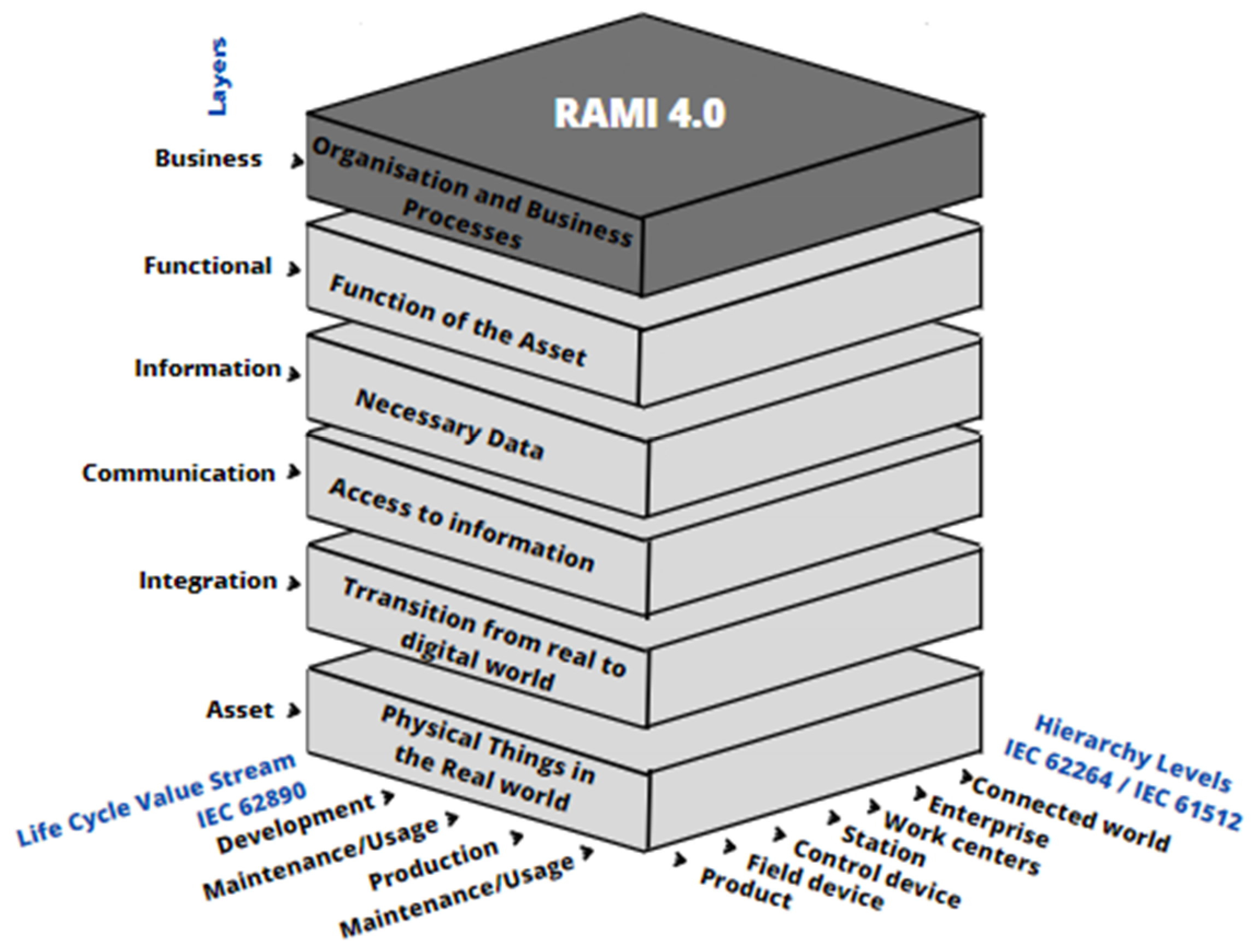
Figure 2.
Methodology.
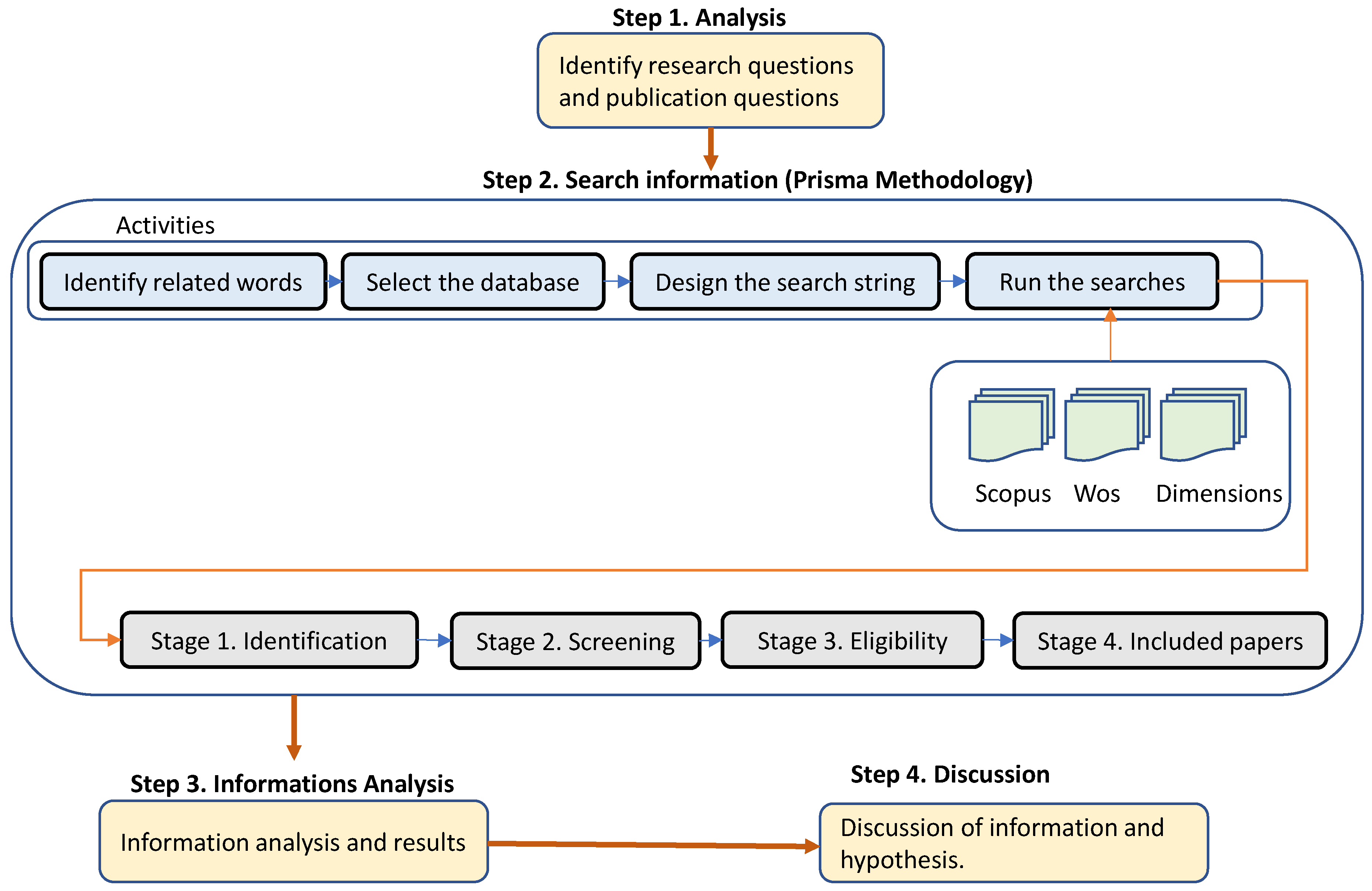
Figure 3.
Search process.
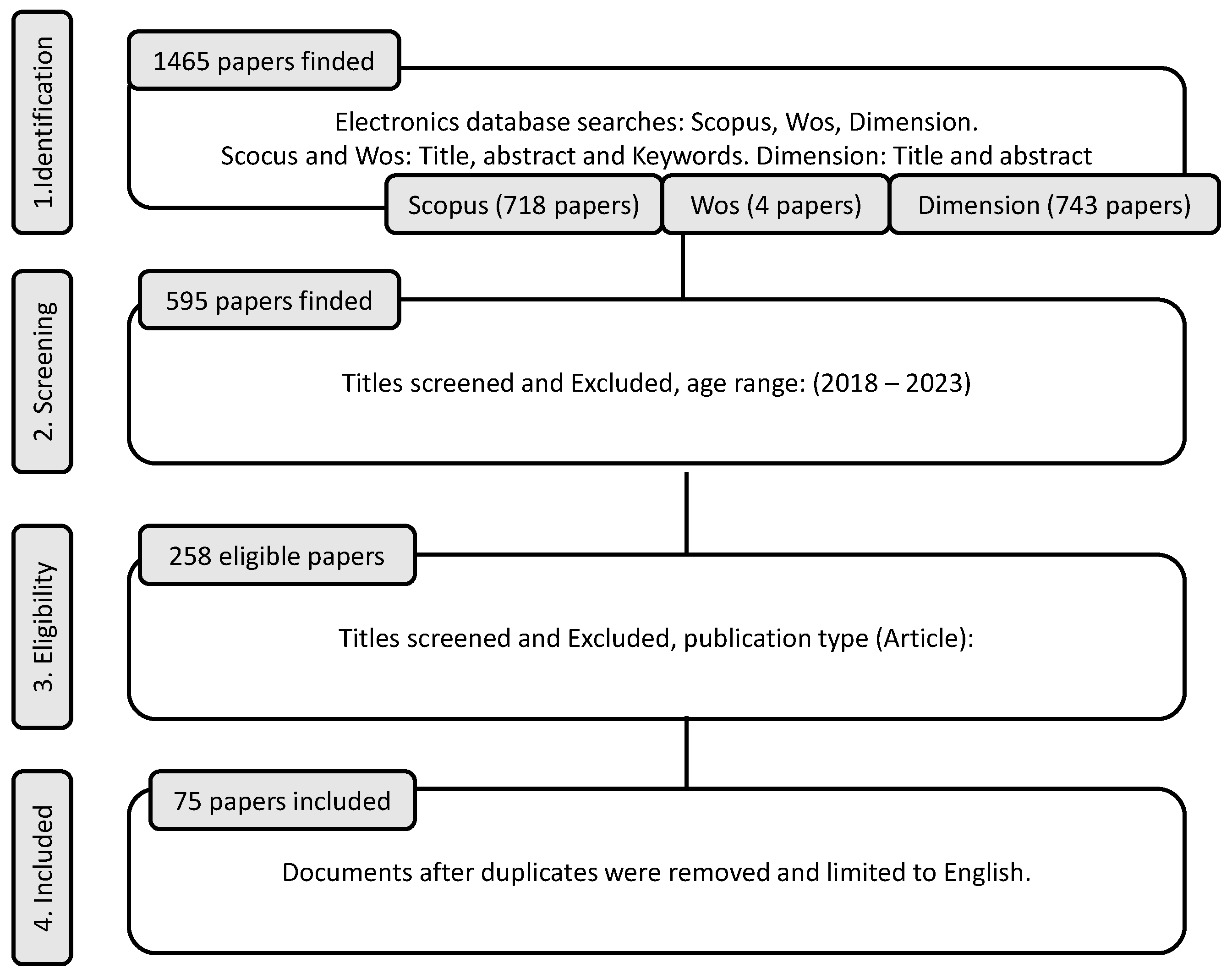
Figure 4.
Papers number per year.
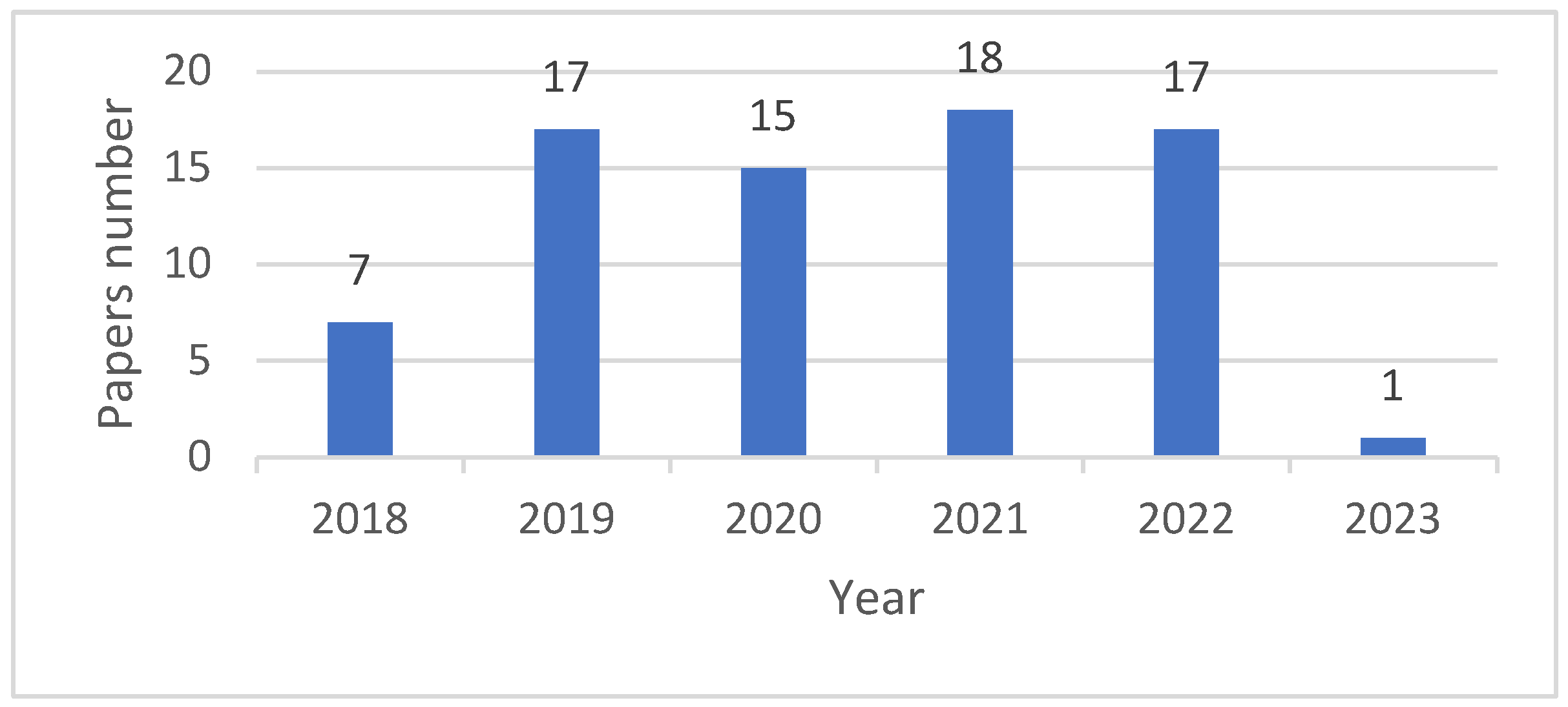
Figure 5.
Words in Title by Paper.
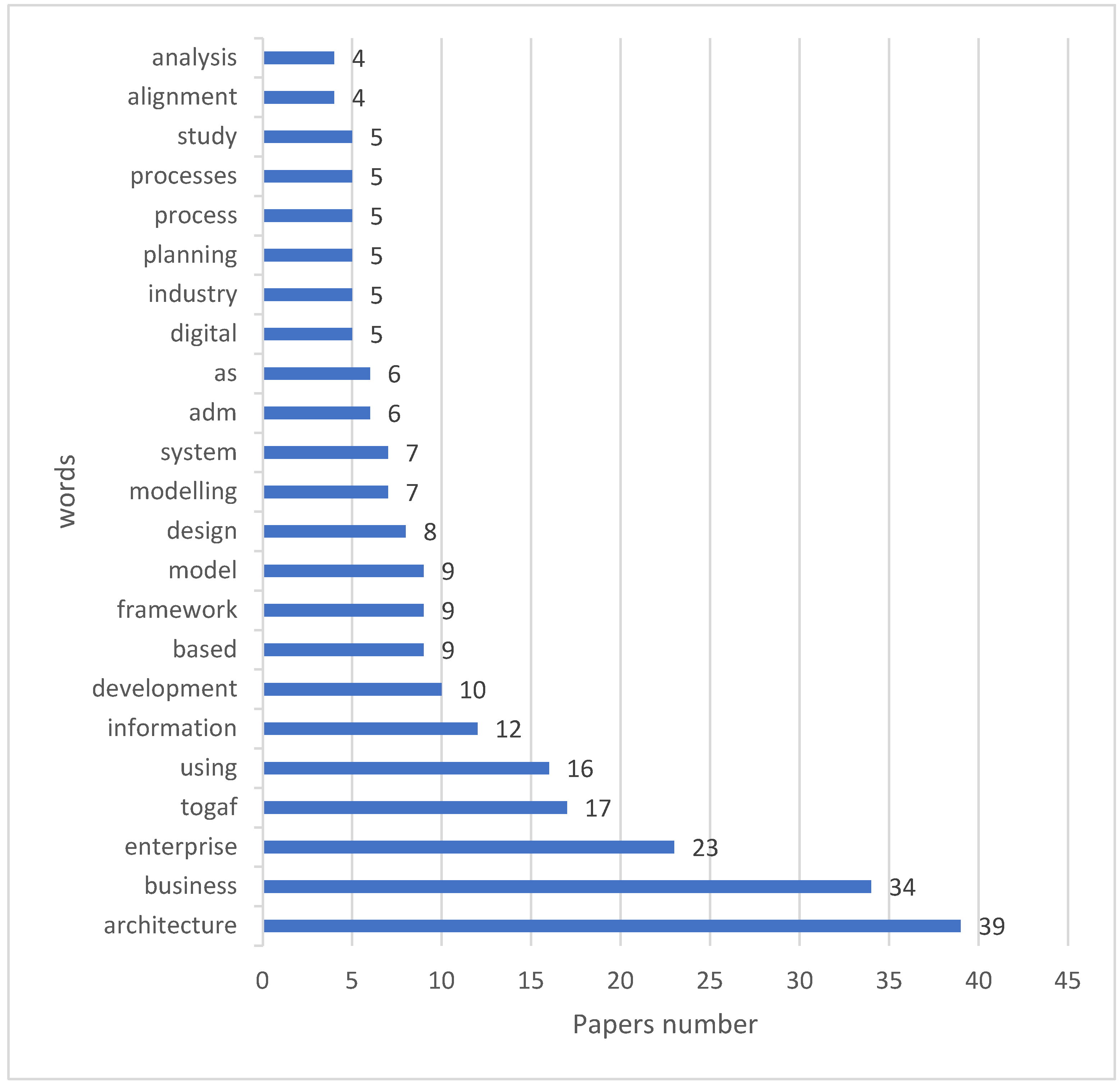
Figure 6.
Papers by Country.
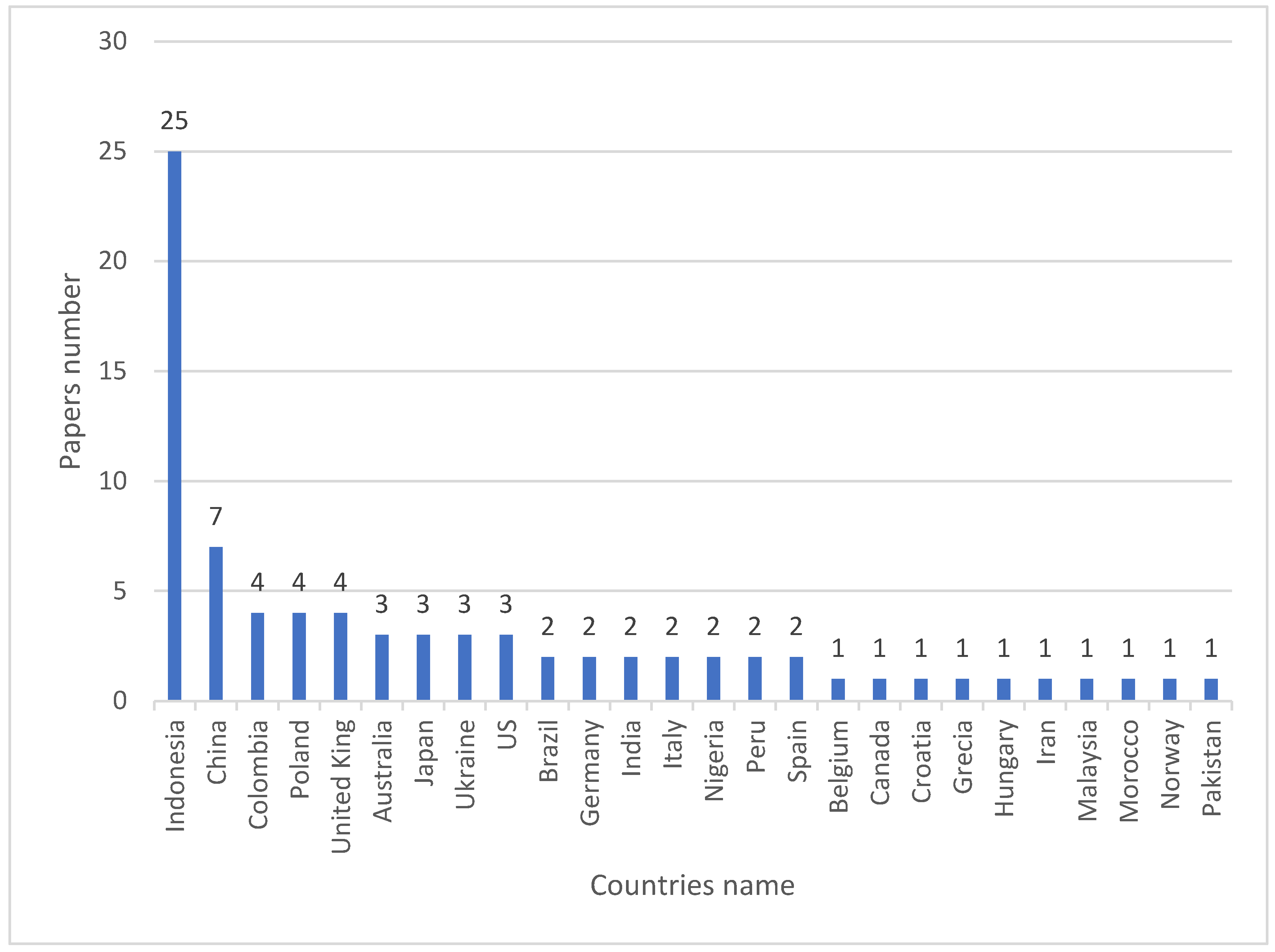
Figure 7.
Number of citations, Number of papers per year.
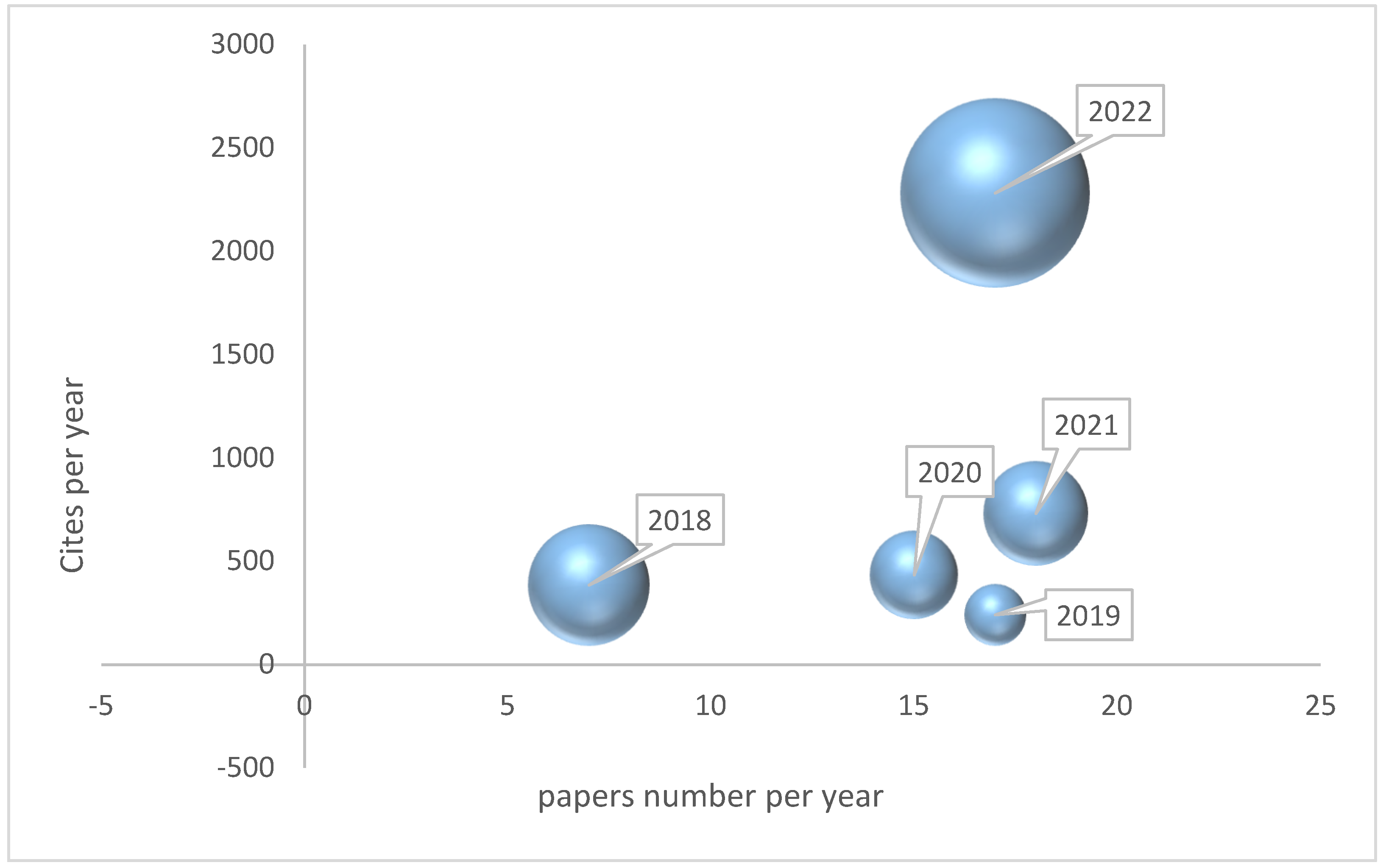
Figure 8.
Number of Articles and Number of citations per country.
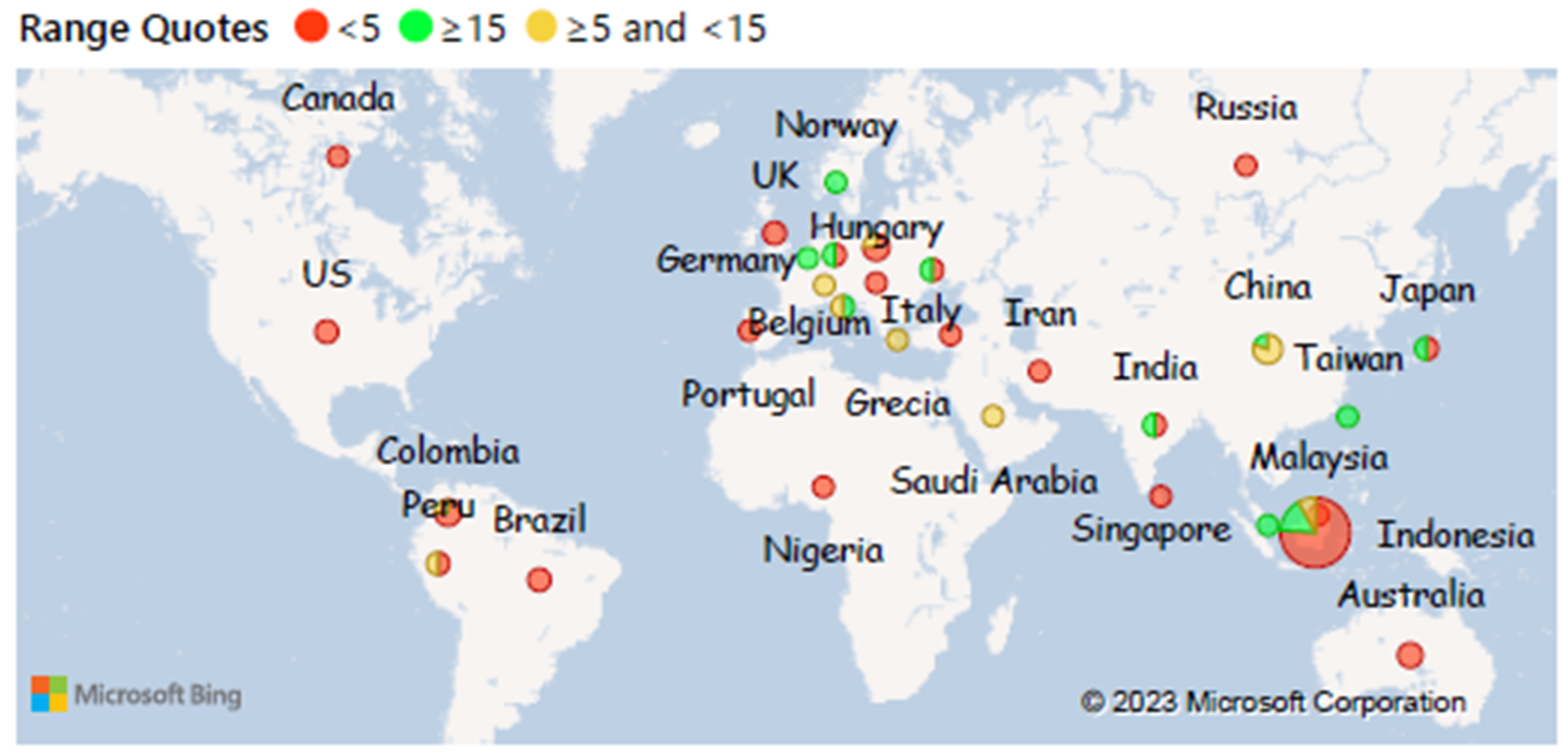
Figure 9.
Number of articles and its polarity in abstracts.
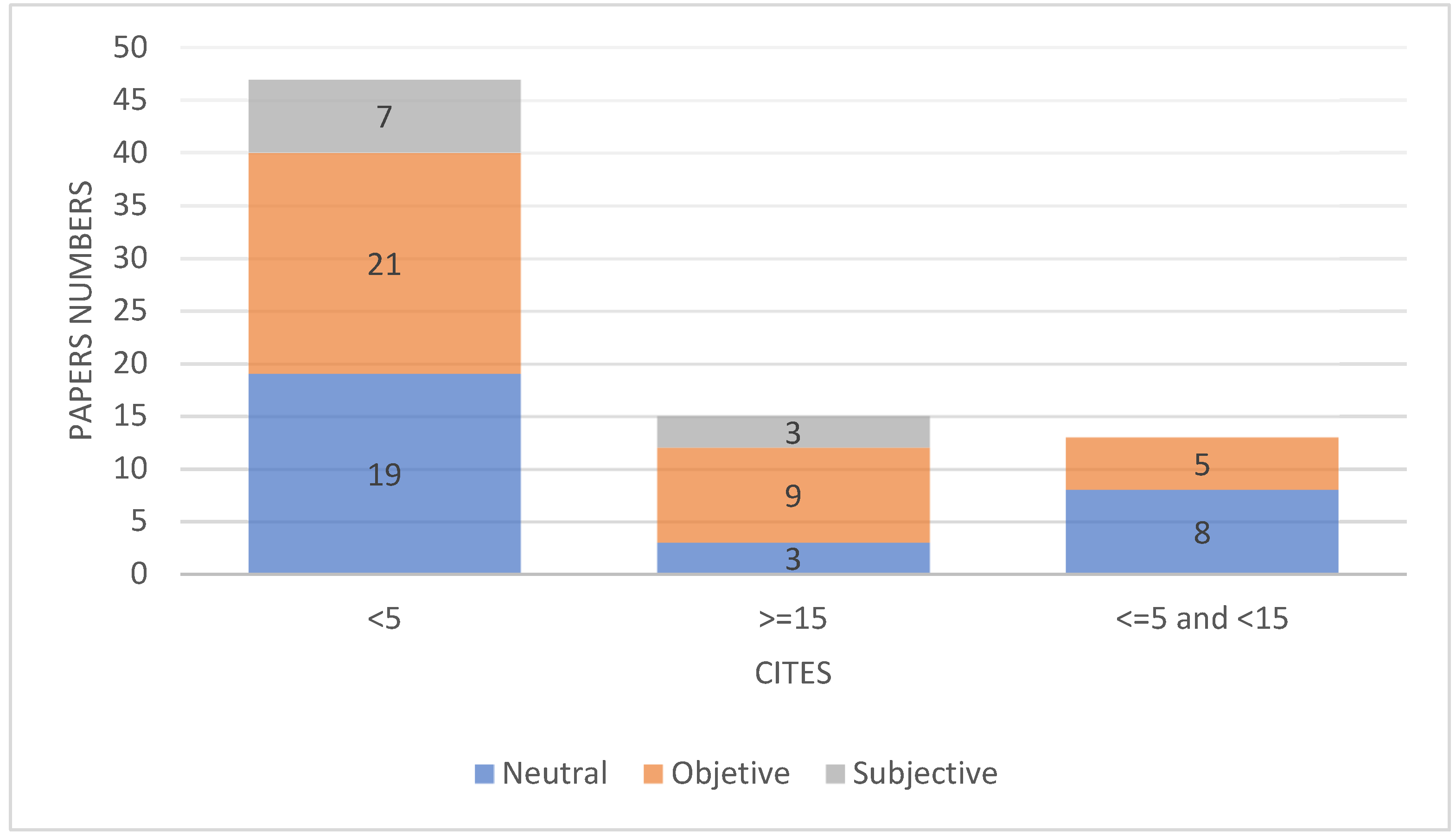
Figure 10.
Papers numbers by emotion and polarity in abstracts.
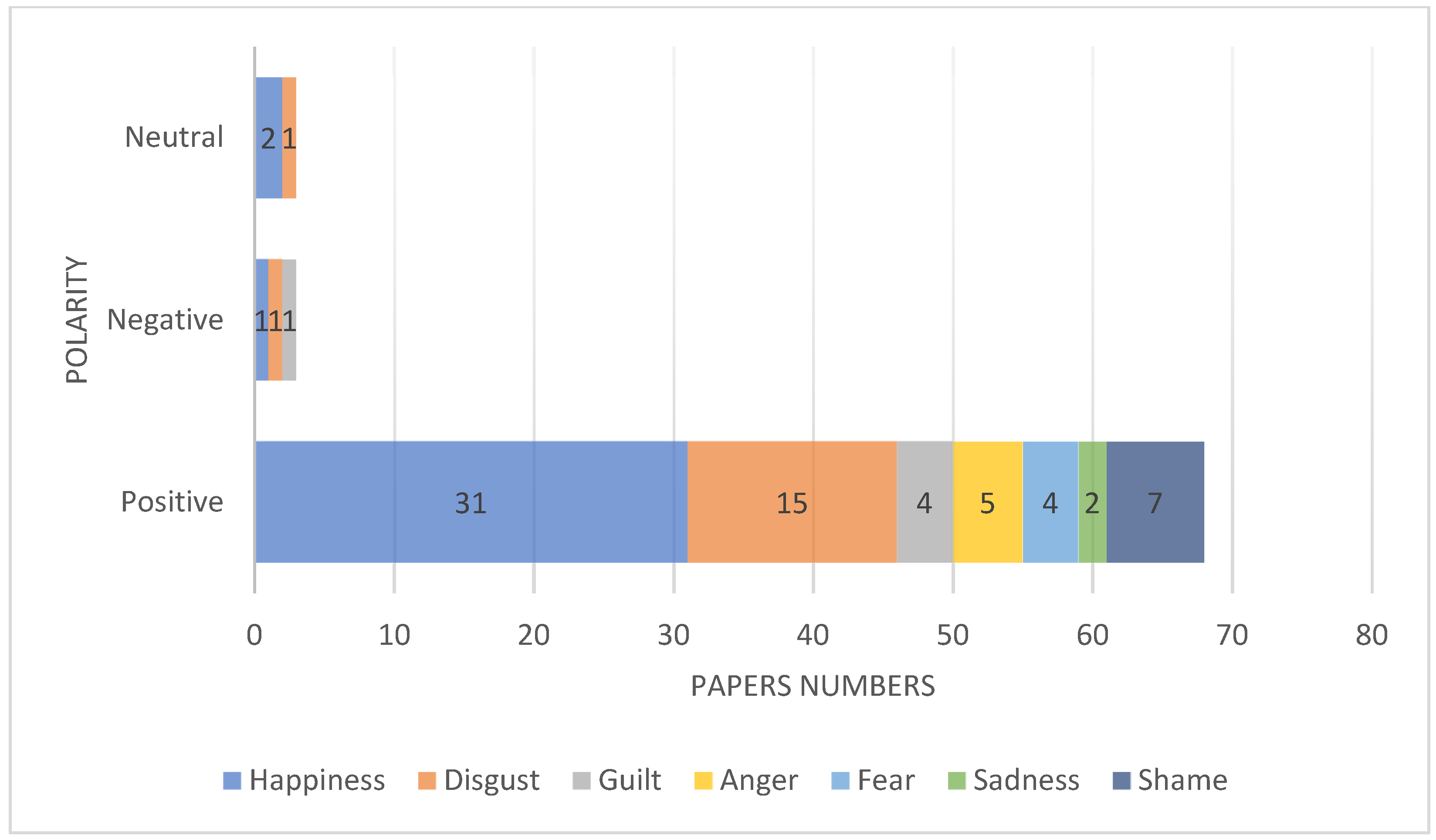
Figure 11.
Co-occurrence network for keywords.
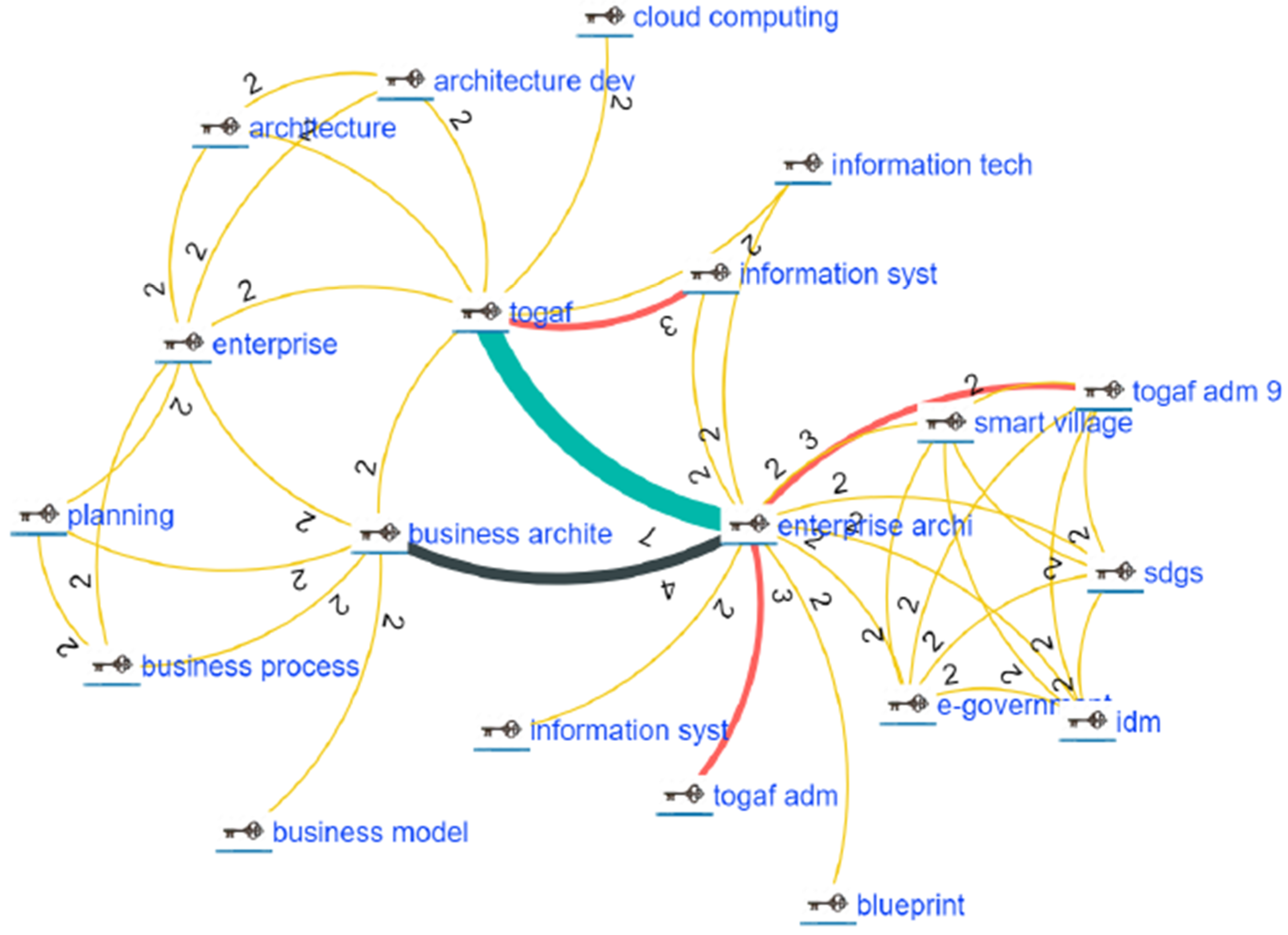

Table 1.
Reseach questions.
| RQ# | Research questions | Description |
|---|---|---|
| RQ1 | ¿What frameworks are proposed or discussed in the papers regarding the design of business architectures? | List of frameworks proposed to design Business architecture. |
| RQ2 | What are the proposed frameworks for the Smart Industry? | List of Frameworks proposed to design business architecture in the context of Industry 4.0. |
| RQ3 | What business architecture application examples are there in unmanned aerial vehicles (UAV) manufacturing technology industries? | Examples or list of companies or technology industries. |
| RQ4 | What examples of business architecture applications have been carried out considering responsible consumption? | List of companies or industries where the business architecture is being applied. |
| RQ5 | What are the challenges of business architecture? | Identify research opportunities. |
| RQ6 | Are the countries that propose the Frameworks to work EA at 4.0 the same ones that socialize the results of the implementations? | sets of proposing countries and countries that socialize |
| RQ7 | Are companies interested in new AE architectures proposed by the Academy for Industry 4.0? | Papers that present the interest of companies |
Table 2.
Publication questions (PQ).
| PQ# | Publication questions | Description |
|---|---|---|
| PQ1 | How has the number of publications per year evolved? | Number of publications per year. |
| PQ2 | What are the most frequent words in article titles? | Word listing and frequency of use. |
| PQ3 | Which countries have the most significant number of publications? | List of countries with the highest number of affiliations. |
| PQ4 | Who are the authors with the most significant number of publications? | List of authors with the highest number of publications per year. |
| PQ5 | Who are the authors with the highest number of citations? | List of authors and citations of their publications by year. |
| PQ6 | What are the most cited articles? | Identify the articles with the highest citation. |
| PQ7 | What are the journals with the most significant number of publications? | Identify publication opportunities in journals with an interest in the subject. |
| PQ8 | What is the way of writing the abstract in the articles found? | The writing style of the articles regarding emotion and polarity. |
| PQ9 | What are the keywords corresponding to Business Architecture Frameworks that appear in the co-occurrence network in the search for Business Architecture? | co-occurrence network |
Table 3.
Search string.
| Database | Search Sting |
|---|---|
| Scopus | TITLE-ABS-KEY (“business architecture” ) AND ( LIMIT-TO ( PUBYEAR , 2023 ) OR LIMIT-TO ( PUBYEAR , 2022 ) OR LIMIT-TO ( PUBYEAR , 2021 ) OR LIMIT-TO ( PUBYEAR , 2020 ) OR LIMIT-TO ( PUBYEAR , 2019 ) OR LIMIT-TO ( PUBYEAR , 2018 ) ) AND ( LIMIT-TO ( DOCTYPE , “ar” ) ) AND ( LIMIT-TO ( LANGUAGE , “English” ) ) |
| Web of Science | “Business architecture” (Title) and “Business architecture” (Abstract) and “Business architecture” (Autor keywords) Refined by: Publication Years 2020 or 2019, Document Types: Article, Languages English. |
| Dimensions | Article Publication Type 2023 OR 2022 OR 2021 OR 2020 OR 2019 0R 2018 “Business architecture” Free text in the title and abstract. |
Table 4.
Resulting studies.
| Search | Date | Articles |
|---|---|---|
| Scopus | 19 January 2023 | 718 |
| Wos | 19 January 2023 | 4 |
| Dimension | 19 January 2023 | 743 |
| Total | 1465 |
Table 5.
Paper per authors per year.
| Author | 2018 | 2019 | 2020 | 2021 | 2022 | Total |
|---|---|---|---|---|---|---|
| Nilo Legowo | 1 | 1 | 2 | 4 | ||
| Asif Qumer Gill | 1 | 1 | 2 | |||
| Asti Amalia Nur Fajrillah | 1 | 1 | 2 | |||
| Delinda Dyta Puspitasari | 1 | 1 | 2 | |||
| Johanes Fernandes Andry | 1 | 1 | 2 | |||
| Muhammad Ilham Alhari | 1 | 1 | 2 | |||
| Shreya Srinivas | 1 | 1 | 2 | |||
| Terry Roach | 1 | 1 | 2 | |||
| Aarti M. Karande | 1 | 1 | ||||
| Ahmad Azhari | 1 | 1 |
Table 6.
Author and cites per year.
| Author | 2018 | 2019 | 2020 | 2021 | 2022 | Total |
|---|---|---|---|---|---|---|
| Qiang Zhi, Zhengshu Zhou | 1104 | 1104 | ||||
| Rizky Jumansyah, Rangga Sidik, Eddy Soeryant | 1061 | 1061 | ||||
| Jicheng Chen, Hongchang Chen, Hanchao Li | 451 | 451 | ||||
| Arne J. Berre, Shihong Huang, Hani Murad and… | 376 | 376 | ||||
| Olena Taranukha | 207 | 207 | ||||
| Alessia Correani, Alfredo De Massis, Federico F… | 189 | 189 | ||||
| Gerd J. Hahn | 179 | 179 | ||||
| Ahmad Nurul Fajar, Rama Ambara | 103 | 103 | ||||
| Sung-Jung Hsiao, Wen-Tsai Sung | 77 | 77 | ||||
| Djarot Hindarto, R. Eko Indrajit, Erick Dazki | 46 | 46 |
Table 7.
Paper and cites.
| Number reference paper in this document | Cites |
|---|---|
| [23] | 1104 |
| [24] | 1061 |
| [25] | 451 |
| [26] | 376 |
| [27] | 207 |
| [28] | 189 |
| [29] | 179 |
| [30] | 103 |
| [31] | 77 |
| [32] | 46 |
| [2] | 39 |
| [33] | 23 |
| [34] | 22 |
| [35] | 20 |
| [36] | 14 |
| [37,38] | 13 |
| [39] | 12 |
| [40] | 11 |
| [41,42] | 10 |
| [43] | 9 |
| [44] | 7 |
| [45,46] | 6 |
| [15,47] | 5 |
| [48,49,50] | 4 |
| [51,52,53,54,55,56,57] | 3 |
| [7,9,58,59,60,61] | 2 |
| [62,63,64,65,66,67,68,69,70,71] | 1 |
| [8,72,73,74,75,76,77,78,79,80,81,82] [83,84,85,86,87,88,89,90,91,92] |
0 |
Table 8.
Four journals with more papers in business architecture (2018 – 2023).
| Journals names | Papers number | Country |
|---|---|---|
| Journal of Theoretical and Applied Information Technology | 3 | Indonesia |
| International Journal of Recent Technology Research and Engineering | 2 | Indonesia |
| International Journal of Recent Scientific & Technology Research | 2 | Indonesia |
| Procedia Computer Science | 2 | Netherlands |
Table 9.
Contributions of additional papers after enhancing the search query with “RAMI” and “enterprise architecture”.
Table 9.
Contributions of additional papers after enhancing the search query with “RAMI” and “enterprise architecture”.
| Paper | Contribution from the business architecture | Contribution to the implementation of a Framework for I4.0 |
|---|---|---|
| [94] | Describes a methodology for building a cyber security digital twin of a smart grid, starting from its architectural blueprint. |
There is no mention of TOGAF or RAMI. |
| [95] | This paper discusses the applicability of some well-known frameworks for modelling socio-cyber-physical systems: the enterprise architecture modelling language ArchiMate (TOGAF) and the Industry 4.0 reference architecture model RAMI 4.0. | The authors suggest the possibility of modelling socio-cyber-physical systems with the RAMI 4.0 framework. RAMI could benefit from its integration with the extended ArchiMate language, but to integrate them, the differences between TOGAF and RAMI 4.0 should be well understood. |
| [96] | In this work, the relationships between the models of TOGAF and RAMI4.0 have been explored to determine if there are some conceptual correspondences between them. | The authors found that TOGAF and RAMI are somewhat compatible. Accordingly, it is possible to reuse some of the components of the Enterprise Architecture (TOGAF) model to complement those required by the I4.0 model. |
| [97] | It uses the ArchiMate language to model the Industry 4.0 vision |
It presents Enterprise Architecture models for the six main layers of RAMI 4.0: business, functional, information, communication, integration and assets. |
| [98] | It presents the main steps to migrate the ICT infrastructure associated with the management and control of an industrial sheet extrusion line to a digitised industrial system using RAMI 4.0 layers 3 and 4. | It works on layers 3 and 4 of the RAMI 4.0 Framework. |
| [6] | The paper proposes a specific architecture development process that illustrates the use of each TOGAF phase to create current and future industrial systems. | This paper presents the alignment of RAMI 4.0 with TOGAF and evaluates it with a real industrial case. |
| [99] | This work proposes a simple and usable approach, based on the Reference Model of Information Assurance & Security (RMIAS), to assist prosumers in selecting cybersecurity for smart grids. | This work is a contribution to the field of architectural description languages. |
| [93] | It presents the literature on Industry 4.0 architectures in a factory context and assesses compatibility with the Industry 4.0 Reference Architecture Model and the Industrial Internet Reference Architecture. | RAMI 4.0 and IIRA. They present the Industry 4.0 reference architecture model as mature in terms of communication and information exchange in the connected world domain, that further standardisation was still under development to enable interoperability of technology from different vendors and that technology standardisation was lacking to enable executable business processes between networked companies. |
Disclaimer/Publisher’s Note: The statements, opinions and data contained in all publications are solely those of the individual author(s) and contributor(s) and not of MDPI and/or the editor(s). MDPI and/or the editor(s) disclaim responsibility for any injury to people or property resulting from any ideas, methods, instructions or products referred to in the content. |
© 2024 by the authors. Licensee MDPI, Basel, Switzerland. This article is an open access article distributed under the terms and conditions of the Creative Commons Attribution (CC BY) license (http://creativecommons.org/licenses/by/4.0/).
Copyright: This open access article is published under a Creative Commons CC BY 4.0 license, which permit the free download, distribution, and reuse, provided that the author and preprint are cited in any reuse.


