

Submitted:
12 February 2024
Posted:
14 February 2024
You are already at the latest version
Abstract
This comprehensive review digs into the complex landscape of the Metaverse, focusing on user perceptions and the critical roles of usability, social influence, and interoperability. The paper integrates various scholarly insights, underscoring the Metaverse's evolving significance in the digital realm and its implications across diverse sectors. Central to the findings is the importance of usability. The influence of social factors is also prominent, shaping user behavior and decision-making within these virtual spaces. Interoperability becomes a big problem, showing how important it is to have standard protocols and technologies so that experiences on different Metaverse platforms are smooth and seamless. The review further reveals insights into user experience and accessibility, emphasizing the need for inclusive, ergonomic, and user-friendly design to enhance engagement and reduce barriers. Moreover, the paper discusses the ethical and societal implications of the Metaverse, including issues like digital harassment, aggressive marketing, and privacy concerns, which call for responsible development and robust regulatory frameworks. Additionally, the review identifies gaps in current research, particularly in user experience in healthcare applications, the impact of the Metaverse on educational outcomes, and the need for more empirical studies on the long-term effects of Metaverse interactions on user behavior and psychology. This synthesis offers a detailed overview of current user perceptions and challenges within the Metaverse and sets the stage for future research directions, aiming to foster a secure, inclusive, and interoperable Metaverse environment that aligns with ethical standards and societal needs.
Keywords:
Metaverse
; Users Perception
; Social Influence
; Metaverse Usability
; Metaverse Interoperability
1. Introduction
In the dynamic and ever-expanding field of computer science and information systems, the emergence of the Metaverse has marked a paradigm shift, capturing experts’ imagination and scholarly attention worldwide. This paper presents a comprehensive survey of existing literature, exploring the complex landscape of the Metaverse. Unlike a systematic review or meta-analysis, this survey aims to compile and combine various academic perspectives, offering a panoramic view of the Metaverse’s evolving role and significance in the digital domain. Our approach is rooted in the disciplines of computer science and information systems, reflecting the Metaverse’s profound implications in these areas [1,2].
The concept of the Metaverse, which originated in the realm of science fiction, has now grown into a rapidly expanding area of research and development, transcending its fictional roots to establish itself as a complex, multi-faceted digital ecosystem. Its applications and implications stretch across various areas, from gaming and entertainment to critical sectors like education, healthcare, and business [3,4,5]. In the sphere of computer science, the Metaverse is not just a technological novelty but a frontier of innovation, integrating advanced technologies such as virtual and augmented reality, artificial intelligence, and blockchain. These technologies are not standalone phenomena but are interwoven within the fabric of the Metaverse, creating a unique digital experience [6].
The significance of the Metaverse in the context of information systems is equally profound. It represents a new model of user interaction, data exchange, and digital ecosystems, challenging traditional paradigms and offering novel avenues for exploration and application. The Metaverse’s development and expansion raise critical questions about user engagement, system interoperability, and the social dynamics within virtual environments. These aspects are pivotal in shaping the future trajectory of the Metaverse and are of paramount interest to researchers, developers, and practitioners in the field.
Guided by this context, our survey paper is structured to address three fundamental research questions that capture the essence of user interaction and system functionality within the Metaverse:
- What are users’ perceptions regarding the usability of the Metaverse? How does it influence their engagement and satisfaction?
- How do users perceive the interoperability of different Metaverse platforms? Are there preferences or significant challenges identified?
- In what ways does the social influence within the Metaverse impact user behavior and perceptions?
These questions are specifically designed to analyze the Metaverse’s user-centric features, examining how usability, interoperability, and social influence converge to define user experiences. The answers to these questions are crucial for advancing our understanding of the Metaverse, particularly in the realms of computer science and information systems. They provide insights into the design, development, and deployment of future technologies within the Metaverse, ensuring that these innovations are aligned with user needs and preferences.
This survey, therefore, serves a dual purpose. Firstly, it aims to consolidate the current knowledge about the Metaverse, providing a comprehensive overview for academics and practitioners alike. Secondly, it seeks to identify gaps in the existing literature, setting the stage for future research directions that can propel the field forward. By exploring the intersection of technology, user experience, and social dynamics, this paper contributes to the ongoing discourse in the field, offering a foundation for the responsible and user-centric development of the Metaverse.
In conclusion, this survey article comprehensively examines the Metaverse while situating itself at the intersection of computer science and information systems. It seeks to promote a better comprehension of this digital phenomenon by highlighting its opportunities, difficulties, and future directions for study and advancement.
In order to achieve the study aims, the next section discusses the related work, and then we introduce the methodology used for conducting this review. After that, we discuss the study themes: usability, interoperability, and social influence. Then, the findings and implications are discussed. The final section concludes.
2. Related Work
Several studies have investigated users’ perceptions of the Metaverse and its impact on various domains. The Metaverse, a collective digital space, merges augmented reality (AR), virtual reality (VR), and the internet, providing an immersive experience for its users [7,8]. As the next step in the internet’s evolution, the Metaverse is rapidly becoming influential across several industries, with education and healthcare being particularly notable.
Regarding users’ perceptions of the Metaverse’s usability, studies have shown that several factors influence user engagement and satisfaction.

Table 1.
Summary of Metaverse Studies.
| Study Reference | Topics Discussed | Outcome/Conclusion |
|---|---|---|
| [9,10] | Technology adoption | Factors like performance expectations, ease of use, and trust are crucial for technology adoption. Younger participants are more inclined towards Metaverse technology. |
| [11,12] | Integration of advanced tech in education | Technologies can enhance learning experiences. VR provides an immersive experience especially beneficial in healthcare education. |
| [13,14] | User perceptions | Importance of UX design, visualization, and involving users in decision-making. |
| [15] | Academic research potentials in the Metaverse | AI, blockchain, and virtual reality have significant implications for marketing in the metaverse. |
| [16,17,18] | Security | Emphasize on privacy regulations, stringent security measures, and the need for effective public policy to regulate the Metaverse. |
| [19] | Adoption | Importance of understanding user perception over technical features. |
| [20,21,22] | User experience, perception | Highlights potential of Metaverse in online education and remote training. |
| [20,21,23,24,25,26] | Metaverse’s potential across various industries | Emphasizes the need for more research to understand the transformative impact of the Metaverse. |
| [27,28,29] | Consumer experience, social presence, and immersive learning in Metaverse | Importance of service quality, immersive experiences, and the influence of devices on social presence. |
| [24,30,31,32,33] | User perceptions in educational settings | Highlights the effectiveness and potential of Metaverse and AR technologies in improving learning outcomes. |
Studies like [7], found that perceived usefulness, ease of use, and social norms shape acceptance and satisfaction. Additionally, demographic variables, such as age, play a role in this acceptance. Younger users, for instance, seem more receptive to adopting Metaverse technologies [34]. Furthermore, the user experience (UX) is highlighted as pivotal for the Metaverse’s success, with research emphasizing the importance of good UX design and suitable visualization techniques [13,14].
In terms of interoperability, user perceptions regarding different Metaverse platforms vary. Although the literature doesn’t directly address this question, it is clear from [20] that users favor platforms that allow customization. Such preferences indicate a potential challenge for less flexible or user-centric platforms. Moreover, the dominance of specific platforms can influence user choices, pointing to the importance of seamless interactions across various Metaverse worlds, such as maze and escape room worlds [21].
Social influence within the Metaverse also significantly impacts user behavior and perceptions. The idea that social norms and factors influence the Metaverse’s acceptance is evident in several studies [7,35]. Within these virtual spaces, user behaviors are likely affected by their peers and the broader community, suggesting that social elements are crucial drivers for engagement and active participation.
The social dynamics within the Metaverse and their impact on user behavior are acknowledged but not thoroughly dissected in current studies. While the influence of social norms and factors has been identified as critical in Metaverse acceptance, there is limited knowledge of how these interactions and influences shape behavior, decision-making, and overall user experiences. This presents a significant research gap that demands in-depth exploration to understand the complex interplay of social factors and individual perceptions in the virtual realm.
The existing research on user perception in the Metaverse has deepened our understanding of how users experience, view, and participate in virtual environments. However, there are still significant gaps in our knowledge, particularly regarding the impact of design elements and UX on overall satisfaction and sustained engagement. Additionally, while platform interoperability is recognized, research on user views of the challenges and preferences associated with different Metaverse platforms is lacking. Furthermore, elements such as usability, platform interoperability, and the inherent social dynamics inside the Metaverse are critical aspects that require further investigation and research [20,23,24].
This review paper identifies key areas that merit further investigation, including usability, platform compatibility, and the social impact of the metaverse. By addressing these gaps in our knowledge, we can develop a more comprehensive understanding of user perception and improve the overall metaverse experience. Our survey on the metaverse represents a substantial advancement in contemporary research. To the best of our knowledge, this investigation is deemed the inaugural endeavor addressing user perceptions of the metaverse concerning usability, platform interoperability, and social influence. Diverging from existing studies, our survey distinguishes itself by extending beyond a narrow technological focus. In contrast to predominantly technocentric approaches, we underscore the significance of comprehending individuals’ experiential dimensions within the metaverse.
3. Methodology
To achieve this study’s objectives, we employed a three-pronged research methodology, as described in Figure 1.
This methodology begins with an in-depth literature review, focusing on user perceptions of the Metaverse. The ensuing sections provide a detailed examination of the methods and techniques used in this phase and their corresponding outcomes.
This crucial step involves examining relevant scholarly materials to build a robust understanding of the topic under study. Our approach entailed a systematic search across various databases and a critical evaluation of selected articles. Through this process, we synthesized information to uncover pivotal themes and identify notable gaps in the current body of literature. The insights gained from this literature review laid the groundwork for our study, shaped our research questions, guided our methodological choices, and informed our findings.
The primary objective of the literature review procedure is to thoroughly examine the extant literature, which is achieved through two distinct stages: literature retrieval and literature analysis. The first stage involves gathering literature about user perceptions of the Metaverse and recording it in a bibliographic database. The subsequent phase consists of the characterization of prior research by delineating a series of categories, thereby enabling a thorough comprehension of the literature.
The present study utilized the literature search approach developed by [36], tailored to align with the research framework. The methodology comprised two distinct phases, prioritizing meticulously exploring and documenting scholarly sources to establish a comprehensive and credible literature review process. The primary aim is to enhance researchers’ confidence in utilizing research findings for subsequent inquiry. In the initial stage, the extent of the literature was established by relying on three fundamental attributes relating to the Metaverse, i.e., platform interoperability, usability, and social influence.
The literature search aimed to identify academic articles about user perceptions of the Metaverse, ascertain diverse viewpoints and paradigms in scholarly research, and conduct a neutral review without any inherent inclination toward endorsing specific concepts or principles. The target audience for the literature search findings is expert researchers involved in the Metaverse. The scope of the literature search encompassed a sample selected based on specific criteria, including the year of publication and prominent sources of articles, to ensure the inclusion of all relevant research articles related to the Metaverse. The second phase recognized significant terminologies, such as the Metaverse, user perception, trust, security, platform interoperability, usability, and social influence.
A literature review was then undertaken, particularly on peer-reviewed articles published in reputable academic journals, conference proceedings, and scholarly databases. However, limiting the search to a specialized set of journals for user perceptions of the Metaverse posed a challenge due to the interdisciplinary nature of the field and the vast array of literature available. Therefore, the search was initiated using interdisciplinary online databases as the primary source. The second step of the literature review process involved the analysis of the content of the literature. Content analysis aims to foster comprehension and awareness of the phenomenon being examined [37]. The present study employed an inductive approach to content analysis, as suggested by Elo and Kyngäs [38]. The methodology involved three primary stages: preparation, organization, and reporting.
During the preparatory phase, the researcher established the unit of analysis, which comprised various components such as the Metaverse, user perception, platform interoperability, usability, and social influence. Subsequently, the content data underwent a rigorous examination process to facilitate comprehension of the data concerning the identified unit of analysis. This approach enabled the acquisition of a comprehensive understanding and in-depth knowledge.
During the organizational phase, five distinct activities were executed. Firstly, open coding was utilized to generate descriptive annotations that comprehensively encompassed all subject matter facets. After open coding, the data was amassed and archived in a spreadsheet document. Finally, the analysis process was assessed during the reporting phase, and the results of the reported analysis were verified. The assessment involved the utilization of tables to offer an elaborate elucidation of all recognized classifications from the preceding two stages. The validation process was accomplished using expert evaluation and participation in dialogues with colleagues.
In summary, the literature review process is an essential component of academic research, and the present study employed a comprehensive methodology that involved two distinct stages of literature retrieval and analysis. The study utilized a literature search approach designed to align with the research framework, and the literature review was conducted from a neutral standpoint without any inherent inclination toward endorsing specific concepts or principles. The study employed an inductive approach to content analysis, with three distinct stages of preparation, organization, and reporting. The methodology utilized various techniques, including open coding and tables, to facilitate the acquisition of comprehensive knowledge and understanding of the selected topic.
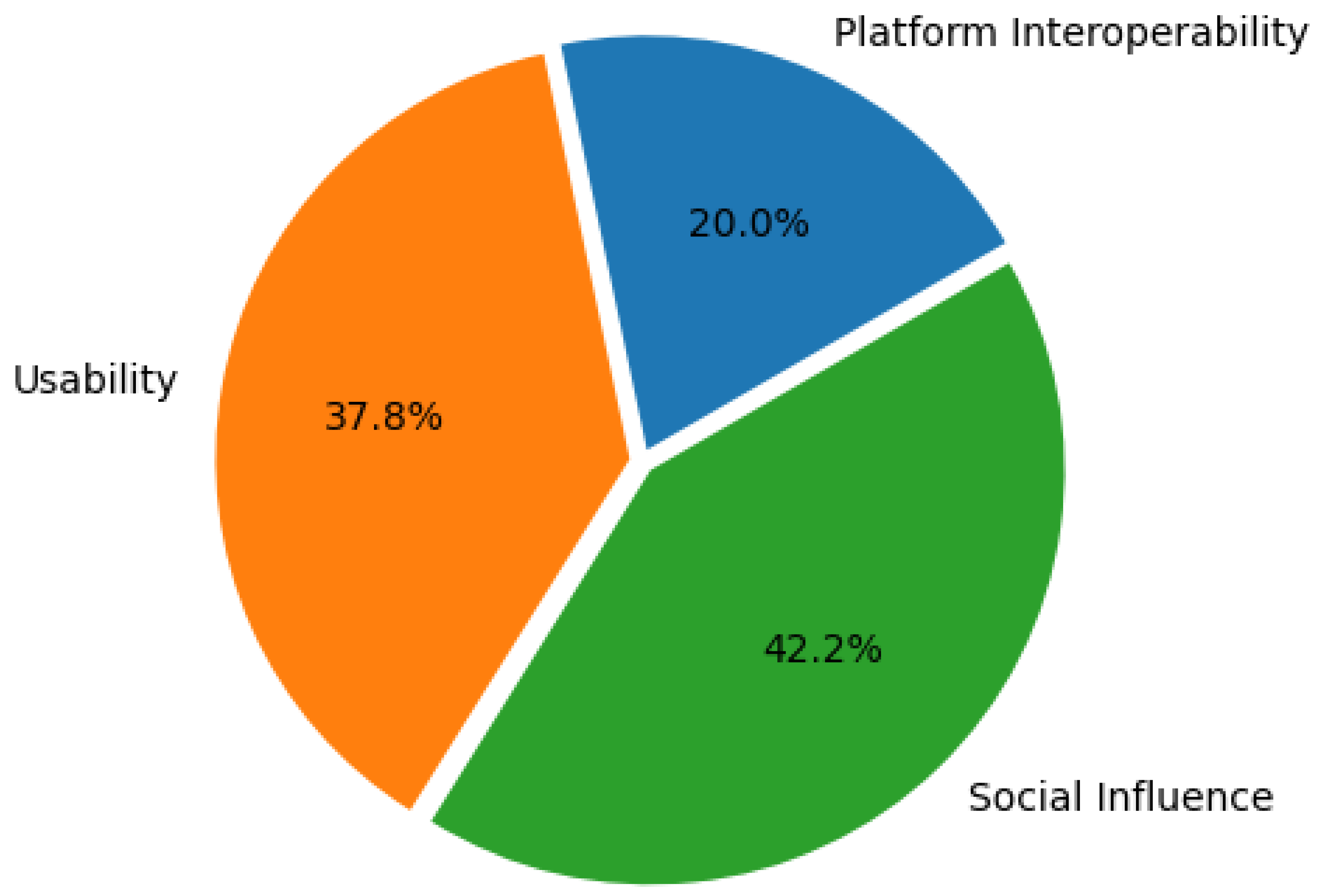
Figure 2.
Publication Per-Area.
4. Users Perception of the Metaverse
This section examines user perceptions of the Metaverse, analyzing various essential factors that influence users’ experiences. It aims to investigate platform interoperability, usability, and social influence to comprehensively understand their impact on users’ perceptions and engagement with the Metaverse. This study examines platform interoperability, which means that different Metaverse platforms can interconnect and work harmoniously, fostering a seamless and continuous user experience. The concept of usability will involve an in-depth exploration of the user-friendliness and intuitiveness of Metaverse interfaces, enabling easy navigation and communication. Finally, the study of social influence will provide insight into how social dynamics and peer interactions influence the actions and choices of individuals in the Metaverse. By analyzing these crucial components, we aim to acquire significant perspectives regarding the user’s perception of the Metaverse and the determinants contributing to a favorable and engaging virtual encounter.
4.1. Platforms Interoperability
Metaverse interoperability involves two important things: first, making it easy to use digital elements (like those used to create virtual worlds) in different apps; and second, allowing users to move smoothly between different virtual places without any interruptions, so they have a continuous and connected experience [39]. The crucial factor of platform interoperability significantly influences the users’ perception of the Metaverse. This section combines the findings of many research projects and investigates the relationship between platform interoperability and user perceptions of the Metaverse. Many studies have investigated user perspectives on the Metaverse but with varying degrees of attention on platform interoperability.
For example, [15] recognizes the significance of platform interoperability and suggests the creation of contracts to accomplish interoperability across Metaverses without negatively impacting users. Similarly, [40] emphasizes the importance of resolving interoperability issues to prevent fragmentation of the Metaverse ecosystem and the damaging brand reputation. These results indicate that platform interoperability is crucial in determining how users perceive Metaverse. Table 2 presents some of the studies’ findings of Metaverse interoperability, while Table 3 shows some of the challenges Metaverse interoperability faces.
4.1.1. The Role of Platform Interoperability in the Adoption of the Metaverse
Platform interoperability remains paramount in defining the trajectory of the Metaverse’s growth. Several studies highlight its indispensable nature.
At the heart of the Metaverse’s attraction lies its promise of a seamless, integrated experience across diverse platforms. [15] not only digs into this promise but also provides a pathway through creating contracts. These contracts aim to achieve a balance between integration and independent platform functionality, ensuring that users can transition smoothly between virtual spaces without encountering disruptive barriers.
But what makes these transitions meaningful is the content and narrative. [41] underlines the importance of narratives that resonate with a global audience. An interconnected Metaverse will host users from myriad cultures and backgrounds, necessitating a diverse and inclusive content strategy. Crafting universally relatable stories and experiences ensures a sense of belonging, making users more willing to explore further and more profoundly.
Yet, beyond the user narratives, the technical base remains critical. Research from [23] and [22] underscores this. Interoperability, while a technological challenge, is also an opportunity. By developing tools, protocols, and services that align with global standards, the Metaverse can evolve into a cohesive ecosystem, broadening its appeal and accessibility.
And within this ecosystem, collaboration stands out as a force multiplier. Highlighted by [17], when platforms and stakeholders share and collaborate based on common standards, the Metaverse’s potential magnifies, making it an irresistible proposition for newcomers.
4.1.2. Challenges Hurdling Platform Interoperability
Even as the potential of the Metaverse soars, challenges cast shadows on the path to seamless interoperability.
Foremost among these challenges is ensuring user security and privacy. [42] provides a true reflection of the current situation. As the virtual boundaries blur, ensuring these interconnected realms remain safe from malicious threats is paramount. Every breach and exploitation threatens individual users and the credibility of the entire Metaverse.
Innovative solutions emerge to tackle these threats. [18] showcases the promise of the Zero-Trust Architecture (ZTA) model. But its adoption isn’t straightforward. Merging security models like ZTA with the inherent openness that interoperability demands is a herculean task that requires rethinking traditional security paradigms.
Coupled with security is the challenge of identity and reputation. As cited in [40], ensuring that users can maintain their identities and that brands can uphold their reputations across a wide range of platforms is challenging. The solution lies in creating unified standards. However, this again presents a challenge: achieving a consensus in a realm as diverse and multifaceted as the Metaverse. Balancing individual platform aspirations with collective goals requires diplomacy, foresight, and a commitment to a shared vision.
With the potential to reshape our virtual interactions and the challenges that threaten its realization, the Metaverse’s journey is an epic saga in the making. Its promises and perils will shape the future of digital interactions, demanding attention, innovation, and collaboration from stakeholders worldwide.
4.2. Usability
The Metaverse—immersive digital environments—has emerged due to fast technological innovation. This virtual reality arena lets users enjoy socializing, entertainment, education, and business. As the Metaverse evolves, usability and user experience become vital to its success and widespread acceptance.
The ability of users to effectively participate in and traverse Metaverse ecosystems is significantly impacted by the usability of systems, which refers to their efficiency and ease of use. A superb user experience is contingent upon essential elements such as intuitive interfaces, seamless interactions, and engaging content. Hence, it is imperative to identify and rectify usability concerns to ensure that the Metaverse provides users with an accessible, immersive, and gratifying milieu. Table 4 summarises the different aspects of the Metaverse usability. The table categorizes these issues into several key areas: general usability, AR usability, user experience in Metaverse contexts, ethical and social implications, usability challenges and limitations, augmented reality experiences, usability of Metaverse in healthcare, Metaverse technology, and ethical considerations. Each category addresses challenges such as user experience, ergonomic concerns, data privacy, health and environmental impacts, security, content generation, AI transparency, ethical and social concerns like cyberbullying and racism, and technical limitations like accessibility and ease of use. Furthermore, Table 5 highlights some of the important findings of the Metaverse usability studies.
4.2.1. Usability in Metaverse Ecosystems
Several studies have investigated the efficacy of Metaverse ecosystems. [15] briefly mentions the possibility of stakeholders co-creating value and the need for enhanced usability and user experience. [41] investigates the efficacy and user experience of the cultural Metaverse, emphasizing the significance of user-friendly interfaces, informative content, and engaging interactions. In [9], the authors address usability explicitly and propose enhancements, such as enhancing the user interface, data visualization, and ergonomic considerations. While [20] discusses usability, emphasizing its broader implications for the design and functionality of the Metaverse. According to [46], the usability of the metaverse is contingent upon three foundational elements: robust infrastructure, encompassing powerful computing capabilities and high-speed, dependable internet; user-friendly design; and content that is both engaging and pertinent to users. The significance of compelling content persists, notwithstanding the user-friendliness of the application.
4.2.2. Usability and User Experience
Numerous studies have dig into the effectiveness and user experience within various Metaverse scenarios. For instance, [41] explores the cultural aspects of the Metaverse, highlighting how usability plays a pivotal role in shaping user experiences. This research underscores the importance of intuitive design in creating engaging virtual environments.
Similarly, [19] underscores the criticality of user-friendly and intuitive designs, particularly in educational and training settings. This study suggests that ease of use facilitates effective learning and skill acquisition in virtual spaces.
[44] shifts the focus to augmented reality, showcasing the enhanced user experiences achieved through the Digital Storytelling in the Environment (DSTE) framework. This research demonstrates how usability in augmented reality can significantly enrich user engagement and interaction.
Further expanding on this theme, [35] examines the role of usability in relation to avatars and haptic feedback within 3D virtual environments. This study emphasizes the importance of sophisticated avatar design and advanced haptic technologies in boosting user immersion and satisfaction.
Lastly, [7] addresses the usability of Metaverse services, particularly spotlighting the integration of external data and creating patient-centric healthcare experiences. This research highlights the potential of the Metaverse in revolutionizing healthcare delivery through personalized and interactive virtual services.
4.2.3. Usability’s Ethical and Social Implications
Many studies have addressed the ethical and social implications that can influence the Metaverse’s efficacy. [16] prioritizes ethical responsibility and sustainability in the Metaverse business model, addressing security, privacy, and digital harassment concerns. While, [47] focuses on information ethics while implicitly recognizing the importance of usability in designing and implementing emergent technologies that benefit all users. Moreover, [45] emphasizes the potential undemocratic and unethical practices deriving from surveillance capitalism, which could impact Metaverse user experiences.
4.2.4. Users’ Acceptance of the Metaverse and Usability Challenges and Limitations
The burgeoning field of Metaverse research has increasingly focused on the interplay between usability, user acceptability, and the overall user experience within these virtual environments. A synthesis of recent studies reveals a multifaceted examination of the challenges and opportunities inherent in Metaverse technology.
[25] underscores the critical importance of accessibility and inclusivity in the Metaverse, highlighting barriers related to infrastructure access, atmospheric simulation, and tactile stimuli. This perspective is crucial in understanding the broader implications of Metaverse applicability and its potential limitations. Similarly, [18] digs into the physical usability issues posed by the current generation of headgear, emphasizing the need for ergonomic improvements in headset design to enhance user comfort and usability.
Complementing these insights, [23] explores the user perception challenges in adopting Metaverse technologies, particularly in healthcare settings. This study indicates how user perceptions can indirectly influence the efficacy and acceptance of these technologies, thereby impacting their overall success.
In a parallel vein, [10] investigates the effectiveness of Metaverse technology, focusing on its impact on user acceptability and perceptions. This research is pivotal in understanding how the functionality of Metaverse environments influences user engagement and satisfaction. [48] contributes to this discourse by offering guidelines for designing intuitive and usable Metaverse spaces, thereby underscoring the importance of user-centered design principles. Furthermore, [21] emphasizes the significance of usability and user interface design in virtual worlds, advocating for the development of user-friendly interfaces to enhance interaction and user experience.
These studies highlight usability’s critical importance within the Metaverse ecosystem. They underscore the need to create user-friendly interfaces, ensure informative and interactive content, and incorporate user feedback to enhance usability. The challenges and limitations identified across these studies emphasize the necessity of addressing issues related to accessibility, comfort, and equitable access within the Metaverse. This body of research suggests that the success and widespread adoption of Metaverse technologies hinge on a concerted effort to resolve these usability concerns, thereby ensuring a positive and inclusive user experience.
4.3. Social Influence
The advent of the Metaverse has sparked significant scholarly attention, leading to a proliferation of research exploring the various dimensions of this virtual realm. A key focus among these studies is the impact of social influence within the Metaverse, digging into how it shapes user behavior, decision-making processes, and the overall user experience.
This section explores a selection of studies from our comprehensive literature review. These investigations shed light on social influence in the Metaverse and the range of outcomes it produces. This exploration enhances our understanding of social dynamics in virtual environments and offers valuable insights into the broader implications of these interactions for the evolving digital landscape.
Table 6 presents a comprehensive summary of key findings on social influence within the Metaverse, categorized into distinct areas. It highlights factors influencing Metaverse usage, such as ethical concerns, technological literacy, and trust in virtual environments [40,49]. The role of social engineering and the impact of social norms and peer pressure are also examined. Additionally, the table explores the intersection of augmented reality (AR), virtual reality (VR), and social media, discussing their implications on collaboration, healthcare, and consumer behaviour, with insights from [19,50]. Finally, it addresses the broader benefits and challenges of the Metaverse, including its applications in healthcare, governance, and education, as well as concerns about misinformation and social media risks [12,17]. This synthesis provides a comprehensive understanding of the effects of social influence in the evolving landscape of the Metaverse.
4.3.1. Social Influence in the Metaverse
Several studies discuss social influence in the context of the Metaverse. [40] discusses the potential for avatars controlled by malicious human users to engage in deceptive and evil behaviour, indicating social influence through impersonation, manipulation, and social engineering. [49] employs social cognitive theory to understand how individuals perceive and evaluate behaviours related to the Metaverse, emphasising the role of social influence from peers, family, and social networks. This study analyses the emotional contagion effect and negative social impacts, such as cyberbullying and prejudice, that must be addressed to develop a sustainable and ethical Metaverse. Moreover, [25] emphasizes the role of social influence in influencing consumer behaviour and decision-making in virtual environments, focusing on the impact of social norms and peer pressure in the Metaverse. However, [52] finds that students in higher education may not be influenced by others’ experiences with educational Metaverse platforms. As students become more familiar with Metaverse tech, they’re less likely to be influenced by support from their social circles, which is against previous research conclusions.
[19] discusses how augmented reality (AR) can facilitate collaboration, creativity, and user engagement and implies that social influence may play a role in these processes. In [50], the authors examine the impact of anthropomorphism and affective receptivity on individuals’ intent to use digitally-based healthcare services; however, social influence is not explicitly addressed. [35] examines cyberbullying and cyberaggression in social media, which are forms of social influence. [44] evaluates modalities of information presentation in a virtual environment, considering the potential impact of social influence in collaborative or communicative augmented reality applications
4.4. Role of Social Influence on the Adoption of Metaverse
The Metaverse, often envisaged as the next frontier in digital evolution, is fundamentally driven by its social components. However, its adoption isn’t merely dictated by technology; the underlying currents of social influence play a formidable role. Understanding how individuals and communities perceive, accept, or resist the Metaverse requires digging into the intricacies of social influence.
One of the primary facilitators of Metaverse adoption is the element of trust and familiarity. As elucidated by [15], trust in the virtual realm is paramount. This trust extends beyond system reliability and encompasses trust in virtual identities, interactions, and the overall sense of community. [31] emphasizes that individuals familiar with digital technologies, especially immersive ones, are more predisposed to embracing the Metaverse, bridging the often-talked-about digital divide.
Another salient component is peer influence. Humans, by nature, are influenced by their immediate social circles. Whether fashion, language, or technology adoption, we often look to our peers, consciously or subconsciously, to guide our decisions. [49] posits that the Metaverse, despite its vast and boundless nature, isn’t exempt from this fundamental human trait. The recommendations, experiences, and narratives shared within our social networks are pivotal in shaping our perspectives about the Metaverse.
Lastly, underlying all interactions in the Metaverse are social norms and behaviors. Just as in the physical world, the virtual domain of the Metaverse has its norms and unspoken rules. These guidelines, as discussed by [10,25], determine user behavior, interactions, conflicts, and how communities are formed and sustained.
4.4.1. Impact of Social Media and Virtual Reality on Consumer Behavior
Various studies investigate the influence of social media and virtual reality on consumer behavior. [15] examines the impact of social media marketing features on consumer purchase decisions in the fast-food industry, focusing on the mediating role of brand trust. [42] emphasizes the potential of virtual reality for social interactions and self-expression and the possibility of social engineering assaults in virtual reality environments.
In [9], the authors examine the influence of individual motivation and social influence on telemedicine adoption and conclude that social influence can positively influence the public’s behavioral intention to adopt VR-based telerehabilitation technology. Moreover, [51] examines the use of manipulative social algorithms and their impact on users’ purchasing decisions on conversational commerce platforms.
4.5. Challenges That Impact the Role of Social Influence in the Adoption of Metaverse
The bridge between the Metaverse and its potential adopters isn’t without its hurdles, many of which are socially rooted. Foremost are the ethical concerns. The potential for deceptive behaviors, impersonation, or even more sinister forms of manipulation raises alarms. [40] underscores the gravity of these concerns, suggesting that unchecked could undermine the foundation of trust essential for the Metaverse’s growth. Coupled with ethical considerations is the risk of cyberbullying. As virtual realms offer anonymity and detachment from real-world consequences, they sometimes become place for negative influences. The Metaverse needs robust safeguards against threats like cyberbullying to ensure that it remains a space of positive engagement, as pointed out by [35,49].
Another challenge is misinformation. In an era where fake news can have real-world consequences, the Metaverse isn’t immune, as highlighted by [14]. Misinformation can skew perceptions and impede genuine social interactions, especially when driven by vested interests.
Governance in the Metaverse also presents a unique set of challenges. As [17,45] explain, ensuring democratic, transparent, and equitable governance within the Metaverse isn’t just an ideal—it’s a necessity. Without it, the Metaverse risks devolving into a realm controlled by a few, undermining its potential as a space for all.
Lastly, the influence of manipulative algorithms poses a significant challenge. Algorithms can shape narratives, influence decisions, and even manipulate behaviors. Ensuring these algorithms act as facilitators rather than controllers is crucial, a sentiment echoed by [51].
4.5.1. Social Influence and User Acceptance
Several studies investigate the relationship between user acceptability of Metaverse technology and social influence. [10] examines the extended technology acceptance model and identifies subjective norms related to social influence as a factor influencing consumers’ adoption of Metaverse technology. [48] also employs the UTAUT model and finds that social influence substantially impacts usage intention, purchase intention, and word-of-mouth intention, as well as increases satisfaction with the Metaverse platform.
Moreover, [26] examines the potential influence of the Metaverse on social influence, focusing on the creation of immersive experiences that can influence consumer behavior and the promotion of social interaction and community development.
These studies provide significant insights into the complex and diverse aspects of social influence in the Metaverse and its related technologies. This emphasizes the noteworthy influence of social factors on user behavior, cognitive functions, and overall interactions within the digital domain. Through a comprehensive comprehension and strategic handling of the consequences of social influence, relevant parties can strive towards establishing a durable and morally sound Metaverse.
5. Discussion
5.1. Practical Implications
The Metaverse, as revealed through the survey, is not just a technological marvel but a catalyst for significant changes in how we interact with digital environments and each other. Its practical implications are multifaceted, affecting sectors as diverse as healthcare, education, business, and beyond. In healthcare, the Metaverse’s integration of VR and AR technologies is set to revolutionize patient care and medical training, offering immersive therapy options and enhancing surgical precision through real-time 3D visualizations. This advancement could lead to more effective treatments and improved training for medical professionals, as indicated by the survey findings [7,19].
In the educational sphere, the Metaverse promises to transform traditional learning methods. The survey highlights the potential for immersive learning experiences, where students can virtually explore historical sites or engage in risk-free scientific experiments. This level of interactivity and engagement could significantly enhance understanding and retention, making education more effective and accessible [15,41].
The business world is also set to transform with the Metaverse. The survey points to new opportunities in marketing, customer engagement, and e-commerce. Businesses can leverage the Metaverse to create immersive brand experiences, allowing for a more interactive form of customer engagement. This could reshape online shopping experiences, making them more intuitive and engaging, revolutionizing remote work and global collaboration [10].
A critical aspect brought to light by the survey is the environmental impact of the Metaverse. As this digital space expands, its energy demands and ecological footprint become pressing concerns. The survey underscores the need for sustainable development practices in the Metaverse, including adopting energy-efficient technologies and renewable energy sources, to mitigate environmental impacts [20].
Furthermore, the survey findings emphasize the Metaverse’s potential in urban planning and architecture, where it can aid in more efficient and creative design processes. This could lead to innovative urban development solutions, enhancing the quality of life in urban spaces [18].
Lastly, one of the most significant practical implications identified in the survey is the Metaverse’s potential for inclusivity and accessibility. The Metaverse can offer new opportunities for social interaction, education, and employment for people with disabilities, breaking down barriers that exist in the physical world. This aspect of the Metaverse could lead to a more inclusive and equitable digital society, where everyone has access to the same experiences and opportunities [23].
In summary, the survey highlighted extensive and diverse practical implications of the Metaverse. They signal a shift in how we approach various aspects of life, from healthcare and education to business and environmental sustainability. As the Metaverse evolves, these implications will likely become more pronounced, shaping the future of digital interaction and societal development.
5.2. Theoritical Implications
Theoretically, the Metaverse challenges and potentially reshapes existing frameworks of user experience and usability. The immersive and interactive nature of Metaverse interactions necessitates new models and theories that can more accurately capture the nuances of user engagement and satisfaction in these virtual environments [9,41]. This shift provides an opportunity for significant advancements in our understanding of user experience in digital spaces.
The dynamics of social influence within the Metaverse also present fertile ground for theoretical exploration. The impact of virtual communities, social norms, and peer pressure on user behavior within the Metaverse could lead to new insights into digital socialization and its influence on human behavior and decision-making processes [40,49]. These insights can potentially expand our understanding of social influence theories in the context of digital interactions.
Furthermore, the development of ethical and governance frameworks within the Metaverse has significant theoretical implications for the fields of digital ethics and virtual governance. Research in these areas could inform the creation of policies and guidelines that balance the need for innovation with considerations of user rights and ethical implications [17,45].
Another critical area for theoretical investigation is the long-term psychological and societal impacts of the Metaverse. Digital sociology, psychology, and anthropology theories could be expanded and adapted to understand how prolonged exposure to virtual environments affects human behavior, societal norms, and interpersonal interactions [35,44].
Lastly, the economic models within the Metaverse introduce new theoretical challenges. Understanding how virtual economies interact with real-world financial systems and the broader implications for global economic models is crucial. This exploration could lead to a deeper understanding of the economic aspects of virtual worlds, including the dynamics of virtual economies, monetization strategies, and the integration of blockchain technologies [10,15].
In summary, the Metaverse, as a rapidly evolving digital ecosystem, presents a wide array of practical and theoretical implications. These implications span across technological innovation, user experience, social dynamics, ethical considerations, and economic models. Addressing these implications requires a multidisciplinary approach, combining insights from various fields to fully understand and harness the potential of the Metaverse for a more immersive, inclusive, and ethically sound future.
6. Future Research Directions
Several critical areas for future research emerge based on the extensive review of the Metaverse, encompassing its technological advancements, user experience, usability, social influence, and ethical considerations. These areas address the current gaps and anticipate the evolving nature of the Metaverse.
One significant area for future research is the enhanced integration of emerging technologies. This includes exploring integrating newer technologies within the Metaverse, like quantum computing, advanced AI algorithms, and next-generation VR and AR systems. Investigating the implications of these technologies on user experience, data processing capabilities, and the overall functionality of the Metaverse is crucial for its advancement [15,41].
Another vital area is the optimization of user experience in the Metaverse. There is a need for in-depth studies to optimize the user experience, including research on intuitive interface design, user engagement strategies, and personalized content delivery. Particular attention should be given to the usability of the Metaverse in specialized fields like healthcare and education [7,19].
Data privacy and security in the Metaverse also present a significant area for future research. As the Metaverse continues to evolve, the issues of data privacy and security become increasingly complex. Future research should focus on developing robust encryption methods, secure data storage solutions, and privacy-preserving techniques tailored for the Metaverse environment [16,25].
Ethical and governance frameworks in the Metaverse are another critical area for research. There is a need for comprehensive research on ethical frameworks and governance models suitable for the Metaverse. This includes studies on regulatory policies, ethical guidelines for AI and VR content, and frameworks to ensure equitable access and prevent digital discrimination [17,45].
The impact of social influence within virtual environments is another area requiring further research. Understanding the dynamics of social influence within the Metaverse, including the effects of virtual communities, social norms, and peer pressure on user behavior is essential. This also encompasses the study of cyberbullying, misinformation, and the role of social media within these virtual spaces [40,49].
Sustainable development and the environmental impact of the Metaverse are increasingly important. As the Metaverse grows, its environmental impact becomes an important study area. Future research should focus on sustainable development practices in the Metaverse, including energy-efficient computing technologies and eco-friendly virtual environment designs [20].
The long-term psychological and societal impacts of the Metaverse are still largely unexplored and present a rich area for future research. Investigating the psychological impacts of prolonged exposure to virtual environments, changes in social interactions, and the potential for the Metaverse to influence real-world behaviours and societal norms is crucial [35,44].
Accessibility and inclusivity in the Metaverse are also critical areas for future research. Making the Metaverse accessible to diverse populations, including those with disabilities and individuals from various socio-economic backgrounds, is essential. This includes the development of adaptive technologies and inclusive design principles [18,23].
Economic models and monetization strategies within the Metaverse also present a rich area for research. Exploring sustainable economic models and the impact of virtual economies on real-world financial systems is crucial for understanding the economic aspects of the Metaverse, including virtual economies, monetization strategies, and blockchain integration [10,15].
Finally, considering the Metaverse from a global perspective is essential. Research should explore how different cultures interact within virtual spaces, the impact of cross-cultural exchanges, and the development of culturally sensitive content and interactions. This global perspective is crucial for understanding the Metaverse’s impact on a worldwide scale [26,48].
These areas of future research address the current challenges within the Metaverse and pave the way for its responsible and sustainable growth. As the Metaverse continues to evolve, these research areas will be crucial in shaping its trajectory and ensuring its positive impact on society and individuals.
7. Conclusions and Research Limitations
As we conclude this extensive exploration of the Metaverse, it is imperative to integrate an understanding of the inherent research limitations that frame our current comprehension of this multifaceted and rapidly evolving digital realm. These limitations are not just boundaries but also signposts, directing us toward areas ripe for future investigation and providing context for the insights we have gleaned.
The Metaverse, characterized by its dynamic nature and underpinned by technologies like VR, AR, AI, and blockchain, is in a state of constant flux. This ever-evolving landscape poses a significant challenge: the findings and understandings we develop today may quickly become outdated as new technologies and applications emerge. Continuous research and adaptation are essential to keep abreast of these rapid advancements and to maintain a relevant and accurate understanding of the Metaverse.
A notable limitation in the current body of research is its predominantly exploratory and theoretical nature. The Metaverse, being in its early stages, lacks a robust pool of empirical data and longitudinal studies. This gap limits our ability to draw definitive, long-term conclusions about its impacts and future developments. As the Metaverse matures and more data becomes available, there will be opportunities to validate, refine, and possibly reframe these initial findings.
Furthermore, there is a tendency in existing research to concentrate heavily on the technological facets of the Metaverse, often at the expense of exploring its social, psychological, and ethical dimensions. While technological innovation is a key driver, understanding the human aspect of interactions within these virtual spaces is equally critical. Future research should strive for a more balanced approach that integrates the technological with the humanistic aspects of the Metaverse experience.
Another critical limitation is the geographical and demographic skewness of current research. Much of the existing literature reflects perspectives from technologically advanced regions, potentially neglecting the diverse global viewpoints and the realities of the digital divide. Future studies should aim to be more inclusive, considering the varying levels of technological access and literacy across different global regions and socio-economic groups.
Lastly, the ethical and governance frameworks within Metaverse are still being developed. The absence of comprehensive and established standards and regulations makes it challenging to fully assess and predict the long-term societal implications of the Metaverse. As these frameworks evolve, they will undoubtedly provide a solid foundation for future research endeavors.
While the current research offers valuable insights into the Metaverse, acknowledging these limitations underscores the need for ongoing, diverse, and comprehensive research efforts. Such endeavors will deepen our understanding of the Metaverse and guide its evolution towards a more inclusive, ethical, and user-centric future.
Acknowledgments
This work was supported by the Zayed University RIF grant activity code R22085
References
- Abbate, S.; Centobelli, P.; Cerchione, R.; Oropallo, E.; Riccio, E. A first bibliometric literature review on Metaverse. 2022 IEEE Technology and Engineering Management Conference: Societal Challenges: Technology, Transitions and Resilience Virtual Conference, TEMSCON EUROPE 2022, 2022. [CrossRef]
- Islam Mozumder, M.A.; Athar, A.; Theodore Armand, T.P.; Sheeraz, M.M.; Imtiyaj Uddin, S.M.; Kim, H.C. Technological Roadmap of the Future Trend of Metaverse based on IoT, Blockchain, and AI Techniques in Metaverse Education. 2023 25th International Conference on Advanced Communication Technology (ICACT); IEEE: Pyeongchang, Korea, 2023; pp. 1414–1423. [Google Scholar] [CrossRef]
- Jiang, Y.; Kang, J.; Niyato, D.; Ge, X.; Xiong, Z.; Miao, C.; Shen, X. Reliable Distributed Computing for Metaverse: A Hierarchical Game-Theoretic Approach. IEEE Transactions on Vehicular Technology 2023, 72, 1084–1100. [Google Scholar] [CrossRef]
- Kour, M.; Rani, K. Challenges and Opportunities to the Media and Entertainment Industry in Metaverse. In Applications of Neuromarketing in the Metaverse; Gupta, M., Shalender, K., Singla, B., Singh, N., Eds.; IGI Global: Hershey, PA, 2023; chapter 7; pp. 88–102. [Google Scholar] [CrossRef]
- Zonaphan, L.; Northus, K.; Wijaya, J.; Achmad, S.; Sutoyo, R. Metaverse as A Future of Education: A Systematic Review. Proceedings of 2022 8th International HCI and UX Conference in Indonesia, CHIuXiD 2022, 2022; 77–81. [Google Scholar] [CrossRef]
- Wang, M.; Lau, N. NFT digital twins: A digitalization strategy to preserve and sustain Miao silver craftsmanship in the metaverse era. Heritage 2023, 6, 1921–1941. [Google Scholar] [CrossRef]
- Lee, C.W. Application of metaverse service to healthcare industry: A strategic perspective. Int. J. Environ. Res. Public Health 2022, 19, 13038. [Google Scholar] [CrossRef] [PubMed]
- Kim, D.J.; Jo, G.; Koo, J.H.; Yang, T.H.; Kim, Y.M. Development of a simulator capable of generating age-specific pulse pressure waveforms for medical palpation training. Appl. Sci. 2022, 12, 11555. [Google Scholar] [CrossRef]
- Kiu Chan, Y.; Ming Tang, Y.; Teng, L. A comparative analysis of digital health usage intentions towards the adoption of virtual reality in telerehabilitation. International Journal of Medical Informatics 2023, 174, 105042. [Google Scholar] [CrossRef]
- Machado, F.; Suzuki, K.; Aburbeian, A.M.; Owda, A.Y.; Owda, M. A Technology Acceptance Model Survey of the Metaverse Prospects. AI 2022, Vol. 3, Pages 285-302 2022, 3, 285–302. [Google Scholar] [CrossRef]
- Ahmad, I.; Sharma, S.; Singh, R.; Gehlot, A.; Priyadarshi, N.; Twala, B. MOOC 5.0: A roadmap to the future of learning. Sustainability 2022, 14, 11199. [Google Scholar] [CrossRef]
- Ali, S.; Abdullah; Armand, T.P.T.; Athar, A.; Hussain, A.; Ali, M.; Yaseen, M.; Joo, M.I.; Kim, H.C. Metaverse in healthcare integrated with explainable AI and blockchain: Enabling immersiveness, ensuring trust, and providing patient data security. Sensors 2023, 23, 565. [Google Scholar] [CrossRef] [PubMed]
- Aria, R.; Archer, N.; Khanlari, M.; Shah, B. Influential factors in the design and development of a sustainable Web3/metaverse and its applications. Future Internet 2023, 15, 131. [Google Scholar] [CrossRef]
- Bibri, S.E. The social shaping of the Metaverse as an alternative to the imaginaries of data-driven smart cities: A study in science, technology, and society. Smart Cities 2022, 5, 832–874. [Google Scholar] [CrossRef]
- Kar, A.K.; Varsha, P.S. Unravelling the techno-functional building blocks of metaverse ecosystems – A review and research agenda. International Journal of Information Management Data Insights, 2023; 100176. [Google Scholar] [CrossRef]
- Anshari, M.; Syafrudin, M.; Fitriyani, N.L.; Razzaq, A. Ethical responsibility and sustainability (ERS) development in a Metaverse business model. Sustainability 2022, 14, 15805. [Google Scholar] [CrossRef]
- Chow, Y.W.; Susilo, W.; Li, Y.; Li, N.; Nguyen, C. Visualization and cybersecurity in the Metaverse: A survey. J. Imaging 2022, 9. [Google Scholar] [CrossRef] [PubMed]
- Gupta, A.; Khan, H.U.; Nazir, S.; Shafiq, M.; Shabaz, M. Metaverse security: Issues, challenges and a viable ZTA model. Electronics (Basel) 2023, 12, 391. [Google Scholar] [CrossRef]
- Heller, J.; Mahr, D.; de Ruyter, K.; Schaap, E.; Hilken, T.; Keeling, D.I.; Chylinski, M.; Flavián, C.; Jung, T.; Rauschnabel, P.A. An interdisciplinary Co-authorship networking perspective on AR and human behavior: Taking stock and moving ahead. Computers in Human Behavior 2023, 143, 107697. [Google Scholar] [CrossRef]
- Momtaz, P.P. Some very simple economics of Web3 and the Metaverse. FinTech 2022, 1, 225–234. [Google Scholar] [CrossRef]
- Park, S.; Kim, S. Identifying World Types to Deliver Gameful Experiences for Sustainable Learning in the Metaverse. Sustainability 2022, Vol. 14, Page 1361 2022, 14, 1361. [Google Scholar] [CrossRef]
- Said, G.R.E. Metaverse-based learning opportunities and challenges: A phenomenological Metaverse human–Computer Interaction study. Electronics (Basel) 2023, 12, 1379. [Google Scholar] [CrossRef]
- Mozumder, M.A.I.; Armand, T.P.T.; Imtiyaj Uddin, S.M.; Athar, A.; Sumon, R.I.; Hussain, A.; Kim, H.C. Metaverse for digital anti-aging healthcare: An overview of potential use cases based on artificial intelligence, blockchain, IoT technologies, its challenges, and future directions. Appl. Sci. (Basel) 2023, 13, 5127. [Google Scholar] [CrossRef]
- Lee, H.J.; Gu, H.H. Empirical research on the metaverse user experience of digital natives. Sustainability 2022, 14, 14747. [Google Scholar] [CrossRef]
- Monaco, S.; Sacchi, G. Travelling the Metaverse: Potential benefits and main challenges for tourism sectors and research applications. Sustainability 2023, 15, 3348. [Google Scholar] [CrossRef]
- Periyasami, S.; Periyasamy, A.P. Metaverse as future promising platform business model: Case study on fashion value chain. Businesses 2022, 2, 527–545. [Google Scholar] [CrossRef]
- Suanpang, P.; Niamsorn, C.; Pothipassa, P.; Chunhapataragul, T.; Netwong, T.; Jermsittiparsert, K. Extensible metaverse implication for a smart tourism city. Sustainability 2022, 14, 14027. [Google Scholar] [CrossRef]
- Voinea, G.D.; Gîrbacia, F.; Postelnicu, C.C.; Duguleana, M.; Antonya, C.; Soica, A.; Stănescu, R.C. Study of social presence while interacting in Metaverse with an augmented avatar during autonomous driving. Appl. Sci. (Basel) 2022, 12, 11804. [Google Scholar] [CrossRef]
- Yang, S.Y.; Kang, M.K. Efficacy testing of a multi-access metaverse-based early onset schizophrenia nursing simulation program: A quasi-experimental study. Int. J. Environ. Res. Public Health 2022, 20. [Google Scholar] [CrossRef]
- Shu, X.; Gu, X. An empirical study of A smart education model enabled by the Edu-Metaverse to enhance better learning outcomes for students. Systems 2023, 11, 75. [Google Scholar] [CrossRef]
- Rojas, E.; Hülsmann, X.; Estriegana, R.; Rückert, F.; Garcia-Esteban, S. Students’ perception of metaverses for online learning in higher education: Hype or hope? Electronics (Basel) 2023, 12, 1867. [Google Scholar] [CrossRef]
- Sofianidis, A. Why do students prefer augmented reality: A mixed-method study on preschool teacher students’ perceptions on self-assessment AR quizzes in science education. Educ. Sci. (Basel) 2022, 12, 329. [Google Scholar] [CrossRef]
- Suh, W.; Ahn, S. Utilizing the metaverse for learner-centered constructivist education in the post-pandemic era: An analysis of elementary school students. J. Intell. 2022, 10, 17. [Google Scholar] [CrossRef] [PubMed]
- Aburbeian, A.M.; Owda, A.Y.; Owda, M. A technology acceptance model survey of the metaverse prospects. Ai 2022, 3, 285–302. [Google Scholar] [CrossRef]
- Bhattacharya, P.; Saraswat, D.; Savaliya, D.; Sanghavi, S.; Verma, A.; Sakariya, V.; Tanwar, S.; Sharma, R.; Raboaca, M.S.; Manea, D.L. Towards Future Internet: The Metaverse perspective for diverse industrial applications. Mathematics 2023, 11, 941. [Google Scholar] [CrossRef]
- vom Brocke, J.; Simons, A.; Niehaves, B.; Niehaves, B.; Reimer, K.; Plattfaut, R.; Cleven, A. Reconstructing the giant: On the importance of rigour in documenting the literature search process. 17th European Conference on Information Systems ECIS 2009;, 2009; pp. 2206–2217.
- Downe-Wamboldt, B. Content analysis: Method, applications, and issues. Health Care for Women International 1992, 13, 313–321. [Google Scholar] [CrossRef]
- Elo, S.; Kyngäs, H. The qualitative content analysis process. Journal of Advanced Nursing 2008, 62, 107–115. [Google Scholar] [CrossRef]
- Maden, A.; Yücenur, G.N. Evaluation of sustainable metaverse characteristics using scenario-based fuzzy cognitive map. Computers in Human Behavior 2024, 152, 108090. [Google Scholar] [CrossRef]
- Zalan, T.; Barbesino, P. Making the metaverse real. Digital Business 2023, 3, 100059. [Google Scholar] [CrossRef]
- Yang, S. Storytelling and user experience in the cultural metaverse. Heliyon 2023, 9, e14759. [Google Scholar] [CrossRef] [PubMed]
- Qamar, S.; Anwar, Z.; Afzal, M. A systematic threat analysis and defense strategies for the metaverse and extended reality systems. Computers & Security 2023, 128, 103127. [Google Scholar] [CrossRef]
- Shen, J.; Zhou, X.; Wu, W.; Wang, L.; Chen, Z. Worldwide overview and country differences in Metaverse research: A bibliometric analysis. Sustainability 2023, 15, 3541. [Google Scholar] [CrossRef]
- Gattullo, M.; Laviola, E.; Evangelista, A.; Fiorentino, M.; Uva, A.E. Towards the evaluation of Augmented Reality in the Metaverse: Information presentation modes. Appl. Sci. (Basel) 2022, 12, 12600. [Google Scholar] [CrossRef]
- Bibri, S.E.; Allam, Z. The Metaverse as a virtual form of data-driven smart urbanism: On post-pandemic governance through the prism of the logic of surveillance capitalism. Smart Cities 2022, 5, 715–727. [Google Scholar] [CrossRef]
- Mirza, R.; Lytras, M.D.; Alzamzami, O.; Khuzayem, L.A.; Alharbi, H.; Alshammari, S.; Bafail, A.; Basbrain, A.; Alharbi, E.; Bajnaid, N.; Yusuf, N.; AlHalabi, W. Clustering potential metaverse users with the use of a value-based framework: Exploiting perceptions and attitudes on the use and adoption of metaverse for bold propositions. Telematics and Informatics 2024, 87, 102074. [Google Scholar] [CrossRef]
- Han, J. An information ethics framework based on ICT platforms. Information (Basel) 2022, 13, 440. [Google Scholar] [CrossRef]
- Lee, U.K.; Kim, H. UTAUT in Metaverse: An “Ifland” Case. J. Theor. Appl. Electron. Commer. Res. 2022, 17, 613–635. [Google Scholar] [CrossRef]
- Alvarez-Risco, A.; Del-Aguila-Arcentales, S.; Rosen, M.A.; Yáñez, J.A. Social cognitive theory to assess the intention to participate in the Facebook Metaverse by citizens in Peru during the COVID-19 pandemic. J. Open Innov. 2022, 8, 142. [Google Scholar] [CrossRef]
- Sestino, A.; D’Angelo, A. My doctor is an avatar! The effect of anthropomorphism and emotional receptivity on individuals’ intention to use digital-based healthcare services. Technological Forecasting and Social Change 2023, 191, 122505. [Google Scholar] [CrossRef]
- Gesmann-Nuissl, D.; Meyer, S. Siri 2.0—conversational commerce of social bots and the new law of obligations of data: Explorations for the benefit of consumer protection. Robotics 2022, 11, 125. [Google Scholar] [CrossRef]
- Alkhwaldi, A.F. Investigating the Social Sustainability of Immersive Virtual Technologies in Higher Educational Institutions: Students’ Perceptions toward Metaverse Technology. Sustainability 2024, 16. [Google Scholar] [CrossRef]
Figure 1.
Research process.
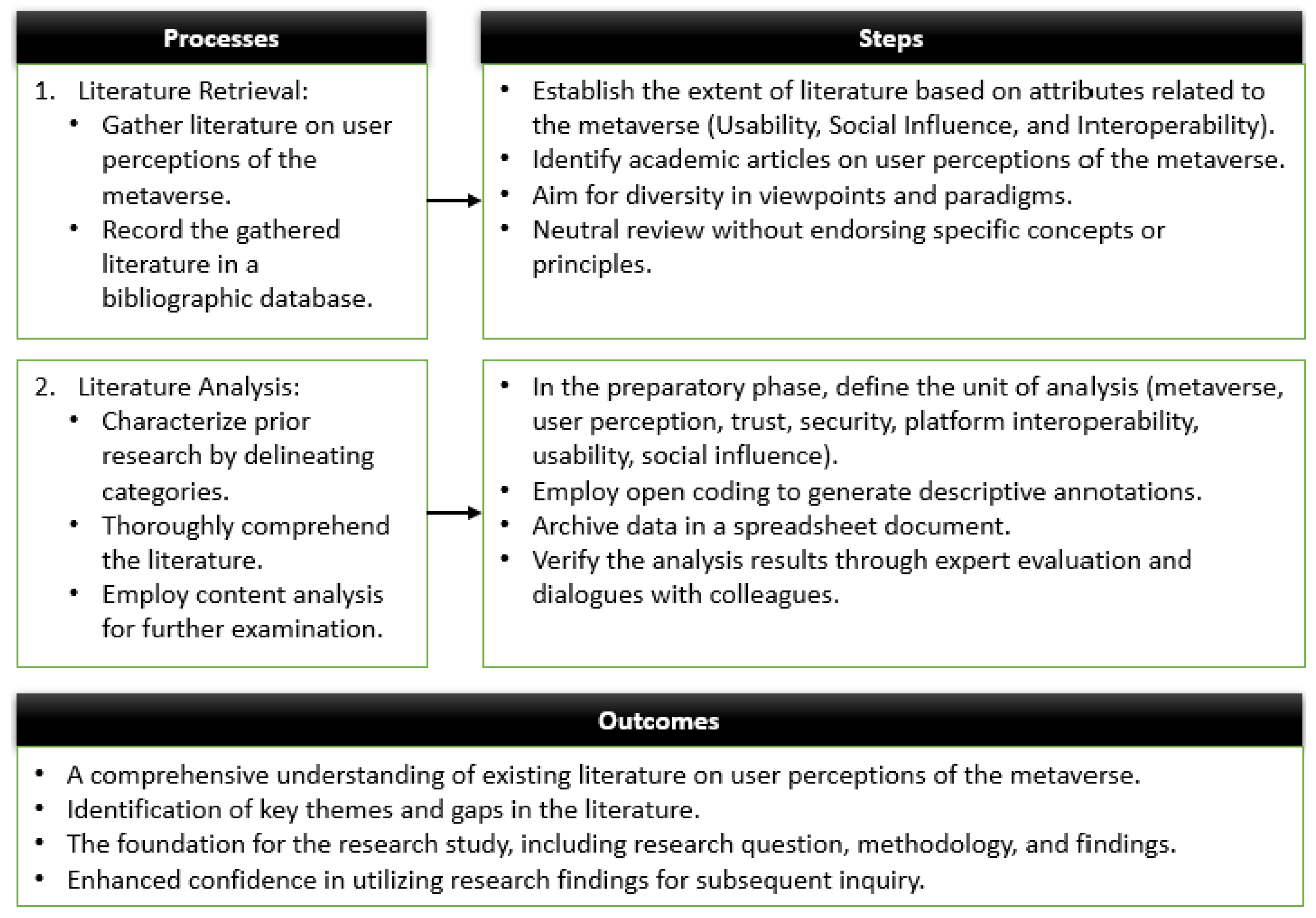
Table 2.
Dimensions of the Metaverse Interoperability Studies.
| Aspect | Details | Reference(s) |
|---|---|---|
| Narrative Techniques | Importance of user-centric design in the cultural Metaverse. | [41] |
| Secure Platform Interoperability | Challenges in addressing security and privacy. Open Metaverse with a Zero-Trust Architecture model. Implications on user trust. | [18,42] |
| Collaboration | Need for Standardization. Compatibility fosters cooperation. Influence on user attitudes. | [17] |
| Overall Impact | Interoperability influences usability, security, and coherence of the Metaverse ecosystem. | [17,22,23,41,43] |
| Significance | Optimizing user experiences, collaboration, and addressing security through interoperability. There is a need for more research on its impact on user perspectives. | [15,17,23] |
Table 3.
Interoperability Challenges.
| Potential Challenges on Metaverse Interoperability Studies | Reference(s) |
|---|---|
| Interoperability across multiple Metaverses. | [15] |
| Addressing interoperability uncertainties. | [40] |
| Establishing unified standards for user credentials. | [40] |
| Ensuring seamless user experience within the Metaverse. | [22] |
| Strengthening connections between platforms for better virtual connectivity. | [43] |
| Addressing security and privacy concerns of extended reality systems. | [42] |
| Integrating a Zero-Trust Architecture (ZTA) model in an open Metaverse framework. | [18] |
| Standardization within the Metaverse for coherence and interconnectivity. | [17] |
Table 4.
Aspects of Metaverse Usability Research.
| Aspect of Usability | Challenges/Concerns | Reference(s) |
|---|---|---|
| General Usability | Context immersion, User Experience (UX) | [41] |
| Enhancing user interface, data visualization, ergonomic concerns | [9] | |
| Transaction and participation costs, Data privacy and ethics, Health concerns, Environmental impact, Shifting preferences | [20] | |
| AR Usability | Dark side of virtual ecosystem, Ethical concerns | [19] |
| Pragmatic and Hedonic qualities, Error counting | [44] | |
| User Experience in Metaverse Contexts | Security and Privacy, Content Generation, AI Predictions, Transparency of AI systems | [35] |
| Incorporation of external data, Patient-centric healthcare experiences | [7] | |
| Self-efficiency, Social norm, Perceived curiosity, Perceived pleasure, Price considerations | [10] | |
| Ethical and Social Implications | Security and Privacy concerns, Customer profiling, Aggressive marketing, Cyberbullying, Racism, Digital personality mining, Digital harassment | [16] |
| Privacy and security issues, Data privacy and cybersecurity regulations, Disparities in access | [25] | |
| Usability Challenges and Limitations | Access, Ease-of-use, Lack of developed ecosystem | [18] |
| Adoption and outcomes, Technological standards, Accessibility for older individuals, Comparison to in-person visits | [23] | |
| Augmented Reality Experiences | User-friendly designs in educational and training contexts | [19] |
| Usability of Metaverse in Healthcare | Usability impacted by the delivery of patient-centric healthcare experiences | [7] |
| Metaverse Technology | Relationship between usability and user acceptance | [10] |
| Ethical Considerations | Ethical responsibility, Security, Privacy, Digital harassment | [16] |
| Undemocratic and unethical practices due to surveillance capitalism | [45] |
Table 5.
Sample findings of studies of Usability in the Metaverse.
| Reference | Findings Summary |
| [41] | Context Immersion (The article mentions a study by Kim that discusses immersion in augmented reality (AR) as context immersion. This refers to how AR logically interacts with the user’s real physical environment, incorporating dimensions such as time and location-based context, object-based context, and user-based context.) User Experience (UX) (The article emphasizes the importance of UX in immersive environments and the need for research to understand and optimize interactive communication content for a better user experience) |
| [9] | enhancing the user interface, data visualization, and considering ergonomic considerations |
| [20] | Transaction and participation costs. Data privacy and ethics concerns. Health-related concerns, Environmental impact. Shifting preferences (The demand for the Metaverse’s products, services, and way of living and working is influenced by shifting preferences) |
| [19] | challenges, risks, and ethical considerations associated with the use and implementation of the metaverse include: the potential dark side of the virtual ecosystem, to which AR serves as a gateway, virtual ecosystems, including the metaverse, and highlights the importance of research on these ecosystems, the technologies used to access them (such as AR), and the ethical concerns that arise |
| [44] | Pragmatic qualities. Hedonic qualities. Dual-task exercise and error counting. Potential of the Metaverse (The article highlights the potential of the Metaverse in connecting people together regardless of their location, which reinforces its usability). |
| [35] | Security and Privacy. Content Generation. AI Model Predictions. Transparency of AI Systems. |
| [7] | the incorporation of external data and the delivery of patient-centric healthcare experiences impact the usability of metaverse services in the healthcare industry |
| [10] | Self-efficiency. Social norm. Perceived curiosity. Perceived pleasure. Price |
| [16] | Security and Privacy Concerns. Customer Profiling. Aggressive Marketing. Cyberbullying and Racism.Digital Personality Mining. Digital Harassment. |
| [25] | Privacy and Security Issues. Data Privacy and Cybersecurity Regulations. Disparities in Access. |
| [18] | Access. Ease-of-Use. Lack of Developed Ecosystem. |
| [23] | Adoption and outcomes.Technological standards and protocols.Accessibility for older individuals. Comparison to in-person visits. |
Table 6.
Summary of Findings on Social Influence in the Metaverse.
| Category | Finding | Reference |
|---|---|---|
| Factors Influencing Metaverse Usage | Ethical and governance issues, technological literacy, self-efficacy, consumer trust in virtual settings, and role of technology familiarity | [15,31,40,49] |
| Social Influence | Deceptive Behaviors, manipulation, Social Engineering, cyberbullying, and the Role of social norms and Peer Pressure | [25,40,49] |
| Role of AR, VR, | Augmented reality’s collaboration potential, anthropomorphism in healthcare, cyberbullying in social media, and social influence in AR | [19,35,44,50] |
| and Social Media | ||
| Consumer Behavior | Social Media’s role in Purchases, threats in VR, VR in Healthcare Adoption, and Manipulative Algorithms in purchases | [9,15,42,51] |
| Metaverse Benefits | Advantages in healthcare, governance importance, misinformation concerns, social media risks, and educational roles | [12,14,17,31,45] |
| and Challenges |
Table 7.
Challenges Impacting Social Influence in the Metaverse.
| Challenge | Description | Reference |
|---|---|---|
| Ethical Issues | Concerns around deceptive behaviours, impersonation, and unscrupulous activities by avatars controlled by malicious users. | [40] |
| Cyberbullying | Presence of negative influences in the Metaverse, such as cyberbullying, can affect user behaviour and experiences. | [35,49] |
| Misinformation | The potential for misinformation, agenda-driven corporate media influence, and mass formation hysteria. | [14] |
| Governance Issues | Risks associated with undemocratic and unscrupulous governance practices within the Metaverse, emphasizing the need for robust governance. | [17,45] |
| Manipulative Algorithms | The use of manipulative social algorithms that can unduly influence user decisions, especially in commerce platforms. | [51] |
Disclaimer/Publisher’s Note: The statements, opinions and data contained in all publications are solely those of the individual author(s) and contributor(s) and not of MDPI and/or the editor(s). MDPI and/or the editor(s) disclaim responsibility for any injury to people or property resulting from any ideas, methods, instructions or products referred to in the content. |
© 2024 by the authors. Licensee MDPI, Basel, Switzerland. This article is an open access article distributed under the terms and conditions of the Creative Commons Attribution (CC BY) license (http://creativecommons.org/licenses/by/4.0/).
Copyright: This open access article is published under a Creative Commons CC BY 4.0 license, which permit the free download, distribution, and reuse, provided that the author and preprint are cited in any reuse.