

Submitted:
04 February 2024
Posted:
05 February 2024
You are already at the latest version
Abstract
To investigate the differences in cadium (Cd) uptake and translocation among edible rapes and select suitable rape varieties for safe production, a field experiment was carried out with 25 varieties of edible rapes on a farmland polluted with Cd in the central souothern part of Hunan Province. The growing characteristics and Cd contents in rape tissues were measured, and the amount of Cd removed was calculated. The results showed that the growth of 25 rape varieties was not inhibited without withering or inconsistent changes in leaf and so on. The Cd contents in stem-leaf and root of rapes were in the range 0.05-0.26mg·kg-1 and 0.04-0.26mg·kg-1, respectively. Basing on BCF, the stem-leaf showed a greater capacity for Cd transport than root. And the total Cd removed by rape were 0.002-0.016 mg·plant-1. Except for plant height, BCF of soil available Cd from soil to stem-leaf, TCF of Cd from root to stem-leaf and Cd taken away by rape, there was no significant difference among edible rape varieties. Although Cd contents in stem-leaf of 25 rape varieties does not exceed the national safety standards, planting “Lvjin 1”, “Guanyou Qingjing” and “Guanyou brassica” not only reduced soil pollution but also allowed the production of safe leafy rape.
Keywords:
Edible rape
; Cd pollution
; accumulation
; translation
; variety
1. Introduction
Heavy metals contamination in agricultural soils has been paid worldwide attention posing a threat to food safety, human health and agricultural sustainability [1]. Among these, Cadium (Cd) is the most critical toxic heavy metals for its accumulation and damage in kidney and liver and bone of human over an entire lifetime[2]. Rapid industrialization and modernization in China increased serious heavy metal contamination, about seven percents of agricultural lands polluted with Cd [3]. How to promote remediation and ensure safe production has become research hotspot, especially in China with limited cropland resources and large numbers of peoples. Phytoremediation with hyperaccumulators of heavy metals has been as an efficient and economic remediation techniques for Cd pollution in farmland, compared with conventional remediation methods (Gurajala et al., 2019). Oilseed rape, with lower Cd concentration in rape seeds and higher-Cd-accumulation in rape plants as well as high nutritional value and easy cultivation and high biomass, has been a good candidate to remediate Cd polluted soils and and secure the production of rapeseed oil [4,5,6], especially when soil Cd content was lower than 20 mg·kg-1[2].
Edible rapes consumed leafy vegetables are important crops in China. And heavy metals contents in edible rapes are strongly associated with humun health. However, ragarding the safe production of edible rapes in soil lightly or moderately polluted with Cd is not available. It has been reported that plant species and even cultivars within the same species differ widely in their capacity to uptake, accumulate, translocation and tolerate heavy metals[7]. Thus, we raise the question of whether safety utilization of edible rapes with different varieties in soils lightly polluted with Cd remains consistent and positive. Data regarding Cd accumulation in edible rapes with different varieties may give insights into new direction of phytoremediation coupled with agro-production. In this research, 25 cultivars of edible rape were cultivated on farmland polluted with Cd in Middle South Hunan, China. The aim of this study were to investigate the growth characteristics and Cd distribution, accumulation and translation in distinct varieties of edible rapes in soils lightly polluted by Cd. The results will be useful in selection of edible rape varieties to reduce Cd pollution and ensure human healthy eating.
2. Materials and Methods
2.1. Site description and experimental design
Experiments were are carried out in Hengyang, Hunan Province, China. The study site belongs to the humid subtropical moonsoon climate, and has an average annual temperature of 17.9℃ and an average annual rainfall of 1452mm. The soil has moderate fertility, good drainage and irrigation conditions. TCd were 0.30-0.60 mg·kg-1, mainly due to the high geochemical background in soil. And pH was 5.0-5.8.
25 varieties of edible rapes seeds (Table 1) were obtained from seed marketing companies, which are widely planted in the south or north of China. The experiment comprised 25 treatments and 75 cultivation plot. Each cultivation plot was 12 m2 (3m×4m) and arranged in completely randomized block design. In each plot, the sowing rate was 2 kg ha-1, and the application rate of nitrogen, phosphorus, and potassium fertilizers were 200kg N ha-1 with urea , 90 kg P2O5 ha-1 with calcium triple superphosphate and 90 kg K2O ha-1 with potassim chloride, respectively. All fertilizers were applied once as basal derssing before seeding. Pesticide applications, weeding and other practices were performed according to local practices.
The cultivation plot of every varities of edible rape was with 3 duplicates. The 75 plots were arranged in completely randomized block design, and the planting density was 2 kg per hectare. Nitrogen, phosphorus, and potassium fertilizers were all in solid form (urea, calcium triple superphosphate, potassim chloride, respectively), and the fertilizer rates were 200kg N ha-1, 90 kg P2O5 ha-1 and 90 kg K2O ha-1, respectively in all treatments.
2.2. Sampling collection and determination
Rapes were weeded once after 42 days of growth. At harvest, one row from the central area in every quadrat was selected to determine the yield. Then, three rape plants were randomly collected to measure the plant height and root length, and determine the Cd content in stem-leaf or root of rape. Rinse rapes sample of with tap water and deionized water in sequence, absorb surface moisture with filter pater, then digested with a mixture of nitric and perchloric acid (3:1, v/v)[5]. Digestion solution was filtrated and tested by an inductive coupling plasma spectrogenerator (ICP-OES 5110, Agilent, Palo Alto, CA, USA)[6].
Three soil cores in each quadrat after harvest were randomly taken from 0-20 cm depths using a soil auger with 2.5 cm diameter, and mixed thoroughly for determination. Soil pH value was measured using a pH meter with a water/soil ratio of 2.5:1. Soil available Cd (ACd) was obtained by filtering the soil with DTPA after immersion for 2 h at a soil-liquid ratio of 1:2.5 (w:w)[8]. Soil total Cd concentration (TCd) was determined by digesting soil with a mixture of aqua regia and perchloric acid[9]. The Cd contents in the leach liquor and digestion solution were filtrated and tested by an inductive coupling plasma spectrogenerator [6].
2.3. Data analysis
The bioaccumulation factor (BCF) and translocation factor (TCF) were calculated to evaluate the capacity of 25 rape varieties to transport or accumualte Cd[10]. The foumula is described as follows:
BCF= Cd content in aboveground or root (mg•kg-1)/TCd or ACd in soil (mg•kg-1)
TCF=Cd content in aboveground (mg•kg-1)/Cd content in root (mg•kg-1)
To evaluate the Cd removal potential of rape varieties, the Cd accumulation in all tissues of 25 rape were calculated. The formula is described below:
The amount of Cd accumulation (mg•plant-1)=DWaboveground×Caboveground+DWroot×Croot
Where DW (kg•plant-1) is the weight of aboveground or root of rapes, C (mg·kg-1) is the Cd contnet in aboveground or root of rapes.
One way ANOVA was used to evaluate the differences among rape varieties or tissues, performed using the statistics packages of R software with “agricolae” [10]. Cluster analysis was used to divide 25 rape varieties into different categories basing on their ability to accumulate and translocate Cd in stem-leaf with systematic clustering method in R software “vegan” [12] and “factoextra” packages. All figures were produced using Origin 2021 software.
3. Results
3.1. Growth characteristics of the 25 rape varieties
The plant height and root length of the 25 edible rape varieties are shown in Figure 1, and significant differences were observed. The plant height of the 25 rape varieties ranged from 14.0 to 28.0 cm with the median value of 17.78 cm. There were significant differences among 25 rape varieties (p=0.042). The plant height of Hangzhou Youdonger and Rape 905 are significantly higher than others, while ones of Yanyu is the shortest. The root length of the 25 rape varieties ranged from 6.93 to 16.83 cm with the median value of 12.35 cm. The root length of Zhongji 605 and Guanyou Qingjing are significantly higher than others, and Aiji Suzhouqing was the shortest. However, there was no significant difference among 25 rape varieties.
The fresh weight of stem-leaf and root of the 25 edible rape varieties are shown in Figure 2, and significant differences were observed. Stem-leaf fresh weight of the 25 rape varieties ranged from 20.91 to 101.14 g·plant-1 with the median value of 48.07 g·plant-1. Among these varieties, the stem-leaf fresh weight of Dongjin 2 is higher than ones of others, and the lowest is Youliang Suzhou and Fenpiqing. Root fresh weight of the 25 rape varieties ranged from 1.11 to 5.03 g·plant-1 with the median value of 2.07 g·plant-1. The largest are Guanyou Qingjing and Zhongji 605 varieties, while the smallest is Aiji Suzhouqing. No matter stem-leaf or root fresh weight, there was no significant difference among rape varieties.
3.2. Cd contents in plant and soil with different rape varieties
The Cd contents in different tissues of the 25 edible rape varieties were shown in Figure 3, and significant differences were observed. The Cd contents in stem-leaf of the 25 rape varieties ranged from 0.05 to 0.26 mg·kg-1 with the median value of 0.103 mg·kg-1. The average Cd contents in 25 rape varieties were all less than 0.2 mg·kg-1, according to the national food safety standard limit of contaminants in food in China[3]. However, in some samples of certain rape varieties, such as Dongqing, Lvjin 2, Heixuanfeng, rape 905, Jingyou 4, Lvjingang, Youliang Suzhouqing, Hangzhou Youdonger and Aiji Suzhouqing, the Cd contents in stem-leaf were above 0.2 mg·kg-1. In addition, there was no significant difference among these rape varieties (p=0.066). The Cd contents in root of the 25 rape varieties ranged from 0.04 to 0.26 mg·kg-1 with the median value of 0.102 mg·kg-1. Although the average Cd content in root of 25 rape varieties are all less than 0.2 mg·kg-1, there were some samples of Lvjingang, Aiji Suzhouqing and Youliang Suzhouqing with the Cd contents exceeding 0.2 mg·kg-1. And there was no significant difference among 25 rape varieties (p=0.592).
Soil available Cd content and soil total Cd content with 25 edible rape varieties were shown in Figure 4. Soil available Cd content ranged from 0.17 to 0.32 mg·kg-1with the median value of 0.22 mg·kg-1. Although there were no significant difference among 25 rape varieties, soil available Cd content with Lvjin 2 is highest than ones of others, and soil available Cd content with Dongjin 2, Lvjin 1, Jingyou 4 and Guanyou Qingjing are lowest. Soil total Cd content ranged from 0.29 to 0.58 mg·kg-1 with the median value of 0.37 mg·kg-1. And there were no significant difference among rape varieties.Basing on risk screening values and risk intervention values for soil contamination of agricultural land in China[13], 97.5% of soil samples in study had exceeded the risk screening values with Cd, but all samples were below the risk intervention values.
3.3. Cd accumulation and transport characteristics in 25 rape varieties
BCF of soil available Cd in stem-leaf ranged from 0.26 to 0.99 with the median value of 0.51, and there was a significant difference among the 25 varieties (P=0.023). Aiji Suzhouqing had the greatest BCF in stem-leaf with 0.668, while Yanyu, Rape 810, Guanyou Qingjing, Zhongji 605 had the lowest BCF with 0.404, 0.392, 0.387 and 0.353, respectively. BCF of soil available Cd in root ranged from 0.17 to 1.04 with the median value of 0.5062, and there were no difference in this among 25 varieties (P=0.698). All these results showed in Figure 5.
BCF of soil total Cd concentration in stem-leaf or root were shown in Figure 6, and significant differences were analysed. BCF of soil total Cd concentration in stem-leaf ranged from 0.148 to 0.657 with the median value of 0.282, and BCF of soil total Cd concentration in root ranged from 0.113 to 0.541 with the median value of 0.275. There was no significant difference among the 25 varieties for BCF of soil total Cd concentration in stem-leaf or root. However, Yanyu, Dongjin 2, Lvjin 1, Aiji Suzhouqing, Lvjingang, Rape 908, Guanyou Qingjing, Jinyang 401, Guanyou brassica and Zhongji 605 had greater BCF of total or available Cd in roots than ones in stem-leaf.
The TCF of Cd from root to stem-leaf ranged from 0.51 to 2.95 with the median values of 1.033. There was 16 varieties with TCF >1, and the order was as follows: Dongqing (2.04), Rape 905 (1.77), Youliang Suzhou (1.49), Lvjin 2 (1.29), Dongjin 1 (1.27), Heixuanfeng (1.24), Hangzhou Youdonger (1.15), Sujun 316 (1.08), Fenpiqing (1.07), Heishuaige (1.07), Aiji Suzhouqing (1.06), Rape 810 (1.05), Daye Heidatou (1.05), Huaguan Qingjingcai (1.04), Jingyou 4 (1.03) and Wuyue Manyoucai (1.02). Additionally, there were significant difference found among 25 varieties (P=0.049). Dongqing, Rape 905 and Youliang Suzhou (1.48) were greater than other varieties (Figure 7).
3.4. Cd uptaked by the 25 rape varieties
The total Cd uptaked by the 25 rape varieties ranged from 1.606 μg·plant-1 to 16.159 μg·plant-1 with the median values of 6.555 μg·plant-1. Although rape Lvjin 2 and Hangzhou Youdonger had higher uptake of Cd than others, there were no significant difference among 25 rape varieties (P=0.074). Comparing the difference of Cd uptakes by stem-leaf or root, the former is significantly higher than the latter. Proportation of Cd uptake by stem-leaf ranged from 84.77% to 98.96% with the median value of 95.38%. And there is a significant difference among rape varieties. Guanyou brassica, Aiji Suzhouqing and Guanyou Qingjing are significantly lower than Dongqing, Dongjin 1, Lvjin 2, Rape 905, Heixuanfeng, Youliang Suzhou, Wuyue Manyoucai, Hangzhou Youdonger, Rape 810, Rape 908, Dongjin 2, Sujun 316, and Yanyu. The proportion of Cd uptake by root ranged from 1.04% to 15.23% with the median value of 4.62%. Similarly, there is a significant difference among rape varieties, and the varieties of Guanyou brassica, Aiji Suzhouqing and Guanyou Qingjing are significantly higher than others, which is contrary to the proportion of Cd uptake bystem-leaf.

Table 2.
The uptake of Cd in 25 rape varieties.
| Rape Variety | Uptake of Cd (μg·plant-1) | Stem-leaf(%) | Root(%) | Rape Variety | Uptake of Cd (μg·plant-1) | Stem-leaf(%) | Root(%) |
|---|---|---|---|---|---|---|---|
| Yanyu | 5.22±1.70 | 95.45±0.35 | 4.55±0.35 | Fenpiqing | 4.56±2.48 | 94.48±2.92 | 5.52±2.92 |
| Dongqing | 6.02±2.76 | 97.62±0.81 | 2.38±0.81 | Hangzhou Youdonger | 10.23±4.83 | 96.20±1.16 | 3.80±1.16 |
| Dongjin 1 | 6.55±3.50 | 97.01±1.74 | 2.99±1.74 | Lvjingang | 7.37±3.33 | 95.24±1.47 | 4.76±1.47 |
| Dongjin 2 | 7.23±3.39 | 95.57±1.66 | 4.43±1.66 | Huaguan Qingjingcai | 6.22±3.32 | 95.11±2.41 | 4.89±2.41 |
| Lvjin 1 | 5.18±0.86 | 94.62±1.51 | 5.38±1.51 | Wuyue Manyoucai | 6.40±0.90 | 96.29±0.25 | 3.71±0.25 |
| Lvjin 2 | 11.14±1.18 | 97.0±0.69 | 3.0±0.69 | Rape 905 | 9.01±6.55 | 96.86±2.54 | 3.14±2.54 |
| Jingyou 4 | 6.82±4.74 | 95.17±0.82 | 4.83±0.82 | Rape 908 | 3.98±1.58 | 95.58±0.42 | 4.42±0.42 |
| Sujun 316 | 7.73±5.52 | 95.56±2.53 | 4.44±2.53 | Rape 810 | 4.69±1.33 | 95.66±0.75 | 4.34±0.75 |
| Heishuaige | 6.79±4.71 | 94.44±0.34 | 5.56±0.34 | Guanyou Qingjing | 7.76±0.23 | 92.10±1.49 | 7.90±1.49 |
| Daye Heidatou | 8.56±4.82 | 95.0±1.14 | 5.0±1.14 | Jinyang 401 | 3.86±0.47 | 94.53±0.14 | 5.47±0.14 |
| Heixuanfeng | 7.26±5.68 | 96.85±1.0 | 3.15±1.0 | Guanyou brassica | 4.83±2.36 | 93.92±2.30 | 6.08±2.30 |
| Youliang Suzhou | 5.76±5.64 | 96.77±0.49 | 3.23±0.49 | Zhongji 605 | 4.11±2.94 | 94.71±1.64 | 5.29±1.64 |
| Aiji Suzhouqing | 6.62±5.47 | 92.81±6.97 | 7.19±6.97 |
3.5. Cluster analysis on Cd accumulation in 25 rape varieties
According to the Cd content in stem-leaf, BCF for soil to stem-leaf and TCF from root to stem-leaf, cluster analysis and statistical difference test were used to divide 25 rape varieties into three categories (Figure 9). The first category included Guanyou Qingjing, Guanyou brassica, Rape 810, Zhongji 605, Rape 908 and Jinyang 401, representing the lower ability to accumulate and translocate Cd in lightly Cd contaminated soil. In this category, Cd content in stem-leaf ranged from 0.077 to 0.107 with the mean value of 0.089, BCF ranged from 0.219 to 0.281 with the mean value of 0.239, and TCF from 0.756 to 1.050 with the mean value of 0.907. Yanyu, Dongjin 2, Lvjin 1, Dongjin 1 and Sujun 316 were second categroy with silightly higher ability to accumulate and translocate Cd than those rape varieties in the first category. Among these, Cd content in stem-leaf ranged from 0.082 to 0.121 with the mean value of 0.099, BCF ranged from 0.230 to 0.331 with the mean value of 0.263, and TCF from 0.779 to 1.269 with the mean value of 0.982. Rape Lvjing 1, it should be noted, has lower Cd content in stem-leaf and lower TCF. Then, the remaining fourteen rape varieties belonged to the third category with highest ability to accumulate and translocate Cd in study. In this category, Cd content in stem-leaf ranged from 0.122 to 0.167 with the mean value of 0.142, BCF ranged from 0.306 to 0.417 with the mean value of 0.367, and TCF from 0.904 to 2.040 with the mean value of 1.230. Obviously, rape Lvjin 2 and Hangzhou Youdonger had higher Cd content in stem-leaf and higher BCF.
4. Discussion
Cd pollution in soil can inhibit or promote rape growth depending upon soil Cd contents. Many studies showed that low concentration of Cd prompte rape growth, while high concentration of Cd inhibit it [14,15,16,17,18,19,20]. However, notably, different studies have inconsistent conclusion regarding the threshold of Cd concentration for inhibiting or promoting crop growth. Rape biomass of roots, stems and leaves reached their maximum values when Cd content <1.8 mg·kg-1, and decreased when Cd content>1.8 mg·kg-1 [14]. Cd concentration above 5 mg·kg-1 will hinder the growth of rape, inhibit plant height, lose green leaves and reduce biomass [16,17,18]. In this study, the growth of 25 rape varieties was not inhibited under soil Cd concentration from 0.2 mg·kg-1 to 0.8 mg·kg-1 without withering or inconsistent changes in leaf and so on. And there was no significant difference in biomass and plant height among these. Additionally, the mean Cd contents in stem-leaf with 25 edible rape varieties are all below 0.2 mg·kg-1 in this study, indicating that vegetable rapes planted in mild Cd contaminated soil is generally safe.
The accumulation and translocation of Cd in rape tissues is different. Currently, it is widely accepeted that the Cd content in aboveground of rape is higher than that in roots [14,21,22,23,24,25], indicating that Cd has a greater toxic effects on stem-leaves than on the roots [17]. However, root is the direct organ contacting with soil Cd pollution. The reason for this is the greater surface area of stem-leaf than ones of root [26]. Under the influence of root pressure and transpiration, Cd is transported to the aboveground. The stronger the transpirtion, the easier for Cd migration to the aboveground and the higher content in aboveground [27]. Wang showed the TCF of Cd in rape are all above 1, indicating more Cd transferred from roots to stems and leaves[14]. Additionally, with rhizosphere microorganisms, rhizosphere cells are protected from Cd toxity [27]. However, some studies also showed that the content of Cd in rape tissures is manifested as root>stem >leaf [28]. And the accummulation of Cd in root of rapeseed is greater than that ones in the stem and leaf [29,30], which means Cd transportion in some rape varieties is greatgly hindered at the interface of root and stem. In this study, the Cd content in plant, BCF of soil available Cd and BCF of soil total Cd were not significantly different between stem-leaf and root, although the values of these in stem-leaf are slightly higher than ones in root. However, the uptake of Cd by stem-leaf is significantly higher than ones of root, for the higher biomass in stem-leaf.
The bioavailability of Cd in soil is related to soil characteristics, such as pH, Eh, OM, microorganisms, etc[31,32]. Especially with the same rape variety, the cumulative absorption of Cd in acidic soil is higher than ones in alkaline soil, and there is significant difference in Cd adsorption capacity among rape varieties[29]. It has been reported that plant species differ widely in their capacity to uptake, accumulate, and tolerate heavy metals[7]. China has a large number of rapeseed germplasm resources, with some varieties or genotypes having high levels of accumulated Cd, especially with Brassica junica [25]. Oilseed rape Xikou huazi has markedly higher shoot biomass, Cd uptake amount and soil purification rate than Zhucang huazi when the Cd concentration in soil is ≤ 20 mg·kg-1 [22].
For vegetable rape, the accumulation of Cd varied obviously among varieties. In alkaline soil, the highest concentration of Cd in aboveground was determined to be 0.68 mg·kg-1 in Rape Jinhua Guanqing, about 2.13 times of the lowest 0.32 mg·kg-1 in Rape Xiawang, while in acidic soil, 0.96 mg·kg-1 was observed in aboveground of Rape Jinhua Guanqing, showing 1.88 times of 0.51 mg·kg-1 in Rape Xiawang [29]. In study, there were significant differences in plant height, BCF of ACd in stem-leaf and TCF from root to stem-leaf among 25 rape varieties. Basing on the ability of Cd accumulation and translocation in stem-leaf, cluster analysis divide 25 rape varieties into three categories. Among these, except for rape Guanyou Qingjing, Guanyou brassica, Rape 810, Zhongji 605, Rape 908 and Jinyang 401 in the first category, Lvjin 1 also showed the lower ability to accumulate and translocate Cd, which is in the second category. Notably, in order to achieve win-win results in the research on safe production and soil remediation in heavy metal contaminated farmland, it is necessary to pay attention to the enrichment of not only the edible parts but also the non-edible parts, the former with the lower ability Cd enrichment ability and the latter with the higher one. Therefore, in study, the rape varieties with low enrichment in edible stem-leaves and high enrichment in non-edible roots should be widely applied and promoted, such as “Lvjin 1”, “Guanyou Qingjing” and “Guanyou brassica”, which are not only reduced soil pollution but also allowed the production of safe leafy rape. Analyzing the reasons for the differences may mainly be due to the different genotypes of different varieties of rapeseed.
This study was conducted in the field, and the experimental results were more reliable than those in artificially Cd-added experiments. However, this experiment is only limited to lightly polluted soil. In the future, experiments with different levels of Cd-polluted will be conducted to verify the representativeness and reliability of the results of this experiment and make it have better application prospects.
This experiment systematically studied 25 vegetable rape varieties popular in southern and northern China. The accumulation characteristics and growth status of different vegetables under the same pollution conditions were compared, and the types of vegetables that are prone to cadmium accumulation were determined. The more suitable rapeseed varieties for planting in lightly polluted soil were selected.
5. Conclusions
This research screened 25 edible rape varieties and found that safety utilization of edible rapes in soil lightly or moderately polluted with Cd remains consistent and positive. The growth of 25 rape varieties was not inhibited without withering or inconsistent changes in leaf and so on. The fresh weight of stem-leaf or root and the root length have no difference among 25 rape varieties, except plant height. The Cd contents in stem-leaf and root of rapes were in the range 0.05-0.26mg·kg-1 and 0.04-0.26mg·kg-1, respectively. Although the average values of stem-leaf or root of all 25 rape varieties were less than 0.2 mg·kg-1, there were some samples of certain varieties above 0.2 mg·kg-1. BCF of soil activate Cd in stem-leaf or root ranged from 0.26-0.99 and 0.17-1.04, respectively. And there was a significant difference among the 25 varieties for BCF of soil activate Cd in stem-leaf. The total Cd removed by rape were from 1.606 μg·plant-1 to 16.159 μg·plant-1. Althouth there was no significant difference among edible rape varieties, Cd uptakes by stem-leaf is significantly higher than ones of root. Cluster analysis divide 25 rape varieties into three categories on Cd enrichment ability. In all, although Cd contents in stem-leaf of 25 rape varieties does not exceed the national safety standards, planting “Lvjin 1”, “Guanyou Qingjing” and “Guanyou brassica” not only reduced soil pollution but also allowed the production of safe leafy rape.
Author Contributions
Conceptualization, data curation and writing, J.L. and K.L.; Field trial and investigation, D,L., D.W., L.S. and M.M.; Investigation, L.X. and Z.S.; Writing improvement and review, L.X. and Z.S., G.Z. and L.S; Funding acquisition, D.L., G.Z. and L.S. All authors have read and agreed to the published version of the manuscript.
Funding
This research was supported by the National Key R&D Project of China (No. 2023YFD1700104); China Agriculture Research System of MOF and MARA; Beijing Innovation Team of the Modern Agricultural Research System (BAIC08-2023-YJ01).
Institutional Review Board Statement
Not applicable.
Informed Consent Statement
Not applicable.
Data Availability Statement
Data available in a publicly accessible repository. The data presented in this study are available on request from the author.
Acknowledgments
We thank the anonymous reviewers and the editors for very helpful comments and suggestions for the manuscript.
Conflicts of Interest
The authors declare that they have no known competing financial interest or personal relationships that could have appeared to influence the work reported in this paper.
References
- Bolan, N.; Kunhikrishnan, A.; Thangarajan, R.; Kumpiene, J.; Park, J.; Makino, T.; Kirkham, M.B.; Scheckel, K. Remediation of heavy metal(loid)s contaminated soils – To mobilize or to immobilize? Journal of Hazardous Materials. 2014, 266(4), 141–166. [CrossRef]
- Herath, A.S.; Kawakami, T.; Nagasawa, S.; Serikawa, Y.; Motoyama, A.; Chaminda, G.G.T.; Weragoda, S.K.; Yatigammana, S.K.; Amarasooriya, A.A.G.D. Arsenic, cadmium, lead, and chromium in well water, rice, and human urine in Sri Lanka in relation to chronic kidney disease of unknown etiology. Journal of Water and Health. 2018, 16, 212–222. [CrossRef]
- China Environmental Protection Industry. National soil pollution survey bulletin[EB/OL]. (2014-4-17).[2019-8-2]http://www.gov.cn/foot/2014-04/17/content_2661768.htm. 2014.
- Yuan, T.; Gu, J.; Zhou, H.; Huang, F.; Yang, W.; Wang, S.; Zhang, J.; Huo, Y.; Liao, B. Translocation and accumulation of cadmium and lead in the tissues of 39 rape cultivars grown in a polluted farmland. Environmental Science and Pollution Research. 2020, 27(13), 15888-15900. [CrossRef]
- Cao, X.; Wang, X.; Lu, M.; Hamid, Y.; Lin, Q.; Liu, X.; Li, T.; Liu, G.; He, Z.; Yang, X. The Cd phytoextraction potential of hyperaccumulator Sedum alfredii-oilseed rape intercropping system under different soil types and comprehensive benefits evaluation under field conditions. Environ Pollut. 2021, 285, 117504. [CrossRef]
- Fan, J.; Xu, C.; Wang, H.; Zhu, H.; Zhu, Q.; Zhang, Q.; Huang, F.; Huang, D.J. Effects of three organic materials on the availability of cadmium in soil and cadmium accumulation and translocation in rice plants. . Journal of Agro-Environment Science. 2020, 39, 2143–2150 (In Chinese). [CrossRef]
- Grant, C.A.; Clarke, J.M.; Duguid, S.; Chaney, R.L. Selection and breeding of plant cultivars to minimize cadmium accumulation. The Science of the Total Environment. 2008, 390, 301-310. [CrossRef]
- Huang, Y.; Sheng, H.; Zhou, P.; Zhang, Y. Remediation of Cd-contaminated acidic paddy fields with four-year consecutive liming. Ecotoxicology and Environmental Safety. 2020, 188, 109903. [CrossRef]
- Hseu, Z.Y.; Chen, Z.S.; Tsai, C.C.; Tsui, C.C.; Cheng, S.F.; Liu, C.L.; Lin, H.T. Digestion methods for total heavy metals in sediments and soils. Water Air & Soil Pollution. 2002, 141, 189-205. [CrossRef]
- Zeng, L.P.; Zhou, F.; Chen, Y.R.; Wang, Y.H.; Li, H.S. Effects of Cassava-Peanut Intercropping on the Absorption of Cadmium and Available Nutrient in Rhizospheree Soi. Research of Environmental Sciences. 2018, 31(2), 303-309 (in Chinese). [CrossRef]
- Mendiburu, F.2013. Agricolae: Statistical procedures for agricultural research. R package Version 1.1-4.
- Oksanen, J. ; Blanchet, F.G. ; Kindt, R. ; Legendre, P. 2013. Vegan: community ecology package. R Package Version 2.0-7.
- GB 15618-2018. Soil environmental quality Risk control standard for soil contamination of agricultural land [S].
- Wang, N.; Nan, Z.R.; Wang, S.L.; Wu, W.F.; Zhou, T.; Li, C.C.; Li, P.; Jin, C.; Luo, H.Z.; Xue, S.Y. Distribution, enrichment and migration characteristics of heavy metals in rape under Cd/Pb stress. Journal of Lanzhou University 2012, 12(48), 18-22 (in Chinese). [CrossRef]
- Guo, L.M.; Ai, S.Y.; Tang, M.D.; Li, M.J.; Yao, J.W.; Wang, Y.H.; Ceng, Z.B. Effect of amendment on Cd uptake by Brassia chinensis in Cd-contaminated soils. Chinese Journal of Eco-Agriculture. 2010, 18(3), 654-658 (in Chinese). [CrossRef]
- Wang, X.M.; Tu, J.F.; Li, J.; Wang, L.L.; Liu, D.Y. Effects of Cd on rape growth and antioxidant enzyme system. Chinese Journal of Applied Ecology. 2006, 17(1), 102-106 (in Chinese).
- Jiang, H.D.; Zhou, Q.; Li, N.; Sun, X.F. Effect of Cd on the growth and physiological characteristics of rape seedlings. Chinese Journal of Oil Crop Sciences. 2006, 28(1), 39-43 (in Chinese). [CrossRef]
- Xu, S.Q.; Cheng, W.D. Differences in Cadmium Tolerance between Germination and Seedling Growth of Rapeseed and Mustard. Zhejiang Agricultural Science. 2005, 6(5), 436-438 (in Chinese).
- Han, C.; Shen, H.Y.; Ye, J.; Li, F.X. Effect of Simulation of Cadmium Pollution Growth, Cadmium Accumulation and Its Subcellular Distribution in Two Varieties in Two Varieties of Brassica pekinensis Rupr. Northern Horticulture. 2014, 10, 9-12 (in Chinese).
- Xue, R.L.; Huang, Y.M.; Mai, S.Q. Effect of Cadmium on Physiological and Biochemical Characteristics and Bio-Accumulation of Pakchoi in Different Fertilizing. Journal of Agro-Enviroment Science. 2010, 29, 020-025 (in Chinese).
- Wang, J.Q.; Ru, S.H.; Su, D.C. Effects of Indian mustard and oilseed rape co cropping on absorbing insoluble cadmium of contaminated soil. Acta Scientiae Circumstantiae. 2004, 24(5), 890-894 (in Chinese).
- Su, D.C.; Huang, H.Z. The phytoremediation potential of oilseed rape (B. juncea) as a hyperaccumulator for cadmium contaminated soil. China Environmental Science. 2002, 22(1), 48-51 (in Chinese).
- McKenna, I.M.; Chaney, R.L.; Williams, F.M. The effects of cadmium and zinc interactions on the accumulation and tissue distribution of zinc and cadmium in lettuce and spinach. Environmental Pollution. 1993, 79, 113-120. [CrossRef]
- Kong, W.J.; Ni, W.Z. Effects of Integrated Fertilization with Commercial Organic Mature and Chemical Fertilizers on Heavy Metal Balance in Soi-l Rape Cropping System. Journal of Soil and Water Conservation. 2006, 20(3), 32-35 (in Chinese).
- Wang, J.Q.; Liu, B.; Su, D.C. Selection of oilseed rapes as a hyperaccumulator for cadmium. Journal of Agricultural University of Hebei. 2003, 26(1), 13-16 (in Chinese).
- Jiang, H.M.; Li, S.Q.; Han, X.F.; Wang, H.; Guo, J.X. Progresses on the Effect of Cadmium for Plant and Their Tolerant Mechanism. Guandong Weiliang Yansu Kexue 2012, 19(5), 1-6 (in Chinese).
- Gao, Q.L. Differences in Cd absorption and accumulation among different varieties of rapeseed. 2007, China Agricultural University (in Chinese): Beijing.
- Sun, S.S.; Wang, W.J.; Ma, Z.H.; Lv, Z.X.; Li, R.Q.; Jia, L.L.; Liang, A.P. Enrichment of heavy metals Pb and Cd in leafy vegetables and the effects on their growth. Hubei Agricultural Sciences. 2019, 58(24), 72-75 (in Chinese).
- Gao, Q.L.; Xu, J.F. Investigations of the Difference of Cadmium Accumulated in various Kinds of rapes. Journal of Xi'an Technological University. 2015, 35(6), 479-482 (in Chinese).
- Ma, J.J.; Zhu, J.T.; Chen, F.; Wu, H.P.; Zou, D.W. Alleviation effects on unitary and mixed rare-earth elements on the accumulation of heavymetals in rapes. Journal of Agricultural University of Hebei. 2004, 27(1), 25-29 (in Chinese).
- Zhou, Y.L.; Peng, M.; Yang, Z.B.; Chen, J.; Wang, C.W.; Han, W. Characteristics of Soil Selenium-cadmium Migration and Accumulation and Its Bioeffectiveness in Typical Geological High Background Area. Environmental Science. 2023, https://link.cnki.net/urlid/11.1895.X.20231205.1255.009 (in Chinese).
- Chang, H.W.; Gui, J.; Li, H.L. Research progress of factors affecting Cd bioaccumulation in soil-rice system. Environmental Science & Technology. 2022, 45(S1), 282-295.
Figure 1.
The length of stem or root of 25 rape varieties.
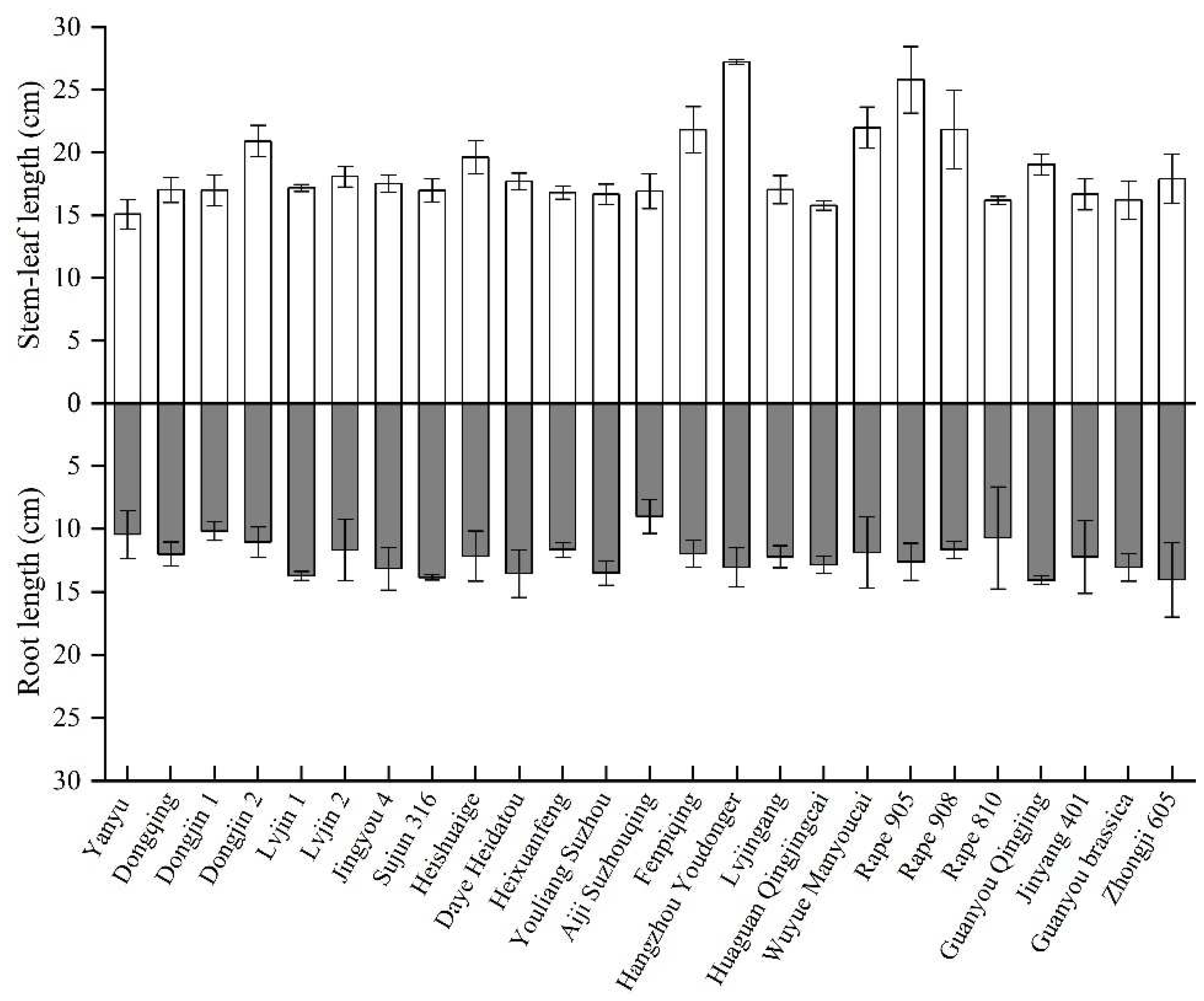
Figure 2.
The fresh weight of stem-leaf or root of 25 rape varieties.
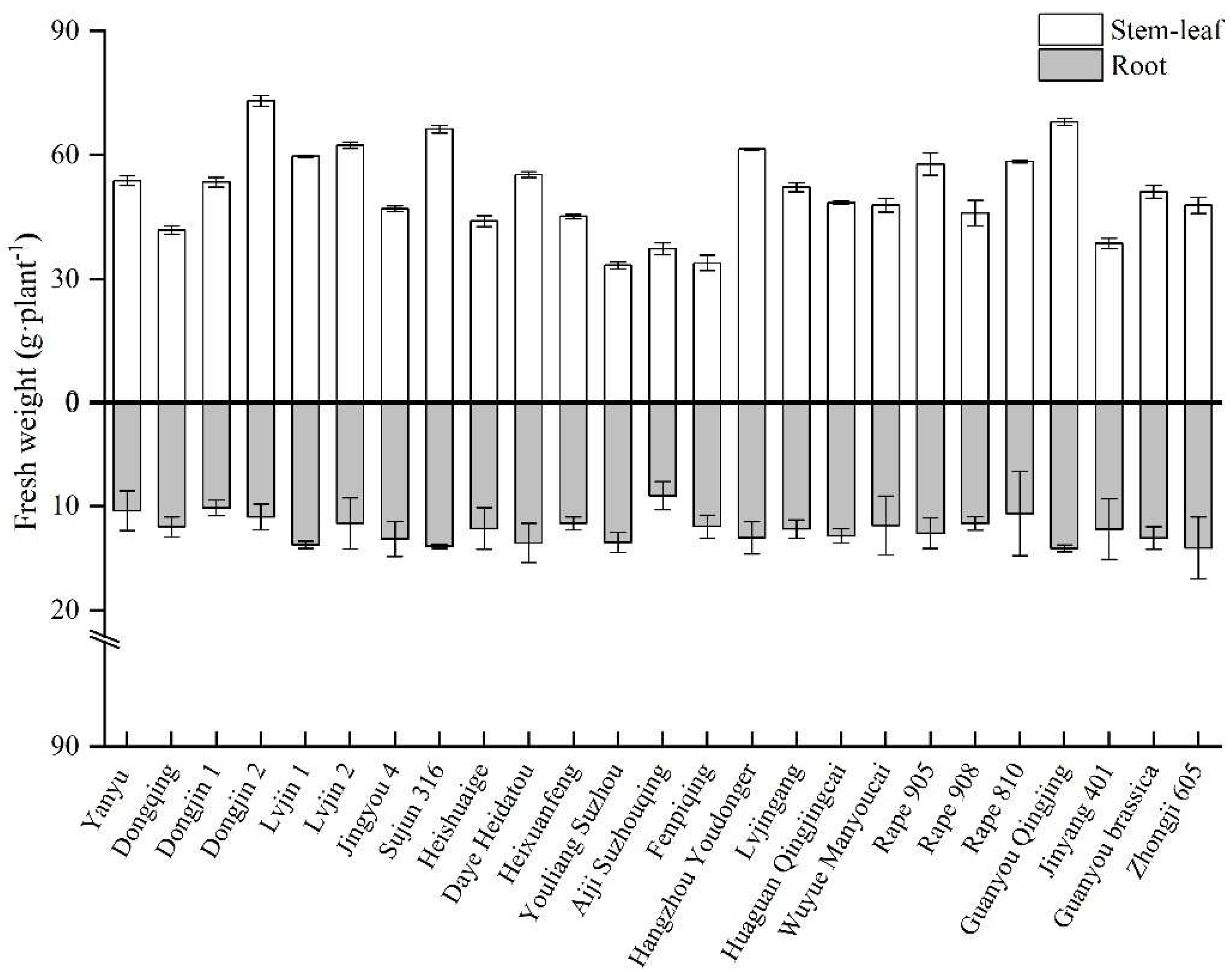
Figure 3.
The Cd content in stem-leaf and root of 25 rape varieties.
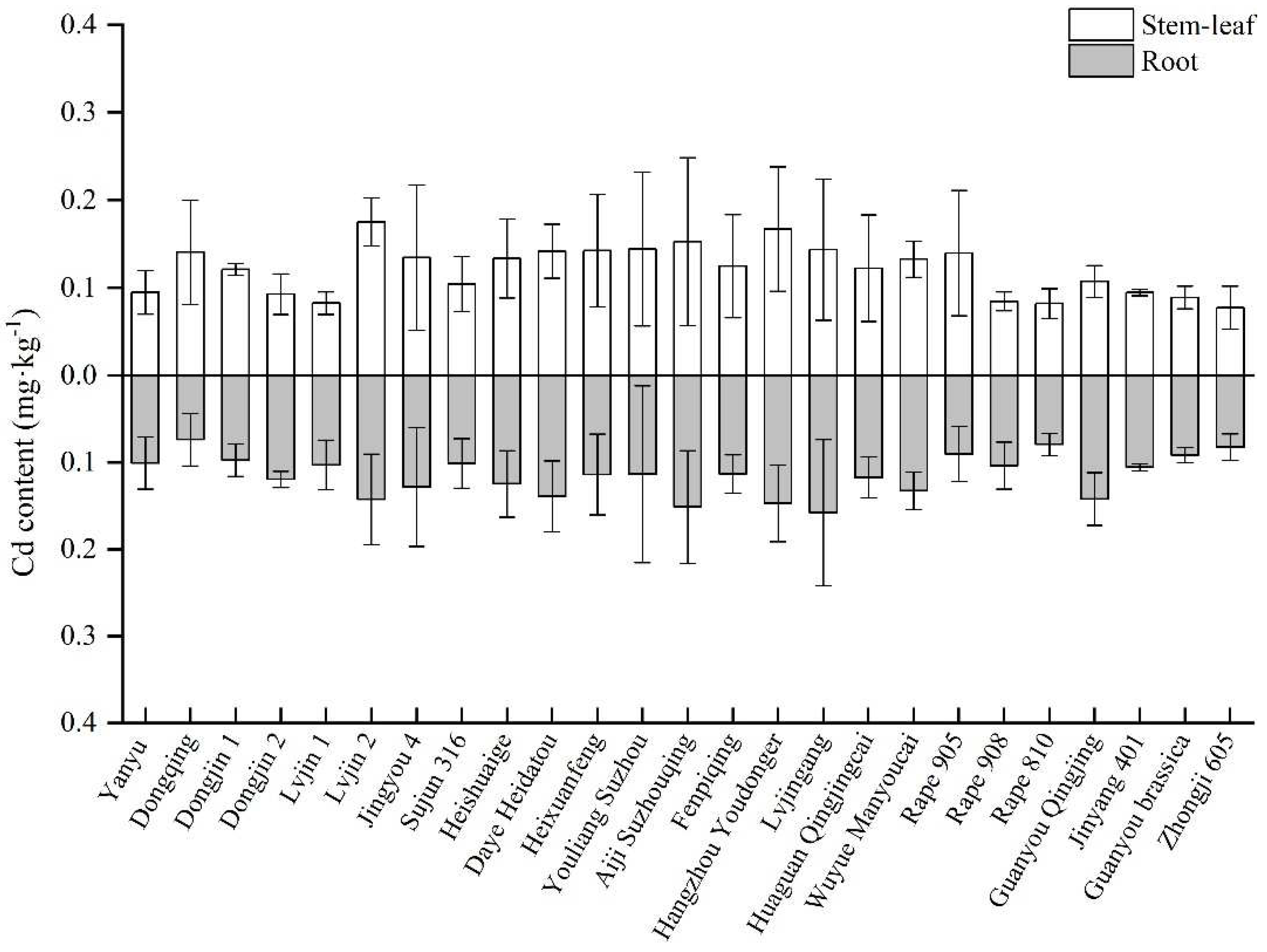
Figure 4.
Soil available Cd and Soil total Cd content of 25 rape varieties.
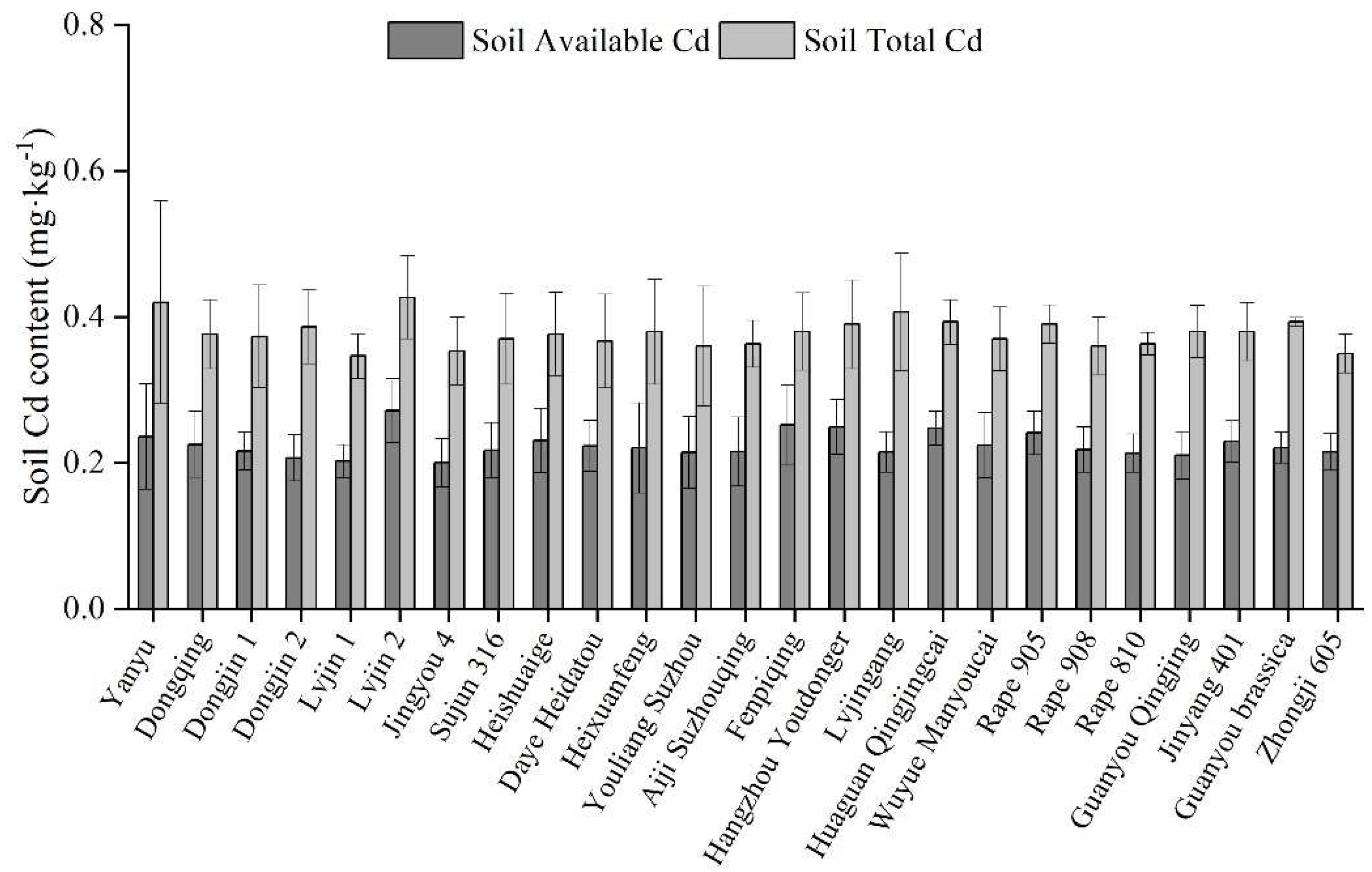
Figure 5.
The BCF of available Cd in stem-leaf or root of 25 rape varieties.
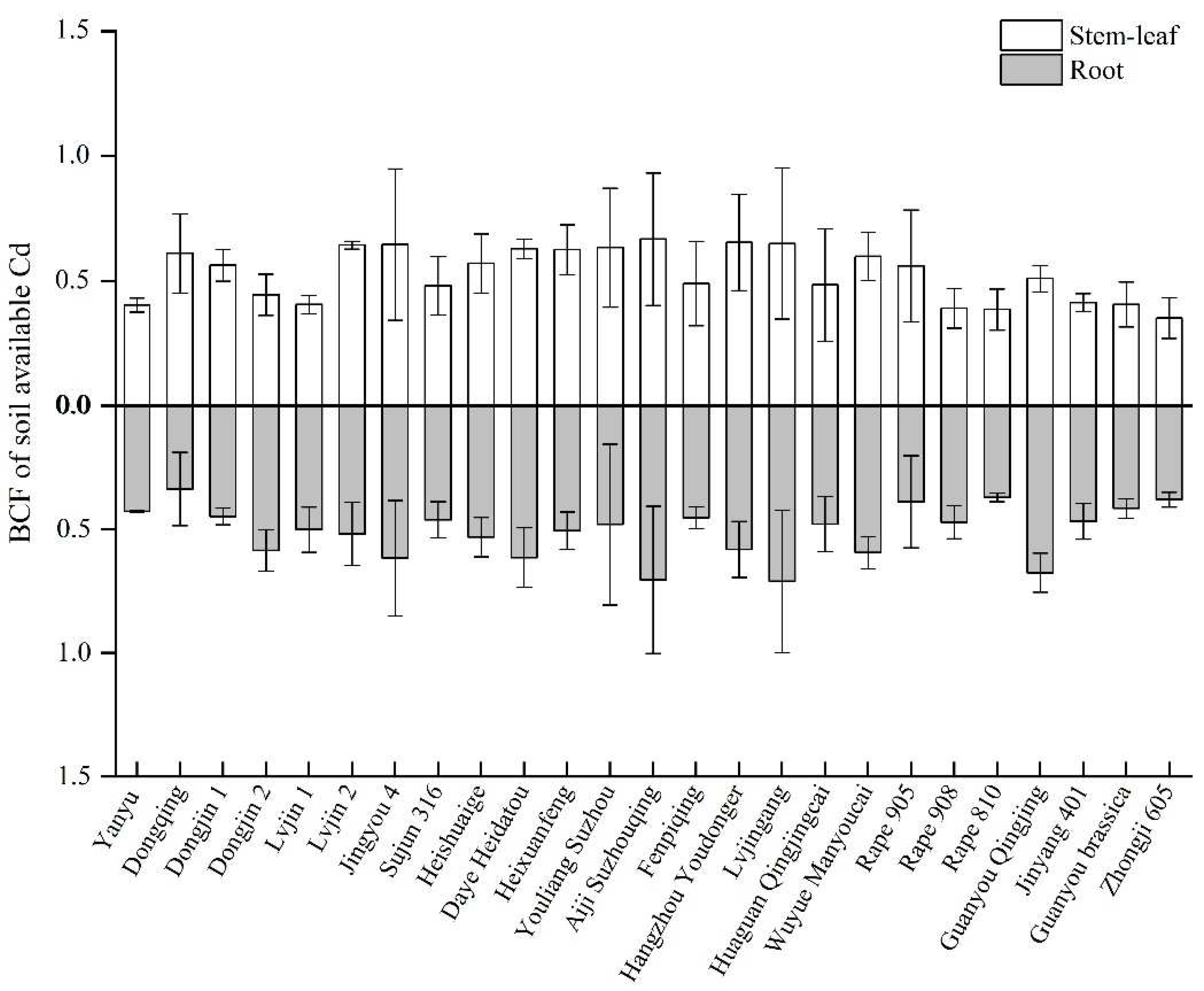
Figure 6.
The BCF of soil total Cd in stem-leaf or root of 25 rape varieties.
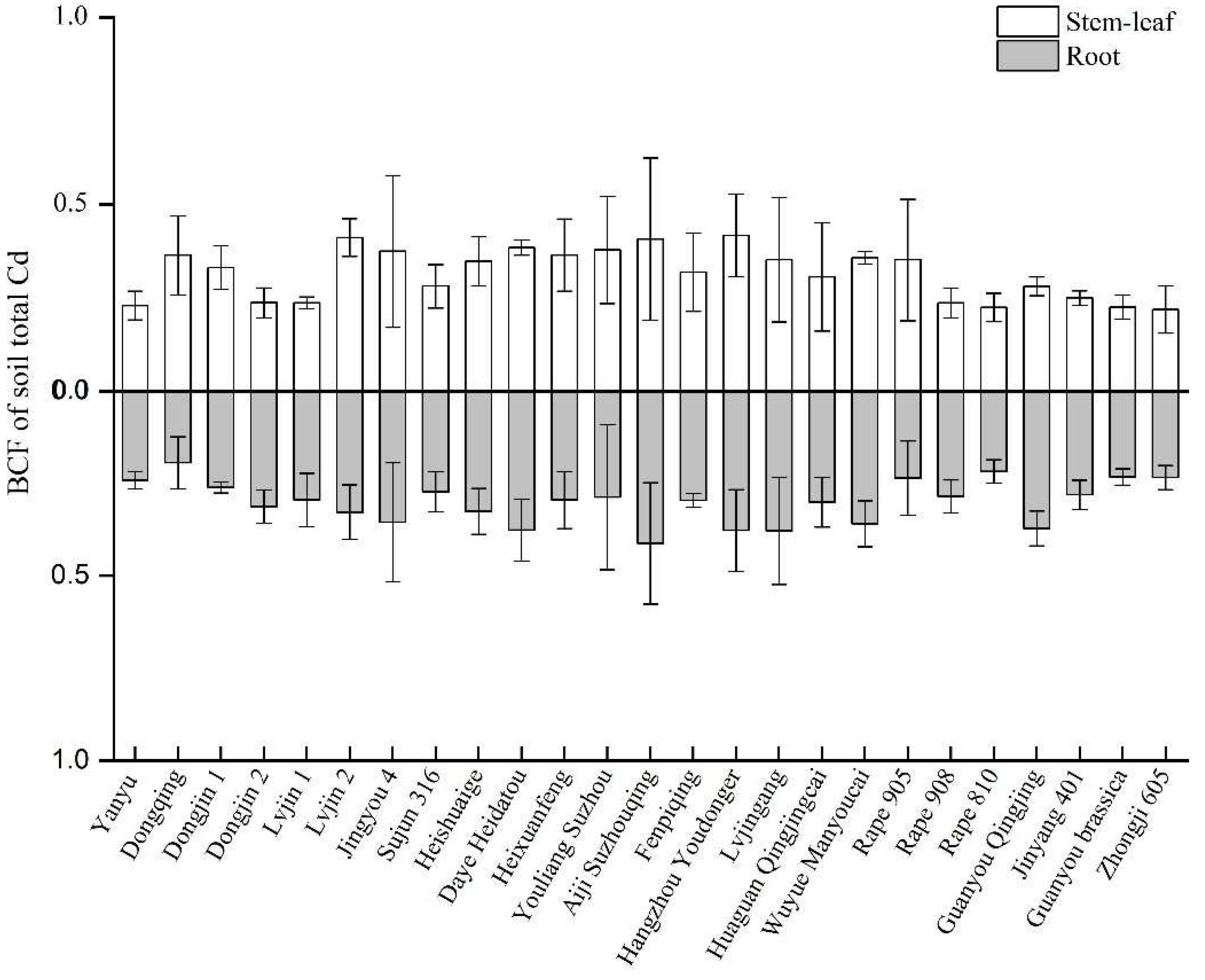
Figure 7.
The TCF of Cd from root to stem-leaf of 25 rape varieties.
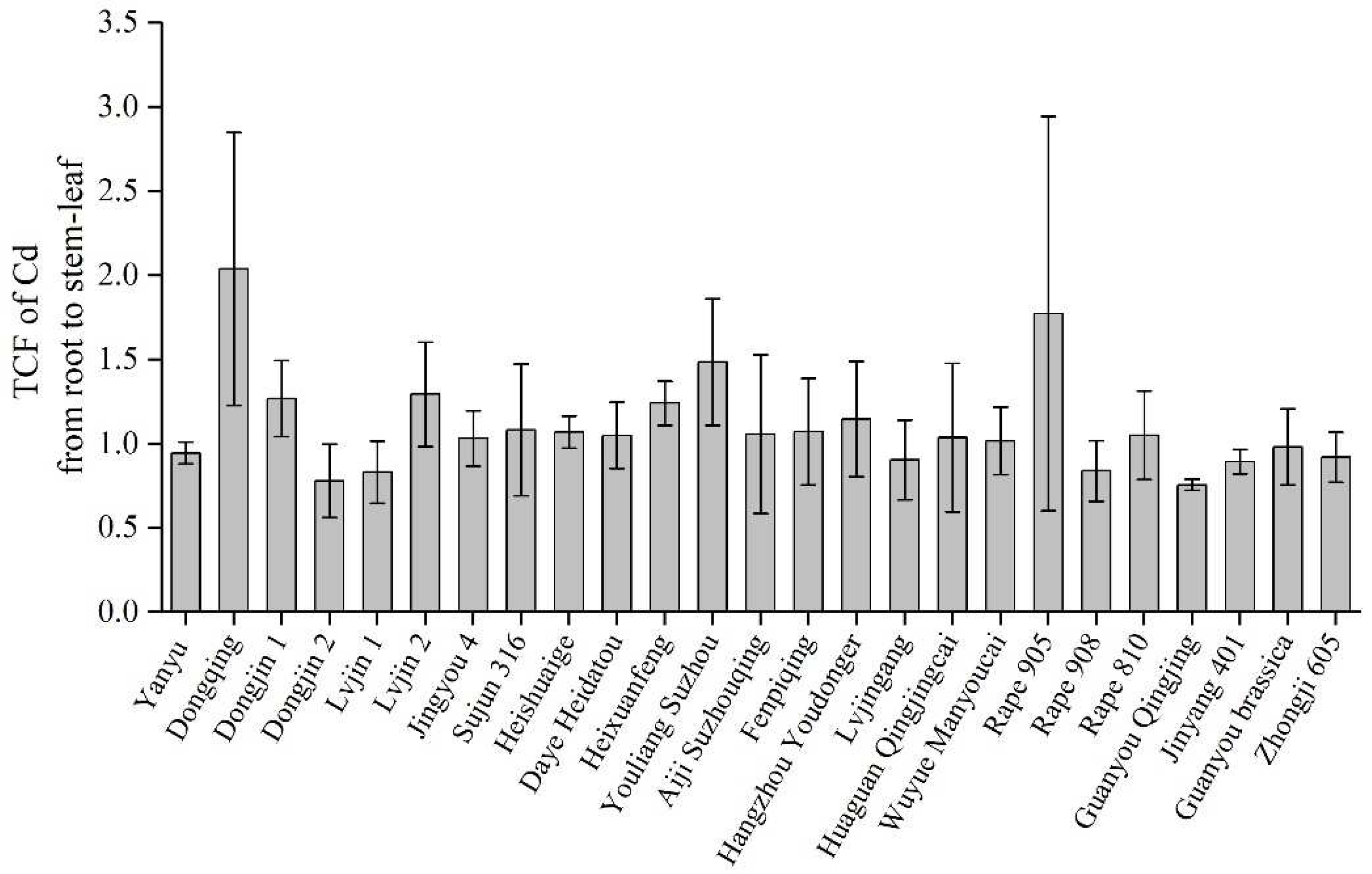
Figure 9.
Cluster analysis of Cd accumulation in stem-leaf of 25 rape varieties.
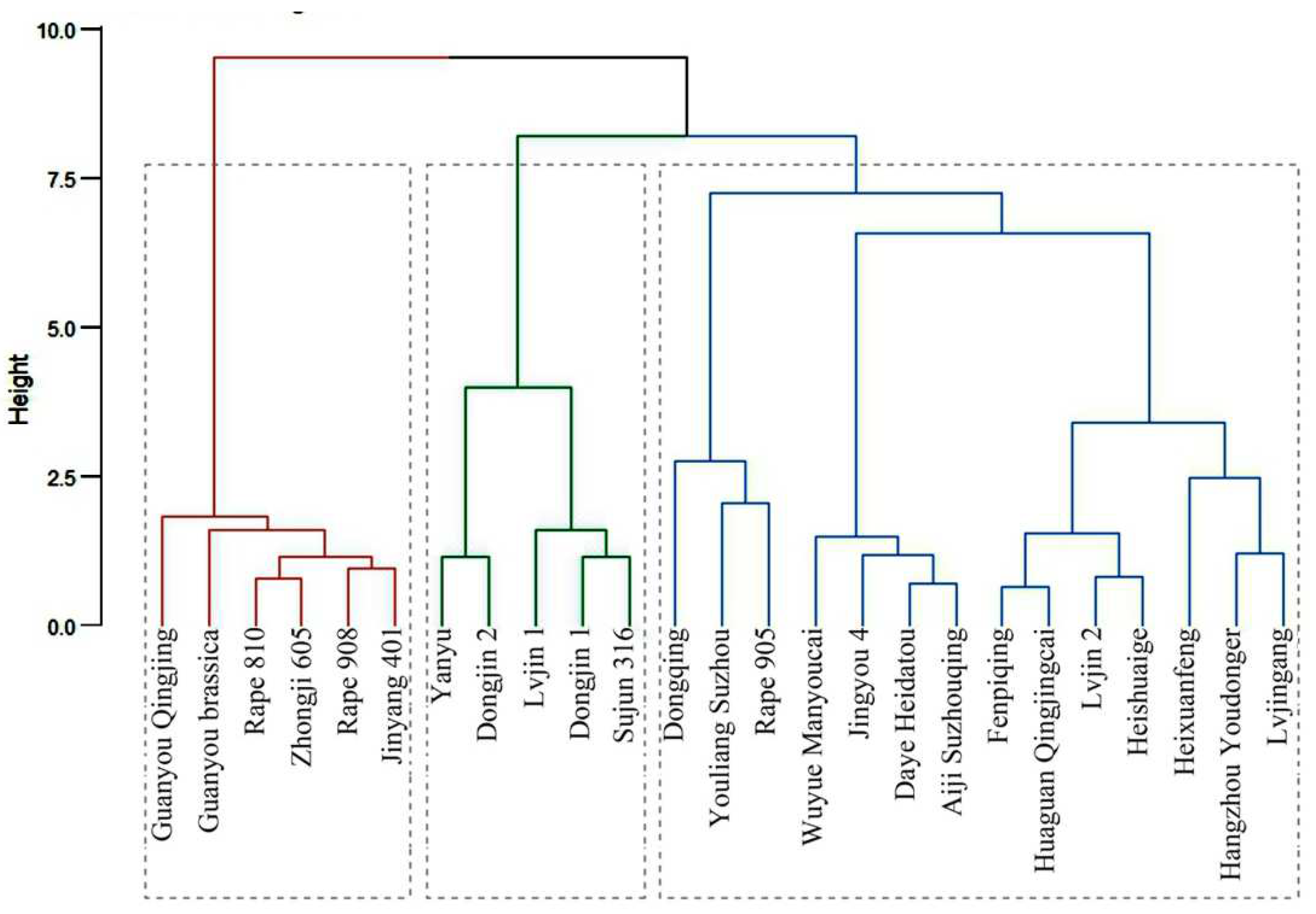
Table 1.
The name of the 25 vegetable rape varieties in the experiment.
| No. | Name | No. | Name | No. | Name |
|---|---|---|---|---|---|
| 1 | Yanyu | 10 | Daye Heidatou | 19 | Rape 905 |
| 2 | Dongqing | 11 | Heixuanfeng | 20 | Rape 908 |
| 3 | Dongjin 1 | 12 | Youliang Suzhou | 21 | Rape 810 |
| 4 | Dongjin 2 | 13 | Aiji Suzhouqing | 22 | Guanyou Qingjing |
| 5 | Lvjin 1 | 14 | Fenpiqing | 23 | Jinyang 401 |
| 6 | Lvjin 2 | 15 | Hangzhou Youdonger | 24 | Guanyou brassica |
| 7 | Jingyou 4 | 16 | Lvjingang | 25 | Zhongji 605 |
| 8 | Sujun 316 | 17 | Huaguan Qingjingcai | ||
| 9 | Heishuaige | 18 | Wuyue Manyoucai |
Disclaimer/Publisher’s Note: The statements, opinions and data contained in all publications are solely those of the individual author(s) and contributor(s) and not of MDPI and/or the editor(s). MDPI and/or the editor(s) disclaim responsibility for any injury to people or property resulting from any ideas, methods, instructions or products referred to in the content. |
© 2024 by the authors. Licensee MDPI, Basel, Switzerland. This article is an open access article distributed under the terms and conditions of the Creative Commons Attribution (CC BY) license (http://creativecommons.org/licenses/by/4.0/).
Copyright: This open access article is published under a Creative Commons CC BY 4.0 license, which permit the free download, distribution, and reuse, provided that the author and preprint are cited in any reuse.


