

Submitted:
04 February 2024
Posted:
05 February 2024
You are already at the latest version
Abstract
In 2021, the American Association of Colleges of Nursing (AACN) added “the impact of climate change on environmental and population health” into The Essentials: Core Competencies for Professional Nursing Education. Presently, little guidance exists for nursing faculty new to climate education.
The year prior, the Nurses Climate Challenge (NCC) - a campaign to educate 50,000 health professionals about health impacts of climate change - launched the School of Nursing Commitment through a series of focus groups and collaborative content development. With an aim of increasing access to knowledge and tools to support education about the health impacts of climate change, the NCC Commitment partners with nursing schools and provides a community of practice. Partner schools use NCC resources in courses and report the number of students educated.
Within three years, 61 nursing schools in 30 states joined the Commitment. Participants included academic health centers, research institutions, multi-state schools, and small private colleges, and programs ranged from AD to PhD. Faculty 1) integrated resources into didactic and clinical settings such as population or organ-system content, leadership, and policy and 2) used resources to support assignments. In four years, faculty reported educating over 37,700 students using NCC resources in 439 educational sessions.
The Commitment may be valuable for faculty fulfilling AACN Essentials by bringing climate change to the classroom, community, and bedside. Furthermore, the Commitment may be a replicable model for health professional education and inspiring action on climate change.
Keywords:
Climate change
; nursing education
; health care sustainability
1. Introduction
As awareness grows among the global scientific community of how climate change impacts human health, it is essential for nurses to lend their credibility and knowledge to meeting this challenge. The United Nations recognizes advancing climate action as one of the 17 goals to achieving the 2030 Agenda for Sustainable Development [1]. There are multiple examples of nursing leadership on climate change and health, as well as further opportunities for nurses to lead action on this important public health issue [2,3,4,5]. However, integration of climate change into the nursing curriculum remains an obstacle to adequately preparing nurses to address this issue within practice and other professional roles.
International and national nursing organizations have emphasized inclusion of climate change and health content in nursing education in order to prepare for and respond to climate-related impacts [6,7,8]. Further, the revision of the American Association of Colleges of Nursing The Essentials: Core Competencies for Professional Nursing Education [9], provides explicit language for the inclusion of “the impact of climate change on environmental and population health” in nursing curricula.
While nursing organizations have expressed the importance of including this topical content into nursing education, the integration of content varies greatly depending on the institution [10]. There is a lack of formalized integration of climate change into nursing education, which creates barriers for faculty to effectively integrate content into nursing courses [11]. Further action on climate change has been cited as a challenge for the nursing profession due to conceptual models of health that focus on an individual rather than community [12]. There are a number of existing resources available to informally guide faculty efforts to include this content into all levels of nursing education. The Global Consortium on Climate and Health Education (GCCHE), housed at Columbia University, provides open-access climate and health resources, such as syllabi, program plans, and sample slides for health professional schools globally to utilize [13]. In addition, the nurse-led Center for Climate Change, Climate Justice, and Health at the MGH Institute of Health Professions (MGHIHP), the Alliance of Nurses for Healthy Environments (ANHE), and nursing faculty across the U.S. have provided recommendations for nursing curriculum insertion points [11,14,15,16].
Further, the audience of our future health professionals appears ripe. Growing data suggests that nursing students are increasingly aware of the health impacts of climate change [17,18]. In a study of 280 health professional students by Ryan, Dubrow, and Sherman, 90% of participants agreed with the sentiment that health professionals have the responsibility to conserve resources in the workplace [19]. In a review of 32 international studies, authors reported that of the nursing students and educators who were asked if climate and sustainability content should be included in nursing curricula, 100% responded positively [18].
2. Knowledge and Action Framework
As health professional education gains momentum around climate and health, practice-oriented climate education for nurses globally is still in its early stages [17]. The primary foci of programs such as the GCCHE and MGHIHP are to increase knowledge of how human health is negatively impacted by climate change [13,14]. In 2018, the Nurses Climate Challenge (NCC) was developed to fill a gap in educational resources for nurses that could be applied in a variety of nursing practice settings in the U.S. [20]. The NCC was developed by Health Care Without Harm & the Alliance of Nurses for Healthy Environments—both non-profit organizations with missions to reduce human health harms from the environment. The novel concept introduced by the NCC involved preparing individuals to harness their newly acquired climate and health knowledge to take the next step towards health promotion: climate change mitigation.
The NCC was created utilizing a backward design educational framework [21,22], which involved working backward from the ultimate goal of health promotion via climate mitigation as a desired result. In the U.S., health care service delivery contributes to approximately 8.5% of greenhouse gas emissions [23]; thus, a critical aspect of health promotion that nurses must take leadership in involves reducing greenhouse gas emissions. The backward design educational framework posits that learners must be presented with acceptable evidence to influence action which leads to the desired result [22]. NCC materials presented evidence designed to propel action, such as a basic orientation about climate science and resulting climatic impacts, an overview of health impacts experienced by individuals regionally throughout the U.S. (e.g., extreme heat, severe weather, air pollution, and vector borne disease, as identified by the American Public Health Association [24]), and health care’s contribution to the climate crisis [23].
To better prepare nurses to incorporate educational components into practice settings, the NCC team developed a variety of resources including PowerPoint presentations for educational sessions, template letters to engage institutional leadership, and resources for reducing the nurse’s environmental impact in the workplace (see Figure 1). These resources are housed on the NCC website (nursesclimatechallenge.org), and nurses can access these materials by registering to become a Nurses Climate Champion. Once nurses create an account, they are encouraged to educate others and track the number of health professional colleagues educated.
Inspired by the Snowflake Model developed by organizer Marshall Ganz [25,26], the NCC was crafted using a distributed leadership approach. The Snowflake Model empowers community members with knowledge and tools, which they can then use to enable others with that same knowledge, and so on (see Figure 2) [27].
By merging the Backward Design educational framework with the Snowflake Model, the exclusively nurse-developed NCC aimed to bring knowledge to a population via a distributed leadership model in the interest of increasing the moral and ethical impetus to take action to reduce the health effects of climate change. The goal of the NCC was to educate and inspire climate action in 50,000 health professionals by 2022.
3. Use of the Nurses Climate Challenge in the Classroom
One-hundred and eighty educational sessions were reported before the launch of the NCC SON Commitment by both academic and non-academic participants, reaching nearly 16,000 individuals from 2018 to 2019. During this period, a strong trend of utilization in academia appeared; nursing faculty reported educating 11,576 individuals in 81 educational sessions. Due to the robust response of nursing faculty utilizing the Challenge, the Challenge expanded in 2020 to include a School of Nursing (SON) Commitment with an aim of increasing access to knowledge and tools to support education about the health impacts of climate change and climate action in nursing education. The structure of the NCC involves inviting schools of nursing to join the commitment, use the NCC resources in courses, and report the number of students educated. A further aim of the commitment is to build momentum for climate education in nursing schools by publicly recognizing schools that are integrating climate and health content into their courses, and also to create a community of practice in which faculty share best practices to further inspire climate action in the nursing profession.
4. Methods
4.1. Focus Groups
Development of the SON Commitment began with two virtual focus groups of 12 faculty members total from 12 different universities with content expertise at the intersection of climate change and nursing education in late 2019. The NCC steering committee introduced the SON Commitment concept and presented faculty with draft commitment language, which included a description of the partnership, a summary of NCC resources, expectations of the NCC and the schools of nursing (see Table 1), and anticipated benefits for partners. Focus group participants were asked to provide feedback related to desirability, perceived value, feasibility of implementation, and missing components. Faculty feedback was incorporated into the development of the SON Commitment prior to the launch [28,29].
Focus group faculty consistently indicated that the implementation of the NCC SON Commitment would be undesirable if the partnership were to require an official contract. Universities across the country approach contracts in a variety of ways, which adds further barriers to including NCC content in nursing schools. Therefore, the commitment was developed without official contractual language or required signatures.
4.2. Phases of Recruitment
In 2020, the 12 universities with faculty representation in the focus groups were invited to officially participate as pilot SON Commitment partners, of which 11 gained leadership approval to participate (the reason for the single faculty member that did not receive approval was undisclosed). These faculty were asked to share about the Commitment and their experience in the SON Commitment within their climate and nursing education networks. In just over a year, 17 additional schools sought partnership without active recruitment by the NCC steering committee.
In May of 2021, a formalized recruitment process was established. Ongoing recruitment efforts began via webinars, newsletters, email, and social media in collaboration with multiple national faculty and student nursing organizations (e.g., the Association of Community Health Nursing Educators, National Student Nurses Association). Once a faculty member from a school expressed interest via the online interest form, a NCC steering committee member held a conversation with that faculty member to ensure that the NCC format and resources would benefit the school and the school of nursing anticipated being able to meet educational and communication expectations. In order to join and communicate the partnership publicly, nursing faculty obtained permission from their leadership (dean or associate dean) and in some cases their nursing school’s curriculum committee.
4.3. Community of Practice
As noted, nursing faculty encounter multiple barriers to integrating climate and health content into nursing curricula [11]; this was further validated by faculty in NCC convenings. To overcome the potential challenges faculty may face in integrating climate and health content into nursing curricula, the NCC committee established a community of practice that gathers virtually before spring and fall semesters and maintains electronic communication throughout the year. All SON Commitment faculty were invited to participate in the community of practice, which serves to share resources and best practices and provide a network of climate and nursing faculty allies. Multiple organic collaborations amongst faculty across universities have developed from this community of practice, such as serving as co-authors for climate and health publications or hosting Earth Day events for students.
4.4. Tracking Education
Upon educating health professional students, faculty submit a limited amount of data for each educational session including the number of individuals educated, audience feedback, and follow-up actions pertaining to climate solutions that arose from the educational session. Data specific to the NCC Commitment is compiled quarterly to provide an analytics report for participating schools of nursing.
5. Results
5.1. Partner Schools and Implementation into Programs
Between January 2020 and December 2022, 61 schools of nursing in 30 states signed on to participate in the NCC SON Commitment [29]. Sixty of these schools were in the United States, and one was in Colombia. Program coordinators chose to include the Colombian university as a pilot international collaborator. Nursing programs in participating schools range from AD to PhD, and eight of the participating schools were faith-based. During that period, faculty in 47 of the 61 schools reported educating students with NCC resources (77%). To allow for flexibility, the Commitment does not require a specific date for content implementation after joining.
Many institutions used NCC resources in programming for multiple degrees. Seventy percent of participating institutions that have successfully implemented NCC resources into their SONs have done so in Bachelor of Science in Nursing programs (see Figure 3). Six reporting faculty indicated using NCC resources in pre-licensure Masters of Science in Nursing courses (12.7%), and nearly 20% of faculty have integrated NCC resources into advanced practice nursing or Doctor of Nursing Practice programs (see Figure 3). NCC resources were used least frequently in Associate’s Degree (3 participants, comprising less than 6%) and PhD (1 participant, comprising 2%) programs (see Figure 3). Seven participants implemented NCC resources into more than one degree program. As of December 2022, 14 schools (23%) had not reported educating students with NCC resources in any of their programs (see Figure 3).
5.2. Educational Sessions & Reach
In the first three years since the launch of the NCC SON Commitment, faculty in participating schools reported 439 sessions of education, representing 81% of all educational sessions of NCC materials during that period (see Figure 4). Faculty within participating schools reached 37,731 students between February 2020 and December 2022, with a median audience of 45 students per educational session (mean 86; range 1-3,024) (See Figure 4).
Faculty participants were not required to report the type of course they implemented NCC materials into. However, the most commonly voluntarily-reported courses included were:
- environmental health
- community or public health
- clinical practice
- population-specific (e.g., pediatrics)
- leadership
- policy and advocacy
- introduction to the nursing profession
- sustainability
- global or planetary health
- social determinants of health
- disaster nursing
- evidence-based practice or research
- ethics
Faculty in schools not participating in the Commitment after the program’s establishment reported 20 educational sessions, representing 3.6% of the overall total of educational sessions tracked from 2020-2022 (see Figure 4). These faculty reached 805 students in non-Commitment schools, with a median audience of 28 students per session (mean 40, range 1-120) (see Figure 5).
5.3. NCC Materials Utilized Outside Academia
As shown in Figure 4, general participants in the Nurses Climate Challenge reported 184 educational sessions since the inception of the program (2018). These participants were not faculty (e.g., staff nurses, nurse leaders, community members), and they did not report educating nurses or nursing students on behalf of a school of nursing. Participants reporting educating others outside of a nursing school setting reached 6,250 individuals, with a median audience of 16 individuals per session (mean 34, range 1-450) (see Figure 5). Overall, the number of educational sessions held outside academia comprised 25.4% of the full 724 educational sessions reported via the comprehensive Nurses Climate Challenge campaign between 2018-2022.
5.4. Impact of Climate and Health Education for Students
While faculty are not required to enter data in the NCC education tracker pertaining to student feedback or results of each educational session, many do. Overall, student feedback was very positive, with multiple comments highlighting how climate change and health information was new to nursing students. Several faculty also shared that students expressed interest in learning about how to become involved. Results of educational sessions varied from classroom discussions to developing student groups or committees to take action on climate change. See Table 2 for examples of qualitative data volunteered by SON Commitment faculty members.
5.5. NCC SON Commitment: Real World Examples
Throughout the duration of the NCC SON Commitment, multiple faculty and doctoral students have used NCC resources creatively. See two case studies that represent innovative integration of climate change and health:
| Case study 1. Dr. Lisa Whitfield-Harris, PhD, MBA, RN, Jefferson College of Nursing |
| Nursing programs focus on nursing fundamentals to improve students’ patient care knowledge and skills; however, during the Nurses Climate Challenge, faculty introduced students to environmental health concerns of under-resourced communities. In one doctoral program, students enrolled in the population health course were exposed to various environmental health topics including air and water quality, lead exposure, and fracking. Working in groups, students assessed their populations’ environmental health in two different zip codes. After completing their needs assessment, they planned and evaluated a program to deploy in both cities. If the program was not effective, then they revised the program and considered other resources to improve its effectiveness. For example, if students noted a high number of children diagnosed with asthma with high absenteeism rates, then they developed an educational program to instruct parents on emergency measures to assist their child. Students used pre-post surveys to understand changes in knowledge and skills to improve the child’s health and decrease school absenteeism. The program was based on available resources in both zip codes. Students gained knowledge on developing and evaluating programs and understanding how to advocate for under-resourced communities. They also improved their skills to request funds and work with key stakeholders in the communities. |
| Case study 2. Andrea Earley, CRNA, DNP, Hackensack Meridian Health & Jefferson College of Nursing |
| Environmental sustainability has always been a deep passion of mine. The topics of climate change and environmental sustainability were not a part of my curriculum as both a graduate and undergraduate nurse-in-training. However, my Doctor of Nursing Practice (DNP) project allowed me to explore those passions independently within the clinical setting of anesthesia and create networks among other practitioners who share my passions. I specifically examined the attitudes and awareness of sustainability initiatives with the operating room (OR) and explored the willingness of providers to engage in evidence-based initiatives. Throughout my DNP project implementation, sustainability experts at Hackensack Meridian Health (HMH) were consulted and provided me with background on current sustainability initiatives currently implemented at my clinical site (Jersey Shore University Medical Center) and other hospitals in the HMH network. The negative impacts of unsustainable practices in the OR exacerbate climate change and negatively impact provider safety. I hope the NCC continues to engage practitioners to improve and expand environmental programs. |
6. Discussion
A Relatively Small Scope, Despite a Widespread Issue
No region of the U.S. will be safe from climate change, and patients and communities will continue to face the brunt of worsening health due to climate impacts. The NCC has engaged tens of thousands of nurses and health professionals (including future generations) and seems to serve as a successful developing framework for nurse-led climate and health education across practice and educational settings. Furthermore, the SON Commitment has brought climate change into the classroom and clinical setting.
However, it is unclear whether incoming nurses within the profession are widely climate-literate. Many SON Commitment faculty expressed that climate change is integrated in their nursing school due to personal scholarship or personal interest only. In considering why the NCC SON Commitment has not been implemented in greater numbers of nursing schools, the lack of clear language from organizations that establish curricular mandates may be an indicator. In addition, the volume of content nursing faculty are expected to teach is large; this poses further hurdles for faculty, whether or not they may be inclined to include climate change in their courses in the first place. While increasing numbers of universities are beginning to include climate change adaptation and mitigation in their overall strategic planning [30], the connections between climate change and human health are relatively poorly understood outside of the health care sector. As cited in the American College & University Presidents’ Climate Commitment (ACUPCC) report: “At a basic level, building environmental and climate literacy in all graduates is helping to prepare the citizens and community members of tomorrow by helping them to understand climate change impacts and systems thinking” [30]. The report includes minor references to “health” or “public health,” but none focused on “nursing” [30]. Thus, university leadership may not see climate change as a critical aspect to integrate into nursing schools.
First-year results of the Climate, Health, and Nursing Tool (CHANT) found that while awareness and concern for climate change is relatively high in the general nursing population, there is a widespread lack of confidence, motivation, and overall climate action in that same population [31]. Schenk and colleagues reported that this lack of translating concern into action occurred evenly across respondents, including faculty, students, and practicing nurses [31]. Notably, due to snowball recruitment in the CHANT as well as the NCC SON Commitment, the subset of faculty who have taken the CHANT and also likely serve as faculty contacts for the Commitment. Taking this into account, it is possible—perhaps likely—that early adopters to integrating climate and health content into nursing courses still feel a lack of confidence or motivation and are faced with barriers to climate action that discourage a widespread movement.
The timing of this initiative crossed over with the global pandemic COVID-19. It is likely that this influenced participation in the Nurses Climate Challenge by direct care nurses during 2019 and 2020 in particular. Many faculty who taught in schools that were closed to in-person instruction (either lectures, labs, clinicals, or a combination) expressed seeking online or hybrid experiences to innovatively fill gaps in their curriculum. This may have contributed to the uptick of faculty utilizing resources in 2019 and 2020. However, by the time faculty were reporting the highest number of educational sessions and students reached (2022), programs had shifted back to in-person content delivery.
If we as a global community are to eliminate fossil fuel emissions by mid-century as directed by the Intergovernmental Panel on Climate Change [32], far more nurses, nursing educators, and nursing students must be prepared to take leadership in climate mitigation and environmentally sustainable transformation of the health sector in support of climate-smart health care [33]. Personal interest in the integration of climate change into nursing (and all) curricula does not suffice now, and it certainly will not serve our species into the future as we face the increasingly dire effects of ever-rising temperatures on the planet.
7. Limitations
While the NCC SON Commitment seems to serve as a beneficial program for nursing students across the U.S. (and potentially beyond), the program has limitations. First, because the NCC SON Commitment does not require a signed contract, faculty and nursing schools are not beholden to their agreement to participate. In some cases, this has impacted the nursing school’s public announcement and promotion of the partnership, utilization of NCC resources, education tracking, and participation in the faculty community of practice.
Further, in the effort to decrease the burden of participation for faculty and increase the likelihood of initiative participation and education reporting, the data entry fields for tracking are limited. Entry fields include: Activity name (required), Presentation date (required), Number educated (required), Presentation type (not required); Presentation setting (not required); Audience feedback (not required); and Follow-up actions (not required). Many faculty chose not to provide data that was not required, disallowing for broad scale analysis.
While the NCC resources are valuable as a tool for beginning to integrate climate and health content into courses, they are not all-encompassing. Additional focus is needed on climate-smart health care, sustainability, and climate justice, among other climate and health topics.
Finally, beyond gathering data via the online form, the NCC Steering Committee does not verify the actual education delivered by faculty due to time constraints. Therefore, it is not possible to verify that all of the individuals that were reported to receive education actually received education via the NCC resources.
8. Programmatic Expansion
Despite programmatic limitations, the NCC has established roots beyond the original vision of the campaign. In early 2020, Health Care Without Harm-Europe collaborated with ANHE to establish a Nurses Climate Challenge-Europe. Many of the NCC-U.S.’s resources were revised to reflect the climate and health issues specific to Europe’s geography and culture. Shortly after the launch of the initial Challenge (nursing-led education), NCC-Europe established a focus group of European nursing faculty members to participate in the development of Europe’s own NCC SON Commitment as well.
While programmatic expansion occurs in Europe, the NCC-U.S. (also inclusive of Canada) arm will continue to grow as well. Teaching resources will expand to include climate change curricular recommendations based on the 2021 AACN Essentials, the Global Consortium for Climate and Health Education, and other national climate and health curricular guidance, on which ANHE began revision in 2021. In addition, the NCC SON Commitment faculty community of practice is also undergoing process improvements with the aim of expanding support, networking, and resource sharing among faculty. This includes a continued focus on recruitment efforts to expand reach and momentum. Potential topics for future resource development could include more in-depth action-oriented content on climate change mitigation in health care such as decarbonization, as well as resources oriented towards climate resilience.
Though not an established Nurses Climate Challenge program, the single Colombian university that participated in the SON Commitment collaborated with peers in the geographic region to establish ANHE Latinoamérica [34]. AHNE Latinoamérica serves as a promising example of regionalized climate and nursing collaboration and action.
9. Conclusions
The Nurses Climate Challenge School of Nursing Commitment may serve as a model for grassroots climate and health integration into health curricula. Faculty who participated in the program had a broad reach, impacted thousands of students, and inspired the future nursing profession to act on climate. Until national curricular bodies mandate widespread integration of climate change into every discipline, early adopters will continue to serve as the source of knowledge about how nurses can and must become climate-literate. It is hoped that climate literacy, combined with the understanding of the U.S. health sector’s impact on greenhouse gas emissions, will spur the nursing profession to act in the best interest of our patients—both individual and collective. With a long legacy of holism, innovation, and moral aptitude, it is only fitting that the profession of nursing encompasses climate action.
Author Contributions
Conceptualization, S.D., C.C., and E.S.; Methodology, S.D., C.C., and E.S.; Formal Analysis, S.D.; Resources, S.D. and C.C.; Data Curation, S.D.; Writing—Original Draft Preparation, S.D., C.C., E.S., L.W.H., and A.E.; Writing—Review & Editing, S.D., C.C., E.S., L.W.H., and A.E.; Visualization, S.D.; Supervision, S.D.; Project Administration, S.D.
Funding
Funding for this initiative was provided by Health Care Without Harm & the Alliance of Nurses for Healthy Environments.
Institutional Review Board Statement
Not applicable.
Conflicts of Interest
The authors declare no conflict of interest.
Author Biographies
- Authors’ full names followed by current positions;
- Education background including institution information and year of graduation (type and level of degree received);
- Work experience;
- Current and previous research interests;
- Memberships of professional societies and awards received.
Shanda Demorest coordinated the Nurses Climate Challenge on behalf of Health Care Without Harm. She currently serves as Director of Sustainability Solutions at Practice Greenhealth and Affiliate faculty at the University of Minnesota School of Nursing (UMSON). Dr. Demorest earned her Doctorate of Nursing Practice in Health Innovation and Leadership from UMNSON (2017), her Bachelors of Science in Nursing from UMSON (2013), and a Horticulture minor from the University of Minnesota College of Food, Agriculture, and Natural Resource Sciences (2013). A cardiovascular nurse by background, Shanda works with hospitals to achieve environmental sustainability and pursue the path to health care decarbonization and climate resilience. Dr. Demorest serves on the advisory boards for the APHA Center for Climate, Health and Equity and the Center for Planetary Health and Environmental Justice at the UMSON. She is a public health nurse and holds the LEED Green Associate credential through the U.S. Green Building Council.
Cara Cook is the Director of Programs for the Alliance of Nurses for Healthy Environments. She leads ANHE environmental health programming to engage nurses, nursing organizations, and the profession in advancing health advocacy, education, and practice change. Cara was previously a Local Care Coordinator with Healthways-Sharecare, Inc., coordinating care for high-risk patients. She has experience in critical care nursing in medical and trauma intensive care. Cara holds a Master’s in Community/Public Health Nursing through the University of Maryland (2015), where she received the Excellence in Community/Public Health Nursing Award, and Bachelor’s of Science in Nursing from the University at Buffalo (2009). She is a co-PI in the CHANT: Climate, Health and Nursing Tool, measuring nurses’ awareness and engagement with climate change. Cara is a member of the American Public Health Association, At-Large Board Member of the Maryland Public Health Association, and an advanced holistic board certified nurse.
Elizabeth Schenk is Chief Environmental Stewardship Officer at Providence, one of the largest health systems in the United States, and Assistant Research Professor at Washington State University College of Nursing. Dr Schenk’s PhD in nursing from Washington State University focused on the environmental impacts of healthcare, which she has been working to decrease for three decades. Her research focus is on environmental stewardship in nursing and healthcare, including development of NEAT (Nurses’ Environmental Awareness Tool), Co-PI of CHANT (Climate and Health Tool), author of the WE ACT PLEASE Framework, and co-author of the concept of Nurse-Sensitive Environmental Indicators. Dr. Schenk is a Fellow in the American Academy of Nursing and serves on the Academy’s Expert Panel of Environmental and Public Health. She was given the Charlotte Brody Award for environmental contributions, and honored as a distinguished alumnus of the University of Montana.
Andrea Earley earned her Doctor of Nursing Practice-Nurse Anesthesia from Thomas Jefferson University College of Nursing (2021), her Bachelors of Science in Nursing from Rutgers University School of Nursing (2014), and her Bachelors of Science in Human, Nutrition, Foods and Exercise, and a Spanish minor from Virginia Polytechnic Institute and State University (2011). Dr. Earley received the Susan Schrand Award from Thomas Jefferson University, which recognizes outstanding professionalism, leadership, and advocacy at the local, regional, or national level. Dr. Earley conducted her anesthetic clinical rotations at Jersey Shore University Medical Center and Deborah Heart and Lung Center. Prior to her DNP, Andrea worked as an ICU nurse at JSUMC from 2015-2019. Dr. Earley’s prior research includes Assessing Anesthesia Providers’ Knowledge of Environmental Impacts of Practice (2021), presented at the Eastern Nursing Research Society. Dr. Earley is currently a member of the American Association of Nurse Anesthetists.
Dr. Lisa Whitfield-Harris is a Public Health Nurse and Associate Professor at Thomas Jefferson University College of Nursing. She completed a Doctorate in Philosophy in Nursing Science from Duquesne University, a Masters of Science in Public Health and a Masters in Business from La Salle University, and a Bachelors of Science in Nursing from West Chester University. She is certified as an Advanced Nurse Executive. Dr. Whitfield-Harris completed two fellowships in environmental health and on health equity and antiracism in healthcare with the Alliance of Nurses for Healthy Environments. She is a past scholar for the Sigma Theta Tau honor society, the Association for Black Nurse Association, Inc., the National League for Nursing, and the National Coalition of Ethnic Minority Nurse Association. She serves on the Advisory Council of the American Association of Colleges of Nurses’ Diversity, Equity and Inclusion Group. She has published on the African American nurse faculty experiences in predominantly White nursing schools, resilience in nursing, improving the participation rates of African Americans in clinical research trials, and nursing ethics. She is an active member of the American Public Health Association, the Transcultural Nursing Society, the Association of Black Nurse Faculty, and the American Holistic Nurses Association. She received the Doctoral Student Award in 2016 and the Excellence in Climate Leadership Award in 2022.
References
- United Nations, Sustainable Development Goals: Climate action. Available online: https://www.un.org/sustainabledevelopment/climate-action/ (accessed on 26 December 2023).
- Butterfield, P., Leffers, J., Vasquez, M.D. Nursing’s pivotal role in global climate action. BMJ 2021, 373, 1049. [CrossRef]
- Lopez-Medina, I.M. Alvarez-Nieto, C., Grose, J., Elsberndt, A., Huss, N., Huyhnen, M., Richardson, M. Nurse Education in Practice 2019, 37, 1–8. [Google Scholar] [CrossRef] [PubMed]
- Potter, T. Planetary health: The next frontier in nursing education. Creative Nursing 2019, 25, 201–207. [Google Scholar] [CrossRef] [PubMed]
- Leffers, J. Butterfield, P. Nurses play essential roles in reducing health problems due to climate change. Nursing outlook 2018, 66, 210–213. [Google Scholar] [PubMed]
- American Nurses Association, 2008 House of Delegates resolution: Global climate change. Available online: https://www.nursingworld.org/~4afb0e/globalassets/practiceandpolicy/work-environment/health--safety/global-climate-change-final.pdf (accessed on 7 January 2024).
- International Council of Nurses calls for increased nursing leadership to combat effects of climate change on health. Available online: https://www.icn.ch/news/international-council-nurses-calls-increased-nursing-leadership-combat-effects-climate-change (accessed on 7 January 2024).
- Increased nursing student action on and awareness of the effects of climate change on health. Available online: https://www.dropbox.com/s/31t574bw3uv6kfz/Climate%20Change%20Resolutions%202017%20and%202019.docx?dl=0 (accessed on 7 January 2024).
- The essentials: Core competencies for professional nursing education approved by the AACN membership. Available online: https://www.aacnnursing.org/Portals/42/AcademicNursing/pdf/Essentials-2021.pdf (accessed on 7 January 2024).
- Diallo, T., Roberge, M., Berube, A., Audate, P-P. Integrating climate change into nursing curricula and continuing education: a scoping review protocol. BMJ Open 2023, 13, e068520. [CrossRef] [PubMed]
- Neal-Boylan, L., Breakey, S., & Nicholas, P.K. Integrating climate change topics into nursing curricula. Journal of Nursing Education 2019, 58, 364–368. Available online: https://doi-org.proxy-hs.researchport.umd.edu/10.3928/01484834-20190521-09.
- Portela Dos Santos, O. Melly, P., Joost, S., Verloo, H. Climate change, environmental health, and challenges for nursing discipline. Int J Environ Res Public Health 2023, 20, 5682. [Google Scholar] [CrossRef] [PubMed]
- Global Consortium on Climate and Health Education. Available online: https://www.publichealth.columbia.edu/research/global-consortium-climate-and-health-education (accessed on 7 January 2024).
- MGH Institute of Health Professions Center for Climate Change, Climate Justice, and Health. Available online: https://www.mghihp.edu/nursing/centers-initiatives/center-climate-change-climate-justice-and-health (accessed on 26 December 2023).
- Strategies for incorporating climate change into nursing curricula. Available online: https://envirn.org/education/curriculum-recommendations/ (accessed on 7 January 2024).
- Leffers, J. Levy, R.M., Nicholas, P.K., Sweeney, C.F. Mandate for the nursing profession to address climate change through nursing education. Journal of Nursing Scholarship 2017, 49, 679–687. [Google Scholar] [CrossRef] [PubMed]
- Ergin, E. Altinel, B., Aktas, E. A mixed method study on global warming, climate change, and the role of public health nurses from the perspective of nursing students. Nurse education today 2021, 107. [Google Scholar] [CrossRef] [PubMed]
- Aronsson, J. Nichols, A., Warwick, P., Elf, M. Nursing students’ and educators’ perspectives on sustainability and climate change: An integrative review. Journal of Advanced Nursing 2023, 1–14. [Google Scholar] [CrossRef]
- Ryan, E. Dubrow, R., Sherman, J. Medical, nursing, and physician assistant student knowledge and attitudes toward climate change, pollution, and resource conservation in health care. BMC Med Educ 2020, 20, 200. [Google Scholar] [CrossRef] [PubMed]
- Demorest, S. Spengeman, S., Schenk, E., Cook, C., & Levy-Weston, H. The Nurses Climate Challenge: A national campaign to engage 5,000 health professionals around climate change. Creative Nursing 2019, 25, 208–215. [Google Scholar] [CrossRef] [PubMed]
- McTighe, J. Thomas, R. Backward design for forward action. Educational Leadership 2003, 60, 52–55. [Google Scholar]
- Wiggins, G.; McTighe, J. Understanding by design, 2nd ed.; Assn. for Supervision & Curriculum Development: Alexandria, VA, USA, 2005. [Google Scholar]
- Eckelman, M. Huang, K., Lagasse, R., Senay, E., Dubrow, R., Sherman, J. Health care pollution and public health damage in the United States: An update. Health Affairs 2020, 39, 2071–2079. [Google Scholar] [CrossRef] [PubMed]
- American Public Health Association. How climate change affects your health. Available online: https://www.apha.org/news-and-media/multimedia/infographics/how-climate-change-affects-your-health (accessed on 26 December 2023).
- Commons Social Change Library, Leading Change Network, Ganz, M. What is organizing? An introduction based on the work of Marshall Ganz. Available online: https://leadingchangenetwork.org/resource_center/what-is-organizing/ (accessed on 26 December 2023).
- Ganz, M., McKenna, E. Bringing leadership back in. In The Wiley Blackwell companion to social movements; Snow, D.A., Soule, S.A., Kriesi, H., McCammon, H.J., Eds.; Wiley Blackwell, 2018; pp. 185–202. [Google Scholar] [CrossRef]
- Divakaran, B. Nerbonne, J. Building a climate movement through relational organizing. Interdisciplinary Journal of Partnership Studies 2017, 4, 1–7. [Google Scholar] [CrossRef]
- School of Nursing Commitment: Description of the partnership. Available online: https://us.nursesclimatechallenge.org/system/files/2021-03/NCC%20SON%20Partnership%20Agreement.pdf (accessed on 7 January 2024).
- School of Nursing Commitment. Available online: https://us.nursesclimatechallenge.org/school-of-nursing-commitment (accessed on 7 January 2024).
- Higher education’s role in adapting to a changing climate. Available online: https://secondnature.org/wp-content/uploads/Higher_Education_Role_Adapting_Changing_Climate.pdf (accessed on 26 December 2023).
- Schenk, E.C. Cook, C., Demorest, S., & Burduli, E. Climate, Health and Nursing Tool (CHANT): Initial survey results. Public Health Nurs 2021, 38, 152–159. [Google Scholar] [CrossRef] [PubMed]
- IPCC, 2023: Climate Change 2023: Synthesis Report. Contribution of Working Groups I, II and III to the Sixth Assessment Report of the Intergovernmental Panel on Climate Change [Core Writing Team, H. Lee and J. Romero (eds.)]. IPCC, Geneva, Switzerland, pp. 35-115. [CrossRef]
- Global roadmap for health care decarbonization. Available online: https://healthcareclimateaction.org/roadmap (accessed on 26 December 2023).
- AHNE Latinoamérica: Alianza de enfermeros por ambientes saludables. Available online: https://envirn.org/anhe-latinoamerica-2/ (accessed on 7 January 2024).
Figure 1.
Example of Nurses Climate Challenge resource focused on reducing emissions via conservation of workplace resources.
Figure 1.
Example of Nurses Climate Challenge resource focused on reducing emissions via conservation of workplace resources.
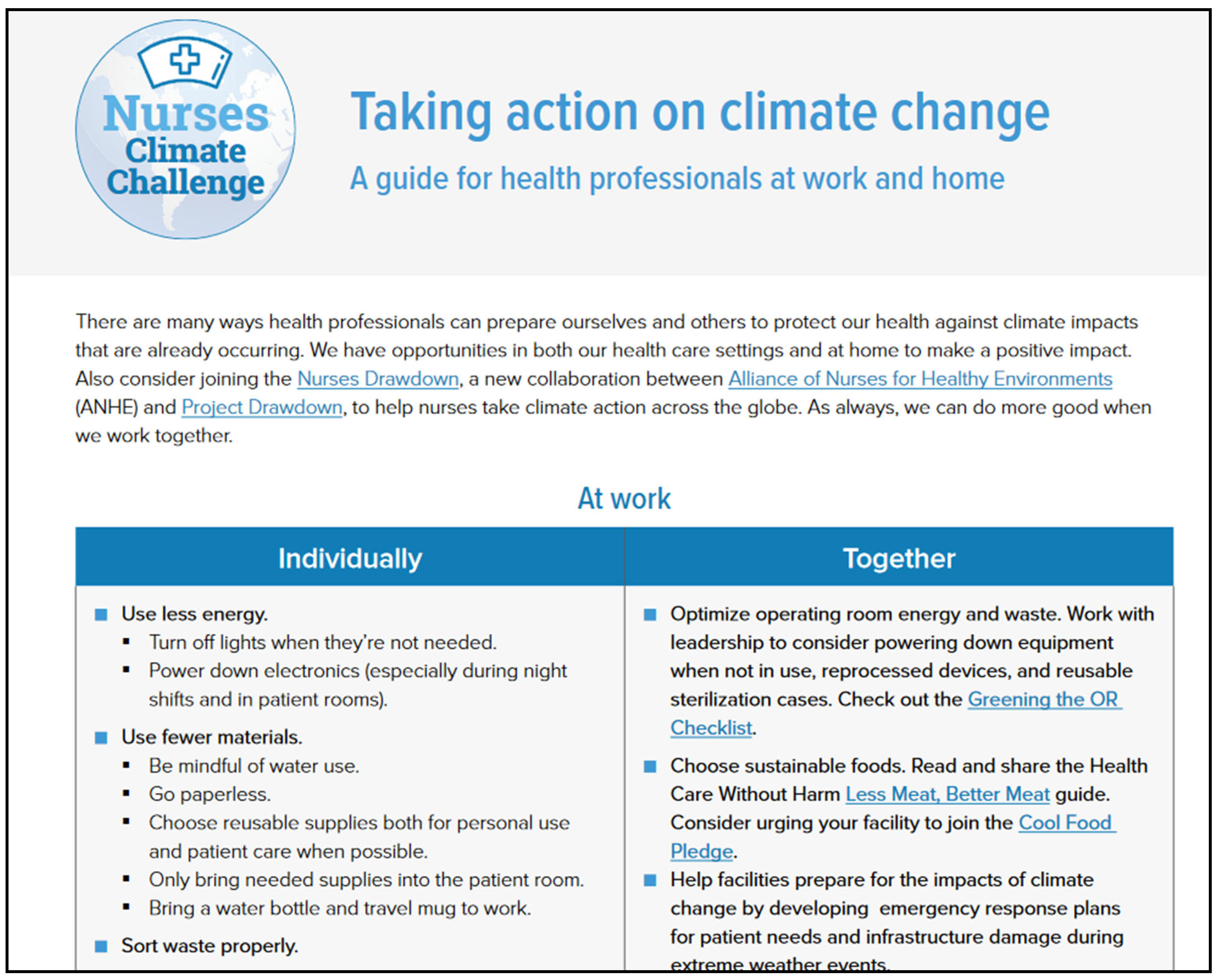
Figure 2.
Adapted visualization of the Snowflake Model [26].
Figure 2.
Adapted visualization of the Snowflake Model [26].
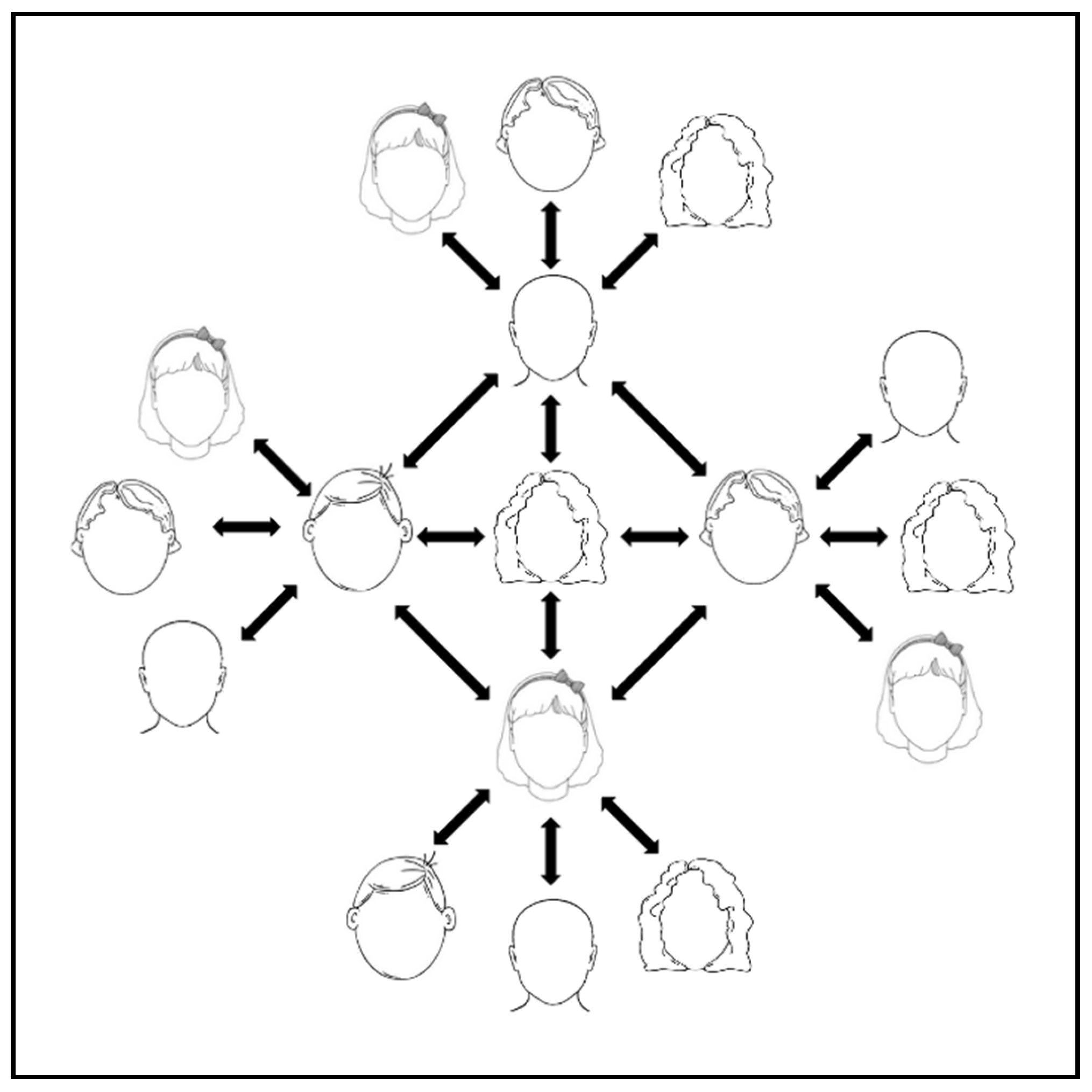
Figure 3.
Integration of NCC materials into SON Commitment schools by program type; n=61, with program overlap amongst 7 participants.
Figure 3.
Integration of NCC materials into SON Commitment schools by program type; n=61, with program overlap amongst 7 participants.
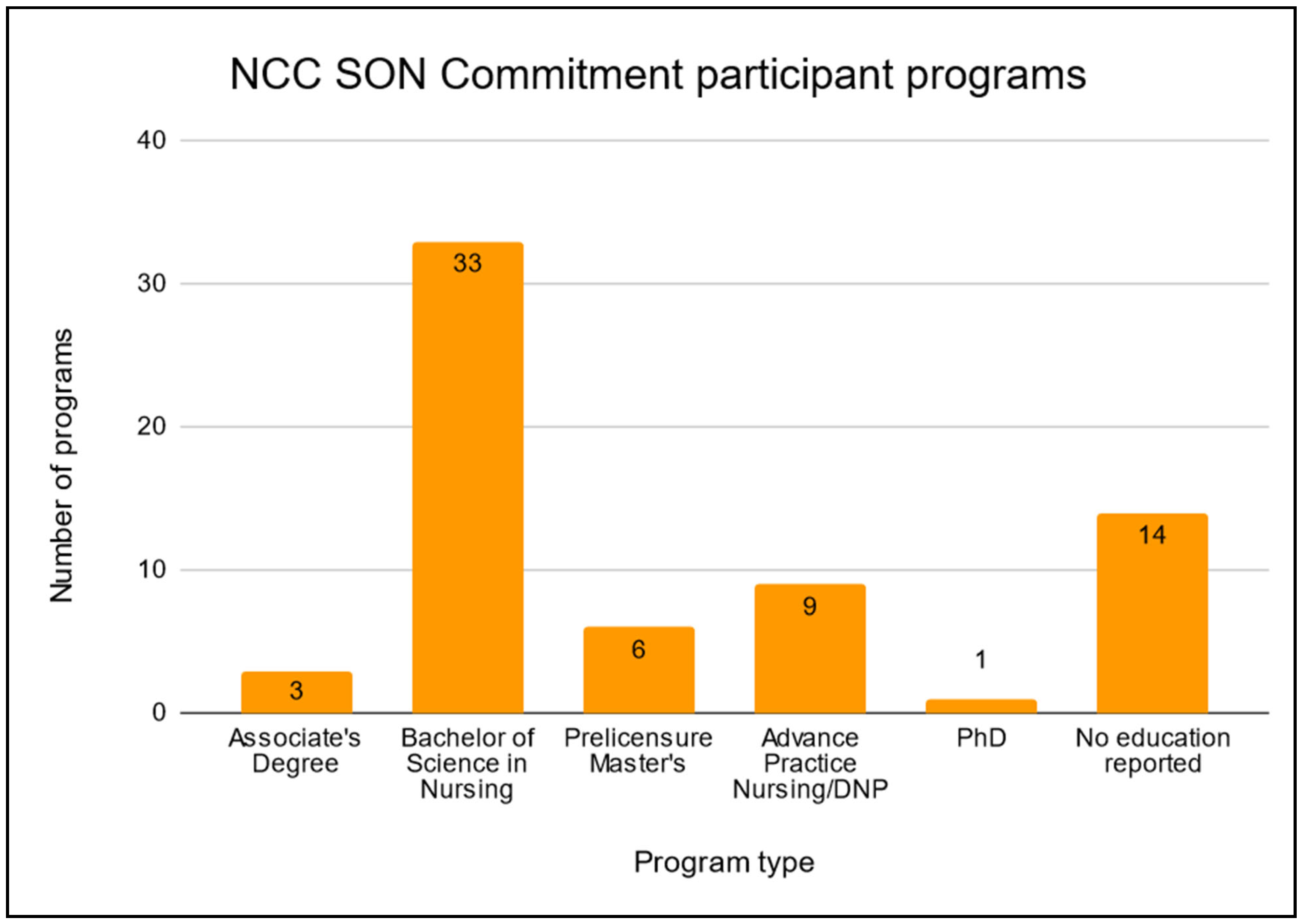
Figure 4.
Nurses Climate Challenge educational sessions categorized by non-academic vs. educators not participating in the NCC vs. educators participating in the NCC (2018-2022). Note: the SON Commitment launched in 2020; n=724.
Figure 4.
Nurses Climate Challenge educational sessions categorized by non-academic vs. educators not participating in the NCC vs. educators participating in the NCC (2018-2022). Note: the SON Commitment launched in 2020; n=724.
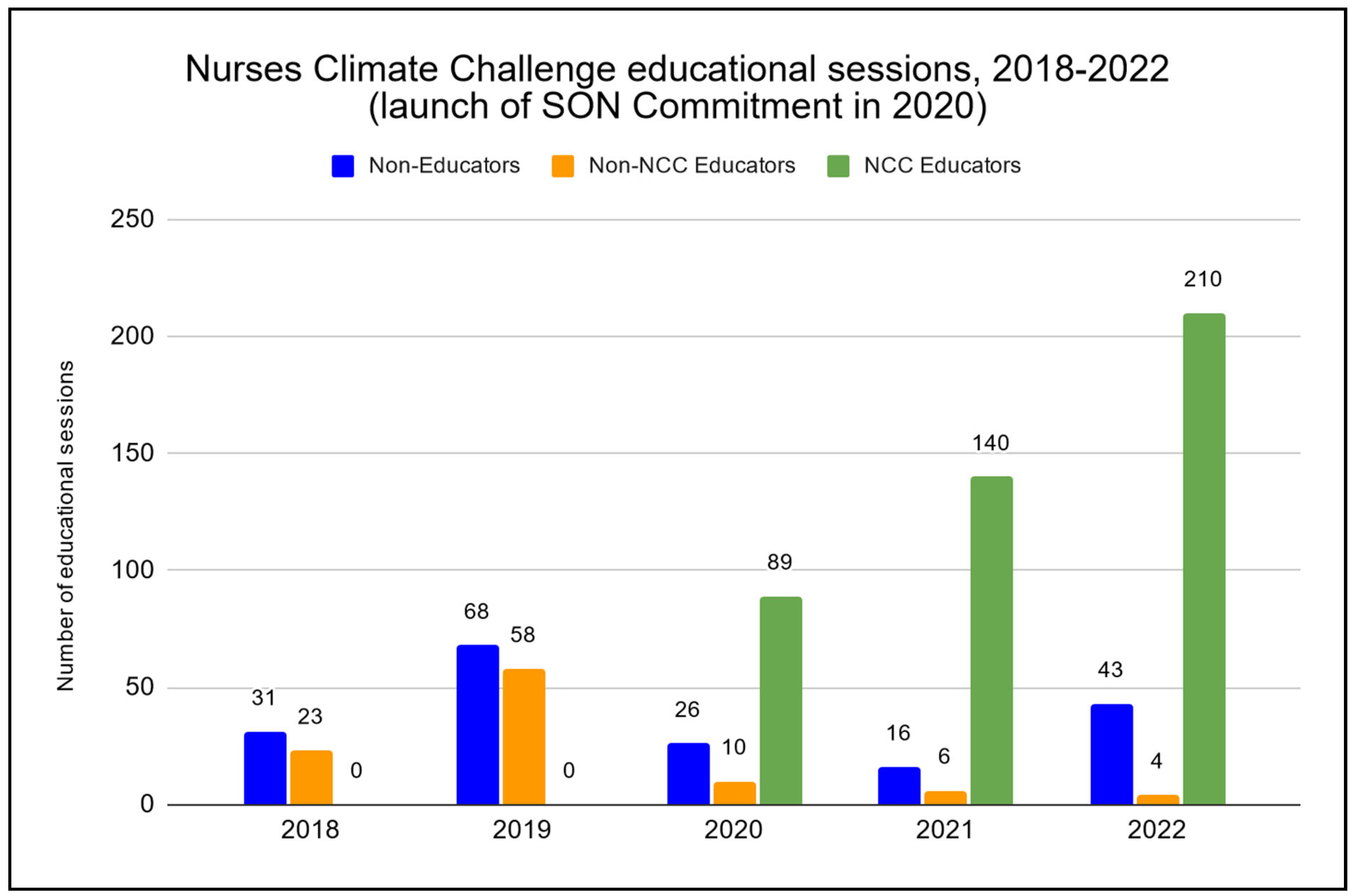
Figure 5.
Number of individuals educated by NCC materials separated by audience (2018-2022); n=56,362.
Figure 5.
Number of individuals educated by NCC materials separated by audience (2018-2022); n=56,362.
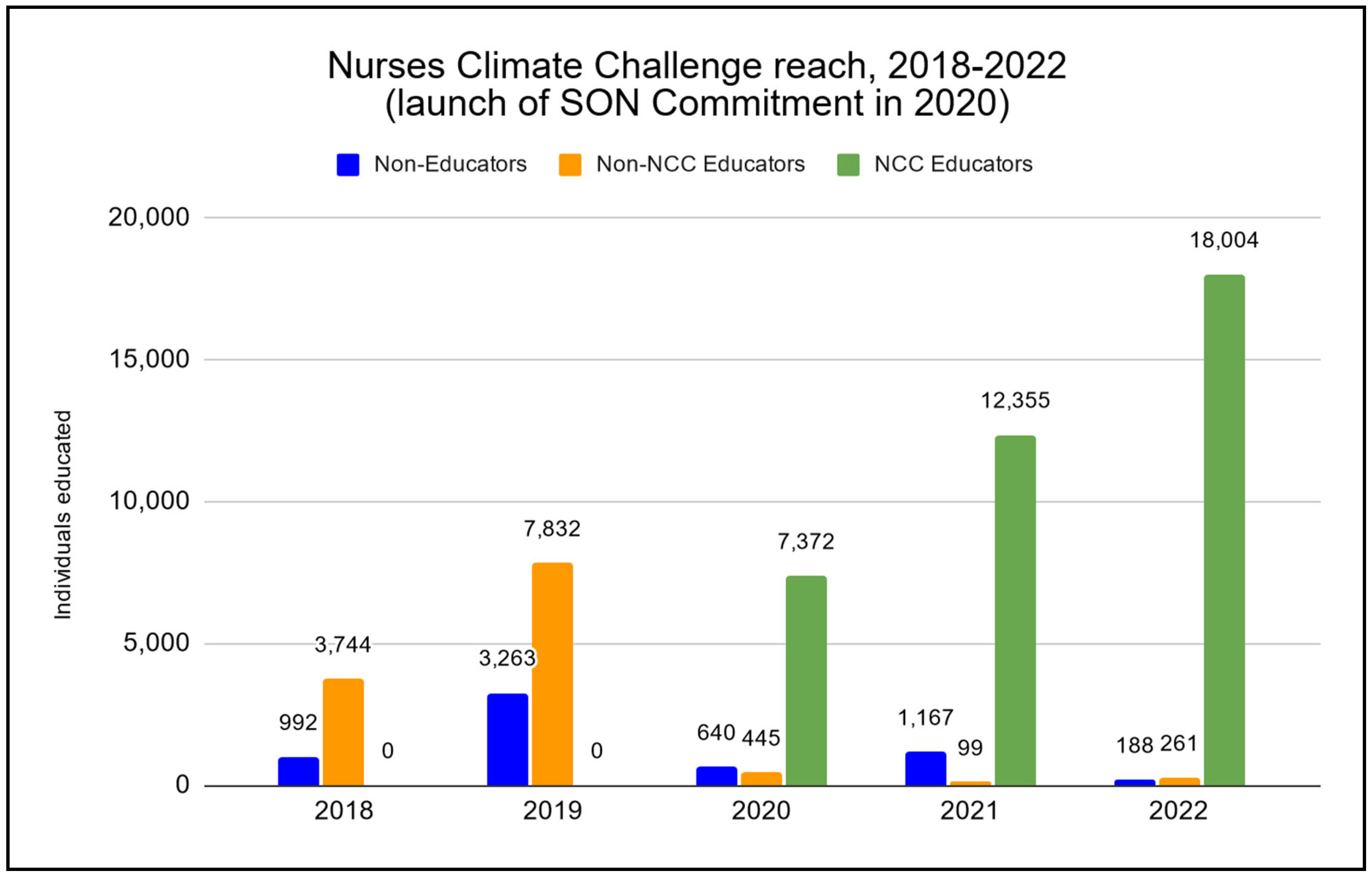

Table 1.
Summary of NCC SON Commitment.
| Summary of NCC SON Commitment | |
|---|---|
| SON agrees to the following: | Promote the NCC to undergraduate and/or graduate nursing students and faculty. Use at least one component of NCC content in a course, guest lecture, or presentation. Report number of students educated. |
| NCC agrees to the following: | Display SON name publicly on NCC website. Identify SON as participant and highlight individual faculty efforts via social media. Publicize select SON faculty and student research on climate and health on NCC website. Host community of practice faculty sharing calls prior to fall and spring semesters. Provide quarterly reports with number of students educated. |
Table 2.
Student feedback and result of educational session, per faculty reports.
| Student Feedback | Result of Educational Session |
|---|---|
|
|
Disclaimer/Publisher’s Note: The statements, opinions and data contained in all publications are solely those of the individual author(s) and contributor(s) and not of MDPI and/or the editor(s). MDPI and/or the editor(s) disclaim responsibility for any injury to people or property resulting from any ideas, methods, instructions or products referred to in the content. |
© 2024 by the authors. Licensee MDPI, Basel, Switzerland. This article is an open access article distributed under the terms and conditions of the Creative Commons Attribution (CC BY) license (http://creativecommons.org/licenses/by/4.0/).
Copyright: This open access article is published under a Creative Commons CC BY 4.0 license, which permit the free download, distribution, and reuse, provided that the author and preprint are cited in any reuse.