

Submitted:
18 January 2024
Posted:
18 January 2024
You are already at the latest version
Abstract
Rapid population growth causes smallholders to practice unsustainable forms of land intensification to meet increasing food demand. Food insecurity is exacerbated by unreliable rainfall. We revisit family planning, smallholder irrigation, and agricultural cooperatives as potential sustainable solutions. We use descriptive statistics based on primary data from Kakamega Central and Navakholo in Kenya. Results from respondents indicate 83% had no family planning information, while 82% had no access to irrigation. The major reasons are poverty, illiteracy, misconceptions, gender inequality, constraints in accessing credit, lack of investment in water resources, and family planning. Lack of access to agricultural extension services limits the adoption of sustainable farming practices. Cooperatives’ principles and values make them suitable pathways to reach the poorest and facilitate members’ access to productive resources. Cooperatives can be used to train members in sustainable agricultural practices and educate members on family planning issues. Cooperatives have contributed to better yields, incomes, nutritional status, and reduced poverty. However are constrained by a lack of capital, credit, infrastructure, markets, training and technology, delayed payment, and low prices. Governments and development agencies should support the establishment and development of cooperatives with capacity building, market infrastructure, finance, and education in cooperative principles and values.
Keywords:
Family planning
; rainwater harvesting and supplementary irrigation
; agricultural cooperatives
; smallholders
; rural Kenya.
1. Introduction
Smallholders’ constraints are multifaceted (Andersen and Watson 2011) with access to credit, input, and output markets being some of the most important. As much as these are essential, land resources including soil, water, and biodiversity are crucial. Rapid population growth is putting pressure on finite land resources (Garg 2017; Miladinov 2023) exacerbated by climate change effects such as erratic rainfall, recurrent floods, and droughts. The average land size of smallholders in Kenya was 4.1ha in 1974, 2.1ha in 2010 (Jayne et. al. 2014) and declined to 0.47ha in 2014 (Rapsomanikis 2015). To meet the growing food demand smallholders are resorting to unsustainable forms of land intensification (Jayne et. al.2014) which threatens to stall Sustainable Development Goals (SDGs). These circumstances are asking for population growth control and sustainable solutions for food security. Thus, this paper focuses on family planning and supplementary irrigation through agricultural cooperatives as potential solutions. Total fertility rate (TFR) in Kenya was 7.99 in 1970 and declined to 4.06 in 2015 (UN Department of Economic and Social Affairs, Population Division 2019). However, the pace of the TFR decline has not been equal across different socioeconomic groups and geographical locations (rural and urban areas) largely due to family planning issues.
Family planning services offer contraceptive methods that enable people to decide the number of children and determine the spacing of pregnancies; thereby preventing unintended pregnancies, limiting family size, controlling the population, and improving the quality of life of the people and development of communities (WHO 2018; Akamike et al. 2019). Ochako et.al (2015) found that awareness and knowledge of contraception do not always translate to use. The major barriers to uptake are (a) myths and misconceptions that women hear from partners and peers about potential side effects (Wafula et al. 2014; Michellea et al. 2012). (b) Inadequate availability of modern contraceptive methods exacerbated by inequitable distribution of health facilities offering family planning services across Kenya (Wafula et al.2014; USAID 2009). (c) People in poverty may not afford modern contraceptives (Asaolu et al. 2019), and insufficient support of family planning programs (Remare and Catherine 2012). (d) Shortage of trained workforce and community health workers (Mugisha and Reynolds 2008). (e) Reproductive health particularly family planning programs are and remain underfunded this results in limited access to services and poor service delivery (Singh et al. 2009).
The barriers to family planning uptake have contributed to the inadequate and inefficient use of family planning, consequently exacerbating rising population growth in Kenya. Population growth in Kenya threatens food security, the trend of population density during 1993-2017 rose from 45.9 to 88.2 per Km2 (UN Department of Economic and Social Affairs, Population Division 2019). The forecasted annual population percentage change, fertility rate, and population density per Km2 for 2020 are 2.52, 3.77, and 94, while for 2050 are 1.54, 2.61, and 168 respectively (UN Population Division 2017). Although the population rate is declining, population density per Km2 is alarming. Uncontrolled rapid population growth in Kenya affects agricultural output through (a) increased demand for food is higher than supply, which leads to higher prices for both inputs and food, and declining agricultural output exacerbates food insecurity (Muyanga and Jayne 2014). (b) Farms are getting smaller as farmers subdivide land among their children consequently; the land’s production is insufficient for sustenance. Farmers take more land into cultivation through unsustainable farming practices such as the clearance of grasslands and forests of native vegetation, which subsequently results in soil degradation (Mugizi and Matsumoto 2020).
Kenya is mostly arid and semi-arid with an erratic and unreliable average annual rainfall of 500mm, 66% of the country receives less than 500mm annually (Mogaka 2006). The unsustainable farming practices that lead to land degradation increase rainwater losses through runoff, which in turn aggravates the impact of drought. The environmental degradation in question further contributes to land productivity decline, loss of biodiversity, and desertification (Davis 2016). Agricultural production in Kenya is largely rain-fed, under climate change there are shorter growing seasons culminating in crop failures and episodes of drought-related hunger and severe malnutrition, particularly among mothers and children, as well as rampant poverty levels (Ingutia and Sumelius 2022; Huho and Mugalavai 2010).
Increasing demand for food due to population growth and the consequences of climate change and droughts including rainfall variability and soil degradation require innovative technologies that will ensure sustainable intensification of production in the high and medium potential lands and opening up of new land in the ASAL areas (Pachauri et al 2014). This is possible with the application of irrigation technology that is decisive to secure water to bridge dry spells and improve soil management to increase nutrient availability and water holding capacity of the soil profile (Ingutia and Sumelius 2022). In addition, in the process ensure sufficient food supply and better livelihoods by transforming subsistence farming into commercial farming (Wichelns and Oster 2006). In Kenya, Mati (2008) found that poverty and food insecurity rates of smallholders reduced in a period of 2-3 years of practicing smallholder irrigation.
Kenya has the potential for irrigation of 540, 000ha, of which only 20% is irrigated (106, 600ha). 40% of the irrigated land is cultivated by large commercial farms, the government-managed schemes take up 18%, while smallholder irrigation covers 42% of the irrigated land (Republic of Kenya 2003; 2004). In this paper, smallholder irrigation includes irrigation activities of farmers with less than 2ha who manage individual plots or are part of a community-managed scheme, and who completely control the water distribution and other key services without interference from the government institution (Kay 2001). A majority of smallholders, especially women, have not supplemented unpredictable rainwater with irrigation technologies, even in cases where water resources might be available in the community. This is because individual smallholders tend to face constraints in accessing credit, appropriate technologies, farm input and output markets to invest in irrigation equipment (Theis et al. 2017; Nakawukaa et al 2018).
What can facilitate smallholders’ access to smallholder irrigation to maximize its benefits? Faced with numerous constraints, smallholders form farmer groups (cooperatives), the present study uses the terms farmer groups and cooperatives interchangeably. A cooperative is defined as “an autonomous association of persons united voluntarily to meet their common economic, social, and cultural needs and aspirations through a jointly-owned and democratically-controlled enterprise” (ICA 2012). By virtue of cooperatives’ principles of operation, their values including equality and equity, solidarity and social responsibility, economic participation and concern for the community (Tchami 2007) places cooperatives in a unique position to enable smallholders to access the productive resources at the disposal of the cooperatives. Farmer groups are suitable pathways to reach the very poor at the grass-root level, therefore governments, development agencies and agribusiness companies have embraced the cooperatives’ approach and use farmer groups to deliver services such as inputs, marketing and training to the farmers (Chamala and Shingi 1997). Studies including FAO (2012); Wanyama (2014); Sumelius et al. (2015); Sumelius et al (2021) point out that cooperatives can empower their members economically and socially by offering them a range of services that facilitates access to productive resources. Ingutia and Sumelius (2022) found that female farmers in Kenya who are members of cooperatives perform slightly better than non-members with regard to food security.
Our objective is to revisit family planning (FP), smallholder irrigation, and agricultural cooperatives as crucial factors in achieving increasing demand for food sustainably. Given that agriculture is the main source of livelihood in rural Africa, cooperatives are a meeting point for farmers, and therefore to have an effective impact on family planning and smallholder irrigation calls for their integration in cooperatives’ activities. Another objective is to investigate the performance and problems of cooperatives. This paper is important, given that population growth impedes sustainable development (Norrman 2023; Turner 2009). Moreover, we are addressing family planning, smallholder irrigation, and cooperatives which are mostly overlooked issues yet critical in sustainable food security.
Studies tend to associate cooperatives with poverty reduction, food security, and employment generation through resource mobilization, agro-processing, and marketing of agricultural produce. We contribute to the ongoing research by indicating the need to integrate FP and smallholder irrigation into agricultural cooperative activities to boost sustainable agricultural practices. Governments, development agencies, and researchers should not only offer credit, inputs, technology, agro-processing, and marketing services to the farmers through farmer groups but should add FP and smallholder irrigation to the list of services. The efforts to increase food security are more effective if combined with population growth control and sustainable smallholder irrigation given that Kenya is largely a water-scarce country. Furthermore, Kenya is mostly an agrarian economy, thus agricultural cooperatives are the lifeline of the majority of the inhabitants. Therefore, a quest into the performance and problems of cooperatives is to the benefit of smallholders, agricultural cooperatives’ leadership, the government, researchers, development agencies, and rural communities at large.
The rest of the paper is as follows section 2 discusses FP across different categories of people and trends in Kenya. Section 3 presents rainwater harvesting for irrigation with an emphasis on supplementary irrigation. Section 4 investigates the performance and problems of cooperatives, while section 5 is on discussions and conclusions.
2. Family planning in Kenya
Figure 1 depicts a decline in total fertility rates (TFR) in Kenya however, there is both disparity and stalls in the pace of decline among different social groups. Why the disparity in the declining rates?
Table 1 has the answer for stalls and disparity in TFR for it compares family planning issues across residence, education, and wealth quintiles. Table 1 indicates that fertility rates were highest among women from the lowest wealth quintile (TFR 7), followed by women without education or with primary education (TFR 5), and rural dwellers (TFR 5). There is a disparity in accessing information essential to influencing fertility preferences and family sizes. Table 1 shows high percentages of women and men from the lowest wealth quintile, rural areas, and with no education or primary education have no access to radio, TV, and newspapers. Moreover, there are higher percentages of women and men under these categories with unmet family planning needs, making them more vulnerable to unintended pregnancies translating into high fertility rates, thereby stalling the overall decline of the fertility rate. There is a need for well-designed and implemented service delivery programs to reach underserved communities -rural dwellers, low incomes, and illiterates (Duvall et al. 2014).
Structural adjustment programs (SAP) of the 1980s and 1990s led to retrenchment cuts in government expenditure in economic and social services consequently contributing to the TFR stalls of between 1990 and 2000 (Rono 2002). However, the government-led reforms (Government of Kenya 2003) increased economic growth from 2.9% in 2003 to 7.1% in 2007 (Thuku et al. 2013) these changes are reflected in the recommencement of gradual fertility rate declines between 2000 and 2020 in Figure 1.
2.1. Family planning and irrigation in the study area
Since there is a wide disparity in accessing family planning services between urban and rural Kenya, we, therefore, turn to rural Kenya and use recent primary data collected from Navakholo and Kakamega Central in Kakamega County, Kenya. Kakamega Central is right next to Kakamega municipality, thus it was assumed that farmers had easier access to input and output markets as well as extension services. Whereas Navakholo is in the interior further away from both input and output markets. A total of 347 smallholders, comprising 137 cooperative members and 210 nonmembers were sampled and interviewed using a structured questionnaire.
Household size is a determinant factor in poverty, well-being, sustainable development, and patterns of consumption that shape the human impact on the environment. The average household size in Kenya is 4.0 (UN 2017) however disaggregated data reveals that it is 5.3 in the area under study and Figure 2 indicates that there were 37% of households above this average. In Figure 2, 83% of the respondents had no access to family planning information certainly this has contributed to big household sizes in Kakamega Central and Navakholo.
Education is associated with both delayed age at first birth thereby lowering fertility rate and lower child mortality that influences fertility choices (Jiang and Hardee 2014). In general women with more than primary education have substantially lower fertility than those with no education. Furthermore, empirical studies point out that after controlling other factors including family income, rural-urban residence, and husband’s education, the effect of the wife’s education remains to be more statistically significant (Bongaarts 2003). Despite the critical role education plays in controlling fertility rates, Figure 2 portrays that 72% of the women had either no education or had only primary education.
Kakamega Central and Navakholo districts are among the parts of Kenya underserved by an irrigation system. Figure 2 shows that 82% of the households did not practice any form of irrigation. Furthermore, being rural districts had no access to electricity and 61% did not have access to solar panels, therefore, could not use solar-powered irrigation as an alternative to electricity. Agricultural extension services are meant to provide education and access to technical support for those engaged in agriculture, but Figure 2 shows that 59% of the female farmers had no access to extension services this partly explains why 47% were food insecure and 48% had poor nutrition.
3. Smallholder irrigation in Kenya
Kenya faces high levels of water scarcity, droughts and floods have become endemic in some parts of Kenya, the arid and semi-arid as well as the poorest regions are the most affected threatening food security (Devereux 2007), at the same time droughts and floods cost the economy 2.4% of GDP annually (Laibuni 2020; Mogaka et al 2006). Food demand can partially be met by improving water productivity in crop production (Zheng et al, 2018; Kate et al. 2013). Efficient use of water resources is critical to crop production in Kenya for the UN has classified Kenya as a chronically water-scarce country (Republic of Kenya 1992). The sustainable options for meeting food demand by increasing crop production include the elimination of unsustainable practices like depletion of soil and water resources, and clearing of forests; sustainable intensification of existing cropland by supplementing rainfed agriculture with supplementary irrigation, adaptation and improvement of high-yielding technologies, and adoption of drought and pest-resistant crops. Such measures could achieve the food needs of an increasing population while protecting the environment (McLaughlin and Kinzelbach 2015; Tilman et al. 2011).
Irrigation development in Kenya dates back some centuries when traditional types of irrigation were and are still in practice. After independence, the government of Kenya set up large tenant-based irrigation schemes that have proved to be unsustainable because of overreliance on government subsidies, overexploitation of farmers, and farmers lacked control over the marketing of their produce consequently the tenants continued to live in poverty (Ngigi 2002). There has been a shift of policy to facilitate the development of smallholder irrigation schemes to provide smallholders with an alternative to pastoralism, employment creation, increase in household income, and food security using community participation. However, despite the initial positive trend, the rate of development in government-supported large and small-scale irrigation schemes has been declining. Poor water management leading to waterlogging and salinization has contributed to the decline in agricultural productivity of some irrigation schemes. Conversely, private individual and Donor-supported irrigation development activities are coming up (Ngigi 2002).
3.1. Rainwater harvesting and supplemental irrigation
Rainwater harvesting (RWH) is the act of storing and conserving rainwater or runoff, for future use when water is scarce (Raimondi et al. 2023; Qadir et al. 2007). Given that surface water is scarce and exploitation of groundwater is not economically feasible, sustainable rainwater catchment systems are one of the most viable options for water scarcity. The majority of rural poor depend on rainfed agriculture rather than irrigated agriculture. Investment costs per ha to upgrade rainfed areas are normally relatively lower than irrigated agriculture. Rainfed crop growth is generally poor with low yields due to water scarcity during dry spells (Bal et al. 2022). Therefore, supplemental irrigation (SI) can be applied to ensure that a minimum amount of water is available during critical stages of crop growth to provide essential moisture for improved and stable production (Liu et al. 2022; Oweis and Hachum 2003).
Generally, a drip irrigation system using rainwater harvested from the rooftops is one of the most efficient and accessible system for credit-constrained farmers. The choice of rainwater harvesting technique is determined depending on (a) the geographic locations to enable runoff water ( Gebremedhn et al. 2023; Oweiss and Hachum 2003). (b) Method of storing water: it can be stored in reservoirs, tanks, drums, ponds, water pans, shallow wells, and dams. (c) Sufficient area of deep soil for collecting rainwater (Fiaz et al. 2018). Sustainable requirements for management of rainwater harvesting and supplemental irrigation are (a) farmers need to receive information on the potential of rainwater runoff collection, and supplemental irrigation practices including how to manage soil water needs and rainfall promptly. Furthermore, information on crop water demand, and storage capacities is required. (b) Extension officers need to be equipped to provide adequate rainwater harvesting services to small-scale farmers (FAO 2014).
The advantages of RWH and SI are (a) in arid regions where water is a major constraint in expanding land under cultivation, the additional surface area is farmed using runoff for irrigation (Gao et al. 2022; Bruins et al. 1986). (b) RWH and SI not only give rise to an increase in crop yields and incomes but also opportunities to diversify income by selling surplus. Water use efficiency at the same time reduces smallholders’ vulnerability to the impacts of climate change on agriculture (Molla et al.2021; Pandey et al. 2003). (c) Certain RWH and SI practices are based on simple low-cost techniques that require a low level of education (Rockström 2000; Roman et al. 2017), thus are convenient for low education resource constraint smallholders. (d) Contributes to the development of agriculture and the conservation of resources in marginal areas (Irshad 2007). (e) Water also enables farmers to engage in livestock rearing, fish production, and poultry (Njuki et al. 2014).
Several studies including Lebel et al. (2015) and Amos et al. (2018) have found that rainwater harvesting has the potential to supply water for irrigation. Rainwater harvesting has proved to be successful in Machakos and Meru counties of Kenya where SI during the dry spells has improved food security, nutritional status, and augmented income (Ngigi 2002a). However, despite the efficacy of RWH and SI, their success is constrained by a lack of technical standards, a lack of investment in water resources, a lack of specific policies, and fragmented efforts in the implementation of RWH and SI (Trincheria et al. 2016). RWH and SI only allow low-density and low-yield crops as compared to conventional irrigation systems (Adriana et al. 2023; Qadir et al. 2007). The benefits of irrigation technologies can be unevenly distributed, landowners are more likely to benefit than landless farmers are. Particularly female farmers that not only lack access to land ownership, credit, and skills but also their larger workload limits their time to seek and use information, cultural norms may constraint women from applying certain irrigation technologies ( Bryan and Garner 2022; Fletcher and Mesbah 2011; Giordano et al 2012 ).
4. Performance of cooperatives in Kakamega Central and Navakholo (Kenya)
We follow Bernard et al. (2008) in analyzing the performance of cooperatives, Bernard et al. (2008) define the performance of farmer groups as the “effectiveness of servicing their members” which they measure by the percentage of members who report having benefitted from the coops.
4.1. Introduction and membership in cooperatives
Cooperatives leverage collective action to access certain services including access to credit, exchange of information, providing representation for members, marketing of produce, and buying of inputs. The economic benefits from the sale of farm produce are distributed to members after covering transaction costs (Shiferaw and Muricho 2011). Cooperatives play a fundamental role in coordinating agricultural production and marketing services, thereby boosting smallholders’ production, increasing food security, and reducing poverty levels (Zhang et al.2023). Cooperatives tend to act as service providers for governments and, at the same time are responsive to the needs of their members who are often unable to access formal services. Some members of the community may be denied access to services due to cultural dynamics and norms, cooperatives are sensitive to such issues. Moreover, through participatory mechanisms, cooperatives can represent the rural poor at higher levels and advocate for their needs (Candemir et al. 2021). Cooperatives can be used to inform and train members in sustainable agricultural practices, to support effective reach and implementation of sustainable development.
Cooperatives are mostly formal groups with a larger membership, usually large-scale commercialized farming (Weenik et al. 2007). In our study area, the kind of farmers’ organizations in existence are more befitting to be referred to as farmer groups, with an average membership of 25, these groups are mostly informal. A majority of the members are smallholders doing subsistence farming. These farmer groups can transform into cooperatives with time if they expand enough to meet the requirements of becoming cooperatives. Farmer groups range from small informal groups to large formal cooperatives (Poole and Frece 2010). The informal groups are mostly self-help groups built around customary principles and ideas of collective well-being. The delivery of agricultural extension services by governments and development agencies is done through the network of farmer groups. Farmer groups are conducive to farmers’ interaction, and sharing knowledge, experiences, and resources (Woomer et al. 2004).
Figure 3 depicts disaggregated coop membership of coops with membership information in the study area. There is a wide disparity in the pattern of membership, for instance, coop 2 is largely male-predominant, while Coop 6 is female-predominant. Notably, youth membership is low in all six coops. All the coops charge a membership fee that turns out to be an entry barrier to the poor without sufficient funds. Only 39% of the households in our study area were members of cooperatives (Figure 2), and 51% of non-coop members said they could not meet entry requirements. Entry barriers limit economies of scale that increase with group size. However, there is a need for a membership fee for it signifies a strong commitment to the principles of collective action. 42% of the none members pointed out they were not interested in joining cooperatives while 7% said they were not members of coop because of the long distance to the nearest coop.
Figure 4 shows that the pattern of female membership across the cooperatives varies ranging from 80% in Cooperative 1 to 10% in Cooperative 13, suggesting respective cooperatives have different entry conditions applying to female members.
4.2. Cooperative services
The results from a personal interview with leaders of the 13 cooperatives in the study area on the services they provide to members are reported in Table 2. The table shows cooperatives’ performance in selected variables; 0 is the worst performer while 100 is the best performer. The table indicates that the 11 cooperatives working on female land rights were all more than 50% engaged in female land rights except coop (2) with 43% and coop (6) with a mere 14% engagement. Provision of water for irrigation is a major challenge among smallholders only four cooperatives were providing water over 50%, while the rest provided only 14%. Nearly all the coops enable their members to access inputs at cheaper prices except for Coop 5 (29%) and Coops 6, 12, and 13 with 14%. Access to cheap credit is a constraint in all the coops, and so is farmer training only three coops offered above 50% training to their farmers, while only two coops enabled their members to access modern technology, the rest did not have modern technology among their activities. In addition, none of the cooperatives provided services like family planning, nutrition education, prenatal and postnatal education and care for mothers and babies, childcare services, or training.
Figure 5 analyses farmers’ access to credit because farmers’ main reason for joining cooperatives is to facilitate access to credit, input, and output markets, at the same time cooperatives, serve as entry points for credit providers (Asante-Addo et al 2017), thus cooperatives’ performance can be partly gauged by how well the members access credit. Figure 5 reveals that as much as access to credit is important in both adopting sustainable agricultural practices and increasing production, 79% of the respondents did not apply for credit largely due to high interest rates and being risk-averse. A majority of those that were rejected in getting credit was due to lack of collateral (60%). 53% of credit recipients gave title deeds as collateral, and only 1% of the recipients received credit with future harvest as collateral. 59% of the recipients used credit to purchase farm inputs, pointing to the central role of credit in adopting sustainable agricultural practices. The major source of credit was family (50%), while only 24% of credit applicants applied from cooperatives.
Financial institutions’ conditions of accessing credit such as land for collateral are highly disadvantageous to women, for they are constrained from owning land due to cultural norms. Consequently, food production and household nutrition are negatively affected given that women play a key role in agricultural activities. Furthermore, less than 1% of total available credit goes to agriculture; in Kenya, Malawi, Zambia, and Zimbabwe women receive less than 10% of the credit to smallholders (Squires 2009), this negatively affects women’s incentives in pursuing productive income-generating activities. Cooperatives fail to fully facilitate this constraint because of low funds.
Next to farmers’ access to credit is access to market information and market access. Table 2 is on coop leaders’ point of view of the services they provide, while Figure 6 is on regular members’ responses to the services they get from their coops. Figure 6 indicates only 42% of the farmers had access to market information, 33% had market access, and 23% had access to transportation. In general, cooperatives promote collective marketing to enable smallholders to share fixed costs of marketing, enhance their ability to negotiate for better input and output prices, and improve their market power. Farm inputs including machinery (22%), seeds (37%), and pesticides (25%) are largely unavailable or unaffordable by smallholders as evidenced in Figure 6 by the low percentages accessing these inputs. One wonders why the percentages accessing inputs are low because in Table 2 a majority of the coops’ leadership reported to be providing inputs at affordable prices.
Collective marketing minimizes the costs of accessing farm inputs, thereby enabling farmers to adopt new technologies, increase productivity, and transform from subsistence to commercial farming. Only 33% of coop members access markets and yet it is assumed collective marketing gives access to larger markets because it creates an enabling environment for contract farming between large buyers and small producers, which would otherwise be almost impossible for such buyers to negotiate, monitor and enforce contracts with many dispersed individual farmers. Access to information (42%) enables farmers to share information on sustainable farming practices, and market conditions to meet market preferences. Only 31% got extension services, consequently, a mere 32% received training thereby limiting 69% of the farmers from adopting sustainable farming practices. Extension limitations including shortage of qualified female extension staff, inappropriate extension packages, lack of flexibility in extension services, and a tendency of extension services oriented towards crops traditionally grown by men largely limit women from accessing extension services (Meinzen-Dick et al. 2014). 78% of the farmers lack access to farm machinery, resulting in production, particularly among women being predominantly labour-intensive, with most of the farm work done by family and child labour.
4.3. Impact of cooperatives on farmers
Table 3 compares levels of crop intensity among farmers in numbers before and after joining cooperatives, level one is the lowest, and level three is the highest in terms of crop intensity. Before joining cooperatives 53 farmers were at the lowest level of crop intensity, while only two were at the best level (3). On joining cooperatives, the benefits of membership resulted in reducing the number of farmers in the lowest level from 53 to one and increasing those in level 2 from 68 to 97 farmers a 43% increase. The number of farmers in the highest level increased from two to 23, about a 1000% increase.
On joining cooperatives, female farmers apply intensive crop farming systems leading to increases in crop yields. Figure 7 indicates all female farmers experienced percentage increases in crop yields with 100% being the lowest change, the mode was 200% and the highest percentage change in crop yield was 684%.
Improvements in crop yields certainly led to income changes as shown in Figure 8. Farmers could easily gauge changes in income levels rather than changes in crop intensity levels, thus more female farmers reported changes in income levels than in crop yields. However not all experienced positive changes, two farmers had 80% negative income changes. Income changes depend on several factors therefore, individual farmers had different changes in income levels, and the mode was a 100. Figure 8 shows the dots on the scatter plot are concentrated forming a concave curve upward rising gradually from 100% to approximately 300% and then to 500% after which the curve shoots to 700% and then 900%.
An increase in crop yields contributes to both food security and an increase in income as farmers transition from subsistence farming to commercial farming, these changes positively affect household nutritional status. Figure 9 depicts changes in meal intake daily, the changes are clusters in scatter plots, the first cluster shows 57 households increased meal daily intake by 50%, followed by a cluster of 30 households that increased by 100% and 15 households increased by 200%. The average percentage increase in meal intake daily was 88%. 77 households reported changes in fruit intake on a weekly basis after joining cooperatives. The largest cluster of increased fruit intake weekly had 29 households that increased by 100%, the average increase in fruit intake was 169%. Clusters with the highest percentages of fruit increase had 400% and 600% with 4 and 5 households respectively. Changes in protein intake weekly do not depict patterns of clusters, only 54 households reported changes in protein intake, and protein consumption is expensive given the high poverty levels. 16 of the households had below 100% increase in protein intake weekly, while 18 had between 100-150%, 8 had 161-183% and 9 had 267-400%. Outliers were 467% and 567%.
4.4. Members’ opinions on cooperatives and their contribution to the community.
According to Figure 10, 66% of the members felt cooperatives had reduced poverty levels, 23% noted that cooperatives had promoted business and 10% said cooperatives had created jobs. 32% of the members were very satisfied with cooperatives, 50% were satisfied, 16% were neutral, and 2% were dissatisfied.
5. Constraints facing cooperatives.
5.1. Problems mentioned by cooperative leaders
Focus group discussions with the leadership from 13 cooperatives in the study area revealed the common problems in cooperatives as indicated in Table 4. This table shows that lack of funds and access to credit is the most frequently mentioned cooperatives’ constraint, by coop leadership. Demand for credit and collateral have been discussed in this paper under section 4.2 on cooperative services Figure 5. Cooperatives in rural Africa are mostly weak in terms of financial capacity to meet the needs of their members. Several factors contribute to their low financial capacity including the low income levels of their members leading to low contributions and savings. Furthermore, Table 4 shows that all 13 cooperative leaders pointed out that they neither get support from governments nor development agencies but entirely depend on members’ contributions. Moreover, they have limited competitive markets to sell their products, which is generally low due to the lack of application of modern technology such as improved seeds, and lack of training in sustainable farming practices due to the absence of extension services (Mhembwe and Dube 2017).
Water scarcity was pointed out six times in Table 4 this is because Kenya is mostly arid and semi-arid with erratic unreliable rainfall as discussed in the introduction section. Rainwater harvesting (RWH) and supplemental irrigation (SI) are the most viable options for resource-poor smallholders, but the success of RWH and SI is constrained by a lack of investment in water resources, a lack of technical standards, and a lack of specific policies. Poor infrastructure to access markets in terms of transportation increases production costs and is a barrier to integrating local markets with national markets and, therefore, contributes to regional price differences.
5.2. Problems of cooperatives raised by coop members
Figure 11 shows constraints facing cooperatives as assessed by members of cooperatives. The commercial incentives that cause farmers to join cooperatives are collective marketing of farmer groups that tend to get higher prices for products marketed because of strong bargaining power as a group and lower prices for products purchased in bulk. Contrary to the norm Figure 11 indicates 70% of the members felt they were not getting good prices. As a result, coop members end up selling their produce through local middlemen that offer competitive prices. Another reason why farmers opt for local middlemen is that 73% of the farmers reported that cooperatives generally delay paying them for their products, while middlemen pay instantly. Smallholders have limited funds and thus are not in a position to wait for some time before being paid by cooperatives (Latynskiy and Berger 2016). Cooperatives delay paying members mainly because they lack working capital and thus have to wait for payment from buyers before paying their members.
62% of the members expressed a lack of transparency in the cooperatives, although 10 of the 13 cooperatives report having regular members’ meetings twice monthly, only 42% of the members (Figure 6) had access to information. Thus, a majority of the members lack understanding of the functionality of the cooperatives. The absence of clearly communicated rules and transparency of cooperatives’ services and benefits certainly creates mistrust among the regular members. 54% of the members complained of experiencing inadequate capital in their cooperatives, this complaint is in line with Figure 5 which indicates only 24% of the members got credit from the cooperatives. Lack of external support (Table 4) has limited liquid assets of cooperatives in turn the latter cannot provide larger credit to their members.
5. Discussions and conclusions
Rapid population growth has contributed to the growing food demand, food insecurity is exacerbated by erratic unreliable rainfall in Kenya. To meet the increasing food demand, this paper revisits family planning, smallholder irrigation, and agricultural cooperatives advocates for integrating family planning and smallholder irrigation in agricultural cooperatives’ activities since the latter reaches the very poor at the grassroots level. In addition, the paper has investigated the performance and problems of cooperatives. Why integrate family planning into cooperatives’ activities? Reduction of child malnutrition or hunger, in general, depends on the size of the future population, thereby asking for investment in family planning. Family planning (FP) has the potential to reduce fertility rates and slow population growth, thereby reducing pressure on land, and minimizing unsustainable farming practices that lead to land degradation. FP enables women to advance their education and careers by delaying or limiting childbearing ultimately increasing economic productivity (McDougal et al. 2021; Miller 2010).
Although there is controversy about the population’s link to poverty, a common consensus is emerging that rapid population growth increases the number of poor people (Cleland et al. 2006). FP reduces child and maternal morbidity and mortality by preventing unintended pregnancies (Stover and Ross 2010). FP enables birth spacing ultimately enhancing the nutritional status of both mother and child. Children born with less than four-year intervals are reported to be 27% more prone to stunting and 23% more likely to be underweight as compared to those born after a four-year interval (Conde-Agudelo et al.; Ruistein and Winter 2014). Recent existing evidence such as Yavinsky et al. (2015) shows integrating FP into non-health projects like natural resource management improves the environment at the same time increases the uptake of FP leading to declines in total fertility rates.
Our results point out the disparity in accessing FP services with high percentages of the population in the lowest wealth quintile, rural inhabitants, and people with no education or primary education mostly cut off from FP services. These categories of people can effectively be reached and served through the channel of farmer groups (cooperatives); since farmer groups are potential pathways to reach the very poor in the remotest parts. Cooperatives’ principles of operation and their values including equality and equity, solidarity and social responsibility, economic participation, and concern for the community position them to resolve barriers to FP uptake by creating awareness of the benefits of FP while being sensitive to the cultural norms and meeting unmet needs.
However, the success of cooperatives in FP depends on institutional support with funding and training of farmer groups’ staff to act as community health agents. Cooperatives can in turn improve FP services through (a) Promoting the effective use of FP to their members by creating awareness through information and education. (b) Improvement of both supply and accessibility of family planning services at the community level (Akamike et al. 2019). These activities save time and resources since they take place during agricultural meetings, and visits to homes and fields.
How about irrigation? Large and smallholders’ irrigation schemes supported by the government are declining and unsustainable due to waterlogging and salinity; at the same time are not inclusive, as evidenced by 82% of the households in the study area not having access to irrigation. Given that smallholders mostly lack the resources to access irrigation technology, there is a need to integrate smallholder irrigation into cooperatives’ activities to facilitate access. Following the same line of argument in terms of cooperatives providing FP services, with adequate support cooperatives can step up irrigation services and train members in sustainable irrigation practices. Rainwater harvesting and supplemental irrigation are the most efficient and accessible systems for credit-constrained smallholders. Furthermore, pump-fed systems have not been sustainable whereas gravity-fed systems are sustainable and economically feasible (Leng et al. 2017; Scheltemal 2002).
Governments and development agencies should train coop staff in rainwater harvesting techniques and sustainable management of rainwater harvesting and equip them to provide adequate rainwater harvesting services to smallholders. Coops will take into account gender issues that normally constrain female farmers from accessing irrigation technologies.
The success of farmer groups faces challenges including a lack of resources in terms of finances, infrastructure, capabilities, and information, lack of support from government and development agencies, lack of transparency, low membership, commitment, and participation. Access to credit is the greatest constraint as per the assessment of both leaders and regular members of cooperatives. Improving farmers’ access to credit requires finding solutions to issues that are barriers to credit including land as collateral, high interest rates, illiteracy, and microfinance institutions’ lack of capital. Poor prices and payment delays could be some of the reasons why 42 % of non-coop members said they are not interested in becoming members of cooperatives. There is a need to create incentives for farmers to join cooperatives by capacity building of cooperatives’ management, by empowering cooperatives to provide services including high prices, timely payment, extension services, and transparency in cooperatives services such as market information, for these factors determine farmers’ decisions to join cooperatives.
In the course of the survey, we noted that farmers mentioned extension officers lack transportation and demonstration materials. Concerned institutions should give due support to extension agents so that the latter can offer need-based services to the farmers without access. Despite the challenges faced by cooperatives, they have contributed to increases in yields leading to food security, better nutritional status, increased incomes, reduced poverty rates, promoted businesses, and created jobs, furthermore, 82% of the members expressed satisfaction with cooperatives.
There is a need for governments and development agencies to support the establishment and development of economically viable and self-sustaining cooperatives, and increase more extension services to complement government extension. This calls for investment in market infrastructure, capacity building, access to finance, and provision of enabling regulatory and legal frameworks to establish better governance and accountability systems. Levels of youth participation can be increased by involving youths in group leadership and all cooperative’ activities. In addition creation of opportunities for young farmers to access productive resources. Subsequently, cooperatives will become transparent, and market-led, enhancing farmer access to markets, technologies, training, and services thereby fostering sustainable agricultural practices leading to productivity growth and overall development.
Author Contributions
Conceptualization, R.A; methodology, R.A; validation, J.S; formal analysis, R.A; data curation, R.A; writing original draft preparation, R.A; writing review and editing, J.S; supervision, J.S. All authors have read and agreed to the published version of the manuscript.
Funding
This research was funded by Kyösto Haataja Foundation. The APC was funded by the University of Helsinki.
Data Availability Statement
Data is available upon reasonable request.
Conflicts of Interest
The authors declare no conflicts of interest. The funders had no role in the design of the study; in the collection, analyses, or interpretation of data; in the writing of the manuscript; or in the decision to publish the results.
References
- Andersen: P.P. and D.D. Watson. 2011. Food Policy for Developing Countries: the Role of Government in Global, National, and Local Food Systems. Ithaca, N.Y. Cornell University Press, 2011.
- Adriana, C.G., S.F. Emmanuel, T. Jose and Z. Ingrid. 2023. Rainwater harvesting and supplemental irrigation for cotton cultivation in Minas Gerais, Brazil. World Water Policy, 9(4) 858-868. [CrossRef]
- Akamike, I. C., I. N. Okedo, U. C. Madubueze and C. D. Umeokonkwo. 2019. Does Community Mobilization Improve Awareness, Approval and Uptake of Family Planning Methods Among Women of Reproductive Age in Ebonyi State? Experience from a quasi-experimental Study. Pan Afr. Med J. 33:17. [CrossRef]
- Asante-Addo, C., J. Mockshell, M. Seller, I.S. Egyir. 2017. Agricultural Credit Provision: What Really Determines Farmers’ Participation and Credit Rationing? Agricultural Finance Review Vol. 77. No. 2. pp. 239-256.
- Amos, C., A. Rahman, F. Karim, J.M. Gathenya. 2018. A Scoping Review of Roof Harvesting Rainwater Usage in Urban Agriculture: Australia and Kenya in Focus. J Clean Prod. Vol 202. 174-194.
- Bal, S.K., V.M. Sandeep, P. V. Kumar, A.V.M. S. Rao, V.P. Pramod, N. Manikandan, C.S.Rao,N.P. Singh, S. Bhaskar. 2022. Assessing impact of dry spells on the principal rainfed crops in major dryland regions of India. Agricultural and Forest Meteorology. Vol. 313, 2022, 108768.
- Bernard, T., M.H. Collion, A de Janvry and P. Rondot. 2008. “Do Village Organizations Make a Difference in African Rural Development? A Study for Senegal and Burkina Faso”. World Development 36 (11) pp 2188- 2204.
- Bongaarts, J. 2003. “Completing the Fertility Transition in the Developing World: the Role of Educational Differences and Fertility Preferences”. Population Studies. Vol.57. No. 3. 321-336.
- Bruins, H.J., M. Evenari, U. Nessler. 1986. Rainwater Harvesting Agriculture for Food Production in Arid Zones. The Challenge of the African Famine. Appl. Geogra. Vol 6 13-32.
- Bryan, E. and E. Garner. 2022. Understanding the pathways to women's empowerment in Northern Ghana and the relationship with small-scale irrigation. Agric Human Values. 2022; 39(3):905-920.
- Candemir, A., S. Duvaleix and L. Latruffe. 2021. Agricultural cooperatives and farm sustainability. A literature review. Journal of Economic Surveys. 35:1118-1144.
- Cleland, J., S. Bernstein, A. Ezeh, A. Faundes, A. Glasier and J. Innis. 2006. Family Planning: the Unfinished Agenda. Lancet. 368 (9548): 1810-1827.
- Conde-Agudelo, A., A. Rosas-Bermudez, F. Castanö, M.H. Norton. 2012. Effects of Birth Spacing on Maternal, Perinatal, Infant, and Child Health: A Systematic Review of Causal Mechanisms. Stud Fam Plann. 43 (2): 93-114.
- Chamala, S., Shingi, P.M. 1997. Establishing and Strengthening Farmer Organizations. In: Improving agricultural extension. A reference manual. (ed) Swanson, B.E., R.P. Bentz and A.J. Sofranko. FAO.
- Davis, J. 2016. Enabling Governance for Sustainable Land Management. Chapter 1.4 in Book: Land Restoration – Reclaiming Landscape for a Sustainable Future. pp. 67-76. Academic Press.
- Devereux, S. 2007. The Impact of Droughts and Floods on Food Security and Policy Options to Alleviate Negative Effects. Agricultural Economics, Vol. 37. Issue s1, pages 47-58.
- Duvall, S., S. Thurston, M. Weinberger, O. Nuccio, N. Fuchs-Montgomery. 2014. Scaling Up Contraceptive Implants in Sub-Saharan Africa: Operational Experiences of Marie Stopes International. Glob Health Sci. Pract. 2(1):72-92.
- FAO 2014. Compendium on Rainwater Harvesting for Agriculture in the Caribbean Sub-region: Concepts, Calculations and Definitions for Small, Rain-fed Farm Systems.
- FAO. 2012. Cooperatives: Empowering Women Farmers, Improving Food Security.
- Fiaz, S., M.A. Noor, F.A. Aldolsri. 2018. Achieving Food Security in the Kingdom of Saudi Arabia Through Innovation: Potential Role of Agricultural Extension. J. Saudi Soc. Agric. Sci. Vol. 17. 365- 375.
- Fletcher, D. and D. Mesbah. 2011. Gender Disparity in Access to Information: Do Spouses Share What They Know? World Development. Vol. 39. Issue 8. 1422-1433.
- Garg, S. 2017. Impact of Overpopulation on Land Use Pattern. In Book: Environmental Issues Surrounding Human Overpopulation. Published by IG Global. USA.
- Gao, X., N. Zhao, Y. Lu, X. Han, Z. Yang. 2022. Effects of supplementary irrigation on soil respiration of millet farmland in a semi-arid region in China. Atmosphere 2022;13 (10):1584.
- Gebremedhn, A.Y., Y.S. Getahun, A.S. Moges. F. Tesfay. 2023. Identification of suitable rainwater harvesting sites using geospatial techniques with AHP in Chacha watershed, Jemma sub-basin upper Blue Nile, Ethiopia. Air, Soil and Water Research. 2023;16. [CrossRef]
- Giodarno, M. C. de Fraiture, E. Weight and J. Van De Bliek (Eds). 2012. Water for Wealth and Food Security: Supporting Farmer Driven Investments in Agricultural Water Management. Synthesis Report of the AgWater Solutions Project. Colombo, Sri Lanka: International Water Management Institute (IWMI).
- Huho, J.M. and E. Mugalavai. 2010. The Effects of Droughts on Food Security in Kenya. International Journal of Climate Change. Impacts and Responses. Vol. 2 No.2. pp. 61-72.
- ICA 2012. ICA Statement of Cooperative Identity. Internet Archive Waybackmachine. http://www.ica.coop/coop/principles.htmI.
- Ingutia, R.A. and J. Sumelius. 2022. Determinants of food security status with reference to women farmers in rural Kenya. Scientific African. Vol.15, 01114.
- Irshad, M., M. Inoue, M., M. Ashraf, A. Al-Busaidi. 2007. The Management Options of Water for the Development of Agriculture in Dry Areas. J. Appl. Sci. Vol. 7. 1551-1557.
- Jayne, T.S., J. Chamberlin, J. and D.D. Headley. 2014. Land Pressures, the Evolution of Farming Systems, and Development Strategies in Africa: A Synthesis. Food Policy Vol. 48. Pages 1-17.
- Jiang, L. and K. Hardee. 2014. Women’s Education, Family Planning, or Both? Application of Multistate Demographic Projections in India. International Journal of Population Research Vol. 2014. Article ID 940509.
- Kate, A. B., S. Stefan and A.F. Jonathan. 2013. Improvements in Crop Water Productivity Increase Water Sustainability and Food Security- a Global Analysis. Environ. Res. Lett. 8. 024030.
- Kay, M. 2001. Smallholder Irrigation Technology: Prospects for Sub Saharan Africa. International Programme for Technology and Research in Irrigation and Drainage, FAO. Knowledge Synthesis Report. No. 3.
- Latynskiy, E. and T. Berger. 2016. Networks of Rural Producer Organizations in Uganda: What Can be Done to Make Them Work Better? World Development Vol. 78. pp 572-586.
- Lebel, S., L. Fleskens, P.M. Forster, L.S. Jackson, S. Lorenz. 2015. Evaluation of In Situ Rainwater Harvesting as an Adaptation Strategy to Climate Change for Maize Production in Rainfed Africa. Water Resour. Manag. Vol. 29. 4803.
- Leng, G., L. R. Leung and M. Huang. 2017. Significant impacts of irrigation water sources and methods on modeling irrigation effects in the ACME Land Model, J. Adv. Model. Earth Syst., 9, 1665-1683. [CrossRef]
- Liu, S., X. Lin, W. Wang, B. Zhang, D. Wang. 2022. Supplemental irrigation increases grain yield, water productivity, and nitrogen utilization efficiency by improving nutrition status in winter wheat. Agricultural Water Management. Vol. 264, 2022, 107505. [CrossRef]
- Mati, B.M. 2008. Capacity Development for Smallholder Irrigation in Kenya. Irrig. Drain. 57. 332-340.
- McLaughlin, D. and W. Kinzelbach. 2015. Food Security and Sustainable Resource Management . Water Resour. Res. Vol 51. Issue 7. 4966-4985.
- McDougal, L., A. Singh, K. Kumar, N. Dehingia, A.J.D. Barros, F. Ewerling, et al. 2021. Planning for work: Exploring the relationship between contraceptive use and women’s sector-specific employment in India. PLoS ONE 16(3):e0248391. [CrossRef]
- Meinzen-Dick, R., N. Johnson, A.R. Quisumbing, J. Njuki, J.A. Behrman, D. et al. 2014. The Gender Asset and its Implications for Agricultural and Rural Development. Ed. In Gender in Agriculture: Closing the Knowledge Gap. Springer.
- Miladinov, G. 2023. Impacts of population and economic development on food security in low-income and middle-income countries. Frontiers in Human Dynamics. Vol 5.
- Molla, T., K. Tesfaye, F. Mekbib, T. Tana, T. Taddesse. 2021. Supplementary irrigation for managing the impact of terminal dry spells on the productivity of rainfed rice (Oryza sativa L.) in Fogera Plain, Ethiopia. Heliyon. 10;7(49:e06703. [CrossRef]
- Mugizi, F.M.P. and T. Matsumoto. 2020. Population pressure and soil quality in Sub-Saharan Africa: Panel evidence from Kenya. Land Use Policy. Volume 94, 2020, 104499. [CrossRef]
- Muyanga, M. and T.S. Jayne. 2014. Effects of rising rural population density on smallholder agriculture in Kenya. Food Policy. Volume 48, 2014, pgs. 98-113.
- Mhembwe, S. and Dube, E. 2017. The Role of Cooperatives in Sustaining the Livelihoods of Rural Communities: The Case of Rural Cooperatives in Shurugwi District, Zimbabwe. JAMBA Journal of Disaster Risk Studies 9 (1):341.
- Michellea, D., S. Robb, R. Marcie and B. Doris. 2012. The Influence of Perceptions of Community Norms on Current Contraceptive Use Among Men and Women in Ethiopia and Kenya. Health Place. 18: 766-773.
- Miller, G. 2010. Contraception as Development? New Evidence from Family Planning in Colombia. Econ J. 120 (545): 709-736.
- Mogaka, H., S. Gichere, R. Davis and R. Hirji. 2006. Climate Variability and Water Resources Degradation in Kenya. Improving Water resources Development and Management. World Bank Working Paper No. 69. 34854.
- Mugisha, J.F. and H. Reynolds. 2008. Provider Persepectives on Barriers to Family Planning Quality in Uganda: a Qualitative Study. J. Fam Plann Reprod Health Care. 34 (1): 37-41.
- Nakawukaa, P., Langan, S., Schmittera, P. and Barronc, J. 2018. A review of Trends, Constraints and Opportunities of Smallholder Irrigation in East Africa. Global Food Security. Vol. 17. 196-212.
- Norrman, K.E. 2023. World Population Growth: A once and future global concern. World. 2023;4(4):684-697. [CrossRef]
- Ngigi, S.N. 2002. “Review of Irrigation Development in Kenya” IWMI Books. Reports H030832, International Water Management Institute.
- Ngigi, S. N. 2002a. “Preliminary Evaluation of Irrigation Development in Kenya. In : Blank, H. G., C. M. Mutero and H. Murray- Rust (eds). The Changing Face of Irrigation in Kenya: Opportunities for Anticipating Change in Eastern and Southern Africa. IWMI.
- Njuki, J., E. Waithanji, B. Sakwa, J. Kariuki, E. Mukewa and J. Ngige. 2014. A Quantitative Assessment of Gender and Irrigation Technology in Kenya and Tanzania. Gender, Technology and Development. Vol. 18. Issue 3. 303-340.
- Ochako, R., M. Mbondo, S. Aloo, et al. 2015. Barriers to Modern Contraceptive Methods Uptake Among Young Women in Kenya: a Qualitative Study. BMC Public Health 15, 118. [CrossRef]
- Oweiss, T.Y., A. Hachum. 2003. Improving Water Productivity in the Dry Areas of West Asia and North Africa; Kijne, J.W., R. Barker, D. Molden. Eds., Water Productivity in Agriculture: Limits Opportunities for Improvement, CABI Publishing: Wallingford, UK. 179-198.
- Pachauri, R. K. et al. 2014. Climate Change Synthesis Report. Contribution of Working Groups I II and III to the Fifth Assessment Report of the Intergovernmental Panel on Climate Change.
- Pandey, D.N., A.K. Gupta, D.M. Anderson. 2003. Rainwater Harvesting as an Adaptation to Climate Change. Curr. Sci. Vol.85. 46-59.
- Poole, N., Frece, A. De, 2010. A Review of Existing Organisational Forms of Smallholder Farmers’ Associations and their Contractual Relationships with other Market Participants in the East and Southern African ACP Region, University of London.
- Qadir, M., B.R. Sharma, A. Bruggeman, R. Choukr-Allah, F. Karajeh. 2007. Non-conventional Water Resources and Opportunities for Water Augmentation to Achieve Food Security in Water Scarce Countries. Agric. Water Manag. Vol. 87. 21-22.
- Raimondi, A., R. Quinn, G.R. Abhijith, G. Becciu, A. Ostfeld. 2023. Rainwater harvesting and treatment: State of the Art and perspectives. Water 2023, 15, 1518. [CrossRef]
- Rapsomanikis, G. 2015. The Economic Lives of Smallholder Farmers. An Analysis Based on Household Data From Nine Countries. FAO.
- Remare, E. and K. Catherine. 2012. Physical Access to Health Facilities and Contraceptive Use in Kenya. Evidence from the 2008-2009 Kenya Demographic and Health Survey. Afr J. Reprod Health. 16 (3):47-55.
- Republic of Kenya. 2004. Strategy for Revitalizing Agriculture 2004-2014. Ministry of Agriculture and Ministry of Livestock and Fisheries Development, Nairobi, Kenya.
- Republic of Kenya. 2003. Summary of Strategic Plan (2003-2008). Irrigation and Drainage Department Republic of Kenya. 1992. The Study on the National Water Master Plan. Nairobi.
- Rockström, J., M. Falkenmark. 2000. Semiarid Crop Production from a Hydrological Perspective. Gap Between Potential and Actual Yields. Crit. Rev. Plant Sci. Vol. 19. 319-346.
- Roman, D., B. Braga, N. Shetty, P. Culligan. 2017. Design and Modelling of an Adaptively Controlled Rainwater Harvesting System. Water Vol. 9. 974.
- Ruistein, S. R. Winter. 2014. The Effects of Fertility Behavior on Child Survival and Child Nutritional Status: Evidence from the Demographic and Health Surveys, 2006-2012. DHS Analytical Studies 37 Calverton (MD): ICF: International.
- Scheltemal, W. 2002. Smallholder Management of Irrigation in Kenya. In: H.G. Blank, C.M. Mutero and H. Murray-Rust (ed) The Changing Face of Irrigation in Kenya: Opportunities for Anticipating Changes in Eastern and Southern Africa. IWMI (International Water Management Institute).
- Shiferaw, B. A. and G. Muricho. 2011. Farmer Organizations and Collective Action Institutions for Improving Market Access and Technology Adoption in Sub-Saharan Africa: Review of Experiences and Implications for Policy. In Book: Towards Priority Actions for Market Development for African Farmers. Chapter 22, pp- 293-313. Publisher ILRI.
- Singh, S., J. E. Darroch, L.S. Ashford and M. Vlassoff. 2009. Adding It Up: The Costs and Benefits of Investing in Family Planning and maternal and Newborn Health. New York: Guttmacher Institute and United Nations Population Fund.
- Stover, J. and J. Ross. 2010. How Increased Contraceptive Use Has Reduced Maternal Mortality. Matern. Child Health J. 14 (5): 687-695.
- Sumelius, J., Bäckman, S. and Bee, F. 2021. Agricultural cooperatives and their role in poverty reduction in Tanzania. Chapter 4 pp 59-85 in Cooperatives in the Global Economy ed. Dash, T. R., Lexington Books.
- Sumelius, J., Tenaw,S., Bee,K.F. and Chambo, S. 2015. Agenda on Cooperatives for Development Cooperation in Tanzania. Journal of Co-operative Organization and Management. Special Issue on ICA Global Resaerch Conference 2015 Vol 3/1.
- Tchami, G. 2007. Handbook on Cooperatives for use by Workers’ Organizations. Cooperative Program. ILO.
- Tilman, D., C. Balzer, J. Hill and B.L. Befort. 2011. Global Food Demand and the Sustainable Intensification of Agriculture. PNAS. Vol. 108. Issue 50. 20260-20264.
- Thuku, G.K., P. Gachanja and A. Obare. 2013. The Impact of Population Change on Economic Growth in Kenya. International Journal of Economics and Management Sciences Vol. 2, No. 6. 43-60.
- Trincheria, J., Odhiambo, N. et al. 2016. Fostering the use of Rainwater for Small-scale Irrigation in sub Saharan Africa. Project: AFRHINET: Rainwater Harvesting Irrigation Management for Sustainable Dryland Agriculture, Food Security and Poverty Alleviation in sub Saharan Africa. [CrossRef]
- Turner, A. 2009. Population Priorities: The Challenge of Continued Rapid Population Growth. Philos Trans R. Soc Lond B. Biol Sci. 364 (1532): 2977-2984. [CrossRef]
- Turral, H., J. Burke and JM. Faures. 2011. Climate Change, Water and Food Security. FAO Reports 36.
- UN Department of Economic and Social Affairs, Population Division. 2019. World Population Prospects. Online Edition. Rev. 1.
- UN Population Division. 2017. World Population Prospects. Department of Economic and Social Affairs UN. 2017. Population Facts. Department of Economics and Social Affairs, Population Division. No 2017/2.
- USAID. 2009. Achieving EQUITY for the Poor in Kenya: Understanding the Level of Inequalities and Barriers to Family Planning Services. Kenya: USAID.
- Wafula, S., F. Obare and B. Bellows. 2014. Evaluating the Impact of Promoting Long Acting and Permanent Methods of Contraceptives on Utilization: Results from a Quasi Experimental Study in Kenya. In: Population Association of America.
- Wambugu, S., L. Kirimi and J. Opiyo. 2011. Productivity Trends and Performance of Dairy Farming in Kenya. Tegemeo Institute of Agricultural Policy and Development, Egerton University, Nairobi.
- Wanyama, F.O. 2014. Cooperatives and the Sustainable Development Goals: A Contribution to the Post-2015 Development Debate. A Policy Brief. ILO.
- Wennink, B. , Nederlof, S. and Heemskerk, W. eds., 2007. Access of the Poor to Agricultural Services. The Role of Farmers’ Organizations in Social Inclusion, Amsterdam: KIT Publishers.
- Wichelns, D. and Oster, J.D. 2006. Sustainable Irrigation is Necessary and Achievable, but Direct Costs and Environmental Impacts can be Substantial. Agriculture Water Management 86, 114-127.
- Woomer, P. L., Omare, M. and Mukhwana, E. J. 2004. The Operations of Rural Self-help groups. In Savala, C.N., Omare, M.N. and Woomer, P.L. (Eds.). Organic Resources Management in Kenya: Oerspectives and Guidelines, FORMAT, Nairobi, Kenya. pp 131-146.
- WHO. 2018. Family Planning and Contraception Fact Sheet. https://www.who.int.>fact sheet> detail.
- Yavinsky, R. W., C. Lamere, K.P. Patterson, J. Bremner. 2015. The Impact of Population, Health and Environment Projects: A Synthesis of the Evidence. Working Paper. Washington (DC): Population Council. The Evidence Project.
- Zhang, Y., Q. Lu, C. Yang, and M.K. Grant. 2023. Cooperative membership, service provision, and the adoption of green control techniques: Evidence from China. Journal of Cleaner Production. Vol. 384, 2023. 135462. [CrossRef]
- Zheng, H., Q. Bian, Y.Yin et al. 2018. Closing water productivity gaps to achieve food and water security for a global maize supply. Sci Rep 8, 14762. [CrossRef]
Figure 1.
Trends in total fertility rates in Kenya, 1960-2020. Source: UN Department of Economic and Social Affairs, Population Division. 2019.
Figure 1.
Trends in total fertility rates in Kenya, 1960-2020. Source: UN Department of Economic and Social Affairs, Population Division. 2019.
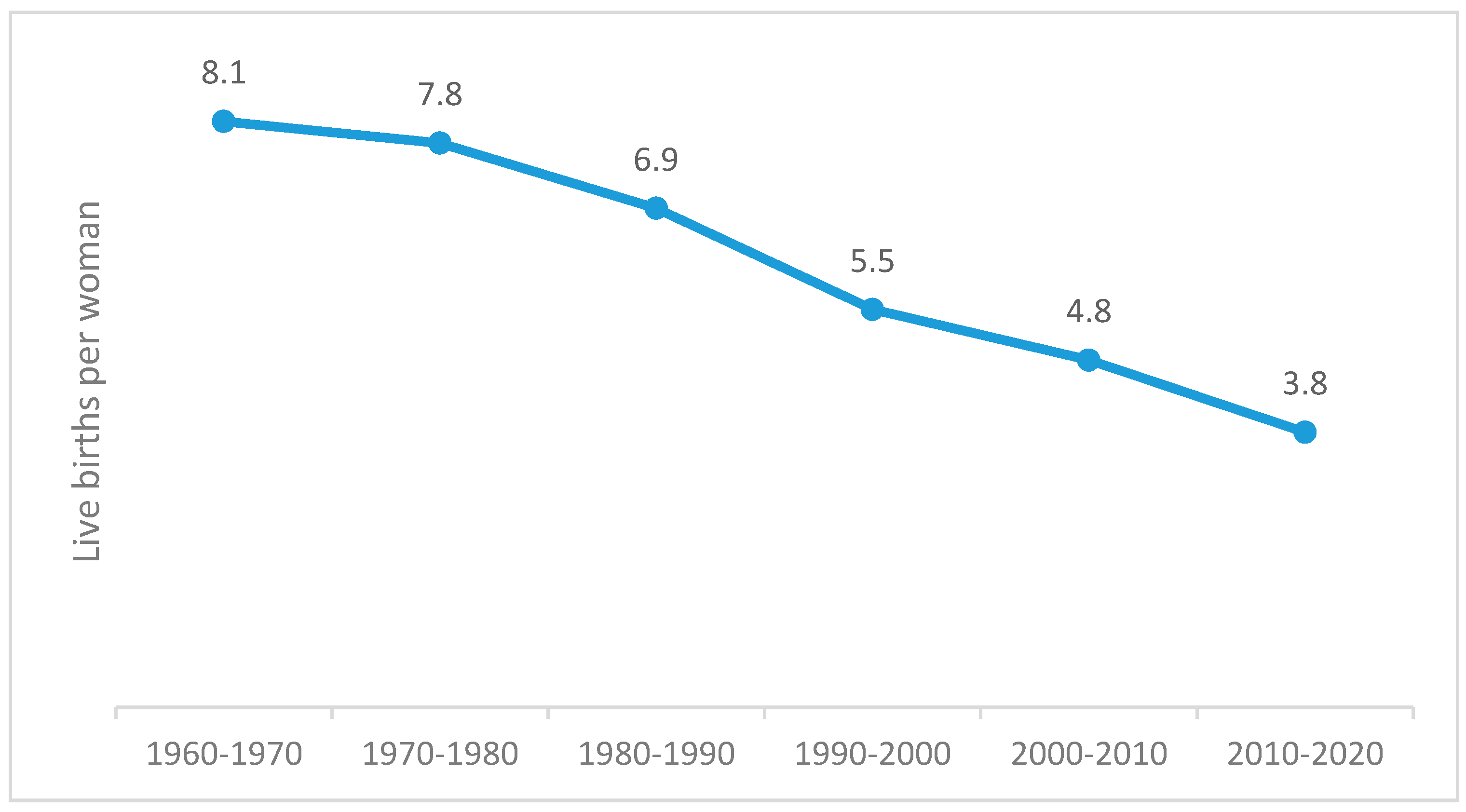
Figure 2.
Socioeconomic status of women in Kakamega Central and Navakholo.
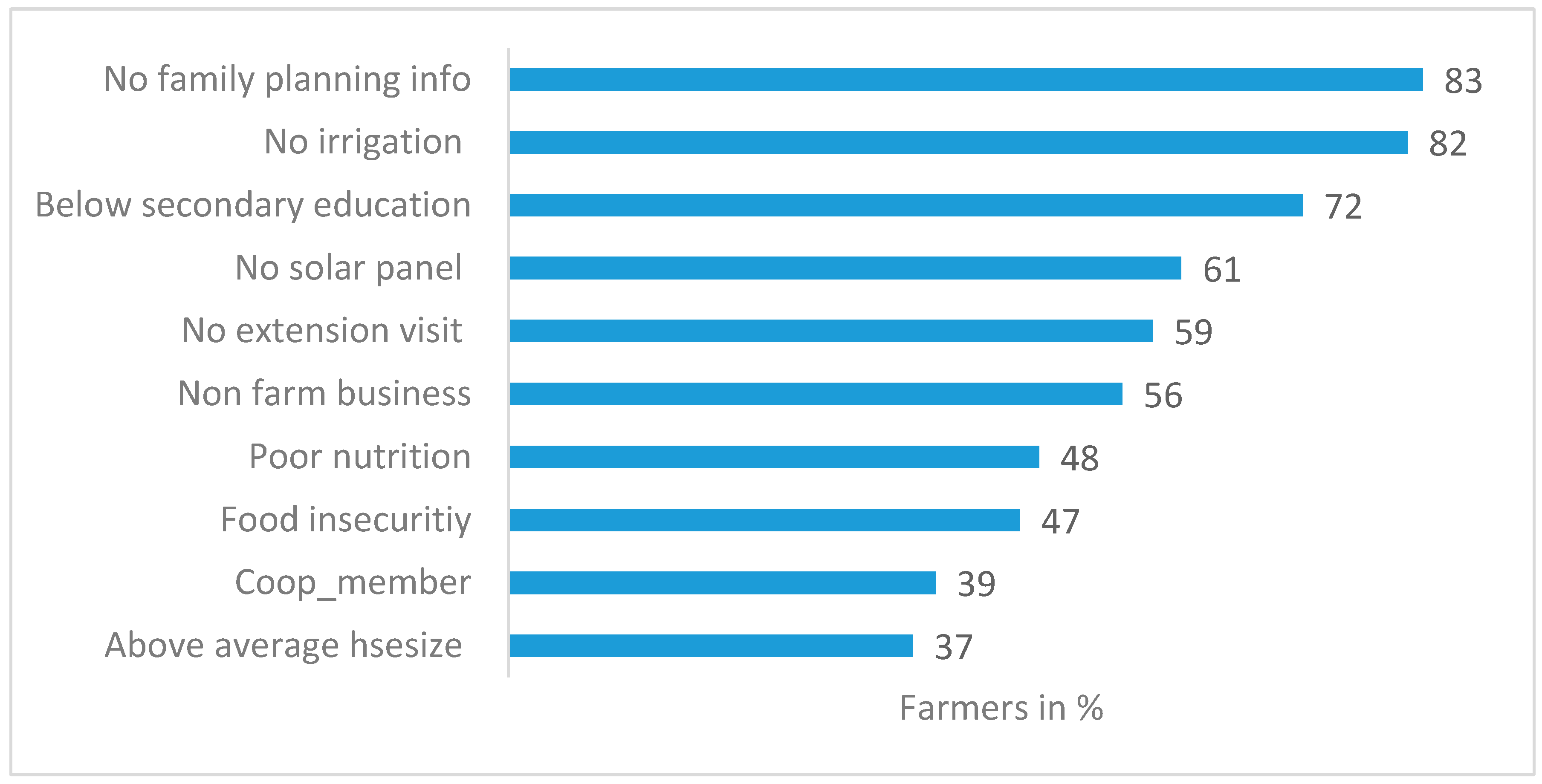
Figure 3.
Disaggregated coop membership in selected coops in Kakamega Central and Navakholo.
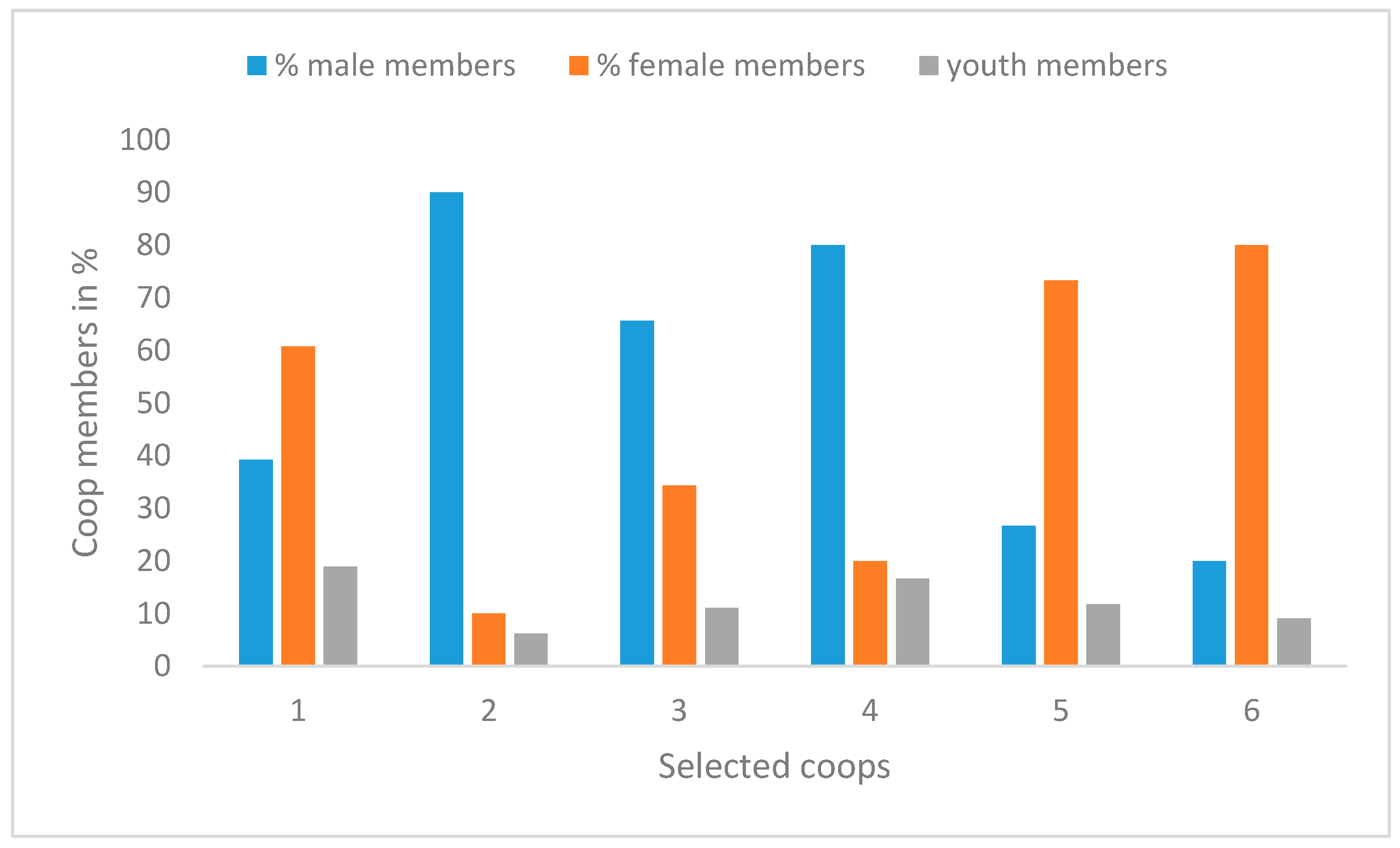
Figure 4.
Percentages of female membership across coops in Kakamega Central and Navakholo.
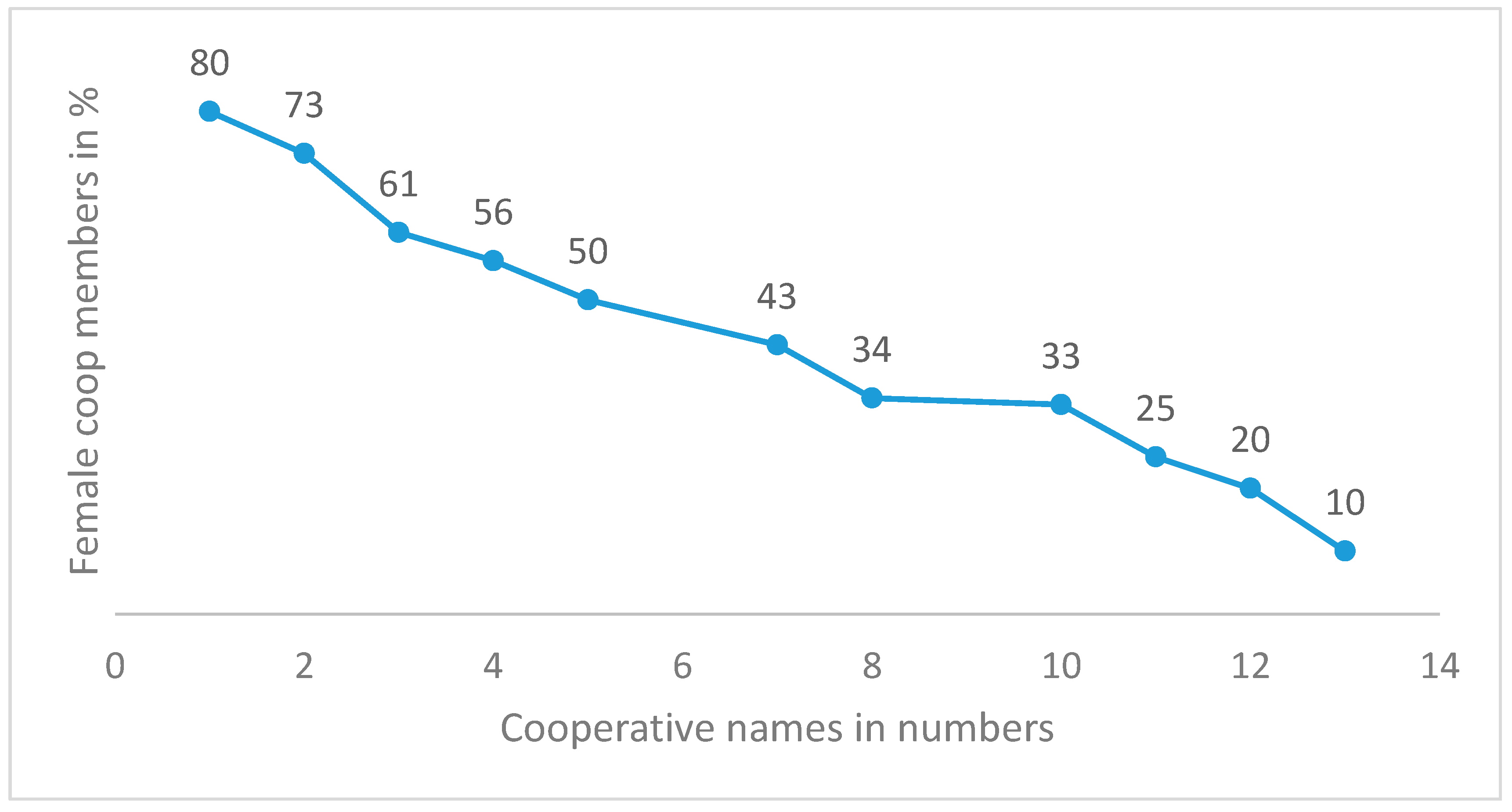
Figure 5.
Information on % of credit applicants, sources of credit & constraints to access credit.
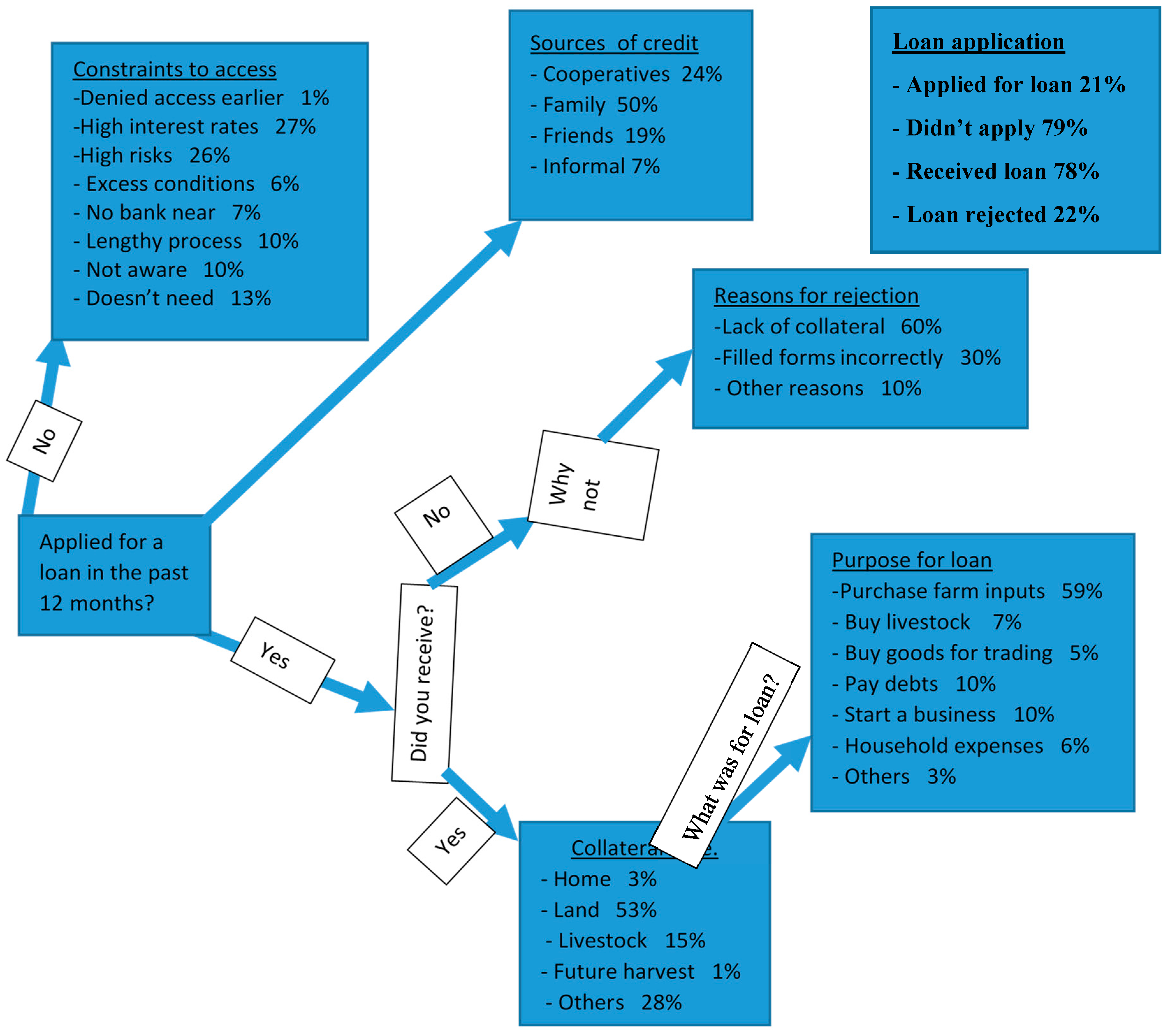
Figure 6.
Percent of farmers accessing coop services.
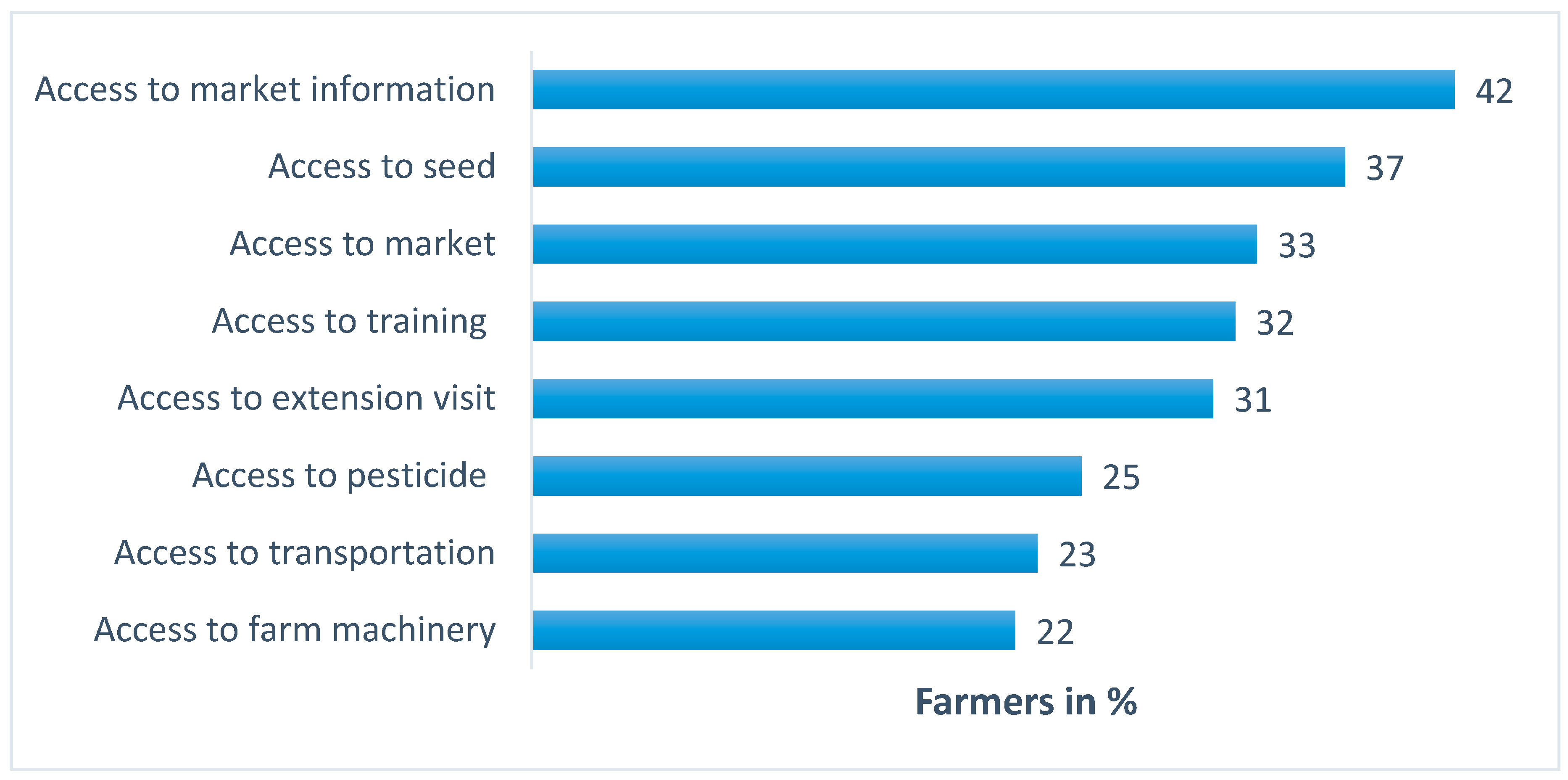
Figure 7.
Percentage change in crop yield after joining cooperatives.
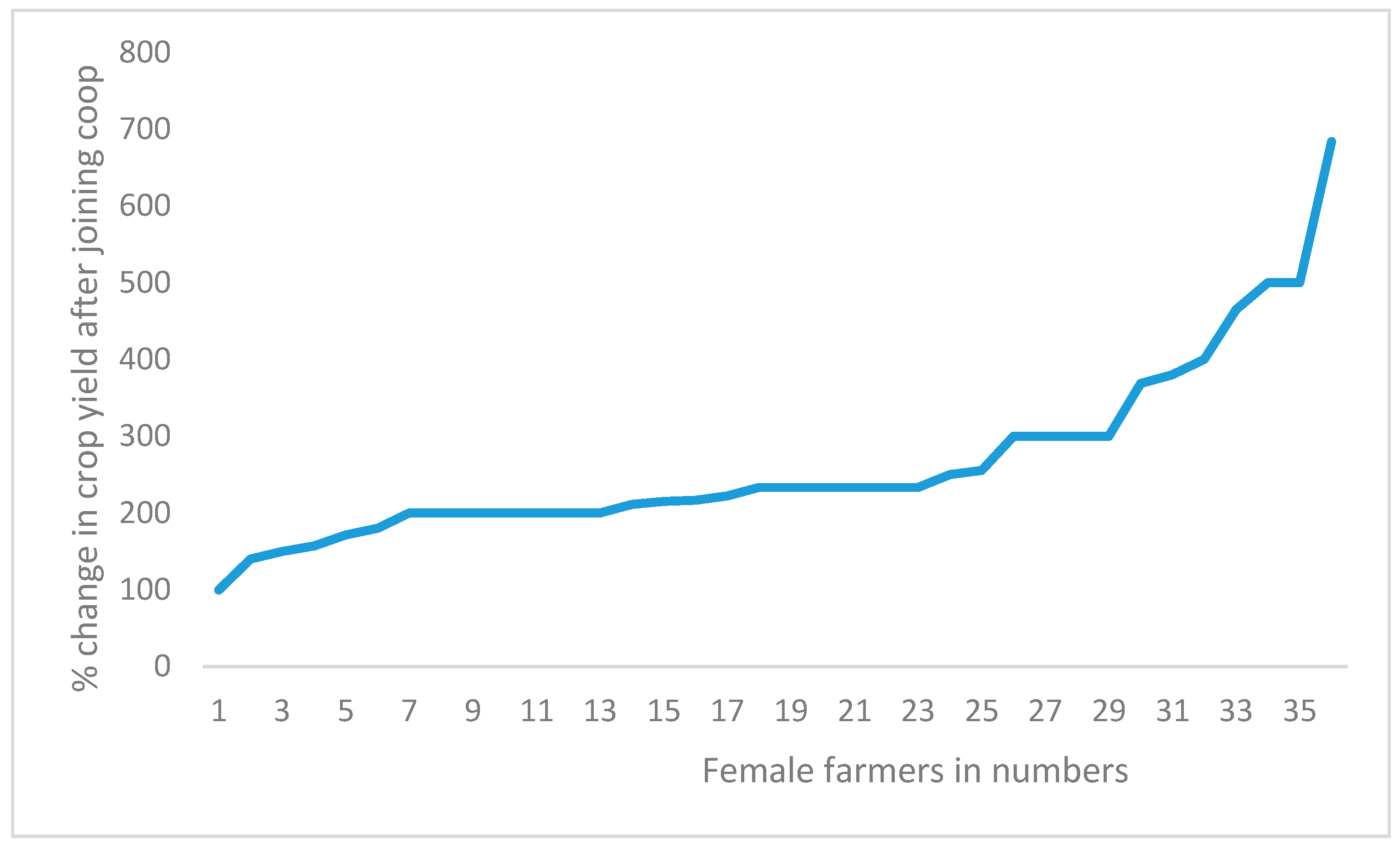
Figure 8.
Percentage change in income after joining the cooperative.
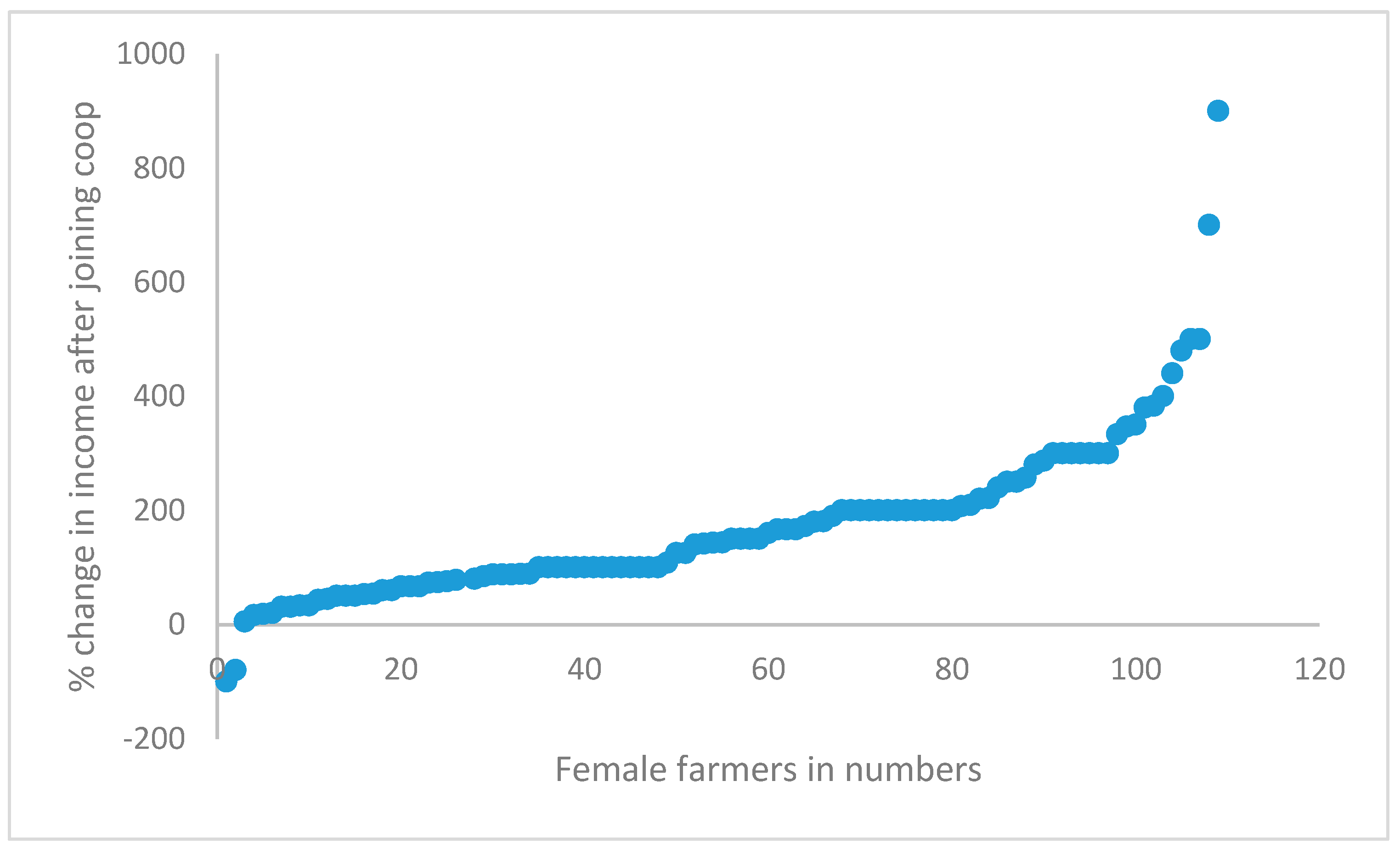
Figure 9.
Percentage changes in meals daily, in fruits & proteins weekly after joining coops.
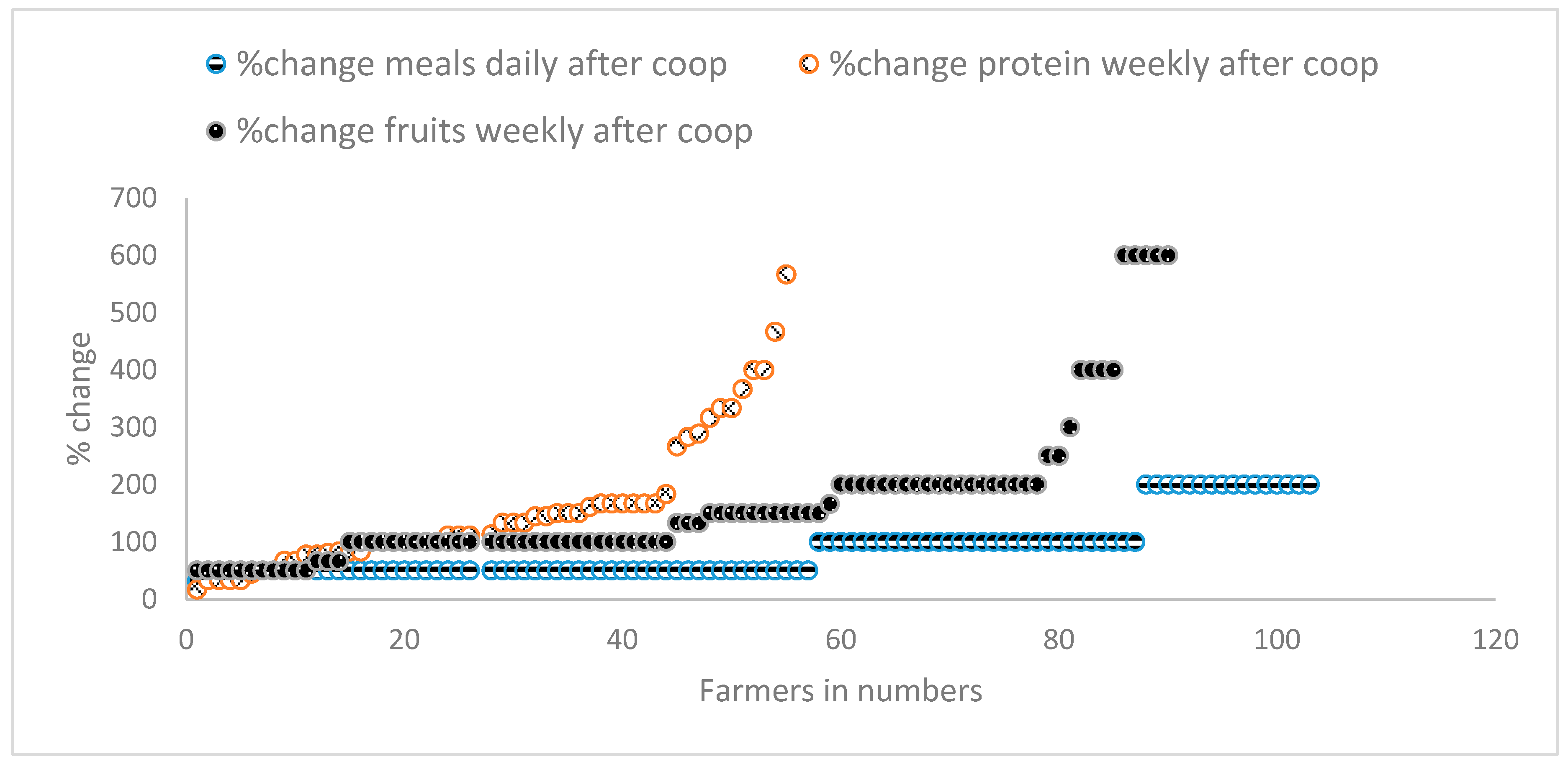
Figure 10.
Members’ opinions on cooperatives & their contribution to the community.
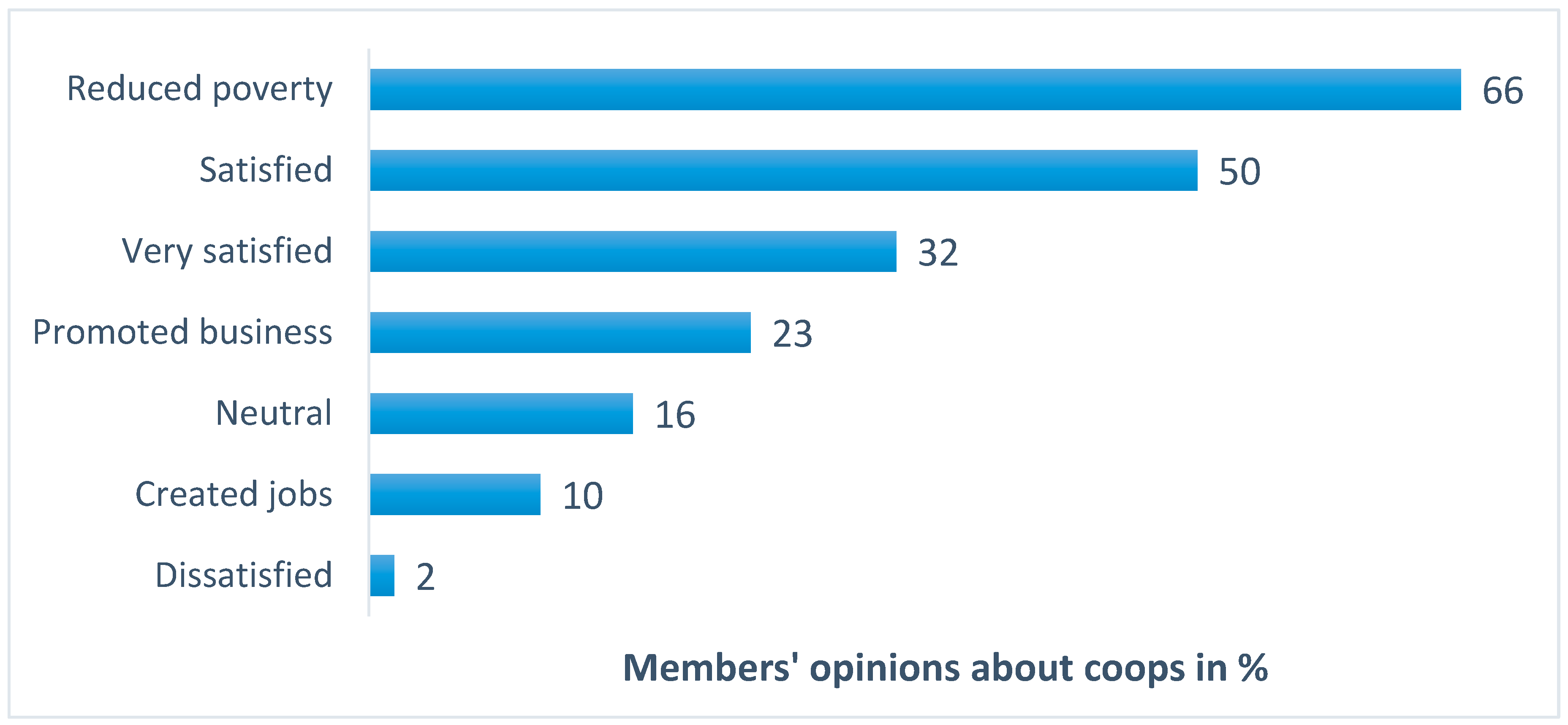
Figure 11.
Constraints facing cooperatives from cooperatives’ members’ point of view.
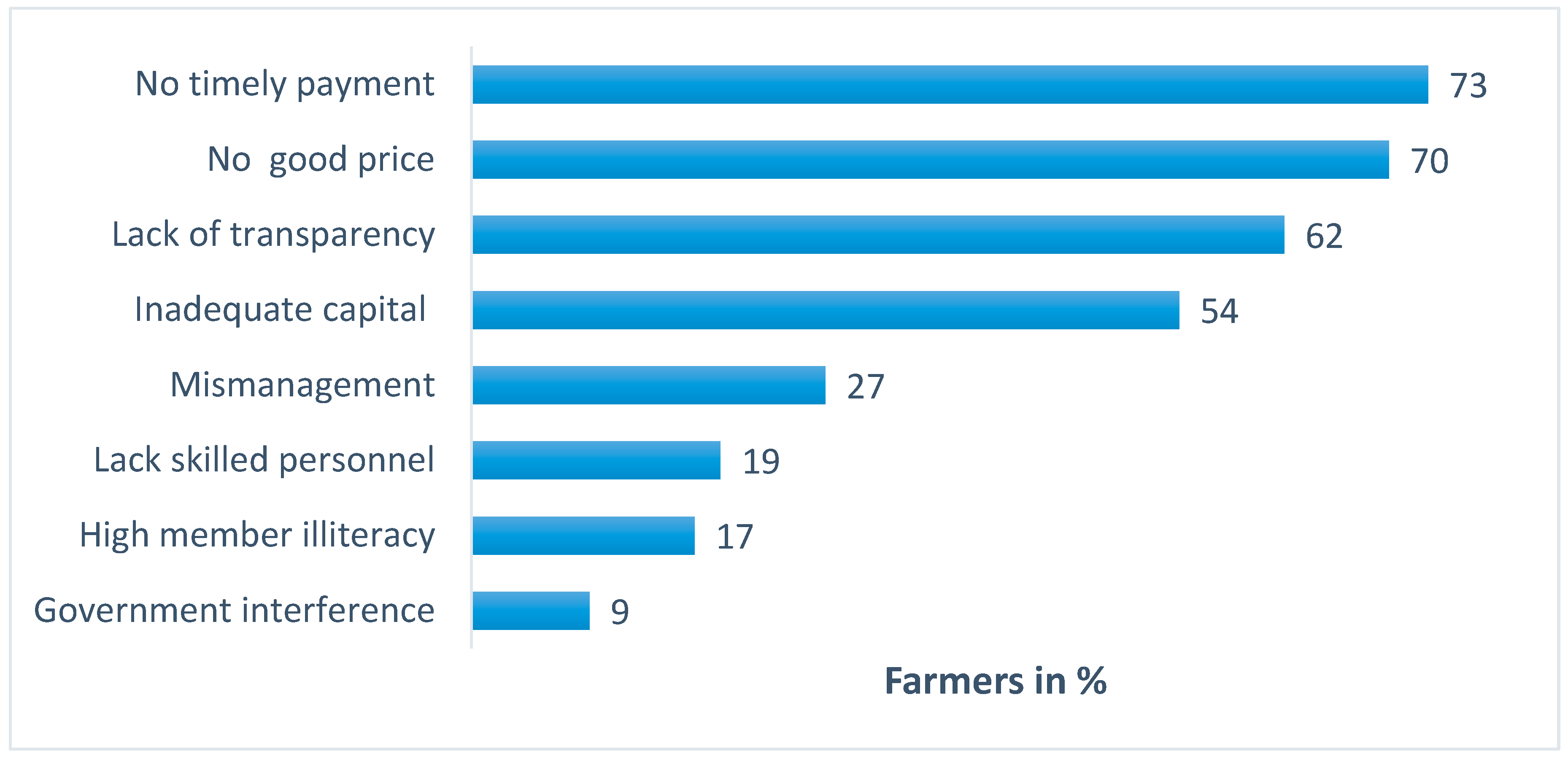

Table 1.
Comparison of family planning across categories of residence, education and wealth.
| Kenya | Urban | Rural | No educ/p | Sec/hi | WQ Lowes | WQ Hig |
|---|---|---|---|---|---|---|
| Total fertility rate 15-49 | 3 | 5 | 5 | 3 | 7 | 3 |
| Unmet need FP | 13 | 21 | 22 | 12 | 28 | 12 |
| Met need FP | 38 | 30 | 29 | 39 | 17 | 39 |
| Total demand for FP | 51 | 51 | 51 | 52 | 45 | 51 |
| Demand for FP satisfied | 74 | 58 | 56 | 77 | 37 | 77 |
| FP on the radio -women | 74 | 62 | 59 | 77 | 40 | 76 |
| FP on TV -women | 58 | 23 | 23 | 53 | 8 | 66 |
| FP in newspapers -women | 47 | 24 | 18 | 53 | 10 | 53 |
| FP in none these 3 media -women | 19 | 35 | 38 | 15 | 58 | 15 |
| FP on the radio -men | 74 | 70 | 65 | 79 | 58 | 75 |
| FP on TV-men | 61 | 33 | 30 | 58 | 19 | 64 |
| FP in newspapers- men | 60 | 37 | 28 | 65 | 21 | 63 |
| FP in none of these 3 media -men | 18 | 27 | 32 | 14 | 41 | 16 |
Data source: Demographic Health and Surveys. Note: No educ/p – no education or with primary education. Sec/hi- secondary or higher education. WQ Lowes- lowest wealth quintile. WQ Hig-highest wealth quintile.
Table 2.
Coops in Navakholo & Kakamega C. performance in selected variables between 0-100.
| Coops in numbers | Female land rights | Provide water | Cheaper inputs | Cheaper credit | Farmer training | Modern technology | Provide storage |
|---|---|---|---|---|---|---|---|
| 1 | 71 | - | 71 | - | 71 | 71 | 71 |
| 2 | 43 | 71 | 71 | - | 71 | - | 71 |
| 3 | - | 14 | 57 | 14 | 43 | 57 | 57 |
| 5 | 71 | 57 | 29 | 43 | 57 | - | - |
| 6 | 14 | 57 | 14 | 14 | 14 | - | 14 |
| 8 | - | 14 | 71 | 29 | 0 | - | 71 |
| 9 | 71 | 14 | 71 | 14 | 14 | - | - |
| 10 | 57 | 14 | 57 | - | - | - | 14 |
| 11 | 71 | 14 | 71 | 14 | 14 | - | - |
| 12 | 57 | 71 | 14 | 14 | - | - | - |
| 13 | 71 | 14 | 14 | 14 | - | - | - |
Table 3.
Levels of crop intensity & number of farmers before & after joining cooperatives.
| Levels of crop intensity | crop intensity before coop | crop intensity after coop |
|---|---|---|
| 1 | 53 | 1 |
| 2 | 68 | 97 |
| 3 | 2 | 23 |
Table 4.
Constraints facing cooperatives from a cooperative leadership point of view.
| Problem description | Mentions (n=13) |
|---|---|
| Lack of funds & access to credit to buy inputs and diversify farming activities | 11 |
| Long distance to seasonal water source thus no facilitation for irrigation | 6 |
| Lack of access to technology to improve production & lower costs of production | 1 |
| No modern equipment to keep pace with modern technology- process animal feeds | 1 |
| Lack of access to inputs due to high prices and distant markets | 1 |
| No livestock as a source of household nutrition and income | 2 |
| Poor infrastructure to access markets particularly for vegetable and dairy farmers | 2 |
| Illiteracy rates among members limit them from keeping up with cooperative activities | 1 |
| No extension service to train in sustainable farming | 1 |
| Do not receive support from either the government or development agencies | 13 |
| Youth are not interested in farming | 1 |
Disclaimer/Publisher’s Note: The statements, opinions and data contained in all publications are solely those of the individual author(s) and contributor(s) and not of MDPI and/or the editor(s). MDPI and/or the editor(s) disclaim responsibility for any injury to people or property resulting from any ideas, methods, instructions or products referred to in the content. |
© 2024 by the authors. Licensee MDPI, Basel, Switzerland. This article is an open access article distributed under the terms and conditions of the Creative Commons Attribution (CC BY) license (http://creativecommons.org/licenses/by/4.0/).
Copyright: This open access article is published under a Creative Commons CC BY 4.0 license, which permit the free download, distribution, and reuse, provided that the author and preprint are cited in any reuse.


