
Submitted:
14 December 2023
Posted:
15 December 2023
You are already at the latest version
Abstract
On entering higher education, students from disadvantaged schools seem unable to cope with new academic demands and all too often the need for adjustment is attributed to under-preparedness. The purpose of this paper is to identify the factors contributing to and mitigating the alienation of students in institutions of higher learning. The narrative inquiry with a qualitative method was employed to obtain the perceptions of 51 selected first-level science university students on their experiences. This is a case of the University of Venda first-year level students registered in the 2023 academic year. The findings of this paper build on and contribute to the literature on understanding alienation in higher education. In particular, the key findings of this paper reveal that the students failed to quickly adapt to a different culture of teaching and learning; the academic workload was overwhelming, and lecturers were unapproachable Students from previously disadvantaged backgrounds especially struggled to assimilate into the new university culture of teaching and learning. This paper concludes by recommending that there is a serious need to take cognisance of the influx of previously disadvantaged students into institutions that were not created with them in mind. Universities and their teaching staff should recognise the culturally diverse nature of the student body and thereby restructure teaching and assessment to foster social justice to promote student success.
Keywords:
Estrangement
; Acculturation
; Assimilation
; Student dropout
; Under- preparedness
1. Introduction
In the past decade, much research has focused on university students’ attrition and academic exclusion. However, the major challenges remain unknown in the research communities. This is in line with the researchers’ critical observation and the reviewed literature on these aspects. Moreover, a study conducted by Nkambule (2014) articulates that the challenges she experienced as a student at university were not easy to confront and address alone, in a system that was both racially stereotyping and discriminatory. She had to be careful not to conform to the expectations of subordination but rather to recognise the structural nature of racial stereotypes (Zulu et al, 2020) and think beyond them to succeed. For far too long, institutions of higher learning have always held a belief that students are unfinished products entering higher education spaces.
In South Africa, the University of Pretoria for example, Helminry et al (2016), and Kruzicevic (2012) observed that using an institutional module proved remarkably effective in resolving the problem of attrition that bedevilled the institution, especially among ‘Black students. The module employed a three-pronged approach including improving the first-year experience of students, promoting a faculty-driven approach where each faculty took the institutional responsibility of promoting retention and finally the student-embedded approach which sought to integrate students into the academic and social life of the University. The authors found that at the end of the programme, students were well-targeted, and received comprehensive academic, psychosocial, financial, and other support using proven high-impact practices.
However, as noted by Edwards and McMillan (2015), analysis of selected characteristics of domestic students shows that the national retention rate for undergraduate students, nine years after commencing stands at 73.6%. Retention rates for high, medium, and low socio-economic status (LSES) students were 77.7%, 72.6 and 68.9 respectively. Retention rates for metropolitan, regional and rural areas were also 75.0%, 69.8% and 59.5% respectively.
Kaçire (2015) further indicates that alienation has a negative effect on educational organisations in terms of some significant outputs such as students’ attitudes towards the teaching profession, discrimination and prejudice, and academic success. In this case, many students who enrol at institutions of higher learning often feel alienated due to a range of factors. In contrast, it remains unclear why there is a higher percentage of university students’ estrangement. The purpose of this paper was to identify the factors contributing to and mitigating the alienation of students in institutions of higher learning.
2. Literature Review
The dawn of democracy in South Africa meant that even students of colour could enrol within the higher institutions of learning. However, with the high enrolment numbers, many students could not complete their studies, this is indicated by authors such as Boughey and Mackenna (2016) and Mann (2001) due to alienation and discrimination due to the usage of the English language as a medium of communication which leads to some not having a sense of belonging or viewing themselves as outsiders within the higher institutions of learning. They further argue that the growth of English as a global language and the desire of people across the world to acquire a language perceived as having economic and social worth, as a result, is a disadvantage for many students emanating from historically disadvantaged schools.
A study conducted in Hong Kong by Tinto et al (2001) found that a significant group of students was described as having ‘no sense of belonging’ to their classmates, the teaching staff due to the forms of assessments that they are provided with such as examinations, as this result in power relations between the lecturers and the students. As a result, Boughey and Mackenna (2016) elucidate that the sense of students not belonging breeds the decontextualised learner within the institutions of higher education, to curb this, it is then essential that one allows the curriculum to cater to those from disadvantaged areas.
Case (2008) states that the notion of alienation refers to the disconnection in the context of a desired or expected relationship. Similarly, Hoy (1972) warns that the concept of alienation is an overly complex one that appears amenable neither to simple definition nor to easy measurements. However, as complex as the concept of alienation is, the paper adopts the concept of alienation as understood by Mann (2001) who argues that alienation refers to the state or experience of being isolated from a group or an activity to which one should belong. Kaçire (2015) further indicates that alienation has a negative effect on educational organisations in terms of some significant outputs such as students’ attitudes towards the teaching profession, discrimination and prejudice, and academic success. In this case, many students who enrol at institutions of higher learning often feel alienated due to numerous factors.
Along the same vein, Mann (2001) and Wong (2022) argued that students tend to feel more alienated from studies due to the expectations of them performing better within their semester assessments. Thus, students have since adopted the surface learning approach, Wong (2022) in the study that they conducted in Hong Kong, participants reported that they were calculating and adopting a surface or strategic rather than the deep learning approach. Biggs (1999) defines the surfacing learning approach as mostly associated with absorbing as much content as necessary to complete the task at hand. However, Biggs (1999) warns that the surfacing learning approach is not necessarily associated with low intelligence but rather the way the students are taught, while the deep learning approach is when the learner intends to understand the material of learning, seeking the meaning and understanding the ideas in it. Participants indicated that they mostly memorised what was to be examined and completed the task as required rather than trying to reflect on or integrating what was taught, this is in line with the point that Mann (2001) who indicates that students may feel alienated within the higher institutions of learning as a result of assessment practices which impose power and docility using examination and learning contracts together with disempowering assessment practices.
Additionally, Mann (2001) conscientises that student alienation could be eliminated when some learning conditions that promote student alienation change, as indicated in Wong (2022) in the case of students experiencing alienation based on the kind of assessment, he suggests that lecturers or professors at university should pay attention to the design of individual and/or group assignments and adopt a specific grading policy or policy of course selection which will encourage students to appreciate the intrinsic values of learning, to adopt the deep learning approach.
The paper focuses on the varied factors contributing to students’ alienation in institutions of higher learning. The literature has elucidated unusual ways in which students experience alienation in institutions of higher learning, however, authors such as Mann (2001) have intensively discussed the notion of alienation from the perspective of assessments (which is alienation within the classroom). The findings of the studies in retrospect particularly Mann (2001) and Wong (2022) do not express the student’s alienation from the social dimension, although other authors elucidated the implications of alienation for students in higher education, they do not clearly explain how students or rather teachers contribute towards the alienation of students in higher education. Thus, the paper aimed to address some of the factors (outside those identified) from the academic dimensions and the social dimension based on the identified students’ perspectives.
Understanding alienation in conjunction with Tinto’s framework on student integration, the paper aims to explore the gaps that have been identified from the literature, thus, the exploration of alienation in higher education will be explored on both academic and social dimensions. This is due to these factors (dimensions) being intertwined as they play a significant role in motivating the students to remain within the institution (lack of one dimension may affect the student’s decision to be persistent with being in the institution until their graduate year). Thus, using the literature as the backbone, the study aims to address some of the factors that will be identified in the data collection process.
2.1. Theoretical Framework
Tinto’s theory claimed that students were more likely to remain in an institution and persist if they connected socially and academically while at that institution. Students who are integrated into the campus community by making friends, joining student clubs and/or organisations, or engaging in academic activities are more likely to persist than those students who do not have these types of meaningful connections. Students - who did not feel at home in an institution or believed that there was no place for them at that institution - struggled with institutional fit and were unlikely to persist (Tinto, 1993).
In tackling the notion of student alienation within institutions of higher learning, Karp et al (2008) indicate that in Tinto’s (1993) theory on resolving (retention) of students in higher education, student integration becomes the solution. The theory indicates that student retention can occur along two dimensions namely: the academic and the social. He indicates in the academic integration dimension: that integration occurs when students become attached to the intellectual of higher education. On the other hand, the social integration dimension focuses on students being able to create relationships and connections outside of the classroom. Tinto outlines that when students are integrated using the two dimensions, they are likely to stay and be persistent within their institution of choice. In understanding the factors that contribute towards student alienation within higher education, Tinto's (1993) framework becomes the linkage in understanding how teachers can ensure the retention of students in different spheres, academic and social within the institutions of higher education.
2.2. Purpose of the study
The purpose of the study was to investigate the factors perpetuating the first-year students’ alienation in Higher Education.
2.3. Research Questions
This paper sought to answer the following research questions:
- What are the factors perpetuating the first-year students ' alienation in Higher Education?
- How can these factors be mitigated among first-year students at tertiary institutions to promote student success?
3. Material and Methods
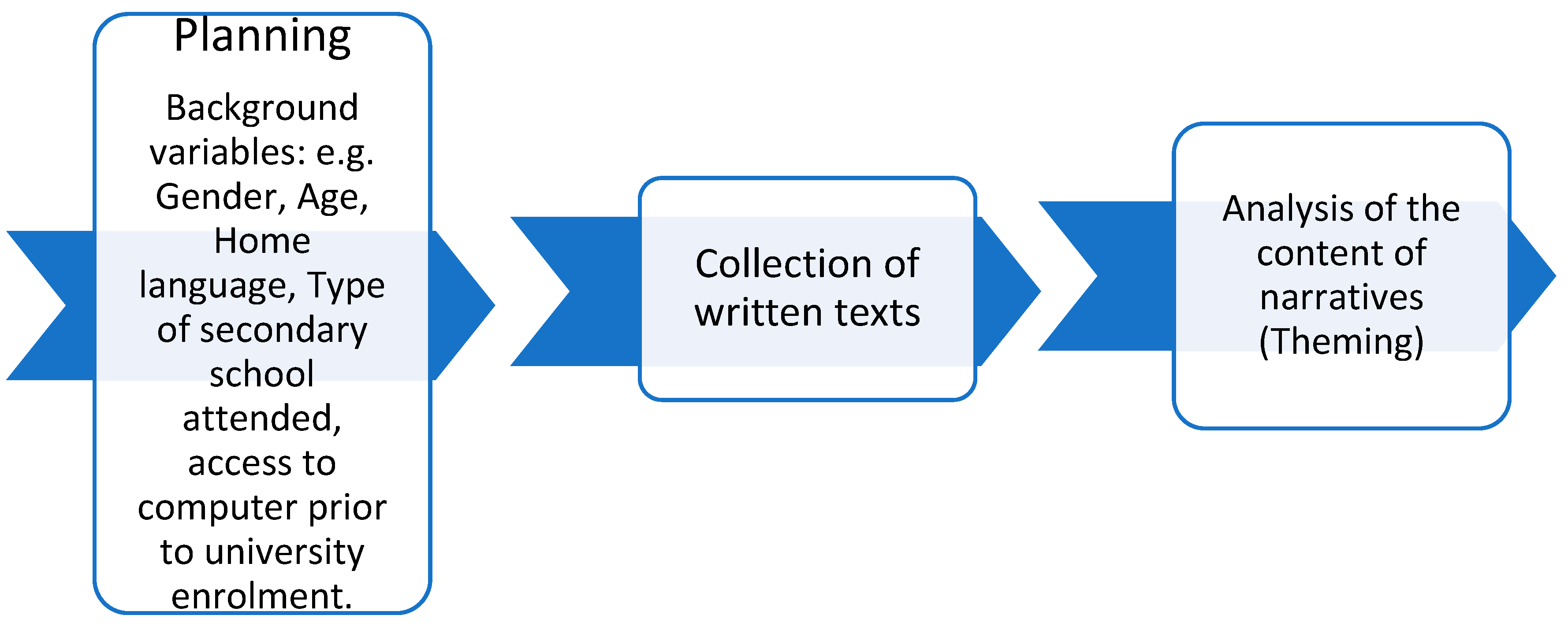
The narrative inquiry with a qualitative method was employed to obtain the perceptions of fifty-one (51) selected first-level science university students about encountered experiences upon their enrolment at the university. The sampled students were requested to articulate their reasons for poor performance in their respective courses registered. The usage of narrative inquiry incorporates all dimensions that impact the person’s experience. It is also well highlighted that narrative inquiry revolves around seeking a proper understanding of experiences encountered by certain communities through a series of stories told and interpreted (Merriam and Merriam, 2009). Furthermore, these stories enhance the sense of our stories, communication skills, and understanding of the world around us (Merriam and Merriam, 2009). These human experiences are captured in the living and telling of narratives and can be studied by listening, observing, reading, and interpreting the text. Narrative inquiry is a way to understand the experience and a way to study the experience (Clandinin, 2006, 2007, 2013; Clandinin & Connelly, 1990, 2000). Planning and conceptualising of the approach used in this study resulted in background variables such as gender, age, home language, the type of secondary schools attended by the participants, and any access to the computer before the university enrolment.
3.1. Research Tools
The results of this study emerged from the use of narrative inquiry (wherein semi-structured interviews were conducted to obtain the students’ perceptions of the factors of alienation as they transition into the higher education space.
3.2. Data Analysis
The descriptive and statistical analyses were used to analyse students’ reflections. In this case, the descriptive and statistical analysis encompassed percentages of students’ responses. Microsoft Excel 5.0/95 was used to generate the graphical interpretation of the collected data.
3.3. Ethical Considerations
Explicit explanations of the purpose, objectives, and significance of the project guided all the students registered in the Science Foundation programme to take part in this interview. Moreover, ethical approval was not required as the participants were students registered in this programme. While informed consent was sought prior to students' participation in this project. Therefore, participation in this study was voluntary and students were free to withdraw from the study at any time without any direct or indirect implication to the study or their registered subject.
Figure 1.
The narrative inquiry approach employed.
4. Results and Discussion
4.1. Sociodemographic information of the participants
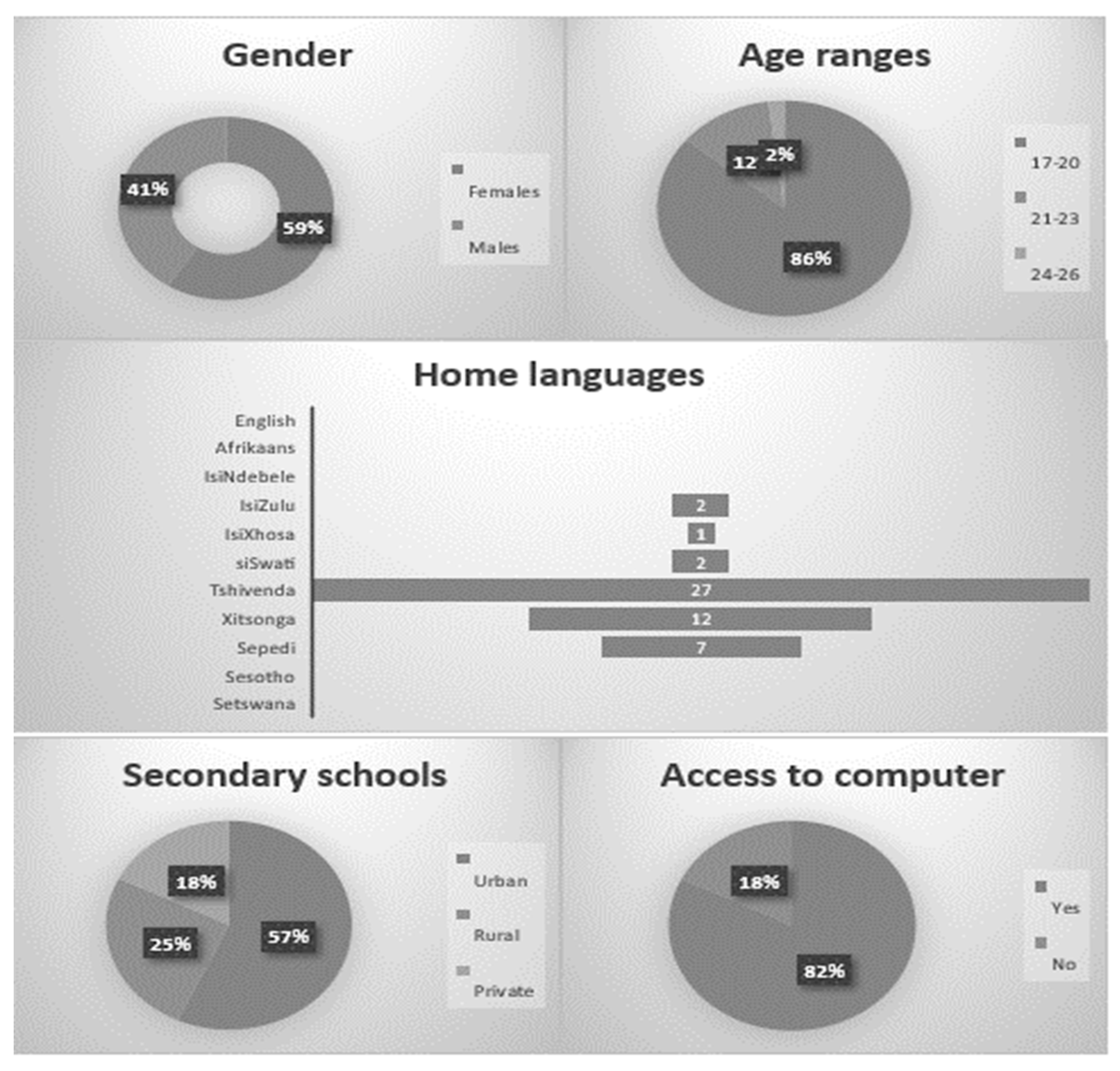
Most of the participants were females (59%) and 41% were for male figures. On the other hand, the ages of the participants ranged from 17-26 years with the highest percentage of 86%. The age range class of 24-26 years had the lowest percentage of 2%. Of the eleven official languages spoken in the country, only the participants of this study spoke six languages. Astonishingly, none of the participants mentioned using the English language even though this language is regarded as the medium of communication in all the institutions of higher learning in the country.
Another considered variable was the types of secondary schools attended by participants. The results revealed that the majority (57%) attended urban-based secondary schools and others went to rural schools and private schools. The teaching and learning agenda of all institutions of higher education embraced the digital approach in which students are expected to jump in and immediately start swimming. Quite unquestionably, these expectations require proper information and technological skills and fortunately, 82% of the participants had the opportunity to computer access before the university enrolment. Even though the participants had access to the computer, they lacked proper training regarding the usage of some computer programs required for their academic success.
Figure 2.
Sociodemographic information of participants.
Factors alienating participants’ academic well-being.
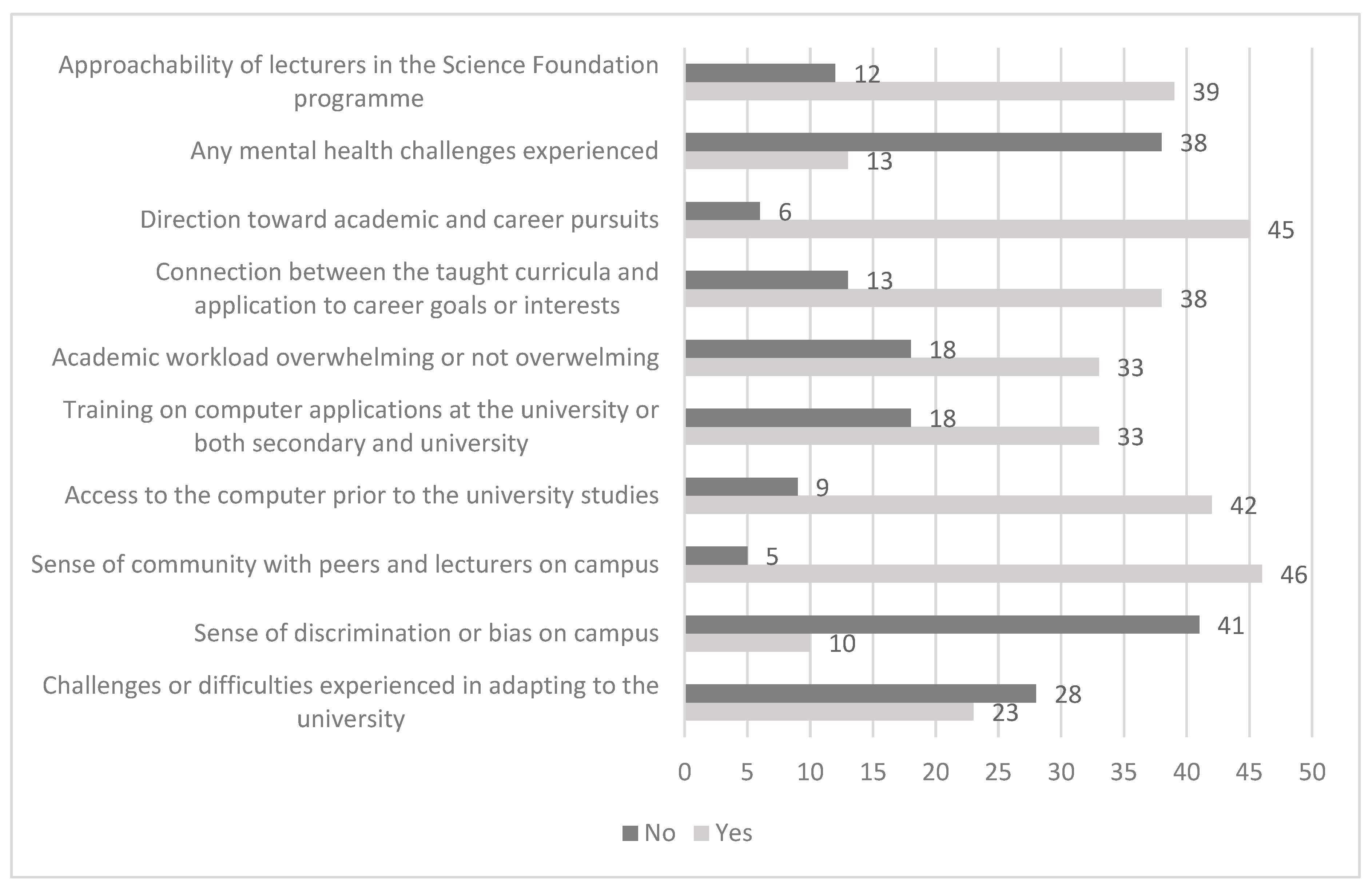
The findings of this paper build on and contribute to the literature on understanding alienation in higher education. In particular, the paper reveals that the students failed to quickly adapt to a different culture of teaching and learning; to adapt to the dominant spoken language which English, and to rise above teacher-centered schoolroom pedagogical approaches (Figure 3). Moreover, the study elucidated several factors that can contribute to first-year students' alienation in higher education. The confusion resulting from the new university set-up made students find their lecturers non-approachable and as such they found the academic workload overwhelming. These challenges led some students to mental health challenges because as they were in the process of acclimatising, they also lacked proper counselling from their lecturers.
As indicated in Figure 3, some of the lecturers were approachable, and therefore they brought a sense of connection between the taught curricula and application to career goals. Furthermore, a total of 45 students realised a direction toward academic and career pursuits. Fortunately, the technological usage of the computer and its application was at least at ease to 33 students who received training either at the secondary school or the university set-up.
Figure 3.
Factors alienating students’ academic success.
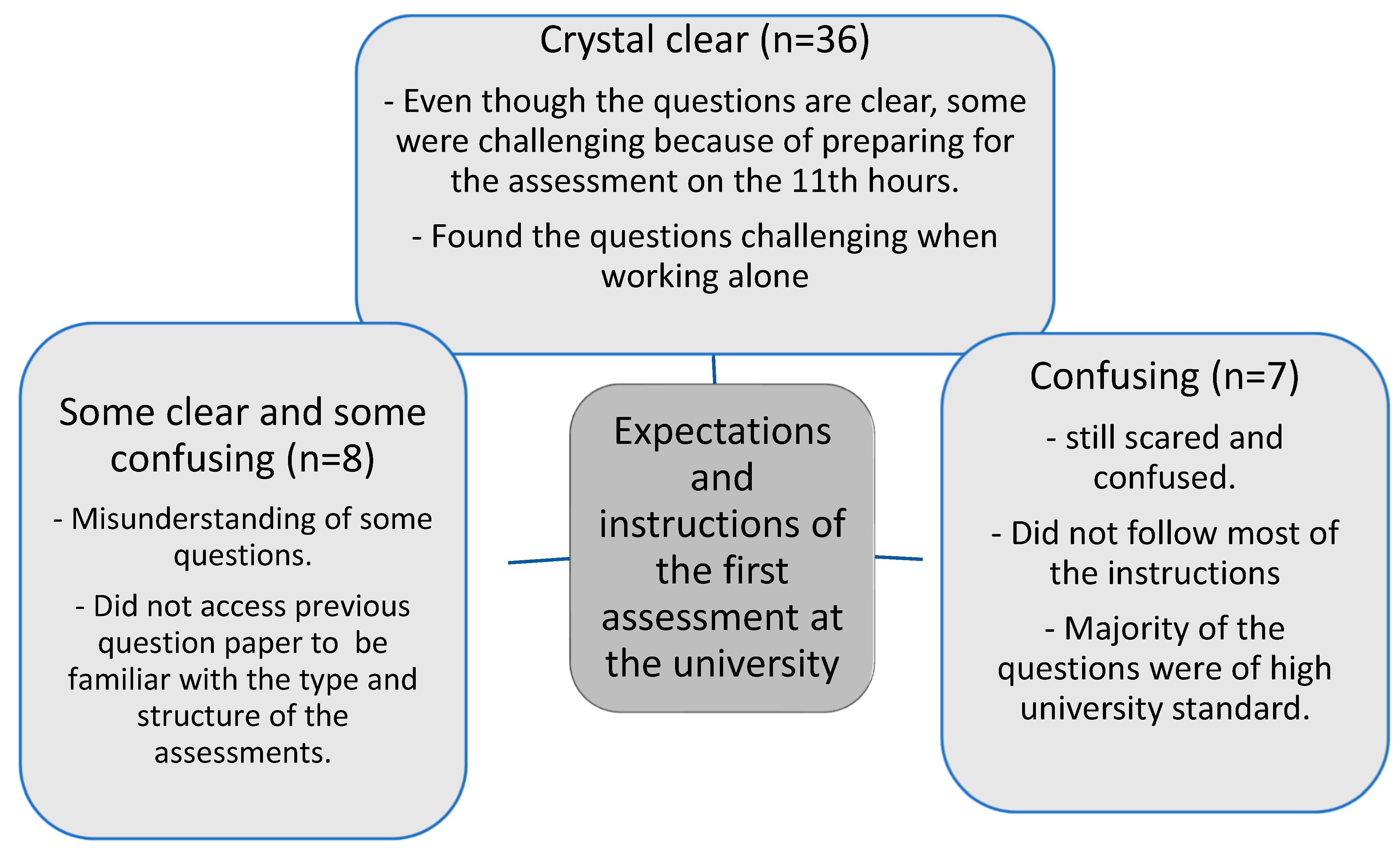
Expectations and instructions of the first assessment at the University
It is a normal practice to have both formative and summative assessments in academia. While students were transitioning from the usual ways of assessments, still, there were expectations of weighing their academic performance through assessments at the university. Most of the participants elucidated the clear instructions and questions contained in their various assessment tools. The only problematic issue was the 11th-hour preparation. During the teaching period, students collaborated with their peers and attempted to respond to some previous assessments. Therefore, students experienced difficulties when working on individual assessments. Even though the questions were clear to some students, a certain number of students (15) illustrated the sense of confusing words simply because of their insecurities and the profound level of question types that suit the university standards. Misunderstanding and miscalculation of set instructions stated in the assessment tool contributed to inferior performance.
Figure 4.
1. Balance between academic and social activities.
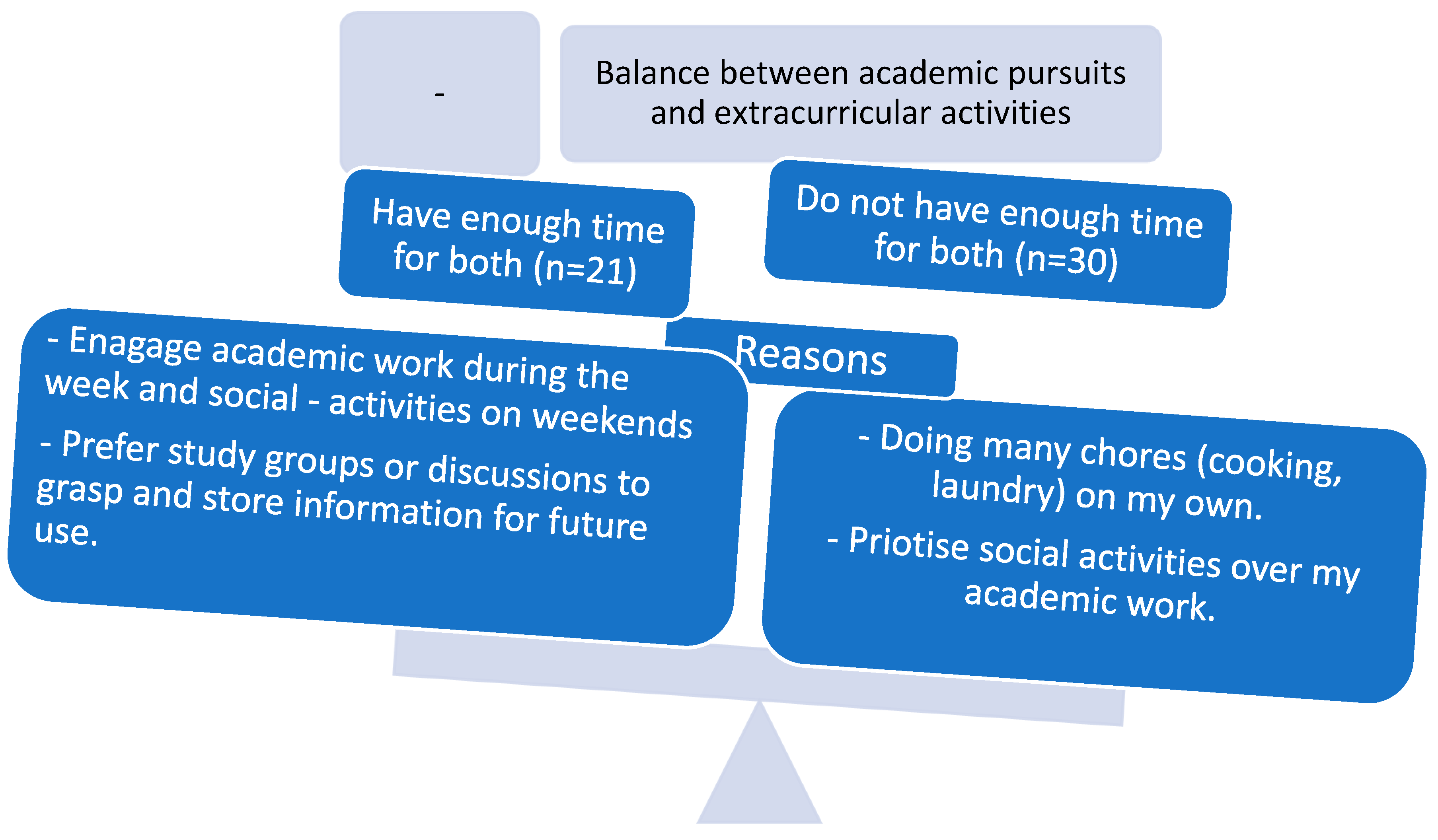
Most successful academic narrations are echoed by a balance and commitment of students toward their academic and social engagements. In most instances, the results of certain imbalances are unsatisfactory. Some of the challenges emanate from a lack of balance between academic pursuits and extracurricular activities. In this study, 30% of the participants do not have enough time to balance the two aspects. As depicted in Figure 5, the causes of the imbalances include participants’ domestic obligations such as daily chores (i.e., cooking and doing laundry). Additionally, there is an element of ignorance on prioritising socially related activities over academic activities. Nevertheless, a total of 21 participants mentioned having enough time for both activities. Several studies reported addiction to social media platforms by students continues to be among the factors affecting the students' performance negatively. This is discussed in the study by Mason et al (2018) who addressed the challenges that are constantly observed in the distinct groups of first-year students’ intake, this issue of maintaining balance still needs meticulous attention.
Strategically, these participants prefer engaging in social activities on free weekends and academic activities throughout the whole week. The other significant strategy was study groups or discussion forums which assisted with the provision of clarity on problematic subject areas.
Figure 5.
Comparison of balance between academic and social activities.
4.1.1. Academic pressure
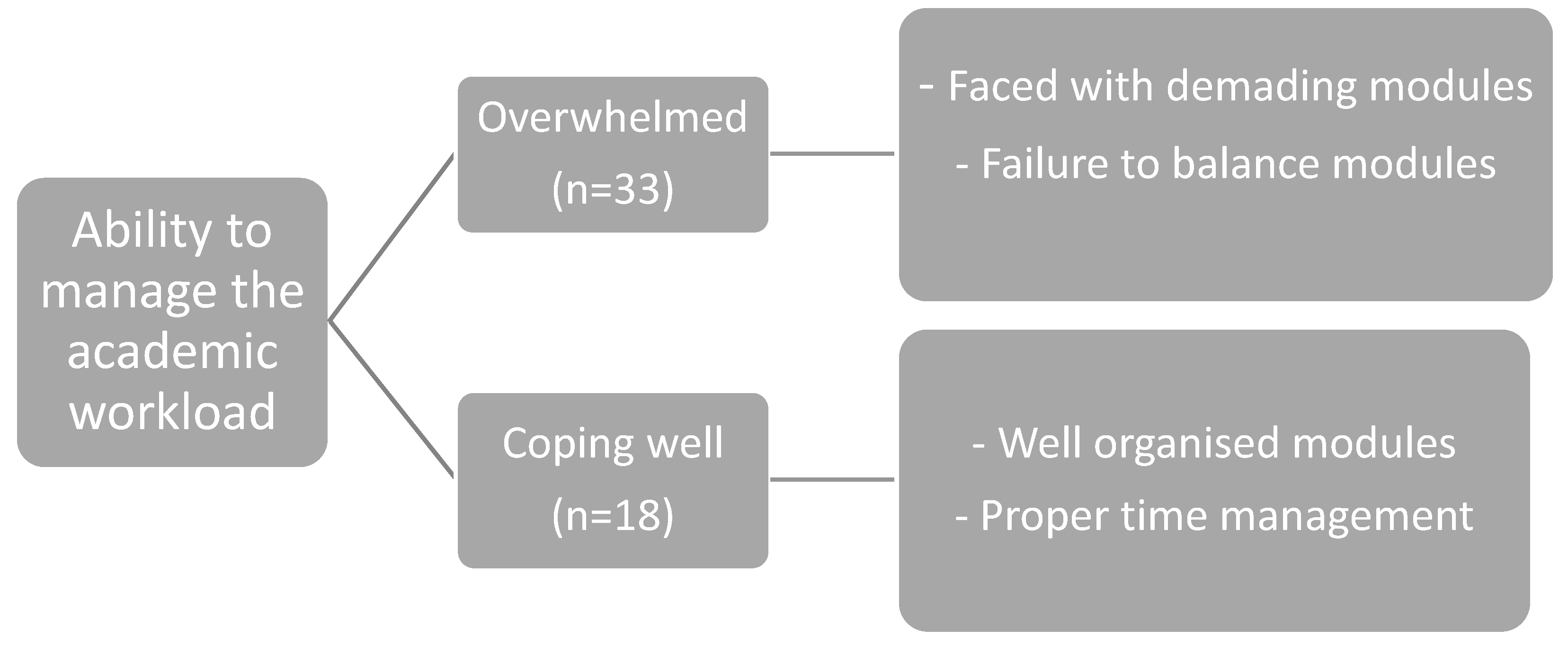
The academic demands of the university level can be overwhelming for many students, particularly those who are not prepared for the heavy workload or who struggle with the material. This can lead to feelings of inadequacy and alienation as the results illustrated a total of 33 participants with an overwhelming experience about the workload. These feelings are normally aroused by facing the most demanding modules wherein the issue of balance between the modules becomes problematic (Figure 6). This is consistent with the study by Pillay and Ngcobo (2010) discussed the sources of stress and support among rural-based first-year university students. The students indicated that their lecturers seldom expressed encouragement, even if a student was willing to work hard; it was simply taken for granted that all students understood the university’s ways of doing things. The work of Moodley and Singh (2015) addresses student dropout rates at South African universities which reported academic pressure appears to be affecting quite a huge population of students due to procrastination and laziness. It is worth noting, only 18 students showed a sense of coping well with the workload and the reasons were grounded on the organisation of the offered modules and the proper management of their study periods (Figure 6). Self-motivation, dedication, and perseverance play pivotal roles in academic achievements.
Figure 6.
Ability to cope and manage the academic workload.
4.1.2. Lack of Social Support
First-year students may feel isolated and disconnected from their peers, especially if they are attending a new school far from home. This can lead to feelings of loneliness and alienation. Students from previously disadvantaged backgrounds especially struggled to assimilate into the new university culture of teaching and learning. The findings of this study corroborate with Nkambule (2014) expressed her experience as a Black female university student without social support. The students further reported that they were unable to give meticulous attention to all the modules due to failure to manage the academic workload. Moreover, it is argued that lecturers themselves contribute to a system of “pushing” students out – instead of trying to accommodate diverse cultures. Along the same vein, a study by Seidel and Kutieleh (2017) had similar observations in their paper which indicated that the students feel estranged in their academic journey.
4.1.3. Financial stress
The excessive cost of tuition and other college expenses can create financial stress for students and their families. This can lead to feelings of alienation and disconnection from the college community. The monetary crisis emerged as a critical problem affecting the huge population. This continues to be a problem as outlined in the retrospect of numerous studies in the literature. In congruence with the studies by Zulu and Mutereko (2020) on attrition, the study reports that the lack of funding and financial support necessitates the dropout of some first-year university students. Moreover, Van der Bijl and Lawrence (2018) articulated that attrition remains a critical concern among first-level university students.
4.1.4. Discrimination and Bias
The findings of this study clearly show that the first-year students. Students from marginalized groups may experience discrimination and bias on campus, which can contribute to feelings of alienation and exclusion. The students indicated that the linguistic dominance of the Tshivenda language made the university uncomfortable and unconducive for learning among the speakers of the other languages. This study’s findings concur with Wong (2022) on the critical issues observed in student alienation which highlighted the challenges such as discrimination regarding the complex concepts in academic literacy courses that impelled students to be outsiders in the higher education space. In line with the issues raised, there is a need for a strict medium of communication in all the assigned tasks. Nkambule (2014) established similar discussions that the use of lingua franca should not be discriminatory among students who are speakers of other languages. Weller et al (2018) espoused that the learning design for student retention should be taken into cognisance to mitigate the dropout rates.
4.1.5. Unclear expectations
First-year students may not fully understand what is expected of them academically or socially, which can lead to confusion and feelings of alienation. The unclear expectations seem to have confused the students in their given tasks in various courses of study. The findings of the paper further outlined that the performance among the first assessments was quite poor owing to unfamiliarity with the standards and instructions to be strictly followed. The other studies in the literature report similar observations. The study conducted by Boughey and Mckenna (2016) observed that the unfamiliar standards and expectations among students from disadvantaged education backgrounds appear to become decontextualised in the higher education space. In tandem with these observations, this study reported that students find it difficult to transition into the institution of higher learning. This has contributed to deficient performance among the first-year students. The complicated instruction words should be well explained to ensure that students comprehend what each task demands them to do. The findings of the study corroborate the work of Amoo and Swart (2018) which elucidates the unspoken expectations as a contributing factor to the students ‘inferior performance.
4.1.6. Inadequate academic and social support
If students do not receive adequate academic and social support from their college, they may feel unsupported and alienated. The findings of this study reported that students tend to experience mental health problems without immediate support as the institutional student counselling unit appears to be understaffed. As such, these may result in many students having poor academic performance and increased mental health challenges. This is consistent with a study by Nkambule (2014) articulated that the lack of academic support made her feel estranged as a female Black student among the white students who had access to the lecturers’ office for consultation. The academic and social support should be prioritised to create a conducive and inclusive learning environment for all students. Other studies reported that mental health issues have been detrimental to students' poor performance. Similarly, Dominguez et al (2013) reported that unequal treatment of students shows many issues of inadequate social support and academic.
4.1.7. Lack of connection to the campus community
Students who do not participate in extracurricular activities or who do not feel connected to the campus community may feel isolated and alienated. Based on the findings of this study, most students felt disconnected from the campus community since they never participated in extra-curricular activities. They were like strangers in a foreign land since they did not have a sense of belonging. This is validated by Mann (2001) student alienation could be eliminated when some learning conditions that promote student alienation change. Colleges and universities need to address these factors and provide support to first-year students to help them feel connected and supported during their transition to higher education. This can include providing orientation programmes, academic and social support services, and opportunities for students to get involved in campus activities and organisations. This problem is widely observed as a critical one, as Marbouit et al (2016) articulated the isolation of the students from the bigger community.
5. Conclusion
In conclusion, this paper aims to identify the factors contributing to and mitigating the alienation of students in institutions of higher learning. The key results emanating from the discussion encompass the balance between academic and social activities, academic pressure, lack of social support, financial stress, discrimination and bias, unclear expectations, the academic workload overwhelmed, lecturers being unapproachable, and lack of connection to the campus community. Subsequently, the findings of this paper exhibit that alienation can be mitigated through consideration and evaluation of students 'prior knowledge and experiences to enable access and a sense of belonging to all students at all levels. The paper concludes by recommending that there is a serious need to take cognisance of the influx of previously disadvantaged students into institutions that were not created with them in mind. above all, universities and their teaching staff must recognise the culturally diverse nature of the student body and thereby restructure teaching and assessment to ensure that they are not further disadvantaged. In effect, the theory assumes that a student who spends more time studying and stays on campus will participate actively in school life and interact with faculty members and other students. When this happens, the student will most likely persist and complete school. The opposite is true for a student who does not devote his/her time and energy to school life.
6. Implications and Recommendations
The paper has the following recommendations to make on the alienation of students at the institutions of Higher Education to mitigate the estrangement and drop-out rates among first-year students. The first entering students should be meticulously inducted as they transition into the higher education space. The lecturers should acknowledge that the first-year students are foreigners in higher education and need to be orientated on divergent phases of the academic and social programmes in the institutions. Computer Application Technology should be made compulsory to cater to the students who never had the privilege to study computer training.
Moreover, there is a need to create a supportive, Inclusive, and engaging environment for all students. Lecturers should have a dialogue with the students who may become disengaged and disenchanted due to difficulty in understanding the course content. Lecturers need to work together to address these issues. The prior knowledge of students should be considered before the commencement of academic lectures.
References
- Mann, S.J. (2001) Alternative Perspectives on the Student Experience: Alienation and engagement, Studies in Higher Education, 26:1, 7-19.
- Biggs, J. B. (2003). Teaching for quality learning at university: What the student does (2nd ed.). London: Society for Research into Higher Education & Open University Press.
- Tinto, V. (1993). Leaving college: Rethinking the causes and cures of student departure. Chicago: University of Chicago Press.
- Hoy, W. K. (1972). Dimensions of student alienation and characteristics of public high schools. Interchange, 3(4), 38-52. [CrossRef]
- Wong, Y.-L. (2022). Student Alienation in Higher Education Under Neoliberalism and Global Capitalism: A Case of Community College Students’ Instrumentalism in Hong Kong. Community College Review,50(1),96–116. [CrossRef]
- Kaçire, İ. (2016). The Impact of the University Students' Level of Alienation on Their Perception of General Satisfaction. International Journal of Higher Education, 5(1), 38-46.
- Boughey, C., & McKenna, S. (2016). Academic literacy and the decontextualised learner. Critical Studies in Teaching and Learning (CriSTaL), 4(2), 1-9.
- Karp, M. M., Hughes, K. L., & O'Gara, L. (2010). An exploration of Tinto's integration framework for community college students. Journal of College Student Retention: Research, Theory & Practice, 12(1), 69-86.
- Merriam, S.B., and Merriam, S.B. Qualitative research: A guide to design and implementation. San Francisco, CA: Jossey-Bass.
- Zulu, W.V., Mutereko, S. Exploring the Causes of Student Attrition in South African TVET Colleges: A Case of One KwaZulu-Natal Technical and Vocational Education and Training College. Interchange 51,385–407 (2020). [CrossRef]
- Helminiry, H. S., Noor, S. W. M., & Isha, M. (2016). Student attrition at Technical and Vocational Educational Training (TVET) Institutions: The case of XCel Technical College in Malaysia. Asian Social Science, 12(1), 197–214.
- Kruzicevic, S. M., Barisic, K. J., Banozic, A., Esteban, C. D., Sapunar, D., & Puljak, L. (2012). Predictors of attrition and academic success of medical students: A 30-year retrospective study. PLoS ONE, 7(6), 39–144. [CrossRef]
- Mason, C., Twomey, J., Wright, D., & Whitman, L. (2018). Predicting engineering student attrition risk using a probabilistic neural network and comparing results with a back propagation neural network and logistic regression. Research in Higher Education, 59(3), 382–400.
- Moodley, P., & Singh, R. J. (2015). Addressing student dropout rates at South African universities. Alternation Special Edition, 17, 91–115.
- Pillay, A. L., & Ngcobo, H. S. (2010). Sources of stress and support among rural-based first-year university students: An exploratory study. South African Journal of Psychology, 40(3), 234–240. [CrossRef]
- Seidel, E., & Kutieleh, S. (2017). Using predictive analytics to target and improve first-year student attrition. Australian Journal of Education., 61(2), 200–218. [CrossRef]
- Van der Bijl, A., & Lawrence, M. (2018). Retention and attrition among National Certificate (Vocational) Civil and Construction students in South African TVET. Industry and Higher Education. [CrossRef]
- Weller, M., van Ameijde, J., & Cross, S. (2018). Learning design for student retention. Journal of Perspectives in Applied Academic Practice, 6(2), 41–50.
- Amoo, A. O. & Swart, A. J. (2018, April). The influence of class attendance on the throughput rates of students at a FET college in South Africa. In: 2018 IEEE Global Engineering Education Conference (EDUCON) (pp. 10–14). IEEE.
- Dominguez, A., Saenz-de-Navarrete, J., de-Marcos, L., Fernández-Sanz, L., Pagés, C., & Martínez-Herráiz, J. J. (2013). Gamifying learning experiences: Practical implications and outcomes. Computers and Education, 63, 380–392.
- Marbouit, F., Diefes-Dux, H. A., & Madhavan, K. (2016). Models for early prediction of at-risk students in a course using standards-based grading. Computers & Education, 103, 1–15.
Disclaimer/Publisher’s Note: The statements, opinions and data contained in all publications are solely those of the individual author(s) and contributor(s) and not of MDPI and/or the editor(s). MDPI and/or the editor(s) disclaim responsibility for any injury to people or property resulting from any ideas, methods, instructions or products referred to in the content. |
© 2023 by the authors. Licensee MDPI, Basel, Switzerland. This article is an open access article distributed under the terms and conditions of the Creative Commons Attribution (CC BY) license (http://creativecommons.org/licenses/by/4.0/).
Copyright: This open access article is published under a Creative Commons CC BY 4.0 license, which permit the free download, distribution, and reuse, provided that the author and preprint are cited in any reuse.


