

Submitted:
07 December 2023
Posted:
07 December 2023
You are already at the latest version
Abstract
Cork oak mortality has reached alarming proportions in the last decades, exacerbated by climate change. Understanding this phenomenon is crucial in finding mitigation or adaptation strategies. This study conducts a diachronic analysis of cork oak mortality over 10 years using GIS tools, focusing on Portugal's Tagus Lezíria region. Topographic, edaphic and climatic variables were employed to create maps of edaphoclimatic aptitude for cork oaks. Dead trees were identified using remote sensing techniques and crown coverage was determined to calculate the mortality index. The diachronic analysis aimed to explore climate change effects on cork oak mortality. A decrease in precipitation was observed, significantly impacting stands with canopy cover below 40%. Furthermore, a negative effect of solar radiation identified only in stands with canopy cover of 40% suggested its role in cork oak decline. This study introduces a novel perspective, highlighting the protective effect of denser canopy cover (above 40%) against excessive solar radiation and the impact of reduced precipitation. The integrated and diachronic approach provides valuable information for adapting management strategies to climate change challenges.
Keywords:
mortality
; management
; solar radiation
; diachronic
; climatic resilience
1. Introduction
The cork and holm oaks (Quercus suber L. and Quercus rotundifolia Lam., respectively) not only make up for a significant part of the Western Mediterranean forest but they also retain great socio-economic relevance, especially in the Iberian Peninsula. The decline of such perennial oaks as well as the exploration systems they are part of – montados and forest stands – has been taking alarming proportions [1,2,3,4,5,6,7], which is why several lines of research have been explored in order to understand this degradation process as well as to find possible solutions to mitigate and/or reverse it. Numerous studies are already published regarding cork and holm oak decline. In the 1980/90’s, after significant mortality outbreaks in Portugal and Spain, the presence of the radicular pathogenic agent Phytophthora cinnamomi Rands was detected within the areas most affected by mortality events [1]. Subsequent works showed the importance of several other biotic and abiotic factors relating to mortality events, for example, prolonged drought events, soil limitations to root development and improper management practices [1,2,8,9,10,11,12,13,14,15]. Camilo-Alves et al. conceptualized the mortality process as a decline spiral, where the combination of several factors acting in synergism causes trees to decline, which can be grouped into (1) predisposing factors – usually permanent factors such as site characteristics; (2) inciting factors – that are transient, such as pests and diseases, incorrect forestry management or drought events; (3) contributing factors – opportunistic diseases such as charcoal disease caused by Biscogniauxia mediterranea Kuntze [16]. In addition to biotic and edaphoclimatic factors, cultural practices in forestry management are associated with tree decline, including examples such as high bovine density and soil mobilization for pasture sowing and/or shrub control, compromising natural regeneration and tree vitality, as already studied and demonstrated [9,17,18,19,20,21,22,23,24]. Furthermore, mortality events may be aggravated by the climatic changes expected for the Mediterranean, such as droughts with greater frequency, durability and intensity, even more considering they might be followed with possible absence of wet winters [25,26]. This trend has been verified by the latest IPCC report indicating a warmer and drier Mediterranean region during the last few years [27].
Cork oak trees are mainly explored in agro-silvopastoral stands [28], named montados which are multifunctional systems of anthropic origin, with oaks in open and irregular stands and an understory composed by shrubs, agriculture or pasture, sharing the same development space, resulting in a landscape greatly characterized by its variability [29,30]. Despite having been explored essentially as forest or silvopastoral (with higher densities) systems, it has been verified a reduction in many cork oak stands’ density due to their decline as well as absence of natural regeneration [2,9,14,28].
While several studies focused on identifying the causes for this mortality, it is essential to understand how the loss of tree coverage affects the system’s resilience, which raises the question: considering climate change, particularly reduction of precipitation, could the loss of trees benefit the system by reducing competition for scarcer water resources or, on the other hand, could it be further aggravated by removing its protective effect while in a positive feedback process?
The objective of this study is to analyse the relationship between cork oak mortality and crown cover by means of identification of tree mortality events over time. In order to identify possible mortality trends, areas of decline were related to potential factors, such as soil type, topography and solar radiation.
2. Materials and Methods
2.1. Study site
The study area corresponds to an area of 98195.3 ha in the region of Tagus Leziria (Figure 1). The region is characterized by a Mediterranean climate with a typical hot and dry summer and annual averages for temperature and rainfall between 15-16 ºC and 500-700 mm, respectively [22,31]. The study area has both Inferior Mesomediterranean and Superior Thermomediterranean thermicity indexes; Inferior Sub-humid and Superior Dry ombrothermic indexes; and Euoceanic and Semihiperoceanic continentality indexes [32,33]. Regarding its topography, altitudes vary from 4 to 195 meters and about 99% of the area’s slopes are inferior to 15%, corresponding to gentle slopes. As for the slope’s orientation, it’s well distributed between the four quadrants (North, East, South and West). Solar radiation is increasingly more intense in the West-East direction. This study area’s soils are mostly litholic, podzols or regosols [10]. Regarding land cover, oak areas composed by forests and agro-silvo-pastoral systems occupy approximately 50.3% of the total area. Concerning this area’s natural potential vegetation, it belongs to the dominion of the cork oak forest of the psamophile vegetation Aro negleti-querco suberis sigmetum [34]
2.2. Image and map procedures
This work was performed in GIS (Geographical Information Systems) environment, using ArcGIS software, version 10.8.1 (ESRI). The statistical analysis was done with SPSS software (IBM). After extensive data acquisition, a pre-analysis was made and data treatment was performed in order to process the desired information through spatial and statistical analysis by producing several maps and a comprehensive and solid database, explained in further detail as follows:
2.2.1. Land cover and topography
Using Soil Cover maps (COS – “Carta de Ocupação do Solo”), obtained from the Portuguese National Geographic Information System (SNIG) database, a pre-analysis was done to verify whether changes in the soil use occurred within the study area, during the study’s time interval (2004-2010-2015). The COS maps closest to the study’s moments (years) were acquired, in this case, 2007, 2010 and 2015. In this study, only the areas corresponding to “Cork oak forests” and “Cork oak agro-silvopastoral systems” will be subject to analysis.
The Digital Terrain Model (DTM) for Portugal, with a 25-meter resolution, obtained from the Portuguese Directorate General for the Territory (DGT), was used to characterize the study area’s hypsometry, slope and aspect:
- Hypsometry: altitude’s graphic representation of points over a reference plane;
- Slope: obtained from the DTM using the ArcGIS tool Slope. Afterwards, a reclassification was done, according to the cork and holm oak mortality inventories (Ribeiro et al., 2008; Ribeiro et al., 2016), as shown in the following Table 1:
- Aspect: obtained from the DTM, using the ArcGIS Aspect tool. They are in degrees, divided in four quadrants (Table 2), noting that the null aspect corresponds to a perfectly flat area:
2.2.2. Edapho-Climatic aptitude
Following the Regional Plan for Forest Management (PROF) for Alentejo and Lisboa and Vale do Tejo regions [35], the cork oak’s aptitude was calculated by assessing the relationship between the species edaphic and climatic attributes.
Based on the Portuguese Soil Classification, each soil unit was classified according to its the limitations on forest development [14]. Therefore, cork oak edaphic aptitude is determined according to the following table (Table 3):
Climatic aptitude was calculated based on the relationship between three indexes [36], in this case, spanning 10 year intervals and calculated from data collected from the nearby meteorological station, each one ending in one of the study’s moments, i.e., 1994-2004, 2000-2010 and 2005-2015 (Table 4):
- Thermicity index (It) – it considers the winter’s cold intensity, using the following equation:
It = (T + m + M)*10,
- , where: T – mean annual temperature (ºC); m – mean of the coldest month minimum temperatures (ºC); M – mean of the coldest month maximum temperatures (ºC).;
- Ombrothermic index (Io): relates the mean annual precipitation (Pp) with the mean annual temperature (Tp):
Io = Pp/Tp,
- Continentality index (Ic): corresponds to the temperature’s mean annual amplitude:
Ic = Tmax – Tmin,
- ,where Tmax is the hottest month mean temperature and Tmin is the coldest month mean temperature.
The final determination is based on the law of minimums between the edaphic and climatic aptitudes, resulting in the bioclimatic aptitude of this species for the study site.
2.2.3. Solar radiation
Considering that the increase in solar radiation directly reaching soil level could be a factor to the tree’s decline [37,38], this variable was added to the analysis. The solar radiation map in matricial format was confined to the study area, and converted to vectorial format – polygons (without any reclassification). This map corresponds to the average of the Global Horizontal Irradiation daily total values from 1994 to 2018.
2.2.4. Dead trees and crown cover
The methods used for the identification of dead trees in the three studied moments followed the procedures and criteria applied for the “National Cork Oak Mortality Inventory based on the digital aerial photography of 2004/2006” [9,13].
Provided by the Portuguese Geographic Institute, orthophotomaps (50 cm resolution) covering the region were processed according to Surový et al. methodology, with ArcGIS software, resulting in a false colour image by combining RGB (specific permutation) and IV bands in which the contrast between vigorous and dead/decrepit trees is evident [39]. Dead tree identification was performed with visual detection and manual selection followed by the living cork oak trees’ discrimination from the background (RGB colour space transformation) using the B-square index. Though its accuracy matches those of other indexes its overestimation error is lowest [39]. From the histogram’s grey levels threshold, segmentation was calculated and all pixels under this threshold were marked as black and above as white. Such procedures produced diachronic maps figuring on one hand dead trees, resulting in a polygon (vectorial format) for each dead tree and using its centroid to attribute the tree’s coordinates, and on another tree crown cover, later classified (taking into account an evenly distribution of the polygons among classes) as: less than 20%; between 20 and 29%; 30 and 34%; 35 and 40%; and greater than 40%. The cork oak’s identification was performed using its crown spectral signature.
2.2.5. Mortality index
The mortality index (IM) for the three studied moments, relating the number of dead trees, the crown cover and the area is given by:
This index values are divided in 6 classes, described as follows (Table 5):

Table 5.
Mortality index classes
| Mortality index class | |
|---|---|
| 1 | 0 – 3 |
| 2 | 3 – 6 |
| 3 | 6 – 12 |
| 4 | 12 – 24 |
| 5 | 24 – 48 |
| 6 | > 48 |
2.3. Statistical analysis
Every characteristic was intersected (including the crown cover and mortality index), together with the dead trees on all three years, resulting in polygons with unique information regarding every studied variable. Given that forest areas must have more than 0.5 ha ([40]; Decreto-Lei nº 169/2001), polygons with an area below this value were merged with its larger neighbouring polygon using the ArcGIS Eliminate tool.
2.3.1. Diachronic study
A diachronic study regarding the evolution of the cork oak’s mortality during the set interval (2004 – 2015) was performed, using a generalized linear mixed model, with robust estimation and repetitive measurements (years). This model estimates random and fixed effects. The mortality index is the dependent variable, the subject (tree) is the random effect and the fixed effects are the following:
- Land Cover: Forests or Agro-silvopastoral Systems denominated (ASP);
- Global Horizontal Irradiation (GHI);
- Climatic aptitude of the cork oak (Cli_Apt);
- Edaphic aptitude of the cork oak (Eda_Apt);
- Polygon area;
- Crown cover;
- Interaction between solar radiation and crown cover (GHI*Crown cover)
Topographical variables (slopes and aspect) were excluded from the analysis due to their great homogeneity throughout the study area.
2.3.2. Analysis of the climatic conditions’ effects for each crown cover class
In order to understand the interaction between the crown cover and the edapho-climatic variables regarding the tree’s mortality, each crown cover class was analysed separately using generalized linear models. Mortality index was ranked using savage score tool.
2.4. Cadastre
A complementary analysis was made using the cadastre in an attempt to find a spatial relationship between mortality and management. According to the DGT (https://www.dgterritorio.gov.pt/cadastro/cadastro-geometrico-da-propriedade-rustica), the cadastre allows one to know the lands’ location, as well as their geometric configuration, area and confrontations.
3. Results
Firstly, land cover presented no significant changes during the studied periods.
Secondly, the calculated climatic indexes for the studied periods revealed a change in the region’s climatic conditions. In 2004, the region found itself with the ombrothermic index correspondent to Superior Dry and with the continentality index correspondent to Euoceanic. In other words, during this interval the cork oak suitability shifted from regular to below reference. This situation was further aggravated from 2010 onwards when the climatic indexes changed into a below reference aptitude in the entire region, as the ombrothermic index corresponded to Inferior Dry (both in 2010 and 2015).
Regarding the identification of dead trees, there is a clear ascending tendency in their number throughout the years with almost three times the difference between the first and second intervals (Table 6).
Table 6.
Number of dead trees during the studied period
| Year | Dead trees |
|---|---|
| 2004 | 2751 |
| 2010 | 3691 |
| 2015 | 6224 |
Besides this, nearly 93% of the Agro-Silvopastoral systems (ASP) and cork oak forests had a crown cover of 20-40 % with slight variations: between 2004 and 2010 the 30% crown cover areas suffered a 10% area loss; on the other hand, there was a slight increase of 5% and 3% in the 20% and 40% crown cover areas, respectively (Figure 2).
Regarding the mortality index, the classes with the lowest mortality values corresponded to less than 20% of the areas where cork oak mortality occurred, whereas almost two thirds corresponded to classes 4 and 5, and the class with the highest mortality index value corresponded to approximately 20%. These values present very slight variations over time.
4. Statistical analysis
4.1. Diachronic study
The results presented in table 8 showed that the significant variables associated with cork oak mortality are the climatic aptitude, area, crown cover and period (Table 8).
Table 8.
Fixed coefficients, the dead/ha being the dependent variable
| Source | F | df1 | df2 | Sig. |
|---|---|---|---|---|
| Corrected model | 151 | 21 | 6359 | < 0.001 |
| Soil cover | 2.642 | 2 | 6359 | 0.071 |
| Solar radiation | ª | 0 | ||
| Climatic aptitude | 31.613 | 1 | 6359 | < 0.001 |
| Area | 2930 | 1 | 6359 | < 0.001 |
| Period | 46 | 2 | 6359 | < 0.001 |
| Crown cover | 3.466 | 4 | 6359 | 0.008 |
| Solar radiation * Crown cover | 3.657 | 5 | 6359 | 0.003 |
Probability distribution: Gamma; Function Link: Log. ª Did not compute due to the absence of degrees of freedom.
The area is highly significant due to the bias caused by the polygon dimensions up to 1 hectare, as revealed by the graphical analysis. This variable inclusion corrects this, due to the fact that the dependent variable is the dead trees per hectare. Besides this, not only is the crown cover a significant variable, but so is its interaction with the solar radiation.
Mortality index values were lower with the climatic aptitude above the reference for the cork oak than the regular one. However, in general, there was an increase in the mortality index over time (Figure 3).
The solar radiation, while not showing significance throughout the entire area, had an interaction with the stand’s crown cover, thus a separate analysis for each crown cover class was warranted.
4.2. Analysis of the climatic conditions effects for each crown cover class
In the areas with a crown cover inferior to 20%, no variable showed statistical significance.
Between 20 and 29% of crown cover, the soil use and climatic aptitude were significantly associated with mortality index. Regarding the climatic aptitude, the results showed a higher mortality in the regular class than in the one above the reference. As for soil use, there was significantly less mortality in forests than in agro-silvopastoral systems (Figure 4).
For the next crown class (30-34%) only the climatic aptitude showed an association with cork oak mortality evaluation, with the same observed pattern. However, right above this class (35-40% crown cover), the solar radiation together with the climatic aptitude was also significantly associated with mortality (Figure 5).
In the 35-40% crown cover interval both climatic aptitude and solar radiation are significant.
Above 40% crown cover, no edaphic nor climatic variables were associated with mortality.
5. Cadastre
The Geometric Cadastre complementary analysis supported the comprehension of this phenomenon, namely the possibility in finding a geographical relationship between the mortality and the property delimitations. In other words, the possible connection between mortality and management.
An example can be seen in Figure 6 representing an area which maintained a high mortality density over time. In the first instant, there was a mortality cluster, in a valley’s single slope; in 2010, it expanded to West but, at the same time, maintaining higher number of dead trees in the same property than of its neighbours; finally, in 2015, this small valley became a centre of expansion for the cork oak’s mortality. It’s noteworthy that the neighbouring property to the East barely presented dead trees in any of the three studied moments.
6. Discussion
The diachronic approach allows the study of tree mortality over time, associating it to the changes in the site’s quality, in this case, according to the climatic conditions. The mortality rate increase over time, in particular in the areas with lower climatic aptitude, indicate the effect of the site’s quality deterioration on the tree’s vitality. The lowering of the ombrotype indicates a reduction in precipitation and, consequently, the reduction of the cork oak’s climatic aptitude.
The study of the interaction between the solar radiation and the crown cover allowed the understanding of how the climatic changes have differentiated effects depending on the stand’s degree of tree coverage. Works by Príncipe et al. established the importance of local factors regarding crown cover, such as elevation and solar radiation [41], as well as by Pérez-Girón et al. which found that the canopy reduction may increase the cork oak stands’ vulnerability to macroclimate conditions [42]. In fact, they observed how a dense canopy can maintain microclimatic conditions making it less dependent of environmental conditions. Therefore, within the same ecosystem, response to climate change may vary depending on tree densities. In the present work, the stands with crown cover inferior to 40% were more vulnerable to these climatic changes, with higher number of mortality events whenever the climatic aptitude reduced. At the same time, the absence of such pattern in the denser stands (> 40%) suggests a protective effect. The crown cover reduces the solar radiation that hits the ground, thus reducing the soil’s temperature and evaporation. This outcome holds significant importance in the context of forest adaptation to climate change. Tree thinning for water saving or to enhance trees’ vitality may trigger an unexpected contrary response if 40% of crown cover is not maintained.
Moreover, the positive relationship found between the solar radiation and the 35-40% crown cover suggests that this interval limits the crown cover’s protective effect on the tree’s vitality. Below this value, the variation of solar radiation’s effect on the tree’s vitality is similar for the amplitude found in the study area. The excess of solar exposure in Mediterranean environments, whether by direct or indirect effect, through temperature and evaporation increase, can have negative effects on the tree’s vitality. This effect was observed in south exposing slopes in the Camilo-Alves et al. and Costa et al. studies, with greater solar radiation incidence than that from slopes facing other directions [9,43].
Regarding land use, a significant relationship between cork oak forests/montados and mortality was observed. Great mortality densities coincided with the presence of large concentrations of agro-silvopastoral systems (ASP) in the southeast of the study area. The same pattern was found in other areas with similar concentrations of these exploration systems. As the main difference between both exploration systems (forests and ASP) is the agro-pastoral component, the results highlight its negative impacts on the forestry one, through inadequate cultural practices in these stands, e.g. harrowing, pathogenic agents’ propagation on the soil, etc. Camilo-Alves et al. found that the soils with greater organic matter and/or nutrients content are less associated with decline, as they can promote the antagonist microbiane atmosphere to the pathogenic agents that attack the roots, emphasizing the negative impact of such cultural practices, since many of them, especially when intense, erode soil’s organic matter and nutrients [9].
The management’s effect can also be detected in the analysis of the cadastre delimitations (Figure 6). The stands’ incorrect management increases the system’s vulnerability in view of adverse climatic conditions, i.e., considering the decline’s spiral presented in Camilo et al. [2], the stands with conditions predisposing trees to decline, due to the worsening of the site’s quality, become more vulnerable to temporary factors that incite vitality loss – e.g. poor management practices – thus occurring more mortality events.
In conclusion, the diachronic analysis has shown how climate changes are increasing mortality in cork oak stands. With a synchronic analysis, using the climatological normal values, the comprehension of mortality events in this region wouldn’t be possible, nor would it be to adapt the management models to the new environmental conditions. It was also possible to ascertain the importance of the stand’s crown coverage in the tree’s resilience, highlighting the protective effect above the 40% coverage. It was precisely in the tree’s densities of 35-40% that the solar radiation effect presented significance, thus emphasizing this value as the minimum in order to obtain the tree’s protective effect. Besides this, the correct and adequate practices on agro-pastoral management are of great importance in order to avoid the tree’s vitality loss.
In the context of climatic changes adaptation, this study indicates that the forestry management models for the region should consider a 35-40% minimum tree coverage, in order to increase the system’s resilience, both for agro-silvo-pastoral and forest systems.
In order to achieve the system’s equilibrium, it’s necessary to consider its resilience, characterized by: “stand’s structure and density dynamics over time, with a regeneration regime adequate to the management objectives and to the mortality rates, allowing the maintenance of a continuous cover” [15,44].
Appendix A
Table 9.
Estimated parameters of the fixed independent effects with for the dead trees per hectare, for the mixed models (Savage score), in the case of 20-29% crown cover
Table 9.
Estimated parameters of the fixed independent effects with for the dead trees per hectare, for the mixed models (Savage score), in the case of 20-29% crown cover
| Model Term | Coefficient | Std. Error | t | Sig. | 95% Confidence Interval | |
|---|---|---|---|---|---|---|
| Lower | Upper | |||||
| Intercept | 26.14 | 15.45 | 1.69 | 0.09 | -4.17 | 56.44 |
| COS = Cork oak forests | -0.52 | 0.11 | -4.65 | < 0.001 | -0.739 | -0.3 |
| COS = Cork oak ASP | -0.29 | 0.12 | -2.49 | 0.01 | -0.52 | -0.06 |
| COS = Cork oak with holm oak ASP | 0ª | |||||
| Climatic aptitude = 2 | 0.34 | 0.14 | 2.46 | 0.01 | 0.07 | 0.61 |
| Climatic aptitude = 3 | 0ª | |||||
| Area | -0.49 | 0.02 | -23.72 | < 0.001 | -0.53 | -0.45 |
Table 10.
Estimated parameters of the fixed independent effects with for the dead trees per hectare, for the mixed models (Savage score), in the case of 30-34% crown cover
Table 10.
Estimated parameters of the fixed independent effects with for the dead trees per hectare, for the mixed models (Savage score), in the case of 30-34% crown cover
| Model Term | Coefficient | Std. Error | t | Sig. | 95% Confidence Interval | |
|---|---|---|---|---|---|---|
| Lower | Upper | |||||
| Intercept | 17.83 | 9.92 | 1.8 | 0.07 | -1.62 | 37.3 |
| Climatic aptitude = 2 | 0.36 | 0.06 | 5.99 | < 0.001 | 0.24 | 0.47 |
| Climatic aptitude = 3 | 0ª | |||||
| Area | -0.49 | 0.02 | -31.42 | < 0.001 | -0.52 | -0.46 |
Table 11.
Estimated parameters of the fixed independent effects with for the dead trees per hectare, for the mixed models (Savage score), in the case of 35-40% crown cover
Table 11.
Estimated parameters of the fixed independent effects with for the dead trees per hectare, for the mixed models (Savage score), in the case of 35-40% crown cover
| Model Term | Coefficient | Std. Error | t | Sig. | 95% Confidence Interval | |
|---|---|---|---|---|---|---|
| Lower | Upper | |||||
| Intercept | -28.81 | 10.19 | -2.93 | 0.003 | -49.79 | -9.83 |
| Climatic aptitude = 2 | 0.19 | 0.06 | 3.07 | 0.002 | 0.07 | 0.32 |
| Climatic aptitude = 3 | 0ª | |||||
| Area | -0.33 | 0.02 | -21.00 | < 0.001 | -0.36 | -0.30 |
| GHI | 6.36 | 2.18 | 2.92 | 0.004 | 2.08 | 10.64 |
Table 12.
Estimated parameters of the fixed independent effects with for the dead trees per hectare, for the mixed models (Savage score), in the case of over 40% crown cover
Table 12.
Estimated parameters of the fixed independent effects with for the dead trees per hectare, for the mixed models (Savage score), in the case of over 40% crown cover
| Model Term | Coefficient | Std. Error | t | Sig. | 95% Confidence Interval | |
|---|---|---|---|---|---|---|
| Lower | Upper | |||||
| Intercept | 66.57 | 60.68 | 1.10 | 0.28 | -53.57 | 186.70 |
| Area | -0.37 | 0.06 | -6.83 | < 0.001 | -0.48 | -0.27 |
References
- Brasier, C.M.; Robredo, F.; Ferraz, J.F.P. Evidence for Phytophthora Cinnamomi Involvement in Iberian Oak Decline. Plant Pathology 1993, 42, 140–145. [Google Scholar] [CrossRef]
- Camilo-Alves C., C.; da Clara, M.I.E.; de Almeida Ribeiro, N.M.C. Decline of Mediterranean Oak Trees and Its Association with Phytophthora Cinnamomi: A Review. Eur J Forest Res 2013, 132, 411–432. [Google Scholar] [CrossRef]
- Macara, A. Boletim do Instituto dos Produtos Florestais – cortiça. 1975,.
- Pinto-Correia, T. ; Godinho, S Chapter 4 Changing Agriculture – Changing Landscapes: What Is Going on in the High Valued Montado. Research in Rural Sociology and Development 2013, 19. [Google Scholar] [CrossRef]
- Sousa, E.; Santos, M.; Varela, M.; Henriques, J. Perda de Vigor Dos Montados de Sobro e Zinho: Análise Da Situação e Perspectivas 2007.
- Scarascia-Mugnozza, G.; Oswald, H.; Piussi, P.; Radoglou, K. Forests of the Mediterranean Region: Gaps in Knowledge and Research Needs. Forest Ecology and Management 2000, 132, 97–109. [Google Scholar] [CrossRef]
- Natividade, J. Subericultura; Direcção Geral dos Serviços Florestais e Aquícolas, 1950.
- Cabral M., T.; Lopes, F.; Sardinha R., A. Determinação Das Causas de Morte Do Sobreiro Nos Concelhos de Santiago Do Cacém, Grândola e Sines. Silva Lusitana 1993.
- Camilo-Alves, C.; Saraiva-Dias, S.; Dinis, C.; Rosário Felix, M.D.; Varandas, C. ; Nuno de Almeida Ribeiro Modeling Diachronic Cork Oak Dieback–Comparison of Two Case Studies. FORMATH 2020, 19, n/a. [Google Scholar] [CrossRef]
- Gonçalves Ferreira, A.; Gonçalves, A.C.; Pinheiro, A.C.; Pinto-Gomes, C.; Ilhéu, M.; Neves, N.; Ribeiro, N.; Santos, P. Plano específico de ordenamento florestal para o Alentejo; Universidade de Évora, 2001. ISBN 978-972-778-039-6.
- Lloret, F.; Siscart, D. Los efectos demográficos de la sequía en poblaciones de encina. Cuadernos de la Sociedad Española de Ciencias Forestales. 1995. [Google Scholar]
- Peñuelas, J.; Lloret, F.; Montoya, R. Severe Drought Effects on Mediterranean Woody Flora in Spain. Forest Science 2001, 47, 214–218. [Google Scholar]
- Ribeiro, Nuno; Surový, Peter Inventário Nacional de Mortalidade de Sobreiro Na Fotografia Aérea Digital de 2004/2006; Universidade de Évora, 2008.
- Almeida Ribeiro, N.; Surový, P.; Dinis, C.; Camilo Alves, C.; Saraiva Dias, S. Inventário Nacional de Mortalidade de Azinheira na Fotografia Aérea Digital de 2004/2006; Sílabas e Desafios, 2016; ISBN 978-989-8842-06-0.
- Ferreira, A.G.; Ribeiro, N.A.; Gonçalves, A.C.; Dias, S.S.; Afonso, T.; Lima, J.; Recto, H. Produção silvícola no montado. Análise e reflexão sobre a gestão sustentada dos montados de sobreiro. Revista de Ciências Agrárias 2007, 30, 181–189. [Google Scholar] [CrossRef]
- Santos, M. Contribuição Para o Conhecimento Das Relações Quercus Suber – Biscogniauxia Mediterranea (Syn. Hyposcilon Mediterraneum). Silva Lusitana 2003.
- Dinis, C.O. Cork Oak (Quercus Suber L.) Root System: A Structural-Functional 3D Approach. doctoralThesis, Universidade de Évora, 2014.
- Dinis, C.; Surovy, P.; Ribeiro, N.A.; Machado, R.; Oliveira, M.R. Cork Oak Seedling Growth under Different Soil Conditions from Fertilisation, Mycorrhizal Fungi and Amino Acid Application. 2015.
- Godinho, S.; Guiomar, N.; Machado, R.; Santos, P.; Sá-Sousa, P.; Fernandes, J.P.; Neves, N.; Pinto-Correia, T. Assessment of environment, land management, and spatial variables on recent changes in montado land cover in southern Portugal. 2016. [CrossRef]
- Listopad, C.M.C.S.; Köbel, M.; Príncipe, A.; Gonçalves, P.; Branquinho, C. The Effect of Grazing Exclusion over Time on Structure, Biodiversity, and Regeneration of High Nature Value Farmland Ecosystems in Europe. Science of The Total Environment 2018, 610–611, 926–936. [CrossRef]
- Raposo, M.A.M.; Gomes, C.J.P.; Nunes, L.J.R. Selective Shrub Management to Preserve Mediterranean Forests and Reduce the Risk of Fire: The Case of Mainland Portugal. Fire 2020, 3, 65. [Google Scholar] [CrossRef]
- Alves, C. de S. e P.C. Studies on Cork Oak Decline: An Integrated Approach. doctoralThesis, Universidade de Évora, 2014.
- Raposo, M.; Gomes, C. Montados Da Lusitânia: Sinfitossociologia, Gestão e Conservação.; September 1 2014; p. 76.
- Cabral, M.T.; Sardinha, R.; David, T. A mortalidade dos sobreiros e a seca. Finisterra 1992, 27. [Google Scholar] [CrossRef]
- Böhnisch, A.; Mittermeier, M.; Leduc, M.; Ludwig, R. Hot Spots and Climate Trends of Meteorological Droughts in Europe–Assessing the Percent of Normal Index in a Single-Model Initial-Condition Large Ensemble. Frontiers in Water 2021, 3. [Google Scholar] [CrossRef]
- Giorgi, F.; Lionello, P. Climate Change Projections for the Mediterranean Region. Global and Planetary Change 2008, 63, 90–104. [Google Scholar] [CrossRef]
- IPCC Climate Change 2023: Synthesis Report; 2023;
- ICNF Inventário Florestal Nacional 6; Instituto da Conservação da Natureza e das Florestas, 2019.
- Pinto-Correia, T.; Ribeiro, N.; Sá-Sousa, P. Introducing the Montado, the Cork and Holm Oak Agroforestry System of Southern Portugal. 2011. [CrossRef]
- ALFA Fichas de Habitats Naturais. Instituto de Conservação Da Natureza e Da Biodiversidade 2005.
- Poeiras, A.P.; Silva, M.E.; Günther, B.; Vogel, C.; Surový, P.; de Almeida Ribeiro, N. Cork Influenced by a Specific Water Regime—Macro and Microstructure Characterization: The First Approach. Wood Sci Technol 2021, 55, 1653–1672. [Google Scholar] [CrossRef]
- Pinto-Gomes, C; Paiva Ferreira, R Flora e Vegetação Do Barrocal Algarvio (Tavira - Portimão); Comissão de Coordenação e Desenvolvimento Regional do Algarve, 2005. ISBN 972-95734-9-2.
- Monteiro-Henriques, T.; Martins, M.J.; Cerdeira, J.O.; Silva, P.; Arsénio, P.; Silva, Á.; Bellu, A.; Costa, J.C. Bioclimatological Mapping Tackling Uncertainty Propagation: Application to Mainland Portugal. International Journal of Climatology 2016, 36, 400–411. [Google Scholar] [CrossRef]
- Costa, J.C.; Neto, C.; Aguiar, C.; Capelo, J.; Espírito Santo, D.; Honrado, J.J.; Gomes, C.; Monteiro-Henriques, T.; Sequeira, M.; Lousã, M. Vascular plant communities in Portugal (continental, the Azores and Madeira). Global Geobotany 2012, 2, 1–180. [Google Scholar]
- ICNF Programa Regional de Ordenamento Florestal; Instituto da Conservação da Natureza e das Florestas, 2019.
- Rivas-Martínez, S.; Penas, Á.; del Río, S.; Díaz González, T.E.; Rivas-Sáenz, S. Bioclimatology of the Iberian Peninsula and the Balearic Islands. In The Vegetation of the Iberian Peninsula: Volume 1; Loidi, J., Ed.; Plant and Vegetation; Springer International Publishing: Cham, 2017; pp. 29–80. ISBN 978-3-319-54784-8. [Google Scholar]
- Pourhashemi, M.; Sadeghi, S.M.M. A Review on Ecological Causes of Oak Decline Phenomenon in Forests of Iran. Ecology of Iranian Forest 2020, 8, 148–164. [Google Scholar] [CrossRef]
- Bader, M.; Geloof, I. van; Rietkerk, M. High Solar Radiation Hinders Tree Regeneration above the Alpine Treeline in Northern Ecuador. Plant Ecology 2007, 191, 33–45. [Google Scholar] [CrossRef]
- Surový, P.; Ribeiro, N.A.; Oliveira, A.C.; Scheer, Ľ. Discrimination of Vegetation from the Background in High Resolution Colour Remote Sensed Imagery. Journal of Forest Science 2004, 50, 161–170. [Google Scholar] [CrossRef]
- FAO Global Forest Resources Assessment 2020; FAO, 2020. ISBN 978-92-5-132974-0.
- Príncipe, A.; Nunes, A.; Pinho, P.; Aleixo, C.; Neves, N.; Branquinho, C. Local-Scale Factors Matter for Tree Cover Modelling in Mediterranean Drylands. Science of The Total Environment 2022, 831, 154877. [Google Scholar] [CrossRef] [PubMed]
- Pérez-Girón, J.C.; Díaz-Varela, E.R.; Álvarez-Álvarez, P. Climate-Driven Variations in Productivity Reveal Adaptive Strategies in Iberian Cork Oak Agroforestry Systems. Forest Ecosystems 2022, 9, 100008. [Google Scholar] [CrossRef]
- Costa, A.; Pereira, H.; Madeira, M. Análise espacial da mortalidade do sobreiro em S. Bartolomeu da Serra (Santiago do Cacém). Congresso Florestal Nacional, 6o - A Floresta num Mundo Globalizado 2009, 421–428.
- Almeida Ribeiro, N. Gestão sustentada dos montados de sobro. Soluções de engenharia florestal para a gestão adaptativa. 2015.
Figure 1.
(a) Site location within Portugal; (b) Study area.
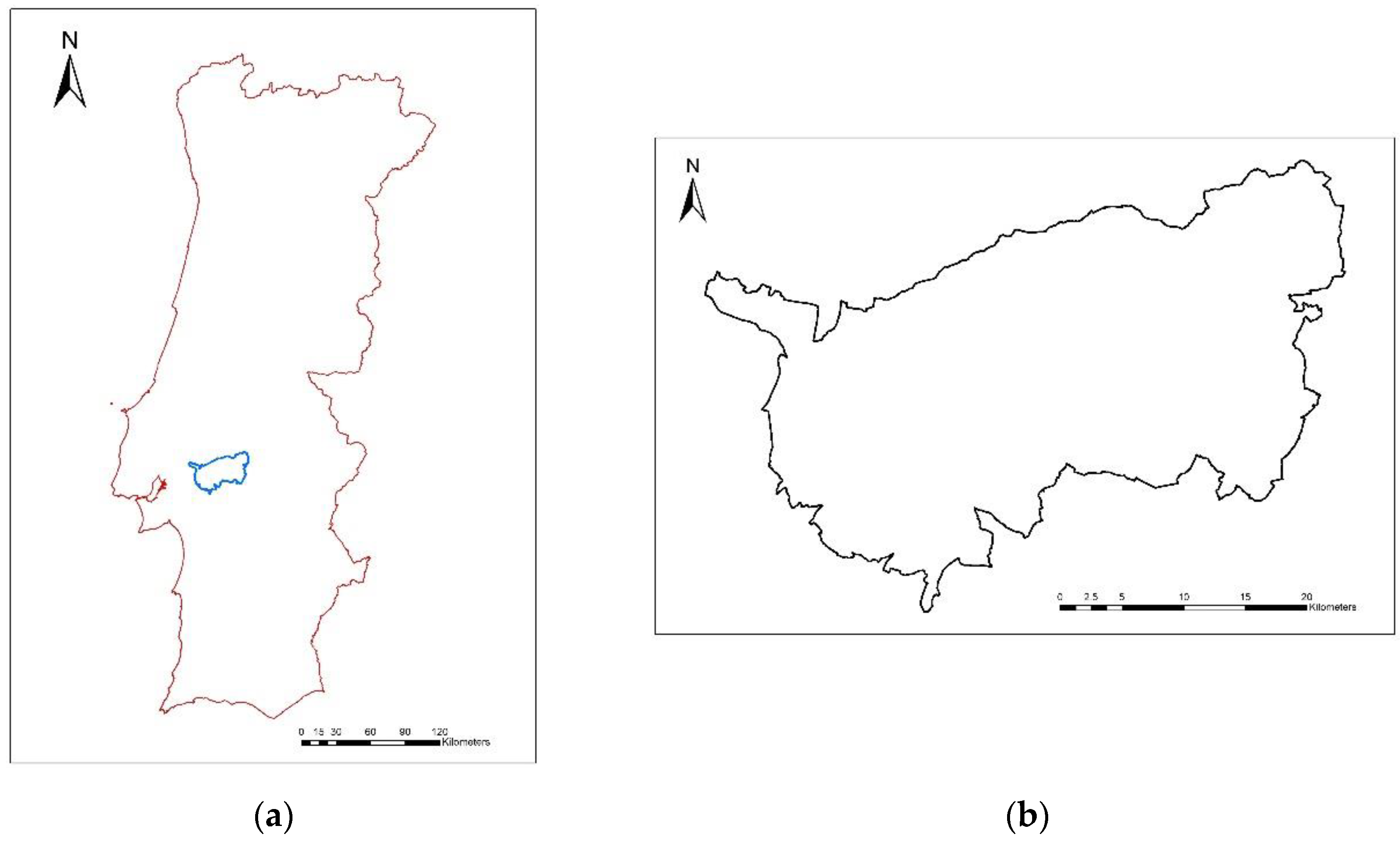
Figure 2.
Crown cover percentages in the forest and ASP stands
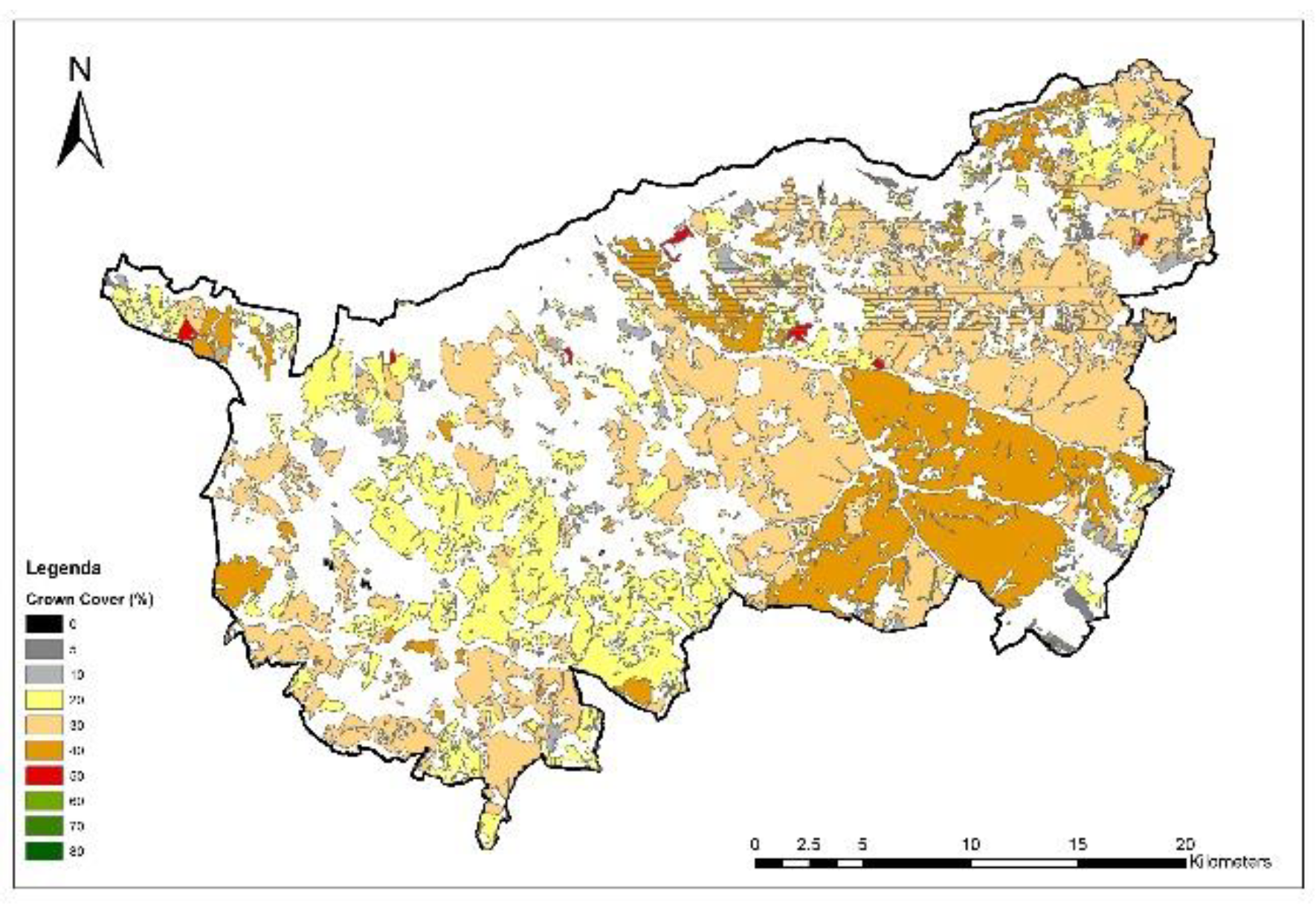
Figure 3.
(a) Average and Standard error confidence interval of the mortality index in relation to the climatic aptitude for the mixed models; (b) Average and Standard error of the mortality index in relation to the analysed periods, or the mixed models
Figure 3.
(a) Average and Standard error confidence interval of the mortality index in relation to the climatic aptitude for the mixed models; (b) Average and Standard error of the mortality index in relation to the analysed periods, or the mixed models
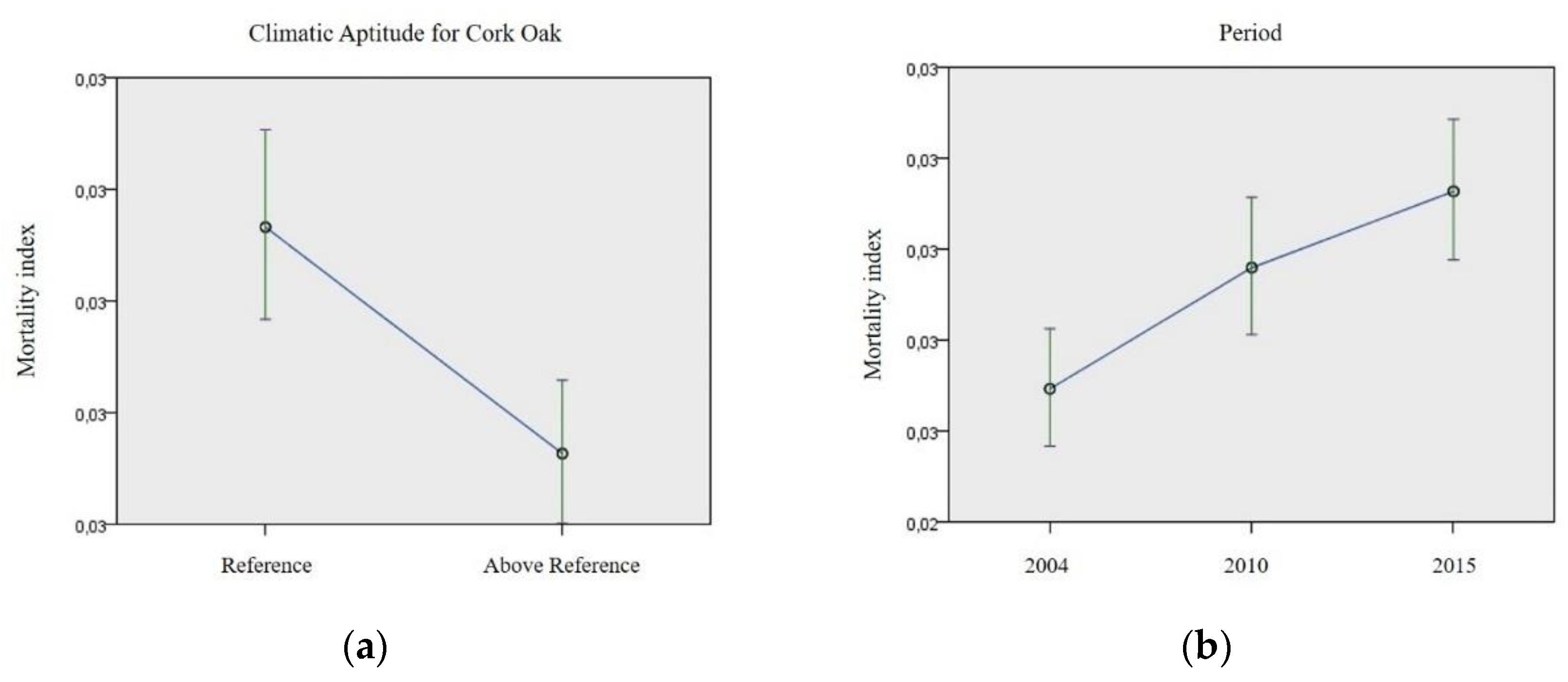
Figure 4.
(a) Average and Standard error of the mortality index total/ha in relation to the land use, with 20-29 % crown cover, for the mixed models; (b) Average and Standard error of the mortality index total/ha in relation to the climatic aptitude, with 20-29 % crown cover, for the mixed models
Figure 4.
(a) Average and Standard error of the mortality index total/ha in relation to the land use, with 20-29 % crown cover, for the mixed models; (b) Average and Standard error of the mortality index total/ha in relation to the climatic aptitude, with 20-29 % crown cover, for the mixed models
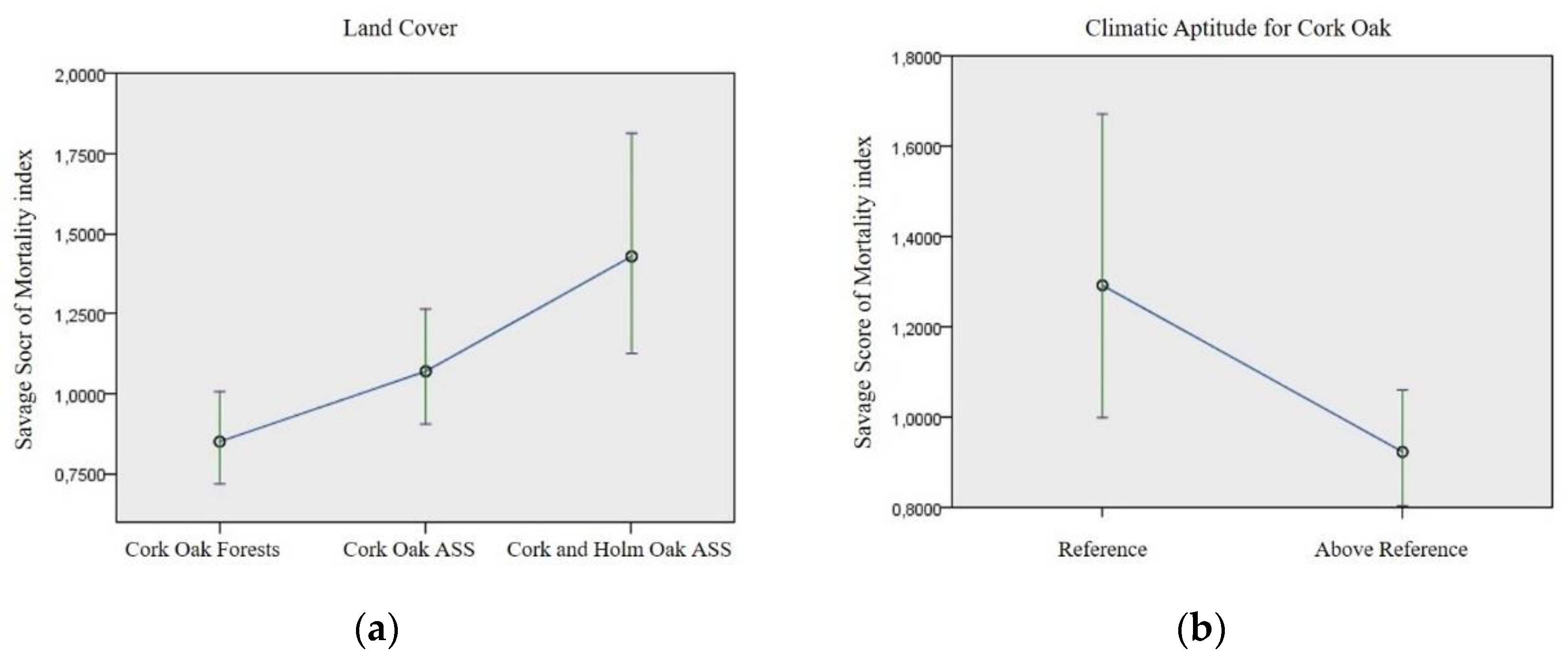
Figure 5.
(a) Average and Standard Error of the mortality /ha in relation to the climatic aptitude, with 30-34 % crown cover, for the mixed models; (b) Average and Standard error of the mortality/ha in relation to the climatic aptitude, with 35-40 % crown cover, for the mixed models
Figure 5.
(a) Average and Standard Error of the mortality /ha in relation to the climatic aptitude, with 30-34 % crown cover, for the mixed models; (b) Average and Standard error of the mortality/ha in relation to the climatic aptitude, with 35-40 % crown cover, for the mixed models
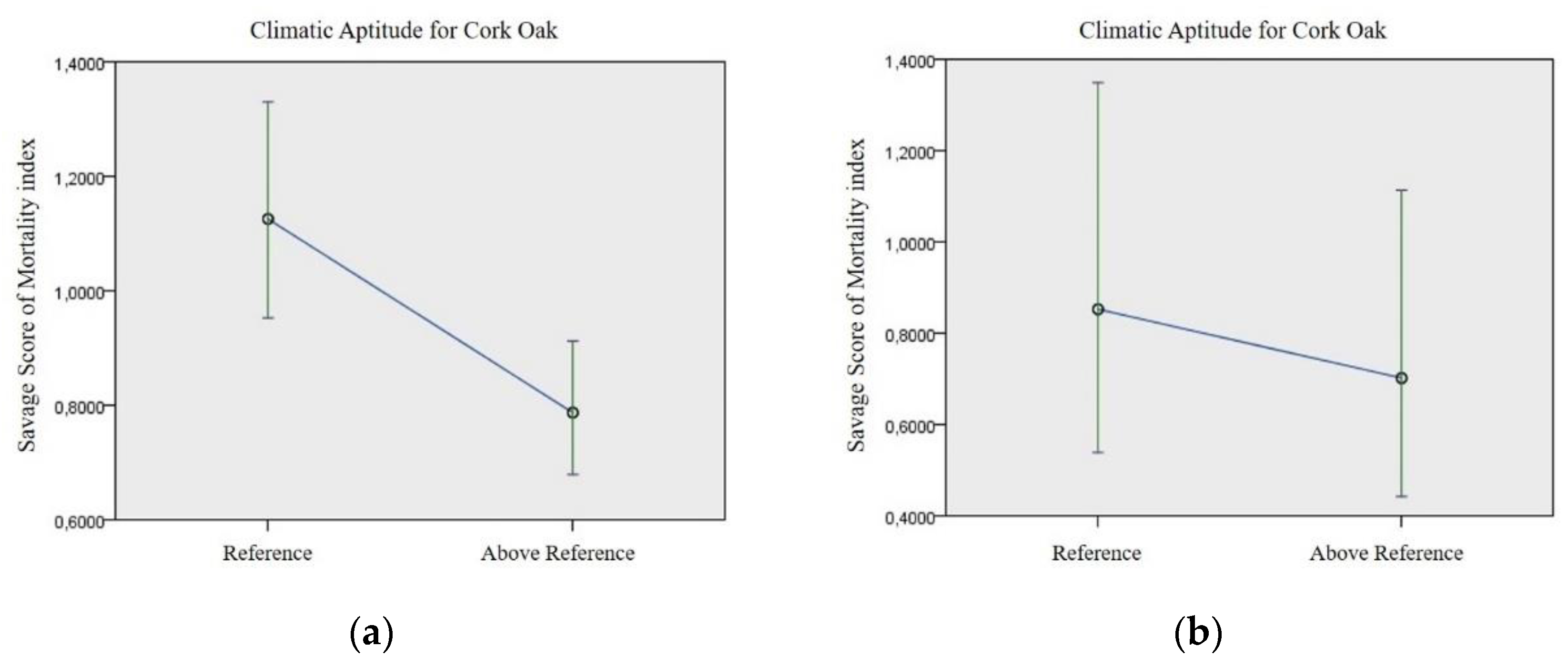
Figure 6.
Example of high mortality density connected to the CGPR over time. Dots correspond to dead trees. Mortality density: 1 – Very low; 2 – Low; 3 – Moderate; 4 – High; 5 – Very high (a) 2004; (b) 2010; (c) 2015
Figure 6.
Example of high mortality density connected to the CGPR over time. Dots correspond to dead trees. Mortality density: 1 – Very low; 2 – Low; 3 – Moderate; 4 – High; 5 – Very high (a) 2004; (b) 2010; (c) 2015
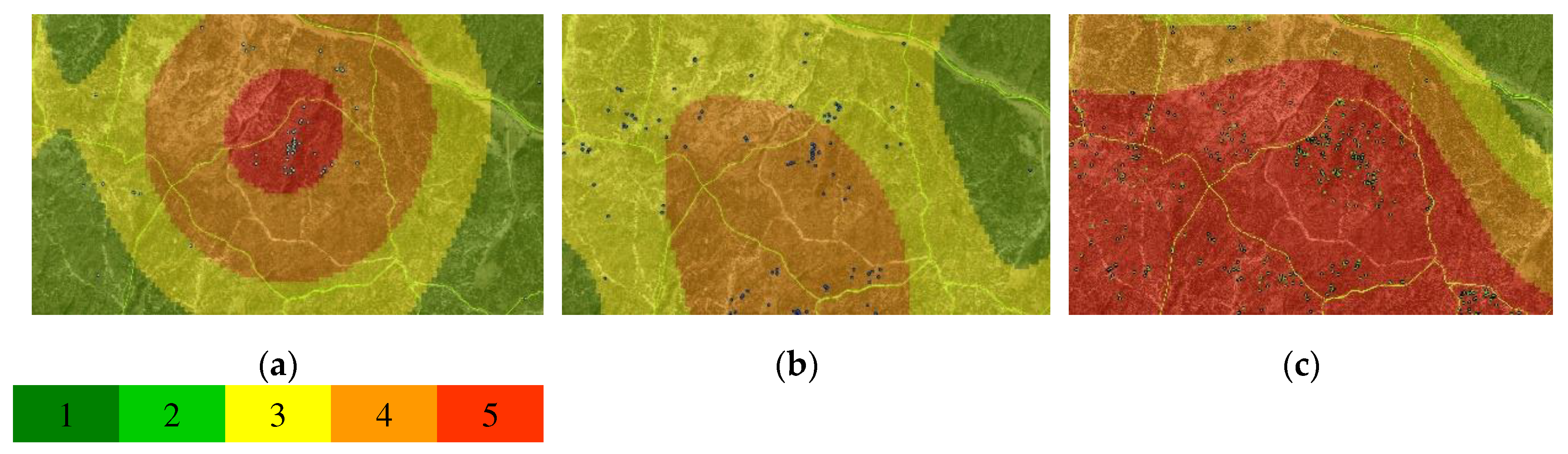
Table 1.
Slope classes
| Slope class | Interval (%) |
|---|---|
| 1 | [0 – 5] |
| 2 | ]5 – 15] |
| 3 | > 15 |
Table 2.
Aspect classes
| Aspect | Interval in degrees (º) |
|---|---|
| North | [0 – 45]; ]315 – 360] |
| East | ]45 – 135] |
| South | ]135 – 225] |
| West | ]225 – 315] |
Table 3.
Diagnostic characteristics. 1 – Below reference; 2 – Reference; 3 – Above reference
| Diagnostic characteristics | Q. suber |
|---|---|
| Rock outcrop | 1 |
| Social area | 1 |
| Water storage | 2 |
| Limestone | 1 |
| Vertical characteristics | 1 |
| Textural discontinuity | 2 |
| External drainage | 1 |
| Internal drainage | 1 |
| Effective thickness | 2 |
| Expansible depth | 3 |
| Salinity | 1 |
| No limitations | 3 |
Table 4.
Cork oak bioclimatic aptitude [35]. The continentality index’s values correspond respectivally to: 1 – Euhiperoceanic; 2 – Little hiperoceanic; 3 – Semihiperoceanic; 4 – Euoceanic; 5 – Semicontinental
Table 4.
Cork oak bioclimatic aptitude [35]. The continentality index’s values correspond respectivally to: 1 – Euhiperoceanic; 2 – Little hiperoceanic; 3 – Semihiperoceanic; 4 – Euoceanic; 5 – Semicontinental
| Thermicity index | |||||||||||||||||||||
|---|---|---|---|---|---|---|---|---|---|---|---|---|---|---|---|---|---|---|---|---|---|
| Inferior Termomediterranean | Superior Termomediterranean | Inferior Mesomediterranean | Superior Mesomediterranean | ||||||||||||||||||
| Continentality index | 1 | 2 | 3 | 4 | 5 | 1 | 2 | 3 | 4 | 5 | 1 | 2 | 3 | 4 | 5 | 1 | 2 | 3 | 4 | 5 | |
| Ombrothermic index | Superior Humid | - | - | - | - | - | - | - | - | - | - | ||||||||||
| Inferior Humid | - | - | - | - | - | ||||||||||||||||
| Superior Sub-humid | |||||||||||||||||||||
| Inferior sub-humid | |||||||||||||||||||||
| Superior Dry | - | - | - | - | - | ||||||||||||||||
| Inferior Dry | - | - | - | - | - | ||||||||||||||||
| Superior Semiarid | - | - | - | - | - | ||||||||||||||||
| Inferior Semiarid | - | - | - | - | - | ||||||||||||||||
| 1 | Below reference | 2 | Reference | 3 | Above reference |
Disclaimer/Publisher’s Note: The statements, opinions and data contained in all publications are solely those of the individual author(s) and contributor(s) and not of MDPI and/or the editor(s). MDPI and/or the editor(s) disclaim responsibility for any injury to people or property resulting from any ideas, methods, instructions or products referred to in the content. |
© 2023 by the authors. Licensee MDPI, Basel, Switzerland. This article is an open access article distributed under the terms and conditions of the Creative Commons Attribution (CC BY) license (http://creativecommons.org/licenses/by/4.0/).
Copyright: This open access article is published under a Creative Commons CC BY 4.0 license, which permit the free download, distribution, and reuse, provided that the author and preprint are cited in any reuse.