

Submitted:
18 October 2023
Posted:
18 October 2023
You are already at the latest version
Abstract
The construction industry, characterized by its intricate network of stakeholders and diverse workforce, grapples with the challenge of managing information effectively. This study delves into this issue, recognizing the universal importance of safeguarding data, particularly amid rising concerns of unauthorized access and breaches. Aiming to harness the potential of blockchain technology to address these challenges, this study used a hypothetical biographical and safety data of construction workers and securely stored on a Hyperledger Fabric blockchain. Developed within the Amazon Web Services (AWS) cloud platform, this blockchain infrastructure emerged as a robust solution for enhancing data security and privacy. Anchored in the core principles of data security, the model emerges as a potent defender against the vulnerabilities of traditional data management systems. Beyond its immediate implications, this study exemplifies the marriage of blockchain technology and the construction sector, potentially reshaping workforce management, especially in high-risk projects, optimizing risk assessment, resource allocation, and safety measures to mitigate work-related injuries. Practical validation through transaction testing using Hyperledger Explorer validates the model's feasibility and operational effectiveness, serving as a blueprint for the industry's data management. Ultimately, this research not only showcases the promise of blockchain technology in addressing construction data security challenges but also underscores its practical applicability through comprehensive testing, heralding a new era of data management that harmonizes security and efficiency for stakeholders' benefit.
Keywords:
blockchain technology
; hyperledger fabric
; amazon web services
; construction worker
; privacy
; safety
1. Introduction
1.1. Background
The construction industry is known for its complex dynamics, involving numerous stakeholders and a diverse workforce. With projects ranging from small-scale renovations to large infrastructure developments, it becomes crucial to address the challenges associated with managing information in such an environment (Alaoul et al., 2020; Agenda, 2016). As construction projects involve multiple entities, including workers, clients, contractors, engineers, managers, regulatory bodies, and certification bodies, ensuring the confidentiality and security of data becomes a critical concern. One significant aspect that requires attention is the privacy and safety of construction workers' personal information.
The privacy and safety of construction workers' information pose unique challenges due to the sensitive nature of the data involved. Personal details such as names, ages, addresses, identification numbers, qualifications, certifications, and work history are essential for various administrative and operational purposes including employment, compliance and safety (Chen et al., 2019; Gruschka et al., 2018). However, the exposure of this information to unauthorized individuals can lead to identity theft, misuse, fraud, exploitation and potential harm to the workers (Monahan, 2009; Wang et al., 2006; Smith and Lias et al., 2005). Safeguarding the privacy and security of workers' personal information is not only a legal and ethical obligation but also essential for maintaining trust and protecting their rights (Tikkinen-Piri et al., 2018).
Furthermore, the construction industry has long grappled with the persistent challenge of a shortage of skilled labor, and the workforce is rapidly aging (Gamil and Alhagar, 2020; Manoharan et al., 2020; Olanrewaju et al., 2017; Ho, 2016; Olsen and Defnall, 2012). These factors further emphasize the importance of effectively managing construction workers' personal information. With a limited pool of skilled workers, prioritizing the protection of their personal data becomes crucial to attract and retain talent. Construction workers invest their time and expertise in projects and deserve the assurance that their sensitive information is handled with the utmost care (Kerrest, 2018).
Additionally, ensuring the efficient handling of safety-related data concerning construction workers is crucial for establishing a healthy work environment. This significance arises from the fact that the construction industry, recognized for its job-related safety risks, involves constantly changing and physically strenuous tasks of an unpredictable nature. These tasks compel workers to execute actions in precarious and uncomfortable stances over extended periods, leading to instances of non-lethal injuries (Antwi-Afari et al., 2017; Antwi-Afari et al., 2018; Boschman et al., 2012). These injuries can have long-lasting consequences, leading to permanent disabilities for construction workers. One specific type of injury is musculoskeletal disorders (WMSDs), which are often caused by external factors such as repetitive movements, overexertion, and awkward postures in occupational settings. WMSDs can affect different areas of the body, such as the lower back, upper limbs, and lower limbs, and are associated with impairments in physical tissues like joints, bones, muscles, and tendons (Antwi-Afari et al., 2018; Valero et al., 2017). By effectively managing data on high-risk construction activities in a secure and reliable system, construction stakeholders can make informed decisions that prioritize the safety and well-being of their workforce.
Data manipulation presents a significant risk within the construction industry due to the intricate network of stakeholders involved in data exchange. Unsanctioned alterations or tampering with information regarding workers' credentials, certifications, employment history, and safety records can lead to grave consequences. These include jeopardizing the credibility of projects, compromising the safety of workers, and undermining trust among stakeholders (Cheng et al., 2017). Addressing this issue is vital, as highlighted by Perera et al. (2020), who emphasize that identity theft is a widespread concern across various sectors, including construction. Malicious individuals might exploit the personal details of construction personnel, such as ID numbers and addresses, for fraudulent purposes. Thus, safeguarding workers' personal data from identity theft emerges as a critical need. Doing so not only protects their well-being but also upholds the integrity of the construction field and fosters a secure work environment.
While traditional data management approaches such as centralized databases, physical safeguards, and the need-to-know principle (Heilig and Voß, 2016) have had some level of efficiency, critical challenges such as lack of transparency, susceptibility to unauthorized access, breaches and theft (Heilig and Voß, 2016) necessitate a shift towards more advanced privacy management practices and the adoption of secure and efficient digital solutions. Moreover, the increase in digitization and data-driven processes in the construction industry have further amplified the importance of protecting workers' personal information (Nikmehr et al., 2021; Klinc and Turk, 2019: Gourévitch et al., 2018; Buer et al., 2018). By implementing these digital solutions, the construction industry can streamline privacy-related processes, including consent management (Bonnici and Coles-Kemp, 2010; Li et al., 2015), handling data subject requests (Boniface et al., 2019), and conducting privacy impact assessments (Oetzel and Spiekermann, 2014), resulting in improved efficiency and compliance. However, it is vital for the construction industry to make careful selections and implementations of these digital solutions, taking into account factors such as data security, scalability, interoperability, and alignment with privacy regulations.
Recognizing these challenges, this study aimed to address the problem of effectively managing construction workers' personal information while prioritizing their privacy and safety. To achieve this, the study focused on leveraging the Hyperledger Fabric blockchain framework, which offers a permissioned and modular architecture tailored for business networks, to develop an information management model that provides secure storage and controlled access to workers' data. By implementing a blockchain-based solution, its unique features such as decentralization, immutability, and transparency facilitated transparent and auditable data management, fostering trust and collaboration among the various stakeholders in the construction industry.
1.2. Research Aim and Objectives
The aim of this study was to develop a private blockchain solution on Hyperledger Fabric to serve as an information management platform to enhance the privacy and safety of construction workers’ personal information. The following objectives served as a guide in achieving the above-stated aim.
- (1)
- To develop a Hyperledger fabric blockchain for privacy protection of personal information and safety among construction workers.
- (2)
- To optimize Amazon Web Services (AWS) as the cloud provider and storage service to deploy the blockchain solution.
- (3)
- To test and evaluate the effectiveness of the blockchain on privacy protection and security of construction workers’ personal information.
- (4)
- To develop a conceptual blockchain model to enhance the privacy and safety of construction workers personal information; and to illustrate the practical implementation of the proposed model to validate its usability and benefits for the construction industry.
1.3. Problem Statement
The construction industry is characterized by its intricate dynamics, involving a multitude of participants and a varied labor force. The industry encompasses a spectrum of projects, spanning from minor renovations to major infrastructure projects. Consequently, it becomes crucial to address the complexities and hurdles associated with information management within this dynamic setting. Traditional approaches to information management in construction often rely on manual processes, paper-based documentation, and centralized record-keeping systems. However, these methods are prone to inefficiencies, data inconsistencies, and security vulnerabilities. Such shortcomings pose a threat to the privacy and safety of workers' personal information, leaving them susceptible to risks like identity theft.
Furthermore, due to the inherent risks associated with construction activities, workers are frequently exposed to non-fatal injuries, including work-related musculoskeletal disorders (WMSDs). These disorders can have a significant impact on workers' health and well-being, leading to increased sick leave and decreased productivity. For instance, a study by Dong et al. (2019) reported that the prevalence of WMSDs in the construction industry was found to be 31.2%. This highlights the urgent need for the construction industry to effectively manage information (i.e. risk assessment data) associated with such high-risk construction activities that threaten the safety of its workforce.
To address these challenges, innovative solutions are required to enhance information management practices while prioritizing the privacy and safety of construction workers. Advanced technologies like blockchain offer the potential to create a more secure, efficient, and decentralized system for managing workers' information. By leveraging blockchain, stakeholders can securely access authenticated information, improving data management and enhancing decision-making processes concerning worker privacy, safety and well-being during high-risk construction activities.
1.4. Research Motivation and Significance
This study is driven by the objective of transforming data management practices in the construction industry through the development of a resilient digital system. The motivation stems from the need to safeguard the privacy of workers' information, mitigate the risks of data breaches, and enhance safety measures on construction sites. Through the implementation of a blockchain-based solution, the authors seek to introduce a solution that significantly improves the efficiency, trustworthiness, and security of information management within the construction industry.
This study contributes to the construction industry by providing a robust and reliable information management model that enhances the privacy and safety of construction workers. By addressing the challenges associated with data management, the study aims to improve worker privacy, risk mitigation strategies and promote efficient decision-making processes throughout the construction lifecycle.
2. Literature Review
2.1. Traditional Methods of Data Management
Traditional methods of data management for construction workers have long been utilized to safeguard their personal information even before the emergence of advanced technologies. These methods involve a combination of organizational policies, physical safeguards, and administrative practices aimed at safeguarding workers' privacy.
One of the primary aspects of privacy management in the construction industry is the establishment of strict organizational policies and procedures (Tam et al., 2004). Employers typically develop privacy policies that outline the collection, use, and disclosure of workers' personal information (Kobsa, 2007). These policies specify the purposes for which the information is collected and how it will be protected. By clearly communicating these policies to workers, employers ensure transparency and foster a culture of privacy protection (Cranor, 2012). Physical safeguards are another important component of privacy management. Construction companies implement measures to secure physical spaces where workers' personal information is stored. This can include locked filing cabinets, restricted access areas, and the use of secure storage systems. By limiting physical access to personal information, employers reduce the risk of unauthorized disclosure or theft (Johnson, 2005).
Administrative practices also play a crucial role in privacy management for construction workers. These practices involve processes and procedures for handling and managing personal information. Employers may designate specific individuals or departments responsible for collecting, storing, and handling personal data (Ahmad, 2015; Clough et al., 2015). The principle of "need-to-know" is commonly applied where access to workers' personal information is granted only to individuals who require it for legitimate purposes related to employment or regulatory compliance. By limiting access to such information, construction companies minimize the risk of unauthorized disclosure or misuse (Heilig and Voß, 2016).
However, while traditional methods of privacy management for construction workers have been implemented over the years, they are not without their challenges. One significant challenge is the reliance on manual processes and paper-based documentation. This approach can be time-consuming, prone to human error, and less secure compared to digital systems. Physical safeguards, such as locked filing cabinets, may provide some level of protection but can still be vulnerable to unauthorized access or theft (Siegel, 2006).
Additionally, Heilig and Voß (2016) affirm that the need-to-know principle, while essential for privacy management, can create difficulties in ensuring that only authorized individuals have access to personal information, especially in large construction projects with multiple stakeholders. The lack of standardized practices across the industry also poses challenges in terms of consistency and accountability in privacy management (Al-Zaben et al., 2018). With the rise in digitization and data-centric processes in construction, ensuring the privacy and security of workers' personal information has become a crucial issue (Nikmehr et al., 2021; Klinc and Turk, 2019; Gourévitch et al., 2018). While traditional methods have provided some level of effectiveness, addressing these challenges requires a shift towards more advanced privacy management practices and the adoption of secure and efficient digital solutions.
2.2. Advanced Privacy Management Practices and the Adoption of Secure and Efficient Digital Solutions
In response to the limitations of traditional data management methods, the construction industry is increasingly turning to advanced management practices and adopting secure and efficient digital solutions (Yi and Wu, 2020; Chanal and Kakkasageri, 2020; Chen et al., 2019). These practices leverage technological advancements to enhance privacy protection, data security, and compliance with privacy regulations. One key aspect is the implementation of privacy-enhancing technologies (Safa et al., 2022; Curzon et al., 2019), such as encryption (Bhanot and Hans, 2015), tokenization (Cachin et al., 2017), and data anonymization (Murthy et al., 2019). These techniques ensure that personal information is protected both during storage and transmission, reducing the risk of unauthorized access or breaches.
Additionally, the use of secure digital platforms and cloud-based solutions enables companies to centralize and manage workers' data more efficiently and securely. This includes features such as access controls, audit trails, fire walls and user authentication mechanisms to ensure that only authorized individuals have access to personal information (David et al., 2021). Furthermore, construction companies are implementing strict data governance and data retention policies to ensure that personal information is retained only for as long as necessary and securely disposed of when no longer required (Smallwood, 2019). By adhering to these policies, companies can minimize the potential risks associated with retaining personal information beyond its intended purpose (Voss, 2019).
The adoption of such digital solutions enables the construction industry to streamline privacy-related processes, such as consent management (Bonnici and Coles-Kemp, 2010; Li et al., 2015), data subject requests (Boniface et al., 2019), and privacy impact assessments (Oetzel and Spiekermann, 2014), leading to increased efficiency and compliance. However, it is essential for construction companies to carefully select and implement these digital solutions, considering factors such as data security, scalability, interoperability, and alignment with privacy regulations.
Thus, utilizing advanced technologies such as blockchain can offer potential solutions to enhance privacy in the construction industry (Perera et al., 2020; Kuperberg, 2020; Chen et al., 2019). Blockchain technology, with its decentralized and immutable nature (Wu et al., 2022; Monrat et al., 2019; Politou et al., 2019), provides a secure and transparent platform for storing and managing data. This decentralized approach minimizes the risks associated with centralized databases, as it requires consensus among network participants (in the case of the construction industry, stakeholders) to validate and record transactions, ensuring data integrity and security. Implementing blockchain-based systems in the construction industry can foster a climate of trust and transparency (Lu et al., 2023). Construction workers can have confidence that their personal information is securely stored and accessed only by authorized parties, enhancing accountability, and reducing the likelihood of privacy breaches (Kerrest, 2018).
2.3. Evolution of Blockchain Technology: From Bitcoin to Blockchain 3.0
Blockchain technology is recognized as a critical enabler of progress and innovation within several domains including the construction industry. In 2008, Satoshi Nakamoto introduced a white paper that unveiled the concept of blockchain as a technology for validating cryptocurrency transactions (Nakamoto, 2008). This groundbreaking publication brought the term "blockchain" into mainstream recognition and paved the way for its subsequent evolution. The evolution of blockchain can be categorized into different phases: Blockchain 1.0, which primarily revolves around cryptocurrencies; Blockchain 2.0, which incorporates "smart contracts"; and Blockchain 3.0, the current and final stage that focuses on diverse applications, encompassing widespread adoption of blockchain technology in global institutions and entrepreneurial ventures (Saah and Choi, 2023).
Since its inception, the concept of blockchain has been shaped and defined by researchers and professionals in various ways. For instance, Casino et al. (2019) described blockchain as a distributed append-only data structure with timestamps, while Lee et al. (2021) emphasized its decentralized peer-to-peer network for transparently sharing real-time updates. Penzes (2018) defined blockchain as a type of distributed ledger technology that allows data to be shared across multiple locations without intermediaries. Gupta (2019) highlighted the direct peer-to-peer interactions enabled by blockchain, facilitated by a consensus mechanism and cryptographic security. In the construction industry, stakeholders join a blockchain network where governance is based on consensus and consent (Saah and Choi, 2023). The integration of smart contracts into blockchain technology has opened up possibilities for diverse industries, including the construction sector. Smart contracts, stored on the blockchain, are self-executing digital contracts that automatically fulfill predetermined conditions (Penzes, 2018). By eliminating the need for traditional intermediaries, such as banks, smart contracts enable efficient and cost-effective transactions on the blockchain (Giancaspro, 2017).
2.4. Blockchain Technology as an Information Management System
Blockchain technology has emerged as a transformative solution for information and data management, offering unparalleled security, transparency, and efficiency. With its decentralized and distributed nature, blockchain ensures data integrity and authenticity through consensus mechanisms, eliminating the need for intermediaries (Penzes, 2018). The immutability of blockchain records provides a tamper-proof system that is particularly valuable for industries like construction where maintaining an accurate and tamper-proof record of information is critical (Rahardja et al., 2021). Enhanced data privacy and control are achieved through cryptographic keys, allowing individuals to manage access permissions (Nanayakkara et al., 2019).
Blockchain also streamlines data management by eliminating the need for reconciling multiple copies of data across different systems (Wiatt, 2019). Its distributed nature ensures synchronized data for all participants, reducing errors and duplication (Yaqoob et al., 2021; Shah and Jani, 2018). And its decentralization enhances security by preventing single points of failure and promoting trust and transparency among stakeholders. Overall, blockchain technology offers unparalleled security, transparency, and efficiency in information management (Lui et al., 2023; Lu et al., 2023; Wu et al., 2022).
2.5. Blockchain Types
Blockchain technology consists of various types: public, private, and consortium blockchains. Public blockchains like Bitcoin and Ethereum are open to everyone, enabling participation, transaction validation, and ledger upkeep. They emphasize transparency and security, but their consensus mechanisms can lead to scalability and transaction speed issues (Sheth and Dattani, 2019). Private blockchains are restricted networks that only allow certain entities or individuals to participate (Guegan 2017). Examples include Hyperledger Fabric and Quorum (Saah and Choi, 2023; Androulaki et al., 2018). These are often used in businesses to ensure data privacy and control. They offer efficiency, scalability, and faster transactions compared to public blockchains, as they don't face the same computational limitations (Baliga et al., 2018).
Consortium blockchains are networks where a group of organizations jointly governs the system. Notable examples are R3 Corda and Hyperledger Besu. In these setups, participating entities hold partial control, and consensus is achieved through predefined mechanisms. These blockchains offer a middle ground between fully open public blockchains and tightly controlled private ones. They are ideal for industries needing collaborative information sharing while upholding trust among participants (Panda et al., 2022). The choice of blockchain type depends on specific requirements, such as desired levels of transparency, privacy, scalability, governance, and the nature of participating entities.
2.6. Key Concepts of Blockchain Technology
The data structure of a blockchain consists of two main components: the block header and the block. The block header contains parameters such as the index, previous block hash, timestamp, nonce, and Merkle root. These parameters play crucial roles in ensuring the integrity, security, and chronological order of the blockchain (Zhong et al., 2020). The index, also known as the block height, indicates the position of the block within the blockchain. The first block, called the genesis block, has an index of zero and subsequent blocks increment the index (Read, 2022). The previous block hash establishes a link between blocks, ensuring the continuity and integrity of the blockchain, since altering a block would require recalculating the hash value for all subsequent blocks (Di Pierro, 2017). The timestamp indicates the time at which the block is created. It helps to order the blocks chronologically, facilitating the sequence of events in the blockchain (Donet Donet et al., 2014).
In the process of blockchain mining, miners use a random value called a nonce to fulfill specific criteria in the consensus algorithm, enhancing network security and resource requirements (MacKenzie, 2019). The Merkle root ensures transaction integrity through cryptographic hashing and creates a hierarchical structure called a Merkle tree (de Ocáriz Borde, 2022). A block's body contains validated transactions, which can vary based on the application; for construction workers’ information management, these transactions might include registration, updates, access permissions, verification, authentication, and termination. These transactions are stored within the block and are extremely difficult to modify due to blockchain's immutability, ensuring data integrity and security (Jing and Sugumaran, 2021).
Figure 1 illustrates the data structure of a block, referred to as “Block w” which includes four transactions: Tx 1, Tx 2, Tx 3, and Tx 4. In the blockchain, each block has a distinct hash, and it references the previous block, forming an unchangeable chain of data. A hash function is applied to the information within each transaction, resulting in unique cryptographic hash values such as Hash1, Hash2, Hash3, and Hash4. These hash values serve as digital fingerprints for the transaction data, enabling efficient detection of any unauthorized modifications. Consequently, the blockchain ensures the prevention of unauthorized changes by facilitating efficient verification and validation processes.
3. Methodology
The study proposed a blockchain system architecture designed to to safeguard the privacy and security of personal information for construction workers, particularly their biographic and safety data. The approach involved securely storing a hypothetical biodata and safety data, and managing this information using the proposed blockchain system. The biodata of workers is following the European Union’s General Data Protection Regulation (GDPR) including details such as names, ages, addresses, identification numbers, qualifications, certifications, and employment records. The safety data includes score of the risk level based on the joint angle information from the imaged process using image-based motion capture technology and occupational assessments (e.g., REBA, RULA, OWAS) to evaluate the risk of musculoskeletal disorders.
This system utilized the Hyperledger Fabric blockchain on the AWS cloud platform, ensuring decentralization and immutability. The outcome was a robust information management model that enhances the privacy and safety of construction workers' data. This model permits authorized construction stakeholders to access trustworthy and verified data, enabling informed decision-making that prioritizes the well-being of the workers. The overall framework of this approach is depicted in Figure 2.
This study was conducted in two phases. Phase 1 involved the experimental design of the proposed blockchain system, and the storage of the workers’ hypothetical biodata and safety data. Phase 1 was carried out in 4 modules. These included the implementation of Module 1, which focused on developing the blockchain using the Hyperledger Fabric platform on the AWS cloud provider. Module 2 encompassed the development of the chaincode. Module 3 involved the creation of a server-side Application Programming Interface (API), which allow client applications to send requests to the server and receive responses. Finally, Module 4 entailed integrating the blockchain system onto a third-party graphic user interface (GUI), enabling easy visualization of the data. In phase 2, the results from the experimental design and management of the blockchain led to the development of a conceptual information management model for enhancing the privacy and safety of construction workers’ personal information; and its practical implementation to validate its usability and benefits for the construction industry.
4. Experimental Design of Proposed Blockchain
4.1. Blockchain System Architecture of Case Study
In this architecture, the biodata and safety data of the tilers are stored in a decentralized manner on the blockchain network. Each worker's information is encrypted and stored in blocks, forming an immutable and tamper-proof ledger. Data encryption aids in preventing unauthorized users from accessing data stored within a blockchain network and its data storage system (Guo et al., 2020). Access to the data is strictly controlled through cryptographic keys, ensuring confidentiality and privacy. Unlike traditional centralized systems, where a single point of failure can compromise the privacy of workers, the distributed nature of the proposed blockchain provided an added layer of protection against data breaches and unauthorized access, and allowed for real-time updates and synchronized data (Karia et al., 2021) across all relevant stakeholders, including employers, regulatory bodies, and project managers. Smart contracts or chaincodes are implemented to automate key processes related to construction workers’ management, such as verifying trade type or skills, certifications, high-risk level workers, and tracking training programs.
4.2. System Structure of Proposed Blockchain
Figure 3 below shows the system structure for the proposed Hyperledger Fabric blockchain developed on AWS. The system structure was organized into five (5) layers to facilitate the functioning of the blockchain network. The layered structure can be described from bottom to top as follows:
AWS Infrastructure Layer: This layer served as the foundational layer for the proposed blockchain system, built using Amazon Web Services (AWS). It established a cloud computing platform for setting up and managing the network. This layer utilized various AWS components like virtual machines, storage services, and networking resources. To ensure scalability, Auto Scaling was implemented, which dynamically adjusted resources as per demand. AWS's Elastic Cloud Compute (EC2) provided virtual servers for running applications. This infrastructure was created in the Asia Sydney AWS region on a Virtual Private Cloud (VPC) network to ensure network isolation and security for the blockchain network. An EC2 instance on the Ubuntu platform was set up within this network to establish a secure environment. This infrastructure configuration was designed to support the secure and efficient functioning of the blockchain system.
Hyperledger Fabric Layer: This layer implements the Hyperledger Fabric protocol, which is designed for secure and efficient permissioned networks. This layer consists of various components including 2 organizations, 1 Orderer node, 2 Peer nodes, 1 Certificate Authority (CA), a Membership service provider (MSP), the Channel, a Gossip, LevelDB storage library and blocks. In this blockchain framework, organizations represent stakeholders with authorized access, such as project managers, engineers, regulators, etc. Peer nodes are crucial for network maintenance, storing copies of the blockchain, participating in consensus, validating, and sharing transactions, and upholding decentralization. These peers communicate to verify and synchronize data, ensuring the reliability of the distributed ledger.
The Orderer node maintains transaction sequencing and consistency. It organizes transactions into blocks, maintaining their chronological order and integrity. By broadcasting these blocks to peers, the Orderer enables consensus on transaction validity and ensures a synchronized view of the blockchain across the network. Certificate Authorities (CAs) a crucial role in establishing trust and verifying the identities of network participants. They issued digital certificates that linked public keys to specific identities, enabling authentication and secure communication. CAs managed certificates, verified identities, and ensured secure interactions and transactions, enhancing network security and trust. Channels enabled secure and confidential communication and transactions between specific stakeholders. Private channels ensured data privacy and compliance with regulations, facilitating secure information exchange among relevant parties. The Gossip protocol facilitated peer-to-peer communication and data synchronization in the network. It efficiently disseminated information through interconnected peers, ensuring scalability and efficient communication.
LevelDB, an open-source key-value storage library, was used to store and retrieve blockchain data efficiently. It provided a simple key-value data model, allowing users to insert, retrieve, and delete data based on unique keys. Blocks represented collections of transactions organized sequentially and added to the blockchain. They formed the fundamental units of the blockchain, encapsulating multiple transactions within a single entity.
Integration Layer: The integration layer facilitated the integration of the blockchain network with external systems and services. It included APIs which was tested successfully in Postman (an API platform), a middleware, and connectors that enabled communication and data exchange between the blockchain network and other external applications. This layer ensured seamless integration and interoperability between the blockchain network and existing infrastructure.
Application Layer: The application layer is made up of business-specific applications and chaincode developed with Java version 11.10.18. Java was chosen for its broad adoption and versatility, streamlining the implementation process, and ensuring the flexibility of the chaincode. The chaincode was built to be highly secure, deterministic, and transactional. It served as the foundation for the construction workers' information management system, offering various functions. These included adding workers' biodata and safety information, retrieving data, and making updates to details like qualifications, certifications, and work history. These features were customized to cater to the construction industry's specific requirements.
Representation layer: The representation layer is a vital part of the proposed blockchain application's user interface. It includes the Controller, User Interface (UI), and Hyperledger Explorer. The Controller acts as a link between the UI and the application's logic, facilitating communication and coordination. The UI offers a graphical or command-line way for users to engage with the blockchain app, submitting transactions and accessing ledger data. The Hyperledger Explorer, a visualization tool, gives a comprehensive overview of the blockchain network, displaying block, transaction, and participant details. This layer is crucial for stakeholders to interact with the blockchain effectively, ensuring user-friendliness and transparency.
4.3. Deployment of Proposed Blockchain
The deployment of the proposed blockchain utilized a systematic approach as outlined below step 1 - 5.
Step 1: Establishing AWS infrastructure
An AWS infrastructure was created to establish a secure and isolated environment for the blockchain network. This involved setting up an IAM account for access control and provisioning EC2 instances with necessary computing power and storage. Security measures including firewalls, access controls, and a VPC (Figure 4) were implemented to prevent unauthorized access and ensure data privacy. Subnets, route tables, and network ACLs were configured within the VPC for traffic control. Network and security groups were employed to manage communication rules, adding an extra layer of security. Data protection was ensured through encryption methods like AWS Key Management Service (KMS). Overall, this setup laid a strong foundation for the blockchain system, guaranteeing both network security and efficient operation.
Step 2: Installing and configuring the Hyperledger Fabric components
The AWS infrastructure was set up, followed by the installation and configuration of Hyperledger Fabric components. This involved deploying peers, orderers, and certificate authorities on AWS, each with specific configurations. The network's structure, peer roles, orderer nodes, MSP, and CA infrastructure were established meticulously to meet the network's needs. These components facilitated decentralized consensus, secure transactions, and identity management, ensuring the privacy and security of worker data. The proper deployment and configuration led to the creation of a robust and efficient Hyperledger Fabric blockchain system, with detailed information provided in Table 1.
Step 3: Storing and managing construction workers’ data
To ensure secure storage and management of blockchain data, the LevelDB storage library was integrated with Amazon Web Services (AWS), specifically utilizing Amazon Relational Database Service (RDS). This integration provided a reliable solution for storing and organizing construction worker information, ensuring data integrity and confidentiality. RDS, a scalable relational database service, handled essential database management tasks such as provisioning, scaling, backups, and recovery. By leveraging RDS, construction workers' biodata and safety data were securely stored, while also benefiting from RDS's built-in security capabilities to comply with industry regulations such as the General Data Protection Regulation (GDPR).
Step 4: Enabling communication and integration among network components
The deployment utilized AWS networking features, including Virtual Private Network (VPN) and security groups, to enable secure and private communication among the network components. VPN technology established encrypted tunnels for data transmission, ensuring data privacy and protection against unauthorized access. Security groups acted as virtual firewalls, regulating traffic flow and enforcing access control policies within the network. AWS's comprehensive suite of services, including data encryption and IAM, further enhanced data confidentiality and security. The deployment met stringent data privacy requirements and upheld the confidentiality of sensitive information stored on the blockchain by adhering to industry best practices and leveraging AWS's robust networking capabilities.
Step 5: Configuration and deployment of chaincode
The proposed blockchain includes one chaincode with five algorithms classes namely, User, SpreadingMortar, TransactionHistory, Keys and ConstructionChaincode which were implemented in Java. For example, Algorithm 1 (Table 2) describes a Java class called "User" that manages and organizes the biodata of the workers into a block. The class defines the structure and properties of a user entity, including fields such as user_id, user_name, user_address, user_email, and account_type. Getter and setter methods are provided for each field, enabling access and modification of user information.
In Table 3, Algorithm 2 describes the safety data of the workers. The algorithm represents a Java class called "SpreadingMortar" which served as a data structure to store information related to risk assessments of the tilers during mortar spreading. The class contains various properties such as “id”, “numberOfFrames”, “neckAngle”, etc which represent different aspects of the worker's posture and movements when spreading the mortar. And properties like "rebaScore" and "levelOfMSDRisk" to indicate the calculated risk score and the level of work-related musculoskeletal disorder risk associated with the worker's activities. The class also provides getter and setter methods for accessing and modifying these properties.
5. Results and Discussions
The proposed Hyperledger Fabric blockchain designed on AWS was integrated into an Ubuntu 22.04.1 (64 bit) computer @ LTS (GNU/Linux). The integration was successfully done using an SSH connection with IP address 52.62.208.64, a private key and a Username AlvinaSaahHLF as shown in Figure 5. This was possible after running Hyperledger Fabric version 2.4.9 onto the Ubuntu computer.
The integration as shown in Figure 5 confirms that the Hyperledger components were successfully running. Further, the results shown in Figure 6, displays the fabric components including the container IDs, status, ports, names, and commands suggest that the Hypereledger Fabric blockchain developed was running successfully.
In Figure 7, the APIs tested on POSTMAN revealed the transaction status to be true as the transactions for construction workers’ personal information and risk assessment data were carried out and added to the blockchain successfully.
5.1. A Conceptual Blockchain-Based Model for Enhancing Privacy and Safety of Construction Workers’ Personal Information
The results from the experimental design led to the development of a robust information management blockchain model aimed at enhancing the privacy and safety of construction workers (Figure 8). The model functions by (i) allowing pertinent stakeholders such as the Human resource manager, project manager, contractor, health and safety officer, regulatory bodies, inspector and certification body to register as members of the network to endorse the construction workers’ data. (ii) Construction workers’ biodata and safety data are stored and require the participants in (i) to sign and endorse the information digitally. The governance of the network is established on the consensus and consent of all the stakeholders. (iii) Every time information is requested by a permitted stakeholder, the smart contract (chaincode) converts it into a transaction and sends it to the ordering service through which transactions are packed into blocks. The transactions are then secured cryptographically before being added to a blockchain system to create an immutable chain of records. (iv) To further enhance the security of the information during the endorsement process, the proposed model uses a consensus algorithm to ensure complete protection of the privacy of the data. (v) Each participant (stakeholder) on the blockchain sets up a copy of the ledger to keep track of the endorsed transaction information, and the smart contract can retrieve the stored transactions from the ledgers whenever requested by the stakeholders.
5.2. Testing of Conceptual Blockchain-Based System Using the Transaction Testing Approach
To validate the functionality and effectiveness of the Hyperledger Fabric blockchain system developed for the tiling activity case study, a comprehensive testing was conducted, with a significant focus on transaction verification. The primary objective was to ensure the system's reliability, data accuracy, and its ability to securely manage and store construction workers' biographic and safety data related to work-related musculoskeletal disorders (WMSDs) risk assessments. Transaction testing played a crucial role in validating the blockchain's functionality and data integrity. Hyperledger Explorer, a powerful visualization tool, was employed to facilitate the monitoring and analysis of transactions, shown in Figure 9.
Through this implementation, the blockchain demonstrated its capability to securely collect, store, and manage sensitive worker information. Each step of the data collection process, from capturing workers' biodata to assessing WMSD risks, was translated into transactions on the blockchain. These transactions were then visualized using Hyperledger Explorer, providing a clear and transparent overview of the entire process. In this testing scenario, a total of 5 blocks, each containing a set of transactions, were generated. These transactions represented various interactions related to the management of construction workers' data. The involvement of 3 nodes in the network underlines the decentralized nature of the Hyperledger Fabric blockchain, where multiple stakeholders collaboratively maintain the integrity of the network and validate transactions. Furthermore, the presence of 1 chaincode emphasized the smart contract's role in governing the rules and logic for managing data on the blockchain.
This comprehensive testing phase not only ensured the technical robustness of the blockchain system but also demonstrated its applicability in a real-world construction context. The blockchain system exhibited its capability to securely manage and provide access to authenticated and verified construction workers' information. The successful visualization of transactions using Hyperledger Explorer showcased the transparency and tamper-resistant nature of the data stored. The outcomes of this testing contribute significantly to the advancement of blockchain technology within the construction industry, empowering stakeholders with informed decision-making capabilities, enhancing safety measures, and streamlining workforce management practices.
6. Conclusion, Limitations, Recommendations, and Future Work
6.1. Conclusion
The study successfully implemented a Hyperledger Fabric blockchain on AWS, creating a secure and robust information management platform for protecting construction workers' data. Through a detailed case study, workers' biodata and safety information were securely stored on the blockchain, ensuring data security and integrity. This practical implementation validated the proposed model's usability, aligning with industry challenges. The blockchain's tamper-resistant nature, decentralized data handling, and transparent records demonstrated its capacity to address privacy, security, and decision-making concerns. Transaction tracking on the blockchain improved stakeholder accountability, fostering trust and enhancing workforce management for high-risk construction tasks. This tangible testing phase showcased the model's potential to revolutionize data management and decision-making in construction, offering a secure framework to protect worker data and cultivate safer work environments. The points below highlight the benefits of this study to the construction industry.
- (1)
- Informed decision-making for high-risk activities: By storing safety data, especially work-related musculoskeletal disorders (WMSDs) risk assessments, on the blockchain, construction stakeholders gain access to verified and authenticated information. This empowers them to make informed decisions related to workforce management during high-risk construction tasks. Comprehensive safety data facilitates effective risk assessment, optimal resource allocation, and the assignment of skilled workers to specific high-risk activities. This proactive approach enhances safety measures, reduces accidents, and ensures the well-being of construction personnel.
- (2)
- Enhanced data security and privacy: Storing workers' biographic data on the blockchain enhances security and privacy compared to centralized systems. The blockchain's decentralized architecture distributes data across multiple nodes, making unauthorized manipulation challenging. Cryptographic techniques further safeguard sensitive information, ensuring its confidentiality. This heightened data security fosters trust between construction stakeholders and workers, assuring them that their information is handled with the utmost security.
- (3)
- Promotion of Industry Innovation and Trust: The successful implementation of blockchain within the construction sector sets a precedent for technological innovation. Demonstrating the practical application of blockchain in enhancing data security and privacy inspires confidence among stakeholders. This newfound trust encourages further adoption of advanced technologies to modernize construction practices, driving industry-wide innovation and fostering a culture of continuous improvement.
6.2. Limitations
One limitation of this study is the focus on a specific use case and the use of a single construction activity for data collection. The tiling activity chosen may not capture the full range of risks and challenges present in other construction tasks. Moreover, the use of a specific blockchain infrastructure on the AWS platform may limit the generalizability of the findings to other blockchain implementations. Furthermore, as the study is based on a case study approach, the results may not be fully representative of the broader construction industry. Future research could explore the applicability of the proposed blockchain model to various construction activities and assess its scalability and effectiveness on a larger scale.
6.3. Recommendations
To optimize the adoption and effectiveness of the Hyperledger Fabric blockchain for construction workers' data management, the following recommendations are proposed.
- (1)
- Continuous Monitoring and Auditing: Ensuring compliance with data protection regulations and preemptively identifying vulnerabilities requires consistent monitoring and auditing of the blockchain system. Regular updates and patches should be swiftly applied to mitigate potential security risks, creating a robust environment for data management.
- (2)
- Real-world Testing and Iterative Enhancement: Real-world testing and pilot implementation of the blockchain platform in construction projects is essential. This approach facilitates the identification of practical challenges and permits iterative refinements. Collecting user feedback and promptly addressing any emerging issues will optimize the system's performance and tailor its functionality to the specific requirements of the construction industry.
6.4. Future Work
One area of future research could involve exploring the extension of smart construction technology and its integration with the proposed blockchain solution. Smart construction technology refers to the use of advanced technologies such as Internet of Things, sensors, artificial intelligence, and data analytics in the construction industry to improve efficiency, productivity, and safety. Investigating how the proposed blockchain model can interface with Smart construction technology systems and leverage their data for enhanced information management and decision-making would be valuable. Another potential avenue for future research is to examine the application of the proposed blockchain model in the context of smart city initiatives. Smart cities aim to leverage technology and data to enhance the quality of life for citizens, improve resource management, and promote sustainability. Integrating the proposed blockchain solution into the broader framework of a smart city could provide additional benefits, such as secure and transparent data sharing across different stakeholders, improved interoperability between systems, and increased trust in the exchange of information.
References
- Agenda, I. (2016). Shaping the future of construction a breakthrough in mindset and technology. In World Economic Forum.
- Ahmad, S. Green human resource management: Policies and practices. Cogent business & management 2015, 2, 1030817. [Google Scholar] [CrossRef]
- Alaloul, W.S. , Liew, M. S., Zawawi, N. A. W. A., & Kennedy, I. B. (2020). Industrial Revolution 4.0 in the construction industry: Challenges and opportunities for stakeholders. Ain shams engineering journal, 11(1), 225-230. [CrossRef]
- Androulaki, E., Barger, A., Bortnikov, V., Cachin, C., Christidis, K., De Caro, A., & Yellick, J. (2018). Hyperledger fabric: a distributed operating system for permissioned blockchains. In Proceedings of the thirteenth EuroSys conference (pp. 1-15). [CrossRef]
- Antwi-Afari, M.F. , Li, H., Edwards, D. J., Pärn, E. A., Seo, J., & Wong, A. Y. L. (2017). Biomechanical analysis of risk factors for work-related musculoskeletal disorders during repetitive lifting task in construction workers. Automation in Construction, 83, 41-47. [CrossRef]
- Antwi-Afari, M. F., Li, H., Yu, Y., & Kong, L. (2018). Wearable insole pressure system for automated detection and classification of awkward working postures in construction workers. Automation in Construction, 96, 433-441. [CrossRef]
- Al-Zaben, N. , Onik, M. M. H., Yang, J., Lee, N. Y., & Kim, C. S. (2018). General data protection regulation complied blockchain architecture for personally identifiable information management. In 2018 International Conference on Computing, Electronics & Communications Engineering (iCCECE) (pp. 77-82). IEEE.
- Baliga, A. , Subhod, I., Kamat, P., & Chatterjee, S. (2018). Performance evaluation of the quorum blockchain platform. arXiv 2008, arXiv:1809.03421. [Google Scholar]
- Bazarevsky, V. , & Grishchenko, I. (2020). On-device, Real-time Body Pose Tracking with MediaPipe BlazePose. Retrieved from https://ai.googleblog.com/2020/08/on-device-real-time-body-pose-tracking.html.
- Belle, I. (2017). The architecture, engineering and construction industry and blockchain technology. Digital Culture, 2017, 279-284.
- Bhanot, R., & Hans, R. (2015). A review and comparative analysis of various encryption algorithms. International Journal of Security and Its Applications, 9(4), 289-306. [CrossRef]
- Bonnici, C.J. , & Coles-Kemp, L. (2010). Principled electronic consent management: A preliminary research framework. In 2010 International Conference on Emerging Security Technologies (pp. 119-123). IEEE.
- Boniface, C. , Fouad, I., Bielova, N., Lauradoux, C., & Santos, C. (2019). Security analysis of subject access request procedures: How to authenticate data subjects safely when they request for their data. In Privacy Technologies and Policy: 7th Annual Privacy Forum, APF 2019, Rome, Italy, June 13–14, 2019, Proceedings 7 (pp. 182-209). Springer International Publishing.
- Cachin, C. , Camenisch, J., Freire-Stögbuchner, E., & Lehmann, A. (2017). Updatable tokenization: Formal definitions and provably secure constructions. In Financial Cryptography and Data Security: 21st International Conference, FC 2017, Sliema, Malta, April 3-7, 2017, Revised Selected Papers (pp. 59-75). Cham: Springer International Publishing.
- Casino, F. , Dasaklis, T. K., and Patsakis, C. (2019). "A systematic literature review of blockchain-based applications: Current status, classification and open issues." Telematics and Informatics, 36 55-81. [CrossRef]
- Chanal, P.M.; Kakkasageri, M.S. Security and privacy in IOT: A survey. Wirel. Pers. Commun. 2020, 115, 1667–1693. [Google Scholar] [CrossRef]
- Chen, J., Lv, Z., & Song, H. (2019). Design of personnel big data management system based on blockchain. Future generation computer systems, 101, 1122-1129. [CrossRef]
- Chen, C. (2017). "Science Mapping: A Systematic review of the literature." Journal of Data and Information Science (Warsaw, Poland), 2(2), 1-40.
- Cheng, M. , Liu, G., Xu, Y., & Chi, M. (2021). "When blockchain meets the AEC industry: Present status, benefits, challenges, and future research opportunities." Buildings (Basel), 11(8), 340. [CrossRef]
- Cheng, S. , Daub, M., Domeyer, A., & Lundqvist, M. (2017). Using blockchain to improve data management in the public sector.
- Cranor, L.F. (2012). Necessary but not sufficient: Standardized mechanisms for privacy notice and choice. J. on Telecomm. & High Tech. L., 10, 273.
- Clough, R.H. , Sears, G. A., Sears, S. K., Segner, R. O., & Rounds, J. L. (2015). Construction contracting: A practical guide to company management. John Wiley & Sons.
- Curzon, J., Almehmadi, A., & El-Khatib, K. (2019). A survey of privacy enhancing technologies for smart cities. Pervasive and Mobile Computing, 55, 76-95. [CrossRef]
- Dalla Palma, S. , Pareschi, R., & Zappone, F. (2021). What is your distributed (hyper) ledger? In 2021 IEEE/ACM 4th International Workshop on Emerging Trends in Software Engineering for Blockchain (WETSEB) (pp. 27-33). IEEE.
- David, A. , Zarli, A., Mirarchi, C., Naville, N., & Perissich, L. (2021). DigiPLACE: Towards a reference architecture framework for digital platforms in the EU construction sector. In ECPPM 2021–eWork and eBusiness in Architecture, Engineering and Construction (pp. 511-518). CRC Press.
- de Ocáriz Borde, H.S. (2022). An Overview of Trees in Blockchain Technology: Merkle Trees and Merkle Patricia Tries.
- Dhillon, V. , Metcalf, D., Hooper, M., Dhillon, V., Metcalf, D., & Hooper, M. (2017). The hyperledger project. Blockchain enabled applications: Understand the Blockchain ecosystem and how to make it work for you.
- Di Pierro, M. (2017). What is the blockchain? Computing in Science & Engineering, 19(5), 92-95. [CrossRef]
- Donet Donet, J.A. , Pérez-Sola, C., & Herrera-Joancomartí, J. (2014). The bitcoin P2P network. In Financial Cryptography and Data Security: FC 2014 Workshops, BITCOIN and WAHC 2014, Christ Church, Barbados, 7 March 2014, Revised Selected Papers 18 (pp. 87-102). Springer Berlin Heidelberg.
- Gamil, Y. , & Alhagar, A. (2020). The impact of pandemic crisis on the survival of construction industry: a case of COVID-19. Mediterranean Journal of Social Sciences, 11(4), 122-122. [CrossRef]
- Giancaspro, M. (2017). "Is a ‘smart contract’ really a smart idea? Insights from a legal perspective." The Computer Law and Security Report, 33(6), 825-835. [CrossRef]
- Grishchenko, I. , Bazarevsky, V., Zanfir, A., Bazavan, E. G., Zanfir, M., Yee, R., & Sminchisescu, C. (2022). BlazePose GHUM Holistic: Real-time 3D Human Landmarks and Pose Estimation. arXiv:2206.11678. [CrossRef]
- Gruschka, N. , Mavroeidis, V., Vishi, K., & Jensen, M. (2018). Privacy issues and data protection in big data: a case study analysis under GDPR. In 2018 IEEE International Conference on Big Data (Big Data) (pp. 5027-5033). IEEE.
- Gourévitch, A. , Fæste, L., Baltassis, E., & Marx, J. (2017). Data-Driven Transformation. BCG Perspectives, 5(17), 8.
- Guo, L., Xie, H., & Li, Y. (2020). Data encryption based blockchain and privacy preserving mechanisms towards big data. Journal of Visual Communication and Image Representation, 70, 102741. [CrossRef]
- Gupta, M. (2019). Blockchain for dummies. John Wiley & Sons, Inc., Hoboken, NJ 07030-5774.
- Gupta, S.S. (2017). Blockchain. IBM Online (http://www. IBM. COM).
- Heilig, L. , & Voß, S. (2016). A holistic framework for security and privacy management in cloud-based smart ports. In 15th International Conference on Computer and IT Applications in the Maritime Industries-COMPIT ‘16, Lecce Italy.
- Ho, P.H. (2016). Labour and skill shortages in Hong Kong’s construction industry. Engineering, Construction and Architectural Management, 23(4), 533-550. [CrossRef]
- Jing, N. , Liu, Q., & Sugumaran, V. (2021). A blockchain-based code copyright management system. Information Processing & Management 58, 102518. [CrossRef]
- Johnson, V. R. (2005). Cybersecurity, Identity Theft, and the Limits of Tort Liability. ScL REv., 57, 255.
- Karia, J. , Sundararajan, M., & Raghavan, G. S. (2021). Distributed Ledger Systems to Improve Data Synchronization in Enterprise Processes. In 2021 IEEE International Conference on Distributed Computing, VLSI, Electrical Circuits and Robotics (DISCOVER) (pp. 41-45). IEEE.
- Kerrest, F. (2018) "Commentary: How Blockchain Could Put an End to Identity Theft." Fortune. http://fortune.com/2018/04/20/blockchain-technology-identity-theft-dataprivacy-protection/ (accessed 27 September, 2018).
- Kim, K. H. , Kim, K. S., Kim, D. S., Jang, S. J., Hong, K. H., & Yoo, S.-W. (2010). Characteristics of Work-related Musculoskeletal Disorders in Korea and Their Work-relatedness Evaluation. Journal of Korean Medical Science, 25(Suppl), S77. [CrossRef]
- Kobsa, A. Privacy-enhanced personalization. Commun. ACM 2007, 50, 24–33. [Google Scholar] [CrossRef]
- Klinc, R. , & Turk, Ž. (2019). Construction 4.0–digital transformation of one of the oldest industries. Economic and Business Review, 21(3), 4. [CrossRef]
- Kuperberg, M. (2020). "Blockchain-Based Identity Management: A Survey from the enterprise and ecosystem perspective." Tem, 67(4), 1008-1027. [CrossRef]
- Lee, D. , Lee, S. H., Masoud, N., Krishnan, M. S., and Li, V. C. (2021). "Integrated digital twin and blockchain framework to support accountable information sharing in construction projects." Automation in Construction, 127(103688), 103688. [CrossRef]
- Li, H. , Lu, M., Hsu, S. C., Gray, M., & Huang, T. Proactive behavior-based safety management for construction safety improvement. Saf. Sci. 2015, 75, 107–117. [Google Scholar] [CrossRef]
- Liu, H. , Han, S., & Zhu, Z. (2023). Blockchain technology toward smart construction: Review and future directions. Journal of Construction Engineering and Management, 149(3), 03123002. [CrossRef]
- Lu, W. , Wu, L., & Zhao, R. (2023). Rebuilding trust in the construction industry: A blockchain-based deployment framework. International Journal of Construction Management, 23(8), 1405-1416. [CrossRef]
- Maciel, A. (2020). Use of blockchain for enabling Construction 4.0. In Construction 4.0 (pp. 395-418).
- Liu, X. , Farahani, B., & Firouzi, F. (2020). Distributed ledger technology. Intelligent Internet of Things: From Device to Fog and Cloud, 393-431.
- MacKenzie, D. (2019). Pick a nonce and try a hash. London Review of Books, 41(8), 35-38.
- Meunier, S. (2018). Blockchain 101: What is blockchain and how does this revolutionary technology work?. In Transforming climate finance and green investment with Blockchains (pp. 23-34). Academic Press.
- Monahan, T. (2009). Identity theft vulnerability: Neoliberal governance through crime construction. Theoretical criminology, 13(2), 155-176. [CrossRef]
- Manoharan, K. , Dissanayake, P., Pathirana, C., Deegahawature, D., & Silva, R. (2020). Assessment of critical factors influencing the performance of labour in Sri Lankan construction industry. International Journal of Construction Management, 1-35. [CrossRef]
- Murthy, S. , Bakar, A. A., Rahim, F. A., & Ramli, R. (2019). A comparative study of data anonymization techniques. In 2019 IEEE 5th Intl Conference on Big Data Security on Cloud (BigDataSecurity), IEEE Intl Conference on High Performance and Smart Computing,(HPSC) and IEEE Intl Conference on Intelligent Data and Security (IDS) (pp. 306-309). IEEE.
- Nakamoto, S. (2009). Bitcoin v0. 1 released. The Mail Archive, 9. https://www.mail-archive.com/cryptography@metzdowd.com/msg10142.html.
- Nanayakkara, S. , Perera, S., Bandara, D., Weerasuriya, T., & Ayoub, J. (2019). Blockchain technology and its potential for the construction industry. In AUBEA Conference 2019 (pp. 662-72).
- Nunes, I.L. , & Bush, P. M. (2012). Work-related musculoskeletal disorders assessment and prevention. Ergonomics-A Systems Approach, 1, 30. [CrossRef]
- Nikmehr, B. , Hosseini, M. R., Martek, I., Zavadskas, E. K., & Antucheviciene, J. (2021). Digitalization as a strategic means of achieving sustainable efficiencies in construction management: A critical review. Sustainability, 13(9), 5040. [CrossRef]
- Oetzel, M. C. , & Spiekermann, S. (2014). A systematic methodology for privacy impact assessments: A design science approach. European Journal of Information Systems, 23(2), 126-150. [CrossRef]
- Olanrewaju, A., Tan, S. Y., & Kwan, L. F. (2017). Roles of communication on performance of the construction sector. Procedia engineering, 196, 763-770. [CrossRef]
- Olsen, D. , Tatum, M., & Defnall, C. (2012). How industrial contractors are handling skilled labor shortages in the United States. In 48th ASC Annual International Conference Proceedings.
- Panda, S. K. , Daliyet, S. P., Lokre, S. S., and Naman, V. (2022). Distributed Ledger Technology in the Construction Industry Using Corda. The New Advanced Society: Artificial Intelligence and Industrial Internet of Things Paradigm, 15-41. [CrossRef]
- Perera, S. , Nanayakkara, S., Rodrigo, M. N. N., Senaratne, S., and Weinand, R. (2020). "Blockchain technology: Is it hype or real in the construction industry?" Journal of Industrial Information Integration, 17(100125), 1-20. [CrossRef]
- Penzes, B. , KirNup, A., Gage, C., Dravai, T., and Colmer, M. (2018). Blockchain technology in the construction industry: Digital transformation for high productivity. In Institution of civil engineers (ICE).
- Politou, E. , Casino, F., Alepis, E., & Patsakis, C. (2019). Blockchain mutability: Challenges and proposed solutions. IEEE Trans. Emerg. Top. Comput. 1986; 9, 1972–1986. [Google Scholar] [CrossRef]
- Purnomo, H., & Apsari, A. E. (2016). REBA analysis for construction workers in Indonesia. Journal of built environment, Technology and Engineering, 1(9), 104-110.
- Rahardja, U., Hidayanto, A. N., Lutfiani, N., Febiani, D. A., & Aini, Q. (2021). Immutability of Distributed Hash Model on Blockchain Node Storage. Sci. J. Informatics, 8(1), 137-143. [CrossRef]
- Read, C. L. (2022). The Genesis Block. In The Bitcoin Dilemma: Weighing the Economic and Environmental Costs and Benefits (pp. 29-36). Cham: Springer International Publishing.
- Saah, A. E. N. , & Choi, J. H. (2023). Blockchain technology in the AEC industry: Scientometric analysis of research activities. Journal of Building Engineering, 106609. [CrossRef]
- Safa, N. S., Mitchell, F., Maple, C., Azad, M. A., & Dabbagh, M. (2022). Privacy Enhancing Technologies (PETs) for connected vehicles in smart cities. Transactions on Emerging Telecommunications Technologies, 33(10), e4173. [CrossRef]
- Shah, T. , & Jani, S. (2018). Applications of blockchain technology in banking & finance. Parul CUniversity, Vadodara, India.
- Siegel, K. M. (2006). Protecting the Most Valuable Corporate Asset: Electronic Data, Identity Theft, Personal Information, and the Role of Data Security in the Information Age. Penn St. L. Rev., 111, 779.
- Sheth, H. , & Dattani, J. (2019). Overview of blockchain technology. Asian Journal For Convergence In Technology (AJCT) ISSN-2350-1146.
- Singh, A. K. , Kumbhare, V. A., & Arthi, K. (2021, June). Real-time human pose detection and recognition using mediapipe. In International Conference on Soft Computing and Signal Processing (pp. 145-154). Singapore: Springer Nature Singapore.
- Smallwood, R. F. (2019). Information governance: Concepts, strategies and best practices. John Wiley & Sons.
- Smith, A. D. , & Lias, A. R. (2005). Identity theft and e-fraud as critical CRM concerns. International Journal of Enterprise Information Systems (IJEIS), 1(2), 17-36. [CrossRef]
- Supanich, W. , Kulkarineetham, S., Sukphokha, P., & Wisarnsart, P. (2023, March). Machine Learning-Based Exercise Posture Recognition System Using MediaPipe Pose Estimation Framework. In 2023 9th International Conference on Advanced Computing and Communication Systems (ICACCS) (Vol. 1, pp. 2003-2007). IEEE.
- Swan, M. (2015). Blockchain: Blueprint for a new economy. " O'Reilly Media, Inc.".
- Tam, C. M., Zeng, S. X., & Deng, Z. M. (2004). Identifying elements of poor construction safety management in China. Safety science, 42(7), 569-586. [CrossRef]
- Tikkinen-Piri, C. , Rohunen, A., & Markkula, J. (2018). EU General Data Protection Regulation: Changes and implications for personal data collecting companies. Computer Law & Security Review, 34(1), 134-153. [CrossRef]
- Toumia, S.B. , Berger, C.; Reiser, H.P. Evaluating blockchain application requirements and their satisfaction in Hyperledger Fabric. arXiv 2021, arXiv:2111.15399. [Google Scholar]
- vom Brocke, J., Hevner, A., & Maedche, A. (2020). Introduction to design science research. Design science research. Cases, 1-13.
- Voss, W. G. (2019). Cross-border data flows, the GDPR, and data governance. Wash. Int'l LJ, 29, 485. [CrossRef]
- Wang, W. , Yuan, Y., & Archer, N. (2006). A contextual framework for combating identity theft. IEEE Security & Privacy, 4(2), 30-38. [CrossRef]
- Wang, S. , Yuan, Y., Wang, X., Li, J., Qin, R., & Wang, F. Y. (2018). An overview of smart contract: architecture, applications, and future trends. In 2018 IEEE Intelligent Vehicles Symposium (IV) (pp. 108-113). IEEE.
- Weise, J. (2001). Public key infrastructure overview. Sun BluePrints OnLine, August, 1-27.
- Wiatt, R. G. (2019). From the mainframe to the blockchain. Strategic Finance, 100(7), 26-35.
- Wu, L., Lu, W., Zhao, R., Xu, J., Li, X., & Xue, F. (2022). Using blockchain to improve information sharing accuracy in the onsite assembly of modular construction. Journal of Management in Engineering, 38(3), 04022014. [CrossRef]
- Wu, H. , Zhang, P., Li, H., Zhong, B., Fung, I. W., & Lee, Y. Y. R. (2022). Blockchain Technology in the Construction Industry: Current Status, Challenges, and Future Directions. Journal of Construction Engineering and Management 2022, 148, 03122007. [Google Scholar] [CrossRef]
- Xu, X. , Weber, I., & Staples, M. (2019). Architecture for blockchain applications (pp. 1-307). Cham: Springer.
- Yaqoob, I. , Salah, K., Jayaraman, R., & Al-Hammadi, Y. Blockchain for healthcare data management: opportunities, challenges, and future recommendations. Neural Computing and Applications 2021, 34, 11475–11490. [Google Scholar] [CrossRef]
- Yi, X. , & Wu, J. Research on safety management of construction engineering personnel under “big data+ artificial intelligence”. Open Journal of Business and Management 2020, 8, 1059–1075. [Google Scholar] [CrossRef]
- Zhong, B. , Wu, H., Ding, L., Luo, H., Luo, Y., & Pan, X. (2020). Hyperledger fabric-based consortium blockchain for construction quality information management. Frontiers of engineering management 2020, 7, 512–527. [Google Scholar] [CrossRef]
Figure 1.
Data structure of a block in a blockchain.
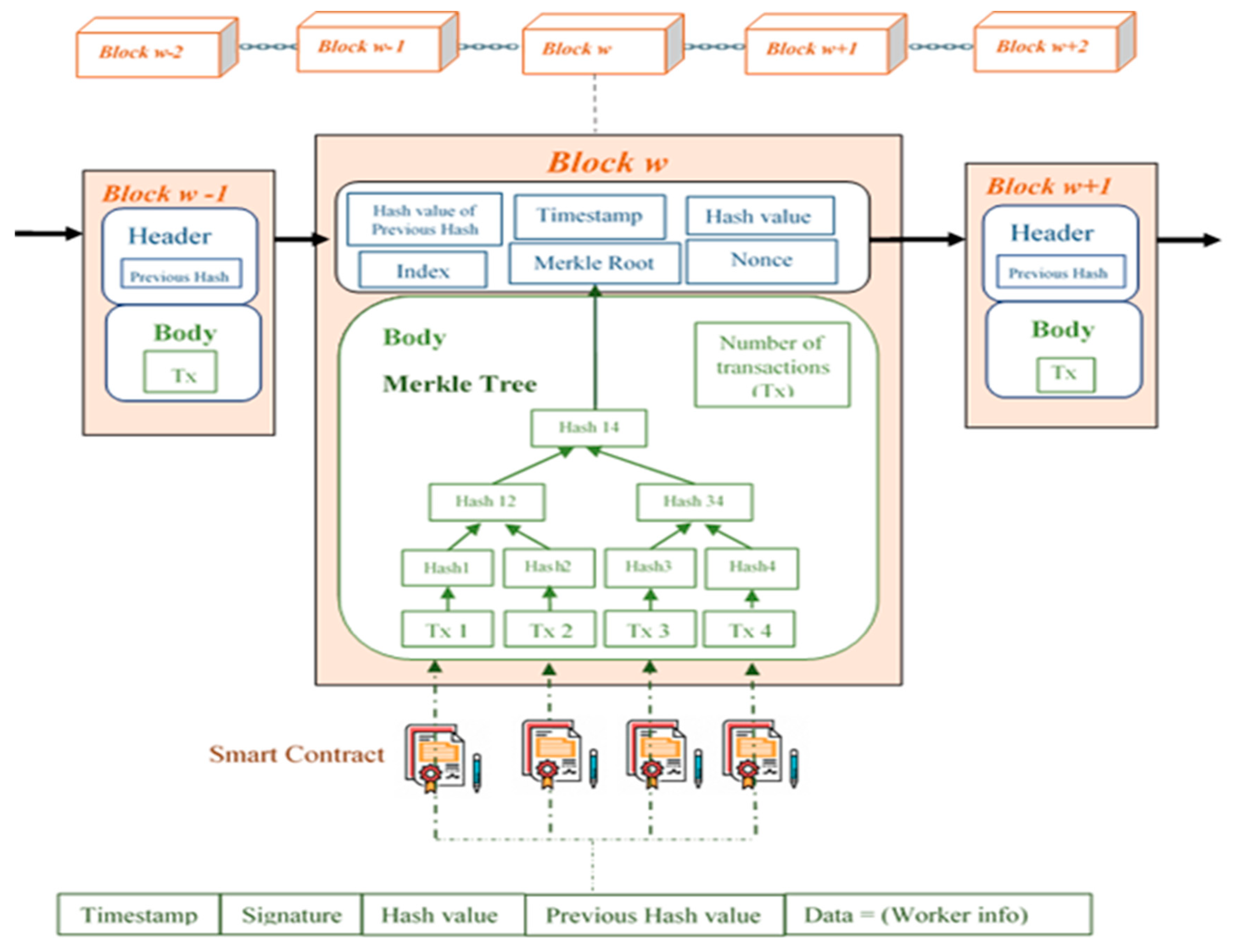
Figure 2.
Overall framework of this study.
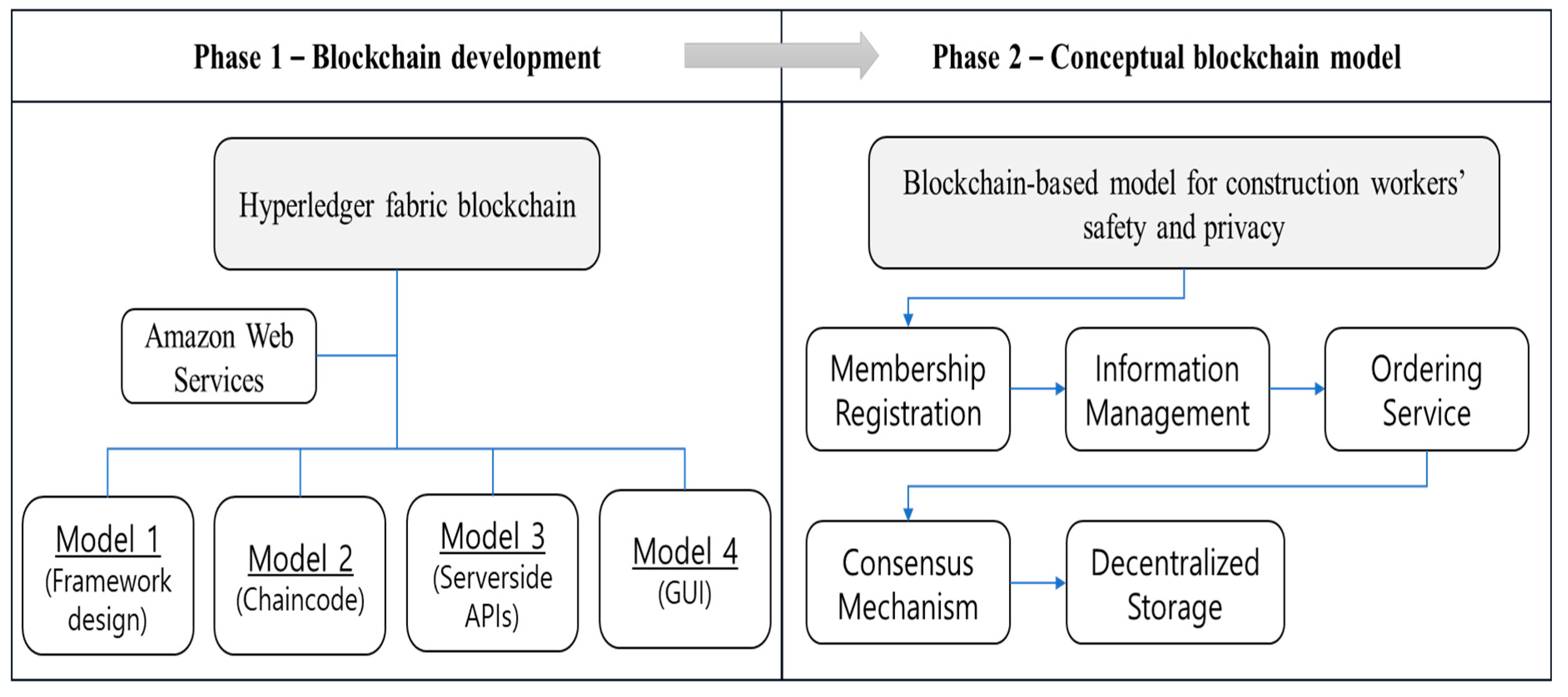
Figure 3.
system structure for proposed Hyperledger Fabric blockchain.
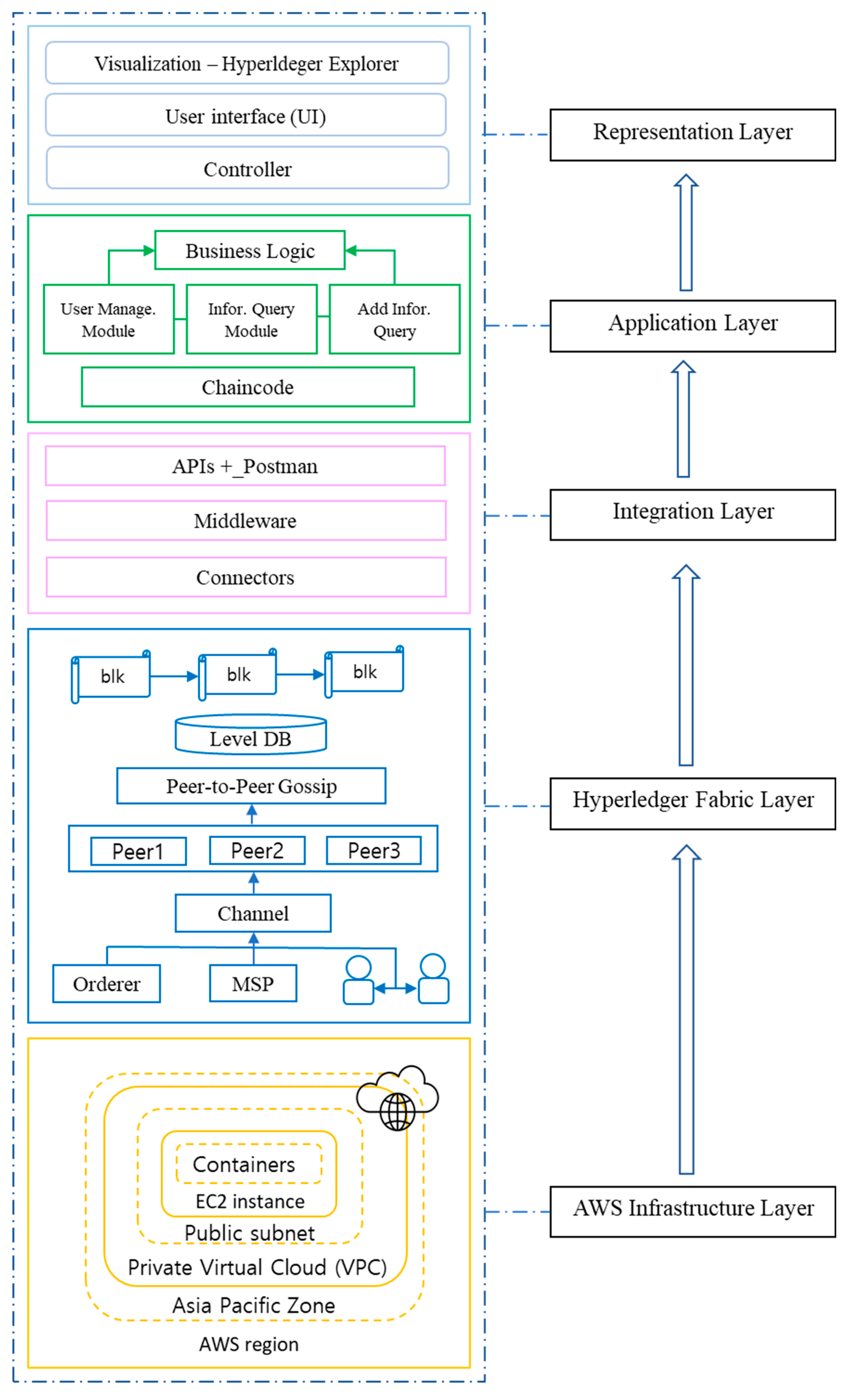
Figure 4.
AWS infrastructure showing EC2, VPC and Subnet.
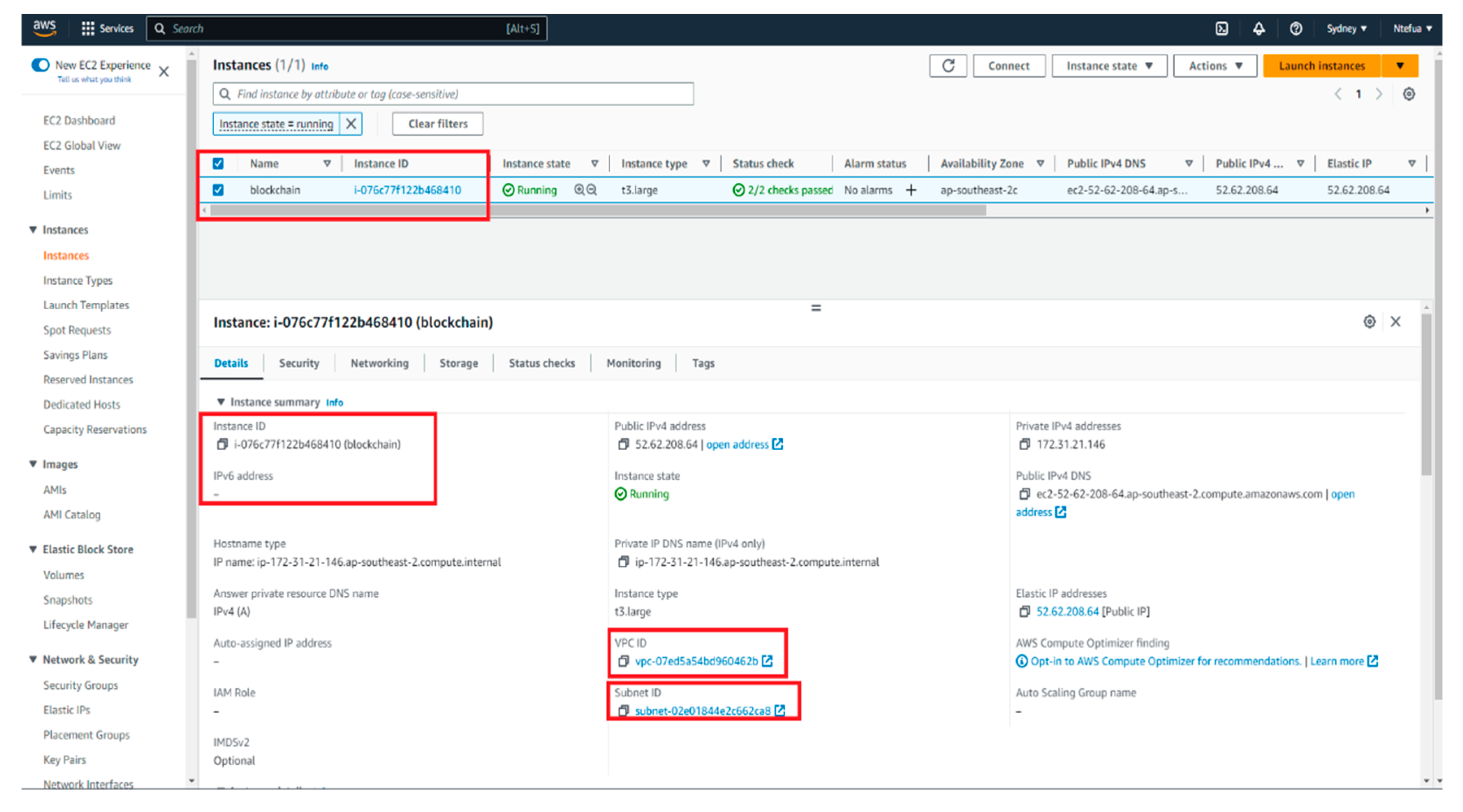
Figure 5.
AWS-based blockchain integration onto Ubuntu computer.
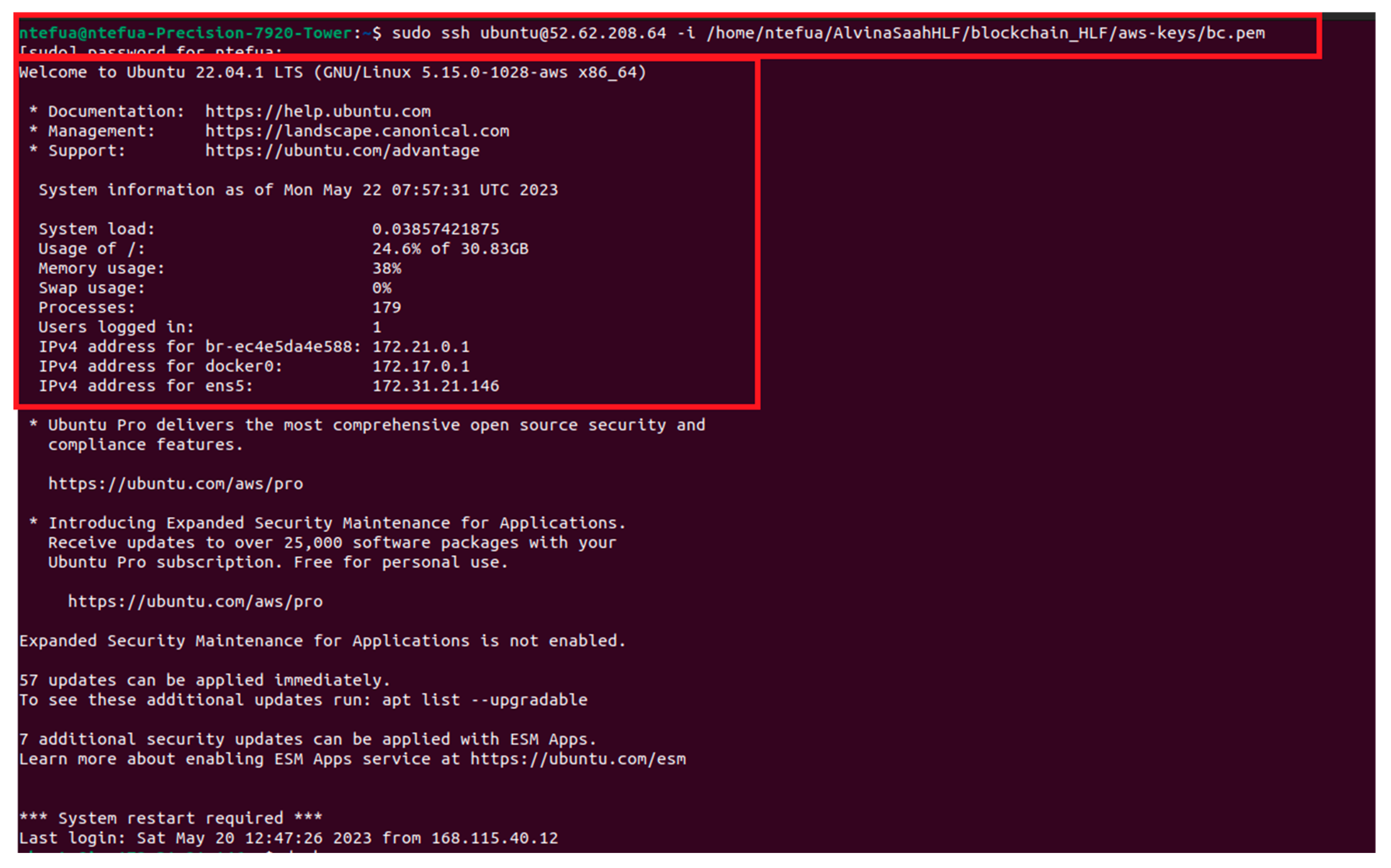
Figure 6.
Fabric components of the proposed blockchain.
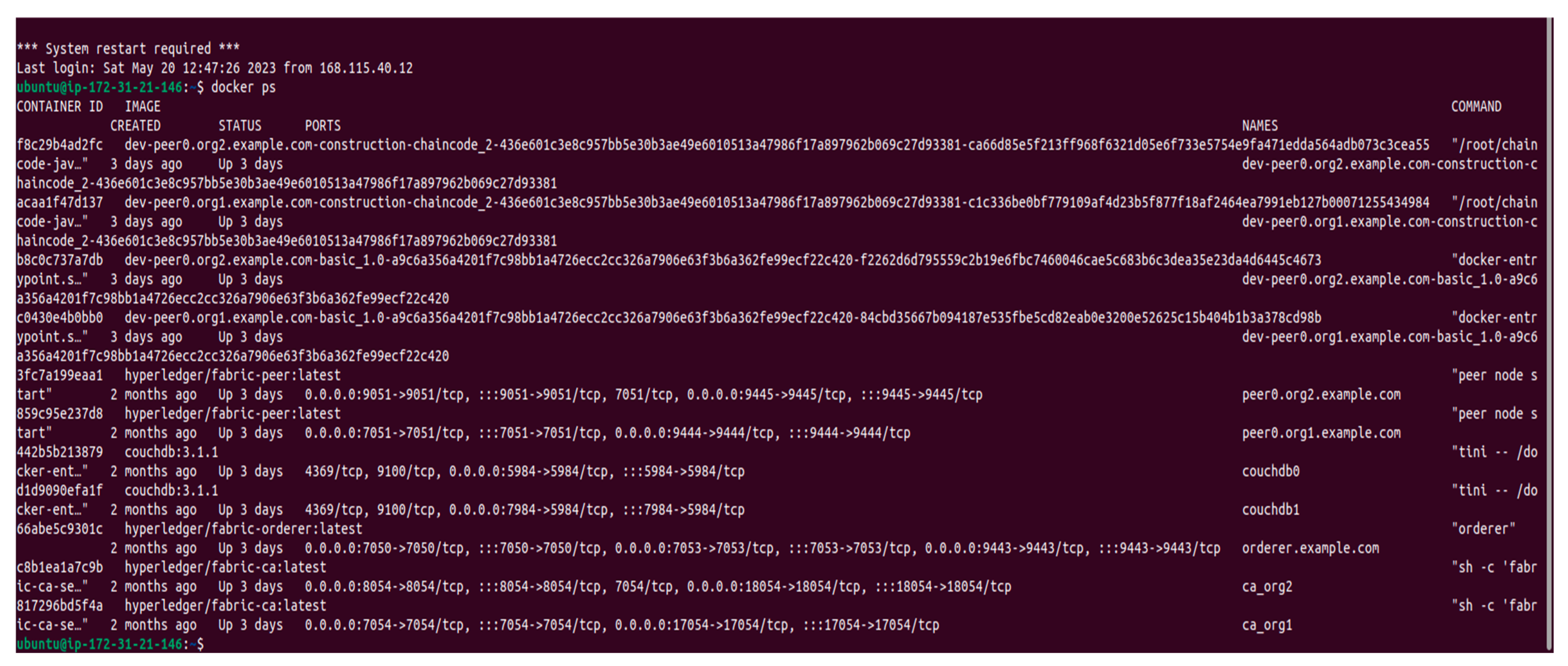
Figure 7.
Screenshot of part of Transaction History API tested in POSTMAN.
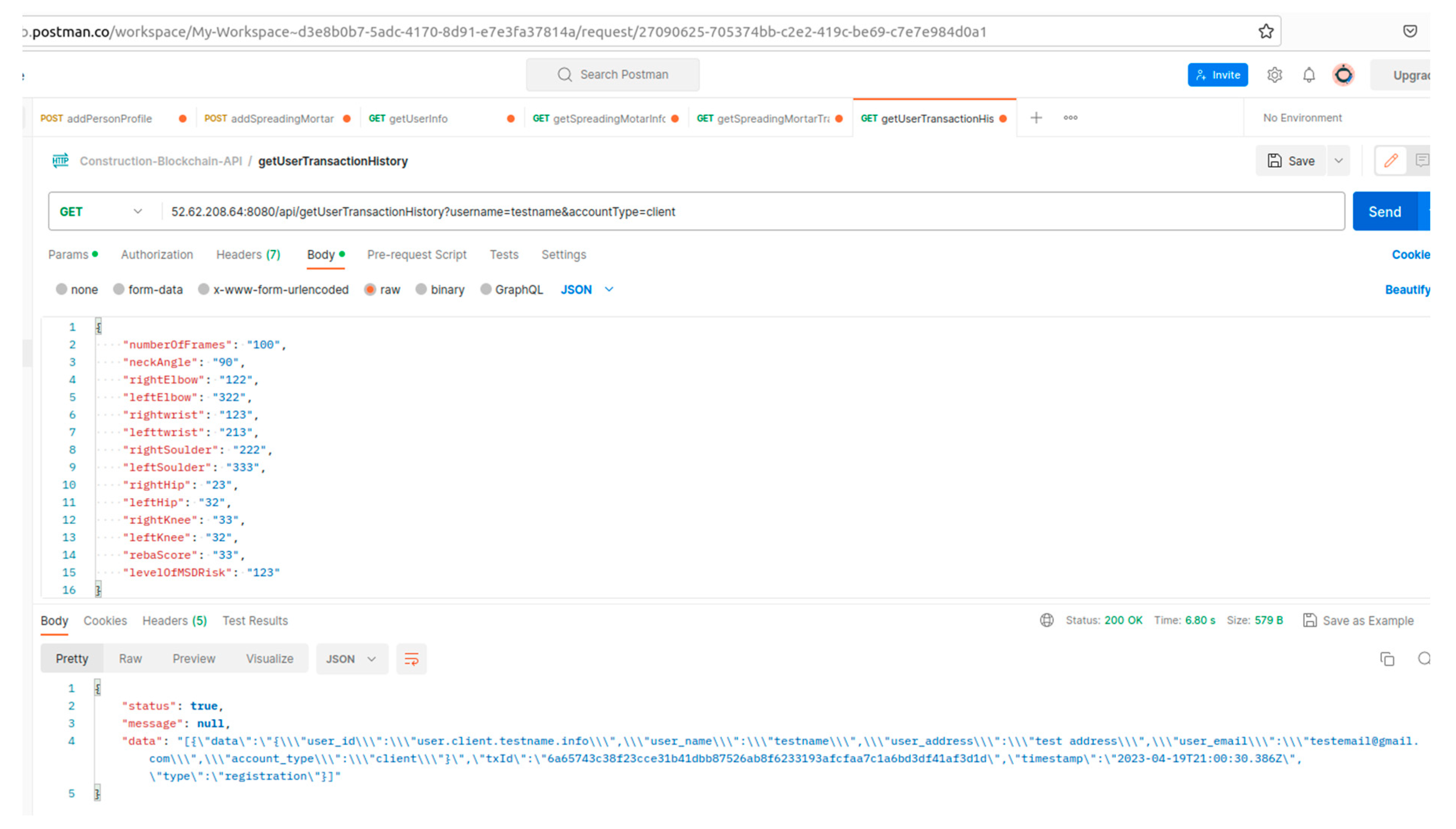
Figure 8.
A blockchain-based model for enhancing privacy and safety of construction workers’ information. (i) Membership registration; (ii) Information management; (iii) Ordering Service; (iv) Consensus mechanism; (v) Decentralized ledger of construction workers’ biodata and safety data.
Figure 8.
A blockchain-based model for enhancing privacy and safety of construction workers’ information. (i) Membership registration; (ii) Information management; (iii) Ordering Service; (iv) Consensus mechanism; (v) Decentralized ledger of construction workers’ biodata and safety data.
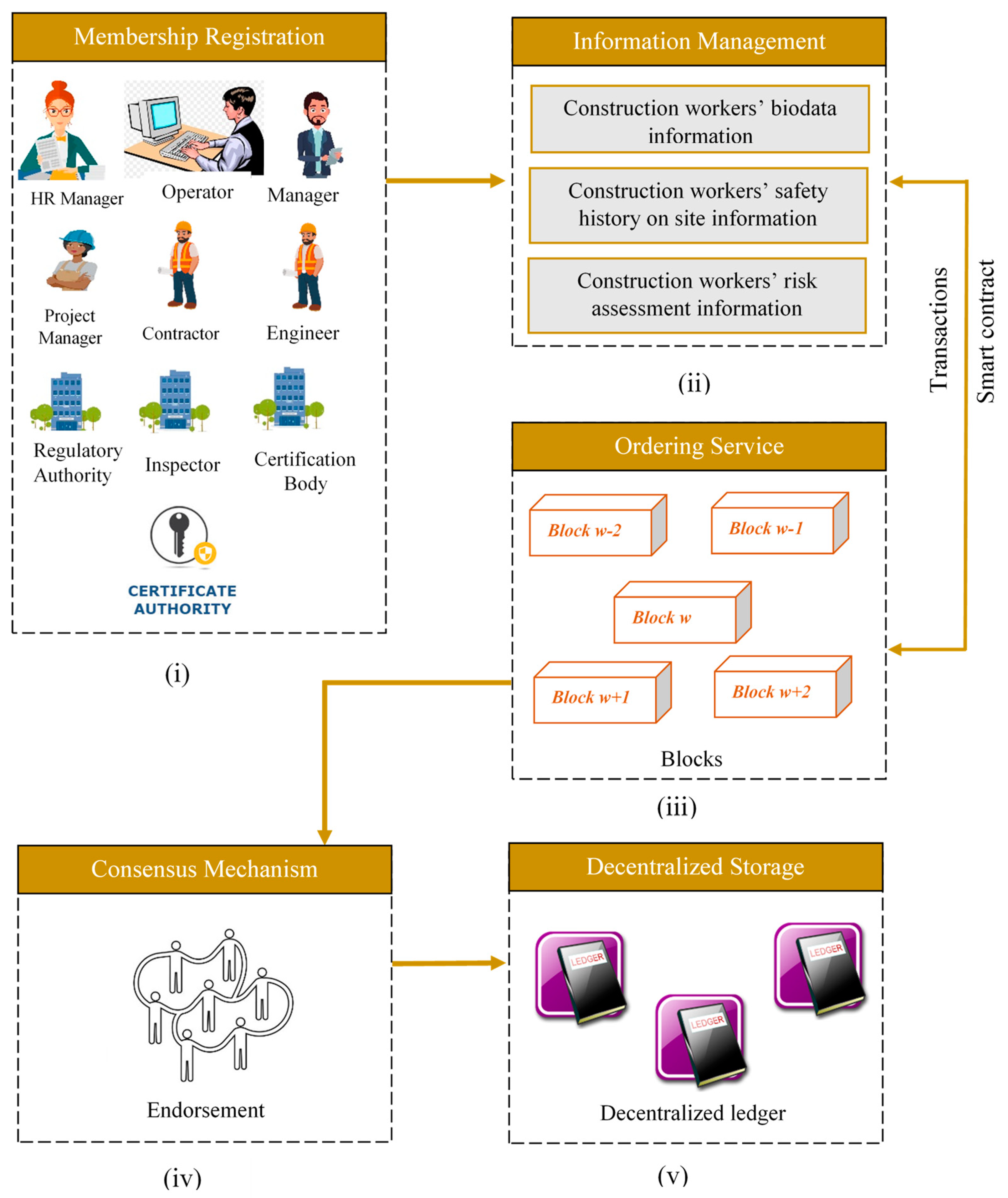
Figure 9.
Testing of conceptual blockchain system using Hyperledger Explorer.
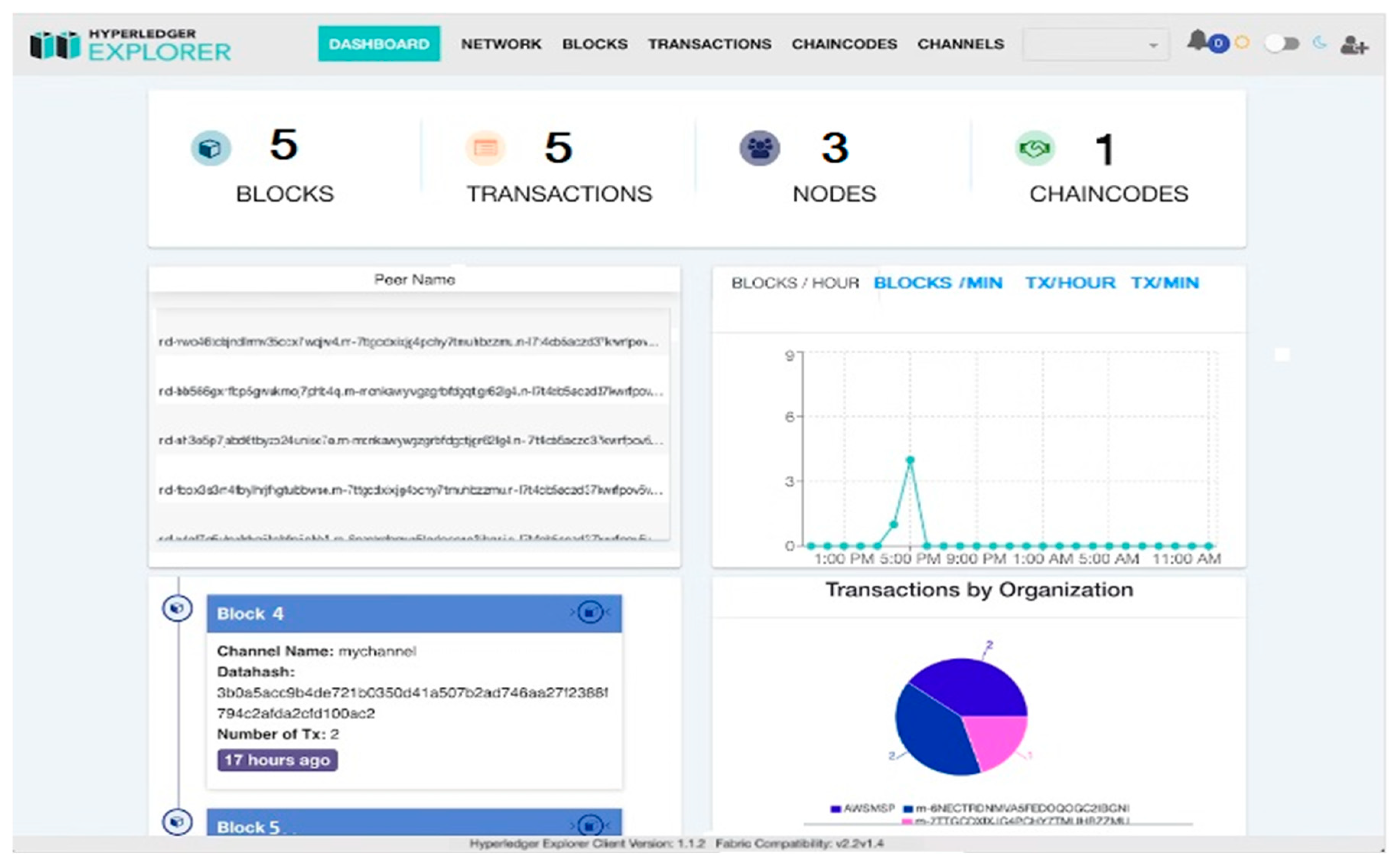

Table 1.
Hyperledger Fabric components.
| Container ID | Names |
|---|---|
| 76f609623b6e | dev-peer0.org2.example.com-construction-chaincode |
| 5fcc2dcfae2c | dev-peer0.org1.example.com-construction-chaincode |
| 2b0446d09f92 | dev-peer0.org2.example.com-basic |
| 89cadb858e55 | dev-peer0.org1.example.com-basic |
| e7a5f020a84f | cli |
| 3fc7a199eaa1 | Peer0.org2.example.com |
| 859c95e237d8 | Peer0.org.example.com |
| 442b5b213879 | couchdb0 |
| d1d9090efa1f | couchdb1 |
| 66abe5c9301c | orderer.example.com |
| d453f4b69751 | ca_orderer |
| c8b1ea1a7c9b | ca_org2 |
| 817296bd5f4a | ca_org1 |
* dev =fabric-dev-servers; org = organization; cli = fabric-tools; ca = certificate authority.
Table 2.
Algorithm 1 (Pseudocode extract): Biodata of construction workers in case study.
| Algorithm 1 Biodata of construction workers in Case study |
|---|
| // Define a User class |
| class User { |
| // Define private member variables |
| String user_id |
| String user_name |
| String user_address |
| String user_email |
| String account_type |
| // Define getters and setters for the member variables |
| method getUser_id() : String |
| method setUser_id(user_id : String) : void |
| method getUser_name() : String |
Table 3.
Algorithm 2 (Pseudocode extract): Safety data example of construction workers.
| Algorithm 2 Safety data of construction workers |
|---|
| // Define a SpreadingMortar class |
| class SpreadingMortar { |
| // Declare private member variables |
| String id |
| String numberOfFrames |
| String neckAngle |
| String rightElbow |
| String leftElbow |
| String rightwrist |
| String lefttwrist |
| String rightSoulder |
| String leftSoulder |
| String rightHip |
| String leftHip |
| String rightKnee |
| String leftKnee |
| String rebaScore |
| String levelOfMSDRisk |
| // Define a parameterized constructor |
| method SpreadingMotor(id : String, numberOfFrames : String, neckAngle : String, rightElbow : String, leftElbow : String, rightwrist : String, lefttwrist : String, rightSoulder : String, leftSoulder : String, |
Disclaimer/Publisher’s Note: The statements, opinions and data contained in all publications are solely those of the individual author(s) and contributor(s) and not of MDPI and/or the editor(s). MDPI and/or the editor(s) disclaim responsibility for any injury to people or property resulting from any ideas, methods, instructions or products referred to in the content. |
© 2023 by the authors. Licensee MDPI, Basel, Switzerland. This article is an open access article distributed under the terms and conditions of the Creative Commons Attribution (CC BY) license (http://creativecommons.org/licenses/by/4.0/).
Copyright: This open access article is published under a Creative Commons CC BY 4.0 license, which permit the free download, distribution, and reuse, provided that the author and preprint are cited in any reuse.


