

Submitted:
09 October 2023
Posted:
09 October 2023
You are already at the latest version
Abstract
A The guinea pig value chain in Jauja, Peru, has been developed through the application of productive projects, institutional strengthening and implementation of the principles of responsible investment in agriculture and food systems (CFS-RAI). The actors in this chain have been showing economic improvements, representativeness and participation, characteristics that make them the key human capital for development. To improve the performance of the actors in the sustainable rural development of the territory of Jauja, Peru, the research carried out an evaluation of the competencies and capacities for project management in 46 actors linked to the business programme on the CFS-RAI Principles, representing 1,094 people in the guinea pig value chain in Jauja, using the Working With People (WWP) model and empirical instruments based on the Octagon method, International Project Management Association (IPMA) competencies, performance evaluation carried out by experts, attitudinal evaluation and the Business Model Canvas. The results have helped to structure the actors of the value chain, who show an intermediate mastery of project management competencies (2.73/5), institutional capacities in development (2.89/7) and a growing organizational management performance (26.2/100). In addition, trust and proactivity have been generated among the actors in the chain, with an interest in continuing with the implementation of the CFS-RAI Principles in order to achieve sustainability in their productive projects with commercial innovation. The results have allowed us to generate the design of an innovative programme for the development of competencies, which balances the three dimensions of IPMA competencies (perspective, person and practice) in connection with the CFS-RAI Principles. Both processes complement the strengthening of human capital in agrifood value chains through sustainable project management and contributing to sustainable development in the region.
Keywords:
competencies
; institutional capacities
; project management
; sustainable rural development
; value chain sustainability
; WWP
; Jauja
1. Introduction
Most rural territories in the world have various usable natural resources that allow their inhabitants to satisfy basic needs [1]. However, limited access to basic services, namely water, energy, communication, health and education, reduces the population's opportunities for development [2]. This inequality gap between urban and rural areas has been narrowing with the contributions of science and technology, but results are still insufficient [3], and in the case of Peru, the problems of poverty and inequality in rural areas still persist, exacerbated by the effects of the COVID-19 pandemic [4].
Development processes are aimed at enhancing people’s quality of life, creating the conditions required for fully satisfying their needs and providing well-being. To achieve this sustainable development, local resources are usually used rationally without affecting their availability or quality for subsequent generations. However, the process involved in achieving sustainability is complex and challenging [5], making it difficult to incorporate into the accelerated urban development, which tends to violate sustainability [6]. Therefore, for rural areas it is worth improving planning by involving interested parties, with a view to achieving comprehensive sustainability [7].
In the rural territories of Jauja, the influence of social and cultural factors that modify consumer behaviour, environmental factors related to climate change that alter agricultural production, economic factors that reduce agricultural production and political factors that offer social assistance and discourage agricultural activity affects the food security of the rural population [8] with detrimental effects on health, which limit brain development and consequently impact the development of capabilities in these people [9]. Due to this situation and migration, mainly of young people [10], rural territories have deficiencies in terms of human capital.
In Peru, different types of interventions have been carried out aimed at benefiting rural development by public administration institutions, NGOs and academia, with the support of public funds and international cooperation. However, progress is slow due to the isolated and disjointed way in which institutions proceed [11]. In Jauja, agriculture and livestock are the predominant economic activities [12], and in the last two decades the development of the guinea pig value chain has been promoted through technical training and technology transfer [13], while recently the CFS-RAI Principles [8] have been implemented to improve sustainability. This prioritization of the guinea pig value chain is due to the fact that producers have limited land areas [14], as well as the productive advantages of the guinea pig, namely its adaptability, versatility, precocity and accelerated reproduction [15,16], and the high demand for guinea pig meat [17]. With the projects that benefit the guinea pig value chain, the actors are improving their competencies and their income, and their limited participation in development management is gradually being reversed [18], thanks to the application of the WWP model [19,20) and its effect on social innovation [21] in contributing to sustainable rural development.
Projects have proven to be the driving force behind development [22], and the success of these projects depends on a favourable ecosystem, which the community initiative LEADER (Liaison Entre Actions de Développement de l'Économie Rurale) has been able to effectively generate with the application of its seven specificities: (a) bottom-up approach; (b) territorial approach; (c) comprehensive and multisectoral approach; (d) innovation; (e) the creation of local action groups (LAGs); (f) the management of proximity and financing; (g) learning in collaborative networks [23,24], and positively impact on the sustainable rural development of European [23,25] and Latin American territories [26,27]. In this sense, the development of successful projects depends on the skills of the management team in planning, making efficient use of resources and integrating actors towards achieving the objectives, and is achieved with adequate training [28]. On the other hand, critical situations can also lead to successful projects because they force the actors to coordinate and commit to solving the problem and obtaining equitable benefits for the parties involved [29].
Competencies include the use of knowledge, skills, attitudes and values to solve problems in different contexts [30]. The rural human capital of Jauja has the capacity to carry out agricultural, artisanal and commercial work, which allows them to survive, and they are training to improve the value of their products and services through responsible and sustainable investments [8]. Since many of the producers in Jauja are small, they have formed organizations based on the common interest of improving the production and marketing of guinea pigs, and currently they are the most dynamic actors in Jauja and are interested in continuing to grow through projects that use local resources in an efficient and sustainable way [31]. In this perspective, two aspects are important: the improvement of institutional capacities [32] and having a project management team aligned with the IPMA competencies [33]. In both cases, mastery of individual and collective competencies for project management is necessary [33,34] by leading agents and management teams.
Among these leading actors, the value chain operators stand out as agents of the private and associative sector, who assume risks and generate economic value (small producers, micro-entrepreneurs, distribution companies, wholesalers, etc.). These agents, during the main production and marketing process, they are owners of the particular good or service for some time and have the possibility of adding value to it [35,36]. The long-term viability of their businesses is the basic condition for the success and sustainable management of the value chain that is based on the capabilities and competencies of the agents of small and medium-sized enterprises [37].
The actors in the guinea pig value chain have been showing a certain prominence in the rural areas of Jauja and elements of basic competencies to lead local sustainable rural development, a process that has been delayed and is advancing slowly. In this sense, the research proposes to evaluate the institutional competencies and capacities of the actors in the guinea pig value chain in order to identify gaps and complement training with competencies for project management, linked to strengthening capabilities and contributing to sustainable rural development of Jauja from the valorization of endogenous resources and the practice of the CFS-RAI Principles as the main sustainability guide.
1.1. The guinea pig value chain in Jauja and its actors
Guinea pig production in Peru is a strategic activity for food security [38] practised by poor families in rural areas, where approximately 10% of them have evolved towards commercial breeding [15,16], motivated by the high demand for guinea pig meat [17] in the main cities of the country.
The guinea pig value chain in Jauja involves seven actors (Figure 1) and begins with the activity of approximately 3,000 family-commercial producers, who on limited areas of land produce cultivated pastures and take advantage of by-products and crop stubble to feed the guinea pigs [39], as well as adapting local infrastructure to house the guinea pigs; that is, they use a high proportion of endogenous resources. The production systems have an average of 70 breeders [40] and produce approximately seven guinea pigs suitable for sale per breeder per year, which are sold at the age of 90 days [13]. The purchase of animals is carried out by marketers through direct purchases, planned purchases from an association or by attending fairs. Then they carry out artisanal processing, which has some deficiencies in terms of safety, before finally taking the guinea pig meat to the different markets where consumers purchase the meat [17], including tourist restaurants that prepare dishes based on guinea pig meat and facilitate consumption. Three direct and four indirect actors participate in the process described (Figure 1), whose interrelationships must be improved [41] so that the chain continues to develop, with the mastery of competencies and the improvement of institutional capacities being essential. Below, we provide more details about the actors:
Agricultural suppliers: These are made up of small and medium-sized marketing companies that are responsible for providing materials: mesh, feeders, waterers, tools, scales, etc.; and inputs: grass seeds, food supplements, medicines, disinfectants, etc., for the production of guinea pigs [41]. The stores of these companies are located in urban areas; since they are not associated, they compete among themselves and do not usually enter into contracts.
Producers: These are rural residents with limited land who practise family farming and diversify their activities to obtain income [42], among which is the production of guinea pigs. The producers, who include a significant number of females [43], make efficient use of their limited resources and strive to maintain and improve the productivity of their guinea pigs, but they feel that the economic remuneration they receive is not enough. Given the interest in developing the guinea pig value chain [43], they choose to form associations with the intention of improving technical aspects of breeding and marketing [41], but they need to improve their management competencies [44] to strengthen the organizations and improve their performance.
Marketers: These are usually family groups that are dedicated to the collection, artisanal processing and wholesale marketing of guinea pig meat in municipal markets in cities. Most marketers are informal and do not comply with various food safety procedures; they try to stand out independently and show no interest in organizing. Their main strength is their negotiating power, especially with unorganized producers [40,41].
Consumers: These are the ones who buy guinea pig meat to prepare a dishes for consumption. This group includes tourist restaurants as the largest consumers, given that they have gastronomic expertise in preparing guinea pig-based dishes and serve a large number of diners [45]. Restaurants compete among themselves and do not form organizations.
Academia: Represented by academic institutions based in Jauja – Universidad Nacional Mayor de San Marcos (UNMSM), Universidad Nacional Agraria La Molina (UNALM), Universidad Nacional del Centro del Perú (UNCP) – which contribute to the development of the value chain of the guinea pig with training, research and extension [41]. These actors participate in some projects and promote articulation between actors.
Local government: These are the district and provincial municipalities and public administrative agencies that promote productive activities and facilitate the conditions for the development of the value chain by supporting projects [46] and issuing regulatory provisions alluding to the chain.
Service providers: These provide services that contribute to the development of producers, where extension technicians play an important role, with most of them being trained as specialist technicians in providing extension services in guinea pig production by the UNMSM [47]. NGOs are organized institutions that provide this type of service through projects and have extension technicians on their team. However, their intervention tends to be vertical and disjointed from other actors [11]. Alternatively, some extension technicians provide services independently.
1.2. The importance of projects for sustainable rural development
Projects make planned use of resources with clearly defined objectives and goals to obtain a product or service, which improves in value for the benefit of a specific population or territory. Projects are operated by management teams, led by the project director, whose management style is key to the results achieved [48,49]. The project manager works in a coordinated and efficient manner with the management team and stakeholders to successfully complete the project. In this sense, good relationships and values promoted by the management team play an important role in the success of projects [50], as do training processes that improve the performance of project managers [51]. However, in the executed projects there are insufficient elements that contribute to sustainability, including the role of the project director [52].
Development is something that every community, society, territory or nation aspires to achieve and maintain and is conceptualized as the full satisfaction of needs, taking advantage of available resources until the general well-being of all its members is achieved. Currently, demographic growth and the advancement of science and technology are generating greater and more evolved needs, which are satisfied by the consumption of more and more resources to the detriment of the biosphere [53]. Faced with this growing problem, the United Nations adopted measures such as the approval of the CFS-RAI Principles [54] and later the Sustainable Development Goals (SDGs) [55]. Since then, sustainable interventions have been promoted, such that the availability of resources for future generations is not affected [56] and that also involves the modification of current standards for projects in terms of scope, flexibility and responsibility for the sustainable development of society [52].
Most rural areas worldwide are among the least developed, and although they have local resources, the conditions are too complicated to undertake projects aimed at reducing poverty and inequality [57]. In addition, rural human capital has serious training disadvantages, which limits their performance in terms of development [58], including project work. The key to success in the face of adversity was uncovered by the LEADER community initiative, which is the most representative example of planning and management of sustainable rural development based on the preparation and execution of projects [23,59]. The social innovation promoted by the LEADER initiative [60,61] and the Working With People (WWP) approach [62] has been important for the success of several projects, where the population has played a leading and empowered role in making decisions concerning planning and in the management of the sustainable development of their locality, with a view to achieving the common well-being of the population [63] and good governance [64]. Likewise, the committed participation of universities in accompanying the process of sustainable rural development with human capital formation and technical guidance stands out [20,65].
1.3. Project management competencies and their influence on institutional capacities
The competency approach is a trend that has been applied in educational systems in different parts of the world. Although there are still conceptual and methodological differences [66], the performance results are quite applicable to work environments where productivity is required [67]. In this sense, competencies have been making an important contribution to the development of human capital within an area in which competitiveness and economic development prevail [68]. However, the impact of competencies can transcend the boundaries of the economic domain and provide comprehensive benefits for sustainable development.
In project management, IPMA [33] has developed the project manager's competency profile in three areas: people, practice and perspective, which is evolving according to global trends and demands. What is notable about this profile is that in addition to considering the technical, productive and economic aspect provided by the practice area, it incorporates the people area with elements of competency that strengthen the ethical, emotional and social components, and the perspective area with elements that facilitate adaptation to various contexts. The three areas contain elements of competence that balance and make decision-making in project management more assertive [69]; likewise, they connect with the three dimensions of the WWP model: social-ethical, political-contextual and technical-entrepreneurial. that are implicit in every project and development process [63]. Training experiences for the development of project management competencies reveal that there are various methodologies that can achieve the learning of these competencies [33]; however, in mastering these it is crucial that students face real-world situations [70].
Individual competencies improve people's work performance and allow them to join organizations, either because they hire their services or because they find common objectives that unite them. In both cases, the organization establishes a structure and a work plan consistent with the mission and vision [71]. Under these circumstances, people need to additionally develop collective competencies to complement themselves with other members, act in coordination and create synergy. This integration of members within the organization is important to facilitate the interrelationships with other organizations through the exchange of goods or services and collaboration to achieve a common goal [72], namely territorial development. When organizations or actors enjoy internal solidity and strengthen their relationships with other actors in the territory, they have developed their institutional capacity, which in Peru should not be limited to economic development but should include environmental and social aspects to contribute to sustainability [73].
In development interventions financed by international cooperation, the results depend on the performance of the actors involved. For example, the World Bank, one of the financial entities, developed the Institutional Capacity Analysis System (ICAS) to evaluate the institutional capacity of actors within development projects [74,75], and later the Octagon method to evaluate NGOs, which was very versatile in evaluating different types of actors and monitoring them [76,77,78]. With regard to the evaluation of capabilities, it has been observed that social innovation influences the quality of the actors [79] and that together with good governance they contribute to sustainable development in line with the SDGs [80].
2. Materials and Methods
The methodology focused on the actors of the guinea pig value chain from Jauja, as they have demonstrated active dynamism in sustainable rural development, with technical advances [81], improvements in governance, integration and implementation of the CFS-RAI Principles, since their connection with the binomial Local Action Group (LAG) – Regional Development Centre (RDC) El Mantaro [20] and their participation in the business programme on the CFS-RAI Principles [8]. Thus, the progress of the actors can be enhanced through contributions to sustainable project management.
The methodological process of the research is divided into three stages, with the application of different instruments and sources of empirical information (Figure 2): in the first stage, the institutional competencies and capacities for project management are evaluated;, in the second stage, the attitude and the business opportunities are assessed, and contributions are obtained to improve the training processes; and in the third stage, the information is analysed and the training programme according to competencies for project management connected to a capacity improvement plan is designed. The stages are explained below:
2.1. Stage 1: Diagnosis of competencies and capabilities in project management in actors of the guinea pig value chain, in Jauja
An actor was defined as an organized group of people, not necessarily formalized, with direct activity in, or linked to, the guinea pig value chain. Through visits we identified the actors active within the territory of Jauja. We introduced ourselves to each of them and validated their status as actors; then the leader of the research team gave a brief overview of the ongoing investigation and formally invited the actor to the workshops for the collection of information. To encourage actors to attend the workshops, reminder messages were sent to their mobile phones a few days beforehand.
Since the districts of Jauja can be better grouped by their hydrographic basins and their respective communication routes, the territory was divided into four zones: the left bank of the Mantaro river, the right bank of the Mantaro river, Yacus Valley and Yanamarca Valley (Figure 3). It was planned to develop a workshop in each area for the purpose of dialogue and obtaining information through the application of three information collection instruments.
The information-gathering workshops began with a brief introduction to the research, followed by motivation and reflection dynamics related to the role of organizations in territorial development. Then working groups were formed, one for each organization. At each table, with the application of the Working With People (WWP) method [62], dialogue was encouraged about the situation of the organization in terms of operation, problems, limitations, needs and experiences, with the aim of raising awareness among the actors and improving the provision of information.
Three information collection instruments were used (Figure 2), developed, reviewed and approved by the research team. The instruments were printed, the first part of which contained the text on informed consent, which was voluntarily agreed by all participating actors. Then, they recorded personal information and the organization to which they belong. Finally, the instruments were completed as described below:
I. Competency evaluation survey
This instrument evaluated the mastery of competencies in the project management team of each actor, taking as reference the 28 elements of individual competency for project management from IPMA [33], distributed in three areas of competency: perspective, person and practice.
The respondent chose the level of mastery of each competency element on a scale of 1 to 5, with 1 = very poor, 2 = poor, 3 = acceptable, 4 = good and 5 = very good [83]. To reduce bias, the survey was administered to two groups: to the project management team of each actor, for whom it was a self-assessment, and to members of the actor who do not belong to the project team. The average value of both surveys was taken as the result of each actor for data analysis.
II. Capability assessment survey
This instrument was developed through an adaptation of the Octagon method [71] and consists of 16 questions. Each question has seven response alternatives, which express the rating of the evaluated capacity in increasing levels. The questions were divided into four sections, two subsections for each section and two questions for each subsection, with the following structure:
A. Organizational basis
a. Identity
i. What can you say about the mission and vision of your organization?
ii. What strategies has your organization formulated in relation to the vision?
b. Structure
i. Have duties and responsibilities in the organization been divided?
ii. How are democratic norms applied?
B. Activities and results
a. Implementation of activities
i. How is planning carried out for the execution of activities?
ii. How is the follow-up of the work done?
b. Importance of activities
i. Does the content of the activities correspond to the vision?
ii. How do working methods correspond to the vision?
C. Development capacity
a. Professional skills
i. How do you rate the professional qualifications and experience of staff?
ii. How do you rate the personnel management capacity?
b. Systems
i. What is the administration of financial resources like?
ii. What are the administrative routines like?
D. Relationships
a. Acceptance
i. What is the support and acceptance of the target organizations or target groups like?
ii. What is the dialogue like with the target groups or target groups?
b. Relationships with the environment
i. How is the recognition of the organization in the community going?
ii. What is participation in networks like?
The survey was a self-assessment, where, for each question, the surveyed group chose the alternative that best suited the actor's situation, which allowed a rating of between 1 and 7 to be assigned. The average of the ratings per subsection was the result considered for the analysis and corresponded to the eight elements of the Octagon.
III. Performance evaluation
The evaluation of organizational management performance was carried out by three members of the research team using a rubric. An interview was conducted with the representatives of each actor, with alternating questions about knowledge, opinion, decision-making in hypothetical cases and attitude in difficult situations, among others, related to the actor's management. Based on the responses, the evaluators rated the 18 criteria of the rubric, according to the performance levels and their corresponding scores, as: absent (0%), in process (25%), marginal (50%), achieved (75%) or satisfactory (100%). Each criterion had maximum scores of between 4 and 8 points, depending on its importance, with the maximum score of the rubric being equal to 100 points. The criteria considered and their corresponding maximum scores were:
a. Use of strategic plan: 4
b. Actions based on ethical principles and values: 8
c. Solid and democratic organization: 5
d. Efficient system with defined processes: 8
e. Economic sustainability: 6
F. Product and service quality: 6
g. Coherence with vision, mission and values: 4
h. Ideal human capital: 8
i. Risk management: 5
j. Relationships, collaboration and articulation: 5
k. Network learning: 5
l. Formality and compliance with standards: 4
m. Respect for nature and the environment: 4
n. Troubleshooting: 5
o. Resilience and adaptation to change: 5
p. Common good and equality: 5
q. Governance: 8
r. Entrepreneurship and innovation: 5
The information collected with the instruments was archived and subsequently recorded in a Microsoft Excel spreadsheet. Tables were then prepared showing average values based on the classification criteria of the actors: type of actor, gender, area, number of members and seniority (Table 1).
The three instruments used demonstrated high reliability, given that they obtained Cronbach's alpha values [84] of 0.86, 0.98 and 0.95 for the performance evaluation, IPMA competency evaluation and institutional capabilities evaluation, respectively, after testing the information from 46 actors participating in the research, representing a population of 1,094 people, who make up the guinea pig value chain in Jauja.
2.2. Stage 2: Evaluation of attitude, business opportunity and contributions to improving training
A second round of workshops was held, where other information collection instruments were applied (Figure 1). In a similar way to the first stage, one workshop was developed per area. The 46 actors from the first stage were summoned and 21 of them participated.
These workshops comprised four parts. In the first part, a summary of the results on institutional competencies and capacities for project management was shared. In the second part, a team of experts carried out an attitudinal evaluation by applying individual and group techniques to the participants, based on the methodology of meaningful [85,86] and experiential [87,88] learning, which allowed the participants to generate a learning route from the experience of concepts, reflection, transfer to the field and personal scenario. The team of experts presented a report with observations, conclusions and suggestions. In the third part, the Canvas Business Model [89,90,91] was developed for the guinea pig value chain with the facilitation of an expert and the participation of the actors. The expert presented a report with observations and conclusions. Finally, in the fourth part, the participants made their final contributions by filling out two short questionnaires on important aspects for the development of competencies and improvement of capabilities for project management. All the information obtained in the second stage was synthesized in the SWOT and KCEF matrices.
2.3. Stage 3: Analysis of information and design of a complementary training programme by competencies connected to a plan to improve institutional capabilities
The actors in the guinea pig value chain have been showing modest progress and contributing to the local development of Jauja with a tendency towards sustainability. Thus, the elements inherent to the project management of its human capital were analysed under the approach of the three dimensions of the WWP model [62] in order to identify the necessary complements for a competency-based training proposal that contributes to the development of the chain, and which then results in promoting the sustainable rural development of Jauja.
3. Results and Discussion
3.1. How prepared are the actors in the guinea pig value chain for the management of sustainable rural development projects?
The actors in the guinea pig value chain agree that project work is the way to progress and advance development. They went on a modest productive technical journey and have been incorporating the CFS-RAI principles [8,20] in their route towards sustainable local development. We explore, from the three dimensions of the WWP [62], the development of the human capital of the actors in the management of sustainable rural development projects in Jauja.
3.1.1. Ethical-social dimension
The historical background reveals a constant educational disadvantage for the rural Peruvian population [92] and Jauja is no exception. Poor basic education and scarce technical education do not favour rural development. In this context of rural life and family agriculture, residents have raised guinea pigs for their food security, and with the growth in demand [17] and technological improvements [13] some projects and training have been developed to promote the guinea pig value chain, which, added to the application of the CFS-RAI principles [20], is contributing to sustainable local development. This experience has encouraged the actors to develop project management skills to a moderate level (Table 2).
Within the IPMA competency assessment, actors, especially organized ones, show greater mastery of personal competencies (Table 2), specifically in the following competency elements: integrity and personal reliability, personal communication, relationships and participation, leadership and teamwork. Apparently, community values, inherited from ancestors, and the influence of academia and service providers (NGOs) support this progress and it is necessary to maintain and consolidate it with more training. It should be noted that the application of the WWP model when working with some of the actors [8,20] has proven to be a powerful tool for building strong values groups.
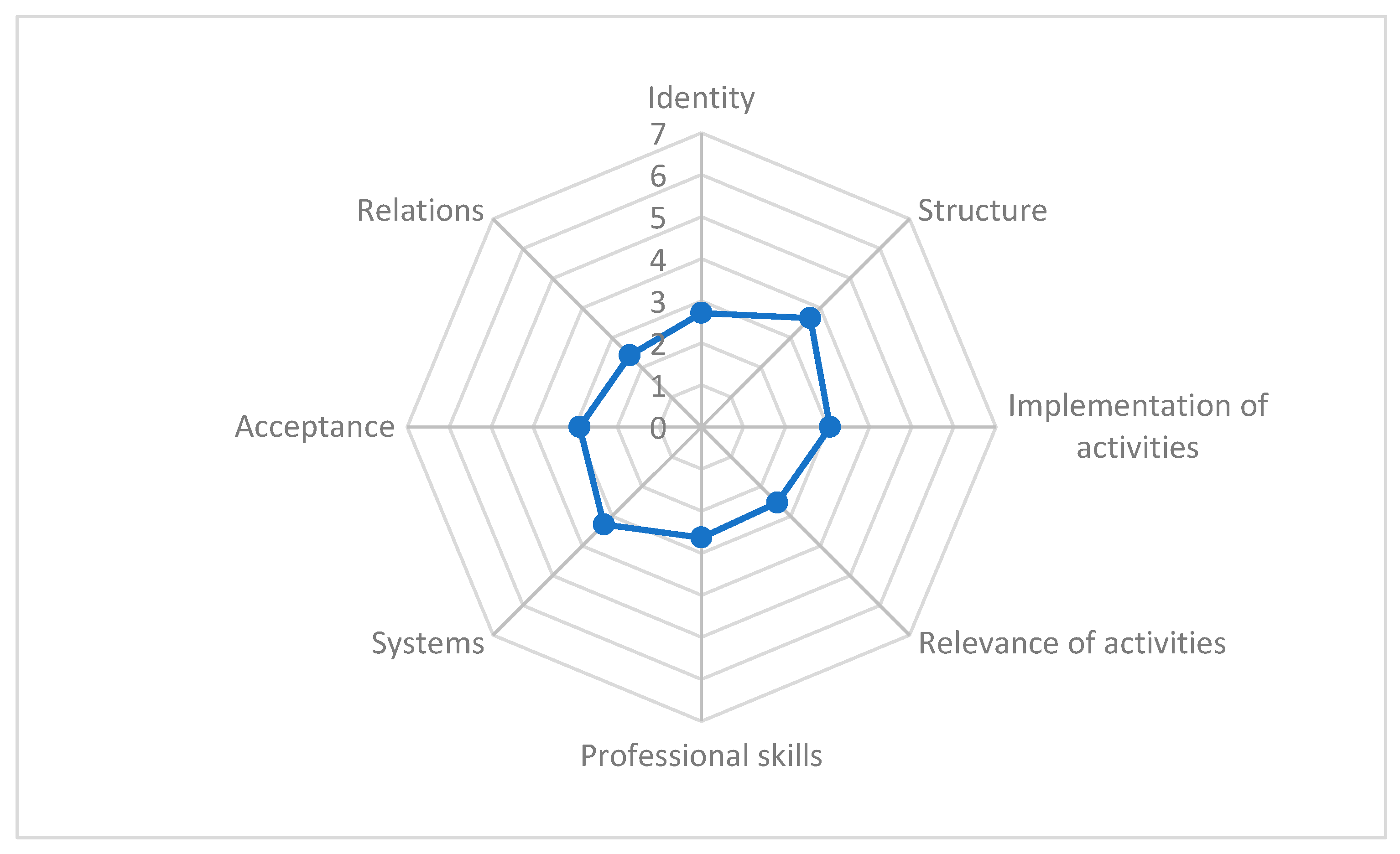
Project management competencies contribute to the strengthening of institutional capacities, given their intimate relationship (Table 3), and both are fundamental for the optimal development of organizations or actors, which when integrated into a LAG are the key elements for good governance [64], the social sustainability of value chains and the comprehensive development of territories. One of the benefits of any strong organization is the opportunity for disadvantaged people to empower themselves and improve their bargaining power and benefits within the chain. The institutional capacities of the actors in the guinea pig value chain in Jauja are developing (Figure 3, Table 4), and although they still exhibit insufficiently strong organizational performance (Table 5), which requires more training, the participation of a greater number of members (Table 3) and the influence of the LAG are improving these capacities based on the interrelationship between actors and the decision-making derived from social learning [20], which motivates them to be able to integrate an organization of the linked guinea pig value chain to the LAG (Table 6). In this regard, the increase in female participation in organizations and the emergence of nine women's organizations (Table 1) are having a positive impact on sustainable rural development, given their communication and collaboration skills [93]. This effect is beneficial not only because women face inequality, violence [94] and other barriers to leading organizations [95], which even lead to cultural patterns of male domination [96], but because by showing leadership, good interpersonal relationships and values, they have contributed to the well-being of the members and sustainable rural development [97]. This does not mean that the female gender should predominate, but that the best thing is the complementarity of both genders [98], given their different nature and characteristics.
Figure 4.
Institutional capacities in actors of the guinea pig value chain, in Jauja.
In the development of the actors in the Jauja guinea pig value chain, the election of leaders with great social sensitivity has been encouraged at the producer level, and some of them are managing to unite their groups based on trust, institutional values and good governance. These actors are made up of proactive, persevering, dynamic and community-oriented people (Table 6), characteristics that must be maintained and fostered with favourable environments because they are favouring organizational development (Table 7). Likewise, good relations with other actors are also being improved, since sustainable territorial development needs to promote the difficult task of proactively articulating the actors [11,99] of the different value chains between value chains and other sectors that involve interest groups. In other words, the social innovation that has been generated from the application of the WWP model [62] is improving the institutional capacities of producers, which will gradually enhance the territorial governance and sustainable development of Jauja. However, to continue this progress, it is imperative to promote the training of actors, taking into consideration ethical-social aspects that internally strengthen organizations and improve their management.
The collective behaviour of the actors has important emotional support that leads them to be proactive and dynamic (Table 6) to achieve their objectives, but it requires better preparation to face risks (Table 7). It is important to nurture this emotional behaviour to promote learning processes [100], which has resulted in the training of entrepreneurs [101]. Likewise, it is also important to train leaders who promote cohesion and collectively empower the organization [102], to promote links with other actors and thus take advantage of opportunities to develop projects [103].
3.1.2. Technical-entrepreneurial dimension
The area of practice competencies corresponds to the technical-business dimension and is the least developed in the actors of the Jauja guinea pig value chain (Table 2); it is also observed that the capabilities regarding professional skills and the relevance of the activities are poorly developed (Figure 3). In this regard, service providers, which include NGOs, show a better level of competencies than other actors (Table 2), and in terms of institutional capacities, service providers, academia and local governments stand out, favoured by the professional training of their members. Likewise, it has also been observed that years of experience favourably influence the capabilities (Table 4) and the organizational management performance of the actors (Table 5). These results are justified because the majority of the projects developed in Jauja were prepared and executed by technicians from NGOs and academic entities under a top-down approach and with limited participation of the actors, a fact that did not facilitate the development of competencies in the actors and had repercussions in terms of their poor performance (Table 5).
For some years now, the RDC El Mantaro of the Universidad Nacional Mayor de San Marcos (UNMSM) has been working with some of its research groups on the development of projects, promoting greater involvement and protagonism of the LAG actors with a bottom-up focus, as well as incorporating CFS-RAI Principles into solutions to their local problems [20]. This experience favours the development of some technical skills in the participating actors. However, the process of developing a project management team in the Jauja actors will need to cover gaps in competency training (Table 2) and constant support from UNMSM technicians until satisfactory mastery of the competencies and autonomy of these management teams is achieved. It is important to mention that in the training process, the learning styles [104], the interests and the motivations of the actors are recognized, and holistic learning methods are incorporated [105], with emphasis on vicarious or experiential learning (Table 6 and Table 7) and practical activities, typical of the andragogy applied to the learning of adults residing in rural areas [106].
The competencies of the IPMA practice area are oriented towards economic development, with efficient use of resources, mainly endogenous [107], to obtain products and services that allow income to be earned. Although these competencies incorporate some elements of sustainability, the implementation of the CFS-RAI Principles contributes more effectively to strengthening the sustainability approach in the development of competencies, by incorporating social and environmental components that lead to authentic sustainability [108].
In the guinea pig value chain in Jauja, it can be seen that the technical productive aspect is more developed than the commercial one (Table 6); however, the actors suggest increasing the productive efficiency, marketing channels, quality and variety of the products (Table 7), which suggests continuing efforts in R&D&I projects with the support of universities, prioritizing productive and commercial management, and continuing to expand the implementation of the CFS-RAI Principles [8] until comprehensive sustainability is consolidated.
3.1.3. Political-contextual dimension
Accessibility to media within rural territory is decisive for accessing training services [109], and education is essential for the development of human capital in rural areas [110]. In Jauja, actors located on the left and right banks of the Mantaro river have better access and show better competencies (Table 2) and institutional capacities (Table 4). On the other hand, the performance of actors in organizational management is still low, mainly in producers (Table 5), which is attributed to their fewer training opportunities due to various factors that mainly affect young people [111]. For this reason, interventions need to equalize these access inequalities, possibly with communicative technological innovation, to improve results, especially in the formation of rural human capital.
Guinea pig farming has been promoted by the central government of Peru and several regional and municipal governments as a strategy to improve food security and reverse child malnutrition, and as a business opportunity to improve the poverty situation in rural areas. Although there is interest from the public administration in providing social support through projects, competition and poor coordination between actors occur [11,99] that dilute the efforts. Furthermore, these initiatives prioritize technical training, and the results are limited. To date, sustained economic growth and the consequent improvement in salaries has significantly improved poverty indicators in Peru [112], so it is recommended that organized and empowered actors influence public administration to invest in training in human capital competencies as a strategy to improve local economic growth, given that it has been shown to contribute to sustainable economic growth and reduce poverty [112].
The way in which the guinea pig value chain has been gaining recognition in the Jauja territory is through its organized and empowered actors. Progress is moderate, given the level shown by the actors in the area of competencies of the IPMA perspective (Table 4), and at a lower level for institutional capacities, specifically in relationships (Figure 3, Table 5). Linking the actors of the guinea pig value chain with the LAG is a good strategy to achieve closeness and dialogue with political actors, whose decisions can provide favourable conditions to continue developing the chain. There remains important training work in the competencies of the IPMA perspective and in the institutional capacities for linking with other actors in the territory so that the actors promote good governance and establish favourable conditions for development projects.
3.2. Design of an innovative competencies development programme connected to a capacity-strengthening plan for actors in the Jauja guinea pig value chain
3.2.1. Subsubsection
Bulleted lists look like this:
- First bullet;
- Second bullet;
- Third bullet.
Numbered lists can be added as follows:
- First item;
- Second item;
- Third item.
The text continues here.
This section may be divided by subheadings. It should provide a concise and precise description of the experimental results, their interpretation and the experimental conclusions that can be drawn.
The analysis of project management skills and institutional capabilities in actors in the Jauja guinea pig value chain warns that there is an improvement process underway and a gap that will only continue to be narrowed with training processes. Elements that have been functioning adequately, deficient aspects and contextual elements were identified (Table 6 and Table 7) that will help define the design of an innovative competency-based training programme (Table 8).
Competency training in project management (Table 8) is the key element of any organization because the technical project team is the development engine that optimizes the use of resources and efficiently takes advantage of every opportunity to achieve the institutional mission and vision. Thus, competency-based training is essential for strengthening institutional capacities. Furthermore, training in competencies [33] for project management from its three performance areas, i.e. perspective, person and practice, provides comprehensive training that guarantees balanced and successful performance in the three dimensions of the WWP model, namely political-contextual, ethical-social and technical-entrepreneurial, which are implicit in sustainable rural development projects [62,63].
We consider it necessary for the process of training human capital competencies to proceed in parallel with the development of projects that address real needs and take advantage of the knowledge and experience of human capital [113], in such a way as to facilitate the experiential learning of the actors. This methodology was effective in the training of rural residents [106,114]. Likewise, the participation of the UNMSM with a technical team expert in project management, as facilitators, is also vital. In this regard, it is wise to integrate the actors of the guinea pig value chain into the LAG for the management and control of local development [115] and connect with the technical team to carry out sustainable development projects for the territory [19,20]. This way of working will allow project management to be gradually transferred to the participants, who will form an autonomous technical team, linked to the university.
Project management has greater scope when several actors are involved and depends on the individual and collective competencies of their human capital, which in turn define capabilities and potential performance. In this regard, the actors in the Jauja guinea pig value chain are in the process of improving their institutional capacities (Table 4), and to complete this task, a design is proposed (Table 9) supported by competency training (Table 8).
The strengthening of institutional capacities is built on good relationships between its members, supported by collectively defined ethical values and principles, followed by the implementation of management instruments. This organizational culture favours learning and work performance [116]. Subsequently, the organization builds bridges of network collaboration with other organizations to improve the use of information [117], progress [118] and promote territorial development through projects. It is essential that the construction of all the elements that define the organization and function of each actor be with the participation, dialogue and agreement of all its members – in other words, reflecting the practice of good governance.
Institutional capacities are fundamental for the development of actors within a territory. Given that the actors are made up of people, their development depends on the level of coordination and complementarity that their members achieve and results in good internal functioning; but, at the same time, in a larger scope each actor must interact with other actors, be in tune with them and lead the development of the territory.
4. Conclusions
The actors in the Jauja guinea pig value chain are in the process of improving their project management skills and institutional capacities under the influence of the RDC El Mantaro – LAG Jauja alliance, which has been developing a novel sustainable rural development model for Jauja, with important improvements in governance, sustainability and in the empowerment of actors who participate to a greater extent in local development [20]. The most advisable thing is the total integration of the aforementioned actors into the LAG as a strategy to contribute to the development of competencies.
The development of project management skills enhances the development of capabilities and contributes to the strengthening of human capital, a fundamental factor for actors in achieving efficient functioning, based on ethics and values and with the ability to create synergy with other actors and lead the sustainable development of the territory, because the formation of human capital is the most effective way to contribute to sustainable development.
To complement the training in project management competencies, an innovative competencies development programme was designed, which strengthens the capabilities of project manager human capital and incorporates elements of sustainability from the practice of the CFS-RAI Principles. Given the importance of this training process, it is suggested that learning should be optimized with the implementation of methodologies in real scenarios, under the leadership of an expert technical team in project management, contributed by the UNMSM, and play a training and accompaniment role for the new management team until gradually generating its autonomy for the management of sustainable projects.
The IPMA project management competency profile [33] is balanced and complete in its three areas of competence, i.e. perspective, person and practice, and by corresponding with the ethical-social, political-contextual and technical-business areas, it determines a comprehensive training, which added to the social learning derived from the harmonious interrelation between the actors, fostered by the WWP model [62], ensures sufficient elements for better decision-making in the management of projects for sustainable development.
Author Contributions
Conceptualization, R.J.A. and A.E.H.C.; methodology, R.J.A., I.D.l.R.-C., A.E.H.C. and H.A.B.; validation, R.J.A., I.D.l.R.-C. and A.E.H.C.; formal analysis, R.J.A.; investigation, R.J.A., A.E.H.C., H.A.B., A.M.M.H.; resources, R.J.A., A.E.H.C., H.A.B., A.M.M.H.; data curation, R.J.A.; writing—original draft preparation, R.J.A. and A.E.H.C.; writing—review and editing, R.J.A., I.D.l.R.-C.; visualization, R.J.A., A.E.H.C., H.A.B. and A.M.M.H.; supervision, R.J.A. and A.E.H.C.; project administration, R.J.A. and A.E.H.C.; funding acquisition, R.J.A., I.D.l.R.-C. and A.E.H.C. All authors have read and agreed to the published version of the manuscript.
Funding
This research was funded by CONCYTEC through the PROCIENCIA programme within the framework of the “Proyectos de Investigación Aplicada en Ciencias Sociales” contest, according to contract [PE501078533-2022-PROCIENCIA] and The APC was funded by the authors.
Institutional Review Board Statement
The study was approved by the Ethics Committee of the Faculty of Pharmacy and Biochemistry of the Universidad Nacional Mayor de San Marcos (registration No. 007-CE-UDI-FFB-2022, dated November 16, 2022).
Informed Consent Statement
Informed consent was obtained from all subjects involved in the study.
Data Availability Statement
All data regarding the results of this research are available.
Acknowledgments
We thank the Universidad Nacional Mayor de San Marcos and the Polytechnic University of Madrid for providing institutional support to carry out this research.
Conflicts of Interest
The authors declare no conflict of interest.
References
- Fedele, G.; Donatti, C. I.; Bornacelly, I.; Hople, D. G. Nature-dependent people: Mapping human direct use of nature for basic needs across the tropics. Global Environmental Change 2021, 71, 102368. [Google Scholar] [CrossRef]
- Thacker, S.; Adshead, D.; Fay, M.; Hallegatte, S.; Harvey, M.; Meller, H.; O´Reagan, N.; Rozenberg, J.; Watkins, G.; Hall, J. W. Infrastructure for sustainable development. Nature Sustainability 2019, 2, 324–331. [Google Scholar] [CrossRef]
- Salemink, K.; Strijker, D.; Bosworth, G. Rural development in the digital age: A systematic literature review on unequal ICT availability, adoption, and use in rural areas. Journal of Rural Studies 2017, 54, 360–371. [Google Scholar] [CrossRef]
- Instituto Nacional de Estadística e Informática. Pobreza monetaria alcanzó al 30.1% de la población del país durante el año 2020. Nota de prensa N° 067. 2021. Available online: https://www.inei.gob.pe/media/MenuRecursivo/noticias/np_067_2021.pdf (accessed on 4 January 2023).
- López, I. Sobre el desarrollo sostenible y la sostenibilidad: conceptualización y crítica. Revista Castellano-Manchega de Ciencias Sociales 2015, 20, 111–128. [Google Scholar]
- Cantú, J. B.; Fenner, G. M. San Cristóbal de las Casas: Las consecuencias ambientales de un crecimiento ambicioso y descontrolado. Diversidad 2020, 18, 109–122. [Google Scholar]
- Giovannoni, E.; Fabietti, G. What Is Sustainability? A Review of the Concept and Its Applications. In Integrating Reporting, Busco, C., Frigo, M., Riccaboni, A., Quattrone, P., Eds; Springer: Cham, Switzerland, 2013; pp. 21–40. [Google Scholar]
- Jiménez, R.; De los Ríos, I.; Huamán, A. The CFS-IRA principles as instruments for the management of rural development projects. The case of the central highlands of Perú. In Proceedings from the XXVI International Congress of Project Management and Engineering, Terrassa, España, 5-8 July 2022; pp. 1632-1644.
- Scrimshaw, N. Malnutrition, brain development, learning and behavior. Nutrition Research 1998, 18, 351–379. [Google Scholar] [CrossRef]
- Sánchez, A.; Migraciones internas en el Perú. Organización Internacional para las Migraciones: Lima, Perú. 2015. Available online: https://repository.iom.int/bitstream/handle/20.500.11788/1490/PER-OIM_009.pdf?sequence=1&isAllowed=y (accessed on 4 January 2023).
- Trivelli, C.; Escobal, J.; Revesz, B.; Desarrollo Rural en la Sierra. Aportes para el Debate. CIPCA, GRADE, IEP, CIES. Lima. 2009. Available online: https://nbn-resolving.org/urn:nbn:de:0168-ssoar-51460-4 (accessed on 5 January 2023).
- Municipalidad Provincial de Jauja. Plan de Desarrollo Local Concertado 2019–2030. 2019. Available online: http://www.munijauja.gob.pe/files/abe852a810334063afa7fb29343997d7.pdf (accessed on 14 December 2022).
- Jiménez, R.; Huamán, A. Manual para el manejo de reproductores híbridos especializados en producción de carne. INCAGRO-ACRICUCEN-UNMSM: El Mantaro, Perú, 2020; 175 p.
- Instituto Nacional de Estadística e Informática. Resultados Definitivos de los Censos Nacionales 2017. Available online: https://www.inei.gob.pe/media/MenuRecursivo/publicaciones_digitales/Est/Lib1576/ (accessed on 12 January 2023).
- Chauca, L. Producción de cuyes (Cavia porcellus). Estudio FAO: producción y sanidad animal, 138. FAO: Roma, Italy, 1997; 80 p.
- Aliaga, L.; Moncayo, R.; Rico, E.; Caycedo, A. Producción de cuyes. Fondo Editorial de la Universidad Católica Sedes Sapientiae: Lima, 2009; 808 p.
- Chirinos, O.; Muro, K. , Álvaro Concha, W., Otiniano, J., Quezada, J. C., & Ríos, V. Crianza y comercialización de cuy para el mercado limeño; ESAN: Lima, 2008; 187 p.
- Menconi, M. E.; Grohmann, D.; Mancinelli, C. European farmers and participatory rural appraisal: A systematic literature review on experiences to optimize rural development. Land Use Policy 2017, 60, 1–11. [Google Scholar] [CrossRef]
- Jiménez, R.; De los Ríos, I.; San Martín, F.; Calle, S. Creation of Local Action Groups for rural development in Peru: Perspectives from the CDR El Mantaro, UNMSM. In Proceedings of the XXV International Congress of Project Management and Engineering, Alcoy, Spain, 6–9 July 2021; pp. 1862–1875. [Google Scholar]
- Jiménez, R.; De los Ríos-Carmenado, I.; San Martín, F.; Calle, S.; Huamán, A. Integration of the Principles of Responsible Investment in Agriculture and Food Systems CFS-RAI from the Local Action Groups: Towards a Model of Sustainable Rural Development in Jauja, Peru. Sustainability 2022, 14, 9663. [Google Scholar] [CrossRef]
- Vercher, N. The role of Actors in Social Innovation in Rural Areas. Land 2022, 11, 710. [Google Scholar] [CrossRef]
- Winter, M.; Szczepanek, T. Projects and Programmes as value creation processes: A new perspective and some practical implications. International Journal of Project Management 2008, 26, 95–103. [Google Scholar] [CrossRef]
- Cazorla-Montero, A.; De los Ríos-Carmenado, I.; Díaz-Puente, J.M. The LEADER community initiative as rural development model: Application in the capital region of Spain. Agrociencia 2005, 39, 697–708. Available online: https://www.agrociencia-colpos.mx/index.php/agrociencia/article/view/434/434 (accessed on 04 January 2023).
- Rochedy, L.; Salvo, M. Viabilidad de la metodología LEADER para la gestión del desarrollo rural en Perú. In Proceedings from the XIV International Congress on Project Engineering, Madrid, AEIPRO, 2010; pp. 1891-1905.
- Navarro, F. A.; Cejudo, E.; Cañete, J. A. A long-run analysis of neoendogenous rural development policies: The persistence of business created with the support of leader and proder in three districts of Andalucia (Spain) in the 1990s. Ager 2018, 25, 189–219. [Google Scholar]
- De los Ríos-Carmenado, I.; Díaz-Puente, J.M.; Cadena-Iñiguez, J. The LEADER initiative as a model of rural development: Application to some territories of Mexico. Agrociencia 2011, 45, 609–624, Available online: http://www.scielo.org.mx/scielo.php?pid=S1405- 31952011000500007&script=sci_arttext (accessed on 22 January 2022). [Google Scholar]
- Stratta, R.; De los Ríos, I.; López, M. Developing Competencies for Rural Development Project Management through Local Action Groups: The Punta Indio (Argentina) Experience. In International Development; Appiah-Opoku, S., Ed.; Intech Open: London, UK, 2017; pp. 153–172. [Google Scholar]
- Quispe, A. ; La necesidad de formación de capacidades para la gestión del desarrollo rural territorial. Región y Sociedad 2006, 18, 36. [Google Scholar]
- Ivey, J. L.; Smithers, J.; De Loë, R. C.; Kreutzwiser, R. D. Community Capacity for Adaptation to Climate-Induced Water Shortages: Linking Institutional Complexity and Local Actors. Environmental Management 2004, 33, 36–47. [Google Scholar] [CrossRef]
- Leal, M.S. Competencias blandas en los gerentes de proyectos de las organizaciones. RES NON VERBA REVISTA CIENTÍFICA 2020, 10, 1–24. [Google Scholar] [CrossRef]
- Copola, F.; Aparecida, D.; Leme, A. The role and characteristics of hybrid approaches to project management in the development of technology-based products and services. Project Management Journal 2021, 52, 90–110. [Google Scholar] [CrossRef]
- Rosas, A. Una ruta metodológica para evaluar la capacidad institucional. Política y cultura 2008, 30, 119–134. [Google Scholar]
- [IPMA] Asociación Española en Dirección e Ingeniería de Proyectos. Bases para la competencia individual en Dirección de Proyectos, Programas y Carteras de Proyectos. IPMA: Valencia, España, 2017, 428 p. Available online: https://ipmamexico.com/wp-content/uploads/2019/12/ICB4.pdf (accessed on 06 January 2023).
- Diez-Silva H., M.; Pérez-Ezcurdia, M. A.; Gimena, F. N.; Montes-Guerra, M. I. Medición del desempeño y éxito en la dirección de proyectos. Perspectiva del manager público. Revista EAN 2012, 73, 60–79. Available online: http://www.scielo.org.co/scielo.php?script=sci_arttext&pid=S0120-81602012000200005 (accessed on 06 January 2023). [CrossRef]
- Randhawa, K.; West, J.; Skellern, K.; Josserand, E. Evolving a value chain to an open innovation ecosystem: Cognitive engagement of stakeholders in customizing medical implants. California Management Review 2021, 63, 101–134. [Google Scholar] [CrossRef]
- Sousa, J.; Soares, I. Benefits and barriers concerning demand response stakeholder value chain: A systematic literature review. Energy 2023, 280, 128065. [Google Scholar] [CrossRef]
- De Moura, G. B.; Saroli, L. G. Sustainable value chain management based on dynamic capabilities in small and medium-sized enterprises (SMEs). The International Journal of Logistics Management 2021, 32, 168–189. [Google Scholar] [CrossRef]
- Lammers, P. J.; Carlson, S. L.; Zdorkowski, G. A.; Honeyman, M. S. Reducing food insecurity in developing countries through meat production: the potential of the guinea pig (Cavia porcellus). Renewable Agriculture and Food Systems 2009, 24, 155–162. [Google Scholar] [CrossRef]
- Jiménez, R. Uso de insumos agrícolas locales en la alimentación de cuyes en valles interandinos. Archivos Latinoamericanos de Producción Animal 2007, 15(Supl. 1), 229–232. [Google Scholar]
- Díaz, A. F. Evaluación de la producción y comercialización de cuyes en el marco del proyecto Procuy en el distrito de El Mantaro-Jauja. Tesis de Ingeniero Zootecnista. Universidad Nacional del Centro del Perú, Huancayo, Perú, 2014.
- Rodriguez, T. L. Analisis situacional y prospective de pequeños productores de cuyes asociados del valle del Mantaro. Máster. Sci Thesis, Universidad Agraria La Molina, Lima, Perú, 2022. [Google Scholar]
- Escobal, J.; Ponce, C.; Hernández Asensio, R. Límites a la articulación a mercados dinámicos en entornos de creciente vulnerabilidad ambiental: el caso de la dinámica territorial rural en la Sierra de Jauja, Junín. Documento de Trabajo N° 69. Programa Dinámicas Territoriales Rurales. Rimisp: Santiago, Chile, 2011.
- Aliaga, H. Organización de la cadena productiva del cuy en el valle del Mantaro proyectado al mercado nacional e internacional. Tesis de Doctor en Administración de Negocios Globales. Universidad Ricardo Palma, Lima, Perú, 2016.
- Espinoza, D.; Salina, M. F. Eficiencia en la gestión empresarial de las asociaciones de mujeres productoras de cuy, provincia de Jauja, período 2014-2015. Tesis de Economista. Universidad Nacional del Centro del Perú, Huancayo, Perú, 2016.
- Ahumada, J. L.; Cheng, D. G.; Mantilla, A. A. Desarrollo del mercado de carne de cuy en Lima Metropolitana. Tesis de Bachiller en Agronegocios. Universidad Peruana de Ciencias Aplicadas, Lima, Perú, 2016.
- Valenzuela, R. N.; Valdez, W. P. Fuentes de financiamiento del estado para organizaciones de productores agropecuarios en el Perú. Ciencia Latina Revista Científica Multidisciplinar 2021, 5. [Google Scholar]
- Huamán, A. Informe final de proyecto: Innovación en el enfoque de competencias para la formación de técnicos extensionistas en producción de cuyes. UNMSM-INCAGRO: Jauja, Perú. 2010.
- Müller, R. , & Turner, J. R. Matching the project manager’s leadership style to project type. International Journal of Project Management 2007, 25, 21–32. [Google Scholar]
- Padilla, W. F.; Pino, R. M.; Amaya, A. A. Factores que impactan en los criterios de éxito de los proyectos en Perú y Ecuador: el rol moderador de las competencias del director de proyecto. Información tecnológica 2021, 32, 133–146. [Google Scholar] [CrossRef]
- Suhonen, M.; Paasivaara, L. Shared Human Capital in Project Management: A Systematic Review of the Literature. Project Management Journal 2011, 42, 4–16. [Google Scholar] [CrossRef]
- Brown, A. W.; Adams, J. D.; Amjad, A. A. The relationship between human capital and time performance in project management: A path analysis. International Journal of Project Management 2007, 25, 77–89. [Google Scholar] [CrossRef]
- Silvius, A. J. G.; Schipper, R. P. J. Sustainability in project management: A literature review and impact analysis. Social Business 2014, 4, 63–96. [Google Scholar] [CrossRef]
- Foley, J. A.; DeFries, R.; Asner, G. P.; Barford, C.; Bonan, G.; Carpenter, S. R.; Chapin, F. S.; Coe, M. T.; Daily, G. C.; Gibbs, H. K.; Helkowski, J. H.; Holloway, T.; Howard, E. A.; Kucharik, C. J.; Monfreda, C.; Patz, J. A.; Prentice, I. C.; Ramankutty, N; Snyder, P. K. Global consequences of land use. Science 2005, 309, 570–574. [Google Scholar] [CrossRef] [PubMed]
- Principles for Responsible Investment in Agriculture and Food Systems. Committee on World Food Security. 2014. Available online: https://www.fao.org/3/au866e/au866e.pdf (accessed on 13 January 2023).
- United Nations. Transforming Our World: The 2030 Agenda for Sustainable Development; United Nations: New York, NY, USA, 2015. [Google Scholar]
- Barrow, C. J. Sustainable development: concept, value and practice. Third World Planning Review 1995, 17, 369. [Google Scholar] [CrossRef] [PubMed]
- Rodríguez-Pose, A. , & Hardy, D. Addressing poverty and inequality in the rural economy from a global perspective. Applied Geography 2015, 61, 11–23. [Google Scholar]
- Schafft, K. A. Rural Education As Rural Development: Understanding the Rural School-Community Well-Being Linkage in a 21st-Century Policy Context. Peabody Journal of Education 2016, 91, 137–154. [Google Scholar] [CrossRef]
- Hoffmann, R.; Hoffmann, N. The Leader Programme as an Impulse for New Projects in Rural Areas. Quaestiones Geographicae 2018, 37, 141–150. [Google Scholar] [CrossRef]
- Navarro-Valverde, F.; Labianca, M.; Cejudo-García, E.; De Rubertis, S. Social Innovation in Rural Areas of the European Union Learnings from Neo-Endogenous Development Projects in Italy and Spain. Sustainability 2022, 14, 6439. [Google Scholar] [CrossRef]
- Serrano, J. J.; Esparcia, J. Diagnosis of Rural Development Processes Based on the Stock of Social Capital and Social Networks: Approach from E-I Index. Land 2023, 12, 850. [Google Scholar] [CrossRef]
- Cazorla, A.; De los Ríos, I.; Salvo, M. Working with People (WWP) in rural development projects: A proposal from social learning. Cuad. Desarro. Rural 2013, 10, 131–157. [Google Scholar]
- Cazorla-Montero, A.; De los Ríos-Carmenado, I. From “Putting the Last First” to “Working with People” in Rural Development Planning: A Bibliometric Analysis of 50 Years of Research. Sustainability 2023, 15, 10117. [Google Scholar] [CrossRef]
- Scott, M. Building institutional capacity in rural Northern Ireland: the role of partnership governance in the LEADER II programme. Journal of Rural Studies 2004, 20, 49–59. [Google Scholar] [CrossRef]
- Mancini, M. C.; Arfini, F.; Guareschi, M. When Higher Education Meets Sustainable Development of Rural Areas: Lessons Learned from a Community–University Partnership. Social Sciences 2022, 11, 338. [Google Scholar] [CrossRef]
- Zlatkin-Troitschanskaiaa, O.; Shavelsonb, R. J.; Kuhn, C. The international state of research on measurement of competency in higher education. Studies in Higher Education 2015, 40, 393–411. [Google Scholar] [CrossRef]
- Bueno, G. F. Observaciones al enfoque por competencias y su relación con la calidad educativa. Sophia, colección de Filosofía de la Educación 2022, 32, 93–117. [Google Scholar]
- Jamil, R. What is wrong with competency research? Two propositions. Asian Social Science 2015, 11, 43–51. [Google Scholar] [CrossRef]
- De los Ríos, I.; Turek, A.; Afonso, A. Project management competencies for regional development in Romania: analysis from “Working with People” model. Procedia Economics and Finance 2014, 8, 614–621. [Google Scholar] [CrossRef]
- van den Beemt, A.; Vázquez-Villegas, P.; Gómez Puente, S.; O’Riordan, F.; Gormley, C.; Chiang, F.-K.; Leng, C.; Caratozzolo, P.; Zavala, G.; Membrillo-Hernández, J. Taking the Challenge: An Exploratory Study of the Challenge-Based Learning Context in Higher Education Institutions across Three Different Continents. Educ. Sci. 2023, 13, 234. [Google Scholar] [CrossRef]
- [SIDA] Swedish International Development Cooperation Agency. The Octagon-A tool for the assessment of strengths and weaknesses in NGOs. Estocolmo, Suecia: SIDA. 2002. Available online: https://resourcecentre.savethechildren.net/pdf/the-octagon_1742.pdf/ (accessed on 10 January 2023).
- Rosas, A. Capacidad institucional: revisión del concepto y ejes de análisis. Documentos y Aportes en Administración Pública y Gestión Estatal: DAAPGE 2019, 19, 81–107. [Google Scholar] [CrossRef]
- Solano, D. Desarrollo, sostenibilidad y capacidades: una trilogia indesligable. Cuadernos de Difusión 2007, 12, 9–29. [Google Scholar] [CrossRef]
- Tobelem, A. Institutional capacity analysis and development system (ICADS). Public Sector Management Division, Technical Department Latin America and the Caribbean Region of the World Bank. LATPS Occasional Paper Series N° 9, 1992.
- Oszlak, O.; Orellana, E. El análisis de la capacidad institucional: aplicación de la metodología SADCI. Documento de trabajo, 2001.
- Hyder, A.A.; Zafar, W.; Ali, J.; Ssekubugu, R.; Ndebele, P.; Kass, N. Evaluating institutional capacity for research ethics in Africa: a case study from Botswana. BMC Med Ethics 2013, 14, 31. [Google Scholar] [CrossRef]
- Apaza, S.; , Mamani, E. A. Formulación de un plan estratégico institucional, para el fortalecimiento de la fundación TEKO KAVI. Tesis de Licenciado en Administración de Empresas, Universidad Mayor de San Andrés, Bolivia, 2018. Available online: https://repositorio.umsa.bo/handle/123456789/22418 (accessed on 12 January 2023).
- Deutsch-Feldman, M.; Ali, J.; Kass, N.; Phaladze, N.; Michelo, C.; Sewankambo, N.; Hyder, A. A. Improving institutional research ethics capacity assessments: lessons from sub-Saharan Africa. Global Bioethics 2020, 31, 120–132. [Google Scholar] [CrossRef]
- Arenilla, M. Innovación social y capacidad institucional en Latinoamérica. Revista del CLAD Reforma y Democracia 2017, 67, 33–68. [Google Scholar]
- Barbier, E.B.; Burgess, J.C. Institutional Quality, Governance and Progress towards the SDGs. Sustainability 2021, 13, 11798. [Google Scholar] [CrossRef]
- Rivas, R. R. Impacto del asesoramiento técnico y organizativo en los sistemas de producción de la asociación de mujeres productoras de Yauli-Jauja. Tesis de Magister Scientiae, Universidad Nacional del Centro del Perú, Huancayo, Perú, 2016.
- Provincia de Jauja. Wikipedia. Available online: https://es.wikipedia.org/wiki/Provincia_de_Jauja (accessed on 2 April 2023).
- Likert, R. A. Technique for the measurement of attitudes. Arch. Psychol 1932, 22, 3–55. [Google Scholar]
- Cronbach, L. J. Coefficient alpha and the internal structure of test. Psychometrika 1951, 16, 297–334. [Google Scholar] [CrossRef]
- Rivera, J. El aprendizaje significativo y la evaluación de los aprendizajes. Investigación educativa 2004, 8, 47–52. [Google Scholar]
- Garcés, L. F.; Montaluisa, Á.; Salas, E. El aprendizaje significativo y su relación con los estilos de aprendizaje. Revista Anales 2018, 1, 231–248. [Google Scholar] [CrossRef]
- Romero, M. El aprendizaje experiencial y las nuevas demandas formativas. Antropología Experimental 2010, 10, 89–102. [Google Scholar]
- Espinar, E. M.; Vigueras, J. A. El aprendizaje experiencial y su impacto en la educación actual. Revista Cubana de Educación Superior 2020, 39. [Google Scholar]
- Ferreira, D. C. El modelo Canvas en la formulación de proyectos. Cooperativismo & desarrollo 2015, 23. [Google Scholar]
- Sparviero, S. The case for a socially oriented business model canvas: The social enterprise model canvas. Journal of social entrepreneurship 2019, 10, 232–251. [Google Scholar] [CrossRef]
- Lozano. L.; Caicedo, J.; Fernández T., Onofre, R. El modelo de negocio: metodología canvas como innovación estratégica para el diseño de proyectos empresariales. Journal of science and research 2019, 4, 87–99. [Google Scholar]
- Albertus, M.; Espinoza, M.; Fort, R. Land reform and human capital development: Evidence from Peru. Journal of Development Economics 2020, 102540. [Google Scholar] [CrossRef]
- Kaifi, B. A.; Noori, S. A. Organizational Behavior: A Study on Managers, Employees, and Teams. Journal of Management Policy and Practice 2011, 12, 88–97. Available online: http://www.na-businesspress.com/jmpp/kaifiweb.pdf (accessed on 13 March 2023).
- Coloma, E. El impacto del COVID-19 en las mujeres trabajadoras del Perú. ¿Se incrementa la desigualdad y la violencia en el trabajo? Ius Et Praxis 2021, 053, 249–269. [Google Scholar] [CrossRef]
- Tanwir, M.; Safdar, T. "The Rural Woman's Constraints to Participation in Rural Organizations, Journal of International Women's Studies 2013, 14(3), 15. 14.
- Forstner, K. Women´s Group-based work and Rural Gender Relations the Southern Peruvian Andes. Bulletin of Latin American Research 2013, 32, 46–60. [Google Scholar] [CrossRef]
- Pilela, Z.; Molnar, J. J. Gender and Rural Vitality: Empowerment through Women’s Community Groups*. Rural Sociology 2021, 0, 1–25. [Google Scholar]
- Grabowska, A. Sex on the brain: Are gender-dependent structural and functional differences associated with behavior? Journal of Neuroscience Research 2017, 95, 200–212. [Google Scholar] [CrossRef]
- Diez, A. 2000. Reforma institucional. En Desafíos del Desarrollo Rural en el Perú; Trivelli, C., von Hesse, M., Diez, A., del Castillo, L., Eds.; Consorcio de Investigación Económica y Social: Lima, Perú, 2000; pp. 35–54. Available online: https://cies.org.pe/wp-content/uploads/2016/07/dyp-02.pdf (accessed on 21 March 2023).
- García, J. A. La educación emocional, su importancia en el proceso de aprendizaje. Revista Educación 2012, 36, 97–109. [Google Scholar] [CrossRef]
- Nungsari, M.; Ngu, K.; Chin, J. W.; Flanders, S. The formation of youth entrepreneurial intention in an emerging economic: the interaction between psychological traits and socioeconomic factors. Journal of Entrepreneurship in Emerging Economies 2023, 15, 333–359. [Google Scholar] [CrossRef]
- Kirk, P.; Shutte, A. M. Community leadership development. Community Development Journal 2004, 39, 234.251. [Google Scholar] [CrossRef]
- Fischer, D. Relational Leadership and Regional Development: A case study on new agriculture ventures in Uganda. Journal of Developmental Entrepreneurship 2019, 24, 1950010. [Google Scholar] [CrossRef]
- Rodríguez-Espinosa, H.; Ospina-Parra, C. E.; Ramírez-Gómez, C. J.; Toro-González, I. C.; Gallego-Lopera, A.; Piedrahita-Pérez, M. A.; Velásquez-Chica, A.; Gutiérrez-Molina, S.; Flórez-Tuta, N.; Hincapié-Echeverri, O. D.; Romero-Rubio, L. C. Lineamientos para una metodología de identificación de estilos de aprendizaje aplicables al sector agropecuario colombiano. Ciencia y Tecnología Agropecuaria 2020, 21, e1050. [Google Scholar] [CrossRef]
- Cameron, R.; Harrison, J. “The interrelatedness of formal, non-formal and informal learning: Evidence from labour market program participants”, Australian Journal of Adult Learning 2012, 52(2), pp. 277-309.
- Daza, Y. F. La andragogía como fundamento pedagógico en el modelo de extensión. In Programa de formación en extensión. Orientaciones curriculares; Bernal, L., Ed.; Fundación Centro Internacional de Educación y Desarrollo Humano: Colombia, 2019; pp. 65–76. Available online: https://www.researchgate.net/profile/Yaneth-Daza-Paredes/publication/356082582_Programa_de_formacion_en_extension/links/618b2248d7d1af224bcffe66/Programa-de-formacion-en-extension.pdf#page=66 (accessed on 26 March 2023).
- Coffey, W. J. , & Polèse, M. The concept of local development: A stages model of endogenous regional growth*. Papers in Regional Science 1984, 55(1), 1–12.
- Friedrich, K. A systematic literature review concerning the different interpretations of the role of sustainability of project management. Manag. Rev. Q 2021, 73, 31–60. [Google Scholar] [CrossRef]
- Phélinas, P. Les effets de la formation sur l'emploi en milieu rural péruvien. Mondes en Developpement 2016, 34, 33–47. [Google Scholar] [CrossRef]
- Devkota, S.; Ghimire, S.; Upadhyay, M. What Factors in Nepal Account for the Rural–Urban Discrepancy in Human Capital? Evidence from Household Survey Data. Economies 2021, 9, 83. [Google Scholar] [CrossRef]
- Guiskin, M. Situación de las juventudes rurales en América Latina y el Caribe, serie Estudios y Perspectivas - Sede subregional de la CEPAL en México, N° 181 (LC/TS.2019/124-LC/MEX/TS.2019/31). Comisión Económica para América Latina y el Caribe (CEPAL): México, 2019.
- Morley, S. Changes in rural poverty in Perú 2004-2012. Latin American Economic Review 2017, 26, 1. [Google Scholar] [CrossRef]
- Honadle, G. H.; Hannah, J P. Management performance for rural development: packaged training or capacity building. Public Administration and Development 1982, 2, 295–307. [Google Scholar] [CrossRef]
- van den Berg, K.; Phillips, S.; Dicke, M.; Fredrix, M. Impacts of farmers field schools in the human, social, natural and financial domain: a quantitative review. Food Security 2020, 12, 1443–1459. [Google Scholar] [CrossRef]
- Vázquez-Barquero, A.; Rodríguez-Cohard, J. C. Endogenous development and institutions: Challenges for local development initiatives. Environment and Planning C: Government and Policy 2016, 34, 1135–1153. [Google Scholar] [CrossRef]
- Gemmano, C. G.; Manuti, A.; Giancaspro, M. L. “It just a matter of culture”: an explorative study on the relationship between training transfer and work performance. Journal of Workplace Learning 2022, 34, 532–548. [Google Scholar] [CrossRef]
- Valdivieso, P. Network organizations: A review on estructural efficiency in business. Espacios 2013, 34, 16. Available online: https://www.revistaespacios.com/a13v34n07/13340716.html (accessed on 18 March 2023).
- Morrison, T. H. Developing a regional governance index: The institutional potential of rural regions. Journal of Rural Studies 2014, 35, 101–111. [Google Scholar] [CrossRef]
Figure 1.
Guinea pig value chain in Jauja.
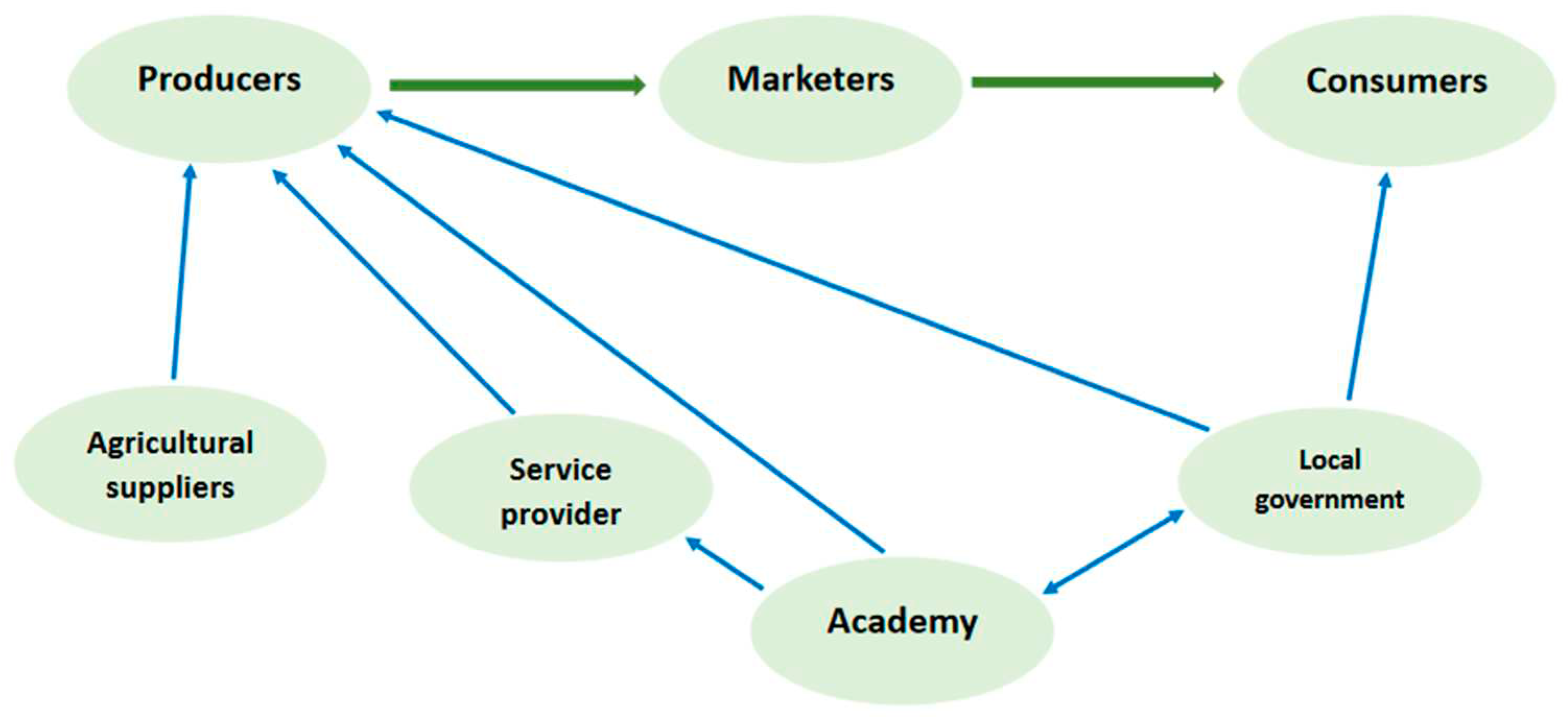
Figure 2.
Research methodological escheme.
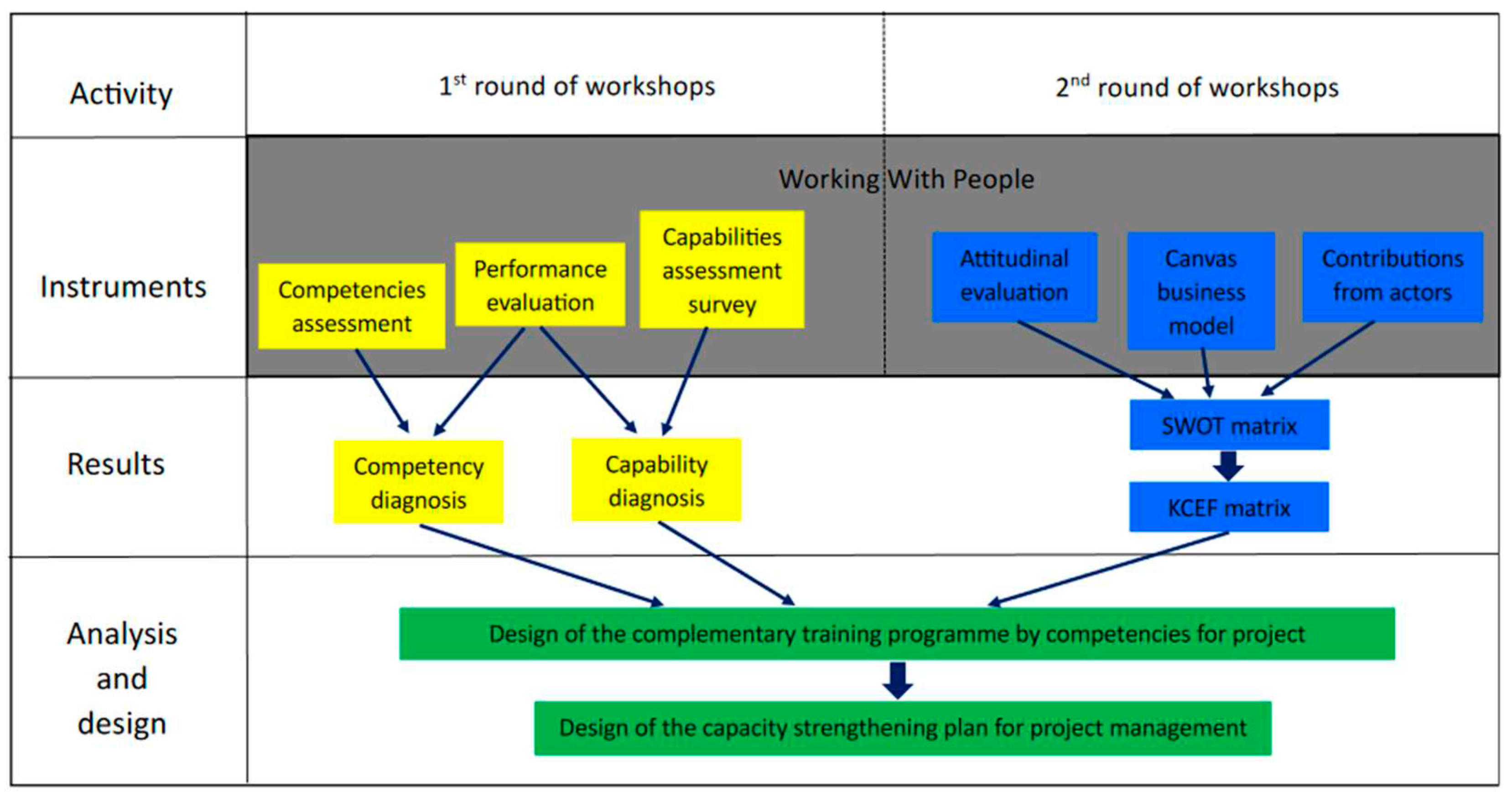
Figure 3.
Location of the province of Jauja and the four areas assessed in the investigation. Adapted from [82].
Figure 3.
Location of the province of Jauja and the four areas assessed in the investigation. Adapted from [82].
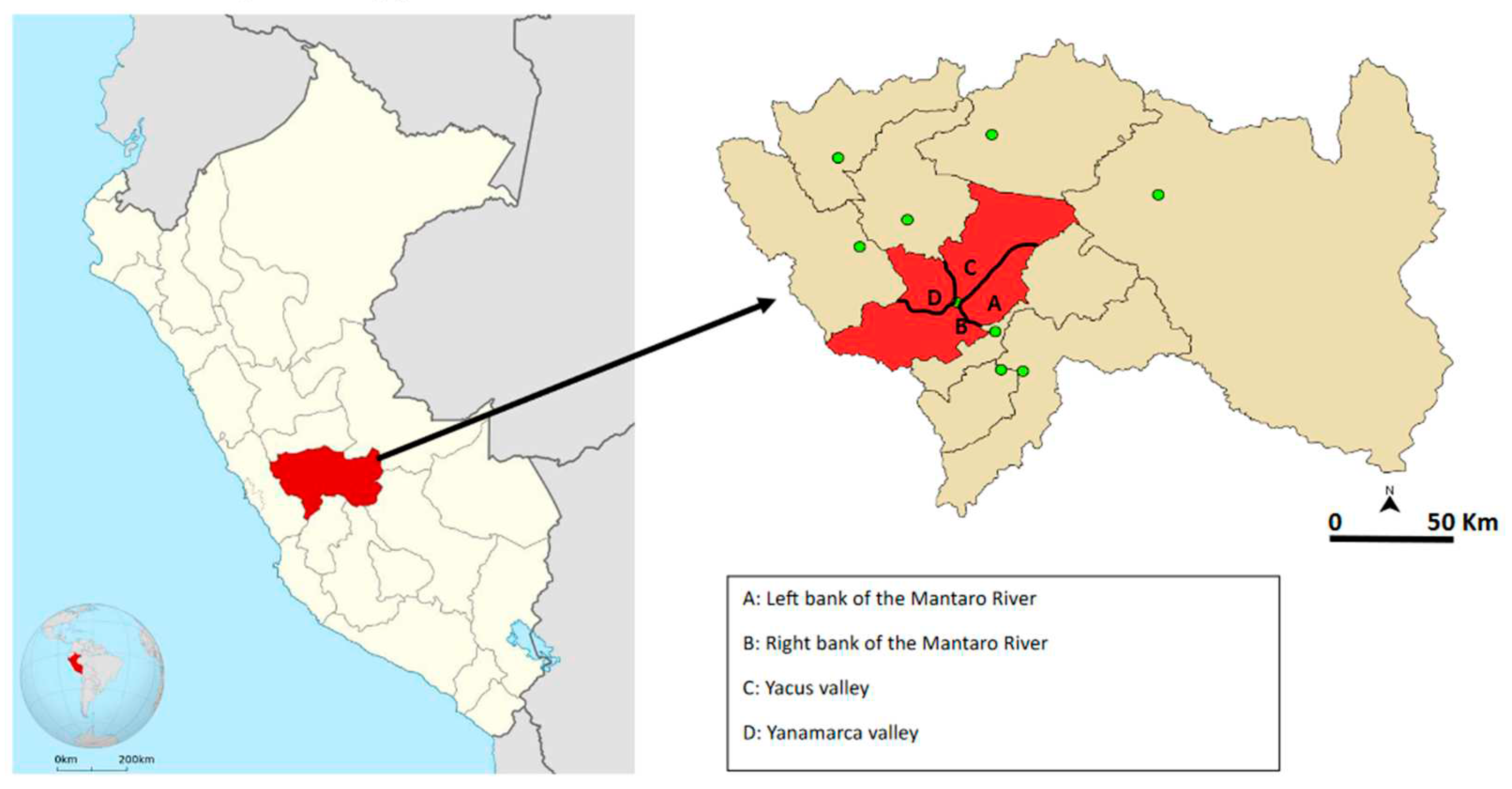

Table 1.
Distribution of actors in the guinea pig value chain, in Jauja
| Classification criteria | Total |
|---|---|
| Gender | |
| Female | 9 |
| Male | 3 |
| Mixed | 34 |
| Type of actor | |
| Producer | 19 |
| Marketer | 9 |
| Consumer | 3 |
| Academy | 5 |
| Local government | 6 |
| Service provider | 2 |
| Agricultural suppliers | 2 |
| Zone | |
| Left bank of the Mantaro river | 16 |
| Right bank of the Mantaro river | 6 |
| Yacus valley | 14 |
| Yanamarca valley | 3 |
| All | 7 |
| Number of members | |
| 1 to 10 members | 20 |
| More than 10 members | 26 |
| Years of activity | |
| 1 to 3 years | 13 |
| Over 3 years | 33 |
| Total | 46 |
Table 2.
Assessment of the domain of IPMA competencies in actors of the Jauja guinea pig value chain.
Table 2.
Assessment of the domain of IPMA competencies in actors of the Jauja guinea pig value chain.
| Classification criteria | Competency values (1–5) | Total | ||
|---|---|---|---|---|
| Perspective | Person | Practice | ||
| Gender | ||||
| Female | 3.18 | 3.28 | 2.75 | 3.01 |
| Male | 2.73 | 3.62 | 2.28 | 2.83 |
| Mixed | 2.61 | 2.96 | 2.42 | 2.65 |
| Type of actor | ||||
| Producer | 2.94 | 3.21 | 2.66 | 2.9 |
| Marketer | 2.47 | 2.83 | 1.85 | 2.31 |
| Consumer | 2.67 | 2.5 | 2.21 | 2.39 |
| Academy | 2.42 | 2.92 | 2.51 | 2.64 |
| Local government | 2.83 | 3.34 | 2.85 | 3.02 |
| Service provider | 3.4 | 4.15 | 3.5 | 3.71 |
| Agricultural suppliers | 1.8 | 2.1 | 1.65 | 1.84 |
| Zone | ||||
| Left bank of the Mantaro river | 2.73 | 3.19 | 2.81 | 2.93 |
| Right bank of the Mantaro river | 2.75 | 3.38 | 2.24 | 2.74 |
| Yacus valley | 2.52 | 2.62 | 2.08 | 2.35 |
| Yanamarca valley | 2.78 | 2.89 | 2.18 | 2.54 |
| All | 3.1 | 3.48 | 2.81 | 3.1 |
| Number of members | ||||
| 1 to 10 members | 2.64 | 2.98 | 2.32 | 2.61 |
| More than 10 members | 2.79 | 3.13 | 2.59 | 2.82 |
| Years of activity | ||||
| 1 to 3 years | 2.93 | 3.09 | 2.46 | 2.76 |
| Over 3 years | 2.65 | 3.06 | 2.48 | 2.72 |
| General Average | 2.73 | 3.07 | 2.47 | 2.73 |
Table 3.
Relationship between project management competencies and institutional capacities
| IPMA Competencies | Institutional Capacities | |||||||
|---|---|---|---|---|---|---|---|---|
| Identity | Structure | Implementation of activities | Relevance of activities | Professional skills | Systems | Acceptance | Relations | |
| Perspective | ||||||||
| Strategy | X | X | X | X | X | |||
| Governance, structure and processes | X | X | X | X | X | |||
| Compliance, standards and regulations | X | X | X | X | ||||
| Power and interest | X | X | ||||||
| Culture and values | X | X | X | |||||
| Person | ||||||||
| Self-reflection and self-management | X | X | ||||||
| Personal integrity and reliability | X | X | X | X | ||||
| Personal communication | X | X | X | X | ||||
| Relationships and participation | X | X | X | |||||
| Leadership | X | X | ||||||
| Teamwork | X | X | ||||||
| Conflict and crisis | X | X | X | |||||
| Ingenuity | X | X | X | X | ||||
| Negotiation | X | X | X | |||||
| Orientation to results | X | X | X | |||||
| Practice | ||||||||
| Project design | X | X | X | X | ||||
| Requirements and objectives | X | X | X | X | ||||
| Scope | X | X | ||||||
| Time | X | X | ||||||
| Organization and information | X | X | X | X | ||||
| Quality | X | X | X | |||||
| Finance | X | X | ||||||
| Resources | X | X | X | |||||
| Provisioning | X | X | X | |||||
| Planification and control | X | X | X | |||||
| Risk and opportunity | X | X | X | |||||
| Stakeholders | X | X | ||||||
| Change and transformation | X | X | X | |||||
Table 4.
Assessment of institutional capacities in actors of the guinea pig value chain, in Jauja.
| Classification criteria | Institutional Capacities | Total | |||||||
|---|---|---|---|---|---|---|---|---|---|
| Identtiy | Structure | Implementation of activities | Relevance of activities | Professional skills | Systems | Acceptance | Relations | ||
| Gender | |||||||||
| Female | 2.35 | 3.71 | 3.1 | 2.14 | 2.31 | 2.75 | 1.88 | 2.21 | 2.55 |
| Male | 2.17 | 3 | 2.67 | 1.83 | 2.67 | 3.17 | 3 | 2 | 2.56 |
| Mixed | 2.85 | 3.71 | 3.09 | 2.72 | 2.71 | 3.4 | 3.1 | 2.49 | 3.01 |
| Type of actor | |||||||||
| Producer | 2.78 | 3.93 | 3.28 | 2.57 | 3.37 | 2.78 | 2.39 | 2.28 | 2.8 |
| Marketer | 2.06 | 2.78 | 2.39 | 2.11 | 1.89 | 2.83 | 2.83 | 1.89 | 2.35 |
| Consumer | 1.5 | 3.5 | 2 | 2.33 | 2.33 | 3.67 | 2.33 | 2.67 | 2.54 |
| Academy | 4.2 | 4 | 3.4 | 3.6 | 3.7 | 3.8 | 4.1 | 3.2 | 3.75 |
| Local government | 2.67 | 3.58 | 3.33 | 2.5 | 3.25 | 4.25 | 3.5 | 2.92 | 3.25 |
| Service provider | 3.25 | 5.5 | 4.75 | 2.75 | 4.5 | 3.75 | 3.75 | 2.25 | 3.81 |
| Agricultural suppliers | 2.5 | 3 | 2.25 | 2 | 2.5 | 4.25 | 2.25 | 2 | 2.59 |
| Zone | |||||||||
| Left bank of the Mantaro river | 3.33 | 3.77 | 3.56 | 3.09 | 2.89 | 3.84 | 3.16 | 2.59 | 3.28 |
| Right bank of the Mantaro river | 2.92 | 4.33 | 2.75 | 2.67 | 2.42 | 3.33 | 2.58 | 2.92 | 2.99 |
| Yacus valley | 1.71 | 2.86 | 2.32 | 1.86 | 2.36 | 2.29 | 2.29 | 1.96 | 2.21 |
| Yanamarca valley | 2 | 3 | 2.33 | 1.58 | 1.92 | 1.75 | 1.96 | 1.79 | 2.04 |
| All | 3.36 | 4.79 | 4 | 3 | 3.07 | 4.43 | 3.93 | 2.64 | 3.65 |
| Number of members | |||||||||
| 1 to 10 members | 2.28 | 3.18 | 2.5 | 2.25 | 2.55 | 3.1 | 2.73 | 2.25 | 2.6 |
| More than 10 members | 3.03 | 4.04 | 3.5 | 2.78 | 2.69 | 3.38 | 2.96 | 2.51 | 3.11 |
| Years of activity | |||||||||
| 1 to 3 years | 2.66 | 4.03 | 3.34 | 2.48 | 2.13 | 2.52 | 2.14 | 1.95 | 2.66 |
| Over 3 years | 2.72 | 3.52 | 2.95 | 2.58 | 2.83 | 3.55 | 3.14 | 2.58 | 2.98 |
| General Average | 2.7 | 3.67 | 3.06 | 2.55 | 2.63 | 3.26 | 2.86 | 2.4 | 2.89 |
Table 5.
Assessment of performance evaluation in organizational management in actors of the guinea pig value chain, in Jauja.
Table 5.
Assessment of performance evaluation in organizational management in actors of the guinea pig value chain, in Jauja.
| Classification criteria | Score out of 100 | |
|---|---|---|
| Gender | ||
| Female | 19.88 | |
| Male | 33.54 | |
| Mixed | 27.25 | |
| Type of actor | ||
| Producer | 19.4 | |
| Marketer | 29.99 | |
| Consumer | 29.54 | |
| Academy | 35.95 | |
| Local government | 26.53 | |
| Service provider | 36.88 | |
| Agricultural suppliers | 33.19 | |
| Zone | ||
| Left bank of the Mantaro river | 23.67 | |
| Right bank of the Mantaro river | 24.75 | |
| Yacus valley | 23.11 | |
| Yanamarca valley | 20.9 | |
| All | 41.81 | |
| Number of members | ||
| 1 to 10 members | 26.12 | |
| More than 10 members | 26.30 | |
| Years of activity | ||
| 1 to 3 years | 22.52 | |
| Over 3 years | 27.68 | |
| General Average | 26.22 |
Table 6.
SWOT matrix on project management in actors of the guinea pig value chain in Jauja
| Strengths | Weaknesses | |
|---|---|---|
| Knowledge and technical mastery of guinea pig production Proactive, persevering, dynamic actors with a tendency towards the community Some actors integrate LAG and practice governance Some actors were trained and are implementing the CFS-RAI Principles Interest of various actors in the development of the value chain |
Difficulty managing risk Vicarious learning from actors not addressed in training events Little prominence of the actors in the projects Predominantly informal marketing channels for guinea pigs Unsustainable resource management Presence of actors with weak organization and governance |
|
| Opportunities | Threats | |
| Demand for guinea pig meat grows Development of other guinea pig meat products Development of other marketing channels Integration of actors in an organization |
Social conflicts in Jauja Political instability Economic instability Drought due to climate change |
Table 7.
KCEF matrix on project management in actors of the guinea pig value chain in Jauja
| Keeping Strengths | Combating Weaknesses | |
|---|---|---|
| Develop technical training in guinea pig production Generate environments and support that encourage a positive attitude Integrate the actors of the guinea pig value chain into the LAG Expand the implementation of CFS-RAI Principles to the entire chain Plan and develop the guinea pig value chain |
Risk management training Implement vicarious learning methodologies in projects Apply the bottom-up approach to projects Develop formal guinea pig marketing channels Train in sustainable resource management Strengthen organizations and promote governance |
|
| Exploiting Opportunities | Facing Threats | |
| Design strategies to satisfy the demand for guinea pig meat Research and innovate on new guinea pig meat products Encourage the development of other marketing channels Create an organization with the actors of the value chain |
Promote governance and transparency Improve resilience Diversify productive activities Implement efficient water use techniques |
Table 8.
Design of the Training Programme for Competencies in Project Management.
| Element | Description | |
|---|---|---|
| Objective | Develop project management competencies in technical teams of the actors that make up the Jauja guinea pig value chain. | |
| Objective group | Professionals in practice and in training, members of actors in the guinea pig value chain and committed to the development of the chain and its territory. | |
| Competencies to develop | The bases for individual competence in project management have been taken [33], with 28 competence elements distributed in three areas (Table 3). These competencies confer self-control, interpersonal connection, technical mastery and management of the environment to successfully conduct projects. | |
| Project orientation | The IPMA competencies are applied to a wide range of projects [33]; in this case they will be oriented to projects in the guinea pig value chain framed in the sustainable rural development of Jauja. | |
| Level to reach | Pass the performance evaluation with the level achieved or reach level D of the IPMA certification standard to be recognized as a project management technician [33]. | |
| Resources | The facilities of the RDC El Mantaro – UNMSM as promoter of this process, the collaboration of its research teachers and actors interested in the training process. | |
| Methodology | Employ the LEADER [23] and WWP [62] approaches, as well as the approaches recommended by IPMA: self-development, peer-supported development, education and training, coaching and mentoring, simulation and games [33]. Likewise, apply problem-based learning, project-based learning, social learning and learning by doing. | |
| Activity plan | Definition of the entry and exit profile. Preparation of the curricular plan. Call, evaluation and admission of participants. Training in conceptualization of IPMA competencies for project management. Basic-level training. Allows the basic mastery of competencies to face low-complexity situations. Example: personal and domestic projects. Intermediate-level training. This leads to the mastery of competencies to solve situations of medium complexity. Example: entrepreneurship and productive projects. Advanced-level programme. Trains in mastering competencies to resolve highly complex situations. Example: investment and development projects. Performance evaluation. Certification. |
Table 9.
Design of the institutional capacity-strengthening plan.
| Element | Description | |
|---|---|---|
| Purpose | To strengthen institutional capacities for project management in actors of the guinea pig value chain in Jauja, with the aim of promoting the development of projects that contribute to the sustainable development of the Jauja territory. | |
| Components and activities | C1. Consolidate the organizations involved in the Jauja guinea pig value chain. A1. Review and adjust the structure and functions of the organization. A2. Prepare or update the strategic plan. C2. Improve the planning and management of activities to achieve results consistent with institutional objectives. A3. Evaluate and improve the activity planning and implementation process. A4. Carry out evaluation and monitoring of results. C3. Develop competencies in human capital for optimal resource management. A5. Develop competencies for efficient resource and project management. A6. Generate conducive environments for the development of projects. C4. Improve the organization's links with other actors in the territory. A7. Promote the dissemination of the activities of the organizations in the territory. A8. Evaluate and rethink the organization's contributions to the sustainable development of the territory. |
|
| Participants | Members, managers and representatives of the actors in the guinea pig value chain, representatives of other Jauja actors. | |
| Methodology | The WWP model [62], SWOT analysis and the LEADER approach [23] will be applied. | |
| Strategy | In the process of strengthening institutional capacities, the development of project management competencies is essential, since we consider it very important that a management team is responsible for leading the planning and management of institutional development as a first step, and then continue with the project work in a synergistic manner between actors that make up the value chain and between value chains to contribute to the development of the territory. |
Disclaimer/Publisher’s Note: The statements, opinions and data contained in all publications are solely those of the individual author(s) and contributor(s) and not of MDPI and/or the editor(s). MDPI and/or the editor(s) disclaim responsibility for any injury to people or property resulting from any ideas, methods, instructions or products referred to in the content. |
© 2023 by the authors. Licensee MDPI, Basel, Switzerland. This article is an open access article distributed under the terms and conditions of the Creative Commons Attribution (CC BY) license (https://creativecommons.org/licenses/by/4.0/).
Copyright: This open access article is published under a Creative Commons CC BY 4.0 license, which permit the free download, distribution, and reuse, provided that the author and preprint are cited in any reuse.